
PHKSZ 9 A1 - Uncategorized PARKSIDE - Free user manual and instructions
Find the device manual for free PHKSZ 9 A1 PARKSIDE in PDF.


| Product Type | Circular Saw Blades |
| Brand | Parkside |
| Model | PHKSZ 9 A1 |
| Tooth Configurations | 12 teeth (flat with alternating chamfers), 42 teeth (trapezoid-flat), 48 teeth (flat alternating) |
| Materials Suitable For | Wood, wood materials, plastics, non-ferrous metals, composite materials, MDF, PVC, perspex, chipboard, porous concrete |
| Applications | Separation, cutting to length, grooving; construction sites, universal use, fine cuts |
| Cutting Diameter | Not specified (typical 190 mm or 210 mm for similar saws) |
| Arbor Size | Not specified (typically 30 mm or 20 mm) |
| Maximum Speed | Depends on machine; follow machine specifications |
| Safety Features | Requires protective gloves, goggles, hearing and respiratory protection; disconnect from mains before maintenance |
| Storage | Store in original packaging, dry and away from aggressive media |
| Maintenance | Re-sharpening only by experts; use original parts; clean with suitable special media |
| Warning | Do not use blades with cracks or damage; do not repair welded blades |
| Compliance | DIN EN 847-1; DIN EN 1870-1 |
| Package Contents | Set of circular saw blades (quantities not specified) |
Frequently Asked Questions - PHKSZ 9 A1 PARKSIDE
User questions about PHKSZ 9 A1 PARKSIDE
0 question about this device. Answer the ones you know or ask your own.
Ask a new question about this device
Download the instructions for your Uncategorized in PDF format for free! Find your manual PHKSZ 9 A1 - PARKSIDE and take your electronic device back in hand. On this page are published all the documents necessary for the use of your device. PHKSZ 9 A1 by PARKSIDE.
USER MANUAL PHKSZ 9 A1 PARKSIDE
Always keep the safety instructions in a safe place and hand them over to the new owners when the product is sold.
FI
GB/IE Safety instructions Page 1
Safety information for circular saw blades
Read before initial use!
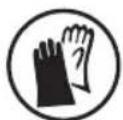
Wear protective gloves!
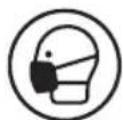
Wear respiratory protection!

Wear protective glasses!

Wear hearing protection!
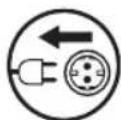
Disconnect from mains before all assembly and maintenance work!
The circular saw blades comply with DIN EN 847-1. They are composite tools in which the hard metal (HW or HC) cutting blades have stellite (ST) or polycrystalline diamonds (DP) applied to the saw blade body using material adhesion (in this case brazing).
The respective circular saw blades can be used for different materials depending on the number of teeth:
■ 12 teeth = fl at teeth with alternating chamfers suitable for use on construction sites: thick and thin wood materials, building timber, shuttering boards, porous concrete, chipboard.
■ 42 teeth = trapezoid fl at teeth, suitable for universal use on profi les and solid materials: composite materials, coated chipboard, plastics, perspex, non-ferrous metals, hard wood. Produces an especially clean cut.
48 teeth = fl at alternating teeth suitable for universal use on soft and hard wood, panel materials, fi brous materials, MDF and PVC. Produces an especially clean and precise-edged cut.
Store the circular saw blades in the original packaging, or protect the saw blade against damage using other means.
Store the saw blades somewhere dry and not in the vicinity of aggressive media. There is a serious risk of injury when handling circular saw blades due to the extremely sharp cutting teeth.
Only use circular saw blades as intended for separation, cutting to length, grooving of wood, wood materials and associated materials such as plastics, light and alloyed metals in addition to composite materials. Always follow the manufacturer's instructions.
Use with manual and/or mechanical feed.
The working method is counter-rotation, synchronous rotation is only permitted with mechanical feed. The correct direction of rotation must be observed and the maximum speed may not be exceeded. The machine manufacturer's regulations must be observed.
Always have circular saw blades carefully checked for damage or faults by experts before fi tting. If there are any visible or otherwise recognisable defects or damage,
do not fit the circular saw blade, or cease working immediately and clearly label the circular saw blade so that it cannot be further used before it is approved for further use by an expert.
Circular saw blades with cracks or any similar damage may not be welded or otherwise repaired.
Fitting the circular saw blade and operating the machine may only be carried out by experienced personnel who have been trained in safety procedures.
Follow the instructions in the saw blade and the machine operating manuals. Ensure that the machine cannot be switched on accidentally.
Only fix the circular saw blade to clamping fl anges provided for this purpose by the machine manufacturer and which match the saw blade, and only tighten the blades using the tools provided at the torque stated by the manufacturer.
Tools and tool bodies must be clamped so that they cannot loosen during operation.
Clamping surfaces must be cleaned of dirt, grease, or oil and water.
Reducing rings may only be used if they have been manufactured in accordance with the manufacturer's specifications.
Extension of spanners and the use of impact tools for tightening is not permitted. The assignment of the clamping fl ange diameter to the saw blade diameter is governed by European standards such as DIN EN 1870-1, Chapter 5.3.3.4.
Wear safety gloves, ensure that clothing is close-fitting, wear hearing protection if necessary. After fitting the circular saw blade, re-attach all the machine safety equipment properly and correctly position the riving knife if fitted.
Have an expert carry out a trial run.
Do not reach into the vicinity of the rotating tool.
Keep non-participating persons out of the hazard zone.
Do not carry out any adjustment work in the vicinity of the rotating tool.
Check for imbalances.
Saw blade cutters may not contact other cutters, fi xing elements or other machine parts when rotating. Drill hole reducing rings must be firmly fixed to the saw blade with adhesion, and may not protrude sideways beyond the saw blade body.
Loose reducing rings may not be used.
Reducing rings must be of such a diameter that safe fi xing of the circular saw blade is still provided.
Never allow the machine to run unsupervised.
Measures for the avoidance of kick-back must be taken and appropriate equipment must be used for this purpose.
Ensure that the material to be sawed does not contain any foreign bodies.
Do not wait too long before resharpening the circular saw blade. The following are signs of blunt tools: excessive wear marking on cutters, chips on cutters, insufficient cutting quality, power consumption on the saw machine too high.
Saw blades whose teeth are thinner and/or shorter than 1 mm may not be used.
Circular saw blades may only be re-sharpened by experts and maintained using original parts. Experts are persons with appropriate specialist training and experience who know the requirements regarding to the construction and design of circular saw blades and who understand the safety regulations to be achieved.
Maintenance of the circular saw blades is only allowed in accordance with the manufacturer's instructions, and the following must be observed during this work:
The construction of the saw blade may not be changed. The safety regulations must be observed. The tolerances for faultless clamping must be observed.
Only use suitable special media for cleaning.
SAHANTERÄ PHKSZ 9 A1
KOMPERNASS HANDELS GMBH
BURGSTRASSE 21
44867 BOCHUM
DEUTSCHLAND / GERMANY
www.kompernass.com
Last Information Update · Tietojen tila · Informationsstatus