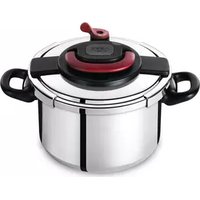
Clipso + P43707 - Frying Pan TEFAL - Free user manual and instructions
Find the device manual for free Clipso + P43707 TEFAL in PDF.


| Product Type | Pressure Cooker Pan |
| Brand | Tefal |
| Model | Clipso + P43707 |
| Capacity | 6 liters (estimated) |
| Material | Stainless steel |
| Diameter | 22 cm (estimated) |
| Weight | 2.5 kg (estimated) |
| Compatible Heat Sources | All stovetops including induction |
| Pressure Regulation | Adjustable pressure settings |
| Safety Features | Safety valve, lid locking system, pressure indicator |
| Handles | Ergonomic, heat-resistant handles |
| Cleaning | Dishwasher safe (stainless steel parts) |
| Warranty | 10 years (estimated) |
| Repairability | Spare parts available: gasket, valve, handle |
| Includes | Pressure cooker pan, lid, steam basket (estimated) |
| Documentation | User manual (71 pages) |
Frequently Asked Questions - Clipso + P43707 TEFAL
User questions about Clipso + P43707 TEFAL
0 question about this device. Answer the ones you know or ask your own.
Ask a new question about this device
Download the instructions for your Frying Pan in PDF format for free! Find your manual Clipso + P43707 - TEFAL and take your electronic device back in hand. On this page are published all the documents necessary for the use of your device. Clipso + P43707 by TEFAL.
USER MANUAL Clipso + P43707 TEFAL
Bedienungsanleitung
Guía del usuario
User Guide
www.tefal.com


fig. 1 fig. 2 fig. 3 fig. 4


fig. 7
fig. 5 fig. 6 fig. 8


fig. 11
fig. 9
fig. 10 fig. 12


fig. 15 fig. 16
fig. 13
fig. 14


fig. 17 fig. 18 fig. 19 fig. 20
Sicherheit
Seguridad
Important safety information
For your safety, this appliance complies with applicable standards and regulations:
- Pressure vessel directive
- Materials in contact with food
- Environment
- This product has been designed for domestic use only. Any commercial use, inappropriate use or failure to comply with the instructions, the manufacturer accepts no responsibility and the guarantee will not apply.
- Take time to read all of the instructions and always refer back to the "User Guide".
- Just like for any other cooking appliance, always pay close attention to it, especially when using pressure cooker near children.
- Never place the pressure cooker in a hot oven. Only vessels with stainless steel handles an stainless steel pan lid can be put in the oven.
- Always be very careful when moving your pressure cooker under pressure. Never touch hot surfaces (in particular metal parts). Use the handles and knobs. Use oven gloves where necessary. Regularly check that the handles of the cooker are fitted correctly. Tighten the if necessary.
- Never use your pressure cooker for any purpose other than the one it was designed for.
- The pressure cooker cooks under pressure. Scalding injuries may result from unsuitable or incorrect use. Always make sure that your pressure cooker is properly closed before starting to use it. Refer to the section headed "Closing".
- Always make sure that the valve is in steam release position before opening the pressure cooker.
- Never force the pressure cooker to open. Always make sure that the pressure inside it has dropped. Refer to the section headed "Safety".
- Never use the pressure cooker without any liquid in it as this will seriously damage it. Always make sure that there is enough liquid in it during cooking.
- Use heat source(s) that are compatible with the pressure cooker, in line with the instruction for use.
- Never make milk-based recipes (such as rice pudding, semolina pudding, ...) in the pressure cooker.
- Do not use sea salt in the pressure cooker, add table salt at the end of the cooking time.
- Never fill the pressure cooker more than two-thirds full (the maximum mark).
- For food that expands during cooking, like rice or dried vegetables or stewed fruit, never f the pressure cooker more than half full. For some soups based on pumpkins, courgettes, le the pressure cooker cool down for a few minutes, then cool it under cold water.
- After cooking meat with a superficial outer skin (e.g. tongue...) that may expand with the pressure, never stab the meat while the skin looks swollen under pressure as you may be scalded. We recommend that you pierce the meat before cooking.
- When cooking food with a thick texture, (e.g. split peas, rhubarb...), the pressure cooker should be shaken slightly prior to opening to ensure that these foods do not spray out.
- Always make sure that the valves are not blocked before use. Refer to the section headed "Before Cooking".
- Never use the pressure cooker to deep fry using oil under pressure.
- Never take any action on the safety systems other than that which is described in the instructions for cleaning and maintenance.
- Only use TEFAL genuine spares parts designed for your product model. This especially means using a TEFAL cooker pan and lid.
- Alcohol vapour is inflammable. Bring alcohol to the boil for two minutes before putting the lid on. Watch over your appliance when making alcohol based recipes.
- Never use the pressure cooker to store acidic or salty foods prior to and after cooking as t may damage the pressure cooker body.
- Never use the pressure cooker with folded handles* on a heat source, always unfold them first.
Keep these instructions
Description of diagram
A. Operating valve
B. Steam release outlet
C. Valve positioning mark
D. Pressure indicator
E. Safety valve
F. Opening/Closing handle
G. Pressure cooker lid
H*. Pan lid*
I. Seal
J*. Steam basket*
K. Trivet
L*. Fixed pan handle*
M*. Handle release button*
N*. Folding pan handle*
O. Pan
P. Maximum filling line
EN
Characteristics
Diameter of the base of the pressure cooker - references
| Capacity | ∅ Cooker | ∅ Base | CLIPSO®+fixed handles | CLIPSO®+folding handles | CLIPSO®+gourmet | Material body and lid |
| 4.5 L 2 | 2 cm 18 cm | P43606 | - | - | Stainless steel | |
| 6 L | CLIPSO®+22 cm | CLIPSO®+18 cm | - P43707 | - | ||
| CLIPSO®+Gourmet25 cm | CLIPSO®+Gourmet20 cm | - | - | P43813 | ||
| 8 L | 25 cm 20 | cm | - P43714 | - | ||
| 10 L | 25 cm 20 | cm | - P43715 | - |
Standards information
Upper operating pressure limit: 80 kPa (12 psi / 12 lbs pressure)
Maximum safety pressure limit: 120 kPa (18 psi / 18 lbs pressure)
Compatible heat sources
GAS
SOLID
HOTPLATE
CERAMIC OR
HALOGEN
INDUCTION
ELECTRIC
SPIRAL
USING
POT HOLDERS*


- Your pressure cooker can be used on all heat sources except Aga hobs but including induction.
Never heat your pressure cooker when it is empty or you may damage it.
- When using an electric hotplate or induction, make sure that the size of the hot plate does not exceed the size of the pressure cooker base.
- On a ceramic or halogen plate, always make sure that the pressure cooker base is clean and dry.
- On a gas burner, the flame should not extend past the diameter of the pressure cooker base.
- For all heat sources, make sure that your pressure cooker is properly centred.
TEFAL Accessories
- The following Clipso pressure cooker accessories are available. Contact the helpline - see contact list.
| Accessories | |||
| CLIPSO®+(fixed or folding handles) | CLIPSO®+ gourmet | ||
| 4,5/6L 8/10L 6L | |||
| Seal X1010004 X1010003 X1010003 | |||
| Steam basket* | 792185 | X1030002 X1030002 | |
| Trivet | X1030007 | - | |
- To replace other parts or have repairs performed, please call on your local TEFAL Approved Service Centre.
- Only use TEFAL genuine parts designed for your product model.
Use
Opening
- Move the Opening/Closing handle from the horizontal to the vertical position (the jaws open) - fig. 1.
- Lift the lid.
If you cannot open the lid:
- Move the Opening/Closing handle back to the horizontal position and check that the pressure indicator (D) is in low position.
The jaws must be in contact with the edge of the lid.
- Make sure that the Opening/Closing handle is in the vertical position and that the jaws are open.
- Place the lid on the pressure cooker, taking care to ensure that it is correctly positioned.
- Move the Open/Close handle from the vertical to the horizontal position - fig. 2.
- Apply a little force at the end when closing to trigger the locking mechanism.
- Once in the closed position, it is normal that the lid can turn freely on the pressure cooker pan.
If you cannot close the lid:
- Check that the seal is in place properly.
Minimum and maximum filling
• Minimum 250 ml (2 glasses) - fig. 3.
- For steam cooking always fill with at least 750 ml of water.
• Maximum two-thirds full - fig. 4.
For some food:
- For food that expands during cooking, like rice or dried vegetables or stewed fruit, never fill the pressure cooker more than half full. For soups, we recommend you to use fast pressure release (refer to section "End of cooking").
Using the steam basket*
Food placed in the steam basket* must not touch the pressure cooker lid.
- Pour 750 ml of water into the base of the pan.
- Place the trivet (K) under the steam basket* (J) - fig. 5 - 6.
- Place the steam basket into the base of the pan - fig. 7.
Using the operating valve
- Place the operating valve (A) on the steam release outlet (B) matching the symbol ● of the valve with the valve positioning mark (C) - fig. 8.
- Press the valve down fully - fig. 8 and turn it to the cooking position - fig. 9.
To cook delicate food and vegetables:
- Position the symbol on the valve in front of the valve positioning mark (C). Operates at 54 kPa (7 psi/ 7 lbs pressure).
To cook meat, fish and frozen food:
- Position the symbol on the valve in front of the valve positioning mark (C). Operates at 80 kPa (12 psi/ 12 lbs pressure).
To remove the operating valve:
- Press down on the operating valve (A) (when it is not longer pressurised) and align the symbol with the valve positioning mark (C) - fig. 10.
- Remove the operating valve - fig. 11.
Folding handles*
Before use, make sure to remove the labels from each of the handles.
Do not try to fold the handles without pressing the release buttons.
Never use the pressure cooker with folded handles on a heat source.

![graph LR A["To fold the handles:"] --> B["To put the handles in the operating position:"] B --> C["CLICK"]](/content/2026/05/835112/images/605d8802a2c72217ef35f87ae9de951d7f1ebd3508860cc791ee8bb17bcec52a.jpg)
First use
- Place the trivet (K) under the steam basket* (J) - fig. 5 - 6.
- Place the steam basket* (J) in the pressure cooker - fig. 7.
- Fill the pressure cooker to the two-thirds mark (P) with cold water.
- Close the pressure cooker.
- Place the operating valve (A) and position it on
- Place the pressure cooker on a heat source set to maximum power.
- When steam starts to escape from the valve, turn the heat down and set a timer for 20 min.
- 20 minutes later turn off the heat.
- Gradually turn the valve positioning mark until it is at the steam release position, adjusting the speed at which you want to release the pressure.
- When the pressure indicator (D) drops down, the pressure cooker is no longer under pressure.
- Open the pressure cooker - fig. 1.
- Clean it.
Note: the appearance of stains on the inside of the pan does not alter the quality of the metal in any way. They are simply scale deposits. To remove the deposits, you can use a sponge pad with a little diluted white vinegar.
Before cooking
- Before each use, remove the operating valve (A) - fig. 10 - 11 and visually check, in daylight, to see that the steam release outlet (B) is not blocked - fig. 12.
- Check that the safety valve (E) moves freely: Refer to the section headed “Cleaning and Maintenance”.
- Fill the pressure cooker with food and the necessary amount of liquid for cooking (see "Minimum and Maximum filling" section).
- Close the pressure cooker - fig. 2.
• Fit the operating valve (A) in its place - fig. 8. - Press down hard and turn it to the cooking position or - fig. 9.
- Make sure that the pressure cooker is properly closed before starting to use it.
- Place the pressure cooker on a heat source set to maximum power.
During cooking
- When steam escapes through the operating valve continuously, and a regular hissing sound (PSCHHHT) is heard, reduce the heat source.
- Set a timer for the cooking time stated in your recipe.
- During cooking, check that the valve murmurs regularly. If there is not enough steam, increase the heat source slightly; if there is too much steam, reduce the heat source.
The pressure indicator (D) prevents the pressure cooker from increasing in pressure if it is not properly closed.
As with any cooking appliance, watch over it carefully especially if you are using your pressure cooker around children.
Steam is very hot as it exits the steam release outlet.
End of cooking
The pressure indicator (D) prevents you from opening the pressure cooker if it still under pressure.
If the pressure indicator (D) does not drop down, place the pressure cooker under cold running water - fig. 13.
Never interfere with the pressure indicator.
To release the steam:
- Once the heat is turned off, you have two options:
- Slow pressure release: Gradually turn the operating valve (A) to the position. When the pressure indicator (D) drops down, the pressure cooker is no longer under pressure. Make sure that the cooker is positioned so that the steam is directed away from you.
This method is used for stews, vegetables, meat joints and fish dishes.
If you notice any food or liquid start to spray out from the valve when you are releasing steam, return the selector to cooking position then wait a minute and then gradually turn the operating valve again, making sure that nothing spurts out.
If food or liquid starts to spray out while you are releasing the steam, return the operating valve (A) to the cooking position or , then release the steam using the fast pressure release method described opposite.
- Fast pressure release: Place the pressure cooker under cold running water - fig. 13. When the pressure indicator (D) drops down, the pressure cooker is no longer under pressure. Turn the operating valve (A) to the position
This method is used for soups, rice, pasta, egg custards, cake and sponge puddings, recipes containing rice or pasta and recipes with a high liquid content.
- For models with pans fitted with metal handles*, use potholders as the handles get hot.
- You can open the pressure cooker - fig. 1.
- When cooking frothy or starchy foods or dried vegetables, do not release the pressure by either the slow pressure or fast pressure release methods. Instead lift the pressure cooker away from the heat source, leave the operating valve (A) in the cooking position and let the cooker cool slowly at room temperature (takes about 15 minutes) until the pressure indicator (D) drops down. Open the pressure cooker. Plan to reduce the recommended cooking time slightly.
Cleaning and maintenance
Cleaning the pressure cooker
For best operation, make sure to follow these cleaning and maintenance recommendations after each time the pressure cooker is used.
- Wash the pressure cooker (pan and lid) after each use using warm water with washing-up liquid in it. Follow the same procedure for the basket*.
- Never use bleach or chlorine products.
- Do not overheat your cooker when it is empty.
Stains and scratches that may appearance after prolonged use do not affect the quality of the metal.
To clean the inside of the pan pressure cooker:
- Clean it with a sponge pad and washing-up liquid.
- If the interior of the steel pan has an iridescent sheen, clean it using white vinegar or a special stainless steel cleaning product.
To clean the outside of the pressure cooker:
- Clean it with a sponge and washing-up liquid.
- Clean it with a special stainless steel cleaning product.
To clean the pressure cooker lid:
- Clean the lid with a sponge and washing-up liquid.
To clean the lid seal
- After each use, always clean the seal (I) and its groove using a sponge, warm water and washing-up liquid.
- To refit the lid seal, refer to the drawing - fig. 14 and make sure that the words "face côté couvercle" (facing lid side) are against the lid.
- Replace the pressure cooker seal every year or if it shows signs of splitting or damage.

To clean the operating valve (A):
- Remove the operating valve (A) - fig. 10 - 11.
- Wash the operating valve (A) under running tap water - fig. 15.
- Check that it moves freely: see figure on the right.
To clean the steam release outlet (B) located on the lid:
- Remove the valve (A)- fig. 10 - 11.
- Visually check, in daylight, to see that the steam release outlet is round and not blocked - fig. 12. If necessary, clean with a toothpick - fig. 16 and rinse.
To clean the safety valve (E):
You can wash the pressure cooker pan and the steam basket in the dishwasher.
After removing the operating valve (A) and the seal (I), you can wash the lid in the dishwasher.
Never unscrew the screw and the screw nut inside the lid.
Never wash the seal in the dishwasher.
Regularly check that the pan handles are attached properly. Tighten them again if necessary.

If the safety valve accidentally comes out of its housing partly or fully, this may cause a leak without any danger. Contact the helpline -see contact list.
- Wash the part of the safety valve located inside the lid under running water.
- Check that it is moving freely by pressing hard with a cotton bud on the ball - fig. 17.
To replace the pressure cooker seal:
- Replace the pressure cooker seal every year or if it has any splits or is damaged.
- Always use an original TEFAL seal suitable for your model.
- When replacing the seal, please see - fig. 14 and make sure that the words “face côté couvercle” (facing lid side) are against the lid.
To store the pressure cooker:
- Turn the lid upside down on the pressure cooker - fig. 18.
If the pressure cooker has folding handles*:
- Press the handle release button (M). Refer to the section headed "Folding Handles."
You must have your pressure cooker checked in a TEFAL Approved Service Centre after 10 years of use. Contact the helpline - see contact list.
Safety
Your pressure cooker is provided with a number of safety mechanisms:
- Closing safety:
- The jaws must be in contact with the rim of the lid. If not, steam will escape from underneath the pressure indicator (D) and steam will not build up pressure.
- Opening safety:
- If the pressure cooker is under pressure, the Opening/Closing handle (F) cannot be operated.
- Never force the pressure cooker to open.
- Especially do not interfere with the pressure indicator (D).
- Make sure that the internal pressure has fallen.
- If you have put the Opening/Closing handle (F) in vertical position, while the pressure cooker was still under pressure, you cannot open it.
- Move the Opening/Closing handle back to the horizontal position and wait until the pressure indicator (D) is in low position.
- Two excess pressure safety devices:
- First device: the safety valve (E) releases the pressure and steam escapes - fig. 19.
- Second device: the seal allows the pressure to be released between the lid and the pan - fig. 20.
If one of the two excess pressure safety systems is triggered:
- Turn off the heat source.
- Allow the pressure cooker to cool down completely.
- Open it up (refer to section "Opening").
- Check and clean the operating valve (A), the steam release outlet (B), the safety valve (E) and the seal (I) - fig. 15 - 16 - 17.
- If after checking and cleaning your product leaks or does not work, have your pressure cooker checked by a TEFAL Approved Service Centre or contact the Customer Relations Helpline - see contact list.
Recommendations for use
1 - The steam is very hot when it comes out of the operating valve.
2 - When the pressure indicator rises, you cannot open the pressure cooker.
3 - As with any cooking appliance, supervise cooking closely if using the pressure cooker with children nearby.
4 - Beware of the jet of steam.
5 - To move the pressure cooker, always use both of the carrying handles on the side.
6 - Never leave food in your pressure cooker.
7 - Never use bleach or chlorine products as they could affect the finish of the stainless steel.
8 - Never leave the lid to soak in water.
9 - Replace the seal every year or if it has any splits or is damaged.
10 - Clean the pressure cooker only when it is absolutely cold, and the pressure cooker is empty.
11 - Have your pressure cooker checked by a TEFAL Approved Service Centre after ten years of use.
12 - Never carry the pressure cooker by the opening/closing handle (F).
Guarantee
- TEFAL pressure cookers have a 10 year guarantee from the date of purchase against any faulty materials or workmanship related to the pot or any premature damage of the metal base provided the product is used in accordance with the manufacturer's recommended product instructions. This guarantee does not include any damage due to inappropriate use or resulting from knocks, falls or by placing the product in the oven.
- It should be noted that the normal life of the gasket, pressure control, valves, handles or locking indicator seal is limited. These parts are excluded from the guarantee and will require periodic renewal. It should also be noted that for models with an electronic timer, the timer is guaranteed for the first year only. Accessories such as the basket, trivet and steam basket are also guaranteed for 12 months only.
*Only pots which have a stainless steel handle and the stainless steel stew pot lid may be used in the oven.
Regulatory markings
| Marking Location | |
| Manufacturer's identification or trademark. On the lid | |
| Production year and batchModel numberMaximum safe operating pressure (PS)Maximum operating pressure (PF) | Inside of the lid on the top of the jaw, visible when the cover is in the “Open” position |
| Capacity | On the outside of the pressure cooker pan |
• Environment protection first!

①Your appliance contains valuable materials which can be recovered or recycled.
Leave it at a local civic waste collection point.

TEFAL answers your questions
| Problems Recommendations | |
| If you cannot close the lid: | Check that the Opening/Closing handle is in vertical position and the jaws are open.Check the seal is correctly fitted, refer to the section headed “Cleaning and Maintenance”. |
| If the pressure cooker has heated up under pressure with no liquid inside: | Have your pressure cooker checked by a TEFAL Approved Service Centre.Contact Customer Relations Helpline. |
| If the pressure indicator did not rise and nothing escapes from the valve during cooking: | This is normal for the first few minutes.If the problem persists, check that:- The heat source is sufficiently high; if not, increase it.- There is enough liquid in the pan.- The operating valve is positioned on or.- The pressure cooker is properly closed.- The seal or the rim of the pan is not damaged.- The seal is correctly positioned inside the lid, refer to the section headed “Cleaning and Maintenance”. |
| If the pressure indicator has raised but still nothing escapes from the valve during cooking: | This is normal for the first few minutes.If the problem persists, put the pressure cooker under cold running water until the pressure indicator drops down.Clean the operating valve - fig. 15 and the steam release outlet - fig. 16 and check that the safety valve is moving freely by pressing hard with a cotton bud on the ball - fig. 17. |
| Problems | Recommendations |
| If steam escapes from around the lid, check: | That the lid is properly closed.The position of the lid seal is the correct way up.That the seal is in good condition, and if necessary, replace it.That the lid, the seal, its seat in the lid are clean.That the rim of the pressure cooker pan is in good condition. |
| If steam escapes from around the lid together with a piercing noise: | Check that the seal is not caught between the body and the lid. |
| If you cannot open the lid: | Check that the pressure indicator is in low position.If not, depressurise and cool the pressure cooker under cold running water if necessary.Never interfere with the pressure indicator. |
| If food is not cooked or has burnt, check: | The cooking time is correct.The heat level was neither too low nor too high.That the operating valve was in the right position.The amount of liquid was sufficient for the coo-king time. |
| If food has burnt in the pressure cooker: | Fill the pan with water and leave the pressure coo-ker to soak for a while before washing.Never use bleach or chlorine products. |
| If one of the safety systems is triggered: | Turn off the heat source.Leave the pressure cooker to cool down without moving it.Wait for the pressure indicator to drop down and open the pressure cooker.Check and clean the operating valve, the steam re-lease outlet, the safety valve and the seal.If the problem persists, have your pressure cooker checked by a TEFAL Approved Service Centre. |
| If you cannot raise the folding handles*: | Check that:The handle release button* is mobile.If the problem persists, have your pressure cooker checked by a TEFAL Approved Service Centre. |
| If you cannot fold the folding handles:* : | Do not force them to fold.Make sure that you have pressed hard on the handle release button*. |
Ten tasty recipes to prepare with your pressure cooker
All the recipes are intended for 4 people. For pressure cookers with a capacity of less than 6 litres, reduce the proportions by a third.
Starter
Vegetable soup
4 potatoes 1 leek, 4 carrots, 1 turnip, 1 litre water, salt, pepper, 3 tablespoons of crème fraîche (optional).
Serves 4
Preparation time: 15 min
Valve position:
Cooking time: 10 min
Peel and wash the vegetables.
Cut the potatoes and the turnip into large dice. Thinly slice the carrots and the leek.
Pour 1 litre of water into the pressure cooker, and then add the vegetables, the salt and the pepper.
Close the pressure cooker. As soon as the valve begins to whistle, reduce the heat and cook for the recommended amount of time. Depressurise by placing the pressure cooker under running cold water.
If desired, the crème fraîche can be added before serving.
Fish
Citrus fish parcels
2 tomatoes, 1 onion, 2 shallots, 1 grapefruit, 1 orange, 4 thick fillets of ling or cod (about 50 g each), juice of 1 lime, 60 g butter, 1 glass (125 ml) white wine, a few fresh tarragon leaves, salt, pepper.
Serves 4
Preparation time: 25 min
Valve position:

Cooking time: 8 min
Cut the tomatoes into slices. Peel the onion and shallots, and finely slice them.
Skin the grapefruit and oranges and cut into quarters taking care to retain their juice.
Place three tomato slices in the centre of four sheets of aluminium foil, slightly overlapping them. Cover with some sliced onions and shallots, add a few tarragon leaves, then place the fish fillets on top. Fold up the sides of each foil parcel so that it will hold one tablespoon of white wine and two tablespoons of grapefruit-orange juice without leaking. Add a few drops of lime juice, salt and pepper to taste.
On top of each fish fillet, place one quarter of grapefruit, two quarters of orange and 15 g of fresh butter. Close up the foil parcels before carefully placing them in the steaming basket.
Pour 750 ml of water into the pressure cooker. Place the steaming basket on its trivet, in the pressure cooker, taking care to make sure that it is not in contact with the water.
Close the pressure cooker. As soon as the valve starts to hiss, lower the heat and leave to cook for the specified time. When cooked, open the pressure cooker.
Remove the steaming basket from the pressure cooker and delicately place one fish foil parcel on each plate.
Open up the parcels at the table using scissors. An avocado salad may be served with this dish.
Lamb
Spring Navarin stew
600 g lamb shoulder and 600 g breast of lamb, cut into chunks, a bunch of fresh, spring carrots, a bunch of spring onions, white part of 2 leeks, 4 small new potatoes, 100 g of green beans, 2 large peeled and chopped tomatoes, 2 cloves of garlic, 1 bouquet garni, 1 tablespoon of chopped tarragon, 30 g of butter, 150 ml of white wine, 1 tablespoon of olive oil, 1 tablespoon of flour, salt, pepper.
Serves 4
Preparation time: 20 min
Valve position:

Cooking time: 10 min
+ 7min
Peel and wash all of the vegetables. In the pressure cooker pan, brown the pieces of meat and the unpeeled garlic in the oil and butter. Add salt and pepper. Sprinkle the flour over the ingredients and mix well. Pour in the white wine, add the bouquet garni of herbs and the chopped tomatoes. Pour in sufficient water to cover the meat. Bring to the boil.
Fit the lid and close the pressure cooker. As soon as the valve starts to hiss, lower the heat and leave to cook for the first cooking duration. After this time, open the pressure cooker. Add the vegetables, salt and pepper them. Close up the pressure cooker. As soon as the valve starts to hiss, lower the heat and leave to cook for the second cooking duration specified. After this time, open the pressure cooker.
Remove the meat and the vegetables, letting the juice run off, remove the bouquet garni and the garlic. Let the cooking juices reduce over high heat until a thick gravy is obtained. Place the meat and the vegetables in a serving dish and pour over the gravy.
Add the tarragon and serve.
Pork
Pot roast pork
1 kg boneless rack or loin of pork (keep the bones), 1 tablespoon groundnut oil, 30g butter, 3 cloves garlic, 2 onions, 2 carrots (diced), 2 teaspoons sugar, 2 glasses (250 ml) white wine, 1 bouquet garni, salt, pepper.
Serves 4
Preparation time: 20 min
Valve position:

Cooking time: 33 min
In the pressure cooker, brown the meat and the crushed bones in the oil and butter. Season. Add the unpeeled garlic, onions, carrots and sugar; brown for 5 minutes over a high heat. Pour in the white wine and 1 glass (125 ml) water, add the bouquet garni. Close the pressure cooker. When the valve begins to hiss, lower the heat and leave it to cook for the time stated. Release the pressure slowly.
Remove the joint and allow the cooking liquid to reduce over a high heat until a thick stock is obtained. Take out the bouquet garni and cloves of garlic. Slice the joint into thick slices and pour the stock over them.
Beef
Pot-au-feu beef stew
1.2 kg of beef (topside or blade roast, ox tail, a little beef rib end), cut into cubes, 2 marrow bones, 800 g of large potatoes, half a lemon, one onion studded with cloves, 3 carrots, 3 leeks tied up, 3 turnips, 1 celery stick, 1/2 celeriac, 1 garlic clove, 1 bouquet garni, 4 tablespoons of Port wine, 4 slices of toasted wholemeal bread rubbed with garlic, pickles, whole salt, salt, pepper.
Serves 4
Preparation time: 20 min
Valve position:

Cooking time: 20 min
+ 20 min
Wash and peel the vegetables, cut them into pieces. Pour 2 litres of water into the pressure cooker, and add the onion, carrots, leeks, turnips, celeriac, the garlic clove, the celery stick and the bouquet garni of herbs. Season. Bring to the boil, and then add the cubed meat. Cook for 10 minutes, without the lid on, over low heat while regularly skimming off the foam that forms on the surface.
Close the pressure cooker. As soon as the valve starts to hiss, lower the heat and leave to cook for 20 minutes. Use slow pressure release method, open the pressure cooker. Remove the carrots, leeks, turnips and the celeriac and keep warm. Close the pressure cooker once again. As soon as the valve starts to hiss, lower the heat and leave to cook for an additional 20 minutes. Once cooked, open the pressure cooker.
Wash and peel the potatoes and cook them in a saucepan of salted water. While the meat and potatoes are cooking, cut up the lemon slices and place them on each end of the marrow bones using kitchen string. Place the marrow bones in a pan full of slightly salted and lemon juice added and leave to cook for 10 minutes over low heat.
Drain the meat. Serve it surrounded by the vegetables and dill pickles and season with sea salt. Strain the bones and remove the marrow. Serve the marrow with the slices of toasted bread lightly rubbed with garlic. Serve the stock bouillon separately after first adding 3 or 4 tablespoons of Port wine.
Tip: If preferred, you can serve without the marrow bone jelly on the toasted bread.
Poultry
Basque chicken
1 chicken weighing 1.5 kg (cut into 8 pieces by your butcher), 400 g tin or jar of red peppers, 400 g tin or jar of green peppers, 3 tablespoons olive oil, 3 chopped cloves of garlic, 3 finely chopped onions, 400 g tin of peeled whole tomatoes, 1 bouquet garni, 2 glasses (250 ml) white wine, salt, pepper.
Serves 4
Preparation time: 20 min
Valve position:

Cooking time: 11 min
Carefully drain the peppers before slicing them. In the pressure cooker pan, heat the olive oil with half of the garlic over high heat, then fry the chicken pieces. Season. Remove the chicken pieces. Pour in 125 ml of white wine to deglaze the cooking juices stuck to the bottom of the pressure cooker.
Still using the same pressure cooker, brown the onions. Add the sliced peppers and cook for 5 minutes over high heat while stirring. Add the tomatoes, the bouquet garni of herbs, the garlic and the remainder of the wine. Salt and pepper.
Leave to simmer for 3 minutes and put the chicken pieces back in.
Close the pressure cooker. As soon as the valve starts to hiss, lower the heat and leave to cook for the stated duration.
Remove the bouquet garni, then put a few pieces of chicken on each plate along with the Basque-style sauce. Serve with pilaf rice.
Vegetables
Ratatouille
5 sliced courgettes, 4 aubergines cubed, 4 large tomatoes peeled and quartered, 2 red peppers diced, 1 green pepper in strips, 2 large chopped onions, 3 peeled garlic cloves crushed, 1 sprig fresh thyme, 1 bay leaf, 1 sprig fresh rosemary, 1 small bunch fresh basil, 1/2 bunch fresh coriander, 6 tablespoons of olive oil, salt and pepper, 1 glass (125 ml) water.
Serves 6
Preparation time: 15 min
Valve position:
Cooking time: 14 min
In the pressure cooker, brown the onions, diced red pepper and green pepper strips in 3 tablespoons of olive oil. Once they are brown, add the aubergine cubes, the courgette slices, the tomatoes and the rest of the oil. Finish up with the thyme, bay leaf, rosemary and garlic. Season with salt and pepper. Stir well. Add water.
As soon as the valve starts to hiss, lower the heat and leave to cook for the stated cooking time. Once cooked, open the pressure cooker and put back on low heat to let the liquid evaporate from the ratatouille for about 10 minutes or so, without a lid. Season to taste, if necessary. Remove the thyme stalks and bay leaf.
Serve the ratatouille hot, garnished with a mixture of chopped basil and coriander.
Pilaf rice
200 g of rice, 40 g of butter, 750 ml chicken stock, 4 tablespoons of peanuts, salt, pepper.
Serves 4
Preparation time: 20 min
Valve position:
Cooking time: 8 min
Rinse the rice in fresh water several times and dry it well. Using the pressure cooker, fry it over low heat in the oil and in 20 g of butter.
Season with salt and pepper. Stir and add the chicken stock. Close the pressure cooker. As soon as the valve starts to hiss, lower the heat and leave to cook for the stated duration. Once cooked, open the pressure cooker.
Remove the rice and drain it. Pour it into a large bowl and add the remaining butter, and stir.
This pilaf rice compliments exotic dishes, fish, poultry and veal.
Desserts
Caramelised three apple compote
4 Braeburn apples, 4 Granny Smith apples, 4 Coxes Orange apples, 100 g of pine nuts, 60 g of butter, 100 g of brown sugar, 2 pinches of ground cinnamon, 1 teaspoon of vanilla extract, a pinch of ground ginger, 1 glass of water (200 ml).
EN
Serves 4 to 6
Preparation time: 15 min
Valve position:

Cooking time: 6 min
Peel the apples, deseed them and cut them into quarters 2 cm thick.
Using the pressure cooker, gently cook them in the butter. Add the cinnamon, vanilla, ginger, brown sugar and pine nuts. Stir with a wooden spoon until the sugar melts and starts to caramelise. Add 200 ml water to the cooker.
Close the pressure cooker. As soon as the valve starts to hiss, lower the heat and leave to cook for the stated duration. Once cooked, open the pressure cooker.
Serve the compote cold or warm with a scoop of vanilla ice cream or a tablespoon of crème fraîche.
Crème caramels
250 ml of milk, 1/2 vanilla pod cut in two, 3 egg yolks, 100 g of granulated sugar, a few drops of vinegar.
Serves 4
Preparation time: 15 min
Valve position:

Cooking time: 8½ min
In a saucepan bring the milk to the boil with the vanilla. Pour 50 g of sugar and the egg yolks into a basin. Beat the eggs vigorously with a whisk until the mixture looks pale and white. Slowly pour in the boiling milk (after removing the vanilla pod) over the egg while continuing to beat the mixture vigorously..
Using a thick-based saucepan, add the remaining sugar with two tablespoons of water and a few drops of vinegar. Heat over low heat until a pale caramel is obtained. Coat four individual heatproof ramekin with caramel. Filter the egg mixture using a strainer and pour it into the ramekins. Cover them with a small piece of aluminium foil secured with kitchen string. Place the dishes in the steam basket fitted with the trivet.
Pour 750 ml of water into the pressure cooker and place the steam basket in the pressure cooker. Close the pressure cooker. As soon as the valve starts to hiss, lower the heat and leave to cook for the stated time.
Once cooked, open the pressure cooker.
Leave the dishes to cool before placing them in the fridge. Turn out onto a plate and serve cold.
Table of cooking times
Vegetables
| Cooking | FRESH PRODUCE Valve position | FROZEN PRODUCE Valve position | ||
| Artichoke | - steam* | 18 min | ||
| - immersion** | 15 min | |||
| Asparagus - immersion | 5 min | |||
| Beetroot, red - steam | 20 - 30 min | |||
| Broccoli - steam | 3 min 3 min | |||
| Brussels sprouts - steam | 7 min 5 min | - immersion | ||
| Cabbage, green | sliced - steam | 6 min | ||
| leaves - steam | 7 min | |||
| Carrots sliced - steam | 7 min 5 min | |||
| Cauliflower - immersion | 3 min 4 min | |||
| Celery | - steam | 6 min | ||
| - immersion | 10 min | |||
| Courgettes | - steam | 6:30 min 9 min | ||
| - immersion | 2 min | |||
| Endives - steam | 12 min | |||
| Green beans - steam | 8 min 9 min | |||
| Green lentils (dried pulses) | - immersion | 10 min | ||
| Leek | sliced - steam | 2:30 min | ||
| Mushrooms | sliced - steam | 1 min 5 min | ||
| whole | - immersion | 1:30 min | ||
| Peas | - steam | 1:30 min 4 min | ||
| Potatoes | quartered | - steam | 12 min | |
| - immersion | 6 min | |||
| Pumpkin (mashed) | - immersion | 8 min | ||
| Rice, white (2) | - immersion | 7 min | ||
| Spinach | - steam | 5 min 8 min | ||
| - immersion | 3 min | |||
| Split peas (dried pulse) | - immersion | 14 min | ||
| Turnips | - steam | 7 min | ||
| - immersion | 6 min | |||
| White beans semi-dry | - steam | 20 min | ||
* In the steam basket
** In water
(1) = When cooking pulses they swell up and tend to froth up so do not fill more than one-third full. Use 2 pints (1.2 litres) water for every 450 g (1 lb) pre-soaked weight of pulses. Remember all dried peas and dried beans, must be soaked in boiling water for 1 hour before cooking. Drain, rinse thoroughly and cook in fresh water. Never eat uncooked beans or peas. Soaking is not necessary for red lentils. The high temperatures achieved in the pressure cooker ensure that any natural toxins in the pulses are destroyed. Canned beans and pulses can simply be drained and rinsed before use in recipes.
(2) = When cooking rice, cereal or pasta, do not fill more than half full as it expands during cooking.
| FRESH PRODUCEValve position | |
| Beef (pot roast 1 Kg) 40 min (medium) | |
| Chicken (whole 1.2 Kg) 27 min | |
| Lamb (pot roast 1.3 Kg) 50 min (medium) | |
| Monk fish (fillets 0.6 Kg) 6 min | |
| Pork (pot roast 1 Kg) 35 min (well done) | |
| Salmon (4 steaks 0.6 Kg) 4 min | |
| Tuna (4 steaks 0.6 Kg) 6 min |
For UK consumers, please visit our website for a multitude of tasty recipes with your Clipso + pressure cooker :
www.tefal.co.uk.
Golden rules when pressure cooking (for UK Consumers)
- The minimum quantity of liquid required for normal cooking is 250 ml (½ pint) for the first ¼ hour cooking. For each additional ¼ hour, or part of ¼ hour, add a further 150 ml (¼ pint) of liquid. For example, 45 minutes cooking requires 600 ml (1 pint) of liquid. Note: This is only a general guide. Certain foods, such as rice, pulses, steamed puddings and Christmas puddings may require extra water (see text below).
- When steaming foods in the basket use a minimum of 750 ml (1¼ pint) water in the cooker.
- Always use a liquid that gives off steam when boiled e.g. water stock, wine, beer, cider. Never use oil or fat. All pressure cooking requires some liquid.
- Whatever the size of pressure cooker, the maximum filling level when all the ingredients and liquid have been added are:
Solid foods e.g. vegetables, meat joints: no more than two-thirds full Liquids and cereals e.g. soups, stews, rice, cereal and pasta: no more than half full Pulses e.g. dried beans and dried peas: no more than one-third full
- When cooking pulses they swell up and tend to froth up. Use 1.2 litres (2 pints) water for every 450 g (1 lb) pre-soaked weight of pulses. Remember all dried peas and dried beans, must be soaked in boiling water for 1 hour before cooking. Drain, rinse thoroughly and cook in fresh water. Never eat uncooked beans or peas. Soaking is not necessary for red lentils. The high temperatures achieved in the pressure cooker ensure that any natural toxins in the pulses are destroyed. Canned beans and pulses can simply be drained and rinsed before adding to the pressure cooker.
- For steamed suet puddings, sponge puddings or Christmas puddings, a short pre-steaming time is best to enable the raising agent to activate and prevent a heavy, close texture. Extra liquid is required so use a minimum of 1½ pint/900 ml of boiling water for a combined steaming and cooking time of up to 1 hour. For each additional ¼ hour of cooking, or part of ¼ hour, add a further ¼ pint/150 ml of boiling water. Pre-steaming is done with the operating valve in the steam release position on a low heat for the required time. Then turn the operating valve to either 📋 or 📄, and increase the heat to bring to full pressure. Lower the heat and pressure cook for the required time.
• Pressure operates at 7 lb (7 psi) and pressure at 12 lb (12 psi).
- Never cook dumplings with the lid tightly closed, as they could rise up and block the safety devices. Cook the stew and at the end of cooking, release the steam and cook gently for about 10 - 15 minutes without the lid on.
- Pressure cooking times vary according to the size of individual pieces or thickness of the food, not the weight.
- To prevent discolouration of the interior, caused by mineral deposits in hard water areas, add a tablespoon of lemon juice or vinegar.
- Cooking containers must withstand temperatures of 130°C (250°F). Any covering on containers, e.g. foil, greaseproof paper or cling film, must be securely tied otherwise they could block the safety devices. Do not use plastic lids as they prevent steam from being in contact with the food. Also, they could distort and come off during cooking which could block the safety outlets.
- Accurate timing is essential when pressure cooking to prevent overcooking, especially with vegetables, fruit and fish.
DE p. 1
ES p. 24
EN p. 46


- SICHERHEIT
- SEGURIDAD
- IMPORTANT SAFETY INFORMATION
- KEEP THESE INSTRUCTIONS
- DESCRIPTION OF DIAGRAM
- CHARACTERISTICS
- STANDARDS INFORMATION
- COMPATIBLE HEAT SOURCES
- TEFAL ACCESSORIES
- USE
- OPENING
- IF YOU CANNOT OPEN THE LID
- MINIMUM AND MAXIMUM FILLING
- FOR SOME FOOD
- USING THE STEAM BASKET
- USING THE OPERATING VALVE
- TO COOK DELICATE FOOD AND VEGETABLES
- TO COOK MEAT, FISH AND FROZEN FOOD
- TO REMOVE THE OPERATING VALVE
- FOLDING HANDLES
- FIRST USE
- BEFORE COOKING
- DURING COOKING
- END OF COOKING
- CLEANING AND MAINTENANCE
- CLEANING THE PRESSURE COOKER
- TO CLEAN THE INSIDE OF THE PAN PRESSURE COOKER
- TO CLEAN THE OUTSIDE OF THE PRESSURE COOKER
- TO CLEAN THE PRESSURE COOKER LID
- TO CLEAN THE LID SEAL
- TO CLEAN THE OPERATING VALVE (A)
- TO CLEAN THE STEAM RELEASE OUTLET (B) LOCATED ON THE LID
- TO CLEAN THE SAFETY VALVE (E)
- TO REPLACE THE PRESSURE COOKER SEAL
- TO STORE THE PRESSURE COOKER
- IF THE PRESSURE COOKER HAS FOLDING HANDLES
- SAFETY
- IF ONE OF THE TWO EXCESS PRESSURE SAFETY SYSTEMS IS TRIGGERED
- RECOMMENDATIONS FOR USE
- GUARANTEE
- REGULATORY MARKINGS
- TEFAL ANSWERS YOUR QUESTIONS
- TEN TASTY RECIPES TO PREPARE WITH YOUR PRESSURE COOKER
- STARTER
- VEGETABLE SOUP
- SERVES 4
- FISH
- CITRUS FISH PARCELS
- LAMB
- SPRING NAVARIN STEW
- PORK
- POT ROAST PORK
- BEEF
- POT-AU-FEU BEEF STEW
- POULTRY
- BASQUE CHICKEN
- VEGETABLES
- RATATOUILLE
- SERVES 6
- PILAF RICE
- DESSERTS
- CARAMELISED THREE APPLE COMPOTE
- SERVES 4 TO 6
- CRÈME CARAMELS
- TABLE OF COOKING TIMES
- GOLDEN RULES WHEN PRESSURE COOKING (FOR UK CONSUMERS)
Brand : TEFAL
Model : Clipso + P43707
Category : Frying Pan