
Ceramic Control - Frying Pan TEFAL - Free user manual and instructions
Find the device manual for free Ceramic Control TEFAL in PDF.


| Brand | Tefal |
| Model | Ceramic Control |
| Product Type | Frying Pan |
| Material | Aluminum with ceramic non-stick coating |
| Diameter | 28 cm (11 inches) |
| Weight | Approximately 1.2 kg |
| Handle Material | Bakelite with soft-touch coating |
| Hob Compatibility | All hobs including induction |
| Oven Safe | Up to 175°C (350°F) without lid |
| Dishwasher Safe | Hand wash recommended to preserve coating |
| Non-Stick Coating | Ceramic reinforced with titanium particles |
| PFOA Free | Yes |
| Heat Indicator | Thermo-Signal™ technology (red dot turns solid when hot) |
| Warranty | 2 years |
| Repairability Index | 8.5/10 (spare parts available) |
Frequently Asked Questions - Ceramic Control TEFAL
User questions about Ceramic Control TEFAL
0 question about this device. Answer the ones you know or ask your own.
Ask a new question about this device
Download the instructions for your Frying Pan in PDF format for free! Find your manual Ceramic Control - TEFAL and take your electronic device back in hand. On this page are published all the documents necessary for the use of your device. Ceramic Control by TEFAL.
USER MANUAL Ceramic Control TEFAL
Congratulations on your purchase and welcome to the world of Tefal/T-Fal' cookware! Tefal/T-Fal* cookware is designed to provide many years of cooking enjoyment, superior performance and maintenance-free service
Before rst use
- Remove all packaging materials, labels, sckers and tags.
NOTE: Some cookware is shipped with a protecve plasc piece, in particular those located at the base of the handle. Please discard before use, as failure to remove this could create a re hazard.
- Wash cookware in warm, soapy water, then rinse and dry thoroughly using a so cloth or paper towel
- For cookware with a non-sck interior, heat each pan on low for 30 seconds, remove from heat and spread one teaspoon of cooking oil over the enre interior surface with a clean cloth or paper towel. Wipe o any excess. You should then condion the pan regularly to maintain the performance of the non-sck coang.
General cooking ps
- Use only low to medium heat with your cookware at all mes (including boiling water). Low to medium heat oers best cooking performance. High heat may damage your cookware and this type of damage is not covered under the guarantee. Use high heat only for reducing liquids. Medium to medium high heat for sautéing, sr frying and frying. Low heat for warming food, simmering and preparing delicate sauces.
- Never let cookware boil dry or leave an empty piece of cookware on a heated ring or gas ame.
- Select the proper hob ring or gas ame size so that the heat or gas ame touches only the boom of the cookware and does not climb up the sides of the pan
-
Do not use non-sck coated pans to ambé.
-
Let pans cool before cleaning to prevent warping caused by extreme temperature shocks. Avoid any extreme temperature changes.
• Do not slide or drag cookware across the hob surface as this may cause damage to both the cookware and the hob surface. - Discolouraon: Overheang and extreme temperature shock can cause brown or blue stains. This is not a defect in the product, it occurs from using too high a heat seng (typically in an empty or minimally lled pan). Also large amounts of iron in your water can cause discolouraon and result in the pan looking slightly rusty. Large amounts of limestone in your water can cause white spots that you can easily remove with lemon juice or white vinegar.
- When boiling water, add salt to water only aer it has come to the boil to keep salt grains from damaging the steel components of the cookware
• Never heat fat or oil to the extent it smokes, burns or turns black. - Milk scorches easily. Heat over low to medium heat unl bubbles form around the edges.
- To avoid spillage, do not ll the pans more than two-thirds full.
- Avoid using your pans to store acidic, salty or fay foods before or aer cooking.
- Unless otherwise stated only use your Tefal pans on a hob and not in an oven – refer also to seconds regarding handles, knobs and lids
Hob suitability and use
- Ensure suitability for your hob by referring to the symbols displayed on the sleeve, packaging or catalogue.
• Always dry the base of your cookware before cooking, especially if you use it on a ceramic, halogen or inducon hob, otherwise the pan may sick to the hob.
• Depending on your hob type, the base of your pan may become marked or scratched. This is normal. - Choose a suitable sized gas ame or ring for the base of the pan and centre your pan over the heat source.
- On a ceramic hob, take care that your hob and the base of the pan/pot are perfectly clean to avoid anything geng trapped between the pan and the hob, thereby scratching the
hob.
- Never drag pans across the surface – always li the pan/pot o.
- Never "shue" frypans, woks or sauté pans on the hob whilst cooking
Use on an inducon hob
Inducon is a heang method, which is much faster and more powerful than other heat sources. To guarantee the performance of your cookware:
- Never heat pots and pans when empty.
- When preheang your pan we recommend that you set the hob (output level) to a mid-range temperature seng (you should consult the operang instrucons for your inducon hob).
- If using a non-sck coated pan use the Thermospot technology so that you can see when the pan has reached the perfect cooking temperature, then add your food and reduce the heat to maintain the temperature (to prevent overheang the pan).
NOTE: The eciency of the pan may be aected by the diameter & power of your hob.
Helpful hints on lid use
- When removing a lid during cooking, it it to direct steam away from you and keep hands and face away from vents.
- Do not use glass lids that have cracks, chips or scratches and do not aempt to make repairs to damaged cookware. Using damaged cookware lids could lead to the glass exploding and possible injuries to users or bystanders.
- Do not place hot glass lids into or under cold water or directly onto a cold work surface as an extreme temperature change can break the glass. This is not covered under the guarantee.
- Tempered glass lids are oven safe up to a maximum of 350°F/175°C/ Gas Mark 4. You must remove glass lids from pans before pung the pans in an oven above this temperature.
- If your glass lids have knobs made from pure bakelite (ie no added trims) they are oven safe up to 175°C (350°F, Gas Mark 4) for a maximum of one hour. Knobs that are bakelite with trims should not be put in the oven at all.
• Any lid that has a steam-vented knob is not oven-safe and should not be put in the oven. - When leaving a covered pan on the hob aer the heat is turned down, be sure to leave an air gap between the lid and the pan or the steam vent open, otherwise a vacuum seal may occur. If you noce a vacuum seal, do not aempt to remove the lid from the pan, call the Consumer Helpline.
Handles and knobs
- Handles and knobs can get hot under certain condions. Always have oven gloves available for use. When cooking make sure handles are not posioned over other hot rings or gas ames. Do not allow handles to come into contact with direct heat or ames, nor place directly under a hot grill.
- Some handles and knobs are aached with screws that may loosen over me due to the connual heang and cooling of the xing. If this occurs, they should be carefully reghtened. Do not over ghten, as this could result in damage to the lid or the knob. If the screw cannot be ghtened or if the handles are riveted or welded, call the Consumer Helpline
- If handles and knobs are made of stainless steel they are oven safe up to 500°F/260°C /Gas Mark 9.
- If handles and knobs are made of stainless steel with some silicone insert or wrap, they are oven safe up to 400°F/210°C/ Gas Mark 6 for a maximum of one hour at a me.
• Handles and knobs made from pure bakelite (ie no added trims) are oven safe up to 175°C (350°F, Gas Mark 4) for a maximum of one hour.
• Bakelite handles and knobs with trims should not be put in the oven at all.
• Any steam-vented knob is not oven-safe and should not be put in the oven
Cookware with non-sck coang (care and cleaning)
- Most metal utensils can be used except knives and whlsks. However, care should be exercised when using any metal utensil. Avoid using sharp edged utensils and do not cut directly in the pan. Do not stab or gouge the non-sck surface. Accordingly, Scratching cannot be covered by the guarantee.
-
With use some minor discolouration of the non-sck coang may occur. This is quite normal and will not act the non-sck properes of your cookware.
-
Slight surface marks or abrasions are normal and will not aect the performance of the non-sck surface. Those marks will not be covered by the guarantee.
- Non-sck cooking sprays are not necessary with non-sck cookware. The use of such sprays may create an invisible build-up on the surface of the pan that will aect the pan's non-sck properes.
- Repeat condioning of the non-sck regularly to maintain performance, particularly aer dishwashing (see "Before First Use").
- If you accidentally burn food in your pans II them with warm water and washing up liquid and leave to soak for about an hour. Aerwards wash them as normal and use a non-abrasive sponge (a non-sck scouring sponge) if necessary. The non-sck coang should then be reconditioned with a lile cooking oil wiped over the surface with a paper kitchen towel to restore its non-sck properes (see "Before First Use).
- If food begins to "sck" to the pan this is usually a sign that the non-sck properes have been weakened due to the pan having been overheated; not condioned regularly enough (see "Before First Use"); food has been burnt in the pan or there is a build up of food residues in the pan. This is not covered by the manufacturer's guarantee (see secon "Guarantee")
- A build up of residue or scale may form on the coang inside the pan. This is oen seen when a pan is connually used for boiling vegetables and hard water is used. To remove these deposits use diluted white vinegar or lemon juice. To resolve the problem we also suggest that a lile cooking oil is spread over the nonsck coang aer washing and drying to re-condition the non-sck surface.
- The non-sck coang is formulated not to chip or peel under normal household use. If parcles from the coang are accidentally ingested, there is no danger. These parcles are non toxic and totally inert, if ingested it is totally innocuous in the body. If you have any concerns please contact the Consumer Helpline
Non-sck coang with Thermospot Technology

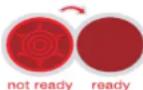
Tefal cookware comes both with and without Thermo-Spot™ technology. Should your pan have a heat indicator like the ones shown, this will tell you when the pan has reached the opmum cooking temperature (approx 190°C).
When cold: - The Thermo-Spot™ paern is visible. Add a drop of cooking oil to your pan. Wait and the spot will turn a solid colour when the pan is perfectly preheated and ready to cook. When the paern is no longer visible reduce the heat to maintain the temperature. This Thermospot technology should therefore help to prevent you overheang the pan.
Ceramic coated cookware
- The ceramic surface can be heated up to 570^ / 300^ on a stovetop.
• The high heat resistance of the ceramic interior surface makes the pan ideal for searing, browning and frying. - The ceramic cookware promotes healthy cooking by requiring less saturated fats and oils while cooking
Utensils
• We recommend to use plasc, silicone or wooden utensils for best long term results.
- If your product has a non-sck coang – see secon "Cookware with non-sck coang"
- Slight surface markings are normal and will not diminish the performance of your cookware
Oven and grill use
- Cookware is oven safe up to 500°F/260°C/Gas Mark 9 if the handles are made of stainless steel without any bakelite or silicone insert or wrap. Refer to the handle and knob secon to check the safe temperature for your cookware.
• Always use oven gloves when moving your cookware into or out of the oven.
- Tempered glass lids are oven safe up to a maximum of 350^ F/ 175^ C/ Gas Mark 4. You must remove glass lids from pans before pung the pans in an oven above this temperature. Refer also to the secon "Handles and Knobs".
- Cookware with Stainless Steel handles that do not include any silicone or bakelite insert with non-sck coated interior can be put under the grill but must be at a minimum distance of 5cm from the grill heaters
Cleaning your cookware
• Aer each use, wash the inner and outer coangs of your pan with hot water, liquid detergent and a sponge. Rinse and dry thoroughly.
- Do not use metal scouring pads, abrasive wire wool or harsh scouring powder.
- Never put cold water into a hot pan or plunge hot cookware in cold water. Sudden changes of temperature may cause metal to warp, resulting in an uneven base.
- Do not soak the outside of your pans for an extended period due to some aluminium xings (eg rivets). Always dry your cookware thoroughly.
Dishwashing
- Not all Tefal cookware is dishwasher safe. Please check the labels on the packaging. Please also refer to the secon "Handles, Knobs and Lids. If your cookware is dishwasher safe, washing by hand is sll recommended.
- If placed in the dishwasher the outer coang and any aluminium xings may become dulled and discoloured due to the acon of certain detergents. Our guarantee does not cover this type of wear, however the performance of the pan will not be aected.
• To maintain the performance of the non-sck coang, repeang 'condioning' aer dishwashing is recommended (see "Before First Use").
• Do not leave your cookware in the dishwasher aer the cycle has nished
Cleaning - for cookware without non-sck coang
• For regular care, clean your pans with hot water, liquid detergent and a sponge (scouring powder and scouring pads are not recommended).
- For more stubborn stains or if food has been accidentally burnt inside the pan, soak in hot water. Use a ne specialist stainless steel powder cleanser with water to form a paste. Apply paste using a so cloth. Rub in a circular moon from the centre outward. Wash in hot soapy water, dry immediately to prevent tarnishing.
- Never use bleach, oven cleaners or chlorine based products on your pans as it is extremely corrosive to stainless steel, even when diluted. It will cause my pits to appear in the surface of the steel which may be unsightly and will act the cooking performance.
- Do not use steel wool, steel scouring pads or harsh detergents.
- Nylon scouring pads are safe to use.
- Be advised that stainless steel exterior nishes and xings may become dull due to the abrasive nature of some dishwasher detergents. These eects are not covered under guarantee.
• Even if your product is dishwasher safe, hand washing is recommended and dry thoroughly immediately aer washing it to prevent tarnishing.
- Do not leave your cookware in the dishwasher aer the cycle has nished.
- With stainless steel cookware, blue or yellow discoloraon may appear over me. This is a natural occurrence that may result from overheang and does not indicate any problem with the cookware.
- The following may also occur due to inadequate cleaning or leaving to boil dry:- - White spots (e.g. from boiling potatoes), white ne scale, rainbow eect/ iridescent glints, brown drying rings (watermarks)
- If the product is made of stainless steel discolouraon can appear on the outer surface. The discolouraon can be removed with a special cleaner for stainless steel cookware, or by adding lemon juice or vinegar to your regular cleaning soluon
* TEFAL household appliances appear under the T-FAL brand in some territories like America and Japan. TEFAL/T-FAL are registered trademarks of Groupe SEB
How to recognise & avoid defects covered by the Stainless Steel guarantee
Exterior base:
The body shape of the cookware is guaranteed against external encapsulated base detachment or bubble between the encapsulated base and the body shape. This can create some overheang and some hot spots. It is covered by the guarantee

Interior surface of the product:
• The body shape of the cookware is guaranteed against dark brown and black rusty stains
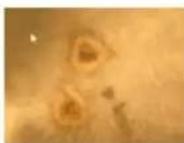
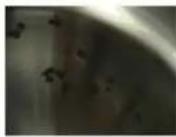
- If you notice some stains on the inner surface of the product, first clean it following the care instrucons. If stains are still significant when you slide your ngernail along the surface aer cleaning, or if the mark looks like some ping or hole it is covered by the guarantee.
⇒ Some helpful advice:
→ Always add salt to water only aer it has come to the boil
→ Do not use any detergent which contains chlorine
→ Do not use any hydrogen peroxide or bleach
Stain before cleaning

Stain after cleaning

Handle, side handle and knob:
- If the pan has welded brackets and the handle is broken due to the welding points and there are no holes on the side of the pan, this defect would be covered by the guarantee.
How to recognise and avoid defects NOT covered by the Stainless Steel guarantee
Cleaning results not covered by the guarantee:
- Some detergents are very aggressive and can act the stainless steel exterior nishes and xings. These may discolour and become dull due to the abrasive nature of some dishwasher detergents. These eects are not covered by the guarantee.
Even if your product is dishwasher safe, hand washing is recommended
Do not keep your cookware in the dishwasher when the cleaning cycle is nished
→ We also recommend to dry your cookware aer cleaning with a so paper towel
Discolouraon on the interior not covered by the guarantee:
• Overheang can cause brown or blue stains. This is not a defect in the product, it occurs from using too high a heat setng (typically in an empty or minimally lled pan).
- Large amounts of iron in your water can cause discolouration as well and result in the pot looking slightly rusty. It can be easily removed by following the cleaning instrucons.
- A blue colour can appear on the inside base of the product due to cooking food which contain some starch like rice or pasta.
- Also some white stains may be noced on the inside base depending on your water supply. These are due to limestone (scale in the water) and can be easily removed by cleaning the product with some white vinegar or lemon juice.
→ Clean your cookware by using some white vinegar or lemon juice with so paper towel
→ Clean the pan with a specialist stainless steel cleaner
Always add salt to water only aer it has come to the boil
Discolouraon of the external surface not covered by the guarantee
- Overheang can cause brown or blue stains. This is not a defect in the product, it occurs from using too high a heat seng (typically in an empty or minimally lled pan).
→ Clean the pan with a specialist stainless steel cleaner
Warping of the product not covered by the guarantee
- Dropping the pan can cause some deformation
• Overheang or heang an empty pan can also cause some warping of the product
Do not add any cold water inside a hot pan, this may cause a sudden change of temperature which can cause the base to warp.
→ Use the appropriate hot ring or gas ame size for the pan.
→ Clean and dry the external base of the pan before using it on a ceramic hob.
Select the proper hob ring or gas ame size so that the heat or gas ame touches only the boom of the cookware and does not climb up the sides of the pan
⇒ Be aware that cooking with an inducon hob needs special aenon. A hot temperature can be reached very quickly and an extreme and sudden change of the temperature can cause the product to warp.
Handle, side handle and knob; damages not covered by the guarantee
If the pan has welded brackets and the handle is broken at the welding points and there are holes on the side of the pan, it means that the product has been overloaded. This issue would not be covered under the guarantee.
Discolouration of the external base

Specialist cleaner

Specialist cleaner


- Before rst use
- General cooking ps
- Hob suitability and use
- Use on an inducon hob
- Helpful hints on lid use
- Handles and knobs
- Cookware with non-sck coang (care and cleaning)
- Non-sck coang with Thermospot Technology
- Ceramic coated cookware
- Utensils
- Oven and grill use
- Cleaning your cookware
- Dishwashing
- Cleaning - for cookware without non-sck coang
- How to recognise & avoid defects covered by the Stainless Steel guarantee
- Exterior base:
- Interior surface of the product:
- Handle, side handle and knob:
- How to recognise and avoid defects NOT covered by the Stainless Steel guarantee
- Cleaning results not covered by the guarantee:
- Discolouraon on the interior not covered by the guarantee:
- Discolouraon of the external surface not covered by the guarantee
- Warping of the product not covered by the guarantee
- Handle, side handle and knob; damages not covered by the guarantee
Brand : TEFAL
Model : Ceramic Control
Category : Frying Pan