
HD 130 - Sander Cocraft - Free user manual and instructions
Find the device manual for free HD 130 Cocraft in PDF.


| Product Type | Orbital Sander |
| Model | HD 130 |
| Brand | Cocraft |
| Rated Voltage | 230 V AC, 50 Hz |
| Rated Power | 130 W |
| Oscillations per Minute | 26,000 |
| No-Load Speed | 13,000 min⁻¹ |
| Sanding Sheet Size | 140 x 140 x 80 mm |
| Weight | Approximately 1 kg |
| Sound Pressure Level | 75 dB(A) (K=3 dB(A)) |
| Sound Power Level | 86 dB(A) (K=3 dB(A)) |
| Vibration Level | 4.4 m/s² (K=1.5 m/s²) |
| Dust Extraction | Yes, via dust extractor adaptor |
| Power Switch | ON/OFF button (I/O) |
| Safety Features | Double insulation, safety symbols |
| Maintenance | Keep ventilation openings clean; clean with damp cloth |
| Disposal | Do not dispose with household waste; recycle |
| Application | Sanding and polishing wood, dry filler, painted and lacquered surfaces |
| Compliance | 2006/42/EC, 2004/108/EC, EN 60745-1, EN 60745-2-4 |
Frequently Asked Questions - HD 130 Cocraft
User questions about HD 130 Cocraft
0 question about this device. Answer the ones you know or ask your own.
Ask a new question about this device
Download the instructions for your Sander in PDF format for free! Find your manual HD 130 - Cocraft and take your electronic device back in hand. On this page are published all the documents necessary for the use of your device. HD 130 by Cocraft.
USER MANUAL HD 130 Cocraft
Read the entire instruction manual carefully and make sure that you fully understand it before you use the equipment. Keep the manual for future reference.
Viktig information:
Original instructions
Bruksanvisning i original
Originalbruksanvisning
Please read the entire instruction manual before using the product and save it for future reference. We reserve the right for any errors in text or images and any necessary changes made to technical data. If you have any questions regarding technical problems please contact Customer Services (see address on reverse).
General Safety Instructions
Caution: Read all instructions. Failure to adhere to the following instructions may lead to electric shock, fire and/or serious injury. The term “electrical hand tools” in the warning text below refers to your mains operated or battery operated hand tool.
SAVE THESE INSTRUCTIONS.
1) Work space
a) Keep the work space clean and well illuminated. Cluttered and poorly lit areas invite accidents.
b) Do not use electrical hand tools in explosive environments, i.e. nearby flammable liquids, gases or dust. Electrical hand tools generate sparks that can easily ignite dust or fumes.
c) Keep children and other bystanders away from the area where you are using the electrical hand tool. Distractions can cause you to lose your concentration and control.
2) Electrical safety
a) The electrical hand tool's plug must fit correctly into the wall socket. Never modify the plug in any way. Never use an adaptor together with earthed electrical hand tools. Unmodified plugs and suitable wall sockets decrease the risk of electric shock.
b) Avoid physical contact with earthed objects, such as pipes, radiators, ovens or refrigerators. There is an increased risk of electrical shock if your body is earthed.
c) Do not expose the electrical hand tool to rain or other wet conditions. If water gets inside an electrical hand tool it increases the risk of electric shock.
d) Do not abuse the lead. Never use the lead to carry the tool or pull the plug from the wall socket. Keep the lead away from heat, oil, sharp edges and movable parts. Damaged or tangled leads increase the risk of electrical shock.
e) When using electrical hand tools outdoors use an extension lead that is suitable for this purpose. Use of an extension lead designed for outdoor use decreases the risk for electric shock.
3) Personal safety
a) Pay attention to your actions and use common sense when using electrical hand tools. Never use electrical hand tools if you are tired or under the influence of drugs, alcohol or medication. One moment of inattention while using an electrical hand tool may result in serious injury.
b) Use protective equipment. Always wear safety glasses. Using protective clothing such as face masks, non-slip safety shoes, helmets and ear defenders when needed decreases the risk of injury.
c) Avoid accidental starts. Make sure that the power switch is set to OFF before you connect the device to the wall socket. Never carry an electrical hand tool with one finger on the trigger or never connect the hand tool to a wall socket when the switch is set to ON, since it may result in injury.
d) Remove all tools/keys before switching on the hand tool. A service tool left on moving parts of the electrical hand tool may result in injury.
e) Do not overreach. Make sure you stand steady and have good balance at all times. This will allow you to have more control in unexpected situations.
f) Wear suitable clothing. Do not wear loose fitting clothing or jewellery. Keep hair, clothes and gloves away from moving parts. Loose fitting clothes, jewellery or long hair could get caught in moving parts.
g) If the equipment for dust extraction or collection is available make sure that it is connected and used properly. Using technical aids may decrease dust related hazards.
4) Use and maintenance of electrical hand tools
a) Do not force the electrical hand tool. Use an electrical hand tool suitable for the work you are about to perform. The proper electrical hand tool will perform the task better and safer if used at the correct feed rate.
b) Never use the electrical hand tool if the power switch does not switch the tool on and off properly. All electrical hand tools that can not be controlled by the power switch are dangerous and must be repaired.
c) Unplug the lead from the wall socket before making any adjustments, changing accessories or storing the electrical hand tool. These precautions reduce the risk of the electrical hand tool starting unexpectedly.
d) Store electrical hand tools that are not being used out of children's reach. Do not allow people who are unfamiliar with the tool or its functions to operate the tool. Electrical hand tools can be dangerous if they fall into the hands of inexperienced users.
e) Maintaining electrical hand tools. Check for any incorrect settings, parts that catch, broken parts or anything else which may cause the electrical hand tool to malfunction. If something is damaged it must be repaired before use. Many accidents are caused by poorly maintained electrical hand tools.
f) Keep tools sharp and clean. Properly maintained cutting tools with sharp blades are less likely to jam and are easier to control.
g) Use the electrical hand tool, accessories and similar according to the instructions and in an appropriate way suitable for the type of electrical hand tool used. Also take into consideration your work environment and the type of work to be done. Using the electrical hand tool for purposes other than for what it is intended could result in a dangerous situation.
5) Service
a) Repairs and service should only be performed by qualified tradesmen, and only with original spare parts. This guarantees that the safety of the electrical hand tool is maintained.
Safety instructions specific to sanders
- Wear a dust mask whenever sanding and a dust extractor connected to the machine should also be used wherever possible.
- Extra caution should be taken when sanding lead paint, wood, metal or other materials which produce toxic dust. Make sure any bystanders in the work area are well protected.
- Remember that dust caused by sanding can be very flammable when mixed with air.
Safety symbol guide

Read the entire instruction manual.

Always use ear defenders, dust masks, safety glasses or visors.
Product description
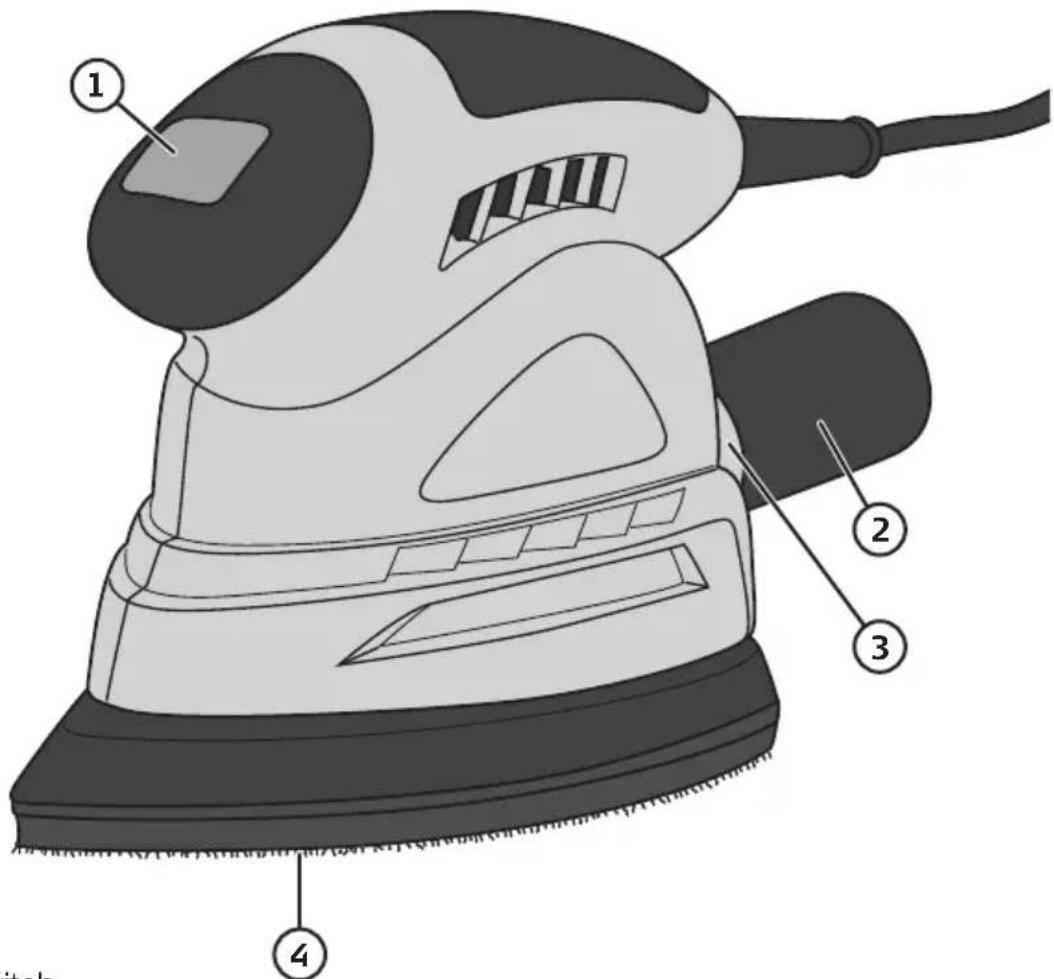
- Power switch
- Dust extractor adaptor
- Dust extractor connection
- Sanding pad
Operation
This machine is designed for sanding and polishing wood, dry filler, painted and lacquered surfaces. Make sure that the surfaces you plan to sand/polish are dry.
- Stand steady and balanced, holding the sander in a firm grip.
- Press [1] on the power button to start the motor.
- Let the sander come up to speed before sanding.
- Turn off the sander by pressing [0] on the power button.
Changing sanding sheets
- Pull out the plug from the outlet before changing sanding sheets.
- Remove the old sanding sheet and replace it with a new one.
Care and maintenance
- Always keep the motor's ventilation openings free of dust and debris.
- Clean the machine regularly using a lightly moistened cloth. Avoid abrasive cleaning solutions or solvents.
Responsible disposal
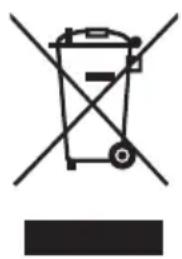
This symbol indicates that this product should not be disposed of with general household waste. This applies throughout the entire EU. In order to prevent any harm to the environment or health hazards caused by incorrect waste disposal, the product must be handed in for recycling so that the material can be disposed of in a responsible manner. When recycling your product, take it to your local collection facility or contact the place of purchase. They will ensure that the product is disposed of in an environmentally sound manner.
natural_image
Symbol of a recycling bin with crossed lines and a blank rectangular base (no text or numbers)Specifications
Rated voltage 230 V AC, 50 Hz
Rated power 130 W
Oscillations/min. 26 000
No load speed 13 000 min -1
Sanding sheet 140 × 140 × 80 mm
Weight Approximately 1 kg
Sound pressure (LpA) 75 dB(A), K = 3 dB(A)
Sound power (Lwa) 86 dB(A), K = 3 dB(A)
Vibration 4.4 m/s ^2 , K = 1.5 m/s ^2
Slipmaskin
Art.nr 18-3133 Modell JD2577 40-7007 JD2577
natural_image
Symbol of a trash bin crossed out by two crossed lines, with no text or labels present.Specifikationer
Märkspänning 230 V AC, 50 Hz
Märkeffekt 130 W
natural_image
Symbol of a trash bin crossed with no text or labels, accompanied by a black rectangular block below (no text or symbols present)Spesifikasjoner
Spenning 230 V AC, 50 Hz
Effekt 130 W
Svingninger/min. 26 000
Turtall, ubelastet 13 000 min -1
natural_image
Symbol of a trash bin crossed with no text or numbers, representing waste sorting or disposal (no text present)Tekniset tiedot
Nimellisjännite 230 V AC, 50 Hz
Teho 130 W
natural_image
Symbol of a trash bin crossed with no text or numbers, representing waste sorting or restriction (no text present)Technische Daten
Declaration of Conformity
Declares that this product complies with the requirements of the following directives and standards
Machinery Directive 2006/42/EC
EN 60745-1:2009
EN 60745-2-4:2009
EMC Directive 2004/108/EC
EN 55014-1:2006
EN 55014-2:1997
+A1:2001 +A2:2008
EN 61000-3-2:2006
EN 61000-3-3:2008
Henrik Alfredsson
Manager Technique & Quality
Insjön, Sweden, 2016-04-15
Sverige
Postal 10 - 13 Market Place
Kingston Upon Thames
Surrey
KT1 1JZ
Deutschland
Kundenservice
- Viktig information:
- General Safety Instructions
- SAVE THESE INSTRUCTIONS.
- 1) Work space
- 2) Electrical safety
- 3) Personal safety
- 4) Use and maintenance of electrical hand tools
- 5) Service
- Safety instructions specific to sanders
- Safety symbol guide
- Product description
- Operation
- Changing sanding sheets
- Care and maintenance
- Responsible disposal
- Specifications
- Slipmaskin
- Specifikationer
- Spesifikasjoner
- Tekniset tiedot
- Technische Daten
- Declaration of Conformity
- Sverige
- Deutschland
Brand : Cocraft
Model : HD 130
Category : Sander