
VW247M - Dishwasher ETNA - Free user manual and instructions
Find the device manual for free VW247M ETNA in PDF.


| Product Type | Dishwasher |
| Brand | Etna |
| Model | VW247M |
| Capacity | 12 place settings |
| Number of Programs | 9 (Eco, 3 Smart Auto, 50 minutes, Easy care, Delicate, Quick, Prewash) |
| Water Consumption (Eco Program) | 9.0 L |
| Energy Consumption (Eco Program) | 0.907 kWh |
| Cycle Time (Eco Program) | 222 minutes |
| Half Load Function | Yes (upper basket, lower basket, or both) |
| Delayed Start | 1–19 hours |
| Extra Hygiene Option | Yes (increases temperature and duration) |
| Extra Dry Option | Yes (adds heating/drying steps) |
| Water Softener | Yes, adjustable (6 hardness levels) |
| Salt and Rinse Aid Indicators | Yes |
| Active Drying Unit | Yes |
| Flood Protection | Yes (safety switch) |
| Filter System | Three-stage (fine, coarse, large filter) |
| Spray Arms | Upper and lower, removable for cleaning |
| Height Adjustable Upper Basket | Yes (2 positions) |
| Folding Racks in Lower Basket | Yes (two parts, foldable separately) |
| Adjustable Glass Rack | Yes (2 heights) |
| Cutlery Basket | Yes |
| Detergent Capacity | Up to 45 g (pre/main doses) |
| Installation Type | Built-in |
Frequently Asked Questions - VW247M ETNA
User questions about VW247M ETNA
0 question about this device. Answer the ones you know or ask your own.
Ask a new question about this device
Download the instructions for your Dishwasher in PDF format for free! Find your manual VW247M - ETNA and take your electronic device back in hand. On this page are published all the documents necessary for the use of your device. VW247M by ETNA.
USER MANUAL VW247M ETNA
Contact a registered installer to fit your appliance (see “Installation instructions”). Do not connect the appliance to the electrical mains until the installation is complete.
This appliance is intended to be used in household and similar applications such as:
▶staff kitchen areas in shops, offices and other working environments;
▶farmhouses;
▶by clients in hotels, motels and other residential type environments;
▶bed and breakfast type environments.
For EN60335-1:
- This appliance can be used by children aged from 8 years and above and persons with reduced physical, sensory or mental capabilities or lack of experience and knowledge if they have been given supervision or instruction concerning use of the appliance in a safe way and understand the hazards involved. Children shall not play with the appliance. Cleaning and user maintenance shall not be done by children without supervision.
For IEC60335-1:
- This appliance is not intended for use by persons (including children) with reduced physical, sensory or mental capabilities, or lack of experience and knowledge, unless they have been given supervision or instruction concerning use of the appliance by a person responsible for their safety.
- Packaging material could be dangerous for children!
- This appliance is for indoor household use only.
- To protect against the risk of electrical shock, do not immerse the unit, cord or plug in water or other liquid.
- Please unplug before cleaning and performing maintenance on the appliance.
- Use a soft cloth moistened with mild soap, and then use a dry cloth to wipe it again.
Earthing Instructions
- This appliance must be earthed. In the event of a malfunction or breakdown, earthing will reduce the risk of an electric shock by providing a path of least resistance of electric current. This appliance is equipped with an earthing conductor plug.
- The plug must be plugged into an appropriate outlet that is installed and earthed in a ccordance with all local codes and ordinances.
-
Improper connection of the equipment-earthing conductor can result in the risk of an electric shock.
-
Check with a qualified electrician or service representative if you are in doubt whether the appliance is properly grounded.
- Do not modify the plug provided with the appliance, if it does not fit the outlet.
- Have a proper outlet installed by a qualified electrician.
- Do not abuse, sit on, or stand on the door or dish rack of the dishwasher.
- Do not operate your dishwasher unless all enclosure panels are properly in place.
- Open the door very carefully if the dishwasher is operating, there is a risk of water squirting out.
- Do not place any heavy objects on or stand on the door when it is open. The appliance could tip forward.
When loading items to be washed:
- Locate sharp items so that they are not likely to damage the door seal;
▶Warning: Knives and other utensils with sharp points must be loaded in the basket with their points facing down or placed in a horizontal position.
- Some dishwasher detergents are strongly alkaline.
They can be extremely dangerous if swallowed.
Avoid contact with the skin and eyes and keep children away from the dishwasher when the door is open.
- Check that the detergent powder is empty after completion of the wash cycle.
- Do not wash plastic items unless they are marked “dishwasher safe” or the equivalent.
- For unmarked plastic items not so marked, check the manufacturer's recommendations.
- Use only detergent and rinse agents recommended for use in an automatic dishwasher.
- Never use soap, laundry detergent, or hand washing detergent in your dishwasher.
- The door should not be left open, since this could increase the risk of tripping.
- If the supply cord is damaged, it must be replaced by the manufacturer or its service agent or a similarly qualified person in order to avoid a hazard.
- During installation, the power supply must not be excessively or dangerously bent or flattened.
- Do not tamper with controls.
- The appliance needs to be connected to the main water valve using new hose sets. Old sets should not be reused.
- To save energy, the appliance will go to standby mode automatically when there is no operation during some time.
CONTENTS
Your dishwasher
Introduction 4
Description
Control panel 5 Interior 6
Operation
Switching on 7 Cycle selection table 10 Regeneration salt (water softener) 11 Reset 12 Setting the water hardness 12 Rinse aid reservoir 12 Dishwasher detergents 14
Loading
Loading the baskets 16 Damage to glassware and other crockery 19
Maintenance
Filter system 20 Cleaning the spray arms 21 Cleaning the door 21
Errors
What should I do, if... 22 Interference table 22 Error codes 24
Appendix
Disposal 25
YOUR DISHWASHER
Introduction
You have opted to purchase an Etna dishwasher.
Optimum user comfort and easy operation were paramount during the development of this product.
This manual describes how you can get the most out of your dishwasher. It provides you with information on how to operate the appliance, as well as background information about how it works. You will furthermore also find maintenance tips.
The safety instructions that are relevant during the installation are included in the installation guide. This is intended for the installation technician.
Read this manual before using the appliance.
Keep this manual in a safe place so that the next possible user can also benefit from it.
Control panel
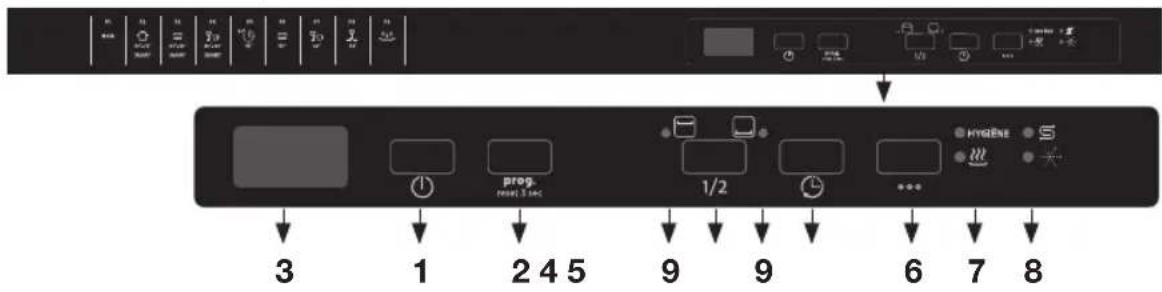
- On/Off button
- Program button
- Program display
- Half load button
- Delayed start button
- Options button
- Extra hygiene / extra dry indicators
- Salt / rinse aid indicators
- Upper basket / lower basket half load indicators
Interior
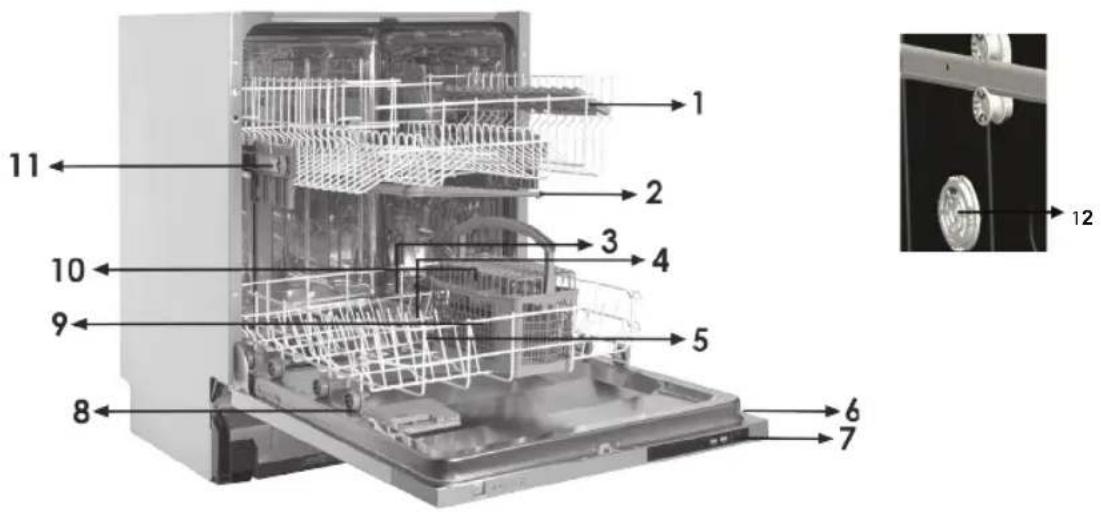
- upper basket
- upper spray arm
- lower basket
- lower spray arm
- filters
- type plate
- operating panel
- detergent and rinse aid reservoir
- cutlery basket
- salt reservoir
- guide rail top basket
- active drying unit
Switching on
- Open the door of the dishwasher.
- Press the 'on-off' button to switch on the device.
The check light End Program is on | - Select the desired program (see 'program selection table'). Select a cycle using the programming button.
The check light that belongs to the selected program is on. - Close the door of the dishwasher.
The dishwasher will automatically start running the selected cycle. The remaining program time appears on the display.
Selecting a half load
Press the ‘half load’ button to activate the half load cycle. In the half loading program, you can use both the upper and lower basket and both baskets simultaneously.
For a small quantity of dirty dishes, in both the upper and lower basket, repeatedly press the 'half load' button until the indicators of upper and lower basket light up.
For a small quantity of dirty dishes in the upper basket, repeatedly press the 'half load' button until the indicator of the upper basket lights up.
For a small quantity of dirty dishes in the lower basket, repeatedly press the 'half load' button until the indicator of the lower basket lights up.
Delayed start time
If you want the dishwasher to switch on at a later time, you can use the 'delayed start' button. You can choose between a delay time of 1, 2...
19 hours. Each press of the button changes the delay time.
The display shows the delayed start time.
Then select the desired program and close the door of the dishwasher.
Options
Press the options button once to activate the extra hygiene option.
When you activate it, the extra hygiene indicator will light up and the washing temperature and duration changes on the selected program.
This ensures a more hygienic wash.
Press the options button twice to activate the extra dry option. When you activate it, the extra dry indicator will light up and extra heating/drying steps will be added to the selected program.
Press the button a third time to deactivate the functions, both lights will switch off.
If an extra feature has been used on the most recent wash program, this feature will remain active on the next selected program. To cancel this feature on the newly selected wash program, press the feature button until the light on the button switches off.

Note! If you decide not to start the selected program, please see the "Stopping or changing a wash cycle" section.
When there is insufficient softening salt, the salt indicator will light up to indicate the salt container needs filling. When there is insufficient rinse aid, the rinse aid indicator will light up to indicate the rinse aid reservoir needs filling.
Indicators
- Salt.
The indicator shows that you have to fill the salt container with regeneration salt. - Rinse aid.
The indicator shows that you have to fill the rinse aid reservoir.
Stopping or changing a wash cycle
- Open the door.
The last selected program appears on the display. - Press and hold the programming button for more than 3 seconds. The 'End program' indicator is blinking. '1' appears on the display.
- Close the door of the dishwasher.
The machine pumps out for about 30 seconds. Following the end of this, an alarm signal will sound and the indicator shows that the program has finished. - You can again select the desired program (see program selection table).
- Now close the door.

Note! A cycle that has already begun can only be changed in the start-up phase. After this, the detergent will be sprayed all over the dishes or the machine may have already pumped out the water. In that instance, you must refill the detergent compartment (see section on Dishwasher detergent).

Warning!
Opening the door fully during the wash cycle is dangerous. You may be splashed with hot water from the machine.
Following the end of the wash cycle
After the washing program has finished, the ‘End program’ indicator flashes and an alarm signal sounds 5 times. Open the door of the dishwasher. Switch off the device with the on/off button. Wait a few minutes before unloading the dishwasher. The dishes and cutlery will still be very hot immediately following the end of the cycle. There is a chance that dishes may break as a result of the heat. Moreover, the dishes dry better when allowed to stand for a few minutes.
Flood protection switch
Your dishwasher is fitted with a safety switch that prevents too much water from running into the appliance. The safety switch closes the inlet valve and instructs the dishwasher to pump out the surplus water. If there is water in machine (due to too much water being fed in previously, or as a result of a leak), this must first be removed before the appliance is switched on again.
Cycle selection table
| Program Cycle | Selection information Description | of cycle Detergent | pre/main | Time (min.) | Energy (KWh) | Water (L) | Water Half Load (L) |
| Eco^(1) P1 eco | This is the standard program, it is suitable to clean normally soiled tableware and it is the most efficient programme in terms of its combined energy and water consumption for that type of tableware. | PrewashMain wash (50 °C)Hot rinse (55 °CDry | 5/25 gr. 222 | 0.907 | ^(2) 0.923 ^(3) | 9.0 9.0 | |
| Smart Auto program for heavily soiled dishes. | PrewashHot prewash (50 °C)Main wash (60 or 70 °CCold rinseIntermediate rinse (+ or -)Hot rinse (70 °CDry | 5/25 gr. 97- | 178 1.300- | 2.000 | 11.8-24.0 | 7.6-19.8 | |
| Smart Auto program for normally soiled dishes. | PrewashMain wash (50 or 60 °CCold rinseIntermediate rinse (+ or -)Hot rinse (70 °CDry | 5/25 gr. 89- | 121 1.100- | 1.300 | 10.9-18.5 | 6.7-14.3 | |
| Smart Auto program for normally soiled delicate dishes. | PrewashMain wash (30 or 50 °CCold rinseIntermediate rinse (+ or -)Hot rinse (60 °CDry | 5/25 gr. 69- | 92 0.700- | 0.900 | 10.6-17.7 | 6.6-13.7 | |
| 50 minutes Daily dishes in 50 minutes. For day-to-day dishes, such as lightly soiled or normal plates and pans. | Main wash (65 °CCold RinseHot rinse (70 °CDry | 25 gr. 50 1. | 000 9.5 9.5 | ||||
| Easy care Suitable for normally soiled daily dishes. | PrewashMain wash (60 °CCold RinseHot rinse (70 °CDry | 5/25 gr. 94 | 1.320 14.4 | 11.1 | |||
| Delicate Suitable for lightly soiled delicate dishes. | PrewashMain wash (40 °CCold RinseHot rinse (60 °CDry | 5/25 gr. 74 | 0.800 13.9 | 10.0 | |||
| Quick Lightly soiled dishes, such as glasses, crystal and fragile porcelain. No drying. | Main wash (40 °CCold RinseHot rinse (50 °C) | 25 gr. 30 0. | 670 10.9 | 10.9 | |||
| Prewash To rinse dishes that you plan to wash later that day. | Prewash | 15 0.020 | 4.2 4.2 | ||||
(1) This program is the test cycle.
The information for comparability test in accordance with EN 50242/EN 60436.
(2) According to standard EN 50242
(3) According to standard EN 60436
Regeneration salt (water softener)
natural_image
Close-up of a mechanical component with a circular dial and a ruler, no visible text or symbols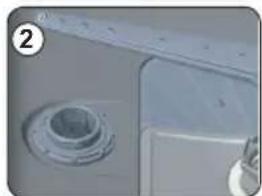
natural_image
Close-up of a mechanical component with a circular recess and a small protrusion (no visible text or symbols)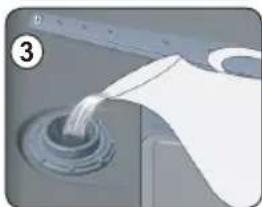
natural_image
Close-up of a mechanical component with a white plastic sheet being inserted into a circular opening (no visible text or symbols)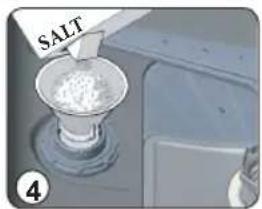
This machine is equipped with a water softener. To use the water softener, fill the dishwasher with salt.
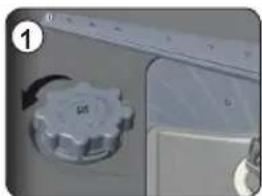
- After first having removed the lower basket, loosen the cap of the reservoir (1 and 2).
- Prior to filling up the reservoir for the first time, pour one litre of water in it.
- Place the funnel in the reservoir opening. Pour about 2 kg of salt in it. It is normal for a little water to flow out of the opening when doing this. Note! Clear up any spilled salt and always run a full cycle immediately afterwards to prevent damage to the bottom.
- Carefully tighten the cap of the reservoir.
Note! Always fill the salt reservoir and adjust the water hardness setting before using the dishwasher. Refill the salt reservoir when the water softener indicator lights up. It is possible that the light will remain lit for a short while after the salt reservoir is filled. It will go out automatically when enough salt has been dissolved in the water.
Setting the salt consumption
Adjust the salt consumption according to the table below:
| Water hardness level | German hardness dH | French hardness dF | English hardness dE | Indicator |
| 1 0-5 | 0-9 0-6 L1 appears on the display | |||
| 2 6-11 | 10-20 7-14 L2 appears on the display | |||
| 3 12-17 | 21-30 15-21 L3 appears on the display | |||
| 4 18-22 | 31-40 22-28 L4 appears on the display | |||
| 5 23-31 | 41-55 29-39 L5 appears on the display | |||
| 6 32-50 | 56-90 40-64 L6 appears on the display | |||

Your local water authority can inform you how hard your mains water is. Adjustments can then be made according to the above table.
The standard water hardness level is set at level 3.
OPERATION
Reset
Open the door of the dishwasher
The indicator of the program selected last is flashing.
Press and hold the programming button for more than 3 seconds.
The ‘End Program’ indicator is flashing. The indicator of the program selected last turns off
Close the door of the dishwasher.
The machine pumps out for about 30 seconds. Following the end of this, a sound signal will click 5 times and the indicator shows that the program has finished.
Switch off the dishwasher with the on/off button.
Setting the water hardness
Press the program button and keep it pressed.
Switch on the dishwasher simultaneously with the on/off button.
Keep the program selection button pressed until "SL" disappears from the display. Release the program selection button after "SL" disappears from the display.
Your machine displays the latest entered water hardness setting.
Water hardness can be adjusted by the program selection button according to Table of Water Hardness Level Settings.
After selecting the desired setting, press the on/off button.
The set value is stored in the memory.
Rinse aid reservoir
Rinse aid is added during the final rinse. Rinse aid prevents traces of water droplets being left behind on the clean dishes. Moreover, it ensures that the dishes dry quicker, since the water drains off more easily.
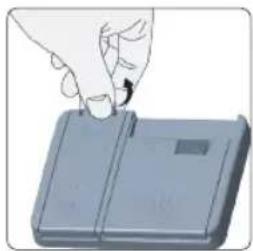
The dishwasher is designed for use with liquid rinse aid. The rinse aid reservoir is located on the inside of the door, alongside the detergent compartment.
natural_image
Illustration of a hand pressing down on a rectangular electronic device (no text or symbols visible)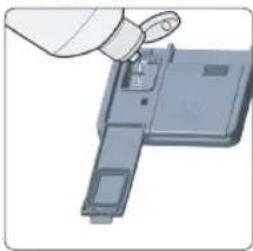
natural_image
Illustration of a hand holding a small object over a device (no text or symbols visible)Filling the rinse-aid and setting
To fill the rinse aid compartment, open the rinse-aid compartment cap. Fill the compartment with rinse aid to the MAX level and then close the cap.
Be careful not to overfill the rinse aid compartment and wipe up any spills.
In order to change the rinse aid level, follow the below steps before turning on the machine:
-
Push the programme button and hold it down.
-
Turn on the machine.
-
Hold down the programme button until "rA" disappears from the display.
▶Rinse aid set follows water hardness set.
The machine will display the current setting.
-
Set the level by pushing the programme button.
-
Switch off the machine to save the setting.
The factory setting is "4".
- If the dishes are not drying properly or are spotted, increase the level. If blue stains form on your dishes, decrease the level.
| Level | Brightener Dose Indicator | |
| 1 | Rinse-aid not dispensed r1 | |
| 2 | 1 dose is dispensed r2 | |
| 3 | 2 doses are dispensed r3 | |
| 4 | 3 doses dispensed r4 | |
| 5 | 4 doses dispensed r5 |
Dishwasher detergents
The chemicals in dishwashing detergents remove the dirt, break it down and make sure that the dirt is drained from the dishwasher. Most dishwashing detergents available in the store are suitable for this purpose.

Warning!
Dishwasher detergent is a corrosive product. It should therefore be kept out of the reach of children. If swallowed, consult a doctor immediately and take the packaging with you.
Concentrated detergent
Based on their chemical composition, 2 different types of concentrated detergent can be distinguished:
- Conventional alkaline detergents with corrosive ingredients.
- Low-alkaline concentrated detergents with natural enzymes.
The use of concentrated dishwashing detergent in combination with “normal” washing programs produces less contamination and is good for your dishes: these washing programs are specifically intended for dirt-dissolving characteristics of the enzymes in concentrated dishwashing detergents. This means that “normal” wash cycles with concentrated detergent achieve the same results as an intensive wash cycle.
Dishwasher tablets
Dishwasher tablets from different manufacturers dissolve at different rates. This means that, during short wash cycles, certain types of dishwasher tablet do not fully dissolve, as a result of which their cleaning action is reduced. Dishwasher tablets should therefore chiefly be used in combination with long wash cycles, so that the dish washer tablet has time to fully dissolve.
When you switch from dishwashing tablets to a traditional dishwashing detergent, you have to make sure that the salt container and the rinse agent reservoir are filled.
Detergent compartment
Your dishwasher uses less detergent and rinse agent than conventional dishwashers. Generally speaking, just one measuring spoon of detergent powder is needed for a normal wash cycle. Use more detergent if your dishes are more heavily soiled. Fill the soap compartment immediately prior to starting the cycle. Filling it prior to this may result in the detergent becoming damp and therefore not fully dissolving.

Note! The table on page 10 shows the amount of detergent required for the different cycles. These are averages. A different dosage may be necessary, depending on the hardness of the water and how soiled the dishes are.
Filling
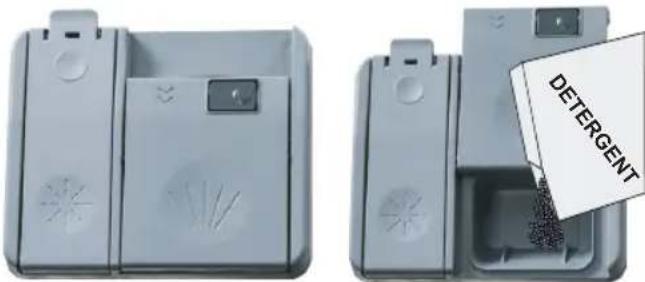
- Press the release catch if the lid is closed.
The lid will slide open. - Fill the detergent compartment immediately prior to starting a wash cycle.
The markings in the detergent compartment indicate the dosage.
- The container has a capacity of maximum 45 gr.
Fill up the container with 25 gr. of the detergent for very dirty dishes and 15 gr. for normal dishes.

Use only detergents that are specifically designed for dishwashers. Store the detergent in a cool and dry place. Only fill the detergent compartment with detergent when you are running a wash cycle immediately afterwards.
Loading the baskets
natural_image
Grid of circular objects arranged in rows, possibly industrial equipment or storage units (no visible text or symbols)Using the upper basket
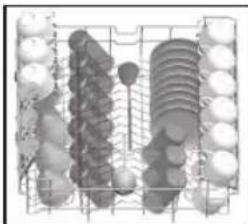
The upper basket is designed for fragile, light dishes, such as glasses, cups and saucers, plates, small bowls and shallow (not particularly dirty) pans.
Place the dishes in the basket in such a way as to ensure they cannot move when sprayed. The height of the upper basket can be adjusted.
natural_image
Illustration of a hand holding a cable or connector inside a wire cage (no text or symbols visible)Height adjustment upper basket
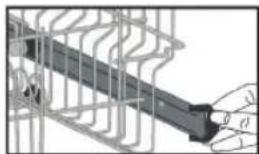
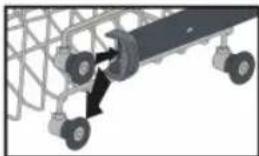
Top basket of your machine is in upper position. When it is in this position, you can place big items such as pans, etc. on lower basket. When you take top basket to lower position, you can place and wash big sized plates on the top basket.
natural_image
Mechanical assembly diagram showing a conveyor belt system with wheels and a directional arrow (no text or symbols)-
Open the basket retaining parts at the end of top basket rails by turning them to the sides.
-
Take the basket out.
-
Change the position of the wheels; reinstall the basket to the rail.
-
Close basket retainer parts.
natural_image
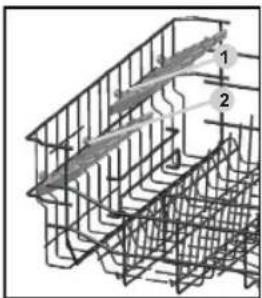
Technical line drawing of a structural steel framework with labeled components (no text or symbols present)Height Adjustable Rack
The height adjustable racks enable glasses and cups to be placed on or under the racks. The racks can be adjusted to 2 different heights. Cutlery and utensils can also be placed on the racks horizontally.
natural_image
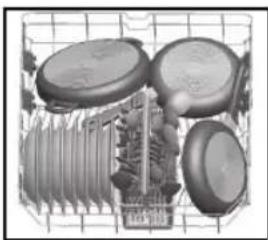
3D rendered mechanical components embedded in a grid frame, no visible text or symbolsUsing the lower basket
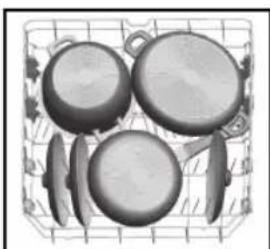
We advise you to place large objects that are hardest to clean in the lower basket: pots, pans, pan lids, oven dishes and bowls. Casserole dishes and pan lids should preferably be placed at the side of the basket. This will ensure that they do not obstruct the spray arm when it is turning.
natural_image
Illustration of a basket containing four cooking utensils (cups, panes, kitchenware) with no visible text or symbols.- Saucepans, serving dishes etc. must always be placed upside down in the basket.
- Deep bowls should be tilted, with the opening facing downwards to allow water to escape.
- The lower basket can be adjusted to allow for larger, or more, pots and pans.
LOADING
①
natural_image
Isometric view of a shopping cart with labeled parts (a and b), no visible text or symbols beyond labels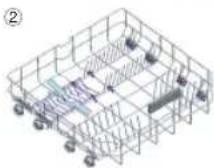
Folding Racks
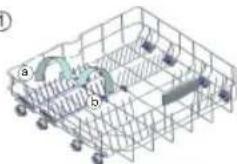
Folding racks consisting of two parts that are located on the lower basket of your machine are designed in order to let you place big items easier such as pots, pans, etc. If requested, each part can be folded separately, or all of them can be folded and larger spaces can be obtained.
Cutlery basket
The cutlery basket is used in the bottom basket. Cutlery should be placed in the cutlery basket with the handles pointing down. Long kitchen utensils such as wooden spoons have to be in a position lying down (horizontal) on the middle rack in the top basket.

Warning!
Take care to ensure that no objects are sticking through the bottom of the cutlery basket, as this will obstruct the spray arm.
Cutlery/crockery unsuitable for the dishwasher
- Cutlery with a wooden, porcelain or mother of pearl handle
- Plastic objects that are not heat-resistant
- Cutlery with glued elements that are not heat-resistant
- Glued cutlery or crockery
- Pewter or copper objects
- Lead crystal glassware
• Steel objects that are prone to rust - Wooden dishes
- Objects manufactured from synthetic fibres
Cutlery/crockery with limited suitability for use in the dishwasher
- Certain types of glass can become dull after undergoing a large number of wash cycles
• Silver and aluminium may tarnish after use in the dishwasher - Glazed patters may fade as a result of regular washing

Note! Do not place any objects soiled with cigarette ash, candle wax, varnish or paint in the dishwasher. When buying new kitchen utensils, ensure that they are suitable for the dishwasher.
Do not overload the dishwasher. There is only room for 12 standard settings. Do not place cooking utensils that are unsuitable for dishwashers inside. This is essential to ensure good washing results and a low energy consumption.
Placing cutlery and crockery in the dishwasher
Before placing the dishes in the dishwasher, you must:
- Remove any large bits of leftover food.
- Leave caked and burnt on leftover food to soak for a while.

When inserting the dishes, take care to ensure that:
- The spray arm is not obstructed by the dishes.
- Hollow objects are placed with the opening facing downwards, to ensure that that cannot hold the water.
Plates and cutlery must not cover each other
- Glassware items must not touch, otherwise damage can occur.
- Place large objects that are difficult to clean in the lower basket.
- The upper basket is specially designed for lighter objects, such as glasses and coffee and tea cups.

Warning!
- Long knives standing upright in the cutlery basket can cause injury!
- Long and/or sharp items of cutlery, such as carving knives, should be laid (placed horizontally) in the upper basket.
Damage to glassware and other crockery
Potential causes:
- Type of glass or manufacturing process. Chemical composition of the dishwasher detergent.
• Water temperature and duration of the wash cycle.
Proposed solution:
- Use glassware and porcelain crockery produced by manufacturers that state that it is suitable for dishwashers.
- Use a milder/less corrosive dishwasher detergent. If needed, ask detergent manufacturers for more information.
- Select a wash cycle with a lower temperature.
- Remove glassware and cutlery from the dishwasher as soon as possible after the cycle has finished, to prevent damage.
Filter system
natural_image
Diagram of a device with directional arrows indicating movement or flow, no readable text or symbols present.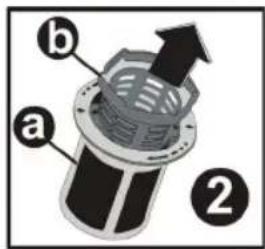
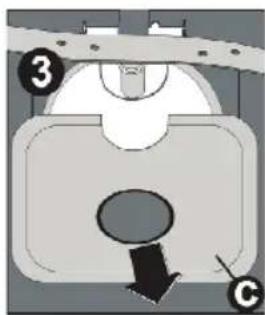
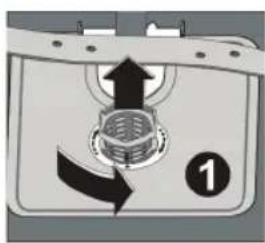
Depending on usage, the filters may require regular rinsing under a tap. The filtration system consists of three components: the large filter, the coarse filter and the fine filter.
a. Fine filter: This filter holds off dirt and food remains from the drainage pump and makes sure that these remains are not spread in the dishes again during the program.
b. Coarse filter: Larger parts such as bone remains or pieces of glass that could clog the drain are caught in the coarse filter. In order to remove the waste from the filter, you must lightly squeeze the lips on top of the filter together and then pull the filter upwards.
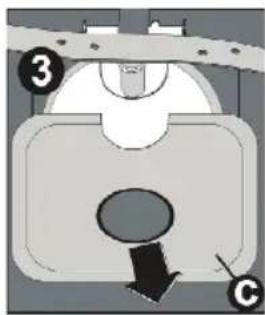
c. Large filter: Food remains and dirt that end up on this filter are rinsed to the coarse filter by means of the lower spray arm.
Clean the filter group
In order to ensure the dishwasher operates at maximum efficiency, the whole filter section must be cleaned.
The filter group efficiently removes food remains from the water and makes sure that the washing water can continue circulating during the washing program. It is therefore a good idea to remove larger food remnants from the filter section after each wash cycle, by cleaning the half-round filter and filter housing under running water.
- Remove the filter section by grasping the handle and pulling upwards. All components in the filter section must be cleaned at least once per month.
- Use a dishwashing brush to clean the coarse and fine filter. Put the filter section back together again according to the illustration opposite and then re-fit the whole filter section back into the tub of the dishwasher.

Never use the dishwasher without the filter section. Incorrect fitting of the filter section will result in the dishwasher no longer delivering maximum performance. Damage to cutlery and dishes is a further possible consequence.
Cleaning the spray arms
natural_image
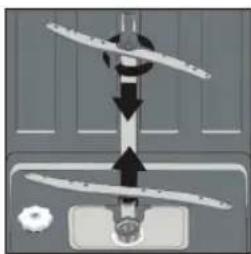
Diagram showing airflow or particle movement between two surfaces, with arrows indicating direction (no text or symbols)It is essential that you clean the spray arms on a regular basis. In the longer term, waste can block the nozzles and the bearings in the spray arms. Clean the spray arms as follows:
- Turn the nut of the upper spray arm to the left to remove the arm.
- Next remove the spray arm.
- Pull the lower spray arm upward out of the retainer.
- Clean the spray arms in warm, soapy water, using a soft brush to clean the nozzles.
- Rinse the spray arms thoroughly before fixing back in place.
Cleaning the door
Clean the edge of the door, including the sealing rubber, with a soft, damp cloth. Take care to ensure that water does not enter the door locking mechanism or electrical components. Spray-type cleaning products should not be used, nor aggressive cleaning products such as scourers. These cleaning products can damage the finish.
What should I do, if...
If the appliance is not functioning well, this does not always mean that it is faulty. Try to resolve the fault yourself first. If the recommendations below does not solve your problem, telephone our service department.

Note!
Disconnect the appliance from the power supply before beginning repairs.
Preferably by pulling out the plug from the wall socket.
Interference table
| Problem | Potential causes | Solution |
| The dishwasher is not working. | Fuse is faulty or the earthing switch has been activated. | Replace the fuse or reset the isolating switch.Remove other appliances that are connected to the same group. |
| The power supply is not switched on. | Make sure that the dishwasher is switched on and the door closed.Make sure that the plug is correctly inserted into the socket. | |
| The water pressure is too low. | Check whether the dishwasher is correctly connected to the water mains and that the tap is open. | |
| The drainage pump does not shut off. | The water is running over. | The system is designed so that it can automatically detect overflowing water. In that instance, the appliance shuts off the circulation pump and switches on the drainage pump. |
| Noise. | Some noises are normal. | Noise of rotating pump/washing noises;the detergent compartment opening. |
| Cutlery is rattling in cutlery basket or something small has fallen out of the basket. | Ensure that everything is loaded securely in the dishwasher. | |
| The motor makes an unusual noise. | The pump is blocked. Contact an installer. | |
| Contamination of the tub. | Poor quality detergent. | Only use detergent suitable for dishwashers to prevent contamination. |
| Blocked filters. | Open the door and clean the filters. Run the pre-wash cycle. | |
| Rinse agent has been spilled. | Always wipe up spilled rinse agent immediately. |
ERRORS
| Problem | Potential causes | Solution |
| Dishes not dry. | The rinse agent reservoir is empty. | Ensure that the rinse agent reservoir is filled. |
| Dishes and flat objects are not clean. | Incorrect cycle. | Select a higher cycle. |
| Baskets are incorrectly loaded. | Make sure that the detergent compartment and spray arms are not obstructed by large dishes/pans. | |
| Spotting and scaling on glasses and flat dishes. | Extremely hard water. Incoming water temperature is low. The dishwasher is overloaded.Baskets are incorrectly loaded. Old or damp detergent. Rinse agent reservoir is empty.Incorrect detergent dosage. | To remove spotting from glass objects:Remove all metal objects from the dishwasher.Use the prescribed quantity of detergent.Select the longest cycle. Allow the dishwasher to run for approximately 18 to 22 minutes.It should by then have reached the main wash cycle. Open the door carefully and pour 2 cups of white vinegar into the base. Close the door and allow the dishwasher to complete its cycle. If vinegar does not work: Repeat the above steps, but use a quarter cup (60 ml) of citric acid crystals in place of white vinegar. |
| Cloudy stains on the glassware. | Combination of soft water and too much detergent. | Use less detergent and choose the glass cycle, which you can use to clean glassware. |
| Yellow or brown scale on the inside of the tub. | Traces of iron in the water may cause spotting to the tub of the dishwasher. | Contact a manufacturer of water softeners for a special filter. |
| White scale on the inside of the tub. | Hard water. | Increase salt consumption setting |
| Dishwasher detergent is left in the detergent compartment. | The detergent compartment is blocked by dishes. | Load the baskets so that the dishes no longer block the detergent compartment.Clean the upper spray arm. |
| Steam. | When opening the door. | This is possible at the end of the cycle. |
| Black or grey stains on the dishes. | Aluminium cooking utensils have scraped the dishes. | Aluminium can tarnish. |
| Water remains under the filters. | This is normal. | A small amount of water around the drain on the rear of the tub base keeps the seal flexible. |
| The dishwasher is leaking. | Rinse agent reservoir too full or rinse agent is leaking. | Take care not to overfill the rinse agent reservoir. Spilled rinse agent can lead to foam/ flooding. Wipe up spilled rinse agent with a damp cloth. |
| The dishwasher is not standing level. | Adjust the dishwasher so that it is standing level. |
Error codes
| Problem Potential causes Solution | ||
| FF Insufficient water supply • Make sure that the water faucet is completely open and that there is no crack in the supply hose• Check if the supply hose is clogged• Restart the dishwasher• Please contact the service department if the problem persists | ||
| F5 Pressure system failure • Please contact the service department | ||
| F3 Flooding safety enabled • Close the water faucet and contact the service department | ||
| F2 The dishwasher is not pumping out • Check if the drainage hose is connected• Check the bottom filter and filter group• Restart the dishwasher and terminate the last selected program• Please contact the service department if the problem persists | ||
| F8 Heating error • Please contact the service department | ||
| F1 Flooding sound signal activated • Turn off the dishwasher and close the water faucet• Please contact the service department | ||
| FE Interference in the electronics • Please contact the service department | ||
| F7 Temperature in the machine is too high • Please contact the service department | ||
| F9 Interference of divisor position • Please contact the service department | ||
| F6 Interference of heating sensor • Please contact the service department | ||
| HI | High voltage failure • Please contact the service department | |
| LO | Low voltage failure | • Please contact the service department |

Call an authorised service if the problem still persists after the controls or in case of any malfunction not described above.
Disposal
Dispose of packaging and device
This device is manufactured with durable materials. This appliance must be disposed of responsibly at the end of its service life. The government can provide you with information about this.
The packaging of the appliance is recyclable. The following can be used:
- cardboard;
• polyethylene film (PE); - CFK-free polystyrene (PS – hard foam).
The materials should be disposed of in a responsible manner and in accordance with government regulations.
natural_image
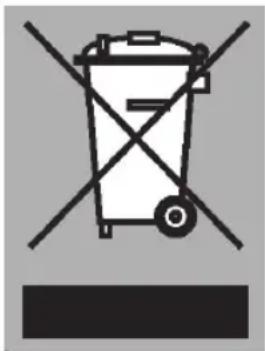
Symbol of a trash bin with crossed lines indicating no waste or restriction, no text presentThe symbol of a crossed out garbage can is placed on the product to point to the obligation to process electrical household appliances separately. This means that the appliance may not be included with normal domestic refuse at the end of its service life. The device has to be brought to a special centre for separated waste collection of the municipality or to a point of sale that provides this service.
The separate processing of a household device prevents possible negative consequences for the environment and the health that is caused by inappropriate processing. It ensures that the material that appliance consists of, can be recovered to obtain a significant saving of energy and raw materials.

Note! The packaging material may be hazardous for children.

Declaration of conformity
We hereby declare that our products satisfy the applicable European directives, orders and regulations, as well as the requirements stated in the referenced standards.
natural_image
Illustration of a hand pressing down on a device component (no text or symbols visible)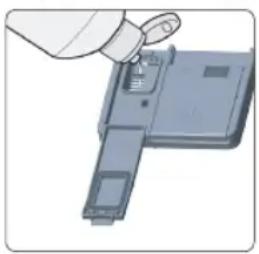
natural_image
Illustration of a hand holding a small electronic device with a scroll wheel (no text or symbols visible)natural_image
Exterior view of a white electronic device casing with buttons and ventilation slots (no visible text or symbols)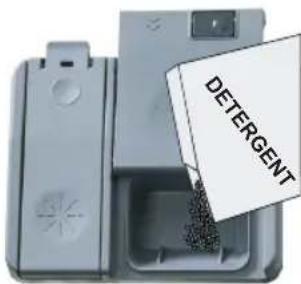
natural_image
Industrial machine with stacked circular components and a grid base (no visible text or symbols)natural_image
Two-step diagram showing a hand pulling a vehicle frame with wheels, no text or symbols present.natural_image
3D rendered mechanical component with threaded ends and internal gears (no visible text or symbols)natural_image
Black-and-white illustration of a basket containing four cooking pots (no text or symbols)natural_image
3D wireframe diagram of a shopping cart with labeled parts (a and b), no readable text or symbols present.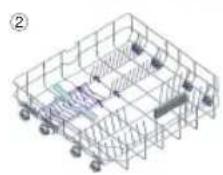
natural_image
Diagram of a device with directional arrows indicating movement or flow, no readable text or symbols present.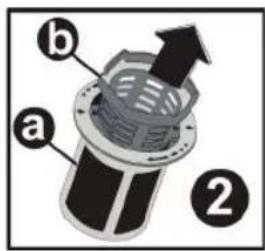
natural_image
Diagram showing a mechanical or fluid system with directional arrows and a central component (no text or symbols)natural_image
Symbol of a trash bin with crossed lines indicating no waste or restriction (no text or numbers present)842244
842244 / VER 1 / 03-11-2020

- This appliance is intended to be used in household and similar applications such as:
- For EN60335-1:
- For IEC60335-1:
- Earthing Instructions
- When loading items to be washed:
- CONTENTS
- Your dishwasher
- Description
- Operation
- Loading
- Maintenance
- Errors
- Appendix
- Introduction
- Interior
- Switching on
- Selecting a half load
- Delayed start time
- Options
- Indicators
- Stopping or changing a wash cycle
- Warning!
- Following the end of the wash cycle
- Flood protection switch
- Regeneration salt (water softener)
- Setting the salt consumption
- Reset
- Setting the water hardness
- Rinse aid reservoir
- Filling the rinse-aid and setting
- In order to change the rinse aid level, follow the below steps before turning on the machine:
- The factory setting is "4".
- Dishwasher detergents
- Concentrated detergent
- Dishwasher tablets
- Detergent compartment
- Loading the baskets
- Using the upper basket
- Height adjustment upper basket
- Height Adjustable Rack
- Using the lower basket
- Folding Racks
- Cutlery basket
- Cutlery/crockery unsuitable for the dishwasher
- Cutlery/crockery with limited suitability for use in the dishwasher
- Placing cutlery and crockery in the dishwasher
- When inserting the dishes, take care to ensure that:
- Plates and cutlery must not cover each other
- Damage to glassware and other crockery
- Potential causes:
- Proposed solution:
- Filter system
- Clean the filter group
- Cleaning the spray arms
- Cleaning the door
- What should I do, if...
- Note!
- Error codes
- Disposal
- Dispose of packaging and device
- Declaration of conformity
Brand : ETNA
Model : VW247M
Category : Dishwasher