
SuperCMIT 2 U - Microphone Schoeps - Free user manual and instructions
Find the device manual for free SuperCMIT 2 U Schoeps in PDF.


| Product Type | Digital Super Shotgun Microphone with DSP |
| Length | 280 mm |
| Diameter | 21 mm |
| Weight | 112 g (less than 4 oz) |
| Power Supply | 10 V DPP (Digital Phantom Power, AES42-2006) |
| Current Consumption | 170 mA |
| Output | AES42-2006, Mode 1, 48 kHz, two channels (SuperCMIT and CMIT) |
| Sensitivity | -31 dBFS at 1 Pa |
| Equivalent Noise Level (Channel 1) | 13 dBA RMS, 26 dB CCIR |
| Equivalent Noise Level (Channel 2) | 16 dBA RMS, 28 dB CCIR |
| Maximum Sound Pressure Level | 125 dB SPL |
| Low-Cut Filter | 80 Hz, 18 dB/octave |
| High-Frequency Boost | +5 dB at 10 kHz |
| Directivity Presets | Preset 1: 11 dB diffuse suppression; Preset 2: 15 dB diffuse suppression |
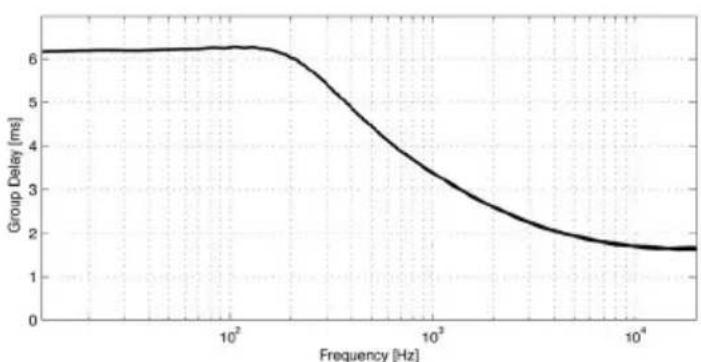
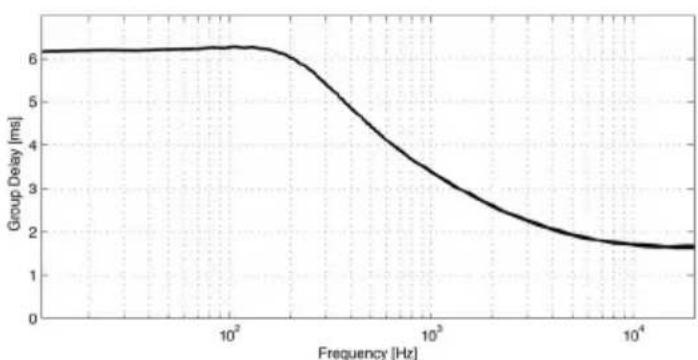
| Latency (Channel 1) | 1.5 ms to 6 ms (frequency-dependent) |
| Latency (Channel 2) | 1.6 ms |
| Maximum Cable Length | 300 m (with 110 Ω AES3 cable) |
| Included Accessories | Wooden case, SG 20 stand adapter, W 170 foam windscreen |
| Optional Accessories | PSD 2U powering box, Mount & Handle shock mount, WSR CMIT basket-type windscreen |
| Firmware Updatable | Yes, via dealer or distributor; free for major revisions |
| Guarantee | 24 months |
| Care | Avoid dust; store in closed case; allow warm-up in high humidity |
| EMC Notes | Avoid proximity to strong electromagnetic sources; use high-quality 110 Ω AES3 cable |
Frequently Asked Questions - SuperCMIT 2 U Schoeps
User questions about SuperCMIT 2 U Schoeps
0 question about this device. Answer the ones you know or ask your own.
Ask a new question about this device
Download the instructions for your Microphone in PDF format for free! Find your manual SuperCMIT 2 U - Schoeps and take your electronic device back in hand. On this page are published all the documents necessary for the use of your device. SuperCMIT 2 U by Schoeps.
USER MANUAL SuperCMIT 2 U Schoeps
natural_image
Pink handheld electronic device with a vertical screen and control buttons, against a solid red background (no visible text or symbols on the device body)SCHOEPS
□□Digital

SuperCMIT 2 U
Super Shotgun Microphone with DSP
Table of Contents page
General 12
Suggested applications 13
Connecting / Operation 13
Gain/ Limiter 14
Important notes 14
EMC 14
Care 15
Technical specifications 16
Firmware-Updates 18
CE conformity / Guarantee 18
Bedienungsanleitung
User Guide - page 11
natural_image
Black electronic device with two ports and a label 'BOS' on top (no visible text or symbols on body)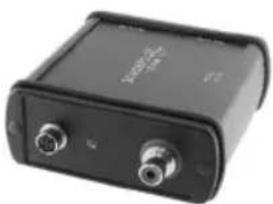
natural_image
Black electronic device with two ports and a label 'Vcc12' (no visible text or symbols on the device body)PSD 2U

natural_image
Black electrical contactor with three separate socket components (no visible text or symbols)natural_image
Close-up of a handheld electronic device with a cylindrical lens and attached cable (no visible text or symbols)Mount & Handle
natural_image
Black-and-white photo of a handgun with attached wires and grip (no visible text or symbols)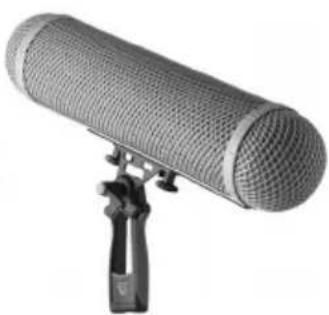
natural_image
Close-up of a metallic microphone on a stand (no text or symbols visible)Durchmesser:....21mm
Gewicht: 112g
line
| Frequency [Hz] | Group Delay [ms] | | -------------- | ---------------- | | 10^2 | 6.0 | | 10^3 | 3.0 | | 10^4 | 1.5 |natural_image
Pink handheld electronic device with a vertical screen and control buttons, against a solid red background (no visible text or symbols on the device body)SCHOEPS
□ □ Digital

SuperCMIT 2 U
Super Shotgun Microphone with DSP
Table of Contents page
General 12
Suggested applications 13
Connecting / Operation 13
Gain / Limiter 14
Important notes 14
EMC 14
Care 15
Technical specifications 16
Firmware-Updates
CE conformity / Guarantee 18
18
User Guide
Dear customer:
Congratulations on choosing the SCHOEPS digital SuperCMIT 2 U, the world's first "intelligent" shotgun microphone. Its features include:
– distinctly increased directivity – even at low and middle frequencies – on the basis of the analog model CMIT 5 U
– extraordinary suppression of diffuse sound
– completely new operating principle using two transducers (capsules)
– uses DSP* algorithms (patent applied for) by Illusonic
- two-channel output: SuperCMIT on channel 1 and unprocessed shotgun microphone signal on channel 2
– SCHOEPSsound quality: transparent, despite the high directivity
*digital signal processing
Included accessories:
Wooden case, SG 20 stand adapter, W 170 foam windscreen (for moderate wind and boom motion)
Also available:
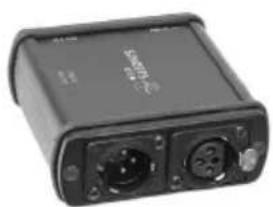
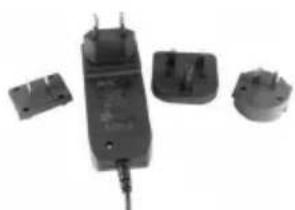
PSD 2U powering box for digital phantom powering (DPP, 10 V) with XLR and RCA outputs, including AC adapter with 4-pin Hirose socket
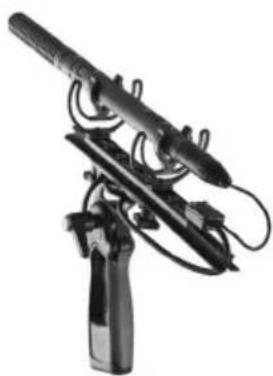
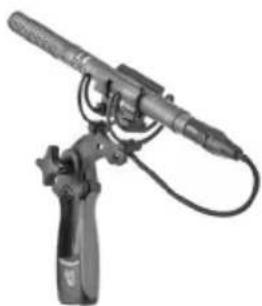
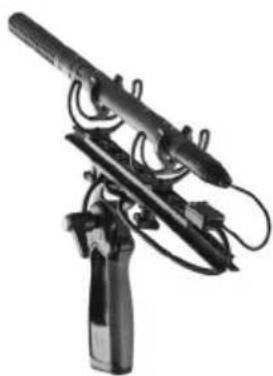
Mount & Handle: shock mount with pistol grip; WSR CMIT basket-type windscreen with "Windjammer" (for stronger wind)
natural_image
Black electronic device with two ports and a label 'SAR' on top (no visible text or symbols on body)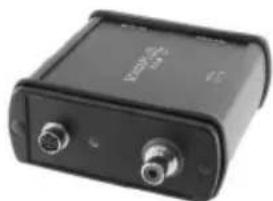
natural_image
Black electronic device with two ports and a label 'Vacc' on top (no visible text or symbols beyond branding)PSD 2U
natural_image
Black electrical contactor with three small components (no visible text or symbols)AC adapter for PSD 2 U
natural_image
Close-up of a handheld electronic device with a metallic probe and cable (no visible text or symbols)Mount & Handle
natural_image
Black-and-white photo of a handgun with attached wires and grip (no visible text or symbols)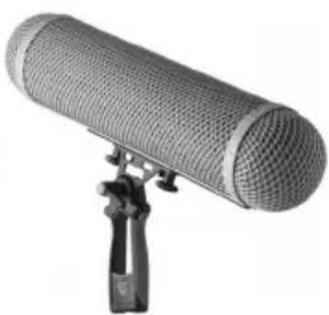
natural_image
Close-up of a metallic microphone on a stand (no text or symbols visible)WSR CMIT basket-type windscreen
The technology
The SuperCMIT 2 U has one capsule positioned behind its forward-facing interference tube, plus a second capsule that is aimed in the reverse direction. At frequencies below 6 kHz the signals of these two transducers are analyzed and compared by a digital signal processor using technology from Illusonic (patent applied for). It can recognize sound energy arriving from discrete directions, deduce whether its direction of arrival is persistent or not, and distinguish such energy from diffuse arriving sound.
This information is then used to focus on the discrete sound energy while suppressing the diffuse sound. Thus the "reach" of this microphone is greatly increased, without artifacts or coloration of the sound.
Above 6 kHz the signal from the forward-facing transducer is used without further processing, since the interference tube's effect is already optimal in that range.
The SuperCMIT is the first microphone in the world to offer such high directivity while maintaining such high quality of sound.
Suggested applications
The SuperCMIT 2 U is suggested for use wherever there is interference from diffuse sound such as street noise, rustling leaves, wind noise, sound from passers-by or onlookers, or room reverberation in a recording. The interfering sound is reduced significantly in level without affecting the sound color of directly arriving sound, even down to the lowest frequencies. This makes the SuperCMIT ideal e.g. for difficult film sound assignments and sports broadcasts.
The SuperCMIT also extends "reach" for indoor recordings.
Connecting the SuperCMIT
Input / Powering
The SuperCMIT's output is digital, complying with AES42, Mode 1. It requires digital phantom powering (10 V), which is supplied via the signal cable as with analog microphones. Because it operates in Mode 1, the microphone provides its own clock (48 kHz). Thus the input of the interface device or recorder must provide sampling rate conversion if the microphone is to be operated synchronously with other equipment.
AES42 Mode 1 inputs are available on certain equipment, e.g. the 8-channel DMC-842 interface from RME and the Sound Devices 788T 8-channel portable recorder. For further information please see www.schoeps.de/digital and www.hauptmikrofon.de/aes42.
The SuperCMIT can also be used with AES3 inputs if digital phantom powering is supplied (e.g. by the PSD 2 U – see "Accessories") between the input and the microphone.
The Cable
Ordinary analog XLR cable can be used, but its characteristic impedance is undefined; thus we cannot guarantee reliable operation of the microphone particularly with long cables. If an AES3-standard XLR-3 cable with a characteristic impedance of 110 Ω is used, then operation
at lengths of up to 300 m (nearly 1000') is possible.
Power-on Behavior
When powered on, the SuperCMIT may require up to 15 seconds to become ready for use. Varying amounts of noise may be produced during this time; such behavior is entirely normal.
Operation
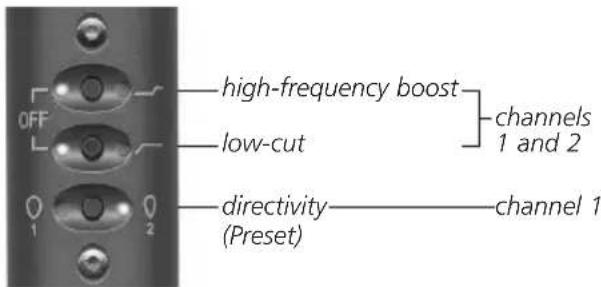
The SuperCMIT has two output channels:
Channel 1: "SuperCMIT" (enhanced directivity; processed signal from both transducers)
Channel 2: "CMIT" (normal directivity; unprocessed signal from the front-facing transducer)
Both channels are affected simultaneously by the filter switches.
Green LED = "Filter off", red LED = "Filter on"
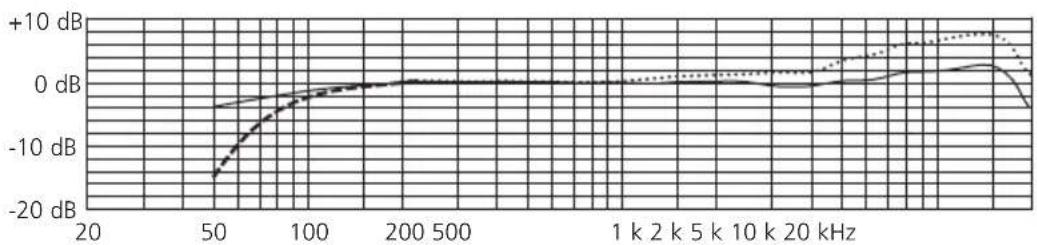
High-frequency boost: +5 dB at 10 kHz – to compensate for losses due to windscreens
Steep low-cut: 18 dB/Oct. below 80 Hz – to suppress wind and boom noise
The Preset button selects the directivity of the "SuperCMIT" (Channel 1):
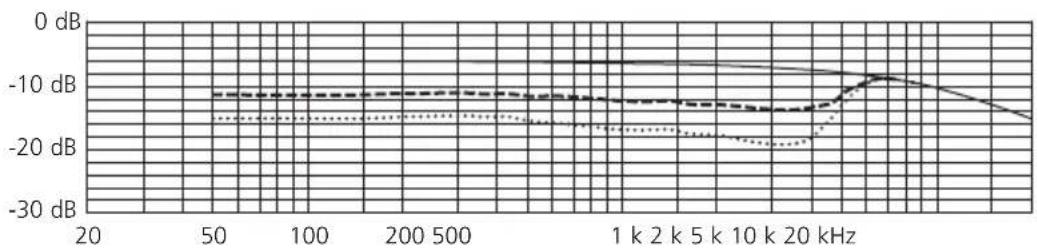
- Preset 1 (green LED): Increased directivity; 11 dB suppression of diffuse sound, which is 5 dB greater than CMIT.
- Preset 2 (red LED): 15 dB (extremely high) suppression of diffuse sound. This setting is reserved for special applications; some lessening of sound quality may occur.
Gain / Limiter
Beginning with firmware version 1.33, digital amplification of 30 dB can be activated in the SuperCMIT by pressing each of the three push-buttons twice each in turn. The order of the buttons is unimportant (i.e. 332211 works as well as 112233), but the two clicks of each button must be a moment apart so that they are distinct. The gain boost can be canceled by repeating the button presses; also, if powering is removed from the microphone, the amplifier gain will reset to normal (0 dB).
A/D converters can convey the full dynamic range of a microphone, which in principle would make it unnecessary to "set levels" for a digital microphone recording. But there still are reasons for setting levels nonetheless. For example, if a digital microphone is connected to a portable recorder and the sound levels are very low, the recorder's headphone amplifier might be unable to produce enough volume to allow monitoring the signals. Digital amplification at the input to the recorder could solve this problem, but if that is unavailable, then the levels can be raised within the microphone.
It can also be useful to raise levels before feeding a digital signal to a D/A converter, to help overcome the self-noise of the converter. Digital amplification, unlike analog amplification, need not affect signal-to-noise ratio. Of course, the upward limit of the dynamic range is reduced by the same amount as the gain that is applied. Raising the gain of the SuperCMIT by 30 dB would also lower its maximum SPL to 95 dB.
Thus, beginning with firmware version 2.0, if the 30 dB additional gain is switched on, digital limiters are also engaged to avoid overload on sound pressure levels of up to 125 dB. These limiters, which are separate for the two channels, have a fixed threshold of -3 dB, ensuring that overload will not occur even on brief peaks. These limiters do not increase the latency of the signal processing in the microphone.
Important notes
Latency
Because of the >2 ms latency, it is not advisable for most people to monitor the output of the SuperCMIT through headphones while speaking into the microphone. The two output channels of the microphone (SuperCMIT and CMIT) have differing latency times (see specifications on page 17), and their signals should not be mixed together.
Sound openings
In the area around the second, rear-facing transducer there are eight sound openings for the sake of acoustic transparency. Please be careful not to block these openings, e.g. with a stand adapter or other mounting device. The size of these openings also makes it important to keep their gauze covering from being pressed inward.
Notes on EMC
(Electromagnetic Compatibility)
The SuperCMIT is insensitive to magnetic, electrical and electromagnetic fields. But no microphone can ever be fully immune to all interference. The following rules can help to prevent possible interference:
- Avoid placing the microphone or its cable close to sources of interference such as video monitors, digital equipment (computers), transmitters (cellular phones or PDAs), high-voltage lines, high-power AC adapters, lighting dimmers, etc.
- Use high-quality 110 ΩAES3 cable that is no longer than necessary.
- Do not run microphone cables parallel to AC power cables. If it is necessary for them to cross, they should do so at right angles.
- The cable shield at the input of the receiving device should connect to the housing of that device along the shortest possible path, using DC coupling if possible, or at least capacitive coupling.
Care of the SuperCMIT
Please make certain that the microphone is never used in a dusty environment, and that after use it is kept in a closed container such as the supplied wooden case, since its functioning can be affected if dust gets into the microphone.
What to do if...
the microphone is noisy in high humidity?
If condenser microphones are used in high humidity or are brought in from the cold to a warm (and humid) room, condensation can occur, causing snapping or rattling sounds, etc.
The SuperCMIT is distinctly less subject to this problem than analog microphones, since its greater power consumption creates enough warmth to hinder any moisture condensation. But if such noises should ever occur, give the microphone a few minutes to warm up, and then as a rule it will again give you trouble-free operation.
Wind noise and windscreens
Interference caused by air currents (wind, vocal popping, movement of the microphone on the boom or airflow through heating or ventilation systems) can impair the sound quality. If the wind is mild, the simple W 170 foam windscreen which is supplied as an accessory can help. For strong wind there are Rycote basket-type windscreens (see page 12).
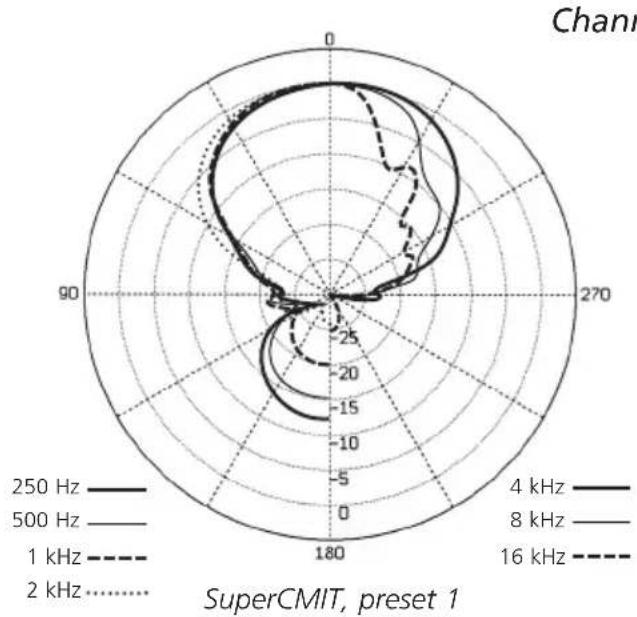
radar
| Frequency | Angle (°) | Value | | --------- | --------- | ----- | | 250 Hz | 0 | -25 | | 250 Hz | 90 | -20 | | 250 Hz | 180 | -15 | | 250 Hz | 270 | -10 | | 250 Hz | 360 | -5 | | 500 Hz | 0 | -20 | | 500 Hz | 90 | -15 | | 500 Hz | 180 | -10 | | 500 Hz | 270 | -5 | | 500 Hz | 360 | 0 | | 1 kHz | 0 | -15 | | 1 kHz | 90 | -10 | | 1 kHz | 180 | -5 | | 1 kHz | 270 | 0 | | 1 kHz | 360 | 5 | | 2 kHz | 0 | -10 | | 2 kHz | 90 | -5 | | 2 kHz | 180 | 0 | | 2 kHz | 270 | 5 | | 2 kHz | 360 | 10 | | 4 kHz | 0 | -5 | | 4 kHz | 90 | 0 | | 4 kHz | 180 | 5 | | 4 kHz | 270 | 10 | | 4 kHz | 360 | 15 | | 8 kHz | 0 | -5 | | 8 kHz | 90 | -10 | | 8 kHz | 180 | -15 | | 8 kHz | 270 | -20 | | 8 kHz | 360 | -25 | | 16 kHz | 0 | -10 | | 16 kHz | 90 | -15 | | 16 kHz | 180 | -20 | | 16 kHz | 270 | -25 | | 16 kHz | 360 | -30 |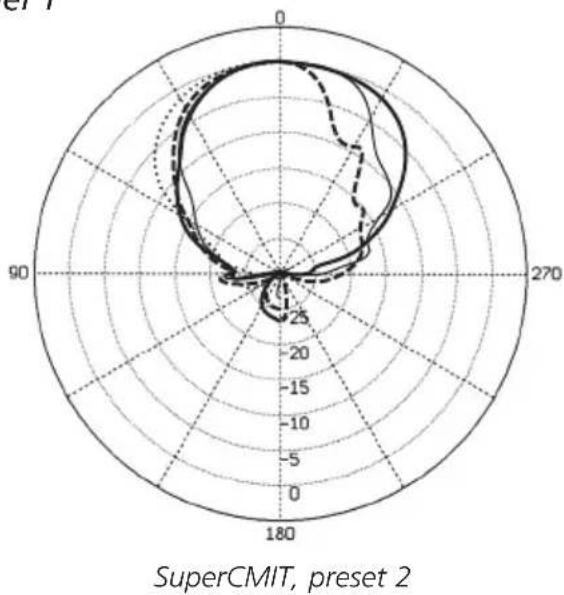
radar
| Angle | Value | |-------|-------| | 0 | 25 | | 90 | 25 | | 180 | 25 | | 270 | 25 | | 360 | 25 |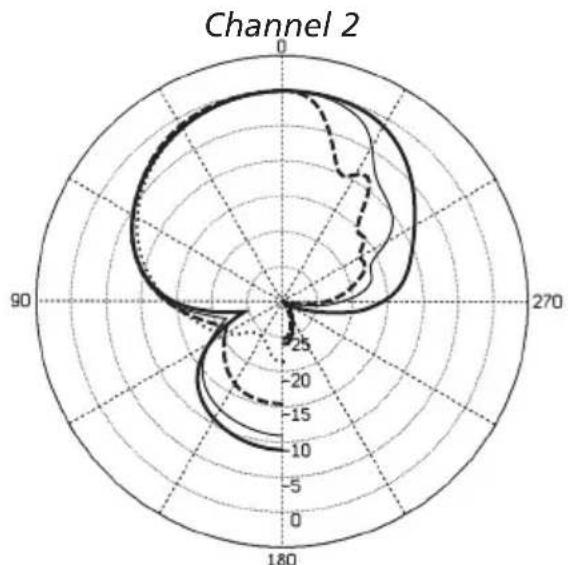
radar
| Angle | Value | |-------|-------| | 0 | 25 | | 45 | 10 | | 90 | -15 | | 135 | -20 | | 180 | -10 | | 225 | 5 | | 270 | 15 | | 315 | 20 | | 360 | 25 |unprocessed CMIT shotgun microphone

Suppression of diffuse sound ("random energy efficiency factor") at low and midrange frequencies
line
| Frequency (kHz) | Line 1 (dB) | Line 2 (dB) | Line 3 (dB) | | --------------- | ----------- | ----------- | ----------- | | 20 | -15 | -5 | -5 | | 50 | -18 | -3 | -3 | | 100 | -10 | -1 | -1 | | 200 | -5 | 0 | 0 | | 500 | 0 | 0 | 0 | | 1k | 0 | 0 | 0 | | 2k | 0 | 0 | 0 | | 5k | 0 | 0 | 0 | | 10k | 0 | 0 | 0 | | 20k | 0 | 0 | 0 |0° frequency response of the two channels: with no filters
---- with low-cut
...... with high-frequency boost
line
| Frequency (kHz) | Line 1 (dB) | Line 2 (dB) | Line 3 (dB) | | --------------- | ----------- | ----------- | ----------- | | 20 | -10 | -15 | -20 | | 50 | -10 | -15 | -20 | | 100 | -10 | -15 | -20 | | 200 | -10 | -15 | -20 | | 500 | -10 | -15 | -20 | | 1k | -5 | -10 | -15 | | 2k | -5 | -10 | -15 | | 5k | -5 | -10 | -15 | | 10k | -5 | -10 | -15 | | 20k | -5 | -10 | -15 |Diffuse-field frequency response: front-facing transducer (CMIT) only
-------- SuperCMIT preset 1
SuperCMIT preset 2
Sensitivity: -31 dBFS at 1 Pa
Equivalent noise (filter off): ..... Channel 1: 13 dBA RMS*, 26 dB CCIR**
Channel 2: 16 dBA RMS*, 28 dB CCIR**
Maximum sound pressure level: .....125 dB SPL
Switchable filters: .....80 Hz, 18 dB/oct.,
.5 dB elevation at 10 kHz (shelving)
Powering: 10 V DPP (digital phantom powering, AES42-2006)
Current consumption: .....170 mA
Output: . . . . . . . . . . . . . . . . . . . . . . . . . . . . . . . . . . . . . . . . . . . . . . . . . . . . . . . . . . . . . . . . . . . . . . . . . . . . . . . . . . AES42-2006, Mode 1, Sampling rate: 48 kHz
.Channel 1: SuperCMIT
Channel 2: CMIT (unprocessed output of front-facing capsule)
Latency: Channel 1 (SuperCMIT): see graph below;
.Channel 2 (CMIT): 1.6 ms
Maximum cable length: .....300 m with 110 Ω cable as specified in AES3-2009 (IEC 60958-4)
Length: 280 mm
Diameter: 21 mm
Weight: 112 g (less than 4 oz.)
line
| Frequency [Hz] | Group Delay [ms] | | -------------- | ---------------- | | 10^2 | 6.0 | | 10^3 | 3.0 | | 10^4 | 1.5 |Channel 1: Latency as a function of frequency
* according to IEC 61672-1
** according IEC 60268-1
Firmware Updates
The remarkable properties of the SuperCMIT depend on internally stored software (firmware), which can undergo revision. The firmware version of your SuperCMIT appears on a label beside the pins of the SuperCMIT's output connector.
If you wish to have your SuperCMIT updated, we ask you to send it to your dealer / distributor.
As a special service, for any major firmware revision (i.e. if the first digit of the version number changes), SCHOEPSoffers you a free update. You assume only the shipping costs.
You can find out the latest version of the firmware on www.schoeps.de/SuperCMIT.
Firmware history:
2.0 (September 2011): Limiter on active gain boost, improved high-pass filter as well as beam former optimization to reduce artifacts
1.33 (September 2010): Ability to raise output levels by 30 dB with a combination of button presses
1.29 (June 2010): First released version of the firmware
Declaration of CE Conformity
The CE-mark guarantees that all products conform to relevant standards approved by the European Community. The products described in this User Guide comply with current, relevant standards when used with cables from SCHOEPS.
Regulations currently in force:
EMC regulations: 89/336/EEC, extended by 92/31/EEC and 93/68/EEC
EN 55 103-1, -2 and any others that are referred to within them.
Guarantee
We guarantee our products for a period of twenty-four months, except for batteries. The guarantee period begins on the date of purchase.
Please provide your bill of sale in all cases as proof of guarantee; without it, repairs will be undertaken only at the owner's expense.
We reserve the right to satisfy all warranty requirements regarding defects of workmanship or materials by means of repair or partial or complete replacement of the product, at our sole discretion.
Excluded from this guarantee are defects due to misuse (e.g. incorrect operation; mechanical damage), abuse or "Acts of God." This guarantee is nullified in the event of tampering by unauthorized persons or agencies.
To secure your rights under this guarantee, send the product with proof of purchase and a precise description of the malfunction, at your expense, either to SCHOEPS(if you are a customer in Germany), or to our representative (if you are a customer outside of Germany).
Prior to sending your defective product for repair, please contact your local dealer or distributor for instructions. In exceptional cases you can, by prior arrangement with SCHOEPS, send the product directly to us from a foreign country. However any return shipment must then be prepaid; this tends to cause delays, especially for non-warranty service. Full payment must be made before a repaired item can be returned to the customer.
This guarantee does not affect any contractual agreements which may exist between the buyer and seller of the equipment.
This guarantee is world-wide.
Subject to change without notice. Not responsible for errors or omissions.
111007
SCHOEPSGmbH
Spitalstr. 20
D-76227 Karlsruhe (Durlach)
Tel: +49 721 943 20-0
Fax: +49 721 943 2050
www.schoeps.de
mailbox@schoeps.de
Schall
Technik


- SCHOEPS
- SuperCMIT 2 U
- Dear customer:
- Included accessories:
- Also available:
- The technology
- Suggested applications
- Connecting the SuperCMIT
- Input / Powering
- The Cable
- Power-on Behavior
- Gain / Limiter
- Important notes
- Latency
- Sound openings
- Notes on EMC
- Care of the SuperCMIT
- Firmware Updates
- Declaration of CE Conformity
- Guarantee
Brand : Schoeps
Model : SuperCMIT 2 U
Category : Microphone