
WX423.1 - Saw WORX - Free user manual and instructions
Find the device manual for free WX423.1 WORX in PDF.


| Product Type | Circular Saw |
| Model | WX423.1 |
| Brand | WORX |
| Power Source | Corded Electric |
| Input Power | 1200 W |
| Blade Diameter | 165 mm (6.5 inches) |
| Arbor Size | 20 mm |
| Max Depth of Cut at 90° | 55 mm |
| Max Depth of Cut at 45° | 40 mm |
| Bevel Capacity | 0° to 45° |
| No-Load Speed | 5000 RPM |
| Weight | 4.5 kg |
| Dimensions (L x W x H) | 310 x 250 x 260 mm |
| Power Cord Length | 2.5 m |
| Dust Extraction Port | Yes, 35 mm |
| Spindle Lock | Yes |
| Safety Guard | Automatic retracting lower guard |
| Blade Change | Tool-less blade change system |
| Maintenance | Regular cleaning of air vents, check carbon brushes every 50 hours, and lubricate moving parts |
| Spare Parts Availability | Replacement blades, carbon brushes, and power cords available from WORX service centers |
| Reparability | Modular design allows easy replacement of motor brushes, switch, and cord |
| Certifications | CE, EAC, RoHS |
| Included Accessories | One saw blade, rip fence, wrench, dust bag |
Frequently Asked Questions - WX423.1 WORX
User questions about WX423.1 WORX
0 question about this device. Answer the ones you know or ask your own.
Ask a new question about this device
Download the instructions for your Saw in PDF format for free! Find your manual WX423.1 - WORX and take your electronic device back in hand. On this page are published all the documents necessary for the use of your device. WX423.1 by WORX.
USER MANUAL WX423.1 WORX
Not all the accessories illustrated or described are included in standard delivery.
TECHNICAL DATA
Type WX423 WX423.1 (4 - designation of machinery, representative of Saw)
| Voltage | 230-240V~50Hz |
| Rated power 400W | |
| No load (rated) speed 3600/min | |
| Blade size 85mmx15mm | |
| TCT blade85mmx1.2mmx15mmx24T | |
| HSS blade 85mmx1.2mmx15mmx44T | |
| Diamond disc 85mmx1.2mmx15mmx60G | |
| Max cutting depth 27mm | |
| Recommended maximum material thickness | |
| Wood 27mm | |
| Aluminum 3mm | |
| PVC pipe (radius) 13mm | |
| Tile 8mm | |
| Sheet steel 0.91mm | |
| Protection class | ☐/II |
| Bare tool weight 1.4kg | |
| Spindle thread size M5 | |
| Saw blade thickness | |
| TCT blade | 0.8mm |
| HSS blade | 0.65mm |
| Diamond disc | 0.8mm |
NOISE INFORMATION
| A weighted sound pressure | L_pA : 82dB(A) |
| A weighted sound power | L_wA : 93dB(A) |
| K_PA & K_WA | 3.0dB(A) |
| Wear ear protection. | |
VIBRATION INFORMATION
| Vibration total values (triax vector sum) determined according to EN 60745: | |
| Vibration emission value: | Cutting wood: a_h,W < 2,5m/s^2 |
| Uncertainty K = 1.5m/s2 | |
| Cutting metal: a_h,M < 2,5m/s^2 | |
| Uncertainty K = 1.5 m/s2 | |
The declared vibration total value may be used for comparing one tool with another, and may also be used in a preliminary assessment of exposure.

WARNING: The vibration emission value during actual use of the power tool can differ from the declared value depending on the ways in which the tool is used dependant on the following examples and other variations on how the tool is used:
How the tool is used and the materials being cut or drilled.
The tool being in good condition and well maintained
The use the correct accessory for the tool and ensuring it is sharp and in good condition.
The tightness of the grip on the handles and if any anti vibration accessories are used.
And the tool is being used as intended by its design and these instructions.
This tool may cause hand-arm vibration syndrome if its use is not adequately managed.

WARNING: To be accurate, an estimation of exposure level in the actual conditions of use should also take account of all parts of the operating cycle such as the times when the tool is switched off and when it is running idle but not actually doing the job. This may
significantly reduce the exposure level over the total working period.
Helping to minimise your vibration exposure risk.
ALWAYS use sharp chisels, drills and blades
Maintain this tool in accordance with these instructions and keep well lubricated (where appropriate). If the tool is to be used regularly then invest in anti vibration accessories.
Avoid using tools in temperatures of 10^ C or less
Plan your work schedule to spread any high vibration tool use across a number of days.
ACCESSORIES
| WX423 WX423.1 | ||
| TCT Blade: 24T for wood | 1 | 1 |
| Parallel Guide | 1 | 1 |
| Vacuum Adaptor | 1 | 1 |
| Hex Key | 1 | 1 |
| Diamond disc | / | 1 |
| HSS Blade 44T | / | 1 |
We recommend that you purchase your accessories from the same store that sold you the tool. Use good quality accessories marked with a well-known brand name. Choose the type according to the work you intend to undertake. Refer to the accessory packaging for further details. Store personnel can assist you and offer advice.
SAFETY INSTRUCTIONS FOR ALL SAWS
a) DANGER: Keep hands away from cutting area and the blade. If both hands are holding the saw, they cannot be cut by the blade.
b) Do not reach underneath the workpiece. The guard cannot protect you from the blade below the workpiece.
c) Adjust the cutting depth to the thickness of the workpiece. Less than a full tooth of the blade teeth should be visible below the workpiece.
d) Never hold piece being cut in your hands or across your leg. Secure the workpiece to a stable platform. It is important to support the work properly to minimize body exposure, blade binding, or loss of control.
e) Hold the power tool by insulated gripping surfaces only, when performing an operation where the cutting tool may contact hidden wiring or its own cord. Contact with a "live" wire will also make exposed metal parts of the power tool "live" and could give the operator an electric shock.
f) When ripping always use a rip fence or straight edge guide. This improves the accuracy of cut and reduces the chance of blade binding.
g) Always use blades with correct size and shape (diamond versus round) of arbour holes. Blades that do not match the mounting hardware of the saw will run eccentrically, causing loss of control.
h) Never use damaged or incorrect blade washers or bolt. The blade washers and bolt were specially designed for your saw, for optimum performance and safety of operation.
FURTHER SAFETY INSTRUCTIONS FOR ALL SAWS
Kickback causes and related warnings
- Kickback is a sudden reaction to a pinched,
bound or misaligned saw blade, causing an uncontrolled saw to lift up and out of the workpiece toward the operator.
- When the blade is pinched or bound tightly by the kerf closing down, the blade stalls and the motor reaction drives the unit rapidly back toward the operator.
- If the blade becomes twisted or misaligned in the cut, the teeth at the back edge of the blade can dig into the top surface of the wood causing the blade to climb out of the kerf and jump back toward the operator.
Kickback is the result of saw misuse and/or incorrect operating procedures or conditions and can be avoided by taking proper precautions as given below.
a) Maintain a firm grip on the saw and position your arm to resist kickback forces. Position your body to either side of the blade, but not in line with the blade. Kickback could cause the saw to jump backwards, but kickback forces can be controlled by the operator, if proper precautions are taken.
b) When blade is binding, or when interrupting a cut for any reason, release the trigger and hold the saw motionless in the material until the blade comes to a complete stop. Never attempt to remove the saw from the work or pull the saw backward while the blade is in motion or kickback may occur. Investigate and take corrective actions to eliminate the cause of blade binding.
c) When restarting a saw in the workpiece, center the saw blade in the kerf and check that saw teeth are not engaged into the material. If saw blade is binding, it may walk up or kickback from the workpiece as the saw is restarted.
d) Support large panels to minimize the risk of blade pinching and kickback.
Large panels tend to sag under their own weight. Supports must be placed under the panel on both sides, near the line of cut and near the edge of the panel.
e) Do not use dull or damaged blades.
Unsharpened or improperly set blades produce narrow kerf causing excessive
friction, blade binding and kickback.
f) Blade depth and bevel adjusting locking levers must be tight and secure before making cut. If blade adjustment shifts while cutting, it may cause binding and kickback.
g) Use extra caution when sawing into existing walls or other blind areas. The protruding blade may cut objects that can cause kickback.
SAFETY INSTRUCTIONS FOR SAWS WITH INNER PENDULUM GUARD
Lower Guard Function
a) Check lower guard for proper closing before each use. Do not operate the saw if lower guard does not move freely and close instantly. Never clamp or tie the lower guard into the open position. If saw is accidentally dropped, lower guard may be bent. Raise the lower guard with the retracting handle and make sure it moves freely and does not touch the blade or any other part, in all angles and depths of cut.
b) Check the operation of the lower guard spring. If the guard and the spring are not operating properly, they must be serviced before use.
Lower guard may operate sluggishly due to damaged parts, gummy deposits, or a build-up of debris.
c) Lower guard may be retracted manually only for special cuts such as "plunge cuts" and "compound cuts." Raise lower guard by retracting handle and as soon as blade enters the material, the lower guard must be released. For all other sawing, the lower guard should operate automatically.
d) Always observe that the lower guard is covering the blade before placing saw down on bench or floor. An unprotected, coasting blade will cause the saw to walk backwards, cutting whatever is in its path. Be aware of the time it takes for the blade to stop after switch is released.
ADDITIONAL SAFETY RULES FOR YOUR CIRCULAR SAW
- Always wear a dust mask, hearing protection and eye protection.
- Only use saw blades recommended in the specification.
- Use only blade diameter(s) in accordance with the markings.
ADDITIONAL SAFETY RULES FOR YOUR CUTTING-OFF MACHINES
a) The guard provided with the tool must be securely attached to the power tool and positioned for maximum safety, so the least amount of wheel is exposed towards the operator. Position yourself and bystanders away from the plane of the rotating wheel.
The guard helps to protect operator from broken wheel fragments and accidental contact with wheel.
b) Use only bonded reinforced or diamond cut-off wheels for your power tool. Just because an accessory can be attached to your power tool, it does not assure safe operation.
C) The rated speed of the accessory must be at least equal to the maximum speed marked on the power tool. Accessories running faster than their rated speed can break and fly apart.
d) Wheels must be used only for recommended applications. For example: do not grind with the side of cut-off wheel. Abrasive cut-off wheels are intended for peripheral grinding, side forces applied to these wheels may cause them to shatter.
e) Always use undamaged wheel flanges that are of correct diameter for your selected wheel. Proper wheel flanges support the wheel thus reducing the possibility of wheel breakage.
f) Do not use worn down reinforced wheels from larger power tools.
Wheels intended for a larger power tool are not suitable for the higher speed of a smaller tool and may burst.
g) The outside diameter and the thickness of your accessory must be within the capacity rating of your power tool. Incorrectly sized accessories cannot be adequately guarded or controlled.
h) The arbour size of wheels and flanges must properly fit the spindle of the power tool. Wheels and flanges with arbour holes that do not match the mounting hardware of the power tool will run out of balance, vibrate excessively and may cause loss of control.
i) Do not use damaged wheels. Before each use, inspect the wheels for chips and cracks. If power tool or wheel is dropped, inspect for damage or install an undamaged wheel. After inspecting and installing the wheel, position yourself and bystanders away from the plane of the rotating wheel and run the power tool at maximum no load speed for one minute. Damaged wheels will normally break apart during this test time.
j) Wear personal protective equipment. Depending on application, use face shield, safety goggles or safety glasses. As appropriate, wear dust mask, hearing protectors, gloves and shop apron capable of stopping small abrasive or workpiece fragments.
The eye protection must be capable of stopping flying debris generated by various operations. The dust mask or respirator must be capable of filtrating particles generated by your operation. Prolonged exposure to high intensity noise may cause hearing loss.
k) Keep bystanders a safe distance away from work area. Anyone entering the work area must wear personal protective equipment. Fragments of workpiece or of a broken wheel may fly away and cause injury beyond immediate area of operation.
I) Hold the power tool by insulated
gripping surfaces only, when performing an operation where the cutting accessory may contact hidden wiring or its own cord. Cutting accessory contacting a "live" wire may make exposed metal parts of the power tool "live" and could give the operator an electric shock.
m) Position the cord clear of the spinning accessory. If you lose control, the cord may be cut or snagged and your hand or arm may be pulled into the spinning wheel.
n) Never lay the power tool down until the accessory has come to a complete stop. The spinning wheel may grab the surface and pull the power tool out of your control.
o) Do not run the power tool while carrying it at your side. Accidental contact with the spinning accessory could snag your clothing, pulling the accessory into your body.
p) Regularly clean the power tool's air vents. The motor's fan will draw the dust inside the housing and excessive accumulation of powdered metal may cause electrical hazards.
q) Do not operate the power tool near flammable materials. Sparks could ignite these materials.
r) Do not use accessories that require liquid coolants. Using water or other liquid coolants may result in electrocution or shock.
KICKBACK AND RELATED WARNINGS
Kickback is a sudden reaction to a pinched or snagged rotating wheel. Pinching or snagging causes rapid stalling of the rotating wheel which in turn causes the uncontrolled power tool to be forced in the direction opposite of the wheel's rotation at the point of the binding. For example, if an abrasive wheel is snagged or pinched by the workpiece, the edge of the wheel that is entering into the pinch point can dig into the surface of the material causing the wheel to climb out or kick out. The wheel
may either jump toward or away from the operator, depending on direction of the wheel's movement at the point of pinching. Abrasive wheels may also break under these conditions.
Kickback is the result of power tool misuse and/or incorrect operating procedures or conditions and can be avoided by taking proper precautions as given below.
a) Maintain a firm grip on the power tool and position your body and arm to allow you to resist kickback forces. Always use auxiliary handle, if provided, for maximum control over kickback or torque reaction during start-up. The operator can control torque reactions or kickback forces, if proper precautions are taken.
b) Never place your hand near the rotating accessory. Accessory may kickback over your hand.
C) Do not position your body in line with the rotating wheel. Kickback will propel the tool in direction opposite to the wheel's movement at the point of snagging.
d) Use special care when working Corners, sharp edges etc. Avoid bouncing and snagging the accessory. Corners, sharp edges or bouncing have a tendency to snag the rotating accessory and cause loss of control or kickback.
e) Do not attach a saw chain, woodcarving blade, segmented diamond wheel with a peripheral gap greater than 10mm or toothed saw blade. Such blades create frequent kickback and loss of control.
f) Do not "jam" the wheel or apply excessive pressure. Do not attempt to make an excessive depth of cut.
Overstressing the wheel increases the loading and susceptibility to twisting or binding of the wheel in the cut and the possibility of kickback or wheel breakage.
g) When wheel is binding or when interrupting a cut for any reason, switch off the power tool and hold the power tool motionless until the wheel Comes to a complete stop. Never attempt to remove the wheel
from the cut while the wheel is in motion otherwise kickback may occur. Investigate and take corrective action to eliminate the cause of wheel binding.
h) Do not restart the cutting operation in the workpiece. Let the wheel reach full speed and carefully re-enter the cut. The wheel may bind, walk up or kickback if the power tool is restarted in the workpiece.
i) Support panels or any oversized workpiece to minimize the risk of wheel pinching and kickback. Large workpieces tend to sag under their own weight. Supports must be placed under the workpiece near the line of cut and near the edge of the workpiece on both sides of the wheel.
j) Use extra caution when making a "pocket cut" into existing walls or other blind areas. The protruding wheel may cut gas or water pipes, electrical wiring or objects that can cause kickback.
ADDITIONAL SAFETY RULES
- Always wear a dust mask.
SYMBOLS
 | To reduce the risk of injury, user must read instruction manual |  | Wood |
 | Double insulation |  | Aluminium |
 | Warning |  | Metal |
 | Wear ear protection |  | Incorrect |
 | Wear eye protection |  | Correct |
 | Wear dust mask |  | Lock |
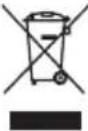 | Waste electrical products must not be disposed of with household waste. Please recycle where facilities exist. Check with your local authorities or retailer for recycling advice. |  | Unlock |
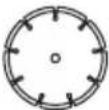 | Diamond disc | ||
 | Before any work on the machine itself, pull the mains plug from the socket outlet. | 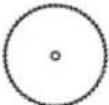 | HSS blade |
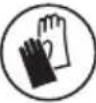 | Wear protective gloves |  | TCT blade |
OPERATING INSTRUCTIONS

NOTE: Before using the tool, read the instruction book carefully.
INTENDED USE:
The tool is intended for ripping and cross-cutting wood and other materials in straight cutting lines, while resting firmly on the work piece.
ASSEMBLY AND OPERATION
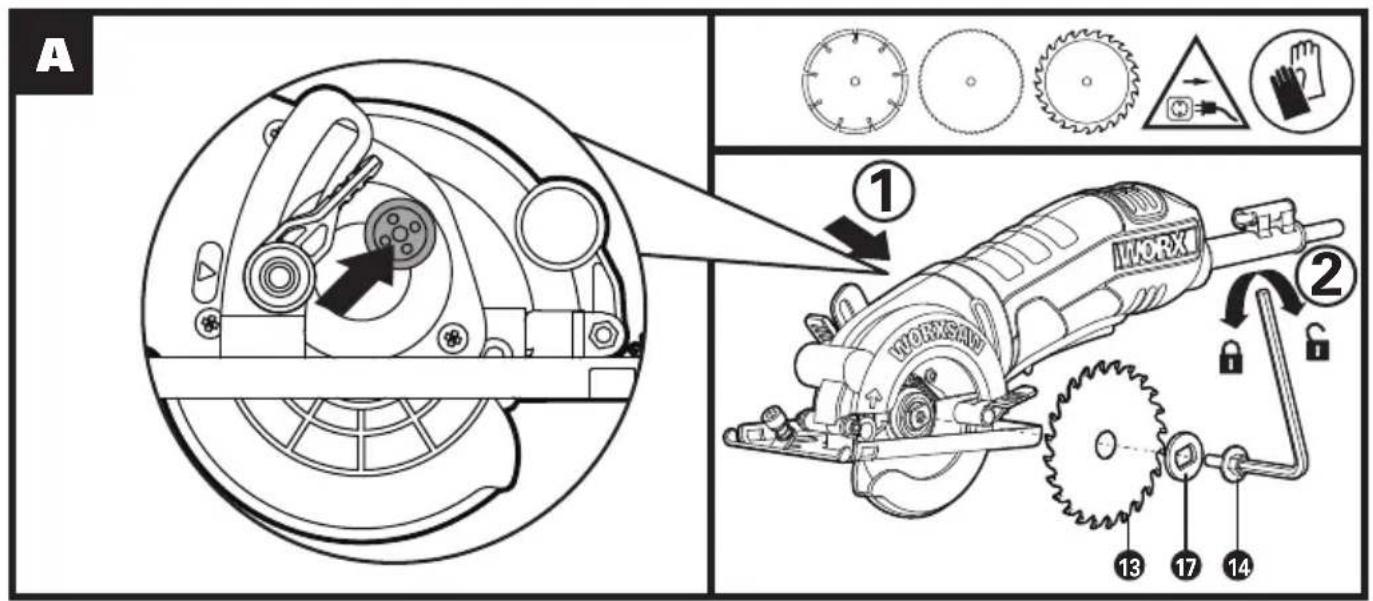
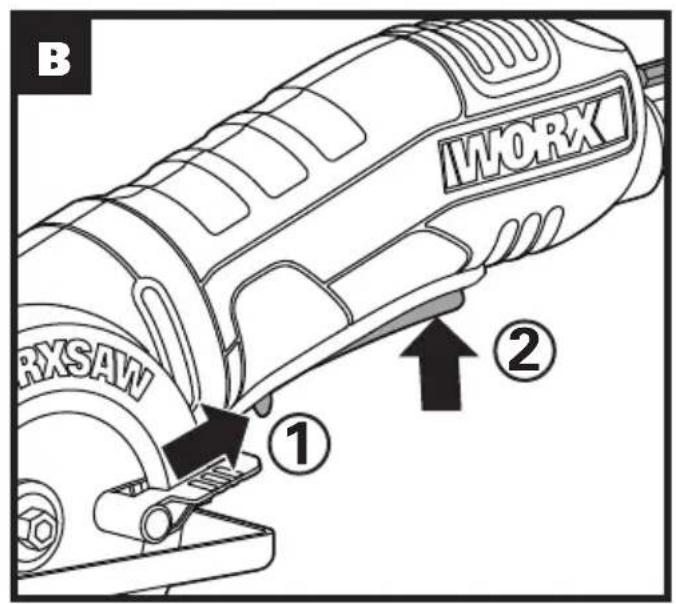
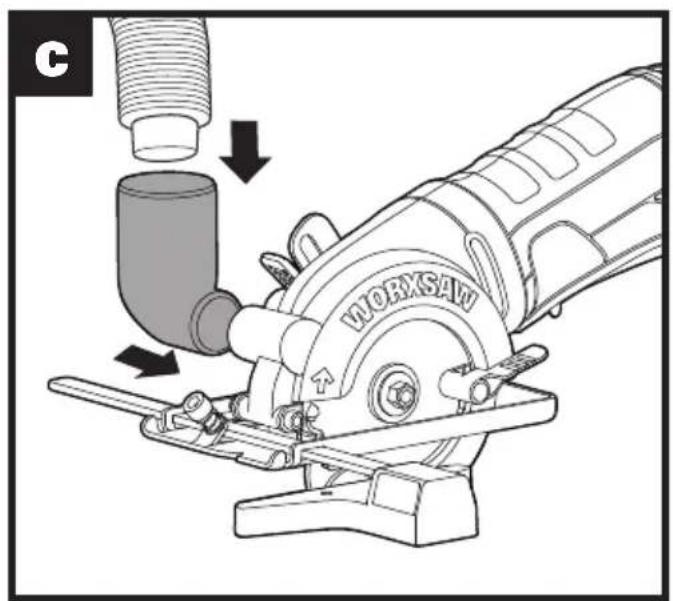
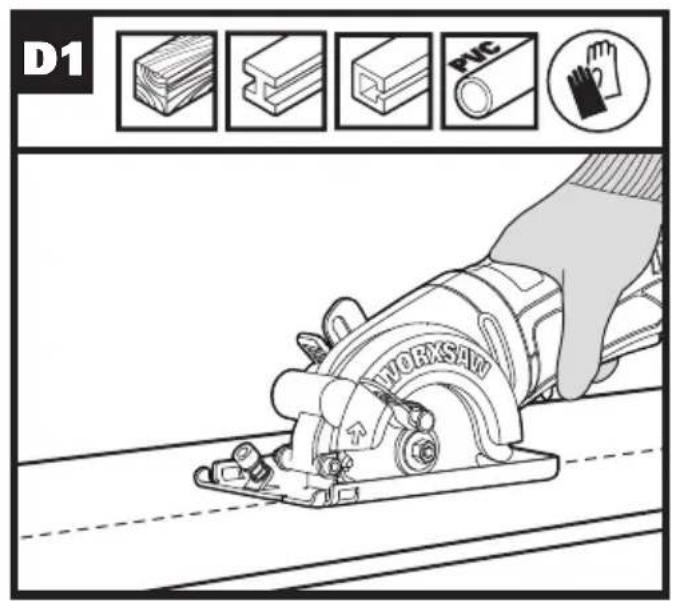
| Action Figure | |
| Saw blade Assembly and Removing | See Fig. A |
| Safety On/Off Switch See Fig. B | |
| Sawdust Removal See Fig. C | |
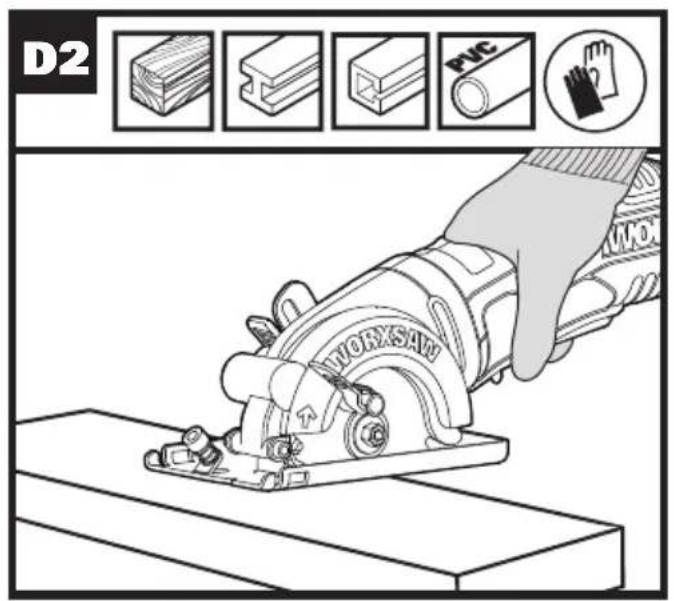
| Cross and Rip Cutting See Fig. D1, D2 | |
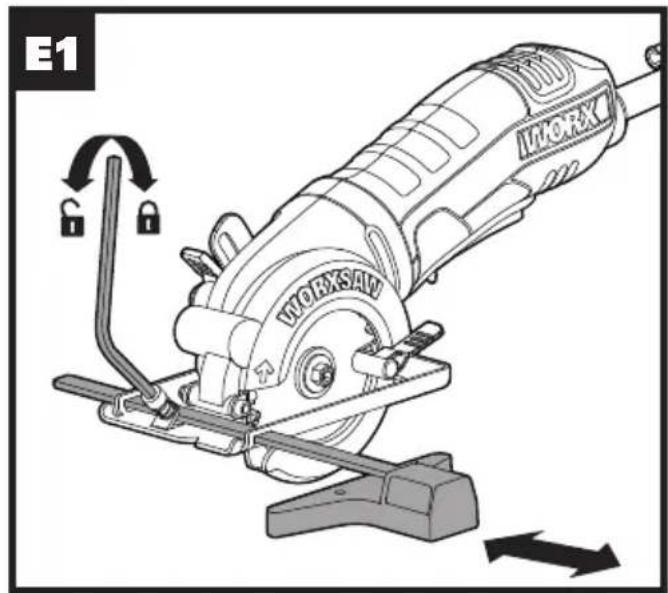
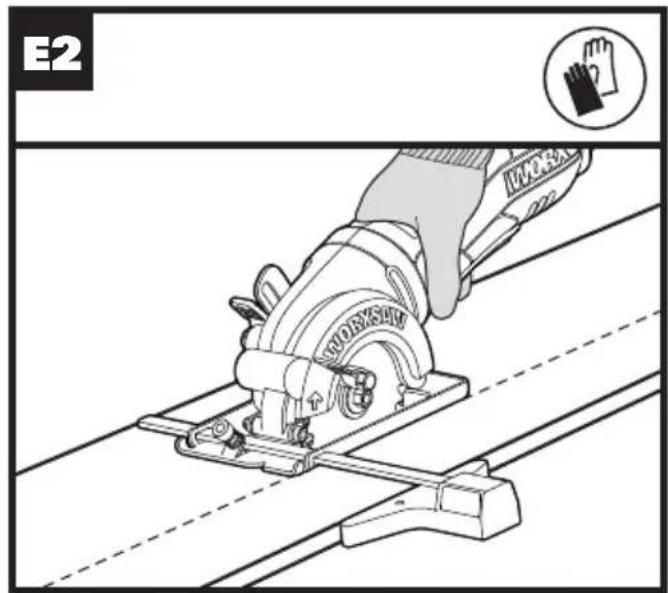
| Parallel Guide See Fig. E1, E2 | |
| Cutting Depth Adjusting See Fig. F1, F2 | |
| Pocket Cutting | See Fig. G1, G2, G3, G4, G5 |
WORKING HINTS FOR YOUR TOOL
If your power tool becomes too hot, please run your circular saw no load for 2-3 minutes to cool the motor. Avoid prolonged usage at very low speeds.
Protect saw blades against impact and shock. Cutting with extreme force can significantly reduce the performance capability of the tool and reduces the service life of the saw blade. Sawing performance and cutting quality depend essentially on the condition and the tooth count of the saw blade. Therefore, use only sharp saw blades that are suited for the material being cut.
Choice of blades: 24 teeth for general work, approx. 40 teeth for finer cuts, more than 40 teeth for very fine cuts into delicate surfaces, diamond for tile, cement board, etc.
Only use saw blades recommended.
MAINTAIN TOOLS WITH CARE
Remove the plug from the socket before carrying out any adjustment, servicing or maintenance.
Keep tools sharp and clean for better and safer performance. Follow instructions for lubricating and changing accessories. Inspect tool cords periodically and if damaged, have repaired by authorized service facility. Your power tool requires no additional lubrication or maintenance. There are no user serviceable parts in your power tool. Never use water or chemical cleaners to clean your power tool.
Wipe clean with a dry cloth. Always store your power tool in a dry place. Keep the motor ventilation slots clean. Keep all working controls free of dust.
If the supply cord is damaged, it must be replaced by the manufacturer, its service agent or similarly qualified persons in order to avoid a hazard.
Periodically clear dust and chips from guard and base to ensure proper performance.
ENVIRONMENTAL PROTECTION

Waste electrical products must not be disposed of with household waste.
Please recycle where facilities exist.
Check with your local authorities or retailer for recycling advice.
TROUBLE SHOOTING
| Symptom Possible | Causes Possible Solution | |
| Tool will not start when operating the on/off switch. | Power cord not plugged in.Power cord is broken.Carbon brush has worn down | Check to make sure power cord is connected well into a working outlet.Unplug the power cord. Replace it using a qualified maintenance person.Replace the carbon brush using a qualified maintenance person. |
| Cutting depth is less than that is set. | Sawdust accumulated at the rear of the base. | Shake out sawdust. Consider connecting a vacuum for dust collection. |
| Blade spins or slips | Blade is not tightly engaged with the spindle. | Remove the blade, and reassemble it as described in Saw blade Assembly and Removing section. |
| Blade will not cut a straight line. | Blade is dull.Blade is not mounted properly.Saw is not being guided properly. | Mount a new, sharp blade on the saw.Check that blade is properly mounted.Use a parallel guide. |
| Blade kicks back when beginning a cut | Blade is not spinning fast enough | Allow the saw blade to reach full speed prior to beginning a cut in the material. |
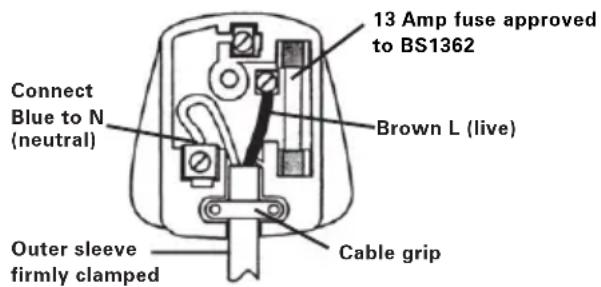
PLUG REPLACEMENT ( UK & IRELAND ONLY )
If you need to replace the fitted plug then follow the instructions below.
IMPORTANT
The wires in the mains lead are colored in accordance with the following code:
BLUE = NEUTRAL
Brown = Live
As the colors of the wires in the mains lead of this appliance may not correspond with the colored markings identifying the terminals in your plug, proceed as follows. The wire which is colored blue must be connected to the terminal which is marked with N. The wire which is colored brown must be connected to the terminal which is marked with L.
WARNING! Never connect live or neutral wires to the earth terminal of the plug. Only fit an approved 13ABS1363/A plug and the correct rated fuse.
NOTE: If a moulded plug is fitted and has to be removed take great care in disposing of the plug and severed cable, it must be destroyed to prevent engaging into a socket.
DECLARATION OF CONFORMITY
We,
POSITEC Germany GmbH
Declare that the product,
Description WORX Electric Circular Saw
Type WX423 WX423.1 (4-designation of machinery, representative of Saw)
Function Cutting various materials with a rotating toothed blade
Complies with the following Directives,
2006/42/EC
2004/108/EC
2011/65/EU
Standards conform to:
EN 55014-1
EN 55014-2
EN 61000-3-2
EN 61000-3-3
EN 60745-1
EN 60745-2-5
EN 60745-2-22
The person authorized to compile the technical file,
Name: Russell Nicholson
Address: Positec Power Tools (Europe)
Ltd, PO Box 152, Leeds, LS10 9DS, UK

Suzhou 2014/12/24
Allen Ding
Deputy Chief Engineer, Testing & Certification
Ltd, PO Box 152, Leeds, LS10 9DS, UK

Suzhou 2014/12/24
Allen Ding
Ltd, PO Box 152, Leeds, LS10 9DS, UK

Suzhou 2014/12/24
Allen Ding
you've got the power
www.worx.com
Copyright © 2015, Positec. All Rights Reserved.
2PSC16APK11006A0
- VIBRATION INFORMATION
- This tool may cause hand-arm vibration syndrome if its use is not adequately managed.
- ACCESSORIES
- SAFETY INSTRUCTIONS FOR ALL SAWS
- FURTHER SAFETY INSTRUCTIONS FOR ALL SAWS
- SAFETY INSTRUCTIONS FOR SAWS WITH INNER PENDULUM GUARD
- Lower Guard Function
- ADDITIONAL SAFETY RULES FOR YOUR CIRCULAR SAW
- ADDITIONAL SAFETY RULES FOR YOUR CUTTING-OFF MACHINES
- KICKBACK AND RELATED WARNINGS
- ADDITIONAL SAFETY RULES
- OPERATING INSTRUCTIONS
- INTENDED USE:
- WORKING HINTS FOR YOUR TOOL
- MAINTAIN TOOLS WITH CARE
- ENVIRONMENTAL PROTECTION
- PLUG REPLACEMENT ( UK & IRELAND ONLY )
- IMPORTANT
- BLUE = NEUTRAL
- Brown = Live
- DECLARATION OF CONFORMITY
Brand : WORX
Model : WX423.1
Category : Saw