
FINEPIX J25 - Digital Camera FUJIFILM - Free user manual and instructions
Find the device manual for free FINEPIX J25 FUJIFILM in PDF.


| Product type | Compact digital camera |
| Brand | Fujifilm |
| Model | FinePix J25 |
| Sensor | 1/2.3-inch CCD, 10 effective megapixels |
| Lens | Fujinon 3x optical zoom, f=6.3–18.9 mm (35.5–106.5 mm equivalent), aperture F/3.1 (W) – F/5.6 (T) |
| Digital zoom | Approx. 5.7x (up to 17.1x combined with optical zoom) |
| Screen | 3.0-inch amorphous TFT LCD, 230,000 dots, 96% coverage |
| Maximum resolution | 3648 × 2736 pixels (10M) |
| ISO sensitivity | 100, 200, 400, 800, 1600, AUTO |
| Shutter | 1/4 sec – 1/2000 sec (AUTO mode), 8 sec – 1/2000 sec (other modes) |
| Shooting modes | Auto, SR AUTO, Manual, Portrait, Landscape, Sport, Night, Macro, etc. |
| Video | 640x480 or 320x240, 30 fps, monaural sound, Motion JPEG AVI format |
| Internal memory | Approx. 20 MB |
| External storage media | SD/SDHC card (up to 32 GB validated) |
| Power | Rechargeable lithium-ion battery NP-45 (3.7 V, 740 mAh) |
| Charger | BC-45A (100–240 V AC, 50/60 Hz) |
| Battery life (CIPA) | Approx. 165 shots with a full NP-45 battery |
| Dimensions (W × H × D) | 91.0 × 56.0 × 17.4 mm (excluding protrusions) |
| Weight | Approx. 100 g (body only, without battery or card) |
| Connections | USB 2.0 High Speed, A/V output (NTSC/PAL) |
| Built-in flash | Range approx. 0.5–3.2 m (W), 0.5–1.8 m (T); modes: Auto, Forced, Suppressed, Slow Sync |
| Cleaning and maintenance | Blower and soft dry cloth for lens and screen; avoid water and sand; use a dry cloth for the body |
| Safety | Do not open the battery compartment when the camera is on; keep out of reach of young children (risk of memory card ingestion) |
| Spare parts and repairability | Battery NP-45, charger BC-45A, USB cable, strap, A/V cable (optional); for repairs, contact a Fujifilm authorized dealer |
Frequently Asked Questions - FINEPIX J25 FUJIFILM
User questions about FINEPIX J25 FUJIFILM
0 question about this device. Answer the ones you know or ask your own.
Ask a new question about this device
Download the instructions for your Digital Camera in PDF format for free! Find your manual FINEPIX J25 - FUJIFILM and take your electronic device back in hand. On this page are published all the documents necessary for the use of your device. FINEPIX J25 by FUJIFILM.
USER MANUAL FINEPIX J25 FUJIFILM
Thank you for your purchase of this product. This manual describes how to use your FUJIFILM FinePix J20 or J25 digital camera and the supplied software. Be sure that you have read and understood its contents before using the camera.
natural_image
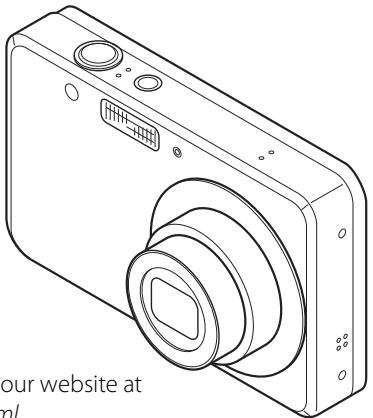
Line drawing of a digital camera with lens and ports (no text or symbols on the device itself)For information on related products, visit our website at http://www.fujifilm.com/products/index.html
Before You Begin
First Steps
Basic Photography and Playback
More on Photography
More on Playback
Movies
Connections
Menus
Technical Notes
Troubleshooting
Appendix
Camera Q & A
Find items by task.
Camera Setup
| Question | Key phrase | See page |
| How do I set the camera clock? | Date and time | 12 |
| Can I set the clock to local time when I travel? | Time difference | 77 |
| How do I keep the monitor from turning off automatically? | Auto power off | 76 |
| How do I stop the camera beeping and clicking? | Silent mode | 25 |
| Operation and shutter volume | 72 | |
| What are the parts of the camera called? | Parts of the camera | 2 |
| What do the icons in the monitor mean? | Monitor | 3 |
| How do I use the menus? | Menus | 55 |
| What's behind that flashing icon or error message in the monitor? | Messages and displays | 86 |
| How much charge is left in the battery? | Battery level | 13 |
Taking Pictures
| Question | Key phrase | See page |
| How many pictures can I take? | Memory capacity | 91 |
| Is there a quick and easy way to take snapshots? | mode | 13 |
| How can I make good portraits? | Intelligent Face Detection | 18 |
| Can the camera automatically select the most suitable mode? | SR mode | 29 |
| Is there a simple way to adjust settings for different scenes? | Shooting mode | 28 |
| How do I shoot close-ups? | Macro mode (Close-ups) | 23 |
| How do I keep the flash from firing? | Flash mode | 24 |
| How do I stop my subjects' eyes glowing red when I use the flash? | ||
| How do I "fill-in" shadows on back-lit subjects? | ||
| How do I take a group portrait that includes the photographer? | Self-timer mode | 26 |
| How do I frame pictures with the subject off to one side? | Focus lock | 21 |
| How do I shoot movies? | Recording movies | 38 |
Viewing Pictures
| Question | Key phrase | See page |
| How do I view my pictures? | Single-frame playback | 32 |
| Is there a simple way to delete one image? | Deleting pictures | 17 |
| How do I delete one or all images at once? | Erase | 36 |
| Can I zoom in on pictures during playback? | Playback zoom | 33 |
| How do I view a lot of pictures at once? | Multi-frame playback | 34 |
| How do I view all pictures taken on the same day? | Sort by date | 35 |
| Can I protect my pictures from accidental deletion? | Protect | 66 |
| Can I hide the icons in the monitor when viewing my pictures? | Choosing a display format | 32 |
| How do I view my pictures on TV? | Viewing pictures on TV | 41 |
Sharing Pictures
| Question | Key phrase | See page |
| Can I print pictures on my home printer? | Printing pictures | 42 |
| Can I copy my pictures to my computer? | Viewing pictures on a computer | 48 |
Table of Contents
Camera Q & A....ii
Camera Setup ...... ii
Taking Pictures....ii
Viewing Pictures....iii
Sharing Pictures......iii
About This Manual......vi
Before You Begin
Introduction....1
Symbols and Conventions....1
Supplied Accessories....1
Parts of the Camera....2
The Monitor....3
First Steps
Charging the Battery 4
Inserting the Battery....6
Inserting a Memory Card 8
Turning the Camera on and Off....11
Shooting Mode....11
Playback Mode....11
Basic Setup 12
Basic Photography and Playback
Taking Pictures in (Auto) Mode....13
Viewing Pictures....17
More on Photography
Intelligent Face Detection and Red-Eye Removal......18
Focus Lock 21
Macro mode (Close-ups)....23
Using the Flash....24
Using the Self-Timer....26
Shooting Mode....28
Selecting a Shooting Mode....28
Shooting Modes....29
SR AUTO SCENE RECOGNITION....29
More on Playback
Single-Frame Playback....32
Playback Zoom....33
Multi-Frame Playback 34
Sort by Date 35
Deleting Pictures....36
Movies
Recording Movies....38
▶ Viewing Movies....40
Connections
Viewing Pictures on TV....41
Printing Pictures via USB 42
Connecting the Camera 42
Printing Selected Pictures ....42
Printing the DPOF Print Order 43
Creating a DPOF Print Order....45
Viewing Pictures on a Computer....48
Installing FinePixViewer 48
Installing FinePixViewer S: Windows......48
Installing FinePixViewer: Macintosh....51
Connecting the Camera 53
Menus
The Shooting Menu....55
Using the Shooting Menu....55
Shooting Menu Options....56
ISO ISO 57
QUALITY....58
EXP. COMPENSATION....59
WB WHITE BALANCE....60
CONTINUOUS (Continuous shooting)......61
The Playback Menu....62
Using the Playback Menu 62
Playback Menu Options....63
RED EYE REMOVAL....64
SLIDE SHOW 65
oT PROTECT....66
COPY COPY....67
# IMAGE ROTATE....69
TRIMMING....70
The Setup Menu....71
Using the Setup Menu 71
Setup Menu Options....72
☑ IMAGE DISP....73
No! FRAME NO....74
Q DIGITAL ZOOM....75
LCD POWER SAVE 75
PLAYBACK VOLUME....75
LCD BRIGHTNESS....75
FORMAT 76
AUTO POWER OFF....76
TIME DIFFERENCE....77
Technical Notes
Optional Accessories 78
Accessories from Fujifilm 79
Troubleshooting
Troubleshooting....80
Warning Messages and Displays....86
Appendix
Glossary 90
Internal Memory/Memory Card Capacity....91
Specifications....92
Caring for the Camera....97
About This Manual
This manual is for use with the following FinePix cameras: the J20 and J25. The J20 has a 2.7-inch monitor; the J25 has a 3.0-inch monitor. All operations are identical; save where otherwise noted, the illustrations in this manual show the J25. Before using the camera, read this Owner's Manual and the other supplied documents. For information on specific topics, consult the sources below.
√ Camera Q & A ...... pg. ii
Know what you want to do but don't know the name for it? Find the answer in "Camera Q & A."
√ Troubleshooting ......pg. 80
Having a specific problem with the camera? Find the answer here.
√ Glossary ......pg. 90
The meanings of some technical terms may be found here.
√ Table of Contents ......pg.iv
The “Table of Contents” gives an overview of the entire manual. The principal camera operations are listed here.
√ Warning Messages and Displays ......pg. 86
Find out what's behind that flashing icon or error message in the monitor.
√ Restrictions on Camera Settings
See another supplied document for restrictions on the options available in each shooting mode.

Memory Cards
Pictures can be stored in the camera's internal memory or on optional SD and SDHC memory cards. In this manual, SD memory cards are referred to as "memory cards." For more information, see page 8.
Symbols and Conventions
The following symbols are used in this manual:
Caution: This information should be read before use to ensure correct operation.
Note: Points to note when using the camera.
Tip: Additional information that may be helpful when using the camera.
Menus and other text in the camera monitor are shown in bold. In the illustrations in this manual, the monitor display may be simplified for explanatory purposes.
Supplied Accessories
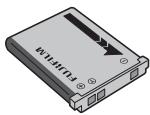
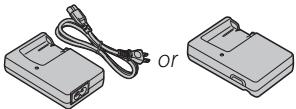
The following items are included with the camera:
natural_image
Illustration of a rectangular electronic device with a black arrow pointing to its side (no text or symbols visible)NP-45 rechargeable battery
natural_image
Illustration of two electronic devices with cables and connectors, no text or symbols presentBC-45A battery charger (with power cable or built-in plug)
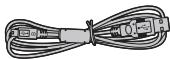
USB cable

FinePix software CD (IMPORTANT: read the End User License Agreement before opening.)
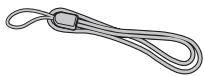
natural_image
Simple line drawing of a coiled rope or cable with a central rectangular component (no text or symbols)Strap
Attaching the Strap
Attach the strap as shown.
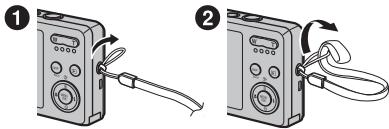
Owner's Manual (may be distributed on CD in some countries or regions)
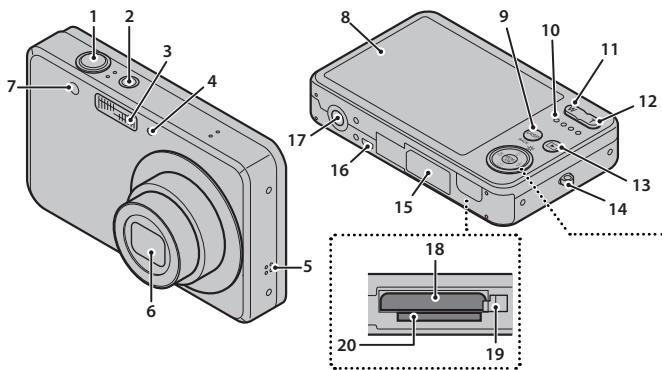
Parts of the Camera
For more information, refer to the page listed to the right of each item.
Selector button
Move cursor up
✿ (monitor brightness)
button (see below)
(delete) button (pg. 17)
Move cursor left
(macro)
button (pg. 23)
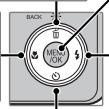
MENU/OK button
(pg. 12)
Move cursor right
↓ (flash) button
(pg. 24)
Move cursor down

(self-timer) button (pg. 26)
1 Shutter button....15–16
2 ON/OFF button....11
3 Flash....24
4 Microphone....38
5 Speaker....40
6 Lens and lens cover
7 Self-timer lamp....26
8 Monitor....3
9 DISP (display)/BACK button...... 15, 32
(silent mode) button.....25
10 Indicator lamp....16
11 W (zoom out) button....14, 34
12 T (zoom in) button.... 14, 33
13 ▶ ( playback) button....32
14 Strap eyelet.... 1
15 Battery-chamber cover 6
16 Connector for USB cable......42, 53
Connector for A/V cable 41
17 Tripod mount
18 Battery chamber......6
19 Battery latch 6
20 Memory card slot....8
Tip: Monitor Brightness
Pressing the ⚙ button briefly increases monitor brightness, making the display easier to see in bright light. Normal brightness is restored when a photograph is taken.
The Monitor
The following indicators may appear in the monitor during shooting and playback:
■ Shooting
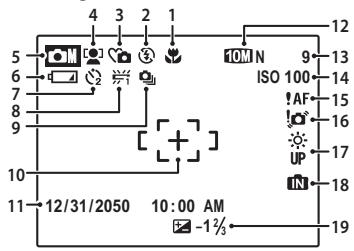
1 Macro (close-up) mode......23
2 Flash mode....24
3 Silent mode 25
4 Intelligent Face Detection indicator....18
5 Shooting mode......28
6 Battery level....13
7 Self timer indicator......26
8 White balance 60
9 Continuous mode....61
10 Focus frame....15
* Indicates that no memory card is inserted and that pictures will be stored in the camera's internal memory (pg. 8).
■ Playback
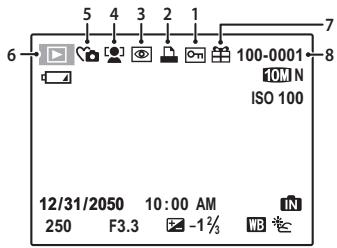
1 Protected image....66
2 DPOF print indicator......45
3 Red-eye removal indicator .....64
4 Intelligent Face Detection indicator....18, 64
5 Silent mode indicator......25
6 Playback mode indicator......32
7 Gift image....32
8 Frame number....74
Charging the Battery
The battery is not charged at shipment. Charge the battery before use.
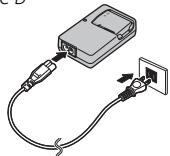
1 Place the battery in the charger.
Insert the battery into the supplied battery charger as shown, making sure that the battery is in the correct orientation. The battery charger comes in one of two types, depending on the country or region of sale: one with a built-in plug that plugs directly into the power outlet (A), and another that connects to the power outlet via a power cable (B).
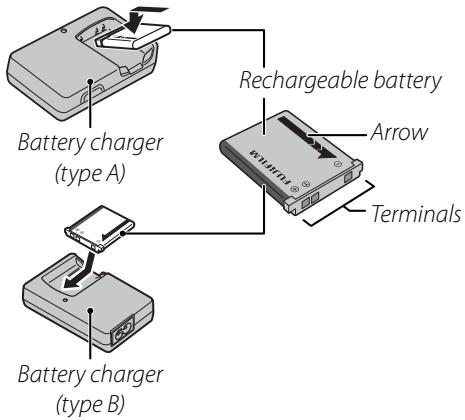
2 Plug the charger in.
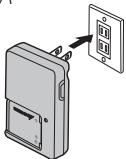
Plug the charger into a power outlet. The charging indicator will light.
Type A
natural_image
Illustration of a wall-mounted electrical switch with an arrow pointing to its panel (no text or symbols present)Type B
natural_image
Diagram of a device with cable and connector, showing wiring connections without any text or symbols
The Charging Indicator
The charging indicator shows battery charge status as follows:
| Charging indicator | Battery status | Action |
| Off | Battery not inserted. | Insert the battery. |
| Battery fully charged. | Remove the battery. | |
| Glows | Battery charging. | — |
| Blinks | Battery fault. | Unplug the charger and remove the battery. |
3 Charge the battery.
Cautions: Caring for the Battery
- Do not affix stickers or other objects to the battery. Failure to observe this precaution could make it impossible to remove the battery from the camera.
- Do not short the battery terminals. The battery could overheat.
- Use only NP-45 batteries. Failure to observe this precaution could result in product malfunction.
- Do not remove the labels from the battery or attempt to split or peel the outer casing.
- The battery gradually loses its charge when not in use. Charge the battery one or two days before use.
- Read the supplied documentation for additional cautions concerning battery use.
Caution: Battery Life
A noticeable decrease in the length of time the battery will hold a charge indicates that it has reached the end of its service life and should be replaced.
Cautions: Using the Battery Charger
- Unplug the charger when it is not in use.
- Remove dirt from the battery terminals with a clean, dry cloth. Failure to observe this precaution could prevent the battery from charging.
- Charging times increase at low temperatures.
Inserting the Battery
After charging the battery, insert it in the camera as described below.
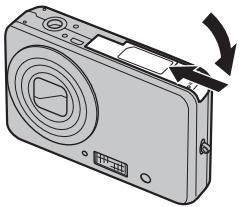
1 Open the battery-chamber cover.
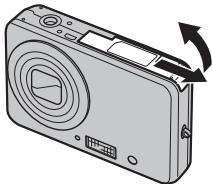
natural_image
Illustration of a digital camera with an arrow indicating rotation (no text or symbols present)
Note
Be sure the camera is off before opening the battery-chamber cover.

Cautions
- Do not open the battery-chamber cover when the camera is on. Failure to observe this precaution could result in damage to image files or memory cards.
- Do not use excessive force when handling the battery-chamber cover.
2 Insert the battery.
Check the label in the battery-chamber. Face the gold contacts downward and insert the battery into the battery-chamber, pressing the battery latch with the battery in the direction shown below. Confirm that the battery is securely latched.


Caution
Insert the battery in the correct orientation. Do NOT use force or attempt to insert the battery upside down or backwards. The camera will not function if the battery is inserted backwards or upside down.
3 Close the battery-chamber cover.
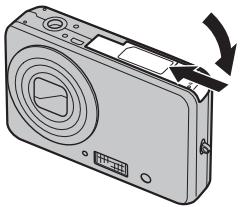
natural_image
Illustration of a digital camera with an arrow indicating rotation or change (no text or symbols present)
Removing the Battery
After turning the camera off, open the battery-chamber cover, press the battery latch to the top, and slide the battery out of the camera as shown.
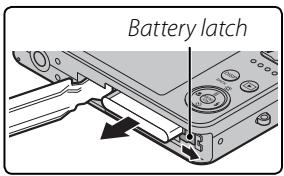

Caution
Turn the camera off before removing the battery.
Inserting a Memory Card
Although the camera can store pictures in internal memory, SD memory cards (sold separately) can be used to store additional pictures.
When no memory card is inserted, 📄N appears in the monitor and internal memory is used for recording and playback. Note that because camera malfunction could cause internal memory to become corrupted, the pictures in internal memory should periodically be transferred to a computer and saved on the computer hard disk or on removable media such as CDs or DVDs. The pictures in internal memory can also be copied to a memory card (see page 67). To prevent internal memory from becoming full, be sure to delete pictures when they are no longer needed.
When a memory card is inserted as described below, the card will be used for recording and playback.
■ Compatible Memory Cards
SanDisk SD and SDHC memory cards have been tested and approved for use in the camera. A complete list of approved memory cards is available at http://www.fujifilm.com/products/digital_cameras/index.html. Operation is not guaranteed with other cards. The camera can not be used with MultiMediaCard (MMC) or xD-Picture cards.
Caution
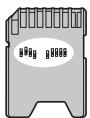
Memory cards can be locked, making it impossible to format the card or to record or delete images. Before inserting a memory card, slide the write-protect switch to the unlocked position.
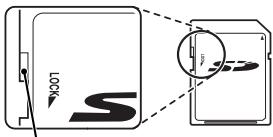
Write-protect switch
■ Inserting a Memory Card
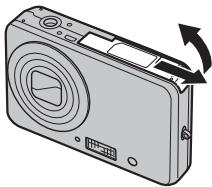
1 Open the battery-chamber cover.
natural_image
Illustration of a digital camera with an arrow indicating rotation (no text or symbols present)2 Insert the memory card.
Holding the memory card in the orientation shown below, slide it all the way in.
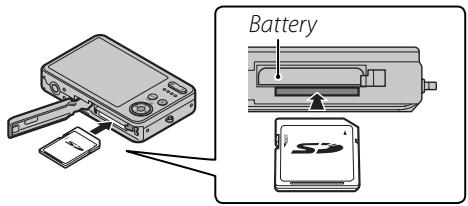
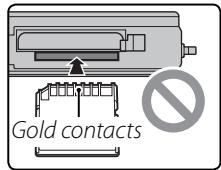
Be sure card is in correct orientation; do not insert at an angle or use force.
3 Close the battery-chamber cover.
natural_image
Illustration of a digital camera with an arrow indicating rotation (no text or symbols present)Removing Memory Cards
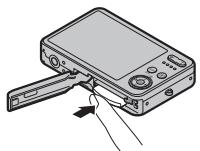
Be sure the camera is off before opening the battery-chamber cover. Press the card in and then release it slowly. The card can now be removed by hand.
natural_image
Illustration of a device being inserted into a slot, showing the handle and control panel (no text or symbols)Cautions
- The memory card may spring out if you remove your finger immediately after pushing the card in.
- Memory cards may be warm to the touch after being removed from the camera. This is normal and does not indicate a malfunction.
Cautions
- Format memory cards before first use, and be sure to reformat all memory cards after using them in a computer or other device. For more information on formatting memory cards, see page 76.
- Memory cards are small and can be swallowed; keep out of reach of children. If a child swallows a memory card, seek medical assistance immediately.
- Do not use miniSD or microSD adapters that expose the back of the card. Failure to observe this precaution may cause damage or malfunction. Adapters that are larger or smaller than the standard dimensions of an SD card may not eject normally; if the card does not eject, take the camera to an authorized service representative. Do not forcibly remove the card.
- Do not turn the camera off or remove the memory card while the memory card is being formatted or data are being recorded to or deleted from the card. Failure to observe this precaution could damage the card.
- Do not affix labels to memory cards. Peeling labels can cause camera malfunction.
- Movie recording may be interrupted with some types of memory card.
- The data in internal memory may be erased or corrupted when the camera is repaired. Please note that the repairer will be able to view pictures in internal memory.
- Formatting a memory card or internal memory in the camera creates a folder in which pictures are stored. Do not rename or delete this folder or use a computer or other device to edit, delete, or rename image files. Always use the camera to delete pictures from memory cards and internal memory; before editing or renaming files, copy them to a computer and edit or rename the copies, not the originals.
Turning the Camera on and Off
Shooting Mode
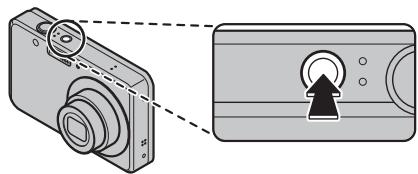
Press the ON/OFF button to turn the camera on. The lens will extend and the lens cover will open.
natural_image
Diagram showing a digital camera with a close-up view of its right-side control panel (no text or symbols present)Press ON/OFF again to turn the camera off.
Tip: Switching to Playback Mode
Press the ▶ button to start playback. Press the shutter button halfway to return to shooting mode.
Cautions
- Pictures can be affected by fingerprints and other marks on the lens. Keep the lens clean.
- The ON/OFF button does not completely disconnect the camera from its power supply.
Playback Mode
To turn the camera on and begin playback, press the ▶ button for about a second.
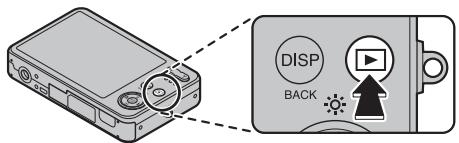
Press the ▶ button again to turn the camera off.
Tip: Switching to Shooting Mode
To exit to shooting mode, press the shutter button halfway. Press the ▶ button to return to playback.
Tip: Auto Power Off
The camera will turn off automatically if no operations are performed for the length of time selected in the AUTO POWER OFF menu (see page 76).
Basic Setup
A language-selection dialog is displayed the first time the camera is turned on. Set up the camera as described below (for information on resetting the clock or changing languages, see page 71).
1 Choose a language.
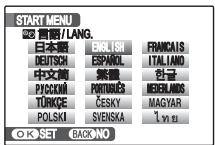
1.1 Press the selector up, down, left, or right to highlight a language.
1.2 Press MENU/OK.


2 Set the date and time.
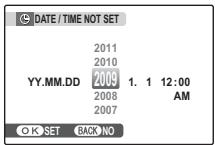
2.1 Press the selector left or right to highlight the year, month, day, hour, or minute and press up or down to change. To change the order in which the year, month, and day are displayed, highlight the date format and press the selector up or down.
2.2 Press MENU/OK.


Tip: The Camera Clock
If the battery is removed for an extended period, the camera clock will be reset and the language-selection dialog will be displayed when the camera is turned on. If the battery is left in the camera for about 30 minutes, the battery can be removed for about 24 hours without resetting the clock or language selection.
Taking Pictures in 📄 (Auto) Mode
This section describes how to take pictures in ☐ mode.
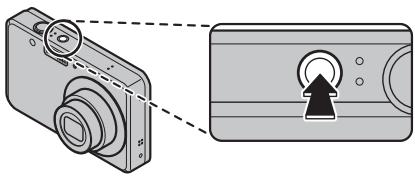
1 Turn the camera on.
Press the ON/OFF button to turn the camera on.
natural_image
Illustration of a digital camera with an attached control knob (no text or symbols present)Tip: Intelligent Face Detection
The first time the camera is turned on, Intelligent Face Detection is automatically activated and the camera is optimized for taking portrait photographs. For more information on using Intelligent Face Detection, see page 18.
2 Check the battery level.
Check the battery level in the monitor.
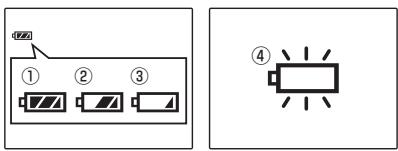
| Indicator | Description |
| 1 (white) | Battery partially discharged. |
| 2 (white) | Battery more than half discharged. |
| 3 (red) | Low battery. Charge as soon as possible. |
| 4 (blinks red) | Battery exhausted. Turn camera off and charge battery. |
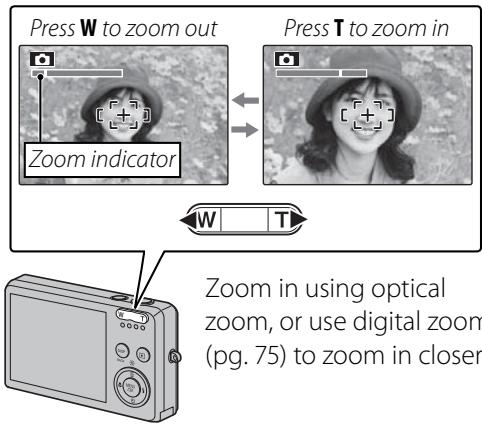
3 Frame the picture.
Position the main subject in the focus area and use the zoom buttons to frame the picture in the monitor.
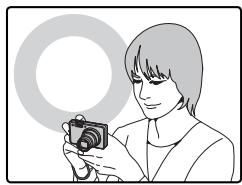
Holding the Camera
Hold the camera steady with both hands and brace your elbows against your sides. Shaking or unsteady hands can blur your shots.
To prevent pictures that are out of focus or too dark (underexposed), keep your fingers and other objects away from the lens and flash.
natural_image
Illustration of a person holding a camera with a ring light in the background (no text or symbols)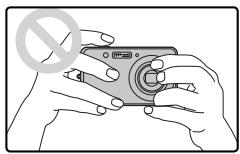
natural_image
Illustration of hands holding a smartphone with a stop symbol (no text or symbols on the device)Tip: Focus Lock
Use focus lock (pg. 21) to focus on subjects that are not in the focus frame.

Framing Guideline
The images change as shown below if you press the DISP/BACK button.
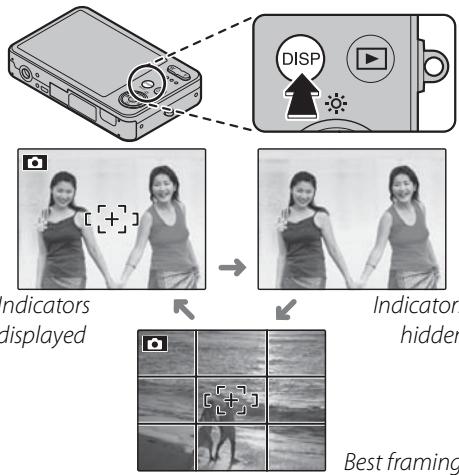
To use the best framing, position the main subject at the intersection of two lines or align one of the horizontal lines with the horizon. Use focus lock (pg.21) to focus on subjects that will not be in the center of the frame in the final photograph.
4 Focus.
Press the shutter button halfway to focus on the main subject in the focus frame.
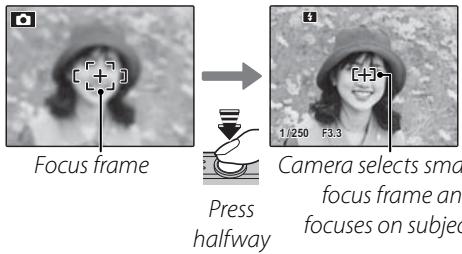
If the camera is able to focus, it will beep twice and the indicator lamp will glow green.
If the camera is unable to focus, the focus frame will turn red, a !AF indicator will appear in the monitor, and the indicator lamp will blink green. Change the composition or use focus lock (pg. 21).

Note
The lens may make a noise when the camera focuses. This is normal.
5 Shoot.
Smoothly press the shutter button the rest of the way down to take the picture.

Tip: The Shutter Button
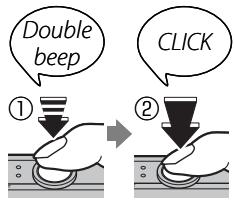
The shutter button has two positions. Pressing the shutter button halfway (①) sets focus and exposure; to shoot, press the shutter button the rest of the way down (②).

Note
If the subject is poorly lit, the flash may fire when the picture is taken. To take pictures without the flash, choose another flash mode (pg. 24).

The Indicator Lamp
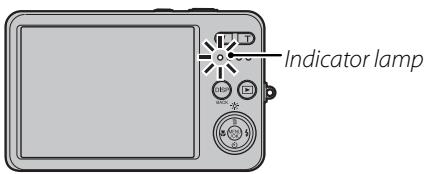
The indicator lamp shows camera status as follows:
| Indicator lamp | Camera status |
| Glows green | Focus locked. |
| Blinks green | Camera shake warning, AF warning, or AE warning (ready to shoot) |
| Blinks green and orange | Recording pictures. Additional pictures can be taken. |
| Glows orange | Recording pictures. No additional pictures can be taken at this time. |
| Blinks orange | Flash charging; flash will not fire when picture is taken. |
| Blinks red | Recording or lens error. |

Tip: Warnings
Detailed warnings appear in the monitor. See pages 86–89 for more information.
Viewing Pictures
Pictures can be viewed in the monitor. When taking important photographs, take a test shot and check the results.
1 Press the ▶ button.
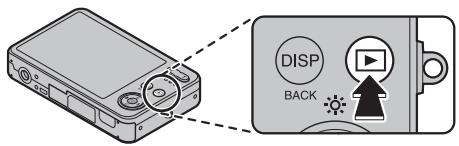
The most recent picture will be displayed in the monitor.
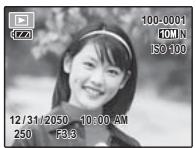
2 View additional pictures.
Press the selector right to view pictures in the order recorded, left to view pictures in reverse order.
Press the shutter button to exit to shooting mode.

Deleting Pictures
To delete the picture currently displayed in the monitor, press the selector up (☐). The following dialog will be displayed.
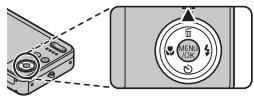
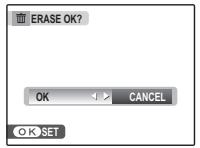
To delete the picture, press the selector left to highlight OK and press MENU/OK. To exit without deleting the picture, highlight CANCEL and press MENU/OK.

Tip: The Playback Menu
Pictures can also be deleted from the playback menu (pg. 36).
Intelligent Face Detection and Red-Eye Removal
Intelligent Face Detection allows the camera to automatically detect human faces and set focus and exposure for a face anywhere in the frame for shots that emphasize portrait subjects. Choose for group portraits to prevent the camera from focusing on the background. Intelligent Face Detection also offers a red-eye removal option for removing “red-eye” effects caused by the flash.
1 Turn Intelligent Face Detection on.
1.1 Press MENU/OK to display the shooting menu.

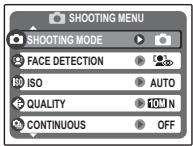
1.2 Press the selector up or down to highlight 🙏 FACE DETECTION.
1.3 Press the selector right to display Intelligent Face Detection options.


1.4 Press the selector up or down to highlight the desired option.

| Option | Description |
| ON | Intelligent Face Detection and red-eye removal on. Use with the flash. |
| ON | |
| ON | Intelligent Face Detection on; red-eye removal off. |
| OFF | |
| OFF | Intelligent Face Detection and red-eye removal off. |
1.5 Press MENU/OK to select the highlighted option and return to shooting mode.

icon appears in monitor when Intelligent Face Detection is on.

2 Frame the picture.
If a face is detected, it will be indicated by a green border. If there is more than one face in the frame, the camera will select the face closest to the center; other faces are indicated by white borders.
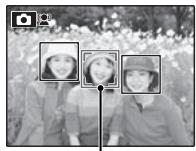
natural_image
Black-and-white photo of three people outdoors with camera and face bounding boxes, no visible text or symbolsGreen border
3 Focus.
Press the shutter button halfway to set focus and exposure for the subject in the green border.
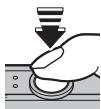
Cautions
- If no face is detected when the shutter button is pressed halfway (pg. 82), the camera will focus on the subject at the center of the monitor and red-eye will not be removed.
- In each shooting mode, the camera will detect and focus on faces but exposure will be optimized for the entire scene rather than the selected portrait subject.
4 Shoot.
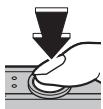
Press the shutter button all the way down to shoot.
Caution
If the subject moves as the shutter button is pressed, their face may not be in the area indicated by the green border when the picture is taken.
If [●] ON/○ ON is selected, the picture will be processed to reduce red-eye before it is recorded (the ● RED-
EYE REMOVAL option in the playback menu can also be used to reduce red-eye; pg. 64).
Intelligent Face Detection
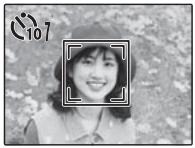
Intelligent Face Detection is recommended when using the self-timer for group- or self-portraits (pp. 26–27).
natural_image
Black-and-white photo of a smiling person with a camera frame overlay (no text or symbols on the person or background)The camera can zoom in on pictures taken with Intelligent Face Detection during slide shows (pg. 65) and when pictures are displayed automatically after shooting (pg. 73).
Focus Lock
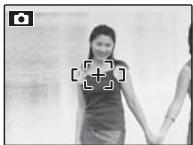
To compose photographs with off-center subjects:
1 Position the subject in the focus frame.
natural_image
Black-and-white photo of a person holding hands, with a camera icon overlay (no text or symbols on the image itself)2 Focus.
Press the shutter button halfway to set focus and exposure. Focus and exposure will remain locked while the shutter button is pressed halfway (AF/AE lock).
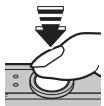
Press
halfway
![[+] 250 F3.3](/content/2025/01/79648/images/c0f63f49163f6cb6db463218a533d94e5d4a97e6d31b056e7370721e2490374c.jpg)
Repeat steps 1 and 2 as desired to refocus before taking the picture.
3 Recompose the picture.
Keeping the shutter button pressed halfway, recompose the picture.
![[+] 250 F3.3](/content/2025/01/79648/images/649c4b319575a444feed4714ac98d40ccc29dca9d340f8a415197436f6f3190b.jpg)
4 Shoot.
Press the shutter-release button the rest of the way down to take the picture.
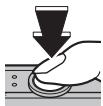
Press the rest of
the way down

Autofocus
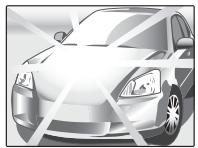
Although the camera boasts a high-precision autofocus system, it may be unable to focus on the subjects listed below. If the camera is unable to focus using autofocus, use focus lock (pg. 21) to focus on another subject at the same distance and then recompose the photograph.
• Very shiny subjects such as mirrors or car bodies.
- Fast-moving subjects.
- Subjects photographed through a window or other reflective object.
- Dark subjects and subjects that absorb rather than reflect light, such as hair or fur.
- Insubstantial subjects, such as smoke or flame.
- Subjects that show little contrast with the background (for example, subjects in clothing that is the same color as the background).
- Subjects positioned in front of or behind a high-contrast object that is also in the focus frame (for example, a subject photographed against a backdrop of highly contrasting elements).
natural_image
Front view of a modern sedan with visible headlights and grille lines (no text or symbols)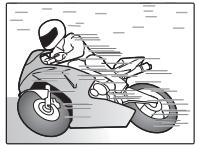
natural_image
Cartoon illustration of a person riding a motorcycle with motion lines indicating speed (no text or symbols)To select macro mode, press the selector left (💡).
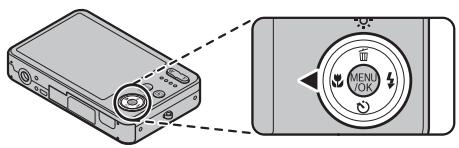
![[1] [+]](/content/2025/01/79648/images/01908758569e5a6f7260e0c528f6087ea90a53aeb171cca196c7023d69ca1435.jpg)
icon appears in monitor when camera is in macro mode
When macro mode is in effect, the camera focuses on subjects near the center of the monitor. Use the zoom buttons to frame pictures.
To exit macro mode, press the selector left (💡). Macro mode can also be cancelled by turning the camera off or selecting another shooting mode.
Note
Use of a tripod is recommended to prevent blur caused by camera shake.
↓ Using the Flash
Use the flash when lighting is poor, for example when shooting at night or indoors under low light.
To choose a flash mode, press the selector right (⚡). The flash mode changes each time the selector is pressed; in modes other than AUTO, the current mode is indicated by an icon in the monitor. Choose from the following options (some options are not available in all shooting modes; see the restrictions in another supplied document):
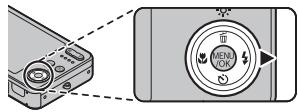
| Mode | Description |
| AUTO (no icon) | The flash fires when required. Recommended in most situations. |
| (fill flash) | The flash fires whenever a picture is taken. Use for backlit subjects or for natural coloration when shooting in bright light. |
| (suppressed flash) | The flash does not fire even when the subject is poorly lit. will appear in the monitor at slow shutter speeds to warn that pictures may be blurred. Use of a tripod is recommended. |
| (slow sync) | Capture both the main subject and the background when shooting at night (note that brightly lit scenes may be overexposed). If is selected for SHOOTING MODE, shutter speed may be slow. Use a tripod. |
If the flash will fire, ⏻ will be displayed in the monitor when the shutter button is pressed halfway.
Caution
The flash may fire several times with each shot. Do not move the camera until shooting is complete.
Red-Eye Removal
When ON/ON is selected for Intelligent Face Detection (pg. 18), red-eye removal (○) is available in AUTO (○AUTO), fill flash (○◇), and slow sync (○SLOW) modes. Red-eye removal minimizes "red-eye" caused when light from the flash is reflected from the subject's retinas as shown in the illustration at right.
Silent Mode
In situations in which camera sounds or light from the flash may be unwelcome, press the DISP/BACK button until 📋 is displayed in the monitor.
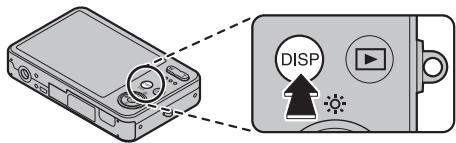
The camera speaker, shooting indicator, flash, and indicator and self-timer lamps turn off. Flash and volume settings (pg. 75) can not be adjusted while silent mode is in effect. To restore normal operation, press the DISP/BACK button until the 🎨 icon is no longer displayed.
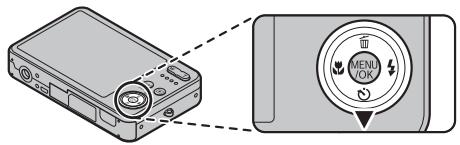
The camera offers a ten-second timer that allows photographers to appear in their own photographs, and a two-second timer that can be used to avoid blur caused by the camera moving when the shutter button is pressed.
1 Set the timer.
The current self-timer mode is displayed in the monitor. To choose a different setting, press the selector down (☐). The selection changes each time the selector is pressed.
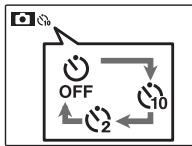
flowchart
graph TD
    A["Camera Icon"] --> B["OFF"]
    B --> C["10"]
    C --> D["2"]
    D --> E["Left Arrow"]
    E --> F["Right Arrow"]
The current self-timer mode is displayed in the monitor.
The picture is taken after 10 seconds.
2 : The picture is taken after 2 seconds.
2 Focus.
Press the shutter button halfway to focus.
Caution
Stand behind the camera when using the shutter button. Standing in front of the lens can interfere with focus and exposure.
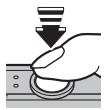
3 Start the timer.
Press the shutter button the rest of the way down to start the timer. The display in the monitor shows the number of seconds remaining until the shutter is released. To stop the timer before the picture is taken, press DISP/BACK.
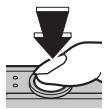

The self-timer lamp on the front of the camera will blink immediately before the picture is taken. If the two-second timer is selected, the self-timer lamp will blink as the timer counts down.
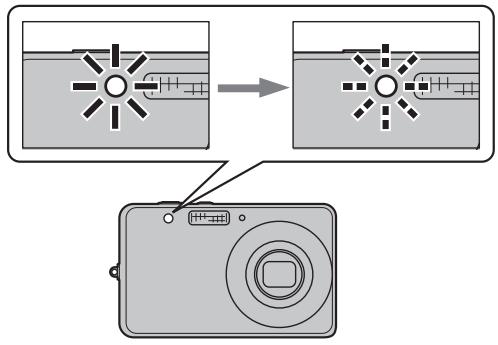

Intelligent Face Detection
Because it ensures that the faces of portrait subjects will be in focus, Intelligent Face Detection (pg. 18) is recommended when using the self-timer for group portraits or self-portraits. To use the self-timer with Intelligent Face Detection, set the timer as described in Step 1 and then press the shutter button all the way down to start the timer. The camera will detect faces while the timer is counting down and adjust focus and exposure immediately before the shutter is released. Be careful not to move until the picture has been recorded.
Choose a shooting mode according to the scene or type of subject.
Selecting a Shooting Mode
1 Press MENU/OK to display the shooting menu.

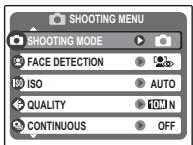
2 Press the selector up or down to highlight Ⓞ SHOOTING MODE.
3 Press the selector right to display shooting mode options.
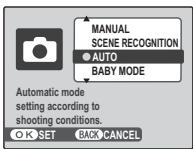
4 Press the selector up or down to highlight the desired mode.


5 Press MENU/OK to select the highlighted option.

Note
See the restrictions in another supplied document for flash mode setting.
Shooting Modes
M MANUAL
Choose this mode for complete control of shooting settings, including exposure compensation (pg. 59) and white balance (pg. 60).
SR AUTO SCENE RECOGNITION
Simply by pointing the camera to the subject, the camera automatically analyzes and selects the most appropriate setting using scene recognition.
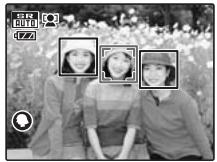
The camera analyzes a subject based on scene recognition, then an icon appears in the bottom left of the monitor (The illustration shows when the camera analyzed subject(s) in portrait.).
| Subject | Icon | Description |
| PORTRAIT | For soft-toned portraits with natural skin tones. | |
| LANDSCAPE | For crisp, clear daylight shots of buildings and landscapes. | |
| NIGHT | For night and twilight scenes, a using high sensitivity setting to minimize blurring. | |
| MACRO | For clear close-ups of flowers, etc. | |
| BACKLIGHT PORTRAIT | For a subject backlit against the sun, preventing the background from becoming dim. | |
| NIGHT PORTRAIT | For a subject in a dim place, reducing blur. |

When a subject can not be analyzed by the camera,
AUTO AUTO mode will be set.
Notes
- [●] Intelligent Face Detection is turned on automatically.
- The camera continuously adjusts focus on a face, or the center area of the monitor.
- Continuous auto focus will be audible and will increase battery drain.
- Macro mode is set when 🎨 is set.
AUTO
Choose for crisp, clear snapshots (pg. 13). This mode is recommended in most situations.
BABY MODE
Choose for natural skin tones when taking portraits of infants. The flash turns off automatically.
PICTURE STABILIZATION
Choose this mode for fast shutter speeds that reduce blur caused by camera shake or subject movement.
PORTRAIT
Choose this mode for soft-toned portraits with natural skin tones.
LANDSCAPE
Choose this mode for crisp, clear daylight shots of buildings and landscapes.
SPORT
Choose this mode when photographing moving subjects. Priority is given to faster shutter speeds.
NIGHT
A high sensitivity setting is selected automatically to minimize blurring for recording night and twilight scenes.
NIGHT (TRIPOD)
Slow shutter speeds are used to record night scenes. Use of a tripod is recommended to prevent camera shake.
N NATURAL LIGHT
Capture natural light indoors, under low light, or where the flash can not be used. The flash turns off and sensitivity is raised to reduce blur.
BEACH
Choose for crisp, clear shots that capture the brightness of sunlit beaches.
SNOW
Choose for crisp, clear shots that capture the brightness of scenes dominated by shining white snow.
FIREWORKS
Slow shutter speeds are used to capture the expanding burst of light from a firework. Press the selector left or right to choose a shutter speed. Use of a tripod is recommended to prevent blur. The flash turns off automatically.
SUNSET
Choose this mode to record the vivid colors in sunrises and sunsets.
FLOWER
Choose for vivid close-ups of flowers. The camera focuses in the macro range and the flash turns off automatically.
PARTY
Capture indoor background lighting under low-light conditions.
OFF MUSEUM
Choose where flash photography is prohibited or the sound of the shutter may be unwelcome. The flash, speaker, and self-timer lamp turn off automatically.
Note
Photography may be prohibited altogether in some settings. Obtain permission before shooting.
TEXT TEXT
Take clear pictures of text or drawings in print. The camera focuses in the macro range.
Single-Frame Playback
To view the most recent picture in the monitor, press the ▶ button.
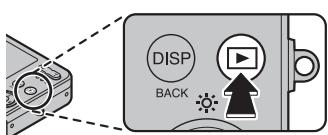
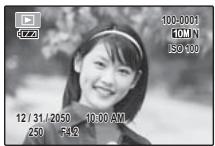
Press the selector right to view pictures in the order recorded, left to view pictures in reverse order. Keep the selector pressed to scroll rapidly to the frame.


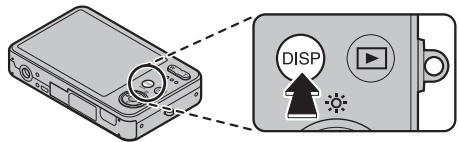
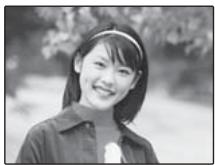
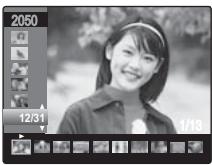
Choosing a Display Format
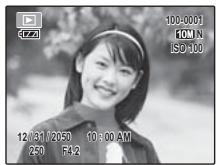
Press the DISP/BACK button to cycle through playback display formats as shown below.
natural_image
Black-and-white portrait of a smiling woman wearing a headband (no text or symbols visible)Indicators displayed
natural_image
Black-and-white photo of a smiling young woman with headband, displayed within a photo editing interface (no readable text or symbols on the image itself)Indicators hidden
Sort by date

Note
Pictures taken using other cameras are indicated by a 📋 ("gift image") icon during playback.
Playback Zoom
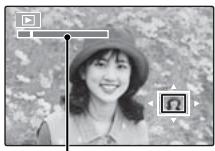
Press T to zoom in on images displayed in single-frame playback; press W to zoom out.

Press W to zoom out
natural_image
Black-and-white photo of a smiling person wearing a hat and tie, with two small icons below (no readable text or symbols)Zoom indicator
Press T to zoom in
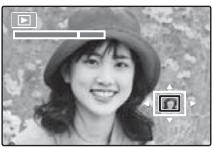
natural_image
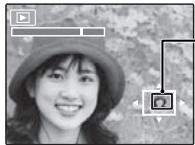
Black-and-white portrait of a smiling woman wearing a hat, with no visible text or symbols.When the picture is zoomed in, the selector can be used to view areas of the image not currently visible in the display.

natural_image
Black-and-white portrait of a smiling person wearing a hat, with no visible text or symbolsNavigation window shows portion of image currently displayed in monitor
Press DISP/BACK to exit zoom.
Note
The maximum zoom ratio varies with image size. Playback zoom is not available with pictures taken at an image size of 03M.
Multi-Frame Playback
To change the number of images displayed, press W when a picture is shown full-frame in the monitor.

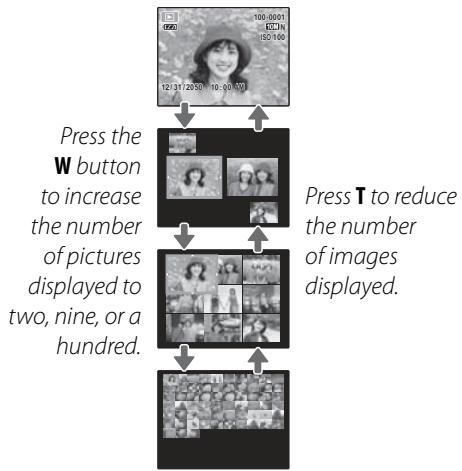
flowchart
graph TD
    A["Press the W button to increase the number of pictures displayed to two, nine, or a hundred."] --> B["Press T to reduce the number of images displayed."]
Use the selector to highlight images and press MENU/OK to view the highlighted image full frame. In the nine- and hundred-frame displays, press the selector up or down to view more pictures.
Sort by Date
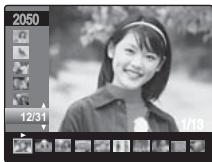
1 In single-frame playback, press DISP/BACK until the sort-by-date screen is displayed.
The picture displayed in the single-frame playback remains selected.
natural_image
Black-and-white photo of a smiling woman with short hair, no visible text or symbols2 Press the selector up or down to select a date.
3 Press the selector left or right to select a picture.

Tips: Rapid Scroll
- Press and hold the selector up or down to scroll dates rapidly.
- Press and hold the selector left or right to rapidly scroll pictures taken on the same date.

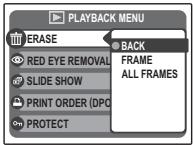
The ERASE option in the playback menu can be used to delete still pictures and movies, increasing the amount of space available on the memory card or in internal memory (for information on deleting pictures in single-frame playback, see page 17). Note that deleted pictures can not be recovered. Copy important pictures to a computer or other storage device before proceeding.
1 Press MENU/OK to display the playback menu.
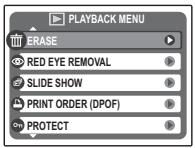
2 Press the selector up or down to highlight ERASE.
3 Press the selector right to display delete options.
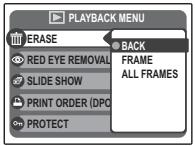


4 Press the selector up or down to highlight FRAME or ALL FRAMES.

5 Press MENU/OK to display options for the selected item (see pg. 37).

Tips: Deleting Pictures
- When a memory card is inserted, pictures will be deleted from the memory card; otherwise, pictures will be deleted from internal memory.
- Protected pictures can not be deleted. Remove protection from any pictures you wish to delete (pg. 66).
- If a message appears stating that the selected images are part of a DPOF print order, press MENU/OK to delete the pictures.
■ FRAME: Deleting Selected Images
Selecting FRAME displays the dialog shown at right.
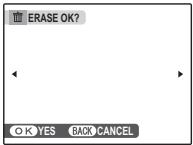
Press the selector left or right to scroll through pictures and press MENU/OK to delete the current picture (the picture is deleted immediately; be careful not delete the wrong picture).


Press DISP/BACK to exit when all the desired pictures have been deleted.
■ ALL FRAMES: Deleting All Images
Selecting ALL FRAMES displays the confirmation shown at right.
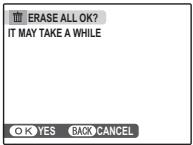
Press MENU/OK to delete all unprotected pictures.

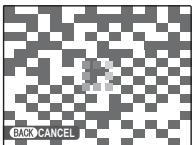
The dialog shown at right is displayed during deletion. Press DISP/BACK to cancel before all pictures have been deleted (any pictures deleted before the button was pressed can not be recovered).
Shoot short movies at 30 frames per second. Sound is recorded via the built-in microphone; do not cover the microphone during recording.
1 Press MENU/OK to display the shooting menu and select MOVIE for SHOOTING MODE (pg. 28).
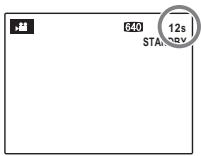
Time available is displayed in monitor

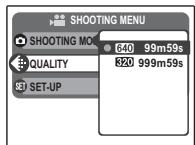
Choosing the Frame Size
To choose the frame size, press MENU/OK and select
QUALITY. Choose 640
(640×480 pixels) for better
quality, 320 (320×240
pixels) for longer movies. Press MENU/OK to return to movie recording mode.
2 Frame the scene using the zoom buttons.

Zoom indicator
Zoom can not be adjusted once recording begins.
3 Press the shutter button all the way down to start recording.
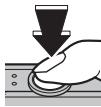
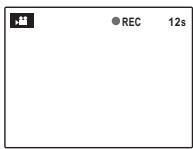
REC and time remaining are displayed in monitor
Note
Focus is set when recording begins; exposure and white balance are adjusted automatically throughout recording. The color and brightness of the image may vary from that displayed before recording begins.
4 Press the shutter button to end recording. Recording ends automatically when the movie reaches maximum length or memory is full.
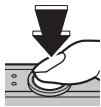
Tip
There is no need to keep the shutter button pressed during recording.
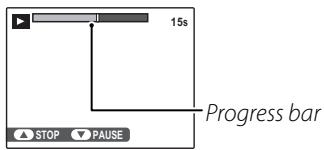
During playback (pg. 32), movies are displayed in the monitor as shown at right. The following operations can be performed while a movie is displayed:
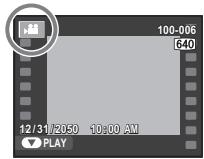
| Operation | Description |
| Start/pause playback | Press the selector down to start playback. Press again to pause. |
| End playback/delete | Press the selector up to end playback. If playback is paused, pressing the selector up will delete the current movie. |
| Advance/rewind | Press the selector right to advance, left to rewind. If playback is paused, the movie will advance or rewind one frame each time the selector is pressed. |
| Adjust volume | Press MENU/OK to pause playback and display volume controls. Press the selector up or down to adjust the volume; press MENU/OK again to resume playback. |
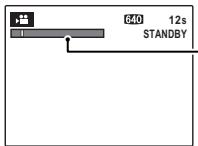
Progress is shown in the monitor during playback.
Cautions
- Do not cover the speaker during playback.
- Vertical or horizontal streaks may appear in movies containing very bright subjects. This is normal and does not indicate a malfunction.
Viewing Pictures on TV
Connect the camera to a TV and tune the television to the video channel to show pictures to a group. Connect an A/V cable (optional), as shown below.
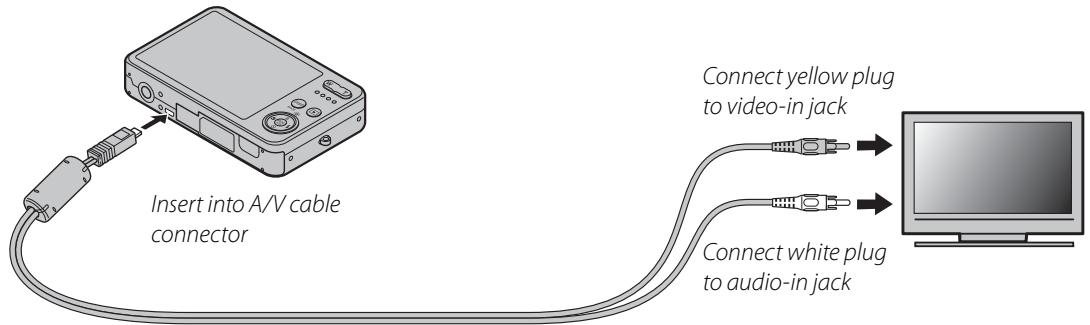
Press ▶ for about a second to turn the camera on. The camera monitor turns off and pictures and movies are played back on the TV. Note that the camera volume controls have no effect on sounds played on the TV; use the television volume controls to adjust the volume.
Note
Image quality drops during movie playback.
Caution
When making the A/V cable connection, be sure the connectors are fully inserted.
Printing Pictures via USB
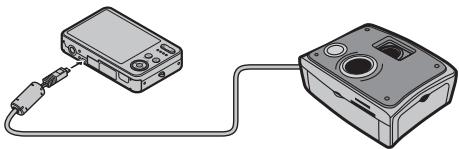
If the printer supports PictBridge, the camera can be connected directly to the printer and pictures can be printed without first being copied to a computer. Note that depending on the printer, not all the functions described below may be supported.

PictBridge
Connecting the Camera
1 Connect the supplied USB cable as shown and turn the printer on.
natural_image
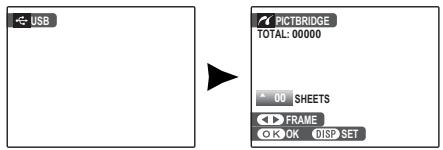
Illustration of a portable electronic device connected to a compact camera case (no text or symbols present)2 Press the ▶ button for about a second to turn the camera on. 📋 USB will be displayed in the monitor, followed by the PictBridge display shown below at right.
Printing Selected Pictures
1 Press the selector left or right to display a picture you wish to print.
2 Press the selector up or down to choose the number of copies (up to 99).
3 Repeat steps 1–2 to select additional pictures. Press MENU/OK to display a confirmation dialog when settings are complete.
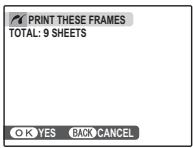
4 Press MENU/OK to start printing.


Tip: Printing the Date of Recording
To print the date of recording on pictures, press DISP/BACK in steps 1–2 to display the PictBridge menu (see "Printing the DPOF Print Order," below). Press the selector up or down to highlight PRINT WITH DATE and press MENU/OK to return to the PictBridge display (to print pictures without the date of recording, select PRINT WITHOUT DATE). The date will not be printed if the camera clock was not set when the picture was taken.
Note
If no pictures are selected when the MENU/OK button is pressed, the camera will print one copy of the current picture.
Printing the DPOF Print Order
To print the print order created with Ⓞ PRINT ORDER (DPOF) in the playback menu (pg. 62):
1 In the PictBridge display, press DISP/BACK to open the PictBridge menu.

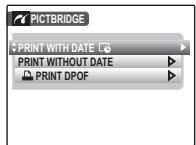
2 Press the selector up or down to highlight 📄 PRINT DPOF.
3 Press MENU/OK to display a confirmation dialog.
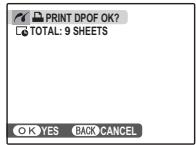


4 Press MENU/OK to start printing.


During Printing
The message shown at right is displayed during printing. Press DISP/BACK to cancel before all pictures are printed (depending on the printer, printing may end before the current picture has pr
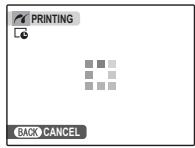
If printing is interrupted, press ▶ to turn the camera off and then on again.

Disconnecting the Camera
Confirm that "PRINTING" is not displayed in the monitor and press ▶ to turn the camera off. Disconnect the USB cable.

Notes
- Print pictures from internal memory or a memory card that has been formatted in the camera.
- If the printer does not support date printing, the PRINT WITH DATE ☐ option will not be available in the PictBridge menu and the date will not be printed on the pictures in the DPOF print order.
- Default printer page size and print quality settings are used when printing via direct USB connection.
Creating a DPOF Print Order
The ⚠️ PRINT ORDER (DPOF) option in the playback menu can be used to create a digital "print order" for PictBridge-compatible printers (pg. 42) or devices that support DPOF.

DPOF
DPOF (Digital Print Order Format) is standard that allows pictures to be printed from "print orders" stored in internal memory or on a memory card. The information in the order includes the pictures to be printed and the number of copies of each picture.

■ WITH DATE 📊/WITHOUT DATE
To modify the DPOF print order, select 📄 PRINT ORDER (DPOF) in the playback menu and press the selector up or down to highlight WITH DATE 📋 or WITHOUT DATE.
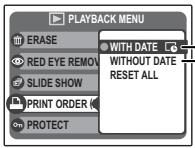
WITH DATE 📄: Print date of recording on pictures.
L-WITHOUT DATE: Print pictures without date.
Press MENU/OK and follow the steps below.
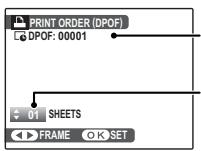
1 Press the selector left or right to display a picture you wish to include in or remove from the print order.

2 Press the selector up or down to choose the number of copies (up to 99). To remove a picture from the order, press the selector down until the number of copies is 0.

flowchart
graph TD
    A["PRINT ORDER (DPOF)"] --> B["DPOF: 00001"]
    B --> C["01 SHEETS"]
    C --> D["FRAME OK SET"]
Total number of prints
Number of copies
3 Repeat steps 1–2 to complete the print order. Press MENU/OK to save the print order when settings are complete, or DISP/BACK to exit without changing the print order.

4 The total number of prints is displayed in the monitor. Press MENU/OK to exit.

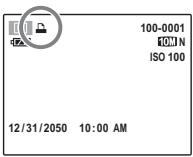
The pictures in the current print order are indicated by a icon during playback.
■ RESET ALL
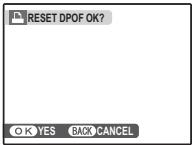
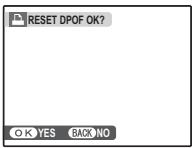
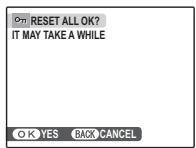
To cancel the current print order, select RESET ALL in the Ⓞ PRINT ORDER (DPOF) menu. The confirmation shown at right will be displayed; press MENU/OK to remove all pictures from the order.
Notes
- Remove the memory card to create or modify a print order for the pictures in internal memory.
- Print orders can contain a maximum of 999 pictures.
- If a memory card is inserted containing a print order created by another camera, the message shown at right will be displayed. Pressing MENU/OK cancels the print order; a new print order must be created as described above.
Viewing Pictures on a Computer
The supplied FinePixViewer software can be used to copy pictures to a computer, where they can be stored, viewed, organized, and printed. Before proceeding, install FinePixViewer as described below. The latest FinePixViewer is available at http://www.fujifilm.com/. Do NOT connect the camera to the computer until installation is complete.
Installing FinePixViewer
FinePixViewer is available in a Windows version (FinePixViewer S) and a Macintosh version (FinePixViewer). Installation instructions for Windows are on pages 48–50, those for the Macintosh on pages 51–52.
Installing FinePixViewer S: Windows
1 Confirm that the computer meets the following system requirements:
| OS | Preinstalled versions of Windows Vista, Windows XP Home Edition (Service Pack 2), Windows XP Professional (Service Pack 2), or Windows 2000 Professional (Service Pack 4) |
| CPU | • Windows Vista: 800 MHz Pentium 4 or better (3 GHz Pentium 4 or better recommended)• Windows XP: 800 MHz Pentium 4 or better (2 GHz Pentium 4 or better recommended)• Windows 2000: 200 MHz Pentium or better |
| RAM | • Windows Vista: 512 MB or more (1 GB or more recommended)• Windows XP: 512 MB or more• Windows 2000: 128 MB or more |
| Free disk space | A minimum of 450 MB required for installation with 600 MB available when FinePixViewer is running (15 GB or more recommended under Windows Vista, 2 GB or more recommended under Windows XP) |
| Video | 800×600 pixels or more with 16-bit color or better (1,024×768 pixels or more with 32-bit color recommended) |
| Other | • Built-in USB port recommended. Operation is not guaranteed other USB ports.• Internet connection (56 kbps or faster recommended) required to use FinePix Internet Service; Internet connection and e-mail software required to use e-mail option |
Caution
Other versions of Windows are not supported. Operation is not guaranteed on home-built computers or computers that have been upgraded from earlier versions of Windows.
2 Start the computer. Log in to an account with administrator privileges before proceeding.
3 Exit any applications that may be running and insert the installer CD in a CD-ROM drive.
Windows Vista
If an AutoPlay dialog is displayed, click SETUP.exe. A "User Account Control" dialog will then be displayed; click Allow.
The installer will start automatically; click Installing FinePixViewer and follow the on-screen instructions to install FinePixViewer S. Note that the Windows CD may be required during installation.
If the Installer Does Not Start Automatically
If the installer does not start automatically, select Computer or My Computer from the Start menu (Windows Vista/XP) or double-click the My Computer icon on the desktop (Windows 2000), then double-click the FINEPIX CD icon to open the FINEPIX CD window and double-click SETUP or SETUP.exe.
4 If prompted to install Windows Media Player or DirectX, follow the on-screen instructions to complete installation.
5 When prompted, remove the installer CD from the CD-ROM drive and click Restart to restart the computer. Store the installer CD in a dry location out of direct sunlight in case you need to re-install the software. The version number is printed at the top of the CD label for reference when updating the software or contacting customer support.
Installation is now complete. Proceed to "Connecting the Camera" on page 53.
Installing FinePixViewer: Macintosh
1 Confirm that the computer meets the following system requirements:
| CPU | PowerPC or Intel |
| OS | Preinstalled versions of Mac OS X 10.3.9-10.5 (visit http://www.fujifilm.com/ for more information) |
| RAM | 256 MB or more |
| Free disk space | A minimum of 200 MB required for installation with 400 MB available when FinePixViewer is running |
| Video | 800×600 pixels or more with thousands of colors or better |
| Other | Built-in USB port recommended. Operation is not guaranteed other USB ports.Internet connection (56 kbps or faster recommended) required to use FinePix Internet Service; Internet connection and e-mail software required to use e-mail option |
2 After starting the computer and quitting any applications that may be running, insert the installer CD in a CD-ROM drive. Double-click the FinePix CD icon on the desktop and double-click Installer for Mac OS X.
3 An installer dialog will be displayed; click Installing FinePixViewer to start installation. Enter an administrator name and password when prompted and click OK, then follow the on-screen instructions to install FinePixViewer. Click Exit to quit the installer when installation is complete.
4 Remove the installer CD from the CD-ROM drive. Note that you may be unable to remove the CD if Safari is running; if necessary, quit Safari before removing the CD. Store the installer CD in a dry location out of direct sunlight in case you need to re-install the software. The version number is printed at the top of the CD label for reference when updating the software or contacting customer support.
5 Select Applications in the Finder Go menu to open the applications folder. Double-click the Image Capture icon and select Preferences... from the Image Capture application menu.
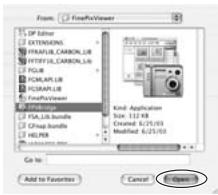
The Image Capture preferences dialog will be displayed. Choose Other... in the When a camera is connected, open menu, then select FPVBridge in the "Applications/FinePixViewer" folder and click Open.
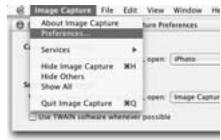
Select Quit Image Capture from the Image Capture application menu. Installation is now complete. Proceed to "Connecting the Camera" on page 53.
Connecting the Camera
1 If the pictures you wish to copy are stored on a memory card, insert the card into the camera (pg. 8). If no card is inserted, pictures will be copied from internal memory.
Caution
Loss of power during transfer could result in loss of data or damage to internal memory or the memory card. Check the battery level.
2 Turn the camera off and connect the supplied USB cable as shown, making sure the connectors are fully inserted. Connect the camera directly to the computer; do not use a USB hub or keyboard.
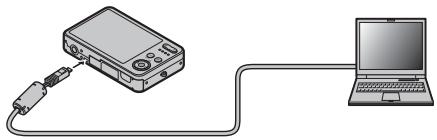
natural_image
Illustration of a device connected to a laptop via cable (no text or symbols)3 Press the ▶ button for about a second to turn the camera on. FinePixViewer will start automatically and the "Save Image Wizard" will be displayed. Follow the on-screen instructions to copy pictures to the computer. To exit without copying pictures, click CANCEL.
Caution
If FinePixViewer does not start automatically, the software may not be correctly installed. Disconnect the camera and reinstall the software.
For more information on using FinePixViewer, select How to Use FinePixViewer in the FinePixViewer Help menu.
Note
The camera will not turn off automatically while connected to a computer.
Cautions
- Use only memory cards that have been formatted in the camera and contain pictures taken with the camera. If a memory card containing a large number of images is inserted, there may be a delay before FinePixViewer starts and FinePixViewer may be unable to import or save images. Use a memory card reader to transfer pictures.
- Make sure the indicator lamp is out before turning the camera off, disconnecting the USB cable or pulling the memory card out. Failure to observe this precaution could result in loss of data or damage to internal memory or the memory card.
- Disconnect the camera before inserting or removing memory cards.
- In some cases, it may not be possible to access pictures saved to a network server using FinePixViewer in the same way as on a standalone computer.
- The user bears all applicable fees charged by the phone company or Internet service provider when using services that require an Internet connection.
Disconnecting the Camera
After confirming that the indicator lamp is out, follow the on-screen instructions to turn the camera off and disconnect the USB cable.
Uninstalling FinePixViewer
Only uninstall FinePixViewer before reinstalling the software or when it is no longer required. After quitting FinePixViewer and disconnecting the camera, drag the "FinePixViewer" folder from "Applications" into the Trash and select Empty Trash in the Finder menu (Macintosh), or open the control panel and use "Programs and Features" (Windows Vista) or "Add/Remove Programs" (other versions of Windows) to uninstall FinePixViewer. Under Windows, one or more confirmation dialogs may be displayed; read the contents carefully before clicking OK.
The Shooting Menu
The shooting menu is used to adjust settings for a wide range of shooting conditions.
Using the Shooting Menu
1 Press MENU/OK to display the shooting menu.

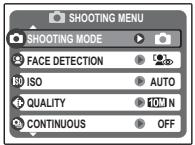
Note
The options displayed in the shooting menu vary depending on the shooting mode.
2 Press the selector up or down to highlight the desired menu item.

3 Press the selector right to display options for the highlighted item.

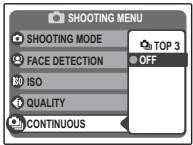
4 Press the selector up or down to highlight the desired option.

5 Press MENU/OK to select the highlighted option.

Shooting Menu Options
| Menu item | Description | Options | Default |
| SHOOTING MODE | Choose a shooting mode according to the type of subject (pg. 28). | ||
| FACE DETECTION | Turn Intelligent Face Detection and red-eye removal on or off (pg. 18). | ON ON ON OFF | ON ON |
| ISO | Adjust ISO sensitivity (pg. 57). Choose higher values when the subject is poorly lit. | AUTO/1600/800/400/200/100 | AUTO |
| QUALITY | Choose image size and quality (pg. 58). | F/10M N/9M 3:2/5M/3M/2M/03M | N |
| EXP. COMPENSATION | Adjust exposure for bright, dark, or high-contrast scenes (pg. 59). | EV to +2 EV in increments of 13 EV | ± 0 |
| WHITE BALANCE | Adjust color for different light sources (pg. 60). | / | AUTO |
| CONTINUOUS | Shoot a series of pictures (pg. 61). | /OFF | OFF |
| SET-UP | Perform basic camera setup such as choosing a language and setting the time and date (pg. 71). | 1/2/3 | — |
ISO ISO
Control the camera's sensitivity to light with 📄. Higher values can be used to reduce blur when lighting is poor; note, however, that mottling may appear in pictures taken at high sensitivities. If AUTO is selected, the camera will adjust sensitivity automatically in response to shooting conditions.
Settings other than AUTO are shown by an icon in the monitor if you use 📄M.
![10M ISO 100 [+]](/content/2025/01/79648/images/8339a526f1b288dcfb737cbc0234ba213d8e7ddf95dbcdd29e9f8263a29694fe.jpg)
QUALITY
Choose the size and quality at which still pictures are recorded. Large pictures can be printed at large sizes with no drop in quality; small pictures require less memory, allowing more pictures to be recorded.
| Option | Prints at sizes up to |
| 10M F | 31×23 cm/12×9 in. (10M) or 31×21 cm/12×8 in. (9M 3:2). Choose 10M F for high-quality prints, 9M 3:2 for an aspect ratio of 3:2. |
| 10M N | |
| 9M 3:2 | |
| 5M | 22×16 cm (8.5×6.5 in.) |
| 3M | 17×13 cm (7×5 in.) |
| 2M | 14×10 cm (5.3×4 in.) |
| 03M | 5×4 cm (2×1.5 in.). Suited to e-mail or the web. |
The number of pictures that can be taken at current settings (pg. 91) is displayed to the right of the image quality icon in the monitor.
Aspect Ratio
Pictures taken at an image quality setting of 9M 3:2 have an aspect ratio of 3:2, the same as a frame of 35-mm film. Pictures taken at other settings have an aspect ratio of 4:3.
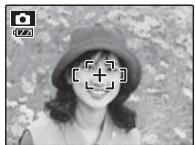
natural_image
Black-and-white photo of a person wearing a hat and feathered clothing, with no visible text or symbols.4:3
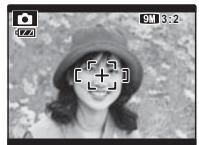
natural_image
Black-and-white photo of a person wearing a hat and hat, with no visible text or symbols in the main image area.3:2
Note
Image quality is not reset when the camera is turned off or another shooting mode is selected.
EXP. COMPENSATION
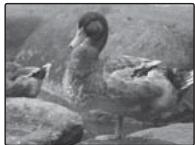
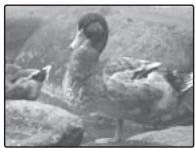
Use exposure compensation when photographing very bright, very dark, or high-contrast subjects.
Choose positive (+) values to increase exposure
natural_image
Black-and-white photo of a bird perched on rocks, no visible text or symbolsChoose negative (−) values to reduce exposure
natural_image
Black-and-white photo of a duckling standing on rocks, no visible text or symbols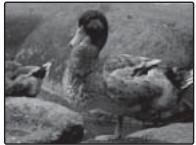
natural_image
Black-and-white photo of two ducks standing on rocks, no visible text or symbolsChoosing an Exposure Compensation Value
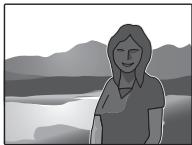
- Backlit subjects: choose values from +213 EV to +113 EV (for an explanation of the term "EV", see the Glossary on page 90)
- Highly reflective subjects or very bright scenes (e.g., snowfields): +1 EV
- Scenes that are mostly sky: +1 EV
- Spotlit subjects (particularly if photographed against dark backgrounds): -213 EV
- Subjects with low reflectivity (pine trees or dark-colored foliage): -213 EV
natural_image
Illustration of a person standing outdoors with mountains in the background (no text or symbols)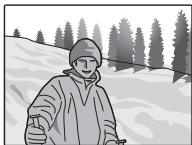
natural_image
Illustration of a person in winter clothing standing on a snowy slope with evergreen trees in the background (no text or symbols)Note
At settings other than ±0 , a ☒ icon is displayed in the monitor. Exposure compensation is not reset when the camera is turned off; to restore normal exposure control, choose a value of ±0 .
WB WHITE BALANCE
For natural colors, choose a setting that matches the light source (for an explanation of "white balance," see the Glossary on page 90).
| Option | Description |
| AUTO | White balance adjusted automatically. |
| For subjects in direct sunlight. | |
| For subjects in the shade. | |
| Use under “daylight” fluorescent lights. | |
| Use under “warm white” fluorescent lights. | |
| Use under “cool white” fluorescent lights. | |
| Use under incandescent lighting. |
If AUTO does not produce the desired results (for example, when taking close-ups), choose the option that matches the light source.
Note
Results vary with shooting conditions. Play pictures back after shooting to check colors in the monitor.
CONTINUOUS (Continuous shooting)
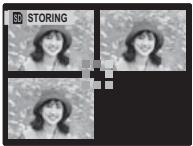
Select 📋 TOP 3 to capture motion in a series of pictures. The camera takes up to three pictures while the shutter-release button is pressed.
Notes
• Frame rate varies with shutter speed.
- Focus and exposure are determined by the first frame in each series.
- The number of pictures that can be recorded depends on the memory available.
Additional time may be required to record pictures when shooting ends. The pictures are displayed in the monitor while recording is in progress.
natural_image
Four grayscale portrait photos of smiling women, no text or symbols visibleThe Playback Menu
The playback menu is used to manage the pictures in internal memory or on the memory card.
Using the Playback Menu
1 Press ▶ to enter playback mode (pg. 32).
2 Press MENU/OK to display the playback menu.
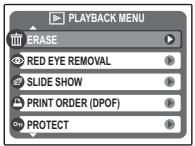
3 Press the selector up or down to highlight the desired menu item.


4 Press the selector right to display options for the highlighted item.
5 Press the selector up or down to highlight the desired option.
6 Press MENU/OK to select the highlighted option.


Playback Menu Options
The following options are available:
| Option | Description |
| ☑ ERASE | Delete all or selected pictures (pg. 36). |
| ☑ RED-EYE REMOVAL | Create copies with reduced red eye (pg. 64). |
| ☑ SLIDE SHOW | View pictures in a slide show (pg. 65). |
| ☑ PRINT ORDER (DPOF) | Select pictures for printing on DPOF- and PictBridge-compatible devices (pg. 45). |
| ☑ PROTECT | Protect pictures from accidental deletion (pg. 66). |
| ☑ COPY | Copy pictures between internal memory and a memory card (pg. 67). |
| ☑ IMAGE ROTATE | Rotate pictures (pg. 69). |
| ☑ TRIMMING | Create cropped copies of pictures (pg. 70). |
| ☑ SET-UP | Perform basic camera setup (pg. 71). |
RED EYE REMOVAL
This option is used with pictures taken using Intelligent Face Detection to create copies that have been processed to remove red eye.
1 Play the picture back in the monitor (pictures taken with Intelligent Face Detection are indicated by a [icon) and select RED EYE REMOVAL in the playback menu (pg. 62).
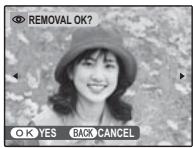
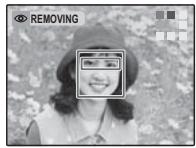
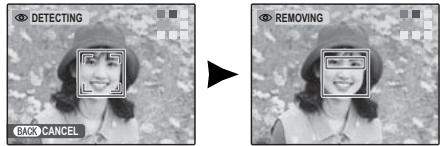
2 Press MENU/OK. The message shown below at left will be displayed while the camera analyses the image; if red-eye is detected, the message shown below at right will be displayed while the camera processes the image to create a copy with reduced red-eye.
Notes
- Red eye may not be removed if the camera is unable to detect a face or the face is in profile. Results may differ depending on the scene. Red eye can not be removed from pictures that have already been processed using red-eye removal or pictures created with other devices.
- The amount of time needed to process the image varies with the number of faces detected.
- Copies created with 📄 RED EYE REMOVAL are indicated by a 📄 icon during playback.

SLIDE SHOW
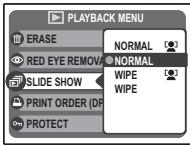
View pictures in an automated slide show. Choose the type of show and press MENU/OK to start. Press DISP/BACK at any time during the show to view on-screen help. When a movie is displayed, movie playback will begin automatically, and the slide show will continue when the movie ends. The show can be ended at any time by pressing MENU/OK.

Note
The camera will not turn off automatically while a slide show is in progress.
| Option | Description |
| NORMAL | Press selector left or right to go back or skip ahead one frame. Select WIPE for wipe transitions between frames. |
| WIPE | |
| NORMAL [IMAGE] | As above, except that camera automatically zooms in on faces selected with Intelligent Face detection (pg. 18). |
| WIPE [rescope] |
PROTECT
Protect pictures from accidental deletion. The following options are available.
FRAME
Protect selected pictures.
1 Press the selector left or right to display the desired picture.

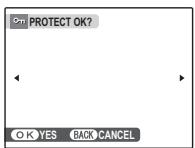
Picture not protected
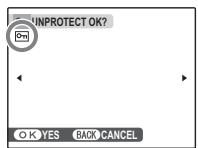
Protected picture
2 Press MENU/OK to protect the picture. If the picture is already protected, pressing MENU/OK will remove protection from the image.

3 Repeat steps 1–2 to protect additional images. Press DISP/BACK to exit when the operation is complete.
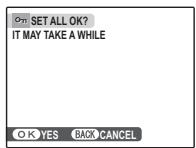
SET ALL
Press MENU/OK to protect all pictures, or press DISP/BACK to exit without changing picture status.
■ RESET ALL
Press MENU/OK to remove protection from all pictures, or press DISP/BACK to exit without changing picture status.
If the number of pictures affected is very large, the display at right will appear in the monitor while the operation is in progress.
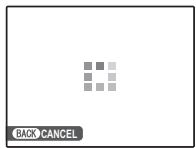
Press DISP/BACK to exit before the operation is complete.
Caution
Protected pictures will be deleted when the memory card or internal memory is formatted (pg. 76).
COPY COPY
Copy pictures between internal memory and a memory card.
1 Press the selector up or down to highlight IN INTERNAL MEMORY

→ SD CARD (copy pictures from internal memory to the memory card) or SD CARD → IN INTERNAL MEMORY (copy pictures from a memory card to internal memory).
2 Press the selector right to display options for the highlighted item.

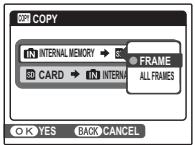
3 Press the selector up or down to highlight FRAME or ALL FRAMES.

4 Press MENU/OK.

Tip: Copying Pictures Between Memory Cards
To copy pictures between two memory cards, insert the source card and copy the pictures to internal memory, then remove the source card, insert the destination card, and copy the pictures from internal memory.
FRAME
Copy selected frames.
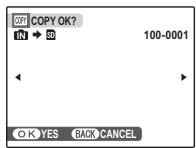
1 Press the selector left or right to display the desired picture.
2 Press MENU/OK to copy the picture.
3 Repeat steps 1–2 to copy additional images. Press DISP/BACK to exit when the operation is complete.


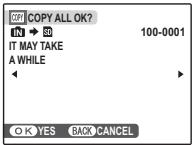
ALL FRAMES
Press MENU/OK to copy all pictures, or press DISP/BACK to exit without copying pictures.
Cautions
- Copying ends when the destination is full.
• DPOF print information is not copied (pg. 45).
IMAGE ROTATE
By default, pictures taken in tall orientation are displayed in wide orientation. Use this option to display pictures in the correct orientation in the monitor. It has no effect on pictures displayed on a computer or other device.
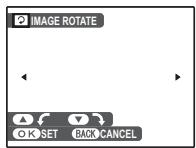
Notes
- Protected pictures can not be rotated. Remove protection before rotating pictures (pg. 66).
- The camera may not be able to rotate pictures created with other devices.
To rotate a picture, play the picture back and select Ⓧ IMAGE ROTATE in the playback menu (pg. 62).
1 Press the selector down to rotate the picture 90° clockwise, up to rotate the picture 90° counterclockwise.

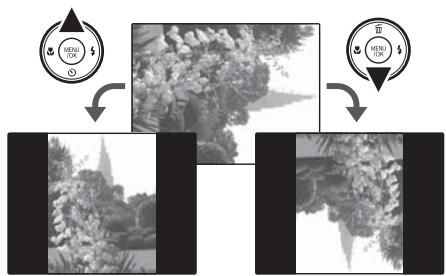
flowchart
graph TD
    A["Directional compass icon"] --> B["Image 1"]
    C["Central tree diagram"] --> D["Image 2"]
    D --> E["Output"]
2 Press MENU/OK to confirm the operation (to exit without rotating the picture, press DISP/BACK).

The next time the picture is played back, it will automatically be rotated.
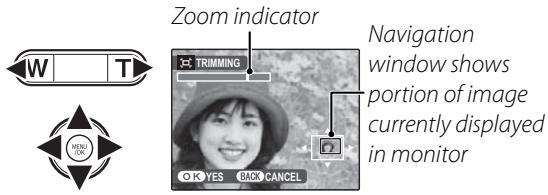
TRIMMING
To create a cropped copy of a picture, play the picture back and select ☑ TRIMMING in the playback menu (pg. 62).
1 Press the zoom buttons to zoom in and out and use the selector to scroll the picture until the desired portion is displayed (to exit to single-frame playback without creating a cropped copy, press DISP/BACK).
2 Press MENU/OK. A confirmation dialog will be displayed.

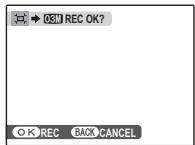
Copy size (5M, 3M, 2M, or 03M; see page 58) is shown at the top; if the size is 03M, OK is displayed in yellow. Larger crops produce larger copies; all copies have an aspect ratio of 4:3.
3 Press MENU/OK to save the cropped copy to a separate file.

Using the Setup Menu
1 Display the setup menu.
1.1 Press MENU/OK to display the menu for the current mode.
1.2 Press the selector up or down to highlight SET SET-UP.
1.3 Press the selector right to display the setup menu.
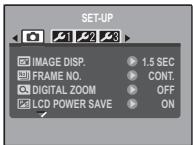
2 Choose a page.
2.1 Press the selector left or right to choose a page.
2.2 Press the selector down to enter the menu.


3 Adjust settings.
3.1 Press the selector up or down to highlight a menu item.
3.2 Press the selector right to display options for the highlighted item.
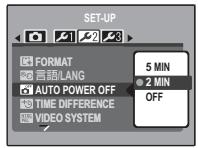
3.3 Press the selector up or down to highlight an option.
3.4 Press MENU/OK to select the highlighted option.


Setup Menu Options
| Menu item | Description | Options | Default | |
| IMAGE DISP. | Choose how long pictures are displayed after shooting (pg. 73). | CONTINUOUS / 3 SEC/1.5 SEC/ZOOM (CONTINUOUS) / OFF | 1.5 SEC | |
| FRAME NO. | Choose how files are named (pg. 74). | CONTINUOUS / RENEW | CONTINUOUS | |
| DIGITAL ZOOM | Enable or disable digital zoom (pg. 75). | ON / OFF | OFF | |
| LCD POWER SAVE | Enable or disable monitor power saving (pg. 75). | ON / OFF | ON | |
| DATE/TIME | Set the camera clock (pg. 12). | — | — | |
| OPERATION VOL. | Adjust the volume of camera controls. | (high) / mid) /low) / OFF (mute) | ||
| SHUTTER VOLUME | Adjust the volume of the shutter sound. | |||
| PLAYBACK VOLUME | Adjust the volume for movie playback (pg. 75). | — | 7 | |
| LCD BRIGHTNESS | Control the brightness of the monitor (pg. 75). | — | 0 | |
| FORMAT | Format internal memory or memory cards (pg. 76). | — | — | |
| 言語/LANG. | Choose a language (pg. 12). | See page 93 | ENGLISH | |
| AUTO POWER OFF | Choose the auto power off delay (pg. 76). | 5 MIN / 2 MIN / OFF | 2 MIN | |
| TIME DIFFERENCE | Set the clock to local time (pg. 77). | / | ||
| VIDEO SYSTEM | Choose a video mode for connection to a TV (pg. 41). | NTSC / PAL | — | |
| RESET | Reset all settings except Frame number, DATE/TIME, TIME DIFFERENCE, and VIDEO SYSTEM to default values. A confirmation dialog will be displayed, press the selector left or right to highlight OK and press MENU/OK. | — | — |
IMAGE DISP.
Choose an option other than OFF to display pictures in the monitor after shooting. Pictures can be displayed for 1.5 s (1.5 SEC), 3 s (3 SEC), or until the MENU/OK button is pressed (CONTINUOUS and ZOOM (CONTINUOUS)). If ZOOM (CONTINUOUS) is selected, photos taken at qualities larger than 03M can be zoomed in to check focus and other fine details (see page 33). If Intelligent Face Detection is on (pg. 18), the camera will automatically zoom in on the face used to set focus and exposure; press the selector down to cycle through the other faces detected. Note that ZOOM (CONTINUOUS) is disabled during continuous shooting (pg. 61), and that the colors displayed at settings of 1.5 SEC and 3 SEC may differ from those in the final picture.
FRAME NO.
New pictures are stored in image files named using a four-digit file number assigned by adding one to the last file number used. The file number is displayed during playback as shown at right. FRAME NO. controls whether file numbering is reset to 0001 when a new memory card is inserted or the current memory card or internal memory is formatted.
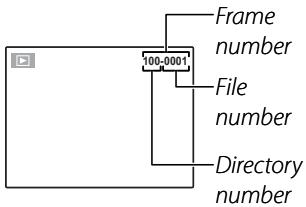
- CONTINUOUS: Numbering continues from the last file number used or the
first available file number, whichever is higher. Choose this option to reduce the number of pictures with duplicate file names. - RENEW: Numbering is reset to 0001 after formatting or when a new memory card is inserted.
Notes
- If the frame number reaches 999-9999, the shutter release will be disabled (pg. 88).
- Selecting Ⓞ* RESET (pg. 72) does not reset frame numbering.
• Frame numbers for pictures taken with other cameras may differ.
DIGITAL ZOOM
If ON is selected, pressing T at the maximum optical zoom position will trigger digital zoom, further magnifying the image. To cancel digital zoom, zoom out to the minimum digital zoom position and press W.
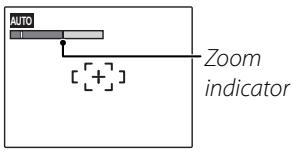
Zoom indicator, DIGITAL ZOOM on
Zoom indicator,
DIGITAL ZOOM off
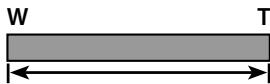
Optical zoom
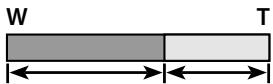
Optical zoom
Digital
zoom
Caution
Digital zoom produces lower quality images than optical zoom.
LCD POWER SAVE
If ON is selected, the monitor will dim to save power if no operations are performed for several seconds. Full brightness can be restored by pressing the shutter button halfway. The monitor does not dim in movie mode or during playback.
PLAYBACK VOLUME
Press the selector up or down to choose volume for movie playback and press MENU/OK to select.
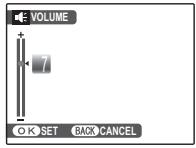
LCD BRIGHTNESS
Press the selector up or down to choose monitor brightness and press MENU/OK to select.
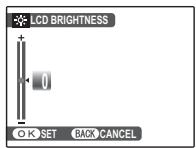
FORMAT
Format internal memory or a memory card. If a memory card is inserted in the camera,
SD will be displayed in the dialog shown at right and this option will format the memory card. If no memory card is inserted, IN will be displayed and this option will format internal memory. Press the selector left to highlight OK and press MENU/OK to begin formatting.
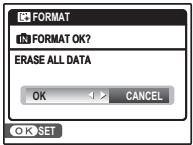
Cautions
- All data—including protected pictures—will be deleted. Be sure important files have been copied to a computer or other storage device.
- Do not open the battery cover during formatting.
OFF AUTO POWER OFF
Choose the length of time before the camera turns off automatically when no operations are performed. Shorter times increase battery life; if OFF is selected, the camera must be turned off manually. Note that regardless of the option selected, the camera will not turn off automatically when connected to a printer (pg. 42) or computer (pg. 53) or when a slide show is in progress (pg. 65).
Tip: Reactivating the Camera
To reactivate the camera after it has turned off automatically, press the ON/OFF button or press the ▶ button for about a second (pg. 11).

TIME DIFFERENCE
When travelling, use this option to switch the camera clock instantly from your home time zone to the local time at your destination.
1 Specify the difference between local time and your home time zone.
1.1 Press the selector up or down to highlight + LOCAL.
1.2 Press the selector right to display the time difference.
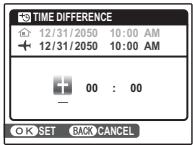
1.3 Press the selector left or right to highlight +, -, hours, or minutes; press up or down to edit. The minimum increment is 15 minutes.
1.4 Press MENU/OK when settings are complete.


2 Switch between local time and your home time zone.
To set the camera clock to local time, highlight ✦ LOCAL and press MENU/OK. To set the clock to the time in your home time zone, select ⏻ HOME. If ✦ LOCAL is selected, ✦ will be displayed in the monitor for three seconds after the camera enters shooting mode, and the date will be displayed in yellow.
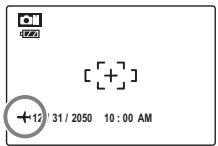
After changing time zones, check that the date and time are correct.
Optional Accessories
The camera supports a wide range of accessories from FUJIFILM and other manufacturers.
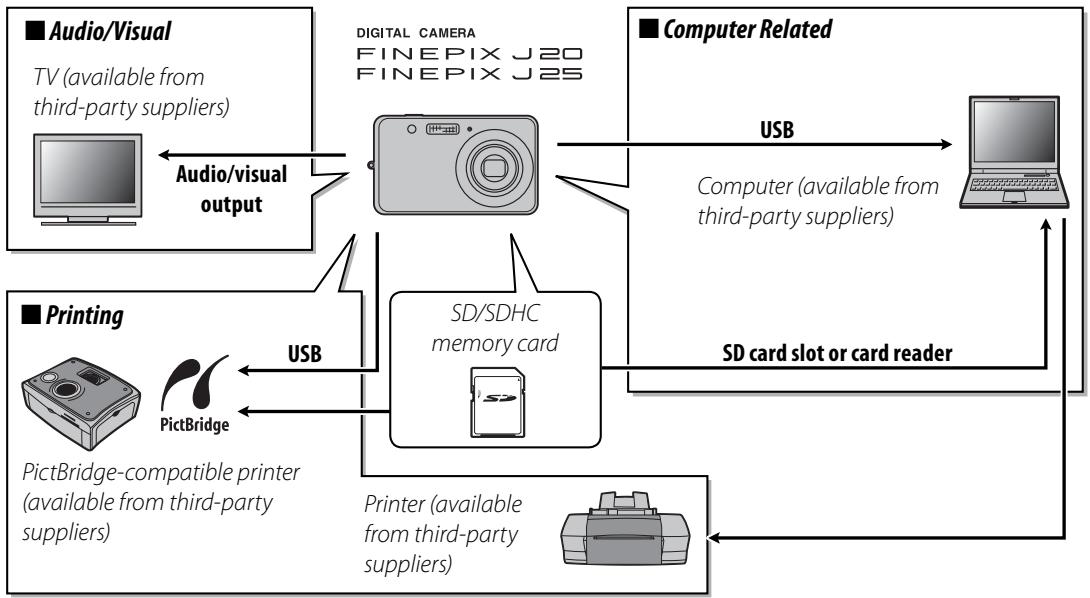
flowchart
graph TD
    A["■ Audio/Visual TV (available from third-party suppliers)"] -->|Audio/visual output| B["■ Computer Related"]
    C["■ Printing"] -->|USB| D["SD/SDHC memory card"]
    D -->|USB| B
    B -->|USB| E["Computer (available from third-party suppliers)"]
    E --> F["■ Computer (available from third-party suppliers)"]
    F --> G["■ Computer Related"]
    G --> H["■ Computer Related"]
    H --> I["■ Computer Related"]
    I --> J["■ Computer Related"]
    J --> K["■ Computer Related"]
    K --> L["■ Computer Related"]
    L --> M["■ Computer Related"]
    M --> N["■ Computer Related"]
    N --> O["■ Computer Related"]
    O --> P["■ Computer Related"]
    P --> Q["■ Computer Related"]
    Q --> R["■ Computer Related"]
    R --> S["■ Computer Related"]
    S --> T["■ Computer Related"]
    T --> U["■ Computer Related"]
    U --> V["■ Computer Related"]
    V --> W["■ Computer Related"]
    W --> X["■ Computer Related"]
    X --> Y["■ Computer Related"]
    Y --> Z["■ Computer Related"]
    Z --> A
Accessories from Fujifilm
The following optional accessories were available from FUJIFILM. For the latest information on the accessories available in your region, check with your local Fujifilm representative or visit http://www.fujifilm.com/products/digital_cameras/index.html.
- NP-45 rechargeable Li-ion battery (supplied): Additional NP-45 slimline batteries can be purchased as required.
- AV-C1 A/V cable: Connects the camera and a TV.
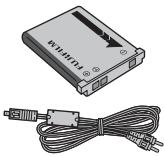
natural_image
Illustration of a 3.5-inch BFS drive with a cable and external plug (no text or symbols)Power and Battery
| Problem | Possible cause | Solution | Page | |
| Power supply | The camera does not turn on. | The battery is exhausted. | Charge the battery or insert a fully-charged spare battery. | 4,6 |
| The battery is not in the correct orientation. | Re-insert the battery in the correct orientation. | 6 | ||
| The battery-chamber cover is not latched. | Latch the battery-chamber cover. | 7 | ||
| The battery runs down quickly. | The battery is cold. | Warm the battery by placing it in a pocket or other warm place and re-insert it in the camera immediately before taking a picture. | — | |
| There is dirt on the battery terminals. | Clean the terminals with a soft, dry cloth. | — | ||
| The camera is in SR mode. | Choose a different shooting mode. | 29 | ||
| The battery has been charged many times. | The battery has reached the end of its charging life. Purchase a new battery. | — | ||
| The camera turns off suddenly. | The battery is exhausted. | Charge the battery or insert a fully-charged spare battery. | 4,6 | |
| Battery charger | Charging does not start. | The battery is not correctly inserted. | Re-insert the battery in the charger. | 6 |
| The battery is not in the correct orientation. | Re-insert the battery in the correct orientation. | 6 | ||
| Charging is slow. | The temperature is low. | Charge the battery at room temperature. | 5 | |
| The charging lamp lights, but the battery does not charge. | There is dirt on the battery terminals. | Clean the terminals with a soft, dry cloth. | — | |
| The battery has been charged many times. | The battery has reached the end of its charging life. Purchase a new battery. If the battery still fails to charge, contact your FUJIFILM dealer. | — | ||
Menus and Displays
| Problem | Possible cause | Solution | Page |
| Menus and displays are not in English. | English is not selected for the ☺ 言語/LANG. option in the setup menu. | Select ENGLISH. | 12 |
Shooting
| Problem | Possible cause | Solution | Page | |
| Taking pictures | No picture is taken when the shutter button is pressed. | Memory is full. | Insert a new memory card or delete pictures. | 8, 36 |
| Memory is not formatted. | Format the memory card or internal memory. | 76 | ||
| There is dirt on the memory card contacts. | Clean the contacts with a soft, dry cloth. | 9 | ||
| The memory card is damaged. | Insert a new memory card. | 8 | ||
| The battery is exhausted. | Charge the battery or insert a fully-charged spare battery. | 4, 6 | ||
| The camera has turned off automatically. | Turn the camera on. | 11, 76 | ||
| The monitor goes dark after shooting. | The flash has fired. | The monitor may darken while the flash charges. Wait for the flash to charge. | 24 | |
| Focus | The camera does not focus. | The subject is close to the camera. | Select macro mode. | 23 |
| The subject is far away from the camera. | Cancel macro mode. | |||
| The subject is not suited to autofocus. | Use focus lock. | 21 | ||
| Intelligent Face Detection | Face detection not available. | The camera is in a shooting mode which makes Intelligent Face Detection unavailable. | Choose a different shooting mode. | 28 |
| No face is detected. | The subject's face is obscured sunglasses, a hat, long hair, or other objects. | Remove the obstructions. | 18 | |
| The subject's face occupies only a small area of the frame. | Change the composition so that the subject's face occupies a larger area of the frame. | |||
| The subject's head is tilted or horizontal. | Ask the subject to hold their head straight. | |||
| The camera is tilted. | Hold the camera straight. | 14 | ||
| The subject's face is poorly lit. | Shoot in bright light. | — | ||
| Wrong subject selected. | The selected subject is closer to the center of the frame than the main subject. | Recompose the picture or turn face detection off and frame the picture using focus lock. | 21 | |
| Close-ups | Macro mode is not available. | The camera is in a shooting mode which makes macro (close-up) mode unavailable. | Choose a different shooting mode. | 28 |
| Flash | The flash does not fire. | The flash is charging. | Wait for the flash to charge. | 16 |
| The camera is in a shooting mode in which the flash does not fire. | Choose a different shooting mode. | 28 | ||
| The battery is exhausted. | Charge the battery or insert a fully-charged spare battery. | 4, 6 | ||
| The camera is in continuous mode. | Select OFF for CONTINUOUS. | 61 | ||
| The camera is in silent mode. | Turn silent mode off . | 25 | ||
| The flash is off (5). | Choose a different flash mode. | 24 | ||
| Some flash modes are not available. | The camera is in a shooting mode which makes some flash modes unavailable. | Choose a different shooting mode. | 28 | |
| The camera is in silent mode. | Turn silent mode off . | 25 | ||
| The flash does not fully light the subject. | The subject is not in range of the flash. | Position the subject in range of the flash. | 93 | |
| The flash window is obstructed. | Hold the camera correctly. | 14 | ||
| Problem images | Pictures are blurred. | The lens is dirty. | Clean the lens. | 97 |
| The lens is blocked. | Keep objects away from the lens. | 14 | ||
| !AF is displayed during shooting and the focus frame is displayed in red. | Check focus before shooting. | 15, 21, 86 | ||
| !o is displayed during shooting. | Use the flash or a tripod. | 24 | ||
| Pictures are mottled. | The ambient temperature is high and the subject is poorly lit. | This is normal and does not indicate a malfunction. Choose a lower sensitivity. | 57 | |
Playback
| Problem | Possible cause | Solution | Page | |
| Pictures | Pictures are grainy. | The pictures were taken with a different make or model of camera. | — | — |
| Playback zoom unavailable. | The pictures were taken at an image size of 03M or with a different make or model of camera. | — | — | |
| Audio | No sound in movie playback. | Playback volume is too low. | Adjust playback volume. | 40, 75 |
| The microphone was obstructed. | Hold the camera correctly during recording. | 38 | ||
| The speaker is obstructed. | Hold the camera correctly during playback. | 40 | ||
| Deletion | Selected pictures are not deleted. | Some of the pictures selected for deletion are protected. | Remove protection using the device with which it was originally applied. | 66 |
| Frame no. | File numbering is unexpectedly reset. | The battery-chamber cover was opened while the camera was on. | Turn the camera off before opening the battery-chamber cover to replace the battery or insert a memory card. | 11, 74 |
Connections
| Problem | Possible cause | Solution | Page | |
| TV | No picture or sound. | The camera is not properly connected. | Connect the camera correctly. | 41 |
| The supplied A/V cable was connected during movie playback. | Connect the camera once movie playback has ended. | 40, 41 | ||
| Input on the television is set to “TV”. | Set input to “VIDEO”. | — | ||
| The camera is not set to the correct video standard. | Match the camera NERQ PAL VIDEO SYSTEM setting to the TV. | 41, 72 | ||
| The volume on the television is too low. | Adjust the volume. | — | ||
| No color. | The camera is not set to the correct video standard. | Match the camera NERQ PAL VIDEO SYSTEM setting to the TV. | 41, 72 | |
| Computer | The computer does not recognize the camera. | The camera is not properly connected. | Connect the camera correctly. | 53 |
| PictBridge | Pictures can not be printed. | The camera is not properly connected. | Connect the camera correctly. | 42 |
| The printer is off. | Turn the printer on. | — | ||
| Only one copy is printed. | The printer is not PictBridge-compatible. | — | — | |
| The date is not printed. | ||||
Miscellaneous
| Problem | Possible cause | Solution | Page |
| Nothing happens when the shutter button is pressed. | Temporary camera malfunction. | Remove and reinsert the battery. | 6 |
| The battery is exhausted. | Charge the battery or insert a fully-charged spare battery. | 4, 6 | |
| The camera does not function as expected. | Temporary camera malfunction. | Remove and reinsert the battery. If the problem persists, contact your FUJIFILM dealer. | 6 |
| No sound. | The camera is in silent mode. | Turn silent mode off. | 25 |
Warning Messages and Displays
The following warnings are displayed in the monitor:
| Warning | Description | Solution |
| ☐ (red) | Low battery. | Charge the battery or insert a fully-charged spare battery. |
| ☐ (blinks red) | Battery exhausted. | |
| !☐ | Slow shutter speed. Picture may be blurred. | Use the flash or mount the camera on a tripod. |
| !AF(displayed in red with red focus frame) | The camera can not focus. | · Use focus lock to focus on another subject at the same distance, then recompose the picture (pg. 21).· If the subject is poorly lit, try focusing at a distance of about 2 m (6 ft. 7 in.).· Use macro mode to focus when taking close-ups. |
| !AE (blinks red) | The subject is too bright or too dark. The picture will be over- or under-exposed. | If the subject is dark, use the flash. |
| FOCUS ERROR | Camera malfunction. | Turn the camera off and then on again, taking care not to touch the lens. If the message persists, contact a FUJIFILM dealer. |
| ZOOM ERROR | ||
| NO CARD | No memory card inserted when COPY is selected in the playback menu. | Insert a memory card. |
| CARD NOT INITIALIZED | The memory card or internal memory is not formatted. | Format the memory card or internal memory (pg. 76). |
| The memory card contacts require cleaning. | Clean the contacts with a soft, dry cloth. If the message is repeated, format the memory card (pg. 76). If the message persists, replace the memory card. | |
| Camera malfunction. | Contact a FUJIFILM dealer. | |
| PROTECTED CARD | The memory card is locked. | Unlock the memory card (pg. 8). |
| BUSY | The memory card is incorrectly formatted. | Use the camera to format the memory card (pg. 76). |
| CARD ERROR | The memory card is not formatted for use in the camera. | Format the memory card (pg. 76). |
| The memory card contacts require cleaning or the memory card is damaged. | Clean the contacts with a soft, dry cloth. If the message is repeated, format the memory card (pg. 76). If the message persists, replace the memory card. | |
| Camera malfunction. | Contact a FUJIFILM dealer. | |
| SD MEMORY FULL | The memory card or internal memory is full; pictures can not be recorded or copied. | Delete pictures or insert a memory card with more free space. |
| IN MEMORY FULL | ||
| INTERNAL MEMORY IS FULL INSERT A NEW CARD | ||
| WRITE ERROR | Memory card error or connection error. | Re-insert the memory card or turn the camera off and then on again. If the message persists, contact a FUJIFILM dealer. |
| Not enough memory remaining to record additional pictures. | Delete pictures or insert a memory card with more free space. | |
| The memory card or internal memory is not formatted. | Format the memory card or internal memory (pg. 76). | |
| READ ERROR | The file is corrupt or was not created with the camera. | The file can not be played back. |
| The memory card contacts require cleaning. | Clean the contacts with a soft, dry cloth. If the message is repeated, format the memory card (pg. 76). If the message persists, replace the memory card. | |
| Camera malfunction. | Contact a FUJIFILM dealer. | |
| FRAME NO. FULL | The camera has run out of frame numbers (current frame number is 999-9999). | Format the memory card and select RENEW for the 📄 FRAME NO. option in the ⚫ SETUP menu. Take a picture to reset frame numbering to 100-0001, then return to the 📄 FRAME NO. menu and select CONTINUOUS. |
| TOO MANY FRAMES | Date for which more than 4,999 pictures exist selected in sort-by-date view. | Choose a different date. |
| CAN NOT EXECUTE | Red-eye reduction can not be applied to the selected picture or movie. | — |
| CAN NOT EXECUTE | ||
| PROTECTED FRAME | An attempt was made to delete or rotate a protected picture. | Remove protection before deleting or rotating pictures. |
| SD NO IMAGE | The source device selected in the playback COPY menu contains no pictures. | Select a different source. |
| IN NO IMAGE | ||
| 03M CAN NOT TRIM | An attempt was made to crop a 03M picture. | These pictures can not be cropped. |
| CAN NOT TRIM | The picture selected for cropping is damaged or was not created with the camera. | |
| DPOF FILE ERROR | The DPOF print order on the current memory card contains more than 999 images. | Copy the pictures to internal memory and create a new print order. |
| CAN NOT SET DPOF | The picture can not be printed using DPOF. | — |
| CAN NOT SET DPOF | Movies can not be printed using DPOF. | — |
| CAN NOT ROTATE | The picture can not be rotated. | — |
| CAN NOT ROTATE | Movies can not be rotated. | — |
| PRESS AND HOLD THE DISP BUTTON TO DEACTIVATE SILENT MODE | An attempt was made to choose a flash mode or adjust the volume with the camera in silent mode. | Exit silent mode before choosing a flash mode or adjusting the volume. |
| COMMUNICATION ERROR | A connection error occurred while pictures were being printed or copied to a computer or other device. | Confirm that the device is turned on and that the USB cable is connected. |
| PRINTER ERROR | Printer out of paper or ink, or other printer error. | Check printer (see printer manual for details). To resume printing, turn the printer off and then turn it back on. |
| PRINTER ERROR RESUME? | Check printer (see printer manual for details). If printing does not resume automatically, press MENU/OK to resume. | |
| CAN NOT BE PRINTED | An attempt was made to print a movie, a picture not created with the camera, or a picture in a format not supported by the printer. | Movies and some pictures created with other devices can not be printed. If the picture was created with the camera, check the printer manual to confirm that the printer supports the JFIF-JPEG or Exif-JPEG format. If it does not, the pictures can not be printed. |
Glossary
Digital zoom: Unlike optical zoom, digital zoom does not increase the amount of visible detail. Instead, details visible using optical zoom are simply enlarged, producing a slightly "grainy" image.
DPOF (Digital Print Order Format): A standard that allows pictures to be printed from "print orders" stored in internal memory or on a memory card. The information in the order includes the pictures to be printed and the number of copies of each picture.

EV (Exposure Value): The exposure value is determined by the sensitivity of the image sensor and the amount of light that enters the camera while the image sensor is exposed. Each time the amount of light doubles, EV increases by one; each time the amount of light is halved, EV decreases by one. The amount of light entering the camera can be controlled by adjusting aperture and shutter speed.
Exif Print: A standard that allows information stored with pictures to be used for optimal color reproduction during printing.
JPEG (Joint Photographic Experts Group): A compressed file format for color images. The higher the compression rate, the greater the loss of information and more noticeable drop in quality when the picture is displayed.
Motion JPEG: An AVI (Audio Video Interleave) format that stores images and sound in a single file, with the images recorded in JPEG format. Motion JPEG files can be played in QuickTime 3.0 or later.
Smear: A phenomenon specific to CCDs which causes white streaks to appear when very bright light sources, such as the sun or reflected sunlight, appear in the frame.
WAV (Waveform Audio Format): A standard Windows audio file format. WAV files have the extension “*.WAV” and may be compressed or uncompressed. The camera uses uncompressed WAV. WAV files can be played using Windows Media Player or QuickTime 3.0 or later.
White balance: The human brain automatically adapts to changes in the color of light, with the result that objects that appear white under one light source still appear white when the color of the light source changes. Digital cameras can mimic this adjustment by processing images according to the color of the light source. This process is known as “white balance.”
Internal Memory/Memory Card Capacity
The following table shows the recording time or number of pictures available at different image qualities. All figures are approximate; file size varies with the scene recorded, producing wide variations in the number of files that can be stored. The number of exposures or length remaining may not diminish at an even rate.
| 10M F | 10M N | 9M 3:2 | 5M | 3M | 2M | 03M | 640 | 320 | ||
| Image size (pixels) | 3648 × 2736 | 3648 × 2432 | 2592 × 1944 | 2048 × 1536 | 1600 × 1200 | 640 × 480 | 640 × 480 | 320 × 240 | ||
| File size | 4.9 MB | 2.5 MB | 2.2 MB | 1.2 MB | 780 KB | 630 KB | 130 KB | — | — | |
| Internal memory (approx. 20 MB) | 3 | 7 | 8 | 13 | 19 | 26 | 90 | 13 s | 31 s | |
| SD card | 512 MB | 95 | 190 | 210 | 350 | 480 | 640 | 2220 | 6 min. | 12 min. |
| 1 GB | 190 | 380 | 420 | 700 | 960 | 1280 | 4420 | 12 min. | 28 min. | |
| 2 GB | 390 | 760 | 860 | 1400 | 1930 | 2580 | 8850 | 25 min. | 57 min. | |
| SDHC card | 4 GB | 790 | 1520 | 1720 | 2810 | 3870 | 5160 | 17720 | 50 min.* | 116 min.* |
| 8 GB | 1590 | 3060 | 3450 | 5650 | 7780 | 10370 | 35560 | 100 min.* | 229 min.* | |
| 16 GB | 3190 | 6140 | 6930 | 11340 | 15600 | 20800 | 71310 | 204 min.* | 467 min.* | |
| 32 GB | 6340 | 12190 | 13760 | 22610 | 30970 | 41290 | 99990 | 406 min.* | 927 min.* | |
* Total length of all movie files. Individual movies can not exceed 2 GB in size.
| System | ||
| Model | FinePix J25/FinePix J20 digital camera | |
| Effective pixels | 10 million | |
| CCD | 12.3 -in., square-pixel CCD with primary color filter | |
| Storage media | • Internal memory (approx. 20 MB) | • SD/SDHC memory cards (see page 8) |
| File system | Compliant with Design Rule for Camera File System (DCF), Exif 2.2, and Digital Print Order Format (DPOF) | |
| File format | • Still pictures: Exif 2.2 JPEG (compressed) | • Movies: Motion JPEG AVI |
| Image size (pixels) | • 10M\ : \\3,648× 2,736\ : \\3M • 10M\ : \;3,648× 2,736\ : \\2M • 9M\ : \\3,2;3,648× 2,432\ : \\03M • 5M\ : \\2,592× 1,944\ : \\640× 480 | |
| File size | See page 91 | |
| Lens | Fujinon 3× optical zoom lens, F/3.1 (wide angle) – 5.6 (telephoto) | |
| Focal length | f=6.3 mm–18.9 mm (35-mm format equivalent: 35.5 mm–106.5 mm) | |
| Digital zoom | Approx. 5.7 × (up to 17.1 × when combined with optical zoom) | |
| Aperture | Two steps | |
| Focus range (distance from front of lens) | Approx. 40 cm (1.3 ft.) - infinity (wide angle); 40 cm (1.3 ft.) - infinity (telephoto)Macro mode: approx. 10 cm-80 cm/3.9 in.-2.6 ft. (wide angle); 40 cm-80 cm/1.3 ft.-2.6ft. (telephoto) | |
| Sensitivity | Equivalent to ISO 100, 200, 400, 800, 1600; AUTO (Standard Output Sensitivity) | |
| Metering | 256-segment through-the-lens (TTL) metering | |
| Exposure control | Programmed autoexposure | |
| Exposure compensation | -2 EV – +2 EV in increments of 13 EV (mode) | |
| Scene modes | (●)(BABY MODE), (■)(ANTI-BLUR), (■)(PORTRAIT), (▲)(LANDSCAPE), (★)(SPORT), (◆)(NIGHT), (★)(NIGHT(TRIPOD)), (▼)(NATURAL LIGHT), (▲)(BEACH), (★)(SNOW), (★)(FIREWORKS), (◆)(SUNSET), (★)(FLOWER), (▼)(PARTY), (▲)(MUSEUM), (■)(TEXT) | |
| Image Stabilization | Available | |
| Intelligent Face Detection | Available | |
| System | |
| Shutter speed | 14 s- 12,000 s (AUTO mode); 8 s- 12,000 s (other modes); combined mechanical and electronic shutter |
| Continuous | Up to three frames at a maximum of approximately 1 fps |
| Focus | Mode: Single AFAutofocus system: Contrast-detect TTL AFFocus-area selection: AF CENTER |
| White balance | Automatic scene detection; six manual preset modes for direct sunlight, shade, daylight fluorescent, warm white fluorescent, cool white fluorescent, and incandescent lighting |
| Self-timer | Approx. 2 s and approx. 10 s |
| Flash | Flash type: Auto flashEffective range: (ISO: AUTO)Wide-angle: approx. 50 cm - 3.2 m (1.6 ft. - 10.5 ft.)Telephoto: approx. 50 cm - 1.8 m (1.6 ft. - 5.9 ft.)Macro: approx. 30 cm - 80 cm (11.8 in. - 2.6 ft.) |
| Flash modes | Auto, fill flash, off, slow sync (red-eye removal off); auto with red-eye reduction, fill flash with red-eye reduction, off, slow sync with red-eye reduction (red-eye removal on) |
| Monitor (FinePix J20) | 2.7-in., 230k-dot amorphous silicon TFT color LCD monitor; frame coverage approx. 96% |
| Monitor (FinePix J25) | 3.0-in., 230k-dot amorphous silicon TFT color LCD monitor; frame coverage approx. 96% |
| Movies | Camera can record movies with monaural sound and a frame size of 640 × 480 ( 640 ) or 320 × 240 ( 320 ) at a frame rate of 30 fps |
| Shooting options | Scene recognition, Intelligent Face Detection with red-eye removal, best framing, and frame number memory |
| Playback options | Intelligent Face Detection with red-eye removal, micro thumbnail, multi-frame playback, sort-by-date, cropping (still pictures only), slide show, and image rotation |
| Other options | PictBridge, Exif Print, language selection (Simplified Chinese, Traditional Chinese, Czech, Dutch, English, French, German, Hungarian, Italian, Japanese, Korean, Polish, Portuguese, Russian, Spanish, Swedish, and Turkish), time difference |
| Input/output terminals | |
| A/V OUT (audio/video output) | NTSC or PAL with monaural sound |
| Digital input/output | USB 2.0 High Speed with MTP/PTP connection |
| Power supply/other | |
| Power sources | NP-45 rechargeable battery |
| Battery life (NP-45) | Approx. 165 frames, based on CIPA (Camera and Imaging Products Association) standard; measured at 23°C (73°F) with the monitor on, pictures recorded to an SD memory card, the camera zoomed from widest angle to maximum zoom and back once every 30 s, the flash fired at full power with every other shot, and the camera turned off and then on again every 10 shots. Note that the number of shots that can be taken with a fully-charged battery varies with temperature and shooting conditions. |
| Camera dimensions | 91.0 mm × 56.0 mm × 17.4 mm/3.6 in. × 2.2 in. × 0.7 in. (W × H × D), excluding projections |
| Camera weight (FinePix J20) | Approx. 96.5 g/3.4 oz., excluding battery, accessories, and memory cards |
| Camera weight (FinePix J25) | Approx. 100.0 g/3.5 oz., excluding battery, accessories, and memory cards |
| Shooting weight (FinePix J20) | Approx. 113.1 g/4.0 oz., including battery and memory card |
| Shooting weight (FinePix J25) | Approx. 116.6 g/4.1 oz., including battery and memory card |
| Operating conditions | • Temperature: 0°C – +40°C/+32°F – +104°F • Humidity: 85% or less (no condensation) |
| NP-45 rechargeable battery | |
| Nominal voltage | DC 3.7V |
| Nominal capacity | 740 mAh |
| Operating temperature | 0°C – +40°C/+32°F – +104°F |
| Dimensions (W × H × D) | 31 mm × 39.4 mm × 5.7 mm/1.2 in. × 1.6 in. × 0.2 in. |
| Weight | Approx. 15 g/0.5 oz. |
| BC-45A battery charger | |
| Rated input | 100–240 V AC, 50/60 Hz |
| Input capacity | 7.0 VA (100V)/10.8 VA (240 V) |
| Rated output | 4.2 V DC, 550 mA |
| Supported batteries | NP-45 rechargeable batteries |
| Charging time | Approx. 100 minutes (at +23 °C/+73 °F) |
| Dimensions (W × H × D)(built-in plug model) | 101.7 mm × 56 mm × 20 mm/4.0 in. × 2.2 in. × 0.8 in. |
| Dimensions (W × H × D)(power cable model) | 85 mm × 54 mm × 20 mm/3.3 in. × 2.1 in. × 0.8 in. |
| Weight (built-in plug model) | Approx. 66 g/2.3 oz., excluding battery |
| Weight (power cable model) | Approx. 56 g/2.0 oz., excluding battery |
| Operating temperature | 0 °C – +40 °C/+32 °F – +104 °F |
Notes on the Battery and Battery Charger
- The battery and charger may become warm to the touch during charging. This is normal and does not indicate a malfunction. If possible, charge the battery in a well-ventilated location.
- The battery charger may vibrate when in use. This is normal and does not indicate a malfunction.
- The charger is for use with NP-45 batteries only.
- If the charger causes radio interference, increase the distance between the charger and the radio receiver.
- Do not leave the charger in locations that are very dusty or exposed to strong vibration, extreme humidity, or high temperatures (for example, in direct sunlight or next to a heater).
- The battery charger can be used with input voltages of 100–240V AC and 50 or 60Hz. The shape of the plug varies with the country of sale; consult your travel agent to determine whether the charger can be used abroad.
Color Television Systems
NTSC (National Television System Committee) is a color television telecasting specification adopted mainly in the U.S.A., Canada, and Japan. PAL (Phase Alternation by Line) is a color television system adopted mainly in European countries and China.
Notices
- Specifications subject to change without notice. FUJIFILM shall not be held liable for damages resulting from errors in this manual.
- Although the monitor is manufactured using advanced high-precision technology, small bright points and anomalous colors (particularly in the vicinity of text) may appear. This is normal for this type of monitor and does not indicate a malfunction; images recorded with the camera are unaffected.
- Digital cameras may malfunction when exposed to strong radio interference (e.g., electric fields, static electricity, or line noise).
- Due to the type of lens used, some distortion may occur at the periphery of images. This is normal.
Caring for the Camera
To ensure continued enjoyment of the product, observe the following precautions.
Storage and Use
If the camera will not be used for an extended period, remove the battery and memory card. Do not store or use the camera in locations that are:
- exposed to rain, steam, or smoke
• very humid or extremely dusty - exposed to direct sunlight or very high temperatures, such as in a closed vehicle on a sunny day
• extremely cold - subject to strong vibration
- exposed to strong magnetic fields, such as near a broadcasting antenna, power line, radar emitter, motor, transformer, or magnet
- in contact with volatile chemicals such as pesticides
- next to rubber or vinyl products
Water and Sand
Exposure to water and sand can also damage the camera and its internal circuitry and mechanisms. When using the camera at the beach or seaside, avoid exposing the camera to water or sand. Do not place the camera on a wet surface.
Condensation
Sudden increases in temperature, such as occur when entering a heated building on a cold day, can cause condensation inside the camera. If this occurs, turn the camera off and wait an hour before turning it on again. If condensation forms on the memory card, remove the card and wait for the condensation to dissipate.
Cleaning
Use a blower to remove dust from the lens and monitor, then gently wipe with a soft, dry cloth. Any remaining stains can be removed by wiping gently with a piece of FUJIFILM lens-cleaning paper to which a small amount of lens-cleaning fluid has been applied. Care should be taken to avoid scratching the lens or monitor. The camera body can be cleaned with a soft, dry cloth. Do not use alcohol, thinner, or other volatile chemicals.
Travelling
Keep the camera in your carry-on baggage. Checked baggage may suffer violent shocks that could damage the camera.
FUJIFILM
- Camera Q & A
- Table of Contents
- Before You Begin
- First Steps
- Basic Photography and Playback
- More on Photography
- More on Playback
- Movies
- Connections
- Menus
- Technical Notes
- Troubleshooting
- Appendix
- About This Manual
- Memory Cards
- Symbols and Conventions
- Supplied Accessories
- Attaching the Strap
- Parts of the Camera
- Selector button
- Move cursor up
- Move cursor left
- Move cursor right
- Move cursor down
- Tip: Monitor Brightness
- The Monitor
- Charging the Battery
- Place the battery in the charger.
- Plug the charger in.
- The Charging Indicator
- Charge the battery.
- Cautions: Caring for the Battery
- Caution: Battery Life
- Cautions: Using the Battery Charger
- Inserting the Battery
- Open the battery-chamber cover.
- Note
- Cautions
- Insert the battery.
- Caution
- Close the battery-chamber cover.
- Removing the Battery
- Inserting a Memory Card
- ■ Compatible Memory Cards
- ■ Inserting a Memory Card
- Turning the Camera on and Off
- Shooting Mode
- Tip: Switching to Playback Mode
- Playback Mode
- Tip: Switching to Shooting Mode
- Tip: Auto Power Off
- Basic Setup
- Choose a language.
- Set the date and time.
- Press MENU/OK.
- Tip: The Camera Clock
- Taking Pictures in 📄 (Auto) Mode
- Turn the camera on.
- Tip: Intelligent Face Detection
- Check the battery level.
- Frame the picture.
- Holding the Camera
- Tip: Focus Lock
- Framing Guideline
- Focus.
- Shoot.
- Tip: The Shutter Button
- The Indicator Lamp
- Tip: Warnings
- Viewing Pictures
- Press the ▶ button.
- View additional pictures.
- Deleting Pictures
- Tip: The Playback Menu
- Intelligent Face Detection and Red-Eye Removal
- Turn Intelligent Face Detection on.
- Frame the picture.
- Focus.
- Shoot.
- Intelligent Face Detection
- Focus Lock
- Autofocus
- ↓ Using the Flash
- Red-Eye Removal
- Silent Mode
- Set the timer.
- Focus.
- Start the timer.
- Selecting a Shooting Mode
- Shooting Modes
- M MANUAL
- SR AUTO SCENE RECOGNITION
- Notes
- AUTO
- BABY MODE
- PICTURE STABILIZATION
- PORTRAIT
- LANDSCAPE
- SPORT
- NIGHT
- NIGHT (TRIPOD)
- N NATURAL LIGHT
- BEACH
- SNOW
- FIREWORKS
- SUNSET
- FLOWER
- PARTY
- OFF MUSEUM
- TEXT TEXT
- Single-Frame Playback
- Choosing a Display Format
- Playback Zoom
- Multi-Frame Playback
- Sort by Date
- Tips: Rapid Scroll
- Tips: Deleting Pictures
- ■ FRAME: Deleting Selected Images
- ■ ALL FRAMES: Deleting All Images
- Choosing the Frame Size
- Tip
- Viewing Pictures on TV
- Printing Pictures via USB
- Connecting the Camera
- Printing Selected Pictures
- Tip: Printing the Date of Recording
- Printing the DPOF Print Order
- Press MENU/OK to start printing.
- During Printing
- Disconnecting the Camera
- Creating a DPOF Print Order
- DPOF
- ■ WITH DATE 📊/WITHOUT DATE
- ■ RESET ALL
- Viewing Pictures on a Computer
- Installing FinePixViewer
- Installing FinePixViewer S: Windows
- Windows Vista
- If the Installer Does Not Start Automatically
- Installing FinePixViewer: Macintosh
- Uninstalling FinePixViewer
- The Shooting Menu
- Using the Shooting Menu
- ISO ISO
- QUALITY
- Aspect Ratio
- COMPENSATION
- Choosing an Exposure Compensation Value
- WB WHITE BALANCE
- CONTINUOUS (Continuous shooting)
- The Playback Menu
- Using the Playback Menu
- Playback Menu Options
- RED EYE REMOVAL
- SLIDE SHOW
- PROTECT
- FRAME
- SET ALL
- COPY COPY
- ALL FRAMES
- IMAGE ROTATE
- TRIMMING
- Using the Setup Menu
- Display the setup menu.
- Choose a page.
- Adjust settings.
- IMAGE DISP.
- FRAME NO.
- DIGITAL ZOOM
- LCD POWER SAVE
- PLAYBACK VOLUME
- LCD BRIGHTNESS
- FORMAT
- OFF AUTO POWER OFF
- Tip: Reactivating the Camera
- TIME DIFFERENCE
- Optional Accessories
- Accessories from Fujifilm
- Warning Messages and Displays
- Glossary
- Internal Memory/Memory Card Capacity
- Notes on the Battery and Battery Charger
- Color Television Systems
- Notices
- Caring for the Camera
- Storage and Use
- Water and Sand
- Condensation
- Cleaning
- Travelling
- FUJIFILM
Brand : FUJIFILM
Model : FINEPIX J25
Category : Digital Camera