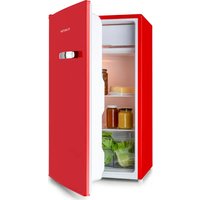
Beercracker - Fridge Klarstein - Free user manual and instructions
Find the device manual for free Beercracker Klarstein in PDF.


| Product type | Refrigerator with 4-star freezer compartment |
| Brand | Klarstein |
| Model | Beercracker |
| Article number | 10045922 |
| Total capacity | 90 litres |
| Dimensions (H × W × D) | 831 × 474 × 447 mm |
| Weight (estimated) | Approximately 30 kg |
| Power supply | 220-240 V~, 50 Hz |
| Annual energy consumption | 85 kWh/year |
| Energy efficiency class | E |
| Noise level | 39 dB(A) – class C |
| Climate class | SN, N, ST, T (10 to 43 °C depending on model) |
| Refrigerant | R600a (isobutane) |
| Defrost type | Manual |
| Number of shelves | 2 adjustable shelves + 1 vegetable drawer |
| Freezer compartment | 4-star (capacity not specified) |
| Thermostat | Adjustable from 1 (warm) to 7 (cold), OFF position |
| Included accessories | Handle, drip tray, plastic container |
| Maintenance and cleaning | Clean with bicarbonate solution, warm water, non-abrasive sponge |
| Safety instructions | Can be used by children aged 8 and above under supervision; do not damage the refrigerant circuit |
| Warranty | 24 months |
Frequently Asked Questions - Beercracker Klarstein
User questions about Beercracker Klarstein
0 question about this device. Answer the ones you know or ask your own.
Ask a new question about this device
Download the instructions for your Fridge in PDF format for free! Find your manual Beercracker - Klarstein and take your electronic device back in hand. On this page are published all the documents necessary for the use of your device. Beercracker by Klarstein.
USER MANUAL Beercracker Klarstein
area
| Category | Value | | -------- | ----- | | 1 | 100 | | 2 | 100 | | 3 | 100 | | 4 | 100 | | 5 | 100 | | 6 | 100 | | 7 | 100 | | 8 | 100 | | 9 | 100 | | 10 | 100 | | 11 | 100 | | 12 | 100 | | 13 | 100 | | 14 | 100 | | 15 | 100 | | 16 | 100 | | 17 | 100 | | 18 | 100 | | 19 | 100 | | 20 | 100 | | 21 | 100 | | 22 | 100 | | 23 | 100 | | 24 | 100 | | 25 | 100 | | 26 | 100 | | 27 | 100 | | 28 | 100 | | 29 | 100 | | 30 | 100 | | 31 | 100 | | 32 | 100 | | 33 | 100 | | 34 | 100 | | 35 | 100 | | 36 | 100 | | 37 | 100 | | 38 | 100 | | 39 | 100 | | 40 | 100 | | 41 | 100 | | 42 | 100 | | 43 | 100 | | 44 | 100 | | 45 | 100 | | 46 | 100 | | 47 | 100 | | 48 | 100 | | 49 | 100 | | 50 | 100 | | 51 | 100 | | 52 | 100 | | 53 | 100 | | 54 | 100 | | 55 | 100 | | 56 | 100 | | 57 | 100 | | 58 | 100 | | 59 | 100 | | 60 | 100 | | 61 | 100 | | 62 | 100 | | 63 | 100 | | 64 | 100 | | 65 | 100 | | 66 | 100 | | 67 | 100 | | 68 | 100 | | 69 | 100 | | 70 | 100 | | 71 | 100 | | 72 | 100 | | 73 | 100 | | 74 | 100 | | 75 | 100 | | 76 | 100 | | 77 | 100 | | 78 | 100 | | 79 | 100 | | 80 | 100 | | Note: The actual values are not provided in the code. I have used the label 'Value' as a placeholder for the value detection. You would need to run the code to get the actual values from the code list. Please note that the actual values would be the result of this example. You would need to run the code to get the actual values from the code list. You would need to run the code to get the actual values from the code list. You would need to run the code to get the actual values from the code list. You would need to run the code to get the actual values from the code list. You would need to run the code to get the actual values from the code list. You would need to run the code to get the actual values from the code list. You would need to run the code to get the actual values from you would need to run the code.INHALT
Inhalt 3
natural_image
Simple diagram of a rectangular object with a cross symbol on its surface, no text or labels present.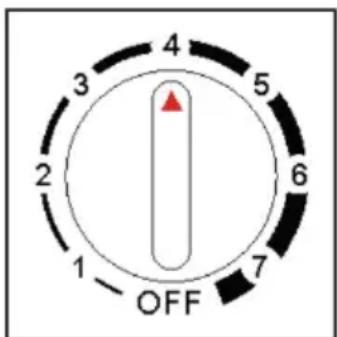
INBETRIEBNAHME
Überprüfung
natural_image
Symbol of a trash bin crossed with a diagonal line, no text or labels presentBerlin Brands Group UK Limited
PO Box 42
272 Kensington High Street
London, W8 6ND
United Kingdom
PRODUKTDATENBLATT
Congratulations on purchasing this device. Please read the following instructions carefully and follow them to prevent possible damages. We assume no liability for damage caused by disregard of the instructions and improper use. Scan the QR code to get access to the latest user manual and more product information.

CONTENTS
Safety Instructions 28
Product Overview 32
Preparation for Use 33
Getting started and Operation 36
Storage of Food 37
How to save energy 39
Troubleshooting 40
Care and Maintenance 42
Disposal Considerations 43
Manufacturer & Importer (UK) 43
Product Data Sheet 44
TECHNICAL DATA
| Item number 10045922 | |
| Power supply 220 - 240 V ~ 50 Hz | |
| Volume 90 L | |
| Energy consumption per year 85 kWh |
SAFETY INSTRUCTIONS
Information on the safety of children and persons at risk
- This appliance may be used by children over 8 years of age and persons with reduced physical, sensory or mental capabilities or lack of experience and knowledge, provided they are supervised during use or have received instruction in the safe use of the appliance and understand the risks involved.
• Children aged 3 to 8 years may fill refrigerators with food and remove food. - Ensure that children do not play with the appliance.
- Cleaning and maintenance of the appliance may only be carried out by children if they are at least 8 years old and supervised.
- Keep all packaging away from children. There is a danger of suffocation.
- When you dispose of the appliance, unplug it from the wall outlet, cut the power cord and remove the door. This will prevent children playing on the appliance from injuring themselves, getting hit or getting trapped.
- If this machine replaces an older machine with a spring lock and latch on the door or lid, disable the spring lock and latch before disposing of the old machine. This will prevent children from getting trapped and suffocating.
General advice
- This refrigerating appliance is not intended to be used as a built-in appliance.
- Do not use mechanical devices or other means to speed up the defrosting process.
- Do not damage the refrigerant circuit.
- Do not use other electrical appliances, such as ice machines, inside refrigeration appliances unless they are approved for this purpose by the manufacturer.
- If there is a light bulb inside the appliance, do not touch it. If it has been switched on for a long time, it can become very hot. The light bulb supplied with this unit is a special bulb that may only be used with the unit supplied. This light bulb is not suitable for household lighting. Do not use the unit without the light bulb.
- When setting up the machine, take care not to pinch or damage the power cord.
- Do not store explosive substances such as spray cans containing a flammable propellant in this appliance.
-
During transport and installation of the unit, take care not to damage any components of the refrigerant circuit.
-
Avoid naked flames and sources of ignition near the unit.
- Thoroughly and regularly ventilate the room in which the unit is located.
- It is dangerous to modify this product in any way. Any damage to the cable may cause a short circuit, fire or electric shock.
- All electrical components such as the plug, power cord and compressor must be replaced by a certified service centre or by qualified service personnel.
- The power cord must not be extended.
- Be careful not to pinch or damage the power plug. A pinched or damaged power plug may overheat and cause a fire.
- Make sure that you can reach the power plug of the machine at any time.
- Do not pull on the power cord.
- If the power outlet is loose, do not plug in the power plug. There is a risk of electric shock or fire.
- This machine is heavy. Be careful when moving it.
- Do not touch the freezer compartment if your hands are damp or wet, as this may cause skin abrasions or cold burns.
- Do not place the unit in direct sunlight.
-
This appliance is intended for use in the home and similar environments. These include:
-
Staff kitchens in shops, offices and other working environments
- Farms, hotels, motels and other residential facilities
- Pensions that offer breakfast (Bed & Breakfasts)
- Catering and similar applications outside the retail trade
This appliance contains the coolant isobutane (R600a), a natural gas which is environmentally friendly. Although it is flammable, it does not damage the ozone layer and does not increase the greenhouse effect. The use of this coolant has, however, led to a slight increase in the noise level of the appliance. In addition to the noise of the compressor, you might be able to hear the coolant flowing around the system. This is unavoidable, and does not have any adverse effect on the performance of the appliance. Care must be taken during the transportation and setting up of the appliance that no parts of the cooling system are damaged. Leaking coolant can damage the eyes.
Notes on daily use
- Do not put hot food in the machine.
- Do not place food directly against the rear panel.
- Frozen food must not be refrozen after defrosting.
- Store packaged frozen food according to the instructions of the frozen food manufacturer.
- Do not place carbonated fizzy drinks in the freezer compartment as the pressure they generate can cause them to explode and damage the appliance.
- Open the door as rarely as possible.
- Do not leave the door open too long.
- Do not set the thermostat too low.
- To reduce energy consumption, leave all accessories, such as drawers, shelves or racks in the appliance.
Notes on installation
- Unpack the machine and check for damage. Do not connect the machine if it is damaged. Report any damage immediately to the manufacturer. Save the original packaging for possible return shipment.
- Wait at least four hours before connecting the unit to allow the coolant to distribute itself in the cooling circuit.
- Ensure that there is sufficient air circulation around the unit. Otherwise, the unit may overheat.
- If possible, the spacers on the unit should rest against the wall. This prevents burns caused by touching the hot compressor or condenser.
- The unit must not be installed near radiators or cookers.
- Make sure that the mains plug is always accessible after the unit has been installed.
- Install this unit in a location where the ambient temperature corresponds to the climate class indicated on the unit's nameplate:
| SN Low | This cooling unit is designed for use at ambient temperatures of 10-32 °C. | |
| N Moderate | This cooling unit is intended for use at ambient temperatures of 16-32 °C. | |
| ST Subtropical | This cooling unit is intended for use at ambient temperatures of 16-38 °C. | |
| T Tropical | This cooling unit is intended for use at ambient temperatures of 16-43 °C. | |
Notes on cleaning and maintenance
- Before cleaning and maintenance, switch the machine off and unplug the power cord from the wall outlet.
- Do not clean the machine with metal objects. Do not use sharp objects to remove frost from the machine. Use a plastic scraper.
- All electrical work required to service the unit should be performed by a qualified electrician or competent person.
Special instructions for freezers and chest freezers
- Children between the ages of 3 and 8 are allowed to fill refrigerators with food and remove food.
- When positioning the machine, make sure that the mains cable is not pinched or damaged.
- Ensure that there are no multiple sockets or power supply units on the rear of the machine.
To avoid contamination of food, please follow the instructions below:
- Prolonged opening of the door can cause a significant temperature rise in the compartments of the unit.
- Clean surfaces that may come into contact with food regularly. Clean the water drain regularly.
- Store raw meat and fish in suitable containers in the refrigerator so that meat and fish do not come into contact with or drip onto other foods.
Notes on the freezer compartments
- Two-star freezer compartments are suitable for storing pre-frozen food, storing or making ice cream and making ice cubes.
- One-, two- and three-star freezer compartments are not suitable for freezing fresh food.
- If the refrigerator is left empty for a long period of time, switch it off, let it defrost, clean it, dry it and leave the door open to prevent mould from forming in the appliance.
WARNING
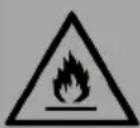
When using, servicing and disposing of the unit, pay attention to the left symbol on the rear of the unit or on the compressor. This symbol warns of possible fires. There are flammable substances in the refrigerant lines and in the compressor. Keep the appliance away from sources of fire during use, maintenance and disposal.
PRODUCT OVERVIEW
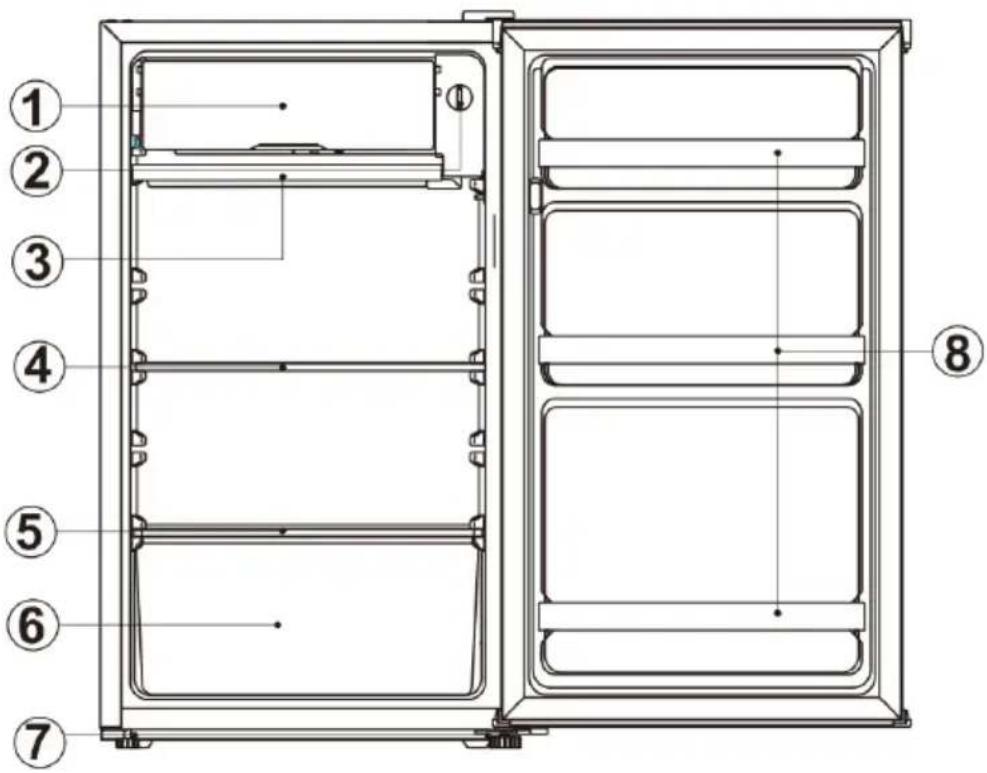
| 1 | Chill door |
| 2 | Shelf |
| 3 | Drip tray |
| 4 | Shelf |
| 5 | Crisper cover |
| 6 | Crisper |
| 7 | Adjustable front feet |
| 8 | Plastic retainings |
PREPARATION FOR USE
Ventilation condition
The position you select for the refrigerator installation should be well-ventilated and has less hot air. Do not locate the refrigerator near a heat source such as cooker, and avoid it from direct sunlight, thus guaranteeing the refrigeration effect while saving energy consumption. Do not locate the refrigerator in the damp place, so as to prevent the refrigerator from rusting and leaking electricity. The result of the total space of the room in which the refrigerator is installed being divided by the refrigerant charge amount of the refrigerator shall not be less than 1 m^3 (space)/8 g(refrigerant).
Note: The amount of refrigerant charged for the refrigerator can be found on the nameplate.
Heat dissipation space
When working, the refrigerator gives off heat to surroundings. Therefore, at least 30 mm of free space should be spared at the top side, more than 100 mm on both sides, and above 50 mm at the back side of the refrigerator.
Dimensions in mm:
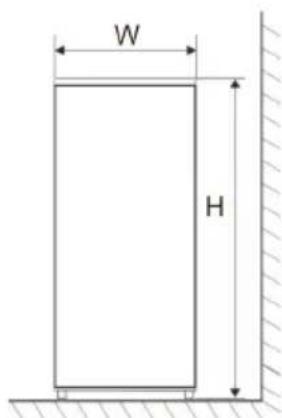
Fig. 1
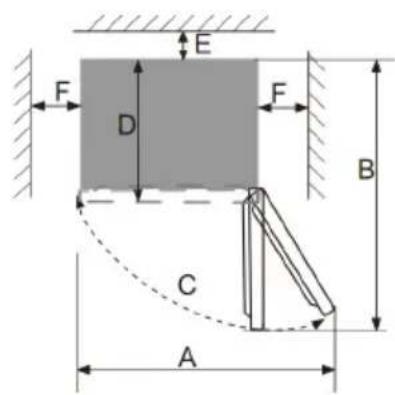
Fig. 2
| W D H A B °C E | |||||||
| 470 | 447 | 831 | 800 | 874 | 130 ± 5 | 50 | 100 |
Note: Figures 1 and 2 only illustrate the space demand of the product.
Leveling the fridge
If the fridge is not level, the door and magnetic seal alignment will be affected and may cause you fridge to work incorrectly. Once the fridge is placed in its final location, adjust the levelling feet at the front by turning them.
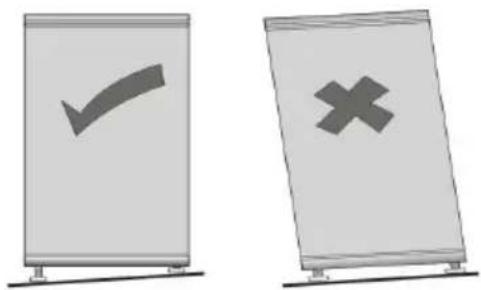
Cleaning before use
Wipe the inside of the fridge with a weak solution of bicarbonate of soda. Then rinse with warm water using a damp sponge or cloth. Wash the baskets and shelves in warm soapy water and dry completely before replacing in the fridge. The external parts of the fridge can be cleaned with wax polish.
Before plugging in you must check that you have a socket which is compatible with the plug supplied with the fridge.
Before switching on
DO NOT SWITCH ON UNTIL FOUR HOURS AFTER MOVING THE FRIDGE.
The coolant fluid needs time to settle. If the appliance is switched off at any time, wait 30 minutes before switching back on to allow the coolant fluid to settle.
Before filling your fridge
Before storing foods in your fridge, turn the fridge on and wait for 24 hours, to make sure it is working properly and to allow the fridge to fail to the correct temperature.
Handle attachment
-
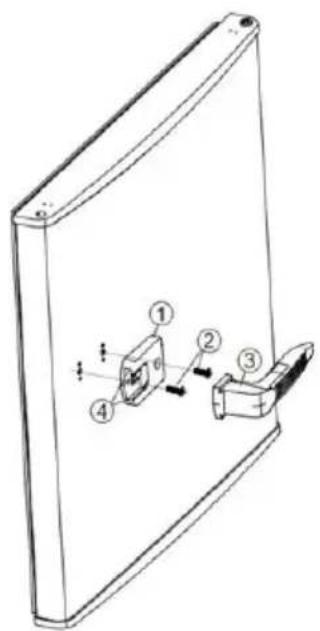
Install the handle seat (Item ①) on the refrigerator door using two bolts (Item ②), and then tighten the bolts properly with a cross screwdriver.
-
Clip the handle (Item ③) into the slot of the handle seat (Item ④) from left to right.

GETTING STARTED AND OPERATION
Testing
- Clean the parts of the refrigerator with lukewarm water containing a little neutral detergent and with clear water, and wipe them dry.
Note: : Electric parts of the refrigerator can only be wiped by dry cloth.
- Turn the thermostat knob to the "2" position, and plug the freezer into the wall outlet. The compressor will begin to run.
- Check, after 30 minutes of operation, to ensure that the freezer is cold.
Temperature Control
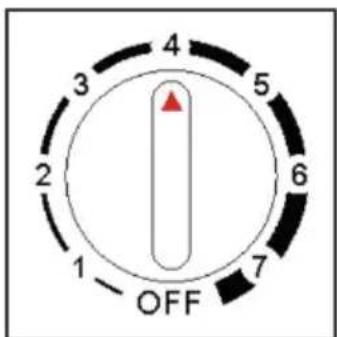
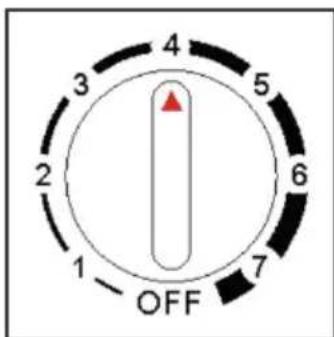
The temperature of the appliance can be adjusted by turning the thermostat dial. The thermostat can be set between 1 and 7.
• 1 is the warmest setting.
- 7 is the coldest setting.
- Set the dial to OFF to turn off the cooling function.
- Under the normal operating condition (in spring and autumn), it is recommended to set the temperature at 4.
- In summer when the ambient temperature is high, it is recommended to set temperature at 3-4. so as to guarantee the fridge and freezer temperatures and reduce the refrigerator continuous running time; and in winter when the ambient temperature is low, it is recommended to set temperature at 5-6 to avoid frequent start/stop of the refrigerator.
Notes: The temperatures may vary with respect to setting's ones due to compressor cycles and outside conditions.
How to Use the Refrigerator Compartment
- The cook dishes can be put into refrigerator to keep fresh after their temperature decreases to room temperature.
- Egg pockets and bottle pockets for eggs, butter, milk and bottle drinks,etc..
Placement of food
- Proper place should be left instead of too crowded during food storage.
- Food to be stored should be wrapped with clean plastic film or fresh keeping paper, then distributed to several frames even to avoid contamination and the loss of water and smell mixture.
- Cool hot food down to the room temperature before storing or consumption of electricity will increase and would lead to frost forming inside.
Tips for keeping food perfect in the fridge
• Take extra care with meat and fish
- Cooked meats should always be stored on a shelf above raw meats to avoid bacterial transfer. Keep raw meats on a plate which is large enough to collect juices and cover it with cling film or foil.
- Leave space around food
- This allows cold air to circulate around the fridge, ensuring all parts of the fridge are kept cool.
- Wrap up food: To prevent transfer of flavours and drying out, food should be separately packed or covered. Fruit and vegetables need not be wrapped.
- Pre-cooked food should be cooled properly: Allow pre-cooked food to cool down before placing in the fridge. This will help to stop the internal temperature of the fridge from rising.
- Shut the door: To prevent cold air escaping, try to limit the number of times you open the door. When returning from shopping, sort foods to be kept in your fridge before opening the door. Only open the door to put food in or take it out.
Where to store your foods in the fridge
Cool area: This is where to store foods which will keep longer if they are kept cool. Milk, eggs, yogurt, fruit juices, hard cheeses eg. Cheddar. Opened jars and bottles of salad dressings, sauces and jams. Fats, eg. Butter, margarine, low-fat spreads, cooking fats and lard.
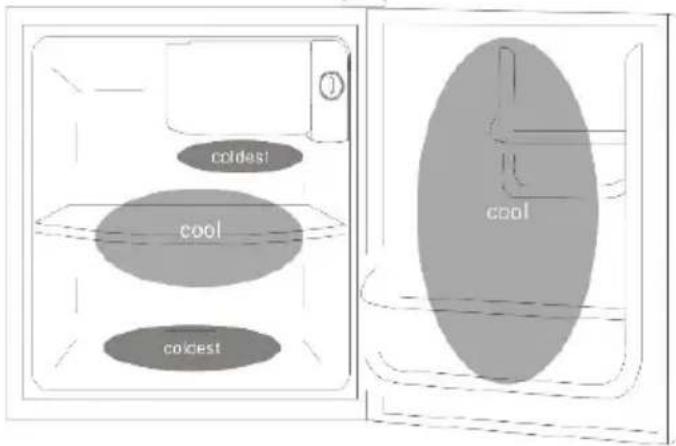
Coldest area: This is where foods which must be cold to keep them safe should be kept:
- Raw and uncooked foods should always be wrapped.
• Pre-cooked chilled foods, eg. Ready meals, meat pies, soft cheeses.
• Pre-cooked meats eg. Ham, - Prepared salads (including pre-packed mixed green salads, rice, potato salad etc).
- Desserts, eg. Fromage frais, home-prepared food and leftovers or cream cakes.
NOTE: Always wrap and store raw meat, poultry and fish on the lowest shelf at the bottom of the fridge. If so, can not put too long. This will stop them dripping onto, or touching other foods. Do not store inflammable gasses or liquids in the fridge.
Recommended storage periods: For recommended food storage time, refer to the information given on your food packaging.
HOW TO SAVE ENERGY
• Install the refrigerator in the coolest part of the room, out of direct sunlight and away from heating ducts or registers. Do not place the refrigerator next to heat-producing appliances such as a range, oven or dishwasher.
- The refrigerator door should remain open only as long as necessary; do not place hot food inside the refrigerator.
- Organize the refrigerator to reduce door openings. Remove as many items as needed at one time and close the door as soon as possible.
- The refrigerator door should be properly closed to avoid increased energy consumption, and the formation of excess ice and / or condensation inside.
- Constantly circulating cold air keeps the temperature homogenous inside the refrigerator. For this reason, it is important to properly distribute the food, to facilitate the flow of air.
- Cover foods and wipe containers dry before placing them in the refrigerator. This cuts down on moisture build-up inside the unit.
- Do not overcrowd the refrigerator or block cold airvents. Doing so causes the refrigerator to run longer and use more energy. Shelves should not be lined with aluminum foil, wax paper or paper toweling. Liners interfere with cold air circulation, making the refrigerator less efficient, which could cause food spoilage.
- During prolonged absences (example: vacations), it is advisable to disconnect the refrigerator, remove all the food, and clean it. The door should be left slightly open to avoid mold and unpleasant odours. This will not affect the refrigerator when it is reconnected.
- During short absences (example: holidays), the refrigerator can remain on. However, remember that prolonged power outages may occur while you are gone.
TROUBLESHOOTING
| Problem Possible cause and suggested solution | |
| Failed operation. Check whether the appliance is connected to power or whether the plug is in well contact. | |
| Odour Odorous foods shall be tightly wrapped. | |
| Long-time operation of the compressor. | Long operation of the refrigerator is normal in summer when the ambient temperature is high. |
| It is not suggestible having too much food in the appliance at the same time. | |
| Foodt shall get cool before being put into the appliance. | |
| The doors are opened too frequently. | |
| Doors cannot be properly closed. | The door is stuck by food packages Too much food is placed. |
| The refrigerator is tilted. | |
| Loud noise Check whether the floor is level and whether the refrigerator is placed stably. | |
| Door seal fails to be tight. Remove foreign matters on the door seal. | |
| Water pan overflows. There is too much food in the chamber or food stored contains too much water, resulting in heavy defrosting. | |
| Hot housing. Heat dissipation of the built-in condenser via the housing, which is normal. | |
| When housing becomes hot due to high ambient temperature, storage of too much food or shutdown of the compressor is shut down, provide sound ventilation to facilitate heat dissipation. | |
| Surface condensation. Condensation on the exterior surface and door seals of the refrigerator is normal when the ambient humidity is too high. Just wipe the condensate with a clean towel. | |
Servicing
This product should be serviced by an authorized engineer and only genuine spare parts should be used.
Under no circumstances should you attempt to repair the appliance yourself.
Repairs carried out by inexperienced persons may cause injury or serious malfunctioning. Contact the local store where your purchase was made.
When the appliance is not in use for long periods, disconnect from the electricity supply, empty all foods and clean the appliance, leaving the door ajar to prevent unpleasant smells.
CARE AND MAINTENANCE
Cleaning inside the fridge: After defrosting you should clean the fridge internally with a weak solution of bicarbonate of soda. Then rinse with warm water using a damp sponge or cloth and wipe dry. Wash the baskets in warm soapy water and ensure they are completely dry before replacing in the fridge.
Cleaning outside the fridge: Use standard non-abrasive detergent diluted in warm water to clean the fridge exterior.
The grille of the condenser at the back of the fridge and the adjacent components can be vacuumed using a soft brush attachment.
Do not use harsh cleaners, scouring pads or solvents to clean any part of the fridge
Moving the fridge
Location: Do not place your fridge/Freezer near a heat source, eg. Cooker, boiler or radiator. Also avoid direct sunlight in out-buildings or sun lounges.
Vacation time
- Turn off the refrigerator first and then unplug the unit from the wall outlet.
- Remove all the food.
- Clean the refrigerator.
- Leave the lid open slightly to avoid possible formation of condensation, mold, or odours.
- Use extreme caution in the case of children. The unit should not be accessible to child's play.
- Short vacations: Leave the refrigerator operating during vacations of less than three weeks.
- Long vacations: If the appliance will not be used for several months, remove all food and unplug the power cord. Clean and dry the interior thoroughly. To prevent odour and mold growth, leave the door open slightly: blocking it open if necessary or have the door removed.
DISPOSAL CONSIDERATIONS
natural_image
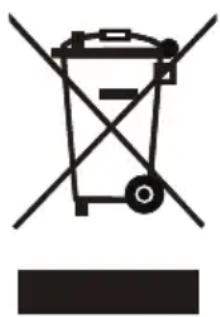
Symbol of a trash bin with crossed x and y axes, no text or labels presentIf there is a legal regulation for the disposal of electrical and electronic devices in your country, this symbol on the product or on the packaging indicates that this product must not be disposed of with household waste. Instead, it must be taken to a collection point for the recycling of electrical and electronic equipment. By disposing of it in accordance with the rules, you are protecting the environment and the health of your fellow human beings from negative consequences. For information about the recycling and disposal of this product, please contact your local authority or your household waste disposal service.
MANUFACTURER & IMPORTER (UK)
Manufacturer:
Chal-Tec GmbH, Wallstrasse 16, 10179 Berlin, Germany.
Importer for Great Britain:
Berlin Brands Group UK Limited
PO Box 42
272 Kensington High Street
London, W8 6ND
United Kingdom
PRODUCT DATA SHEET
Information according to Regulation (EU) No. 2019/2016
| Supplier's name or trademark: Klarstein | ||||
| Supplier's address: Wallstraße 16, 10179 Berlin, DE | ||||
| Model identifier: 10045922 | ||||
| Type of refrigerating appliance: | ||||
| Low-noise appliance: No D | Design type: freestanding | |||
| Wine storage appliance: No | Other refrigerating appliance: | Yes | ||
| General product parameters: | ||||
| Parameter Value Parameter Value | ||||
| Overall dimensions (mm) | Height 831 | Total volume (dm3or L) | 90Width 474 | |
| Depth 447 | ||||
| EEI | 100 | Energy efficiency class | E | |
| Airborne acoustical noise emissions (dB(A) re 1 pW) | 39 | Airborne acoustical noise emission class | C | |
| Annual energy consumption (kWh/a) | 85 Climate class: | temperate, subtropical | ||
| Minimum ambient temperature (°C), for which the refrigerating appliance is suitable | 16 | Maximum ambient temperature (°C), for which the refrigerating appliance is suitable | 38 | |
| Winter setting No | ||||
| Compartment Parameters: | |||||
| Compartment type | Compartment parameters and values | ||||
| Compartment volume (dm3 or L) | Recommended temperature setting for optimised food storage (°C) These settings shall not contradict the storage conditions set out in Annex IV, Table 3 | Freezing capacity (kg/24h) | Defrosting type (auto-defrost=A, manual defrost=M) | ||
| Pantry No - - - - | |||||
| Wine storage No - - - - | |||||
| Cellar No 90.0 4 - M | |||||
| Fresh food Yes - - - - | |||||
| Chill No - - - - | |||||
| 0-star or icemaking No - - - - | |||||
| 1-star No - - - - | |||||
| 2-star No - - - - | |||||
| 3-star No - - - - | |||||
| 4-star Yes - - - - | |||||
| 2-star section No - - - - | |||||
| Variable temperature compartment | - - - - - | ||||
| For 4-star compartments | |||||
| Fast freeze facility | No | ||||
| Light source parameters: | |||||
| Type of light source | LED | ||||
| Energy efficiency class | - | ||||
| Minimum duration of the guarantee offered by the manufacturer: 24 months | |||||
| Additional information: | |||||
| Weblink to the manufacturer's website, where the information in point4(a) Annex of Commission Regulation (EU) 2019/2019 is found: www.klarstein.co.uk | |||||
Cher client, chère cliente,
SOMMAIRE
Sommaire 49
natural_image
Simple diagram of a rectangular object with a cross symbol on its surface, no text or labels present.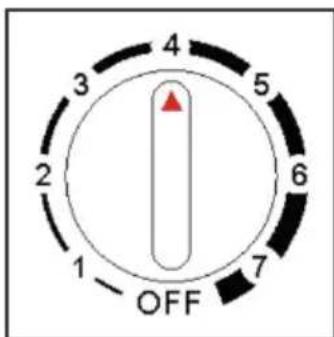
MISE EN MARCHE
Vérification
natural_image
Symbol of a trash bin crossed with a diagonal line, no text or labels presentBerlin Brands Group UK Ltd
PO Box 42
272 Kensington High Street
London, W8 6ND
United Kingdom
FICHE DE DONNÉES PRODUIT
INDICE
Indice 71
MESSA IN FUNZIONE
Controllo
RICERCA DEI PROBLEMI
natural_image
Symbol of a trash bin crossed with a diagonal line, no text or labels presentPRODUTTORE E IMPORTATORE (UK)
Produttore:
Chal-Tec GmbH, Wallstraße 16, 10179 Berlino, Germania.
Berlin Brands Group UK Limited
PO Box 42
272 Kensington High Street
London, W8 6ND
United Kingdom
SCHEDA INFORMATIVA DEL PRODOTTO
CONTENIDO
Contenido 93
PUESTA EN MARCHA
Comprobación
natural_image
Symbol of a trash bin crossed with a diagonal line, no text or labels presentBerlin Brands Group UK Limited
PO Box 42
272 Kensington High Street
London, W8 6ND
Reino Unido
FICHA TÉCNICA DEL PRODUCTO

- INHALT
- INBETRIEBNAHME
- Überprüfung
- PRODUKTDATENBLATT
- CONTENTS
- SAFETY INSTRUCTIONS
- Information on the safety of children and persons at risk
- General advice
- Notes on daily use
- Notes on installation
- Notes on cleaning and maintenance
- Special instructions for freezers and chest freezers
- To avoid contamination of food, please follow the instructions below:
- Notes on the freezer compartments
- WARNING
- PRODUCT OVERVIEW
- PREPARATION FOR USE
- Ventilation condition
- Heat dissipation space
- Leveling the fridge
- Cleaning before use
- Before switching on
- Before filling your fridge
- Handle attachment
- GETTING STARTED AND OPERATION
- Testing
- Temperature Control
- How to Use the Refrigerator Compartment
- Placement of food
- Tips for keeping food perfect in the fridge
- Where to store your foods in the fridge
- HOW TO SAVE ENERGY
- TROUBLESHOOTING
- Servicing
- CARE AND MAINTENANCE
- Moving the fridge
- Vacation time
- DISPOSAL CONSIDERATIONS
- MANUFACTURER & IMPORTER (UK)
- Manufacturer:
- Importer for Great Britain:
- PRODUCT DATA SHEET
- Cher client, chère cliente,
- SOMMAIRE
- MISE EN MARCHE
- Vérification
- FICHE DE DONNÉES PRODUIT
- INDICE
- MESSA IN FUNZIONE
- Controllo
- RICERCA DEI PROBLEMI
- PRODUTTORE E IMPORTATORE (UK)
- Produttore:
- SCHEDA INFORMATIVA DEL PRODOTTO
- CONTENIDO
- PUESTA EN MARCHA
- Comprobación
- FICHA TÉCNICA DEL PRODUCTO
Brand : Klarstein
Model : Beercracker
Category : Fridge