
Lion 12.0 rh - Drill SCHEPPACH - Free user manual and instructions
Find the device manual for free Lion 12.0 rh SCHEPPACH in PDF.
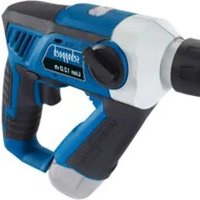


| Product type | Cordless hammer drill |
| Brand | Scheppach |
| Model | Lion 12.0 rh |
| Nominal battery voltage | 10,8 V DC |
| Charger power supply | 230 V ~ 50 Hz |
| No-load speed | 0 - 800 min⁻¹ |
| Impact rate | 0 - 4300 bpm |
| Impact energy | 0,9 J |
| Tool holder | SDS-Plus |
| Max drilling diameter (concrete) | 10 mm |
| Weight | 1,1 kg |
| Sound pressure level | 83 dB(A) (K=3 dB) |
| Sound power level | 94 dB(A) (K=3 dB) |
| Vibration (hand-arm) | ≤ 9,42 m/s² (K=1,5 m/s²) |
| Rotation direction | Left and right |
| Functions | Drilling, hammer drilling, screwdriving |
| Intended use | Concrete, brick, stone, wood, metal, screwdriving |
| Maintenance | Clean with a damp cloth, no harsh chemicals |
| Recommended safety equipment | Hearing protection, dust mask |
| Warranty | Legal warranty (defective parts) |
Frequently Asked Questions - Lion 12.0 rh SCHEPPACH
User questions about Lion 12.0 rh SCHEPPACH
0 question about this device. Answer the ones you know or ask your own.
Ask a new question about this device
Download the instructions for your Drill in PDF format for free! Find your manual Lion 12.0 rh - SCHEPPACH and take your electronic device back in hand. On this page are published all the documents necessary for the use of your device. Lion 12.0 rh by SCHEPPACH.
USER MANUAL Lion 12.0 rh SCHEPPACH
| D | Akku-BohrhammerOriginal-Betriebsanweisung | 4-7 |
| GB | Battery-Hammer DrillTranslation of the original instructions | 8-11 |
| FR | Marteau perforateur sans filTraduction de la notice originale | 12-15 |
Fig. 1
Technical data
Voltage supply Motor: 12 V d.c.
Idling speed: 0-800 1/min
Max impact power: 0.9 J
Impact rate: 0-4300 bpm
Right-left run: ____ yes
Tool holder: SDS-Plus
Maximum drill diameter: 10 mm
Nominal voltage battery: 10.8 V d.c.
Mains voltage charger: 230 V~50 Hz
Weight: 1.1 kg
Subject to technical changes!
Sound and vibration
Sound and vibration values were measured in accordance with EN 60745.
LpA sound pressure level 83 dB(A)
KpA uncertainty 3 dB
LWA sound power level 94 dB(A)
KWA uncertainty 3 dB
Wear ear-muffs.
The impact of noise can cause damage to hearing.
Total vibration values (vector sum of three directions) determined in accordance with EN 60745.
Vibration ah ≤ 9.42 m/s²
Uncertainty K = 1.5 m/s²
Additional information for electric power tools
Warning!
The specified vibration value was established in accordance with a standardized testing method. It may change according to how the electric equipment is used and may exceed the specified value in exceptional circumstances. The specified vibration value can be used to compare the equipment with other electric power tools.
The specified vibration value can be used for initial assessment of a harmful effect.
Keep the noise emissions and vibrations to a minimum.
- Only use appliances which are in perfect working order. • Service and clean the appliance regularly.
- Adapt your working style to suit the appliance.
- Do not overload the appliance.
- Have the appliance serviced whenever necessary.
- Switch the appliance off when it is not in use.
- Wear protective gloves.
Explanation of symbols
GB
 | Wear ear protection. |
 | Wear a dust mask. |
 | Please read the operating instructions before using this electric tool. |
General information
• After unpacking, check all parts for possible transportation damage. In the event of complaints, inform the supplier immediately. Any complaints made after this time will not be accepted. - The shipment is to be checked for completeness upon receipt. - Read through the manual carefully in order to familiarize yourself with the device before using it for the first time. - Only use original accessories, consumable items, and spare parts. Spare parts can be obtained from your specialized dealer. When ordering, please specify our part numbers, as well as type and construction.
According to the applicable product liability laws, the manufacturer of the device does not assume liability for damages to the product or damages caused by the product that occur due to:
- Improper handling, • Non-compliance with the operating instructions, • Repairs by third parties, not by authorized service technicians, • Installation and replacement of non-original spare parts, • Application other than specified, • A breakdown of the electrical system that
occurs due to non-compliance with electrical regulations and VDE regulations 0100, DIN 57113 / VDE0113.
We recommend:
Read through the complete text in the operating instructions before installing and commissioning the device. The operating instructions are intended to help the user to become familiar with the machine and take advantage of its application possibilities in accordance with the recommendations. The operating instructions contain important information on how to operate the machine safely, professionally, and economically, how to avoid danger, costly repairs, reduce downtime, and how to increase reliability and service life of
the machine.
In addition to the safety regulations in the operating instructions, you must comply with the applicable regulations for the operation of the machine in your country. Keep the operating instructions package with the machine at all times and store it in a plastic cover to protect it from dirt and moisture. Read the instruction manual each time before operating the machine and carefully follow its information. The machine may only be operated by persons who have been instructed
in the operation of the machine and who are informed about the associated dangers. The minimum age requirement must be complied with.
We have marked the points in this manual that concern your safety with this sign: △
General safety notes ⚠
Read all safety warnings and all instructions. Failure to follow the warnings and instructions may result in electric shock, fire and/or serious injury.
Save all warnings and instructions for future reference.
The term "power tool" in the warnings refers to your mains-operated (corded) power tool or battery-operated (cordless) power tool.
Work area safety
- Keep work area clean and well lit. Cluttered or dark areas invite accidents.
- Do not operate power tools in explosive atmospheres, such as in the presence of flammable liquids, gases or dust. Power tools create sparks which may ignite the dust or fumes.
- Keep children and bystanders away while operating a power tool. Distractions can cause you to lose control.
Electrical safety
- Power tool plugs must match the outlet. Never modify the plug in any way. Do not use any adapter plugs with earthed (grounded) power tools. Unmodified plugs and matching outlets will reduce risk of electric shock.
- Avoid body contact with earthed or grounded surfaces, such as pipes, radiators, ranges and refrigerators. There is an increased risk of electric shock if your body is earthed or grounded.
- Do not expose power tools to rain or wet conditions. Water entering a power tool will increase the risk of electric shock.
- Do not abuse the cord. Never use the cord for carrying, pulling, or unplugging the power tool. Keep cord away from heat, oil, sharp edges, and moving parts. Damaged or entangled cords increase the risk of electric shock.
- When operating a power tool outdoors, use an extension cord suitable for outdoor use. Use of a cord suitable for outdoor use reduces the risk of electric shock.
- If operating a power tool in a damp location is unavoidable, use a residual current device (RCD) protected supply. Use of an RCD reduces the risk of electric shock.
Personal safety
- Stay alert, watch what you are doing, and use common sense when operating a power tool. Do not use a power tool while you are tired or under the influence of drugs, alcohol, or medication. A moment of inattention while operating power tools may result in serious personal injury.
- Use personal protective equipment. Always wear eye protection. Protective equipment such as dust mask, non-skid safety shoes, hard hat, or hearing protection used for appropriate conditions will reduce personal
injuries.
- Prevent unintentional starting. Ensure the switch is in the off-position before connecting to power source and/or battery pack, picking up, or carrying the tool. Carrying power tools with your finger on the switch or energising power tools that have the switch on invites accidents.
- Remove any adjusting key or wrench before turning the power tool on. A wrench or a key left attached to a rotating part of the power tool may result in personal injury.
- Do not overreach. Keep proper footing and balance at all times. This enables better control of the power tool in unexpected situations.
- Dress properly. Do not wear loose clothing or jewellery. Keep your hair, clothing, and gloves away from moving parts. Loose clothes, jewellery, or long hair can be caught in moving parts.
- If devices are provided for the connection of dust extraction and collection facilities, ensure these are connected and properly used. Use of dust collection can reduce dust-related hazards.
Power tool use and care
- Do not force the power tool. Use the correct power tool for your application. The correct power tool will do the job better and safer at the rate for which it was designed.
- Do not use the power tool if the switch does not turn it on and off. Any power tool that cannot be controlled with the switch is dangerous and must be repaired.
- Disconnect the plug from the power source and/or the battery pack from the power tool before making any adjustments, changing accessories, or storing power tools. Such preventive safety measures reduce the risk of starting the power tool accidentally.
- Store idle power tools out of the reach of children and do not allow persons unfamiliar with the power tool or these instructions to operate the power tool. Power tools are dangerous in the hands of untrained users.
- Maintain power tools. Check for misalignment or binding of moving parts, breakage of parts and any other condition that may affect the power tool's operation. If damaged, have the power tool repaired before use. Many accidents are caused by poorly maintained power tools.
- Keep cutting tools sharp and clean. Properly maintained cutting tools with sharp cutting edges are less likely to bind and are easier to control.
- Use the power tool, accessories and tool bits etc. in accordance with these instructions, taking into account the working conditions and the work to be performed.
- Use of the power tool for operations different from those intended could result in a hazardous situation.
Battery tool use and care
- Recharge only with the charger specified by the manufacturer. A charger that is suitable for one type of battery pack may create a risk of fire when used with another battery pack.
- Use power tools only with specifically designated battery packs. Use of any other battery packs may create a risk of injury and fire.
- When battery pack is not in use, keep it away from other metal objects, like paper clips, coins, keys, nails, screws or other small metal objects, that can make a connection from one terminal to another. Shorting the battery terminals together may cause burns or a fire.
- Under abusive conditions, liquid may be ejected from the battery; avoid contact. If contact accidentally occurs, flush with water. If liquid contacts eyes, additionally seek medical help. Liquid ejected from the battery may cause irritation or burns.
Service
- Have your power tool serviced by a qualified repair person using only identical replacement parts. This will ensure that the safety of the power tool is maintained.
Hammer Safety Warnings
- Wear ear protectors. Exposure to noise can cause hearing loss.
- Hold power tool by insulated gripping surfaces, when performing an operation where the cutting accessory or fastener may contact hidden wiring. Cutting accessory and fasteners contacting a "live" wire may make exposed metal parts of the power tool "live" and could give the operator an electric shock.
Additional Safety and Working Instructions
- Use appropriate detectors to determine if utility lines are hidden in the work area or call the local utility company for assistance. Contact with electric lines can lead to fire and electric shock. Damaging a gas line can lead to explosion. Penetrating a water line causes property damage.
- When working with the machine, always hold it firmly with both hands and provide for a secure stance. The power tool is guided more secure with both hands.
- Secure the workpiece. A workpiece clamped with clamping devices or in a vice is held more secure than by hand.
- For drilling without impact in wood, metal, ceramic and plastic, a suitable SDS-Plus tool or an application tool with hexagon shank can be used.
- Inserting SDS-Plus Drilling Tools: Check the latching by pulling the tool.
- The maximum torque is reached only in the screwdriving operating mode (1. gear). The
maximum no-load speed is reached only in the operating modes drilling and hammer drilling.
- Replace a damaged dust protection cap immediately. The dust protection cap largely prevents the penetration of drilling dust into the tool holder during operation. When inserting the tool, pay attention that the dust protection cap is not damaged.
- Dusts from materials such as lead-containing coatings, some wood types, minerals and metal can be harmful to one's health and cause allergic reactions, lead to respiratory infections and/or cancer. Materials containing asbestos may only be worked by specialists.
- As far as possible, use a dust extraction system suitable for the material.
- Provide for good ventilation of the working place.
- It is recommended to wear a P2 filter-class respirator. Observe the relevant regulations in your country for the materials to be worked.
- Prevent dust accumulation at the workplace. Dusts can easily ignite.
- If the application tool should become blocked, switch the machine off. Loosen the application tool.
- When switching on with a blocked drilling tool, high torque reaction can occur.
- Apply the power tool to the screw only when it is switched off. Rotating tool inserts can slip off. • Always wait until the machine has come to a complete stop before placing it down. The tool insert can jam and lead to loss of control over the power tool.
- To save energy, only switch the power tool on when using it.
- Avoid unintentional switching on. Ensure the On/Off switch is in the off position before inserting battery pack. Carrying the power tool with your finger on the On/Off switch or inserting the battery pack into power tools that have the switch on invites accidents.
- Do not open the battery. Danger of short-circuiting.
- In case of damage and improper use of the battery, vapours may be emitted. Ventilate the area and seek medical help in case of complaints. The vapours can irritate the respiratory system.
- Use the battery only in conjunction with your power tool. This measure alone protects the battery against dangerous overload.
- Use only original batteries with the voltage listed on the nameplate of your power tool. When using other batteries, e.g. imitations, reconditioned batteries or other brands, there is danger of injury as well as property damage through exploding batteries.
- The battery is supplied partially charged. To ensure full capacity of the battery, completely charge the battery in the battery charger before using your power tool for the first time.
- Read the operating instructions of the battery charger.
- Check the tight seating of the battery. Two locking levels are possible.
Intended Use
The power tool is intended for hammer drilling in concrete, brick and stone. It is also suitable for drilling without impact in wood and metal, as well as for screwdriving.
Remaining risks ⚠
Even if you use this electric power tool in accordance with instructions, certain residual risks cannot be ruled out. The following hazards may arise in connection with the equipment's construction and layout:
- Lung damage if no suitable protective dust mask is used.
- Damage to hearing if no suitable ear protection is used.
- Health damage caused by hand-arm vibrations if the equipment is used over a prolonged period
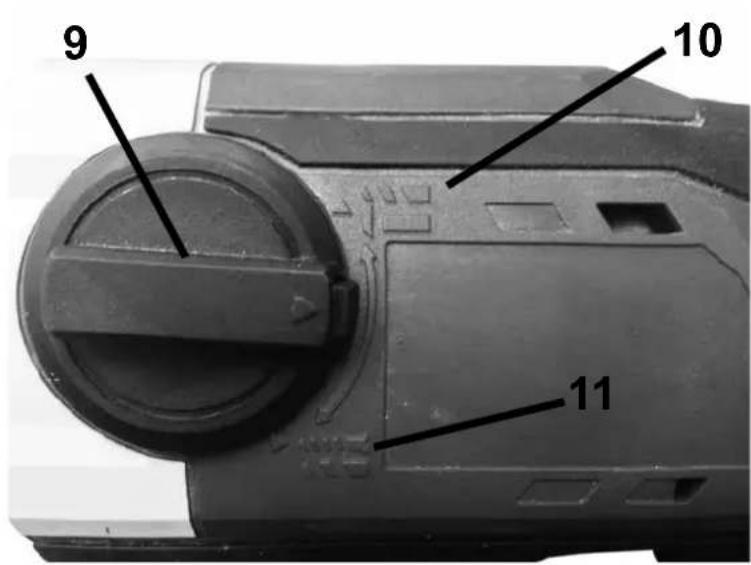
Equipment Fig.1
- Tool holder SDS-Plus
- Debit note
- Display forward / reverse operation
- Direction of rotation switch
- On / off switch
- Accumulator
- Snap button
- Dust cap
- Switch for operating mode setting
- Working mode percussive drilling
- Working mode drilling
Startup
Assembly of the tool
• Pull back the dust cap (Fig.1.Pos.8). - Insert your SDS-Plus tool - Snap the dust cap (Fig.1.Pos.8) again. - Dismantling: Pull back the dust cap (Fig.1.Pos.8) and pull the SDS-Plus tool out.
Forward/Reverse switch (Fig.1.Pos.4)
With the slide switch above the On/Off switch you can select the direction of rotation of the battery-powered drill/screwdriver and secure it against being switched on accidentally. You can choose between clockwise and anticlockwise rotation. To avoid causing damage to the gearing it is advisable to change the direction
of rotation only when the tool is at a standstill. The On/Off switch is blocked when the slide switch is in centre position.
On/Off switch (Fig.1.Pos.5)
Infinitely variable speed control is possible with the On/Off switch. The further you press the switch, the higher the speed of the battery-powered drill/screwdriver.
Working with the hammer drill
- Select an appropriate SDS-Plus use tool. (Maximum drill diameter 10 mm)
- Select the appropriate operating mode from (Fig.1.Pos.10 + 11).
- Drilling: drilling in wood, screw driving
- Impact drilling: drilling in stoneware and concrete
- Pay attention to the correct direction of rotation. The direction of rotation is displayed on the reverse indicator (Fig.1.Pos.4).
- Start work.
- If the load indicator (Fig.1.Pos.2) is red, the load on the engine is too high. Reduce the pressure you exert on the machine. Always make sure that the indicator light is green.
Maintenance
Cleaning
- Keep all safety devices, air vents and the motor housing free of dirt and dust as far as possible. Wipe the equipment with a clean cloth or blow it with compressed air at low pressure. We recommend that you clean the device
immediately each time you have finished using it.
Clean the equipment regularly with a moist cloth and some soft soap. Do not use cleaning agents or solvents; these could attack the plastic parts of the equipment. Ensure that no water can seep into the device.
Maintenance
There are no parts inside the equipment which require additional maintenance.
Disposal and recycling
The unit is supplied in packaging to prevent its being damaged in transit. This packaging is raw material and can therefore be reused or can be returned to the raw material system. The unit and its accessories are made of various types of material, such as metal and plastic. Defective components must be disposed of as special waste. Ask your dealer or your local council.
| 89/686/EC_96/58/EC | |
| X 2006/42/EC | |
| Annex IV Notified Body: Notified Body No.: Reg. No.: | |
| 2000/14/EC_2005/88/EC | |
| Annex V | |
| Annex VI Noise: measured LWA=xx dB(A); guaranteed LWA=xx dB(A) Notified Body: | |
| 2004/26/EC | |
| Emission. No: | |
Standard references: EN 60745-1:2009+A11:2010; EN 60745-2-6:2010; EK9-BE-77V2-2:2012; EN 55014-1:2006/+A1:2009/+A2:2011; EN 55014-2:1997/+A1:2001/+A2:2008
Subject to change without notice
Documents registrar: Georg Kohler
Günzburger Str. 69, D-89335 Ichenhausen
DE
Only for EU countries. Do not dispose of electric tools together with household waste material! In observance of European directive 2002/96/EC on wasted electrical and electronic equipment and its implementation in accordance with national law, electric tools that have reached the end of their life must be collected separately and returned to an environmentally compatible recycling facility
FR
Apparent defects must be notified within 8 days from the receipt of the goods. Otherwise, the buyer's rights of claim due to such defects are invalidated. We guarantee for our machines in case of proper treatment for the time of the statutory warranty period from delivery in such a way that we replace any machine part free of charge which provably becomes unusable due to faulty material or defects of fabrication within such period of time. With respect to parts not
manufactured by us we only warrant insofar as we are entitled to warranty claims against the upstream suppliers. The costs for the installation of the new parts shall be borne by the buyer. The cancellation of sale or the reduction of purchase price as well as any other claims for damages shall be excluded.
Garantie FR
- TECHNICAL DATA
- SOUND AND VIBRATION
- WEAR EAR-MUFFS
- ADDITIONAL INFORMATION FOR ELECTRIC POWER TOOLS
- WARNING
- KEEP THE NOISE EMISSIONS AND VIBRATIONS TO A MINIMUM
- EXPLANATION OF SYMBOLS
- GENERAL INFORMATION
- WE RECOMMEND
- GENERAL SAFETY NOTES ⚠
- WORK AREA SAFETY
- ELECTRICAL SAFETY
- PERSONAL SAFETY
- POWER TOOL USE AND CARE
- BATTERY TOOL USE AND CARE
- SERVICE
- HAMMER SAFETY WARNINGS
- ADDITIONAL SAFETY AND WORKING INSTRUCTIONS
- INTENDED USE
- REMAINING RISKS ⚠
- EQUIPMENT FIG
- STARTUP
- ASSEMBLY OF THE TOOL
- FORWARD/REVERSE SWITCH (FIG.1.POS.4)
- ON/OFF SWITCH (FIG.1.POS.5)
- WORKING WITH THE HAMMER DRILL
- MAINTENANCE
- CLEANING
- DISPOSAL AND RECYCLING
- DE
- FR
- GARANTIE FR
Brand : SCHEPPACH
Model : Lion 12.0 rh
Category : Drill