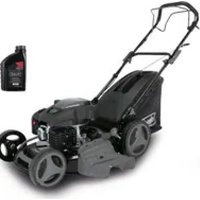
MP38-20Li - Lawn mower SCHEPPACH - Free user manual and instructions
Find the device manual for free MP38-20Li SCHEPPACH in PDF.


User questions about MP38-20Li SCHEPPACH
0 question about this device. Answer the ones you know or ask your own.
Ask a new question about this device
Download the instructions for your Lawn mower in PDF format for free! Find your manual MP38-20Li - SCHEPPACH and take your electronic device back in hand. On this page are published all the documents necessary for the use of your device. MP38-20Li by SCHEPPACH.
USER MANUAL MP38-20Li SCHEPPACH
natural_image
Black-and-white photo of a L4 lawn mower with 'scheppach' branding and no visible text or symbols on the device itself.MP38-20Li
| DE | Akku - RasenmäherOriginalbetriebsanleitung | 6 - 19 |
| GB | Battery-powered lawn mowerTranslation from the original instruction manual | 20 - 32 |
| FR | Tondeuse électrique à batterieTraduction des instructions d'origine | 33 - 46 |

natural_image
Close-up of a white and black mechanical knob or dial component (no visible text or symbols)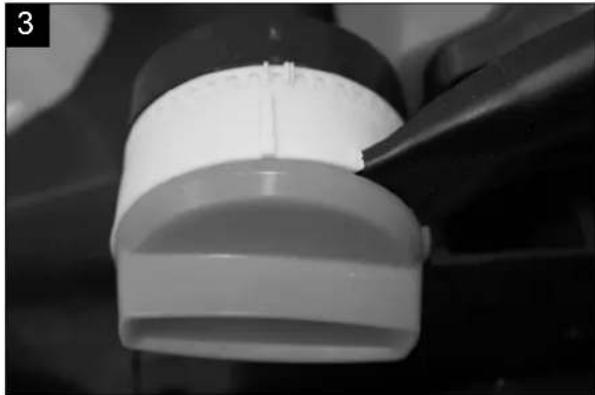
natural_image
Close-up of a white plastic component being cut with a tool, no visible text or symbols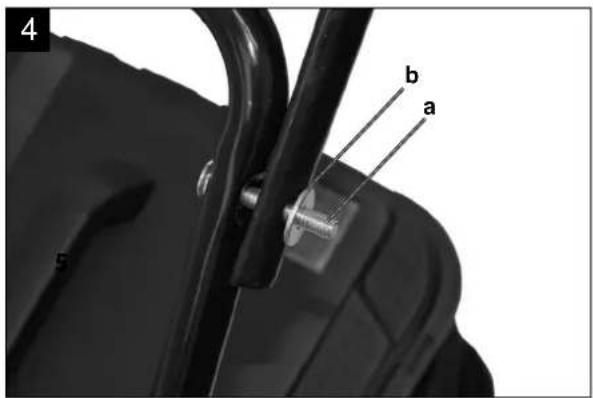
natural_image
Mechanical component with a metallic bracket and labeled part 'c' (no text or symbols beyond label)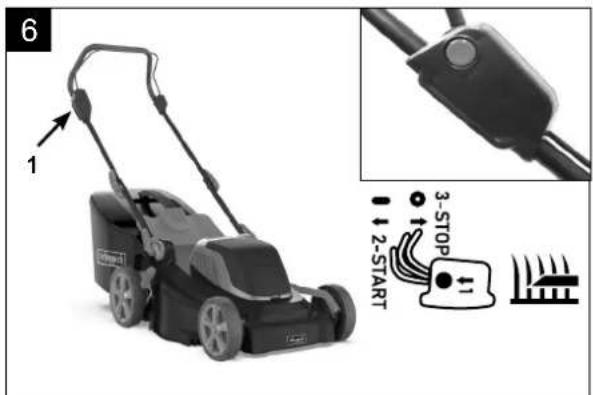
natural_image
Close-up of a black cable with a labeled component '10' and part number '7' (no other text or symbols)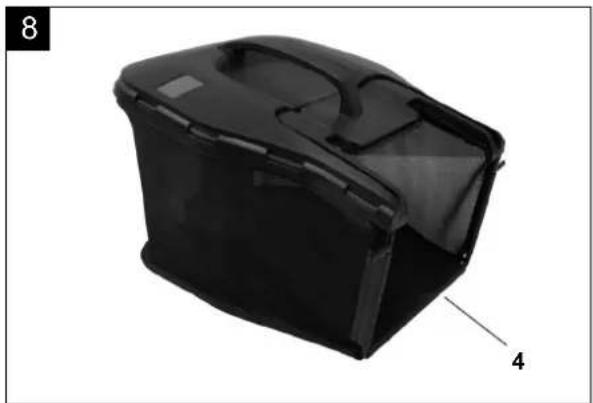
natural_image
Black plastic container with a labeled part (8 and 4) on the side, no visible text or symbols on the container itself.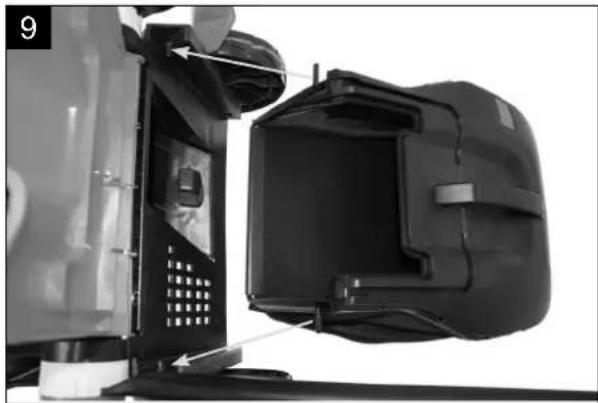
natural_image
Close-up of a black electronic device with a lid and internal components, no visible text or symbols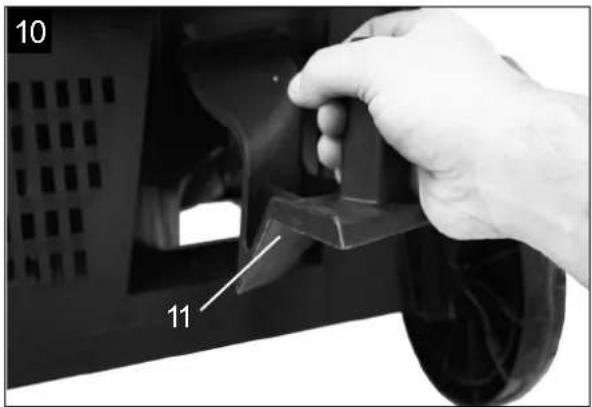
natural_image
Close-up of a hand using a tool to adjust or install a mechanical component, labeled with numbers 10 and 11 (no text beyond labels)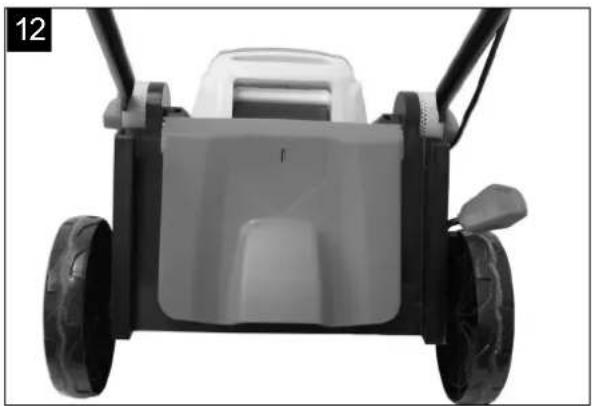
natural_image
Top-down view of a small wheeled robot with four wheels and a front-mounted blade (no text or symbols visible)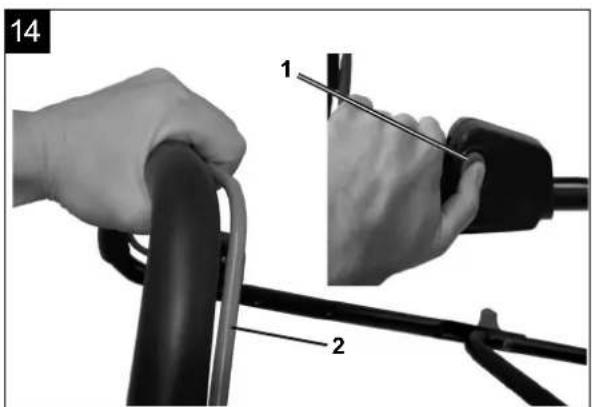
natural_image
Mechanical assembly photo showing a worker adjusting a component with a tool, alongside a close-up of a metal bracket and circular components (no visible text or symbols)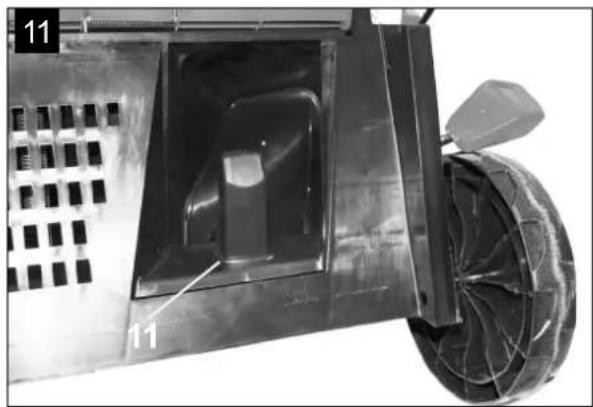
natural_image
Close-up of a metallic aircraft fuselage with visible structural components and a propeller, no text or symbols present.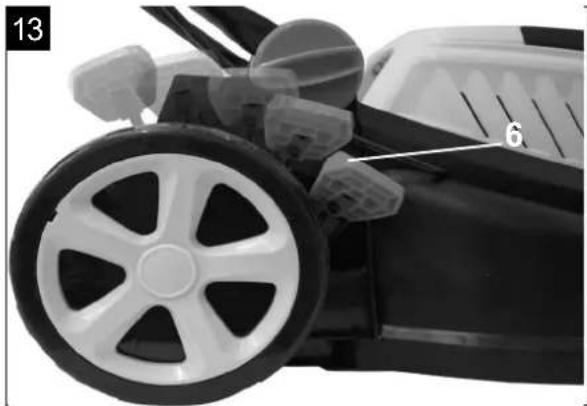
natural_image
Close-up of a toy car wheel with visible wheels and a numbered label (13, 6) on the side (no text or symbols on the car itself)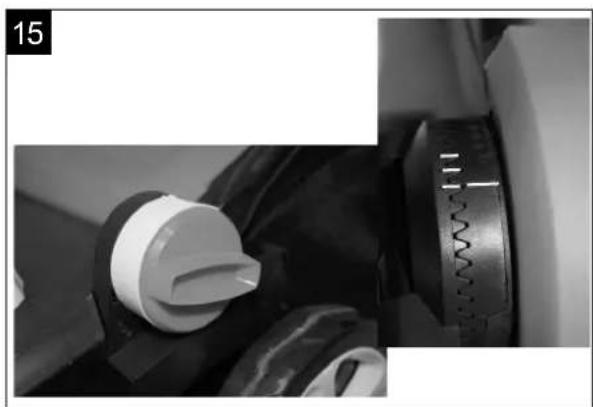
natural_image
Close-up of a mechanical component with a white knob and a black cylindrical part, no visible text or symbols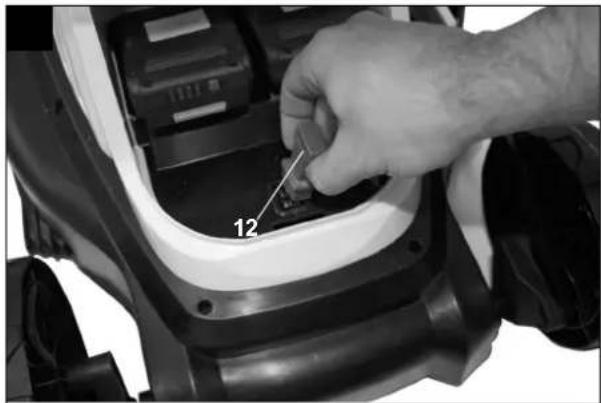
natural_image
Close-up of a hand inserting a small component into a device casing (no visible text or symbols)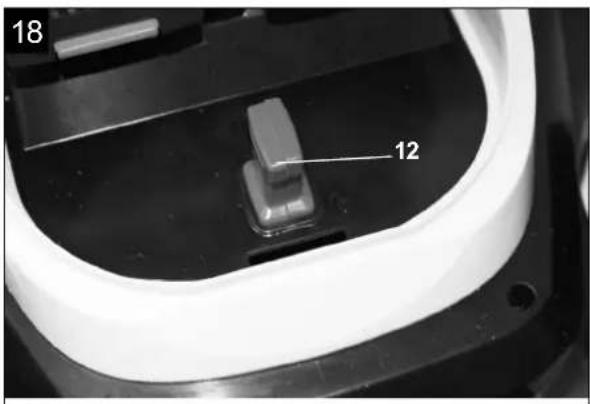
natural_image
Hand holding a black electronic device next to a black rectangular device (no visible text or symbols)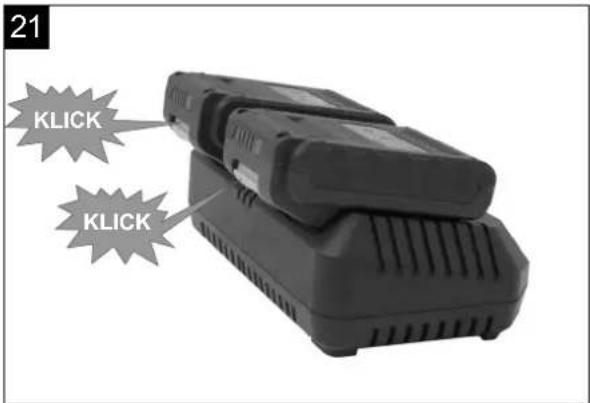
natural_image
Two black battery units with control buttons and a battery icon showing upward arrow (no text or symbols on main components)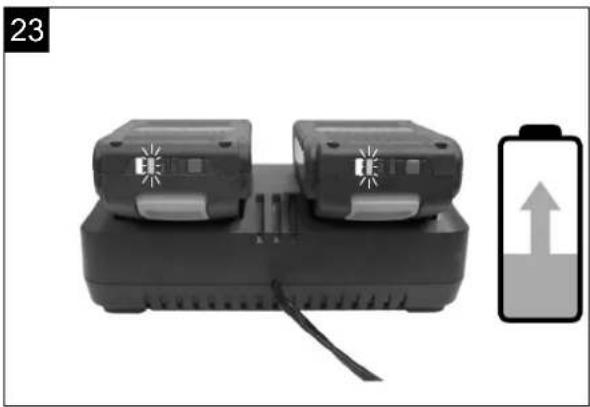
natural_image
Two electronic devices with LED indicators placed on a base, connected to a battery and an upward arrow (no text or symbols visible)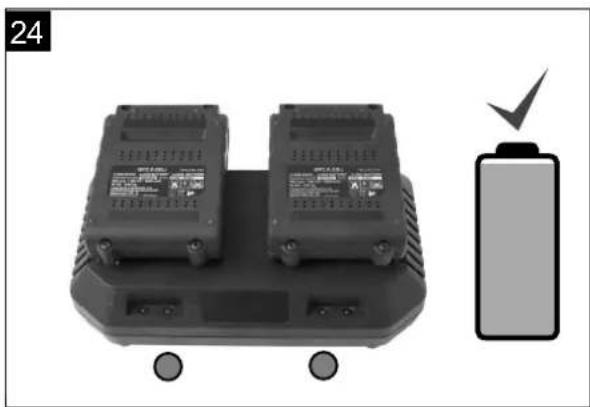
natural_image
Two battery charging units with a battery icon and a checkmark indicating status (no text or symbols on the devices themselves)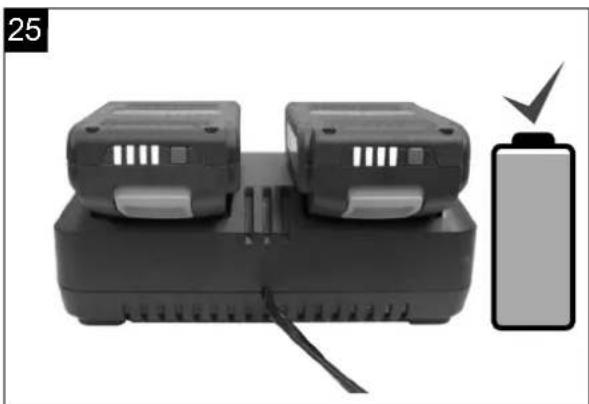
natural_image
Two black electronic devices with connectors and a battery, no visible text or symbols on the devices themselves.Günzburger Straße 69
D-89335 Ichenhausen
VEREHRTER KUNDE,
Explanation of the symbols on the equipment
 | Observe all safety instructions before use |
 | Caution - Read the operating instructions to reduce the risk of inquiry |
 | Wear ear-muffs! |
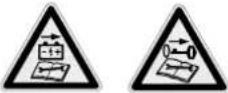 | Switch off and disconnect plug before cleaning / maintenance or if extension cord is damaged or entangled. |
 | Protect the tool from getting wet. |
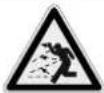 | There is a risk of debris being ejected when the engine is running. Make sure you keep a safe distance. Caution thrown objects when operating |
 | Keep bystanders away! |
 | ATTENTION! Do not let your hands or feet come in contact with the blades. ATTENTION! The device must not be operated without protective cover (ejector flap) and grass catcher. |
 | On a slope, do not mow uphill or downhill. |
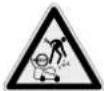 | Before operating the lawn mower, remove lawn debris which may be ejected by the blade. |
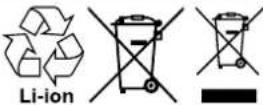 | Old devices must not be disposed of with household waste! Do not dispose of batteries with your domestic waste. |
 | The product complies with the applicable European directives and an evaluation method of conformity for this directives was done. |
 | Guaranteed sound power |
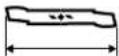 | Length of knife. Max. Cutting width |
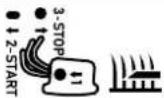 | Turning on the machine - safety lock button (1) - switch lever (2) |
 | Protect the battery from water and moisture. |
 | Protect the battery from heat and fire. |
 | Protect the battery from temperatures above 45 °C. |
 | Protection class II (double insulated) |
Table of contents: Page:
- Introduction......24
- Layout (Fig. 1-1a)....24
- Scope of delivery 24
- Proper use....24
- Safety information 25
- Technical data 29
- Assembly 29
- Operation....30
- Maintenance and care....31
- Storage 32
- Disposal and recycling 32
- Troubleshooting....33
1. Introduction
MANUFACTURER
scheppach
Günzburger Straße 69
D-89335 Ichenhausen
DEAR CUSTOMER.
We hope your new tool brings you much enjoyment and success.
NOTE:
According to the applicable product liability laws, the manufacturer of the device does not assume liability for damages to the product or damages caused by the product that occurs due to:
- Improper handling,
• Non-compliance of the operating instructions, - Repairs by third parties, not by authorized service technicians,
- Installation and replacement of non-original spare parts,
• Application other than specified, - A breakdown of the electrical system that occurs due to the non-compliance of the electric regulations and VDE regulations 0100, DIN 57113 / VDE0113.
We recommend:
Read through the complete text in the operating instructions before installing and commissioning the device. The operating instructions are intended to help the user to become familiar with the machine and take advantage of its application possibilities in accordance with the recommendations. The operating instructions contain important information on how to operate the machine safely, professionally and economically, how to avoid danger, costly repairs, reduce downtimes and how to increase reliability and service life of the machine.
In addition to the safety regulations in the operating instructions, you have to meet the applicable regulations that apply for the operation of the machine in your country. Keep the operating instructions package with the machine at all times and store it in a plastic cover to protect it from dirt and moisture. Read the instruction manual each time before operating the machine and carefully follow its information. The machine can only be operated by persons who were instructed concerning the operation of the machine and who are informed about the associated dangers. The minimum age requirement must be complied with.
In addition to the safety requirements in these operating instructions and your country's applicable regulations, you should observe the generally recognized technical rules concerning the operation of identical constructed machines.
2. Layout (Fig. 1-1a)
- Safety lock button
- Upper push bar
-
- Grass box
-
- Cutting height adjustment
- Battery compartment lid
-
- Discharge flap
- Clip
- Mulching
- Saftekey 2x
- Akku-Pack 2x
- Charger
3. Scope of delivery
Fig. 1/1a (1-12, a-c)
a 2 x round head screw M8
b 2 x washer
c 2 x quick-release lever
Unpacking
- Open the packaging and remove the device carefully.
- Remove the packaging material as well as the packaging and transport bracing (if available).
- Check that the delivery is complete.
- Check the device and accessory parts for transport damage.
- If possible, store the packaging until the warranty period has expired.
ATTENTION
The device and packaging materials are not toys! Children must not be allowed to play with plastic bags, film and small parts! There is a risk of swallowing and suffocation!
4. Proper use
The machine meets the currently valid EU machine directive.
Before starting any work, all protective and safety devices must be in place.
- The machine has been designed to be operated by one person.
- The operator is responsible for third parties in the area of operations.
- All safety and hazard notices on the machine must be observed.
- All safety and hazard notices on the machine must be kept in a completely legible condition.
- Use the machine in a technically flawless condition only, as well as for its intended purpose, in a safe manner and being aware of dangers, in compliance with the operating instructions!
- Disruptions which can affect safety in particular must be eliminated straight away!
- The manufacturer's safety, operation and maintenance instructions as well as the technical data given in the calibrations and dimensions must be adhered to.
- Relevant accident prevention regulations and other generally recognized safety and technical rules must also be adhered to.
- The machine may only be used, maintained or repaired by trained persons who are familiar with the machine and have been informed about the dangers. Unauthorized modifications of the machine exclude a liability of the manufacturer for damages resulting from the modifications.
- The machine is intended for use only with original spare parts and original tools from the producer.
- Any other use is considered to be not intended. The manufacturer excludes any liability for resulting damages, the risk is exclusively borne by the user.
- The device must not be used for commercial, technical or industrial applications.
- If you are not sure whether working conditions are safe or unsafe, do not work with the machine.
- The lawn mower is intended for private use i.e. for use in home and gardening environments. Private use of the lawn mower refers an annual operating time generally not exceeding that of 50 hours, during which time the machine is primarily used to maintain small-scale, residential lawns and home/hobby gardens. Public facilities, sporting halls, and agricultural/forestry applications are excluded.
Important! Due to the high risk of bodily injury to the user, the lawn mower may not be used to trim bushes, hedges or shrubs, to cut scaling vegetation, planted roofs, or balcony-grown grass, to clean (suck up) dirt and debris off walkways, or to chop up tree or hedge clippings. Moreover, the lawn mower may not be used as a power cultivator to level out high areas such as molehills.
- For safety reasons, the lawn mower may not be used as a drive unit for other work tools or toolkits of any kind.
⚠ WARNING
For your own safety, please thoroughly read this manual and the general safety instructions before turning the device on. If you give the device to third parties, always include these instructions.
The following must not use the machine:
Children and other people who do are not familiar with the operating manual (local stipulations may specify a minimum age for users).
People under the influence of alcohol, drugs and medication, as well as those who are tired or ill.
5. Safety information
⚠️ DANGER
A failure to observe these instructions poses an extreme danger of death or the risk of life-threatening injuries.
⚠ WARNING
A failure to observe these instructions poses a danger of death or the risk of serious injuries.
CAUTION
A failure to observe these instructions poses a minor to moderate risk of injury.
NOTE
A failure to observe these instructions poses a risk of damage to the device or other property.
⚠ WARNING! Read all safety directions and instructions. Omissions in the compliance with safety directions and instructions can cause electrical shock, fire and/or severe injuries. Retain all safety directions and instructions for future use. Read these instructions before using the charger and follow them:
• operating instructions provided,
- rules and regulations for accident prevention applicable to the operating site.
This gardening tool is not intended for use by people (including children) with limited physical, sensory or mental abilities or with a lack of experience and/or lack of knowledge, unless they are supervised by a person responsible for their safety or they receive instructions from such a person on how to use this gardening tool. Never let children or people unfamiliar with these instructions use this gardening tool. Children must be supervised to ensure that they do not play with the device.
Safety notices for the charger
⚠ WARNING! Carefully read all safety notices and instructions. Failure to comply with safety notices and instructions can cause electric shock, fire and/or severe injuries.
Store all safety notices and instructions for future reference.
The term “power tool” used in the safety instructions refers to mains-powered tools (with a mains cable) and to battery-powered tools (without a mains cable).
Work area safety
- Keep work area clean and well lit. Cluttered or dark areas invite accidents.
- Do not operate power tools in explosive atmospheres, such as in the presence of flammable liquids, gases or dust. Power tools create sparks which may ignite the dust or fumes.
- Keep children and bystanders away while operating a power tool. Distractions can cause you to lose control.
Electrical safety
- The electrical tool's connection plug must fit into the socket. The plug may not be modified in any way. Do not use an adaptor plug together with earthed electric tools. Unmodified plugs and suitable sockets reduce the risk of an electric shock
- Avoid body contact with earthed surfaces, such as pipes, heaters, ovens and refrigerators. There is an increased risk of electric shock if your body is earthed.
- Keep electric tools away from rain and moisture. Water entering an electric tool increases the risk of an electric shock.
- Do not use the cable for another purpose, for example, carrying or hanging the electric tool or pulling the plug out of the socket. Keep the cable away from heat, oil, sharp edges or moving device parts. Damaged or coiled cables increase the risk of an electric shock.
- If you work with an electric tool outdoors, only use extension cables that are also suitable for outdoor use. Using an extension cable suitable for outdoor use reduces the risk of an electric shock.
- If you cannot avoid using the electrical tool in a wet environment, use a fault-current circuit breaker. Using a fault-current circuit breaker reduces the risk of an electric shock.
Personal safety
- Stay alert, watch what you are doing and use common sense when operating a power tool. Do not use a power tool while you are tired or under the influence of drugs, alcohol or medication. A moment of inattention white operating power tools may result in serious personal injury.
- Use personal protective equipment. Always wear eye protection. Protective equipment such as dust mask, non-skid safety shoes, hard hat, or hearing protection used for appropriate conditions will reduce personal injuries.
- Prevent unintentional starting. Ensure the switch is in the off-position before connecting to power source and/or battery pack, picking up or carrying the tool. Carrying power tools with your finger on the switch or energising power tools that have the switch on invites accidents.
- Remove any adjusting key or wrench before turning the power tool on. A wrench or a key left attached to a rotating part of the power tool may result in personal injury.
- Do not overreach. Keep proper footing and balance at all times. This enables better control of the power tool in unexpected situations.
- Dress properly. Do not wear loose clothing or jewellery. Keep your hair, clothing and gloves away from moving parts. Loose clothes, jewellery or long hair can be caught in moving parts.
- If a grass box can be attached, ensure that it is installed and used properly.
Power tool use and care
- Do not force the power tool. Use the correct power tool for your application. The correct power tool will do the job better and safer at the rate for which it was designed.
- Do not use the power tool if the switch does not turn it on and off. Any power tool that cannot be controlled with the switch is dangerous and must be repaired.
- Disconnect the plug from the power source and/or the battery pack from the power tool before making any adjust -ments, changing accessories, or storing power tools. Such preventive safety measures reduce the risk of starting the power tool accidentally.
- Store idle power tools out of the reach of children and do not allow persons unfamiliar with the power tool or these instructions to operate the power tool. Power tools are dangerous in the hands of untrained users.
- Maintain power tools. Check for misalignment or binding of moving parts, breakage of parts and any other condition that may affect the power tool's operation. If damaged, have the power tool repaired before use. Many accidents are caused by poorly maintained power tools.
- Keep cutting tools sharp and clean. Properly maintained cutting tools with sharp cutting edges are less likely to bind and are easier to control.
- Use the power tool, accessories and tool bits etc. in accordance with these instructions, taking into account the working conditions and the work to be performed. Use of the power tool for operations different from those intended could result in a hazardous situation.
Careful handling and use of battery devices
- Charge the batteries only in chargers that are recommended by the manufacturer. Risk of fire if a charger that is suitable for a specific type of battery is used with other batteries
- In the power tools, use only the batteries designed for the purpose. The use of other batteries may result in injuries and risk of fire
- Keep the unused battery away from paper clips, coins, keys, nails, screws and other small metal objects, which could cause bridging of the contacts. A short circuit between the battery contacts may cause burns or fire
- If used incorrectly, liquid may leak from the battery. Avoid contact with this. In the event of accidental contact, rinse off with water. If the liquid gets into eyes, seek medical assistance. Leaking battery fluid may cause skin irritations or burns.
- Observe the operating manual and the safety instructions enclosed with the rechargeable battery or charging unit.
Service
- Have your power tool serviced by a qualified repair person using only identical replacement parts. This will ensure that the safety of the power tool is maintained
Safety notices for lawn mowers General safety notices
- For your safety and the safety of others, read these operating instructions and the safety notices before using the product. Safely store the operating instructions and safety notices for future use and keep them available for every use.
- Pass along the operating instructions if ownership of the machine changes.
- Users of the machine must not be under the influence of intoxicants (e.g. alcohol, drugs or medication).
- Only ever use the machine in the technical condition stipulated and supplied by the manufacturer. Unauthorised changes to the machine negate the manufacturer's liability for damages resulting from this.
- Use the machine in day light only or under good artificial lighting.
- Use the machine in dry weather conditions only. Keep it away from rain and wet conditions. Water ingress into the machine increases the risk of an electric shock
-
Turn the machine off and remove the safety under the following conditions:
-
when the machine is left unattended;
- before checking, cleaning or other work on the machine;
- before removing blockages;
- if an obstacle was hit. Check the lawn mower for damage and take it to a specialist service centre if it is damaged;
- if the machine starts to vibrate excessively.
- Before use, always visually check whether the cutting tools, fastening bolts and the entire cutting unit are worn out or damaged. To avoid any imbalance, worn or damaged cutting blades and fastening bolts may only be replaced in sets. Worn or damaged warning labels must be replaced.
Safety notices for Li-Ion batteries
- Do not open the battery. Risk of short-circuiting!
- Protect the battery from heat, e.g. from constant sun exposure, and from fire, water and humidity. Risk of explosion.
- Protect the battery from heat, e.g. from constant sun exposure, and from fire, water and humidity. Risk of explosion.
-
When the battery has been damaged or it is being used inappropriately, fumes can be released. Let fresh air in and consult a doctor if the fumes cause you any problems. The fumes can irritate the respiratory tract.
-
Only use original batteries with the voltage specified on the rating plate of your power tool. If other batteries are used, e.g. imitations, reconditioned batteries or products from third party manufacturers, there is a risk of personal injury as well as property damage based on exploding batteries.
- The battery voltage must correspond with the battery charging voltage of the charger. Otherwise, there is a risk of fire and explosion.
- The battery voltage must correspond with the battery charging voltage of the charger. Otherwise, there is a risk of fire and explosion.
- Charge the batteries only in chargers that have been recommended by the manufacturer. There is a risk of fire if a charger for a particular type of battery is used for another type of battery.
- The battery can be damaged by sharp objects such as a nail or screwdriver or by external application of force. The battery may short-circuit and start burning, smoking, exploding or overheating.
- Observe the operating manual and the safety instructions enclosed with the rechargeable battery or charging unit.
Warning! This electric tool generates an electromagnetic field during operation. This field can impair active or passive medical implants under certain key conditions. In order to prevent the risk of serious or deadly injuries, we recommend that persons with medical implants consult with their physician and the manufacturer of the medical implant prior to operating the electric tool.
⚠️ Risk of fire! Risk of explosion!
Never use damaged, defective or deformed accumulators. Never open or damage the accumulator or let it fall on the ground.
Never charge the battery in an environment with acids and easily flammable materials.
Protect the battery against heat and fire.
Battery to be used at the ambient temperatures between 10^ C and +40^ C only.
Never put the battery on heaters and do not expose it to strong sunlight for a long time.
After being subject to heavy load, let the battery cool down first.
Short circuit - do not bridge the accumulator contacts with metal parts.
The accumulator must be packaged (plastic bag, box) or accumulator contacts must be sealed up for accumulator disposal, transport or storage.
Danger!
Remove the battery pack before doing any cleaning and maintenance work.
Before use
- Before starting the work, make yourself familiar with the lawn mower and its functions as well as its operating elements.
- Check the machine for signs of wear or damage before use. Never use a lawn mower with damaged or missing safety devices such as discharge flap and/or grass box, casing etc. Have these repaired or, if applicable, replaced by a qualified expert.
- Do not use a machine that has a faulty switch and cannot be turned on or off.
- When working with the machine, always wear sturdy footwear and long trousers. Do not use the lawn mower when you are bare foot or wearing sandals.
- Check the area where you are using the machine and remove all stone, sticks, wires, bones and other objects that can be “snatched” so there is no danger to bystanders.
During use
- Do not use the machine when there are people (especially children) or animals close by.
- Stop the work when you notice that people (especially children) or pets are close by.
- Working on steep slopes can be dangerous.
- Ensure secure footing and mow slowly.
- Always mow across the slope rather than up and down.
- Be especially careful when changing direction. Risk of tripping!
- Do not mow steep hillsides.
- Be particularly careful when going backwards whilst mowing and pulling the mower towards you.
- Do not tilt the lawn mower when turning on the motor.
- Maintain the safety distance specified by the handle frame.
- Only turn on the motor when your feet are at a safe distance from the cutter bar.
- Be careful and do not put your hands into the rotating cutter bar.
- Turn off the lawn mower when you want transport it, e.g. from/to the lawn across paths.
- Never go across gravel with the motor running. Risk of stones being ejected!
- Before lifting or carrying the lawn mower, turn the motor off and wait until the cutter bar has come to a standstill.
- Only ever change the cutting height when the motor is turned off and the cutter bar is not moving.
- Never open the discharge flap when the motor is running.
- Before removing the grass box, turn off the motor and wait for the cutter bar to stop moving. After emptying the grass box, carefully re-attach it and ensure it fits securely.
- If possible, do not cut wet grass.
- Do not use this gardening machine in explosive environments with flammable liquids, gases or dust. The machine can generate sparks that may ignite the dust or fumes.
- When taking a break from your work, do not leave the machine unattended but store it in a safe place.
- Operating the machine with excessive speed can increase the risk of accidents.
- Be careful when adjusting the machine and avoid trapping fingers between the moving cutting tool and rigid parts of the machine
- Be particularly careful when mowing on yielding ground, nearby rubbish tips, ditches and dykes.
- Check the device regularly and make sure that all start locks and push buttons are working properly before each use.
- Please note that improper maintenance, the use of non-compliant spare parts, or the removal or modification of safety devices can result in damage to the device and serious injury to the person working with it.
- Please note that the lawnmower's safety systems or equipment must not be tampered with or deactivated.
- Please note that the user must not change or manipulate any sealed engine speed control settings.
- Use only cutting tools and accessories recommended by the manufacturer. Use of other tools and accessories may result in injury to the user.
• Always keep the lawnmower in good operating condition.
After use
- Turn off the machine, remove the safety key and store the lawn mower in a safe place.
- Do not store the machine within the reach of children.
- Ensure that the ventilation slots are clean.
- Check the tightness of all screws, nuts and bolts to guarantee that the lawn mower is in a safe condition.
- Regularly check the grass box for wear and tear.
- Exclusively use cutter bars intended for this lawn mower.
- Spare parts must comply with requirements specified by the manufacturer. Therefore, only ever use original spare parts or spare parts approved by the manufacturer. During replacement, remove the battery and observe the installation instructions supplied.
- Have repairs carried out exclusively by a qualified expert or specialist service centre.
Remaining hazards
The machine has been built using modern technology and in accordance with recognized safety rules. Some hazards, however, may still remain.
- There is a risk of injury from rotating parts.
- There is a danger from items being ejected.
- Wear regulation safety gear such as safety boots and tight work clothing.
- Electrical hazards exist when unsuitable electric connections are used.
- Although having regarded all considerable rules there may still remain not obvious remaining hazards.
- Minimize remaining hazards by following the instructions in "Safety Rules", "Use only as authorized" and in the entire operating manual.
Neglect of ergonomic principles Neglect of the use of personal protective equipment (PPE)
Careless use or omission of personal protective equipment may result in serious injury.
- Wear prescribed protective equipment.
Human behaviour, misconduct
• Always concentrate fully on all work.
⚠️ Residual risk - can never be ruled out.
Danger from noise
Hearing damage
Prolonged unprotected working with the device can lead to hearing damage.
- Always wear hearing protection as a matter of principle.
Behaviour in an emergency
In the event of an accident, initiate the necessary first aid measures and request qualified medical assistance as soon as possible.
6. Technical data
| Lawn mower MP38-20Li | |
| Nominal voltage 40 V | |
| Cutting width 38 cm | |
| Cutting height / steps 20 - 80 mm / 5 Stufen | |
| Grass box capacity 40 L | |
| Idle speed 2800/3200 min | ^-1 |
| Weight | 11,6 kg |
| Battery BP2.5S-20Li | |
| Battery Typ | Lithium-Ionen |
| Capacity | 2500 mAh / 45Wh |
| Charger BCA2.0-20Li Dual | |
| Input voltage V / Hz | 220-240V AC 50-60 Hz |
| Charging voltage V DC | 20 V DC |
| Charging current A | 2,0 A |
| Charging time (depending on charge state) | 60 min |
| Operating temperature | 0-40°C |
| Protection class | II |
Noise and vibration
The noise and vibration values were developed using a standardised measuring process.
| Sound pressure L_pA | 82,9 dB(A) |
| Sound power L_wA (measured) | 93,7 dB(A) |
| Sound power L_wA (guaranteed) | 96 dB(A) |
| Uncertainty K_wA | 1,8 dB(A) |
| Vibration a_h | 2,78 m/s ^2 |
| Uncertainty K | 1,5 m/s ^2 |
Wear ear-muffs.
The impact of noise can cause damage to hearing..
Reduce noise generation and vibration to a minimum!
- Use only equipment that is in perfect condition.
- Maintain and clean the equipment regularly.
- Adopt your way of working to the equipment.
- Do not overload the equipment.
- Have the equipment checked if necessary.
- Switch off the equipment when not in use.
- Wear gloves
7. Assembly
- Take the mower and attachment parts out of the packaging and check that all parts are present.
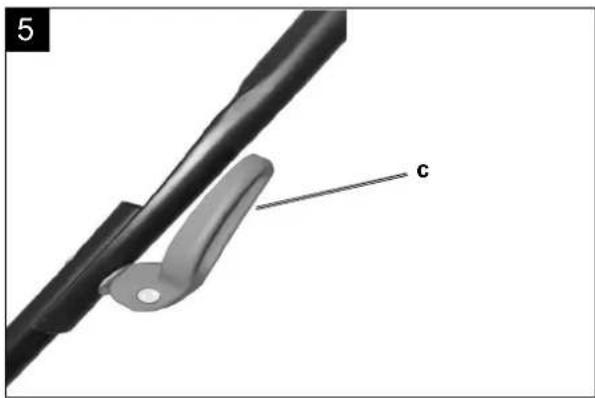
- Attach the lower push bar with one quick-release lever (c) each on both sides (Fig. 4-5).
- Fasten the upper push bar with one screw (a), one washer (b) and one quick-release lever(c) on each side of the mower. Make sure that the cables, which will be attached later, are not in the way (Fig. 2-3).
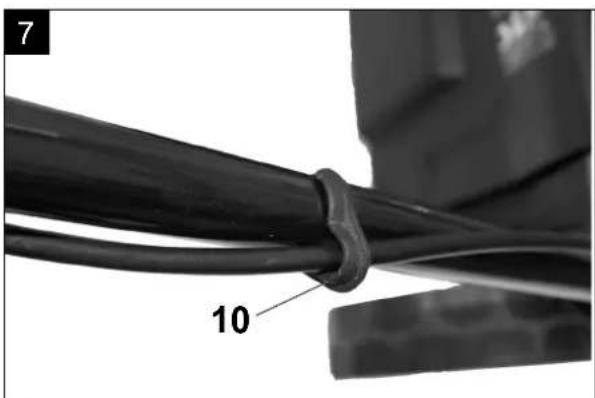
- Fix the cables to the push bar with the cable clips (10) provided (Fig. 7).
- Grass box (4) - open it up and click the plastic clips into position on the frame (Fig. 8).
- Mowing with grass box: Lift the discharge flap (9) with one hand and hang the grass box (4) as shown in Fig. 9.
- Mulching: If the grass box (4) is attached, remove it and replace it with the mulch insert (11) as shown in Fig. 10-11.
Attention:
The side discharge cover must not be installed when mulching.
Mounting the grass box (Fig. 9)
- Flip open the discharge flap (9).
- Mount the grass box (4) on the lawn mower.
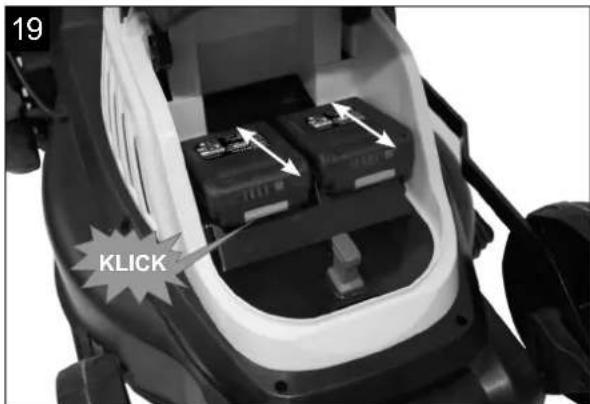
Battery assembly (Fig. 19)
Open the battery compartment lid (7). Then insert the battery into the holder as shown.
Note:
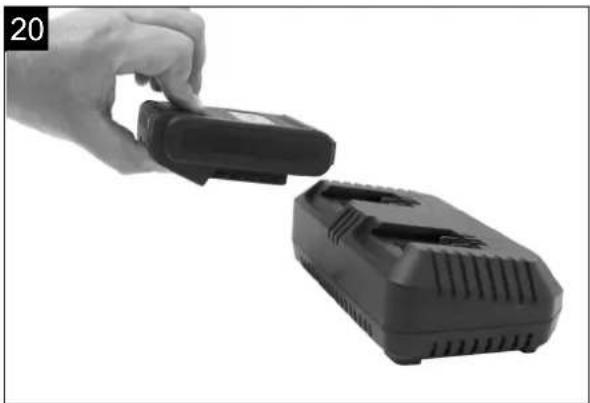
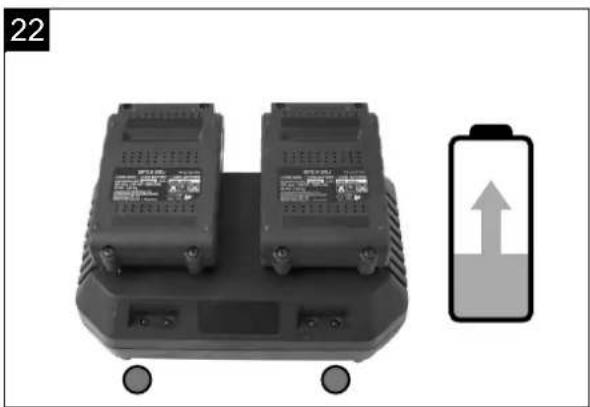
Only ever use batteries with the same level of charge. Do not combine full and half full batteries. Always charge both batteries at the same time.
The machine's runtime depends on the battery with the lower charge. Both batteries have to be fully charged before use. Close the battery compartment lid.
8. Operation
Safety plug (Fig. 17/18)
The lawn mower can only be started if the safety plug (12) is inserted into the machine.
After the work has been completed, the plug must be removed from the machine.
Turning on the machine (Fig. 14)
- Press and hold the safety lock button (1).
- Press the switch lever (2). The motor will start.
Turning off the machine (Fig. 14)
- Release the dead man's switch (2).
Height adjustment of push bar (Fig. 15)
- Loosen the tension lever on the lower push bar on the left and right so that the interlocking is free to move.
- Move the push bar to the desired position and tighten the tension lever again.
- The height of the push bar can be adjusted in three steps
⚠️ Risk of injury!
The cutter bar will continue to run for a short time after releasing the dead man's switch (3).
Changing the cutting height (Fig. 13)
Warning! Do not change the cutting height until the motor has stopped and the safety plug has been removed. Before starting to mow, check that the cutting tools are not blunt and the fastening elements are not damaged. Replace blunt and/or damaged cutting tools so no imbalance is created.
Before checking this, turn the motor off and remove the safety plug.
Push the cutting height adjustment lever (6) outwards. Select the required cutting height by moving the lever (6) right or left, then let the lever (6) click into one of the slots.
Ensure the lever (6) clicks into position
Removing and emptying the grass box
If cut grass remains on the ground, the grass box is full and you need to empty it straight away.
- Turn off the motor.
- Wait until the cutter bar has come to a standstill.
- Lift the discharge flap.
- Remove the grass box.
- Lower the discharge flap.
- Empty the grass box.
- Before returning the grass box, remove any potential blockages in the cutting area.
Working without a grass box
When you remove the grass box, the discharge flap flicks down. When working without a grass box, the cut grass is ejected backwards.
Lawn care advice
Some advice so your lawn grows healthily and evenly:
- A lawn consists of different types of grass. If you cut frequently, grass that has strong roots and forms a firm grass cover will mainly grow. If you mow infrequently, tall grass and other weeds will grow (e.g. clover, daisies).
- The normal height of a lawn is around 4 - 5 cm. You should only cut a third of the overall height, i.e. 7 - 8 cm to the normal height.
- We recommend not cutting the lawn shorter than 4 cm because the grass cover can be damaged when it's dry.
- If the grass grows to an excessive height (e.g. after a holiday), cut it down to the normal height in phases.
• Always let the cutting lanes overlap a little.
Before mowing
Important notes:
- Dress appropriately. Wear sturdy shoes and no sandals or trainers.
- Check the cutting blade. If a blade is bent or otherwise damaged, it must be replaced with an original blade.
- Read and follow the operating instructions and also the instructions regarding the engine and the accessories. Keep the manual accessible for other users of the device.
- Make sure that all safety devices are in place and working properly.
- The device should only be operated by a person who is capable of doing so.
- Mowing wet grass can be dangerous. Mow grass when it is as dry as possible.
- Instruct other persons or children to stay away from the mower.
- Never mow when visibility is poor.
- Pick up loose objects lying around, such as stones, toys, sticks and wires, etc., from the ground before mowing.
•
Hints for mowing correctly
⚠ Attention! Never open the discharge flap when the catcher is being emptied and the engine is still running. The rotating blade can lead to injuries.
Always secure the discharge flap and the catch basket carefully. Switch off the engine before removing. The safety distance between the blade housing and the user given by the guide rails must always be maintained. Special care must be taken when mowing and changing direction on embankments and slopes. Make sure you have a secure footing, wear shoes with non-slip, well gripping soles and long trousers. Always mow across slopes.
For safety reasons, slopes with an inclination of more than 15 degrees must not be mowed with the lawn mower.
Exercise particular caution when moving backwards and pulling the lawnmower. Risk of tripping!
Mulching
When mulching, the cuttings are shredded in the closed mower housing and then dispersed on the lawn. Grass collection and disposal is not required.
⚠️ NOTE! Mulching is only possible on relatively short lawns.
To use the mulching function, unhook the catch basket (4) and slide the mulching adapter (Fig.10-11 / 19) into the discharge opening and close the discharge flap (9).
Mowing
Mowing can be done either with the grass catch basket (4) fitted or alternatively with the side discharge (8) fitted (the mulching adapter should be fitted to use the side discharge).
Cut only with sharp, clean cutting blades so that the blades of grass do not fray and the lawn does not turn yellow.
To achieve a clean cut, guide the lawn mower in the straightest possible paths. These strips should always overlap by a few centimetres so that no patches remain.
Keep the underside of the mower housing clean and remove any grass deposits. Deposits make the starting process more difficult, impair cutting quality and grass discharge. On slopes, the cutting path should be made perpendicular to the slope. It is possible to prevent the lawnmower from slipping by lifting it upwards at an angle. Set the cutting height depending on the actual length of the lawn. Carry out several passes so that a maximum of 4 cm of lawn is removed at a time.
Switch off the engine before carrying out any checks on the blade.
Remember that the blade will continue to rotate for a few seconds after the engine is switched off. Never try to stop the blade.
Regularly check that the blade is properly fastened, in good condition and sharpened. Sharpen or replace it if this is not the case. If the moving blade strikes an object, stop the mower and wait for the blade to come to a complete stop. Then check the condition of the blade and the blade holder. If it is damaged, it must be replaced.
Emptying the catch basket
The catch basket (4) has a level indicator (Fig. 8). This is opened by the air flow generated by the mower during operation. If the flap (Fig. 8) closes during mowing, the catch basket (4) is full and should be emptied.
The holes under the flap must always be clean and passable for the level indicator to function properly.
As soon as grass residues are left lying behind on the ground during mowing, the catch basket must be emptied.
⚠ WARNING
Before removing the catch basket, stop the engine and wait for the cutting tool to come to a standstill.
To remove the catch basket (4), lift the discharge flap (9) with one hand and remove the catch basket (4) by the carrying handle with the other hand (Fig. 9). In accordance with the safety regulations, the discharge flap (9) closes when the catch basket is unhooked and closes the rear discharge opening.
If grass remains in the opening, it is advisable to pull the lawnmower back about 1m to make it easier to start the engine. Do not remove cuttings in the mower housing and on the working tool by hand or with your feet, but with suitable aids, e.g. brush or hand brush. To ensure good collection, the catch basket (4) and in particular the air grille must be cleaned from the inside after use.
Only hook in the catch basket (4) when the engine is switched off and the cutting tool is stationary.
Lift the discharge flap (9) with one hand and hold the catch basket (4) by the handle with the other hand and hook it in from above. (Fig. 9)
After mowing
- Check all screws and nuts before the next use. Tighten all loose screws.
• Empty the catch basket (4) before the next use. - Make sure that the mower is not parked next to a source of danger. Escaping gas can cause explosions.
- Only original parts or parts approved by the manufacturer may be used for repairs (see address on guarantee certificate).
- In case of longer idle periods of the mower, empty the petrol tank with a petrol suction pump.
- maintain the device
9. Maintenance and care
⚠ WARNING!
Remove the battery from the machine before any maintenance and repair work on the lawn mower. The cutting tools are sharp! Wear safety gloves.
Lawn mower
⚠ WARNING!
Regularly check the machine before starting work. Damaged parts must be repaired or replaced by an authorised service centre before you start work with the machine. Only ever use original accessories and spare parts.
If possible, always clean the machine straight after mowing.
- Remove the battery.
- Remove the grass box.
• After every mowing, clean the lawn mower with a hand brush. - Carefully remove grass residue from the cutting area. Loosen stuck grass residue with a wooden stick.
-
Keep the ventilation slots clean and free from dust.
-
Never use water to clean or spray the machine. Clean the motor casing with a damp cloth and never use detergents or solvents!
This may damage the machine's plastic parts. Carefully dry the motor casing afterwards. - Check the condition of the blades.
Grass box
- You can use a hose to thoroughly clean the grass box.
Removing/sharpening the cutter bar
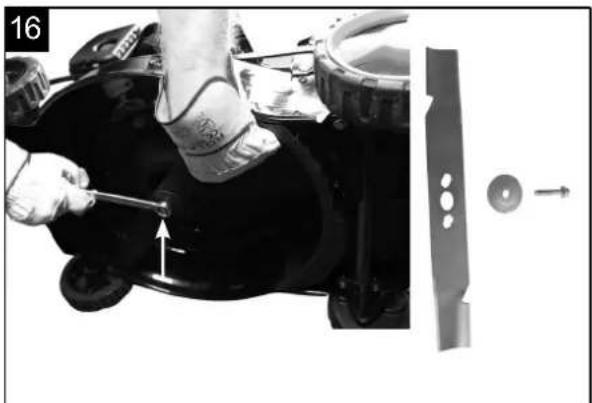
If the blades' cutting performance decreases, you can remove the blades and have them sharpened by a certified specialist.
During assembly, thoroughly clean the area of contact of the flange and the blades.
Tighten the clamp screw firmly, Fig. 7.
Spare parts must comply with requirements specified by the manufacturer. Therefore, only ever use original spare parts or spare parts approved by the manufacturer.
Repairs
Check the machine for damage. Have repairs carried out exclusively by a service centre authorised by the manufacturer.
Replacement parts / accessories:
| Blade | 7911401602 |
| Charger | 7912101703 |
| Battery | 7912101705 |
Service information
Please note that the following parts of this product are subject to normal or natural wear and that the following parts are therefore also required for use as consumables.
Wear parts*: knife, battery
* Not necessarily included in the scope of delivery!
10. Storage
Note
- Remove the security key before storing
- Store the device in a dry and frost-free (10-25 °C) place.
- Store the battery and the device separately from each other.
- Charge the battery before storing it for the winter.
- Keep the device, and its plastic components in particular, away from brake fluid, petrol, products containing oil, penetrating oil etc. They contain chemical substances that may damage or destroy the plastic parts of the device.
- Fertilisers and other garden chemicals contain substances which can have a heavily corrosive effect on metal parts. Do not store the device close to these substances.
Transport
- When changing working areas, remove the battery from the lawn mower.
- The upper push bar (1) can be folded by loosening the two star knob nuts (9).
- You can transport the lawn mower using the carriing handle
11. Disposal and recycling
The equipment is supplied in packaging to prevent it from being damaged in transit. The raw materials in this packaging can be reused or recycled. The equipment and its accessories are made of various types of material, such as metal and plastic. Defective components must be disposed of as special waste. Ask your dealer or your local council.
Old devices must not be disposed of with household waste!
This symbol indicates that this product must not be disposed of together with domestic waste in compliance with the Directive (2012/19/EU) pertaining to waste electrical and electronic equipment (WEEE). This product must be disposed of at a designated collection point. This can occur, for example, by handing it in at an authorised collecting point for the recycling of waste electrical and electronic equipment. Improper handling of waste equipment may have negative consequences for the environment and human health due to potentially hazardous substances that are often contained in electrical and electronic equipment. By properly disposing of this product, you are also contributing to the effective use of natural resources. You can obtain information on collection points for waste equipment from your municipal administration, public waste disposal authority, an authorised body for the disposal of waste electrical and electronic equipment or your waste disposal company.
Batteries and rechargeable batteries do not belong in the household waste!
As the consumer you are required by law to bring all batteries and rechargeable batteries, regardless whether they contain harmful substances* or not, to a collection point run by the local authority or to a retailer, so that they can be disposed of in an environmentally friendly manner.
*labelled with: Cd = cadmium, Hg = mercury, Pb = lead
- Remove the batteries from the laser before disposing of the machine and the batteries.
12. Troubleshooting
| Problem Possible cause Solution | ||
| The device does not start. | · The battery is flat.· The safety lock button (2) is faulty.· The motor is faulty.· The safety plug (12) is missing. | · Check the battery. If required, arrange repair by an authorised electrician.· Repair by an authorised service centre· Repair by an authorised service centre· Insert the safety plug (12). |
| The motor stops during operation. | · The battery is flat.· The battery is not inserted correctly.· The battery is faulty. | · Charge the battery.· Re-insert the battery.· Clean the terminals, replace with an original battery. |
| Decreased performance | · The battery is exhausted.· The battery is not fully charged.· The grass is too long. | · Replace the battery.· Charge the battery.· Cut it in phases. |
| Excessive vibration · The blades are installed incorrectly.· Foreign object impeding the blades· The blades are damaged. | · Check the blades' positioning.· Clean the blades.· Replace the blades. | |
| Inadequate grass intake | · The grass box is full.· The ejection opening is obstructed.· The cutting height is set too low. | · Empty the grass box.· Remove the grass.· Change the cutting height. |
| Lawn is cut irregularly. · The blades are blunt.· The grass is too long. | · Have the blades sharpened/replaced.· Cut it in phases. | |
Günzburger Straße 69
D-89335 Ichenhausen
CHER CLIENT,
CE - Declaration of Conformity
Standard references:
EN 60335-1:2012+A11:2014+A13:2017; EN 60335-2-77:2010; EN 62233:2008; EN 55014-1; EN 55014-2;
This declaration of conformity is issued under the sole responsibility of the manufacturer.
The object of the declaration described above fulfils the regulations of the directive 2011/65/EU of the European Parliament and Council from 8th June 2011, on the restriction of the use of certain hazardous substances in electrical and electronic equipment.
Subject to change without notice
Documents registar: Stefan Hartinger
Günzburger Str. 69, D-89335 Ichenhausen
CE - Declaration of Conformity
| 2014/29/EU | 2004/22/EC | 89/686/EC_96/58/EC | 2000/14/EC_2005/88/EC | |||||
| X | 2014/35/EU | 2014/68/EU | 90/396/EC | Annex V | ||||
| X | 2014/30/EU | X | 2011/65/EU* | Annex VINoise: measured L_WA = ---dB(A) ; guaranteed L_WA = ---dB(A) P = xx KW; L/∅ = cmNotified Body:Notified Body No.: | ||||
| X | 2006/42/EC | |||||||
| Annex IVNotified Body:Notified Body No.:Certificate No.: | 2010/26/EC | |||||||
| Emission. No: | ||||||||
Standard references:
EN 60335-2-29:2004+A2:2010+A112018; EN 60335-1:2012+A11:2014+A13:2017; EN 62233:2008; EN 55014-1:2017; EN 55014-2:2015; EN 61000-3-2:2014; EN 61000-3-3:2013
This declaration of conformity is issued under the sole responsibility of the manufacturer.
Subject to change without notice
Documents registar: Stefan Hartinger
Günzburger Str. 69, D-89335 Ichenhausen
Garantie DE
Apparent defects must be notified within 8 days from the receipt of the goods. Otherwise, the buyers rights of claim due to such defects are invalidated. We guarantee for our machines in case of proper treatment for the time of the statutory warranty period from delivery in such a way that we replace any machine part free of charge which provably becomes unusable due to faulty material or defects of fabrication within such period of time. With respect to parts not
manufactured by us we only warrant insofar as we are entitled to warranty claims against the upstream suppliers. The costs for the installation of the new parts shall be borne by the buyer. The cancellation of sale or the reduction of purchase price as well as any other claims for damages shall be excluded.