OX611M - Oven Atag - Free user manual and instructions
Find the device manual for free OX611M Atag in PDF.


User questions about OX611M Atag
0 question about this device. Answer the ones you know or ask your own.
Ask a new question about this device
Download the instructions for your Oven in PDF format for free! Find your manual OX611M - Atag and take your electronic device back in hand. On this page are published all the documents necessary for the use of your device. OX611M by Atag.
USER MANUAL OX611M Atag
natural_image
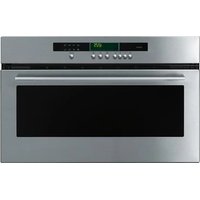
Simple line drawing of an oven with three handles (no text or symbols)OX611M
instructions for use electric oven
gbs 2630689
natural_image
Three people preparing food together in a kitchen setting (no visible text or symbols)ATAG
uw oven
beschrijving
uw oven
voorwoord
The controls for this oven are very easy. What we particularly want to do in this manual is give you an idea of all the possibilities the oven has.
The various functions are arranged for easy reference in the controls section. You will also find some useful hints for baking and roasting.
Separate installation instructions have been enclosed for installing the appliance. These installation instructions also include safety instructions for installing and connecting up the appliance.
Please keep this manual carefully as any subsequent user will also find it very useful.
We wish you much pleasure with your oven!
your oven
introduction
your oven
contents
You have chosen an Atag oven.
Optimum ease of use and simple operation were the most important factors in the development of this product.
This oven is fitted with a turbo function, an oven function with a wide range of applications. Your favourite recipes will definitely give excellent results on this setting.
The extensive range of settings enables you to select exactly the method of cooking that you have in mind. The oven functions are arranged in a logical sequence on the function knob.
In addition, the oven has a timer. This switches the oven off automatically when the cooking time has finished - efficiently and without fuss.
safety
what you should pay attention to 4 - 5
bringing the oven into operation
before you start cooking 6
controls
switching on 7
cooking information
oven functions 8
accessories 9
baking and roasting tips 10 - 11
roasting 12
grilling 13 - 14
tables 15 - 16
maintenance
cleaning 17
faults
what should I do if... 18
environmental aspects
disposal of packaging and appliance 19
guarantee
conditions 20 - 21
safety
what you should pay attention to
safety
what you should pay attention to
general
This oven is extremely safe. As with all products, however, there are a number of things you have to pay attention to.
The appliance must only be installed by a registered installer.
For safety tips about the installation, we refer you to the instructions in the accompanying installation instructions.
Repairs must only be carried out by an authorised service engineer.
Never open the appliance's casing and do not alter the mechanical and/or electrical structure of the appliance. This could result in dangerous situations (touching live components) and faults.
Do not use the appliance if it is damaged.
The appliance should be disconnected from the mains before being repaired or cleaned. Remove the plug from the socket or turn the switch in the meter cupboard to zero.
For electrical safety reasons, the appliance must not be cleaned using high-pressure cleaners or steam cleaners.
Be careful with the leads of electrical appliances, such as mixers. They can get caught in the door of the hot oven.
This oven has been designed for domestic use. You should only use it for cooking food.
during use
Make sure that the food is always heated sufficiently. The time required for this depends on various factors, such as the quantity and type of food. Any bacteria in the food will only be killed if the food is heated to a temperature greater than 70^ for at least 10 minutes. Allow the food to cook for a bit longer if you are not sure whether the food has been heated sufficiently.
The oven is extremely well insulated. Despite this, there is always some transfer of heat, as a result of which the outside of the oven heats up. This heating falls well within the standard limits.
Never heat food in unopened tins. Pressure will build up inside the tin and may cause it to explode.
If the oven is used at the maximum temperature for a long time (when grilling, for example), the glass panel in the oven door may become hot. Take care if there are any children nearby.
Do not use the oven for storing flammable or easily deformable materials.
When cooking dishes that contain alcohol, the alcohol can evaporate due to the high temperatures. The vapour can catch fire if it comes into contact with a hot oven element.
The oven has a fan that cools the oven housing. After the oven has been switched off, this fan may continue to run for a while.
Never cover the bottom of the oven with aluminium foil and do not place any baking trays or tins on it. The foil checks the heat, which may result in damage to the enamel and inferior cooking results.
Never pour water into the oven when it is hot. This could cause damage to the enamel.
Frozen products such as pizzas should preferably be cooked on the grid shelf, covered with greaseproof paper. If the baking tray is used, it may become deformed due to the great difference in temperature.
bringing the oven into operation
before you start cooking
operation
switching on
cleaning the oven and accessories
Remove the accessories from the oven and clean the accessories and the inside of the oven with a mild cleaning agent.
Switch the oven on for an hour at 250 °C (see page 7). Protective greases used during manufacture will then be removed.
remark
When your oven is heated strongly for the first time, it will have a "new" smell. This is normal. Switch the extractor hood on if necessary.
After the oven has cooled down, clean it with warm water.
switching on
selecting function
functions
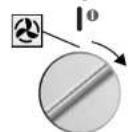
1 Select an oven function.
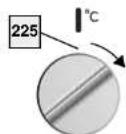
setting the temperature
temperature
2 Set the temperature required.
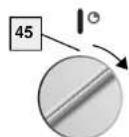
setting the time
cooking time
3 Set the cooking time.
The indicator lights above the knobs light up. If you do not wish to set a cooking time, you turn the knob to . .
switching off
1 Turn the knobs to ●.
The indicator lights go out.
attention!
The oven will only function if the timer is set to , , or if a time has been set (the indicator lights are then on).
cooking information oven functions
cooking information accessories
turbo; hot air

You can cook on various levels at the same time. Thanks to the intensive heat transfer, you can select a temperature approx. 20 °C lower than stated for conventional recipes.
infra; top and bottom heat

Infra is meant for cooking on one level. Place the dish in the middle of the oven for the traditional method of cooking. The dishes rise well and get a nice brown colour.
bottom heat

Only the bottom heat is switched on. This setting is suitable for giving tart and pizza bases a bit of extra cooking. Switch to this setting at the end of a baking process.
economy grill

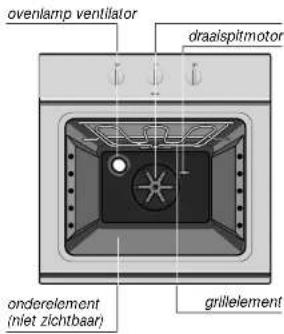
Use the economy grill when there is only a dish in the middle of the oven or when using the rotisserie. The thermostat also controls the grill. As a result, the element will not be red continuously, but only from time to time.
maxi grill

Use the maxi grill for large portions - for a fully-covered grid shelf, for example. The thermostat also controls the grill. As a result, the element will not be red continuously, but only from time to time.
infra with fan

Infra with fan is meant for cooking on one level. Thanks to the intensive heat transfer, you can select a temperature approx. 20 °C lower than stated for conventional recipes.
flat grid shelf

For grilling and for baking with baking tins.
baking tray/roasting tin
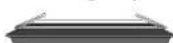
For baking dough without a tin and for roasting meat. The roasting tin can also be slid under the grid shelf and used as a drip-tray.
basting grid

With a recess in the grid for basting meat. Fits on the roasting tin and the support frame.
glass baking tray

For baking dough without a tin and for roasting meat. Never rinse the baking tray under cold water immediately after use; it may crack.
support frame

For the glass baking tray and the baking tray/roasting tin.
optional accessoires
deep roasting tin
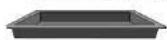
Suitable for roasting large pieces of meat. The deep roasting tin is placed on the flat grid shelf.
grill set
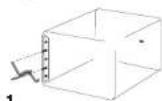
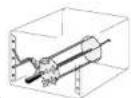
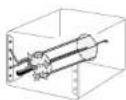
1
For grilling on the rotisserie or the grill set.
1 Slide a grid shelf and drip-tray onto shelf level 1.
2 Hook the support into the side (1).
3 Push the grill set into the rear wall (2).
4 Place the spit on the support (3).
5 Remove the handle and close the door.
cooking information
tips for baking and roasting
cooking information
tips for baking and roasting
introduction
In the tables on pages 15 and 16 inclusive you will find information about cooking times, temperatures and shelf heights. The times and temperatures in the tables are averages. If necessary, you can use slightly different values in order to cook more than one dish at the same time.
energy-conscious use of the oven
Open the oven door as little as possible.
Cook dishes with approximately the same cooking temperatures (apple tart and an oven dish, for example) at the same time on the same grid shelf, or one above the other with the turbo function. You can also braise meal at the same time.
Cook several dishes one after the other (an oven dish after a cake, for example). The cooking time for the second dish can often be shortened by 10 minutes because there is so much heat still in the oven.
Thanks to the oven insulation, dishes with a longer cooking time (more than an hour) can finish cooking using the residual heat in the oven. Switch the oven off 10 minutes earlier than is indicated, but leave the door shut.
preheating
Preheating is not generally necessary, except for dishes with a cooking time of less than 30 minutes or when the recipe indicates it. You can warm the oven extra quickly using the special preheating setting.
empty oven
Take everything that is not required for cooking out of the oven.
cooling down
Switch the oven off before taking the cooked dish out of it.
oven dishes
You can, in principle, use any dish that is heatproof. Do not rinse glass dishes under cold water directly after use. The sudden temperature difference may cause the glass to crack. Use dark or black baking tins. These conduct heat better and allow the food to cook more evenly.
do not cover the bottom of the oven
Covering the bottom of the oven - for example, with aluminium foil or a baking tray - may result in overheating and damage to the enamel.
setting the time
Select a cooking time 5 minutes shorter than that given in the recipe. This enables you to check whether the dish or cake is cooked and has a good colour before the end. If not, close the oven door and check it again a little later. The door should be opened and closed slowly, and preferably not before three-quarters of the cooking time has elapsed.
keeping warm
You can use the oven to keep warm food that has already been cooked. Select the turbo function and a temperature of 80 °C . Cover food that you want to keep warm, to stop it drying out.
cooking information
roasting
cooking information
grilling
roasting meat
Large pieces of meat weighing more than 1 kg are the most suitable. The meat becomes evenly crisp on the outside, with almost no loss of weight as a result.
- Rub the meat with salt and seasoning 15 minutes beforehand. Use 80 to 100gm of butter or fat (or a mixture of both) per 500gm of meat for roasting.
cooking times
- Flat, thin pieces need on average 5 minutes less cooking time than thick or rolled pieces of meat.
- Larger pieces of meat need 15 to 20 minutes cooking time longer per 500gm of extra weight.
In the table on page 16 you will find the roasting temperatures for various types of meat with a weight of approx. 1.5 kg.
cooking
- Place the meat in a roasting tin and pour hot butter and/or fat over it. If the meat has a layer of fat, place this facing upwards during roasting. Baste meat without a layer of fat every 15 minutes. Baste meat with a layer of fat every 30 minutes.
- If the gravy becomes too dark, add a few spoonfuls of water every now and then during roasting.
- After cooking, allow the meat to rest for 10 minutes – covered with aluminium foil – before carving it.
general tips
- When grilling meat, game, poultry and fish, the meat or fish is sealed immediately, preserving the nutrients and flavour. Butter and oil are not necessary, therefore. Thick pieces of small cuts of meat, thin fish steaks or whole fish are the most suitable.
- The skewers are used for even grilling of smaller pieces of meat and vegetables, such as satay, kebabs and shashliks.
tips for meat
- Only use good quality meat. Allow 100-200 gm of meat or 150-250 gm of meat on the bone per person.
- Always place a suitable roasting tin under the food to catch any drips of fat. If necessary, dry the meat with kitchen paper before placing it under the grill.
- For food with a long grilling time, such as rolled meat and chicken, pour ± 250 ml of water into the roasting tin.
tips for fish
- Allow 150-200 gm of steaks or whole fish or 100-150 gm of filleted fish per person. For larger fish, have the head removed.
- Wash the fish. Dry it with kitchen paper. Score thick fish. Place the fish on the grid shelf and slide a roasting tin underneath.
garnishes and sauces
- Garnishes - such as slices of apple, pineapple or tomato halves, for example - can also be grilled.
- Place slices of cheese on the meat at the last minute and allow it to melt. Only salt and pepper the meat after grilling it. How thick the meat is determines its position under the grill. In general, thin pieces of meat should be put in a high position (always at least 5 cm away from the grill) and thicker pieces, which must be cooked right through, somewhat lower.
- Turn thinner pieces of meat with a pair of tongs. Use oven gloves. Do not prick the meat, because this will cause loss of meat juices. In the case of grilled meat, where no gravy is formed, a sauce or herb butter can be served separately if desired.
- Do not cut grilled meat or suchlike immediately, but allow it to cool for a few minutes first. There will then be less loss of meat juices when you do cut it.
labels
These are guidelines. The temperature and time may vary, as they depend among other things on the quantity, type of mould and desired colour.
baking
| turbo infra time | |||||
| oven temp. °C shelf level* oven temp. °C shelf level* min. | |||||
| cake mixture | |||||
| cake | 140 - 150 | 2 | 160 - 170 | 2 | 65 - 70 |
| deep cake 140 - 160 2 160 - 180 2 70 - 80 | |||||
| gingerbread | 140 - 150 | 2 | 160 - 170 | 2 | 65 - 75 |
| fruit cake (baking tray) | 150 - 170 | 3 | 180 - 200 | 3 | 35 - 45 |
| fruit cake(loose-bottomed tin) | 150 - 170 | 2 | 160 - 180 | 2 | 45 - 55 |
| cake base 150 - 170 3 180 - 200 3 20 - 30small cake 150 - 170 3 180 - 200 3 15 - 25 | |||||
| sponges | |||||
| sponge cake | 150 - 170 3 170 - 190 3 40 - 50 | ||||
| Swiss roll 160 - 180 3 180 - 200 3 15 - 20 | |||||
| shortcrust pastry | |||||
| apple pie | 165 - 175 | 2 | 180 - 200 | 2 | 50 - 60 |
| cheesecake | 150 - 170 | 2 | 180 - 200 | 2 | 70 - 80 |
| pie base | 150 - 170 | 3 | 180 - 200 | 3 | 15 - 25 |
| shortbread biscuits | |||||
| -on 1 level | 150 - 160 | 3 | 170 - 180 | 3 | 15 - 18 |
| -on 2 levels | 150 - 160 | 2 + 4 | - | - | 15 - 18 |
| yeast mixtures | |||||
| flan | 180 - 190 | 3 | 200 - 220 | 3 | 30 - 40 |
| bread | 200 - 210 | 2 | 220 - 230 | 2 | 30 - 40 |
| pizza | 190 - 210 | 3 | 210 - 230 | 3 | 20 - 35 |
| choux pastry | |||||
| profilteroles | 190 - 200 | 3 | 210 - 220 | 3 | 20 - 30 |
| puff pastry | 190 - 210 | 3 | 200 - 220 | 3 | 15 - 25 |
| oven dishes/gratins | |||||
| raw ingredients | 160 - 180 | 2 | 180 - 200 | 2 | 60 - 80 |
| pre-cooked ingredients** | 160 - 180 | 2 | 180 - 200 | 2 | 30 - 40 |
| only 'au gratin' | 180 - 200 | 2 | 180 - 200 | 2 | 20 - 30 |
| lasagne | 170 - 190 | 2 | 190 - 210 | 2 | 35 - 45 |
* from bottom to top
** The ingredients here are still hot. If the ingredients have been pre-cooked but have been allowed to cool, the baking time should be extended.
roasting
| turbo infra time | |||||
| meat (1.5 kg) oven temp. °C shelf level* oven temp. °C shelf level* min. | |||||
| veal | |||||
| veal fricandeau | 150 - 160 | 2 / 3 | 170 - 180 | 2 / 3 | 60 - 65 |
| rolled veal 150 - 160 2 / 3 | 170 - 180 2 / 3 | 80 - 90 | |||
| stuffed breast of veal | 150 - 160 | 2 / 3 | 170 - 180 | 2 / 3 | 80 - 90 |
| beef | |||||
| sirloin (undercut) | 200 - 210 2 / 3 | 220 - 230 2 / 3 | 25 | ||
| roast beef | 200 - 220 2 / 3 | 220 - 240 2 / 3 | 30 - 35 | ||
| rolled loin | 150 - 160 2 / 3 | 170 - 180 2 / 3 | 55 - 65 | ||
| rolled rib | 150 - 160 2 / 3 | 170 - 180 2 / 3 | 85 - 95 | ||
| altchbone | 150 - 160 2 / 3 | 170 - 180 2 / 3 | 35 - 45 | ||
| pork | |||||
| pork fricandeau | 150 - 160 | 2 / 3 | 170 - 180 | 2 / 3 | 80 - 90 |
| rolled pork loin | 150 - 160 | 2 / 3 | 170 - 180 | 2 / 3 | 80 - 90 |
| marbled rolled pork | 150 - 160 | 2 / 3 | 170 - 180 | 2 / 3 | 90 - 100 |
| lamb | |||||
| leg of lamb, pink | 150 - 160 | 2 / 3 | 200 | 2 / 3 | 50 - 60 |
| leg of lamb, done | 150 - 160 | 2 / 3 | 170 - 180 | 2 / 3 | 85 - 100 |
| rolled lamb | 150 - 160 | 2 / 3 | 170 - 180 | 2 / 3 | 95 - 110 |
| shoulder of lamb | 150 - 160 | 2 / 3 | 170 - 180 | 2 / 3 | 95 - 110 |
| poultry 1 kg | |||||
| chicken | 160 - 170 | 2 | 170 - 180 | 2 | 50 - 60 |
| young turkey (2 - 3 kg) | 160 - 170 | 1 | 170 - 180 | 1 | 120 - 180 |
| duck (wild) | 160 - 170 | 2 / 3 | 170 - 180 | 2 / 3 | 50 - 60 |
| game | |||||
| hare | 160 - 170 | 2 / 3 | 170 - 180 | 2 / 3 | 110 - 120 |
| rabbit | 160 - 170 | 2 / 3 | 170 - 180 | 2 / 3 | 90 - 120 |
grilling
| flat grilling | grill with rotisserie time | |||
| oven temp. °C* | shell level | oven temp. °C* | min. | |
| chops | 200 - 225 | 4 / 5 | - | 12 - 16 |
| lamb cutlets | 200 - 225 | 5 | - | 7 - 8 |
| sausages | 200 - 225 | 4 / 5 | - | 16 - 20 |
| hamburgers | 200 - 225 | 5 | - | 14 - 17 |
| shashlik | 200 - 225 | 5 | - | 15 - 20 |
| fish fillet (thin) 200 - 225 | 5 | - | 8 - 10 | |
| fish (steak) | 200 - 225 4 / 5 | - | 10 - 15 | |
| toast | 200 - 225 | 5 | - | 2 - 4 |
| toast, with topping | 200 - 225 | 4 | - | 4 - 5 |
| chicken (1 kg) | - | - | 200 - 225 | 60 - 70 |
| rolled pork (1 kg) | - | - | 200 - 225 | 65 - 75 |
| rolled beef (1 kg) | - | - | 200 - 225 | 45 - 55 |
Turn the dishes halfway through the grilling time.
* from bottom to top
Use the enamelled baking tray as a drip-tray when grilling.
cleaning after use
For cleaning both the inside and the outside of the oven, it is best to use a mild cleaning agent (washing-up liquid) and a damp cloth.
Dry with kitchen paper or a dry cloth.
Never use abrasive agents. These may harm the enamel or cause scratches.
stubborn stains
You can remove stubborn stains with a liquid abrasive or oven cleaner.
Remove burnt-on food inside the oven with a glass scraper.
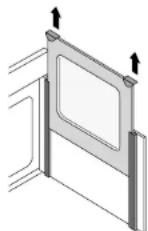
The glass panel on the inside of the door is removable. If the oven has been built in under the worktop, it may be that the glass panel cannot be taken out of the door. You can clean the window on the inside by sliding a cloth between the two panes.
The glass panel's guides on the inside of the oven door may become discoloured if they come into contact with oven cleaner. Read the directions on the packaging of the oven cleaner before use.
cleaning accessories
Use a mild cleaning agent. Dry the accessory well with a dry cloth. Any burnt-on food on the grill set can be removed using steel wool.
faults
what should I do if...
environmental aspects
disposal of packaging and appliance
If the appliance does not work properly, this does not always mean that it is defective. Try to deal with the problem yourself first. Phone the service department if the advice given below does not help.
| fault | cause | solution |
| Oven or grill does not get hot. | Timer not set. | Turn the timer to ,or set a time. |
| Fuse in meter cupboard defective. | Replace the fuse. | |
| Temperature not correct. | Temperature incorrectly set. | Set the oven temperature again. |
| Thermostat defective. | Switch oven off and phone the service department. | |
| Oven lighting not on. | The light comes on when the door is opened and as soon as you select a function. | |
| No power supply. | Insert the plug in the socket. | |
| Light bulb defective. | Switch oven off and replace the bulb. Disconnect the appliance from the power supply off by removing the plug from the socket or by turning the main switch in the meter cupboard. You can unscrew the glass cover from the rear wall of the oven. The bulb is then accessible.Replace it with a new bulb 230 V-50 Hz-300 °C. |
The appliance's packaging is recyclable. The following may be used:
- cardboard;
• polyethylene film (PE):
• CFC-free polystyrene (PS rigid foam).
Dispose of these materials responsibly and in accordance with government regulations.
The government can also provide information about the responsible disposal of discarded domestic appliances.
guarantee conditions
guarantee conditions
what Atag guarantees
On this appliance, Atag gives you a 5 year guarantee on parts and 1 year's free service. The guarantee on Atag kitchen equipment is only valid if the appliance is installed for domestic use and for purposes for which it has been constructed.
The guarantee period commences on the date of delivery. You should be able to prove this date on request - with a delivery note or sales invoice, for example. Parts which become defective due to material, construction or manufacturing errors are exchanged free of charge for a period of 5 years. During the first year you also receive free service. This means that in the event of repairs no administration costs, call out charges or labour costs are charged. In the event of the dispatch of free parts, no forwarding costs are charged during the first year.
who to contact
In the countries where there is an Atag representative, you can approach this representative if you wish to call in the Atag service department. In other countries, you should contact your supplier.
excluded from the guarantee
transport damage and installation errors
Check you new equipment before bringing it into operation. If you find any damage, contact your supplier. Defects and damage resulting from an installation error are not covered by the guarantee.
The cost of damage resulting from insufficient ventilation of the appliance or incorrect electrical connection will not be reimbursed. Faults occurring due to changes which have been made to the equipment are also excluded from the guarantee.
defects in usage and Incorrect or Insufficient maintenance
This applies, for example, to glass breakage and damage to enamel as a result of objects knocking against or falling on the equipment.
As a result of insufficient or incorrect maintenance, discolouration of surfaces may occur and rubbers and plastics may age quickly; these things are not covered by the guarantee, either.
wear and tear or ageing
Examples of this are defective light bulbs, discolouration of plastic or painted parts and scratches on the equipment.
data plate
You will find the appliance specifications on the data plate. In this connection, please refer to the last page of the instructions for use.
where do you find Atag
United Kingdom:
ATAG (UK) Limited
19-20 Hither Green
Clevedon, Somerset BS21 6XU
The Technical and Service
Department:
Tel 01275 - 870606
Fax 01275 - 871371
If you need to contact the
Atag Service Department,
please supply us with the
model number of the
appliance in question together
with as many details as
possible regarding the
problem.
This guarantee in no way
affects your statutory rights.
Atag UK is a member of the
Dutch Atag Group of
companies with sister
companies in Holland, Belgium
and Germany.
stick the extra identification
plate here