
YT-17207 - Jack Yato - Free user manual and instructions
Find the device manual for free YT-17207 Yato in PDF.


| Product Type | Floor Hydraulic Jack |
| Brand | Yato |
| Model | YT-17207 |
| Maximum Lifting Capacity | 2.5 tons (2500 kg) |
| Height Range (min - max) | 80 - 508 mm |
| Working Height Range for Maximum Load | 360 - 508 mm |
| Net Weight | 31.5 kg |
| Main Material | Steel |
| Lifting System Type | Manual Hydraulic |
| Recommended Hydraulic Oil | SAE 10 |
| Estimated Lifespan | 4 years (subject to periodic inspection) |
| Main Functions | Heavy load lifting (vehicles, machinery) |
| Safety | Do not exceed max load, use on flat surface, chock wheels, do not stand under unsupported load |
| Routine Maintenance | Clean, lubricate moving parts, check screws |
| Hydraulic System Bleeding | By authorized service if air is present |
| Oil Filling | By authorized service, SAE 10 oil |
| Spare Parts / Repairability | Use only original parts, repair by authorized center |
| Accessories | Lifting bar, saddle, wheels for moving |
Frequently Asked Questions - YT-17207 Yato
User questions about YT-17207 Yato
0 question about this device. Answer the ones you know or ask your own.
Ask a new question about this device
Download the instructions for your Jack in PDF format for free! Find your manual YT-17207 - Yato and take your electronic device back in hand. On this page are published all the documents necessary for the use of your device. YT-17207 by Yato.
USER MANUAL YT-17207 Yato
YT-17205
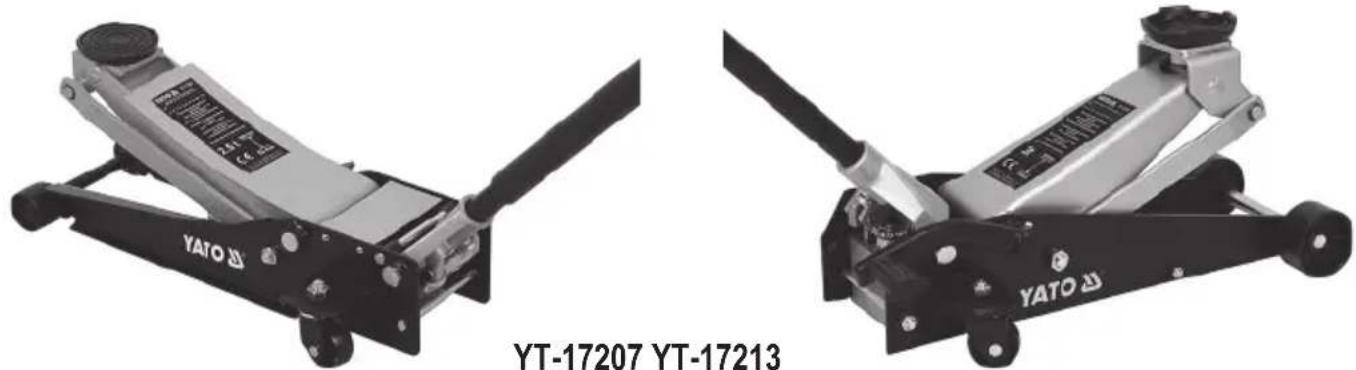
YT-17207 YT-17213
PL EN DE RU UA LT LV CZ SK HU RO ES FR IT NL GR BG PT HR AR
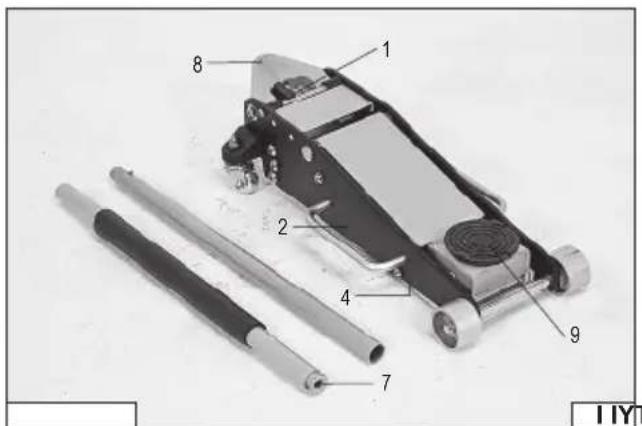
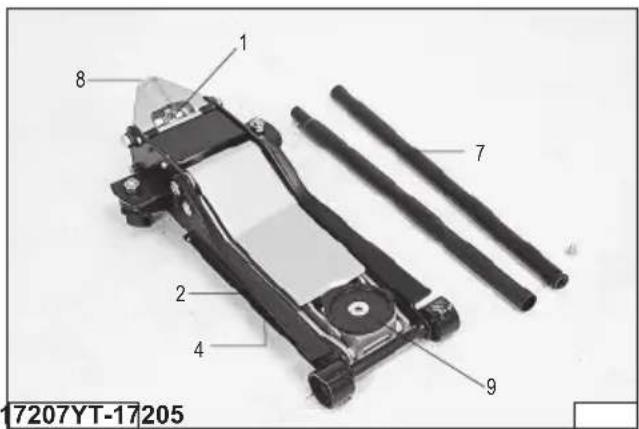
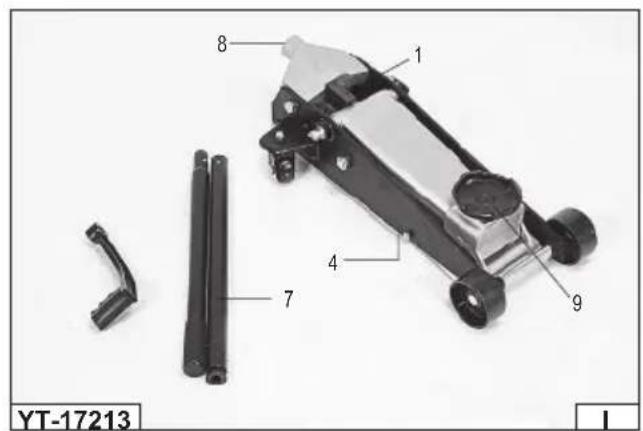
PL
Read the operating instruction
Wear protective goggles
Lifting height range
Working height range for maximum lifting capacity
The hydraulic lift has been designed to be used for tasks implying lifting significant weights. The lift must not be used to raise loads outside the working height range for maximum lifting capacity specified in the technical data table, as this may result in a loss of the device's load capacity and poses a serious risk to user safety and the stability of the lifted load. It must not be used as a permanent support element. It is also unacceptable to use the lift to transport lifted loads. The device has been designed exclusively for domestic use and must not be used professionally, namely in plants and for lucrative purposes. A correct, reliable and safe functioning of the device depends on its adequate operation, so:
Before you commence work with the tool, read the operating manual thoroughly and keep it for future reference.
The supplier shall not be held responsible for any damage and injuries caused due to using the tool for purposes it has not been designed for, failure to observe safety recommendations and the recommendations indicated within this manual. Using the device for tasks which do not comply with the purpose it has been designed for shall also cancel the guarantee rights the user is entitled to.
SAFETY RECOMMENDATIONS
The lift is a hydraulic device working under significant loads. During work it is required to observe basic safety principles.
Before you start work, read the operating manual and keep it for future reference.
Do not ever exceed the maximum load of the lift.
It is prohibited to use the device to lift people and animals.
The lift has been designed exclusively for the purpose of lifting, and must not be used for other purposes. It is required to use additional safety devices (e.g. racks) to support the lifted object, before work under it may commence.
In case of lifting vehicles it is necessary to block or wedge the wheels and engage the safety brake.
Do not leave a lifted load unattended. Do net permit children and those who have not been trained in operation of the device to enter the working area.
Do not wear loose clothes and jewellery. Gather long hair.
Use personal protection means.
The lift must be placed on an even, flat, hard and stable surface.
The lift must be placed upon the device to be lifted so that the load is supported in the middle section of the saddle.
It is absolutely prohibited to adjust the safety valve.
Keep the device far from sources of heat and flames, since they might damage the device or impair its functioning.
Before you proceed to lifting any load whatsoever, make sure that once the load has been lifted, the lift will not shift.
Before you proceed to lifting any load whatsoever, male sure the lift is not damaged in any way. If the lift requires repair, have it repaired by an authorised workshop.
Be prudent and do not work when you are tired or under influence of medicines.
Do not modify any elements of the lift, which may have impact on the compliance of the lift with the standard indicated in the declaration of compliance.
Have the device repaired exclusively in authorised service points, using solely original spare parts, so as to ensure the required level of safety during work.
The lifetime of the lift has been determined for 4 years from the date of its first use. After this period, the lift should be inspected at the manufacturer's authorized service center for further safety of use.
The condition of the marking must be checked and that the marking remains as it was at the beginning.
ASSEMBLY AND OPERATION
The jack is supplied as a pre-assembled system and does not require assembly or adjustment.
Before you start the operation, make sure that the release valve is loosened and perform some 6 full pumping cycles to ensure proper distribution of hydraulic oil.
It is necessary to check and tighten all screw connections before each use. This will increase the safety of use and extend the
EN
service life of the jack. The jack comes with wheels to facilitate moving the jack on flat surfaces. To do this, grip the jack arm and simply move the device in the desired direction. If you need to move the jack in vertical direction, use the front wheel axle of the jack and the base section of the hydraulic cylinder as handles.
Lifting
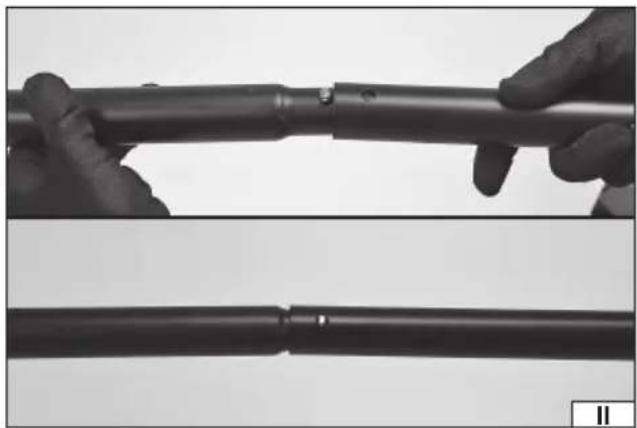
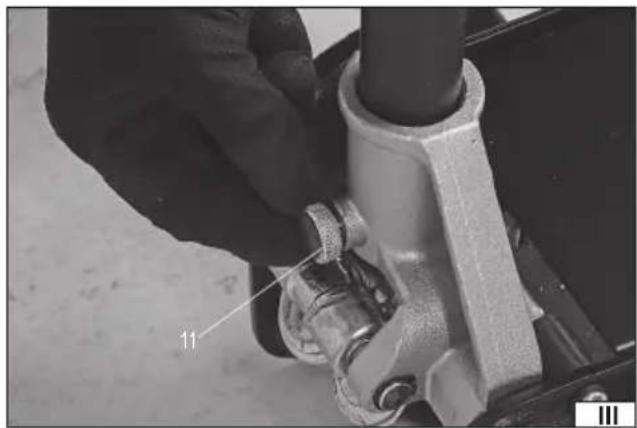
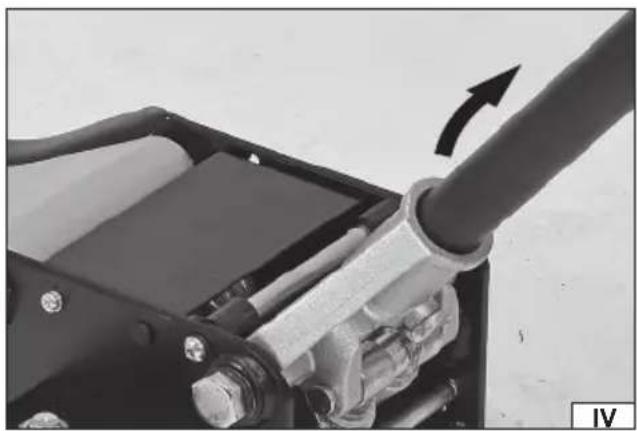
Before you start lifting make sure that the jack and the load being lifted are within the operator's sight when making all movements. Join both parts of the lifting arm and secure with the catch (II), then insert the jack arm into the socket and tighten the valve (III) to secure it. Use the jack arm by tightening it clockwise (IV) as far as it will go to close the release valve.
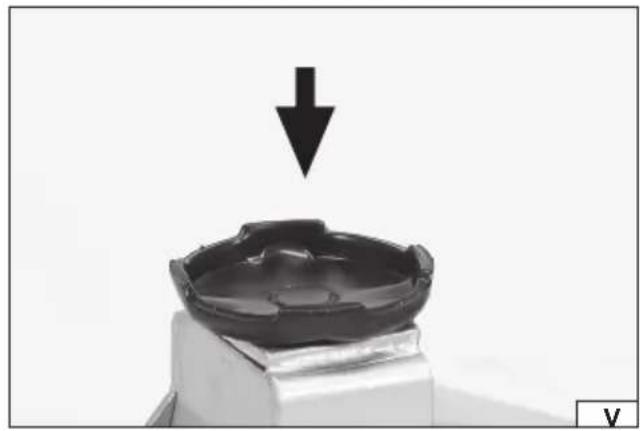
Place the jack under the load to be raised after you find a point designed for use with jacks, as in cars, so that the load rests centrally on the saddle of the jack (V).
Move the arm up and down to raise the load to the required height.
After lifting the load, secure it against falling with stands, for example.
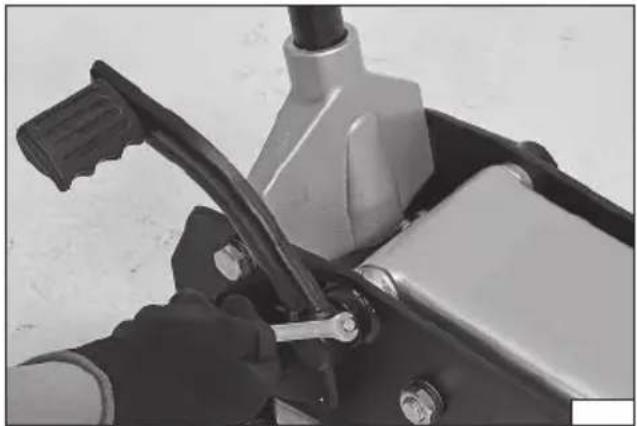
The YT-17213 jack features a pedal for accelerating the raising movement of the arm. The pedal is not designed for lifting the load. Place the pedal on the shaft and secure it against falling by tightening the retaining screw (VII). When you position the jack underneath the load, press the pedal to raise the arm. To lift the load follow the procedure described above.
Lowering
Before lowering, make sure that the load to be lowered does not cause injury to the operators.
Slowly turn the lifting arm counterclockwise. (VI). Do not unscrew the release valve more than required for slow lowering of the load.
Unscrewing the valve too much may cause its detachment from the casing.
After you lower the load completely, remove the jack from underneath the load.
Maintenance
If the lift is not used the shaft of the lift and the socket of the arm should be in the lower position. In case of post lifts also the extension bolt should be turned into the shaft of the lift. This will prevent the surface of the shaft from corrosion.
The lift must be kept clean, and the external moving elements of the lift must be lubricated at least every ten working hours.
Purging the hydraulic system
It is required to have the following maintenance action realised in a specialised service point.
From time to time the hydraulic system of the lift fills with air bubbles. This may impair the functional efficiency of the lift. If this is the case the hydraulic system of the lift must be purged.
Place the lift in such a manner that the shaft is in a vertical position. Open the release valve and remove the oil tank plug (VI). Then move the pump of the lift energetically a couple of times so as to remove the air.
Close the release valve and replace the oil tank plug. Check the functioning of the lift, and if necessary repeat the purging procedure.
Filling the oil tank and lubrication
It is required to have the following maintenance action realised in a specialised service point.
Place the lift in such a manner that the shaft is in a vertical position. Move the pump and the shaft to the extreme lower position. Remove the oil tank plug (VI).
Use solely hydraulic oil whose viscosity class is SAE 10. It is prohibited to use other liquids for that purpose. Fill the tank to the lower edge of the oil inlet.
Purge the lift following the direction indicated in „Purging the hydraulic system".
Replace the oil tank plug. Check the functioning of the lift.
In regular intervals (at least every ten working hours) lubricate the articulated connections and other moving elements of the lift. In case of post lifts, remember of periodical lubrication of the extension bolt thread.
Solution of problems
| The lift lowers under a load | The lift does not lift a load | The lift does not lift a load to the full height | The pump springs back during lifting | The lift does not lower completely | Oil is leaking from under the plug | |
| X | X | X | There may be insufficient quantity of oil in the lift. Fill the oil tank. |
EN
| The lift lowers under a load | The lift does not lift a load | The lift does not lift a load to the full height | The pump springs back during lifting | The lift does not lower completely | Oil is leaking from under the plug | |
| X | X | X | X | Air in the hydraulic system. Purge the hydraulic system. | ||
| X | There may be excessive quantity of oil in the lift. Remove the excess of oil | |||||
| X | X | The valves may not close completely. Lift the arm of the device a couple of times without any load and then lower it. | ||||
| X | A damaged back spring. Moving elements are not lubricated. Deformed arm driving elements. | |||||
| X | X | The release valve is not completely closed. Close the release valve. |
Disposing worn jack components
Dispose of the used oil and/or grease at a professional waste disposal facility.
The steel parts used do not pose any risk to the environment and must be returned to a ferrous metal waste treatment plant.
TECHNISCHE DATEN
PRODUKTA RAKSTUROJUMS
DEKLARACJA ZGODNOŚCI DECLARATION OF CONFORMITY DECLARAȚIE DE CONFORMITATE
0525/YT-17205/EC/2025


Brand : Yato
Model : YT-17207
Category : Jack