
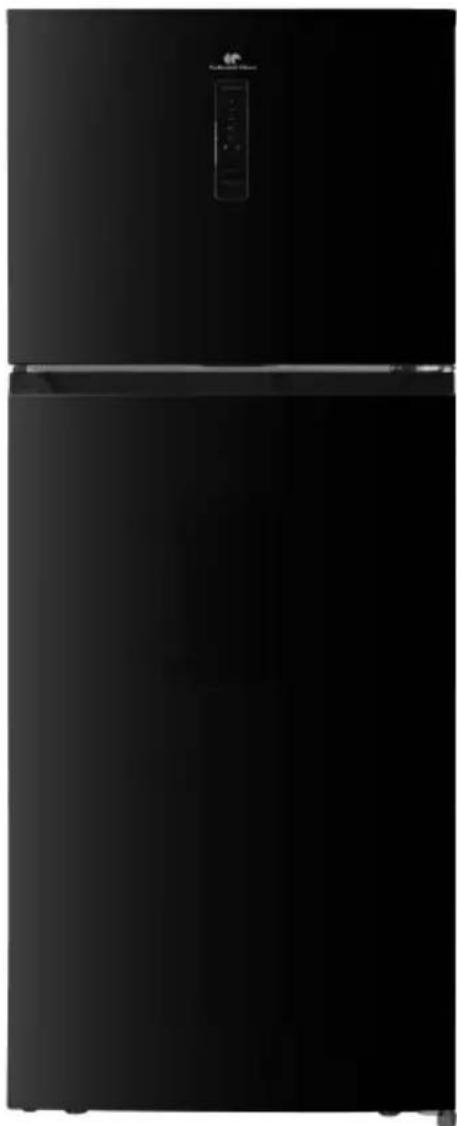
CEF2D413NFB - Fridge CONTINENTAL EDISON - Free user manual and instructions
Find the device manual for free CEF2D413NFB CONTINENTAL EDISON in PDF.


| Product Type | Upright Refrigerator-Freezer |
| Brand | Continental Edison |
| Model | CEF2D413NFB |
| Dimensions (W x H x D) | 710 x 1780 x 685 mm |
| Total Volume | 415 L |
| Refrigerator Compartment Volume | 321 L |
| Freezer Compartment Volume (4-star) | 94 L |
| Energy Class | D |
| Annual Energy Consumption | 195 kWh/year |
| Climate Class | N, ST (16°C to 38°C) |
| Noise Level | 39 dB(A) |
| Refrigerant | R600a (isobutane) - 56 g |
| Power Supply | 220-240 V ~ 50 Hz |
| Current | 1.3 A |
| Main Features | No Frost (automatic defrost), Power Cool, internal water dispenser, LED lighting, vegetable crisper with humidity control |
| Maintenance and Cleaning | Clean interior with warm water and baking soda; clean condenser annually |
| Safety | Control panel lock, child safety, automatic shutdown in case of problem |
| Spare Parts and Repairability | Parts available for at least 7 years; repair by qualified professional |
| General Information | 24-month warranty; reversible door; adjustable feet |
Frequently Asked Questions - CEF2D413NFB CONTINENTAL EDISON
User questions about CEF2D413NFB CONTINENTAL EDISON
0 question about this device. Answer the ones you know or ask your own.
Ask a new question about this device
Download the instructions for your Fridge in PDF format for free! Find your manual CEF2D413NFB - CONTINENTAL EDISON and take your electronic device back in hand. On this page are published all the documents necessary for the use of your device. CEF2D413NFB by CONTINENTAL EDISON.
USER MANUAL CEF2D413NFB CONTINENTAL EDISON
natural_image
Abstract geometric shapes resembling partial arcs or crescent, rendered in grayscale with no text or symbols.Continental Edison
natural_image
Exterior view of a modern black refrigerator with a digital display (no visible text or symbols)CEF2D413NFB
•FR (version originale)
•EN (translated from the original)
natural_image
Simple line drawing of a mechanical lever or support structure with two hanging weights (no text or symbols)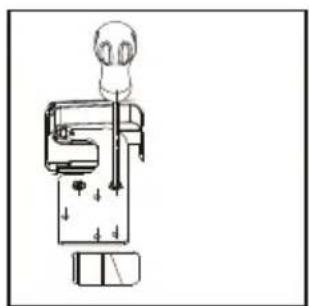
natural_image
Simple line drawing of a mechanical device with no text or symbolsnatural_image
Simple line drawing of a beam supported at both ends, showing support and load (no text or symbols)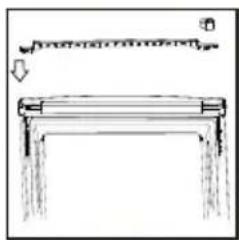
natural_image
Simple line drawing of a table with legs and feet, no text or symbols present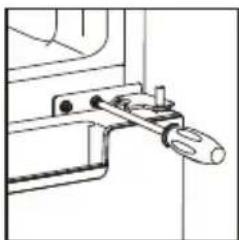
natural_image
Pure mechanical assembly diagram without any text, numbers, or symbols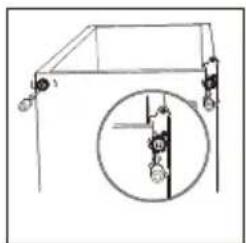
natural_image
Simple line drawing of a mechanical frame with pulleys and a circular inset showing a vertical alignment (no text or symbols)natural_image
Technical line drawing of a vehicle frame with an inset circular detail showing a mechanical component (no text or symbols)natural_image
Line drawing of a mechanical component or assembly with a base and clamped end (no text or symbols)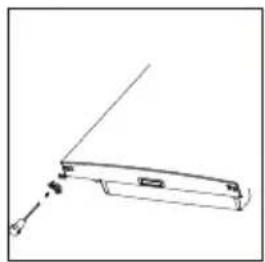
natural_image
Simple line drawing of a laptop with a cable, showing no text or symbolsnatural_image
Three technical line drawings showing mechanical clamping or bracketing process (no text or symbols)natural_image
Simple horizontal bar with a circular end, no text or symbols presentVegetables
B - USAGE QUOTIDIEN
Congeler des aliments frais
natural_image
Illustration showing a container with upward arrows and a hand cleaning a shelf (no text or symbols)D - UTILISER LE DISTRIBUTEUR D'EAU
natural_image
Symbol of a trash bin crossed with diagonal lines and a horizontal bar below (no text or labels)IMPORTANT SAFETY WARNINGS AND TIPS
Read all instructions before using the device. Read this manual carefully before using the appliance so that you know exactly what to do and what not to do.
It is very important that this guide is kept with the device for any further consultation. If this device is to be transferred to another person, ensure that the guide follows the device so that the new user can be informed of its operation.
Improper use of the device can be dangerous, especially for children.
In this user guide, the following symbols are used:
 | Important information regarding your personal safety and how to avoid damage to the device |
 | General information and advice |
 | Environmental information |
 | Fire hazard |
 | Risk of electric shock |
SAFETY INSTRUCTION
- This device is intended for use in domestic applications.
- This device can be used by children aged at least 8 years and by people with reduced physical, sensory or mental capabilities or without experience or knowledge, if they are properly supervised or if instructions relating to the safe use of the device have been given to them and if the risks involved have been understood. Children should not play with the device. Cleaning and user maintenance must not be carried out by children without supervision.
- Children should be supervised to ensure that they do not play with the device.
- CAUTION: Keep the ventilation openings in the appliance enclosure or in the built-in structure clear.
-
CAUTION: Do not use mechanical devices or other means to accelerate the defrosting processes other than those recommended by the manufacturer.
-
WARNING: Do not damage the refrigerant circuit.
- WARNING: Do not use electrical appliances inside the food storage compartment unless they are of the type recommended by the manufacturer.
- If the power cable is damaged, it must be replaced by the manufacturer, its after-sales service or similarly qualified persons in order to avoid danger.
-
Do not store explosive substances such as aerosols containing flammable propellant gases in this appliance:
-Before throwing away your appliance, remove the door and leave the shelves in place so that children cannot easily play inside.
-Never allow children to operate or play with the appliance.
-Never clean parts of the device with flammable fluids. Fumes represent a fire hazard or may cause explosions. -
Do not store or use gasoline or other flammable gases or liquids in or near this appliance. Fumes may cause fire or explosion.
-
Do not install this device in a place with extreme weather conditions such as : insufficient ventilation, temperatures below 16°C or above 38°C.
-
This product complies with current European safety standards relating to electrical appliances. It has undergone extensive trials and meticulous testing to evaluate its safety and reliability.
Before plugging in the device, check that the data on the nameplate corresponds to that of your installation.
-
Packaging materials are recyclable, do not abandon them In the environment, take them to a specialized center so that they can be recycled.
-
The electrical safety of this device is ensured only when it is connected to an electrical installation equipped with an earth socket in good condition, according to the standard in force. If in doubt, have the installation carefully checked by a qualified technician.
-
The use of this device, like that of any electrical device, involves observing some rules fundamental :
- Do not touch the device with wet or damp hands or feet;
- Do not pull on the power cord to disconnect the plug from the outlet;
- Do not leave the device exposed to atmospheric agents;
- Do not allow the appliance to be used by children lack of supervision;
- Do not unplug or plug the plug into the power outlet with wet hands; before carrying out any cleaning or maintenance operation, disconnect the appliance from the electrical supply network by removing the plug or turning off the main switch of the installation;
- The power outlet must remain accessible after installation of the device.
- In the event of a breakdown or malfunction, turn off the device and do not damage it.
-
The power plug must always remain accessible after installation of the device.
-
CAUTION: Do not damage the refrigerant circuit.
Refrigerant causes serious injury if splashed in eyes. If this happens, go to the hospital immediately.
-
WARNING: The ventilation openings in the device housing or at the installation location must not be obstructed under any circumstances.
-
CAUTION: Do not use an electrical appliance inside the food storage compartments of the appliance.
-
CAUTION: Do not use mechanical devices or other means to speed up the defrosting process.
-
This device is intended for use in domestic applications (private setting) but not in similar applications such as:
-
kitchen areas reserved for staff in stores, offices and other professional environments.
- farms and use by customers of hotels, motels and other residential environments. environments of the type guest rooms.
- catering and other similar applications
-
including retail.
-
Children aged from 3 to 8 years are allowed to load and unload refrigerating appliances.
-
To avoid food contamination, please follow the following instructions:
- The prolonged opening of the door can cause a significant increase in temperature in the appliance compartments.
- Regularly clean the surfaces that may come into contact with food and accessible drainage systems.
- Store raw meat and fish in suitable containers in the refrigerator, so that they do not come into contact with or drip onto other foods.
- Two-star compartments for frozen products are suitable for preserving frozen foods, storing or making ice cream and for making ice cubes.
- One-, two- and three-star compartments are not suitable for the freezing of fresh food.
-
If the refrigeration appliance remains empty for long periods of time, turn it off, defrost, clean, dry and leave the door open to prevent mold from developing in the appliance.
-
Place the appliance against a wall at a distance of 100 mm or more, be sure to leave at least 300 mm of free space on the top of the refrigerator.
-
This refrigeration appliance is not intended for use as a built-in appliance.
-
Recommended storage time for frozen foods in the freezer.
These times vary depending on the type of food. Food that you freeze can be stored for 1 to 12 months (minimum at -18°C).
| Foodstuff | Storage period |
| Bacon, casseroles, milk | 1 month |
| Bread, ice cream, sausages, pies, prepared shellfish, oily fish | 2 months |
| Non-oily fish, shellfish, pizza, pastries and muffins | 3 months |
| Ham, cake, biscuits, beef and lamb chops, poultry pieces | 4 months |
| Butter, vegetables (blanched), whole eggs and egg yolks, boiled crayfish, minced meat (raw), pork (raw) | 6 months |
| Fruit (dried or in juice), egg white, beef (raw), whole chicken, lamb (raw), fruit cake | 12 months |
-
When freezing fresh foods that have a "best before/use by/use by date" date, you must freeze them before that date expires.
-
Check that the food has not already been frozen. In fact, frozen foods that have completely thawed should not be refrozen. Once defrosted, food should be consumed quickly.
• To avoid alteration of food due to the transfer of germs:
Store unpackaged animal and plant products separately in drawers. This also applies to different types of meat.
- If foods must be kept together due to lack of space: wrap them.
- Never store fruit and vegetables on a balcony with meat or fish.
| Food | Storage time |
| Butter | 90 days |
| Hard cheese | 110 days |
| Milk | 7 days |
| Sausage, cold meat | 9 days |
| Meat | 7 days |
WARNING: During the positioning the appliance, ensure that the power cord is not pinched or damaged.
WARNING: Do not locate multiple portable socket-outlets or portable power supplies at the rear of the appliance.
Refrigerant
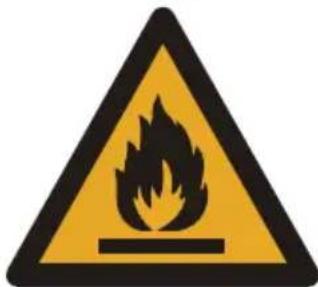
Hazard; risk of fire/flammable materials
Danger; risk of fire/ flammable materials
The refrigerant gas contained in the circuit of this appliance is isobutane (R600a), a low-polluting but flammable gas. When transporting and installing the appliance, take care not to damage any part of the refrigeration circuit.
Do not use any cutting or sharp tools to defrost the device.
Do not use any electrical devices inside the device.
If the refrigeration system is damaged:
- Turn off the refrigerator.
- Do not use a flame near the device.
- Avoid sparks - do not light an electric appliance or electric lamp.
- Ventilate the room immediately.
Regarding the installation, handling, cleaning and disposal of the device, refer to the following chapters of the user guide.

Suitable for food
Information on the meaning of the conformity marking
Marking € indicates that the product meets the main requirements of the European Directives: 2014/35/EU (Low tension), 2014/30/EU
(Electromagnetic Compatibility), 2011/65/EU (Limitation of use of certain substances in electronic equipment)
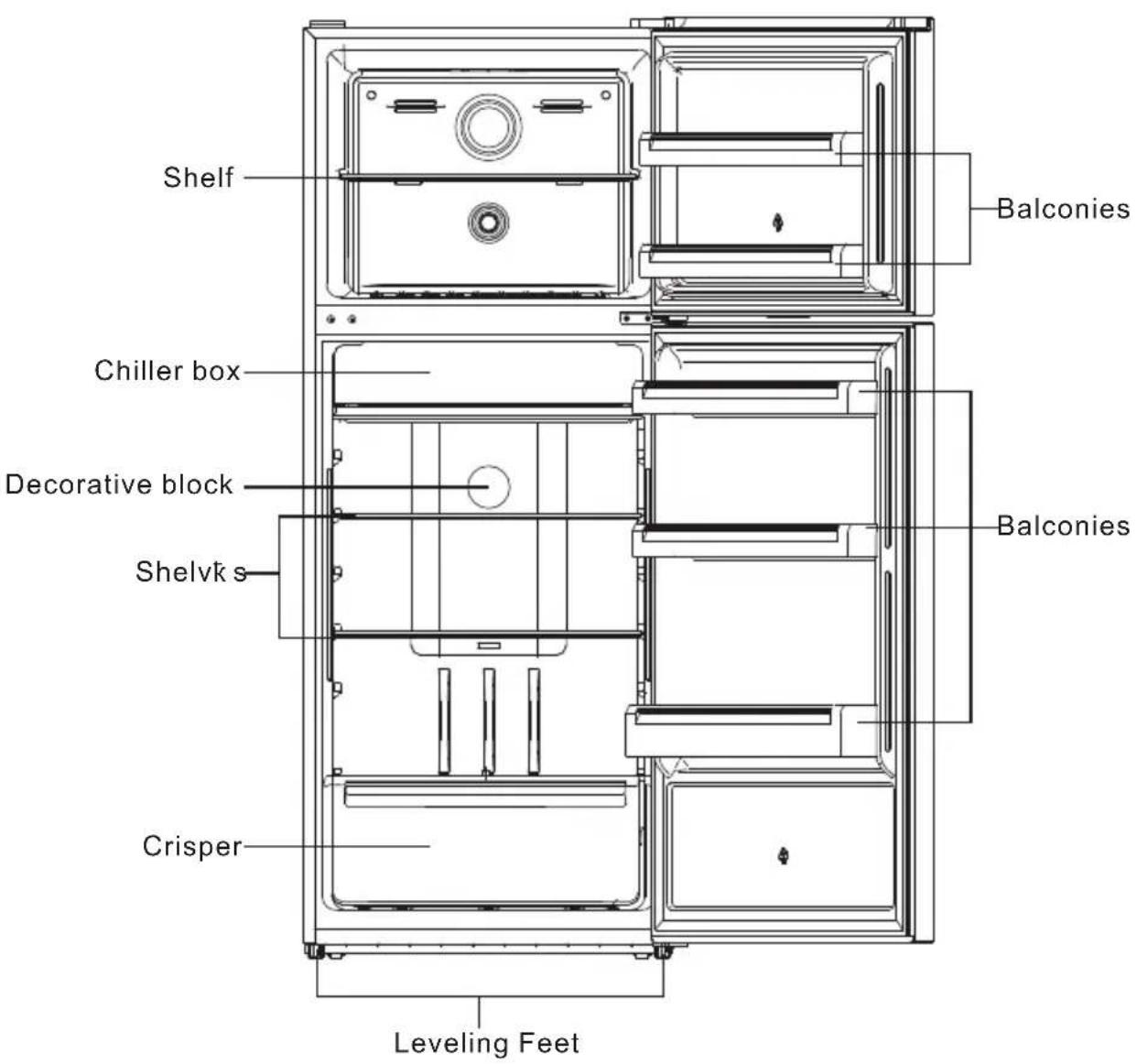
This illustration is only for hinting, the detail please check your appliance. This refrigerating appliance is not intended to be used as a built-in appliance.
II-TECHNICAL CHARACTERISTICS
| Mark Continental Edison | |
| Reference Model | CEF2D413NFB FC2-54-6 |
| Voltage 220-240 V~ | |
| Frequency 50 Hz | |
| Current | 1.3 A |
| Insulation blowing gas | R600a(56g) |
| Dimensions (W*H*D) | 710x1780x685mm |
| Energy class | D |
| Energy consumption of 195 kWh per year, calculated on the basis of the result obtained for 24 hours under standardized test conditions. Actual energy consumption depends on the operating conditions and location of the unit. | |
| Total volume | 415L |
| Fresh food compartment volume | 321L |
| 4-star storage volume | 94L |
| Climate class | N, ST |
| This unit is designed for use at an ambient temperature between +16°C and +38°C | |
| Noise emissions | 39dB |
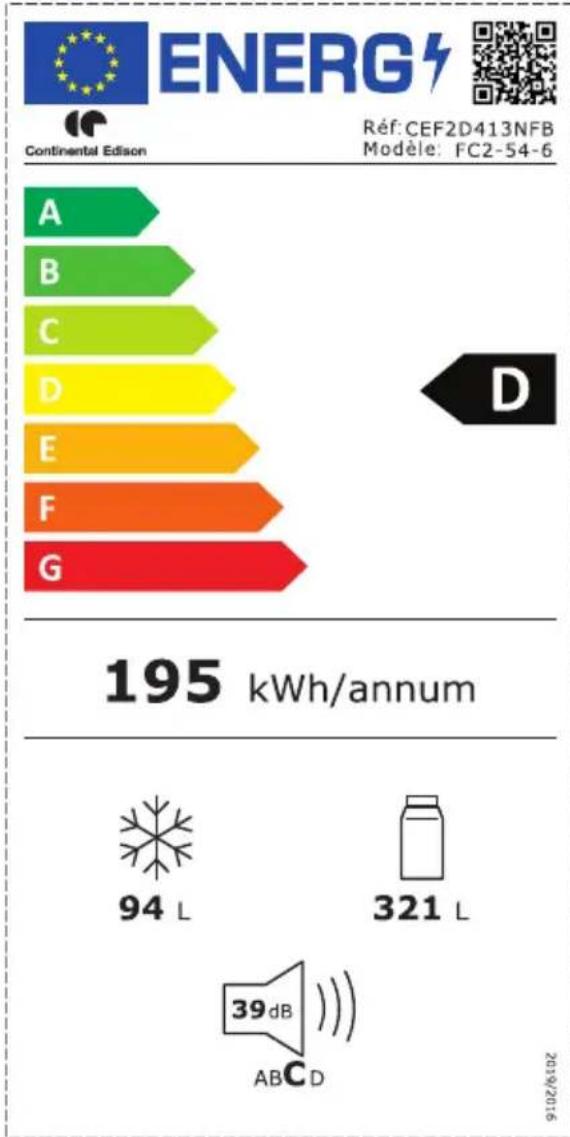
bar
| Rating | Value | | ------ | --------- | | A | 94 L | | B | 321 L | | C | 39 dB | | D | ABCD | | E | 195 kWh/annum | | F | 195 kWh/annum | | G | 195 kWh/annum |2019/2016 on the energy labelling of refrigeration appliances, can be viewed via the link below or by scanning the QR code on the energy label of the product.
https://eprel.ec.europa.eu/qr/2435144
A - Location
IMPORTANT: The installation of this appliance requires two people.
- Choose a dry and well-ventilated area.
- Choose a location large enough for the refrigerator door to open easily.
• Install the refrigerator on a flat and stable surface. - Leave free space on the right, left, behind, and above during installation. This will help reduce energy consumption and your energy bills.
- Do not place the refrigerator near a heat source, in direct sunlight, or near heat-producing appliances (oven, gas stove, etc.).
This refrigeration appliance is intended to be used as a built-in appliance.
Suggestion: It is recommended to leave a minimum space of 100mm between the back of the appliance and the wall, 50mm above, 50mm between the side and the wall, as well as to leave the space in front of the appliance completely free to allow the doors to open to 130°. As shown below:
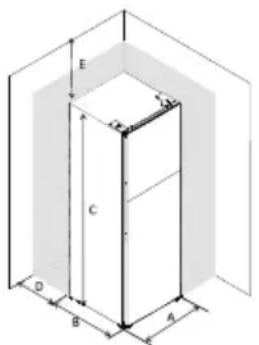
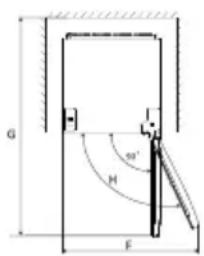
Unite: mm
| A | 700 |
| B | 680 |
| C | 1780 |
| D | min=50 |
| E | min=50 |
| F | 1400 |
| G | 1380 |
| H | 135^ |
- Install this appliance in a location where the ambient temperature corresponds to the climate class indicated on the appliance's rating plate:
-Extended temperate (SN): This refrigerating appliance is intended for use at ambient temperatures between 10^ C and 32^ C;
-Temperate (N): This refrigerating appliance is intended for use at ambient temperatures between 16^ C and 32^ C;
-Subtropical (ST): This refrigerating appliance is intended for use at ambient temperatures between 16°C and 38°C;
-Tropical (T): This refrigerating appliance is intended for use at ambient temperatures between 16°C and 43°C;
- Leveling
-By adjusting the feet, you can level the refrigerator.
-Turn the feet clockwise to raise the appliance.
- Turn the feet counterclockwise to lower them.
Note: If the unit is not level, the doors and magnetic seal alignments will not be covered properly.
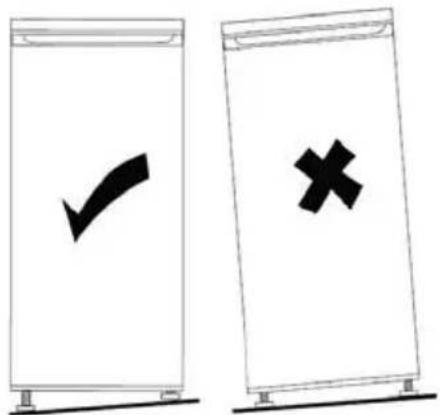
Warning! It must be possible to disconnect the appliance from the mains power supply; the plug must therefore be easily accessible after installation.
Installation
Door Reversibility
Before reversing the door, please be prepared below tools and material: straight screwdriver, cross screwdriver, spanner and the components included in the poly bag:
Left hinger x1
Left hinge cover x1
Left middle stopper x2
Left middle stopper metal block x2
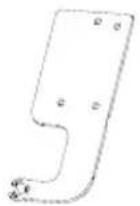
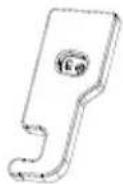


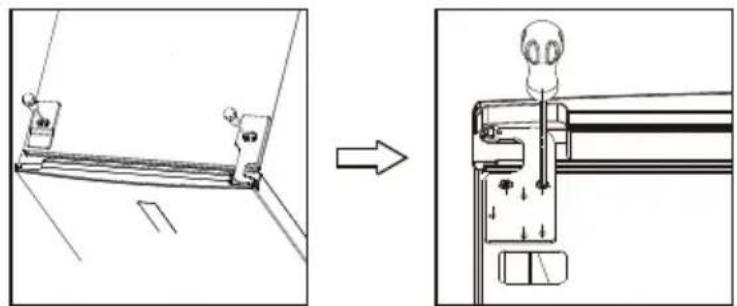
- Close upper door, take out the screw from the top hinge covers by cross screwdriver. Take off hinge cover, disconnect the terminal, then unscrew top hinge and take off upper door.
natural_image
Technical diagram showing a mechanical assembly before and after transformation, with no visible text or symbols.- Please upwarp and take off plastic cover and wire sleeve by straight screwdriver. Please be careful of the wire inside. Then move wire with connector to another side and install wire sleeve to another side and fix cover back.
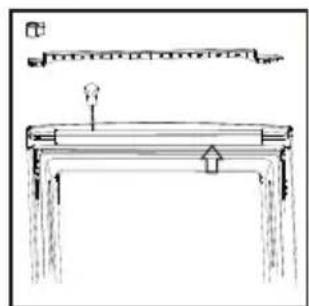
natural_image
Simple line drawing of a mechanical or structural component with no text, numbers, or symbols.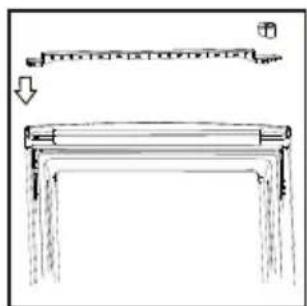
natural_image
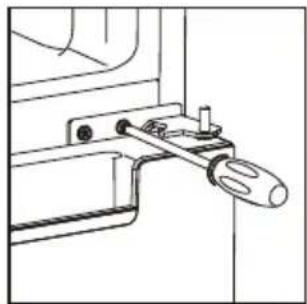
Simple line drawing of a table with a roller and a hanging rod, no text or symbols present- Unscrew from the middle hinge by cross screwdriver, then take off the lower door.
natural_image
Technical line drawing of a mechanical clamp or lever assembly (no text or symbols)Installation
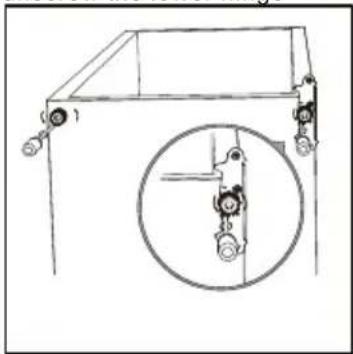
- Laying down the refrigerator, take out the adjusting feet as below, then unscrew the lower hinge by cross screwdriver.
natural_image
Technical line drawing of a mechanical assembly with a circular inset showing internal components (no text or symbols)- Unscrew and remove the bottom hinge pin, turn the bracket over and replace it.
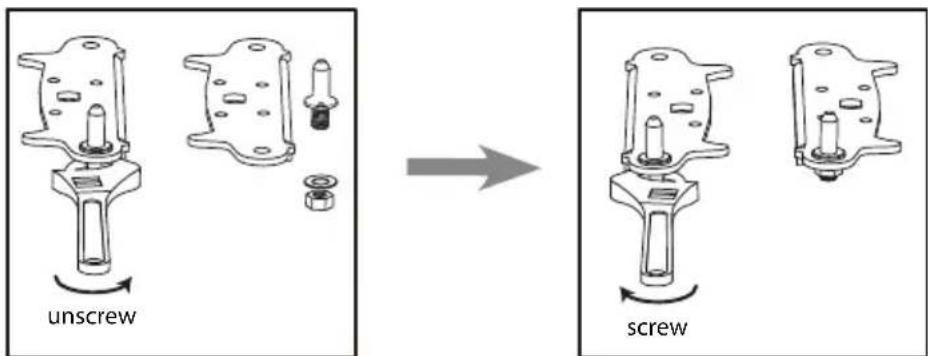
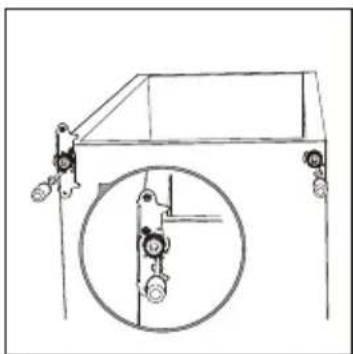
- Refit the bracket fitting the bottom hinge pin. Replace both adjustable feet. Transfer the lower door to the property position.
natural_image
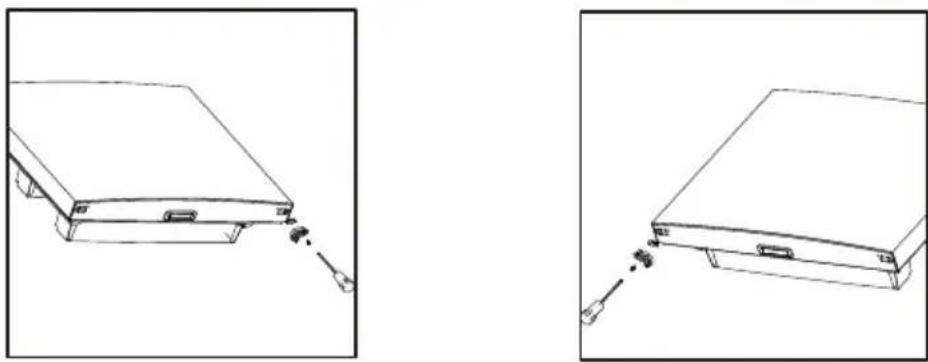
Technical line drawing of a mechanical assembly with a magnified inset showing internal components (no text or symbols)- Unscrew right middle stopper with metal block from bottom of upper door. And then install left middle stopper and metal block in left side of bottom of upper door. (The same operation as for lower door.)
natural_image
Technical line drawing showing two views of a device with connectors and a base, no text or symbols presentInstallation
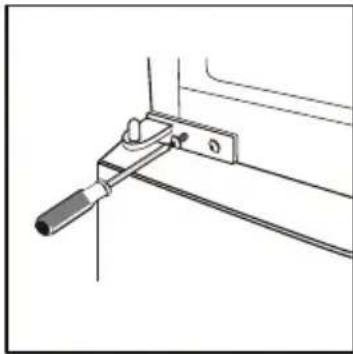
- Make the middle hinge reverse the direction 180^ C, then transfer it to the left property position. Make the middle hinge pin in the upper hole of the lower door, then tight the screws.
natural_image
Technical line drawing of a mechanical clamp or bracket assembly (no text or symbols)- Install the upper door, fix the upper door hinge onto the cabinet and connect the wire.
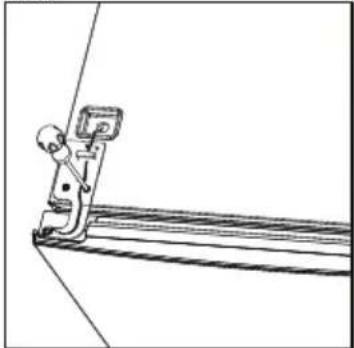
natural_image
Simple line drawing of a person climbing a ladder with a monitor on top (no text or symbols)- Take left hinge cover from accessory bag and install it with top hinge. Then install hole cover at right side.
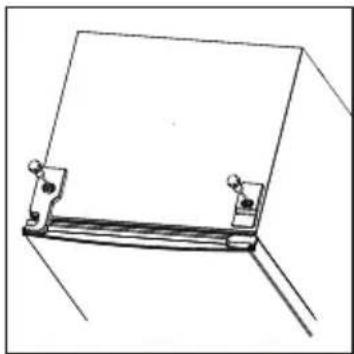
natural_image
Simple line drawing of a mechanical bracket or frame with two mounting holes (no text or symbols)B - Unpacking the Device and Disposal of Packaging Materials
Remove all packaging materials around the device, as well as the protective elements inside the compartments of the device.
The cardboard packaging and paper sheets are recyclable. They must be discarded in the designated collection bins.
Materials marked with the following symbols are recyclable:
PE< = Polyethylene; >PS< = Polystyrene; >PP< = Polypropylene
This means they can be recycled by placing them in appropriate collection containers.
Other packaging materials (adhesive tape, ties, etc.) must be disposed of with household waste.
For more information: www.quefairedemesdechets.fr
C - Electrical Connection
Before connecting the device, ensure that the voltage and frequency indicated on the identification plate match your household electrical supply. The device must be grounded. The power cable plug is equipped with a contact for this purpose. If the household power outlet is not grounded, connect the device to a separate outlet in accordance with current regulations. Consult a qualified electrician if needed.
The manufacturer shall not be held liable if the above safety precautions are not followed.
D - Lamp Replacement
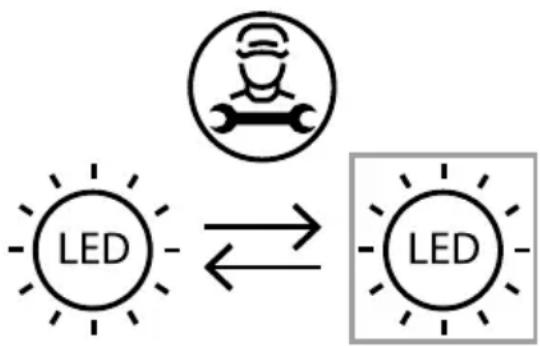
The lamp in this model is an LED bulb. It cannot be replaced by the user.
If the provided bulb no longer functions, it must be replaced by the manufacturer, their after-sales service, or a qualified repair technician to avoid any hazards.
This product contains a light source with an energy efficiency class of G.
Cleaning the Interior
Before using the appliance for the first time, wash the interior and all internal accessories with warm water and mild soap to remove the new product odor, then dry thoroughly.
Important! Do not use abrasive detergents or powders, as these may damage the product.
flowchart
graph TD
    A["LED"] --> B["Worker Icon"]
    B --> C["LED"]
Using the Control Panel
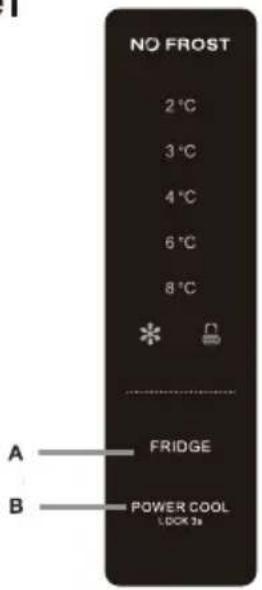
Key operation:
A. Temperature Control of Fridge Compartment
B. Power Cool/ Locking / Unlocking
Operating condition:
- The control panel is 100% lit up for 3 seconds, which operates exactly as per the setting (mode and temperature) before the power off. The system will be automatically locked 2 seconds after the last key operation. After locking, the light of the panel would be out 60 seconds after the last key operation.
* Both preset temperatures of fridge compartment would be shown on the display.
The recommended temperature setting is 4°C.
Display:
- The panel will be lit up once the door of fridge compartment or freezer compartment is opened. (one door signal is sensed at a time)
- The panel will be lit up by any key operation whereas the light would be out 1 minutes after the last operation.
Display during normal operation
• Temperature Display of the Fridge Compartment: Indicating the temperature of the current setting.
Illustion of the key:
Temperature Control of the Fridge Compartment
This key is workable both in User Defined Mode as well as Super Mode. After entering the temperature control of the fridge compartment, this key flashes. By touching the key consecutively, the temperature would change in a circle of "2°C, 3°C, 4°C, 6°C, 8°C", after which 5-second flashing means the selection of temperature is settled.
Temperature control of the freezer compartment
- There are 3 settings COLD, COLDER, and COLDEST. COLD is warmest setting and COLDEST is coldest setting. Plug on your appliance. The internal temperature is controlled by a sensor.
door often.
The applianc
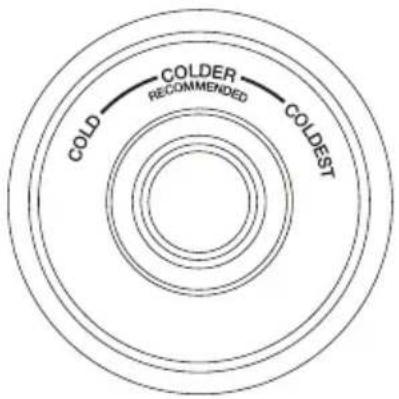
Temperature setting recommendation
| Temperature Setting Recommendation | |||
| Environm ent Temperature | Freezer compartment | Fridge compartment | |
| Summer | 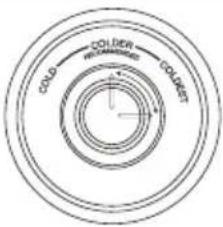 | Fridge set on 4°C | 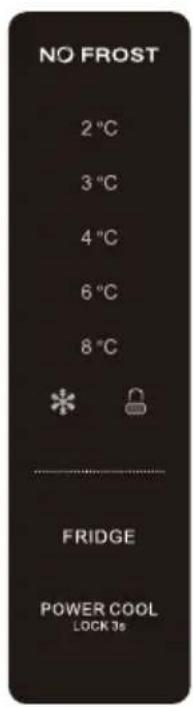 |
| Set on colder~coldest | |||
| Normal | 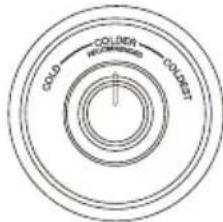 | Fridge set on 4°C | |
| Set on colder | |||
| Winter | 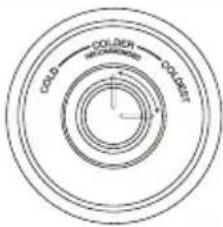 | Fridge set on 4°C | |
| Set on colder~coldest | |||
• Information above give users recommendation of temperature setting.
- In winter or temperature below 16°C, users should avoid set on coldest
- For energy saving, the coldest set only apply to special need(such as quick-freezing or ice making), and need turn back after special need.
Impact on Food Storage
• Under Recommended setting, the best storage time of fridge is no more than 3 days.
• Under Recommended setting, the best storage time of freezer is no more than 1 month.
- The best storage time may reduce under other settings.
Power cool / Locking / Unlocking
- Power Cool: Touch this key to Enter / Exit Power Cool Mode In the state of "Unlocking"
When enter it, the indicator

light and Automatic exit after N operation in 3 hours.
- Long Press to Enter / Exit Locking Mode
- Unlocking: Press for 3 seconds in the mode of locking, all the keys would be unlocked after the a beep.
-Locking: Press for 3 seconds in the mode of unlocking, all the keys would be locked after the a beep.
Press button short beep after per press button
All buttons will only valid under unlock mode.
Lock function
No operation in 60 sec will lock the display automatically.
Setting the humidity in the Crisper:
Low humidity: move the regulator to the left Hight humidity: move the regulator to the right
Fruits

natural_image
Simple horizontal bar with a circular button on the left end, no text or symbols present.Vegetables
B - DAILY USE
Freezing Fresh Food
The freezer compartment is designed for freezing fresh food and storing frozen or deep-frozen food for extended periods.
Place fresh food in the lower compartment.
Important! In case of accidental defrosting (e.g., if the power supply is interrupted longer than the duration specified in the technical specifications under "Autonomy during power outage"), thawed food must be consumed promptly or cooked immediately and refrozen (after cooking).
Thawing
- Meat, poultry, and fish should be thawed in the refrigerator to prevent bacterial growth.
- Other products may be thawed at room temperature.
- Small portions can be cooked directly from frozen. Many ready-to-cook dishes can also be prepared without prior thawing. Always follow the instructions on the packaging.
- Bread and pastries can be thawed in a warm oven.
- Microwaves may be used to thaw most foods.
Freezing Tips
To help you freeze food effectively, here are some key tips:
- The maximum amount of food that can be frozen within 24 hours is indicated on the identification plate.
- The freezing process takes at least 24 hours. Do not add additional food for freezing during this period.
- Freeze only high-quality, fresh, and thoroughly cleaned items.
- Prepare food in small portions to ensure rapid and complete freezing, allowing you to thaw only the required amount later.
- Pack food in airtight freezer bags.
- Avoid placing unfrozen fresh food in direct contact with already frozen food to prevent temperature rise in the frozen items.
- Lean foods preserve better and longer than fatty foods; salt reduces the shelf life of food.
- Do not consume ice lollies immediately after removal from the freezer to avoid cold burns.
- It is advisable to note the freezing date on each individual package to track storage durations.
Tips for Storing Frozen Food
- Frozen products can be grouped together to free up space for new freezing.
- When purchasing frozen products, ensure the packaging is intact, shows no signs of moisture, and is not swollen (which may indicate partial thawing).
- Adhere to the storage duration specified by the manufacturer of frozen products.
- Avoid frequently opening the door; keep it open only as long as necessary. Temperature increases may reduce the shelf life of food.
\*\*For Better Food Hygiene\*\*
- Remove commercial packaging before placing food in the refrigerator (e.g., yogurt multipack wrappers).
- Wrap food in appropriate food-grade containers to prevent bacterial transfer between items.
- Allow cooked foods to cool before storing them.
\*\*Refrigeration Tips\*\*
To achieve optimal performance:
- Do not store hot foods or evaporating liquids in the refrigerator.
- Cover or wrap food in containers, especially if it has a strong odor.
- Seal food in plastic wrap and place it on the glass shelves above the vegetable drawer.
- For safety, store foods for only one to two days at most.
- Cooked foods and cold dishes should be covered and may be placed on any shelf.
- Fruits and vegetables must be thoroughly cleaned and stored in the designated crisper drawer(s).
- Butter and cheese should be placed in airtight containers or wrapped in plastic film.
- Milk bottles must be capped and stored in the door compartments.
Bananas, potatoes, onions, and garlic should not be refrigerated if unwrapped.
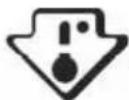
The following symbol shows the coolest zone in the refrigerator. This zone is between the fruit and vegetable glass shelf and the symbol, or the shelf located at the same height. To guarantee emperatures in this zone, do not modify the positioning of the shelves.
Temperature indicator
To help you set your refrigerator, it should be equipped with a temperature indicator which will help to control the average temperature in the coolest zone. This indicator is provided with the product. CAUTION: this indicator is set to work with this refrigerator. Do not use it in another refrigerator or for another purpose.
Temperature check in the coolest zone
This indicator allows you to check that the temperature in the coolest zone is correct. The temperature inside the refrigerator differs according to several factors such as the ambient temperature, the quantity of food loaded in the refrigerator and the frequency with which the door is opened. Take these factors into consideration when setting the temperature of the appliance.
When the indicator reads OK, it means that your thermostat is set correctly, and that the indoor temperature is correct. If there is no color on the indicator, this means that the temperature is too high. In this case, increase the setting of the thermostat and wait for a while before performing another visual check of the indicator. After loading or opening the door, the indicator may show no color for a while.
natural_image
Simple black circle outline on white background (no text or symbols)TThawing
Deep-frozen or frozen food, prior to be used, can be thawed in the fridge compartment or at room temperature, depending on the time available for this operation.
Small pieces may even be cooked still frozen, directly from the freezer. In this case, cooking will take longer.
Accessories
Movable shelves
The walls of the refrigerator are equipped with a series of runners so that the shelves can be positioned as desired.
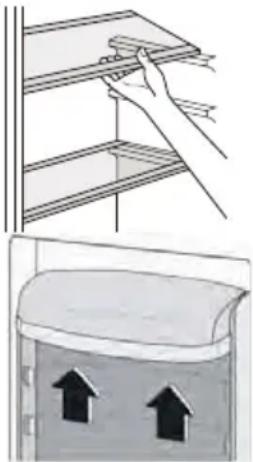
Positioning the door balconies
To permit storage of food packages of various sizes, the door balconies can be placed at different heights. To make these adjustments proceed as follows: gradually pull the balcony in the direction of the arrows until it comes free, then reposition as required.
natural_image
Illustration showing a hand placing a tray onto a shelf above a container with upward arrows (no text or symbols)Helpful hints and tips
Hints for freezing
To help you make the most of the freezing process, here are some important hints:
- the maximum quantity of food which can be frozen in 24 hrs. is shown on the rating plate;
- the freezing process takes 24 hours. No further food to be frozen should be added during this period;
• only freeze top quality, fresh and thoroughly cleaned, foodstuffs; - prepare food in small portions to enable it to be rapidly and completely frozen and to make it possible subsequently to thaw only the quantity required;
- wrap up the food in aluminium foil or polythene and make sure that the packages are airtight;
- do not allow fresh, unfrozen food to touch food which is already frozen, thus avoiding a rise in temperature of the latter;
- lean foods store better and longer than fatty ones; salt reduces the storage life of food;
- water ices, if consumed immediately after removal from the freezer compartment, can possibly cause the skin to be freeze burnt;
- it is advisable to show the freezing in date on each individual pack to enable you removal from the freezer compartment, can possibly cause the skin to be freeze burnt;
- it is advisable to show the freezing in date on each individual pack to enable you to keep tab of the storage time.
Hints for storage of frozen food
To obtain the best performance from this appliance, you should:
make sure that the commercially frozen foodstuffs were adequately stored by the retailer;
be sure that frozen foodstuffs are transferred from the food store to the freezer in the shortest possible time;
not open the door frequently or leave it open longer than absolutely necessary.
Once defrosted, food deteriorates rapidly and cannot be refrozen.
Do not exceed the storage period indicated by the food manufacture.
Hints for fresh food refrigeration
To obtain the best performance:
- Do not store warm food or evaporating liquids in the refrigerator
- Do cover or wrap the food, particularly if it has a strong flavour
Hints for refrigeration
Useful hints:
• Make (all types): wrap in polythene bags and place on the glass shelves above the vegetable drawer.
- For safety, store in this way only one or two days at the most.
- Cooked foods, cold dishes, etc...: these should be covered and may be placed on any shelf.
- Fruit and vegetables: these should be thoroughly cleaned and placed in the special drawer(s) provided.
- butter and cheese: these should be placed in special airtight containers or wrapped in aluminum foil or polythene bags to exclude as much air as possible.
- Milk bottle: these should have a cap and should be stored in the balconies on the door.
- Bananas, potatoes, onions and garlic, if not packed, must not be kept in the fridge.
CLEANING AND MAINTENANCE
A - Cleaning
Warning: Before cleaning, disconnect the appliance from the power supply.
For hygiene reasons, the interior of the appliance and accessories should be cleaned regularly.
- Remove all food and accessories (door compartments, shelves, drawers, water tank, etc.) from the appliance.
- Store food in a cool, covered location.
- Clean the interior of the appliance with warm water and baking soda, then dry with a soft cloth.
- Once everything is dry, restart the appliance and return food to their respective compartments.
Door seals must always be kept clean.
Dust accumulation around the condenser increases energy consumption. Therefore, carefully clean the condenser located at the rear of the appliance once a year using a soft brush or vacuum cleaner.
Do not use abrasive products or metal tools that may damage the appliance. Never clean the appliance with a steam cleaner! Risk of electric shock. Moisture may accumulate in electrical components. Hot steam can damage plastic parts.
B - Defrosting
Defrosting is automatic.
Do not use mechanical devices to accelerate defrosting.
C - Power Outage
In case of a power outage, if food begins to thaw, or if the outage lasts longer than expected, we recommend consuming refrigerator and freezer items promptly.
D - Extended Non-Use
If the appliance will not be used for an extended period, we recommend disconnecting the power supply, removing all food, cleaning the interior thoroughly, and leaving the door slightly ajar. This will save energy and prevent odors or mold growth.
Troubleshooting

Caution! Before troubleshooting, disconnect the power supply. Only a qualified electrician or competent person must do the troubleshooting that is not in this manual.
Important! There will be some sound/noise during normal operation (compressor or refrigerant circulation).
| Problem | Possible cause | Solution |
| Appliance does not work | Mains plug is not plugged in or is loose | Insert mains plug. |
| Fuse has blown or is defective | Check fuse, replace if necessary. | |
| Socket is defective | Mains malfunctions are to be corrected by an electrician. | |
| Appliance freezes or cools too much | Temperature is set too cold | Turn the temperature regulator to a warmer setting temporarily. |
| The food is not frozen enough. | Temperature is not properly adjusted. | Please look in the initial Temperature Setting section. |
| Door was open for an extended period. | Open the door only as long as necessary. | |
| A large quantity of warm food was placed in the appliance within the last 24 hours. | Turn the temperature regulation to a colder setting temporarily. | |
| The appliance is near a heat source. | Please look in the installation location section. | |
| Heavy build up of frost on the door seal. | Door seal is not air tight. | Carefully warm the leaking sections of the door seal with a hair dryer (on a cool setting). At the same time shape the warmed door seal by hand such that it sits correctly. |
| Unusual noises | Appliance is not level. | Re-adjust the feet. |
| The appliance is touching the wall or other objects. | Move the appliance slightly. | |
| A component, e.g. a pipe, on the rear of the appliance is touching another part of the appliance or the wall. | If necessary, carefully bend the component out of the way. | |
| Indicator lights flashing | Sensor fault | Inform the maintenance center |
If the malfunction shows again, contact the Service Center.
Guarantee
Your refrigerating appliance is guaranteed by the manufacturer during a period of 24 months from the purchasing date (The dated invoice as proof).
Exclusions of guarantee : The guarantee do not cover the normal wear of the product, nor the problems or damages resulting from :
(1) superficial deteriorations due to the normal wear of the product ;
(2) defect or deteriorations due to contact with food or liquids and due to the corrosion generated by rust ;
(3) any incident, abuse, misuse, modification, disassembly or unauthorized repairs;
(4) any wrong maintenance operation, use not conforming to the instruction for use of the product and connection to an unproper power supply;
(5) any use of not initially provided accessories or approved by the manufacturer.
Information : The guarantee won't be applicable in case of missing rating plate or/and product serial number. repairs Services
In case of malfunction during the guarantee period of the manufacturer: any repairs request must be addressed to the professional retailer you purchase your product to. After the expiry of the manufacturer guarantee period : refer to the document « Spare parts and repairs » in the documentation related to your refrigerating appliance available on the website
"www.continentaledison.fr" Spare parts The necessary spare parts for your product repairs are available at least 7 years, in conformity with the European regulation related to the eco-design of refrigerating appliances.
Refer to the document « spare parts and repairs » inside the documentation related to your refrigerating appliance, available on the website "www.continentaledison.fr" it will inform you about :
- the availability for each spare part;
- the spare parts purchasing terms;
- some professional repairs services.
DISPOSAL
natural_image
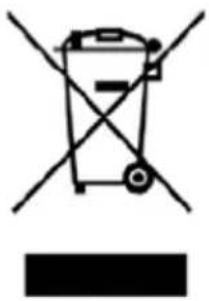
Symbol of a trash bin with crossed lines indicating no waste, and a solid black rectangle below (no text or labels)This device bears the selective sorting symbol for waste electrical and electronic equipment (WEEE). This means that this product must be taken into a selective collection system in accordance with European Directive 2012/19/EU so that it can either be dismantled or be recycled, and thus reduce the impact on the environment.
For more information, you can contact your local (town hall) or regional administration.
Electronic products that have not been sorted are potentially dangerous for the environment due to the presence of hazardous substances.
When this device reaches the end of its useful life, you must take it to a selective collection center for it to be destroyed and / or recycled.
Under no circumstances should you throw this device on the public highway.
Continental Edison
120-126 quai de Bacalan
33000 Bordeaux - France
natural_image
Two abstract gray semicircles on white background, no text or symbols presentContinental Edison

www.continentaledison.fr
CE