
WW1300-AB - Pump SCHEPPACH - Free user manual and instructions
Find the device manual for free WW1300-AB SCHEPPACH in PDF.


| Product type | Surface pump with tank |
| Brand | Scheppach |
| Model | WW1300-AB |
| Dimensions (L x W x H) | 490 x 280 x 580 mm |
| Power supply | 230 V ~ 50 Hz |
| Power consumption | 1300 W |
| Max flow rate | 4500 l/h |
| Max head height | 48 m |
| Max delivery pressure | 4.8 bar |
| Max suction height | 8 m |
| Hose connection | 25.4 mm (1") |
| Max water temperature | 35 °C |
| Power cable length | 1 m |
| Tank volume | 20 L |
| Protection rating | IPX4 |
| Main functions | Irrigation, watering, domestic water supply, clear water pumping |
| Maintenance and cleaning | Regularly clean the pre-filter, drain before frost, check tank pressure (max 1.5 bar) |
| Safety | Use a 30 mA residual current circuit breaker, do not operate when people are in the water, dry run protection |
| Spare parts | Use original Scheppach parts available from your dealer |
| Repairability | Repairs must be carried out by a qualified professional |
Frequently Asked Questions - WW1300-AB SCHEPPACH
User questions about WW1300-AB SCHEPPACH
0 question about this device. Answer the ones you know or ask your own.
Ask a new question about this device
Download the instructions for your Pump in PDF format for free! Find your manual WW1300-AB - SCHEPPACH and take your electronic device back in hand. On this page are published all the documents necessary for the use of your device. WW1300-AB by SCHEPPACH.
USER MANUAL WW1300-AB SCHEPPACH
natural_image
Exterior view of a modern industrial pump with black and gray casing (no visible text or symbols)| D | HauswasserwerkOriginalbetriebsanleitung | 3 |
| GB | House WatersystemOriginal operating instructions | 8 |
| F | Système domestique de pomage d’eauMode d’emploi d’origine | 13 |
| I | Centralina idricaIstruzioni per l’uso originali | 18 |
| PL | Pompa wodna domowego użytkuOryginalna instrukcja obsługi | 23 |
Fig.1
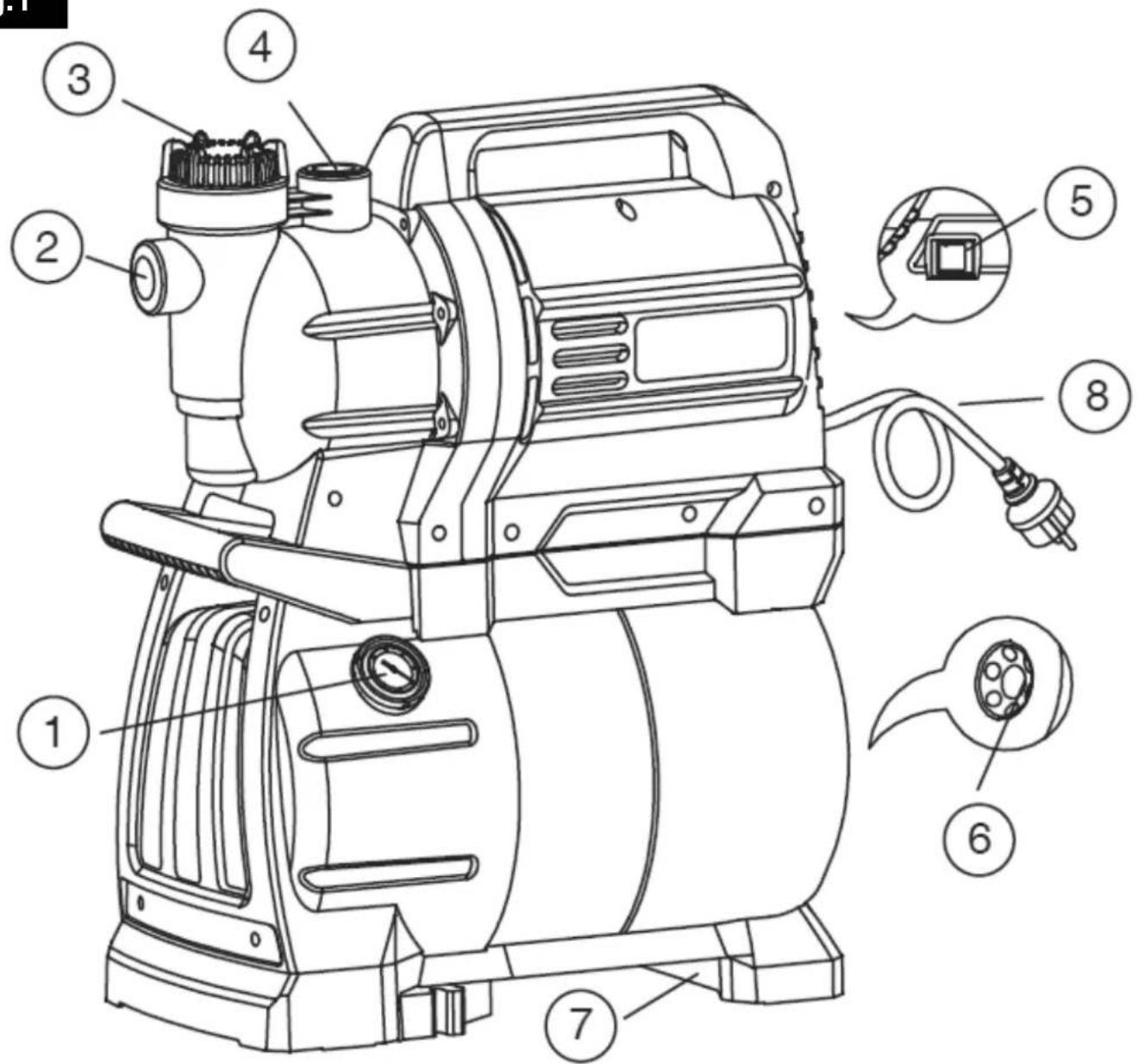
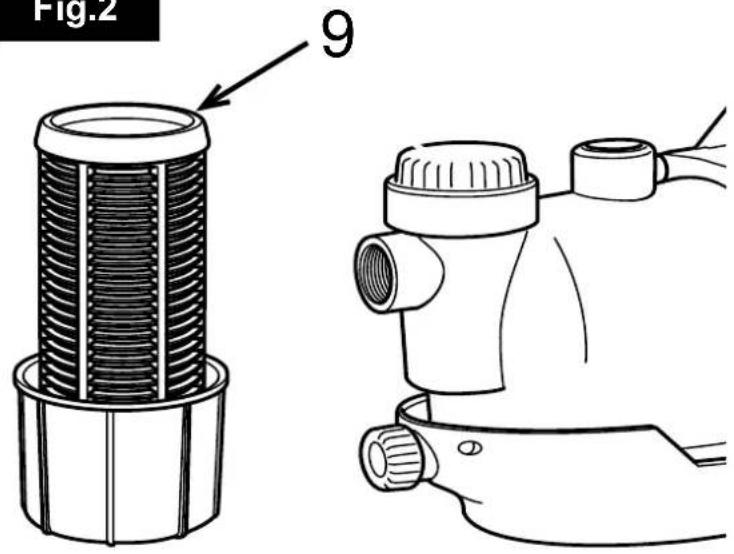
Fig.2
Günzburger Straße 69
D-89335 Ichenhausen
VEREHRTER KUNDE,
Explanation of symbols


Read operator manual. Before any use, refer to the corresponding section in this user manual.


Product corresponds to appropriate EU standards


These operating instructions provide places concerning your safety which are marked with this indication

Caution! The pump must be filled with water with every new connection and in the case of water loss or air intake. Operating the pump without filling it with water will destroy it!
Initiation
MANUFACTURER:
scheppach
Günzburger Straße 69
D-89335 Ichenhausen
Dear customer,
We wish you much pleasure and success with your new scheppach machine.
Note
According to the applicable product liability law the manufacturer of this device is not liable for damages which arise on or in connection with this device in case of:
- improper handling,
• non-compliance with the instructions for use, - repairs by third party, non authorized skilled workers,
- installation and replacement of non-original spare parts,
- improper use,
- failures of the electrical system due to the non-compliance with the electrical specifications and the VDE 0100, DIN 57113 / VDE 0113 regulations
We recommend
that you read through the entire operating instructions before putting the machine into operation. These operating instructions are to assist you in getting to know your machine and utilize its proper applications. The operating instructions contain important notes on how you work with the machine safely, expertly, and economically, and how you can avoid hazards, save repair costs, reduce downtime and increase the reliability and service life of the machine. In addition to the safety requirements contained in these operating instructions, you must be careful to observe your country's applicable regulations. The operating instructions must always be near the machine. Put them in a plastic folder to protect them from dirt and humidity. They must be read by every operator before beginning work and observed conscientiously. Only persons who have been trained in the use of the machine and have been informed of the various dangers may work with the machine. The required minimum age must be observed. In addition to the safety requirements in these operating instructions and your country's applicable regulations, you should observe the generally recognized technical rules concerning the operation of woodworking machines.
GENERAL NOTES
- After unpacking, check all parts for possible damage caused by transportation. In the event of complaints, you must contact the distributor without delay. Claims at a later stage will not be accepted.
-
Check that the delivery is complete.
-
Before handling the device, make yourself familiar with it by reading the operating instructions.
- For accessories, consumables and spare parts, only ever use original parts. Spare parts are available from your stockist.
- Include our item number, the device model and year of manufacture in your order.
Technical data
| Length x width x height mm | 490 x 280 x 580 mm |
| Mains connection 230V ~ 50Hz | |
| Power rating 1300 W | |
| Pumping rate max 4500 l/h | |
| Delivery head max. 48 m | |
| Delivery pressure max. 4,8 bar | |
| Suction height max. 8 m | |
| Hose connection 25,4 mm | |
| Length of mains con- nection cable | 1 m |
| Water temperature max. 35°C | |
| Vessel volume 20L | |
| Protection rating | IPX4 |
Scope of delivery
| Submersible Pump |
| Original operating instructions |
Device description (Fig. 1,2)
- Pressure gauge
- Suction connector
- Prefilter screw
- Pressure connector
- On-/Off Switch
- Compressed air valve
- Supporting foot
- Cable and Plug
- Prefilter
Safety regulations
Caution!
In stagnant water bodies, garden ponds, swimming ponds and their surrounding areas the unit may only be used with an earth-leakage circuit breaker with an actuating rated current of up to 30 mA (according to VDE 0100 Part 702 and 738). The equipment is not designed for use in swimming pools and paddling pools of any kind or other bodies of water in which people or animals may be present during operation. It is prohibited to operate the equipment if a person or animal is in the danger area. Ask your electrician! This appliance is not intended for use by persons (including children) with reduced physical, sensory or mental capabilities, or lack of experience and knowledge, unless they have been given supervision or instruction concerning use of the appliance by a person responsible for their safety. Children should be supervised to ensure that they do not play with the appliance
Important!
- Before you put the equipment into operation, arrange for a specialist to check that the
- earthing
- protective multiple earthing
- residual-current operated circuit-breaker circuit-comply with the safety regulations of the power supply company and work correctly.
- The electrical plug-in connections must be protected from wet conditions.
- If there is a risk of flooding, place the plug-in connections in an area which is safe from flooding
- Strictly avoid pumping aggressive liquids and abrasive substances.
- Protect the equipment from frost.
- Protect the equipment from dry running.
• Take suitable measures to keep the equipment out of the reach of children.
CAUTION!
Read all safety regulations and instructions.
Any errors made in following the safety regulations and instructions may result in an electric shock, fire and/or serious injury.
Keep all safety regulations and instructions in a safe place for future use.
Proper use
Applications
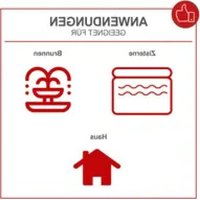
- Irrigation and watering of green areas, vegetable beds and gardens.
• Operation of lawn sprinklers. - Drawing of water (with pre-filter) from ponds, streams, rain barrels, rainwater cisterns and wells.
• Supplying water to the house.
Transport media:
- For the pumping of clear water (fresh water), rainwater or light suds/service water.
- The maximum temperature of the fluid must not exceed +35°C if the equipment is operated permanently.
- Do not use the equipment to pump inflammable, gassing or explosive fluids.
- The pumping of aggressive liquids (acids, alkalis, silo seepage etc.) as well as liquids with abrasive substances (sand) must likewise be avoided.
The equipment is to be used only for its prescribed purpose. Any other use is deemed to be a case of misuse. The user / operator and not the manufacturer will be liable for any damage or injuries of any kind caused as a result of this.
Please note that our equipment has not been designed for use in commercial, trade or industrial applications. Our warranty will be voided if the machine is used in commercial, trade or industrial businesses or for equivalent purposes.
Before putting the equipment into operation
Connecting the intake line
As a basic principle, we recommend the use of a preliminary filter and a suction set with suction hose, suction strainer and non-return valve, in order to prevent long priming periods and unnecessary damage to the pump as a result of stones and solid foreign bodies.
- The diameter of the suction line, whether hose or pipe, should be at least 25.4 mm (1"). If the suction height is more than 5m, approx. 33 mm (1 1/4") is recommended.
- Ensure that the connections are sealed as standard practice (gasket or Teflon tape).
- The intake hose used should have an intake valve. If the intake valve cannot be used, a check valve should be installed in the intake line.
- Position the intake line so that it rises from the water withdrawal point to the equipment. Avoid positioning the suction pipe higher than the pump, as this would delay the escape of air bubbles from the suction pipe and impede the priming process.
• Install the intake and discharge lines in such a way that they do not exert any mechanical pressure on the equipment.
- The intake valve should be low enough in the water to ensure that if the water level falls, the equipment will not run dry.
- A leaking intake line will draw in air and therefore not draw in any water.
- Avoid drawing in foreign bodies (sand etc.). If necessary, install a prefilter for this purpose.
Connecting the discharge line
- The discharge line (min. 19 mm (3/4")) must be connected to the 25,4mm female thread discharge line connector of the equipment either directly or with the aid of a threaded nipple.
- With the right couplings it is also possible, of course, to use a 13 mm (1/2") delivery hose. The smaller delivery hose results in a lower delivery rate.
- During the priming operation, fully open any shut-off mechanisms (spray nozzles, valves, etc.) in the pressure line so that the air can escape without obstruction.
Electrical connections
- Connect the appliance to a 230 V \~ 50 Hz socket-outlet with earthing contact. Minimum fuse 10 ampere.
- The appliance is switched on and off using the integrated ON/OFF switch.
- A built-in thermostat protects the motor from overloading and blocking. The pump is switched off automatically by the thermostat if overheating occurs and is switched on again automatically after cooling.
Operation
• Install the equipment on a solid and level surface.
- Unscrew the coarse filter screw (3) and remove the coarse filter (9) as shown in Figure 2. Now you can fill the pump housing with water via the coarse filter screw (3). Filling the intake line accelerates the intake process.
- Assemble in reverse order.
- Open the discharge line.
- Connect the mains cable.
- Switch on the equipment with the power switch (5) - water can be suctioned in for up to 5 minutes (maximum suction height).
- The unit turns itself off when the deactivating pressure of 3 bar is reached.
- When the pressure decreases owing to water consumption, the machine turns on automatically (activating pressure approx. 1.5 bar).
- The house water system can also be permanently installed indoors to be used as the house water supply. In order to minimise vibrations and noise, the pump should be connected to the pipe network with flexible hose lines. Placing anti-vibration material, such as a rubber layer, between the pump and its base is also recommended. Ensure secure fastening of the container using bolts which fit through the holes in the base.
Replacing the power cable
If the power cable for this equipment is damaged, it must be replaced by the manufacturer or its after-sales service or similarly trained personnel to avoid danger.
Cleaning, maintenance
The equipment is almost completely maintenance free. In order to ensure a long service life, however, we recommend that you regularly check and care for the product.
Important!
The equipment must be disconnected from the power supply (pull the power plug) prior to performing any maintenance.
Servicing
- If the equipment becomes clogged, connect the discharge line to the water line and disconnect the suction hose. Open the water line. Switch on the equipment several times for approx. two seconds. This should resolve the majority of clog-related problems.
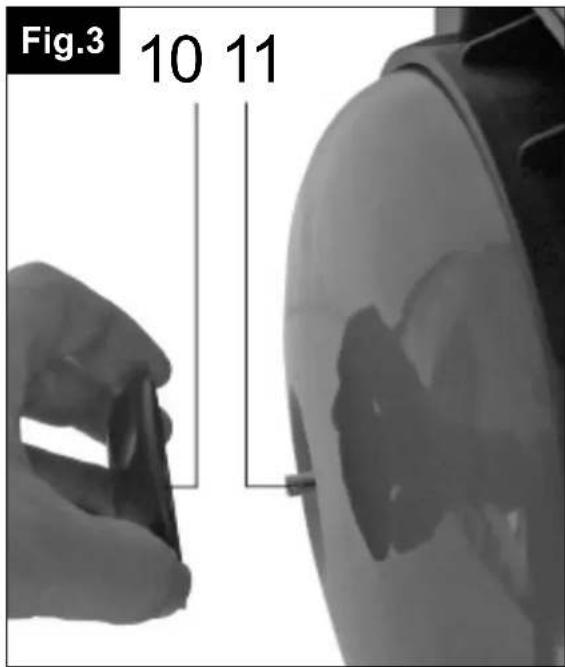
- The pressure in the pressure container should be a maximum of about 1.5 bar. If the air pressure is too low, it should be increased. For this, unscrew the valve cover (Fig. 3/No.10) on the container and make up the missing pressure via the valve (No. 11) using a tyre pump. Replace the valve cover afterwards.
- Replacing the mains cable: Important: Disconnect the equipment from the power supply! A defective mains cable may only be replaced by a qualified electrician.
- There are no parts inside the equipment which require additional maintenance.
Storage
- If the pump is not going to be used for a long time or has to be removed for the winter months, rinse it out with water, empty it completely and allow it to dry.
- The equipment must be completely drained before it is subjected to frost.
• After long stoppages, make sure the rotor turns correctly by briefly switching the pump on and off.
Storing
Store the device in a dry place beyond the reach of children. When the device is not being used, store it so it cannot be started by unauthorised persons.
WARNING!
Do not store the device without protection outside or in a damp environment.
Frost destroys the appliance and accessories, as these always contain water!
Disposal and recycling
The equipment is supplied in packaging to prevent it from being damaged in transit. The raw materials in this packaging can be reused or recycled. The equipment and its accessories are made of various types of material, such as metal and plastic. Defective components must be disposed of as special waste.
Troubleshooting
| Problem Possible cause Solution | ||
| The motor does not start up | Power supply not connected Check power supply | |
| Impeller blocked; the thermostat has switched off | Dismantle the pump and clean (by customer service workshop) | |
| Pump fails to prime | Non-return valve dirty Clean | |
| Pump housing without water I water into the pump housing | ||
| Air in the intake line Check the proper sealing of the intake line | ||
| Suction value leaks Clean suction value | ||
| Suction strainer (suction value) blocked | Clean suction strainer | |
| Max. intake height exceeded Check the intake height | ||
| Insufficient pumping rate | Intake height too high Check the intake height | |
| Coarse filter dirty Clean | ||
| Water level falling rapidly Place the intake line at a deeper level | ||
| Pump performance reduced by | Clean the pump and replace wear parts (by customer service workshop) | |
| Pump switches on and off too often | Pressure in the vessel is too low | Refill air into the vessel |
| Thermostat switches off the pump | Motor overloaded, friction through foreign bodies too high | Dismantle the pump and clean, prevent the intake of foreign bodies (filter) (by customer service workshop) |
Günzburger Straße 69
D-89335 Ichenhausen
Cher Client,
Günzburger Straße 69
D-89335 Ichenhausen
Gentile Cliente,
Günzburger Straße 69
D-89335 Ichenhausen
DROGI KLIENCIE
| 2009/105/EC | 89/686/EC_96/58/EC | |
| X 2014/35/EC | X 2006/42/EC | |
| 2006/28/EC | Annex IVNotified Body:Notified Body No.: 0 | |
| 2005/32/EC | ||
| X 2014/30/EC | 2000/14/EC_2005/88/EC | |
| 2004/22/EC | Annex V | |
| 1999/5/EC | Annex VINoise: measured L_WA =xx dB(A); guaranteed L_WA =xx dB(A)Notified Body: | |
| 97/23/EC | 2004/26/EC | |
| 90/396/EC | Emission. No: | |
| X 2011/65/EU | ||
Standard references: EN 55014-1:2006+A1+A2; EN 55014-2:1997+A1+A2; EN 61000-3-2:2006+A1+A2; EN 61000-3-3:2013; EN 60335-1:2012; EN 60335-2-41:2003+A1+A2; EN 62233:2008
Only for EU countries.
Do not dispose of electric tools together with household waste material! In observance of European directive 2012/19/EU on wasted electrical and electronic equipment and its implementation in accordance with national law, electric tools that have reached the end of their life must be collected separately and returned to an environmentally compatible recycling facility
FR

Apparent defects must be notified within 8 days from the receipt of the goods. Otherwise, the buyer's rights of claim due to such defects are invalidated. We guarantee for our machines in case of proper treatment for the time of the statutory warranty period from delivery in such a way that we replace any machine part free of charge which provably becomes unusable due to faulty material or defects of fabrication within such period of time. With respect to parts not
manufactured by us we only warrant insofar as we are entitled to warranty claims against the upstream suppliers. The costs for the installation of the new parts shall be borne by the buyer. The cancellation of sale or the reduction of purchase price as well as any other claims for damages shall be excluded.
Garantie FR

- VEREHRTER KUNDE,
- Explanation of symbols
- Initiation
- MANUFACTURER:
- scheppach
- Dear customer,
- Note
- We recommend
- GENERAL NOTES
- Scope of delivery
- Device description (Fig. 1,2)
- Safety regulations
- Caution!
- Important!
- Proper use
- Applications
- Transport media:
- Before putting the equipment into operation
- Connecting the intake line
- Connecting the discharge line
- Electrical connections
- Operation
- Replacing the power cable
- Cleaning, maintenance
- Servicing
- Storage
- Storing
- WARNING!
- Frost destroys the appliance and accessories, as these always contain water!
- Disposal and recycling
- Cher Client,
- Gentile Cliente,
- DROGI KLIENCIE
- FR
- Garantie FR
Brand : SCHEPPACH
Model : WW1300-AB
Category : Pump