
POG - Air conditioner Vevor - Free user manual and instructions
Find the device manual for free POG Vevor in PDF.
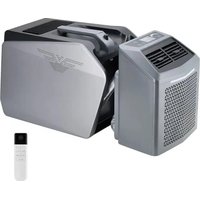


| Product Type | Portable Air Conditioner |
| Model | POG |
| Brand | Vevor |
| Dimensions (L x W x H) | 320 x 580 x 346 mm |
| Net Weight | 17.5 kg |
| Power Supply | AC 110 V ~ 60 Hz / DC 48 V (North America model); AC 220 V ~ 50/60 Hz / DC 48 V (EU/Australia model) |
| Rated Power | 500 W |
| Cooling Capacity | 5000 BTU |
| Refrigerant | R290 (120 g) |
| Temperature Range | 16 °C to 30 °C |
| Noise Level | < 60 dB |
| Operating Modes | Cooling, dehumidification, ventilation, sleep |
| Fan Speed | High, medium, low |
| Compressor Protection | 3-minute delayed restart |
| Anti-Freeze Protection | Yes |
| Power Loss Memory | Yes |
| Anti-Overflow Function | Yes (error code E4) |
| Drainage | Automatic and manual |
| Exhaust Hose Length | Exhaust pipe (1 large, 1 small) + 2 connectors |
| Air Filter | Washable, clean every month |
| Remote Control | Yes |
| Included Parts | Main unit, manual, exhaust hoses, drain hose (7 mm), remote control, 2 connectors, power cord, 3M adhesive, 2 flat-head interfaces |
| Repairability | Contact a certified professional; repair by non-professional is dangerous |
| Energy Class | Not specified |
Frequently Asked Questions - POG Vevor
User questions about POG Vevor
0 question about this device. Answer the ones you know or ask your own.
Ask a new question about this device
Download the instructions for your Air conditioner in PDF format for free! Find your manual POG - Vevor and take your electronic device back in hand. On this page are published all the documents necessary for the use of your device. POG by Vevor.
USER MANUAL POG Vevor
Technical Support and E-Warranty Certificate www.vevor.com/support
PORTABLE AIR CONDITIONER MODEL: POG
We continue to be committed to providing you with tools at competitive prices. "Save Half", "Half Price", or any other similar expressions used by us only represent an estimate of savings you might benefit from buying certain tools with us compared to the major top brands and do not necessarily mean to cover all categories of tools offered by us. You are kindly reminded to verify carefully when placing an order with us if you are actually saving half in comparison with the top major brands.
MODEL: POG
NEED HELP? CONTACT US!
Have product questions? Need technical support? Please feel free to contact us:
Technical Support and E-Warranty Certificate www.vevor.com/support
This is the original instruction. Please read all manual instructions carefully before operating. VEVOR reserves a clear interpretation of the user manual. The appearance of the product shall be subject to the product you received. Please forgive us that we won't inform you again if there are any technology or software updates on our product.
Thank you for purchasing this portable air conditioner. Please read the entire manual carefully before use. This manual serves as a general guide for operation of your portable air conditioner. Please note that some details may differ slightly from your specific model. However, the basic functions and safety guidelines outlined here will apply to your unit. While your machine may vary in certain aspects such as available modes or control panel layout, the fundamental operation and use should be consistent with what is described. Please take a few minutes to read through the manual fully and familiarize yourself with the features of your portable air conditioner before use. Refer closely to your unit itself to identify any variations from what is shown. Enjoy your new portable air conditioner!
- Do not use it near open fire.
- Do not change the state of the split body or the combination when startup is running. Please perform the action of the split body or the combination under shutdown.
- The outer machine is outdoors, the inner machine is indoors. Under the s| can not use the exhaust pipe.
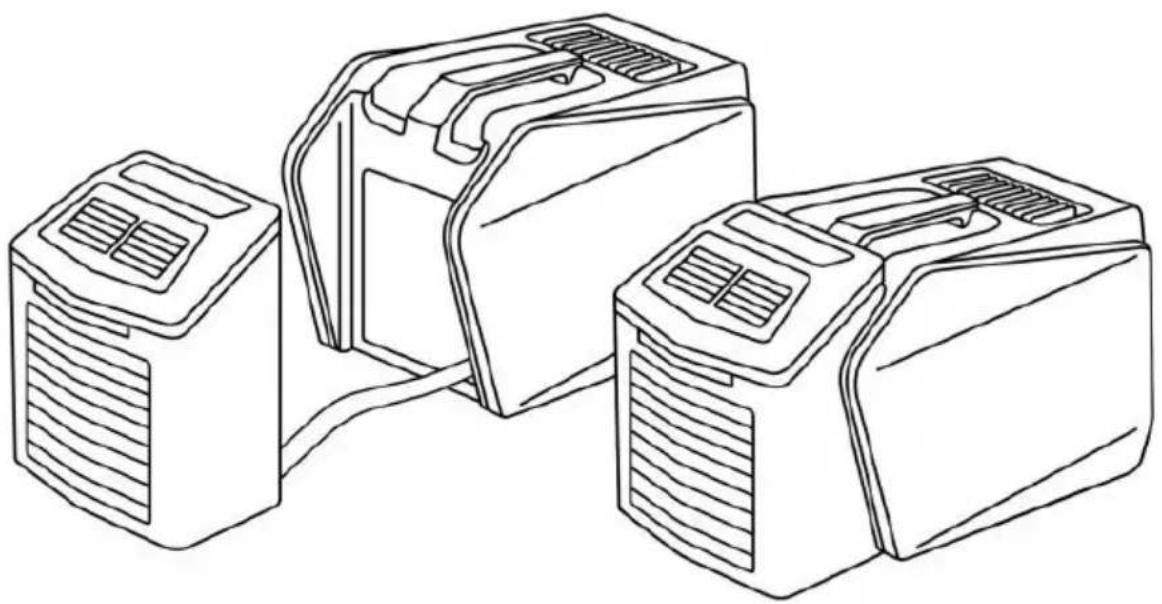
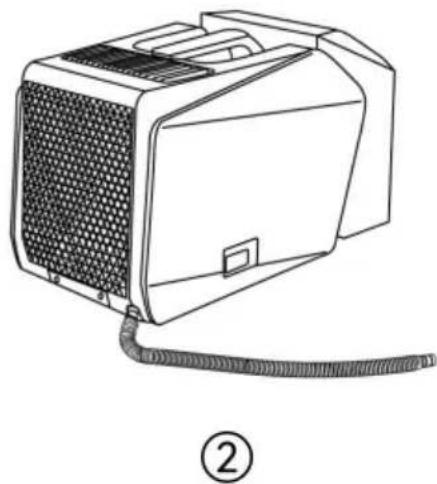
- When the whole machine is used together, it is recommended to use two exhaust pipes, which can achieve continuous cooling in the internal circulation, and the overall cooling effect is better!
- When the remote control is matched, long press the "-" minus button on the air conditioner, and after the screen flashes, then press the opening key of the remote control.
- When the adapter is used, please erect the adapter, which is conducive to heat dissipation. The adapter heating is normal.
- When using outdoors or in a car, pay attention to the corresponding voltage input. If it is a 48V model, it can directly access 48V voltage. For 12V or 24V batteries, please boost to 48V before connecting to the air conditioner.
- Condensate water will be produced during the refrigeration process. The better the refrigeration effect, the more condensate water. In humid areas, there may be normal automatic drainage, but if it cannot consume excessive condensate water, please use manual drainage. After using the air conditioner, please manually remove residual condensate water.
R290 refrigerant warning language
- Please read this manual before installation, use, and maintenance.
- Do not use any method to accelerate the defrosting process or clean the frosting part except as specifically recommended by the manufacturer.
- Do not puncture or ignite the air conditioner.
- The air conditioner shall be stored in rooms without continuous ignition sources (e.g., gas appliances ignited by open flame, electric heaters, etc.).
- In case of maintenance, please contact the nearest after-sales service center. Strictly follow the operation manual provided by the manufacturer and prohibit maintenance by non-professionals.
- Should comply with the relevant national gas laws and regulations.
- Remove the refrigerant from the cleaning system for maintenance or scrapping.
The air conditioner uses an environmentally friendly R290 refrigerant.
This is a slightly combustible refrigerant. Although it can burn and explode under certain conditions, as long as you follow the table below, use it in a room with the appropriate area, and use it correctly, there is no risk of combustion or explosion.
Compared with ordinary refrigerants, R290 is an environmentally friendly refrigerant that does not destroy the ozone layer, and its greenhouse effect value is also very low.
| NO. | PICTURE | NAME | QTY |
| 1 | 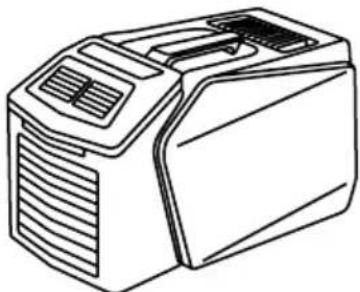 | Air conditioning host | 1 |
| 2 |  | operating instruction | 1 |
| 3 | 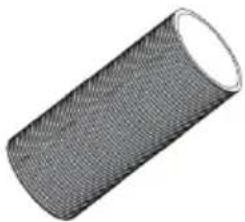 | The exhaust pipe | 1 |
| 4 | 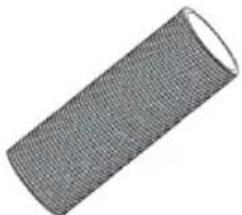 | Small exhaust pipe | 1 |
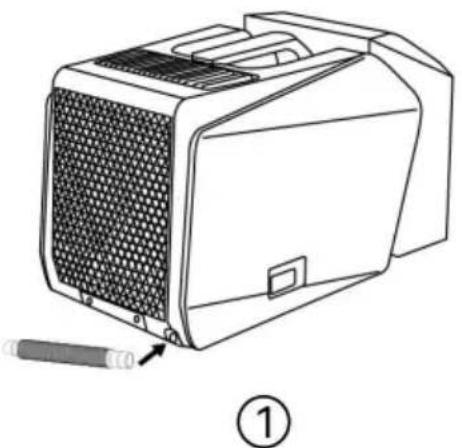
| 5 | 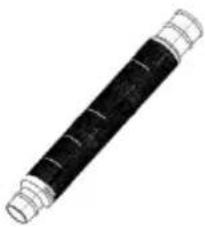 | drain pipe (inner diameter:7mm) | 1 |
| 6 | 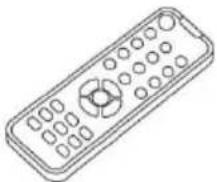 | Remote | 1 |
| 7 | 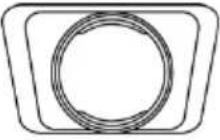 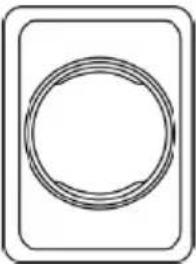 | joint | 2 |
| 8 | 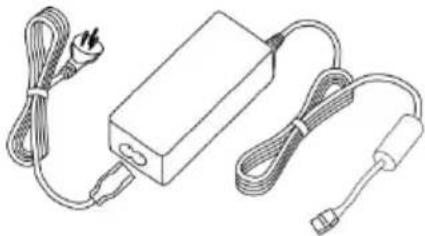 | Power cord | 1 |
| 9 | 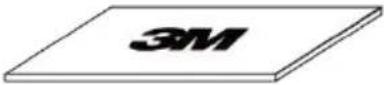 | 3M adhere | 1 |
| 10 | 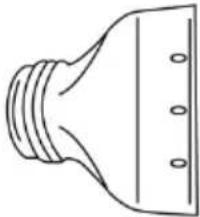 | Flat-head interface | 2 |
| Product name | Portable air conditioner | ||
| Product model | POG | POG | POG |
| Rated voltage/frequency | DC48V AC110V~60Hz | DC48V AC220V~50/60Hz | DC48V AC220V~50/60Hz |
| Cooling capacity | 5000BTU | ||
| Rated power | 500W | ||
| Refrigerants | R290/120g | ||
| Temperature Range | 16-30°C | ||
| Noise | <60dB | ||
| Body dimensions | 320x580x346mm | ||
| Unit net weight | 17.5kg | ||
① After the machine is purchased, please place it for two hours according to the direction of the arrow on the carton. After each shutdown, wait at least 5 minutes before starting the machine again. ② Before using the machine, distinguish the cold air end and hot air end according to the logo on the machine. The air outlets at both ends are the air outlets, and the bottom is the air inlet. It is strictly prohibited to block the hot air outlet; keep an unobstructed space of at least 60 cm. Keep at least a 10 cm gap on both sides of the machine. ③ The power supply must meet the standard. ④ The socket must be alternating current. ⑤ Never share the same socket with other electrical appliances simultaneously. ⑥ Power supply and voltage requirements: AC 110V-60Hz/DC24V for North America; 220V-50Hz/DC24V for the European Union and Australia. ⑦ The air conditioner temperature ranges from 16°C to 30°C.
WARNING MATTERS:
Use the appliance as described in the Instructions for Use Guide.
- Like other electrical appliances, this instruction manual aims to include warnings of events as much as possible and the usual practices needed in the operation and installation of the electrical appliance.
- Children or people without self-care ability are prohibited from using this product when unsupervised.
- The electrical appliance is designed for household indoor use and cannot be used for other purposes.
- If the power cord is damaged, it must be replaced by the manufacturer, service agent, or equivalent organization to avoid danger.
- Any change or replacement of the appliance characteristics is very dangerous.
- If the appliance needs to be repaired, please contact the technical service center authorized by the manufacturer. Adhere to the use of original vulnerable parts. Repairs by unauthorized individuals are dangerous and the warranty is invalid.
- The electrical appliance must be installed with grounding, and the internal circuit must be tested by technical personnel with electrical qualifications.
- Do not use the electrical appliance outdoors.
- Do not plug the air outlet and air inlet.
- No external cable lines shall be used.
- Pull out the power plug before cleaning or maintaining the appliance. Do not pull the cable to move the appliance.
- Please do not install the electrical appliance in a room with natural gas, gasoline, and sulfur, and it cannot be installed close to a heat source.
- Do not use the electrical appliance on a slope.
- Be sure to maintain a distance of at least 45 cm from flammable materials (such as alcohol) or durable containers (e.g., aerosol tanks).
- Do not place heavy objects or hot objects on top of the machine. Clean the filter screen regularly.
- During transportation, keep the appliance upright and do not lay it on its side. Before moving the appliance, empty the water tank. After transportation, wait half an hour before starting it.
- R290 is a refrigerant that complies with relevant environmental standards. The refrigerant circuit in the appliance is sealed. At the end of its service life, please take the appliance to a specialized recycling center.
- Packaging materials are recyclable, so please dispose of them in the appropriate recycling bins.
- Installation of the appliance must comply with relevant national laws and regulations.
POWER
If you move the appliance, wait half an hour before restarting it. Before plugging in, check the following:
- The main power supply meets the requirements indicated on the appliance's nameplate.
- The power outlet and circuit are suitable for this appliance.
- If the plug does not match the outlet, have a qualified electrician replace it with a matching plug.
- The power outlet must be grounded.
- Electrical cables must be replaced by approved service personnel. The manufacturer is not liable for damage caused by failure to follow safety rules.
- If the appliance has Wi-Fi, its transmission power is less than 20 dBm. The RF range is 2412 MHz–2472 MHz.
PRODUCT OVERVIEW
- The working modes of this product include: cooling mode, sleep mode, dehumidification mode, and fan mode.
- This product consists of main board, remote control, display panel, sensor, compressor, internal and external motor, etc.
- This product has anti-freezing protection, compressor 3-minute protection, fault protection, power loss memory, and other functions.
- The product is manufactured by default.
Compressor protection
The minimum time to start again after the compressor stops is 2 minutes. You do not need to wait for 2 minutes for the first power on. Before power off, you do not need to wait for 2 minutes to power on again, but you need to wait for 2 minutes after power on. The compressor shall run for at least 2 minutes after starting, even if shutdown conditions are met, it does not run for 2 minutes, except for shutdown.
Power-off memory
Standby before power failure, or set the timing shutdown function, and when powered again, it enters standby.
Before power off, the original mode, set temperature, wind speed, temperature unit, water motor enabling switch, etc., are remembered.
Anti-overflow function
When the water level of the air conditioner is full, the ash icon will flash the E4 fault sign. The compressor stops working until the water level returns to normal.
Fault protection
If the air conditioner is abnormal, the sensor is open or broken, it stops working. Please hand it over to a professional after-sales service center.
OPERATION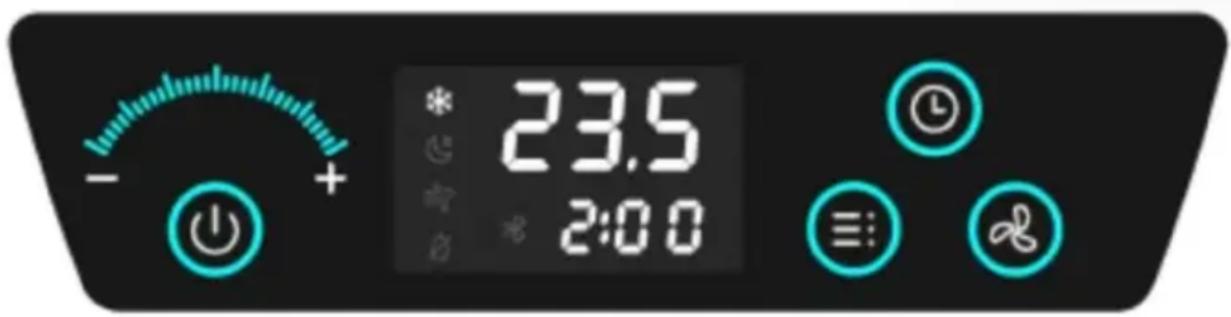
2.1.1 [Switch] key
Press the [switch] key to start up from standby, and press the [switch] again to enter standby.
2.1.1 The [Mode] key
Press [mode] to switch between "Refrigeration", "Sleep", "Dehumidification", and "Air supply" modes.
2.1.3 [Wind speed] key
In refrigeration and air supply modes, pressing the [Wind speed] key toggles the fan output between high, medium, and low wind speeds. This button is inactive in sleep and dehumidification modes.
2.1.4 [+], [-] keys
In refrigeration and sleep modes, press [+] and [-] to adjust the set temperature (press and hold + or - for 3 seconds to switch to degrees Fahrenheit).
2.1.5 [Timing] key
This button is only available on the remote control, not on the display panel.
Press the [Timing] key to set the timing shutdown, then press [+] and [-] to adjust the shutdown time.
Shutdown time;
Press [Timing] to set the timing start, and press [+] and [-] to adjust the timing start time.
2.1.6 [Music] key (suitable for sound model)
When on standby, press the [Music] key to turn on the stereo. Press the [Music] key again to turn off the stereo.
OPERATION
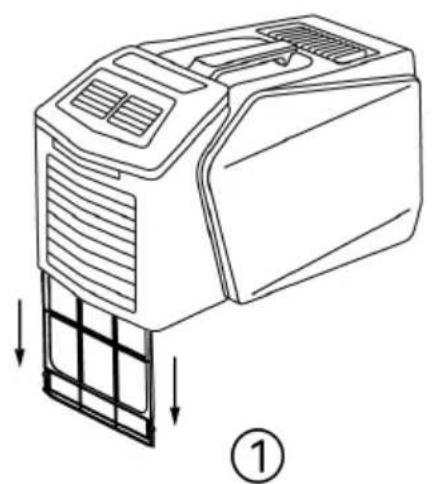
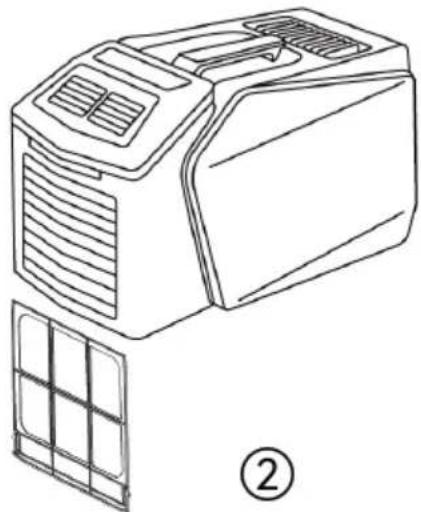
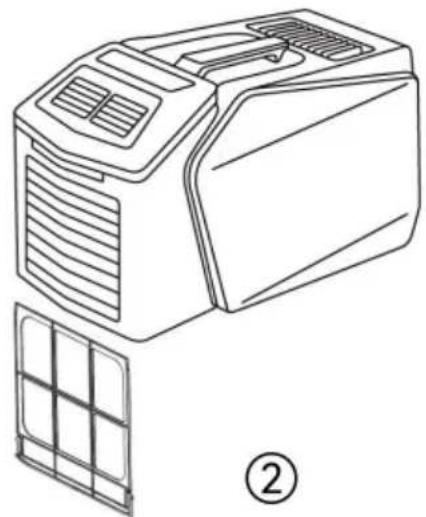
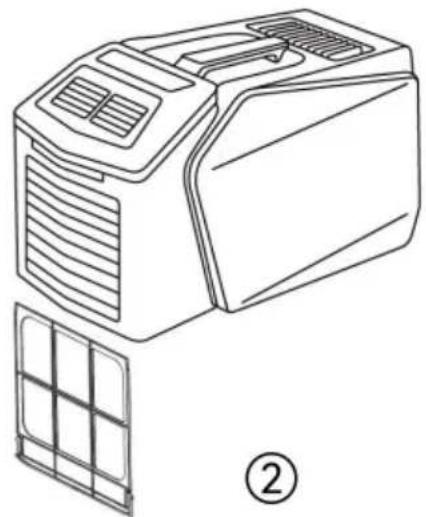
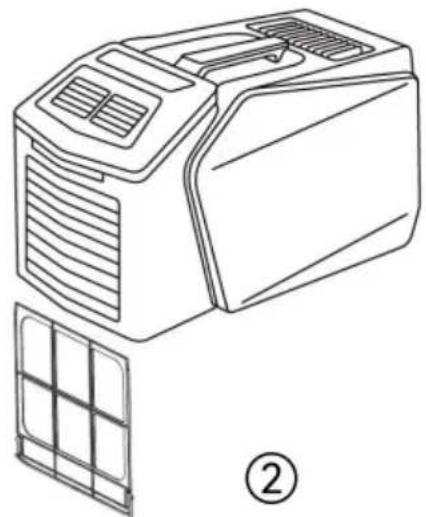
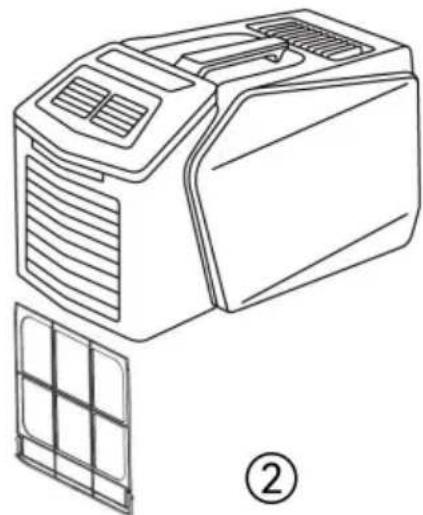
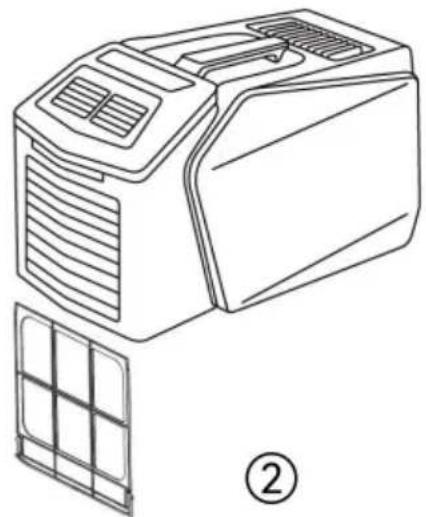
FILTER NETWORK INSTALLATION
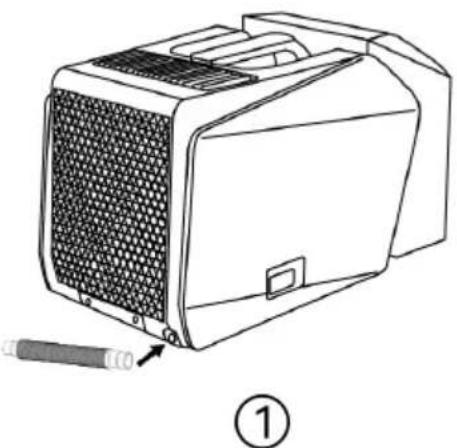
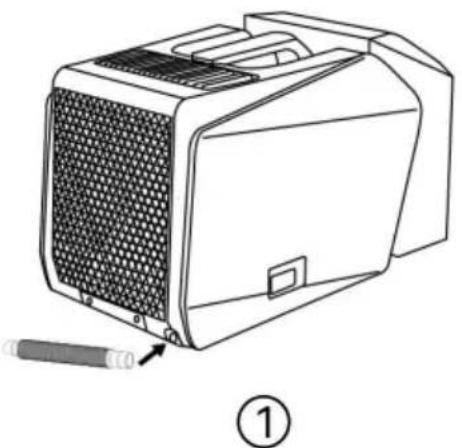
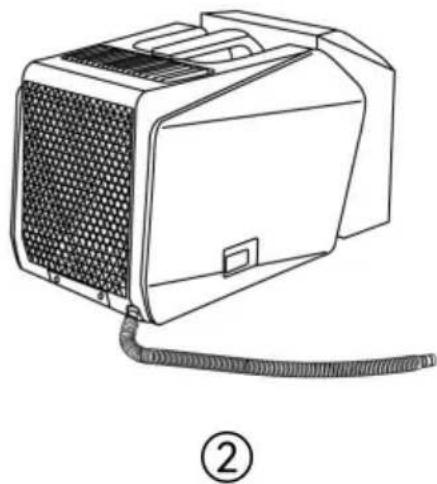
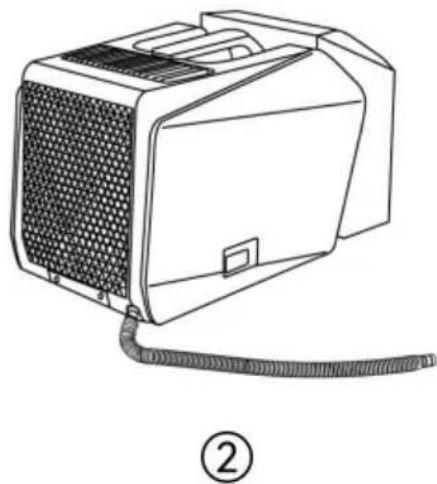
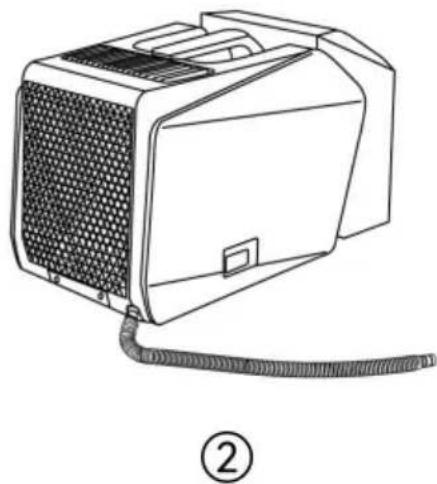
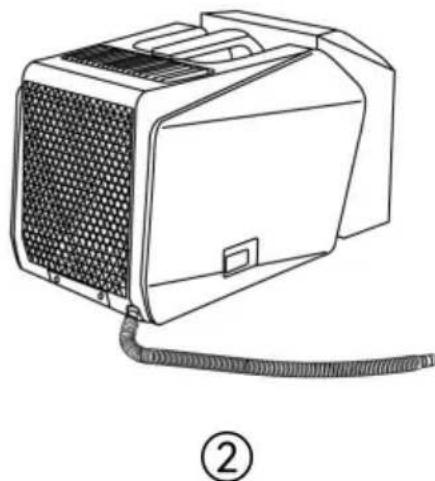
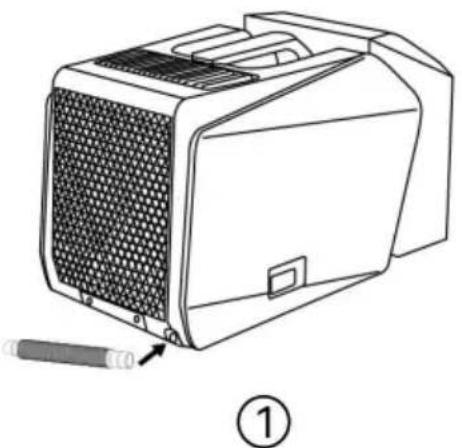
DRAINAGE PIPE INSTALLATION

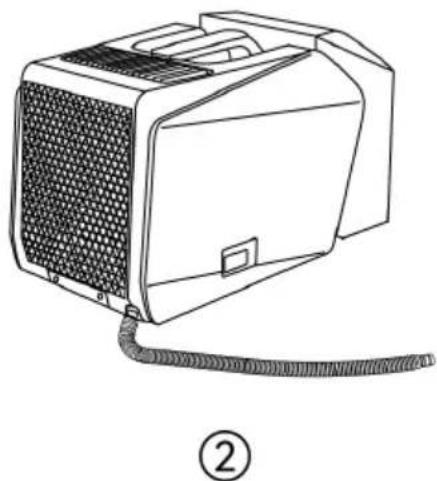
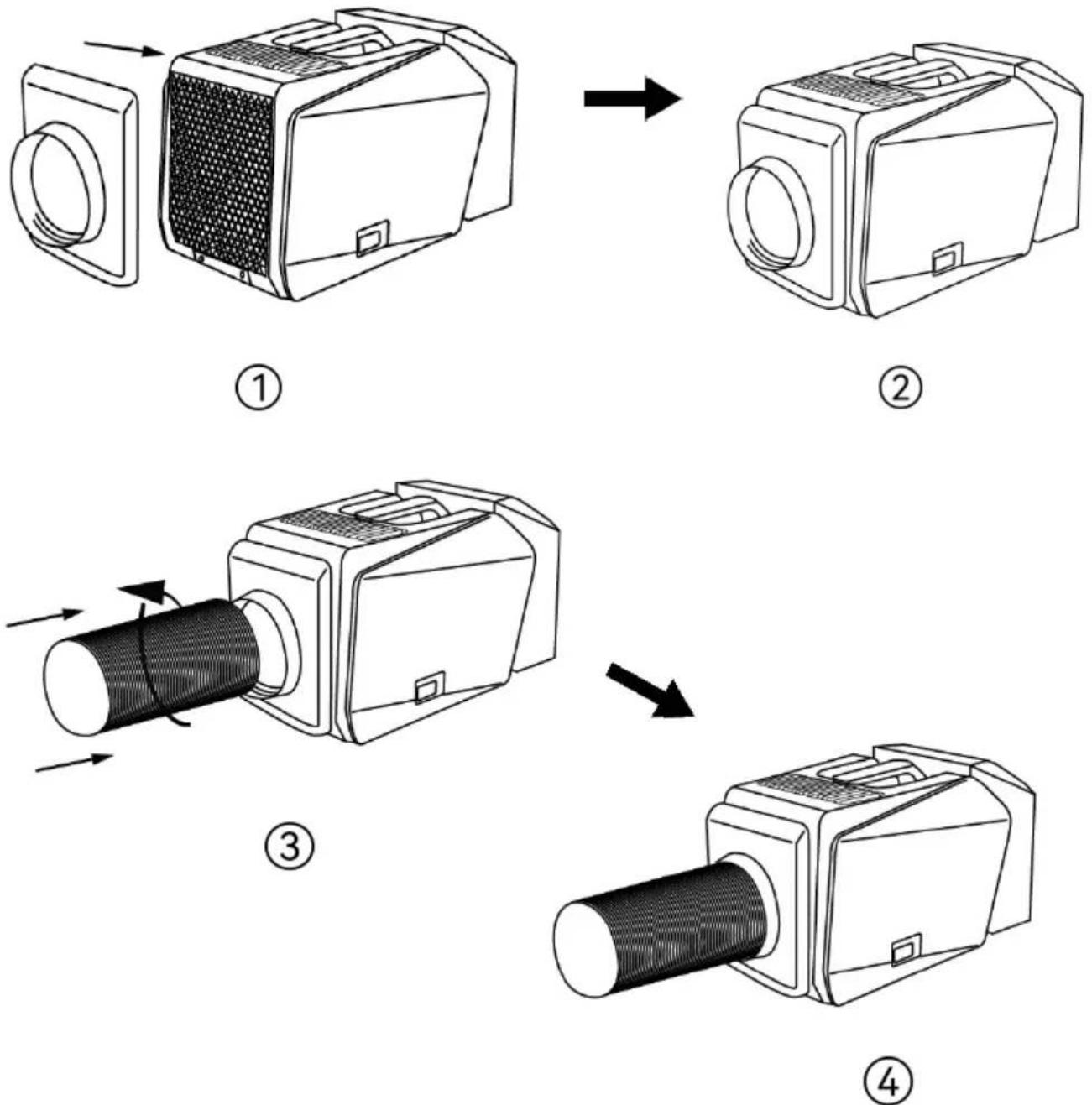
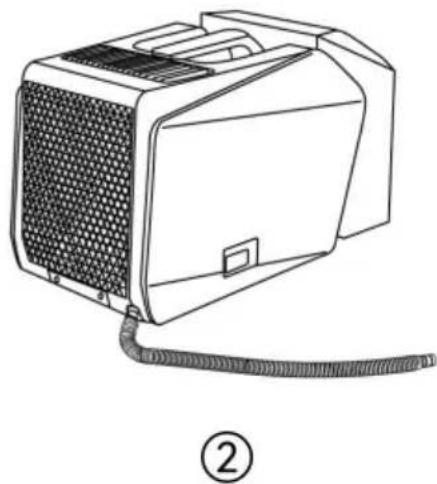
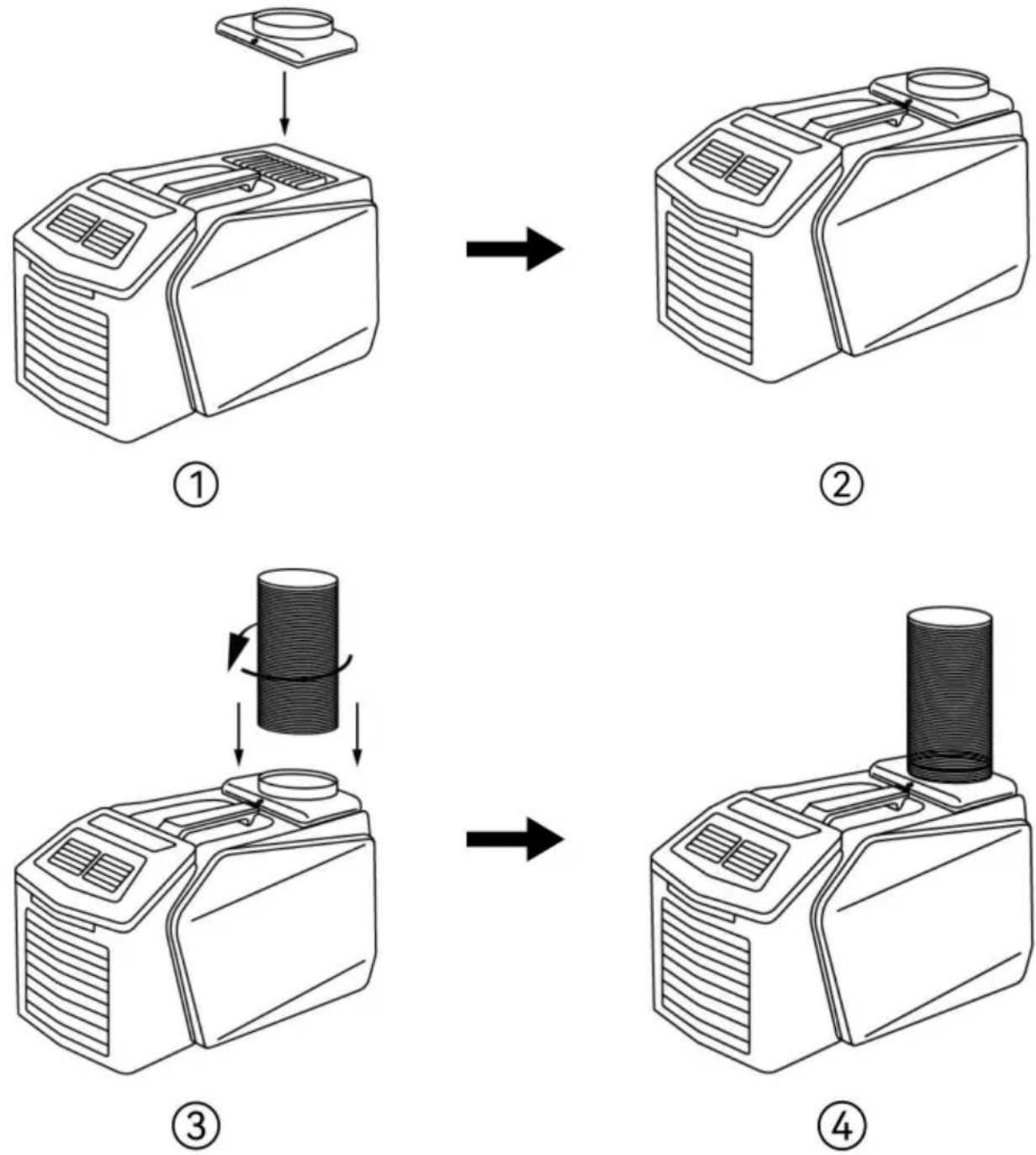
INSTALL THE FRONT AIR EXHAUST PIPE
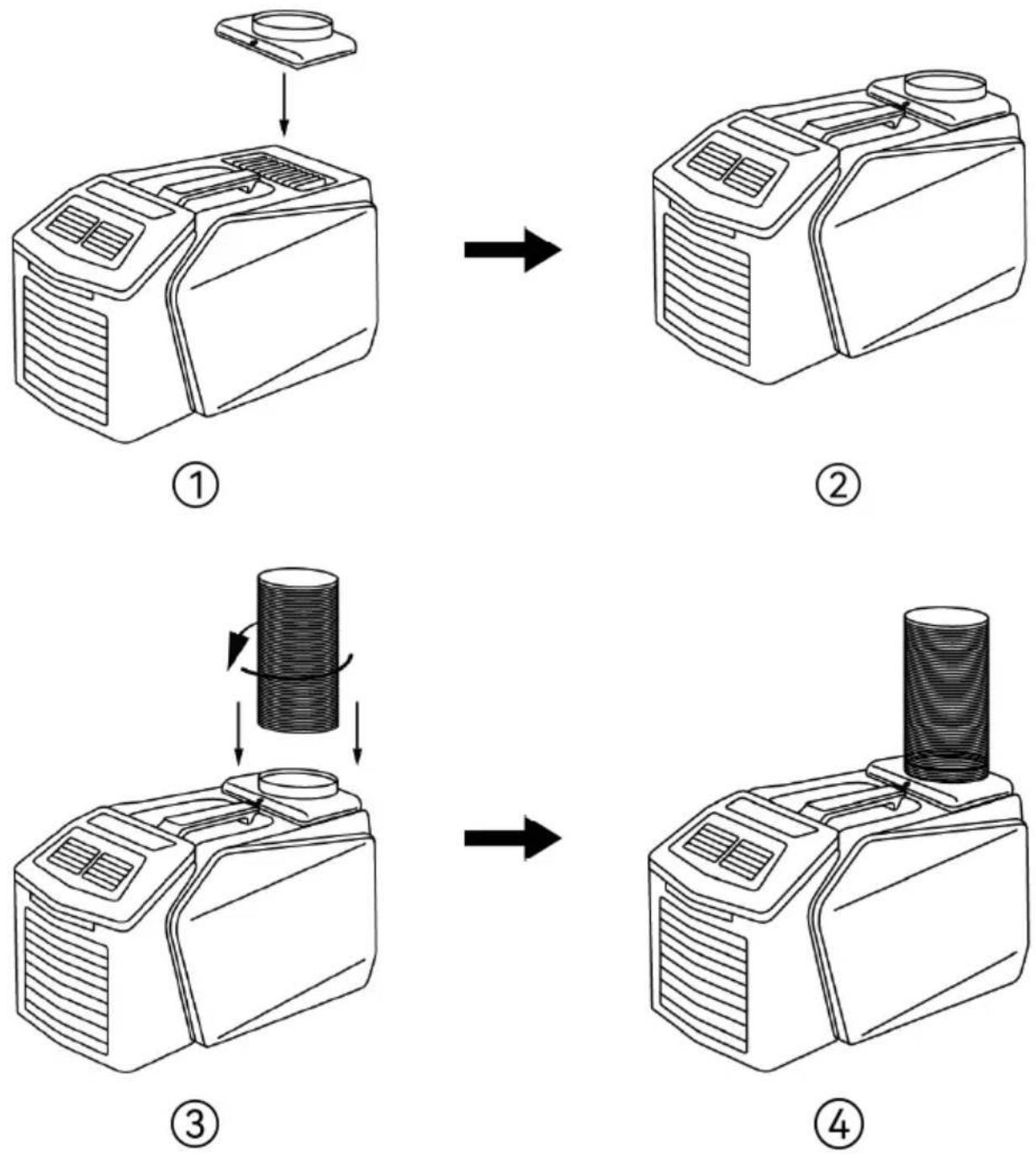
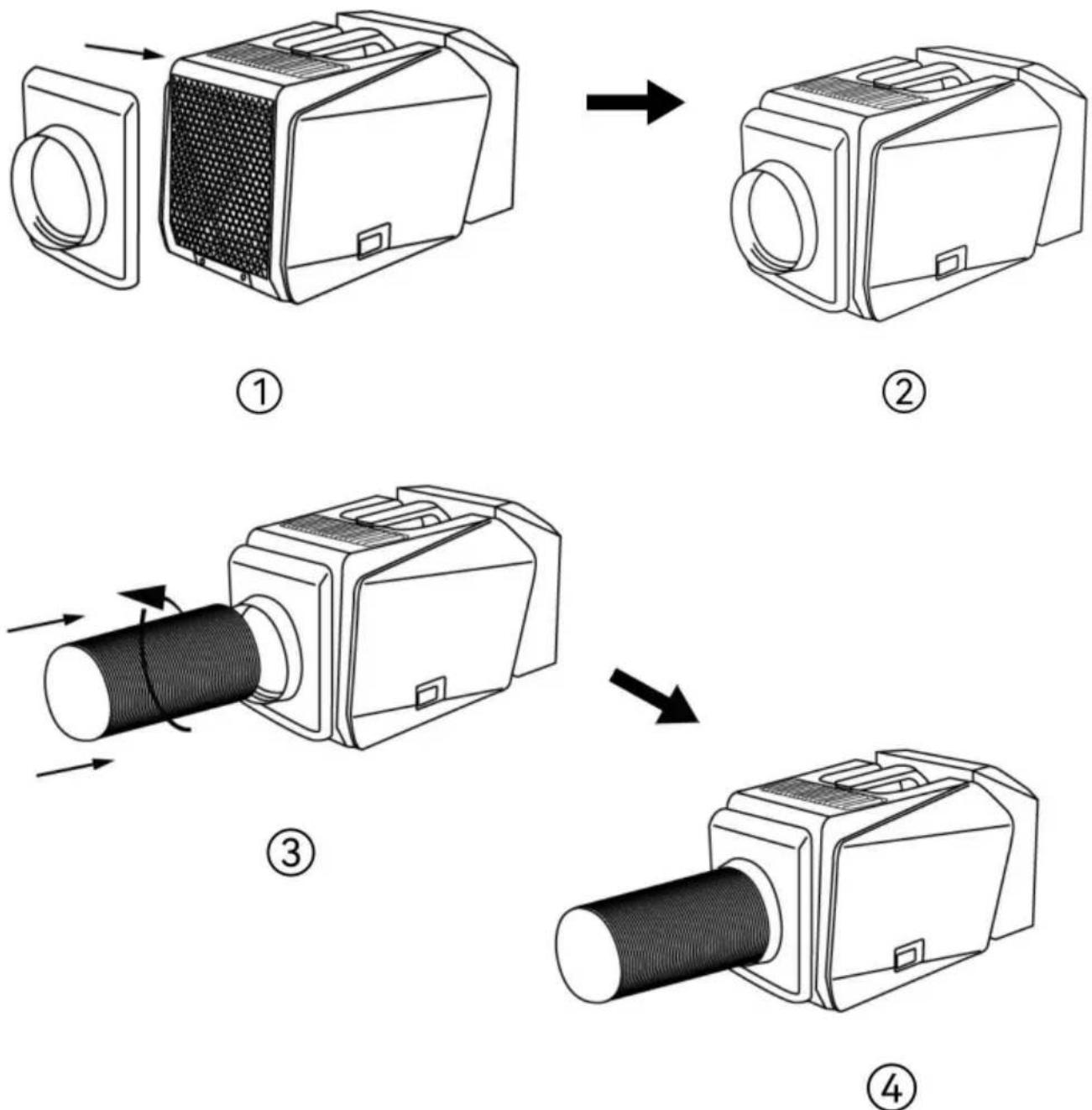
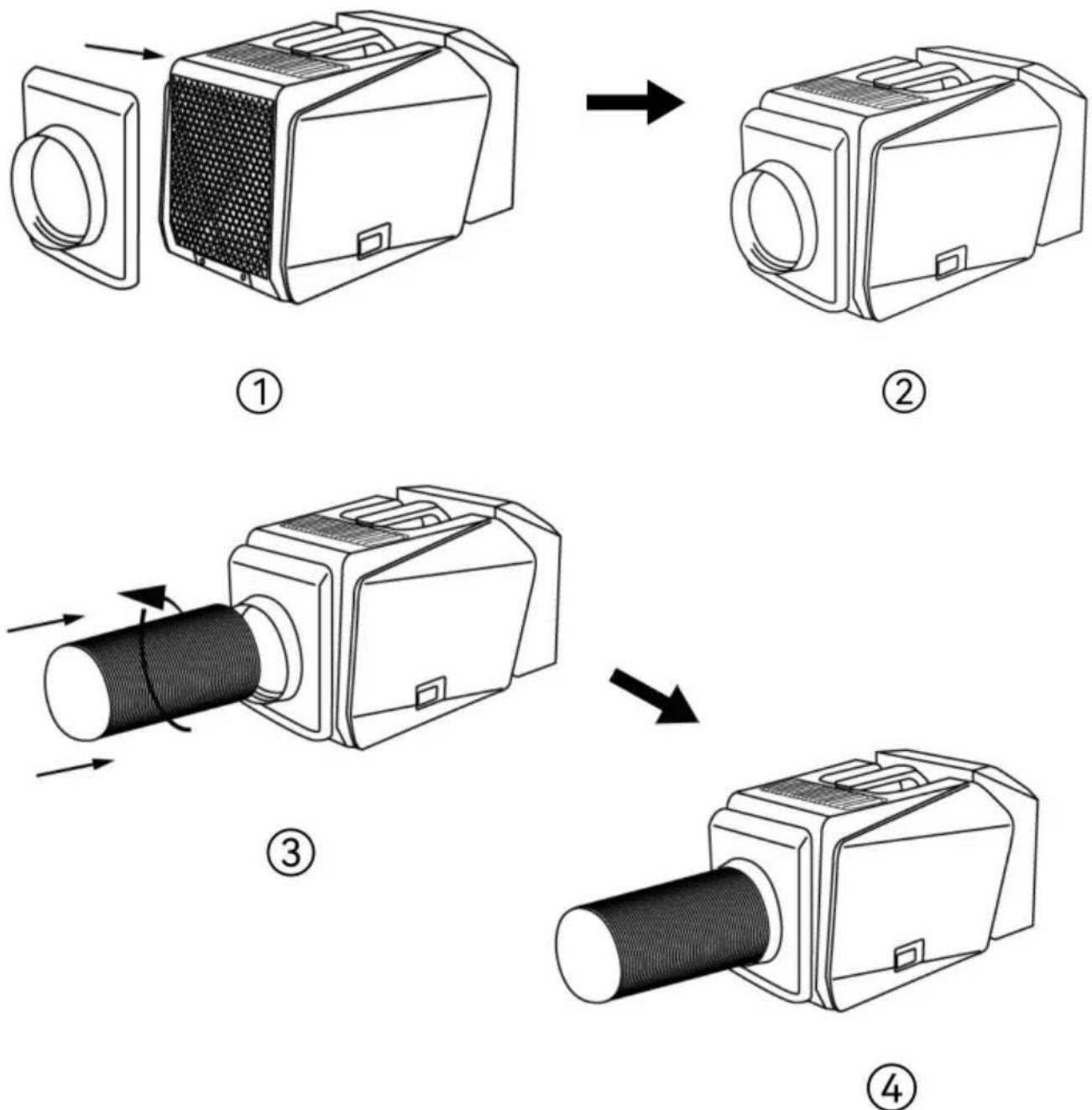
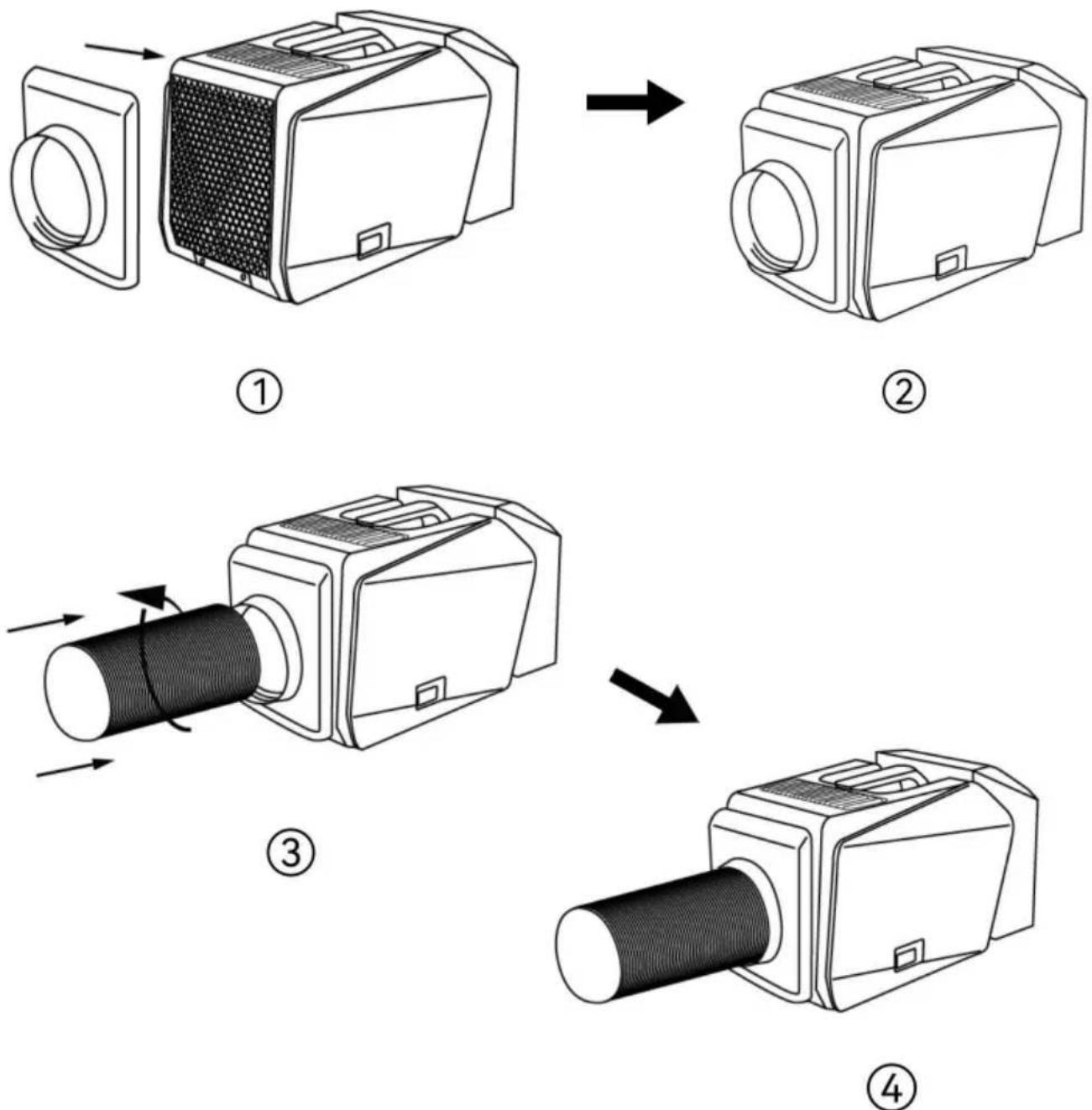
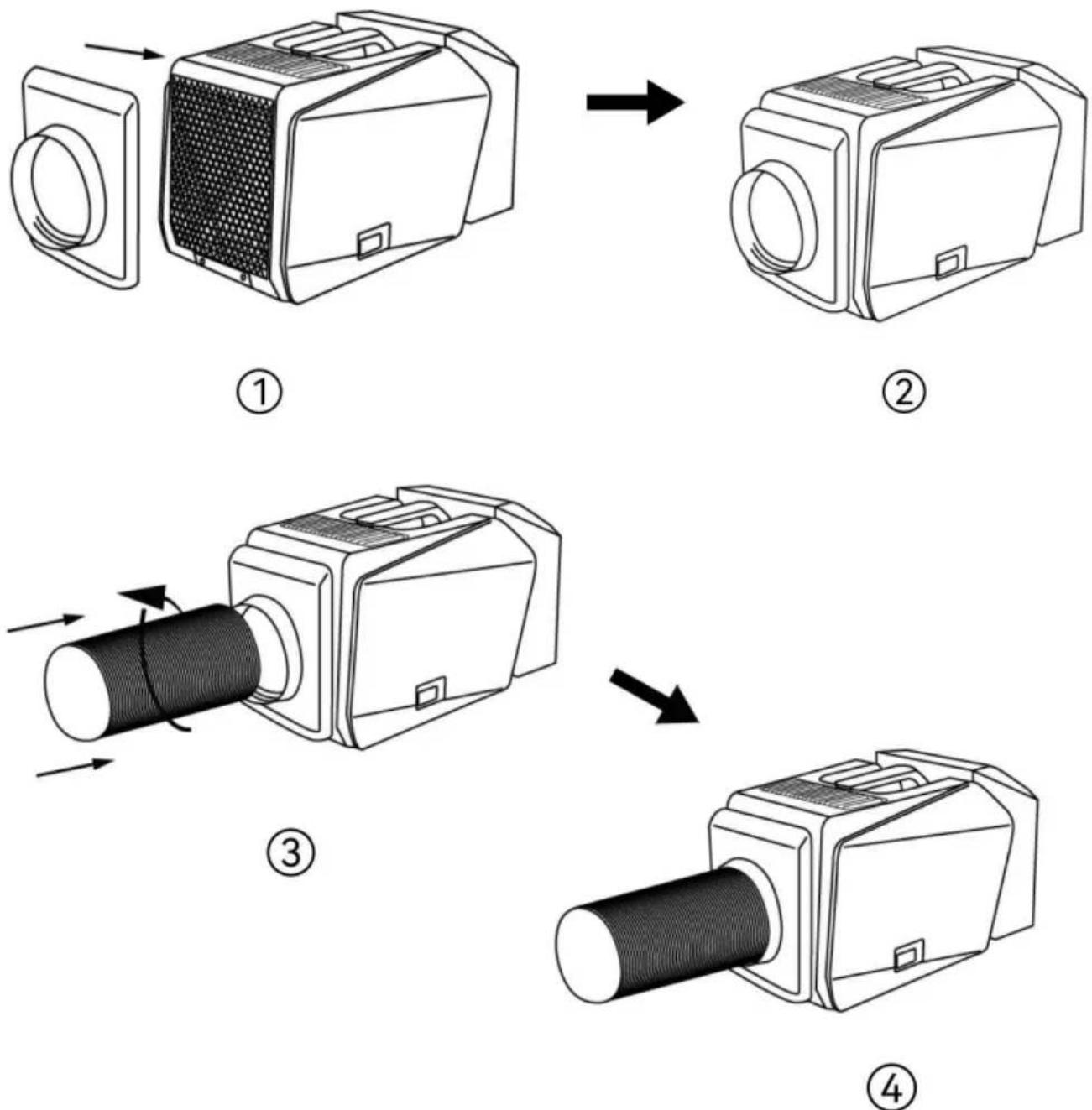
INSTALL THE REAR AIR EXHAUST PIPE
| HITCH | CHECK UP | MEASURE |
| The machine cannot be turned on | 1Power-on?2Is the plug allowed come loose?3Is it turned off?4Is it not turned on?5Do the internal connections fall off? | 1Plug in2Plug in the socket3Reboot4Tap the power switch button twice.5Open the large iron cover and plug in the connecting cable |
| The cooling effect is not good | 1Is the filter screen covered in dust?2Is the air inlet or a outlet blocked?3Is the space too big or the doors and Windows are not concerned about good?4Other heating equipment in the room?5Is the exhaust pipe not well connected or is blocked? | 1Clean the filter2Clean up blocked objects3Use and bed matching mosquito net close the doors and Windows4Remove heating equipment5Reattach or clean the exhaust duct |
| Too much noise and too much vibration | 1Is the machine placed horizontally?2Filter mesh blockage?3Internal refrigerant flow?4Are other objects placed or touched on the host machine?5Internal "zero zero" sound | 1The machine is placed horizontally2Clean the filter3This is a normal phenomenon4Clean up useless things5Find the after-sales department for repair |
| Make water | 1is the host being placed horizontally?2Gains or drain are blocked3Too muchaccumulated condensate | 1Place the host machine horizontally2Clean the drains and drains3Remove thecondensate from the bucket |
| Wrong with | Whether the machine is useless for a long time, the machine is placed for a long time, will absorb the smell of furniture, whe the machine runs, the smell floats out of the machine. | Run the machine for to 5 minutes, and the gas will disappear |
Note:
The actual product may differ from the one shown. If repair is needed, please contact the seller or a professional repair service.
MAINTENANCE AND SERVICE
Statement:
① Before cleaning, make sure the machine is unplugged. ② Do not use gasoline or other chemical solvents to clean the machine. ③ Do not clean directly with water. ④ If the machine is damaged, please contact your local retailer or repair center.
Screen
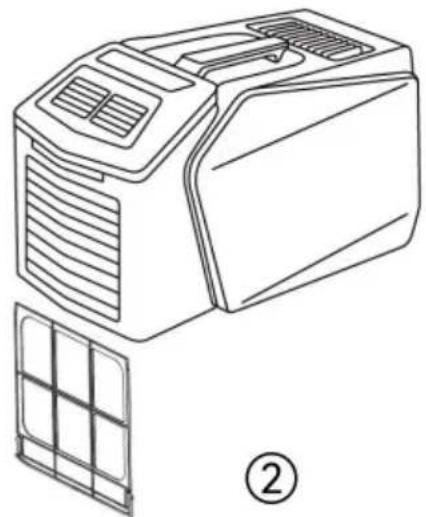
Clean the filters once a month. Method: As shown in the figure, use a small Phillips screwdriver to remove the filter fixing screw, pull out the filter, then soak it in 40°C warm water mixed with a neutral detergent. Use a brush to remove debris from the filter, then let it dry in a cool place. Reinstall the filter in its original position and secure it with the screw.
Surface cleaning
Wipe with a neutral detergent or alcohol on a damp cloth, then dry with a clean cloth.
Storage method:
Storage at the end of the season
① Turn off the machine and unplug the power cord. ② Wipe the surface of the machine with a damp cloth, then dry with a dry cloth. ③ Roll up the power cord and secure it with a tie. ④ Tilt the machine slightly toward the side with the drainage hole and let it stand for half an hour until all residual condensed water drains out. ⑤ Cover the machine with a plastic bag and store it in a dry place.
Maintenance
WARNING!
For repair or scrapping, contact a nearby or authorized service center. Maintenance by unqualified personnel may pose a hazard.
Fill the air conditioner with R290 refrigerant and strictly comply with the manufacturer's requirements. This section mainly addresses the special maintenance requirements for using R290 refrigeration appliances.
Please refer to the after-sales service manual for detailed service operations.
Qualification requirements for maintenance personnel
- All operators or refrigeration system maintenance personnel shall obtain a valid certificate issued by an industry-recognized evaluation agency to identify their industry-recognized qualifications for the safe disposal of refrigerant.
- Maintain and repair the equipment only in the manner recommended by the equipment manufacturer. If other professionals are required to assist in the maintenance and repair of the equipment, it shall be done under the supervision of personnel qualified to use R290 refrigerant.
Inspection of the site
- Safety checks must be performed before repairing the air conditioner with R290 refrigerant. When repairing the refrigeration system, follow the precautions described below before handling the system.
Sequence of operation
Operations shall be performed under a controlled procedure to ensure that the risk from combustible gas or vapor is minimal.
- General work area
All maintenance personnel and other personnel in the work area shall be aware of the nature of the operation undertaken. Working in a confined space should be avoided. The working area shall be properly isolated to secure working conditions in the working area.
- Check for the presence of the refrigerant Appropriate refrigerant monitors shall be used for monitoring within the area before and during operations to ensure that technicians are aware of the presence of potentially combustible gases. Ensure that the leak detection equipment used is suitable for R290 refrigerant, such as spark-free, adequately sealed, or intrinsically safe.
- The placement of the fire extinguishers For hot working of the refrigeration system or related components, the suitable fire extinguisher shall be placed
Nearby
The refrigerant injection area shall be equipped with a dry powder or carbon dioxide fire extinguisher. Fire sources are prohibited. In work related to R290 refrigerant, no forms of ignition sources that may cause a risk of fire or explosion shall be used. All fire sources, including smoking, are prohibited. If the R290 refrigerant is likely to be released to the surrounding environment, it must be far away from the installation, repair, transfer, and disposal areas. Before starting the operation, check the environment around the equipment to ensure that there is no danger of inflammable fire. A "No smoking" mark should be set up.
- Ventilated area (open doors and windows) Ensure that the work area is open or fully ventilated before the system is opened or hot processed. Ventilation should be maintained during the operation. Ventilation quickly discharges and dilutes the leaking refrigerant into the atmosphere.
- Inspection of the refrigeration equipment If the electrical components are replaced, they shall be installed according to the purpose of use and the correct operation regulations. Always follow the manufacturer's maintenance and repair guidelines, and consult the manufacturer's technical department if in doubt. The following inspection items apply to the installation of the R290 refrigerator air conditioner
- The filling amount shall be determined according to the size of the room containing the refrigerant components;
- Ventilation equipment should operate normally, and the vents should be free from obstruction;
- If an indirect cooling cycle is used, check for the presence of refrigerant in the secondary circuit;
- The marks on the air conditioner should be clearly visible, and the ambiguous marks and symbols should be corrected;
- Refrigerating lines or electrical elements shall not be installed in an environment containing potentially corrosive contact refrigerant elements unless the electrical elements themselves are made of corrosion resistance materials or properly corrosion protected.
- Inspection of the electrical devices
Repair and maintenance of electrical components shall include the initial safety inspection and component inspection steps. If a defect endangers safety, power off the appliance until the defect is properly handled. If the defect cannot be completely eliminated and the operation must continue, then an appropriate temporary solution should be taken. Report the inspection to the owner of the air conditioner. The initial safety inspection shall include:
- Capacitance discharge: it should be carried out in a safe way to avoid generating electric sparks;
- There are no exposed electrical components and wiring during the process of charging, recycling, and cleaning of the system;
- Continuity of the ground.
Cable
Check that the cables are affected by wear, corrosion, overvoltage, vibration, sharp edges, or other adverse conditions. This inspection shall also take into account the impact of aging or the continuous vibration of the compressor and fan on the
cable.
Leak inspection of the R290 refrigerant
Inspection of refrigerant leakage shall be performed in an environment without a potential ignition source. Testing should not be performed using halogen probes (or any other detector using an open flame).
Leakage detection method
For systems containing R290 refrigerant, an electronic leak detector can be used, which should be calibrated in an environment without refrigerant to ensure that the leak detector is not a potential ignition source and is suitable for the tested refrigerant used. The leak detector shall be set to the minimum combustible concentration (as a percentage) of the refrigerant, calibrated with the refrigerant used, and adjusted to the appropriate concentration test range (up to 25%). The fluid used for leak detection is suitable for most refrigerants, but not for ammonia-containing solvents, to prevent ammonia and refrigerant reaction and corrosion of copper lines.
If a leak is suspected, all open fires should be removed from the site and extinguished.
If welding is required at the location where the leak occurs, either all refrigerant shall be recovered or isolated away from the leakage point (using a stop valve). Clean the whole system with oxygen-free nitrogen (OFN) before and during the welding.
Remove and vacuum
Maintenance or other operations of the refrigeration circuit shall be conducted according to the routine procedures. However, the safety of the refrigerant should also be considered, and the following procedures should be followed:
- Remove the refrigerant;
- evacuation;
- Use the inert gas purification pipeline again; • Cutting the line or performing welding;
The refrigerant shall be recovered into a suitable storage tank. The process to ensure safety may be repeated several times. This work is not to be performed using compressed air or oxygen.
The blowing process fills the anaerobic nitrogen into the system under vacuum state to reach the working pressure, and then, the anaerobic nitrogen is discharged into the atmosphere, and finally the system is pumped into a vacuum. Repeat this process until all the refrigerant is removed from the system. After the last charge of anaerobic nitrogen, gas is discharged to the atmospheric pressure, and then the system can be welded. If pipeline welding operations are performed, the above operation is necessary.
Ensure that there is no ignition source near the outlet of the vacuum pump and that it is well ventilated.
Infusion of the refrigerant procedure
To complement the routine procedures, add the following requirements:
- Ensure that no mutual contamination between different refrigerants occurs when using the refrigerant filling equipment. The refrigerant filling line should be as short as possible to reduce the residual amount of refrigerant inside it; the storage tank should be kept vertical upward;
- Ensure that the refrigeration system has taken grounding measures before filling the refrigerant;
- Label the system after filling (or not yet);
- Attention must be paid to excessive injection;
- Pressure test with anaerobic ammonia before reinjection into the system. After the filling is completed, the leakage test is conducted by
the commissioning. Another leak test should be performed when leaving the area.
Scrapping and recycling
Before this procedure, the technician should be fully familiar with the equipment and all its characteristics. The practice of safe refrigerant recovery is recommended. If the recovered refrigerant is reused, a sample of refrigerant and oil shall be analyzed before operation. The required power supply shall be guaranteed prior to testing.
- Familiar with the equipment and operation;
- Disconnect the power supply;
- Ensure that before proceeding with this procedure;
A. If necessary, the mechanical operation equipment shall facilitate the operation of the refrigerant storage tank; B. All protective devices are effective and can be used; C. The whole recycling process should be carried out under the guidance of qualified personnel; D. Recycling equipment and storage tanks shall meet the corresponding standards.
- If possible, the refrigeration system should be evacuated;
- If the vacuum state cannot be reached, it should be extracted from multiple places to extract the refrigerant in each part of the system;
- Ensure that the capacity of the storage tank is sufficient before starting the recycling;
- Start up and operate the recovery equipment according to the manufacturer's operation instructions;
- Don't overfill the tank. (The liquid injection volume shall not exceed the storage tank volume);
- Even if it lasts for a short time, it shall not exceed the maximum working pressure of the storage tank;
- After the tank filling and the operation process is complete, ensure that the tank and equipment are removed quickly and all the stop valves on the equipment are closed;
- The recycled refrigerant shall not be injected into another refrigeration system before purification and inspection.
Pay attention to:
The air conditioner shall be marked after scrapping and emptying the refrigerant, with the date and endorsement. Ensure that the identification on the air conditioner reflects the R290 refrigerant contained by the air conditioner.
- Remove the refrigerant from the system during maintenance or scrapping. It is recommended to remove the refrigerant thoroughly.
- When loading the refrigerant into the storage tank, only a special refrigerant storage tank can be used. Ensure that the capacity of the storage tank matches the amount of refrigerant injected in the whole system. All tanks intended for refrigerant recovery (i.e., special tanks for refrigerant recovery) shall be equipped with pressure relief valves and stop valves and be in good condition. If possible, the empty tank shall be evacuated and kept at room temperature before use. Vacuum should be evacuated and kept at room temperature before use.
- The recovery equipment shall be kept in good working condition and equipped with equipment operation instructions for easy inspection. The equipment shall be suitable for the recovery of R290 refrigerant. In addition, there should be qualified measurement and weighing instruments that can be used normally. Hoses shall be connected with non-free detachable joints and remain in good condition. Before using the recovery equipment, check whether it is in good condition and all electrical parts are sealed to prevent fire caused by refrigerant leakage. Consult the manufacturer in case of questions.
- The recovered refrigerant shall be installed in the applicable tank and shipped according to shipping instructions and returned to the refrigerant manufacturer. Do not mix the refrigerant in the recovery equipment, especially in the storage tanks.
- The area of R290 refrigerant air conditioner loaded during transportation shall not be closed. If necessary, take anti-static measures for the transport means. At the same time, in the process of transport loading and unloading of the air conditioner, the necessary protective measures should be taken to ensure that the air conditioner is not damaged.
- When removing the compressor or removing the compressor oil, ensure that the compressor is evacuated to an appropriate level to ensure that there is no residual R290 refrigerant in the lubricating oil. Vacuum performed before the compressor returns to the supplier allows only electric heating of the compressor housing to speed up this process. Safety shall be ensured when the oil is discharged from the system.
VEVOR®
TOUGH TOOLS, HALF PRICE
Technical Support and E-Warranty Certificate www.vevor.com/support
VEVOR®
TOUGH TOOLS, HALF PRICE
NEED HELP? CONTACT US!
Machine Translated by Google
Machine Translated by Google
Downtime;

DRAINAGE PIPE INSTALLATION

INSTALL THE FRONT AIR EXHAUST HOSE
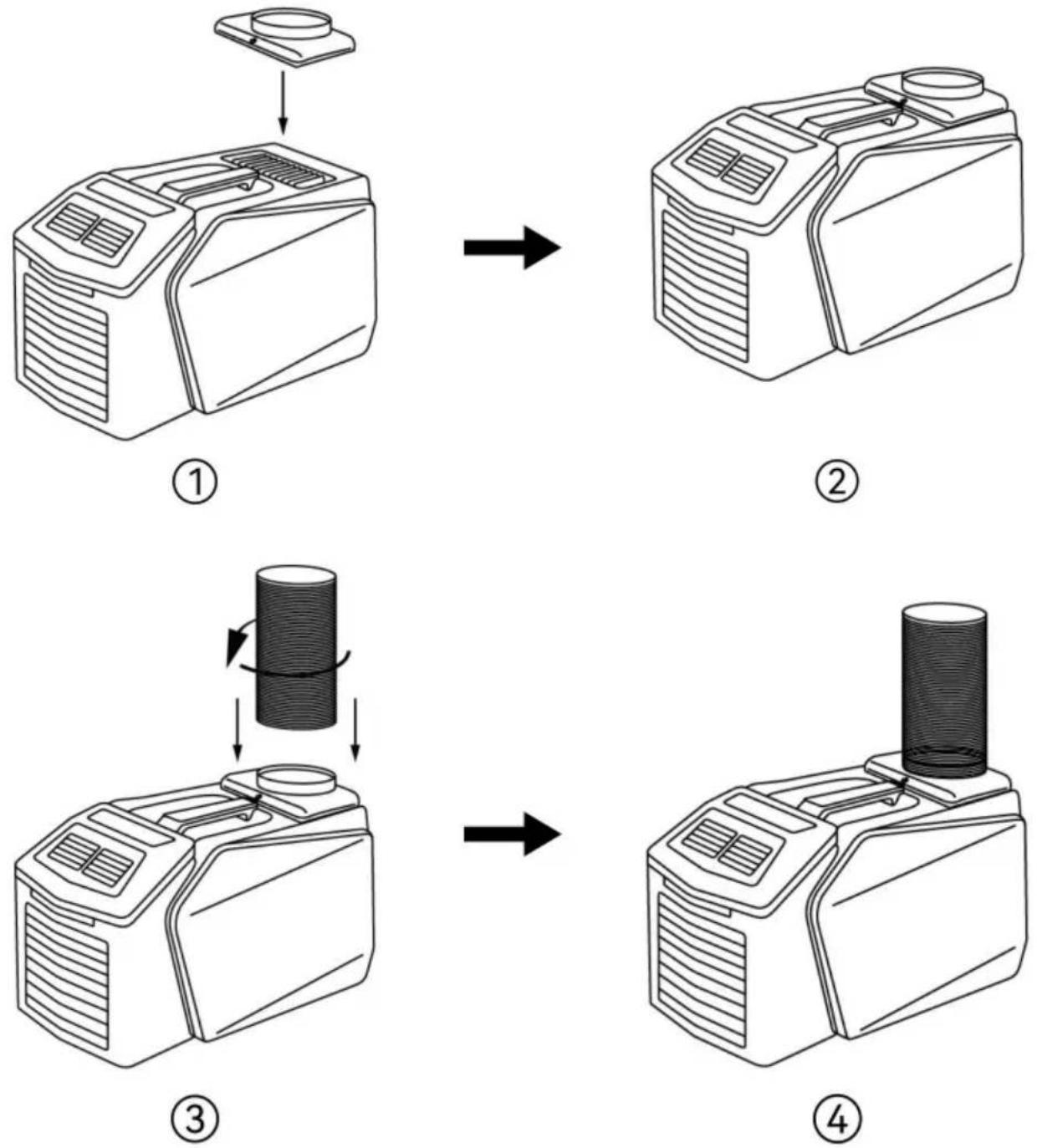
INSTALL THE REAR AIR EXHAUST HOSE
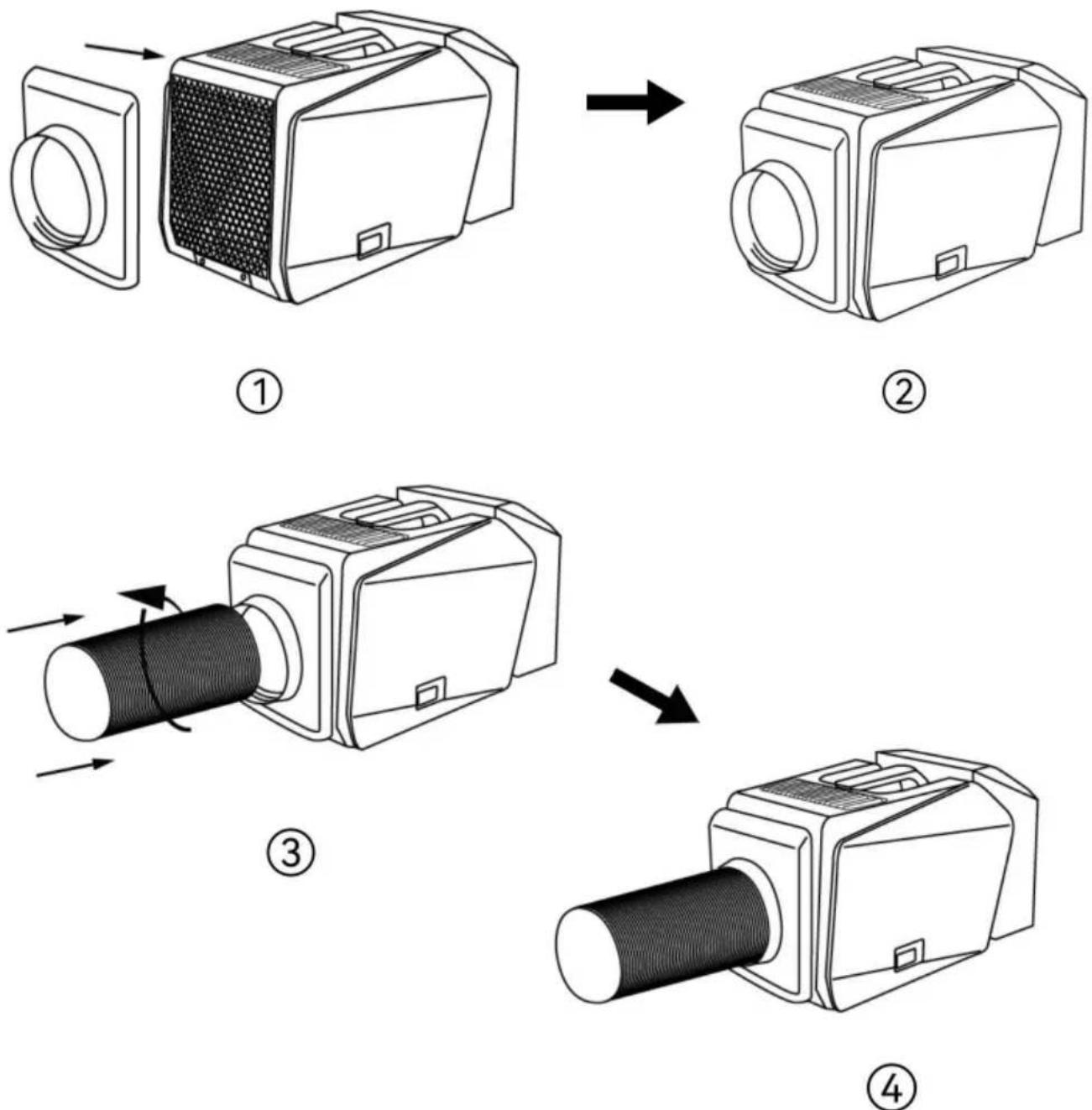
TROUBLESHOOTING
NEED HELP? CONTACT US!
Shutdown time;


INSTALL THE FRONT AIR EXHAUST HOSE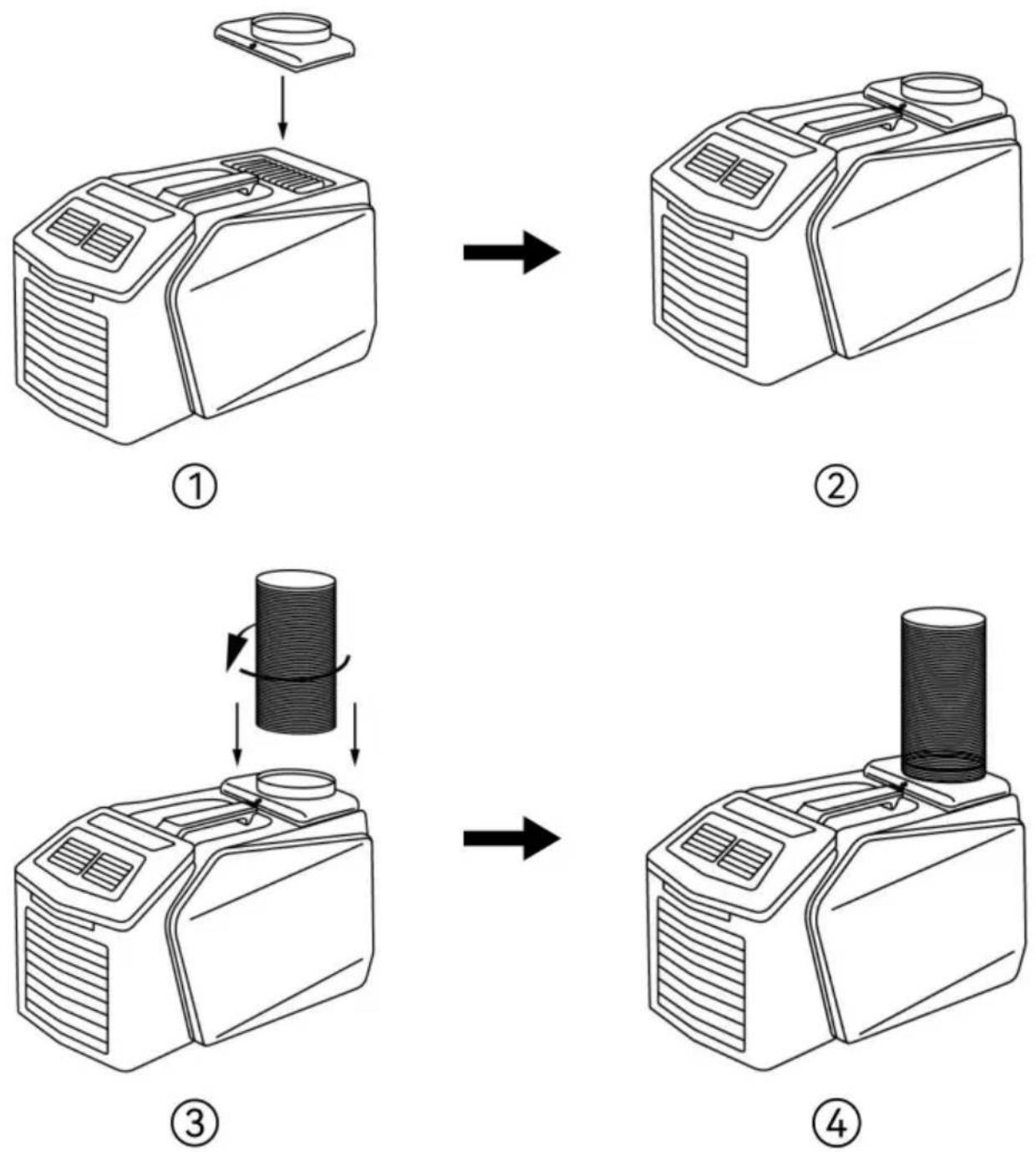
INSTALL THE REAR AIR EXHAUST HOSE
TROUBLESHOOTING


INSTALL THE FRONT AIR EXHAUST HOSE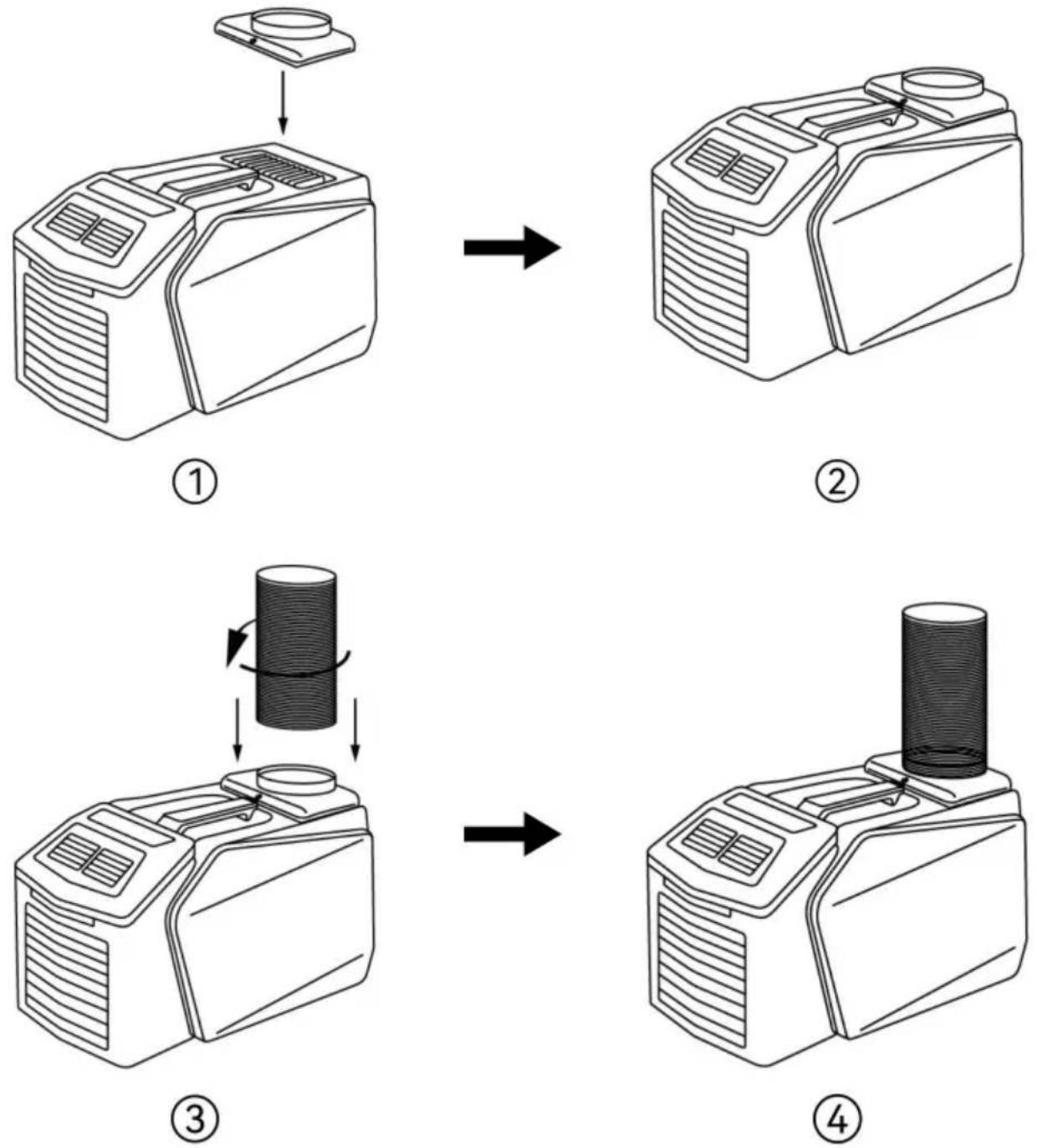
INSTALL THE REAR AIR EXHAUST HOSE
NEED HELP?
Shutdown time;


Shutdown time;
FILTER NETWORK INSTALLATION
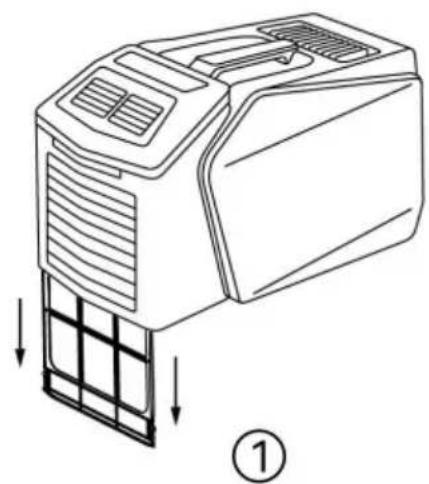

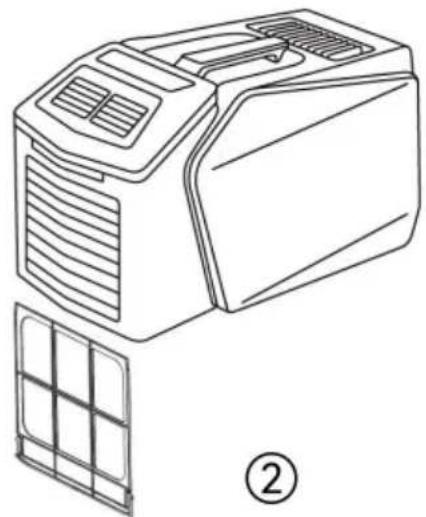
DRAIN PIPE INSTALLATION
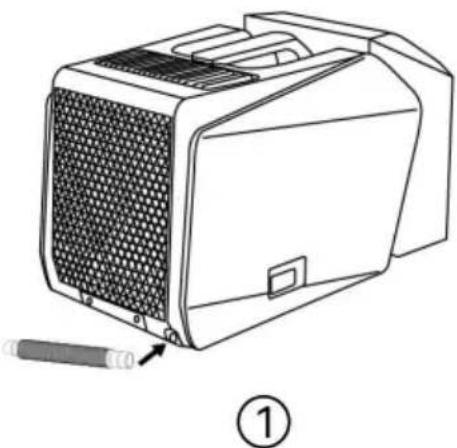

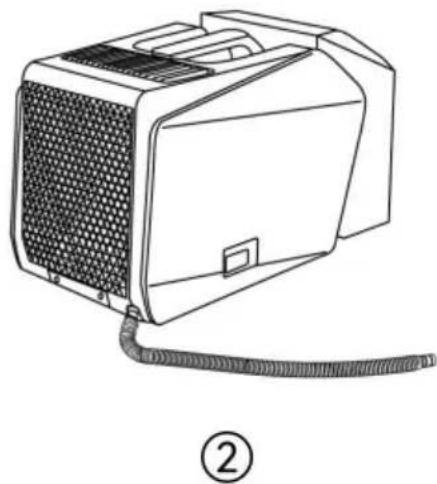
Recording method:
NEED HELP?
| 7 | 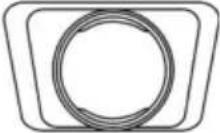 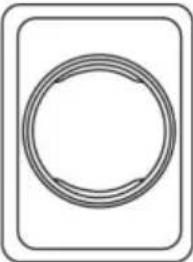 | gewricht | 2 |
| 8 | 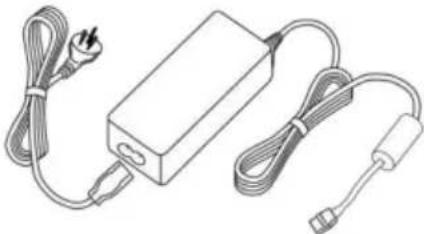 | Netsnoer | 1 |
| 9 | 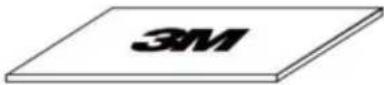 | 3M hechten | 1 |
| 10 | 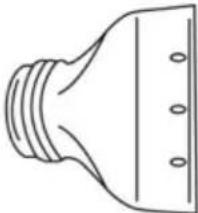 | Platte kop-interface | 2 |
PARAMETER LIST
| Productnaam | Draagbare airconditioner | ||
| Productmodel | POG | POG | POG |
| Beoordeeldspanning/frequentie | DC48VAC110V~60Hz | DC48VAC220V~50/60Hz | DC48VAC220V~50/60Hz |
| Koelcapaciteit | 5000BTU | ||
| Nominaal vermogen | 500W | ||
| Koelkasten | R290/120g | ||
| Temperatuurbereik | 16-30 y | ||
| Lawaai | <60dB | ||
| Lichaamsafmetingen | 320x580x346mm | ||
| Eenheid netto gewicht | 17,5 kg | ||
WARNING IMPORTANT:
2.1.5 [Timing] button
Shutdown time;
![Vevor POG - [Timing] button - 1](/content/2026/04/736186/images/430928f869ae78ac49a8b687a0408ace0745ff490a10e6c04ef0bfef74be3321.jpg)
INSTALLATION OF DRAIN PIPES

INSTALL THE FRONT AIR EXHAUST PIPE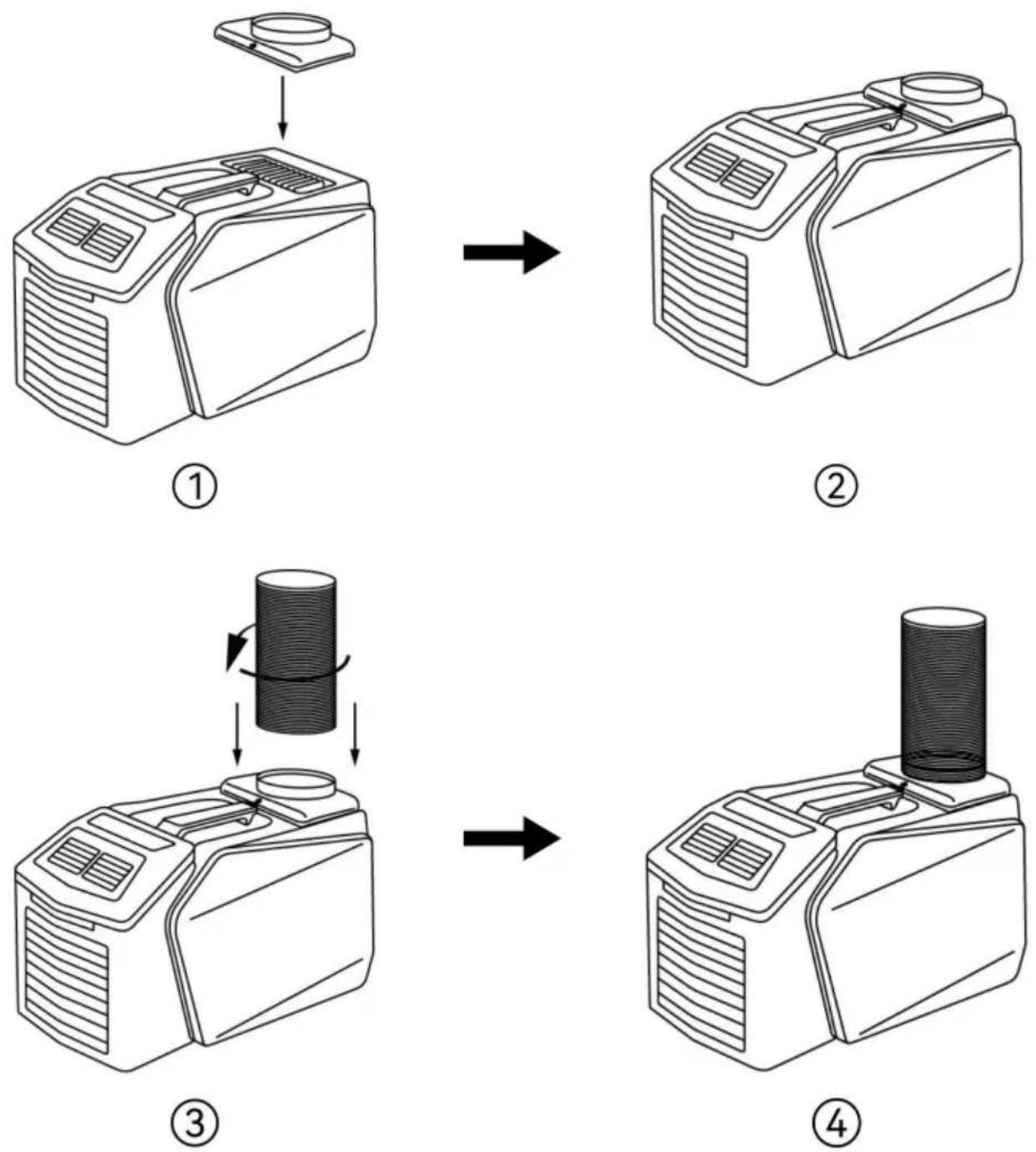
INSTALL THE REAR AIR EXHAUST PIPE
TROUBLESHOOTING
NEED HELP?
2.1.5 [Timing] button
![Vevor POG - [Timing] button - 1](/content/2026/04/736186/images/4f87885a8c7f25e7c2b5e66ba1b9f10ed4f811f1c4a4e6e8ab2ca4d1d97bd6c3.jpg)
INSTALLATION OF DRAIN PIPES

INSTALL THE FRONT AIR EXHAUST PIPE
INSTALL THE REAR AIR EXHAUST PIPE
TROUBLESHOOTING
- PORTABLE AIR CONDITIONER MODEL: POG
- MODEL: POG
- NEED HELP? CONTACT US
- R290 REFRIGERANT WARNING LANGUAGE
- WARNING MATTERS
- POWER
- PRODUCT OVERVIEW
- COMPRESSOR PROTECTION
- POWER-OFF MEMORY
- ANTI-OVERFLOW FUNCTION
- FAULT PROTECTION
- [SWITCH] KEY
- THE [MODE] KEY
- [WIND SPEED] KEY
- [+], [-] KEYS
- [TIMING] KEY
- [MUSIC] KEY (SUITABLE FOR SOUND MODEL)
- OPERATION
- FILTER NETWORK INSTALLATION
- DRAINAGE PIPE INSTALLATION
- INSTALL THE FRONT AIR EXHAUST PIPE
- INSTALL THE REAR AIR EXHAUST PIPE
- NOTE
- MAINTENANCE AND SERVICE
- STATEMENT
- SCREEN
- SURFACE CLEANING
- STORAGE METHOD
- WARNING
- NEARBY
- CABLE
- REMOVE AND VACUUM
- INFUSION OF THE REFRIGERANT PROCEDURE
- SCRAPPING AND RECYCLING
- VEVOR®
- TOUGH TOOLS, HALF PRICE
- MACHINE TRANSLATED BY GOOGLE
- INSTALL THE FRONT AIR EXHAUST HOSE
- INSTALL THE REAR AIR EXHAUST HOSE
- DRAIN PIPE INSTALLATION
- NEED HELP
- WARNING IMPORTANT
- [TIMING] BUTTON
- INSTALLATION OF DRAIN PIPES
Brand : Vevor
Model : POG
Category : Air conditioner