
ActiBread PF311E - Bread maker TEFAL - Free user manual and instructions
Find the device manual for free ActiBread PF311E TEFAL in PDF.


| Product type | Bread machine |
| Brand | Tefal |
| Model | ActiBread PF311E |
| Maximum capacity | 2 lb (approx. 900 g) |
| Number of programs | 15 programs: savory gluten-free bread, sweet gluten-free bread, gluten-free cake, quick whole wheat bread, whole wheat bread, salt-free bread, super fast bread, quick sweet bread, French bread, sweet bread, bake only, dough, cakes, jam, pasta |
| Weight options | 1 lb, 1.5 lb, 2 lb (depending on program) |
| Crust setting | Light, medium, dark |
| Delayed start | Up to 15 hours (not available for gluten-free, super fast, bake only, dough, cakes, jam, pasta programs) |
| Keep warm | 1 hour after baking (for most programs) |
| Display | Digital display with timer |
| Accessories included | Removable bread pan, kneading paddle, measuring cup, double spoon (tsp and tbsp), hook to remove the paddle |
| Safety | Auto shut-off, power failure protection (7 min), polarized plug, emergency stop by long press on Start/Stop |
| Care and cleaning | Clean with a damp sponge; do not wash in dishwasher; do not immerse the housing |
| Use | Household use only |
| Power supply | See rating plate (polarized plug) |
Frequently Asked Questions - ActiBread PF311E TEFAL
User questions about ActiBread PF311E TEFAL
0 question about this device. Answer the ones you know or ask your own.
Ask a new question about this device
Download the instructions for your Bread maker in PDF format for free! Find your manual ActiBread PF311E - TEFAL and take your electronic device back in hand. On this page are published all the documents necessary for the use of your device. ActiBread PF311E by TEFAL.
USER MANUAL ActiBread PF311E TEFAL
natural_image
Simple line drawing of a mechanical lever or handle with two ends and a labeled end (6), no text or symbols present.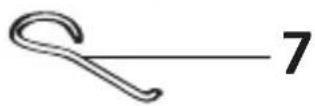
PRÉCAUTIONS IMPORTANTES
natural_image
Illustration of two hands holding small objects with directional arrows, no text or symbols presentLES INGRÉDIENTS
natural_image
Exterior view of a modern office building (no signage)LES RECETTES
When using electrical appliances, basic safety precautions should always be followed including the following:
- Read all instructions.
- Do not touch hot surfaces. Use handles or knobs.
- To protect against electrical shock do not immerse cord, plugs, or this appliance in water or other liquid.
- Not intended for use by children. Close supervision is necessary for any appliance being used near children.
- Unplug from outlet when not in use and before cleaning. Allow to cool before putting on or taking off parts.
- Do not operate any appliance with a damaged cord or plug or after the appliance malfunctions, or has been damaged in any manner. Return appliance to the nearest authorized service facility for examination, repair or adjustment.
- The use of accessory attachments not recommended by the appliance manufacturer may cause injuries.
- Do not use outdoors.
- Do not let cord hang over edge of table or counter, or touch hot surfaces.
- Do not place on or near a hot gas or electric burner, or in a heated oven.
- Extreme caution must be used when moving an appliance containing hot oil or other hot liquids.
- Plug cord into the wall outlet. To disconnect, press and hold the START/STOP button for a second, remove plug from wall outlet.
- Do not use appliance for other than intended use.
EN
SAVE THESE INSTRUCTIONS
- For your safety, this appliance complies with applicable technical rules and norms.
- Check that the main voltage corresponds to the voltage indicated on the appliance.
- Use a stable work surface, away from any contact with water and never in a built-in kitchen alcove.
- Do not move the appliance when working.
Polarization instructions
This appliance has a polarized plug (one blade is wider than the other). To reduce the risk of electric shock, this plug is intended to fit into a polarized outlet only one way. If the plug does not fit fully into the outlet, reverse the plug. If it still does not fit, contact a qualified electrician. Do not attempt to modify the plug in any way.
Short Cord instructions
- A short power cord is to be provided to reduce the risk resulting from becoming entangled in or tripping over a longer cord.
- Longer power cords or extension cords are available and may be used if care is exercised in their use.
- If a long power cord or extension cord is used,
a) The marked electrical rating of the cord or extension cord should be at least as great as the electrical rating of the appliance, and
b) The cord should be arranged so that it will not hang over the countertop or tabletop where it can be pulled on by children or tripped over unintentionally.
- All interventions other than cleaning and everyday maintenance by the customer must be performed by an authorized service center.
- For your safety, only use accessories and spare parts designed for your appliance.
- All appliances undergo strict quality control. Practical usage tests are performed on randomly selected appliances, which would explain any slight traces of use.
- At the end of the program, always use oven mitt to handle the bread pan or hot parts of the appliance. The appliance becomes very hot during use.
• Never obstruct the air vents. - Be very careful, steam can be released when you open the lid at the end of or during the program.
- When using program No.14 (jam, stewed fruit, etc.) watch out for steam and hot spattering when opening the lid.
- Caution, if the dough overflows and touches the heating element, it can catch fire, therefore:
- Never exceed the quantities indicated in the recipes.
- Never exceed 2lbs of dough.
- Never exceed 2 cups of flour and 1 teaspoon of yeast.
- Disconnect the appliance if it shows any working abnormalities.
DO NOT
- Do not use an external timer or separate remote control system.
- Do not touch the metal parts or hot surfaces of the appliance when it is working.
- Do not use this appliance as source of heating or drying.
- Do not unplug appliance by pulling on cord. Instead grasp plug and pull to disconnect.
- Do not touch the viewing window during and just after operation. The window can reach a high temperature.
- Do not place the appliance on other appliances.
- Do not place paper, cardboard or plastic in or on the appliance.
- Should any part of the appliance catch fire, do not attempt to extinguish it with water. Unpli appliance. Smother flames with a damp cloth.
- This product has been designed for household use only. Any professional use, inappropriate use or failure to comply with the instructions will avoid the warranty.
DESCRIPTION
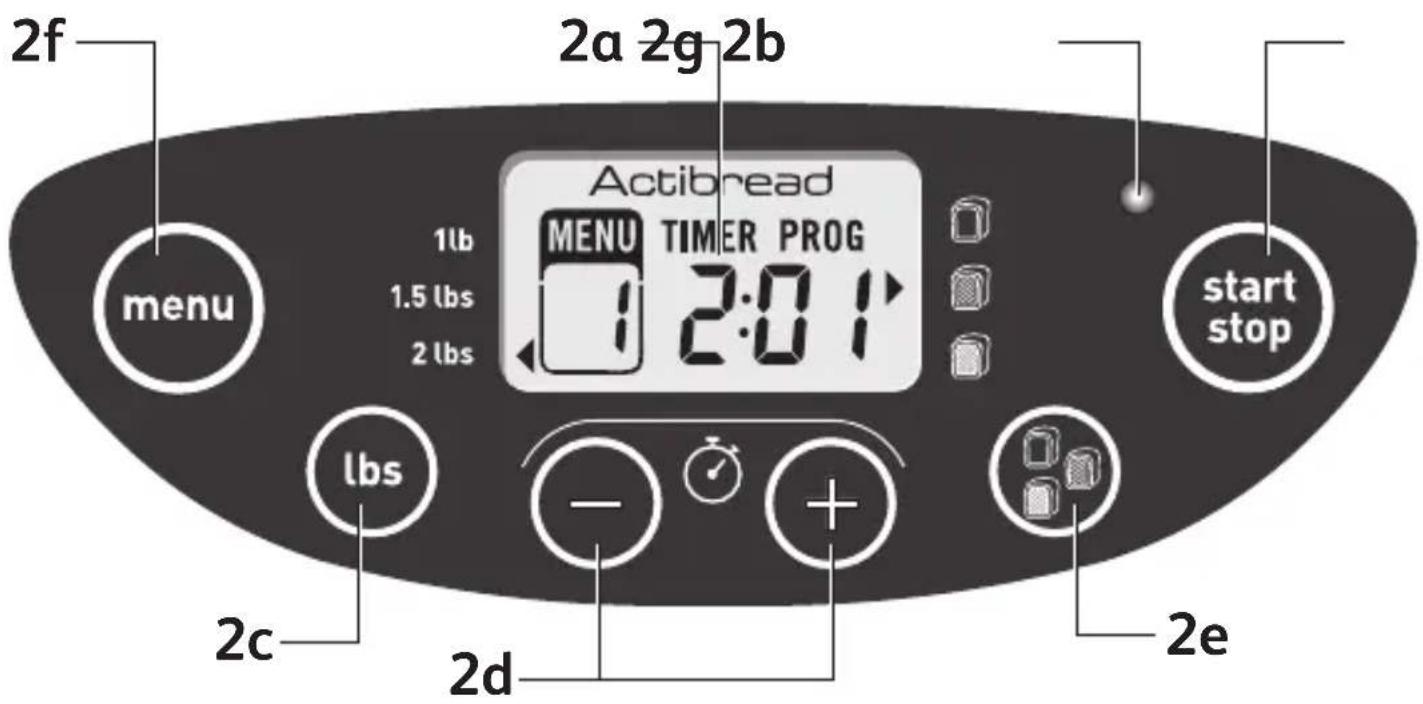
1 - lid with viewing window
2 - control panel
a - display screen
b - on/off button
c - loaf weight selection
d - buttons for setting delayed start and adjusting the time for programs
e - crust color selection
f - choice of programs
g - operating indicator light
3 - bread pan
4 - kneading paddle
5 - measuring cup
6 - teaspoon/tablespoon
7 - hook accessory for lifting out kneading paddle
PRACTICAL ADVICE
Preparation
1 Please read these instructions carefully: the method for making bread with this appliance is not the same as for hand-made bread.
2 All ingredients used must be at room temperature (unless otherwise indicated) and must be weighed exactly. Measure liquids with the measuring cup supplied. Use the teaspoon/ tablespoon supplied to measure teaspoons on one side and tablespoons on the other. Ensure all spoon measures are level and not heaped. Incorrect measurements could result in a poor end product.
3 For successful bread making using the correct ingredients is critical. Use ingredients before their use-by date and keep them in a cool, dry place.
4 It is important to measure the quantity of flour precisely. That is why you should weigh out flour using a kitchen scale. Use pre-measured packets of dried yeast, sold in most US grocery stores. Unless otherwise indicated in the recipe, do not use baking powder. Once a packet of yeast has been opened, it should be sealed and stored in a cool place and used within 48 hours.
5 To avoid spoiling of the dough, we advise that all ingredients should be put in the bread pan at the start and that you should avoid opening the lid during use (unless otherwise indicated). Carefully follow the order of ingredients and quantities indicated in the recipes. First the liquids, then the solids. Yeast should not come into contact with liquids, sugar or salt (order available only for recipes WITH gluten).
General order to be followed (available only for recipes WITH gluten):
Liquids (butter, oil, eggs, water, milk)
Salt
Sugar
Flour, first half
Powdered milk
Specific solid ingredients
Flour, second half
Yeast
Using
- Bread preparation is very sensitive to temperature and humidity conditions. In case of high heat, use liquids that are cooler than usual. Likewise, if it is cold, it may be necessary to warm up the water or milk (never exceeding 95°F).
- It can also sometimes be useful to check the state of the dough during the second kneading: it should form an even ball which comes away easily from the walls of the pan.
- If all the flour has not been blended into the dough, add a little more water.
- if the dough is too wet and sticks to the sides, you may need to add a little flour.
Such corrections should be undertaken very gradually (no more than 1 tablespoon at a time) and wait to see if there is an improvement before continuing.
- A common error is to think that adding more yeast will make the bread rise more. Too much yeast makes the structure of the bread more fragile and it will rise a lot and then fall while baking. You can determine the state of the dough just before baking by touching it lightly with your fingertips: the dough should be slightly resistant and the fingerprint should disappear little by little.
Precautions for using gluten-free programs
• The flour mixtures have to be sifted with the yeast to avoid clumps.
- The kneading needs some encouragement: to foster their incorporation, scrape down any ingredients from the sides to the middle of the bowl using a spatula (made of wood or plastic to avoid scratching the coating).
• You should also help with incorporation when adding ingredients.
- The nature of the ingredients used for gluten-free recipes does not allow the bread to brown as it normally would. The top of the bread often remains rather light.
• Gluten-free bread cannot rise like traditional bread and often remains flat on top.
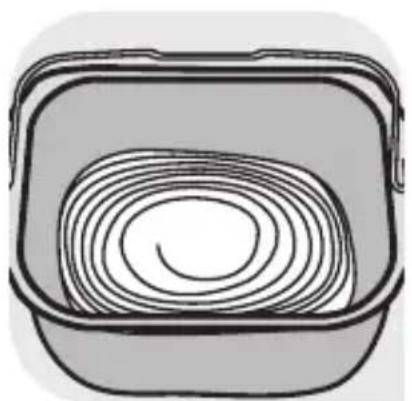
- Not all premix brands deliver the same results: the recipes may need to be adju recommend that you experiment (see example below).
Example: adjust the quantity of liquid according to the consistency of the dough. It should be relatively supple, but not too moist.
natural_image
Simple line drawing of a rectangular container with concentric circular patterns (no text or symbols)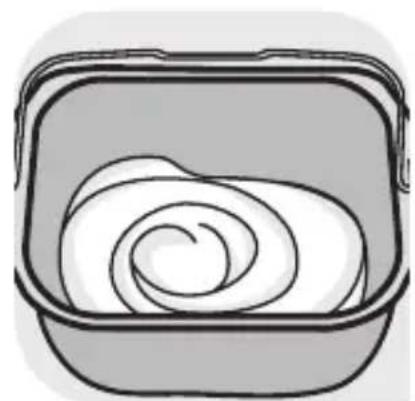
natural_image
Simple line drawing of a container with spiral pattern (no text or symbols)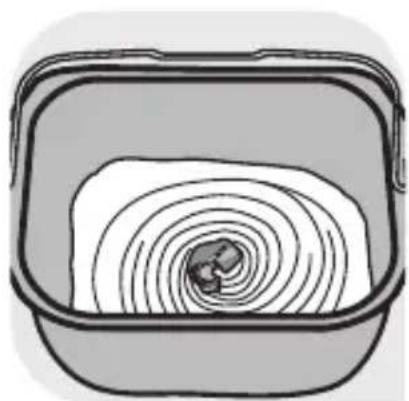
natural_image
Simple line drawing of a container with concentric circular patterns inside (no text or symbols)Too much liquid OK Too dry
Exception: cake dough should have more liquid.
BEFORE YOU USE YOUR APPLIANCE FOR THE FIRST TIME
- Remove the accessories and any stickers either inside or on the outside of the appliance - A.
- Clean all of the parts and the appliance itself using a damp cloth.
QUICK-START
- Fully unwind the power cord and plug it into a grounded socket.
- A slight odor may be given off when used for the first time.
- Remove the bread pan by lifting the handle and turning the bread pan slightly counter-clockwise. Then insert the kneading paddle - B - C.
- Put the ingredients in the pan in exactly the order recommended. Make sure that all ingredients are weighed with precision - D - E.
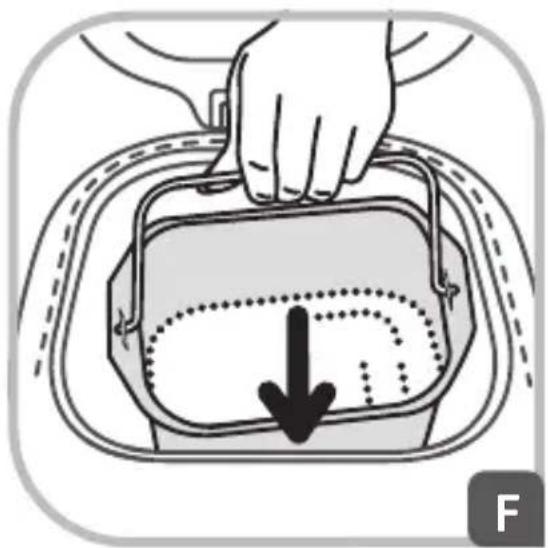
- Place the bread pan in the breadmaker. Holding the bread pan by the handle, insert it in the breadmaker so that it fits over the drive shaft (you will need to tilt it slightly to one side to do this). Turn it gently clockwise and it will lock into place - F-G.
- Close the lid. Plug in the breadmaker and switch it on. After you hear the beep, program 1 will appear on the display as the default setting, i.e. 2 lbs, medium browning - H.
- Select the desired program using the button.
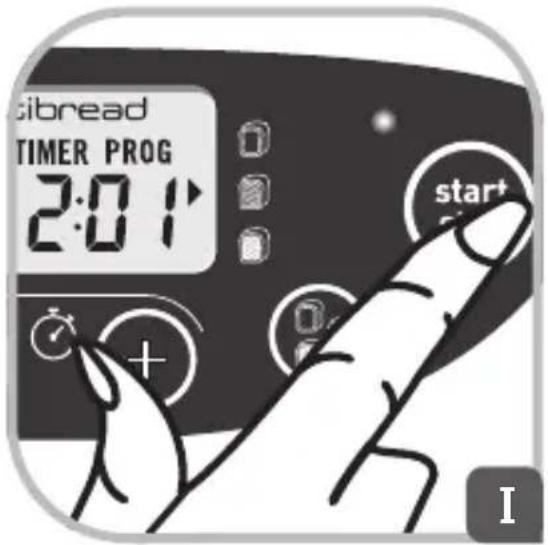
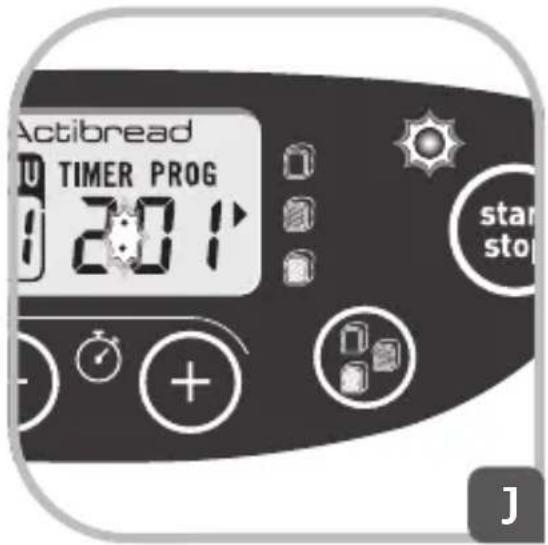
- Press the start button. The timer will flash and the operating indicator light will illuminate. The operating indicator lights up - I - J.
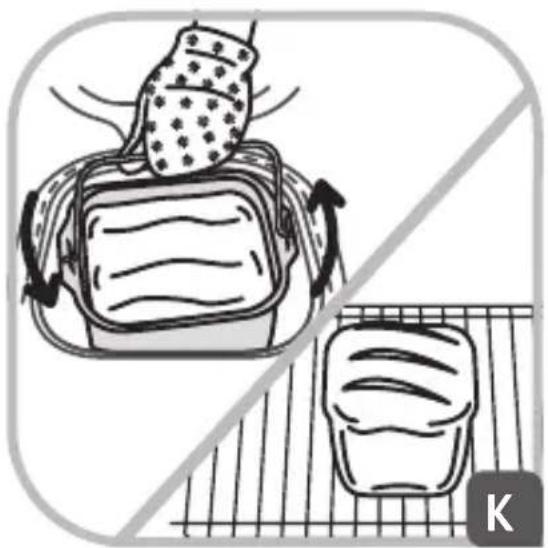
- Unplug the breadmaker at the end of the cooking or warming cycle. Lift the bread pan out of the breadmaker. Always use oven gloves as the pan handle is hot, as is the inside of the lid. Turn out the hot bread and place it on a rack for at least 1 hour to cool - K.
To get to know your breadmaker, we suggest trying the FRENCH BREAD recipe for your first loaf.
| FRENCH BREAD (program 9) | INGREDIENTS - tsp = teaspoon - tbsp = tablespoon | |
| BROWNING = MEDIUM | 1. Water = 112 cups2. Salt = 2 tsp | 3. Flour = 114 lb4. Yeast = 112 tsp |
| POUNDS = 2 lbs | ||
| TIME = 3:10 | ||
A default setting is displayed for each program. You will therefore have to select the desired settings manually.
Selecting a program
Choosing a program triggers a series of steps which are carried out automatically one after another.

The menu button allows you to choose a certain number of different programs. The time corresponding to the program is displayed. Every time you press the menu button, the number on the display panel switches to the next program from 1 - 15.

Using gluten-free programs.
Programs 1, 2 and 3 should be used to bake gluten-free breads and cakes. Only one weight is available for each of the programs (2 lbs for programs 1 and 2 and 1.5 lbs for program 3).
Gluten-free breads and cakes are suitable for people who are intolerant (celiac disease) of the gluten found in several grains (wheat, barley, rye, oat, Khorasan wheat, spelt, etc).
It is important to avoid cross-contamination with flour containing gluten. Use extra care when cleaning the bowl, paddle and all the utensils that will be used to prepare gluten-free breads and cakes. Also check that the yeast you use is free of gluten.
The consistency of gluten-free flours does not favor traditional mixing: we recommend that you sift the flour mixes together with the yeast to prevent it from forming clumps.
This is why the delayed start feature is not available for the gluten-free programs.
You must also use a flexible wooden or plastic spatula to scrape the dough down from the sides of the bowl to the center, along with any unincorporated ingredients, until the dough is homogenous.
Gluten-free bread will have a denser consistency and be lighter in color than normal bread.
- Gluten-free bread. We recommend using a ready-to-use mix. Only the 2 lbs setting is available for this program. For this setting a premix that is low in sugar and fat is recommended.
- Gluten-free sweet bread. We recommend using a ready-to-use mix. Only the 2 lbs setting is available for this program. For this setting a premix that is low in sugar and fat is recommended.
- Gluten-free cake. We recommend using a ready-to-use mix. Only the 1.5 lbs setting is available for this program.
- Rapid whole wheat bread. This program is similar to the Whole wheat bread program but is quicker. The texture of the bread may be a little more compact.
- Whole wheat bread. Whole wheat bread program is used to make bread containing whole wheat flour.
-
Salt-free bread. Bread is one of the foods that provide the largest daily contribution of salt. Reducing salt consumption can help reduce the risks of cardiovascular problems.
-
Rapid bread. Program 7 is specific to the Rapid bread recipe. Bread made using fast programs is more compact than that made with the other programs.
- Rapid sweet bread. This program is similar to the Sweet bread program but is quicker. The texture of the bread may be a little more compact.
- French bread. The French bread program corresponds to a traditional french crusty white bread recipe.
- Sweet bread. The Sweet bread program is for recipes containing more sugar and fat such as brioches and milk breads. If you are using special flour blends for brioche or rolls, do not exceed 1.5 lbs of dough in total.
- Cooking only. The Cooking only program allows you to bake for 10 to 70 minutes (adjustable in increments of 10 min). It can be selected alone and used:
a) with the Bread dough program,
b) to reheat cooked and cooled breads or to make them crusty,
c) to finish cooking in case of a prolonged electricity cut during a bread baking cycle. The breadmaker should not be left unattended when using program 11. To interrupt the cycle before it is finished, the program can be stopped manually by holding down the start stop button.
- Bread dough. The Bread dough program does not bake. It is a kneading and rising program for all leavened doughs such as pizza dough, rolls, sweet buns.
- Cake. Can be used to make pastries and cakes with baking powder. Only the 2 lbs setting is available for this program.
- Jam. The Jam program automatically cooks jams and compots (stewed fruits) in the pan.
- Pasta. Program 15 only kneads. It is for pasta dough, like noodles and gluten-free pizza dough for example.
Selecting the weight of the bread
The bread weight is set by default at 2 lbs. This weight is shown for informational purposes. See the recipes for more details. Programs 1, 2, 3, 11, 12, 13, 14, 15 do not have weight settings.
Press the lbs button to set the chosen product - 1 lb, 1.5 lbs. or 2 lbs. The indicator light against the selected setting will come on.
Selecting the crust color
By default, the color of the crust is set at MEDIUM. Programs 12, 14, 15 do not have a color setting.
Three choices are possible: Light 📋/Medium 📋/Dark .
If you want to change the default setting, press the 📄 button until the indicator light facing the desired setting comes on.
Start /Stop
Press the start stop button to switch the appliance on. The countdown begins.
To stop the program or to cancel delayed programming, hold down on the start button for 3 seconds.
CYCLES
A table (see the end of these instructions) indicates the breakdown of the various cycles for the program chosen.

Kneading
For forming the dough's structure so that it can rise better.
During this cycle, and for programs 1, 2, 3, 4, 5, 6, 7, 8, 9, 10, 12, 13, you can add ingredients: dried fruit or nuts, olives, etc. A beep indicates when you can intervene. See the summary table for preparation times (see the end of these instructions) and the “extra” column. This column indicates the time that will be displayed on your appliance’s screen when the beep sounds. For more precise information on how long before the beep sounds, subtract the “extra” column time from the total baking time.
For example: “extra” = 1:45 and “total time” = 2:01, the ingredients can be added after 16 min.

Rest
Allows the dough to rest to improve kneading quality.

Rising
Time during which the yeast works to let the bread rise and to develop its aroma.

Baking
Transforms the dough into bread and gives it a golden crust.

Warming
Keeps the bread warm after baking. It is recommended that the bread should be turned out promptly after baking, however.
For programs 1, 2, 3, 4, 5, 6, 7, 8, 9, 10, 13, you can leave your preparation in the appliance. A one-hour warming cycle automatically follows baking. During the hour for which the bread is kept warm, the display shows 0:00 and the dots ☐ on the timer flash. At the end of the cycle, the appliance stops automatically after several sound signals.
DELAYED START PROGRAM
You can program the appliance to start up to 15 hours in advance to have your preparation ready at the time you want. This function cannot be used on programs 1, 2, 3, 7, 11, 12, 13, 14, 15.
This step comes after selecting the program, browning level and weight. The program time is displayed. Calculate the time difference between the moment when you start the program and the time at which you want your preparation to be ready. The machine automatically includes the duration of the program cycles.
Using the + and - buttons, display the calculated time (up and down) Short presses change the time in intervals of 10 min + a short beep. Holding the button down gives continuous scrolling in 10-min intervals.
For example, it is 8 pm and you want your bread to be ready for 7 am the next morning. Program 11:00 using the + and - press the button. A beep is emitted. The timer colon blinks. The countdown begins. The operating indicator light comes on.
If you make a mistake or want to change the time setting, hold down the start step button until it makes a beep. The default time is displayed. Start the operation again.
With the delayed start program do not use recipes which contain fresh milk, eggs, sour cream, yogurt, cheese or fresh fruit as they could spoil overnight.
Practical advice
If there is a power cut: if, during the cycle, the program is interrupted by a power cut or mishandling, the machine has a 7-min protection time during which the settings are saved. The cycle starts again where it stopped. Beyond that time, the settings are lost.
If you plan to run a second program to bake another loaf, open the lid and wait 1 hour before beginning the second preparation.
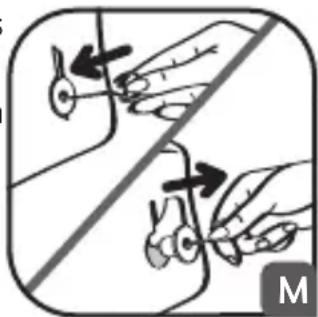
To turn out your loaf of bread: it may happen that the kneading paddle remains stuck in the loaf when it is turned out. In this case, use the hook accessory as follows:
once the loaf is turned out, lay it on its side while still hot and hold it down with one hand, wearing an oven mitt,
with the other hand, insert the hook in the axis of the kneading paddle - M,
pull gently to release the kneading paddle - M,
turn the loaf upright and stand on a rack to cool.
natural_image
Illustration of two hands holding small objects with arrows indicating motion (no text or symbols)INGREDIENTS
Gluten-free flour. There are a great number of so-called “non-bread” flours (which do not contain gluten). The most widely known are buckwheat, rice (white and brown), quinoa, corn, chestnut and sorghum flours. To attempt to recreate the elasticity of gluten, it is crucial to mix together several types of non-bread flours and to add thickening agents.
Thickening agents. To obtain a proper consistency and to try to imitate the elasticity of gluten, you can also add xanthan gum and/or guar gum to your dough. These ingredients are used as thickeners, stabilizers and emulsifiers in the agri-food industry.
Ready-to-use gluten-free mixes. These make it easier to bake gluten-free bread because they contain thickeners and have the advantage of being guaranteed to contain no gluten; some are also organic. Not all brands of ready-to-use gluten-free mixtures deliver the same results.
Fats and oils. Fats make the bread softer and provide more favor. It also stores better and longer. Too much fat slows down rising. If you use butter, cut it into tiny pieces so that it is distributed evenly throughout the preparation, or soften it. You can substitute 1 tablespoon butter for 1 tablespoon of oil. Do not add hot butter. Keep the fat from coming into contact with the yeast, as fat can prevent yeast from rehydrating. Do not use low fat spreads or butter substitutes.
Eggs. Eggs make the dough richer, improves the color of the bread and encourages the development of the soft, white part. If you use eggs, reduce the quantity of liquid you use proportionally. Break the egg then slowly add the liquid until you reach the quantity of liquid indicated in the recipe. Recipes are designed for one 1.5 ounce size egg; if your eggs are bigger, add a little flour; if they are smaller, use less flour.
Milk. Recipes use either fresh or powdered milk. If using powdered milk, add the quantity of water stated in the recipe. It enhances the flavor and improves the shelf-life of the bread. For recipes using fresh milk, you can substitute some of it with water but the total volume must equal the quantity stated in the recipe. Low-fat or fat-free milk is best to avoid bread from having too dry of a texture. Milk also has an emulsifying effect which evens out its airiness, giving the soft, white part a better texture and appearance.
Water. Water rehydrates and activates the yeast. It also hydrates the starch in the flour and helps the soft, white part form. Water can be totally or partially replaced with milk or other liquids. Use liquids at room temperature, except for gluten-free breads that require the use of lukewarm water (approximately 95^ F).
Flour. The weight of the flour varies significantly depending on the type of flour used. Depending on the quality of the flour, baking results may also vary. Keep flour in a hermetically sealed container, as flour reacts to fluctuations in atmospheric conditions, absorbing moisture or losing it. Use “strong flour”, “bread flour” or “baker’s flour” rather than standard flour which is not adapted for breadmaking. Adding oats, bran, wheat germ, rye or whole grains to the bread dough will give a smaller, heavier loaf of bread. If you are using special flour blends for bread, brioche or rolls, do not exceed 1.5 lbs. of dough in total. Sifting the flour also affects the results: the more the flour is whole (i.e. the more of the outer envelope of the wheat it contains), the less the dough will rise and the denser the bread. You can also find ready-to-use bread premixes in the grocery store. Follow the manufacturer’s instructions when using these preparations. Usually, the choice of the program will depend on the preparation used. For example: Whole wheat - Program 5.
Sugar. Use white sugar, brown sugar or honey. Do not use sugar cubes. Sugar acts as food for the yeast, provides a sweeter tasting bread and improves the browning of the crust. Artificial sweeteners cannot be substituted for sugar as the yeast will not react with them. Artificial sweeteners cannot be substituted for sugar as the yeast will not react with them.
Salt. Salt gives taste to food and regulates the yeast's activity. Unless otherwise noted, it should not come into contact with the yeast. Thanks to salt, the dough is firm, compact and does not rise too quickly. It also improves the structure of the dough. Use ordinary table salt. Do not use coarse salt or salt substitutes.
Yeast. Baker's yeast exists in several forms: fresh in small cubes, dried and active to be rehydrated or dried and instant. Fresh yeast is sold in supermarkets (bakery or fresh produce departments), but you can also buy fresh yeast from your local baker. In its fresh or instant dried form, yeast should be added directly to the baking pan of your breadmaker with the other ingredients. Remember to crumble the fresh yeast with your fingers to make it dissolve more easily. Only active dried yeast (in small granules) must be mixed with a little tepid water before use. Choose a temperature close to 95^ , less and it will not rise as well, more will make it lose its rising power. Keep to the stated amounts and remember to multiply the quantities if you use fresh yeast (see equivalents chart below).
Equivalents in quantity/weight between dried yeast and fresh yeast:
Dried yeast (in tsp)
1 1 12 2 2 12 3 3 12 4 4 12 5
Fresh yeast (in tbsp)
1 / 2 1 114 1 / 2 134 2 212 234 3
To make gluten-free breads, you must use a special gluten-free yeast.
Add-in's (dried fruit or nuts, olives.). Add a personal touch to your recipes by adding whatever ingredients you want, taking care:
to add following the beep for additional ingredients, especially those that are fragile such as dried fruit,
to add the most solid grains (such as flax or sesame) at the start of the kneading process to facilitate use of the machine (delayed starting, for example),
to thoroughly drain moist ingredients (olives),
to lightly flour fatty ingredients for better blending,
not to add too large a quantity of additional ingredients, especially cheese, fresh fruit and fresh vegetables, as they can affect the development of the dough, respect the quantities indicated in the recipes,
that no ingredients fall outside the pan.
CLEANING AND MAINTENANCE
• Unplug the appliance.
- Clean all the parts, the appliance itself and the inside of the pan with a damp cloth. Dry thoroughly - L.
- Waste pan and kneading paddle in hot soapy water. If the kneading paddle remains stuck in the pan, let it soak for 5 to 10 min.
- When necessary the lid can be cleaned with warm water and a sponge.
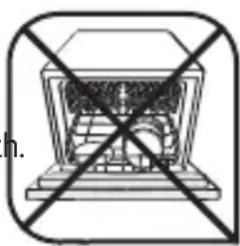
- Do not wash any part in a dishwasher.
- Do not use household cleaning products, scouring pads or alcohol. Use a soft, damp cloth.
- Never immerse the body of the appliance or the lid in water.
RECIPES
For each recipe, add the ingredients in the exact order indicated. Depending on the recipe chosen and the corresponding program, you can take a look at the summary table of preparation times (see the end of these instructions) and follow the breakdown for the various cycles.
tsp = teaspoon - tbsp = tablespoon
PROG. 1 - GLUTEN-FREE BREAD PROG. 2 - GLUTEN-FREE SWEET BREAD
| 2 lbs |
| We recommend using a ready-to-use mixture.Follow the recommendations on the pre-mix packaging.Do not exceed 2 lbs of dough. |
Beat together all ingredients followed by (*) until they become pale. Then add and mix the ingredients followed by (**) previously sieved. Then place the remaining ingredients in the tank in the order indicated.
PROG. 3 - GLUTEN-FREE CAKE
| 1.5 lbs | |
| Warm milk* | 1 tbsp + 1 tsp |
| Beaten eggs* | 3 |
| Salt* | 1 pinch |
| Chestnut flour** | 1 14 cups |
| Corn flour** | 12 cup |
| Gluten-free dry yeast ** | 2 tsp |
| Melted butter | 1 stick |
| Vanilla extract | 1 tsp |
| Icing sugar | 34 cup |
PROG. 4 - RAPID WHOLE WHEAT BREAD PROG. 5 - WHOLE WHEAT BREAD
| Whole wheat bread 1 lb 1.5 lbs 2lbs | |||
| Water 1 cup 114 cups 134 cupsSunflower oil 112 tbsp 2 tbsp 3 tbspSalt 1 tsp 112 tsp 2 tspSugar 112 tsp 2 tsp 3 tspBread flour 1 cup 112 3 cups 2 cupsWholewheat flour 1 cup 2 cups 3 cupsBread machinedry yeast 1 tsp 1 tsp 2 tsp |
PROG. 6 - SALT FREE BREAD
| 1 lb | 1.5 lbs | 2lbs | |
| Water 1 cup | 1 12 | 3 cup | 1 23 cup |
| Bread Flour | 2 23 cups | 3 23 cups | 5 13 cups |
| Bread machine dry yeast | 12 tsp | 1 tsp | 1 tsp |
| When the machine beeps, add Sesame seeds* | 13 cup | 12 cup | 34 cups |
PROG. 7 - RAPID BREAD
| Super quick bread 1 lb 1.5 lbs 2lbs | |||
| Warm water | 1 cup | 114 cup | 134 cup |
| Sunflower oil | 3 tsp | 1 tbsp | 112 tbsp |
| Salt 12 tsp 1 tsp | 1 tsp | ||
| Sugar | 2 tsp | 3 tsp | 1 tbsp |
| Powdered milk | 112 tbsp | 2 tbsp | 3 tbsp |
| Bread Flour | 212 cups | 312 cups | 5 cups |
| Bread machine dry yeast | 112 tsp | 212 tsp | 3 tsp |
PROG. 8 - RAPID SWEET BREAD PROG. 10 - SWEET BREAD
| Sandwich bread | 1 lb 1.5 lbs | 2lbs | ||
| Cold milk | 12 cup | 1 cup | 1 cup | |
| Eggs | 1 | 1 | 2 | |
| Bread machine | ||||
| dry yeast | 23 tsp | 1 tsp | 113 tsp | |
| Bread flour | 218 cups | 318 cups | 414 cups | |
| Gluten | 12 tsp | 1 tsp | 1 tsp | |
| Sugar | 112 tbsp | 2 tbsp | 3 tbsp | |
| Salt 1 tsp | 112 tsp | 2 tsp | ||
| When the machine beeps, add | ||||
| Butter* | 13 stick | 12 stick | 23 stick | |
1 medium egg = 0.1 lb
| PROG. 9 - FRENCH BREAD | |||||
| Crusty frenchgarlic bread 1 lb 1.5 lbs 2lbs | |||||
| Water ^2/_3 cup 1 cup 1 13 cupsSalt 34 tsp 1 tsp 112 tspSugar 14 tbsp 12 tbsp 12 tbspBread flour 134 cups 223 /Bread machinedry yeast 34 tsp 1 tsp 112 tspChopped garlic cloves 1 2 2 |
| PROG. 13 - CAKE | ||
| Lemon cake | 2lbs | |
| Beaten eggs* | 3 | |
| Sugar* | 1 cup | |
| Salt* | pinch | |
| Butter | 1/ | 3 cup |
| Sifted white flour | 2 1⁄4 cups | |
| Baking powder | 3 tsp | |
| Lemon juice | 4 tbsp | |
| Zest of lemon | 1 lemon | |
| Beat together all ingredients followed by (*) until they become pale. Pour mixture into the bread pan. Add the other ingredients. | ||
| PROG. 15 - PASTA | |||
| Fresh pasta | 1 lb | 1.5 lbs | 2lbs |
| Water | 3 tbsp | 312 tbsp | 13 cup |
| Beaten eggs | 3 3 6 | ||
| Salt | 14 tsp 12 tsp | 1 tsp | |
| Bread Flour | 234 cups | 4 cups | 534 cups |
1 medium egg = 0.1 lb
| PROG. 12 - DOUGH | |||
| Pizza | 1 lb | 1.5 lbs | 2lbs |
| Water | 23 cup | 1 cup | 113 cup |
| Olive oil | 1 tbsp | 112 tbsp | 2 tbsp |
| Salt | 12 tsp | 1 tsp | 112 tsp |
| Bread Flour | 212 cups | 323 cups | 5 cups |
| Bread machine | |||
| dry yeast | 12 tsp | 1 tsp | 112 tsp |
| PROG. 14 - JAM | |
| Compotes and jams | 2lbs |
| Strawberries, peaches,rhubarb or apricots | 1 lb |
| Sugar | 1 34 cups |
| Lemon juice | juice of 34 lemon |
| Pectin | 2 tbsp |
| Cut and coarsely chop the fruit. Pour the ingredientsinto the tank in the order indicated. | |
TROUBLESHOOTING GUIDE TO IMPROVE YOUR RECIPES
| Not getting the expected results? This table will help you. | Bread rises too much | Bread falls after rising too much | Bread does not rise enough | Crust not golden enough | Sides brown but bread not fully cooked | Top and sides floury |
| [SDWH] |  |  |  |  |  | |
| The button was pressed during baking. | ● | |||||
| Not enough flour. | ● | |||||
| Too much flour. | ● | ● | ||||
| Not enough yeast. | ● | |||||
| Too much yeast. | ● | ● | ||||
| Not enough water. | ● | [GTTO] | ||||
| Too much water. | ● | [TBC1] | ||||
| Not enough sugar. | ● | |||||
| Poor quality flour. | [AA47] |  | ||||
| Wrong proportions of ingredients (too much). | [WY47] | |||||
| Water too hot. | [22AC] | |||||
| Water too cold. | ● | |||||
| Wrong program. | ● | ● |
TECHNICAL TROUBLESHOOTING GUIDE
| PROBLEMS CAUSES - SOLUTIONS | |
| The kneading paddle is stuck in the pan. | • Let it soak before removing it. |
| After pressing , nothing happens. | • EO1 is displayed and flashes on the screen, the appliance beeps: the appliance is too hot. Wait 1 hour between 2 cycles.• EOO is displayed and flashes on the screen, the appliance beeps: the appliance is too cold. Wait for it to reach room temperature.• HHH or EEE is displayed and flashes on the screen, the appliance beeps: main function. The machine must be serviced by authorized personnel.• A delayed start has been programmed. |
| After pressing , the motor is on but no kneading takes place. | • The pan has not been correctly inserted.• Kneading paddle missing or not installed properly.In the two cases cited above, stop the appliance manually with a long press on the  button. Start the recipe again from the beginning. button. Start the recipe again from the beginning. |
| After a delayed start, the bread has not risen enough or nothing happens. | • You forgot to press             [BXKH] [BXKH]     [###] [###] |
| Burnt smell. • Some of the ing | • The yeast has come into contact with salt and/or water.• Kneading paddle missing. |
TABLE OF CYCLES - TABLEAU DES CYCLES
| PROG. | WEIGHT | BROWNING | TOTAL TIME | PREPARING THE DOUGH (Kneading-Rest-Rising) | COOKING | KEEP WARM EXTRA | |
| POIDS | GRILLAGE TEMPS | TOTAL | PRÉPARATION DE LA PÂTE (Pétrissage-Repos-Levée) | CUISSON | MAINTIEN AU CHAUD | ||
| (lbs) | (h) | (h) | (h) | (h) | (h) | ||
| 1 | 2 | [SYCB] | 2:01 1:06 | 0:55 1:00 1:45 | |||
| 2 | 2 | [SHTT] | 2:15 1:15 | 1:00 1:00 2:05 | |||
| 3 | 1.5 |  | 1:45 0:15 | 1:30 1:00 1:35 | |||
| 4 | 1 |  | 2:00 | 1:05 | 0:55 | 1:00 | 1:45 |
| 1.5 2:05 | 1:00 | ||||||
| 2 2:10 | 1:05 | ||||||
| 5 | 1 |  | 2:40 | 1:45 | 0:55 | 1:00 | 2:21 |
| 1.5 2:45 | 1:00 | ||||||
| 2 2:50 | 1:05 | ||||||
| 6 | 1 | 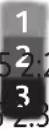 | 2:50 | 2:00 | 0:50 | 1:00 | 2:22 |
| 1.5 2:55 | 0:5 | ||||||
| 2 3:05 | 1:05 | ||||||
| 7 | 1 | 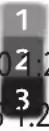 | 1:25 | 0:40 | 0:45 | 1:00 | 1:15 |
| 1.5 1:30 | 0:5 | ||||||
| 2 1:35 | 0:55 | ||||||
| 8 | 1 | [TTTW] | 2:20 | 1:40 | 0:40 | 1:00 | 1:52 |
| 1.5 2:25 | 0:4 | ||||||
| 2 2:30 | 0:50 | ||||||
| 9 | 1 | 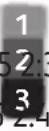 | 2:55 | 2:05 | 0:50 | 1:00 | 2:31 |
| 1.5 3:00 | 0:5 | ||||||
| 2 3:10 | 1:05 | ||||||
| 10 | 1 | 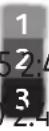 | 3:20 | 2:40 | 0:40 | 1:00 | 2:39 |
| 1.5 3:25 | 0:4 | ||||||
| 2 3:30 | 0:50 | ||||||
| POIDS | GRILLAGE | TEMPS TOTAL | PREPARATION DE LA PÂTE (Pétrissage-Repos-Levée) | CUISSON | MAINTIEN AU CHAUD | ||
| (lbs) | (h) | (h) | (h) | (h) | (h) | ||
| 11 | --- | 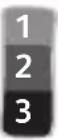 | 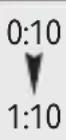 | --- | 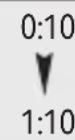 | --- --- | |
| 12 | --- | --- | 1:20 1:20 | --- --- 0:56 | |||
| 13 | 2 |  | 2:10 0:25 | 1:45 1:00 1:50 | |||
| 14 | --- | --- | 1:05 0:15 | 0:50 --- --- | |||
| 15 | --- | --- | 0:15 0:15 | --- --- --- |
1 LIGHT - LÉGER
2 MEDIUM - MOYEN
3 DARK - FONCÉ
Comment: the total duration does not include warming time.
natural_image
Illustration of a food microwave oven with kitchen utensils and a cooking pan (no text or symbols)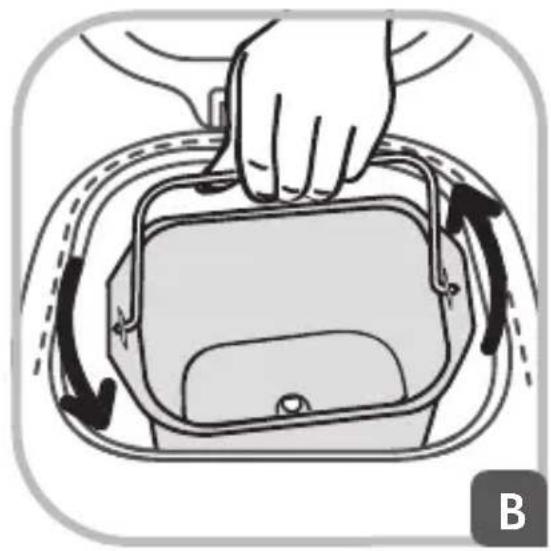
natural_image
Diagram of a hand placing a component into a container with arrows indicating flow direction (no text or symbols)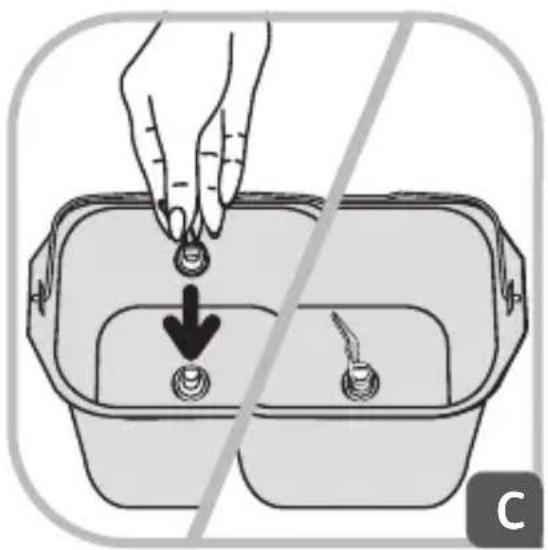
natural_image
Illustration of a hand placing a small sink into a container with a black arrow indicating the drop (no text or symbols)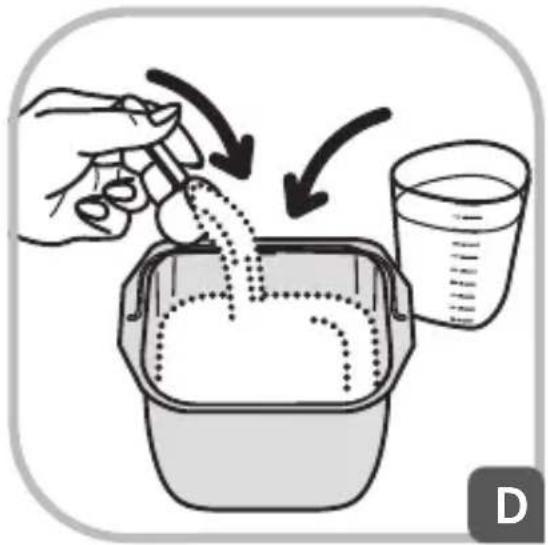
natural_image
Illustration of a hand pouring liquid into a container with a measuring cup nearby (no text or symbols)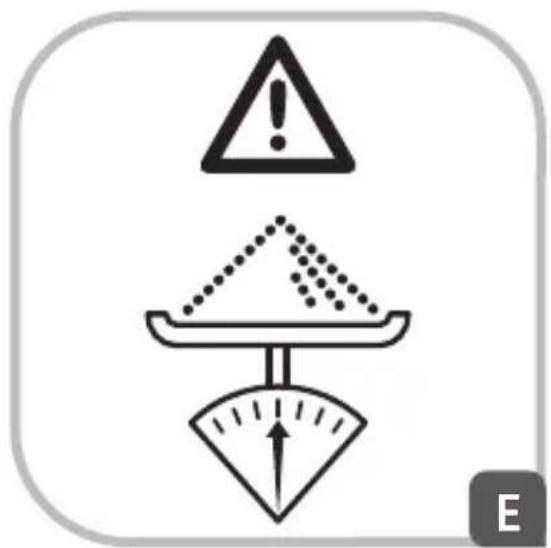
natural_image
Illustration of a hand placing a container with a downward arrow, showing internal dotted pattern (no text or symbols)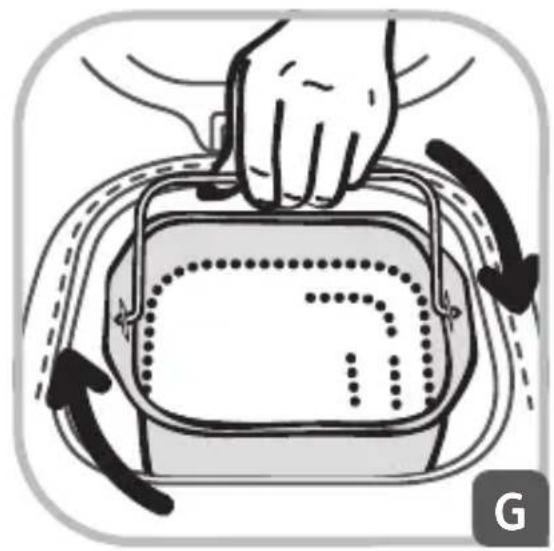
natural_image
Illustration of a hand pressing down on a rectangular container with dotted lines indicating internal structure (no text or symbols)
natural_image
Illustration of a bag with a patterned lid and a side view of a box on a grid mat (no text or symbols)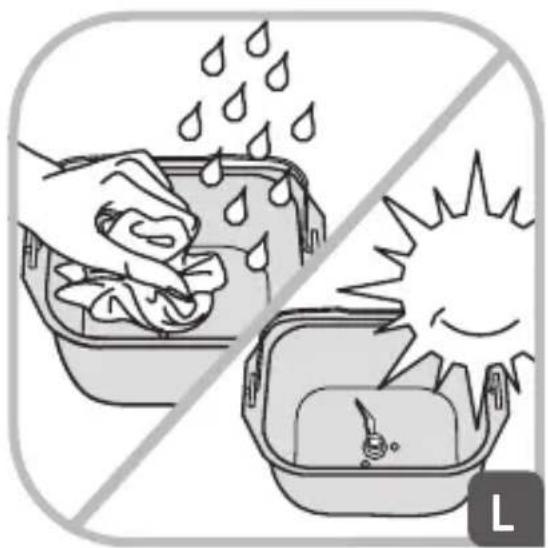
natural_image
Illustration of a hand washing clothes in a sink while another hand washes water, separated by a diagonal line (no text or symbols)T-fal®
FR 4 - 17
EN 18 - 31
Ref. NC00127175 - 10/2014
- PRÉCAUTIONS IMPORTANTES
- LES INGRÉDIENTS
- LES RECETTES
- EN
- SAVE THESE INSTRUCTIONS
- Polarization instructions
- Short Cord instructions
- DO NOT
- DESCRIPTION
- PRACTICAL ADVICE
- Preparation
- General order to be followed (available only for recipes WITH gluten):
- Using
- Precautions for using gluten-free programs
- Too much liquid OK Too dry
- BEFORE YOU USE YOUR APPLIANCE FOR THE FIRST TIME
- QUICK-START
- Selecting a program
- Using gluten-free programs.
- Selecting the weight of the bread
- Selecting the crust color
- Start /Stop
- CYCLES
- Kneading
- Rest
- Rising
- Baking
- Warming
- DELAYED START PROGRAM
- INGREDIENTS
- To make gluten-free breads, you must use a special gluten-free yeast.
- CLEANING AND MAINTENANCE
- RECIPES
- TROUBLESHOOTING GUIDE TO IMPROVE YOUR RECIPES
- TECHNICAL TROUBLESHOOTING GUIDE
- T-fal®
Brand : TEFAL
Model : ActiBread PF311E
Category : Bread maker