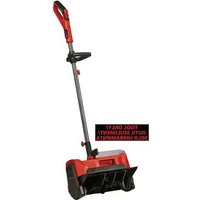
GE-ST 36/40 Li E BL - Electric snow shovel EINHELL - Free user manual and instructions
Find the device manual for free GE-ST 36/40 Li E BL EINHELL in PDF.


| Product Type | Cordless Battery Snow Shovel |
| Brand | Einhell |
| Model | GE-ST 36/40 Li E BL |
| Power Supply | 36 V (2 x 18 V Li-ion battery) |
| No-load Speed | 1670–1970 rpm |
| Clearing Width | 40 cm (16") |
| Clearing Depth | 20 cm (7.9") |
| Throw Distance | 6 m (19.6 ft) |
| Weight (tool only) | 6.4 kg (14.1 lb) |
| Battery System | Power X-Change 18 V (PXC) |
| Compatible Batteries | 18 V 1.5–8.0 Ah PXC / PXC Plus Li-ion |
| Speed Adjustment | Yes, 6 levels (1–6) |
| Ejection Direction Adjustment | 3 positions (+30°, 0°, -30°) |
| Auxiliary Handle | Adjustable in height and orientation |
| Safety Devices | Start lock, automatic stop |
| Battery Charge Indicator | 3 LEDs on each battery |
| Drum Material | Metal (steel) |
| Sliding Shoes | Yes |
| Recommended Use | Stabilized surfaces (asphalt, paving stones, concrete) |
| Cleaning | Damp cloth, no solvents |
| Maintenance | No parts requiring maintenance |
| Storage Temperature | 10–40 °C (50–104 °F) |
| Included Accessories | Instruction manual only (battery and charger not included) |
Frequently Asked Questions - GE-ST 36/40 Li E BL EINHELL
User questions about GE-ST 36/40 Li E BL EINHELL
0 question about this device. Answer the ones you know or ask your own.
Ask a new question about this device
Download the instructions for your Electric snow shovel in PDF format for free! Find your manual GE-ST 36/40 Li E BL - EINHELL and take your electronic device back in hand. On this page are published all the documents necessary for the use of your device. GE-ST 36/40 Li E BL by EINHELL.
USER MANUAL GE-ST 36/40 Li E BL EINHELL
EN Operating instructions Cordless Snow Shovel
natural_image
Exterior view of a modern office building (no signage)7

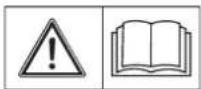
Important! Read the operating instructions and follow the warnings and safety instructions.
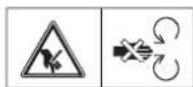
Danger - rotating blades. Keep your hands and feet away from the openings when the machine is running.
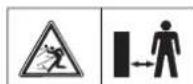
Important! Keep other persons and animals away from the danger zone.
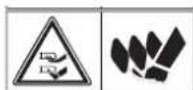
Keep hands and feet away from the cutter drum!

Wear safety goggles!

Wear safety gloves!
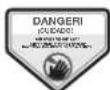
DANGER: Keep hands and feet away.
-5-
EN

DANGER: Do not use hands to unclog chute.
-6-
EN
DANGER!
When using the equipment, a number of safety precautions must be observed to avoid injuries and damage. Please read the complete operating instructions and safety information with due care. Keep these operating instructions in a safe place so that the information is available at all times. If you give the equipment to any other person, hand over these operating instructions and the safety information as well. We cannot accept any liability for damage or accidents which arise due to failure to follow these instructions and the safety information.
1. Safety information
Read All Instructions
WARNING: When using electric gardening appliances, basic safety precautions should always be followed to reduce the risk of fi re, electric shock, and personal injury, including the following:
FOR ALL APPLIANCES
- Avoid dangerous environments - do not use appliances in damp or wet locations.
- Don't use in rain.
- Keep children away - all people and pets should be kept at a distance from the work area.
- Dress properly - do not wear loose clothing or jewelry. They can be caught in moving parts. Wear protective clothing; use of work gloves, long pants, a long sleeved shirt and safety footwear is recommended when working outdoors. Wear protective hair covering to contain long hair.
- Use safety glasses - always use face or dust mask if the area in which you are working is dusty. The purpose of the safety rules is to attract your attention to possible dangers. The safety symbols and the explanations with them, require your careful attention and understanding. The safety warnings do not by themselves eliminate any danger. The instruction or warnings they give are not substitutes for proper accident prevention measures.
- Use right appliance - do not use appliance for any job except that for which it is intended.
-
Do not force appliance - it will do the job better and with less likelihood of a risk of injury at the rate for which it was designed.
-
Do not overreach - keep proper footing and balance at all times.
- Stay alert. Use common sense. Do not operate appliance when you are tired or under the influence of drugs, alcohol or medication.
- When not in use, appliances should be stored indoors in dry places out of reach of children.
- Maintain appliance with care. Follow instructions for lubricating and changing accessories. Keep handles dry, clean, and free from oil and grease.
- Check damaged parts. Before using the appliance, make sure the safety guards are intact. Never use a tool without its safety guard. Check the alignment of the moving parts, the binding of the moving parts.
- Check for broken or defective parts that can affect the safe operation of your tool. A guard or other part that is damaged should be properly repaired or replaced by an authorized service centre unless indicated elsewhere in this manual.
- Recharge only with the charger specified by the manufacturer. A charger that is suitable for one type of battery pack may create a risk of fire when used with another battery pack.
- Use appliances only with specifically designated battery packs. Use of any other battery packs may create a risk of injury and fire.
- When battery pack is not in use, keep it away from other metal objects, like paper clips, coins, keys, nails, screws or other small metal objects, that can make a connection from one terminal to another. Shorting the battery terminals together may cause burns or a fire.
- Under abusive conditions, liquid may be ejected from the battery; avoid contact. If contact accidentally occurs, flush with water. If liquid contacts eyes, additionally seek medical help. Liquid ejected from the battery may cause irritation or burns. (This advice is considered correct for conventional NiMh, NiCd, lead acid and Lithium-ion cell types. If this advice is incorrect for a cell design that differs from these, then the correct advice may be substituted.)
- Do not use a battery pack or appliance that is damaged or modified. Damaged or modified batteries may exhibit unpredictable behavior resulting in fire, explosion or risk of injury.
- Do not expose a battery pack or appliance to fire or excessive temperature. Exposure to fire or temperature above 266°F (130°C) may
EN
cause explosion.
- Follow all charging instructions and do not charge the battery pack or appliance outside of the temperature range specified in the instructions. Charging improperly or at temperatures outside of the specified range may damage the battery and increase the risk of fire.
- Have servicing performed by a qualified repair person using only identical replacement parts. This will ensure that the safety of the product is maintained.
- Do not modify or attempt to repair the appliance or the battery pack (as applicable) except as indicated in the instructions for use and care.
1.) FOR ALL BATTERY-OPERATED APPLIANCES:
- Do not charge appliance in rain, or in wet locations.
- Do not use battery-operated appliances in the rain. Always remove or disconnect battery pack before adjusting, cleaning, servicing or transporting the garden appliances.
2.) FOR ALL BATTERY-OPERATED PRODUCTS EMPLOYING A DETACHABLE OR SEPARABLE
BATTERY:
- Use only the following type and size battery: 18V 1.5Ah PXC Lithium-ion battery 18V 2.0Ah PXC Lithium-ion battery 18V 2.5Ah PXC Lithium-ion battery 18V 3.0Ah PXC Lithium-ion battery 18V 4.0Ah PXC Lithium-ion battery 18V 3.0Ah PXC Plus Lithium-ion battery 18V 4.0Ah PXC Plus Lithium-ion battery 18V 5.2Ah PXC Plus Lithium-ion battery 18V 4.0Ah/6.0Ah PXC Plus Lithium-ion battery 18V 5.0Ah/8.0Ah PXC Plus Lithium-ion battery
- Do not dispose of the battery in a fire. The cell may explode. Check with local codes for possible special disposal instructions.
- Do not open or mutilate the battery. Released electrolyte is corrosive and may cause damage to the eyes or skin. It may be toxic if swallowed.
- Exercise care in handling the battery in order not to short it with conducting materials such as rings, bracelets, and keys. The battery or conductor may overheat and cause burns.
3.) AVOID UNINTENTIONAL STARTING - DO NOT INSERT BATTERY WHILE YOUR FINGER IS ON THE SWITCH. BE SURE SWITCH IS OFF WHEN INSERTING THE BATTERY.
GENERAL SAFETY WARNINGS FOR THE BATTERY PACK
- Dispose of used battery promptly and properly. When disposing of secondary cells or batteries, keep cells or batteries of different electrochemical systems separate from each other.
- Keep battery out of reach of children and in original package until ready to use.
- Never put batteries in one's mouth. If swallowed, contact local poison control centre immediately.
- CAUTION – The battery used in this device may present a risk of fire or chemical burn if mishandled. Replace battery with Einhell brand only. Use of another battery may present a risk of fire or explosion.
- WARNING: Do not use a visibly damaged battery pack or appliance.
- WARNING: Do not modify or attempt to repair the appliance or the battery pack.
• BATTERIES MUST BE RECYCLED. - Do not short-circuit a cell or battery. Do not store cells or batteries haphazardly in a box or drawer where they may short-circuit each other or be short-circuited by conductive materials.
- Do not subject cells or batteries to mechanical shocks.
- Keep cells and batteries clean and dry. Wipe the cell or battery terminals with a clean dry cloth if they become dirty.
- Do not maintain secondary cells and batteries on charge when not in use.
- Retain the original cell and battery. Do not use any charger other than that specifically provided for use with the equipment. Secondary cells and batteries need to be charged before use. Always use the correct charger and refer to the manufacturer's instructions or equipment manual for proper charging instructions.
- When possible, remove the battery from the equipment when not in use.
- Prevent unintentional starting. Ensure the switch is in the off-position before connecting to the battery pack, picking up or carrying the appliance. Carrying the appliance with your finger on the switch or energizing appliances
EN
that have the switch on invites accidents.
- Disconnect the battery pack from the appliance before making any adjustments, changing accessories, or storing appliance. Such preventive safety measures reduce the risk of starting the appliance accidentally.
- Under abusive conditions, liquid may be ejected from the battery; avoid contact. If contact accidentally occurs, flush with water. If liquid contacts eyes, additionally seek medical help. Liquid ejected from the battery may cause irritation or burns.
- Have servicing performed by a qualified repair person using only identical replacement parts. This will ensure that the safety of the product is maintained.
- Protect your rechargeable battery against moisture, rain and high humidity. Moisture, rain and high humidity can cause dangerous cell damage. Never charge or work with batteries which have been exposed to moisture, rain or high humidity – replace them immediately.
- If your equipment is fitted with a detachable battery, remove the battery for safety reasons after you have finished your work.
IMPORTANT SAFETY INSTRUCTIONS FOR CHARGER
WARNING: This product may contain lead, phthalate or other chemicals known to the State of California to cause cancer, birth defects and other reproductive harm. Please wash your hands after use.
Protection from environmental influences
- Wear suitable work clothes. Wear safety goggles.
- Protect your cordless tool and the battery charger from moisture and rain. Moisture and rain can cause dangerous cell damage.
- Do not use the cordless tool or the battery charger near vapors and infl ammable liquids.
- Use the battery charger and cordless tools only in dry conditions and an ambient temperature of 10-40°C.
- Do not keep the battery charger in places where the temperature is liable to reach over 104^ F ( 40^ C). In particular, do not leave the battery charger in a car that is parked in the sunshine.
- Protect batteries from overheating. Overloads, over-charging and exposure to direct sunlight will result in overheating and cell damage. Never charge or work with
batteries which have been overheated – replace them immediately if possible.
-
Storage of batteries, battery chargers and cordless tools. Store the charger and your cordless tool only in dry places with an ambient temperature of 50-104°F (10-40°C). Store your Lithium-Ion battery pack in a cool, dry place at a temperature of 50-68°F (10-20°C). Protect them from humidity and direct sunlight. Only place fully charged batteries in storage (charged at least 40%).
-
Prevent the Lithium-Ion battery pack from freezing. Battery packs which were stored below 32^ F ( 0^ C) for more than 60 minutes must be disposed of.
-
When handling batteries beware of electrostatic charge: Electrostatic discharges cause damage of the electronic protection system and the battery cells. Avoid electrostatic charging and never touch the battery poles.
Safety information
IMPORTANT
READ CAREFULLY BEFORE USE KEEP FOR LATER REFERENCE
Safety instructions for cordless snow shovel
General information
This machine can sever hands and feet as well as catapult foreign bodies into the surroundings causing injury to persons and damage to property. Failure to observe the following safety instructions can lead to serious injuries.
Instructions
a) Read, understand and follow all the instructions attached to this machine and printed in its operating manuals before you put the machine into operation. Familiarize yourself with the machine's controls and proper use. Pay attention, in particular to how to stop and switch off the machine quickly.
b) Children are not allowed to use the machine. Adults who are not acquainted with the machine are also not allowed to use it.
c) Never use the machine when there are people – particularly small children – or animals nearby.
d) Make sure you stand squarely at all times while working. Be careful when walking backwards. Tripping hazard!
EN
Preparations
a) Thoroughly check the area in which the machine is to be used, and remove all floor mats, slides, boards, wires and other foreign bodies.
b) Do not use the machine without wearing suitable winter clothing. Avoid wearing loose clothing that can get caught in moving parts. Wear non-slip shoes in order to ensure the best possible grip on slippery surfaces.
c) While working, making adjustments or carrying out repairs, always wear safety goggles or a visor in order to protect your eyes from foreign bodies that might be catapulted by the machine into the surroundings.
d) Set the working height so that the machine can safely clear graveled paths or similar unpaved surfaces.
e) Never make any adjustments while the motor is running (unless expressly instructed to do so by the manufacturer).
Operation
a) Use the On/Off switch carefully as described in the manufacturer's instructions. Never move your hands or feet toward or under any rotating parts. Make sure that you are far enough away from the cutter drum and the ejector opening. Never switch on the machine when you are standing in front of the cutter drum or the ejector opening.
b) Be extremely careful when working on or crossing over graveled paths or similar unpaved surfaces. Watch out for hidden dangers or road traffic.
c) After striking a foreign body you must switch off the motor, take out the batteries. Check the snow shovel thoroughly for damage and repair any damage before you restart and use the snow shovel again.
d) If the machine vibrates in an unusual way, switch off the motor and look immediately for the causes. Vibrations are in most cases a reliable indication of faults.
e) Switch off the motor, take out the batteries as soon as you leave the snow shovel, before you free the collector housing, the cutter drum housing or the ejector chute of any blockages, and when you carry out any repairs, adjustments or inspections.
f) Be extremely careful when working on slopes.
g) Never use the machine without suitable safety devices. Use all the available safety devices and keep them in good working order.
h) Never point the ejector at persons or areas (e.g. windows, cars, ...) where damage to property could occur. Keep children, other people and animals away from the machine.
i) Do not overload the machine by clearing away snow at high speed.
j) When on slippery surfaces, drive the machine at walking pace. Look behind and take care when walking backwards.
k) Switch off the cutter drum when the machine is being transported or not being used.
I) Use only the attachments and accessories approved by the machine's manufacturer (e.g. wheel weights, counterweights or seats). For safety reasons, replace worn or damaged parts. Use only original spare parts and original accessories.
m) Work only in good visibility, in broad daylight or in good artificial lighting. Always maintain a good footing / a secure hold and grip the handles firmly. Work with the machine at walking pace in forward direction, never backwards.
Removing a blockage from the ejector
a) Hand contact with the rotating cutter drum is the most frequent cause of injuries in connection with snow shovels. Never use your hand to clean the ejector.
b) Unblock the ejector as follows:
1) SWITCH OFF THE MOTOR!
2) Wait for 10 seconds to make sure that the cutter drum is no longer rotating.
3) Always use a cleaning tool, never your hands.
- Do not use on graveled surface unless the snow shovel is adjusted for such a surface in accordance with the operator's manual.
- Wear rubber boots when operating the snow shovel.
- Keep hands away from moving parts.
- Keep guards in place and in working order.
- If the snow shovel strikes a foreign object, follow these steps:
- Stop snow shovel. Release the switch.
- Remove the batteries.
- Inspect for damage.
- Repair any damage before restarting and operating the snow shovel.
EN
Maintenance and storage
a) To ensure that the machine is in safe condition for use, check at regular intervals that all shearing bolts, nuts, other bolts and screws are firmly seated.
b) Before you put the machine into storage, read the instructions in the operating manual.
c) Worn or damaged warning signs must be exchanged or replaced.
d) To prevent the cutter drum from freezing, allow the machine to continue running for a few minutes after you have finished your work.
f) Before you clean, repair or check the snow shovel, switch off the motor and make sure that the cutter drum and all moving parts have come to a standstill. Remove the batteries. Keep the batteries in a safe place in order to prevent the machine from switching on accidentally.
SAVE THESE INSTRUCTIONS
2. Layout and items supplied
2.1 Layout
- Handle
- On/Off switch
- Safety lock-off
- Speed controller
- Top long handle
- Additional handle
- Wing nut
- Lock bolt M6
- Hex. screw M6
- Bottom long handle
- Spring ball
- Long handle mount
- Motor housing
- Carry-handle
- Ejector cover
- Snow guide blades
- Cutter drum
- Skids
- Hole
-
Pushlock button
-
Battery compartment cover
-
Ejector direction adjustment lever
-
Battery capacity indicator
-
Battery capacity indicator button
2.2 Items supplied
Please check that the article is complete as specified in the scope of delivery. If parts are missing, please contact our service center or the store where you made your purchase at the latest within 5 workdays after purchasing the article and upon presentation of a valid bill of purchase.
- Open the packaging and take out the equipment with care.
- Remove the packaging material and any packaging and/or transportation braces (if present).
- Check to see if all the items are supplied.
- Inspect the equipment and accessories for transport damage.
- If possible, keep the packaging until the end of the guarantee period.
Danger!
The equipment and packaging material are not toys. Do not let children play with plastic bags, plastic sheets and small parts. There is a risk of choking and suffocating!
• Cordless Snow Shovel
• Original operating instruction with safety information
Separately available accessories
18V 1.5Ah PXC Lithium-Ion battery
18V 2.0Ah PXC Lithium-Ion battery
18V 2.5Ah PXC Lithium-Ion battery
18V 3.0Ah PXC Lithium-Ion battery
18V 4.0Ah PXC Lithium-Ion battery
18V 3.0Ah PXC Plus Lithium-Ion battery
18V 5.2Ah PXC Plus Lithium-Ion battery
18V 4.0Ah/6.0Ah PXC Plus Lithium-Ion battery
18V PXC Dual Port Fast Charger
18V PXC Fast Charger
Contact your local retailer for more specific models of batteries and charger available in your area. You can also explore battery + charger options at Einhell.com.
EN
3. Intended use
This machine is designed solely for private use in clearing away freshly fallen loose snow (wet and powdery) from paved paths and areas (e.g. courtyards, garage driveways, footpaths or parking spaces).
The paths and areas to be cleared must have a firm base and a smooth surface (e.g. concrete paving, granite paving or asphalt).
The machine is not designed for the following:
- Clearing away snow from unpaved paths and areas (e.g. graveled areas or meadows).
• Clearing away snow in large quantities and heights, clearing away very wet snow, clearing away packed snow and ice. - For commercial use (e.g. in public parks, in sports facilities) and for use in agriculture and forestry.
The equipment is allowed to be used only for its prescribed purpose. Any other use is deemed to be a case of misuse. The user/operator and not the manufacturer will be liable for any damage or injuries of any kind resulting from such misuse.
Please note that our equipment has not been designed for use in commercial, trade or industrial applications. Our warranty will be voided if the equipment is used in commercial, trade or industrial businesses or for equivalent purposes.
4. Technical data
Motor power supply: 36V= (2×18V)
Idling speed: 1670-1970 RPM
Clearing Width 16"
Clearing Depth 7.9"
Ejection Distance 19.6 ft.
Weight (Tool only): 14.1 lbs
Wear ear-muff s.
The impact of noise can cause damage to hearing.
Reduce noise generation and vibration to a minimum!
• Use only equipment that is in perfect condition.
- Maintain and clean the equipment regularly.
• Adapt your way of working to the equipment.
• Do not overload the equipment.
• Have the equipment checked if necessary.
- Switch off the equipment when not in use.
- Wear gloves.
CAUTION!
Residual risks
Even if you use this electric power tool in accordance with the instructions, certain residual risks cannot be eliminated. The following hazards may arise in connection with the equipment's construction and layout:
- Lung damage if no suitable protective dust mask is used.
- Damage to hearing if no suitable ear protection is applied.
- Health damage caused by hand-arm vibrations if the equipment is used over a longer period or is not properly guided and maintained.
Limit the operating time.
All stages of the operating cycle must be considered (for example, times in which the electric tools are switched off and times in which the tool is switched on but operates without load).
5. Before starting the equipment
Warning!
Always remove the battery/batteries before making adjustments to the equipment.
5.1 Fitting the long handle (Fig. 3 - 6)
- Plug the bottom long handle (Item 10) into the top long handle (Item 5). Take care not to damage the cable inside.
- Insert the M6 lock bolt (Item 8) in the square mount on the top long handle and screw it tight with the wing nut (Item 7).
- Insert the long handle in the long handle mount (Item 12). If necessary, slightly depress the spring ball (Item 11) and carefully push the long handle into the long handle mount. The spring ball (Item 11) will latch in the hole provided (Item 21).
- Insert the M6 hex. screw (Item 9) in the screw mount and turn the wing nut (Item 7) until it is tight and secures the long handle in the long handle mount.
EN
5.2 Adjusting the additional handle (Fig. 7)
For you to be able to work with the machine, the additional handle must be aligned with the handle (see Fig. 1 for the working position).
- Open the wing nut (Item 7) by turning it counter-clockwise, turn the additional handle (Item 6) until it is aligned with the handle, and push it into a comfortable working height for yourself.
- Close the wing nut by turning it clockwise and secure the additional handle.
5.3 Fitting a battery (Fig. 8)
Caution! A battery is allowed to be fitted only in dry surroundings. Before you open the battery compartment cover (Item 14), remove any snow so that it does not fall into the housing. If the interior of the battery compartment is wet or damp, use an absorbent cloth to wipe it dry.
Note:
- Both batteries must be fully charged before use.
- Always charge the two batteries simultaneously. Use only batteries which are charged to the same level. Never combine full and half-full batteries. The machine's operating time depends on the battery with the lower charge level.
- The battery compartment cover is self-closing and must be held open in order to fit the batteries.
Open the battery compartment cover (Item 14) and insert the batteries in the battery mount. The battery will be heard to click into place when it is pushed fully in. Close the battery compartment cover.
5.4 Removing a battery (Fig. 8)
To remove a battery, open the battery compartment cover (Item 14), press the pushlock button (Item 22) on the battery, and pull out the battery.
5.5 Charging the Lithium-Ion battery (not included)
The corresponding instructions can be found in the original operating instructions for your charger.
5.6 Battery capacity indicator (Fig. 9 / item 23)
Press the battery capacity indicator switch (Item 24). The battery capacity indicator (Item 23) shows the charge status of the battery using 3 LEDs.
All 3 LEDs lit:
The battery is fully charged.
2 or 1 LED(s) lit:
The battery has an adequate remaining charge.
1 LED fl ashing:
The battery is empty, recharge the battery.
All LEDs fl ashing:
The temperature of the battery is too low. Remove the battery from the device and leave it at room temperature for a day. If the error occurs again, this means that the battery has been completely depth-discharged and is defective. Remove the battery from the device. Never use or charge a defective battery.
6. Operation
Please note that the statutory regulations governing noise abatement may differ from one location to another.
Warning! The cutter drum will begin to rotate immediately after the machine is switched on. Keep your hands and feet away from rotating parts.
6.1 Switching on the machine (Fig. 10)
While you hold the machine securely with your hands on the handles, press the safety lock-off (Item 3) and the On/Off switch (Item 2). Then release the safety lock-off again.
6.2 Switching off the machine (Fig. 10)
Release the On/Off switch (Item 2).
EN
6.3 Speed controller (Fig. 10)
Turn the speed controller (Item 4) to set the speed (1 = minimum / 6 = maximum) of the cutter drum (Fig. 11/Item 19). This enables individual adjustment to the area you want to clear. The numbers 2 – 5 marked on the speed controller are provided as extra indication of the set speed.
6.4 Clearing away snow
Read the safety instructions, "Safe operation of manually driven snow shovels".
Each time before you use the machine, check the following:
- Are there any signs of damage to the safety devices and the cutter drum? Are they complete? Replace any damaged parts.
• Are all screws securely fastened?
• Do all moving parts move smoothly?
6.5 Adjusting the snow guide blades (Fig. 11)
Lift the adjustment lever (Item 15) for adjusting the eject direction and turn it. By doing this you adjust the snow guide blades (Item 18). Let go of the adjustment lever and lock it in one of the three possible positions +30° / 0° / -30° (right / center / left).
6.6 Setting the ejection range
After adjusting the snow guide blades you can use the speed controller (see section 6.3) to adjust the ejection range to your requirements.
6.7 Tips on clearing away snow properly
- The battery operating time and therefore the area in square feet that can be cleared with a single battery charge is largely dependent on the given snow conditions (e.g. powdery snow, wet snow, height of snow ...) and the user's walking speed. Frequently turning the machine on and off during the clearance will also reduce the area per charge performance. Battery performance drops with the temperature. It is recommended therefore to fit room-temperature batteries in the battery mount just before you begin with the clearing work and to remove the batteries when you have finished. If the battery operating time (area performance) is still unsatisfactory, despite the above measures, you can help remedy the problem by using batteries of higher capacity (Ah).
- It is best to clear away the snow soon after it has fallen and in short intervals before it gets too high.
- Lift the cutter drum a little off the snow before you switch on the machine.
- Push the machine forward at a suitable walking pace to leave an area that is as clear of snow as possible.
- The angle at which you push the machine has an influence on the ejection range and on the height of snow remaining.
- Clear away the snow with the wind at your back and in overlapping runs.
- In cases of very high snow, clear away layer by layer from the top in several runs.
- For large areas draw up a plan for clearing away the snow without it being thrown back into areas already cleared.
- To prevent the moving parts of the machine from freezing, allow the machine to continue running for a few minutes after you have finished your work. Then switch off the machine, wait for all moving parts to come to a standstill, take out the batteries, and remove the snow and ice that has collected on the machine.
7. Cleaning and maintenance
HAZARD!
Always take the batteries out of the equipment before starting any cleaning work.
7.1 Cleaning
- Keep all safety devices, air vents and the motor housing free of dirt and dust as far as possible. Wipe the equipment with a clean cloth or blow it with compressed air at low pressure.
- We recommend cleaning the machine immediately each time after use. Remove ice, snow and dirt from the air vents in the motor housing, from the cutter drum and from all other parts.
- Clean the equipment regularly with a moist cloth and some soft soap. Do not use cleaning agents or solvents; these could attack the plastic parts of the equipment. Ensure that no water can seep into the device. The penetration of water into an electric tool increases the risk of an electric shock.
- Use a brush to remove deposits from safety guards.
EN
7.2 Maintenance
There are no parts inside the equipment which require additional maintenance.
8. Disposal and recycling
The equipment is supplied in packaging to prevent it from being damaged in transit. The raw materials in this packaging can be reused or recycled. The equipment and its accessories are made of various types of material, such as metal and plastic. Never place defective equipment in your household refuse. The equipment should be taken to a suitable collection center for proper disposal. If you do not know the whereabouts of such a collection point, you should ask in your local council offices.
9. Storage
Store the equipment and its accessories out of children's reach in a dark and dry place at above freezing temperature. The ideal storage temperature is between 50^ and 104^ (10°C and 40°C). Keep the electric tool in its original packaging.
The reprinting or reproduction by any other means, in whole or in part, of documentation and papers accompanying the products is strictly subject to the express consent of Einhell Germany AG.
Subject to technical changes.
EN
10. Troubleshooting guide
| Problem Cause | Solution | |
| The cutter drum does not rotate. | a) Battery is empty.b) Battery is too cold.c) Snow is too high and is preventing start-up.d) Cutter drum is iced up or full of snow.e) Insufficient contact or no contact between the long handle and the long handle fastener (section 5.1). | a) Replace with full battery.b) Replace with battery at room temperature.c) Lift the cutter drum a little from the snow before switching on.d) Carefully free the cutter drum from ice and snow; let it thaw if necessary.e) Open the long handle connection, remove the long handle and check the contacts. Refasten the long handle. |
| Setting the snow guide blades does not work (section 6.5). | a) Snow guide blades are iced up or full of snow. | a) Carefully free the snow guide blades from ice and snow; let them thaw if necessary. |
FR