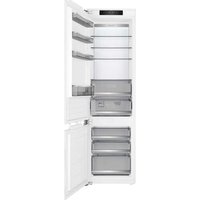
PFBI L COMBI - Refrigerator Pando - Free user manual and instructions
Find the device manual for free PFBI L COMBI Pando in PDF.


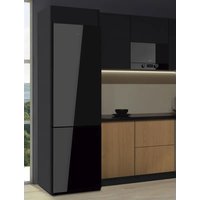
| Product type | Combined fridge-freezer |
| Brand | Pando |
| Model | PFBI L COMBI |
| Total volume | 341 L |
| Fridge volume | 257 L |
| Freezer volume | 84 L |
| Dimensions (H x W x D) | 1937 x 690 x 550 mm |
| Net / gross weight | 80.5 kg / 86.5 kg |
| Power supply | 220-240 V, 50 Hz |
| Rated current | 0.8 A |
| Energy class | E |
| Estimated annual consumption | 153 kWh/year |
| Refrigerant | R600a |
| Climate class | ST (subtropical) |
| Interior lighting | LED |
| Defrost type | No Frost (automatic) |
| Special functions | Fast cooling, fast freezing, holiday mode, eco mode, MyZone drawer, Ultrafresh technology |
| Ultrafresh filter cleaning | Annually: 2 h in oven at 65 °C |
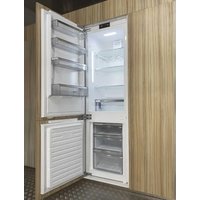
| Number of fridge shelves | 2 glass shelves + vegetable drawer + MyZone drawer |
| Number of freezer drawers | 3 drawers (including one for fast freezing) |
| Warranty | 3 years |
| After-sales service | www.pando.es/fr/service-apres-vente/ |
Frequently Asked Questions - PFBI L COMBI Pando
User questions about PFBI L COMBI Pando
0 question about this device. Answer the ones you know or ask your own.
Ask a new question about this device
Download the instructions for your Refrigerator in PDF format for free! Find your manual PFBI L COMBI - Pando and take your electronic device back in hand. On this page are published all the documents necessary for the use of your device. PFBI L COMBI by Pando.
USER MANUAL PFBI L COMBI Pando
natural_image
Modern kitchen interior with open refrigerator, storage shelves, and dining table (no visible text or symbols)Pando
integralcooking
FRIGORÍFICO COMBI INTEGRABLE
Guarantee certificate
+ info
+ info
+ info
+ info
integralkitchensolutions
Images and content in this catalogue is of exclusive property of Pando-INOXPAN S.L, for which it is completely forbidden the use of images as well as total or partial reproduction without previous authorisation in written.
LAS IMÁGENES MOSTRADAS EN ESTE CATÁLOGO NO SON CONTRACTUALES.
THE IMAGES SHOWN IN THIS CATALOGUE ARE NOT CONTRACTUAL
Pando Technical Management reserves the right to modify, alter or improve any technical drawings exposed in this Catalogue with previous warning.
Pando
integralcooking
CAMPANAS
HORNOS&MICROONDAS
Quality Management System Certification

ISO 14001:2015 - ES20/208675
Environmental Management System Certification
Pando integral cooking
Español
natural_image
Simple line drawing of a trash bin with no text or symbolsnatural_image
Technical illustration of a device with ventilation duct and internal components, showing no text or symbols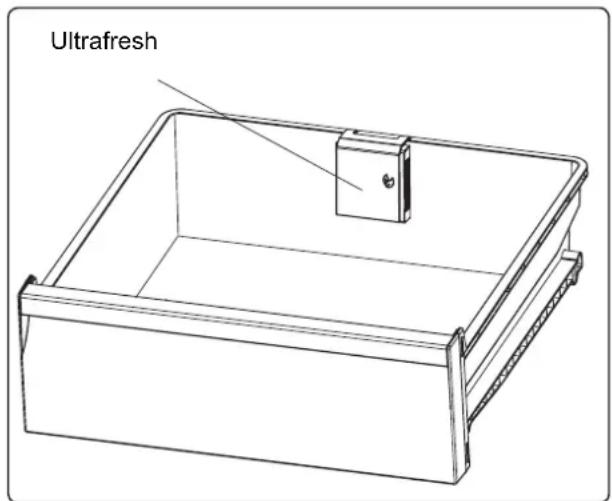
flowchart
graph TD
    A["User Icon"] --> B["LED"]
    B --> C["LED"]
    C --> A
natural_image
Collection of technical line drawings of mechanical parts (no text or symbols)natural_image
Line drawing of a refrigerator interior with an electrical plug and cable, showing the exterior and front views (no text or symbols)natural_image
Line drawing of a cabinet with two side supports and a curved base, no text or symbols presentTapa bisagra superior
EL PESO TOTAL DE LA PUERTA DEL FRIGORIFICO ES DE: 30KG
natural_image
Line drawing of a door with an arrow indicating direction, showing internal compartments and hanging items (no text or symbols)Instale la cubierta en la bisagra

natural_image
Technical line drawing of a cabinet with vertical supports and horizontal arrows indicating force or movement (no text or symbols)natural_image
Technical line drawing of a rectangular electronic device with mounting brackets and internal components (no text or symbols)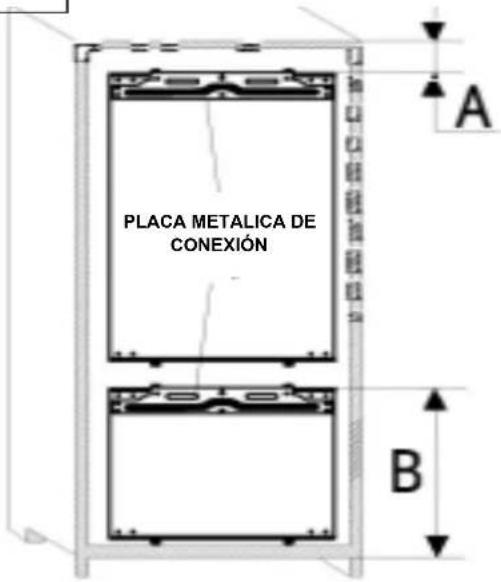
natural_image
Simple line drawing of a trash bin with no text or symbolsnatural_image
Pure electrical circuit lines without any symbolsflowchart
graph TD
    A["User Icon"] --> B["LED"]
    B --> C["LED"]
    C -->|双向箭头| B
natural_image
Technical line drawings of various mechanical components (no text or symbols)Espaçador para
dobradiça A
Espaçador para
dobradiça B
Tampa da dobradiça
Parafuso de
cabeça cruzada
3,9×12, T20
3,9×16, T20
Chave
natural_image
Line drawing of a refrigerator interior showing exterior and front views, with a plug and cable being inserted (no text or symbols)natural_image
Line drawing of a cabinet with two side supports and a curved base (no text or symbols)Tampa superior da
O PESO TOTAL DA PORTA DO FRIGORÍFICO É: 30KG
O PESO TOTAL DA PORTA DO CONGELADOR É: 30KG
natural_image
Line drawing of a door frame with internal compartments and a directional arrow indicating flow (no text or symbols)Instalar a tampa na dobradiça
natural_image
Technical line drawing of a cabinet with two vertical supports and horizontal arrows indicating direction (no text or symbols)natural_image
Simple line drawing of a trash bin with no text or symbolsRecommendations....67
2.DESCRIPTION DE L'APPAREIL....68
- UTILISATION DE L'APPAREIL ....70
natural_image
Pure technical line drawings of mechanical components without any text, numbers, or symbolsEntretoise pour
charnière A
Entretoise pour
charnière B
Couvercle de
charnière
Vis à tête
cruciforme
3,9×12, T20
3,9x16, T20
clé
Couvercle du
panneau de
commande gauche
natural_image
Line drawing of a refrigerator interior showing exterior and front views, with a plug and cable being inserted (no text or symbols)natural_image
Line drawing of a cabinet with two mounting feet and a curved roof, no text or symbols presentnatural_image
Line drawing of a cabinet interior with drawers and doors, showing an arrow indicating direction (no text or symbols)natural_image
Technical line drawing of a cabinet or rack structure with directional arrows indicating flow or movement (no text or symbols)natural_image
Technical line drawing of a rectangular electronic device with mounting brackets and internal components (no text or symbols)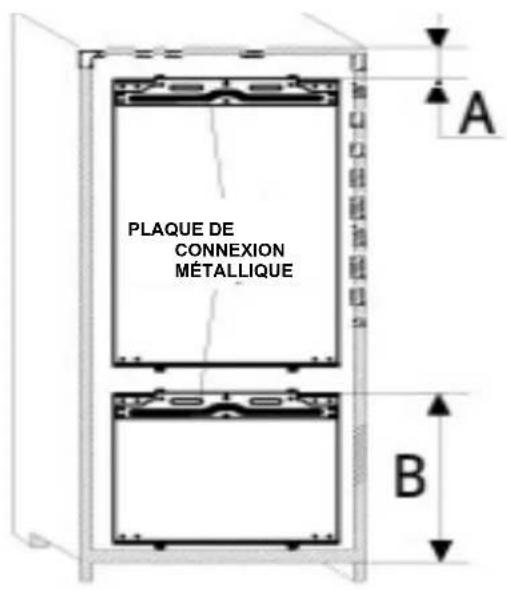
EN- The manufacturer is not liable for any inaccuracies, due to printing or transcription errors, contained in this manual. The manufacturer reserves the right to make such modifications to its products as it deems necessary or useful, without affecting the essential characteristics of functionality and safety.
First of all, we would like to thank you for the trust you have placed in our company by purchasing one of our products. We are sure that you have made the right decision.
At Pando, not only do we offer top quality products, but we also have a large team of professionals who will assist and advise you on any queries you may have when it comes to installation or operation.
We also invite you to visit our website (www.pando.es) to learn more about us and to see our entire product range with the necessary commercial and technical information.
Here you will find a wide selection of decorative hoods. Wall-mounted, ceiling-mounted, island and built-in. Four types of installation that allow us to adapt to any type of kitchen according to the needs that arise.
We also show you our collection of essential household appliances. Appliances such as our collection of Ovens and Ovens and Ovens
High-performance microwave ovens, induction and gas hobs to help you make the best recipes, wine cellars and ageing cellars to maintain and preserve your wines in the best conditions and integrated dishwashers with the latest technology.
All this under a brand with a very long history of more than 40 years in the market, which manufactures its products as a true craftsman. Our products reflect the best of our experience in order to satisfy all your needs.
We sincerely hope that you will have fun, experience and enjoy the comfort and capabilities of what is already your new kitchen ally.
Thank you very much
The Pando team
ENVIRONMENTAL PROTECTION
RECOGIDA DE LOS ELECTRODOMÉSTICOS
natural_image
Simple line drawing of a trash bin with no text or symbolsThe symbol on the product or on its packaging indicates that this product cannot be treated as normal household waste. This product must be handed over to the collection point for electrical and electronic equipment for recycling. By ensuring this product is disposed of correctly, you will help prevent potential negative consequences for the environment and public health, which could otherwise be caused by inappropriate waste handling of this product. For more detailed information about the recycling of this product, please contact your local city administration, your household waste disposal service or the shop where you purchased the product. This appliance is marked according to the European Directive 2012/19/EU on waste electrical and electronic equipment (WEEE).

ENVIRONMENT AND WASTE TREATMENT
ELIMINATION FROM PACKAGING. The packaging is marked with the dot Green Dot. In its commitment to environmental protection and in compliance with the provisions of the European Directive 94/62/EC on packaging and packaging waste and the derived Law 22/2011 on Waste and Contaminated Soil, Pando entrusts social economy entities with an Integrated Management System, responsible for the regular collection of used packaging and packaging waste at the consumer's home or in the vicinity for subsequent treatment. All packaging materials such as cardboard, polyurethane foam and film should be disposed of in suitable containers. This ensures the correct treatment and re-use of packaging materials.
INDEX
- GENERAL SAFETY WARNINGS....91
Warnings for installation 94
During use....95
Recommendations....96
2.DESCRIPTION OF THE APPARATUS .....97
- USE OF THE APPARATUS....99
Before first use 99
Use of the refrigerator....99
Use of the freezer....100
Display and control panel 101
Fault indication....102
-
FOOD STORAGE....103
-
CLEANING AND MAINTENANCE....107
-
TRANSPORT AND RELOCATION....107
-
BEFORE CALLING AFTER-SALES SERVICE....108
-
ENERGY SAVING TIPS....109
-
INSTALLATION INSTRUCTIONS AND DIMENSIONS......110
-
AFTER-SALES SERVICE (SAT) AND GUARANTEE....114
1. GENERAL SAFETY WARNINGS
Please read this user manual carefully
IMPORTANT!
WARNING: Keep the ventilation openings of the refrigerator receptacle or built-in structure free of obstructions.
WARNING: Do not use mechanical devices or other means to accelerate the defrosting process, except as recommended by the manufacturer.
WARNING: Do not use electrical appliances inside refrigerator compartments where food is stored, unless they are of a type recommended by the manufacturer.
WARNING: Avoid damaging the refrigerant circuit. WARNING: To
prevent instability of the appliance giving rise to danger, it must be fixed in accordance with the instructions.
If the appliance uses refrigerant type R600a (this information is shown on the refrigerator label), care must be taken during transportation and installation to avoid damage to the refrigerator components. R600a is a natural and environmentally friendly gas, but it is explosive. If the refrigerator components are damaged and a leak occurs as a result, move the appliance away from open flames or heat sources and ventilate the room in which the refrigerator is located for a few minutes.
- During transport and installation of the device, avoid damaging the circuitry. gas supply to the refrigerator.
- Do not store explosive substances such as cans of aerosol in this appliance. rosol with flammable propellant.
- This device is designed for use in dental applications, such as:
- Kitchens for staff in shops, offices and other commercial environments. work.
- Cottages and guest rooms of hotels, motels and other residential-type settings.
- Bed & Breakfast establishments.
- Retail catering and similar applications.
- To avoid hazards, if the electrical socket is not compatible with the plug, it must be replaced by the manufacturer, a service agent or an equivalently qualified person.
- The power cord of the refrigerator is equipped with a special grounding plug. This plug must be used with a specially grounded 16 ampere grounded outlet. If your home does not have such an outlet, have an approved electrician install one.
- This appliance can be used by children aged from 8 years and above and persons with reduced physical, sensory or mental capabilities or lack of experience and knowledge if they have been given supervision or instruction concerning use of the appliance in a safe way and understand the hazards involved. Children must not play with this appliance. Cleaning and user maintenance of this appliance shall not be made by children without supervision.
- Children aged 3-8 years are not allowed to load or unload refrigeration appliances. Children are NOT expected to carry out cleaning or maintenance of the appliance, very young children (0-3 years) are not expected to use the appliances, young children (3-8 years) are not expected to use the appliances safely unless continuously supervised, older children (8-14 years) and vulnerable persons can use the appliances safely after they have been given appropriate supervision or instruction concerning use of the appliance. Very vulnerable persons are not expected to use appliances safely unless they are continuously supervised.
- If the power cord is damaged, it must be replaced by the manufacturer, an authorised service agent or a person with equivalent qualifications in order to avoid hazards.
- This refrigerator is not designed for use at an altitude of over 2000 m.
To avoid contamination of food, please observe the following instructions:
- Opening the door for long periods of time can lead to a significant temperature rise in the compartments of the appliance.
- Regularly clean surfaces which may come into contact with accessible food and drainage systems.
- Store raw meat and fish in suitable containers in the refrigerator so that they do not come into contact with or drip onto other foods.
- The two-star compartments for frozen food are suitable for storing pre-frozen food, storing or making ice cream and making ice cubes.
- The one-, two- and three-star compartments are not suitable for freezing fresh food.
- If the refrigerator appliance is left empty for a long time, turn it off, defrost it, clean it, dry it and leave the door open to prevent mould growth inside the appliance.
Before using the fridge-freezer for the first time, please pay attention to the following points:
The operating voltage of the fridge-freezer is 220-240 V at 50Hz.
- The socket must remain accessible after installation.
- The fridge-freezer may emit some odour when it is used for the first time. This smell is normal and will disappear when the fridge-freezer starts to cool down.
- Before switching on the refrigerator If you are in doubt, contact a qualified electrician to check that the information shown on the rating plate (voltage and connected load) matches the characteristics of the power supply. If in doubt, contact a qualified electrician.
- Insert the plug into an outlet that is effectively grounded. If the electrical outlet is not grounded or the plug is not compatible with the outlet, we recommend that you contact a qualified electrician.
• We are not liable for damage caused by connecting the device without grounding.
- Do not place the refrigerator-freezer in a place where it is exposed to direct sunlight.
- The appliance must be connected to a properly installed fused electrical outlet. The power supply (AC) and voltage of the place where the appliance is to be used must not exceed the voltage of the place where the appliance is to be installed.
The data shown on the rating plate on the inside left-hand side of the appliance must correspond to the data shown on the rating plate of the appliance.
- The fridge-freezer must never be used outdoors or in a place where it is exposed to rain.
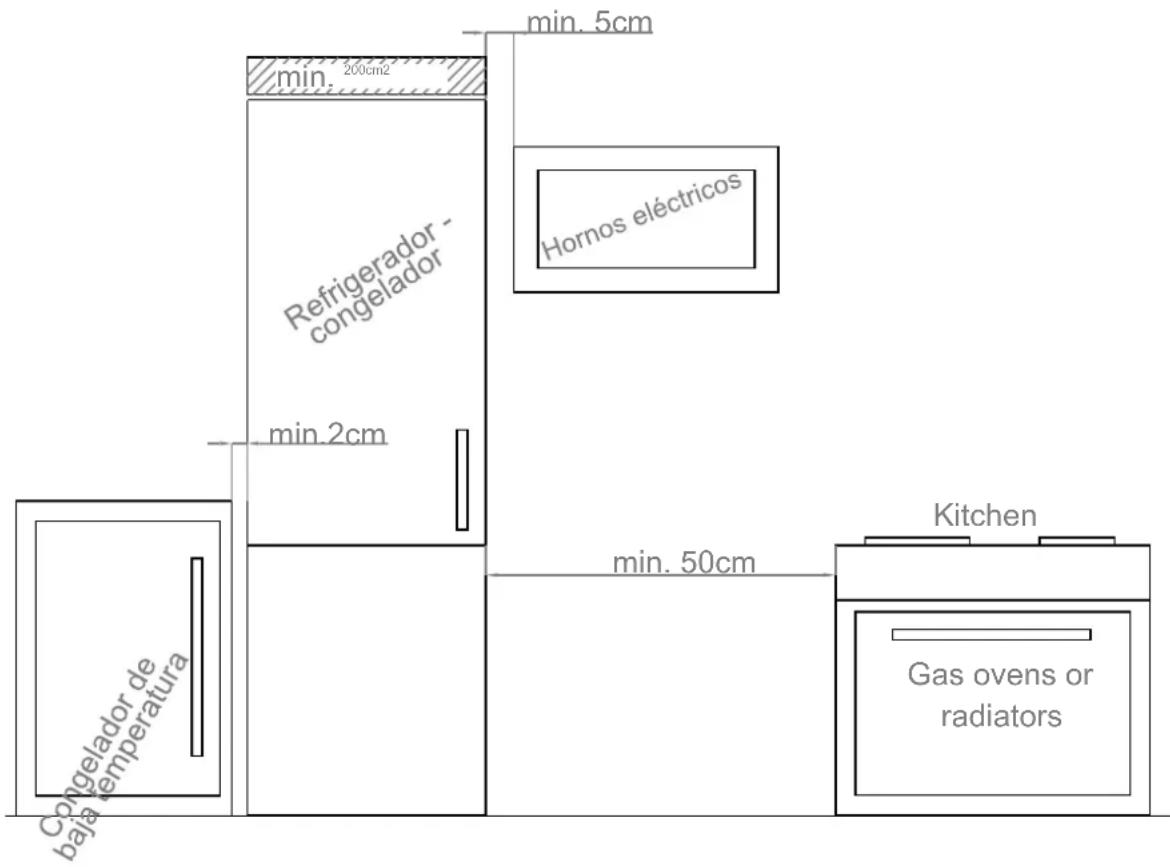
- The appliance must be at least 50 cm away from cookers, gas ovens and radiators and 5 cm away from electric ovens. (See next page).
- If you place the fridge-freezer next to a low-temperature freezer, it must be at least 2 cm away from the freezer to prevent moisture from forming on the outside surface (see next page).
- Do not cover the body or the top of the fridge-freezer with This affects the performance. This affects the performance of the The refrigerator-freezer is not to be used.
- There must be a space of at least 200 cm^2 at the top of the refrigerator. Do not place anything on top of the refrigerator (see next page).
- Do not place heavy objects on the refrigerator.
- Clean the refrigerator thoroughly before use (see Cleaning and Maintenance section).
- Before using the fridge-freezer, clean all parts with a solution of warm water and a teaspoon of baking soda. Then clean them with clean water and dry them. After cleaning the individual parts, place them back in the fridge-freezer.
- The procedure for installation inside a kitchen unit is explained in the installation manual. This product is designed only for use on suitable kitchen furniture.
During the use
- Do not use an extension cord to connect the fridge-freezer to the mains.
- Do not use damaged, worn or old plugs.
- Do not twist, damage or pull the cable.
- This appliance is intended for use by adults. Do not allow children to play with the appliance or hang on the door.
- Never touch the power plug/power cord with wet hands. Doing so may cause a short circuit or electric shock.
- Do not place cans or glass bottles in the ice cube compartment as they may explode when the contents freeze.
- Do not place explosive or inflatable materials inside the refrigerator. Beverages with a high alcohol content must be placed vertically in the refrigerator compartment and ensure that they are tightly closed.
- Do not touch the ice cubes when removing them from the ice cube compartment. Ice may cause cold burns and cuts.
- Do not touch frozen products with wet hands. Do not eat ice cream or ice cubes immediately after removing them from the ice cube compartment.
- Do not refreeze food that has already thawed. This could cause health problems, such as food poisoning.
Old and decommissioned equipment
- If your old refrigerator or freezer has a lock on it, break or remove it before disposal, as a child could get trapped inside and cause an accident.
- Old refrigerators and freezers contain insulation material and re-refrigerant containing CFCs. Therefore, avoid damaging the environment when disposing of an old refrigerator.
EC Declaration of Conformity We declare that our products comply with the relevant European Directives, Decisions and Standards and with the requirements listed in the above mentioned standards.
Disposal of old equipment
The symbol displayed on the product or its packaging indicates that this product cannot be treated as household waste.
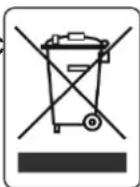
Instead, it should be taken to the appropriate collection point for the recycling of electrical and electronic equipment. Please ensure that this product is disposed of properly to prevent damage to the environment and human health. For more detailed information about the recycling of this product, please contact your local city office, your household waste disposal service or the shop where you purchased the product.
Packaging and the environment
Packaging materials protect your machine from environmental damage that may occur during transport. The packaging materials are environmentally friendly as they are recyclable.
The use of recycled material reduces the use of raw materials and therefore the production of waste.
NOTES:
- Read the instruction manual carefully before installing and using the appliance. We are not responsible for damages resulting from improper use.
- Follow all instructions on the appliance and in the instruction manual and keep this manual in a safe place to solve any problems that may occur in the future.
- This appliance is designed for residential use and should only be used in the home. to be used in domestic environments and for the specified purposes. It is not suitable for commercial or common use. Such use will invalidate the warranty of the appliance and our company will not be liable for any losses incurred.
- This appliance is designed for household use and is only suitable for cooling/preserving food. It is not suitable for commercial or ordinary use or for storing non-food substances. Our company is not responsible for any losses that may otherwise occur.
2. DESCRIPTION OF THE APPARATUS
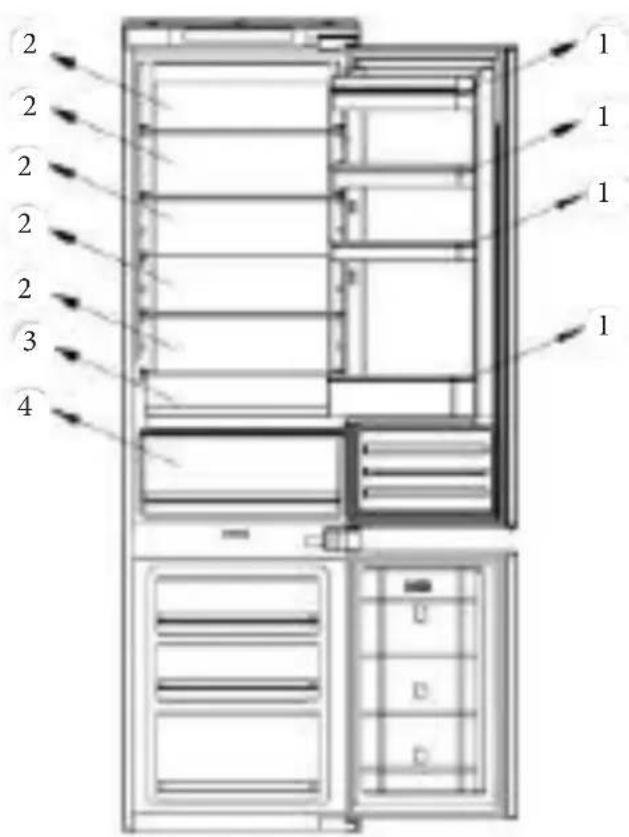
The refrigerator section is for short-term food storage. Although low temperatures can be maintained, it is not recommended to store food for prolonged periods.
As cold air circulates inside the refrigerator, the temperature may vary between the different sections. Therefore, food should be stored in different sections depending on the type of food.
- Door shelf
- Refrigerator shelf
- Fruit and vegetable drawer
- Drawer for fresh meat and fish/fruit and vegetables
The refrigerator shelves can be moved according to the storage needs within the refrigerator section. To move the shelf, lift the rear section and pull it outwards.
To reposition, slide the shelf back into the slot, then lower the rear section.
The most energy-saving configuration requires that the drawers, the food box and the shelves are placed on the product, see pictures above.
| Pandointegral cooking | Model / Modelo | |
| Specification - EN | Specifications - EN | 10523PFBI L COMBI |
| Voltage (V~AC) | Voltage (V~AC) | 220-240 |
| Frequency (Hz) | Frequency (Hz) | 50 |
| Current (A) | Current (A) | 0,8 |
| Defrost Heater (W) | Defrost-Thermostat (W) | 160 |
| Energy Efficiency Class | Energy class | E |
| Energy Consumption (kWh/y.r) | Consumption (kWh/year) | 232 |
| Energy Consumption (kW/h) | Consumption (Kw/h) | 0,37 |
| Airborne acoustical noise emissions (dB(A) re 1 pW) | Airborne acoustic noise emissions (dB(A) re 1 pW) | 41 |
| Climate Class (Temp. Range) | Climate class | ST |
| Refrigerant | Coolant | R600A |
| Minimum ambient temperature (°C) | Minimum ambient temperature (°C) | 18 |
| Maximum ambient temperature (°C) | Maximum ambient temperature (°C) | 38 |
| Light | Light | LED |
| Total Volume (l) | Total Volume (l) | 267 |
| Refrigerator volume (l) | Refrigerator volume (l) | 200 |
| Freezer Volume (l) | Freezer volume (l) | 67 |
| Product size (HxWxD) mm | Product_Dimensions (HxWxD) mm | 1937x550x540 |
| Net / Gross weight (Kg) | Net / Gross Weight (Kg) | 62 / 67,5 |
| Icon | Type | Meaning |
 | WARNING | Risk of serious injury or death |
 | RISK OF ELECTRIC SHOCK | Hazardous voltage risk |
 | FIRE | Warning; Risk of fire / flammable materials. |
 | CAUTION | Risk of injury or damage to property |
 | IMPORTANT / NOTE | Correct use of the system |
3. USE OF THE APPARATUS
Before the first use
The refrigerator must be allowed to settle for at least four hours before it is switched on.
It is recommended to clean the inside of the appliance before using it for the first time, using a solution of baking soda and warm water and drying the inside thoroughly.
The refrigerator may give off an odour when it is first used. This will disappear as soon as the appliance cools down.
Please note:
The appliance will start up at 5°C for the refrigerator and -18°C for the freezer and run continuously until it is brought down to the correct temperature. If the appliance is switched off, you must allow five minutes to elapse before switching it on again to avoid unnecessary damage to the compressor. Never store in- flammable or explosive objects or strong corrosive acids or alkalis in the appliance. This refrigerator cools your food by cooling the inside rear of the cavity. It is normal for frost to accumulate on this surface; it is then dissipated and drained through a small drain at the bottom, where it evaporates harmlessly. The presence of frost on the rear is not a malfunction of the refrigerator.
Use of the fridge
- Never put liquids in the refrigerator without cover up.
- Never put hot food in the refrigerator. Hot food must be allowed to cool to room temperature before being placed in the refrigerator.
- Nothing should be placed against the rear wall of the refrigerator, as this will cause frost and possible condensation problems that are difficult to eliminate.
- Make sure that the food is clean and any water has been removed before placing it in the refrigerator.
- Wrap or cover food before placing it in the refrigerator. This will help prevent moisture loss, keep food fresh and avoid unpleasant odours.
- Sort food before soul-dining. Food that will be used soon should be stored at the front of the shelf to ensure that it can be stored in a safe place. avoid deterioration caused by the door being open for prolonged periods.
- Do not overfill the refrigerator. There must be enough space between the food to allow cold air to circulate.
- Defrosting frozen food in the refrigerator compartment will help to keep the temperature low and save energy.
- Never store raw meat on shelves above cooked meat or other products. This will prevent raw meat juices from contaminating other foods.
Use of the freezer
- The freezer compartments are designed to store frozen food only.
- Never put hot or warm food in the freezer, allow it to cool completely before putting it in the freezer.
- Follow the instructions on the food package for the storage of frozen food. If no information is provided, food should not be stored for more than three months after the use-by date.
- Store food in small packages (ideally less than 1kg). This reduces freezing time and improves the quality of the food after thawing.
- Wrap food before putting it in the freezer. To prevent the wrapping from sticking, make sure it is dry.
- Label food before freezing with information including the type of food and the storage and expiry dates.
- Once thawed, food must not be refrozen.
- Defrost only as much food as necessary to avoid wastage.
- Bottled or canned beverages should not be stored in freezer compartments as they may explode.
- The maximum amount of fresh food that can be frozen in a 24-hour period is 2.6 kg.
- Do not attempt to freeze more than the maximum amount.
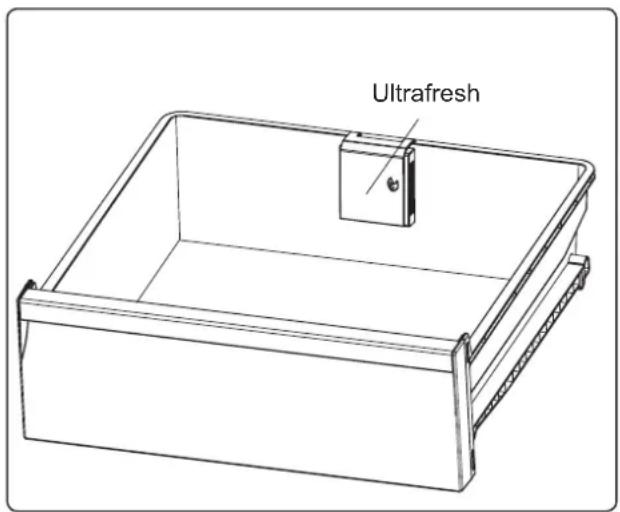
Ultrafresh
Technology helps to remove ethylene gas (a volatile organic compound released naturally from fresh foods) and unpleasant odors from the crisper.
In this way, food stays fresh for a longer time.
- Ultrafresh must be cleaned once in a year. The filter should be waited for 2 hours at 65^ in a oven.
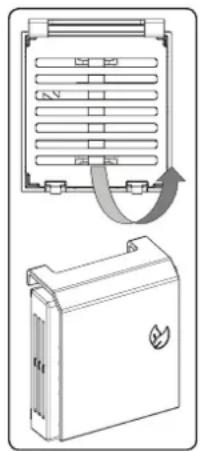
- To clean the filter, please remove the back cover of the filter box by pulling it in the direction of the arrow.
•The filter should not be washed with water or any detergent.
(The images are representative)
Display and control panel at

- The first time the appliance is switched on, it will always operate with the settings: 5°C for the refrigerator, 0°C for MyZone and 0°C for MyZone. -18°C for the freezer. If you wish to adjust the temperature or functions more frequently, press the button to perform the operations. Temperature range for "My Zone" is from -3°C to 3°C.
- Refrigerator temperature setting - press the button on the side of the control panel to reach different temperatures from 2^ C to 8^ C.
- Freezer temperature setting press the button 📁 on the right side of the control panel to reach different temperatures from -15°C to -25°C.
- My Zone drawer setting function: This button controls the temperature. By pressing this button the figure will go from -3^ to +3^ . This function can be activated/deactivated by pressing continuously for three seconds (shows OFF).
- Rapid cooling function - Press the button 🙏 the light on the button illuminates and the rapid cooling function is switched on, the refrigerator starts to operate. automatically at the set temperature 2° and switches off after 24 hours, the symbol light goes out.
-
Holiday function - Press the button the light in the button illuminates, the holiday function is switched on and the whole appliance starts to operate automatically with the settings: refrigerator at 17^ C and freezer at -18^ C.
-
Eco function - Press the button of the control panel, the eco function is switched on and the button is illuminated, the refrigerator compartment operates at a setting of 5°C and the freezer compartment operates at a setting of -18°C. The adaptation zone operates at a setting of 3°C.
- Quick freeze function - Press the button the button light illuminates and the freezer starts to operate with the quick freeze function, temperature setting -25°C. After 24 hours, the fast freeze function switches off automatically.
- Press the button for 3 seconds to switch off the appliance and the button lights up, the power is cut off. The internal lamps go out, the compressor stops. To switch on. Press the button ⏻ for 3 seconds to switch on your device, the symbol lights up and the power is switched on again.
- On non-frost models, there is a function: the binge defrost. Press the buttons + for 5 seconds to activate the binge defrost function to clean the freezer evaporator and the freezer temperature digits will flash. Press the button + seconds to switch off the binge de-icing function, and the freezer temperature digits are removed.
Indication of faults
This appliance has a "fault display and alarm" function. Once the sensors have a fault, alarms are shown on the temperature display, the appliance continues to cool but a professional service technician must be called to check the appliance.
F2 - Adaptive Zone Sensor
F3 - Refrigerator flat sensor
F4 - Freezer compartment sensor F5 -
Defrost sensor F5 - Defrost sensor
2E - Freezer fan/motor failure
CE- Communication failure between main panel and display panel.
The above Errors are only displayed on the screen, without voice.
Freezer over-temperature alarm: after the freezer temperature reaches the set temperature, if the temperature rises to >-1 ^ , the alarm will be activated, accompanied by the freezer temperature digit flashing. Press any button to cancel the voice alarm. The flashing will remain until the temperature is >-1 ^ .
PS: The main plate is located in the compressor compartment.
5°C/-18°C
Summer or ambient temperature between 25-35°C
5°C/-18°C
Spring, autumn or ambient temperature between 15-25°C.
5°C/-18°C
Winter or ambient temperature between 5-15°C
Super freeze" function
Fast freezing
Super cooling" function
Super cold
4. FOOD STORAGE
Refrigerator compartment
- To reduce humidity and prevent subsequent frost formation, store liquids in airtight containers in the refrigerator. Frost tends to accumulate in the coldest parts of the liquid being evaporated and the appliance will need to be defrosted more frequently over time.
- Cover the cooked dishes when you put them in the oven. Do not place in the refrigerator.
hot food in the refrigerator. Do not take them out when they are cold, otherwise the temperature/humidity inside the refrigerator will increase, reducing the efficiency of the refrigerator.
- Make sure that no items are in direct contact with the rear wall of the appliance, as frost will form and the packaging will stick to it. Do not open the refrigerator door frequently.
- We recommend wrapping clean fish and meat loosely and storing them on the glass shelf just above the vegetable compartment, where the air cooler is located, as it offers the best storage conditions.
- Store loose fruit and vegetables in the fruit and vegetable bins.
- By storing fruits and vegetables separately, ethylene-sensitive vegetables (green leafy vegetables, broccoli, carrots, etc.) are prevented from being affected by the ethylene-releasing fruits. ethylene gas (bananas, peaches, apricots, etc.).
- Do not place wet vegetables in the refrigerator. The
- The shelf life of the food depends on the initial quality of the food and whether the food enjoyed an uninterrupted refrigeration cycle before being put into the refrigerator.
- The water that comes out of the meat may contaminate other products in the refrigerator. Meat products should be packaged and any liquid spilled on the shelves should be wiped up.
-
Do not place food in front of the ventilation duct.
-
Consume packaged food before the recommended expiry date. Prevent food from coming into contact with the temperature sensor in the refrigerator compartment. To maintain the optimum storage temperature in the refrigerator compartment, food should not come into contact with the sensor.
- For normal conditions of use, it shall be sufficient to by setting the temperature of your refrigerator to +4 °C.
- Temperature of the refrigerator compartment The range of the specifics must be in the range of 0 to 8 °C, fresh food below 0 °C, fresh food below 0 °C, fresh food below 8 °C, fresh food below 0 °C, fresh food below 0 °C. °C, they freeze and rot, the bac- terian load increases above 8 °C, and they spoil.
- Do not place hot food in the refrigerator and wait for it to cool down. Hot food increases the temperature of your refrigerator and causes food poisoning as well as unnecessary food spoilage.
- Meat, fish, etc. must be stored in the compartment The refrigeration of food, and the sharing of vegetables is preferable for vegetables (if available).
- To avoid cross-contamination, meat products and fruit and vegetables should not be stored together.
- Food should be placed in closed containers or covered to avoid moisture and odours.
The following table will serve as a quick reference to determine the most efficient way to store the main food groups in the refrigerator.
| Food | Maximum shelf life | How and where to store them |
| Vegetables and fruits | 1 week | Vegetable drawer |
| Meat and fish | 2-3 days | Wrapping in bags or plastic film or store in a meat container and place on the glass shelf. |
| Fresh cheese | 3-4 days | On its door shelf |
| Butter and margarine | 1 week | On its door shelf |
| Bottled products, such as milk and yoghurt | Until the best-before date recommended by the producer | On its door shelf |
| Eggs | 1 month | On the shelf for eggs |
| Cooked food | 2 days | On any shelf |

NOTE:
You should not store potatoes, onions and garlic in the
refrigerator.
Freezer compartment
- The freezer is used to store frozen food, freeze fresh food and make ice cubes.
- Food in liquid form should be frozen in plastic cups and other food should be frozen in foil or plastic bags. When freezing fresh food, fresh food should be properly wrapped and sealed, i.e. the packaging should be airtight and leak-proof. Special freezer bags, polyethylene bags with aluminium foil and plastic containers are ideal.
- Do not store fresh food next to frozen food, as the latter may thaw.
- Before freezing fresh food, divide it into portions that can be eaten in one sitting.
- Thawed food should be consumed within a short period of time.
- When storing food, follow the instructions provided by the manufacturer on the food packaging. If a food does not provide information on its packaging, it should not be stored more than 3 months after the date of purchase.
- When buying frozen food, make sure that it has been stored in proper conditions and that the packaging has not been damaged.
- Frozen food should be transported in suitable containers and placed in the freezer as soon as possible.
- Do not buy frozen food if the container shows signs of moisture or is abnormally swollen. It may have been stored at an inappropriate temperature and the contents may have deteriorated.
- The shelf life of frozen food depends on the ambient temperature, the temperature selected on the thermostat, the frequency with which the door is opened, the type of food and the time taken to transport the product from the shop to your home. Always follow the instructions printed on the packaging and never exceed the indicated shelf life.
- If you keep the freezer door open for a long time or leave it open, frost will form on the floor of the freezer. This can block the ventilation. To avoid this, unplug the appliance until it is defrosted. You can then clean it.
- The volume declared on the label is the equivalent of the space used without baskets, drawers and lids.
- Do not refreeze food after it has been thawed. This can be a health hazard, as it may cause food poisoning.
NOTE: If you try to open the freezer door just after closing it, you will find that it is difficult to open. This is normal. Once the balance has been reached, the door will open easily.
- Use the blast freezer shelf to freeze food cooked by you (and any other food that needs to be frozen quickly) faster thanks to the increased freezing power of the blast freezer shelf. The quick freeze shelf is the bottom drawer of the freezer compartment.
- To make the best use of freezer space, use the glass shelves in the upper and middle sections and the bottom drawer in the lower section.

The following table will serve as a quick reference to determine the most efficient way to store the main food groups in the freezer.
| Meat and fish | Preparation | Maximum shelf life (months) |
| Steak | Wrap in film. | 6 - 8 |
| Lamb meat | Wrap in film. | 6 - 8 |
| Roast veal | Wrap in film. | 6 - 8 |
| Beef tacos | In small pieces. | 6 - 8 |
| Lamb tacos | In pieces. | 4 - 8 |
| Minced meat | In a container without spices. | 1 - 3 |
| Giblets (pieces) | In pieces. | 1 - 3 |
| Salami/sausages from Bologna | They should be kept in a package even if they have skin. | |
| Chicken and turkey | Wrap in film. | 4 - 6 |
| Goose and duck | Wrap in film. | 4 - 6 |
| Deer, rabbit and wild boar | In 2.5 kg portions or fillets. | 6 - 8 |
| Freshwater fish (salmon, carp, catfish) | After cleaning the entrails and scales from the fish, wash and dry it. If necessary, remove the tail and head. | 2 |
| Lean fish (sea bass, turbot, sole) | 4 | |
| Oily fish (tuna, mackerel, bluefish, anchovy) | 2 - 4 | |
| Seafood | Clean and in a bag. | 4 - 6 |
| Caviar | In its packaging or in an aluminium or plastic container. | 2 - 3 |
| Snails | In salt water or in an aluminium or plastic container. | 3 |

NOTE: Thawed meat should be cooked as if it were fresh meat. If meat is not cooked after thawing, it should not be refrozen.
| Vegetables and fruits | Preparation | Maximum shelf life (months) |
| Beans and beans | Wash, cut into small pieces and boil in water. 10 - 13 | |
| Beans | Peel, wash and boil in water. 12 | |
| Cabbage | Clean and boil in water. 6 - 8 | |
| Carrot | Clean, slice and boil in water. 12 | |
| Pepper | Cut off the stalk, cut into two pieces, remove the core and boil in water. | 8 - 10 |
| Spinach | Wash and boil in water. 6 - 9 | |
| Cauliflower | Remove the leaves, cut the core into pieces and leave in water with a little lemon juice for a while. | 10 - 12 |
| Aubergine | Cut into 2 cm pieces after washing. 10 - 12 | |
| Maize | Clean and pack with stalk or as baby corn. 12 | |
| Apples and pears | Peel and slice. | 8 - 10 |
| Vegetables and fruits | Preparation | Maximum shelf life (months) |
| Apricots and peaches | Cut into two pieces and remove the pips or pits. | 4 - 6 |
| Strawberries and blackberries | Wash and peel. | 8 - 12 |
| Cooked fruits | Add 10 % sugar to the container. | 12 |
| Plums, cherries and sour berries | Wash and peel the stems. | 8 - 12 |
| Maximum shelf life (months) | Thawing time at room temperature (hours) | Defrosting time in oven (minutes) | |
| Bread | 4 - 6 | 2 - 3 | 4-5 (220-225 °C) |
| Biscuits | 3 - 6 | 1 - 1,5 | 5-8 (190-200 °C) |
| Cupcakes | 1 - 3 | 2 - 3 | 5-10 (200-225 °C) |
| Cake | 1 - 1,5 | 3 - 4 | 5-8 (190-200 °C) |
| Puff pastry dough | 2 - 3 | 1 - 1,5 | 5-8 (190-200 °C) |
| Pizza | 2 - 3 | 2 - 4 | 15-20 (200 °C) |
| Dairy products | Preparation | Maximum shelf life (months) | Storage conditions |
| Packaged (homogenised) milk | In its own packaging. | 2 - 3 | Pure milk: in its own packaging. |
| Cheese (except white cheese) | Sliced. | 6 - 8 | The original packaging can be used for short term storage.duration. For longer periods, keep wrapped in film. |
| Butter and margarine | In its packaging. | 6 |
5. CLEANING AND
MAINTENANCE
W Before cleaning, disconnect the unit from the power supply.
Do not wash the appliance by pouring water over it.
Do not use soaps, detergents or abrasive products to clean the appliance. After washing, rinse it with clean water and dry it carefully. When you have finished cleaning, reconnect the mains plug to the mains with dry hands.
- Make sure that no water enters the light socket or other electrical components.
- The appliance should be cleaned regularly with a solution of warm water and sodium bicarbonate. Clean the accessories separately by hand with soap and water. Do not wash the accessories in the dishwasher.
- Clean the condenser with a brush at least twice a year. This will help you save on electricity and improve productivity.

The appliance must be disconnected from the mains during cleaning work.

DEFROSTING
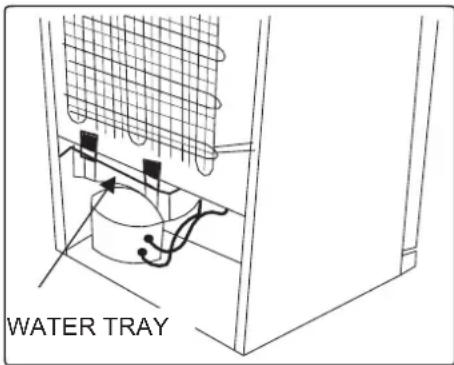
The product has a "no frost" system designed to prevent ice build-up. Under normal conditions of use, it should not be necessary to regularly disconnect the freezing system.
Please note the following: If you regularly find a large build-up of ice, puddles of water, in the freezer section, it is likely that the door is not sealing properly. This could be due to a faulty door seal.
or an ill-fitting or too heavy decorative door.
For more information
For more information, please refer to the troubleshooting section on ice-related problems.
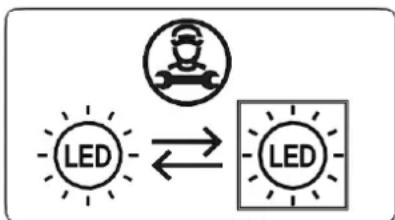
Replacement of LED lights
To replace any of the LEDS, please contact your nearest Authorised Service Centre.

Note: The quantity and location of the LED strips may vary depending on the
model.
flowchart
graph TD
    A["User Icon"] --> B["LED"]
    B <--> C["LED"]
If the product is equipped with an LED lamp
This product contains a light source of energy efficiency class
If the product is equipped with
LED or LED cards
This product contains a light source of energy efficiency class
6. TRANSPORT
AND RELOCATION
The original packaging and the foam can be retained for re-transporting the appliance (optional).
- Secure the appliance with thick packaging, strong bands or ropes and follow the transport instructions supplied in the packaging.
- When relocating or transporting the appliance, remove all moving parts or secure them to the appliance by protecting them with shock protection bands.
The device must always be transported in an upright position.
7. BEFORE CONTACTING AFTER-SALES SERVICE
If you have any problems with your electrode- mestic, you should check the troubleshooting before calling customer service.
If the device does not work, check it:
- Power to the device.
- The fuses in the house are intact and the fuse in the socket has not blown.
- The refrigerator has not been switched off.
- The socket is working properly. To check this, plug in another electrical appliance to see if the socket is faulty.
If the device works, but not very well, check it:
- The device is not overloaded.
- The thermostat is set to a suitable temperature.
- Doors close properly.
- The cooling system at the rear of the appliance is clean and dust-free and does not touch the rear wall.
- There is sufficient ventilation in the walls side and rear.
If the appliance is noisy, check it:
- The apparatus is level and stable.
- The side and rear walls are clear and there is nothing resting on the device.
- Note: The refrigerant gas in the refrigerator may emit a slight bubbling or gurgling noise, even when the compressor is not running.
If the device beeps, test it:
- That the doors are closed. An alarm will sound after 60 seconds if a door is open.
If ice has formed on the rear wall of the refrigerator:
- It is normal for a few drops of ice to form on the rear wall of the refrigerator. This is not a malfunction of the appliance.
- Make sure that no objects on the inside of the refrigerator are in contact with the rear wall.
- Check that there is some resistance when opening the appliance door. If it opens at the slightest touch, it may mean that the door seal needs to be replaced.
- Check the door seal for bends, debris or damage. If you notice any, and cannot solve the problem yourself, contact Customer Service to have the gasket replaced.
- This may be due to the decorative door(s) not being fitted correctly. If in doubt, ask your installer to check the decorative door(s).
If too much ice has formed in the freezer:
- Check that there is some resistance when opening the appliance door.
- If it opens at the slightest touch, it may mean that the door seal needs to be replaced.
- Check the door seal for bends, debris or damage.
- If you notice any, and you cannot solve the problem yourself, please contact contact Customer Service to have the gasket replaced.
- This may be due to the decorative door(s) not being fitted correctly. If in doubt, ask your installer to check the decorative door(s).
If one or more of the LED units of the device do not work:
- Please contact Customer Service to arrange a service visit.
Preparation of the installation
This appliance must never be installed near heat sources, e.g. heating elements or cookers, or in damp places.
Seek the help of another person, or two, when installing this appliance. This appliance may have sharp edges. Use PPE appropriate for the task and the environment.
- To ensure that the appliance is level, you should use the height adjustable feet at the front of the appliance.
- The cooling system at the rear of the appliance must not touch the rear panel. The greater the separation, the better.
- The appliance must be installed with adequate ventilation. Make sure that there is free space above the appliance to allow air to escape and that there is space between the back of the appliance and the wall.
8. ENERGY SAVING
TIPS
For better energy savings we suggest
:
Install the device away from sources of heat and out of direct sunlight and out of direct sunlight.
in a well-ventilated room.
Avoid putting hot food into the refrigerator to prevent the internal temperature from rising and therefore continuous operation of the compressor.
Do not overfill food to ensure proper air circulation.
Defrost the appliance if ice is present to facilitate the transfer of cold.
In the absence of electrical power, it is advisable to keep the refrigerator door closed.
Open or keep the doors of the appliance as little as possible.
Avoid adjusting the setting at temperatures that are too cold.
Remove any dust from the back of the appliance
9. INSTALLATION INSTRUCTIONS AND DIMENSIONS
Ventilation
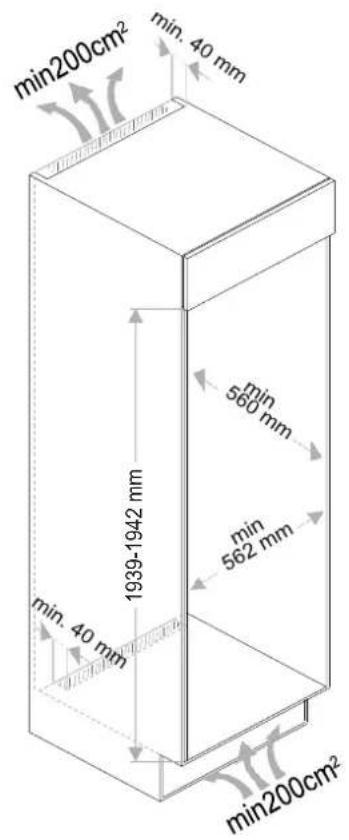
The main consideration when installing any refrigeration unit in a fitted kitchen is ventilation. The heat extracted from the refrigeration compartment must be dissipated into the atmosphere. Improper ventilation can lead to premature compressor failure, excessive energy consumption, total system failure and may invalidate the warranty provided with the unit. the appliance. For products intended to be installed in a wall unit, the following requirements must be met:
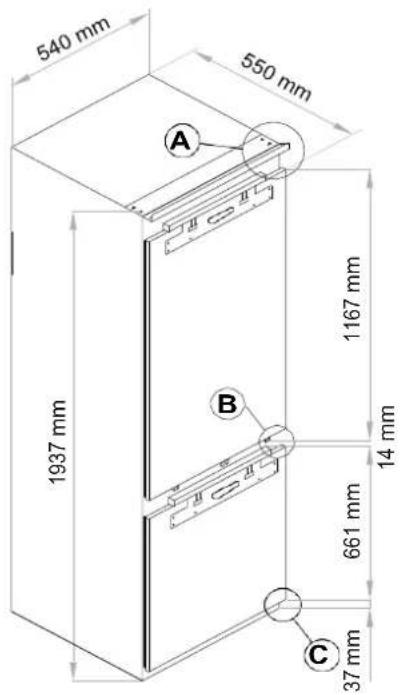
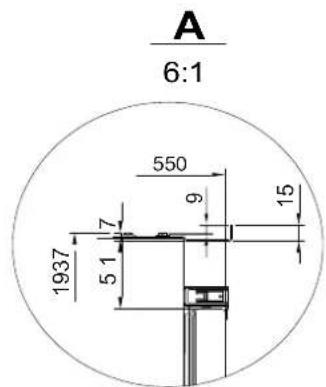
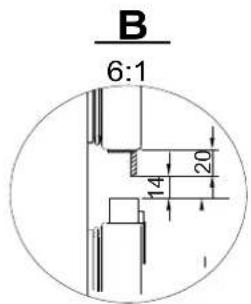
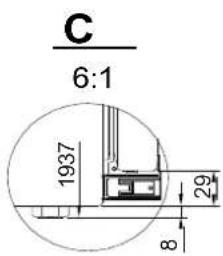
The open channel at the rear is clearly shown. For proper operation of the unit it is important that the top of the housing unit is not blocked. A channel depth of 40-50 mm is normal for most units. A ventilation hole in the base of the unit is necessary to allow air to enter over the compressor and heat exchanger.
As a general rule, the more air that can flow in and out, the better and more efficient the product performance.
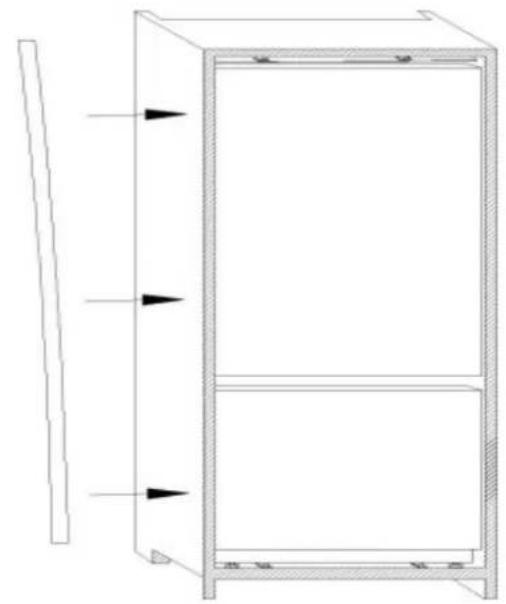
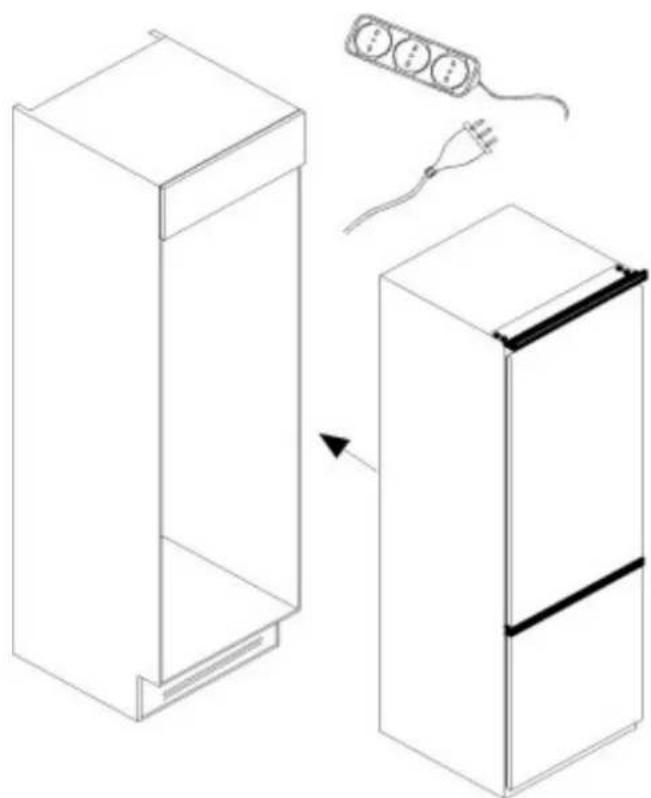
- Push the appliance into the wooden cabinet, the appliance should be pushed close to the cabinet from the left side.
Spacer for hinge A
Spacer for hinge B
Hinge cover
Cross head screw
3,9×12, T20
3,9×16, T20
Key
Left control panel
cover
Right control panel
cover
Decorative strip
- Adjust the position of the appliance, screw the top and bottom of the product to the cabinet.
Top hinge cover
Please remove the glue after fixing the bottom cover.
THE TOTAL WEIGHT OF THE FRIDGE DOOR IS: 30KG
THE TOTAL WEIGHT OF THE FREEZER DOOR IS: 30KG
- Fix the hinge to the furniture with screws, place the decorative strip on the left side of the product.
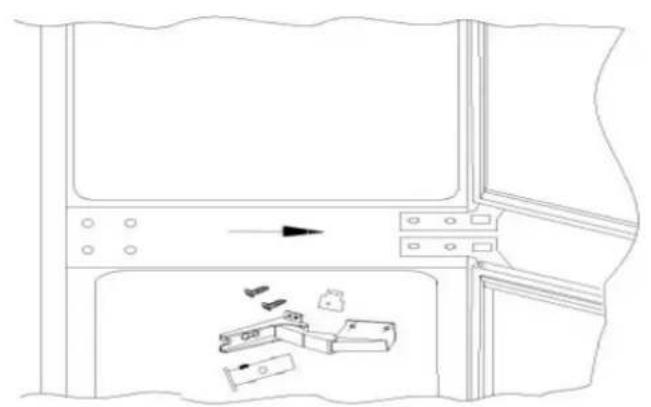
natural_image
Line drawing of a cabinet interior with directional arrow and internal compartments (no text or symbols)Install the cover on the hinge
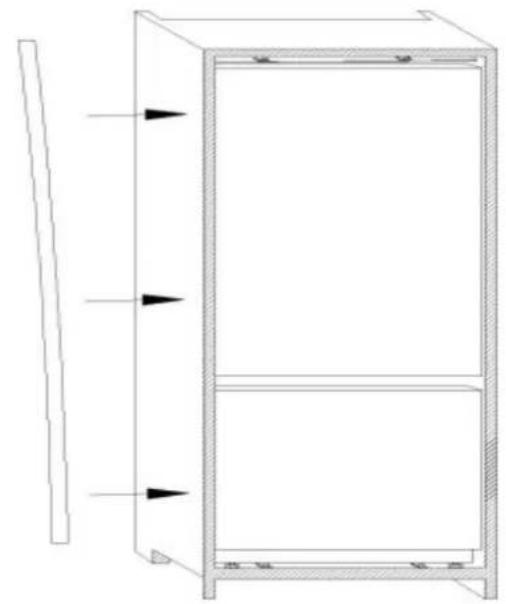
natural_image
Technical line drawing of a cabinet or rack structure with directional arrows indicating flow or movement (no text or symbols)Measure the dimension of A and B.
Remove the trim cover before measuring.
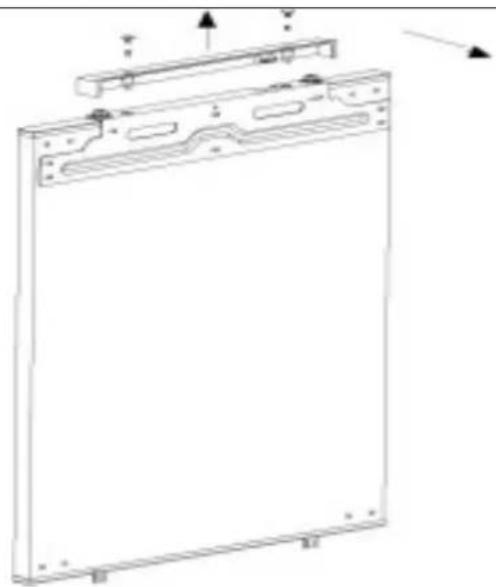
natural_image
Technical line drawing of a rectangular electronic device with mounting brackets and internal components (no text or symbols)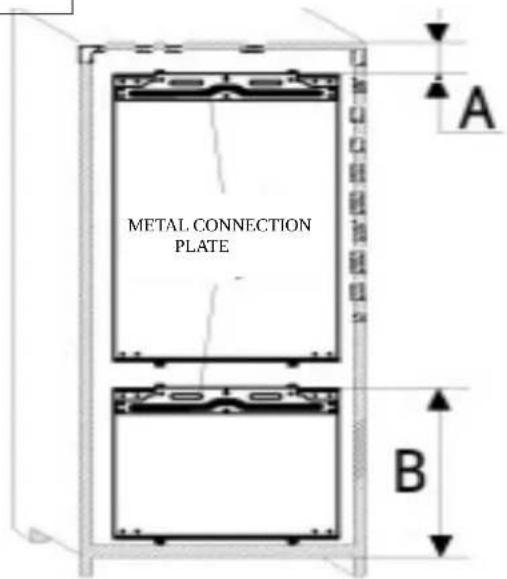
- Remove the metal connection plate and install it on the wooden door.
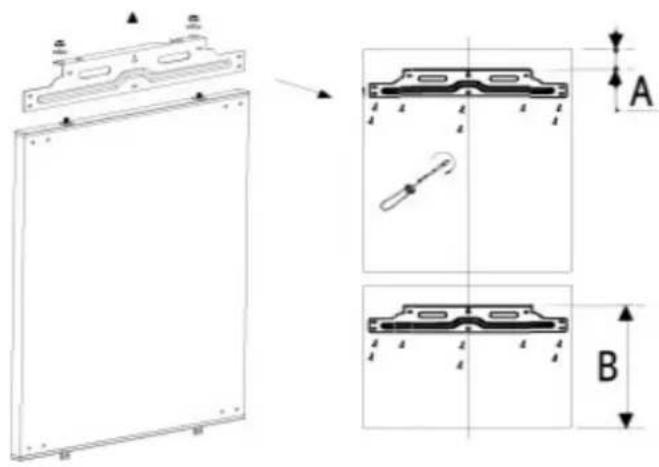
- Please follow the steps below to connect the wooden door and the refrigerator door.
Use a T20 screwdriver to tighten and adjust the upper and lower clearance between the wooden door and the door frame. wardrobe.
Use spanner No. 13 to adjust the distance between the wooden door and the furniture.
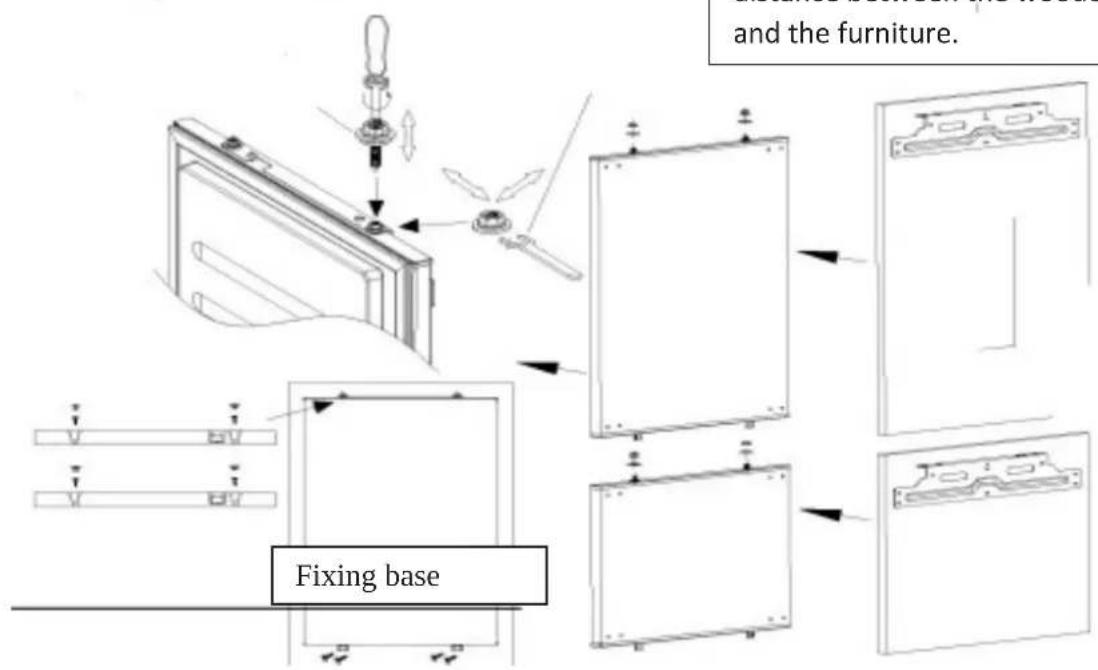
10.AFTER-SALES SERVICE (SAT) AND GUARANTEE
INOXPAN S.L., thanks you for choosing and placing your trust in a product of our brand Pando, which is distinguished by its Quality, Design and Innovation, being faithful to its origins and commitments.
PANDO WARRANTY CONDITIONS:
This appliance is guaranteed for 3 years from the date of purchase and covers it against any manufacturing defect that may affect its proper operation. For the validity of the warranty to be valid, it is essential to present the invoice or purchase receipt to the Pando Authorised Service technician.
During this period, the Company undertakes to replace or repair free of charge any defective part due to a defect or manufacturing defect in the appliance, until it is in proper working order, as well as the necessary labour and expenses incurred as a result of such repair or replacement.
EXCLUSIONS FROM THE PANDO WARRANTY:
The following cases will not be covered by the guarantee of the product or wine cooler, or could be cause for cancellation of the same, in which case the user will be responsible for the cost of materials, labour and travel expenses of the technical service:
- The installation, servicing, cleaning or maintenance of the appliance.
- Any breakdown, malfunction or malfunction caused by incorrect installation or use.
- Breakdowns or damage caused by not respecting or following the safety instructions, recommendations for use and maintenance in the appliance's manuals.
- When the product is intended for commercial or non-residential use, for which it is not intended.
- Malfunctions or damage to the appliance due to non-compliance with the instructions described in the user manual, installation and ventilation instructions for the appliance.
- Breakdowns or damage caused by transport or transfer, and handling of the device by unauthorised personnel not belonging to this company or to the Pando brand.
- Bumps, dents, scratches or scrapes, broken glass.
- Presence of foreign bodies foreign to the device, inside or outside the product.
- The product is not accessible because there are elements that prevent easy and safe access. The means required for the authorised Pando technician to access the device shall be at the user's expense and responsibility.
- Improper handling of product wiring and connections.
- Faults or damage to the product caused by incorrect power supply or electrical connection.
- Aesthetic, wear and tear components, such as light screens, filters, lamps (LED), shelves, drawers, lids, gaskets, etc.
- Rust, stains, discolouration caused by improper application or unprotected exposure to corrosive elements such as cleaning products not recommended by the manufacturer and unsuitable cleaning agents, such as those containing corrosive chemicals, and exposure to sea breeze (saltpetre).
- Any damage to the wines or any other contents due to possible incidents or malfunctions of the appliance.
- Breakdowns or damage caused by variations in the electricity supply or fortuitous and natural causes of atmospheric or geological origin such as storms, lightning, earthquakes, floods, etc.
- Appliances from resale, second hand, trade-in or exhibitions that are more than two years old from the date of manufacture.
INOXPAN, S.L., is expressly excluded from any liability for any direct or indirect damage to persons or things due to faults or defects in the device caused by improper handling of the same.
Contact details Official Authorised Pando Service Centre
| SPAIN, PORTUGAL AND ANDORRA: OTHER | COUNTRIES: | ||
| https://www.pando.es/asistencia-tecnica/ |  | ENhttps://www.pando.es/en/after-sales-services/FRhttps://www.pando.es/fr/service-apres-vente/ |  |
INOXPAN S.L.
Pol. Ind. El Cros
SERVICIO POST VENTA
Quality Management System
UNE-EN ISO 9001:2015
ES19/86566


- Pando
- integralcooking
- FRIGORÍFICO COMBI INTEGRABLE
- integralkitchensolutions
- Pando integral cooking
- ENVIRONMENTAL PROTECTION
- RECOGIDA DE LOS ELECTRODOMÉSTICOS
- ENVIRONMENT AND WASTE TREATMENT
- INDEX
- GENERAL SAFETY WARNINGS
- Please read this user manual carefully
- IMPORTANT!
- To avoid contamination of food, please observe the following instructions:
- During the use
- Old and decommissioned equipment
- Disposal of old equipment
- Packaging and the environment
- NOTES:
- DESCRIPTION OF THE APPARATUS
- USE OF THE APPARATUS
- Before the first use
- The refrigerator must be allowed to settle for at least four hours before it is switched on.
- Please note:
- Use of the fridge
- Use of the freezer
- Ultrafresh
- Display and control panel at
- Indication of faults
- FOOD STORAGE
- Refrigerator compartment
- NOTE:
- Freezer compartment
- CLEANING AND
- MAINTENANCE
- Replacement of LED lights
- If the product is equipped with an LED lamp
- TRANSPORT
- AND RELOCATION
- BEFORE CONTACTING AFTER-SALES SERVICE
- If the device does not work, check it:
- If the device works, but not very well, check it:
- If the appliance is noisy, check it:
- If the device beeps, test it:
- If ice has formed on the rear wall of the refrigerator:
- If too much ice has formed in the freezer:
- If one or more of the LED units of the device do not work:
- Preparation of the installation
- ENERGY SAVING
- TIPS
- For better energy savings we suggest
- INSTALLATION INSTRUCTIONS AND DIMENSIONS
- 10.AFTER-SALES SERVICE (SAT) AND GUARANTEE
- PANDO WARRANTY CONDITIONS:
- EXCLUSIONS FROM THE PANDO WARRANTY:
- INOXPAN S.L.
Brand : Pando
Model : PFBI L COMBI
Category : Refrigerator