KFK 411 E - Other household appliances Koenic - Free user manual and instructions
Find the device manual for free KFK 411 E Koenic in PDF.


| Product type | Combined refrigerator-freezer |
| Brand | Koenic |
| Model | KFK 411 E |
| Dimensions (H x W x D) | 1800 x 550 x 560 mm |
| Depth with open door | 1110 mm |
| Power supply | 220-240 V ~, 50 Hz, 0.75 A |
| Energy consumption | 0.575 kWh/24h, 210 kWh/year |
| Net refrigerator capacity | 191 L |
| Net freezer capacity | 71 L |
| Freezing capacity | 3.2 kg/24h |
| Recommended ambient temperature | 16 °C to 38 °C (climate class N to ST) |
| Number of refrigerator shelves | 4 (glass) |
| Number of door balconies | 2 |
| Vegetable drawer | Yes |
| Freezer compartment | 1 shelf, 2 drawers |
| Included accessories | 8-egg storage, ice cube tray |
| Interior lighting | Non-replaceable lamp |
| Adjustable feet | Front |
| Door reversibility | Yes (with tools) |
| Open door alarm | Yes (LED flashes after 60 s) |
| Defrosting | Manual (freezer) |
| Refrigerant | Flammable (type not specified) |
| Maintenance and cleaning | Damp cloth, avoid solvents and steam cleaning |
| Spare parts | Available (at least 7 years after market launch) |
Frequently Asked Questions - KFK 411 E Koenic
User questions about KFK 411 E Koenic
0 question about this device. Answer the ones you know or ask your own.
Ask a new question about this device
Download the instructions for your Other household appliances in PDF format for free! Find your manual KFK 411 E - Koenic and take your electronic device back in hand. On this page are published all the documents necessary for the use of your device. KFK 411 E by Koenic.
USER MANUAL KFK 411 E Koenic
Intron GmbH
Markshahr
EUC Ingelbahn
L. Tung
Wells Engineering
Wells Engineering
12.0000
CE
KOENIC
Cooling Combl
图 10-10-10
- Box-in-mail
图 Manual to instructions
图 1
四、注:
四
图 10-15
[Unreadable]
四 notake obcl.
[Unreadable text]
图 1.401-4.181
Kulun n 602400
natural_image
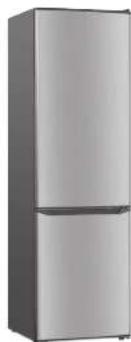
Exterior view of a modern stainless steel refrigerator (no visible text or symbols)| Circus 1-17 | — |
| Tg+13-26 | — |
| EpoX 27-38 | — |
| Tm+14-50 | — |
| EVOx+51-59 | — |
| YagA+5-75 | — |
| Pd+16-112 | — |
| EcoX+11-98 | — |
| PdeI+130-11 | — |
| Lcinc+13-123 | — |
| Tcncx+154-134 | — |
| Tc+135-145 | — |
Sicherheitshinweise
- This product can be used by children aged from 8 years and above and persons with reduced physical, sensory or mental capabilities or lack of experience and knowledge if they have are being supervised or have received instructions concerning use of the appliance in a safe way and understand the hazards involved.
- Children aged from 3 to 8 years are allowed to load and unload refrigerating appliances.
• Children must not play with the product. - Cleaning and user maintenance must not be carried out by children unless they are supervised.
- A damaged power cord may only be replaced by an authorised service agent in order to avoid hazards.
- The product is designed for the storage of normal household quantities in the home, or in household-like, non-commercial environments. Household-like environments include staff kitchens in shops, offices, agricultural and other small businesses or for use by guests at bed-and-breakfast establishments, small hotels and similar residential facilities.
- Warning! Keep ventilation openings, in the appliance enclosure clear of obstruction.
English
Safety Instructions
- Warning! Do not use mechanical devices or other means to accelerate the defrosting process, other than those recommended by the manufacturer.
- Warning! Do not damage the refrigerant circuit.
- Warning! Do not use electrical appliances inside the food storage compartments of the product, unless they are of the type recommended by the manufacturer.
- Do not store explosive substances such as aerosol cans with a flammable propellant in this product.
- The lamp can only be replaced by an authorized service technician.
- Follow the instructions in the chapter Cleaning and care.
- Warning! The refrigerant and insulation blowing gas are flammable. When disposing of the product, do so only at an authorized waste disposal center or contact the service agent.
- To avoid contamination of food, please observe the following instructions:
- Opening the door for long periods can cause a significant increase of the temperature in the compartments of the appliance.
- Clean surfaces, that can come into contact with food, as well as accessible drainage systems, on a regular basis.
Safety Instructions
-Store raw meat and fish in suitable containers in the refrigerator, so that it does not come into contact with or drip onto other food.
-Two-star frozen-food compartments are suitable for storing pre-frozen food, storing or making ice-cream and making ice cubes.
-One-, two- and three-star compartments are not suitable for the freezing of fresh food.
-If the refrigerating appliance is left empty for long periods, remove all foods, switch it off, defrost, clean, dry, and leave the door open to prevent mold developing within the appliance.
English
Safety Instructions
- Read this manual thoroughly before first use. It contains important information for your safety as well as for the use and maintenance of the equipment.
- Do not place any objects on top of the product.
- Never immerse electrical parts of the product in water or any other fluids during cleaning or operation. Never hold the product under running water.
- Do not under any circumstances attempt to repair the product yourself. For servicing and repairs, please consult an authorised service agent.
- The mains voltage must match the information on the rating label of the product.
- Only unplugging from the power socket can separate the product completely from the mains.
- Avoid damages to the power cord that may be caused by kinks or contact with sharp corners.
- Keep this product including power cord and power plug away from all heat sources such as ovens, hot plates and other heat-producing products/objects.
- Only unplug from the power socket by the plug itself. Do not pull on the cord.
-
Unplug the product ...
-
when the product is not being used,
- in case of malfunctions,
- before attaching / detaching accessories and
-
before cleaning the product.
-
Use this product in dry indoor areas only and never outdoors.
- This product is not intended for commercial use. It is designed for household use only.
- Make sure that electrical components, live parts and the power cord do not become wet.
- Use accessories supplied with the device or recommended by the manufacturer only!
-
Do not cover the product while in use. Fire hazard!
18 -
Warning! When positioning the appliance, ensure the supply cord is not trapped or damaged.
- Warning! Do not locate portable socket-outlets at the rear of the appliance to avoid the possibility of electrical shocks due to water leakage.
Caution: Risk of fire!
Flammable materials.
Warning! During use, service and
disposal of the appliance, please pay attention to the symbol which is located on the rear of the appliance (rear panel or compressor).
It is the risk of fire warning symbol. There are flammable materials in the refrigerant pipes and the compressor. Please keep clear from it during using, service and disposal.
Congratulations!
Thank you for your purchase of a KOENIC product. Please read this manual carefully and keep it for future reference.
Intended use
This product is suitable for refrigerating and freezing food and beverages only. Any other use may damage the device or cause injuries. The product is only intended to be used in private households and shall not be used for commercial purposes.
- This product is not intended to be used as a built-in appliance.
- This refrigerant appliance is intended to be used at ambient temperatures ranging from 16°C to 38°C.
The Imtron GmbH assumes no liability for damages to the product, for property damages or for personal injuries due to careless or improper usage of the product, or usage of the product which does not meet the manufacturer's specified purpos
Before first time use
Carefully remove the product and accessories from the original packaging. It is recommended to keep the original packaging for storage. If you wish to dispose of the original packaging, please observe applicable legal provisions. Should you have any questions regarding proper disposal, contact your local waste management center.
Inspect the delivery contents for completeness and damages. Should the delivery contents be incomplete or damaged, contact your sales outlet immediately.
After unpacking, please refer to chapter
Cleaning and care.
Warranty and spare parts
The warranty period of the product, as well as the applicable conditions of the warranty can be found in the warranty card provided with the product. The spare parts, which are listed in the corresponding ecodesign directive, can be obtained by contacting the customer service center, for a period of at least 7 years, respectively 10 years.
Disposal
Do not dispose of this product as unsorted municipal waste. Return it to a designated collection point for the recycling of WEEE. By doing so, you will help to conserve resources and protect the environment. Contact your retailer or local authorities for more information.
Refrigerants must be evacuated and disposed of by a qualified specialist in accordance with federal and local regulations before the appliance is scraped.
English
Delivery contents
1 x Fridge and freezer combination
1 x Egg holder for 8 eggs
1 x Ice cube tray
1 x User manual
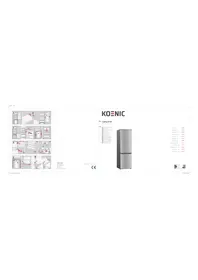
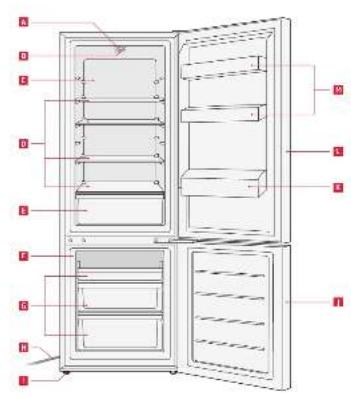
Controls and components
A Temperature dial
B Lamp
c Refrigerator
D Glass tray (4x)
€ Vegetable compartment
F Freezer
G Freezer trays
freezer tray (1x),
freezer drawers (2x)
H Power cord with plug (not shown)
1 Adjustable feet, front
J Freezer door
K Bottle tray
L Refrigerator door
M Door shelves (2x)
Accessories
• Egg holder for 8 eggs (not shown)
- Ice cube tray (not shown)
Installation
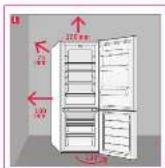
Fig. 1 Place the unit on a level and stable surface. Keep the minimum distances to all sides.
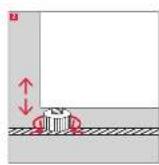
Fig. 2 Unevenness can be compensated with the adjustable front feet. Make sure, the product is levelled. Us a spirit level for correct adjustment.
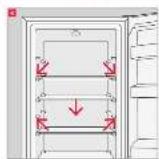
Fig. 3 The refrigerator is equipped with four glass shelves, which, if desired, can be removed by pulling them forward. The upper three glass shelves can be used at different heights.

Warning
If the refrigerator has been stored, transported or tipped sideways during transport or installation, it must be in an upright position for 12 hours before being connected to the mains.
Operation
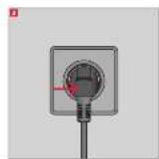
Fig. 4 Plug the power plug into an appropriate mains socket outlet.
Note:
Allow the product to precool for about 2-3 hours before storing food in it.
Setting the refrigerator temperature
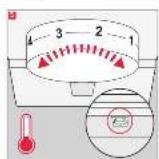
Fig. 5 Turn the temperature dial to adjust the temperature of the refrigerator. Check the set temperature with a refrigerator thermometer.
Door open alarm
If the door isn't closed for 60 seconds the LED light will flash 3 times and will light on for 5 seconds. This cycle will be repeated until the door is closed.

Adjust the sides of the doors
Note:
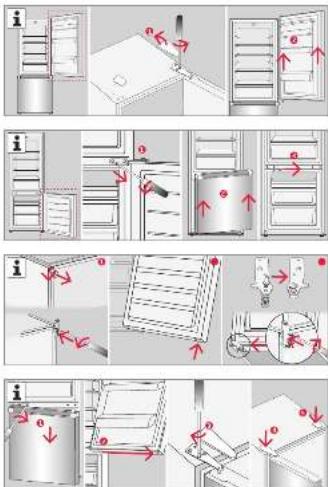
- If necessary, and if the premises require it, the mounting of the doors can be changed. To do this, follow below instructions in the given order.
- The following tools are required: hex-wrench 13 mm, wrench 8 mm, phillips screwdriver. Due to the uniqueness of the appropriate tools, they are not mentioned separately in the following instructions.
- For this work a different cover is needed, which is provided with the unit.
- For safety, remove the door trays to prevent them from being damaged.
Top door
1 Loosen and remove the plastic caps left and right. Unscrew the upper hinge plate. When unscrewing, be sure to hold the refrigerator door firmly, otherwise it will be damaged.
② Pull out the door and place it on a soft and clean surface.
Bottom door
Hold the freezer door and remove the two screws on the middle hinge.
② Pull the freezer door upwards and place it on a soft and clean surface.
3 Remove the two blind caps above the freezer compartment and the blind plug on the top of the freezer door and insert them into the holes on the opposite sides.
Refrigerator bottom

Caution
Pull out the mains plug!
1 Tilt the refrigerator so you can work at the bottom or place the refrigerator fully on its back. Make sure that the back is placed on a soft and clean surface.
Unscrew the foot on the left side. Loosen the screws and remove the lower hinge plate.
2 Remove the hinge pin counterpart with door stop on the bottom of the freezer door. Fasten the supplied hinge pin counterpart with door stop on the opposite side.
3 Remove the hinge pin and the foot, turn the hing plate and screw in both parts from the other side. Now attach the hinge plate with foot on the left side again. Screw in the single foot on the right side. Place the refrigerator back on its feet and readjust them if necessary.
Mounting the door

Caution
After you have placed the refrigerator upright on its feet, wait for 2 hours before you connect it to the mains to permit the cooling system to regain full capacity.
1 Place the freezer door onto the lower hinge. Flip the middle hinge over, insert the bolt into the hole on the top of the freezer door, and screw the hinge in place. Two plastic washers must sit on the bottom and one on top of the bolt. The pad between the hinge plate and the refrigerator must also be attached. The freezer door is now fixed. Check the correct function and the correct fit.
English
② Remove the hinge pin counterpart with the door stop at the bottom of the refrigerator door. Screw the supplied hinge pin counterpart with door stop to the opposite side.
Remove the blind cap on the top of the refrigerator door and insert it into the hole on the opposite side.
3 Place the hole on the left side of the refrigerator door onto the middle hinge pin and hold the door firmly. Insert the bolt of the upper hinge plate into the designated left hole on the top of the refrigerator door. Screw the upper hinge plate to the refrigerator. Check the correct function and the correct fit.
4 Clip the cover cap onto the upper hinge plate.
⑤ Attach the cap of the left side to the right side.
Energy saving tips
- Do not place the product in the vicinity of a heat source (radiator or kitchen stove, etc.).
- Ensure unobstructed air flow around the refrigerator and freezer.
- If a layer of ice has built, defrost the unit. A thick layer of ice affects the transmission of the cold, thus the energy consumption will be increased.
- When opening the door and taking out food, only open the door shortly. A shorter door opening time causes less ice to deposit on the freezer walls.
- Select the temperature regulator setting according to the filling amount of the product.
- Use drawers, baskets or shelves to store the food. If the energy of the product is used efficiently, the energy consumption can be minimized.
- It's advised not to remove the accessories, such as drawers, shelves balconies, as this might increase the energy consumption.
Cleaning and care

Warning
• Unplug the product before cleaning.
- When cleaning, never use solvents or abrasive materials, hard brushes, metallic or sharp objects. Solvents are harmful to human health and can attack plastic parts, while abrasive cleaning materials and tools may scratch the surface(s).
- Never use oil or grease on the door seal. This will make it porous over time.
- Do not use steam cleaning equipment. The steam may come in contact with electrical parts of the product, causing a short circuit.
- Clean the product's exterior surfaces with a slightly damp cloth and then dry them thoroughly.
- Make sure that no water enters the product interior (for example, through the temperature control).
- Wipe the door seal with clean water only, and dry it thoroughly afterwards.
- Removable parts e.g. glass shelves, can be taken out for cleaning.
English
Decommissioning
If a longer break should occur during operation of the refrigerator, the following steps must be carried out:
- Empty the product.
- Unplug the product.
-
Clean the interior of the freezer compartment and let it dry.
-
Carefully clean all the accessories (vegetable containers, door compartments, glass shelves, etc.).
- Let the door open to avoid the formation of unpleasant odors and mold.
Technical data
Voltage : 220-240 V\~ Frequency : 50 Hz Rated current : 0.75 A Energy Consumption kWh/24h : 0.575 kWh kWh/year : 210 kWh Net capacity of refrigerator : 191 L Net capacity of freezer : 71 L Freezing capacity : 3.2 kg/24 h Ambient temperature : 16°C - 38°C Measurement : 550 x 560 x 1800 mm Depth with door open : 1110 mm
based on EN 62552: 2020
This product is intended to be used in climate classes from N to ST.
| Climate class | Ambient temperature |
| N +16 to | +32 °C |
| ST | +16 to +38 °C |
Use the link https://eprel.ec.europa.eu/ to access the European product database (EPREL), in which more information about the product is saved. Type in the model identifier, the EPREL registration number 310576 or simply scan the QR-code on the energy label to access the model information.
English
Troubleshooting
If there are any problems during operation, please refer to the following table. If the problems cannot be solved as indicated under Solution or if spare parts for self-repair are necessary, please contact the service center. The respective hotlines are noted in the warranty card, provided with this product. Please note, that improper self-repair can lead to hazards as well as voidance of the warranty and should be refrained from, if in doubt.
| Problem Possible causes | Solution | |
| Product does not work. • Interrupted power supply. • Check the power supply. | ||
| Temperature in the compartments is not low enough. | • The door is not closed firmly or it is opened to often. | • Re-arrange the food so that the door can be closed firmly. |
| • The ambient temperature is lower than 16 °C or higher than 38°C. | • The product is intended to be operated in an ambient temperature of 16 °C to 38°C. | |
| Water gathers in the lower part of the compartment. | • The food comes in contact with the rear wall of the compartment. | • Move away the food or container from the rear wall. |
| The interior lamp doesn’t shine. | • Lamp is defect. • Contact service center. | |
Error codes
If there is an error, the LED will flash a several times as indicated in the table below.
| Cause Interior lighting LED flashes | |
| Failure of temperature sensor 1x | |
| Door is not closed for 60 seconds 3x | |
In the event of error codes, please contact the customer service. The respective hotlines can be found in the provided warranty card.

Storage of food and beverages
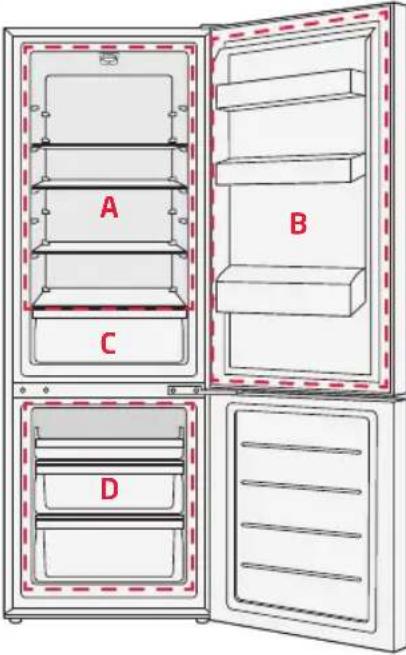 | Area | Recommended food and temperature setting |
| A | Fridge compartment (4°C)Storage of food for daily consumption, delicacies, yogurt, sauces, pickled vegetables, dessertsStorage of meat, fish, sausages, fresh filled pasta, cooked foods, leftovers | |
| B | Door shelf (4°C)Storage of drinks, milk, yogurt, eggs and butter. | |
| C | Fruit and vegetable compartment (8°C) | |
| D | Freezer (-18°C)Foods for long-term storageTop tray and door shelf:Storage of frozen food and ice cream.Middle drawers:storage for raw meat, poultry, fishBottom drawers:storage for frozen vegetables, chips |
English
How to store food and beverages for best preservation over the longest period, in order to avoid food waste?
Fridge compartment
- Use containers made from recycled plastic, metal, aluminium and glass as well as plastic wrap to pack food.
- Liquids as well as foods that lead to odor formation or can easily spoil or that can transfer taste, should be covered.
- If only a small amount of food is to be stored, the use of the shelves above the fruit and vegetable compartment is recommended.
- Foods that give off a large amount of ethylene gas and those that are sensitive to them, such as fruits, vegetables and lettuce, must always be kept separately from one another or packaged in order not to shorten the storage time; For example, do not keep tomatoes with kiwi or cabbage together.
- Use the bottle holder to prevent bottles from tipping over.
- Do not store food too close to one another to allow sufficient air circulation.
- The recommended temperature setting for the fridge compartment is 4°C. If set, foodstuffs can be usually stored for a few days.
Recommendations when refrigerating food
- Store fresh and undamaged food. The quality and freshness will then be retained for longer.
- In the case of convenience products and bottled goods, do not exceed the sell-by date or use-by date specified by the manufacturer.
- To retain aroma, colour and freshness, pack or cover food well before placing it in the appliance. This will prevent flavours being transferred between foods and the plastic parts from becoming discoloured.
- Leave warm food and beverages to cool down before placing them in the refrigerator compartment.
Freezer
- Ideal for storing frozen food, preparing ice cubes and freezing fresh food.
- If you only store small amounts of food in the freezer, it is recommended to use the coldest area in the freezer (corresponds to the middle area).
- The recommended temperature for the freezer compartment is -18^ .
- The storage period specified on the packaging is decisive for commercially available frozen products.
Recommendations when freezing food
- Freeze larger quantities of food in the lower frozen food containers. This is where the food will freeze especially quickly and gently.
- Distribute food in the compartments or frozen food containers.
- Do not bring food which is to be frozen into contact with frozen food. If required, re-stack frozen food in the frozen food containers.
- Important for unrestricted air circulation in the appliance: push in frozen food containers up to the limit stop.
Note: Storage of foods at the wrong temperature may lead to an increase of food waste.
Storage times and temperature
Note: Overlong storage or storage at inappropriate freezing temperature may cause spoiled foods, which causes food waste, is inedible and may cause food poisoning. The minimum temperature in most cases should be -18°C or colder. Follow the maximum recommended storage times below:
- Stew, ice cream, sausages, bread: 2-6 months.
• Fish, shrimp, lamb, meat: 4-8 months. - Vegetables, fruits, poultry, beef: 6-12 months.