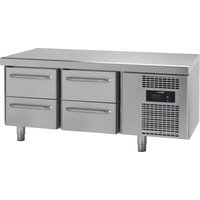
KS 0-4G - Fridge GRAM - Free user manual and instructions
Find the device manual for free KS 0-4G GRAM in PDF.


| Product Type | Drawer Refrigerator |
| Brand | Gram |
| Model | KS 0-4G |
| Dimensions (W x D x H) | 722 x 635 x 1400 mm |
| Net Capacity | 191 L |
| Temperature Range | 0°C to +10°C |
| Refrigerant | R290 (propane) |
| Cooling Capacity | 317 W |
| Noise Level | 46 dB(A) |
| Power Supply | 230 V, 50 Hz |
| Number of Drawers | 4 |
| Defrosting | Automatic (air, every 6 hours) |
| Condensation Evaporation | Automatic |
| Exterior Material | Stainless Steel |
| Climate Class | N (+16°C to +32°C) |
| Refrigeration System | Ventilated (evaporator and condenser fans) |
| Temperature Control | Digital thermostat with display |
| Safety Functions | Temperature alarms, keypad lock |
| Cleaning | Neutral detergent, avoid chlorine-based products |
| Optional Accessories | Worktop, riser |
| Weight | Approximately 65 kg |
Frequently Asked Questions - KS 0-4G GRAM
User questions about KS 0-4G GRAM
0 question about this device. Answer the ones you know or ask your own.
Ask a new question about this device
Download the instructions for your Fridge in PDF format for free! Find your manual KS 0-4G - GRAM and take your electronic device back in hand. On this page are published all the documents necessary for the use of your device. KS 0-4G by GRAM.
USER MANUAL KS 0-4G GRAM
USE AND INSTALLATION MANUAL
BEDIEN- UND INSTALLATIONSHANDBUCH
MANUEL D'UTILISATION ET D'INSTALLATION
Rev.1 10/2021
Carefully read the instructions contained in the handbook. You may find important safety instructions and recommendations for use and maintenance.
Please retain the handbook for future reference.
The Manufacturer is not liable for any changes to this handbook, which may be altered without prior notice.
PRODUKT BESKRIVELSE......4
TYPE/NR SKILT 4
TOTALMÄTT 5
OPSTILLING 5
GENEREL RENG∅RING OG VEDLIGEHOLDELSE 6
VEDLIGEHOLDELSE AF APPARATER AF RUSTFRIT STÅL 7
BORTSKAFFELSE 8
GENEREL INFORMATION VED LEVERING 9
TILBEH∅R 9
HACCP-KRAV 9
TEKNISKE SPECIFIKATIONER....10
KONTROLPANEL 11
natural_image
Illustration of a hand using a cable to switch a plug (no text or symbols present)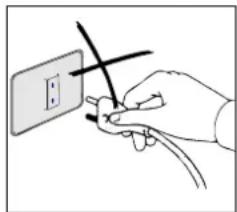
natural_image
Hand holding a wall-mounted electrical outlet with wires, no text or symbols visiblenatural_image
Simple line drawing of a 3D object with an upward arrow, no text or symbols presentnatural_image
Line drawing of a forklift carrying a box, no text or symbols presentnatural_image
Illustration of two hands performing a curved tool with an arrow indicating rotation (no text or symbols)natural_image
Diagram showing directional arrows and a curved arrow on a grid-like surface (no text or symbols)natural_image
Technical diagram of a hexagonal bolt with threaded end and a downward arrow symbol below (no text or labels)GENEREL RENG∅RING OG VEDLIGEHOLDELSE
natural_image
Hand inserting a plug into an outlet socket (no text or symbols visible)natural_image
3D diagram of a mechanical part with a numbered label (1) pointing to one section, no text or symbols present.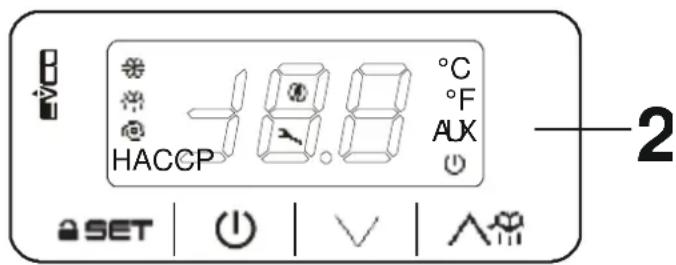
natural_image
Hand inserting a plug into an electrical socket (no text or symbols visible)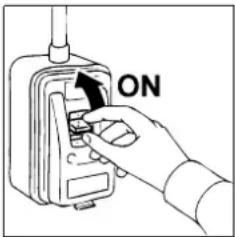
LÅSNING/OPLÅSNING AF TASTATURET
Sådan läses tastaturet:
natural_image
Technical line drawing of a cabinet or enclosure with four vertical panes and four labeled bottles on the side (no text or symbols present)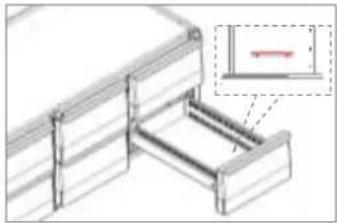
natural_image
Technical diagram of a mechanical assembly with a zoomed-in detail view (no text or symbols)STOP
K∅LEMIDLETS DATABLAD
R290
$$ \mathrm{GWP} = 3 $$
$$ \mathrm{ODP} = 0 $$
Fareidentifikation
SAFETY INFORMATION 2
SAFETY PRESCRIPTIONS 2
IDENTIFICATION TAG 4
DIMENSIONS 5
IMPLEMENTATION AND INSTALLATION .... 5
GENERAL CLEANING AND MAINTENANCE 6
WASTE DISPOSAL AND DEMOLITION 8
GENERAL NOTES BY THE DELIVERY....9
ACCESSORIES....9
HACCP REGULATIONS....9
TECHNICAL SPECIFICATIONS....10
CONTROL PANNELS....10
STARTING AND WORKING....10
LOCKING/UNLOCKING THE KEYBOARD.... 10
ALARMS AND SIGNALS.... 11
DEFROSTING 12
LOADING THE PRODUCT 12
STOPPING 12
WORKING IRREGULARITIES.... 13
USAGE INTERRUPTIONS.... 13
MALFUNCTIONING 13
REFRIGERANT MATERIAL SAFETY DATA SHEET 14
WIRING DIAGRAM PLATE 14
SAFETY INFORMATION
WARNING: This cabinet contains hydrocarbon refrigerant (R290).
DANGER: Risk of fire or explosion. Flammable refrigerant used. Do not use mechanical devices to defrost refrigerator. Do not puncture refrigerant tubing.
DANGER: Risk of fire or explosion. Flammable refrigerant used. To be repaired only by trained service personnel. Do not puncture refrigerant tubing.
CAUTION: Risk of fire or explosion. Flammable refrigerant used. Consult repair manual/owner's guide before attempting to service this product. All safety precautions must be followed.
CAUTION: Risk of fire or explosion. Dispose of properly in accordance with federal or local regulations. Flammable refrigerant used.
CAUTION: Risk of fire or explosion due to puncture of refrigerant tubing; follow handling instructions carefully. Flammable refrigerant used.
CAUTION: Keep clear of obstruction all ventilation openings in the appliance enclosure or in the structure for building-in.
CAUTION: see to the arrangement of the food products to be conserved inside in such a manner that they do not extend beyond the shelves so as to not interrupt the flow of air inside the unit. Do not obstruct fan intake area.

Signal warning of flammability due to the presence of flammable refrigerant (R290).
Instructions are available on the website www.sagispa.it
SAFETY PRESCRIPTIONS
The appliances are equipped with a power cable with plug.
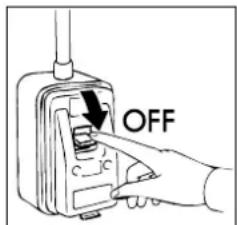
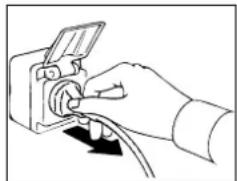
WARNING: before any maintenance or cleaning operation the machine must be insulated from the current:
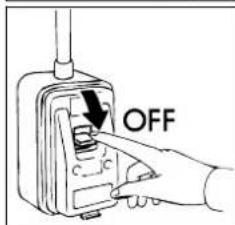
- witch the general cut-out in OFF position.
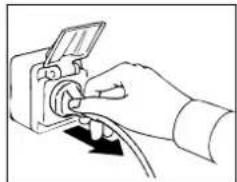
- remove the plug. The removal of the plug must be such that the operator can check its disconnection from every working point.
WARNING: do not use current taps or plugs not provided with grounding.
natural_image
Line drawing of a hand inserting a plug into a socket with a cable (no text or symbols)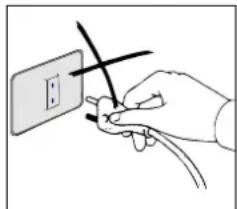
natural_image
Hand holding a wall-mounted electrical outlet with wires inserted (no text or symbols visible)The socket must be provided with GROUNDING.
WARNING: do not use adapters or patch cords for the connection to the electric line.
WARNING: if the power supply cable is damaged, it must be replaced using an original spare part, by an assistance service or by qualified personnel.
The cleaning and maintenance of the refrigerating engine and the compressor area needs the intervention of a skilled technician, therefore it cannot be done by other persons.
For a maintenance intervention or in case of anomaly disconnect completely the machine; ask for the TECHNICAL SERVICE to an entitled center and the use of original spare parts.
Failure to comply with what is written above may compromise the safety of the units.
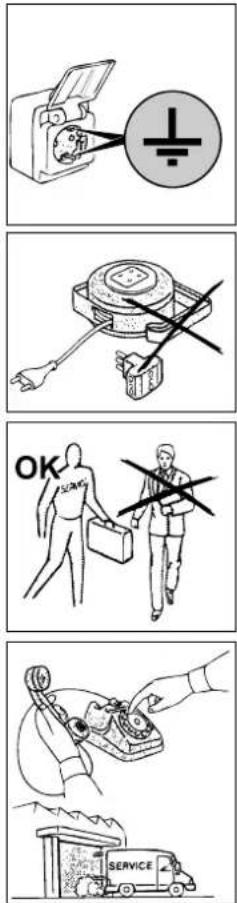
WARNING: after commissioning, wait for a time necessary to reach the set temperature before inserting the food to be stored.
Always cover the food with the special film before to put it into the appliance.
WARNING: do not introduce hot foods or drinks into the appliance.
WARNING: do not do the cleaning around the appliance when the door is open.
Do not wash the appliance by spraying high-pressure water on the machine.
WARNING: do not use substances with base of chlorine (chlorine water, muriatic acid, etc.) or however toxic for the cleaning or near the refrigerators.
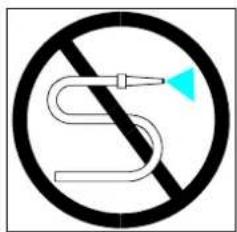
WARNING: Do not use mechanical devices nor other means to speed up the thawing process other than those recommended by the manufacturer.
WARNING: Do not use electrical appliances inside compartments.
The equipment is designed for a sound pressure level below 70db (A).

MACHINE DESCRIPTION
This equipment is intended for use in refrigeration and food storage. Any other use is to be considered improper.
WARNING: the appliances are not suitable for installation outdoors or in environments subject to the action of the elements. Do not use in potentially explosive atmospheres.
The manufacturer cannot be held liable for improper use of its products.
In the upper part the counters are provided with a working top, also available with raised back. Counters without working top having the same refrigerating capacities are also available.
The controls are supplied with digital heat regulator and master switch.
The engine group is located in a specific housing on the left of the counter.
The evaporator is located inside the engine compartment (one for each compartment) and is protected with sheets.
The internal ventilation is provided by means of protected tangential fans located above the evaporator.
The appliance is supplied with an automatic evaporation control for the condensed steam.
The areas that come into contact with the product are in steel or covered in non-toxic plastic material.
In case of machine downtime, ensure proper ventilation, temperature between -20^ + 50^ , relative humidity between 30% and 80% and an atmosphere that is dry and not dusty.
IDENTIFICATION TAG
The identification plate is permanently fixed to the product. It supplies important information about the technical and constructive specifications of the counters.

Legend
1) MODEL
2) MANUFACTURARIS NAME AND ADDRESS
3) CE MARK
4) YEAR OF MAKE
5) SERIAL NUMBER
6) ELECTRIC INSULATING GRADE
7) ELECTRIC PROTECTION GRADE
A) POWER SUPPLY VOLTAGE
B) ELECTRIC CURRENT RATE
C) POWER SUPPLY FREQUENCY
D) RATED POWER
| Climate Class* | Ambient temperature |
| 3 (SN) | +10°C --> +32°C |
| 4 (N) | +16°C --> +32°C |
| 4+ (ST) | +16°C --> +38°C |
| 4+ (SN-ST) | +10°C --> +38°C |
| 5 (T) | +16°C --> +43°C |
| 5 (SN-T) | +10°C --> +43°C |
E) TOTAL LAMP POWER
F) FUSIBLE CURRENT
G) REFRIGERATING FUID TYPE
H) REFRIGERATING FLUID QUANTITY
L) AMBIENT TEMPERATURE
R) WEEE SYMBOL
W) HEATING SECTION POWER
Z1) RATED STORAGE VOLUME (RSV)
Z2) FLUID FOAMING
Z3) TEMPERATURE RANGE
Z4) GWP
(*) The climate class temperature indicates the ambient temperature for which the equipment is able to operate.
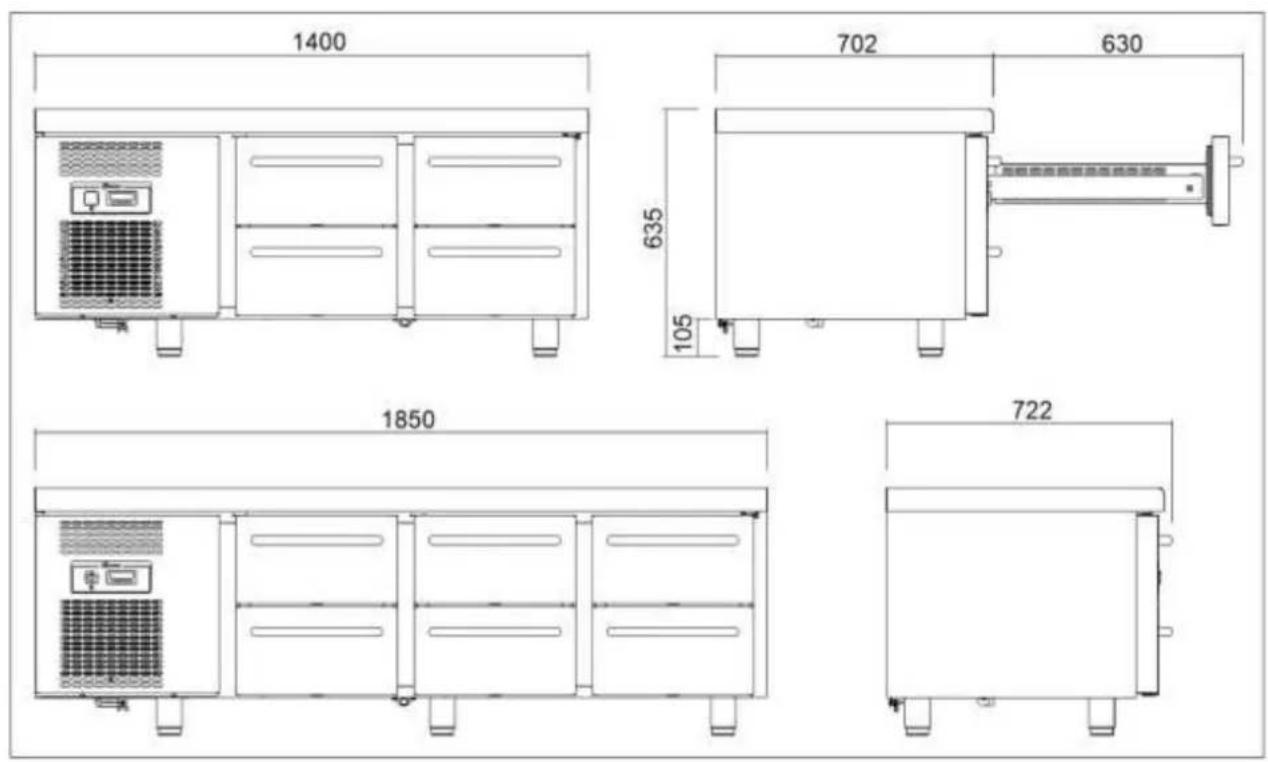
DIMENSIONS
Please refer to the dimensions of your own appliance.
IMPLEMENTATION AND INSTALLATION
The products are always packed with cardboard and shipped on pallets.
In case of damage or missing parts upon delivery, follow the instructions given in the chapter 'GENERAL INFORMATION UPON DELIVERY'.
All setting up and starting operations are to be carried out by skilled staff.
Remove the packing with care in order not to dent the counter surfaces.
natural_image
Simple line drawing of a 3D block with an upward arrow and grid base (no text or symbols)WARNING: keep the packing components (plastic bags, polystyrene foam, nails, etc) away from children since they can be very dangerous.
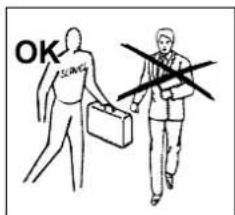
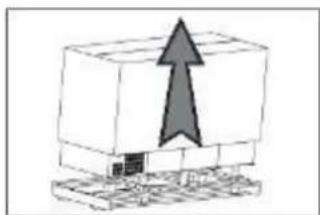
Use a fork truck to lift the counter and move it to the installation site, paying attention not to unbalance the load.
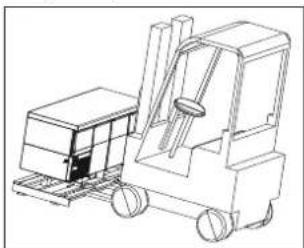
natural_image
Line drawing of a forklift carrying a box, no text or symbols presentWARNING: do not push or drag the counter during installation or in the future, in order to prevent it from turning over or damaging its parts.
WARNING: Do not place the cabinet in the vicinity of heat/ignition sources or in environments with high temperatures and/or highly flammable materials.
Set unit in its final location.
Be sure there is adequate ventilation in your room. Do not allocate equipment to environments above the declared climate class.
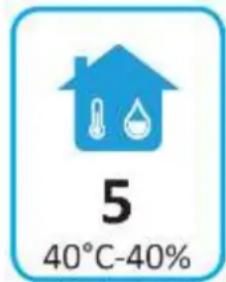
Remove protective film from product.
This may cause unpleasant static electricity discharge which, however, is not dangerous.
The inconvenience is reduced or prevented by continuously holding the appliance with one hand or grounding the package.
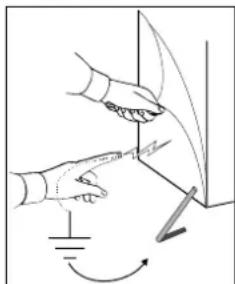
natural_image
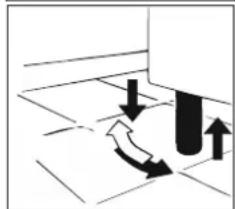
Illustration of hands performing a manual tool with a curved tool and power source (no text or symbols)It is now possible to level the counter by adjusting its feet.
During leveling, slightly tilt the counter towards its back to allow for a better door closing.
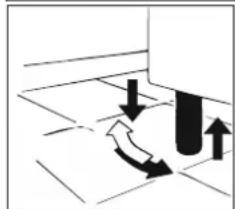
natural_image
Diagram showing directional arrows and a curved arrow on a grid-like surface (no text or symbols)Clean with lukewarm water and mild detergent (as described in the chapter ‘CLEANING’) and assemble the accessories available.
Check the correspondence of the mains voltage with the one indicated in the identification plate of the counter.
WARNING: check that the mains outlet is provided with grounding. If not, arrange it.
Insert the plug into the outlet.
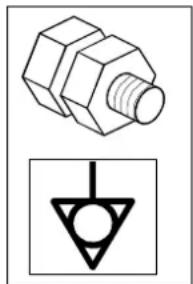
The counter must be incorporated into an equipotential system that must be checked for efficiency according to the regulations in force. The connection must be carried out by means of a screw marked as 'Equipotential' located in the compressor area.
natural_image
Technical drawing of a hexagonal bolt with threaded shaft and a downward-pointing triangle symbol below (no text or labels)The installation is now completed.
GENERAL CLEANING AND MAINTENANCE
For a constant efficiency of the appliance it is recommended to perform the cleaning and maintenance operations.
Before to begin with the operations proceed as following:
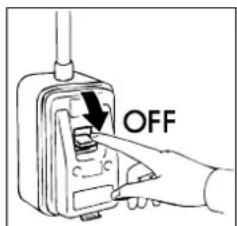
- set the general cut-out in OFF position
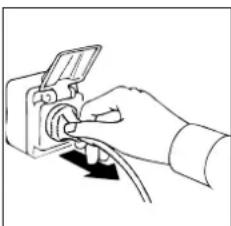
- remove the plug from the socket and wait till the complete entfrosting of the appliance.
natural_image
Hand inserting a plug into an electrical socket (no text or symbols visible)Clean the refrigerating group and the finned evaporator, using a vacuum cleaner or a non-metallic brush.
WARNING: the cleaning and maintenance operations of the refrigerating unit and the compressor area require the intervention of qualified personnel and cannot be carried out by unspecialized staff.
Clean the external and internal surfaces with water and neutral soap or detergent; a little vinegar in the water will remove eventual bad smells.
Rinse abundantly with pure water and dry up accurately.
The cleaning and maintenance operations have now come to end.
MAINTENANCE CABINETS STAINLESS STEEL
DAILY CLEANING
To guarantee a perfect hygiene and conservation of the appliance cabinet it is recommended to carry out often and/or daily the cleaning operations as indicated hereunder:
- Clean carefully the appliance surfaces, only in the direction of the etching, with a soft wrung out sponge drenched with water and neutral detergent.
- The detergents must not contain chlorine and must not be abrasive.
2.a The kind of detergents recommended are the ones indicated hereunder:
- Composite action disinfecting detergent;
(containing non-ionic surfactants, benzalkonium chloride, chelating agents and pH buffer)
• Laboratory, neutral detergent for hand washing;
(containing anionic and non-ionic surfactants) -
Food environments degreasant;
(containing anionic surfactants and EDTA) -
Before using the detergents, dilute them, if needed, following the instructions on the label.
-
Leave the detergents act for at least 5 minutes.
-
Rinse carefully the fridge walls with a sponge drenched in running water.
-
Dry carefully using a clean sponge.
WARNING: absolutely do not use utensils or materials which could cause cuts and consequently rust formations.
FOOD STAINS AND HARDENED RESIDUES
In case there are food or waste stains in the fridge, wash the surfaces with water and clean them off before they might harden.
If the wastes have already hardened, please follow the instructions hereunder:
- Use a soft sponge drenched with lukewarm water and neutral detergent (you can use the detergents for the daily cleaning operations, at the highest concentration estimated by the label).
- Dampen the hardened waste so as to maintain it damp for at least 30 minutes passing on it every five minutes the sponge drenched with water and detergents on the hardened dirty area.
- At the end of this soaking operation remove the waste with the sponge drenched with water and neutral detergents.
- If needed, use a wooden spatula or a fine stainless-steel sponge, taking care of not damaging the fridge surface.
- At the end of this process it is recommended a daily cleaning operation cycle of all the internal surfaces of the fridge.
- When the cleaning operations are over, rinse carefully with a sponge drenched with running water.
- Dry carefully using a clean sponge.
The space around and under the refrigerator must also be cleaned and held in perfect hygiene.
Clean using water and neutral soap or detergent.
Protect the sheet metal parts with silicon wax.
USEFULL ADVICES FOR THE CARE OF THE STAINLESS STEEL
For the cleaning and maintenance of the parts of stainless steel follow the advices written below, bearing in mind that the first and fundamental rule is to guarantee the non toxicity and best hygiene of the dealed products.
The stainless steel has a thin oxide coat that prevents rust formation.
But there are substances or detergents that can destroy this coat and give origin to corrosions.
Before using any detergent product ask always your dealer about which neutral detergent is the most qualified and does not cause corrosions on the steel.
In case of scratches on the surfaces it is necessary to smooth them using thin STAINLESS STEEL wool or an abrasive sponge in synthetic fibrous material, wiping in the direction of the satin.
WARNING: for the cleaning of the STAINLESS STEEL never use iron wool and never let them rest on the surfaces because little iron deposits could remain on the surfaces and cause rust formations by contamination and endanger the hygiene.
WASTE DISPOSAL AND DEMOLITION
WASTE STORAGE
At the end of the product life, avoid release to the environment. The doors should be removed before disposal.
Temporary storage of special waste is permitted while waiting for disposal by treatment and/or final collection. Dispose of special waste in accordance with the laws in force with regard to protection of the environment in the country of the user.
PROCEDURE FOR ROUGH DISMANTLING THE APPLIANCE
All countries have different legislation; provision laid down by the laws and the authorised bodies of the countries where the demolition takes place are therefore to be observed.
A general rule is to deliver the appliance to specialised collection and demolition centres. Dismantle the refrigerator grouping together the components according to their chemical nature. The compressor contains lubricating oil and refrigerant, which may be recycled. The refrigerator components are considered special waste, which can be assimilated with domestic waste.
Make the appliance totally unusable by removing the power cable and any door locking mechanisms in order to avoid the risk of anyone being trapped inside.
DISMANTLING OPERATIONS SHOULD BE CARRIED OUT BY QUALIFIED PERSONNEL.
THE SAFE DISPOSAL OF WASTE FROM ELECTRICAL AND ELECTRONIC EQUIPMENT (WEEE DIRECTIVE 2002/96/EC)
Do not dump pollutant material in the environment. Dispose of it in compliance with the relevant laws. Under the WEEE (Waste Electrical and Electronic Equipment) Directive 2002/96/EC, when scrapping equipment the user must dispose of it at the specific authorised disposal centres, or reconsign it, still installed, to the original seller on purchase of new equipment.
All equipment which must be disposed of in accordance with the WEEE Directive 2002/96/EC is marked with
a special symbol

The improper disposal of Waste Electrical and Electronic Equipment is liable to punishment under the relevant laws in the countries where the offence is committed.
Waste electrical and Electronic Equipment may contain hazardous substances with potential harmful effects on the environment and human health. You are urged to dispose of them properly.
GENERAL NOTES BY THE DELIVERY
At the delivery inspect that the packing is not injured and that it has not been damaged during the transport.
After having unpacked the refrigerator verify that all the parts are present and that the characteristics and the condition correspond to the order specifications. Otherwise contact immediately the retailer.
We congratulate you on your choice and we hope that you can use our refrigerating cabinets to their utmost, by following the necessary instructions and precautions contained in this manual.
But, remember that any reproduction of this manual is forbidden and that due to a constant pursuit of innovation and technological quality, the features hereby presented could change without notice.
ACCESSORIES
The appliance can be equipped with the following accessories on request (see "general catalogue").
HACCP REGULATIONS
WARNING: Raw vegetables, eggs and poultry CANNOT be kept in the same refrigerated place. Poultry must be kept in the proper refrigerated place.
WARNING: Avoid preserving food with a temperature between 10^ C and 60^ C. Make use of the proper appliances (blast chillers) to reduce the temperature to the core of the food.
WARNING: When taking the foodstuffs out of the refrigerator, check the expiry date marked on the package, and take out those with the nearest expiry date. If you note an expired food, it has to be kept away from the appliance and eliminated, reporting what happened to the person in charge of the firm where you work.
WARNING: Easily perishable foodstuffs must be taken out of the appliance ambient as late as possible in order to be exposed to room temperature only the necessary time.
WARNING: Do not refreeze foodstuffs previously defrosted.
WARNING: Number the equipment and check twice a day the temperature taken by recording the figures on a proper sheet to be kept for 24 months.
WARNING: Any interruption of current to the appliance can be carried out by checking the downtime with an electric clock in order to eliminate the foodstuffs that could perish.
Maximum temperatures admitted for goods
| Foodstuff | Normal storage temperature (°C) | Maximum temperature of carriage (°C) |
| Fresh pasteurized milk | 0÷+4 | 9 |
| Fresh cream | 0÷+4 | 9 |
| Yoghurt, ricotta, fresh cheese | 0÷+2 | 9 |
| Frozen fish | 0÷+2 | 0÷+4 |
| Beef and pork | 0÷+3 | 10 |
| Poultry | 0÷+4 | 8 |
| Rabbit | 0÷+2 | 8 |
| Ground-game | 0÷+2 | 8 |
| Big game | 0÷+2 | 8 |
| Offal | 0÷+3 | 8 |
| Frozen food | -23÷-24 | -18 |
| Packed ice-cream | -18÷-20 | -18 |
| Fruit and vegetables | 0÷+4 | room temperature |
TECHNICAL SPECIFICATIONS
Last page on the handbook: technical specifications.
CONTROL PANNELS
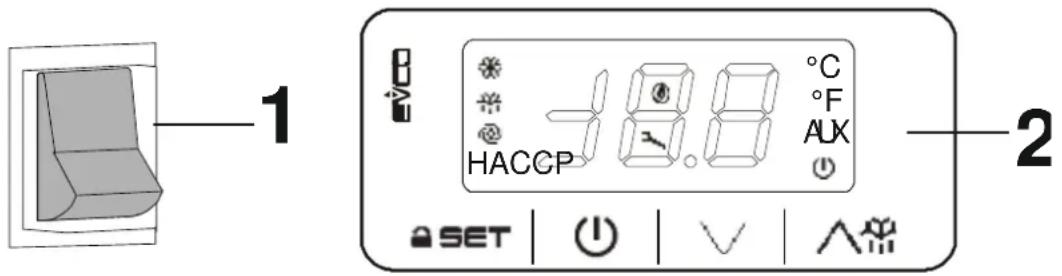
All products in the range use control panels with the following controls:
STARTING AND WORKING
To start operation, follow this procedure:
- Insert the plug into the current tap;
- position the line switch on ON;
- push the main switch (1); now set the operating temperature with the thermoregulator (2).
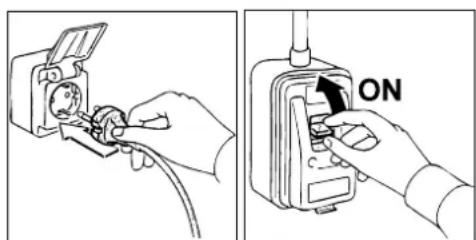
Check on the thermoregulator display (2) that the internal temperature of the counter corresponds to the set value.
LOCKING/UNLOCKING THE KEYBOARD
To lock the keyboard proceed as follows:
- Make sure no procedure is in progress
- Do not operate for 30 s: the display will show the message "Loc" for 1 s and the keyboard shall lock automatically.
If the keyboard is locked, you will not be allowed to:
• show the evaporator temperature
- activate the defrost by hand
- modify the working setpoint
These operations provoke the visualization of the label "Loc" 1 s.
To unlock the keyboard:
- Touch a key for 1 s: the display will show the message "UnL" for 1 s.
ALARMS AND SIGNALS
Signals
| LED | MEANING |
 | Compressor LEDIf the LED is on, the compressor is onIf the LED is flashing:- the working setpoint is in the process of being set- a compressor protection will be in progress |
 | Defrost LEDIf the LED is on, defrost is in progressIf the LED is flashing, dripping will be in progress |
 | Energy saving LEDIf the LED is on and the display is switched on, the “energy saving” function is in progressIf the LED is on and the display is switched off, the "low consumption" function is in progress; touch a key to restore normal display |
| [38xD]– | Celsius degrees LEDIf the LED is on, the unit of measurement for temperature is Celsius degrees |
| [7x2D] | Fahrenheit degrees LEDIf the LED is on, the unit of measurement for temperature is Fahrenheit degrees |
 | LED on/stand-byIf the LED is on, the device is switched off |
Signals
| CODE | MEANING |
| Loc | the keyboard is blocked |
| - - - | the operation requested is not available |
| dEF | defrost is in progress |
| Alarms | |
| CODE | MEANING |
| AL | Minimum temperature alarm in the compartmentSolutions:- check the room temperature; see A1 parameterMain consequences:- the device will continue to operate normally |
| AH | Maximum temperature alarm in the compartmentSolutions:- check the room temperature; see A4 parameterMain consequences:- the device will continue to operate normally |
| id | Door switch input alarmSolutions:- check the causes of the activation of the input; see i0 and i1 parametersMain consequences:- the effect established with the i0 parameter |
| dFd | Defrost alarm switched off because maximum time has been reachedSolutions:- check the integrity of the evaporator probe; see d2, d3 and d11 parameters- touch a key to restore normal displayMain consequences:- the device will continue to operate normally |
When the cause of the alarm disappears, the device restores normal operation, except for the following alarms:
- compressor shut down alarm (code "CSd") which requires the switching off of the device or the temporary suspension of the power supply.
- defrost alarm switched off because maximum time has been reached (code "dFd") which requires the touching of a key
When the cause of the error disappears, the device restores normal operation.
Errors
| CODE | MEANING |
| Pr1 | Room temperature probe errorSolutions:- check that the probe is the PTC or NTC type; see P0 parameter- check the device-probe connection- check room temperatureMain consequences:- compressor activity will depend on C4 and C5 parameters- the defrost will not be activated |
| [WHBY] | Evaporator/defrost probe errorSolutions:- the same as in the previous example, but with regard to the evaporator probe or the condenser probeMain consequences:- if P4 parameter is set at 1, the defrost interval will last for the amount of time set with d3 parameter- if P4 parameter is set at 1 and d8 parameter is set at 2 or to 3, the device will operate as if d8 parameter were set at 0- if P4 parameter is set at 2, the condenser overheated alarm (code “COH”) will never be activated- if P4 parameter is set at 2, the compressor shut down alarm (code “CSd”) will never be activated |
DEFROSTING
THE DEFROSTING OF THE REFRIGERATING CABINETS IS TOTALLY AUTOMATIC.
The air defrosting operation of the appliances occurs automatically every 6 hours. The defrosting lasts 20 minutes.
A defrost cycle can be selected at any time by pressing button “^”; for 5 seconds. The next automatic defrost cycle will start 6 hours after pressing the button.
LOADING THE PRODUCT
- Distribute the product evenly inside the appliance compartments so as to allow adequate air circulation;
- Do not obstruct the ventilation areas of the cooling system located on the left of the compartment;
- Do not use the lower drawer on the right to store foodstuffs requiring low-temperature storing;
- Cover or wrap foodstuffs with specific protective films before storing;
- Do not introduce hot foodstuffs or beverages;
- Do not leave the door open longer than is necessary when introducing or removing products;
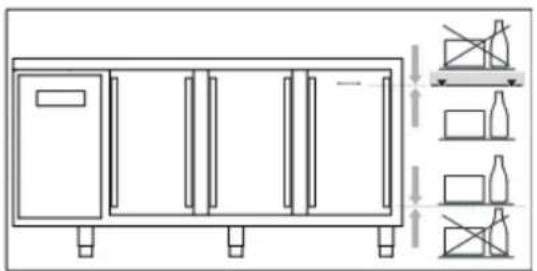
- Only load the top shelf up to the stacking mark;
- Do not place products below the bottom shelf support.
- Only load lower drawers up to the stacking mark.
natural_image
Technical line drawing of a cabinet or enclosure with four vertical panels and three horizontal shelves, no text or symbols present.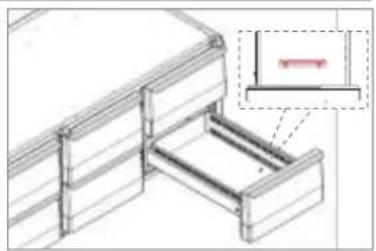
natural_image
Technical line drawing of a mechanical drawer assembly with an inset showing a highlighted section (no text or symbols)STOPPING
In any condition and for stopping the machine it is enough to press the main switch 1 in OFF position; the pilot light of the switch will go out.
WARNING: the main switch 1 DOES NOT insulate the machine from the electric current.
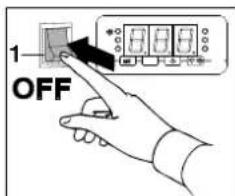
Set the general cut-out in OFF position.
To insulate the refrigerator from the electric current, remove the plug from the socket.
natural_image
Hand inserting a cable into a socket (no text or symbols visible)WORKING IRREGULARITIES
In case of working irregularities, before to call the technical service in zone verify that:
- the main switch 1 is on and the current is present;
– the regulated temperature is the wished one;
– the doors are perfectly closed; - the machine is not near heat sources;
– the condenser is clean and the fan works regularly; - an excess of hoarfrost does not cover the evaporating pannel.
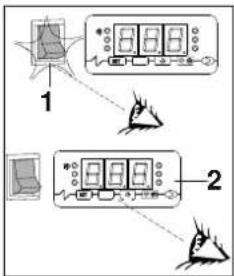
In case of negative result, contact the nearest service centre indicating the model and the serial number shown on the rating placed on the appliance instrument panel.
USAGE INTERRUPTIONS
In case of longer inactivity of the appliance and for maintaining it in the best state act as following:
- set the general cut-out in OFF position.
- remove the plug from the socket.
– empty the refrigerator and clean it as described In the chapter "CLEANING". - let the doors open to avoid the forming of bad smell.
MALFUNCTIONING
Malfunctioning during operation is often due to banal causes, which may nearly all be resolved without the help of a specialised technician. Consequently, before getting in touch with a service centre, check the following:
| PROBLEM | POSSIBLE CAUSES |
| The appliance does not start | Check that the plug is properly inserted into the socket. |
| Check that there is voltage at the socket | |
| The internal temperature is too high | Check the termostat setting |
| Check for a heat source in the vicinity | |
| Check that the door closes properly | |
| The appliance is excessively noisy | Check that the appliance is standing level. A lopsided appliance could set off vibrations |
| Check that the appliance is not touching other appliances or parts which could resonate | |
| There are unpleasant smells inside the refrigerator | There are foodstuffs with a particularly strong smell (for example cheese and melon), placed in non-sealed containers |
| Internal surfaces must be cleaned | |
| Some condensation is produced on the appliance | Room humidity is very high |
| Doors are not well-closed |
Upon completion of the above checks, if the fault persists, contact an authorised service centre. Always indicate:
• the nature of the fault
- the model and the serial number that can be found on the technical feature plate, placed under the appliance instrument panel.
REFRIGERANT MATERIAL SAFETY DATA SHEET
R290
GWP = 3
ODP = 0
Hazards identification
Liquefied gas - Extremely flammable
First aid measures
- Inhalation:
In high concentrations may cause asphyxiation. Symptoms may include loss of mobility and/or consciousness. Victims may not be aware of asphyxiation. In low concentrations, may cause narcotic effects. Symptoms may include dizziness, headache, nausea and loss of coordination. Remove victim to an uncontaminated area wearing self contained breathing apparatus. Keep the patient relaxed and warm. Call a physician. Apply artificial respiration if breathing stops.
- Contact with skin and eyes:
In case of spillage, rinse thoroughly with water for at least 15 minutes
- Ingestion:
Route of exposure unlikely
Ecological information
No known ecological damage caused by this product.
WIRING DIAGRAM PLATE
The electrical diagram is shown on the last page of the booklet.
| Pos | DESCRIPTION | Pos | DESCRIPTION |
| 1 | COMPRESSOR | 20C | DOOR ANTICONDENSING RESISTOR |
| 2 | CONDENSER FAN | 21 | DOOR ANTICONDENSING RESISTOR |
| 3 | TERMINAL BOARD | 22 | TRY BOTTOM RESISTOR |
| 6 | MAIN SWITCH | 44 | RESISTANCE FOUND BASIN |
| 8 | PLUG | 69 | RELAY COMPRESSOR |
| 9 | EVAPORATOR FUN | 75 | GROUNDING TERMINAL |
| 12 | SOLENOID VALVE DEFROSTING | 88 | SOLENOID VALVE |
| 20 | DOOR ANTICONDENSING RESISTOR | 90 | DIGITAL THERMOREGULATOR |
| 20A | DOOR ANTICONDENSING RESISTOR | 102 | DIGITAL THERMOREGULATOR |
| 20B | DOOR ANTICONDENSING RESISTOR |
INHALT
HACCP VORSCHRIFTEN....9
natural_image
Illustration of a hand inserting cable into a switch (no text or symbols)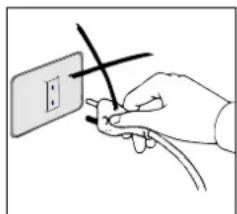
natural_image
Hand holding a wall-mounted electrical outlet with wires inserted (no text or symbols visible)natural_image
Simple line drawing of a 3D block with an upward arrow, no text or symbols presentnatural_image
Line drawing of a forklift carrying a pallet (no text or symbols)natural_image
Illustration of hands performing a manual tool with a curved tool and power source (no text or symbols)natural_image
Diagram showing directional arrows and curved arrows on a grid-like surface (no text or symbols)natural_image
Technical diagram of a bolt and a symbol (no text or labels)natural_image
Hand inserting a plug into an electrical socket (no text or symbols visible)INGANGSETZEN UND BETRIEB
natural_image
Technical line drawing of a cabinet or enclosure with four compartments and four labeled boxes, no text or symbols present.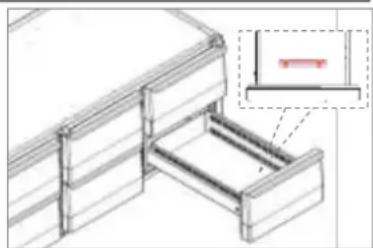
natural_image
Technical line drawing of a mechanical drawer assembly with an inset showing a red component (no text or symbols)ANHALTEN
flowchart
graph TD
    A["Step 1: Display with icon"] --> B["Step 2: Display with icon"]
    B --> C["Step 3: Display with icon"]
    style A fill:#f9f,stroke:#333
    style B fill:#bbf,stroke:#333
    style C fill:#dfd,stroke:#333
CHARGEMENT DU PRODUIT 12
ARRET 13
IRREGULARITES DE FONCTIONNEMENT.... 13
INTERRUPTIONS D'USAGE 13
PROBLEMES DE FONCTIONNEMENT .... 14
FICHE TECHNIQUE DU REFRIGERANT.... 14
INFORMATIONS DE SECURITE
natural_image
Simple line drawing of a 3D object with an upward arrow, no text or symbols presentnatural_image
Line drawing of a forklift carrying a box (no text or symbols)natural_image
Illustration of hands performing a manual tool with a curved tool and power source (no text or symbols)