
DCE450 - Electric crimping tool DEWALT - Free user manual and instructions
Find the device manual for free DCE450 DEWALT in PDF.


User questions about DCE450 DEWALT
0 question about this device. Answer the ones you know or ask your own.
Ask a new question about this device
Download the instructions for your Electric crimping tool in PDF format for free! Find your manual DCE450 - DEWALT and take your electronic device back in hand. On this page are published all the documents necessary for the use of your device. DCE450 by DEWALT.
USER MANUAL DCE450 DEWALT
1 Swage cone
2 Swage head
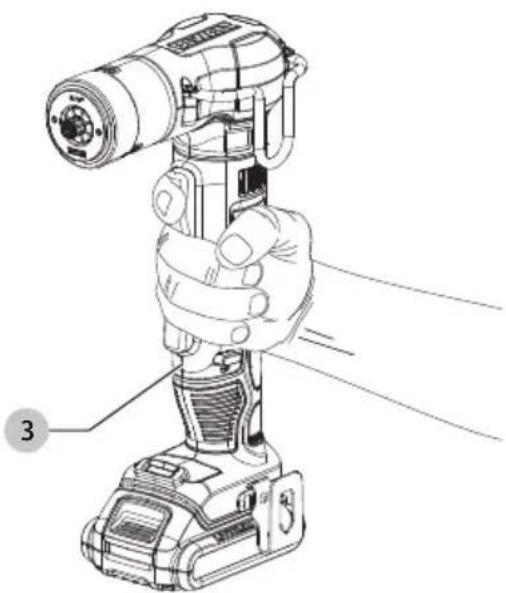
3 Handle
4 Trigger switch
5 Trigger lock
6 LED worklight
7 Hang hook
8 Battery pack
9 Battery pack release button
10 Expander grease
WARNING: Read all safety warnings, instructions, illustrations, and specifications in this manual, including the battery and
charger sections provided in an original tool manual or the separate Batteries and Chargers manual.
Manuals can be obtained by contacting Customer Service as described elsewhere in this manual. Failure to follow the warnings and instructions may result in electric shock, fire and/or serious injury.
Definitions: Safety Alert Symbols and Words
This instruction manual uses the following safety alert symbols and words to alert you to hazardous situations and your risk of personal injury or property damage.
RANGER: Indicates an imminently hazardous situation which, if not avoided, will result in death or serious injury.
WARNING: Indicates a potentially hazardous situation which, if not avoided, could result in death or serious injury.
AUTION: Indicates a potentially hazardous situation which, if not avoided, may result in minor or moderate injury.
Ased without word) Indicates a safety related message.
NOTICE: Indicates a practice not related to personal injury which, if not avoided, may result in property damage.


English (original instructions) 3
| Français (traduction de la notice d'instructions originale) | 8 |
| Español (traducido de las instrucciones originales) | 14 |
Fig. B Fig. C
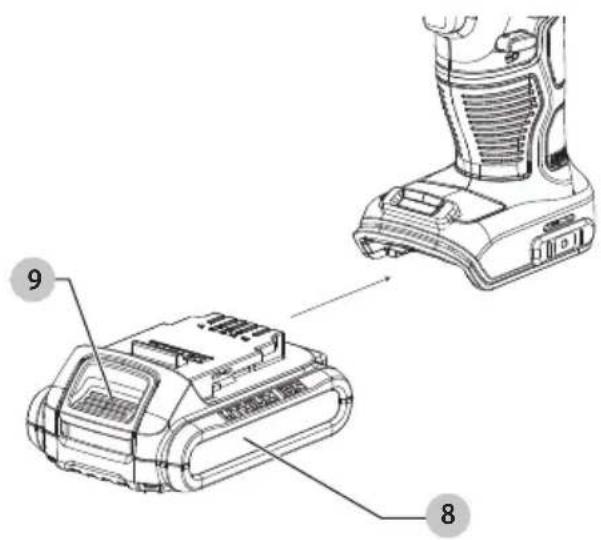
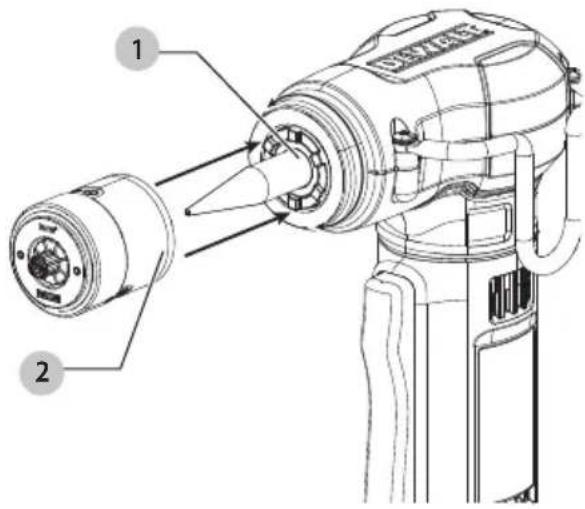
Fig. D
natural_image
Line drawing of a handheld device with a cylindrical component and labeled part (3), no text or symbols present.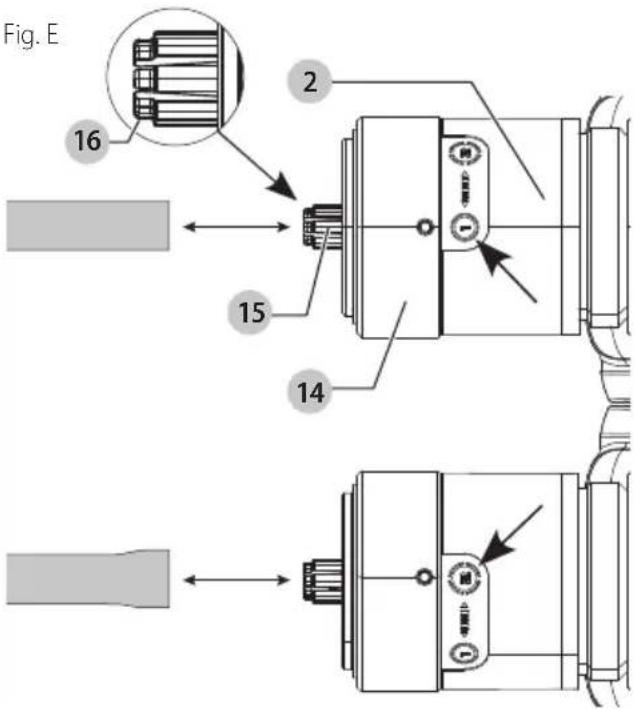
Fig. F
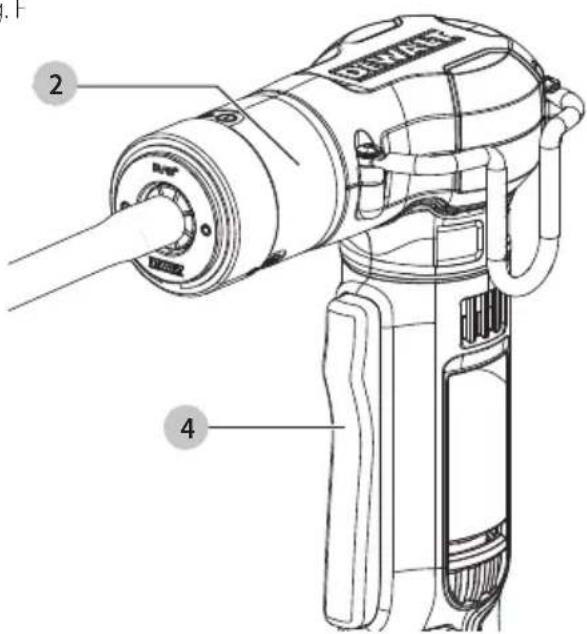
Fig. G
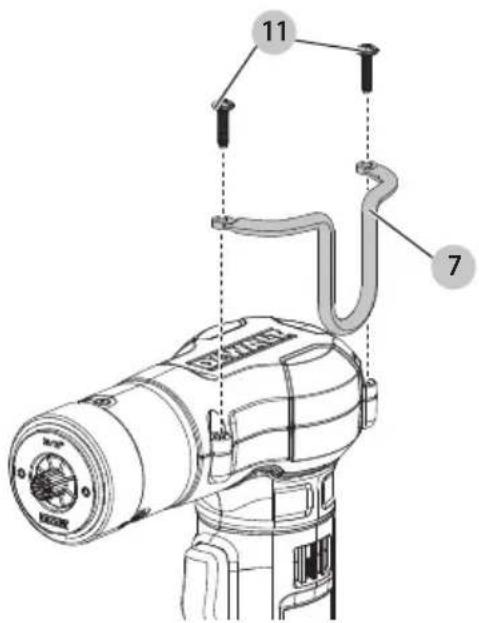
Fig. H
Intended Use
This swage tool is designed for expanding type ACR, annealed temper copper tubing manufactured in accordance with ASTMB280. The tool is designed for this material only.
DO nOT use under wet conditions or in presence of flammable liquids or gases.
DO nOT let children come into contact with the tool. Supervision is required when inexperienced operators use this tool.
GENERAL POWER TOOL SAFETY WARNINGS
WARNING: Read all safety warnings, instructions, illustrations and specifications provided with this power tool. Failure to follow all instructions listed below may result in electric shock, fire and/or serious injury.
SAVE ALL WARNINGS AND INSTRUCTIONS FOR FUTURE REFERENCE.
The term "power tool" in the warnings refers to your mains-operated (corded) power tool or battery-operated (cordless) power tool.
1) Work Area Safety
a) Keep work area clean and well lit. Cluttered or dark areas invite accidents.
b) Do not operate power tools in explosive atmospheres, such as in the presence of flammable liquids, gases or dust. Power tools create sparks which may ignite the dust or fumes.
c) Keep children and bystanders away while operating a power tool. Distractions can cause you to lose control.
2) Electrical Safety
a) Power tool plugs must match the outlet. Never modify the plug in any way. Do not use any adapter plugs with earthed (grounded) power tools. Unmodified plugs and matching outlets will reduce risk of electric shock.
b) Avoid body contact with earthed or grounded surfaces, such as pipes, radiators, ranges and refrigerators. There is an increased risk of electric shock if your body is earthed or grounded.
c) Do not expose power tools to rain or wet conditions. Water entering a power tool will increase the risk of electric shock.
d) Do not abuse the cord. Never use the cord for carrying, pulling or unplugging the power tool. Keep cord away from heat, oil, sharp edges or moving parts. Damaged or entangled cords increase the risk of electric shock.
e) When operating a power tool outdoors, use an extension cord suitable for outdoor use. Use of a cord suitable for outdoor use reduces the risk of electric shock.
f) If operating a power tool in a damp location is unavoidable, use a ground fault circuit interrupter (GFCI) protected supply. Use of a GFCI reduces the risk of electric shock.
3) Personal Safety
a) Stay alert, watch what you are doing and use common sense when operating a power tool. Do not use a power tool while you are tired or under the influence of drugs, alcohol or medication. A moment of inattention while operating power tools may result in serious personal injury.
b) Use personal protective equipment. Always wear eye protection. Protective equipment such as a dust mask, non-skid safety shoes, hard hat, or hearing protection used for appropriate conditions will reduce personal injuries.
c) Prevent unintentional starting. Ensure the switch is in the off position before connecting to power source and/or battery pack, picking up or carrying the tool. Carrying power tools with your finger on the switch or energizing power tools that have the switch on invites accidents.
d) Remove any adjusting key or wrench before turning the power tool on. A wrench or a key left attached to a rotating part of the power tool may result in personal injury.
e) Do not overreach. Keep proper footing and balance at all times. This enables better control of the power tool in unexpected situations.
f) Dress properly. Do not wear loose clothing or jewelry. Keep your hair, clothing and gloves away from moving parts. Loose clothes, jewelry or long hair can be caught in moving parts.
g) If devices are provided for the connection of dust extraction and collection facilities, ensure these are connected and properly used. Use of dust collection can reduce dust-related hazards.
h) Do not let familiarity gained from frequent use of tools allow you to become complacent and ignore tool safety principles. A careless action can cause severe injury within a fraction of a second.
4) Power Tool Use and Care
a) Do not force the power tool. Use the correct power tool for your application. The correct power tool will do the job better and safer at the rate for which it was designed.
b) Do not use the power tool if the switch does not turn it on and off. Any power tool that cannot be controlled with the switch is dangerous and must be repaired.
c) Disconnect the plug from the power source and/or remove the battery pack, if detachable, from the power tool before making any adjustments, changing accessories, or storing power tools. Such preventive safety measures reduce the risk of starting the power tool accidentally.
d) Store idle power tools out of the reach of children and do not allow persons unfamiliar with the power tool or these instructions to operate the power tool. Power tools are dangerous in the hands of untrained users.
e) Maintain power tools and accessories. Check for misalignment or binding of moving parts, breakage of parts and any other condition that may affect the power tool's operation. If damaged, have the power tool repaired before use. Many accidents are caused by poorly maintained power tools.
f) Keep cutting tools sharp and clean. Properly maintained cutting tools with sharp cutting edges are less likely to bind and are easier to control.
g) Use the power tool, accessories and tool bits, etc. in accordance with these instructions, taking into account the working conditions and the work to be performed.
Use of the power tool for operations different from those intended could result in a hazardous situation.
English
h) Keep handles and grasping surfaces dry, clean and free from oil and grease. Slippery handles and grasping surfaces do not allow for safe handling and control of the tool in unexpected situations.
5) Battery Tool Use and Care
a) Recharge only with the charger specified by the manufacturer. A charger that is suitable for one type of battery pack may create a risk of fire when used with another battery pack.
b) Use power tools only with specifically designated battery packs. Use of any other battery packs may create a risk of injury and fire.
c) When battery pack is not in use, keep it away from other metal objects, like paper clips, coins, keys, nails, screws or other small metal objects, that can make a connection from one terminal to another. Shorting the battery terminals together may cause burns or a fire.
d) Under abusive conditions, liquid may be ejected from the battery; avoid contact. If contact accidentally occurs, flush with water. If liquid contacts eyes, additionally seek medical help. Liquid ejected from the battery may cause irritation or burns.
e) Do not use a battery pack or tool that is damaged or modified. Damaged or modified batteries may exhibit unpredictable behavior resulting in fire, explosion or risk of injury.
f) Do not expose a battery pack or tool to fire or excessive temperature. Exposure to fire or temperature above 265 °F (130 °C) may cause explosion.
g) Follow all charging instructions and do not charge the battery pack or tool outside the temperature range specified in the instructions. Charging improperly or at temperatures outside the specified range may damage the battery and increase the risk of fire.
6) Service
a) Have your power tool serviced by a qualified repair person using only identical replacement parts. This will ensure that the safety of the power tool is maintained.
b) Never service damaged battery packs. Service of battery packs should only be performed by the manufacturer or authorized service providers.
Additional Safety Rules for Expansion Tools
WARNING: Use the swage tool only with DEWALT or DEWALT-approved attachments. Other uses or modifying the swage tool for other applications may damage the swage tool, damage the attachments and/or can result in a faulty installation. Faulty installations can result in catastrophic failures, injury to installers and damage to property.
WARNING: Proper preparation and installation is the responsibility of the installing contractor. Always follow applicable building codes and use this tool as approved by the authorities having jurisdiction. - Keep all body parts away from the attachments during operation and any time the power is ON. A moment of inattention while operating power tools, may result in serious personal injury. Fingers or hands can be pinched if they become caught in the attachments. - Inspect tool and attachments before use. Never attempt to repair or use a damaged swage head or other attachment. Replace with a new swage head.
- This tool produces large forces that can break attachments or parts and cause injury. Always be attentive and take proper safety precautions, including wearing eye protection.
- Only trained personnel should operate this tool.
- Before operating, inspect job site for hazards including chemicals or waste that could remain in pipes.
- Before operating, read and understand all safety and operating instructions including the fitting manufacturer's installation instructions and the instructions for any other equipment used with this tool. Failure to follow all instructions and warnings may result in property damage and/or serious personal injury.
- Secure and support the material to prevent movement during operation.
- Keep a firm grip on the tool at all times. Forces on the tool may change during and after the operation.
- Expansion operations may cause material pieces to fly. Flying particles can cause permanent eye damage. ALWAYS wear eye protection.
• Always wear gloves when operating tool and handling materials. The ends of the materials can be sharp and can cause serious personal injury.
• Always wear safety shoes to protect your feet from sharp metal debris on the floor. - To reduce the chance of damage to your swage tool, always store your tool with the swage head installed.
- The swage cone's sharp end may cause injury to the user without the swage head installed.
- Improper lubrication may lead to defective connections.
Additional Safety Information
WARNING: Never modify the power tool or any part of it. Damage or personal injury could result.
WARNING: ALWAYS use safety glasses. Everyday eyeglasses are NOT safety glasses. Also use face or dust mask if cutting operation is dusty. ALWAYS WEAR CERTIFIED SAFETY EQUIPMENT:
• ANSI Z87.1 eye protection (CAN/CSA Z94.3),
• ANSI S12.6 (S3.19) hearing protection,
• NIOSH/OSHA/MSHA respiratory protection.
WARNING: Some dust created by power sanding, sawing, grinding, drilling, and other construction activities contains chemicals known to the State of California to cause cancer, birth defects or other reproductive harm. Some examples of these chemicals are:
- lead from lead-based paints,
• crystalline silica from bricks and cement and other masonry products, and
• arsenic and chromium from chemically-treated lumber.
Your risk from these exposures varies, depending on how often you do this type of work. To reduce your exposure to these chemicals: work in a well ventilated area, and work with approved safety equipment, such as those dust masks that are specially designed to filter out microscopic particles.
- Wear protective clothing and wash exposed areas with soap and water. Allowing dust to get into your mouth, eyes, or lay on the skin may promote absorption of harmful chemicals. Direct particles away from face and body.
- Use the appropriate dust extractor vacuum to remove the vast majority of static and airborne dust. Failure to remove static and airborne dust could contaminate the working environment or pose an increased health risk to the operator and those in close proximity.
- Use clamps or other practical ways to secure and support the workpiece to a stable platform. Holding the work by hand or against your body is unstable and may lead to loss of control and injury.
- Air vents often cover moving parts and should be avoided. Loose clothes, jewelry or long hair can be caught in moving parts.
AUTION: When not in use, place tool on its side on a stable surface where it will not cause a tripping or falling hazard. Some tools with large battery packs will stand upright on the battery pack but may be easily knocked over.
The label on your tool may include the following symbols. The symbols and their definitions are as follows:
V....volts
Hz.....hertz
min......minutes
or DC.....direct current
Class I Construction (grounded)
.../min.....per minute
BPM.....beats per minute
Construction (double insulated)
n_0 ......no load speed
n......rated speed
PSI..... pounds per square inch
⊕ ....earthing terminal
⚠️ ......safety alert symbol
▲......visible radiation—do not stare into the light
......wearrespiratory protection
∞ .... wear eye protection
O....wearhearing protection
read all documentation
do not expose to rain
ASSEMBLY AND ADJUSTMENTS
WARNING: To reduce the risk of serious personal injury, turn unit off and remove the battery pack before making any adjustments or removing/installing attachments or accessories. An accidental start-up can cause injury.
Installing and Removing the Swage Head (Fig. C)
iIMPORTAnT: To reduce the chance of damage to your swage tool, always store with the swage head 2 installed.
-
To install a swage head 2 screw onto the swage cone 1 clockwise until hand tight. DO nOT over tighten.
-
To uninstall a swage head, unscrew from the swage cone counterclockwise.
Hang Hook (Fig. A, G)
WARNING: To reduce the risk of serious personal injury, ONLY use the tool's hang hook to hang the tool from a work belt. DO NOT use the hang hook for tethering or securing the tool to a person or object during use. DO NOT suspend tool overhead or suspend objects from the hang hook.
WARNING: To reduce the risk of serious personal injury, ensure the screws holding the hang hook are secure.
AUTION: To reduce the risk of personal injury or damage, DO NOT use the hang hook to hang the swage tool while using as a spotlight.
The hang hook 7 comes pre-attached to the tool. The hang hook can be removed and attached to either side of the tool using only the screws 11 provided, to accommodate left-or right-handed users.
- To move the hang hook 7, remove the screws 11 that hold the hang hook in place.
- Reinstall the hang hook to the desired side of the tool.
- Install removed screws and securely tighten the screws.
iIMPORTAnT: When attaching or replacing the hang hook, use only the screws that are provided. Be sure to securely tighten the screws.
NOTE: If the hang hook is not desired at all, it can be removed from the tool.
Belt Hook (Optional Accessory) (Fig. H)
WARNING: To reduce the risk of serious personal injury, turn tool off and disconnect battery pack before making any adjustments or removing/installing attachments or accessories.
WARNING: To reduce the risk of serious personal injury, DO NOT suspend tool overhead or suspend objects from the belt hook. ONLY hang tool's belt hook from a work belt.
WARNING: To reduce the risk of serious personal injury, ensure the screw holding the belt hook is secure.
AUTION: To reduce the risk of personal injury or damage, DO NOT use the belt hook to hang the drill while using as a spotlight.
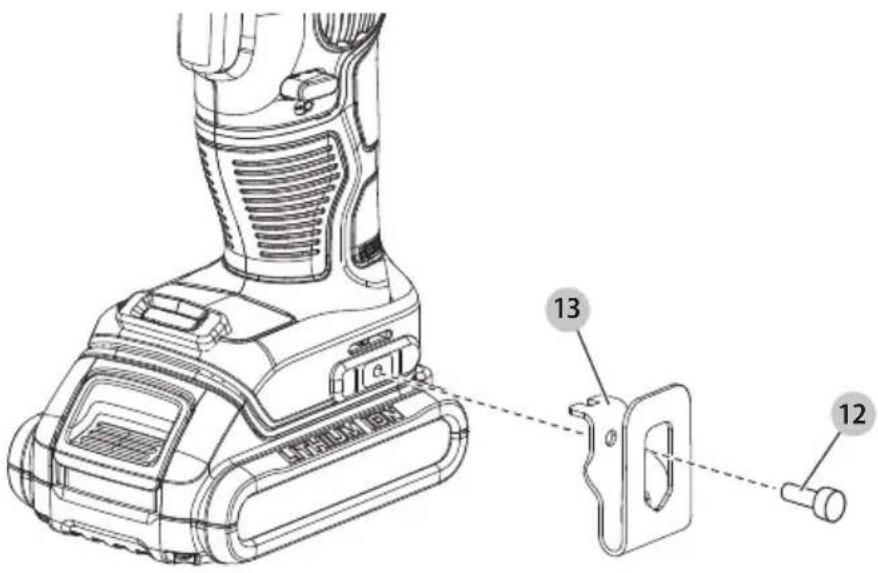
iIMPORTAnT: When attaching or replacing the belt hook 13, use only the screw 12 that is provided. Be sure to securely tighten the screw.
The belt hook can be attached to either side of the tool using only the screw provided, to accommodate left- or right-handed users. If the hook is not desired at all, it can be removed from the tool.
To move belt hook, remove the screw that holds it in place then reassemble on the opposite side. Be sure to securely tighten the screw.
OPERATION
WARNING: To reduce the risk of serious personal injury, turn unit off and remove the battery pack before making any adjustments or removing/installing attachments or accessories. An accidental start-up can cause injury.
WARNING: Proper material preparation and installation is the responsibility of the installing contractor.
WARNING: The tubing and hardware must be used in compliance with applicable building codes and as approved by the authorities having jurisdiction. For proper installation procedures and to reduce the risk of failure resulting in injury or property damage, follow all published safety and installation instructions.
AUTION: Pinch hazard. Keep fingers away from swage head while in use.
Installing and Removing the Battery Pack (Fig. B)
WARNING: Ensure the tool/appliance is in the off position before inserting the battery pack.
NOTE: For best results, make sure your battery pack is fully charged.
- To install the battery pack 8 into the tool handle, align the battery pack with the rails inside the tool's handle and slide it into the handle until the battery pack is firmly seated in the tool and ensure that it does not disengage.
- To remove the battery pack from the tool, press the battery pack release button 9 and firmly pull the battery pack out of the tool handle. Insert it into the charger.
Proper Hand Position (Fig. D)
WARNING: To reduce the risk of serious personal injury, ALWAYS use proper hand position as shown.
WARNING: To reduce the risk of serious personal injury, ALWAYS hold securely in anticipation of a sudden reaction. Proper hand position requires one hand on the main handle 3.
Trigger Switch/LED Worklight (Fig. A)
CAUTION: To reduce the chance of damage to the tool ALWAYS lock the tool when not in use.
-
To turn the tool on, squeeze the trigger switch 4.
-
To turn the tool off, release the trigger switch.
NOTE: Squeezing the trigger switch 4 will activate the LED worklight 6. The LED worklight will automatically turn off after three minutes. To turn off the LED worklight immediately, remove and reinstall the battery.
NOTE: The LED worklight is for lighting the immediate work surface and is not intended to be used as a flashlight.
Trigger Lock Off (Fig. A)
Your tool is equipped with a trigger lock 5.
- To lock the trigger switch 4 in the OFF position, push the trigger lock 5 from the left side of the tool.
- To unlock the trigger switch, push the trigger lock from the right side of the tool.
Swage Connection (Fig. A, E, F)
WARNING: Prior to use inspect all workpieces for cracks, defects or wear. Defective workpieces may shatter.
WARNING: It is the responsibility of the trained installer to ensure proper brazing techniques are followed.
AUTION: Using incorrectly sized swage heads may result in faulty connection, possibly resulting in damage to property.
NOTE: Deburring is recommended before expanding copper tube.
NOTE: Before first swage, apply included DEWALT DCE400GR expander grease to the swage cone.
To create a proper swage connection:
- Select appropriate swage head 2 (refer to Swage Head Chart) to match the copper tubing and, if needed, remove any dirt and debris.
- Using a clean, lint-free cloth, apply a thin coat of DEWALT DCE400GR expander grease 10 to the swage cone 1 before attaching swage head. DO NOT over-lubricate.
-
Grasp the tubing no closer than 6" from the end to be swaged.
-
Insert the tip of the swage head into the end of the copper tubing making sure that the swage head is fully inserted and flush with the copper tubing.
NOTE: If burrs on the copper tubing prevent the swage head from being fully inserted, insert the front step down feature 16 on the swage head and squeeze the trigger switch to expand the tubing until the swage head can be fully inserted.
-
Hold the tubing firmly so that it does not rotate with the swage head.
-
Squeeze the trigger switch 4 and allow the swage head to expand the copper tubing. The jaws 15 of the swage head will continue to open, close, and rotate until the trigger switch is released.
-
Release the trigger switch once the expansion appears complete and test fit the joint. Repeat steps 4-6 if necessary to expand slightly more.
NOTE: Prior to installation inspect joint for cracks, defects and proper fit before brazing.
NOTE: The number of expansions needed may vary depending on user preference.
Two-Stage Swage Heads
The three smaller swage head sizes are designed with a two-stage internal adjustment mechanism allowing for the expansion of the copper tubing to be done in two stages.
NOTE: Having the expansion done in two stages will help in reducing the risk of cracking.
To create a proper swage connection using a two-stage swage head:
-
Select appropriate two-swage head (refer to Swage Head Chart).
-
Rotate the front collar 14 of the two-stage swage head into position 1 as shown in Fig. E. Rotating the front collar of the swage head will move the jaws 15 of the swage head backward and forward by a few millimeters.
- Insert the tip of the two-stage swage head into the end of the copper tubing making sure that the two-swage head is fully inserted and flush with the copper tubing.
- With the collar of the two-swage head in position 1 squeeze and hold the trigger, allowing the jaws to expand the tubing 2-3 times.
- Rotate the front collar of the two-stage swage head into position 2 as shown in Fig. E. With the head still flush with the tubing squeeze and hold the trigger, allowing the jaws to expand the tubing 3-4 times. The swaging operation is now complete.
DCE450 - Swage Head Chart
| Max Diameter 1/4"-1-5/8" | |
| Compatible | DCE450014: 1/4" swage head (2 Stage) |
| Swage Heads | DCE4500516: 5/16" swage head (2 Stage) |
| DCE450038: 3/8" swage head (2 Stage) | |
| DCE450012: 1/2" swage head | |
| DCE450058: 5/8" swage head | |
| DCE450034: 3/4" swage head | |
| DCE450078: 7/8" swage head | |
| DCE450118: 1-1/8" swage head | |
| DCE450138: 1-3/8" swage head | |
| DCE450158: 1-5/8" swage head | |
MAINTENANCE
WARNING: To reduce the risk of serious personal injury, turn unit off and remove the battery pack before making any adjustments or removing/installing attachments or accessories. An accidental start-up can cause injury.
Your DEWALT power tool has been designed to operate over a long period of time with a minimum of maintenance. Continuous satisfactory operation depends upon proper tool care and regular cleaning.
Cleaning
WARNING: Blow dirt and dust out of all air vents with clean, dry air at least once a week. To minimize the risk of eye injury, always wear ANSI Z87.1 approved eye protection when performing this procedure.
WARNING: Never use solvents or other harsh chemicals for cleaning the non-metallic parts of the tool. These chemicals may weaken the plastic materials used in these parts. Use a cloth dampened only with water and mild soap. Never let any liquid get inside the tool; never immerse any part of the tool into a liquid.
Swage Head and Cone Cleaning (Fig. A)
- Remove the swage head 2 and inspect the head for metal shavings or debris. Keep the swage head and jaws free of metal shavings or debris.
- Wipe swage cone 1 with clean, dry, lint-free cloth.
- Relubricate the swage cone using DEWALT DCE400GR expander grease 10.
NOTE: After every 20 uses, we recommend the user remove the swage head and relubricate the swage cone.
Accessories
WARNING: Since accessories, other than those offered by DEWALT, have not been tested with this product, use of such accessories with this product could be hazardous. To reduce the risk of injury, only DEWALT recommended accessories should be used with this product. Recommended accessories for use with your product are available at extra cost from your local dealer or authorized service center. If you need assistance in locating any accessory, please contact DEWALT. Call 1-800-4-DEWALT (1-800-433-9258) or visit our website: www.dewalt.com.
Repairs
The charger and batteries are not serviceable. There are no serviceable parts inside the charger or battery pack.
WARNING: To assure product SAFETY and RELIABILITY, repairs, maintenance and adjustment (including brush inspection and replacement, when applicable) should be performed by a factory service center or an authorized service center. Always use identical replacement parts.
Register Online
Thank you for your purchase. Register your product now for:
- WARRANTY SERVICE: Registering your product will help you obtain more efficient warranty service in case there is a problem with your product.
- CONFIRMATION OF OWNERSHIP: In case of an insurance loss, such as fire, flood or theft, your registration of ownership will serve as your proof of purchase.
- FOR YOUR SAFETY: Registering your product will allow us to contact you in the unlikely event a safety notification is required under the Federal Consumer Safety Act. Register online at www.dewalt.com/account-login.
Three-Year Limited Warranty
For warranty terms, go to www.dewalt.com/support/warranty.
To request a written copy of the warranty terms, contact: Customer Service at DEWALT Industrial Tool Co., 701 East Joppa Road, Towson, MD 21286 or call 1-800-4-DEWALT (1-800-433-9258).
LATIN AMERICA: This warranty does not apply to products sold in Latin America. For products sold in Latin America, see country-specific warranty information contained in the packaging, call the local company or see website for warranty information.
FREE WARNING LABEL REPLACEMENT: If your warning labels become illegible or are missing, call 1-800-4-DEWALT (1-800-433-9258) for a free replacement.
FRAnÇAis
Utilisation Prévue
Eje Central Lázaro Cárdenas No. 18 - Local (55) 5588 9377 D, Col. Obrera
MERIDA, YUC
Calle 63 #459-A - Col. Centro (999) 928 5038
MONTERREY, N.L.
Av. Francisco I. Madero 831 Poniente - Col. (818) 375 23 13 Centro
PUEBLA, PUE
17 Norte #205 - Col. Centro (222) 246 3714
QUERETARO, QRO
Av. San Roque 274 - Col. San Gregorio (442) 2 17 63 14
SAN LUIS POTOSI, SLP
Col. Santa Fe Alvaro Obregon,
Ciudad de Mexico, Mexico.
C.P 01210
TEL(52) 55 53267100
R.F.C.BDE8106261W7
Registro en Línea
WARNING: Use of any other battery packs may create a risk of injury and fire.
NOTE: DO NOT charge when the battery pack is below 40 °F ( 4.5 °C ) or above 104 °F ( 40 °C ). Do not store or use the tool and battery pack in locations where the temperature may reach or exceed 104 °F ( 40 °C ).