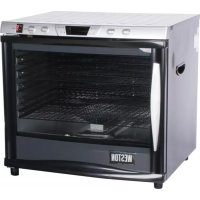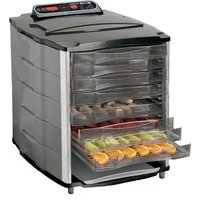
28-1001-W - Food Dehydrator Weston - Free user manual and instructions
Find the device manual for free 28-1001-W Weston in PDF.


| Product Type | Food Dehydrator |
| Brand | Weston |
| Model | 28-1001-W |
| Power | 120 V ~ 60 Hz, grounded plug (3 prongs) |
| Main Functions | Food dehydration, flower drying, jerky making. Temperature and timer settings, preheating |
| Capacity | Multiple stacked trays (not specified) |
| Temperature Range | Adjustable, recommended 130-160 °F (54-71 °C) for meats |
| Timer | Adjustable in hours and minutes (in 5-minute increments) |
| Care and Cleaning | Clean trays with warm soapy water, wipe cabinet with a damp sponge. Do not immerse the appliance. Do not splash the heating element |
| Safety | Do not immerse in water, use on a stable surface, do not block vents, do not use outdoors, unplug before cleaning |
| Spare Parts and Repairability | Contact Weston customer service: 1-800-814-4895 (US) or 1-216-901-6801 (outside US). One-year warranty. Online registration required |
| General Information | Household use only. Comes with user manual. Do not use with non-recommended accessories |
Frequently Asked Questions - 28-1001-W Weston
User questions about 28-1001-W Weston
0 question about this device. Answer the ones you know or ask your own.
Ask a new question about this device
Download the instructions for your Food Dehydrator in PDF format for free! Find your manual 28-1001-W - Weston and take your electronic device back in hand. On this page are published all the documents necessary for the use of your device. 28-1001-W by Weston.
USER MANUAL 28-1001-W Weston
RECONNECT WITH REAL FOOD
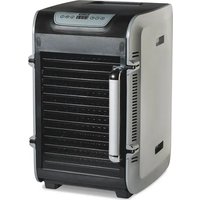
10 TRAY DIGITAL
FOOD DEHYDRATOR
28-1001-W
DUE TO CONSTANT FACTORY IMPROVEMENTS, THE PRODUCT PICTURED MIGHT DIFFER SLIGHTLY FROM THE PRODUCT IN THIS BOX.
IMPORTANT SAFEGUARDS 3
COMPONENT LIST 4-5
OTHER CONSUMER SAFETY INFORMATION 6
CLEANING INSTRUCTIONS 6
OPERATING INSTRUCTIONS 7
PRE-TREATMENT OF FOODS 8
MAKING JERKY 9-10
STORING JERKY 10
RECONSTITUTION 10
SUMMARY 11
DRYING FLOWERS 11
FOOD SAFETY 12
ONE-YEAR LIMITED WESTON WARRANTY 14
CLEANING INSTRUCTIONS 20
OPERATING INSTRUCTIONS 21
PRE-TREATMENT OF FOODS 22
PRE-TREATMENT OF FOODS 36
FAIRE DE LA CHARQUI 37-38
ENTREPOSAGE DE LA CHARQUI 38
RECONSTITUTION 38
SOMMAIRE 39
When using electrical appliances, basic safety precautions should always be followed to reduce the risk of fire, electric shock, and/or injury to persons, including the following:
-
Read all instructions.
-
CHECK FOR MISSING AND DAMAGED PARTS. Before using the Dehydrator, check that all parts are operating properly and perform the intended functions. Check for alignment of moving parts, binding of moving parts, mounting and any other conditions that may affect the operation.
-
Reduce risk of unintentional starting. Make sure the Power Switch is in the "OFF" position before connecting the Dehydrator to the power source.
-
Avoid contact with moving parts.
-
ALWAYS DISCONNECT the Dehydrator from the power source before servicing, changing accessories or cleaning the unit. Unplug the Dehydrator when not in use.
-
KEEP CHILDREN AWAY. NEVER LEAVE THE APPLIANCE UNATTENDED. This appliance is NOT a toy. Close supervision is necessary when any appliance is used by or near children.
-
Do not operate any appliance with a damaged supply cord or plug, or after the appliance malfunctions or has been dropped or damaged in any manner. Supply cord replacement and repairs must be conducted by the manufacturer, its service agent, or similarly qualified persons in order to avoid a hazard. Call the provided customer service number for information on examination, repair, or adjustment.
-
The Manufacturer declines any responsibility in the case of improper use of the Dehydrator. Improper use of the Dehydrator voids the warranty.
-
DO NOT pull the Power Cord to unplug. Use care when using extension cords.
-
Be sure the Dehydrator is stable during use. All four feet should be secure on a level surface. The Dehydrator should not move during operation.
-
DO NOT operate the Dehydrator outdoors or near any flammable or combustible materials.
-
DO NOT block the air vents at the rear of the Dehydrator. Keep the
Dehydrator at least 12" (30.5 cm) away from any wall to allow for proper air circulation.
-
DO NOT operate the Dehydrator on flammable surfaces such as carpeting.
-
To prevent electric shock, DO NOT IMMERSE CORD, PLUG OR BODY IN WATER OR LIQUID. Serious injury and electric shock could result. DO NOT use this machine with wet hands or bare feet. DO NOT operate near running water.
-
NEVER open or remove the back panel of the Dehydrator.
-
Unplug from outlet when not in use and before cleaning. READ ALL DIRECTIONS on how to clean this Dehydrator before attempting to clean it. Allow the appliance to cool before handling.
-
After cleaning, make sure Dehydrator is completely dry before reconnecting to the power source – if not; ELECTRIC SHOCK may result.
-
DO NOT operate the Dehydrator on a hot stove-top, gas burners or inside an oven. Do not let cord hang over edge of table or counter, or touch hot surfaces, including stove.
-
BEWARE! Some surfaces may become very hot during use! Serious injury may result! Do not touch hot surfaces. Use handles or knobs.
-
DO NOT move the Dehydrator while in use. DO NOT move the Dehydrator while hot. Allow the appliance to cool before handling.
-
Extreme caution must be used when moving an appliance containing hot oil or other hot liquids.
-
The use of accessory attachments not recommended by the appliance manufacturer may cause injury and void warranty. Modification of the Dehydrator voids the warranty.
-
DO NOT use the appliance for other than the intended use.
-
DO NOT use while under influence of drugs or alcohol.
-
Household use only.
SAVE THESE INSTRUCTIONS
ENGLISH INSTRUCTIONS
text_image
WESTON DEHYDRATOR HERBS 95-125°F VEGETABLES 120-135°F FRUIT • FRUIT ROLLS 135-145°F MEATS, FISH • JERKY 145-155°F DIGITAL DISPLAY TEMPERATURE - SETTING/ RESET + DIGITAL DISPLAY TIMER START/ STOP POWER ON/OFF PREPARATION OF FOODS • Need to find a food item (100% of the food item) only or very much more should be my own home (40% of the food item) • Do not use the body as an empty space. • Do not use the body as an empty space. • Do not use the body as an empty space. • Do not use the body as an empty space. • Do not use the body as an empty space. • Do not use the body as an empty space. • Do not use the body as an empty space. • Do not use the body as an empty space. • Do not use the body as an empty space. • Do not use the body as an empty space. - IMPORTANT: Need to make the Dehydrator without use. NEVER need the Dehydrator without use.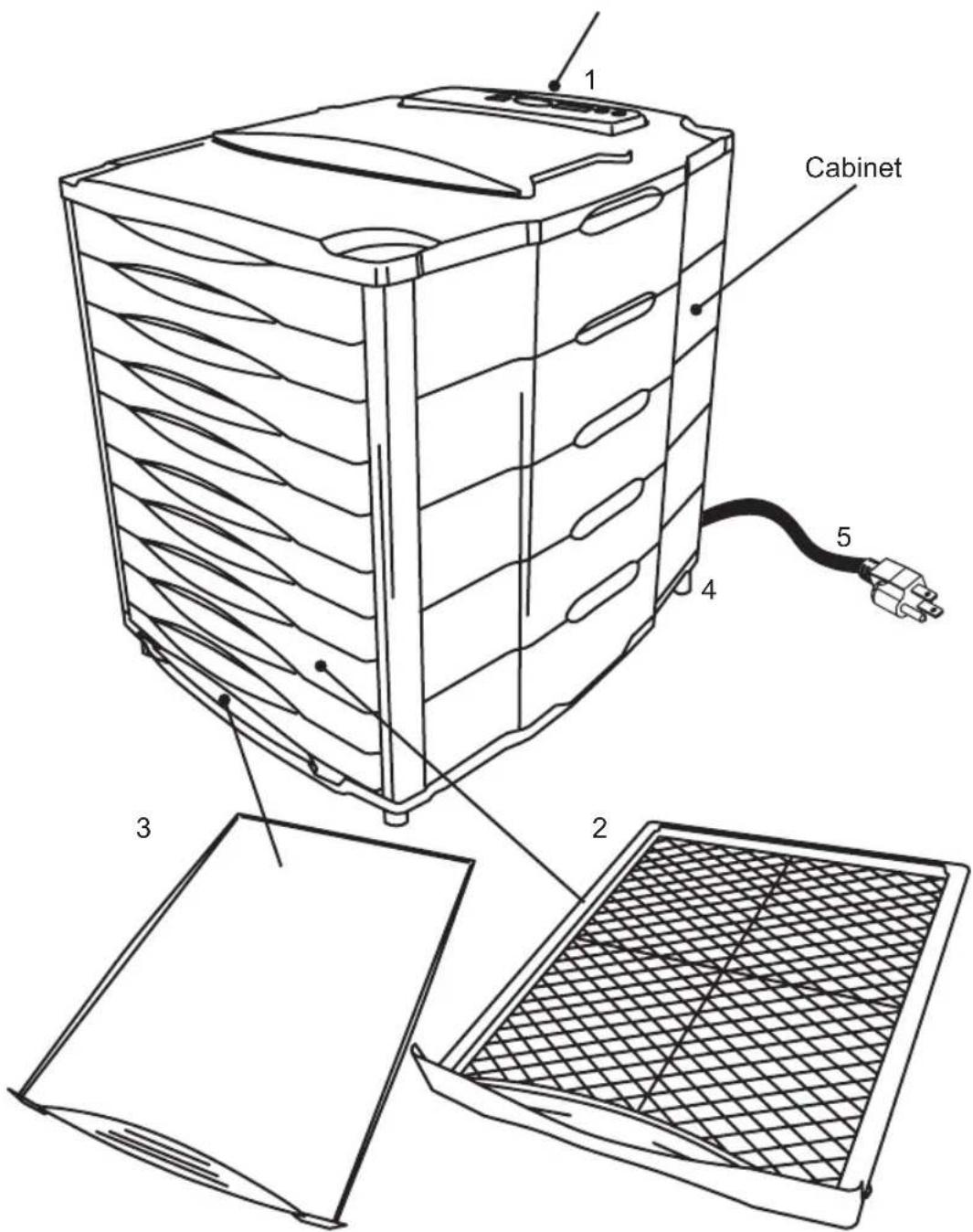
text_image
1 Cabinet 4 5 3 2COMPONENT LIST
| DIAGRAM NUMBER PART DESCRIPTION PART NUMBER | ||
| 1 CONTROL PANEL N/A | ||
| 2 TRAY 28-1003 | ||
| 3 DRIP TRAY 28-1005 | ||
| 4 FOOT (4) 28-1004 | ||
| 5 POWER CORD N/A | ||
If any components of this unit are broken, the unit does not operate properly or you need a replacement instruction manual, visit us on the web at
WestonSupply.com
Or call Weston Brands, LLC Toll Free at 1-800-814-4895 Monday thru Friday 8:00am-5:00pm ET. Outside the U.S. call 1-216-901-6801
SPECIAL START/STOP NOTE
When operating the Dehydrator, if the START/STOP Button is pressed while the Dehydrator is in the middle of a cycle, the heating element and the timer for the unit will turn off, but the fan will continue to run for 1 minute. This is normal, and occurs to help cool the heating element and prevent overheating. The temperature will continue to display on the Dehydrator until POWER ON/OFF Button is pressed.
OTHER CONSUMER SAFETY INFORMATION
⚠ WARNING Electrical Shock Hazard: This appliance is provided with a grounded (3-prong) plug to reduce the risk of electric shock. The plug fits only one way into a grounded outlet. Do not defeat the safety purpose of the plug by modifying the plug in any way or by using an adapter. If the plug does not fit into the outlet, have an electrician replace the outlet.
The length of the cord used on this appliance was selected to reduce the hazards of becoming tangled in or tripping over a longer cord. If a longer cord is necessary, an approved extension cord may be used. The electrical rating of the extension cord must be equal to or greater than the rating of the appliance. The extension cord must be a grounding-type, 3-wire cord. Care must be taken to arrange the extension cord so that it will not drape over the countertop or tabletop where it can be pulled on by children or accidentally tripped over.
CLEANING INSTRUCTIONS
WARNING!! Before cleaning or servicing the Dehydrator, make sure it is unplugged from the power source. It is important to read & fully understand all of the instructions & safeguard prior to use of the Dehydrator.
- Clean the Trays and inside the Cabinet before using the Dehydrator for the first time and after each use.
- Push the Power ON/OFF Button to turn off the Dehydrator. Disconnect the Power Cord from the electrical outlet.
- Allow the Dehydrator to completely cool before cleaning.
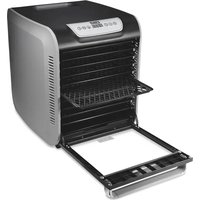
- Remove the Trays from the Cabinet.
- Wipe the Cabinet clean, inside and out, with damp sponge or soft cloth. Be careful not to splash water onto the heating element (located behind the screening and fan in the back of the Cabinet) while cleaning the inside of the Cabinet. Water could damage the heating element and the increases the risk of electric shock. DO NOT immerse the Dehydrator in water.
- Clean the Trays with warm, soapy water. Rinse with clear water and dry immediately.
OPERATING INSTRUCTIONS
WARNING!! Before cleaning or servicing the Dehydrator, make sure it is unplugged from the power source. It is important to read & fully understand all of the instructions & safeguard prior to use of the Dehydrator.
- Plug the Dehydrator into a standard 120 Volt, 60 Hz wall outlet.
- Position the Dehydrator as to NOT block the air vents at the rear of the Dehydrator. Keep the Dehydrator at least 12" (30.5 cm) away from any wall to allow for proper air circulation. DO NOT operate the Dehydrator on or near flammable surfaces such as carpeting.
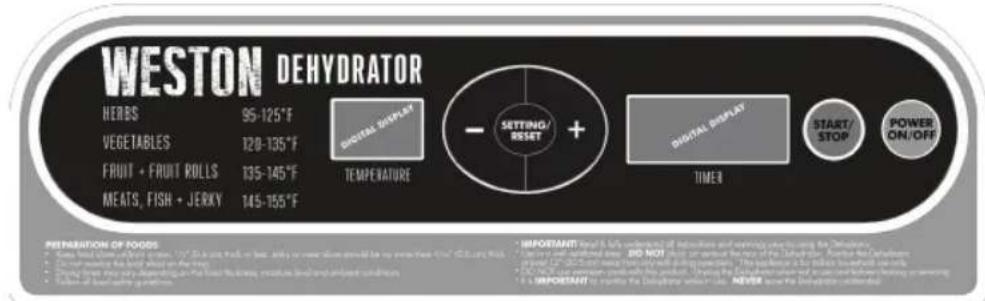
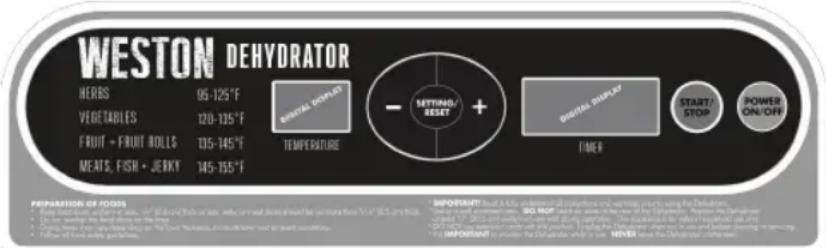
- Turn the Dehydrator on by pressing the POWER ON/OFF Button (FIGURE A).
- Press the SETTING/RESET Button and by using the “-” and the “+” Buttons, set the desired temperature.
- Press the SETTING/RESET Button and by using the “-” and the “+” Buttons, set the drying hours.
- Press the SETTING/RESET Button once more and by using the “-” and the “+” Buttons, set the minutes (in 5 minute increments).
- Press the START/STOP Button. A "click" will be heard and the Dehydrator will start cycling.
NOTE: Pressing the START/STOP Button will not pause the Dehydrator, it will stop the Dehydrator and reset it. Refer to the "Special Start/Stop Note" in this booklet.
- Preheat the Dehydrator for 5-10 minutes at the desired temperature before loading food onto the Trays.
- Remove any excess water from the food (this can be done by patting the food with a paper towel or napkin). Excess moisture may cause the Dehydrator temperature to drop.
- Load the Trays with the items to be dried. Position the pieces so that they do not touch each other. Do not overlap or allow the product to touch. Allow ample space between the products for proper air circulation.
- Water droplets may form on the surface of some products while dehydrating. Periodically blot the product with a clean paper towel.
NOTE: Drying times may vary based on many circumstances including but not limited to: the relative humidity of the room, the temperature of the food at the beginning of the drying process, the amount of food in the Dehydrator, the leanness of the meat, etc.
FIGURE A
text_image
WESTON DEHYDRATOR HERBS 05-125°F VEGETABLES 120-135°F FRUIT + FRUIT ROLLS 135-145°F MENTS, FISH + JERKY 145-155°F SPINYL BODIUT TEMPERATURE - SETTING/ RESET + DIGITAL DISPLAY TIME START/ STOP POWER ON/OFF PREPARATION OF FOODS • Keep your food with a flat surface. If you don't think or say, when we eat away should be probably from 15°C to 30°C. • Keep your food with a flat surface. If you don't think or say, when we eat away should be probably from 15°C to 30°C. • Keep your food with a flat surface. If you don't think or say, when we eat away should be probably from 15°C to 30°C. • Keep your food with a flat surface. If you don't think or say, when we eat away should be probably from 15°C, but not about 20°C. • Keep your food with a flat surface. If you don't think or say, when we eat away should be probably from 15°C, but not about 20°C. • Keep your food with a flat surface. If you don't think or say, when we eat away should be probably from 15°C, but not about 20°C. • Keep your food with a flat surface. If you don't think or say, when we eat from 15°C, but not about 20°C. • Keep your food with a flat surface. If you don't think or say, when we eat from 15°C, but not about 20°C. • Keep your food with a flat surface. If you don't think or say, when we eat from 15°C, but not about 20°C. • Keep your food with a flat surface. If you don't think or say, where we eat from 15°C, but not about 20°C. • Keep your food with a flat surface. If you don't think or say, where we eat from 15°C, but not about 20°C. • Keep your food with a flat surface. If you don't think or say, where we eat from 15°C, but not about 20°C. • Keep your food with a flat surface. If you don't think or says, where we eat from 15°C, but not about 20°C. • Keep your food with a flat surface. If you don't think or says, where we eat from 15°C, but not about 20°C. • Keep your food with a flat surface. If you don't think or says, where we eat from 15°C, but not about 20°C. • Keep your food with a flat surface. If you don't know or say, where we eat from 15°C, but not about 20°C. • Keep your food with a flat surface. If you don't know or say, where we eat from 15°C, but not about 20°C. • Keep your food with a flat surface. If you don't know or say, where we eat from 15°C, but not about 20°C. • Keep your food with a flat surface. If you don't show or say, where we eat from 15°C, but not about 20°C. • Keep your food with a flat surface. If you don't show or say, where we eat from 15°C, but not about 20°C. • Keep your food with a flat surface. If you don't show or say, where we eat from 15°C, but not about 20°C. • Keep your food with a flat surface. If you do not show or say, where we eat from 15°C, but not about 20°C. • Keep your food with a flat surface. If you do not show or say, where we eat from 15°C, but not about 20°C. • Keep your food with a flat surface. If you do not show or say, where we eat from 15°C, but not about 20°C. • Keep your food with a flat surface. If any of the foods are shown on the side of the chart. • Keep your food with a flat surface. If any of the foods are shown on the side of the chart. • Keep your food with a flat surface. If any of the foods are shown on the side of the chart. • Keep your food with a flat surface. If any of the foods are shown on the side of the chart. • Keep your food with a flat surface. If any of the foods are shown on the side of the chart. • Keep your food with a flatter shape. If any of the foods are shown on the side of the chart. • Keep your food with a flatter shape. If any of the foods are shown on the side of the chart. • Keep your food with a flatter shape. If any of the foods are shown on the side of the chart. • Keep your food with a flatter shape. If any of the foods are shown on the side of the chart. • Keep your food with a flatter shape. If any if any of the foods are shown on the side of the chart. • Keep your food with a flatter shape. If any if any of the foods are shown on the side of the chart. • Keep your food with a flatter shape. If any if any of the foods are shown on the side of the chart. • Keep your food with a flatter shape. If any if any of the foods are shown on the side of the chart. • Keep your food with a flatter structure. If any of the foods are shown on the side of the chart. • Keep your food with a flatter structure. If any if any of the foods are shown on the side of the chart. • Keep your food with a flatter structure. If any if any of the foods are shown on the side of the chart. • Keep your food with a flatter structure. If any if any of the foods are shown on the side of the chart. • Keep your food with a flatter structure. If any if any of the foods are shown on the side of the chart. • Keep your food with a flatter shape. If any of the foods are shown on the side of the chart. • Keep your food with a flatter shape. If any if any of the foods are shown on the side of the chart. • Keep your food with a flatter shape. If any if any of the foods are shown on the side of the chart. • Keep your food with a flatter shape. When you do not show or say, what you do not show or say, what you do not show or say, you do not show or say, what you do not show or say, you do not show or say, what you do not show or say, you do not show or say, what you do not show or say, you do not show or say, what you do not show or say, you do not show or say, what you do not show or say, you do not show or say, what you do not show or say, you do not show or say, what you do norve you do not show or say, what you do norve you do not show or say, what you do norve you do not show or say, what you do norve you do not show or say, what you do norve you do not show or say, what you do norve you do not show or say, what you do norve you do not show or say, what you do norve you do not show or say, what is you do not show or say, what is you do not show or say, what is you do not show or say, what is you do not show or say, what is you do not show or say, what is you do not show or say, what is you do not show or say, what is you do not show or say, what is you do not show or say, what is you do not show or say, what in you do not show or say, what is you do not show or say, what is you do not show or say, what is you do not show or say, what is you do not show or say, what is you do not show or say, what is you do not show or say, what is you do not show or say, what is you do not show or say, what is you do not show or say, what iis you do not show or say, what is you do not show or say, what is you do not show or say, what is you do not show or say, what is you do not show or say, what is you do not show or say, what is you do not show or say, what is you do not show or say, what is you do not show or say, what is you do not show or say, what isn't you do not show or say, you do not show or say, you do not show or say, you do not show or say, you do not show or say, you do not show or say, you do not show or say, you do not show or say, you do not show or say, you do not show or say, you do not show or say, you do not show or say, you do not show or say, you do not show or say, you do not show or say, you don't know you don't know you don't know you don't know you don't know you don't know you don't know you don't know you don't know you don't know you don't know you don't know you don't know you don't know you don't know you don't know you don't know you don't know you don't know you don't know you don't knowPRE-TREATMENT OF FOODS
CAUTION! It is important to follow the "Food Safety" guidelines outlined in this manual. For the most up to date instruction visit the USDA website.
As with most types of cooking, proper preparation is essential for successful results. Adhering to a few basic guidelines will generally increase the quality of your dried foods and decrease the amount of time necessary to dry them.
Pre-treated foods often taste better and have a better appearance than non-treated foods. There are several methods to pre-treat food to prevent oxidation, which will darken apples, pears, peaches and bananas while drying.
■ Remove any pits, skin, cores or bones.
- Shred, slice or dice the food uniformly. Slices should be between 1/8-1/4" (0.3-0.6 cm) thick. Meats should be cut not more than 3/4" (1.9 cm) thick.
■ IMPORTANT: Before placing the meat in a Dehydrator, it is HIGHLY RECOMMENDED to heat the meat to 160°F (71°C), poultry to 165°F (74°C), as measured with a food thermometer in an oven BEFORE starting the dehydration process. This step assures that any bacteria present will be destroyed by wet heat. After heating to 160°F (71°C), poultry to 165°F (74°C), maintain a constant dehydrator temperature of 130-140°F (55-60°C) during the drying process. The minimum recommended temperature for drying meats is 145°F (63°C). Temperatures below 145°F (63°C) are NOT recommended.
- Steam or bake the fish at 200'F (93'C) until flaky before dehydrating.
■ Drying into jerky requires a lot of attention. It must be cleaned and de-boned properly and rinsed thoroughly to ensure that all the blood is washed away.
- Soak cut fruit in either lemon or pineapple juice for a few minutes before placing out on the Trays.
- Use an ascorbic acid mix which can be purchased in most health food stores or pharmacies. It may come in either powder or tablet form. Dissolve approximately 2-3 tablespoons into 1 quart (1 liter) of water. Soak the fruit slices into the solution for 2-3 minutes, then place on the Trays.
- Fruits with a wax coating (figs, peaches, grapes, blueberries, prunes, etc.) should be dipped in boiling water to remove the wax. This allows moisture to escape easily when dehydrating.
■ Blanching can pre-treat food for dehydrating. Blanching does not destroy helpful enzymes and helps retain nutrients. There are two ways to blanch food:
-
WATER BLANCHING: Use a large pan; fill it half way with water. Bring water to a boil. Place food directly in a boiling water and cover. Remove after three minutes. Arrange food on the Trays.
-
STEAM BLANCHING: Using steamer pot bring 2-3" (5-7 cm) of water to a boil in bottom section. Place food in steamer basket and steam for 3-5 minutes. Remove steamed food and arrange on Trays.
MAKING JERKY
Meat should be as lean as possible. Using lean meat will help the meat dry faster and aid in cleanup by decreasing fat drippings. Ground meat should be 80% to 90% lean. Ground turkey, venison, buffalo and elk are other excellent choices for Jerky.
Jerky seasonings are available for all tastes, or you can get creative and make your own. Whenever you make Jerky, you should cure the mixture with cure (sodium nitrite). The cure is used to help prevent botulism during drying at low temperatures. Follow the manufacturer's directions on the cure packet.
Keep raw meats and their juices away from other foods. Marinate meats in the refrigerator. Do not leave meats unrefrigerated. Prevent cross-contamination by storing dried jerky away from raw meat. ALWAYS wash hands thoroughly with soap and water before and after working with meat products. Use clean equipment and utensils.
Keep meat and poultry refrigerated at 40^ F ( 4.4^ C) or slightly below; use or freeze ground beef and poultry within 2 days; whole red meats, within 3 to 5 days. Defrost frozen meat in the refrigerator, not on the kitchen counter.
Special considerations must be made when using venison or other wild game, since it can become heavily contaminated during field dressing. Venison is often held at temperatures that could potentially allow bacteria to grow, such as when it is being transported. Refer to the USDA website for further information on food safety. (www.usda.gov or www.fsis.usda.gov/fact_sheets/index.asp)
When using a Dehydrator, check the temperature of the Dehydrator with a dial thermometer before drying jerky. The minimum recommended temperature for drying meats is 130^ F ( 54^ C). Temperatures below 130^ F ( 54^ C) are not recommended.
IMPORTANT: Before placing the meat in a Dehydrator, it is highly recommended to heat the meat to 160^ F ( 71^ C) BEFORE the dehydrating process. This step assures that any bacteria present will be destroyed by wet heat. After heating to 160^ F ( 71^ C), maintaining a constant Dehydrator temperature of 130-140^ F ( 54-60^ C) during the drying process is important because:
1.) the process must be fast enough to dry food before it spoils; and
2.) it must remove enough water so that microorganisms are unable to grow.
MAKING JERKY
If you are using a marinade, shake off excess liquid from the meat before spacing it evenly in single layers, approximately 1/4"-1/2" (0.6-1.5 cm) apart, on the Dehydrator Racks.
IMPORTANT NOTE: DO NOT place jerky over the center hole of the Racks. This will impede airflow to the center of the Cabinet and could result in uneven drying.
Dry meat at 145-150°F (62.7-65.6°F) for 4-7 hours. You may need to blot fat droplets from the surface of the meat occasionally, using a paper towel. Drying times may vary based on many circumstances including but not limited to: the relative humidity of the room, the temperature of the meat at beginning of drying process, the amount of meat in the dehydrator, leanness of meat, etc. Always allow jerky to cool before taste testing.
STORING JERKY
Wrap jerky/snack sticks in aluminum foil and store in a thick plastic food storage bag, or place jerky/snack sticks in a jar with a tight lid. Avoid storage in plastic containers or bags without wrapping in aluminum foil or wax paper first. Jerky/snack sticks should be stored in a dark, dry, place between 50-60°F (10-15.6°C). You can store properly dried jerky/snack sticks at room temperature for 1 to 2 months. To extend the shelf life to up to 6 months, store jerky/snack sticks in the freezer. Be sure to label and date all packages.
RECONSTITUTION
- While it is not necessary to reconstitute dried foods, it can be done with ease. Vegetables can be used as a side dish or in recipes very effectively after being reconstituted in the following way.
- Soak vegetables in cold, unsalted water for 3-7 minutes before cooking. If planning to soak the food any longer, it should be placed in the refrigerator while soaking. After soaking, it is best to cook the vegetables in the same water in which they soaked. Simply bring the water to a boil and cook the vegetables until tender.
- Generally 1 cup of dried vegetables will result in about 2 cups after reconstitution. Fruits reconstitute at a ratio of approximately 1:1-1/2 cups.
- Reconstitution time will vary depending on the thickness of the dried food and the temperature of the water used. Soaking the food in warmer water will speed up the process, however, it may result in loss of flavor.
SUMMARY
Remember drying food is as much an art as any other form of cooking. Once familiar with the basics, experiment to create unique dried foods.
Just remember the basics:
• The leaner the meat, the better the jerky
- Do not overlap food products on the drying racks
• Properly pre-treat fruits and vegetables
- Drying times will vary
- Blot excess moisture from surface of foods while drying
- Rotate racks if drying is uneven
• Always follow food safety guidelines for meats, poultry and fish to make sure the finished product is free of disease-causing bacteria
DRYING FLOWERS
- The flowers should be dry to start with, best if picked after the dew has dried and before the night damp sets in. Dry the flowers as soon as possible after picking.
- The best condition for drying flowers is a dry, warm, dark, clean and well ventilated area, which makes a dehydrator an ideal setting. Flowers will retain the best color and condition when dried quickly.
- A low temperature should be used to retain the natural oils.
- Strip off the leaves or if you prefer to keep the foliage. Discard any brown or damaged leaves.
- Place on the dehydrator Rack in a single layer, avoiding overlapping.
- Drying times will vary considerably depending on the size of the flower and the amount of foliage. Dry at 100^ (38°C).
FOOD SAFETY
There are basic rules to follow when handling food. They are COOK, SEPARATE, CLEAN, and CHILL.
COOK
It's crucial to cook food to a safe internal temperature to destroy bacteria that is present. The safety of hamburgers and other foods made with ground meat has been receiving a lot of attention lately, and with good reason. When meat is ground, the bacteria present on the surface is mixed throughout the ground mixture. If this ground meat is not cooked to at least 160^ to 165^ (71°C to 74°C), bacteria will not be destroyed and there's a good chance you will get sick.
Solid pieces of meat like steaks and chops don't have dangerous bacteria like E. coli on the inside, so they can be served more rare. Still, any beef cut should be cooked to an internal temperature of at least 145°F (63°C) (medium rare). The safe temperature for poultry is 165°F (75°C) and solid cuts of pork should be cooked to 145°F (63°C).
SEPARATE
Foods that will be eaten uncooked and foods that will be cooked before eating MUST ALWAYS be separated. Cross-contamination occurs when raw meats or eggs come in contact with foods that will be eaten uncooked. This is a major source of food poisoning. Always double-wrap raw meats and place them on the lowest shelf in the refrigerator so there is no way juices can drip onto fresh produce. Then use the raw meats within 1-2 days of purchase, or freeze for longer storage. Defrost frozen meats in the refrigerator, not on the counter.
When grilling or cooking raw meats or fish, make sure to place the cooked meat on a clean platter. Don't use the same platter you used to carry the food out to the grill. Wash the utensils used in grilling after the food is turned for the last time on the grill, as well as spatulas and spoons used for stir-frying or turning meat as it cooks.
Make sure to wash your hands after handling raw meats or raw eggs. Washing hands with soap and water, or using a pre-moistened antibacterial towelette is absolutely necessary after you have touched raw meat or raw eggs. Not washing hands and surfaces while cooking is a major cause of cross-contamination.
CLEAN
Wash your hands and work surfaces frequently when you are cooking. Washing with soap and warm water for at least 15 seconds, then dry with a paper towel.
CHILL
Chilling food is very important. The danger zone where bacteria multiply is between 40^ F and 140^ F ( 4^ C and 6^ C). Your refrigerator should be set to 40^ F ( 4^ C) or below; your freezer should be 0^ F (-17°C) or below. Simple rule: serve hot foods hot, cold foods cold. Use chafing dishes or hot plates to keep food hot while serving. Use ice water baths to keep cold foods cold. Never let any food sit at room temperature for more than 2 hours - 1 hour if the ambient temperature is 90^ F ( 32^ C) or above. When packing for a picnic, make sure the foods are already chilled when they go into the insulated hamper. The hamper won't chill food - it just keeps food cold when properly packed with ice. Hot cooked foods should be placed in shallow containers and immediately refrigerated so they cool rapidly. Make sure to cover foods after they are cool.
NOTE: Special considerations must be made when using venison or other wild game, since it can become heavily contaminated during field dressing. Venison is often held at temperatures that could potentially allow bacteria to grow, such as when it is being transported. Refer to the USDA Meat and Poultry Department for further questions or information on meat and food safety.
natural_image
Black-and-white photo of a modern kitchen appliance with stacked glass shelves and fresh produce on the floor (no visible text or symbols)ONE-YEAR LIMITED WESTON WARRANTY
This warranty applies to products purchased and used in the U.S. and Canada, which have been properly registered within 30 days of the date of original purchase. This is the only express warranty for this product and is in lieu of any other warranty or condition. This product is warranted to be free from defects in material and workmanship for a period of one (1) year from the date of original purchase. During this period, your exclusive remedy is repair or replacement of this product or any component found to be defective, at our option.
To register your product: complete the online form at www.WestonSupply.com/Warranty.
This warranty does not cover unregistered products, unauthorized repairs or service to products, products sold “as-is” by retailers, glass, filters, wear from normal use, use not in conformity with the printed directions, or damage to the product resulting from accident, alteration, abuse, or misuse. This warranty extends only to the original consumer purchaser or gift recipient and is not transferrable. Keep the original sales receipt, as proof of purchase is required to make a warranty claim. This warranty is void if the product is subjected to any voltage and waveform other than as specified on the rating label (e.g., 120V \~ 60 Hz).
We exclude all claims for special, incidental and consequential damages caused by breach of express or implied warranty. All liability is limited to the amount of the purchase price. Every implied warranty, including any statutory warranty or condition of merchantability or fitness for a particular purpose, is disclaimed except to the extent prohibited by law, in which case such warranty or condition is limited to the duration of this written warranty. This warranty gives you specific legal rights. You may have other legal rights that vary depending on where you live. Some states or provinces do not allow limitations on implied warranties or special, incidental, or consequential damages, so the foregoing limitations may not apply to you.
Before returning the product for any repair or service: it must be clean and free from any food particles or other debris; otherwise, we will return it or impose a \$50 cleaning surcharge, at our option.
To make a warranty claim: go to www.WestonSupply.com/Contact; or call 1.800.814.4895 in the U.S. and 1-216-901-6801 outside the U.S., Monday – Friday, 8 am – 5 pm Eastern. You are responsible for all costs associated with shipping us the product freight prepaid. If the product qualifies for a warranty repair or replacement, we will bear the cost of returning it to you. We are not responsible for shipping damage.
For non-warranty work: call 1.800.814.4895 in the U.S. and 1-216-901-6801 outside the U.S., Monday – Friday, 8 am – 5 pm Eastern, to obtain a Return Merchandise Authorization Number (RMA Number). We will refuse all returns without an RMA Number. We charge US\$35/hour for all diagnostic, service, repair and processing work. We will not start any service or repair work without prior authorization. You are responsible for all costs associated with shipping us the product freight prepaid and our returning it to you.
text_image
WESTON RECONNECT WITH REAL FOODDESHIDRATADOR
DE ALIMENTOS DIGITAL CON 10 BANDEJAS
28-1001-W
DEBIDO A CONSTANTES MEJORAS EN LA FÁBRICA, EL PRODUCTO QUE SE MUESTRA PUEDE SER LIGERAMENTE DIFERENTE DEL PRODUCTO EN ESTA CAJA.
text_image
WESTON DEHYDRATOR HERBS 95-125°F VEGETABLES 120-135°F FRUIT • FRUIT ROLLS 135-145°F MEATS, FISH • JERKY 145-155°F TEMPERATURE - SETTING/ RESET + DIGITAL DISPLAY TIMER START/ STOP POWER ON/OFF PREPARATION OF FOODS • Should be a best choice of food, you can't reach or touch your own home. Please check your own food. • Do not take any step to get your own food. • Do not take any step to get your own food. • Do not take any step to get your own food. • Do not take any step to get your own food. • Do not take any step to get your own food. • Do not take any step to get your own food. • Do not take any step to get your own food. • Do not take any step to get your own food. • Do not take any step to get your own food.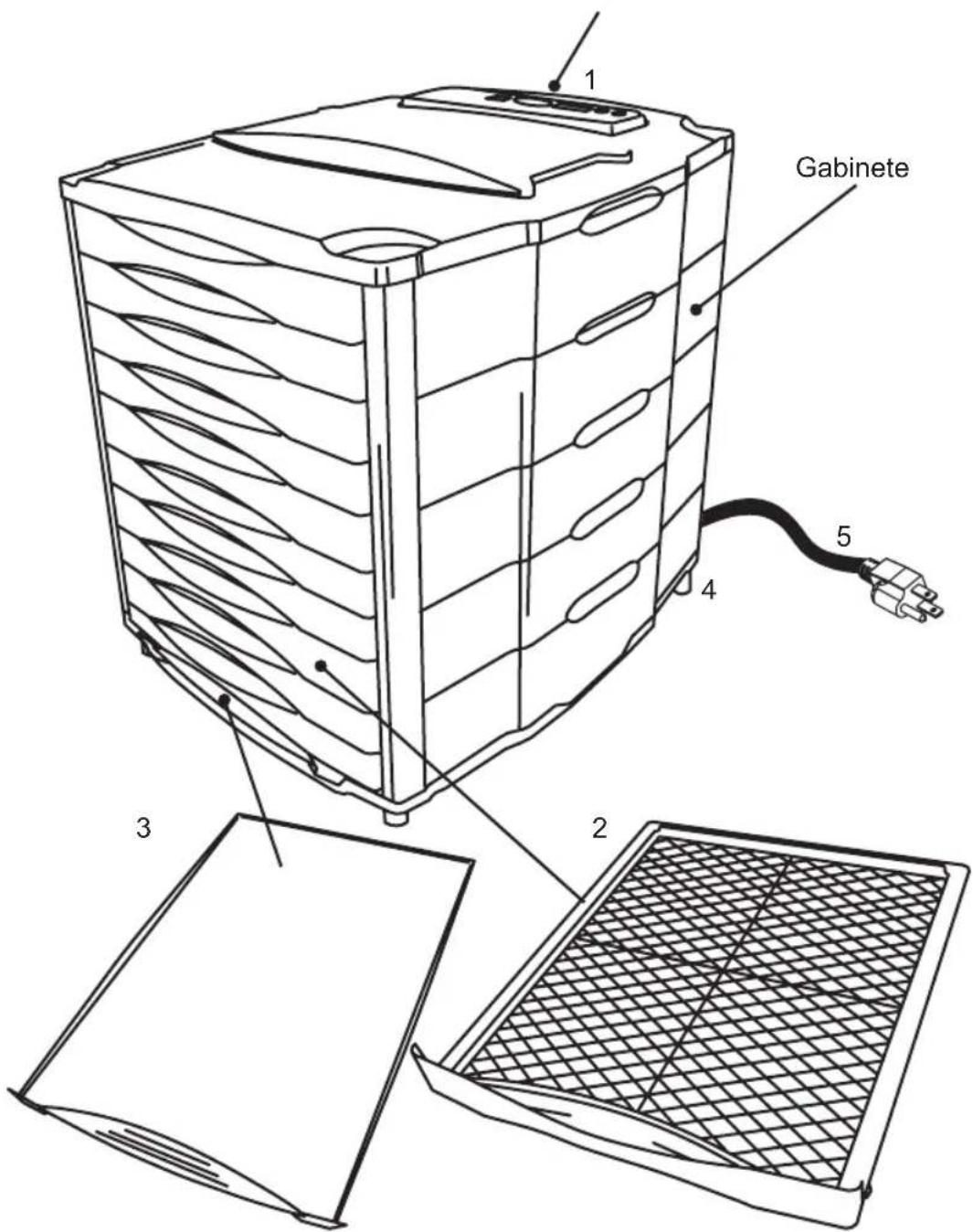
text_image
1 Gabinete 4 5 3 2text_image
WESTON DEHYDRATOR HERBS 05-125°F VEGETABLES 120-135°F FRUIT + FRUIT ROLLS 135-145°F MENTS, FISH + JERKY 145-155°F SPINYLAR GOURST TEMPERATURE - SETTING/ RESET + DIGITAL DISPLAY TIME START/ STOP POWER ON/OFF PREPARATION OF FOODS • Keep your food to be able to use the food in your own room, when we need about should be necessary from the "FISH" ring. • Keep your food to be able to use the food in your own room, when we need about should be necessary from the "FISH" ring. • Keep your food to be able to use the food in your own room, when we need about should be necessary from the "FISH" ring. • Keep your food to be able to use the food in your own room, when we need about should be necessary from the "FISH" ring. • Keep your food to be allowed to use the food in your own room, when we need about should be necessary from the "FISH" ring. • Keep your food to be allowed to use the food in your own room, when we need about should be necessary from the "FISH" ring. • Keep your food to be allowed to use the food in your own room, when we need about should be necessary from the "FISH" ring. • Keep your food to be allowed to use the food in your Own or Use of the food. • Keep your food to be allowed to use the food in your Own or Use of the food. • Keep your food to be allowed to use the food in your Own or Use of the food. • Keep your food to be allowed to use the food in your Own or Use of the food. • Keep your food to be allowed to use the food in your Own or Use of the food. • Keep your food to be allowed to use the food in your Own or Use of the Food. • Keep your food to be allowed to use the food in your Own or Use of the Food. • Keep your food to be allowed to use the food in your Own or Use of the Food. • Keep your food to be allowed to use the food in your Own or Use of the Food. • Keep your food to be allowed to use the food in your Own or Use of the Food. • Keep your food to be allowed to use the food in your Own or Use of theFood. • Keep your food to be allowed to use the food in your Own or Use of the Food. • Keep your food to be allowed to use the food in your Own or Use of the Food. • Keep your food to be allowed to use the food in your Own or Use of the Food. • Keep your food to be allowed to use the food in your Own or Use of the Food. • Keep your food to be allowed to use the food in your Own or Use of the Food. • Keep your food to be allowed to use the food in your Own or Use of the Food. • Keep your food to be allowed to use the food in your Own or Use of the Food. • Keep your food to be allowed to use the food in your Own or Use of the Food. • Keep your food to be allowed to use the food in your Own or Use of the Food. • Keep your food to be allowed to use the food in your Own or Use of the Food. • Keep your food to be allowed to use the food in your Own or Use of the Food. • Keep your food to be allowed to use the food in your Own or Use of the Food. • Keep your food to be allowed to use the food in your Own or Use of the Food. • Keep your food to be allowed to use the food in your Own or Use of the Food. • Keep your food to be allowed to use the food in your Own or Use of the Food. • Keep your food to be allowed to use the food in your Own or Use of the Food. • Keep your food to be allowed to use the food in your Own or Use of the Food. • Keep your food to be allowed to use the food in your Own/ other Food. • Keep your food to be allowed to use the food in your Own/ other Food. • Keep your food to be allowed to use the food in your Own/ other Food. • Keep your food to be allowed to use the food in your Own/ other Food. • Keep your food to be allowed to use the food in your Own/ other Food. • Keep your food to be allowed to use the food in your Own/ other Food. •Keep your food to be allowed to use the food in your Own/ other Food. •Keep your food to be allowed to use the food in your Own/ other Food. •Keep your food to be allowed to use the food in your Own/ other Food. •Keep your food to be allowed to use the food in your Own/ other Food. •Keep your food to be allowed to use the food in your Own/ other Food. •Keep your food to be allowing out the Food. •Keep your food to be allowing out the Food. •Keep your food to be allowing out the Food. •Keep your food to be allowing out the Food. •Keep your food to be allowing out the Food. •Keep your food to be allowing out the Food. •Keep your food to be allowing out the Food. •Keep your food to be allowing out the Food. •Keep your food to be allowing out the Food. •Keep your food to be allowing out theFood. •Keep your food to be allowing out the Food. •Keep your food to be allowing out the Food. •Keep your food to be allowing out the Food. •Keep your food to be allowing out the Food. •Keep your food to be allowing out the Food. •Keep your food to be allowing out the Food. •Keep your food to be allowing out the Food. •Keep your food to be allowing out the Food. •Keep Your Food is a good thing that you want you for this. We want you for this. We want you for this. We want you for this. We want you for this. We want you for this. We want you for this. We want you for this. We want you for this. We want you for this. We want you for this. We want you for this. We want you for this. We want you for this. We want you for this. We want you for this. We want you for this. We want you for it. WE want you for this. We want you for this. We want you for this. We want you for this. We want you for this. We want you for this. We want you for this. We want you for this. We want you for this. We want you for this. We want you for this. WE want you for this. We want you for this. We want you for this. We want you for this. We want you for this. We want you for this. We want you for this. We want you for this. WE want you for this. We want you for this. We want you for this. We want you for this. We want you for this. We want you for this. WE want you for this. We want you for this. We want you for this. We want you for this. We want you for this. WE want you for this. We want you for this. We want you for this. We want you for this. WE want you for this. We want you for this. We want you for this. We want you for this. WE want you for this. We want you for this. We want you for this. WE want you for this. We want you for this. We want you for this. WE want you for this. We want you for this. We want you for this. WE want you for this. We want you for this. We want you for this. WE want you for this. We want you for this. We want you for this. WE want you for this. WE want you for this. WE want you for this. WE want you for this. WE want you for this. WE want you for this. WE want you for this. WE want you for this. WE want you for this. WE want you for this. WE want you for this. WE want you for this. WE want you for this. WE want you for this. WE want you for this. WE want you for this. WE want you for this. WE want you are an exception: We want you are an exception: We want you are an exception: We want you are an exception: We want you are an exception: We want you are an exception: We want you are an exception: We want you are an exception: We want you are an exception: We want you are an exception: We want you are an exception: We want you are an exception: We want you are an exception: We want you are an exception: We want you are an exception: We wantyou are an exception: We wantyou are an exception: We wantyou are an exception: We wantyou are an exception: We wantyou are an exception: We wantyou are an exception: We wantyou are an exception: We wantyou are an exception: We wantyou are an exception: We wantyou are an exception: We wantyou are an exception: We wantyou are an exception: We wantyou are an exception: We wantyou are an exception: We wantyou arean exception: We wantyou arean exception: We wantyou arean exception: We wantyou arean exception: We wantyou arean exception: We wantyou arean exception: We wantyou arean exception: We wantyou arean exception: We wantyou arean exception: We wantyou arean exception: We wantyou arean exception: We wantyou arean exception: We wantyou arean exception: We wantyou arean exception: We wantyou arean exception:natural_image
Black-and-white photo of a modern kitchen appliance with stacked glass shelves and fresh produce on the floor (no visible text or symbols)UN AÑO DE GARANTÍA WESTON LIMITADA
text_image
WESTON RECONNECT WITH REAL FOODDÉSHYDRATEUR MODÉLE
10 PLATEAUX DIGITAL
28-1001-W
PARCE QUE NOS PRODUITS BÉNÉFICIENT DE PERFECTIONNEMENTS CONSTANTS APPORTÉS EN USINE, LES ILLUSTRATIONS PRÉSENTÉES PEUVENT ÊTRE LÉGÈREMENT DIFFÉRENTES DU PRODUIT REÇU.
PRÉCAUTIONS IMPORTANTES
text_image
WESTON DEHYDRATOR HERBS 95-125°F VEGETABLES 120-135°F FRUIT • FRUIT ROLLS 135-145°F MEATS, FISH • JERKY 145-155°F SEPTING/ RESET + DIGITAL DISPLAY TEMPERATURE DIGITAL DISPLAY TIMER START/ STOP POWER ON/OFF PREPARATION OF FOODS • Need first to be made in a box of beer. Any or more white should be my own free. Only can be used. • Don't want the best offer on the ring. • Don't want the best offer on the ring. • Don't want the best offer on the ring. • Don't want the best offer on the ring. • Don't want the best offer on the ring. • Don't want the best offer on the ring. • Don't want the best offer on the ring. • Don't want the best offer on the ring. • Don't want the best offer on the ring. • Don't want the best offer on the ring.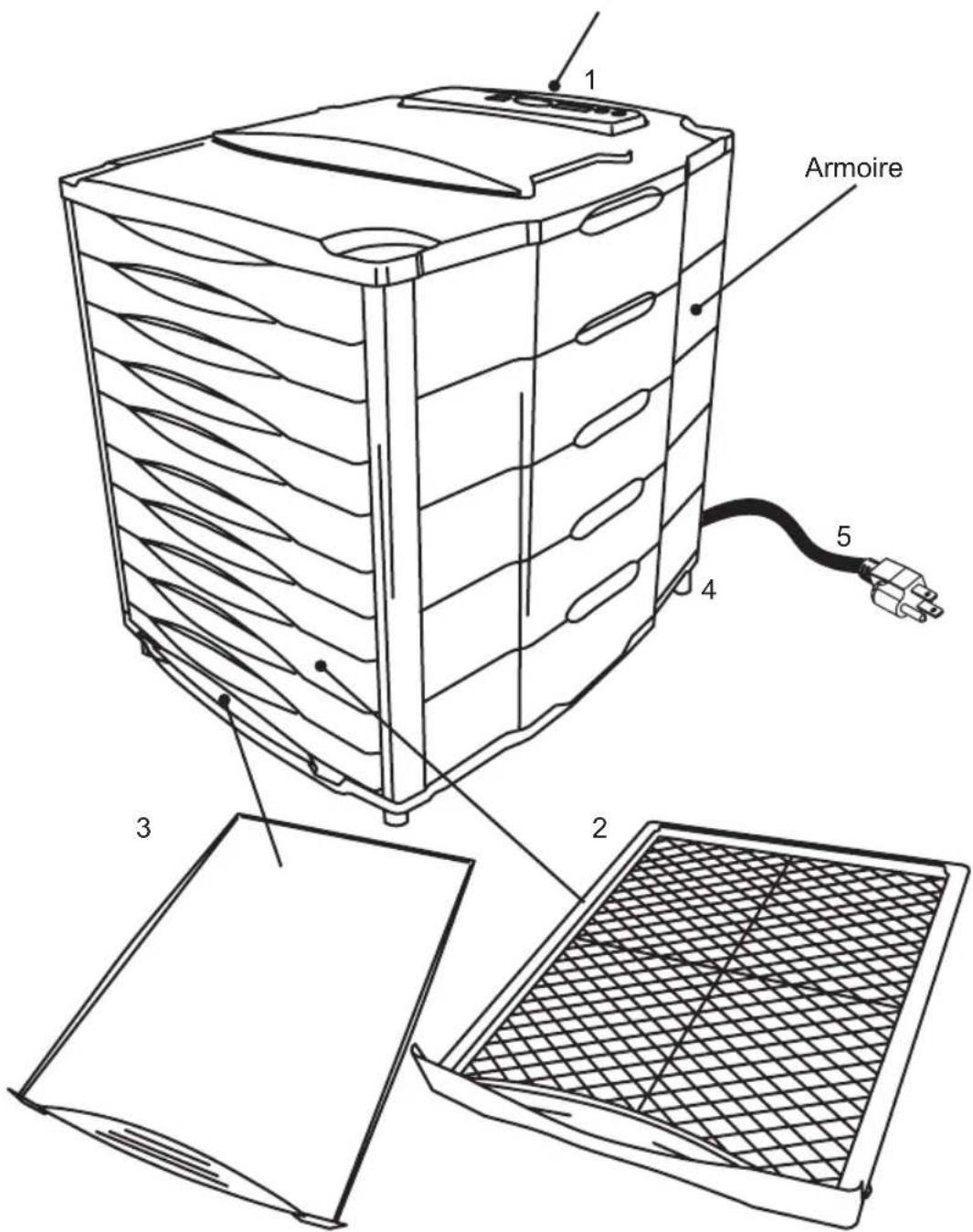
text_image
1 Armoire 4 5 3 2DESCRIPTION DE LA PIÈCE
| NUMÉRO DE SCHÉMA DESCRIPTION DE LA PIÈCE NUMÉRO DE LA PIÈCE | ||
| 1 PANNEAU DE COMMANDE S.O. | ||
| 2 TIROIR 28-1003 | ||
| 3 CUVETTE D'ÉGOUTTAGE 28-1005 | ||
| 4 PIED (4) 28-1004 | ||
| 5 CORDON D'ALIMENTATION S.O. | ||
text_image
WESTON DEHYDRATOR HERBS 05-125°F VEGETABLES 120-135°F FRUIT + FRUIT BOLLS 135-145°F MENTS, FISH + JERKY 145-165°F IDENTIAL DISPLAY TEMPERATURE - NETTADO/ RESET + DIGITAL DISPLAY TIMER START/ STOP POWER ON/OFF PREPARATION OF FOODS • Important: Food & Litter, or Departmental reductions and servings priority using the Dehydrator. • Use a suitable food item in your kitchen. Big NO. has to be used in the food and take place. Apply the Dehydrator Citation of 20% of food is used during preparation. This package for all other households will use the following food items are used in the Food & Health Products category (e.g. food products, fruit, fish, meat, etc.) and use your kitchen. • Please use the Dehydrator with your own. • NOT BE USED FOR THE DEHYDRATOR button.PRÉTRAITEMENT DES ALIMENTS
natural_image
Black-and-white photo of a modern kitchen appliance with stacked glass shelves and fresh produce on the floor (no visible text or symbols)UN AN DE GARANTIE WESTON LIMITÉE
natural_image
Black-and-white photo of a modern kitchen appliance with stacked glass shelves and fresh produce on the floor (no visible text or symbols)ATTENTION!
PLEASE INSPECT THIS PACKAGE THOROUGHLY FOR MISSING PARTS OR ANY PRODUCT DAMAGE. IF YOUR PRODUCT CONTAINS SHIPPING DAMAGE, PLEASE CONTACT RETAILER FOR ASSISTANCE.
For all other questions regarding product usage, missing parts, product damage, difficulty or warranty activation, please contact the Weston Brands Customer Service Team: 8:00 am to 5:00 pm ET, Monday thru Friday
CustomerService@WestonSupply.com
U.S. Residents Customer Service Line: 1-800-814-4895 (Outside U.S. Call: 1-216-901-6801)
Weston Brands, LLC, 261 Yadkin Rd., Southern Pines, NC 28387
WestonSupply.com
Please DO NOT return this item to the retailer before contacting Weston Brands Customer Service.
SAVE THESE INSTRUCTIONS!
Refer to them often and use them to instruct others.
ATTENTION!
VEUILLEZ INSPECTER CET EMBALLAGE AVEC SOIN POUR Y DÉTECTER
TOUTE PIÈCE MANQUANTE OU ENDOMMAGÉE.
SI DES PIÈCES ONT ÉTÉ ENDOMMAGÉES PENDANT LE TRANSPORT, VEUILLEZ
COMMUNIQUER AVEC LE DÉTAILLANT POUR OBTENIR DE L'AIDE.
CustomerService@WestonSupply.com
Weston Brands, LLC, 261 Yadkin Rd., Southern Pines, NC 28387
WestonSupply.com
CustomerService@WestonSupply.com
Weston Brands, LLC, 261 Yadkin Rd., Southern Pines, NC 28387
WestonSupply.com