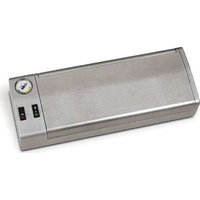
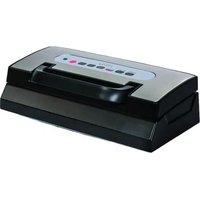
SBSG 30 - Vacuum packaging machines RGV - Free user manual and instructions
Find the device manual for free SBSG 30 RGV in PDF.


| Brand | RGV |
| Model | SBSG 30 |
| Product type | Vacuum packaging machine |
| Power supply | 220-240 V ~ 50/60 Hz |
| Max power consumption | 190 W |
| Maximum vacuum level | -850 mbar |
| Suction capacity | 18 l/min |
| Sealing bar length | 32 cm (for bags up to 30 cm) |
| Vacuum gauge | Yes, professional |
| Operation | Continuous, no break for cooling |
| Automatic lid opening | Yes, by solenoid valve |
| Air inlet for container connection | Yes |
| Approximate dimensions (L x W x H) | 400 x 200 x 120 mm |
| Approximate weight | 3.5 kg |
| Noise level | Less than 60 dBA |
| Compatible packaging types | RGV embossed bags, rolls, special containers |
| Thermal protection | Yes, automatic shut-off in case of overheating |
| Warranty | 2 years for individuals, 1 year for professionals |
| Usage | Domestic |
Frequently Asked Questions - SBSG 30 RGV
User questions about SBSG 30 RGV
0 question about this device. Answer the ones you know or ask your own.
Ask a new question about this device
Download the instructions for your Vacuum packaging machines in PDF format for free! Find your manual SBSG 30 - RGV and take your electronic device back in hand. On this page are published all the documents necessary for the use of your device. SBSG 30 by RGV.
USER MANUAL SBSG 30 RGV
Read all instructions and save for future reference
NOTICE D'UTILISATION ET ENTRETIEN - INSTRUCTIONS D'ORIGINE
natural_image
Illustration of an open book with a warning triangle and exclamation mark (no text or symbols)
Read all instructions and save for future reference

Thank you for purchasing the RGV vacuum packer appliance.
RGV vacuum packers use the latest technology that combines the performance of a professional machine (vacuum level up to -850 mbar, working continuously without interruptions for cooling, electronic control of the power supplied to the sealing bar) with reduced electrical consumption, in compliance with the latest standards on the performance of household electrical appliances.
RGV energy saving technology allows the motor to supply more power with electrical consumption reduced by 50% compared to normal vacuum packers, and to control the quantity of heat supplied to the sealing bar independent of the voltage mains to always have perfect sealing.
This appliance can be used by children aged from 8 years and above and persons with reduced physical, sensory or mental capabilities or lack of experience and knowledge if they have been given supervision or instruction concerning use of the appliance in a safe way and understand the hazards involved
RGV follows a policy of continuous research, evolution and change of its products in the legislative, technical, ecological and business field. Any deformities of the product compared to this instructions booklet are the result of this process.
MANUFACTURER'S RESPONSABILITY
The manufacturer cannot be held liable for problems, breakages, accidents, etc. due to lack of know-how (or however non-application) of the specifications contained in this manual.
The same can be said for the implementation of changes, variants and/or installation of accessories unauthorised in advance.
This appliance is only intended for household use, unless otherwise expressly indicated.
WARNINGS
- Pay attention, during machine operation, to the presence of heating elements on the heating bar.
- Use embossed bags to store vacuum packed food, the same type and brand as those supplied; operation of the appliance is not guaranteed with other types and brands of bag.
- Do not place the appliance in water and do not use it if the plug or the cable attached to the plug are wet.
- Every type of intervention on the appliance, including the cleaning operations must be carried out with the plug cable disconnected from the power socket.
- Vacuum packing does not replace other preservation procedures, but can be used alongside them.
- Perishable foods however require refrigeration or freezing to avoid deterioration; vacuum packing lengthens their preservation time and maintains their organoleptic qualities intact.
- The pre-packaged products must be in any case consumed with the expiry date indicated on the packaging.
- A higher vacuum level indicates less presence of oxygen, and therefore the possibility of better preservation.
- Liquids must be refrigerated before being packaged in vacuum pack bags to prevent them leaking or suction in the vacuum chamber.
- Powder products and grains must be covered with a napkin before being vacuum packed to avoid them being sucked into the vacuum chamber, which would obstruct the valve or damage the pump.
- Containers not suitable for vacuum packing preservation can implode due to the effect of the air pressure, causing damage and injury; for freezer preservation, only use the specific tempered glass jars for freezers.
- The vacuum pump and the sealing system are equipped with thermal protection; in the event of overheating, the machine automatically stops and can start working again only after a few minutes of cooling.
- The automatic operating settings were created at the time of manufacture to obtain the best performance of the machine, in terms of safety and reliability. If in particular cases, different performance is required to those pre-set, you need to proceed in manual mode.
- If you don't wait the minimum time required between the connection to the mains and the start of the work cycle, you need to disconnect and re-insert the plug in the socket and wait the minimum time required (15 seconds).
- When using with containers, you are recommended to pay utmost attention to heating of the sealing bar, to avoid burns.
- It is preferred, on use with containers, to pass to manual mode when the vacuum gauge hand reaches the yellow zone limit.
- If worn, the cable should be replaced by a specialist technician with cable type HAR H05VV-F or however equal to the cable supplied.
- Practice and experience will allow you to obtain the best results from the appliance with every different type of food.
- For its use, pay attention the appliance is on a flat and stable surface.
- To work, the appliance must be connected to a power socket that is always easily accessible during use.
- Acoustic level under 60 dBA.
- Minors must not play with the appliance.
- Cleaning and maintenance of the appliance must not be carried out by unsupervised minors.
INFORMATION ON VACUUM PACK PRESERVATION
VACUUM PACKING: It means removing the air from a container or bag, to preserve the content from harmful effects caused by oxygen, such as oxidation or development of mould and bacteria. All the objects, in contact with the air, are subject to alterations; these alterations are particularly obvious in food. The air and humidity in foodstuffs cause mould and micro-organisms to develop, a loss of flavour and smell and colour alterations. Preservations systems, such as refrigeration, freezing and drying, have the purpose of reducing and preventing such alterations; vacuum packing, thanks to air extraction, considerably lengthens the preservation period of the foodstuff whether fresh or preserved. To make the vacuum time efficient and lasting, the container and the bag must be correctly sealed.
VACUUM PACKING PRESEVATION Preservation, especially of foodstuffs, takes place using particular humidity and temperature conditions (for example in the press, refrigerator or freezer); vacuum packing, in addition to the normal preservation methods, considerably lengthens the time these products can be preserved. Vacuum packing preservation also enables flavour, smell, colour and nutritional quality of the food to be unchanged.
WHY PRESERVE WITH VACUUM PACKING?
BECAUSE IT SAVES YOU MONEY: You can purchase larger quantities of products and in the periods most indicated, keeping them fresh and intact thanks to vacuum packing!
BECAUSE YOU AVOID WASTE: The portions of excess food will not go to waste, but can be kept and used later! BECAUSE IT SAVES YOU TIME: You can conveniently cook your meals, preserve them in vacuum packs and use them as you wish, simply by reheating them!
BECAUSE IT'S MORE HYGIENIC: Vacuum packaging prevents the development of mould, bacteria, micro-organisms and allows you to use the refrigerator and the freezer, avoiding the risk of contamination among foodstuffs and the dispersion of odours!
BECAUSE IT IS SIMPLE: With RGV appliances, everyone can obtain professional quality vacuum packing at home, using the most suitable appliance for your needs, and a complete series of accessories for any type of preservation. Double layer vacuum packing bags, containers in polycarbonate also for oven, microwave and freezer use, and dishwasher safe, universal round and rectangular lids for use with containers, bowls, jars and saucepans for normal household use, small, re-usable lids for glass jars!
WARNINGS
The preservation time of the food greatly depends on the initial conditions of the food.
Vacuum packing does not replace other preservation systems.
Food that requires appropriate temperature conditions must be kept in the fridge or freezer even if vacuum packed.
All pre-packaged products must however be consumed before the expiry date indicated on the packaging.
Some types of fruit and vegetables must be peeled or blanched and frozen before vacuum packing.
| Food preservation times (in days) | in normal vacuum conditions | |
| At room temperature (+20° / + 25°C) | ||
| Bread 2 8 | ||
| Dry biscuits 120 360 | ||
| Dry pasta/rice 180 360 | ||
| Dry fruit 120 360 | ||
| Flour /Tea/Coffee 120 360 | ||
| Refrigerated at +3° / +5°C | ||
| Raw meat 2 - 3 6 - 9 | ||
| Fresh fish 1 - 3 4 - 6 | ||
| Cold cuts 4 - 6 20 - 25 | ||
| Soft cheese 5 - 7 14 - 20 | ||
| Hard and mature cheese 15 - 20 30 - 60 | ||
| Parmesan/Grana Padano | 20 | 60 |
| Raw vegetables | 1 - 5 7 - 20 | |
| Raw fruit | 5 - 10 | 14 - 20 |
| Vegetable purée /Minestrone | 2 - 3 8 - 15 | |
| Pasta/Risotto /Lasagne | 2 - 3 6 - 10 | |
| Cooked meat | 3 - 5 10 - 15 | |
| Desserts filled with cream or fruit | 2 - 3 | 6 - 10 |
| Other desserts | 5 20 | |
| Frozen at -18° / -20°C | ||
| Meat | 120 480 | |
| Fish | 90 | 360 |
| Fruit and vegetables | 300 | 720 |
| ATTENTIONThe preservation times are approximate and depend on the initial conditions of the products and the preparation times. | ||

INSTALLATION
Install the product on a flat surface that takes into consideration the dimensions of the appliance, levelled, smooth, dry, robust, with the height off the ground of approximately 80 cm and with the useful space necessary around it for use and maintenance.
Environmental conditions:
Minimum temperature +10° - Maximum temperature + 30°
Minimum humidity 30% - Maximum humidity 80%
GENERAL USE MANUAL
Having inserted the power supply plug in an adequate socket, wait 15 seconds before starting operations.
The appliance is set and guaranteed for use with RGV branded embossed bags, the functionalities of the appliance are not guaranteed in the event of use with different bag types or brands.
The vacuum packers with external suction are not suitable for use with products with a high rate of humidity. Any suction of liquids can damage the appliance (pump, electronic data sheet and gaskets of the vacuum chamber); such damage is considered improper use of the machine and is not covered by warranty.
The appliance must be kept in a dry place at a temperature of between +10° and +30°.
The bags, especially if the packaging is open, must be kept in a dry place at a temperature of between +10° and +30°.
GENERAL SETTINGS:
The factory settings include
10- Electronically set sealing power of 5 time/power units, suitable for the bags supplied, with a thickness of 95/105 micron.
11- The sealing power set can be modified using electronic programming using the appliance buttons.
12- The appliance is prepared for automatic use of the vacuum/sealing cycle, simply by pressing the start button, without any other use of the buttons.
13- Pressing the start button during functioning of the appliance terminates all other operations, stopping both the pump and the sealing bar.
14- Electronic programming enables manual functioning passage.
15- In manual operating mode, you need to press and release the start button to start the air suction operation and press and release the sealing button to start the sealing operation.
16- ATTENTION: if the sealing button is pressed during the sealing operation, the sealing operation is interrupted.
17- The appliance is prepared for a standby time of 3 seconds between reaching the vacuum level set and the start of the sealing process (super vacuum function).
18- The appliance is prepared for a standby time of 7 seconds at the end of the sealing operation to obtain better sealing quality.
NOTE:
The optimal sealing time can vary based on the type of bag used and the temperature and humidity conditions; you are advised to carry out any tests checking the result.
Reduced sealing power will speed up the duration of the cycle and will enable longer working without the thermal protection activating.
IMPORTANT
In the event of long periods of non-use and/or low temperatures in the work or storage environment of the appliance and the bags, before carrying out the packing procedure, you are advised to keep the pump on for at least a minute and to carry out a vacuum/sealing cycle with a bag, with the cover closed. This operation allows removal of any residual humidity in the sealing zone and establishes the temperature of pump operation.
VACUUM PACKING IN BAG
- Prepare the product by eliminating any roughness that could perforate the bag.
- Insert the product to preserve in a bag suitable for preservation of vacuum packed food, leaving at least 5 cm of free space from the bag opening;
- Lift the cover of the machine and rest the well-laid bag on the sealing bar, taking care to insert the open side of the bag in the vacuum chamber.
- Insert the cable plug in an electricity socket, start the vacuum pump by pressing the switch (1) and exerting light pressure with your hands on the cover to create a first negative pressure in the vacuum chamber; you don't need to press until the end of the operation, but only until the bag starts to stick to the product.
- At the end of the sealing operation, the machine stops. The cover will automatically open.
- Before placing the bag back for preservation, you should check the good quality of the sealing, i.e. the absence of folds or impurities that could enable air passage.
VACUUM PACKING IN ROLL
SEALING OPERATION WITHOUT VACUUM
- Lift the cover of the machine and rest the well-laid bag or portion of roll on the sealing bar, taking care NOT to insert the open side of the bag in the vacuum chamber.
- Start the vacuum pump pressing the switch (1.) and exert light pressure with your hands on the cover to create a first negative pressure in the vacuum chamber.
- At the end of the sealing operation, the machine stops. Open the cover.
- Cut the sealed roll to the desired length and proceed to vacuum pack as described in the previous chapter
THE VACUUM LEVEL
RGV vacuum packers come with a vacuum sensor installed on the electronic board that detects reaching the vacuum level obtained on the bag or container, controlling the start of the sealing function (automatic operation). Certain models are also equipped with a device that enables the user to check the vacuum level created: the red zone of the vacuum gauge indicates the optimal vacuum level has been reached. It is however possible to delay the start of the sealing operation to obtain a greater vacuum level, i.e. not damage the machine in any way.
The vacuum level reachable by the machine is conditioned by the equality and shape of the food (or objects) in the bag. Some food (fish, tomatoes, etc.) contain liquids that when compressed leak and can be sucked in causing damage to the machine, and food stuffs that due to their poor consistency can become crushed or damaged by an excessive vacuum level; for this food, you are advised to check the level of adherence of the bag and proceed to welding before any crushing.
Professional vacuum gauge.
Sealing bar 32 cm (for 30 cm bags).
Continuous functioning.
Cover opening solenoid valve;
Air intake for container attachment.
Absorbed maximum power: 190W
Vacuum maximum level: -850 mbar
Suction capacity: 18 l/min
Included in the packaging, unless otherwise specified on the packaging:
Attachment for containers, 20 bags 20x30 cm
Models: SBS 30 – SBSG 30
Legend
- Vacuum pump start switch
- Sealing switch 9. Guide
- Vuotometro
- Cover 11. Tube
- Vacuum chamber
- Sealing bar
- Air suction socket
- Attachment for containers
- Bar press
USE MANUAL
- Insert the power cable plug in an electricity socket corresponding to the voltage planned and wait 15 seconds, the appliance is powered and ready to work.
Pressing the switch (1.) the vacuum pump starts air suction: pressing the switch again, the machine stops working.
- The appliance will automatically start the sealing cycle once the preset vacuum level has been reached; the machine will automatically stop working after an interval of programmed time, or when the start switch is pressed.
- ATTENTION: if the appliance has already begun automatic sealing, pressing the switch (2.) the sealing function is interrupted and the machine stops after the cooling time set.
CHANGING SETTINGS
The settings programmed will stay in the memory even after the machine is switched off
SEALING TIME
To change the sealing power set, proceed as follows:
- Connect the appliance to the electrical mains
- Press and release the sealing button (2) 10 times within 10 seconds;
- Press and release the running button (1) as many times as the desired time/power.
- If the running switch is pressed for the first time (1) and the appliance starts the suction function, switch off the machine and repeat the programming procedure.
- Wait 10 seconds without pressing the buttons or disconnect the appliance from the electrical mains, (by doing so, the settings are saved)
ATTENTION!! Do not set more than 9 power units, the Teflon belt on the sealing bar could get damaged beyond that threshold.
- Disconnect the machine from the electrical mains.
- Press the buttons and keep them pressed.
- Insert the plug in the electricity socket.
- Wait 5 seconds before releasing the buttons.
PASS FROM AUTOMATIC TO MANUAL FUNCTIONING:
- Disconnect the machine from the electrical mains.
- Press the start button and keep it pressed.
- Insert the plug in the electricity socket.
- Wait 5 seconds before releasing the button.
PASS FROM MANUAL TO AUTOMATIC FUNCTIONING:
- Disconnect the machine from the electrical mains.
- Press the sealing button and keep it pressed.
- Insert the plug in the electricity socket.
- Wait 5 seconds before releasing the button.
VACUUM PACKING IN BAG
- Insert the product to preserve in a bag suitable for preservation of vacuum packed food, leaving at least 5 cm of free space from the bag opening;
- Lift the cover of the machine (4.) and rest the well-laid bag on the sealing bar (7.), on the left of the guide (9.), taking care to insert the open side of the bag in the vacuum chamber (6.).
- Close the cover
- Insert the power cable in the electricity socket which is easily accessible, and wait at least 15 seconds.
- Start the pump by pressing the switch (1) and exerting light pressure with your hands on the cover (4.) to create a first negative pressure in the vacuum chamber; you don't need to press until the end of the operation, but only until the bag starts to stick to the product.
- The vacuum gauge indicates the vacuum level (negative pressure) created by the vacuum pump; this level can be considered a precise measurement at 100% of the vacuum level inside the bag or the container because it is influenced by the dimensions and the shape of the product inserted. During machine operation, the hand will move from the yellow zone (vacuum minimum level) to the red zone (maximum level).
- The vacuum gauge hand has initial strong oscillations, due to air extraction; when the quantity of air in the tubes decrease the hand stabilises.
- The appliance will automatically start the sealing cycle once the preset vacuum level is reached.
- At the end of the sealing operation, the machine automatically stops and you can lift the cover and remove the sealed bag.
- Before placing the bag back for preservation, you should check the good quality of the sealing, i.e. the absence of folds or impurities that could enable air passage.
UNDERSTAND AND RESOLVE DOUBTS ON CORRECT USE OF THE APPLIANCES FOR VACUUM PACKING
The appliance is tested at the time of manufacturing with at least 3 vacuum/sealing cycles. If you are having difficulty during use, doubts or problems, you can proceed with some tests to check the efficiency of the product.
Auto-diagnosis tests
Internal component operation:
5- With the cover open, press the start button and close the air press with a finger.
6- If the hand on the vacuum gauge reaches red and sealing automatically starts, internal operation is correct.
7- If the hand on the vacuum gauge reaches red but sealing does not automatically start, you need to set the machine for automatic operation and try again.
8- If the hand on the vacuum gauge does not reach red the vacuum pump is damaged or there is an air leak in the internal tubes circuit - contact a support centre for repair.
Operation of the cover and gaskets on the vacuum chamber:
5- Close the cover on the machine (without inserting the bag), press the start button and exert light pressure on the cover to start the automatic cycle.
6- If the hand on the vacuum gauge reaches red and sealing automatically starts, machine operation is correct.
7- If the hand on the vacuum gauge reaches red but sealing does not automatically start, you need to set the machine for automatic operation and try again.
8- If the hand on the vacuum gauge does not reach red you need to check the chamber gaskets of the vacuum (clean the gaskets or replace them) and try again.
Bag insertion test:
6- Lift the cover.
7- Position the open end of the empty bag in the chamber of the vacuum, between the gaskets in the vacuum chamber. (image 1)
8- Lower the cover, press the start button (1.) and exert light pressure on the cover to start the automatic cycle.
9- If the hand on the vacuum gauge reaches red and sealing automatically starts, machine operation is correct.
10- If the hand on the vacuum gauge reaches red but sealing does not automatically start, you need to set the machine for automatic operation and try again.
Using these tests, you can check machine operation and you get correct insertion of the bag in the vacuum chamber.
Correct packaging is only obtained if enough free space is left between the product and the machine (approx. 5 cm. are usually enough) provided the bag can be inserted well laid between the gaskets of the vacuum chamber, without creating folds that could create air leaks, reducing the vacuum level and the quality of sealing.
The machine does not start:
2- Check you have correctly inserted the plug in the electricity socket and the press is powered.
The bag is not well sealed/air is entering the bag:
11- During the winter period, and in the presence of extreme temperature changes, the sealing bar can fill with humidity. On first start-up of the cold machine you should execute a completed vacuum/sealing cycle with the cover closed (also without a bag) to reset the machine and stabilise the temperature and humidity conditions. To avoid problems also on first use, the appliance must be kept in a dry place at a temperature of between +10° and +30°.
12- The bags are composed of an outer layer in nylon to protect against air intake; the nylon tends to absorb humidity especially in the presence of temperature changes; the humidity absorbed prevents correct sealing: to solve the problem, the bags must be kept in a dry place at at temperature between +10° and +30°.
13- The humidity absorbed by the outer layer of the bag can be eliminated by sealing the bag twice.
14- Check you have left sufficient free space between the product to pack and the opening of the bag; a limited space creates folds and bends to prevent correct sealing and limits the vacuum level reachable.
15- Check you have cleaned the opening of the bag near the sealing point; any impurities deriving from passage of the product to package, prevents correct sealing.
16- Check you have removed all possible roughness that could perforate the bag; the machines create a high vacuum level with resulting adhesion of the bag to the product, any point or roughness can create micro-pores in the bag to let air in.
17- Humid products can cause liquid to rise towards the opening of the bag, damaging sealing; check you have dried the products to package or use a double bag; insert the product in a first bag, fold the mould of the bag a few times and place it in a second bag with the opening folded of the first turned towards the bottom of the second. You can execute the vacuum function and any residual liquids will stay in the first bag without passing into the second, as such obtaining efficient sealing.
18- When you use rolls, the first sealing must be carried out by positioning the mouth on the roll on the sealing bar and not in the vacuum chamber; the machine seals correctly only if the cover exerts correct pressure on the sealing bar. Anticipating sealing before having a sufficient vacuum level can create channels with air passage and make sealing inefficient. You are advised to carry out a complete automatic vacuum/sealing cycle.
19- Sealing only function: position the opening of the bag on the sealing bar and not in the vacuum chamber; the machine seals correctly only if the cover exerts correct pressure on the sealing bar. Anticipating sealing before having a sufficient vacuum level can create channels with air passage and make sealing inefficient. You are advised to carry out a complete automatic vacuum/sealing cycle.
20- If air enters the bag during the sealing phase and after a correct vacuum/sealing cycle, you need to replace the bag which is probably damaged.
The machine does not create a vacuum in the bag:
6- Check you have correctly positioned the opening of the bag between the seals of the vacuum chamber.
7- Proceed with auto-diagnosis tests to ensure the machine is working correctly.
8- The machine works correctly with RGV branded, embossed type bags. Different bags may not work adequately; check you have used the correct bags.
9- During the summer period (when temperatures are higher) or in the event of prolonged use, the residual heat on the sealing bar can create pre-sealing of the bag to prevent the machine from correctly sucking: decrease the sealing power using the electronic programming to decrease the sealing time, wait a few minutes for the sealing bar to cool and continue to work with a lower sealing power.
10- Check the seals on the vacuum chamber; in the event of slight liquid suction the seals can harden and get damaged; in this case you need to change the seals.
The machine does not automatically seal:
5- Proceed with auto-diagnosis tests to ensure the machine is working correctly.
6- Start a vacuum cycle and manually seal to check the sealing bar is working properly.
7- Check the electronic settings as described in the paragraph "Reset the factory parameters" or adjust the setting on automatic operation as described in the paragraph "Pass from manual to automatic operation".
8- Check you have left sufficient free space between the product to pack and the opening of the bag; a limited space creates folds and bends on the opening of the bag that limits the vacuum level reachable and prevent the vacuum sensor from starting automatic sealing.
The machine does not reach a convenient vacuum level:
7- Check you have correctly positioned the opening of the bag between the seals of the vacuum chamber. (image 1)
8- Proceed with auto-diagnosis tests to ensure the machine is working correctly
9- The machine works correctly with RGV branded, embossed type bags. Different bags may not work adequately; check you have used the correct bags.
10- Check you have removed all possible roughness that could perforate the bag; the machines create a high vacuum level with resulting adhesion of the bag to the product, any point or roughness can create micro-pores in the bag to let air in.
11- Check you have left sufficient free space between the product to pack and the opening of the bag; a limited space creates folds and bends on the opening of the bag that limits the vacuum level reachable.
12- Check the seals on the vacuum chamber; in the event of slight liquid suction the seals can harden and get damaged; in this case you need to change the seals.

CONDITIONS DE GARANTIE
The appliance is prepared for use RGV embossed bags of the same type as furnished with the machine, if used with different or other label bags the machine could not have same performances.
This appliance is not intended for use with high grade humidity food; liquids suction may damage the appliance (Pump, El. Card and vacuum chamber Gasket) and this is considered inappropriate use and out of warranty cover.
Domestic use: European warranty cover the machine for 24 months form the purchasing date. Professional use: The supplier restricts himself to prepare or replace all components should have constructions faults in the first 12 months from the date of installation and however not later than 18 months from the shipment date.
Components subjected to normal consumption such as Fuses, Welding bar gasket, Welding bar resistance, Welding bar cover or Vacuum Chamber Gasket are excluded from warranty. The costumer must indicate to the supplier, in order du benefit from the warranty, the faults pointing out, the serial number of the machine, the purchase date (from invoice), and furthermore he will have to send the faulty part at his charges for reparation or replacement. The supplier fulfils completely his warranty obligations by the reparation or replacement of the faulty piece. If reparation is requested where the machine is installed, all charges regarding, labor, trip and hotel fees of the technicians will be entirely at the purchaser charges.
The damage due to an inappropriate use, missed maintenance, tampering are not included in the warranty.
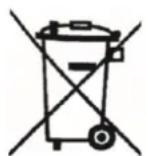
Disposal of Waste Equipment by Users in Private Households in the European Union This symbol on the product or on its packaging indicates that this product must not be disposed of with your other household waste. Instead, it is your responsibility to dispose of your waste equipment by handing it over to a designated collection point for the recycling of waste electrical and electronic equipment. The separate collection and recycling of your waste equipment at the time of disposal will help to conserve natural resources and ensure that it is recycled in a manner that protects human health and the environment. For more information about where you can drop off your waste equipment for recycling, please contact your local city office, your household waste disposal service or the shop where you purchased the product. Evacuación de los equipamientos gastados por los usuarios en los hogares privados en la Unión Europea.

22072 CERMENATE - CO - ITALY - VIA GIOVANNI XXIII, 11
TEL. +39 0331 722819 - FAX +39 0331 722825

- NOTICE D'UTILISATION ET ENTRETIEN - INSTRUCTIONS D'ORIGINE
- MANUFACTURER'S RESPONSABILITY
- WARNINGS
- INFORMATION ON VACUUM PACK PRESERVATION
- WHY PRESERVE WITH VACUUM PACKING?
- INSTALLATION
- GENERAL USE MANUAL
- GENERAL SETTINGS:
- The factory settings include
- NOTE:
- IMPORTANT
- VACUUM PACKING IN BAG
- VACUUM PACKING IN ROLL
- SEALING OPERATION WITHOUT VACUUM
- THE VACUUM LEVEL
- Legend
- USE MANUAL
- CHANGING SETTINGS
- SEALING TIME
- PASS FROM AUTOMATIC TO MANUAL FUNCTIONING:
- PASS FROM MANUAL TO AUTOMATIC FUNCTIONING:
- UNDERSTAND AND RESOLVE DOUBTS ON CORRECT USE OF THE APPLIANCES FOR VACUUM PACKING
- Auto-diagnosis tests
- Internal component operation:
- Operation of the cover and gaskets on the vacuum chamber:
- Bag insertion test:
- The machine does not start:
- The bag is not well sealed/air is entering the bag:
- The machine does not create a vacuum in the bag:
- The machine does not automatically seal:
- The machine does not reach a convenient vacuum level:
- CONDITIONS DE GARANTIE
Brand : RGV
Model : SBSG 30
Category : Vacuum packaging machines