300435 - Vacuum Cleaner BARTSCHER - Free user manual and instructions
Find the device manual for free 300435 BARTSCHER in PDF.


| Product type | Vacuum Sealer 400M |
| Brand | Bartscher |
| Model | 300435 |
| Material | 18/10 Stainless Steel |
| Dimensions (W x D x H) | 550 x 320 x 288 mm |
| Weight | 12.6 kg |
| Power supply | 230 V, 50 Hz, 0.38 kW |
| Vacuum pump | 1.9 m³/h |
| Max. vacuum | Approx. -0.85 bar |
| Programs | Automatic, Manual, Marinate, Vacuum for containers |
| Sealing time adjustment | 3 levels: Min, Med, Max |
| Roll capacity | Up to 40 cm width |
| Included accessories | 1 film roll (40 cm x 3 m), 5 bags (40x50 cm), 1 hose connector for containers |
| Safety | Lock/unlock system, emergency stop, overheating protection |
| Maintenance and cleaning | Removable drip tray dishwasher safe, removable protective filter, clean with damp cloth |
| Repairability | Spare parts available via customer service; maintenance by qualified personnel |
| Warranty | According to manufacturer's terms (not specified) |
Frequently Asked Questions - 300435 BARTSCHER
User questions about 300435 BARTSCHER
0 question about this device. Answer the ones you know or ask your own.
Ask a new question about this device
Download the instructions for your Vacuum Cleaner in PDF format for free! Find your manual 300435 - BARTSCHER and take your electronic device back in hand. On this page are published all the documents necessary for the use of your device. 300435 by BARTSCHER.
USER MANUAL 300435 BARTSCHER
natural_image
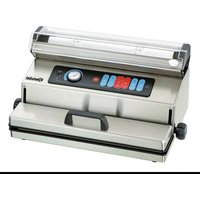
Exterior view of a Burtcheri electric vacuum cleaner with control panel and display (no visible text or symbols)300435
Vacuum packaging machine 400M
from page 31 to 59
GB/UK
Mode d'emploi
natural_image
Two technical illustrations showing hands operating a cutting machine with a mesh sheet, labeled B1 and B2 (no text or symbols on the diagram itself)natural_image
Diagram of a mechanical device with a sliding mechanism and a circular component, showing no text or symbols.natural_image
Line drawing of a hand operating a machine with a textured fabric underneath (no text or symbols)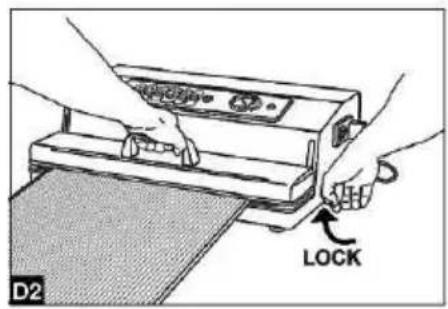
natural_image
Line drawing of a portable printer with a mesh cover and control panel (no text or symbols)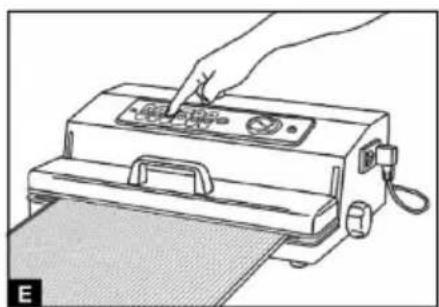
natural_image
Line drawing of a hand pressing down on a printed machine with control buttons (no text or symbols)natural_image
Illustration of a hand using a power tool to press or spread a sheet of paper (no text or symbols visible)natural_image
Hand holding a textured surface, possibly a woven or mesh material (no text or symbols visible)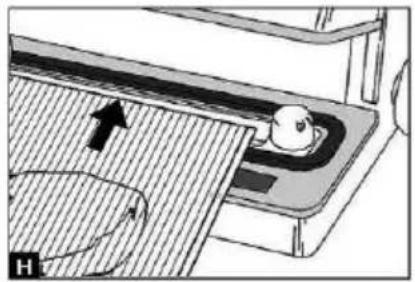
natural_image
Diagram of a bedside with a ball rolling down on a ramp, showing motion direction (no text or symbols)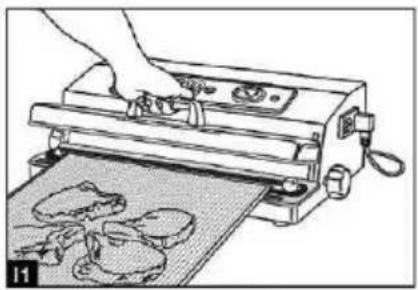
natural_image
Illustration of a hand using a lathe machine to press or spread materials on a cutting board (no text or symbols visible)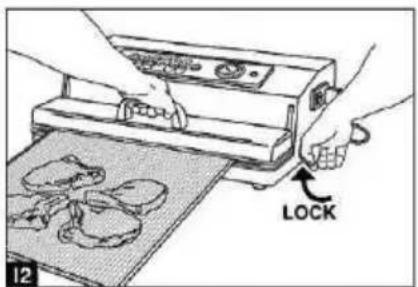
natural_image
Line drawing of a portable printer with paper sheets and control knobs (no text or symbols)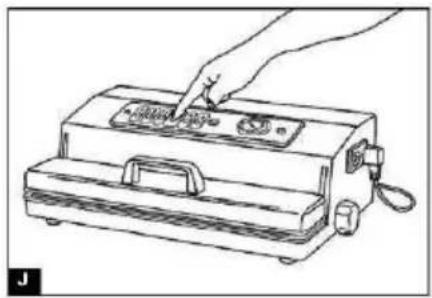
natural_image
Line drawing of a hand inserting a button into a device (no text or symbols)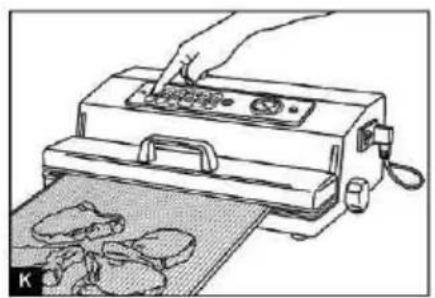
natural_image
Illustration of a hand using a portable printer to press fabric or material (no text or symbols visible)natural_image
Illustration of a hand using a portable printer to press or spread materials, with no visible text or symbols.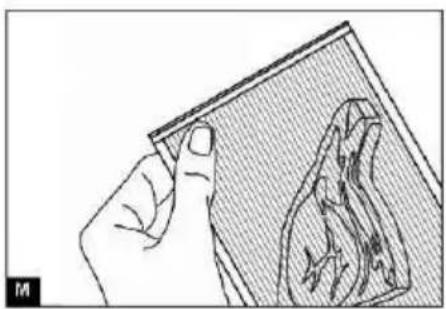
natural_image
Hand holding a grid-like object with a hand holding a piece of food (no text or symbols visible)
HINWEIS!
Keep this user manual together with the product!
1. General information ....33
1.1 Information on user manual 33
1.2 Meaning of symbols....33
1.3 Responsibility and warranty....34
1.4 Copyright 34
1.5 Declaration of conformity 34
2. Safety....35
2.1 General information 35
2.2 Safety instructions for using the device 35
2.3 Intended use....36
3. Transportation, packaging and storage 37
3.1 Control of transportation 37
3.2 Packaging....37
3.3 Storage 37
4. Technical data....38
4.1 Installation overview....38
4.2 Technical specifications: 41
5. Installation and operation....41
5.1 Safety instructions....41
5.2 Installation and connection....42
5.3 Advantages of vacuum packaging 43
5.4 Guidelines for vacuum packaging 45
5.5 Operation 49
5.5.1 Operations before use 49
5.5.2 Switching the device on....49
5.5.3 Settings 49
5.5.4 Making bags from rolls 50
5.5.5 Automatic vacuum packing cycle with bags 52
5.5.6 Manual vacuum packing cycle with bags....54
5.5.7 Automatic vacuum packing cycle with containers....54
6. Cleaning and maintenance ....55
6.1 Safety instructions for cleaning 55
6.2 Cleaning....55
6.3 Safety instructions for maintenance 56
7. Troubleshooting ....57
8. Waste....59
Bartscher GmbH
1.1 Information on user manual
This manual describes installation, operation and maintenance of the device and is an important source of information and reference.
Knowledge of the instructions and safety precautions contained in this manual creates the conditions for safely and correctly using the device.
Furthermore, local safety and accident-prevention standards in force must be complied with for application of the device.
The manual is an integral part of the product and must be kept nearby to be consulted by installation, operation, maintenance and cleaning personnel.
1.2 Meaning of symbols
In this manual, important notices concerning safety and technical information are identified by symbols. Respect the instructions to avoid accidents, personal harm and property damage.

WARNING!
This symbol indicates dangers which can cause injuries.
In these cases, please respect instructions for safety at work and proceed with the utmost caution.

WARNING! Electrical shock hazard!
This symbol calls your attention to dangerous situations due to electricity. Failure to comply with these safety instructions can lead to personal injuries or death.

ATTENTION!
This symbol indicates information which, if ignored, can entail damage, malfunctioning and/or failures to the device.

NOTICE!
This symbol indicates advice and information which must be taken into consideration for an efficient and problem-free operation of the unit.
1.3 Responsibility and warranty
All the information and notices contained in this manual have been drafted in compliance with relevant standards, based on the status of current development in technical engineering and on our knowledge and experience.
The actual contents of the supply can differ for special applications, the addition of further options or recent technical modifications respect to the illustrations and explanations contained in the manual.
Please contact the manufacturer for further information.

NOTICE!
Carefully read this manual before starting work on or with the device, especially before use! The manufacturer will not be held liable for losses or damage resulting from failure to comply with these instructions.
The user manual must be directly accessible to all persons working with the device. We reserve the right to modify the product to improve its features and performance.
1.4 Copyright
The user manual and the texts, drawings, photos and other data are protected by copyright. Reproduction, even partial, in any form as well as disclosure and/or transmission in any media are not authorised without the written consent of the manufacturer. Violations of these provisions are liable to damage compensation. The right for further claims remains reserved.

NOTICE!
The graphical illustrations in this manual could slightly differ from the current design of the device.
1.5 Declaration of conformity
The device meets current standards and directives of the European Union.
This certifies our EC declaration of conformity.
If necessary, we will be pleased to provide you with the declaration of conformity.
2. Safety
This section provides an overall view of all important safety aspects.
This chapter provides precise safety instructions to avoid the dangers highlighted with the symbols. All pictograms, horizontal and vertical signs must be respected and kept legible.
Compliance with all the safety risks provides excellent protection and guarantees safe and regular operation of the appliance.
2.1 General information
The device has been built according to the current status of technology. If used improperly or incorrectly, damage or dangers can occur.
Knowing the contents of this user manual is one of the requirements to protect oneself from harm, to avoid errors and to operate safely and without any problems.
To avoid dangers and to guarantee ideal performance of the device, do not make any modifications or alterations which have not been expressly approved by the manufacturer.
The device can only be used in maximum technical safety conditions.
2.2 Safety instructions for using the device
Safety data refer to when the device was manufactured in compliance with European Union Regulations.
If the device is used in business, during the entire lifetime of the instrument the user must determine the conformity of the above-mentioned work safety measures with the current regulatory status and to respect new standards. Aside from laws concerning safety at work of the European Union, local standards must be respected.
Aside from the safety instructions of this user manual, all general safety and accident-prevention standards and relevant environmental standards must be complied with and respected for the application of the device.

ATTENTION!
- This device is not intended to be used by persons (including children) with impaired physical, sensorial or mental capacities or lacking experience and/or knowledge, unless they are monitored by a responsible person or they have received instructions on using the device.
○ Make sure that children do not play with the device. - Keep this manual in a safe place. If the appliance is transferred to a third party, this manual must be delivered as well.
- All the persons who use the device must respect the information contained in the instruction manual and follow the safety instructions.
- The device must only be used indoors.
2.3 Intended use
The reliability of the device is only guaranteed if used according to the user manual.
Any technical operations, including installation and maintenance, must be carried out by qualified personnel.
The vacuum packing machine is only intended for packing food products or other vacuum packed objects.

ATTENTION!
Any deviation from the intended use of the device is prohibited and considered improper.
The manufacturer and/or authorised agents will not respond to claims for damage resulting from improper use of the device.
The user will be the only one held responsible for damage resulting from improper use.
3. Transportation, packaging and storage
3.1 Control of transportation
As soon as the device is delivered, make sure it is complete or has not been damaged during shipping. In case of visible damage not acknowledged or on reserve, the delivery is considered accepted.
Write the damage on the packing list or transportation document of the carrier. Proceed with a complaint.
Request for damage compensation can only be sent within the specified complaint terms.
3.2 Packaging
Preserve the original box the device was packed in. It could be useful to keep it in when being moved or when the device must be sent to a repair centre if damaged. Before using the device, remove the inside and outside packing material.

NOTICE!
If you dispose of the packaging, comply with relevant local standards.
The packaging materials are recyclable.
Please check that the device and its accessories are present and complete. If a component is missing, contact our customer service centre.
3.3 Storage
Keep the packs sealed until it is time for installation and consider the orientation and outside marking.
The packaging must be kept in the following conditions:
- Do not keep it outdoors.
- Keep it in a dry and dust-free place.
- Do not expose it to aggressive agents.
- Do not expose it to sunlight or heat sources.
- Avoid blows and mechanical vibrations.
- In case of prolonged storage (> 3 months), check the conditions of the components and of the packaging. If necessary, renew it or replace it.
4. Technical data
4.1 Installation overview
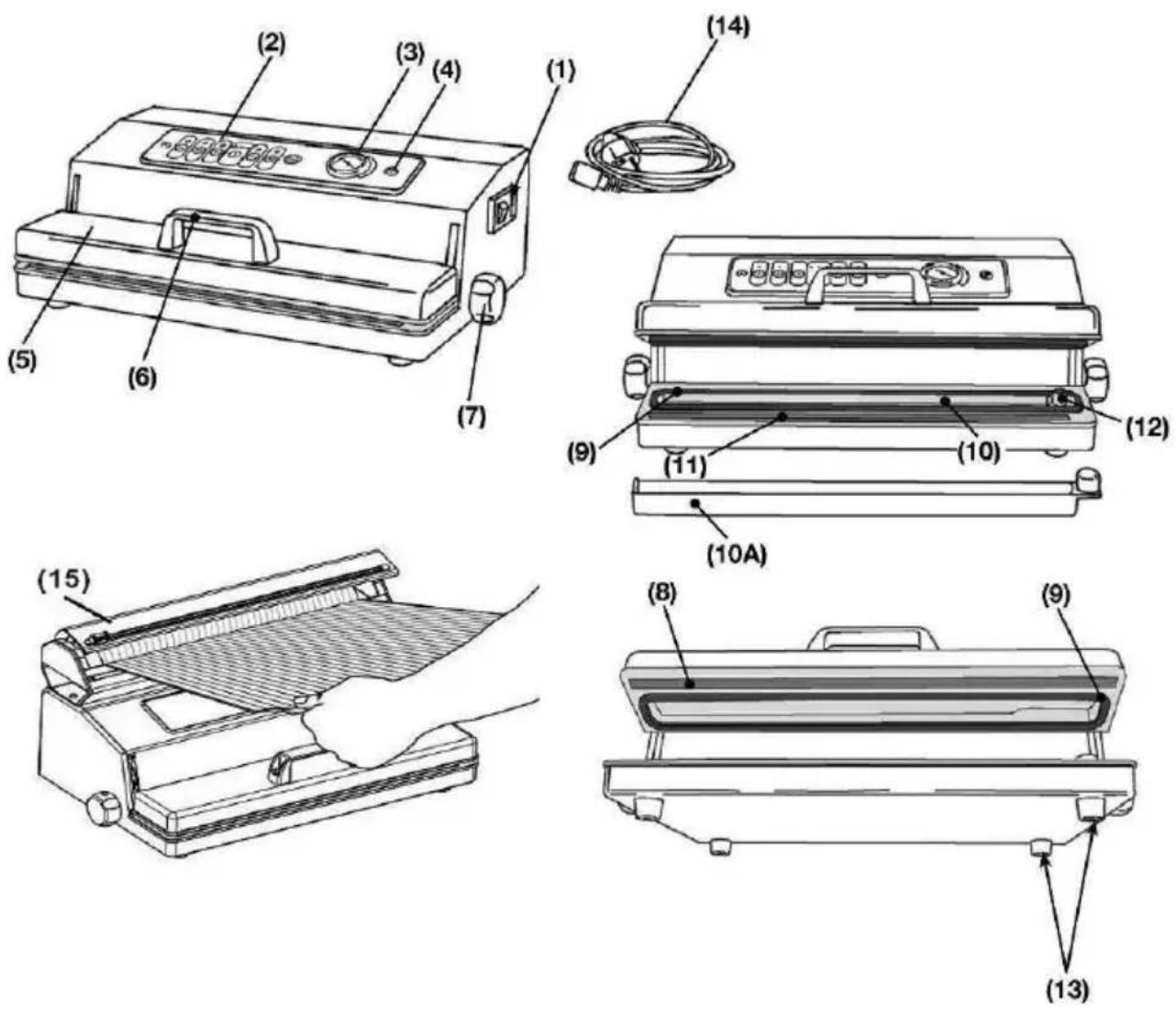
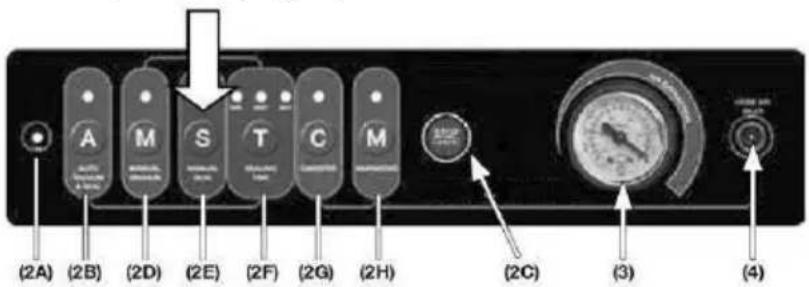
(1) ON/OFF (I/O) switch – Press the switch to (I) to turn the device on. Turn the device off by pressing (O) when not in use.
(2) Control panel – the various functions of the device can be adjusted by selecting the corresponding button.
(3) Vacuum gauge – indicates the vacuum level reached.
(4) Hose air inlet – Insertion of hose to generate vacuum in containers or bottles.
(5) Lid - it is not possible to open and lock the lifted door. This way, the bag can be positioned for vacuum packing.
(6) Lid handle - facilitates closure of the lid for the vacuum packing cycle.
(7) "Lock & Unlock System" device - used to hold the bag for automatic execution of the packaging cycle. Lock & Unlock System - equipped with a gas spring to adjust opening of the lid.
(8) Sealing gasket -Presses the bag on the sealing bar.
(9) Airtight gaskets - Guarantee vacuum tightness in the chamber when air is removed from the bags.
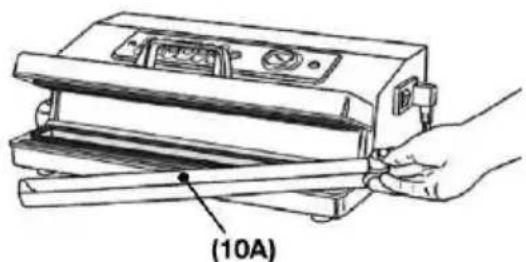
(10) Vacuum chamber with removable tray - this is the seat for positioning of the bag and evacuation of air; the liquid collection tray is inserted inside the chamber (10A), which can be removed and washed even in dishwashers with a high degree of hygiene.
(11) Sealing bar with cooling system for intensive use - Heating element which seals the bag and prevents it from sticking to the sealing bar.
(12) Protective filter for powdered foods - protects the pump from the entrance of powdered foods (sugar, flour, coffee, etc.) which could damage it. It can easily be removed and cleaned. The liquid-collecting tray (10A) should be pulled out before removing the filter.
(13) NON-slip feet- to keep the device from moving during the vacuum packing cycle.
(14) Power cable- to connect the device to the electric mains.
(15) Roll holder – to insert the vacuum film roll.
Control panel/Functions of keys and display
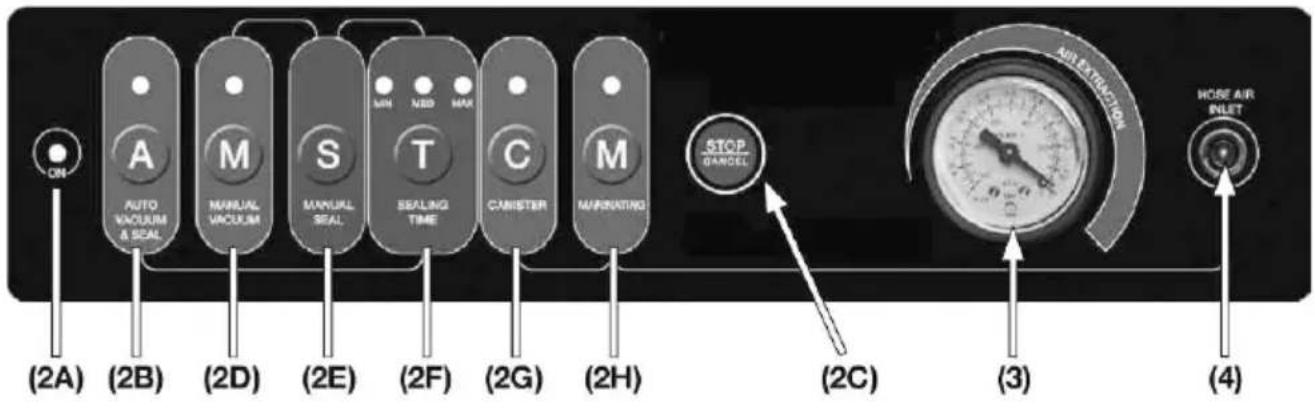
(2A) "ON" indicator light - when the switch (1) is at (I), the indicator light is green.
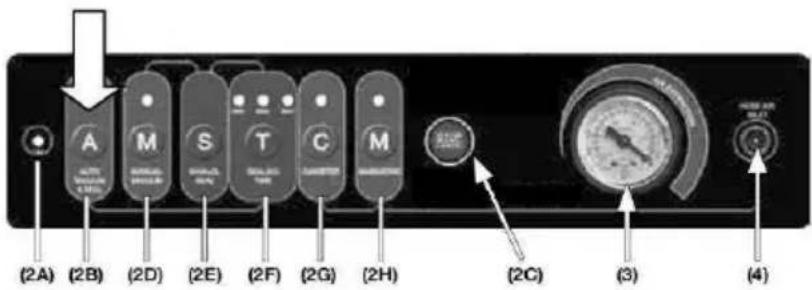
(2B) "A" key (Auto Vacuum & Seal) - The start key for the automatic vacuum packing cycle for bags including sealing.
(2C) "STOP/CANCEL" key - stops the device at any time.
(2D) “M” key (Manual Vacuum) - Start key for manual cycle; the device suctions the air and performs the manual sealing cycle by pressing the “S” key.
(2E) "S" key (Manual Seal) - Start key of manual Sealing.
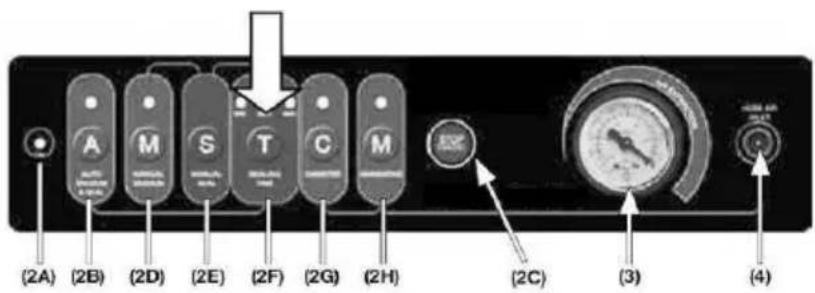
(2F) "T" key (Sealing Time) - Key for setting the sealing time.
(2G) "C" key (Canister) - Start key for automatic vacuum packaging cycle in containers.
(2H) "M" key (Marinating) - Start key for "Fast marinating" function
(3) Vacuum gauge – indicates the vacuum level reached.
(4) HOSE AIR INLET – To connect the hose to create vacuum in containers sealed with lids, in bottles sealed with caps and glass jars provided with lid and ring.
4.2 Technical specifications
| Name | Vacuum packaging machine 400M including roll holder |
| Serial number: | 300.435 |
| Finish: Stainless steel 18/10 | |
| Energy consumption: 230 V 50 Hz 0.38 kW | |
| Vacuum pump: 1.9 m3/h | |
| Dimensions: L 550 x P 320 x H 288 mm | |
| Accessories: | 1 roll of film for vacuum packing (40 cm x 3 m),5 bags for vacuum packing (40 x 50 cm);1 connection for suction hose with containers |
| Weight: 12,6 kg | |
We reserve the right to modify the technical specifications!
5. Installation and operation
5.1 Safety instructions

WARNING! Electrical shock hazard!
The device can only be used if installed correctly with a proper earthing connection.
Do not unplug the device.
The power cable must not come into contact with hot parts.
- Make sure that the cable does not come into contact with sources of heat or sharp edges. The cable must not hang from the table or bench.

WARNING! Hot surface!
During operation, some parts of the device reach high temperatures. To avoid burns, do not touch hot parts of the appliance!
- Do not use the device if it does not work properly, if it dropped or is damaged.
- Do not use accessories and spare parts which are not recommended by the manufacturer. This could represent a risk for the user or damage the device and cause personal injuries, as well as make the warranty null and void.
- Do not place the cable on rugs or other thermo-insulating materials. Do not cover the cable. Keep the cable far from the work area and do not place it in water.
- Do not move or tip over the device during operation.

WARNING! Electrical shock hazard!
The device can cause injuries if not installed correctly!
Before installation of the local electric mains, compare the technical data of the device (shown on the identification plate).
Only connect the device if they correspond!
Respect the safety instructions!
5.2 Installation and connection
- Extract the device and remove the packaging material.
- Place the appliance on a flat surface and in a safe and dry place which can bear its weight.
- Do not place the device on a flammable surface (such as: Table cloths, rugs, etc.).
- The device must not be close to naked flames, radiators or other sources of heat.
- Keep the device out of the reach of children. Make sure that small children cannot pull the device by its cable.
- Place the device away from the edges of the work surface. Leave sufficient space in front of the device so that the bag can be filled with food while vacuum packed.
- Make sure there is sufficient air circulation, provide at least 20 cm of free space on all sides and 1 m above the device.
- The outlet circuit must be fixed at least at 16A. Plug the device directly to the wall socket without using extension cords or other sockets.
- Position the device so that the plug is accessible and it can be unplugged quickly when necessary.
5.3 Advantages of vacuum packaging
With vacuum packaging, air is removed from the film bags or from containers and sealed hermetically in order to stop or slow down food spoiling. Vacuum packaging prolongs preservation of food which lasts 3 to 5 times longer. The taste and vitamin supply remain intact.
Food is protected from burns caused by freezing, bacteria and mould.
Vacuum packaging is a particularly suitable preservation method for fresh foods and must be combined with low temperatures, namely the vacuum packaged product must be kept in the refrigerator or freezer for best results. Food preserved this way lasts longer than other products which are not vacuum packed, which last a few hours or a few days.
Vacuum packaging is the right choice to keep food in a healthy manner and to save money:
- It is therefore possible to take advantage of special offers
- by vacuum packing food to preserve them for longer time
- for pre-cooking during the week,
- to make salads, vegetables and herbs last longer (they remain crisp and fresh);
• To preserve high-quality oils and similar products in a bottle is no problem;
• There is more space in the freezer;
- Food is protected from freezer burns;
- It is marinated in a quicker and more sustainable way (20 minutes vacuum packed are enough);
- Allows to vacuum pack meat, cold cuts and cheese (preserving their taste);
• It saves money, since all leftovers can be easily packed and used later on;
- All types of fruit and vegetables can be purchased fresh and kept vacuum packed longer.
All of the data in the following table are reference values which depend on the solidity of the packaging and quality of the organoleptic characteristics of the food.
! ATTENTION!
Keep perishable foods in the freezer or refrigerator. Vacuum packing lengthens the duration of food but that does not transform them into "preserves", namely a product which can be preserved at room temperature.
Preservation times for food "with and without" vacuum packaging:
| Preservation time not vacuum packed | Preservation time vacuum packed | |
| Refrigerated food (5+/-2°C) | ||
| Red meat 3 - 4 days | 8 - 9 days | |
| White meat 2 - 3 days | 6 - 9 days | |
| Whole fish 1 - 3 days | 4 - 5 days | |
| Game 2 - 3 days | 5 - 7 days | |
| Sausages 7 - 15 days | 25 - 40 days | |
| Cold cuts 4 - 6 days | 20 - 25 days | |
| Soft cheese 5 - 7 days | 14 - 20 days | |
| Hard/semi hard cheese 15 - 20 days | 25 - 60 days | |
| Vegetables 1 - 3 days | 7 - 10 days | |
| Fruit 5 - 7 days | 14 - 20 days | |
| Cooked and refrigerated food (5+/-2°C) | ||
| Vegetable puree and soups 2 - 3 days | 8 - 10 days | |
| Pasta and risotto 2 - 3 days | 6 - 8 days | |
| Boiled and roast beef 3 - 5 days | 10 - 15 days | |
| Filled cakes (with cream or fruit) 2 - 3 days | 6 - 8 days | |
| Frying oil 10 - 15 days | 25 - 40 days | |
| Frozen food (-18+/-2°C) | ||
| Meat | 4 - 6 months | 15 - 20 months |
| Fish | 3 - 4 months | 10 - 12 months |
| Vegetables | 8 - 10 months | 18 - 24 months |
| Food at room temperature (25+/-2°C) | ||
| Bread | 1 - 2 days | 6 - 8 days |
| Packs of biscuits | 4 - 6 months | 12 months |
| Pasta | 5 - 6 months | 12 months |
| Rice 5 - 6 months | 12 months | |
| Flour | 4 - 5 months | 12 months |
| Dried fruit 3 - 4 months | 12 months | |
| Ground coffee | 2 - 3 months | 12 months |
| Powdered tea | 5 - 6 months | 12 months |
| Freeze-dried products | 1 - 2 months | 12 months |
| Powdered milk | 1 - 2 months | 12 months |
5.4 Guidelines for vacuum packaging
Vacuum packaging for freezer
- A correct preservation will help the device to keep food fresh. Pack the food as fresh as possible.
- Delicate foods or those which you desire to keep their shape and appearance could be damaged if packed as fresh products. We recommend pre-freezing delicate products such as meat, fish, berries, bread, etc.
They can be frozen for a maximum of 24 hours without suffering freezer burns. Once they have been pre-frozen, air can be suctioned from the bag and they can remain a long time in the freezer while maintaining their taste and nutritional value. - To preserve liquids such as soups, flans and stews vacuum packed, first freeze them in a tray or bowl, and then pack them hermetically and preserve them frozen in the freezer.
- To preserve fresh vegetables, clean them or peel them and have them parboiled for a short time in boiling water (or, if necessary, heat them in a microwave oven), to obtain fresh and cooked vegetables. When they have cooled off, seal the desired portions vacuum packed.
- To pack products which are not deep-freezed, allow approximately 5 cm more per bag to guarantee space for expansion of the food to the frozen state. Put meat or fish on a paper towel, and then seal them hermetically with the paper napkin in a plastic bag. This will absorb the liquid in the food.
- Before vacuum packaging foods such as tortillas, crepes or hamburgers, place wax paper between the various pieces. This makes it easier to remove the single pieces and to reclose the bag kept in the freezer.
Vacuum packaging for the refrigerator
- The food can be cooked in advance, kept in the refrigerator vacuum packed and heated when necessary.
Vacuum packaging for the pantry
- Some foods can also be preserved at room temperature (coffee, flour, pasta, sugar, etc.) and this can be facilitated by vacuum packaging. If they are not used for several days, for example when you are on holiday, they must be protected with vacuum packaging. This way they will remain fresh at room temperature and will not be attacked by mould or insects.
Defrosting vacuum packed food
- Food preserved vacuum packed such as meat, fish, fruit, vegetables and other foods can be defrosted on the bottom shelf of the refrigerator.
- Let the bread and cakes defrost at room temperature.
- For soups or other liquids, defrost the bag directly in warm water until the content is completely warm. To defrost at room temperature or in a double saucepan, cut a corner of the bag to release vacuum and to free the vapour.
- Consume food as soon as it is defrosted. Do not freeze leftovers once again.
Vacuum packing of packed foods
- Many foods, such as cheese or meat, are sold vacuum packed. After these packs have been opened, they can be vacuum packed once again to maintain their taste and freshness.
! ATTENTION!
Packed foods must always be consumed within the expiration date specified on the original package. When vacuum packed the second time, they must be treated with the utmost care and hygiene.
Suggestions for vacuum packaging
- When vacuum packaging foods with sharp edges, such as bones or spaghetti, strengthen the corners with paper napkins to avoid damaging the bag.
- Use storage containers to keep fragile foods such as berries, rusks or biscuits from crumbling or breaking in the vacuum package.
- A great variety of objects can be vacuum packed. For example, camping supplies, such as clean matches, first aid boxes and clothing can be kept dry and clean. Emergency triangles are always ready for use. Pipe tobacco can be preserved. Oxidation of silver and jewellery is prevented by vacuum packing.
General safety instructions
- Clean your hands, utensils and work surfaces used to cut and vacuum pack foods.
- If possible, wear gloves to handle the food.
- Use only fresh food for vacuum packaging.
- Immediately preserve perishable foods vacuum packed in the refrigerator or freezer and do not leave them too long at room temperature.
- Distribute vacuum packed packages uniformly in the refrigerator or freezer to allow them to freeze quickly.
- Packed foods must in any case be consumed within the date of expiration carried on the original packaging of the product.
- Vacuum packaging prolongs preservation of dried fruits. Foods with a high fat content can go rancid quickly if exposed to oxygen and heat. Vacuum packaging also increases the preservation time of nuts, coconut flakes and cereals. Keep them in a cool place away from sources of light.
- Vacuum packaging will not lengthen the time of preservation of fruit and vegetables, such as bananas, apples, potatoes or other vegetables unless they are peeled before being vacuum sealed.
- Some vegetables, such as broccoli, cauliflower and cabbage, emit gas when vacuum packaged fresh. This is why these foods must be parboiled before being packed and frozen.
- To repack vacuum packed food after it has been removed from vacuum packaging, follow the instructions for preservation in the refrigerator after opening and for keeping vacuum packed food safely.
- Consume perishable foods immediately after they have been heated, defrosted or removed from the refrigerator. Do not consume foods that were left for several hours in the open air, especially if they were cooked in a thick sauce and kept in a vacuum bag or another air-free environment.
- Pre-freeze soft and delicate products the night before (fish, berries, etc.). Once they have been pre-frozen, they can be vacuum packed and placed in the freezer.
! ATTENTION!
Vacuum packaging does not substitute deep-freezing or freezing. Perishable foods must be frozen before being vacuumed packed, they must be cold after vacuum packaging and frozen.
Advice for preserving vacuum packed foods
The vacuum packed preservation system is the way to preserve purchased and cooked food. Once you have used vacuum packing preservation, it will soon become essential in preparing food. Follow the instructions below concerning vacuum packaging and preservation to guarantee food quality:
- Chemical reactions of food in contact with room temperature, air, humidity and the formation of enzymes, microorganisms or contamination from insects ruin food.
- Oxygen in the air is the main reason for loss of nutritional substances, texture, taste and quality. The growth of microorganisms is largely due to air, as it removes humidity, unless food is wrapped in moisture resistant material. Frozen foods, exposed to freezing, suffer freezer burns.
- Vacuum packaging suctions approximately 90% of the air from the bag. With approximately 21% oxygen in the air, removing 90% means about 2%-3% of air is left in the vacuum packed bag. If the oxygen content is less than 5%, most microorganisms do not multiply.
- In general there are three types of microorganisms: moulds, yeasts and bacteria. They are everywhere, but are dangerous only in certain circumstances.
- In an environment with little oxygen or without humidity, moulds cannot grow. In a moist, sugary environment and at mild temperatures, yeasts grow with or without air. Refrigeration capability slows down the growth of yeast, while deep-frozen preservation completely impairs growth of bacteria with or without air.
- One of the most dangerous types of bacteria, Clostridium botulinum, in certain conditions grows without air: at a temperature between 4°C and 46°C. Clostridium botulinum is a very dangerous type of bacteria which can develop in environments which do not contain acids, are oxygen-free and exposed to temperatures higher than 4°C for long periods.
- Foodstuffs frozen, dried, very acids, salted or sweeten are botulinum resistant. Other foodstuffs with low acidity such as meat, seafood, olives, poultry, fish, eggs and mushrooms as well as medium acidity foodstuffs like ripe tomatoes, onions, red peppers, figs and cucumbers are all vulnerable to be attacked by Clostridium Botulinum.
- These foods must be preserved for a short amount of time in a cool place, whereas for a long time if frozen, and consumed immediately after being cooked.
- Some dry foods such as flour and cereals can contain insect larvae. If they are not preserved vacuum packed, the larvae could contaminate food during preservation. To prevent insects from hatching, vacuum package foods.
-
Food can be preserved at low temperatures since only a few microorganisms thrive without air.
-
If the refrigerator temperature is higher than 4^ C (especially for a long time), this favours the growth of harmful microorganisms. Therefore it is recommended to keep the temperature below 4^ C.
-
A freezer temperature of -17^ or lower is suitable for food preservation. Even though freezing does not kill microorganisms, it inhibits their growth.
-
Vacuum packing preservation temperature also has an effect on dried fruits: the duration of preservation increases 3-4 times at every 10^ temperature reduction.
5.5 Operation
5.5.1 Operations before use
- Before using the device, thoroughly clean its surfaces and the work surface which will come into contact with foods and accessories (containers, leads, etc.). Proceed as explained in the instructions provided in the Section 6.2 "Cleaning".
- Insert the plug of the power cable into the socket on the side of the machine and then connect the plug to a wall socket depending on the voltage of the machine (data found on the identification plate).
5.5.2 Switching the device on
- Press the (1) button on the right side; on the front panel, the green "ON" (2A) indicator light and red (2F) closure time (MED) indicator switch on.
5.5.3 Settings
Setting sealing time
- To set the sealing time, press the "T" key (2F) before the vacuum packing cycle. The set sealing time is saved until:
- the sealing time is set once again;
- the STOP key is pressed;
To deactivate the device, move the switch to "O" or unplug it.
- The position of the red switch on the button shows the set closure time:
- MIN (red control indicator light switches on) corresponds to a minimum closure time recommended when performing several closures;
- MED (middle red indicator light flashes) corresponds to medium closure time, suitable for most applications; the device is set at automatic closure time according to default settings.
- MAX (right red indicator light switches on) max. closure time recommended when preserving moist food.
STOP/CANCEL key - 2C
- To stop the machine at any moment, press the "STOP/CANCEL" button (2C) Fig. A. Unlock the lid by turning one of the two knobs (7) of the "Lock & Unlock System" device.
5.5.4 Making bags from rolls
Insert a roll of suitable film in the roll holder (15) of the device.
Use only rolls for vacuum packing (with ribbed or embossed side).
Select the appropriate size for the bag in which the food will be preserved.
Make sure that the bag is at least 8 cm longer than the food being preserved. Every new vacuum packaging reduces the bag by 2 cm.
natural_image
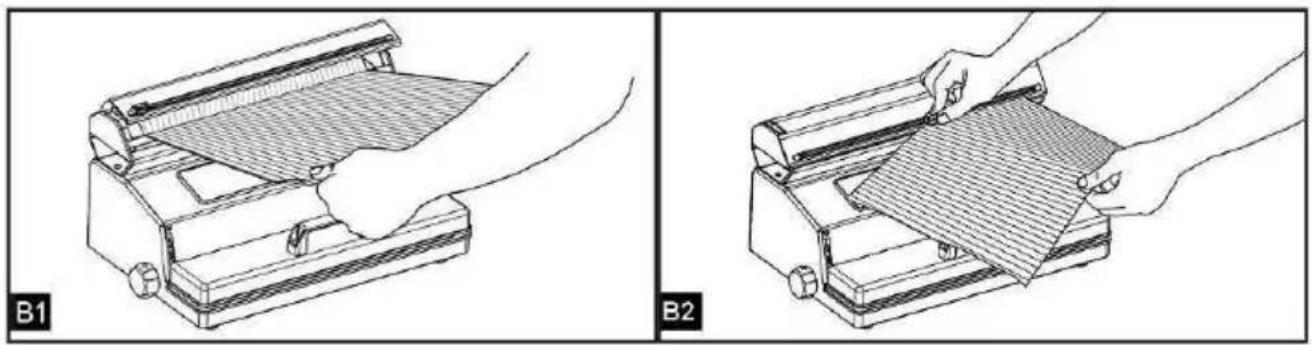
Two technical line drawings showing hands operating a cutting machine (B1) and a flat sheet metal cutting machine (B2), with no visible text or symbols.a) Lift the lid and pull the two corners of the roll to the right length, (Fig. B1) and then close the lid. Press the cutting blade and pull the bag from the left or from the right (Fig. B2). A straight cut can be obtained. Furthermore, an open side of the bag can be sealed as follows:
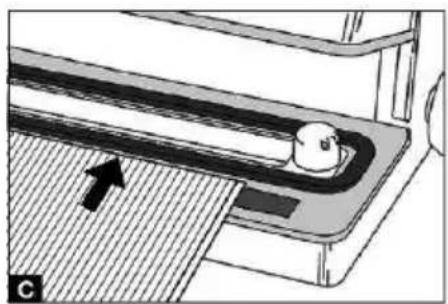
b) Bring one of the open ends of the bag with the smooth side on the sealing bar (11) (Fig. C).

ATTENTION!
The bag must not protrude into the vacuum chamber (10) or on the gasket (9), but must reach the end of the external part of the gasket, as shown in the figure.
natural_image
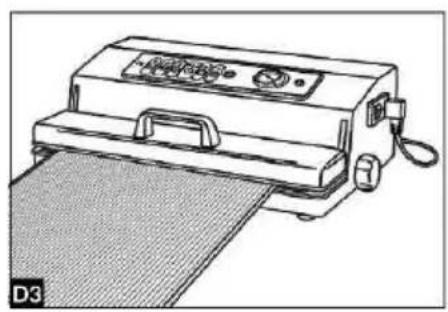
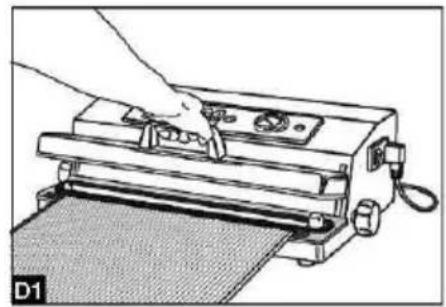
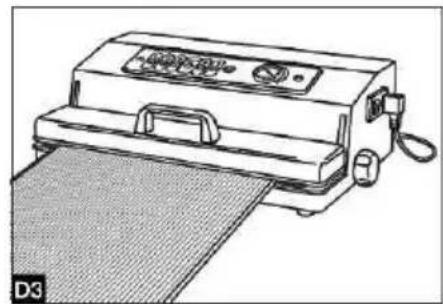
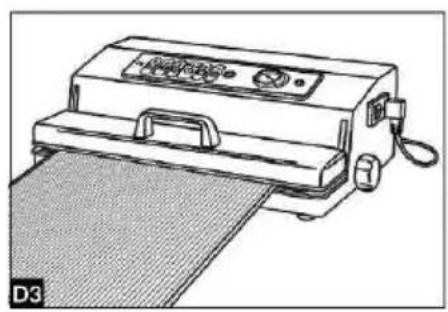
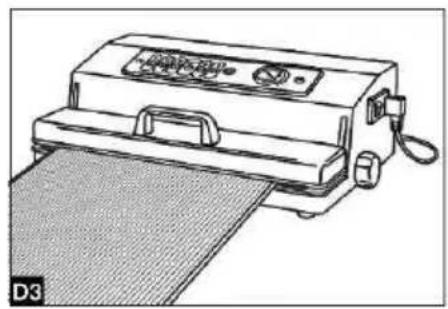
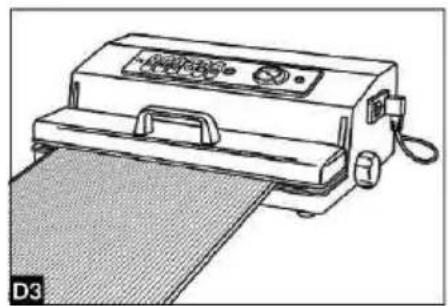
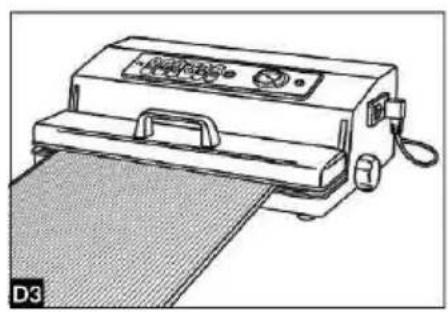
Diagram of a mechanical assembly with a sliding component and striped base, no visible text or symbolsc) Lower the lid (5) by pressing the handle downwards (6) (Fig. D1), then take it with the other hand and turn one of the two knobs (7) in the direction of the LOCK arrow (Fig. D2).
The lid (5) must remain all the way down (Fig. D3).
natural_image
Illustration of a hand operating a machine with a textured surface and scroll, no text or symbols present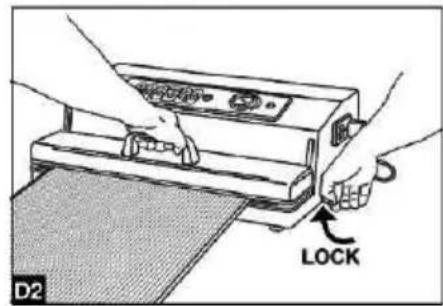
natural_image
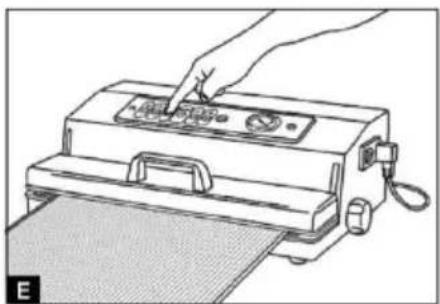
Line drawing of a mechanical press device with mesh sheet and paper filter (no text or symbols)d) Press the "S" button (2E): the device closes the bag automatically and switches off at the end of the process (Fig. E).
natural_image
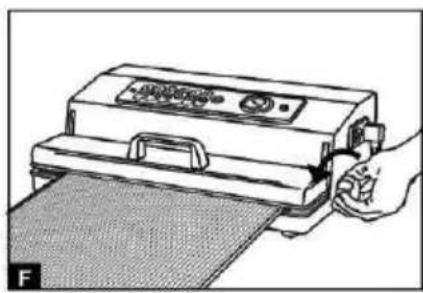
Line drawing of a hand pressing down on a printed machine with a cloth (no text or symbols visible)e) Unlock the lid by turning one of the two knobs (7) of the "Lock & Unlock System" device (Fig. F) and remove the bag.
natural_image
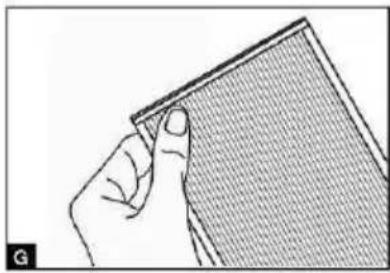
Illustration of a hand using a portable printer to press or install a sheet of paper (no text or symbols visible)f) Make sure it is sealed properly. A correct sealing must be smooth, straight and without any creases, the seam must not show the pattern on the bottom layer (Fig. G).
5.5.5 Automatic vacuum packing cycle with bags (precut or see P. 5.5.4)
To perform the automatic packaging cycle in bags including final sealing.
a) Insert the food in the bag without creating particular creases or tension on the surface. Eliminate liquids or food residues from the inner zone of the bag which must be sealed.
b) Place the bag with its contents in front of the machine, positioning it at the open end inside the vacuum chamber (10) with the smooth part facing upwards (fig. H).
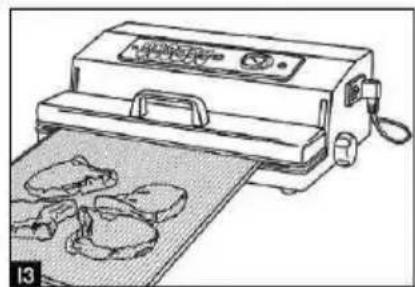
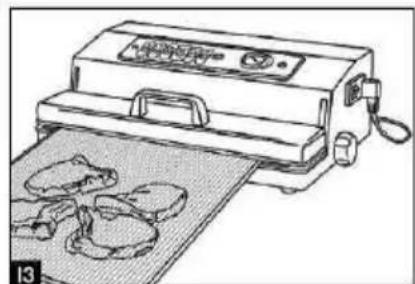
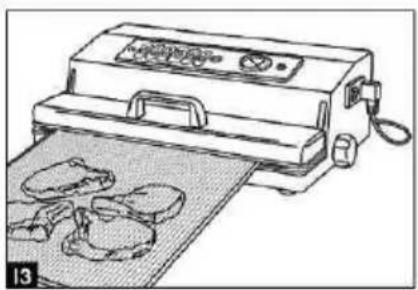
c) Lower the lid (5) all the way (6) (Fig. I1) then take it with the other hand and turn one of the two knobs (7) in the direction of the LOCK arrow (Fig. I2).
The lid (5) must remain closed (Fig. 13).
natural_image
Hand holding a textured surface with a grid pattern, no visible text or symbols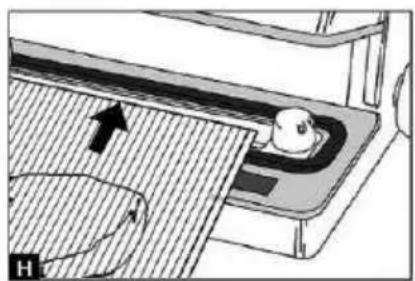
natural_image
Diagram of a mechanical device with a rotating component and hatched material, no visible text or symbols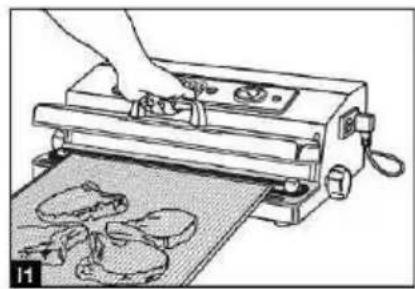
natural_image
Illustration of a hand operating a lathe machine with fabric underneath (no text or symbols visible)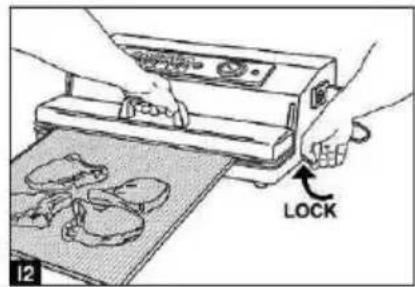
natural_image
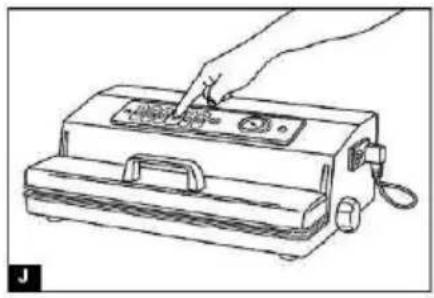
Line drawing of a printer with paper feed and printed fabric (no text or symbols)d) If necessary, adjust the sealing time (see point 5.5.3 "Settings/Sealing time settings") (Fig. J).
e) Press the "A" button (2B) for the automatic cycle. The device performs a vacuum packing cycle in automatic mode. Wait for the red indicator light of the "T" key to quit flashing (Fig. K).
f) Unlock the lid by turning one of the two knobs (7) of the "Lock & Unlock System" device (Fig. L) and remove the bag.
g) Make sure sealing is uniform. A correct sealing must be smooth, straight and without any creases, the seam must not show the pattern on the bottom layer (Fig. M).
natural_image
Line drawing of a hand inserting a component into a device (no text or symbols)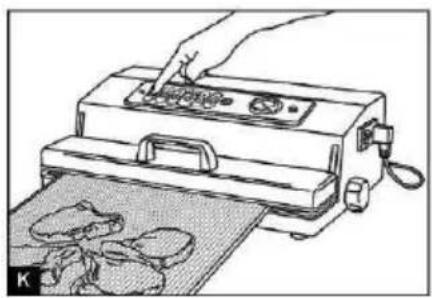
natural_image
Line drawing of a hand using a portable printer to press fabric, with no visible text or symbols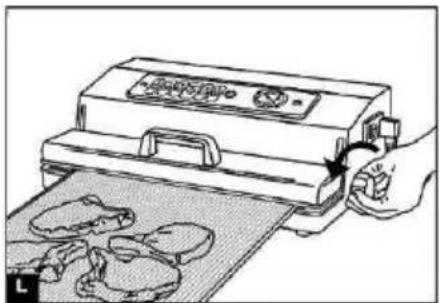
natural_image
Illustration of a hand using a portable printer to press or spread materials, with no visible text or symbols.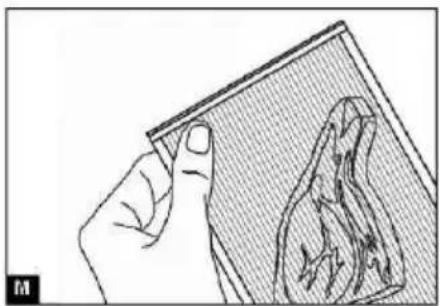
natural_image
Hand holding a textured surface with a hand holding a piece of wood or metal (no text or symbols visible)5.5.6 Manual vacuum packing cycle with bags
- Repeat the operations from point a) to d) of section 5.4.5.
- Start the manual vacuum packing cycle by pressing the "M"key (2D).
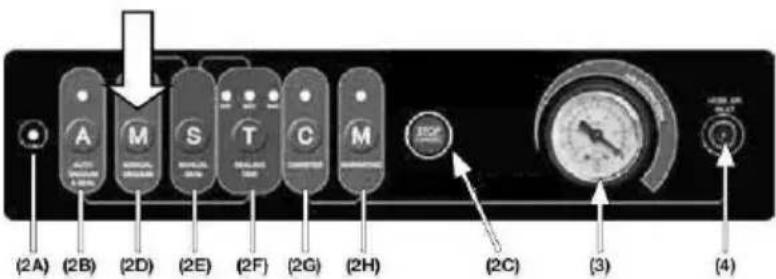
Then press the "S" key (2E) to seal the bag manually before crushing its fragile or sensitive contents.
Wait for one of the three red indicator lights MIN / MED / MAX on the "T" key to start flashing and unlock the lid with one of the two knobs (7) to remove the bag; in this phase, the device can perform a second safety closure when the pump has not reached a certain vacuum level (the pump switches back on for a short amount of time).
Maximum air suction even with food having a complex shape
- Repeat the operations from point a) to d) of section 5.4.5.
- Start a manual vacuum packing cycle by pressing the "M" button (2D), wait for the vacuum gauge (3) to indicate the maximum value (approximately - 0.85 bar) and leave the pump running for about another minute.
Perform manual closure by pressing the "S" button (2E).
This method is recommended for vacuum packaging foods such as cheese, Emmenthal, an entire chicken, fish, etc.
5.5.7 Automatic vacuum packing cycle with containers
The devices has also been designed to vacuum with specific containers.
a) Fill the appropriate container and leave at least 3 cm free from the top edge.
b) Place the lid on the container
c) Connect the supplied hose (16) to the lid of the container and to the hose air inlet (4) of the device (Fig. N).
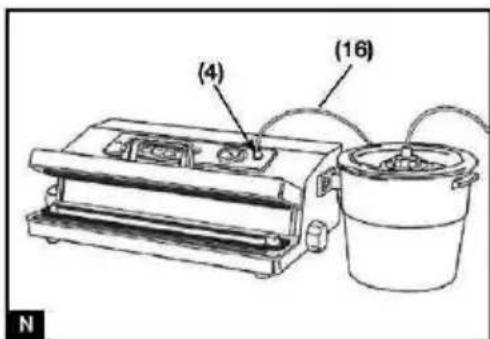

NOTICE!
At the start of the vacuum phase, it could be necessary to press the lid of the container by hand in order to close it hermetically.
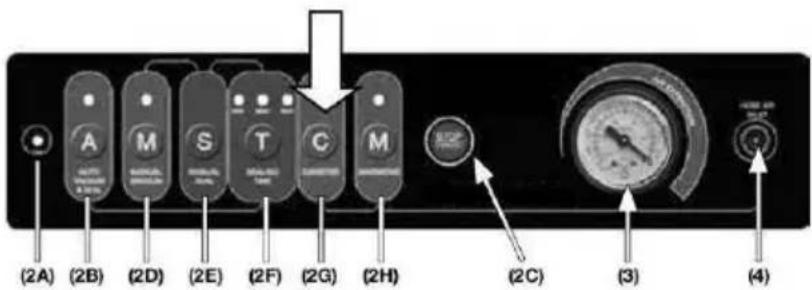
d) Press the "C" button (2G). The device performs the vacuum packing cycle and switches off automatically when it is over. The pump switches off automatically after approximately 5 minutes.
e) Disconnect the hose from the lid of the container and from the hose air inlet of the device.

ATTENTION!
To guarantee safe and ideal vacuum packaging, only use suitable accessories and respect the manufacturer's instructions.
6. Cleaning and maintenance
6.1 Safety instructions for cleaning
o Before performing cleaning or repairs, unplug the device and let it cool off.
- Do not use caustic detergents and do not allow water to enter the unit.
To protect yourself against electric shocks, never place the device, the power cable or the plug in water or other liquids.

ATTENTION!
The device is not suitable to be cleaned with a water jet. Therefore, spray water without pressure to clean the unit!
6.2 Cleaning
- Clean the device regularly.
- Unplug the device before cleaning it.
- Clean the surfaces of the equipment before and after use with a moist sponge and neutral soap, or denatured alcohol, or a water and white vinegar solution.
Do not use aggressive detergents, solvents or aromatic essence-based products!
- If any liquid falls accidentally into the device, unplug it and do not use it. Contact a service centre or your dealer.
○ Important: Do not use metal tools (such as scissors, knife, punch or scraper) to eliminate impurities as they could damage the steel surface, causing it to corrode.
Furthermore, improper use of chlorine-based detergents or hydrochloric acid, hydrofluoric acid or sulphuric acid (as are some decalcifying agents) can reduce the typical brightness of the stainless steel and affect its resistance.
To clean the accessories (containers, lids, etc.) see the instructions of the individual accessory.
- The liquid protection tank of the device (10A) can be completely removed and washed in the upper rack of the dishwasher. Rinse it like normal kitchen utensils and leave it to dry completely. Then put it back in the vacuum chamber.
- Use only a soft cloth and never use abrasive detergents which could scratch the surface.
○ After cleaning, use a soft and dry cloth to dry and polish the surface.
6.3 Safety instructions for maintenance
○ Occasionally observe the power cable to see if it is damaged. Never use the machine if the cable is damaged. If the cable is damaged, have it replaced by a service centre or by a qualified electrician to avoid danger.
- In case of failures or malfunctioning, contact the dealer or our customer service. Read the suggestions for solving the problem in section 7.
o Maintenance and repairs must only be carried out by qualified personnel using genuine spare parts and accessories. Never try repairing the device on your own.
- Troubleshooting
| Problem | Possible cause and solution |
| The device does not work | Check the switches (1).Make sure the power cable is plugged into the device and into the wall. Check the socket by plugging in another device.Make sure that the power cable or plug is not damaged. In that case, do not use the device. |
| Device does not perform the first sealing on the piece of roll cut | Make sure the roll is positioned properly as described in paragraph: 5.5.4 "Making bags from a roll".Make sure that the closure gasket is positioned properly and is not damaged. |
| The device does not supply complete vacuum in the bags | To seal correctly, the open end of the bag should be fully inside the vacuum chamber compartment.Check that the sealing bar and both the sealing and airtight gaskets are not dirty . After having cleaned them, if necessary, put them back in place properly.The bag could be perforated. To check whether it leaks, fill the bag with air, put it in water and make pressure. If there are bubbles it means that there is a leak. Reseal the bag or use another one. |
| The device does not seal the bag properly | If the bag does not close correctly, increase the sealing time by pressing the "T" key (2F).If the sealing bar heats up and melts the bag, raise the lid and let the sealing bar cool off for a few minutes.Make sure that the closure gasket is positioned properly and is not damaged. |
| The bag does not hold the vacuum after closure | Closure leakages could be caused by creases, crumbs, grease and humidity. Open the bag, clean the top part on the inside, remove debris from the sealings bar and perform a second closure.Make sure the bag has no damage or holes which could reduce vacuum. Protect sharp edges of the contents with a paper napkin. |
| The device does not create vacuum in the container | Reconnect the suction hose to the container lid (or to the suction cap, if necessary) and the hose air inlet to the device.Leave at least 3 cm between the contents and the top of the container.Liquid could leak because it did not cool off sufficiently before being vacuum sealed. Cool the liquid in the refrigerator and not at room temperature.Make sure that the top edge of the container and the gasket of the lid are intact and clean. Clean both with a moist cloth and perform vacuum packaging.Make sure that the gaskets of the container lid are positioned properly and are not damaged. |
| The container or the lid lose their vacuum | Make sure that the top edge of the container and the gasket of the lid are intact and clean. Clean both with a moist cloth and perform vacuum packaging.Make sure that the gaskets of the container lid or the universal lid are positioned properly and are not damaged.Make sure that the hose is connected properly to the container lid and to the hose air inlet (4) of the device. |
The problems listed above are used as a guide or example. If these or similar problems occur, switch the device off immediately and find a solution. Immediately contact qualified personnel or the manufacturer for inspections and repairs.
8. Waste
Disposal
The old device and its packaging must be disposed of in compliance with national standards. We recommend contacting a special waste disposal company or the local waste disposal service.

WARNING!
Make the device unusable before disposing of it to avoid abuse or dangers. To disconnect the device from the mains, remove the power cable from it.

NOTICE!
To dispose of the device, refer to national and local standards and regulations in force.
Bartscher GmbH
natural_image
Two technical illustrations showing hands operating a cutting machine with a mesh sheet, labeled B1 and B2 (no text or symbols on the diagram itself)natural_image
Diagram of a mechanical device with a knob and striped surface, no visible text or symbolsnatural_image
Line drawing of a hand operating a machine with a textured surface, no text or symbols present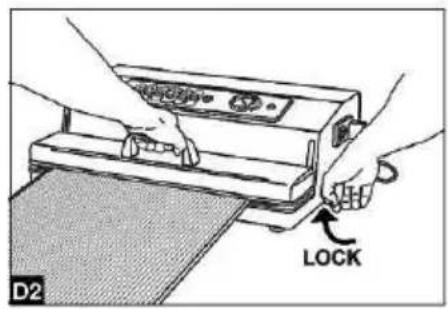
natural_image
Line drawing of a portable printer with a mesh cover and control panel (no text or symbols)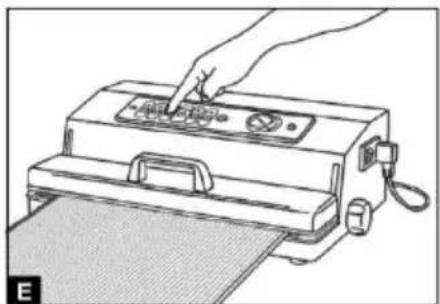
natural_image
Line drawing of a hand pressing down on a printed machine with a button (no text or symbols visible)natural_image
Illustration of a hand using a power tool to press or spread a sheet of paper (no text or symbols visible)natural_image
Hand holding a textured surface with a grid pattern, no visible text or symbolsnatural_image
Diagram of a mechanical assembly with a rotating component and hatched material (no text or symbols)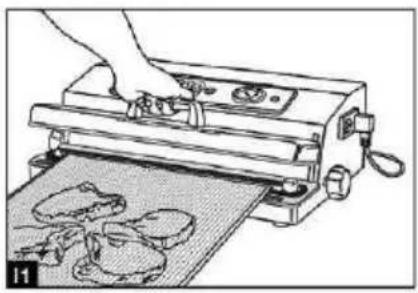
natural_image
Illustration of a hand using a lathe machine to press or spread materials on a sheet of paper (no text or symbols visible)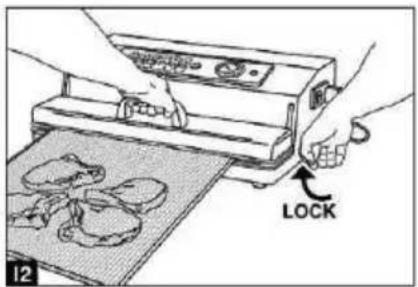
natural_image
Line drawing of a portable printer with paper sheets and a scroll, no text or symbols present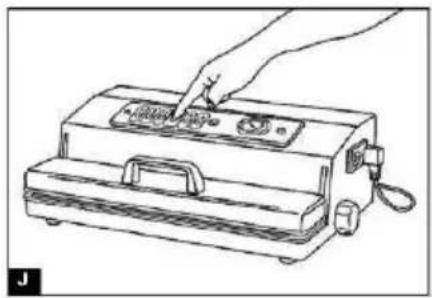
natural_image
Line drawing of a hand inserting a button into a device (no text or symbols)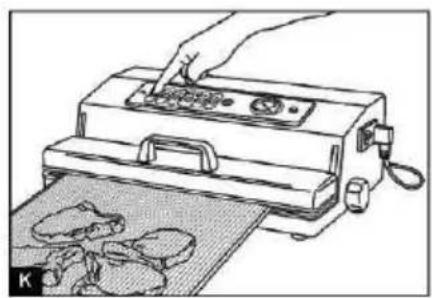
natural_image
Illustration of a hand using a portable press machine to press fabric or dough (no text or symbols visible)natural_image
Illustration of a hand using a portable printer to press or spread materials, with no visible text or symbols.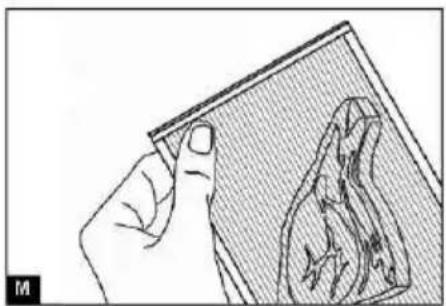
natural_image
Hand holding a grid-like object with a hand holding a curved object, no visible text or symbols
REMARQUE!
natural_image
Two technical illustrations showing hands operating a cutting machine with a mesh sheet, labeled B1 and B2 (no text or symbols on the diagram itself)natural_image
Diagram of a mechanical device with a curved component and striped base, showing no text or symbolsnatural_image
Illustration of a hand operating a machine with a textured surface and a cloth, no text or symbols present.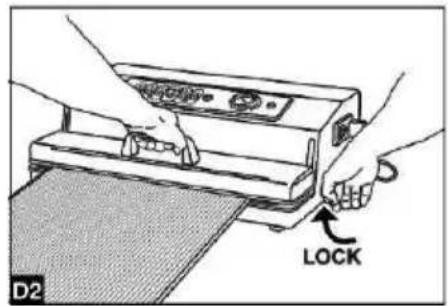
natural_image
Line drawing of a printer with a textured base and paper filter (no text or symbols)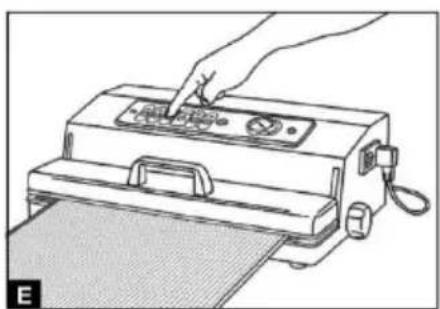
natural_image
Line drawing of a hand pressing down on a printed machine with a cloth (no text or symbols visible)natural_image
Illustration of a hand using a power tool to press or spread material on a textured surface (no text or symbols visible)natural_image
Hand holding a textured surface with a small object attached (no text or symbols visible)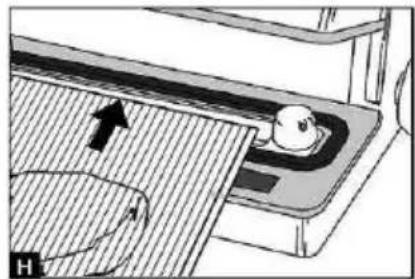
natural_image
Diagram of a mechanical device with a rotating component and hatched material, showing no text or symbols.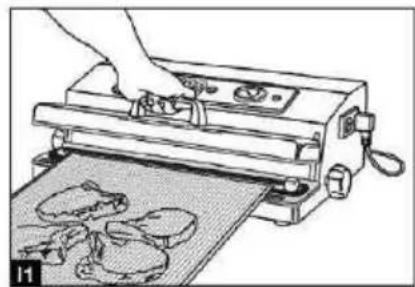
natural_image
Illustration of a hand operating a mechanical presser with a printed sheet of paper (no text or symbols visible)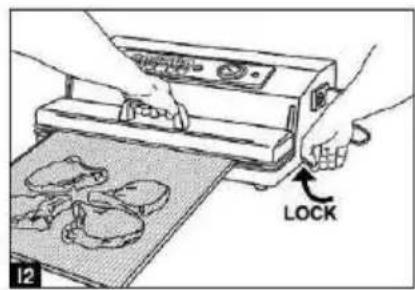
natural_image
Line drawing of a printer printing or spreading material (no text or symbols visible)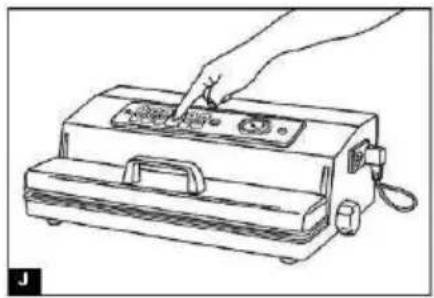
natural_image
Line drawing of a hand inserting a component into a device with buttons (no text or symbols)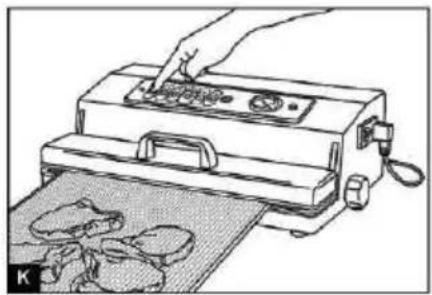
natural_image
Illustration of a hand using a portable printer to press fabric, with no visible text or symbols.natural_image
Illustration of a hand using a printing press to spread printed sheets (no text or symbols visible)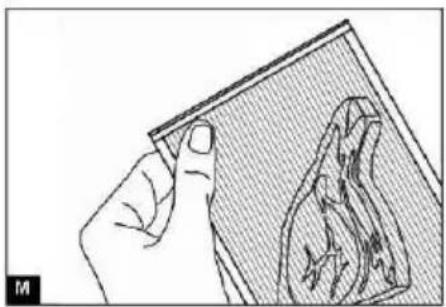
natural_image
Hand holding a grid-patterned object with a hand holding a curved object (no text or symbols visible)¡AVISO!
natural_image
Two technical line drawings showing hands operating a cutting machine (B1) and a flat cutting machine (B2), with no visible text or symbols.natural_image
Diagram of a mechanical device with a knob and textured surface, showing no text or symbolsnatural_image
Line drawing of a hand operating a machine with a textured surface, no text or symbols present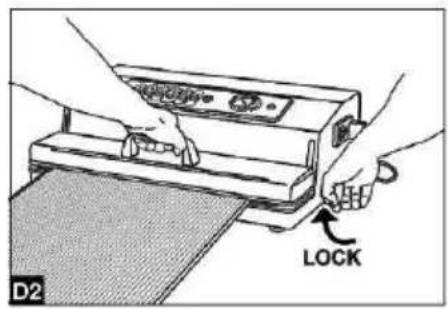
natural_image
Line drawing of a mechanical device with a textured surface and control panel (no text or symbols)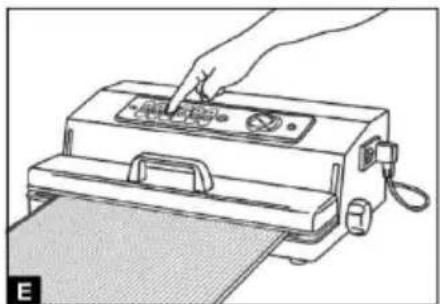
natural_image
Line drawing of a hand pressing down on a printed paper feed machine (no text or symbols visible)natural_image
Illustration of a hand pressing down on a mechanical device with a textured surface (no text or symbols visible)natural_image
Hand holding a textured surface, possibly a woven or mesh material (no text or symbols visible)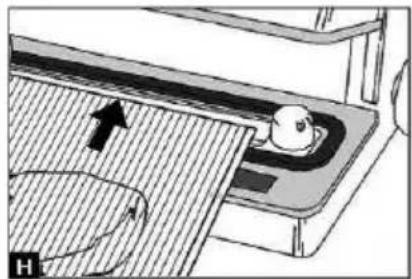
natural_image
Diagram of a mechanical device with a rotating component and hatched material, no visible text or symbols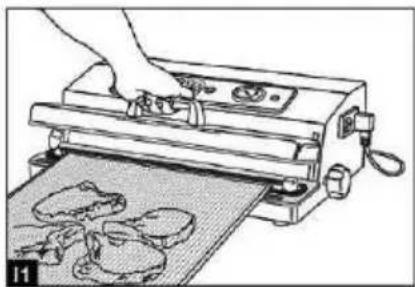
natural_image
Illustration of a hand using a lathe machine to press or spread materials on a textured surface (no text or symbols visible)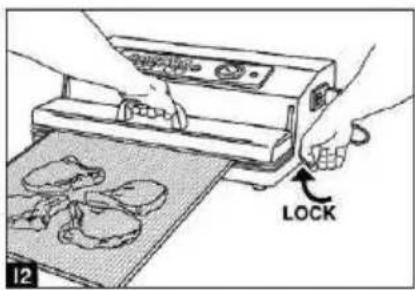

natural_image
Line drawing of a portable printer emitting powder onto a sheet of paper (no text or symbols visible)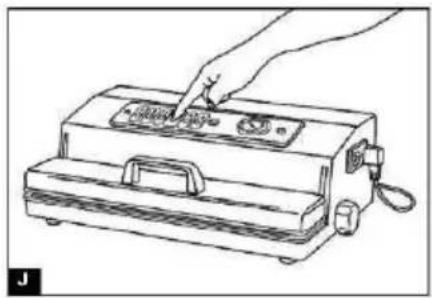
natural_image
Line drawing of a hand inserting a button into a device (no text or symbols)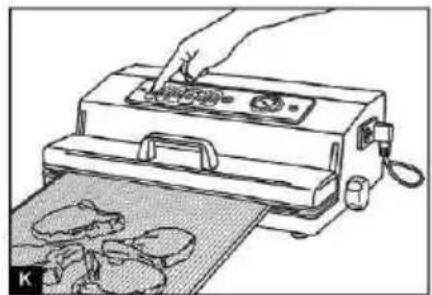
natural_image
Illustration of a hand using a portable paper press machine to press or spread materials (no text or symbols visible)natural_image
Illustration of a hand using a portable printer to press fabric or paper (no text or symbols visible)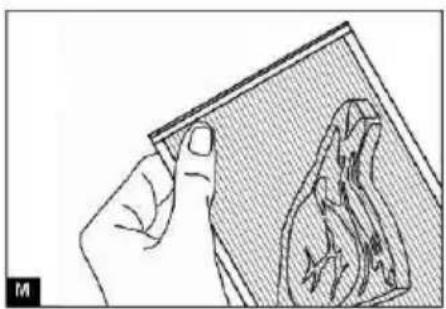
natural_image
Hand holding a textured surface with a hand holding a piece of wood or metal (no text or symbols visible)
ADVIES!
natural_image
Two technical illustrations showing hands operating a cutting machine with a mesh sheet, labeled B1 and B2 (no text or symbols on the diagrams themselves)natural_image
Diagram of a mechanical device with a circular component and an arrow indicating direction (no text or symbols)natural_image
Line drawing of a hand operating a machine with a textured surface underneath (no text or symbols)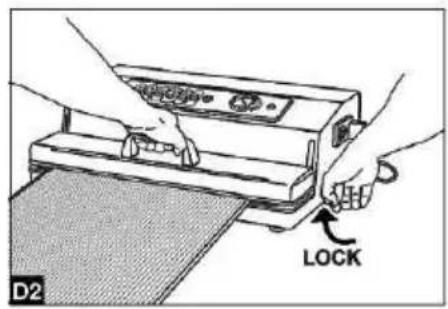
natural_image
Line drawing of a portable printer with a mesh cover and control panel (no text or symbols)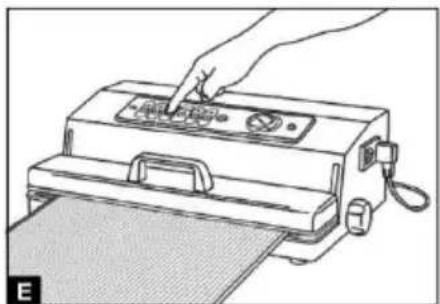
natural_image
Line drawing of a hand pressing down on a printed machine with a button (no text or symbols visible)natural_image
Illustration of a hand using a power tool to press or spread a sheet of paper (no text or symbols visible)natural_image
Hand holding a textured surface with a grid pattern, no visible text or symbols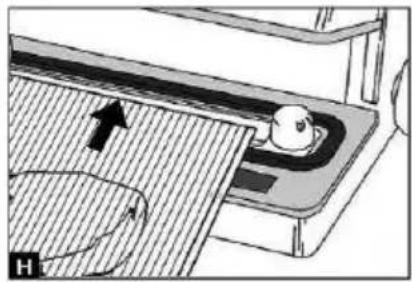
natural_image
Diagram of a mechanical or electrical component with directional arrows and labeled section H (no readable text or symbols)
natural_image
Illustration of a hand using a lathe machine to cut dough on a cutting board (no text or symbols visible)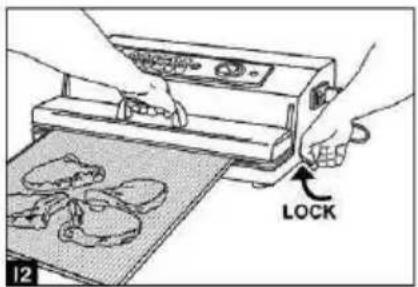
natural_image
Line drawing of a portable printer with mesh printing process (no text or symbols)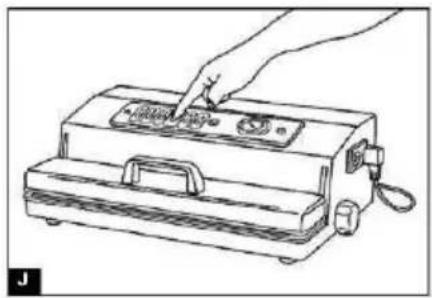
natural_image
Line drawing of a hand inserting a button into a device (no text or symbols)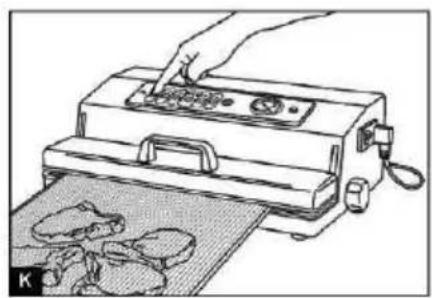
natural_image
Illustration of a hand using a portable press machine to generate food items (no text or symbols visible)natural_image
Illustration of a hand using a portable printer to press or spread materials, with no visible text or symbols.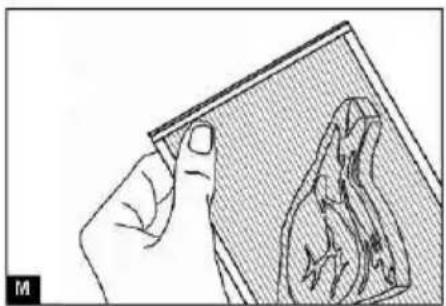
natural_image
Hand holding a sheet of paper with a sketch of a flame or flame inside, no text or symbols present.
WSKAZÓWKA!
- Vacuum packaging machine 400M
- Mode d'emploi
- HINWEIS!
- Keep this user manual together with the product!
- General information ....33
- Safety....35
- Transportation, packaging and storage 37
- Technical data....38
- Installation and operation....41
- Cleaning and maintenance ....55
- Troubleshooting ....57
- Waste....59
- Information on user manual
- Meaning of symbols
- WARNING!
- WARNING! Electrical shock hazard!
- ATTENTION!
- NOTICE!
- Responsibility and warranty
- Copyright
- Declaration of conformity
- Safety
- General information
- Safety instructions for using the device
- Intended use
- Transportation, packaging and storage
- Control of transportation
- Packaging
- Storage
- Technical data
- Installation overview
- Control panel/Functions of keys and display
- Technical specifications
- Installation and operation
- Safety instructions
- WARNING! Hot surface!
- Installation and connection
- Advantages of vacuum packaging
- ! ATTENTION!
- Guidelines for vacuum packaging
- Vacuum packaging for freezer
- Vacuum packaging for the refrigerator
- Vacuum packaging for the pantry
- Defrosting vacuum packed food
- Vacuum packing of packed foods
- Suggestions for vacuum packaging
- General safety instructions
- Advice for preserving vacuum packed foods
- Operation
- Operations before use
- Switching the device on
- Settings
- Setting sealing time
- STOP/CANCEL key - 2C
- Making bags from rolls
- Automatic vacuum packing cycle with bags (precut or see P. 5.5.4)
- Manual vacuum packing cycle with bags
- Maximum air suction even with food having a complex shape
- Automatic vacuum packing cycle with containers
- Cleaning and maintenance
- Safety instructions for cleaning
- Cleaning
- Safety instructions for maintenance
- Waste
- Disposal
- REMARQUE!
- ¡AVISO!
- ADVIES!
- WSKAZÓWKA!
Brand : BARTSCHER
Model : 300435
Category : Vacuum Cleaner