
Omada EAP653 - Access Point TP-LINK - Free user manual and instructions
Find the device manual for free Omada EAP653 TP-LINK in PDF.



| Product Type | Indoor Wireless Access Point |
| Brand | TP-Link |
| Model | Omada EAP653 |
| Wi-Fi Standard | Wi-Fi 6 (802.11ax) |
| Frequency Bands | 2.4 GHz and 5 GHz |
| Maximum Theoretical Throughput | Up to 2976 Mbps (574 Mbps on 2.4 GHz + 2402 Mbps on 5 GHz) |
| Antennas | 4 internal antennas (2×2.4 GHz + 2×5 GHz) |
| Ethernet Ports | 1 x Gigabit Ethernet port (PoE supported) |
| Power Supply | PoE IEEE 802.3af/at or power adapter (12 V / 1 A, not included) |
| Power Consumption | Up to 14.5 W |
| Dimensions | 160 x 160 x 33.6 mm |
| Weight | 340 g |
| Housing Material | ABS Plastic |
| Mounting Methods | Ceiling or wall mount (kit provided) |
| Centralized Management | Compatible with Omada controller (hardware, software, or cloud) |
| Advanced Functions | Mesh, VLAN, multiple SSIDs, bandwidth, access list |
| Wireless Security | WPA2-PSK, WPA3, AES |
| User Capacity | Up to 250 simultaneous clients |
| Operating Temperature | 0 °C to 40 °C |
| Operating Humidity | 10 % to 90 % RH (non-condensing) |
| Certifications | CE, FCC, RoHS |
| Warranty | 2 years (depending on country) |
Frequently Asked Questions - Omada EAP653 TP-LINK
User questions about Omada EAP653 TP-LINK
0 question about this device. Answer the ones you know or ask your own.
Ask a new question about this device
Download the instructions for your Access Point in PDF format for free! Find your manual Omada EAP653 - TP-LINK and take your electronic device back in hand. On this page are published all the documents necessary for the use of your device. Omada EAP653 by TP-LINK.
USER MANUAL Omada EAP653 TP-LINK
Note: Images may differ from your actual product
Network Topology
A typical network topology for the AP is shown below
![graph LR A["Internet"] --> B["Cloud-Based Controller"] B --> C["Router Switch"] C --> D["AP Clients"] C --> E["AP"] D --> F["Mobile Device"] E --> G["Computer"]](/content/2026/04/693961/images/ac4f3497f35d114e5bc9181159e28c10b142e0c1eb2d21d2c489c55408cb112c.jpg)
Software/Hardware Controller
Some APs can be configured and monitored centrally via a controller. For details, refer to the product specifications and the manual for the relevant product or controller. You can get the controller from https://www.tp-link.com or contact the sales staff
Hardware Installation
■ Option 1: Ceiling Mounting
Follow the steps below to install the AP with the provided accessories:
Note: The mounting bracket and the accessories (quantity and size) may vary by product

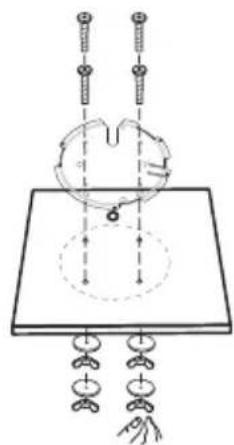
Washers Pan-head Screws Wing Nuts
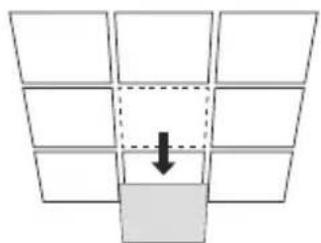
1 Remove the ceiling tile
2
Place the mounting bracket in the center of the ceiling tile Mark positions for the screw holes and a position for the Ethernet cable hole Drill holes for the screws and a hole for the Ethernet cable at the marked positions
3
Secure the mounting bracket to the ceiling tile using pan-head screws, washers and wing nuts
4
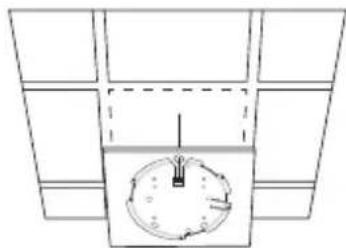
Feed the Ethernet cable through the hole and set the ceiling tile back into place.
5
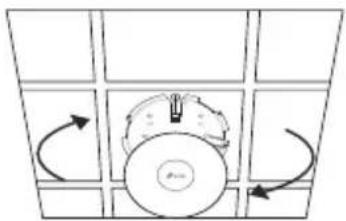
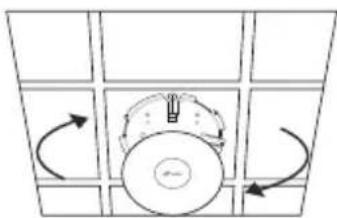
Connect the Ethernet cable to the Ethernet port. Attach the AP to the mounting bracket by aligning the arrow mark on the AP with the arrow mark on the mounting bracket, then rotate the AP until it is locked into place.
Hole for Ethernet cable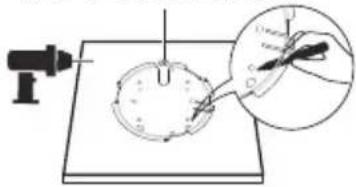
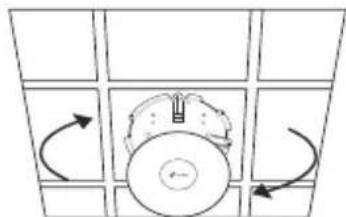
■ Option 2: Wall Mounting
Follow the steps below to install the AP with the provided accessories:
Note: The mounting bracket and the accessories (quantity and size) may vary by product.
Plastic Wall Anchors Self-tapping Screws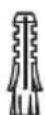

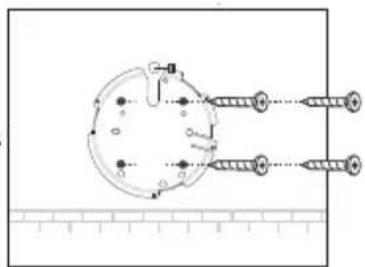
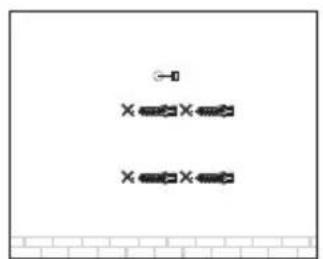
If your Ethernet cable feeds through the wall, position the mounting bracket and feed the Ethernet cable. Mark positions for the screw holes and then drill holes at the marked positions.
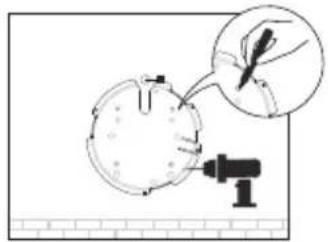
2. Insert the plastic wall anchors into the holes.
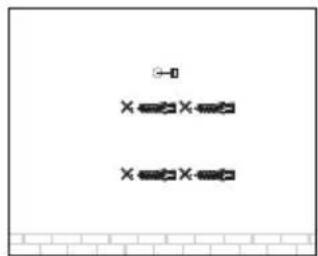
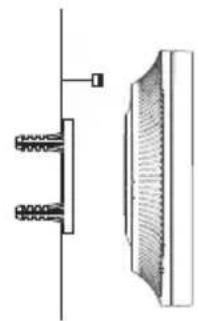
3. Secure the mounting bracket to the wall by driving the self-tapping screws into the anchors. Make sure that the shoulders of the mounting bracket are on the outside.
4. Connect the Ethernet cable to the Ethernet port on the AP.
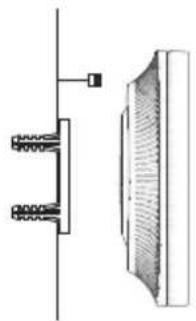
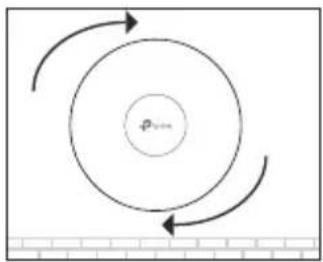
5. Attach the AP to the mounting bracket by aligning the arrow mark on the AP with the arrow mark on the mounting bracket, then rotate the AP until it is locked into place.
Power Supply
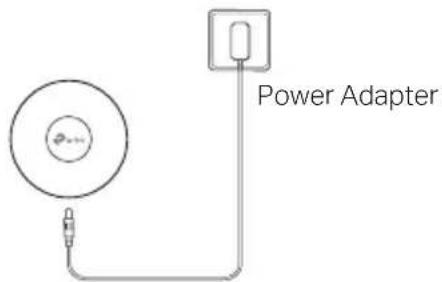
■ Power via PSE Device or Power Adapter
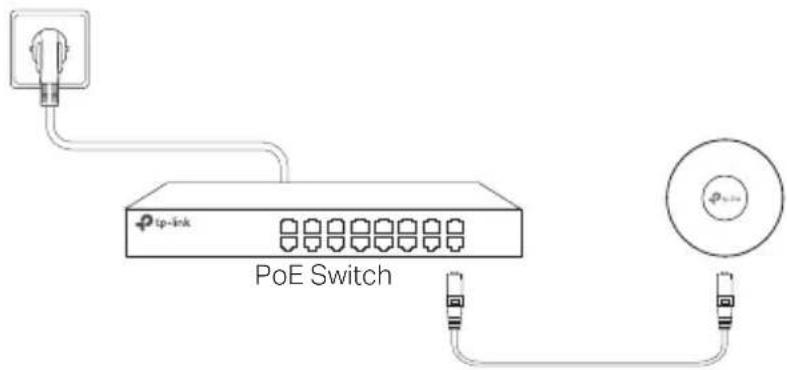
Some APs can be powered via the power adapter or the PSE device (such as a PoE switch) which complies with Power Source Class 2 (PS2) or Limited Power Source (LPS) of IEC 62368-1.
Note: Availability depends on the actual product. Please refer to the product specifications.
Via PoE Switch
Via Power Adapter
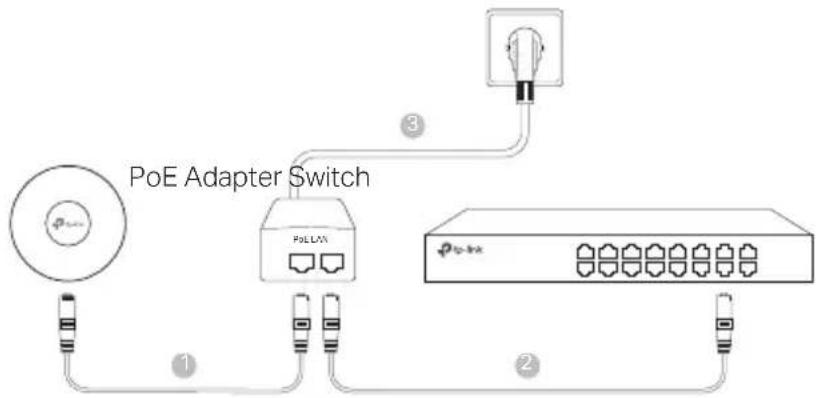
■ Power via PoE Adapter
Some APs can be powered via the PoE adapter.
Note: Availability depends on the actual product. Please refer to the product specifications.
2
Power Supply
2
2 Insert the plastic wall anchors into the holes.
4 Connect the Ethernet cable to the ETHERNET port on the AP.
For technical support, the user guide and other information, please visit https://www.tp-link.com/support/?type=smb, or simply scan the QR code.
Brand : TP-LINK
Model : Omada EAP653
Category : Access Point