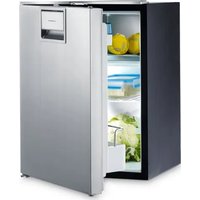
CoolMatic CRP40S - Fridge DOMETIC - Free user manual and instructions
Find the device manual for free CoolMatic CRP40S DOMETIC in PDF.


User questions about CoolMatic CRP40S DOMETIC
0 question about this device. Answer the ones you know or ask your own.
Ask a new question about this device
Download the instructions for your Fridge in PDF format for free! Find your manual CoolMatic CRP40S - DOMETIC and take your electronic device back in hand. On this page are published all the documents necessary for the use of your device. CoolMatic CRP40S by DOMETIC.
USER MANUAL CoolMatic CRP40S DOMETIC
natural_image
Exterior view of a modern stainless steel refrigerator (no visible text or symbols)CRP40
EN Refrigerator
Operating manual....8
DE Kühlschrank
natural_image
Technical line drawing of a mechanical assembly with two components connected by a cable (no text or symbols)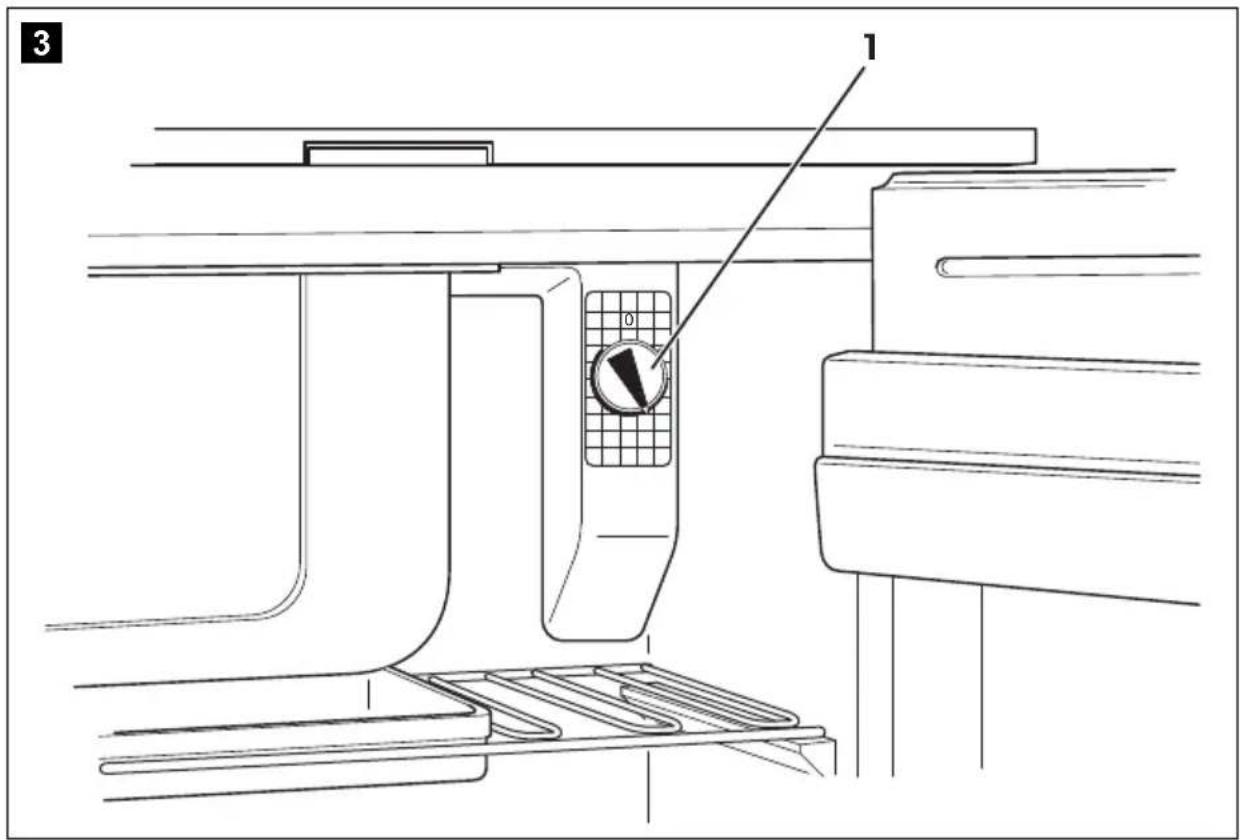
text_image
3 1 0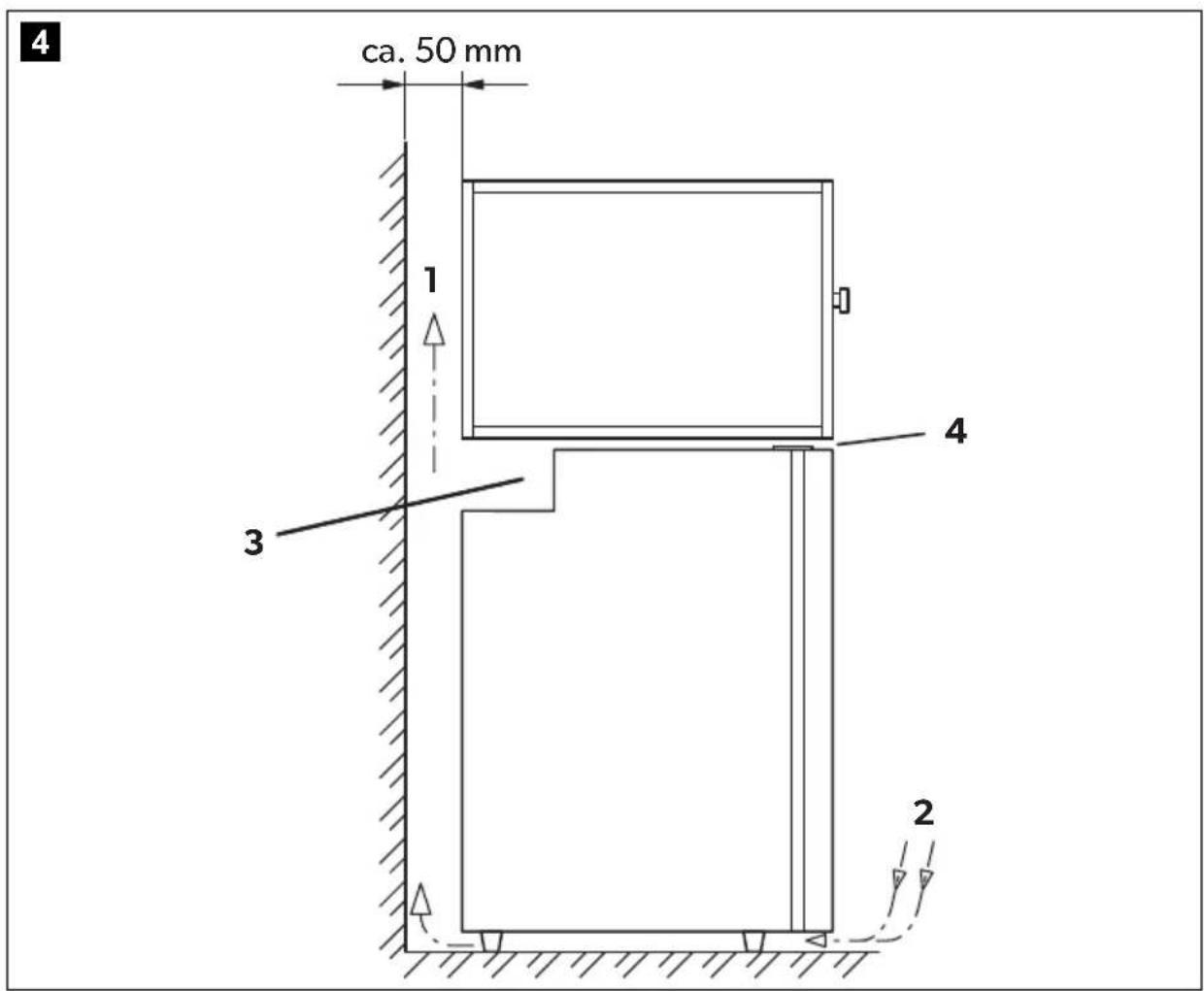
text_image
ca. 50 mm 1 3 4 2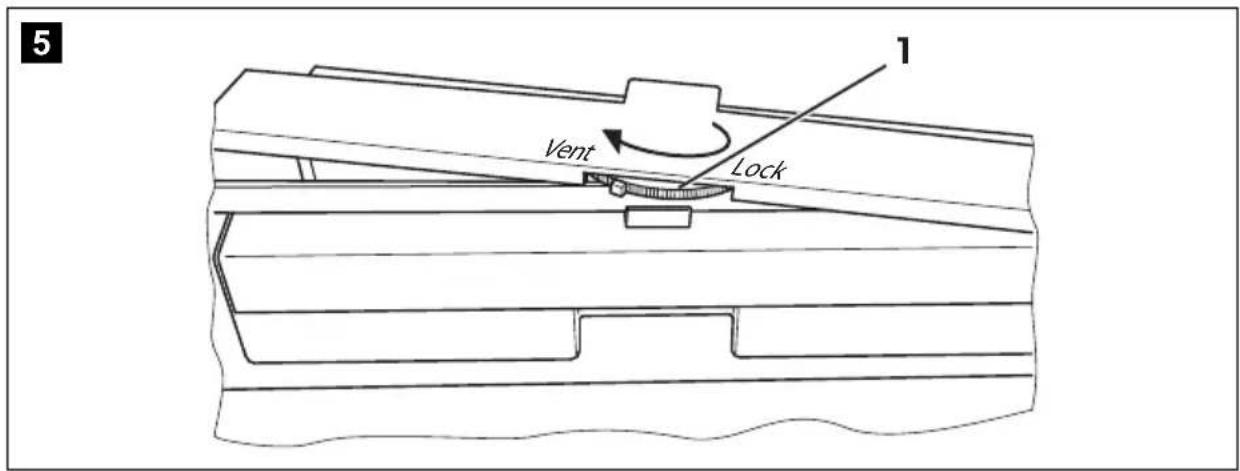
text_image
5 Vent Lock 1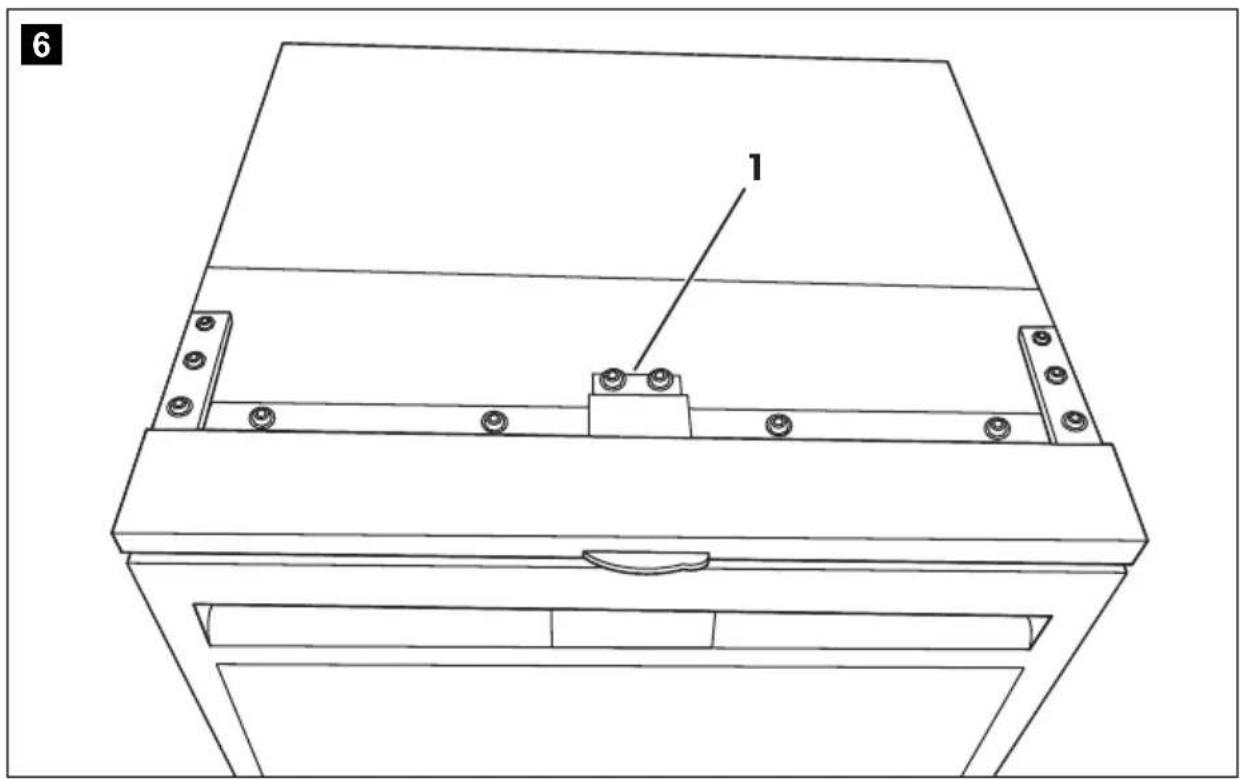
text_image
6 1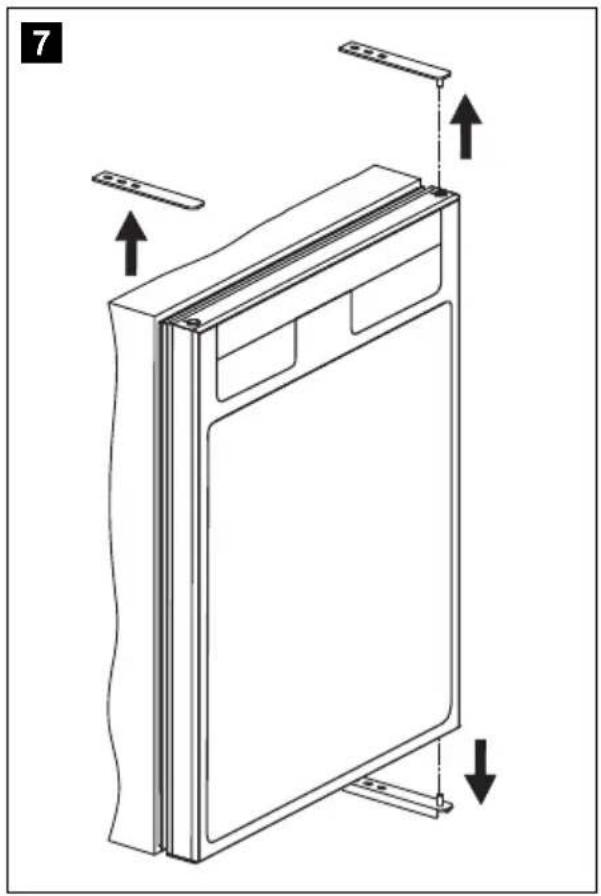
natural_image
Technical line drawing of a front panel or enclosure with mounting brackets and directional arrows indicating assembly (no text or symbols)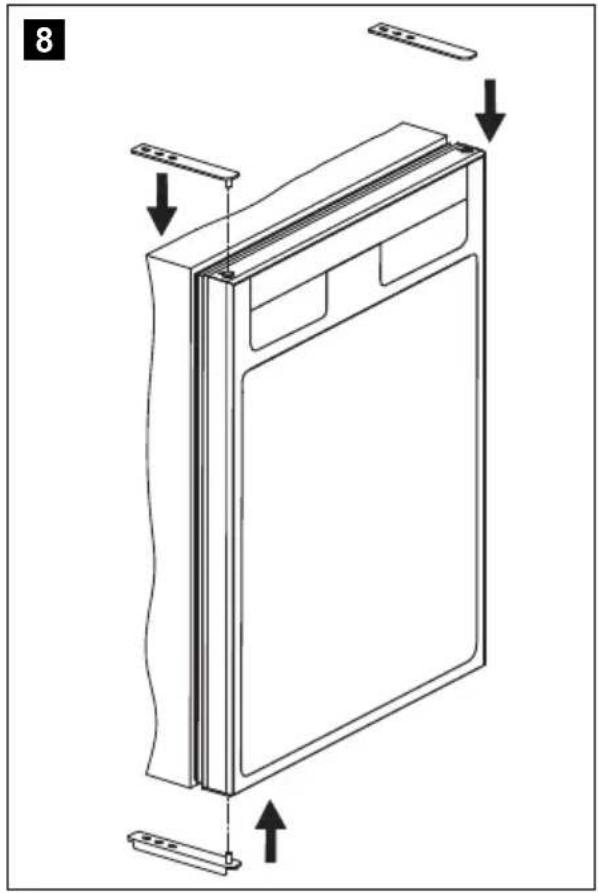
natural_image
Line drawing of a rectangular electronic device with mounting brackets and connectors, showing internal structure and directional arrows (no text or symbols)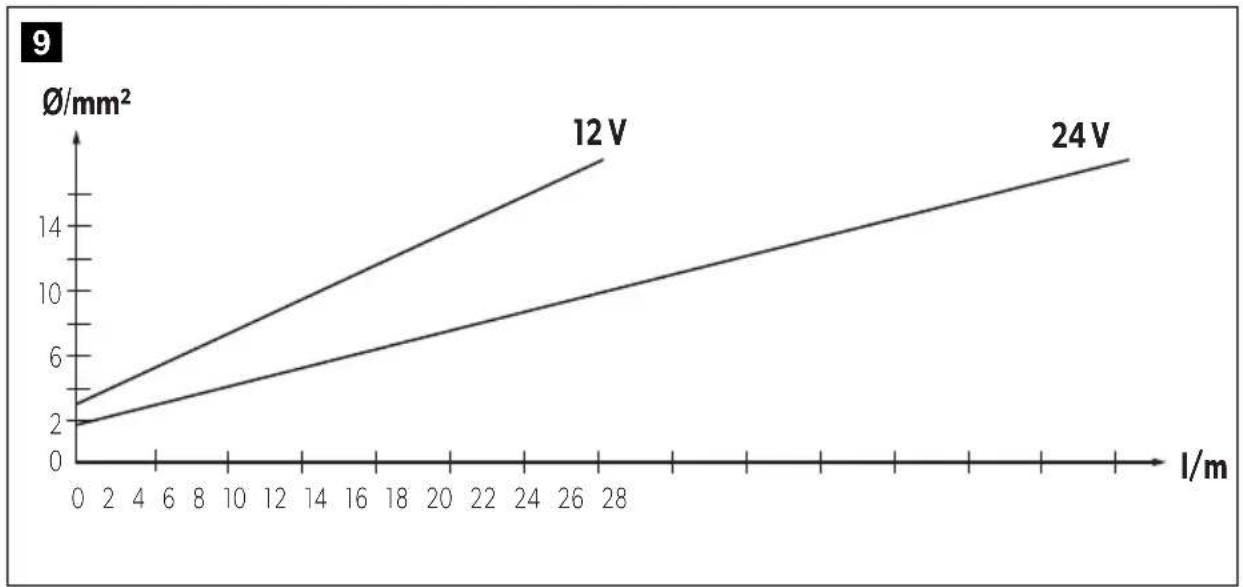
line
| I/m | 12 V (Ø/mm²) | 24 V (Ø/mm²) | | --- | ------------ | ------------ | | 0 | 2 | 2 | | 28 | 16 | 14 |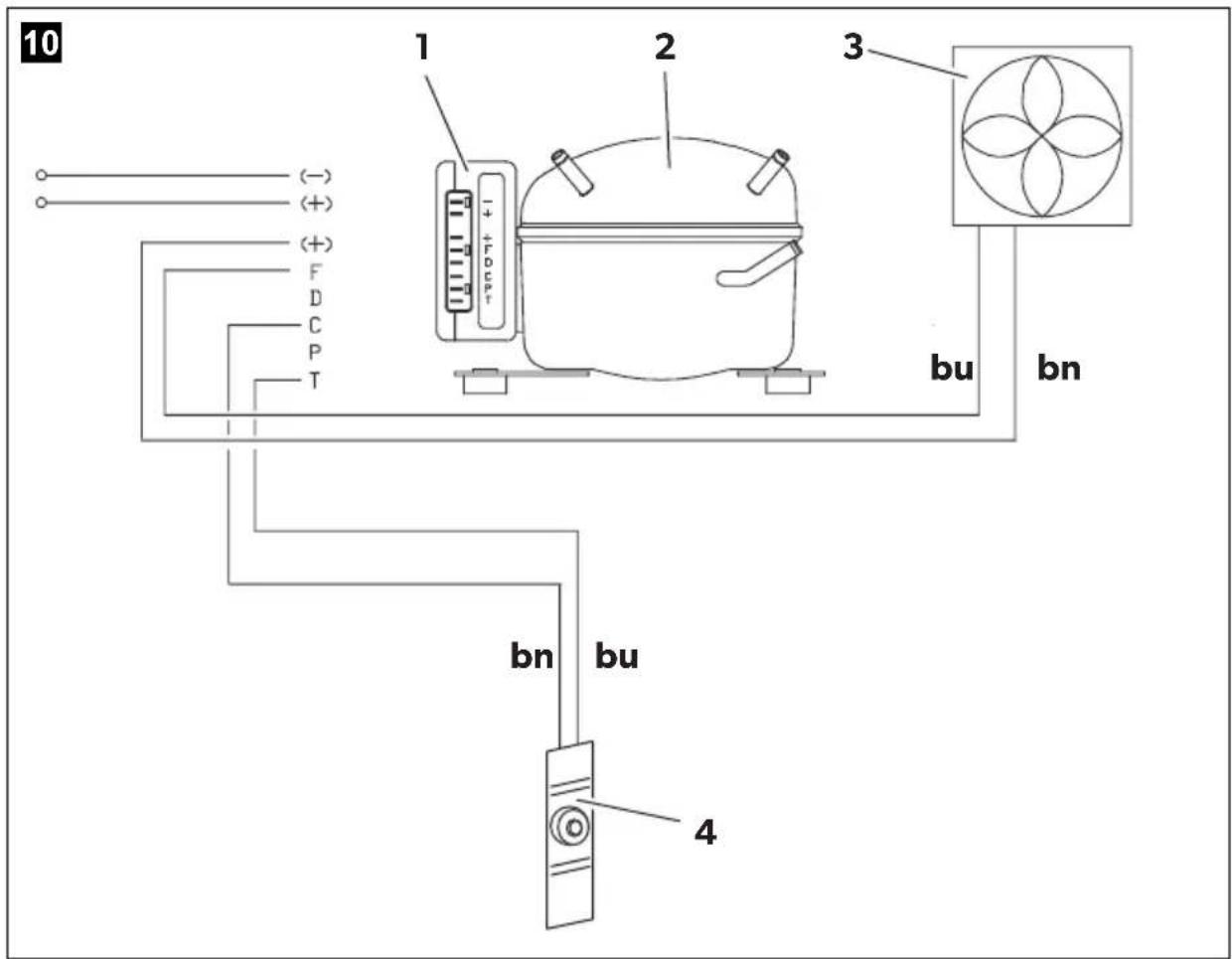
text_image
10 1 2 3 FUDEPT bu bn bn bu 4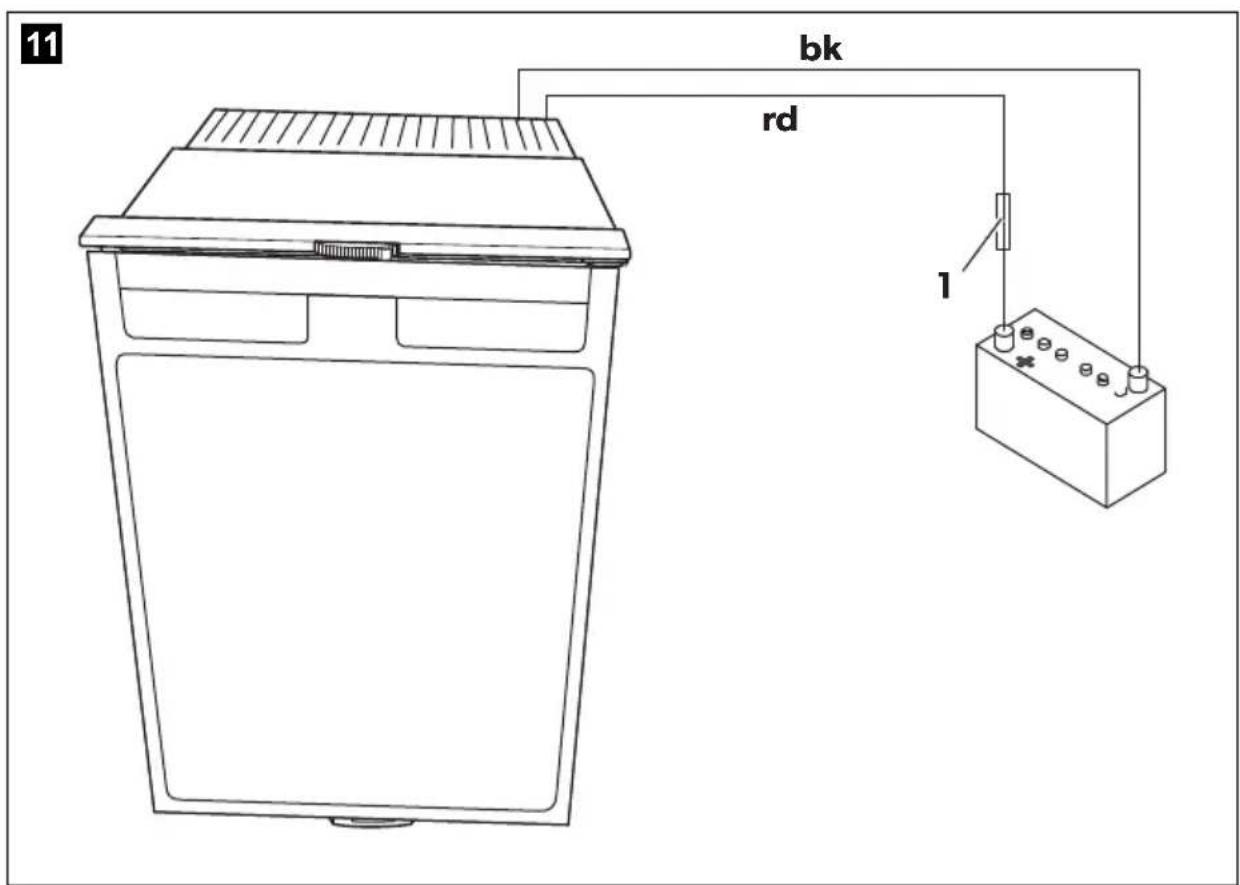
text_image
11 bk rd 1Please read this instruction manual carefully before first use, and store it in a safe place. If you pass on the product to another person, hand over this instruction manual along with it.
Contents
1 Explanation of symbols....9
2 Safety instructions....9
3 Scope of delivery .....12
4 Accessories....12
5 Intended use ....12
6 Technical description .....12
7 Setting up and connecting the refrigerator....13
8 Using the refrigerator .....16
9 Cleaning and maintenance....19
10 Guarantee....20
11 Disposal.... 20
12 Troubleshooting .....21
13 Technical data.... 23
1 Explanation of symbols

DANGER!
Safety instruction: Failure to observe this instruction will cause fatal or serious injury.

WARNING!
Safety instruction: Failure to observe this instruction can cause fatal or serious injury.

CAUTION!
Safety instruction: Failure to observe this instruction can lead to injury.

NOTICE!
Failure to observe this instruction can cause material damage and impair the function of the product.

NOTE
Supplementary information for operating the product.
2 Safety instructions
The manufacturer accepts no liability for damage in the following cases:
• Faulty assembly or connection
• Damage to the product resulting from mechanical influences and excess voltage
• Alterations to the product without express permission from the manufacturer
• Use for purposes other than those described in the operating manual
2.1 General safety

DANGER!
- On boats: If the device is powered by the mains, ensure that the power supply has a residual current circuit breaker.

WARNING!
• Have a qualified technician perform the installation in wet rooms.
- Do not operate the device if it is visibly damaged.
- If this device's power cable is damaged, it must be replaced by the manufacturer, customer service or a similarly qualified person in order to prevent safety hazards.
- This device may only be repaired by qualified personnel. Inadequate repairs may cause serious hazards.
- This device can be used by children aged 8 years or over, as well as by persons with diminished physical, sensory or mental capacities or a lack of experience and knowledge, providing they are supervised, or have been taught how to use the device safely and are aware of the resulting risks.
- Cleaning and user maintenance must not be carried out by children without supervision.
- Children must be supervised to ensure that they do not play with the device.
- Always keep and use the device out of the reach of children under 8 years of age.
- Do not store any explosive substances, such as spray cans with propellants, in the device.

CAUTION!
• Danger of crushing! Do not put your fingers into the hinge.
- Foodstuff may only be stored in its original packaging or in suitable containers.

NOTICE!
- Check that the voltage specification on the type plate is the same as that of the power supply.
- Never pull the plug out of the socket by the connection cable.
- If the refrigerator is connected to the DC socket: Disconnect the refrigerator and other electric consumers from the battery before connecting the quick charging device.
- If the refrigerator is connected to the DC socket: Disconnect the refrigerator or switch it off when you turn off the engine. Otherwise you may discharge the battery.
- The refrigerator is not suitable for storing substances which are caustic or contain solvents.
- Keep the drainage outlet clean at all times.
-
Do not open the refrigerant circuit under any circumstances.
-
Never transport the device in a horizontal position, so that no oil can leak out of the compressor.
- Make sure that the refrigerator circuit is not damaged during transportation. The refrigerant in the refrigerator circuit is highly flammable. In the event of any damage to the refrigerator circuit:
- Avoid naked flames and sparks.
- Air the room well.
- Set up the device in a dry location where it is protected against splashing water.
2.2 Operating the device safely

DANGER!
- Do not touch exposed cables with your bare hands. This applies especially when operating the device from the AC mains.

CAUTION!
- Before starting the device, ensure that the power supply line and the plug are dry.
- If you connect the device to a battery, make sure that no food comes into contact with the battery acid.

NOTICE!
- Do not use electrical devices inside the cooling device unless they are recommended by the manufacturer for that purpose.
- Do not place it near naked flames or other heat sources (heaters, direct sunlight, gas ovens etc.)
• Danger of overheating!
Always ensure sufficient ventilation so that the heat generated during operation can dissipate. Make sure that the device is sufficiently far away from walls and other objects so that the air can circulate.
- Ensure that the ventilation vents are not covered.
- Do not fill the inner container with ice or fluid.
• Never immerse the appliance in water.
- Protect the appliance and the cable against heat and moisture.
• Make sure that foodstuffs do not touch the walls of the cooling area.
3 S c o p e o f d
Quantity Description
1 Refrigerator
1 Operating manual
4 A c c e s s o r i
Available as accessory (not included in scope of delivery):
Description Ref. no.
MPS-35, rectifier for devices with Bd-35F compressor 9600000445
5 Intended use
The refrigerator is designed for cooling and freezing foodstuffs. The refrigerator is also suitable for use on boats.

CAUTION! Health hazard!
If you wish to cool medicines, please check if the cooling capacity of the refrigerator is suitable for the medicine in question.
6 Technical description
CoolMatic CRP40 is suitable for use with a 12 V or 24 V DC voltage and can therefore also be used for camping or on boats. It can also be connected to a 230 V mains supply via the MPS-35 rectifier.
The refrigerator can chill products and keep them cool. Products can be deep-frozen in the freezer compartment.
All materials used in the refrigerator are compatible for use with foodstuffs.
The refrigerant circuit is maintenance-free.
You can use the continuously variable thermostat to set the desired temperature.
The refrigerator is fitted with a detachable unit which can be separately installed (fig. 2, page 3).
6.1 Control elements
No. in fig. 3, page 4
Explanation
1 Temperature controller
7 Setting up and connecting the refrigerator

WARNING! Safety instructions for installation on boats
Please note the following instructions for installation on boats:
- The refrigerator is designed for short-term heeling of up to 30°. When setting up the refrigerator, note that it must be fastened to take account of this. If you have any questions regarding installation, consult your specialist dealer.
• Install the refrigerator so that the warm air produced can easily flow away (either upwards or to the sides, fig. 4, page 4). - The refrigerator is designed for ambient temperatures between +16 °C and +32 °C.
- If the refrigerator is powered by the mains, ensure that the power supply has a residual current circuit breaker.
- Observe all the other installation instructions in this section.
7.1 Installing the refrigerator
In continuous operation, the air humidity may not exceed 90%.
Set up the refrigerator in a dry, sheltered place. Avoid placing it near heat sources such as radiators, gas ovens or hot water pipes. Do not let it stand in direct, strong sunlight.
The refrigerator must be positioned so that heated air can dissipate easily. Therefore make sure there is adequate ventilation (fig. 4, page 4).
| No. in fig. 4, page 4 Explanation | ||||||||
| 1 Hot waste air | ||||||||
| 2 Cold intake air | ||||||||
| 3 | C | o | n | d | e | n | s | e |
| 4 With decorative panel 50 mm space at the top! | ||||||||

NOTE
The cooling unit is detachable and can be installed up to 1.5 metres away from the refrigerator if there is limited space.
7.2 Releasing the lock
The refrigerator has a locking mechanism (fig. 5 1, page 5) which is also used to protect it during transport. The following settings are possible:

NOTICE!
Only adjust the locking mechanism when the door is open. If you use it with the door closed, you will damage the refrigerator.
- Normal lock (turn wheel clockwise to the end stop): the door is locked and secured.
To open the door, lift the handle up and open the door. - Vent (turn wheel anti-clockwise to the end stop): The door is slightly open and fixed in place.
Use this position, if you are not going to use the refrigerator for a long time.
7.3 Changing the door hinge
You can also change the hinge of the door, so that it opens to the left rather than the right.
▶ Proceed as shown in fig. 6, page 5 to fig. 8, page 6, to change the hinges.
7.4 Connecting to a battery
The refrigerator can be operated with a 12 V to 24 V DC voltage supply.

NOTICE!
To prevent voltage and power losses, the cable should be as short as possible and not be interrupted.
For this reason avoid additional switches, plugs or socket strips.
▶Determine the required cross section of the cable in relation to the cable length according to fig. 9, page 6.
Key for fig. 9, page 6
Co-ordinate axis Meaning Unit
| Cable length m
∅Cable cross section mm²

NOTICE!
Make sure that the polarity is correct.
▶ Before starting up the refrigerator for the first time, check whether the operating voltage and the battery voltage match (see type plate).
For the electrical connection you also need the wiring diagram (fig. 10, page 7).
No. in fig. 10, page 7
Meaning
1 Electronic terminal rail
2 Compressor
3 DC fan (if present)
4 Mechanical thermostat
▶ Connect the refrigerator (fig. 11, page 7)
– as directly as possible to the poles of the battery or
- to a plug socket which is fuse protected with at least 15 A (at 12 V) or 7.5 A (at 24 V).

NOTICE!
Disconnect the refrigerator and other consumers from the battery before charging the battery with a quick charging device.
Over voltages can damage the electronics of the refrigerator.
For safety reasons the refrigerator is equipped with an electronic system to prevent the polarity being reversed. This protects the refrigerator against reversed polarity when connecting to a battery and against short circuiting. To protect the battery, the refrigerator switches off automatically if the voltage is insufficient (see table below).
| 12 V 24 V | |
| Cut-off voltage | 10.4 V 22.8 V |
| Cut-in voltage | 11.7 V 24.2 V |
7.5 Connecting to a 230 V mains supply

DANGER! Danger of fatal injuries!
- Never handle plugs and switches with wet hands or if you are standing on a wet surface.
- If you are operating your refrigerator on board a boat with a mains connection of 230 V from the land, you must install a residual current circuit breaker between the 230 V mains supply and the refrigerator. Get advice from a qualified specialist.
▶ To operate the refrigerator on the 230 V mains, use the MPS-35 rectifier.
8 Using the refrigerator

NOTE
Before starting your new refrigerator for the first time, you should clean it inside and outside with a damp cloth for hygienic reasons (please also refer to the chapter "Cleaning and maintenance" on page 19).
8.1 Energy saving tips
- Choose a well ventilated location which is protected from direct sunlight.
- Allow warm food to cool down first before placing it in the cooling device to keep cool.
- Do not open the cooling device more often than necessary.
- Do not leave the cooling device open for longer than necessary.
• Defrost your refrigerator as soon as a layer of ice forms. - Avoid unnecessarily low temperature settings.
- Clean dust and dirt from the condenser at regular intervals.
8.2 Using the refrigerator
The refrigerator conserves fresh foodstuffs. The freezer compartment conserves frozen foodstuffs and freezes fresh foodstuffs.

NOTICE!
- Make sure that drinks or foodstuffs in glass containers are not cooled too severely. Drinks and liquids expand when they freeze. This can break the glass containers.
- Food may only be stored in its original packaging or in suitable containers.
▶ Switch the refrigerator on by turning the knob (fig. 3 1, page 4) to the right.

NOTE
After switching on, the refrigerator requires approx. 60 s until the compressor starts up.

NOTICE!
Ensure that the objects placed in the refrigerator are suitable for cooling to the selected temperature.
Setting the temperature
You can set the temperature to any level using the knob. The built-in thermostat regulates the temperature as follows:
• Min. (left limit) = warmest setting
• Max. (right limit) = coldest setting

NOTE
The cooling capacity can be influenced by:
• The ambient temperature
• The amount of food to be conserved
• The frequency with which the door is opened.
Conserving foodstuffs
You can conserve foodstuffs in the refrigerator. The time for which the food can be conserved in this way is usually stated on the package.

NOTICE!
Do not conserve any warm foodstuffs in the refrigerator.
Do not place glass containers with liquids in the freezer compartments.

NOTE
Food which can easily absorb tastes and odours and liquids and products with a high alcohol content should be conserved in air-tight containers.
The refrigerator is divided in different zones with different temperatures:
- The colder zones are immediately above the drawers for fruit and vegetables, near the back wall.
- Observe the temperature information and best before date on the food packaging.
▶Observe the following when using the refrigerator:
- Never re-freeze products which have started defrosting or have been defrosted; consume them as soon as possible.
- Wrap food in aluminium foil or cling film and shut in in a suitable box with a lid. This ensures that aromas, the shape and the freshness will be better conserved.
Defrosting the refrigerator
Humidity can form frost in the interior of the refrigerator or on the vaporiser. This reduces the cooling capacity. Defrost the refrigerator in good time to avoid this.

NOTICE!
Never use hard or pointed tools to remove ice or to loosen objects which have frozen in place.
This is how to defrost the refrigerator:
▶Take the contents out.
▶If necessary, put them in another cooling appliance.
▶Set the knob to "0".
▶Leave the door open.
▶ Wipe off the water resulting from defrosting or – if present – empty the collecting tray. If your refrigerator has a water drain, drain the thawed water off.
Switching off and storing the refrigerator
If you do not intend to use the refrigerator for a long time, proceed as follows:
▶ Set the knob to level "0".
▶ Disconnect the power cable from the battery or pull the DC cable plug out of the rectifier.
▶ Clean the refrigerator (see chapter "Cleaning and maintenance" on page 19).
▶Set the lock to the "VENT" position. This prevents odours from forming.
Securing the refrigerator door
You can prevent the refrigerator door from being opened inadvertently.
▶ Put the locking mechanism on the top of the door to position 1 (fig. 5 1, page 5).
9 Cleaning and maintenance

NOTICE!
- Do not use abrasive cleaning agents or hard objects for cleaning as these can damage the refrigerator.
- Never use hard or pointed tools to remove ice or to loosen objects which have frozen in place.
▶As soon as the refrigerator becomes dirty, clean it with a damp cloth.
▶Make sure that no water drips into the seals. This can damage the electronics.
▶Wipe the refrigerator dry with a cloth after cleaning.
10 Guarantee
The statutory warranty period applies. If the product is defective, please contact the manufacturer's branch in your country (see the back of the instruction manual for the addresses) or your retailer.
For repair and guarantee processing, please include the following documents when you send in the device:
• A copy of the receipt with purchasing date
• A reason for the claim or description of the fault
11 Disposal

DANGER! Risk of child entrapment
Before you throw away your old refrigerator:
• Take off doors
- Leave the shelves in place so that the children may not easily climb inside

CAUTION!
When disposing of the device, make sure it is not overheated, as the insulating foam was made with flammable gas.
▶ Place the packaging material in the appropriate recycling waste bins wherever possible.
If you wish to finally dispose of the product, ask your local recycling centre or specialist dealer for details about how to do this in accordance with the applicable disposal regulations.
12 Troubleshooting
Compressor does not run
Fault Possible cause Remedy
| U_TERM=0V There is an interruption in the connection between the battery and the electronics | Establish a connection | |
| U_TERM≤ U_ON | Main switch faulty (if installed) Replace the main switch | |
| Additional supply line fuse has blown (if installed) | Replace the supply line fuse | |
| U_TERM≤ U_ON | Battery voltage is too low Charge the battery | |
| Start attempt with U_TERM≤ U_OFF | Loose cablesPoor contact (corrosion) | Establish a connection |
| Battery capacity too low Replacing the battery | ||
| Cable cross section too small Replace the cable (fig. 9, page 6) | ||
| Start attempt with U_TERM≥ U_ON | Ambient temperature too high – | |
| Insufficient ventilation and/or air supply | Move the refrigerator to another location | |
| Condenser is dirty Clean the condenser | ||
| Fan defective (if installed) Replace the fan | ||
| Electric circuit between the pins in the compressor interrupted | Defective compressor | Replace the compressor |
| Usage when the ambient temperature is too low | The compressor only starts up at an ambient temperature of more than +16°C. | Only switch on the refrigerator at an ambient temperature of more than +16°C. |
U_TERM Voltage between the positive and negative terminals of the electronics
U_ON Cut-in voltage of the electronics
U_OFF Cut-off voltage of the electronics
Interior temperature too low in control level "1"
Fault Possible cause Remedy
| Compressor runs constantly | Thermostat sensor has no contact on the vaporiser | Secure the sensor |
| Faulty thermostat Change the thermostat | ||
| Compressor runs for a long time | Large quantities have been frozen in – the freezer compartment | |
Poor cooling, interior temperature increases
Fault Possible cause Remedy
| Compressor runs for a long time/continuously | Vaporiser is iced over Defrost the vaporiser | |
| Ambient temperature too high – | ||
| Insufficient ventilation and/or air supply | Move the refrigerator to another location | |
| Condenser is dirty Clean the condenser | ||
| Fan defective (if installed) Replace the fan | ||
| Compressor runs intermittently | Battery capacity exhausted Charge the battery | |
Unusual noises
Fault Possible cause Remedy
| Loud humming A component of the refrigerant circuit cannot move freely (touching the wall) | Bend the component carefully away from the obstruction |
| Foreign body jammed between the cooling unit and the wall | Remove the foreign body |
| Fan noise (if installed) – |
13 Technical data
| CoolMatic CRP40 | |
| Ref. no.: 9105204440, 9105204441 | |
| Voltage: 12 V DC or 24 V DC | |
| Capacity: | 39 l |
| Freezer proportion: | 5,3 l |
| Average power consumption: 45 W | |
| Cooling temperature range | |
| Refrigerator compartment: | 0 °C to +12 °C |
| Freezer compartment: | -12 °C to 0 °C |
| Relative humidity: maximum 90% | |
| Short-term inclination: max. 30° | |
| Coolant quantity: 38 g | |
| CO2 equivalent: 0.054 t | |
| Global warming potential (GWP): 1430 | |
| Dimensions in mm: | fig. 1, page 3 |
| Weight: | 19 kg |
| Test/certificates: |  complies with ErP/EuP directive complies with ErP/EuP directive |
The coolant circuit contains R134a.
Contains fluorinated greenhouse gases
Hermetically sealed equipment
6 Description technique
Dometic Australia Pty. Ltd.
1 John Duncan Court
Varsity Lakes QLD 4227
1800 212121
+61 7 55076001
Mail: sales@dometic.com.au
AUSTRIA
Dometic Austria GmbH
Neudorferstraße 108
A-2353 Guntramsdorf
+43 2236 908070
+43 2236 90807060
Mail: info@dometic.at
BENELUX
Dometic Branch Office Belgium
Zincstraat 3
B-1500 Halle
+32 2 3598040
+32 2 3598050
Mail: info@dometic.be
BRAZIL
Dometic DO Brasil LTDA
Avenida Paulista 1754, conj. 111
SP 01310-920 Sao Paulo
+551132513352
+551132513362
Dometic Group Asia Pacific
Suites 2207-11 · 22/F · Tower 1
The Gateway · 25 Canton Road,
Tsim Sha Tsui · Kowloon
+852 2 4611386
+852 2 4665553
Mail: info@waeco.com.hk
HUNGARY
Dometic Zrt. Sales Office
Kerékgyártó u. 5.
H-1147 Budapest
+3614684400
+3614684401
Domettic Italy S.r.l.
Via Virgilio, 3
I-47122 Forlì (FC)
+39 0543 754901
+390543754983
Mail: vendite@dometic.it
JAPAN
Dometic KK
Maekawa-Shibaura, Bldg. 2
2-13-9 Shibaura Minato-ku
Tokyo 108-0023
+81 3 5445 3333
+81354453339
Mail: info@dometic.jp
MEXICO
Circuito Médicos No. 6 Local 1
Colonia Ciudad Satélite
CP 53100 Naucalpan de Juárez
Estado de México
+52 55 5374 4108
+52 55 5393 4683
Mail: info@dometic.com.mx
NETHERLANDS
Dometic Benelux B.V.
Ecustraat 3
NL-4879 NP Etten-Leur
+31 76 5029000
+31 76 5029019
Mail: info@dometic.nl
NEW ZEALAND
Dometic New Zealand Ltd.
PO Box 12011
Penrose
Auckland 1642
+6496221490
+6496221573
Mail: customerservices@dometic.co.nz
NORWAY
Dometic Norway AS
∅sterøyveien 46
N-3232 Sandefjord
+47 33428450
+47 33428459
Mail: firmapost@dometic.no
POLAND
Dometic Poland Sp. z o.o.
Ul. Puławska 435A
PL-02-801 Warszawa
+48 22 414 3200
+48 22 414 3201
Mail: info@dometic.pl
PORTUGAL
Dometic Spain, S.L.
Komsomolskaya square 6-1
RU-107140 Moscow
+7 495 780 79 39
+7 495 916 56 53
Mail: info@dometic.ru
SINGAPORE
Dometic Pte Ltd
18 Boon Lay Way 06-140 Trade Hub 21
Singapore 609966
+65 6795 3177
+65 6862 6620
Mail: dometic@dometic.com.sg
SLOVAKIA
Dometic Slovakia s.r.o. Sales Office Bratislava
Nádražná 34/A
900 28 Ivánka pri Dunaji
+421 2 45 529 680
Mail: bratislava@dometic.com
SOUTH AFRICA
Dometic (Pty) Ltd.
Regional Office
South Africa & Sub-Saharan Africa
2 Avalon Road
West Lake View Ext 11
Modderfontein 1645
Johannesburg
+27114504978
+27114504976
Mail: info@dometic.co.za
SPAIN
Dometic Spain S.L.
Avda. Sierra del Guadarrama, 16
E-28691 Villanueva de la Cañada
Madrid
+34 91 833 60 89
+34 900 100 245
Mail: info@dometic.es
SWEDEN
Dometic Scandinavia AB
Gustaf Melins gata 7
Dometic Switzerland AG
Riedackerstrasse 7a
CH-8153 Rümlang
+41 44 8187171
+41 44 8187191
Mail: info@dometic.ch
UNITED ARAB EMIRATES
Dometic Middle East FZCO
P.O.Box17860
S-D 6, Jebel Ali Freezone
Dubai
+97148833858
+97148833868
Mail: info@dometic.ae
UNITED KINGDOM
Dometic UK Ltd.
Dometic House, The Brewery
Blandford St. Mary
Dorset DT119LS
+44 344 626 0133
+44 344 626 0143
Mail: customerservices@dometic.co.uk
USA
Dometic RV Division
1120 North Main Street
Elkhart, IN 46515
+1574-264-2131