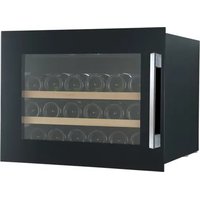
NorCare V28BK - Wine cellar NODOR - Free user manual and instructions
Find the device manual for free NorCare V28BK NODOR in PDF.


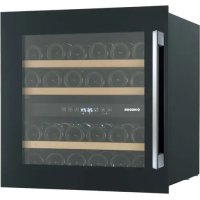
| Product type | Wine cellar |
| Brand | Nodor |
| Model | NorCare V28BK |
| Dimensions (W x D x H) | 590 x 563 x 455 mm |
| Net weight | 26.6 kg |
| Voltage / Frequency | 220-240 V~ / 50 Hz |
| Refrigerant | R600a (18 g) |
| Usable volume | 62 L |
| Capacity | 28 bottles (Bordeaux 750 ml) |
| Temperature range | 5-18 °C (adjustable in 1 °C increments) |
| Display | LED, toggle °C/°F |
| Lighting | Interior LED, dedicated switch |
| Child safety | Key lock (UP + DOWN combination 3 s) |
| Reversible door | Yes, reversible from left to right |
| Cleaning | Soft damp cloth, no solvents or harsh detergents |
| Maintenance | Manual defrosting, regular cleaning, maintain seals |
| Error code | E1/E2 (upper zone sensor), E3/E4 (defrost sensor) |
| Installation | Built-in under counter or freestanding, ventilation space 200 cm² min |
| Included accessories | Shelves, handle, fixing kit, supports |
| Repairability | Spare parts available via after-sales service |
Frequently Asked Questions - NorCare V28BK NODOR
User questions about NorCare V28BK NODOR
0 question about this device. Answer the ones you know or ask your own.
Ask a new question about this device
Download the instructions for your Wine cellar in PDF format for free! Find your manual NorCare V28BK - NODOR and take your electronic device back in hand. On this page are published all the documents necessary for the use of your device. NorCare V28BK by NODOR.
USER MANUAL NorCare V28BK NODOR
natural_image
Technical line drawing of a mechanical housing with multiple circular components arranged in a grid (no text or symbols)EN Installation, use and maintenance instructions
ES Instrucciones para la instalación, el uso, el mantenimiento
PT Instruções para instalação, utilização e manutenção
FR Instructions pour l'installation, l'utilisation, l'entretien
DE Anweisungen für die Installation, den Gebrauch, die Wartung
EN
Wine Cooler
Instruction Manual
natural_image
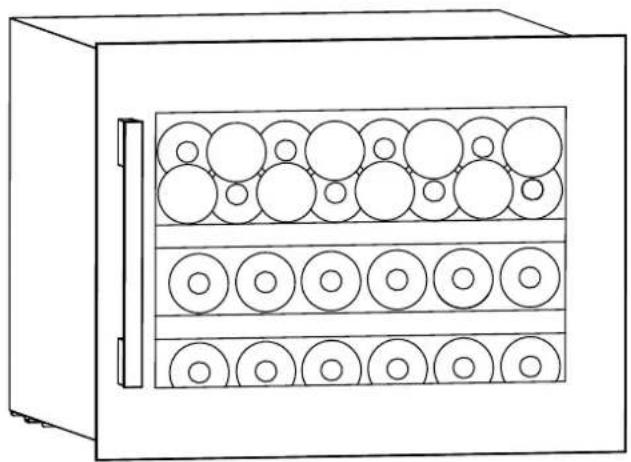
Technical line drawing of a rectangular enclosure with circular components on the front and top (no text or symbols)NOTE: Thank you for your purchase and use our compressor wine cooler! This product is used to chill red wine.
Our product will create perfect temperature and humidity environment to store your collection of wine quietly and peacefully.
Content
Safety instructions & warnings....3-4
Installation....5
Description of the appliance....6-9
Operation....10-11
Troubleshooting....12
Maintenance and cleaning....13
Technical parameters....14
Safety instructions & warnings
Your safety is of the utmost importance to our company. Please make sure that you read this instruction booklet before attempting to install or use the appliance. If you are unsure of any of the information contained in this booklet, please contact the Technical Department.

Prohibition

Warning

Caution

Caution
● This appliance can be used by children aged from 8 years and above and persons with reduced physical, sensory or mental capabilities or lack of experience and knowledge if they have been given supervision or instruction concerning use of the appliance in a safe way and understand the hazards involved. Children shall not play with the appliance. Cleaning and user maintenance shall not be made by children without supervision.
● Children aged from 3 to 8 years are allowed to load and unload refrigerating appliances. Children should be supervised to ensure that they do not play with the appliance.
● This appliance is intended for HOUSEHOLD USE ONLY and not for commercial or industrial use.

Warning
- Keep ventilation openings, in the appliance enclosure or in the built-in structure, clear of obstruction.
● Do not use mechanical devices or other means to accelerate the defrosting process, other than those recommended by the manufacturer.
● Do not damage the refrigerant circuit.
● Do not use electrical appliances inside the storage compartments of the appliance, unless they are of the type recommended by the manufacturer.
● Make sure that the appliance is connected to power supplying accordance with the rating label.
● Use an independent grounded socket with 10A or higher, do not connect to transformer or socket with multiple outlets.
● Make sure socket is grounded properly and do not modify power cord & plug.
- Connect power plug with socket firmly in case of possible risk of fire.
● Plug should be within reach for easy disconnection after the appliance positioned in case of accidents occurred.
● Do not store or burn gasoline or other inflammbales near the appliance in case of possible fire.
- Do not store inflammbales, explosives, acid & alkaline liquids etc. in the compartment of the appliance.
● Do not operate other appliances in the compartment.
Child Safety
● Do not allow child play inside the appliance in case of entrapment.
● Do not allow child hang on the door to play in case of falling of the appliance.
● Do not allow child reach into compressor compartment or touch metal components at rear of the appliance in case of possible injury.
Keep away from water
- Do not spray water on the appliance or wash the appliance by pouring or filling water in case of invalid insulation and possible electric shock.
Be careful of freezing
- Do not touch surface of the liner inside the compartment, especially with wet hand, in case of frozen injury while the appliance is in operation.
Do not open the door for long periods
- Opening the door for long periods can cause a significant increase of the temperature in the compartments of the appliance.
Modification on the appliance not allowed
● Do not reconstruct the appliance by yourself which might cause damages to the appliance.
Do not open the door for long periods
● Opening the door for long periods can cause a significant increase of
the temperature in the compartments of the appliance.
Unplug the appliance under certain conditions
● Unplug the appliance before cleaning & maintenance.
● Unplug the appliance when power cut occurred.
Disposal of the appliacne
- Please according to local regulations regarding disposal of the appliance for its flammable refrigerant and blowing gas.
● Before you scrap the appliance, please take off the doors to prevent children trapped. - Send the appliance to the designated disposal location.

Prohibition
Do not damage the power cord
- Do not disconnect the appliance by pulling power cord rather than pulling the plug.
● Do not set the appliance above the power cord or step on the cord intentionally.
● Put the power cord at right place when moving the appliance.
When the power cord is damaged
● Do not use damaged power cord, and get it replaced immediately by manufacturer service agent or by qualified electrician.
- If needed, extend the power cord with cord of 0.75mm2 or bigger by qualified electrician.
Installation
Position

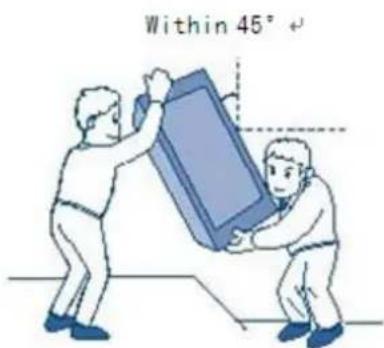
Do not lean the appliance over 45^ when moving it to position.

The appliance must be put on flat, firm & dry floor or similar noncombustible pad; do not use the package foam pad.

Do not put the appliance in the wet place.

Do not use the appliance in the frozen place.

Do not use the appliance outdoor in case of sunlight or rain.
The appliance is designed to fully build into the cabinet.
Demonstration for building into the cabinet:
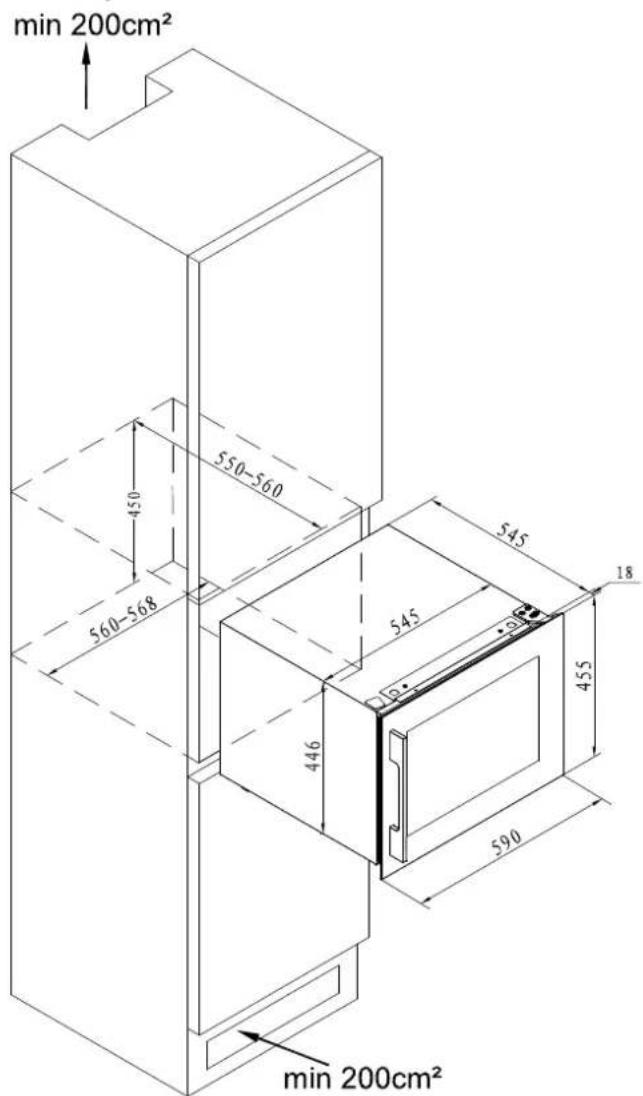
Wine bottles could be stored when you feel cooling inside after the appliance operates around 1 hour.
Description of the appliance
Accessories& name
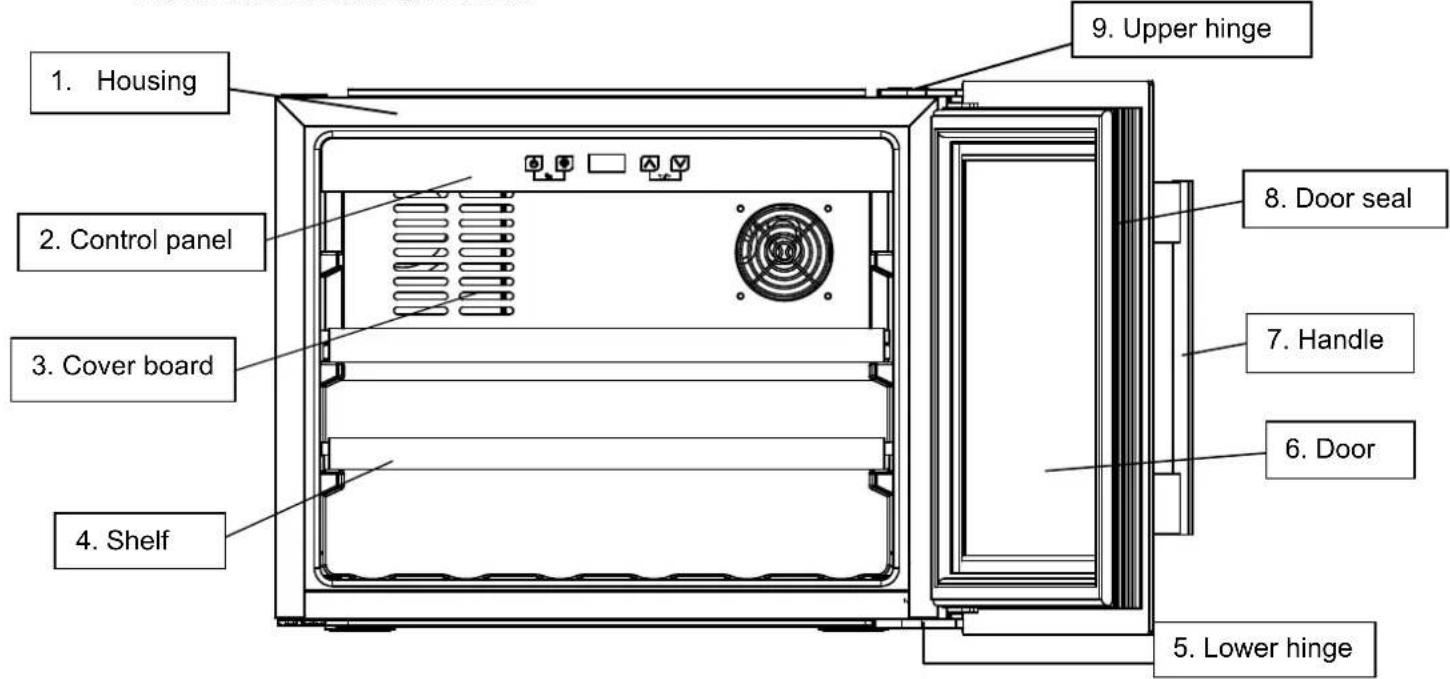
Note: Shelves, door frame, handle and other accessories could be different according to different models and configuration. All photos in this manual are for reference. The appliance you buy might not be exactly the same as shown here. Please refer to the actual product.
Installing the handle and reversing the door of wine cooler
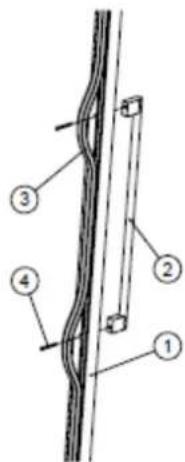
- Install handle to the door frame of the appliance.
The handle is delivered in a separated package with screws together inside the carton.
① Reveal two small holes on the door frame from inner side by pulling out a bit the door seal.
② Aim the handle to the holes and insert the screws from inside.
Screw them up with screw③ -driver.
④ Put back door seal to cover the screws.
2. Reversing the door
Our wine cooler is delivered with the door opening from left to right. To reverse the opening direction:
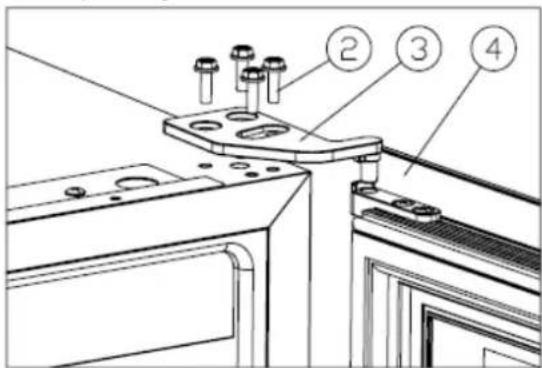
Figure 1
✨ Open the door at 90 degrees and keep it steady.
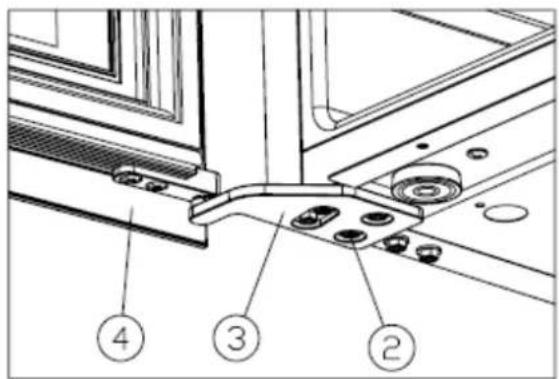
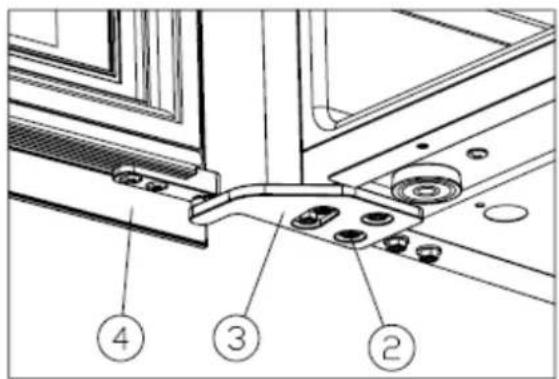
✿ Unscrew the M5*16screws②, dismantle the right upper hinge③, and remove the door.[Figure 1].
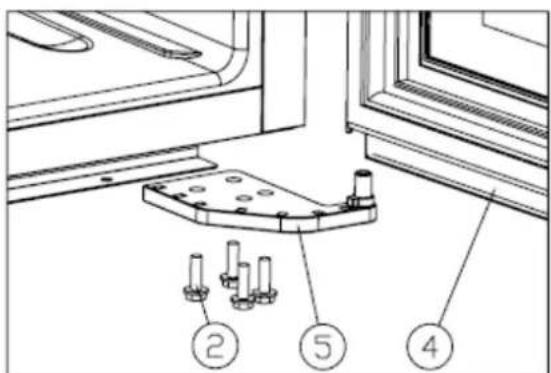
Figure 2
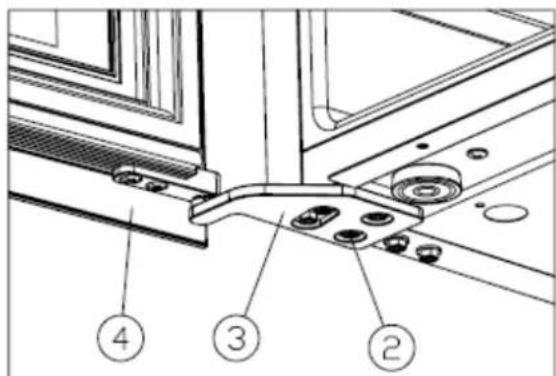
✿ Unscrew the M5*16screws②, dismantle the right lower hinge⑤.[Figure 2]
natural_image
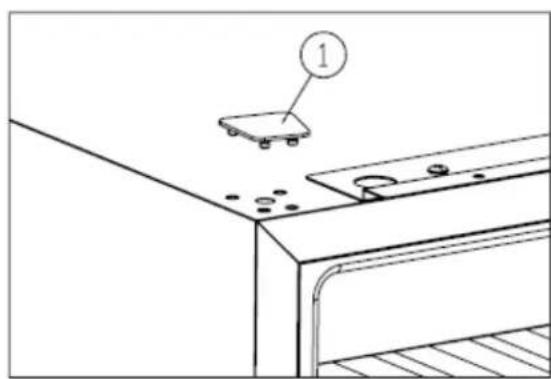
Line drawing of a kitchen appliance with a cart and base, no text or symbols presentFigure 3
❖ Removethegerminal lid①.[Figure 3]

Figure 4
✨ Install the germinal lid①.[Figure 4]

Figure 5
Install the right upper hinge ③, and screw tight theM5*16 screws ②.[Figure 5]
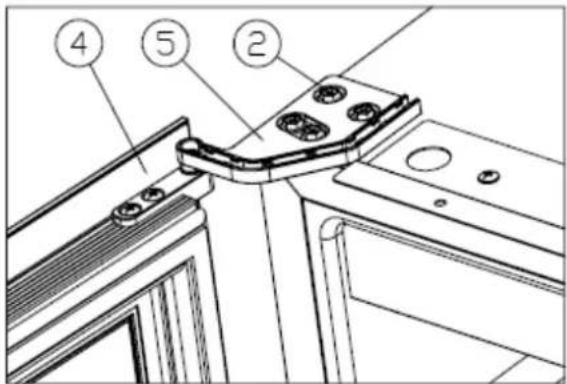
Figure 6
Turn the door④ 180 degrees, and insert the right lower hinge⑤,screw tight M5*16 screws②.[Figure 6]Door reversing is finished.
3. Bracket installation
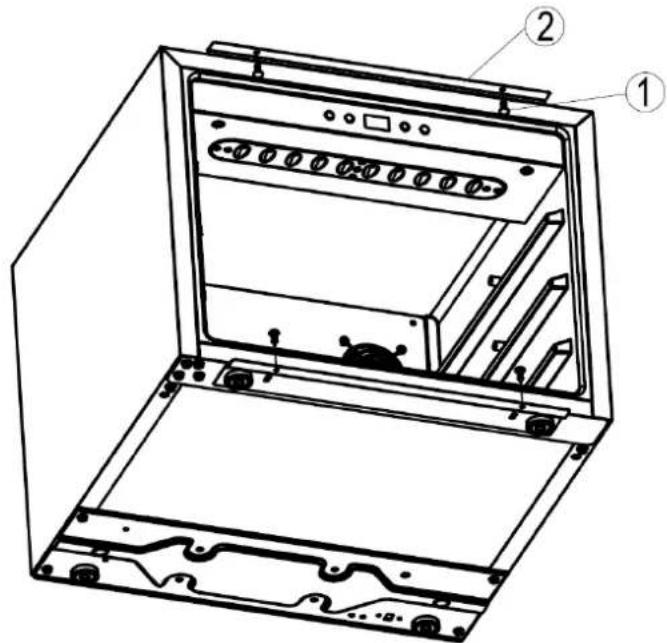
The appliance is equipped with a pair of brackets at the top(②) and at the bottom. This pair of bracket s might not be needed and can be removed as per your actual installation situation when you build the appliance into your closet.
If the opening size of your closet is bigger than the appliance, you could fix 4 screws(①,ST4.0*13) (packed separately in a plastic bag) into the inner wood plate of closet.
In this way, the appliance will be built-in and fixed tight with your closet.
Note: Seller should not bear responsibility for any damages to the door or other parts during operation if the end-user does not follow this instruction to fix the appliance with closet when needed.
Operation
Start operation
- Cleaning the compartment
Before power on, clean inside of the appliance and check the drainage pipe in good connection. (For details, please refer to the "Maintenance and cleaning")
- Placement
Before power on in the first time, keep it static at least 30 minutes.
- Power on
The appliance start operation and it will cool down inside after 1 hour, otherwise you should check the power connection.
Control panel
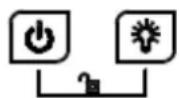
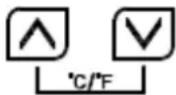
All keys would be invalid if in lock mode. Please unlock first.

ON/OFF
- Keep pressing the key 3 seconds, power down, goes to stand-by mode.
- Keep pressing the key again 3 seconds to return back to normal working.

Light
Press the key, turn on or turn off the LED lights inside. In stand-by mode, the key is invalid.

UP
Press the key once, LED Display in regular flash showing current set temperature. Continue pressing to adjust set temperature, one press increase 1^ C. Regular flash quit after 5 seconds detecting no press and new set temperature save. LED display return to show actual temperature inside.

Down
Press the key once, LED Display in regular flash showing current set temperature. Continue pressing to adjust set temperature, one press reduce 1^ C. Regular flash quit after 5 seconds detecting no press and new set temperature save. LED display return to show actual temperature inside.
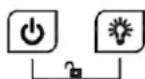
Child Lock (Combination key)
1、Lock: Press both keys at the same time for 3 seconds to lock.
2、Unlock: Press both keys at the same time for 3 seconds to unlock.
Fahrenheit/Celsius display interchange
Switch temperature display between Fahrenheit and Celsius by pressing the key for 3 seconds.

Attention
- The ex-factory temperature of this product is 12^ C, and the corresponding temperature range needs to be set according to the actual wine.
- The cooling temperature could be set from 5 to 20°C.
- Alarm sound: when the system malfunctionoccur and alarm sound, press any key on the control panel to cancel the alarm sound.
- Error code:
When the temperature sensor of upper zone failure occur, error code displays: E1 for open circuit; E2 for short circuit.
When the defrost sensor failure occur, error code displays: E3 for open circuit; E4 for short circuit.
Wine storage
The appliance equips with independent shelf to allow your collection of wine get mature quietly and peacefully.
Two been wooden shel ves loading capacit y: 28 bottles. (standard Bordeaux x with 750ml)
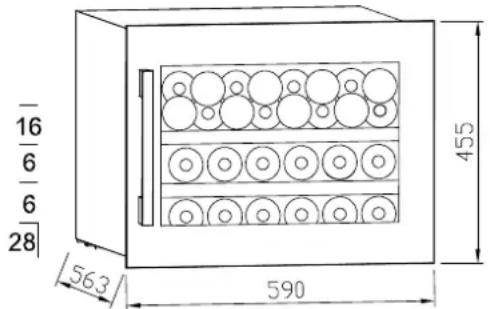
Loading capacity will vary in terms of different way of bottle arrangement or different bottle sizes.
Each shelf is designed to put on 1 or 2 layers of wine bottles. More than 2 layers of bottle arrangement on one shelf are not recommended.
✨ Each shelf could pull out partly to store wine bottles easily.
✨ Open the door straight enough before pulling out shelves.
The shelf should be avoided in front of the fan as much as possible to avoid blocking the air inlet and affecting the cooling efficiency.
If the wine cooler would have no load for a long time, it is recommended to power it off, clean it carefully, and open the door for ventilation.
Below table is the recommended temperature for wine storing & drinking:
| Red Wine | 15-18°C |
| White Wine | 9-14°C |
| Rose wine | 10-11°C |
| Champagne & sparkling wine | 5-8°C |
Troubleshooting
| The appliance makes lots of noise? | ● Please adjust the front foot, keep the appliance leveling. ● Please keep the appliance a bit space from walls. |
| Liquid flowing sound inside the cabinet? | ● It is normal because of the refrigerant working inside. |
| The appliance does not start? | ● Make sure the appliance is connected to the power properly. ● Make sure switch on the power. ● The compressor re-starts after 5 minutes for a power cut. |
| Compressor runs continuously? | ● If no cold is being produced, call theafter-sale service. |
| Door does not seal tightly? | ● After long time use, the door seal might get stiff & distorted partially. 1. Heat the door seal with hot-wind blower or hot towel. 2. The door seal get softened and close the door. |
| The appliance does not cool sufficiently? | ● Please adjust temperature setting. ● Keep the appliance away from sunlight or heat. ● Please do not open the door frequently if no need. |
| Unpleasant smells inside cabinet? | ● A little bit plastic smell for newly-buy appliance is normal and will disappear after a short time. ● Clean the compartment and ventilate it for a few hours. |
| Condensate on the glass door? | ● Please do not open the door frequently or for a long time. ● Please do not set the temperature too low. ● High ambient temperature and humidity would cause condensate. |
| The light is not working? | ● Check the power supply first. ● Call the retailer's after-sale service if the light is broken. |
Maintenance and cleaning
Cleaning
➢ Disconnect the appliance before cleaning.
Clean the appliance with soft cloth or sponge by water.
Do not use organic solvents, alkaline detergent, boiling water, washing powder or acid liquid etc.
Do not flush the compartment of the appliance.
Clean regularly surfaces that can come in contact with accessible drainage systems.
The below items will damage the surface of wine cooler:
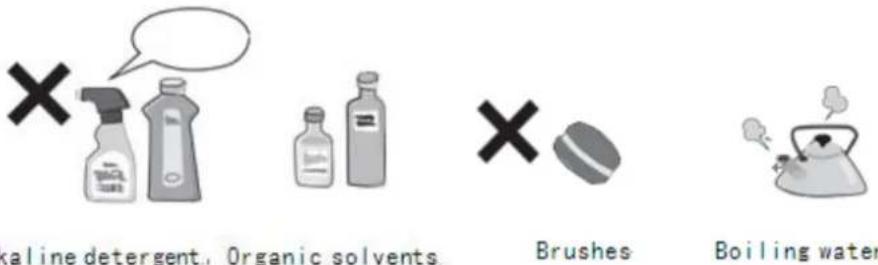
Alkaline detergent, Organic solvents
Power cut
Most power cuts could be resolved within a short time. To protect your wines during a power cut, avoid opening the door as much as possible. During very long power cuts, take the necessary measures to protect your wine.
Out of service for long time
Remove all bottles from the appliance, switch off, defrost, clean, dry, and leave the door open to prevent mould developing within the appliance.

If the appliance is disconnected or if there is a power cut, you must wait at least five minutes before re-starting.
Moving the appliance
➢ Cut off the power supply and unplug the appliance.
Remove all bottles from the appliance.
When moving the appliance, do not lean the appliance over 45°.
Technical parameters
| Product model | NorCare V28BK |
| Voltage/frequency | |
| Refrigerant/weight | |
| Effective volume 62 L | |
| Loading capacity 28 bottles | |
| Net weight 26.6kg | |
| Unit dimension (WxDxH) | 590×563×455mm |
| Packing dimension (WxDxH) | 650×650×515mm |
Remarks :
- The Net weight includes shelves and the Unit dimension is without handle on the door.
- The manufacturer reserves all the rights to change the above parameters without prior notice. Please refer to the nameplate of your appliance.
- Loading capacity will vary in terms of different way of bottle arrangement or different bottle sizes (standard Bordeaux with 750ml is applied here).
ES
Enfriador de vino
natural_image
Technical line drawing of a rectangular enclosure with circular components on the front and top (no text or symbols)Figura 1
Figura 2
natural_image
Line drawing of a kitchen appliance with a cart and base, no text or symbols presentFigura 3
✧ Retire la tapa germinal ① (figura 3).
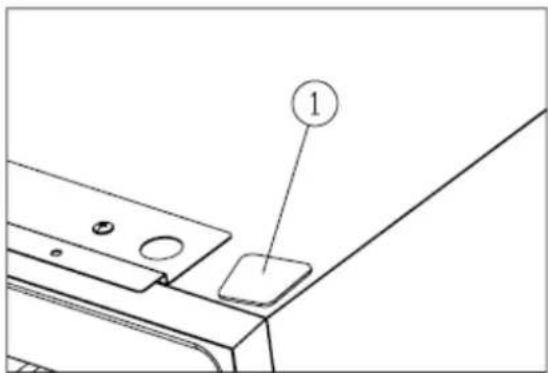
Figura 4
Instale la tapa germinal ① (figura 4).
natural_image
Technical line drawing of a rectangular enclosure with circular components on the front and top (no text or symbols)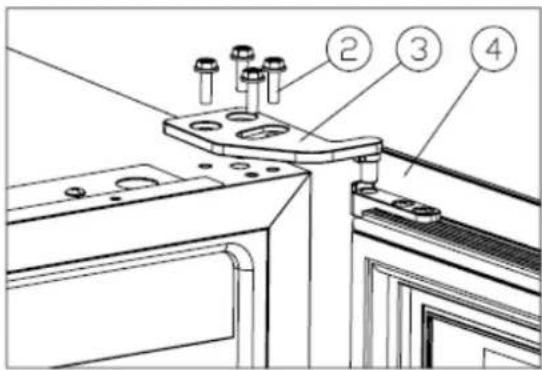
Figura 1
Figura 2
natural_image
Line drawing of a kitchen appliance with a cart and base plate, no text or symbols presentFigura 3
Remova a tampa germinal ①.[Figura 3]
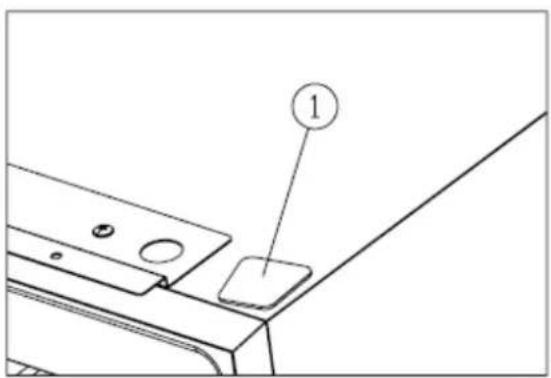
Figura 4
Instale a tampa germinal ①.[Figura 4]
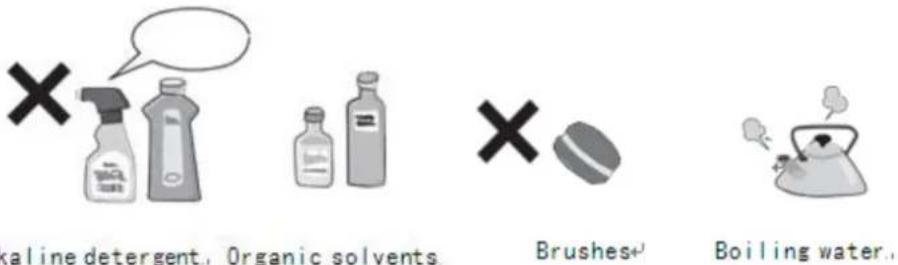
Alkaline detergent, Organic solvents
Corte de energia
natural_image
Technical line drawing of a rectangular enclosure with circular components on the front panel (no text or symbols)2. Inverser la porte
Figure 1
Figure 2
natural_image
Line drawing of a kitchen appliance with a cart and base, no text or symbols presentFigure 3
✧ Retirez le cache ①. [Figure 3]

Figure 4
✨ Installez le cache ①. [Figure 4]
natural_image
Technical line drawing of a rectangular enclosure with circular components on the front and top (no text or symbols)Abbildung 1
Abbildung 2
natural_image
Line drawing of a kitchen appliance with a cart and base, no text or symbols presentAbbildung 3
Abbildung 4
Abbildung 5
Abbildung 6
- EN
- Wine Cooler
- Instruction Manual
- Content
- Safety instructions & warnings
- Caution
- Warning
- Child Safety
- Keep away from water
- Be careful of freezing
- Do not open the door for long periods
- Modification on the appliance not allowed
- Unplug the appliance under certain conditions
- Disposal of the appliacne
- Prohibition
- Do not damage the power cord
- When the power cord is damaged
- Installation
- Position
- The appliance is designed to fully build into the cabinet.
- Description of the appliance
- Accessories& name
- Installing the handle and reversing the door of wine cooler
- Reversing the door
- Bracket installation
- Operation
- Start operation
- Control panel
- ON/OFF
- Light
- UP
- Down
- Child Lock (Combination key)
- Fahrenheit/Celsius display interchange
- Attention
- Wine storage
- Troubleshooting
- Maintenance and cleaning
- Cleaning
- Power cut
- Out of service for long time
- Moving the appliance
- Technical parameters
- Remarks :
- ES
- Enfriador de vino
- Corte de energia
- Inverser la porte
Brand : NODOR
Model : NorCare V28BK
Category : Wine cellar