iGen11000DFc - Generator WESTINGHOUSE - Free user manual and instructions
Find the device manual for free iGen11000DFc WESTINGHOUSE in PDF.


User questions about iGen11000DFc WESTINGHOUSE
0 question about this device. Answer the ones you know or ask your own.
Ask a new question about this device
Download the instructions for your Generator in PDF format for free! Find your manual iGen11000DFc - WESTINGHOUSE and take your electronic device back in hand. On this page are published all the documents necessary for the use of your device. iGen11000DFc by WESTINGHOUSE.
USER MANUAL iGen11000DFc WESTINGHOUSE
natural_image
Blue circular icon with a white crown symbol (no text or numbers)User Manual
iGen11000DFc
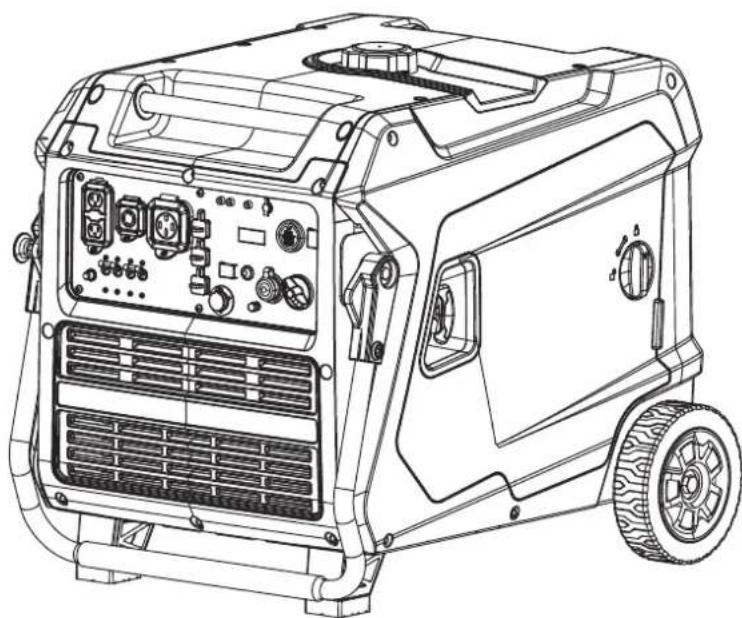
Digital Inverter Generator
natural_image
Line drawing of a portable gas generator with control panel and wheels (no text or symbols)TABLE OF CONTENTS
Introduction....2-3
Safety 4-10
Electrical 11
Components 12-13
Assembly....14
Operation....15-24
Maintenance....24-30
Troubleshooting....31
Schematic 32
Service Hotline/Company Address...... Back Page
INTRODUCTION

WARNING
Operating, servicing, and maintaining this equipment can expose you to chemicals including engine exhaust, carbon monoxide, phthalates, and lead, which are known to the State of California to cause cancer and birth defects or other reproductive harm. To minimize exposure, avoid breathing exhaust, and wear gloves or wash your hands frequently when servicing this equipment. For more information go to www.P65warnings.ca.gov.
DISCLAIMERS
All information, illustrations, and specifications in this manual were in effect at the time of publishing. The illustrations used in this manual are intended as representative reference views only. We reserve the right to make any specification or design change without notice.
ALL RIGHTS RESERVED
All rights reserved. No reproduction allowed in any form without written permission from Westinghouse Outdoor Power Equipment.


DANGER
Read this manual before using or performing maintenance on this product. Failure to follow the instructions and safety precautions in this manual can result in serious injury or death.
UPDATES
The latest User Manual for your Westinghouse products can be found under our support tab. wpowereq.com/pages/manuals
Or scan the following QR code with your smartphone camera to be directed to the link.

PRODUCT REGISTRATION
For trouble-free warranty coverage, it is important to register your Westing-house product.
You can register by:
- Completing and mailing the product registration card included in the carton.
- Registering your product on-line at: wpowereq.com/pages/warranty-registration
- Scanning the above QR code with your smartphone camera to be directed to the mobile registration link.
For Your Records
Date of Purchase:
Model Number:
Serial Number:
Place of Purchase:
- Sending the following product information to:
Westinghouse Outdoor Power
Warranty registration
777 Manor Park Drive
Columbus, OH 43228
IMPORTANT: Keep your purchase receipt for trouble-free warranty coverage.

text_image
QR code image containing encoded data, no visible human-readable textSPECIFICATIONS
AC Voltage....120V/240V
Power (Running)......Gasoline 9,000W
Propane 8,100W
Power (Peak)......Gasoline 11,000W
Propane 10,000W
AC Current......Gasoline 37.5A
Propane 33.8A
Frequency....60 Hz
Phase .... Single
RPM....3,600
Power Factor 1.0
Insulation Class ...... F
Maximum Ambient Temperature....104°F (40°C)
Fuel Type......Unleaded gasoline (87–93 Octane)
Do not use E15 or E85 fuel in this product.
Fuel Capacity.... 7.92 gallons (30.0 liters)
Oil Capacity ....1.16 quarts (1.1 liters)
Oil Type SAE 10W-30
Spark Plug....F7RTC
Spark Plug Gap .... 0.024-0.032 in. (0.6-0.80 mm)
Valve Intake Clearance....0.0031 - 0.0047 in.
(0.08 - 0.12 mm)
Valve Exhaust Clearance ....0.0051 - 0.0067 in.
(0.13 - 0.17 mm)
AC Grounding System......Neutral floating
NOTICE
This product is designed and rated for continuous operation at ambient temperatures between 23^ F ( -5^ C) and 104^ F ( 40^ C). If needed, this product can be operated in extremely hot or extremely cold temperatures for short periods. If the product is exposed to extreme temperatures during storage, it should be brought back within the optimal temperature range before operation. This product must always be operated outdoors in a well-ventilated area and far away from doors, windows, and other vents.
Maximum wattage and current are subject to and limited by such factors as fuel BTU content, ambient temperature, altitude, engine conditions, etc. Maximum power decreases about 3.5% for each 1,000 feet above sea level, and will also decrease about 1% for each 10^ F ( 6^ C) above 60^ F ( 16^ C) ambient temperature.
NOTICE
The effect of altitude on horsepower will be greater if no carburetor modification is made. A decrease in engine horsepower will decrease the power output of the generator. Contact our service team to order altitude kits.
NOTICE
Thank you for choosing Westinghouse! PLEASE READ BEFORE RETURNING THIS PRODUCT FOR ANY REASON.
If you have a question or experience a problem with your Westinghouse purchase, call us at 1-855-944-3571 to speak with an agent.
SAVE THIS MANUAL FOR FUTURE REFERENCE.
HAVE QUESTIONS?
Email us at service@wpowereq.com
or call 1-855-944-3571
SAFETY DEFINITIONS
The words DANGER, WARNING, CAUTION, and NOTICE are used throughout this manual to highlight important information. Make sure that the meanings of this safety information is known to all who operate, perform maintenance on, or are near the generator.

This safety alert symbol appears with most safety statements. It means attention, become alert, your safety is involved! Please read and abide by the message that follows the safety alerts symbol.

DANGER
Indicates a hazardous situation
which, if not avoided, will result in death or serious injury.

WARNING
Indicates a hazardous situation
which, if not avoided, could result in death or serious injury.

CAUTION
Indicates a hazardous situation
which, if not avoided, could result in minor or moderate injury.
NOTICE
Indicates a situation which can cause
damage to the generator, personal property, and/or the environment, or cause the equipment to operate improperly.
NOTE: Indicates a procedure, practice or condition that should be followed for the generator to function in the manner intended.
SAFETY SYMBOLS
Follow all safety information contained in this user's manual as well as the information on the product labeling.
| Symbol | Description |
 | Safety Alert Symbol |
 | Fire Hazard |
 | Electrical Shock Hazard |
 | Burn Hazard. Do not touch hot surfaces. |
 | Asphyxiation Hazard |
 | Do Not Operate in Wet Conditions |
 | Read Manufacturer's Instructions |
 | Maintain Safe Distance |
 | Ground. Consult with electrician to determine grounding requirements before operation. |
 | Carbon Monoxide |
IMPORTANT SAFETY INSTRUCTIONS

DANGER
Generator exhaust contains high levels of carbon monoxide (CO), an invisible, odorless, and extremely poisonous gas. If you smell exhaust fumes, you are breathing carbon monoxide. But, even if you do not smell exhaust fumes you may be inhaling CO.
ONLY operate generators outside, in a well-ventilated area. NEVER operate generators indoors, doing so CAN KILL YOU IN MINUTES.
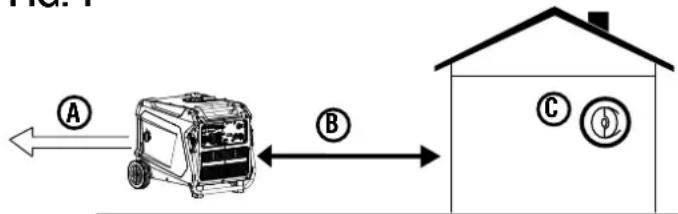
- Correct Use – Only use generators outside downwind, far away from windows, doors and vents. Always direct exhaust away from occupied spaces. Always install battery-powered carbon monoxide detectors or plug-in carbon monoxide detectors with battery back-up in living areas. See Figure 1.
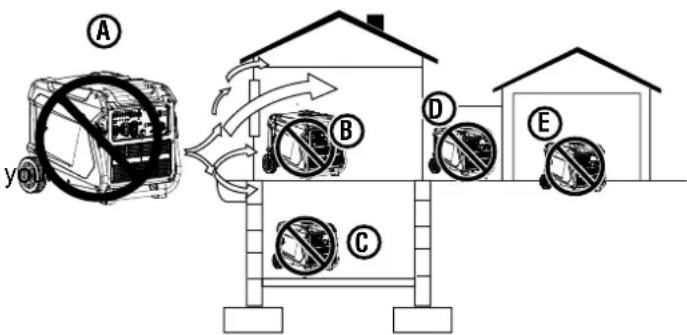
- Incorrect Use – NEVER use a generator in home, garage, basement, attic, crawl space or any other fully or partially enclosed area. Areas such as these can allow dangerous levels of carbon monoxide to accumulate. An open door or a running fan WILL NOT provide adequate ventilation. See Figure 2.
If you start feeling dizzy, weak, or sick while using the generator, move to fresh air immediately. Contact a doctor. You may be experiencing carbon monoxide poisoning.

DANGER
Fire and electrocution hazard. Do not connect to a building's electrical system unless the generator and a transfer switch have been properly installed and the electrical output has been verified by a qualified electrician. The connection must isolate the generator power from utility power and must comply with all applicable laws and electrical codes. Failure to properly isolate the generator power could cause property damage and create a dangerous backfeed of electricity which could kill or seriously injure utility workers.

DANGER
Electrocution hazard. NEVER use the generator in a location that is wet or damp. NEVER expose the generator to rain, snow, water spray, or standing water while in use. Protect the generator from all hazardous weather conditions. Moisture or ice can cause a short circuit or other malfunction in the electrical circuit.

WARNING
Familiarize yourself with all the instructions, safety warnings, illustrations, and specifications provided with this product. Failure to follow the manufacturer's instructions may result in electric shock, fire, and/or carbon monoxide poisoning that can lead to death or serious injury.
FIG. 1
flowchart
graph LR
    A["Gas Generator"] --> B["House"]
    B --> C["Sensor ①"]
    style A fill:#f9f,stroke:#333
    style B fill:#ccf,stroke:#333
    style C fill:#cfc,stroke:#333
A - Exhaust (CO)
B - Only use OUTSIDE and FAR AWAY from windows, doors, and vents
C - CO detectors in living areas
aFG.2
flowchart
graph TD
    A["Car with no gate"] --> B["Device 1"]
    B --> C["Device 2"]
    C --> D["Device 3"]
    D --> E["Device 4"]
    E --> F["Device 5"]
    style A fill:#f9f,stroke:#333
    style B fill:#ccf,stroke:#333
    style C fill:#cfc,stroke:#333
    style D fill:#fcc,stroke:#333
    style E fill:#cff,stroke:#333
A - Exhaust (CO)
B - Living area
C - Basement crawlspace
D - Entryway/porch/mudroom
E - Garage
NOTICE
Install battery-powered carbon monoxide detectors or plug-in carbon monoxide detectors with battery back-up in living areas.
● This product should ONLY be used outdoors.
- NEVER use a generator in your home, garage, basement, attic, crawl space or any other fully or partially enclosed area. Areas such as these can allow dangerous levels of carbon monoxide to accumulate. Carbon monoxide (CO), an invisible, odorless, and extremely poisonous gas CAN KILL YOU IN MINUTES.
- Only use OUTSIDE and far away from windows, doors, and vents as recommended by the US Department of Health and Human Services Centers for Disease Control and Prevention. Your specific home and/or wind conditions may require additional distance.
- The National Electrical Code requires the use of a transfer switch or other suitable transfer equipment whenever a portable generator is connected to a building's electrical system. Transfer switches isolate generator power from utility power and prevent backfeeding of electric power into the utility system.
NOTE: A transfer switch must be installed by a qualified electrician in accordance with applicable electrical codes. Some jurisdictions may require the installation to be inspected by local authorities. Keep all relevant installation, inspection, and maintenance information.
- Never use the generator to power medical support equipment.
- Never expose the generator to rain, snow, water spray, or standing water while in use. Store and operate the unit in a dry or covered (but not enclosed) location.
- Do not let children or untrained individuals operate the generator.
- Keep children, bystanders, and pets a minimum of 10 ft. away from a running generator.
- Maintain Safe Distance. While operating and storing, keep at least five feet of clearance on all sides of the generator, including overhead. Turn the unit off and allow it to cool a minimum of 30 minutes before storage. Heat created by the muffler and exhaust gases could be hot enough to cause serious burns and/or ignite combustible objects.
- Do not operate the unit in areas where combustible or hazardous materials are stored including gasoline and natural gas filling stations.
- Do not operate the generator while barefoot, with wet hands or feet, while standing in water or in wet conditions.
- Do not use this unit when you are tired or under the influence of drugs, alcohol, or medication.
● Burn Hazard. Do not touch hot surfaces. - Do not contact the muffler or engine. They are very HOT and will cause severe burns. Do not put body parts or any flammable or combustible materials in the direct path of the exhaust.
- Keep hands, fingers, feet, and other body parts away from all moving parts of the generator.
- Do not connect worn or damaged electrical cords to the generator. NEVER touch frayed or exposed wires.
- Do not operate the generator on an incline. The unit should always be placed on a flat stable surface.
- Check the physical condition of the product prior to each use. Look for loose bolts, fluid leaks, and other signs of wear. Replace all damaged items. For replacement parts or assistance, contact our customer service team.
- For optimal performance, use the generator in temperatures between 23^ (-5^) and 104^ (40^) with a maximum relative humidity of 90% .
- Before starting the generator, check all fluids (oil and gasoline).
- Do not remove the oil dipstick or fuel cap when the generator is running.
- Securely tighten the oil dipstick after adding oil and the fuel cap after adding gasoline.
-
Avoid skin contact with engine oil or gasoline. Wear protective clothing and equipment. Wash all exposed skin with soap and water. Prolonged skin contact with gasoline or engine oil may cause severe skin irritation and other adverse reactions.
-
Generator's vibrate and bounce during normal operation. Check the generator and all of the cords connected to it for any damage that may have resulted from the vibration. Replace or repair damaged items as needed. Do not use the generator or any items that show signs of damage.
- All electrical tools and appliances operated from this generator must be properly grounded by use of a third wire or be double-insulated.
- Before transporting the generator, disconnect the spark plug boot, drain the fuel tank and properly restrain the unit.
- Fuel or oil may leak from the generator during transport. Place a towel, plastic sheet, or absorbent pad beneath the unit to protect your vehicle.
- To prolong the life of this product, follow the instructions in the Maintenance section of this manual.
- Replace damaged or worn items with recommended or equivalent replacement parts. Using an incorrect or incompatible part might create a hazard that could result in serious personal injury.
- Always remove any tools or other service equipment used during maintenance away from the generator before operating.
GROUNDING
See Figure 3.
WARNING
Shock hazard. Failure to properly can result in electric shock.
NOTICE
Only use grounded 3-prong extension and appliances, or double-insulated tools.
The generator neutral is floating. The generator ground terminal is connected to the frame of the generator, the metal non-current-carrying parts of the generator, and the ground terminals of each receptacle. The generator (stator winding) is isolated from the frame and from the AC receptacle ground pin. Electrical devices that require a grounded receptacle pin connection may not function properly.
If this generator will be used only with cord and plug equipment connected to the receptacles mounted on the generator, National Electric Code does not require that the unit be grounded. However, other methods of using the generator may require grounding to reduce the risk of shock or electrocution.
Before using the ground terminal, consult a qualified electrician, electrical inspector, or local agency having jurisdiction for local codes or ordinances that apply to the intended use of the generator.
SAFETY PRECAUTIONS FOR GASOLINE AND GASOLINE VAPOR

DANGER
Fire and explosion hazard. Gasoline is highly explosive and flammable and can cause severe burns or death.

WARNING
Fire and Burn Hazard. NEVER loosen or remove the fuel cap while the generator is running. Turn the unit off and allow it to cool for at least five minutes before adding gasoline. Loosen the fuel cap slowly.

WARNING
In case of a gasoline fire, do not attempt to extinguish the flame unless the engine/fuel control switch is in the OFF position. Introducing an extinguisher to a generator with an open fuel switch could create an explosion hazard.
● Fire Hazard. Gasoline is highly flammable. Handle with care.
● Never use gasoline as a cleaning agent.
● Gasoline is a skin irritant and needs to be cleaned up immediately if it comes in contact with the skin.
- Do not store gasoline near furnaces, water heaters, or any other appliances that produce heat or have automatic ignitions.
- Keep gasoline away from sparks, open flames, pilot lights, heat, and other sources of ignition.
- Store any containers containing gasoline in a well-ventilated area, away from any combustibles or source of ignition.
- ALWAYS store gasoline in a container approved for gasoline. Unapproved containers can break or deteriorate allowing gasoline or gasoline vapors to escape which can create a serious hazard.
● Gasoline has a distinctive odor, this will help detect potential leaks quickly.
● Gas vapors can cause a fire if ignited.
- Do not smoke when handling fuel, adding fuel to the generator, or emptying the gas tank.
● Wear eye protection while refueling.
- Before adding fuel to the generator, turn the unit off and allow it to cool a minimum of five minutes. If necessary, move the unit to level ground.
- Do not remove the fuel tank cap when the generator is running.
- Loosen the fuel cap slowly to safely release pressure, keep gasoline from escaping around the cap, and to avoid the heat from the muffler igniting fuel vapors.
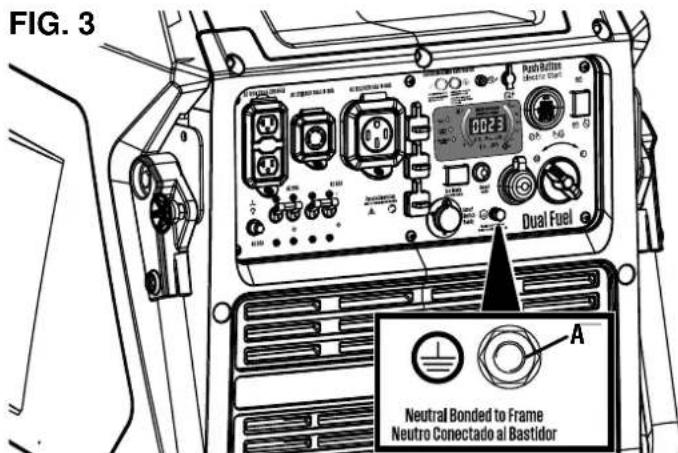
text_image
FIG. 3 Dual Fuel Neutral Bonded to Frame Neutro Conectado al BastidorA - Ground terminal
- NEVER fill the generator's gasoline tank beyond the maximum fill ring on the fuel screen. Keeping gasoline levels at or below the fill ring will allow for fuel expansion. Overfilling the fuel tank can result in a sudden overflow of gasoline and result in spilled gasoline coming in contact with HOT surfaces.
- Spilled fuel can ignite. Wipe up spills immediately and allow area to dry before operating the generator. NEVER attempt to burn off spilled fuel.
- Securely tighten the fuel cap after adding gasoline.
- Do not cover the fuel cap while the generator is in operation. Covering the cap may cause the engine to fail or damage the product.
- Drain fuel before storing the unit. Store the unit and the fuel separately in well-ventilated areas away from sparks, open flames, pilot lights, heat, and other sources of ignition.
- Turn the unit off and allow it to cool a minimum of 30 minutes before draining fuel.
LIQUID PETROLEUM GAS (LPG/PROPANE)

WARNING
Fire and explosion hazard. Never use a gas container, LPG/propane hose, propane cylinder or any other fuel item that appears to be damaged. If there is a strong smell of propane while operating the generator, fully close the propane cylinder valve immediately. Once the propane is off, use soapy water to check for leaks on the hose and connections on the tank valve and the generator. Do not smoke or light a cigarette or check for leaks using any open flame source such as a match or lighter. If a leak is found, contact a qualified technician to inspect and repair the LPG/propane system before using the generator.

CAUTION
CAUTION Fire and explosion hazard. Only use approved Propane cylinders with an Overfilling Prevention Device (OPD) valve. Always keep the tank in a vertical position with the valve on top and placed at ground level on a flat surface. Do not allow tanks to be near any heat source. When transporting and storing, turn the propane cylinder valve to the fully closed position and disconnect the tank. Make sure to always cover the generator inlet and tank outlet with protective plastic caps.
● LPG/Propane is highly flammable and explosive.
- In case of a LPG/Propane fire, DO NOT attempt to extinguish the flame if the fuel valve is in the gas position. Introducing an extinguisher to a generator with an open fuel valve could create an explosion hazard.
- LPG/Propane can settle in low places because it is heavier than air.
- LPG/Propane has a distinctive odor added to help detect potential leaks. If there is a smell, DO NOT use the engine.
● Always keep a propane cylinder in an upright position.
- When exchanging propane cylinders, be sure the tank valve is the same type.
- LPG/propane will burn the skin. Prevent skin contact at all times.
- Keep the propane cylinder away from the generator exhaust.
- Large (500–1,000 gallon) propane cylinders will require a certified plumber to install the fuel line to the generator and the loose regulator is not used (the regulator that is attached to the fuel tank). The pressure as measured at the regulator mounted to the generator must be 7 in. to 14 in. of water column. A certified plumber must ensure that the pressure is correct or install a step down regulator if needed.
● Make sure the generator and propane cylinder are on a flat surface before operating.
- If there is a propane odor do not start the unit because there may be a potential leak. Never place a propane cylinder near the engine exhaust.
- When transporting, make sure the propane cylinder and LPG/propane hose are not attached to the generator.
- Store propane cylinder away from sparks, open flames, pilot lights, heat, and other sources of ignition.
- Do not store propane cylinder near furnaces, water heaters, or any other appliances that produce heat or have automatic ignitions.
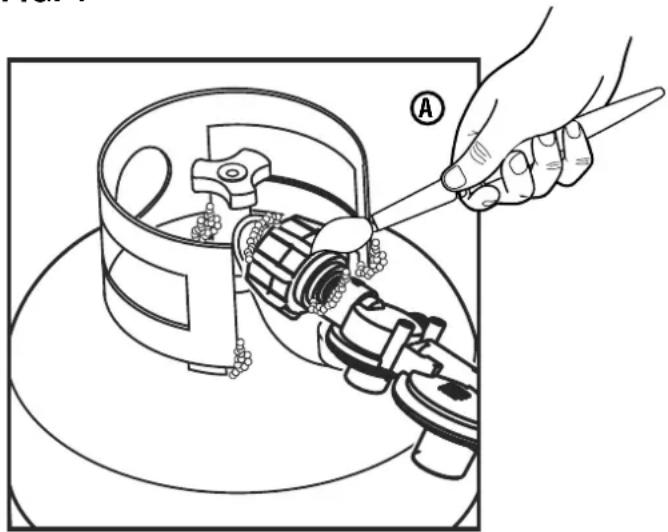
FIG. 4
natural_image
Line drawing of a hand using a tool to adjust or install a mechanical component, no text or symbols presentA - Leak testing with soapy water (Propane)
LEAK TESTING
See Figure 4.
NOTICE
Connections on the hose and the pro- e tested at the factory to make sure there leaks. However, shipping and handling sened connections. We recommend that st for leaks before using the generator.
To test for LPG/Propane leaks:
- Connect the LPG/propane hose to the propane inlet on the generator and to the cylinder valve.
- Open the cylinder valve. If you hear a rushing sound, immediately turn off the cylinder valve. This noise indicates a significant leak at the connection. Replace the cylinder or have it repaired.
- Brush the inlet, hose connections, and LP gas cylinder with a soapy solution made of a 20/80 mixture of mild soap and water.
- If bubbles begin growing, there is a leak.
- If the leak is at the inlet, contact customer service. DO NOT USE THE GENERATOR.
- If the leak is at the hose connections, reinstall the hose securely and perform the check again. If the leaks persist, DO NOT USE THE GENERATOR.
- If the leak is at the cylinder, do not use or move the cylinder. Contact the fire department or the gas supplier.
IMPORTANT INFORMATION FOR THE CO SENSOR
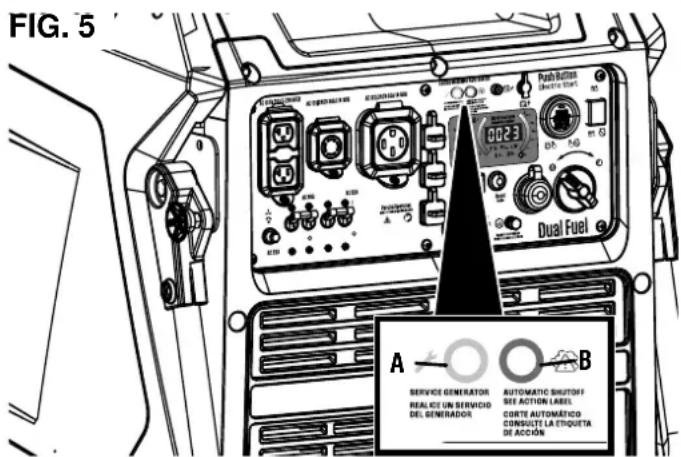
The CO Sensor monitors for the accumulation of poisonous carbon monoxide gas around the generator when the engine is running. If increasing levels of CO gas are detected, the CO Sensor automatically shuts down the engine.
The CO Sensor will also detect the accumulation of carbon monoxide from other fuel burning sources used in the area of operation. For example, if the exhaust of fuel burning tools is pointed at a CO Sensor-equipped generator, a shut-off may be initiated due to rising CO levels. This is not an error. Hazardous carbon monoxide has been detected. Move and redirect any additional fuel burning sources to dissipate carbon monoxide away from personnel and occupied buildings.
NOTE: Remote start-equipped generators must be restarted with the START/STOP button on the control panel after an automatic shut-down occurs.
Generators are intended to be used outdoors, far from occupied buildings and the exhaust pointed away from personnel and buildings. If misused and operated in a location that results in the accumulation of CO, like in a partially enclosed area, the CO Sensor shuts off the engine and the RED indicator light will flash notifying the user that there are unsafe levels of carbon monoxide.
If the generator shuts off and the RED indicator light flashes, leave the area immediately. Wait for the carbon monoxide to dissipate and the RED indicator light to turn off before returning to the affected area. Once it is safe to return, read the Action Label for further steps to take. The CO Sensor DOES NOT replace carbon monoxide alarms. Install battery-powered carbon monoxide alarm(s) in your home.
WARNING
Automatic shutoff accompanied with a flashing RED light in the CO Sensor portion of the control panel is an indication that the generator was improperly located which allowed carbon monoxide to accumulate to unsafe levels. If you start to feel sick, dizzy, weak, or carbon monoxide detectors in your home indicate an alarm, get to fresh air immediately. Call emergency services. You may have carbon monoxide poisoning.
UNDERSTANDING THE CO SENSOR'S INDICATOR LIGHTS
See Figure 5.
| COLOR DESCRIPTION | |
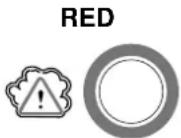 | Unsafe levels of carbon monoxide accumulated around the generator. After shut-off, the RED indicator light in the CO Sensor area of the control panel will flash to provide notification that the generator was shut-off due to carbon monoxide levels rising above a safe threshold. The RED light will flash for at least five minutes after a CO shut-off.When it is safe to do so, move the generator to an open, outdoor area far away from occupied spaces with exhaust pointed away. Once relocated to a safe area and the red light is off, the generator can be restarted. Introduce fresh air and ventilate the area where the generator had shut down. |
 | A CO sensor system fault occurred. When a system fault occurs, the generator is automatically shut down and the YELLOW indicator light in the CO auto-shutoff area of the control panel will flash to provide notification that a fault has occurred. The YELLOW light will flash for at least five minutes after a fault. The generator can be restarted but may continue to shutoff. A CO sensor fault can only be diagnosed and repaired by an authorized Westinghouse service center. |
text_image
FIG. 5 0023 Dual Fuel A SERVICE GENERATOR AUTOMATIC SHUTOFF RECES UN SERVICIO SET ACTION LABEL DEL GENERADOR CORTE AUTOMÁRICO CONSULTA LA ETIQUETA DE ACCIÓN B A BA - Service generator LED
B - Automatic shutoff LED
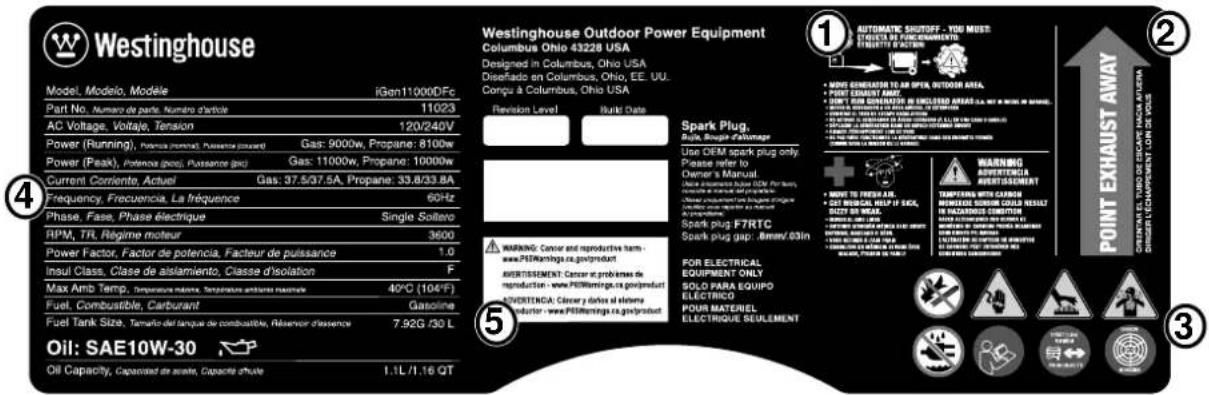
SAFETY LABELS AND DECALS
The following information is on your generator's labels and decals.
① Action Label
If unsafe levels of carbon monoxide accumulate around the generator, automatic shutoff will occur. If the unit shuts off, leave the area immediately. When it is safe to return, do the following:
- Move the generator to an open, outdoor area.
- Point exhaust away.
- Don't run generator in enclosed areas (e.g. not in house or garage).
- Move to fresh air.
- Get medical help if sick, dizzy or weak.
- WARNING – Tampering with carbon monoxide sensor could result in hazardous condition.
② Exhaust Direction
Point exhaust away from body parts and flammable or combustible materials.
③ Safety Symbols
(See page 4)
④ Specifications
(See page 3)
⑤ California Proposition 65
Cancer and reproductive harm - www.P65Warnings.ca.gov/product
⑥ Carbon Monoxide
- Using a generator indoors CAN KILL YOU IN MINUTES. Generator exhaust contains carbon monoxide. This is a poison you cannot see or smell.
- NEVER use inside a home or a garage, EVEN IF doors and windows are open.
⑦ Hot Surface
Do not touch.
text_image
Westinghouse Model, Modelo, Modèle iGen11000DFc Part No. Numéro de parte Numéro d'activité 11023 AC Voltage, Voltage, Tension 120/240V Power (Running), Potencia (nominal), Passance (poast) Gas: 9000w, Propane: 8100w Power (Peak), Potencia (poc), Passance (pic) Gas: 11000w, Propane: 10000w Current Corriente, Actual Gas: 37.5/37.5A, Propane: 33.8/33.8A Frequency, Frecuencia, La fréquence 60Hz Phase, Fase, Phase électrique Single Soltero RPM, TRL Régime moteur 3600 Power Factor, Factor de potencia, Facteur de puissance 1.0 Insul Class, Clase de aislamiento, Classe d'isolation F Max Amb Temp, Temperatura motente, Temperatura antiplate resistive 40°C (104°F) Fuel, Combustible, Carburant Gasoline Fuel Tank Size, Tamaño del tanque de combustible, Réservoir d'assence 7.92G /30 L Oil: SAE10W-30 Oil Capacity, Capacidad de suave, Capacità d'oule 1.1L/1.16 QT Westinghouse Outdoor Power Equipment Columbus Ohio 43228 USA Designed in Columbus, Ohio USA Diseñado en Columbus, Ohio, EE, UU. Compu à Columbus, Ohio USA Revision Level Build Date Spark Plug, Bujia, Bouga d'altamage Use OEM spark plug only. Please refer to Owner's Manual. Because production has been done by the company's business and the company's operations. Because production has been done by the company's operations. Spark plug FTRTC Spark plug gap: 8mmV/03in WARNING: Cancer and reproductive harm - www.PEIRentings.ca.govproduct AVERTISSEMENT: Cancer and problems de reproduction - www.PEIRentings.ca.govproduct EVERTIENCIA: Cancer y forces al sistema Driver - www.PEIRentings.ca.govproduct FOR ELECTRICAL EQUIPMENT ONLY SOLO PARA EQUIPO ELECTRICIO POUR MATERIELELECTRIQUE SEULEMENT AUTOMATIC SHUTOFF - YOU MUST STENTA DE CONFESSIONAL STAFFETTE AUTOMICS • MOVE GENERATOR TO AIR OPEN OUTDOOR AREA, • POINT EXHAUST AWAY • TURN FOR EVOLUTIONS IN ACCORDANCE AWAY & COVE TO BEANS OF MATERIALS, • RECOULENTES LA POTATO EN CHAPITANICOS DE ALETTUCE OF WATER • ARE NOT TO BEANS OF WATER OR OTHER THAN THE COLDEN BY THE COLDEN BY THE COLDEN BY THE COLDEN BY THE COLDEN BY THE COLDEN BY THE COLDEN BY THE COLDEN BY THE COLDEN BY THE COLDEN BY THE COLDEN BY THE COLDEN BY THE COLDEN BY THE COLDEN BY THE COLDEN BY THE COLDEN BY THE COLDEN BY THE COLDEN BY THE COLDEN BY THE COLDEN BY THE COLDEN BUSTAINING ITEMS OF WATER WARNING: ANVENTACIONAL AVERTISSEMENT TEMPORARY WITH CAPSICUM MEMBERE SOBOW COULD RESULT IN INDIVATIVE GROWTH LENDERS IN EQUITY OF WATER AND WATER RESISTENT LENDERS IN EQUITY OF WATER AND WATER RESISTENT LENDERS IN EQUITY OF WATER AND WATER RESISTENT LENDERS IN EQUITY OF WATER AND WATER RESISTENT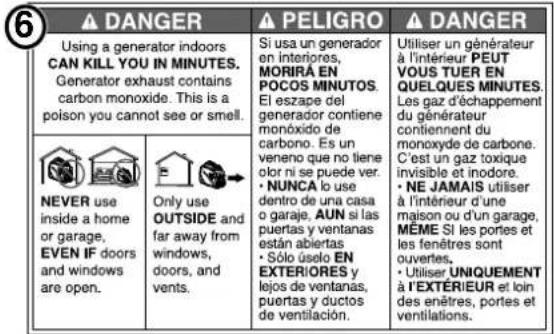
text_image
6 ⚠️ DANGER Using a generator indoors CAN KILL YOU IN MINUTES. Generator exhaust contains carbon monoxide. This is a poison you cannot see or smell. ⚠️ NEVER use inside a home or garage, EVEN IF doors and windows are open. ⚠️ Only use OUTSIDE and far away from windows, doors, and vents. ⚠️ Sí usa un generador en interiores, MORÍRA EN POCOS MINUTOS. El escape del generador contiene monóxido de carbono. Es un veneno que no tiene olor ni se puede ver. • NUNCA lo use dentro de una casa o garaje, AUN si las puertas y ventanas están abiertas • Sólo úselo EN EXTERIORES y lejos de ventanas, puertas y ductos de ventilación. ⚠️ PELIGRO ⚠️ DANGER Utiliser un générateur à l'intérieur PEUT VOUS TUER EN QUELQUES MINUTES. Les gaz d'échappement du générateur contiennent du monoxide de carbone. C'est un gaz toxique invisible et inodore. • NE JAMAIS utiliser à l'intérieur d'une maison ou d'un garage, MÈME SI les portes et les fenêtres sont ouvertes. • Utiliser UNIQUEMENT à l'EXTÉRIEUR et loin des enêtres, portes et ventilations.
text_image
⑦ ▲ CAUTION HOT SURFACES ▲ PRECAUCIÓN SUPERFICIES CALIENTES ▲ ATTENTION AUX SURFACES CHAUDES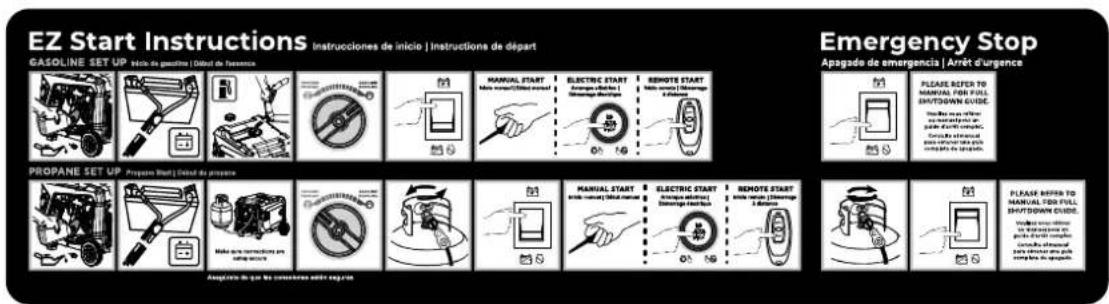
text_image
EZ Start Instructions Instrucciones de inicio | Instructions de départ GASOLINE SET UP Inicio en gasfaire | Détat de tenance MANUAL START Make manual (dette manual) ELECTRIC START Make manual (dette manual) REMOTE START Make manual (dette manual) Emergency Stop Apagade de emergencia | Arrêt d'urgence PLEASE REFER TO MANUAL FOR FULL SHUTDOWN GUIDE. Please refer to manual for full shutdown guide. Please refer to manual for the guide to the guide. PROpane SET UP Propane Start | Détat de procune MANUAL START Make manual (dette manual) ELECTRIC START Make manual (dette manual) REMOTE START Make manual (dette manual) PLEASE REFER TO MANUAL FOR FULL SHUTDOWN GUIDE. Please refer to manual for the guide to the guide. PROpane SET UP Make the instructions per step call AUXICADO EN LA DE LA PROpane SET UP PROCUTURE DES TRANSFER DES PROPANEGENERATOR CAPACITY
NOTICE
Do not overload the generator's capacity. Exceeding the generator's wattage/amperage capacity can damage the generator and/or electrical devices connected to it.
Review the Specifications for this generator and record the running (continuous) and peak (starting) watts. In general the higher the wattage, the more devices can be powered at the same time. The total power requirements of all connected devices must be considered. Power requirements are often listed on a device's data label or nameplate.
To determine power requirements:
- Choose the devices you want to power simultaneously.
- Record and total the running (continuous) watts of each device. The generator must continuously produce this amount of wattage to keep the devices running.
- Record the peak (starting) watts for each device. This is the momentary surge of power required to start electric motors in some tools and appliances.
- Select the device with the highest peak (starting) wattage. Add the peak (starting) watts for that device to the total running (continuous) watts for all the connected devices to determine the total peak wattage requirement for the generator.
NOTE: Total peak wattage requirement assumes intermittent starting of devices. Adjust estimate if devices reach peak wattage at the same time.
MANAGING GENERATOR POWER
To extend the service life of the generator, use caution when adding electrical loads. Disconnect all loads before starting the generator. The safest way to manage generator power is to add loads sequentially by doing the following:
- Remove all loads and start the generator as described later in this manual.
- Connect and start the largest device or appliance. Power requirements are often listed on a device's data label or nameplate.
- Allow the generator output to stabilize. Once stable, the engine should run smoothly and the device should function properly.
- Connect and start the next largest device or appliance.
- Allow the generator output to stabilize.
- Repeat this process for each additional load.
EXTENSION CORDS
!
WARNING
Asphyxiation hazard. Extension cords running directly into the home increase the risk of carbon monoxide poisoning through any openings. If an extension cord running directly into your home is used to power indoor items, there is a risk of carbon monoxide poisoning to people inside the home. Always use battery-powered carbon monoxide detector(s) that meet current UL 2034 safety standards when running the generator. Regularly check the detector(s) battery.
!
WARNING
Asphyxiation hazard. When operating the generator with extension cords, make sure the generator is located in an open, outdoor area far away from occupied spaces with exhaust pointed away.
!
WARNING
Fire and electrocution hazard. Never use worn or damaged extension cords. Damaged or overloaded extension cords could overheat, arc, and burn resulting in death or serious injury.
Before connecting an AC appliance or power cord to the generator:
- Use grounded 3-prong extension cords, tools, and appliances, or double-insulated tools and appliances.
● Make sure the tool or appliance is in good working order. Faulty appliances or power cords can create a potential for electric shock.
● Make sure the electrical rating of the tool or appliance does not exceed the rated power of the generator or the receptacle being used.
NOTICE
Do not exceed the unit's capacity.
Overloading the generator's wattage and/or amperage capacity could damage connected devices and critical generator components.
EXTENSION CORD SIZING
Make sure your extension cord can carry the required load. Cables that are too small may cause a voltage drop that can cause the cord to overheat or cause property damage. Refer to the cord manufacturer's guidelines for the appropriate size and length.
text_image
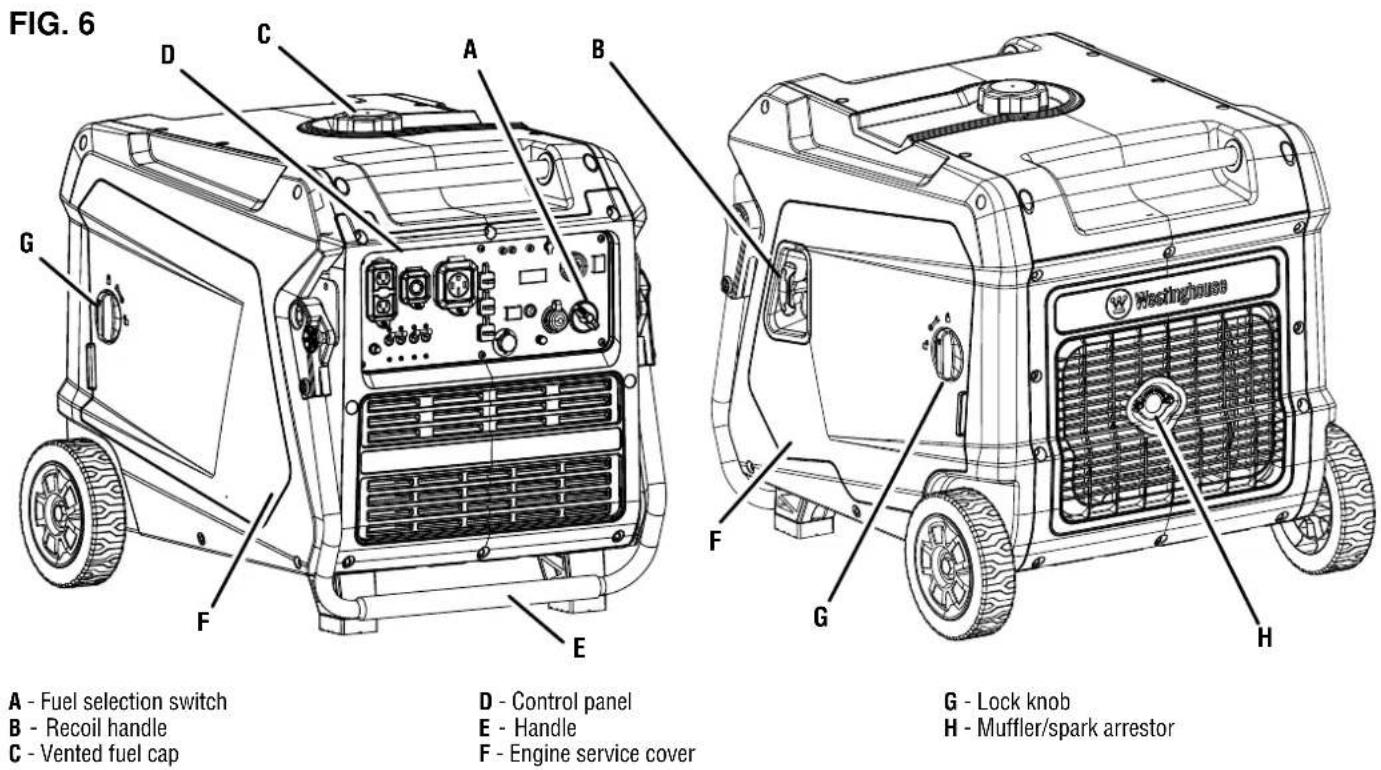
FIG. 6 A - Fuel selection switch B - Recoil handle C - Vented fuel cap D - Control panel E - Handle F - Engine service cover G - Lock knob H - Muffler/spark arrestorUNDERSTANDING YOUR GENERATOR
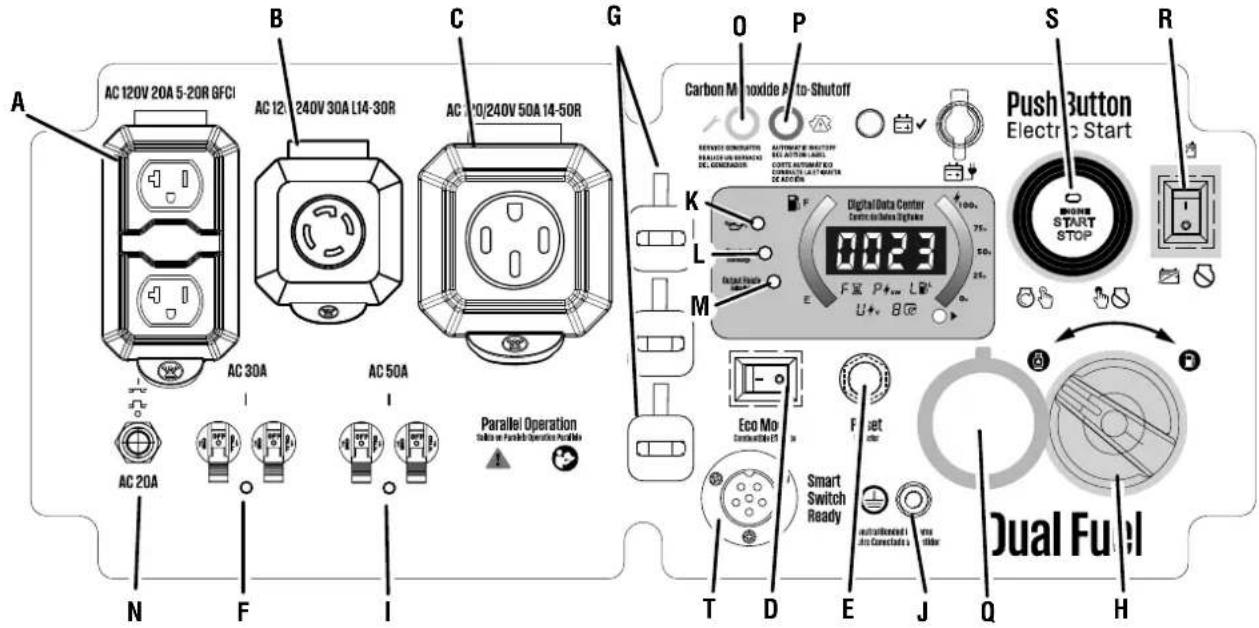
See Figures 6 - 7.
To reduce the risk of injury and product failure, read and understand the information in this user's manual as well as the information on the product labeling.
120 VOLT AC RECEPTACLES
This unit has a 120V, 30 amp RV receptacle and duplex 120V, 20A receptacles capable of powering a variety of appliances, tools, and equipment.
CIRCUIT BREAKERS
The circuit breakers protect devices and equipment connected to the receptacles from electrical overload.
CO SENSOR INDICATOR LIGHTS
The CO Sensor monitors for the accumulation of poisonous carbon monoxide gas. If increasing levels of CO gas are detected, the CO Sensor automatically shuts down the engine.
ECO MODE SWITCH
Eco mode minimizes fuel consumption and noise by adjusting the engine RPM to the minimum required for the current load.
ENGINE/FUEL CONTROL SWITCH
Rotate the engine/fuel control switch to set the choke and start or stop the flow of fuel.
ENGINE SERVICE PANEL
Turn the lock knob to unlock and remove cover to service the oil, spark plug, and air filter.
FUEL TANK
The generator has a fuel tank with a capacity of 1.11 gallons.
GROUND TERMINAL
The ground terminal is used to externally ground the generator.
LED DATA CENTER
Displays remaining run time (F), power output in kW (P), fuel level in liters (L), voltage output (V), and lifetime hours.
LOW OIL LED
Indicates low oil level. When the oil level in the crankcase falls below the safe operating limit, the low oil level indicator will illuminate and the generator will automatically shut off the engine.
FIG. 7
text_image
A AC 120V 20A 5-20R GFCI B AC 12:1240V 30A L14-30R C AC 12:0/240V 50A 14-50R G O P S R Carbon Monoxide Auto-Shutoff EFFECTS GENERATOR EFFECTS ON SWITCH DC GENERATOR AUTOMATIC SWITCH ECUTICAL LANES CORTE AUTOMATIC ECO CONTRACT OUT SWITCH DC ACCESS K L M Digital Data Center Control on Digital High Power 0023 F E U+ 80 Push Button Electric Start N F I AC 30A AC 50A Parallel Operation Switch on Parallel Operation Parallel Eco Mo Continuous Cable Fleet Smart Switch Ready outrecovered Air Connects a user Dual Fuel T D E J Q HA - 120 Volt AC 20 amp receptacles
B - 120/240 Volt AC 30 amp receptacle
C - 120/240 Volt 50 amp receptacle
D - ECO mode switch
E - Reset button
F - 30 A circuit breaker
G - Parallel operation outlets
H - Fuel selector switch
I - 50 A circuit breaker
J - Ground terminal
K - Low oil LED
L - Overload LED
M - Output ready LED
N - 20 A circuit breaker
0 - Service generator LED
P - Automatic shutoff LED
Q - Propane hose connection
R - Battery switch
S - START/STOP button
T - Smart switch connector (not included)
MUFFLER AND SPARK ARRESTOR
The spark arrestor prevents sparks from exiting the muffler. It must be removed for servicing.
NOTICE
The spark arrestor is a safety device that prevents sparks from exiting the muffler and creating a fire hazard. In certain locations a spark arrestor may be required by law. It is the operator's responsibility to know and follow all local laws and regulations related to fire prevention requirements.
OIL DIPSTICK
Unscrew the oil dipstick to check oil levels and add oil when needed.
OUTPUT READY LED
Illuminates when the generator is operating normally. Indicates the generator is producing electrical power at the receptacles.
OVERLOAD LED
Indicates that the generator is overloaded.
OVERLOAD RESET
The generator will automatically switch OFF all AC output to protect the generator if overloaded or if there is a short circuit in a connected appliance.
A parallel cord (not included) can be used to connect a compatible Westinghouse inverter generator for additional power output.
RECOIL HANDLE
Use the recoil handle (and the engine/fuel control switch) to start the generator.
VENTED FUEL CAP
The fuel cap has a vent that can be opened and closed. The vent should be open when the engine is running and closed when the engine is off.
WARNING
Weight hazard. Always have assistance when lifting the generator. Never attempt to lift the unit by the handle. Hold the unit by the frame and use proper lifting techniques to reduce the risk of back injury.
REMOVING CARTON CONTENTS
WARNING
This product requires assembly. Do not attempt to operate this product if any items in the INCLUDED LIST are already assembled when you remove the carton contents. These items are not assembled by the manufacturer and should require customer assembly. Using an improperly assembled product can be hazardous and could result in serious personal injury.
- Carefully cut down the sides of the packaging and remove the carton contents.
- Inspect the carton contents. Verify that all the items in the INCLUDED LIST are present and undamaged.
● Recycle or dispose of the packaging materials properly.
INCLUDED LIST
Generator, wheels, axles, feet, bolts, handle assembly, engine oil (SAE 10W 30), funnel, spark plug wrench, user manual and quick start guide.
If any parts are missing, contact our service team at service@wpowereq.com or call 1-855-944-3571.
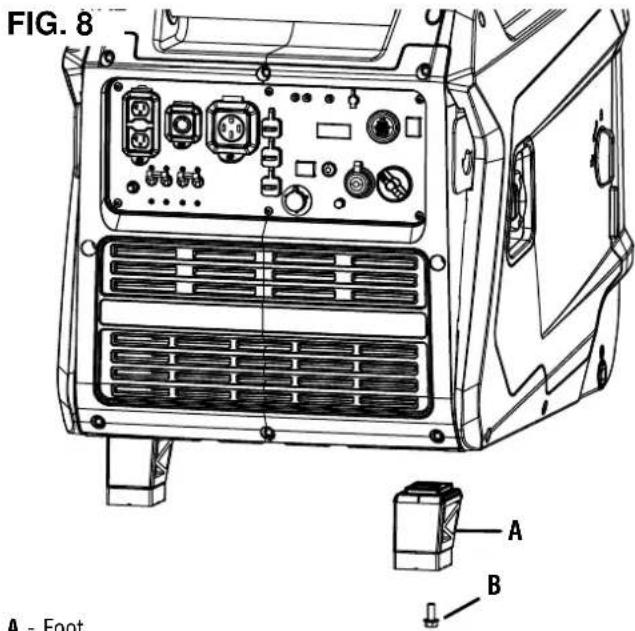
INSTALLING THE FEET
See Figure 8.
NOTE: This unit ships without oil. The feet and wheels should be installed before adding any oil to the engine. Do not place the generator on its side when there is oil in the engine.
- Place the generator on its side on a towel or blanket to prevent damaging the case.
- Locate the feet and bolts.
- Insert the bolt through the hole in the foot and thread into the hole on the bottom of the generator.
● Tighten bolts securely - Repeat these steps to install second foot.
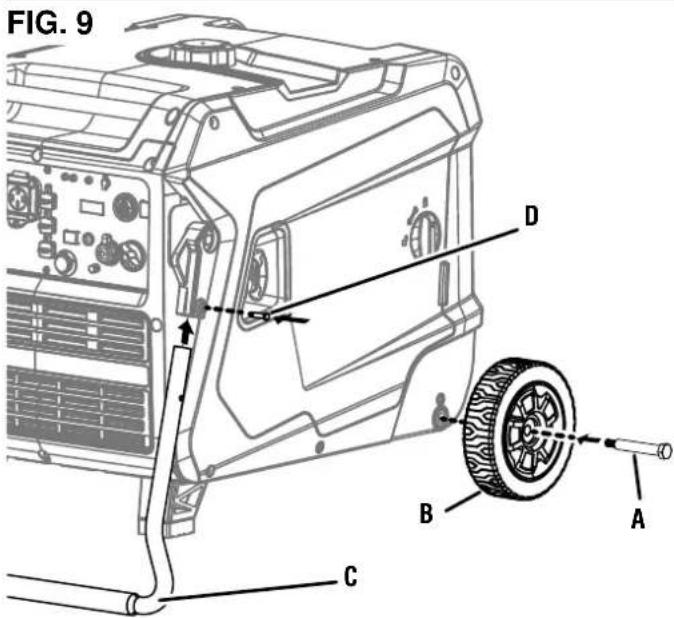
INSTALLING THE WHEELS
See Figure 9.
- Place the generator on its side on a towel or blanket to prevent damaging the case.
- Locate the axles and wheels.
- Insert an axle through the middle of the wheel as shown.
- Thread the axle into the hole on the side of the generator and tighten securely.
- Repeat these steps to install second wheel.
text_image
FIG. 8 A - Foot A BA - Foot
B - Bolt
text_image
FIG. 9 D B A CA - Axle
B - Wheel
C - Handle assembly
D - Handle bolt
INSTALLING THE HANDLE
See Figure 9.
- Place the generator on a flat, level surface.
- Locate the handle assembly and bolts.
- Align the handle assembly with the generator as shown.
- Insert the handle bolt through the hole on the handle assembly. Tighten securely.
- Repeat these steps to attach the other side.

DANGER
Generator exhaust contains high levels of carbon monoxide (CO), an invisible, odorless, and extremely poisonous gas. If you smell exhaust fumes, you are breathing carbon monoxide. But, even if you do not smell exhaust fumes you may be inhaling CO.
ONLY operate generators outside, in a well-ventilated area. NEVER operate generators indoors, doing so CAN KILL YOU IN MINUTES.
- Correct Use – ONLY use generators outside and
downwind, far away from windows, doors and vents. ALWAYS direct exhaust away from occupied spaces ALWAYS install battery-powered carbon monoxide detectors or plug-in carbon monoxide detectors with battery back-up in living areas. See Figure 1.
- Incorrect Use – NEVER use a generator in your home, garage, basement, attic, crawl space or any other fully or partially enclosed area. Areas such as these can allow dangerous levels of carbon monoxide to accumulate. An open door or a running fan WILL NOT provide adequate ventilation. See Figure 2.
If you start feeling dizzy, weak, or sick while using the generator, move to fresh air IMMEDIATELY. Contact a doctor. You may be experiencing carbon monoxide poisoning.

WARNING
Do not alter or modify this product unless instructed to so in this manual or by the manufacturer. Do not use attachments or accessories that are not recommended for use with this product. Making unauthorized modifications and using incompatible accessories can damage the unit and may void your warranty.
NOTICE
In certain circumstances, the National Electric Code may require the generator to be grounded to an approved earth. Consult with a qualified electrician to determine grounding requirements before operation.

WARNING
Avoid skin contact with engine oil or gasoline. Wear protective clothing and equipment. Wash all exposed skin with soap and water. Prolonged skin contact with gasoline or engine oil may cause severe skin irritation and other adverse reactions.
NOTICE
Check the physical condition of the product prior to each use. Look for loose bolts, fluid leaks, and other signs of wear. Replace all damaged items.
KNOW HOW TO SAFELY LOCATE AND OPERATE YOUR GENERATOR

DANGER
Asphyxiation hazard. Place the generator in a well-ventilated area. DO NOT place the generator near vents or intakes where exhaust fumes could be drawn into occupied or confined spaces. Carefully consider wind and air currents when positioning the generator.

WARNING
Electrocution hazard. Never use the generator in a location that is wet or damp. Never expose the generator to rain, snow, water spray, or standing water while in use. Protect the generator from all hazardous weather conditions. Moisture or ice can cause a short circuit or other malfunction in the electrical circuit. Using a generator or electrical appliance in wet conditions, such as rain or snow, or near a pool or sprinkler system, or when your hands are wet, could result in electrocution.

WARNING
Fire hazard. Only operate the generator on a solid, level surface. Operating the generator on a surface with loose material such as sand or grass clippings can cause debris to be ingested by the generator that could block cooling vents or the air intake system. Allow the generator to cool for 30 minutes before transport or storage.
- Read and understand all safety information before starting the generator (see pages 4 - 10).
- NEVER use a generator in your home, garage, basement, attic, crawl space or any other fully or partially enclosed area. Areas such as these can allow dangerous levels of carbon monoxide to accumulate. Carbon monoxide (CO), an invisible, odorless, and extremely poisonous gas CAN KILL YOU IN MINUTES.
- DO NOT operate the generator in the back of a SUV, camper, trailer, truck bed (regular, flat, or otherwise), under stairs, next to walls or buildings, or in any other location that will not allow for adequate cooling of the generator and/or the muffler. Operating the generator in enclosed or partially enclosed areas will allow dangerous levels of CO to accumulate.
- DO NOT contain generators during operation.
- Only use OUTSIDE and far away from windows, doors, and vents as recommended by the US Department of Health and Human Services Centers for Disease Control and Prevention. Your specific home and/or wind conditions may require additional distance.
- Do not operate the generator on an incline. The unit should always be placed on a flat stable surface.
- The generator should be on a flat, level surface at all times (even while not in operation).
● The generator must have at least 5 ft. (1.5 m) of clearance from all combustible material.
KNOW THE REGULATIONS FOR THE USE OF PORTABLE GENERATORS
Consider where and how you intend to use your generator, and familiarize yourself with any local, state, or federal ordinances concerning your intended use. It may be necessary to contact a qualified electrician or local governing agency for a full list of requirements.
ADDING OIL/CHECKING OIL LEVEL
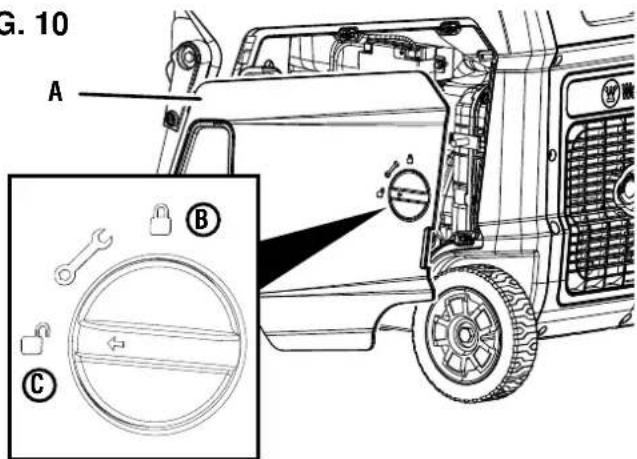
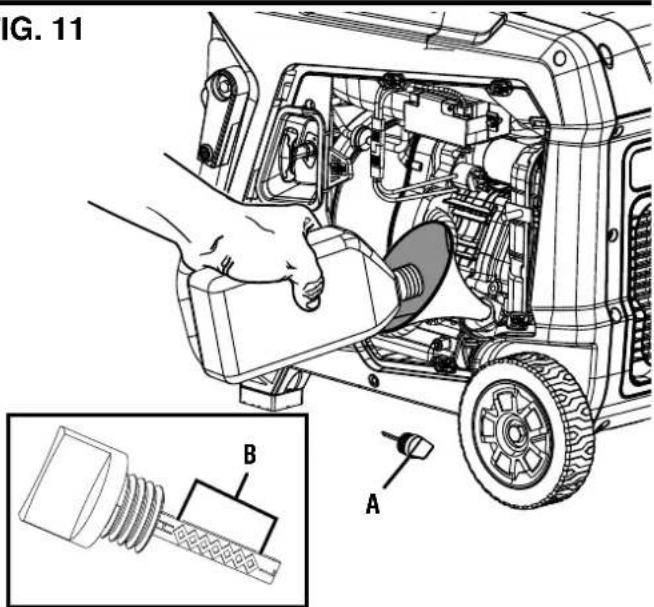
See Figures 10 - 11.
If your product has a separate engine manual, disregard the information in this section and follow the instructions in the engine manual.
NOTICE
THIS GENERATOR HAS BEEN
SHIPPED WITHOUT OIL. Do not attempt to crank or start engine before it has been properly serviced with recommended oil. Failure to add engine oil before starting will result in serious engine damage that is not covered under warranty.
NOTICE
Use of 2-stroke/cycle oil or other unapproved oil types can cause severe engine damage that is not covered under warranty.
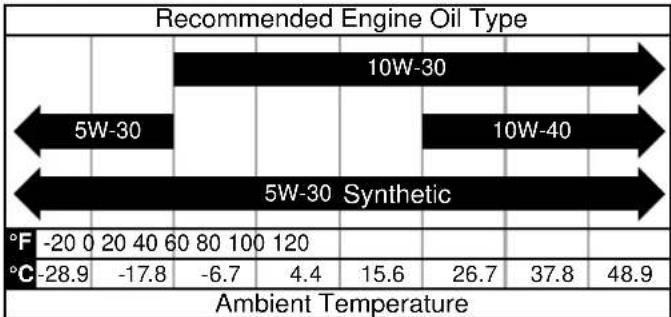
The included, recommended oil type for typical use is 10W-30 engine oil. If running the generator in extreme temperatures, refer to the following chart.
bar
Recommended Engine Oil Type | Category | 5W-30 | Synthetic | |---|---|---| | 10W-30 | -20.0 | 20.40 | | 10W-40 | -28.9 | -17.8 | | Ambient Temperature | -6.7 | 120 | | Ambient Temperature | 4.4 | 15.6 | | Ambient Temperature | 15.6 | 26.7 | | Ambient Temperature | 37.8 | 48.9 |NOTE: Check the engine oil level before each use or every 8 hours of operation.
● Turn the generator off and allow the engine to cool for at least five minutes.
- Place the generator on a level surface in a well-ventilated area.
● Turn the lock knob to the unlocked position.
- Remove the engine service cover.
● Clean the area around the oil dipstick.
For initial oil fill:
- Slowly unscrew and remove the oil dipstick.
- Using the funnel, slowly pour the supplied engine oil into the oil fill hole. Stop frequently to make sure you do not overfill.
NOTE: Your generator was functionally tested in the factory and may contain minimum residual oil. Additional oil is required to operate the unit. Do not overfill.
FIG. 10
text_image
G. 10 A B CA - Engine service cover
B - Locked position
C - Unlocked position
FIG. 11
text_image
FIG. 11 B AA - Oil dipstick
B - Safe operating range
- Replace and tighten the oil dipstick.
● Install the engine service cover and turn the lock knob to the locked position to secure.
To check oil level:
- Slowly unscrew and remove the oil dipstick.
- Clean the dipstick and re-seat it inside the oil fill hole. Do not thread the dipstick.
- Remove the dipstick and verify that the oil level is within safe operating range.
- If the oil level is low, add recommended engine oil incrementally and recheck until the level is within the safe operating range.
- Replace the oil dipstick and hand-tighten.
● Install the engine service cover and turn the lock knob to the locked position to secure.
CONNECT THE BATTERY
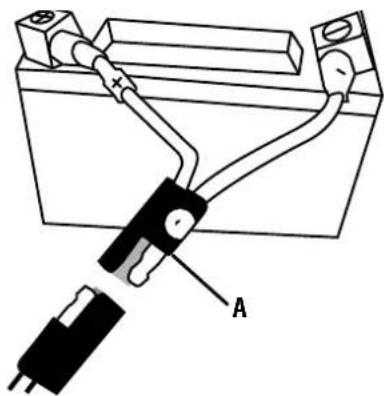
See Figure 12.
NOTICE THIS GENERATOR HAS BEEN
SHIPPED WITHOUT OIL. Do not attempt to crank or start engine before it has been properly serviced with recommended oil. Failure to add engine oil before starting will result in serious engine damage that is not covered under warranty.
A quick-connect battery plug is pre-installed on the battery. Remove the cable tie securing the plugs then push firmly to connect them.
NOTE: The generator is equipped with a battery charging feature. Once the engine is running, a small charge will slowly recharge the battery.
GASOLINE REQUIREMENTS
NOTICE Do not use E15 or E85 fuel in this
product. Engine or equipment damage caused by stale fuel or the use of unapproved fuels (such as E15 or E85 ethanol blends) is not covered by warranty. Only use unleaded gasoline containing up to 10% ethanol.
- ALWAYS use CLEAN, FRESH, unleaded gasoline (87–93 octane) in this unit. NEVER use OLD, STALE, or CONTAMINATED gasoline.

- Up to 10% ethanol (gasohol) is acceptable (where available; non-ethanol fuel is recommended).
- DO NOT use E85 or E15.
- DO NOT use a gas oil mix.
● DO NOT modify the engine to run on alternate fuels.
USING FUEL STABILIZER
Adding a fuel stabilizer (not included) extends the usable life of fuel and helps prevent deposits from forming that can clog the fuel system. Follow the manufacturer's instructions for use.
Always mix the correct amount of fuel stabilizer to gasoline in an approved gasoline container before fueling the generator. Run the generator for five minutes to allow the stabilizer to treat the entire fuel system.
FIG. 12
natural_image
Diagram of a battery connected to a terminal block, showing internal components and wiring (no text or symbols)A - Quick-connect plug

text_image
FIG. 13 AA - Fuel Cap
ADDING GASOLINE
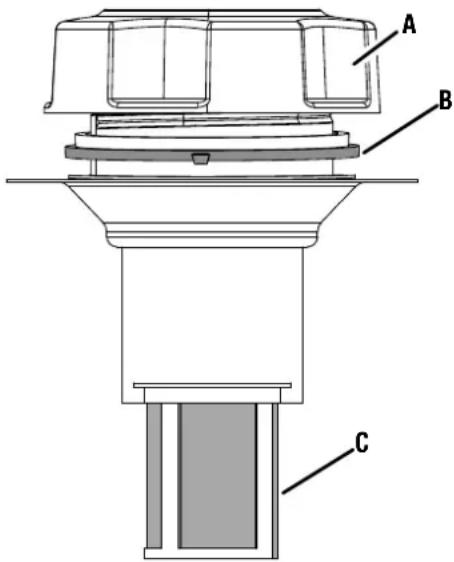
See Figures 13 - 14.
DANGER
er remove the fuel cap or refuel the generator while the engine is running. Do not smoke or create sparks while fueling. Always turn the engine off and allow the generator to cool for at least five minutes before refueling.
DANGER
Fire and explosion hazard. Do
not overfill fuel tank. Fill only to the red maximum fill ring on the fuel screen. Overfilling may cause fuel to spill onto engine causing a fire or explosion hazard.
WARNING
Never use a gasoline container,
gasoline tank, or any other fuel item that is broken, cut, torn or damaged.
NOTICE
Only fill the tank from an approved gasoline container. Make sure the gasoline container is internally clean and in good condition to prevent fuel system contamination.
- Turn the generator off and allow the engine to cool for at least five minutes.
- Place the generator on a level surface in a well-ventilated area. DO NOT fuel indoors.
- Clean area around fuel cap and remove the cap slowly.
- Slowly add the recommended fuel. Do not overfill.
NOTE: The gasoline level should NOT be higher than the red maximum fill ring on the fuel screen.
● Install the fuel cap. Tighten securely.
- Clean up any spilled fuel.
- Move at least 30 ft. away from refueling area before restarting the engine.
NOTICE
Fuel can damage paint and plastic. Use caution when filling the fuel tank. Damage caused by spilled fuel is not covered under warranty.
NOTICE
Clean the fuel screen filter of debris before and after each fueling. Remove the fuel screen filter by slightly compressing it while removing it from the fuel tank.
LP GAS CYLINDER REQUIREMENTS
NOTICE
Propane cylinders that use liquid withdrawal system can not be used on these models.
LP gas is extremely flammable and could ignite spontaneously when mixed with air. The LP gas cylinder used with this generator must meet the following requirements:
- The cylinder must be manufactured and labeled in accordance with the Specifications for LP Gas Cylinders of the U.S. Department of Transportation (D.O.T.) or the National Standard of Canada, CAN/CSA-B339, Cylinders, Spheres,
FIG. 14
text_image
A B CA - Fuel Cap
B - Max Fill Line
C - Screen Filter
and Tubes for Transportation of Dangerous Goods; and Commission.
● The cylinder must have a safety relief valve.
- The cylinder must include a UL listed Overfill Protection Device (OPD). Cylinders with this safety feature will have a unique triangular handwheel. Only use LP gas cylinders with this type of handwheel.

- The cylinder must be periodically certified for use by the authority having local jurisdiction (AHJ). Before use, verify that the certification date on the cylinder has not expired.
- All new cylinders must be purged of air and moisture prior to filling. Used cylinders that have not been plugged or kept closed must also be purged. The purging process should be done by a propane supplier (Cylinders from an exchange supplier should have been purged and filled properly).
CONNECTING AN LP GAS CYLINDER TO THE GENERATOR
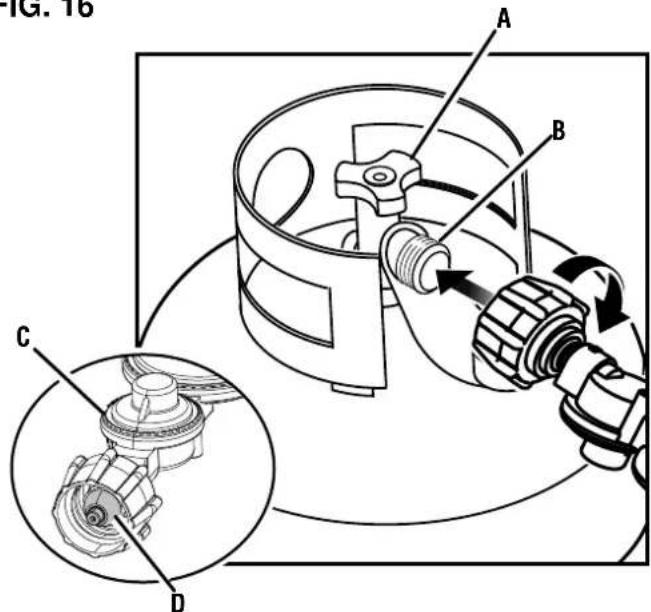
See Figures 15 - 16.

DANGER
Fire and explosion hazard. Never connect or disconnect the LPG/propane hose while the engine is running. Do not smoke or create sparks while handling LPG/propane. Always turn the engine off and allow the generator to cool for at least five minutes before connecting the propane cylinder.

WARNING
Never use a gas container, LPG/ propane hose, propane cylinder or any other fuel item that appears to be damaged.

WARNING
To reduce the risk of injury, perform a leak test any time the LP gas cylinder is disconnected and reconnected.
● Turn the generator off and allow the engine to cool for at least five minutes.
- Place the generator on a level surface in a well-ventilated area. DO NOT connect or disconnect the LP gas cylinder indoors.
- Place the LP gas cylinder near the generator, but do not place it in the path of the muffler exhaust.
NOTE: The propane cylinder can be of any capacity but it must conform to the LP Gas Cylinder Requirements listed earlier in this section.
- Verify that the handwheel is in its full off position.
- Hold the LPG/propane hose firmly and push the nipple into the cylinder valve.
- Use your hand to thread the LPG/propane hose to the cylinder valve. Do not cross-thread. Do not use tools or sealants.
NOTE: You will feel some resistance as the hose seals in the cylinder valve. To complete the connection, turn the connector an additional one-half to three-quarters of a turn. If you are unable to complete the connection, disconnect the hose and try again. If you still cannot complete the connection, DO NOT use this hose!
- Thread the propane hose onto the propane inlet. Gently pull the hose to see that it is secure.
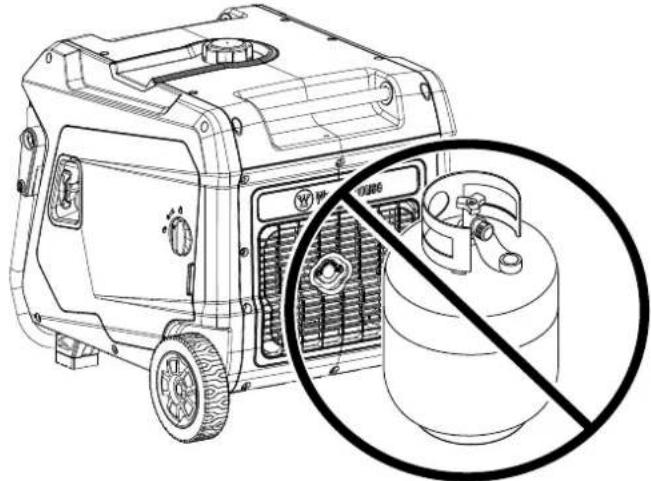
FIG. 15
natural_image
Line drawing of a portable gas generator with a circular annotation highlighting the absence of a water tank (no text or symbols present)FIG. 16
text_image
FIG. 16 A B C DA - Handwheel
B - Cylinder valve
C - LPG/propane hose
D - Nipple
DATA CENTER
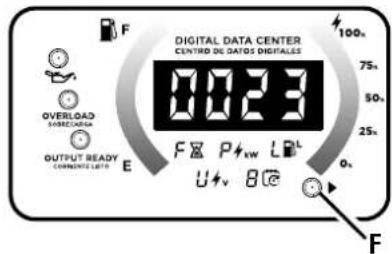
See Figure 17.
Push the mode button to cycle through the data display modes.
Voltage: Displays current voltage output.
Frequency (Hz): Displays power output frequency in Hertz.
Lifetime Hours: Displays the lifetime run hours.
Fuel Level: Indicates how much gasoline remains in the fuel tank.
Run Time/Maintenance: Displays current run time. Resets to zero when shut down. Maintenance reminder displayed when required.
Maintenance Codes:
P25-Change engine oil
P50-Clean air filter, Change engine oil
P100-Change engine oil, clean air filter, replace fuel filter
SELECTING THE FUEL SOURCE
See Figure 18.

DANGER
Fire and explosion hazard. DO
NOT add gasoline to the fuel tank or connect the LPG/propane hose to the generator while the generator is in operation.
NOTICE
Do not overload the generator. Load capacities differ depending on the fuel source. Before switching fuel sources, make sure the generator can supply enough running (continuous) and peak (starting) watts for the items your connected items.
The fuel source can be switched while the engine is off or while it is running if a propane tank is connected to the generator BEFORE operation. If you switch from gasoline to another fuel source while the engine is running, it may run rough for a few seconds as it purges gasoline from the carburetor.
To switch to gasoline:
- Turn the fuel valve to the open position to start the flow of gasoline.
- Rotate the fuel selector switch fully clockwise for GASOLINE.
● Turn off the flow of propane gas.
To switch to propane:
- Open the cylinder valve on the LP gas cylinder to start the flow of propane.
- Rotate the fuel selector switch fully counterclockwise for PROPANE.
● Turn off the flow of gasoline.
FIG. 17
text_image
DIGITAL DATA CENTER CENTRD DE DATOS DIGITALES 0023 OVERLOAD F OUTPUT READY CURRENT LED E F P uW L L U 8°C 100% 75% 50% 25% 0. F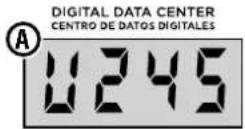
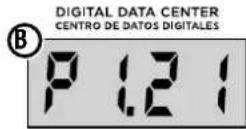
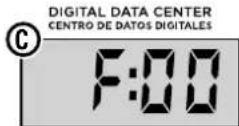
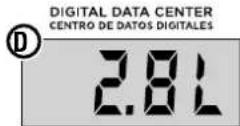
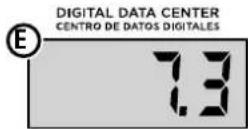
A - Voltage
B - Power output
C - Lifetime hours
D - Fuel level
E - Run time/maintenance reminder
F - Mode button
FIG. 18
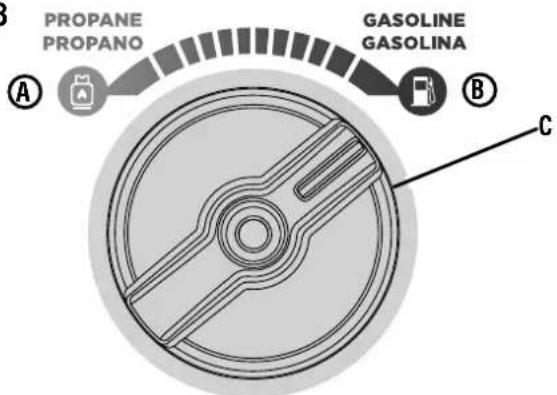
Engine power is reduced the higher you operate above sea level. Output will be reduced approximately 3.5% for every 1,000 feet of increased altitude from sea level.
High altitude adjustment is required for operation at altitudes over 5,000 ft. (1524 m). Operation without this adjustment will cause decreased performance, increased fuel consumption, and increased emissions.
NOTICE
DO NOT operate the generator at altitudes below 2,000 ft. (762 m) with the high altitude kit installed. Engine damage may occur.
High Altitude
Carburetor Kit
Part# 518532
BREAK-IN PERIOD
For proper break-in, do not exceed 50% of the rated running watts during the first five hours of operation.
Use supplied oil until first recommend oil change. Do not use full synthetic oil during break in period. Full synthetic oil may prevent proper breaking and seating of the piston rings.
Vary the load occasionally to allow stator windings to heat and cool and help seat the piston rings.
BEFORE STARTING THE GENERATOR
Verify that:
● The generator is placed in a safe, appropriate location.
● The generator is on a dry, flat, and level surface.
- Oil and fuel levels are within safe operating range.
- All loads are disconnected from the control panel receptacles.
● The ECO mode switch is in the OFF position.

DANGER
Fire and explosion hazard. DO
NOT move or tip the generator during operation.
REMOTE START
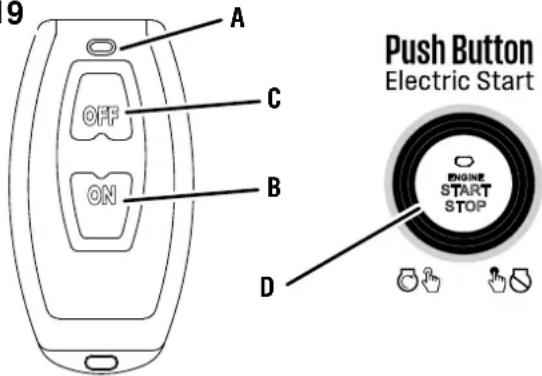
See Figure 19.
The remote start key fob included with the generator should be attached to the recoil handle or control panel. If your unit was shipped without a key fob, contact Westinghouse customer service.
The generator can be started remotely from up to 99 feet (30 meters) using the remote start key fob.
NOTE: As the batteries in the remote start key fob drain, operational distance will decrease.
Pairing the remote start:
If the remote start key fob is replaced or needs to be paired to the generator, follow this procedure:
- Place the generator battery switch to the ON position. The power indicator light will illuminate.
FIG. 19
text_image
9 A C OFF ON B D Push Button Electric Start ENGINE START STOPA - Activity light
B - Start button
C - Stop button
D - Start/Stop button (for pairing process)
- Push and hold the START/STOP button on the control panel for approximately 10 seconds until it flashes rapidly.
- Push and hold the START button on the key fob until the START/STOP is no longer illuminated. Release the button. The START/STOP button will illuminate after the button is released.
- Press the START button on the key fob, and if the pairing is successful, the START/STOP button stops flashing and will illuminate for about two seconds. When the illumination stops, the pairing is successful.
- Turn the generator battery switch to the OFF position. The remote is now paired.
Remote replacement batteries: (2) CR2016
STARTING THE ENGINE: GASOLINE
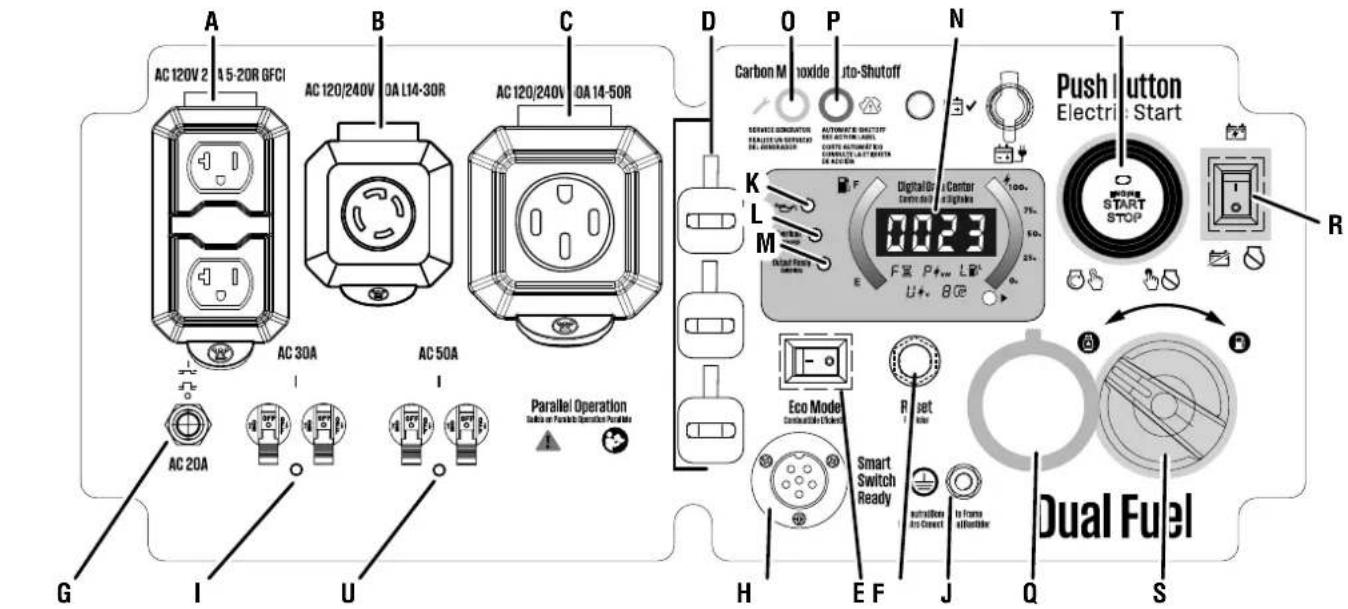
See Figures 18 - 20.

DANGER
Fire and explosion hazard. DO
NOT move or tip the generator during operation.

WARNING
Verify that the area around the ore remote starting the generator.
- Verify that fuel is in the gas tank.
- Turn the fuel selector switch on the control panel to gasoline operation. (See Figure 18).
- Be sure the ECO mode switch is in the OFF position.
- Place the battery switch to the ON position.
-
Choose the starting method:
-
Remote Start: Push and hold the START button on the remote start key fob for one second.
- Push-Button Start: Push and hold the engine START/STOP button for two seconds.
- Recoil Start: Firmly grasp and pull the recoil handle slowly until you feel increased resistance, then pull rapidly.
NOTE: In extreme cold, manually close the choke by moving it right toward the front handle of the generator.
FIG. 20
text_image
AC 120V 2 A 5-20R GFCI B AC 120/240V OA L14-30R C AC 120/240V OA 14-50R D O P N T Carbon M oxide auto-Shutoff SERVICE GENERATION ELECTRIC POWER DE ADMINISTRATION AUTOMATIC SWITCH BECAUTIONS COASTS AUTOMETER NO CORRECT TO BE CHATTON DE ACCORD K L M Digital Drive Center Continuous to Digital Drive F E P+vee L#o U+. B# Push Button Electrici Start STOP R Eco Model Combustion Electric R set Motor Smart Switch Ready No. 100- to Forma a b b c d e d e d e d e d e d e d e d e d e d e d e d e d e d e d e d e d e d e d e d e d e d e d e d e d e d e d e d e d e d e d e d e d e d e d e d e d e d e d e d e d e d e d e d e d e d e d e d e d e d e d G I U H E F J Q S Dual FuelA - 120 Volt AC 20 A receptacles
B - 120/240 Volt AC 30 A receptacle
C - 120/240 Volt AC 50 A receptacle
D - Parallel operation outlets
E - ECO mode switch
F - Reset button
G - 20 A circuit breaker
H - Smart switch connector (not included)
I - 30 A circuit breaker
J - Ground terminal
K - Low oil LED
L - Overload LED
M - Output ready LED
N - Digital display
0 - Service generator LED
P - Automatic shutoff LED
Q - Propane hose connection
R - Battery switch
S - Fuel selector switch
T - START/STOP button
U - 50 amp circuit breaker
STARTING THE ENGINE: PROPANE

DANGER
Fire and explosion hazard. Always turn the propane tank valve to the fully closed position if not running the generator on propane.
● Make sure the LPG/propane hose is correctly connected to the generator and propane tank.
- Turn the fuel selector switch to propane operation. (See Figure 18.)
● Fully open the valve on the propane tank.
- Be sure the ECO mode switch is in the OFF position.
- Place the battery switch in the ON position.
- Choose the starting method:
- Remote Start: Push and hold the ON button on the remote start key fob for one second.
- Push-Button Start: Push and hold the engine START/STOP button for two seconds.
- Recoil Start: Firmly grasp and pull the recoil handle slowly until you feel increased resistance, then pull rapidly.
NOTE: In extreme cold, manually close the choke by moving it right toward the front handle of the generator.
NOTE: During Push-Button or Remote Start the engine will automatically set the choke and begin the start sequence.
If the engine fails to start, the generator will attempt to start the engine two more times.
STOPPING THE GENERATOR
See Figure 20.
- Remove any connected loads from the control panel receptacles.
- Allow the generator to run at "no load" to reduce and stabilize engine and alternator temperatures.
-
Stop the flow of fuel.
-
For gasoline, close the fuel valve.
- For propane, close the cylinder valve on the LP gas cylinder.
- Use one of the following to turn off the generator:
- Press the OFF button on the remote.
-
Press the START/STOP button on the control panel.
-
Place the battery switch on the control panel in the OFF (O) position.
- Disconnect the propane hose from the LP gas cylinder and the generator.
To stop the unit quickly in an emergency:
- Place the battery switch in the OFF (O) position.
PARALLEL OPERATION
See Figure 20.

DANGER
Fire and electrocution hazard.
Never connect or disconnect the parallel cable leads when a generator is running. Failure to follow this rule may lead to serious personal injury or death.

WARNING
Correct connection of the left and right cables is very important, especially when the generators are used with a transfer switch to supply power to a building. To avoid serious personal injury or damage to electrical devices, including the generators, do not try to power an electrical system in a building without using an approved transfer switch.
NOTICE
Connecting to a generator that is not compatible can cause a low voltage output that may damage tools and appliances powered by the generator.
Parallel operation gives you the ability to link two compatible Westinghouse inverter generators for combined running and peak power output.
A parallel cord or receptacle-mounted parallel cable is needed for parallel operation. Compatible cables are sold separately. Call 1-855-944-3571 to order part #507096.
Refer to the user manual included with your parallel cord or receptacle-mounted parallel cable for installation and operation instructions.
LOW OIL INDICATOR
See Figure 20.
The LOW OIL LED on the control panel will illuminate when the unit is low or out of oil. The generator will not start when the indicator is lit. To resume normal operation, add engine oil as described earlier in this section. Do not attempt to crank or start engine before it has been properly serviced with recommended oil.
ECO MODE
See Figure 20.
NOTICE
Always start the generator with the ECO mode switch in the OFF position. Allow the engine speed to stabilize and the OUTPUT READY LED to illuminate before putting the ECO mode switch in the ON position.
NOTICE
Do not use ECO mode when in parallel operation with another Westinghouse inverter generator.
ECO mode minimizes fuel consumption and noise by adjusting the engine RPM to the minimum required for the current load.
Turn ECO mode ON when powering small appliances with continuous loads such as a computer or electric light.
Turn ECO mode OFF when powering large surge loads such as an air conditioner or electric pump.
To turn on ECO mode, verify that the OUTPUT READY LED is illuminated, then push the switch to the ON position. If no load is present, the generator RPM will drop to idle speed.
The generator will detect loads as they are applied and increase engine RPM.
To run the generator at maximum power and RPM, push the ECO mode switch to the OFF position.
OVERLOAD RESET
See Figure 20.
Do not overload the generator. If the generator is approaching or has reached an overload condition, the OVER-LOAD LED on the control panel will illuminate.
If the generator is close to overloading, the OVERLOAD LED will blink. Turn off and remove one or more connected devices to decrease the load and resume normal operation. If the load is not reduced, the unit will reach an overload condition. To extend the service life of the generator, avoid running the unit near capacity.
If the generator is overloaded or if there is a short circuit in a connected device, the OVERLOAD LED will turn solid, and the unit will automatically disconnect from the load. The engine will continue to run, but there will not be any electrical output.
To restore electrical output after an overload:
- Remove any connected loads from the control panel receptacles.
- Push the RESET button on the control panel until the OVERLOAD LED goes OFF and the OUTPUT READY LED is illuminated.
- Reset the circuit breaker(s) if activated.
- Verify that the intended running and surge loads do not exceed the generator's capacity.
- Reconnect electrical loads sequentially, allowing the generator to stabilize after each load is connected.
CIRCUIT BREAKERS
See Figure 20.
The 20 amp circuit breaker protects devices and equipment connected to the 120V, 20 amp receptacles from electrical overload. The 30 amp circuit breaker protects devices and equipment connected to the 120V, 30 amp receptacles. If a circuit breaker activates, turn off the connected device, remove it from the port or outlet, and press the circuit breaker to reset.
TRANSPORTING
- Turn off the generator.
- Allow the generator to cool a minimum of 30 minutes before transporting.
- Replace all protective covers on the generator control panel.
- Only use the generator's fixed handle to lift the unit or attach any load restraints such as ropes or tie-down straps. DO NOT attempt to lift or secure the generator by holding onto any of its other components.
- Keep the unit level during transport to minimize the possibility of fuel leakage or, if possible, drain the fuel or run the engine until the fuel tank is empty before transport.
CAUTION Fire hazard. DO NOT up-end the generator or place it on its side. Fuel or oil can leak and damage to the generator may occur.
MAINTENANCE
WARNING Accidental start-up. Disconnect the spark plug boot (see figure 21) from the spark plug when performing maintenance on the generator.
WARNING Replace damaged or worn items with recommended or equivalent replacement parts. Using an incorrect or incompatible part might create a hazard that could result in serious personal injury.
WARNING Allow hot components to cool for 30 minutes before performing any maintenance procedure.
WARNING Avoid skin contact with engine oil or gasoline. Wear protective clothing and equipment. Wash all exposed skin with soap and water. Prolonged skin contact with gasoline or engine oil may cause severe skin irritation and other adverse reactions.
NOTICE Check the physical condition of the product prior to each use. Look for loose bolts, fluid leaks, and other signs of wear. Replace all damaged items. For replacement parts or assistance, contact our customer service team.
To prolong the life of this product, follow the maintenance instructions in this section. Contact customer service before servicing any recall or warranty parts.
CLEANING THE GENERATOR
Do not store or operate your generator in dirty, dusty, or corrosive environments. Do not allow foreign materials and debris to clog the vents on the unit.
NEVER clean the generator with a garden hose. Water can damage the generator's fuel system and electrical components. If the unit needs to be cleaned, use a soft brush and damp cloth to clean the exterior and use low pressure air (no greater than 25 psi) to clean the vents.
Never use gasoline as a cleaning agent.
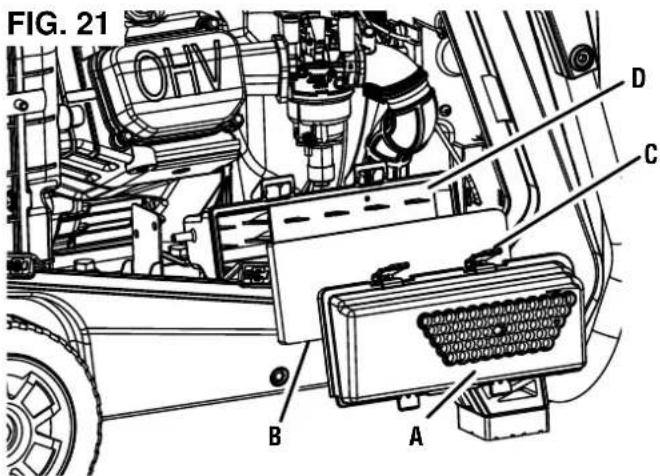
CLEANING/REPLACING THE AIR FILTER See Figure 21.
Keep air filter clean. A dirty air filter can cause poor performance and decrease the service life of the product. NEVER operate the generator without an air filter in place.
- Turn the generator off and allow the engine to cool for 30 minutes.
- Turn the lock knob to the unlocked position and remove the engine service cover.
● Release the tabs and remove the air filter cover. - Remove the air filter from the air cleaner housing and place it in a suitable cleaning container. Replace the air filter if damaged.
NOTE: The air filter may be covered in oil. Use an appropriate container.
- Wash the air filter by submerging the filter in a solution of household detergent soap and warm water. Slowly squeeze the filter to thoroughly clean.
NOTICE
DO NOT twist or tear the air filter during cleaning or drying. Only apply slow but firm squeezing action.
- Rinse the air filter by submerging it in fresh water and applying a slow squeezing action. Allow the filter to dry thoroughly.
NOTICE
Do not pollute. Follow the guidelines of the EPA or other governmental agencies for proper disposal of hazardous materials. Consult local authorities or reclamation facility.
- Dip the air filter in clean engine oil then squeeze out all excess oil. The engine will smoke when started if too much oil is left in the filter.
● Install the air filter in the air cleaner housing and reinstall the air filter cover.
● Install the engine service cover and turn the lock knob to the locked position to secure.
text_image
FIG. 21 OHN D C B AA - Air filter cover
B - Air filter
C - Tab
D - Air filter box
CHANGING THE ENGINE OIL
See Figure 22.
For optimal performance, change the engine oil according to the figures specified in the maintenance schedule or the engine manual (if applicable). When using the generator under extreme, dirty, dusty conditions or in extremely hot weather, change the oil more frequently.
NOTE: Change the oil while the engine is warm but not hot. Warm engine oil drains more quickly and thoroughly than cool lubricant. Contact with hot lubricant will cause serious burns.
- Turn the generator off and allow the engine to cool for 30 minutes.
- Place the generator on a level surface in a well-ventilated area.
- Turn the lock knob to the unlocked position and remove the engine service cover.
- Clean the area around the oil dipstick and drain bolt.
-
Slowly unscrew and remove the oil dipstick.
-
Place an oil pan (or suitable container) under the generator.
- Remove the drain bolt.
● After the oil has drained completely, replace the drain bolt.
● Refill the oil as described in the Operations section. - Clean the oil dipstick.
- Replace the oil dipstick and hand-tighten.
- Clean up any spilled oil.
● Install the engine service cover and turn the lock knob to the locked position to secure.
CLEANING/REPLACING THE SPARK PLUG
See Figure 23.
NOTICE
ALWAYS use the Westinghouse OEM or compatible non-resistor-type spark plug. Use of resistor-type spark plug can result in rough idling, misfire, or may prevent the engine from starting.
Make sure the spark is clean and properly gapped. To clean or replace your spark plug:
- Turn the generator off and allow the engine to cool for 30 minutes.
- Place the generator on a level surface in a well-ventilated area.
- Lift the spark plug service door to gain access to the spark plug area.
- Remove the spark plug boot by firmly pulling the spark boot directly away from the engine.
- Clean the area around the spark plug.
- Remove the spark plug with the included spark plug socket wrench.
NOTICE
Never apply any side load or move the spark plug laterally when removing the spark plug.
- Inspect the spark plug. Replace if electrodes are pitted, burned, or the insulator is cracked. Only use a recommended replacement plug.
● Measure the spark plug electrode gap with a wire-type feeler gauge. If necessary, correct the gap by carefully bending the side electrode.
Spark plug gap: 0.024 - 0.032 in. (0.60 - 0.80 mm)
- Carefully install the spark plug finger tight, then tighten as additional 3/8 to 1/2 turn with the spark plug wrench.
● Install the spark plug boot and close the spark plug service door.
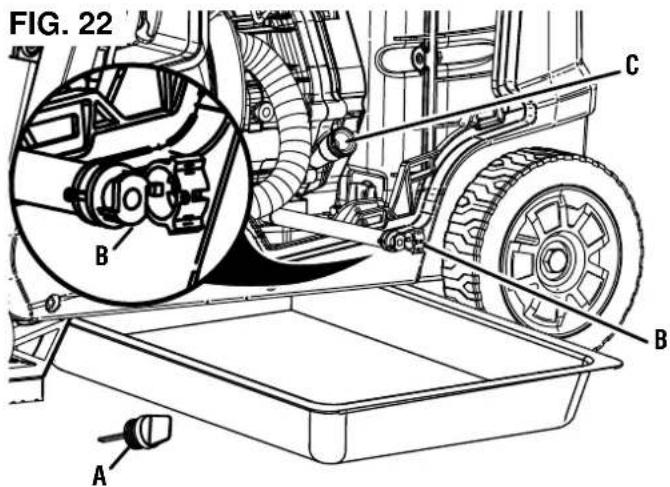
text_image
FIG. 22 A B CA - Oil dipstick
B - Drain
C - Oil fill
FIG. 23
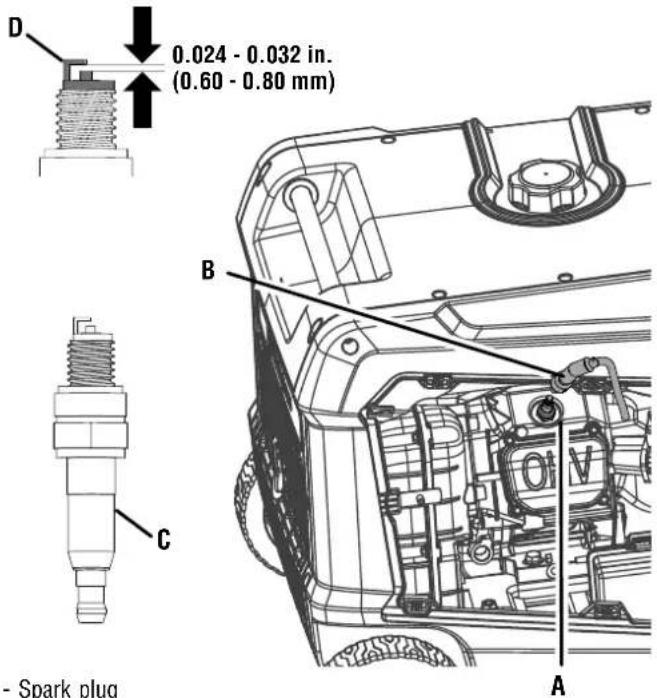
text_image
D 0.024 - 0.032 in. (0.60 - 0.80 mm) B C - Spark plug AA - Spark plug
B - Spark plug boot
C - Insulator
D - Electrode
CLEANING THE SPARK ARRESTOR
See Figure 24.
Check and clean the spark arrestor according to the figures specified in the maintenance schedule or the engine manual (if applicable). Failure to clean the spark arrestor will result in degraded engine performance.
- Turn the generator off and allow the engine to cool for 30 minutes.
- Place the generator on a level surface in a well-ventilated area.
- Remove the two screws securing the spark arrestor bracket.
- Remove the bracket, screen, and spark arrestor from the generator.
● Gently clean the screen and spark arrestor using a wire brush.
● Reinstall the spark arrestor, screen, and bracket. Tighten screws securely.
DRAINING THE FUEL TANK AND CARBURETOR FLOAT BOWL
See Figures 25 - 27.

WARNING
ALWAYS store gasoline in a container approved for gasoline. Unapproved containers can break or deteriorate allowing gasoline or gasoline vapors to escape which can create a serious hazard.
Even properly stabilized fuel can leave residue and cause corrosion if left long term. If storing the generator for two to six months, drain the float bowl to prevent gum and varnish buildup in the carburetor. If storing the generator for longer than six months, drain the fuel tank to prevent fuel separation, deterioration, and deposits in the fuel system.
- Turn the generator off and allow the engine to cool for 30 minutes.
- Place the generator on a level surface in a well-ventilated area.
To drain the float bowl:
- Turn the engine/fuel control switch to the GASOLINE OFF Ⓢ position.
- Remove the engine service cover.
- Locate the drain hose extending from the bottom of the carburetor float bowl.
- Place the bottom end of the hose outside the generator into an approved gasoline container to catch the drained fuel.
- Loosen the float bowl drain screw and allow the fuel to drain. Tighten the float bowl drain screw.
- Route the drain hose between the air cleaner housing and the engine service cover. Install the engine service cover.
To run the float bowl dry:
- Start the generator as described earlier.
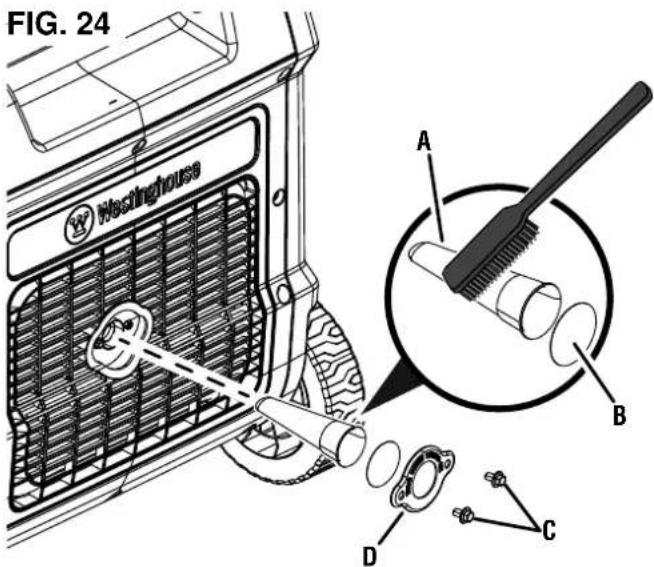
text_image
FIG. 24 Westinghouse A B C DA - Spark arrestor
B - Screen
C - Screws
D - Bracket
FIG. 25
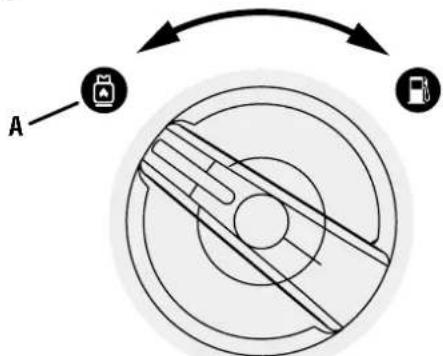
text_image
AA - Gasoline OFF
FIG. 26
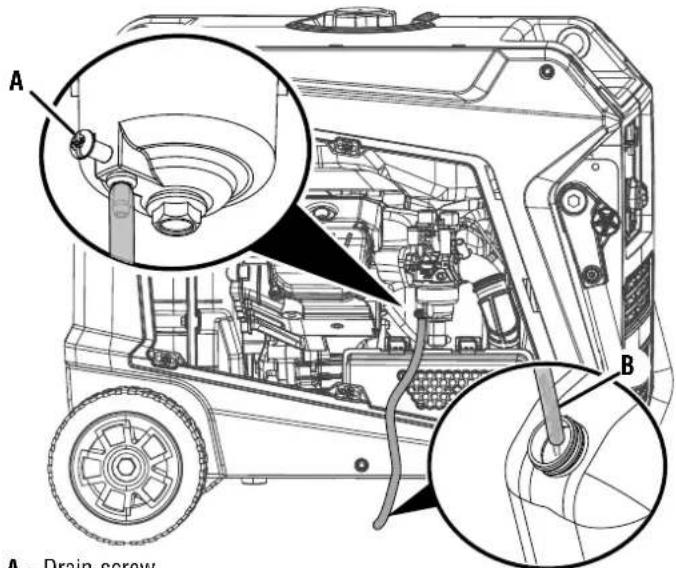
text_image
A B A - Drain screwA - Drain screw
B - Drain hose
● After the engine starts, turn the engine/fuel control switch to the GASOLINE OFF position.
- Allow the generator to run until the fuel in the carburetor is depleted and the engine stops.
● Turn the engine/fuel control switch to the OFF position
To drain the fuel tank:
NOTICE
To prevent damage to the unit, drain the engine oil before emptying the fuel tank. See Chang-ing the engine oil for details.
● Turn the engine/fuel control switch to the OFF position
- Clean area around fuel cap and remove the cap slowly.
- Remove the fuel screen filter by slightly compressing it while removing it from the tank.
- Using a commercially available gasoline hand pump (not included), siphon the gasoline from the fuel tank into an approved gasoline container. DO NOT use an electric pump.
NOTE: The fuel tank can also be drained using the carburetor drain screw and drain hose as described earlier. Keep the engine/fuel control switch in the OFF position to allow fuel to flow from the tank through the carburetor.
REPLACING THE FUEL FILTER
See Figure 28.
Overtime, the fuel filter may become dirty or clogged. To reduce the risk of engine failure, replace the fuel filter according to the figures specified in the maintenance schedule or the engine manual (if applicable).
- Turn the generator off and allow the engine to cool for 30 minutes.
- Drain the fuel tank as described previously.
- Remove the screws securing the control panel.
- Remove the control panel.
- Locate the fuel filter and note the filter's orientation.
- Using pliers, squeeze the fuel line clips and slide the fuel lines away from the filter.
● Install the fuel lines onto the new filter. Ensure the fuel filter is oriented correctly. - Replace the control and tighten screws securely.
FIG. 27
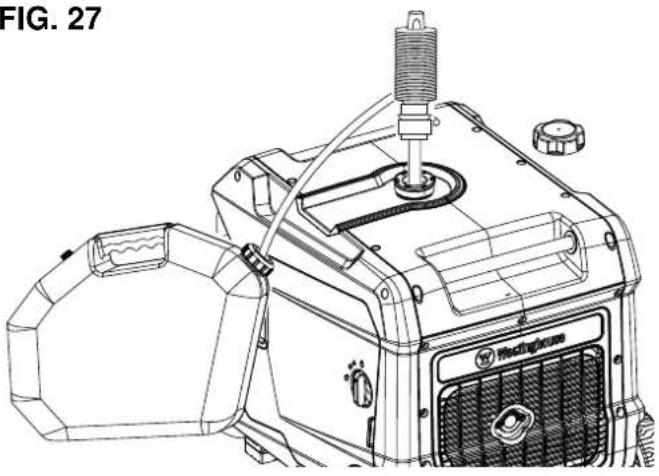
natural_image
Technical line drawing of a mechanical device with no visible text or symbolsFIG. 28

text_image
C. 28 Fuel lineA - Fuel line
B - Fuel filter
CHECKING/ADJUSTING THE VALVE CLEARANCE
See Figures 29 - 30.
NOTICE
Checking and adjusting valve clear- done when the engine is cold.
- Turn the generator off and allow the engine to cool for 30 minutes.
- Place the generator on a level surface in a well-ventilated area.
- Remove the rocker arm cover and carefully remove the gasket. If the gasket is torn or damaged, it must be replaced.
- Remove the spark plug so the engine can be rotated more easily.
- Pull the recoil handle to rotate the engine to top dead center (TDC). Looking through the spark plug hole; the piston should be at the top (both valves are closed).
- Both rocker arms should be loose at TDC on the compression stroke. If they are not, rotate the engine 360°.
- Insert a feeler gauge between the rocker arm and the valve stem to measure valve clearance.
| Intake Valve Exhaust Valve | ||
| Valve Clearance | 0.004 in (0.1 mm) | 0.006 in (0.15 mm) |
| Torque 8 – | 12 Nm 8 – 12 Nm | |
- If an adjustment is necessary, loosen the jam nut.
- Slide the appropriate feeler gauge between the rocker arm and the valve stem.
● Tighten the adjustment screw onto the push rod to obtain the specified clearance.
NOTE: You should be able to feel the rocker arm touch the feeler gauge.
● Hold the adjustment screw in place and tighten the nut.
Torque: 106 inch-pound (12 Nm)
- Recheck valve clearance.
- If no further adjustments are needed, perform this procedure on the other valve.
- When finished, install the gasket, rocker arm cover, and spark plug.
BATTERY MAINTENANCE
The battery shipped with the generator has been fully charged. A battery may lose some charge when not in use for prolonged periods of time.
NOTE: Once started, the generator will charge the battery after 30–60 minutes of use.
The included trickle charger can remain connected and will maintain the battery for an indefinite period of time. A red light on the charger indicates charging in progress. A green light indicates charging complete. Charge in a dry location.
- Plug the charger into the battery charging port on the control panel.
- Plug the wall receptacle end of the battery charger into a 120 volt AC wall outlet.
BATTERY REPLACEMENT
WARNING
Burn hazard. The battery contains sulfuric acid (electrolyte) which is highly corrosive and poisonous. Wear protective clothing and eye protection when working near the battery. Keep children away from the battery.
CAUTION
Battery posts and terminals contain lead and lead compounds. Wash hands after handling.
FIG. 29
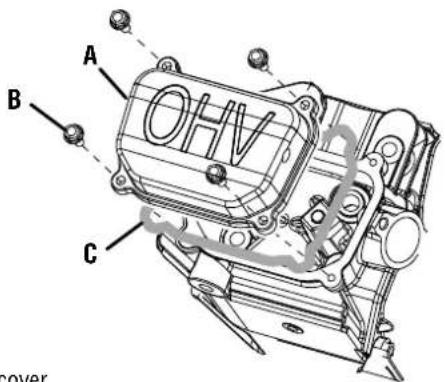
text_image
A B OHV C coverA - Rocker arm cover
B - Bolt
C - Gasket
FIG. 30
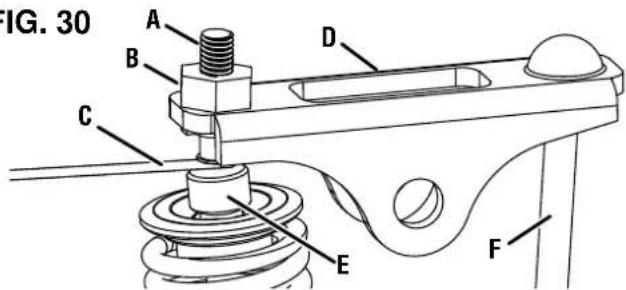
text_image
FIG. 30 A B C D E FA - Adjustment screw
B - Jam nut
C - Feeler gauge
D - Rocker arm
E - Valve stem
F - Push rod
- Loosen and remove the bolt on the battery hold-down plate and swing the plate out.
- Disconnect the quick-disconnect cable leads from the battery and remove the battery from the unit.
- On the replacement battery, connect the white (−) quick-connect cable to the battery negative terminal. Slide the rubber boot over the connection hardware.
- Connect the red (+) quick-connect cable to the battery positive terminal. Slide the rubber boot over the connection hardware.
● Install the battery into the generator. Reinstall the battery hold-down plate and tighten the bolt. - Connect the quick-connect plug.
NOTICE
Dispose of the used battery properly according to the guidelines established by your local or state government.
STORAGE
Turn the unit off and allow it to cool a minimum of 30 minutes before storage. Keep the unit upright. Do not store the generator on its side. Drain fuel before storing the unit. Store the unit and the fuel separately in well-ventilated areas away from sparks, open flames, pilot lights, heat, and other sources of ignition.
NOTICE
Gasoline stored for as little as 30 days can deteriorate, causing gum, varnish, and corrosive buildup
in fuel lines, fuel passages, and the engine. This corrosive buildup restricts the flow of fuel, which can prevent the engine from starting after a prolonged storage period. The use of fuel stabilizer significantly increases the storage life of gasoline. Full-time use of fuel stabilizer is recommended. Follow the manufacturer's instructions for use.
| STORAGE TIME RECOMMENDED PROCEDURE | |
| Less than 1 month | Replace all protective covers on the generator control panel.Clean the exterior of the generator and remove any debris from the muffler cooling vents. |
| 2 to 6 months | Replace all protective covers on the generator control panel.Clean the exterior of the generator and remove any debris from the muffler cooling vents.Drain the carburetor float bowl. (Store gasoline in an approved gasoline container or dispose of it according to state and local ordinances.) |
| 6 months or longer | Replace all protective covers on the generator control panel.Clean the exterior of the generator and remove any debris from the muffler cooling vents.Drain the carburetor float bowl and the fuel tank.(Store gasoline in an approved gasoline container or dispose of it according to state and local ordinances.)Put a tablespoon of engine oil into the spark plug cylinder. Gently pull the recoil handle to slowly turn the engine and distribute the lubricant. Reinstall the spark plugChange the engine oil. |
MAINTENANCE SCHEDULE
Regular maintenance will improve performance and extend the service life of the generator. Follow the hourly or calendar intervals, whichever occurs first. More frequent service is required when operating in adverse conditions as noted below.
NOTE: If your product has a separate engine manual, disregard the information in this chart and follow the instructions in the engine manual.
| Before Each Use | After First 25 Hours or First Month | After 50 Hours or Every Six Months | After 100 Hours or Every Six Months | After 300 Hours or Every Year | |
| Check Engine Oil X | |||||
| Change Engine Oil ^1 | X | X | |||
| Clean Air Filter ^2 | X | ||||
| Inspect/Clean Spark Arrestor | X | ||||
| Inspect/Clean Spark Plug | X | ||||
| Inspect/Adjust Valve Clearance ^3 | X | ||||
| Replace Spark Plug | X | ||||
| Replace Air Filter X | |||||
| Replace Fuel Filter X | |||||
| ^1 Change oil every month when operating under heavy load or in high temperatures. ^2 Clean more often under dirty or dusty conditions. Replace air filter if it cannot be adequately cleaned. ^3 Recommend service to be performed by authorized Westinghouse service dealer. | |||||
| PROBLEM POSSIBLE | CAUSE CORRECTION | |
| Engine starts, then shuts down | Fuel level is low or depleted. Refuel. | |
| Incorrect engine oil level. Check engine oil level. | ||
| Dirty air filter. Clean the air filter. | ||
| Contaminated gasoline. Drain the fuel tank. Refuel with fresh gasoline. | ||
| Defective low oil level switch. Contact Westinghouse customer service toll-free at 1 (855) 944-3571. | ||
| Engine lacks power | Air filter restricted. Clean or replace air filter. | |
| Stale gasoline, generator stored without treating or draining gasoline, or refueled with bad gasoline. | Drain the fuel tank. Refuel with fresh gasoline. | |
| Fuel system malfunction, ignition malfunction, valves stuck, etc. | Contact Westinghouse customer service toll-free at 1 (855) 944-3571. | |
| Engine will not start | Out of fuel. Refuel. | |
| Stale gasoline, generator stored without treating or draining gasoline, or refueled with bad gasoline. | Drain the gasoline tank. Refuel with fresh gasoline. | |
| Dirty air filter. Clean the air filter. | ||
| Low engine oil level stopped generator. If LOW OIL LED illuminated, turn engine/fuel control switch to the OFF position. Add engine oil. | ||
| Spark plug wet with fuel (flooded engine). Wait five minutes. Turn engine/fuel control switch to the OFF position. Pull recoil handle rapidly several times. If the generator does not start, remove spark plug and dry. | ||
| Spark plug faulty, fouled, or improperly gapped. | Gap or replace the spark plug. Reinstall. | |
| Fuel system malfunction, ignition malfunction, valves stuck, etc. | Contact Westinghouse customer service toll-free at 1 (855) 944-3571. | |
| CO sensor removed or modified. Return to original configuration. | ||
| CO sensor activated or system fault occurred. | Relocate generator / Contact Westinghouse customer service toll-free at 1 (855) 944-3571. | |
| Engine runs rough or bogs when load applied | Dirty air filter. Clean the air filter. | |
| Generator overloaded. Unplug some devices. | ||
| Faulty power tool or appliance. Replace or repair tool or appliance. Stop and restart the engine. | ||
| Fuel system malfunction, ignition malfunction, valves stuck, etc. | Contact Westinghouse customer service toll-free at 1 (855) 944-3571. | |
| No power at AC receptacles | OUTPUT READY LED is OFF and OVERLOAD LED is ON. | Check AC load. Stop and restart engine. |
| Check the air inlet. Stop and restart the engine. | ||
| AC circuit breaker/s tripped. | Check AC loads and reset circuit breaker/s. | |
| Faulty power tool or appliance. Replace or repair tool or appliance. Stop and restart the engine. | ||
| Faulty generator. | Contact Westinghouse customer service toll-free at 1 (855) 944-3571. |
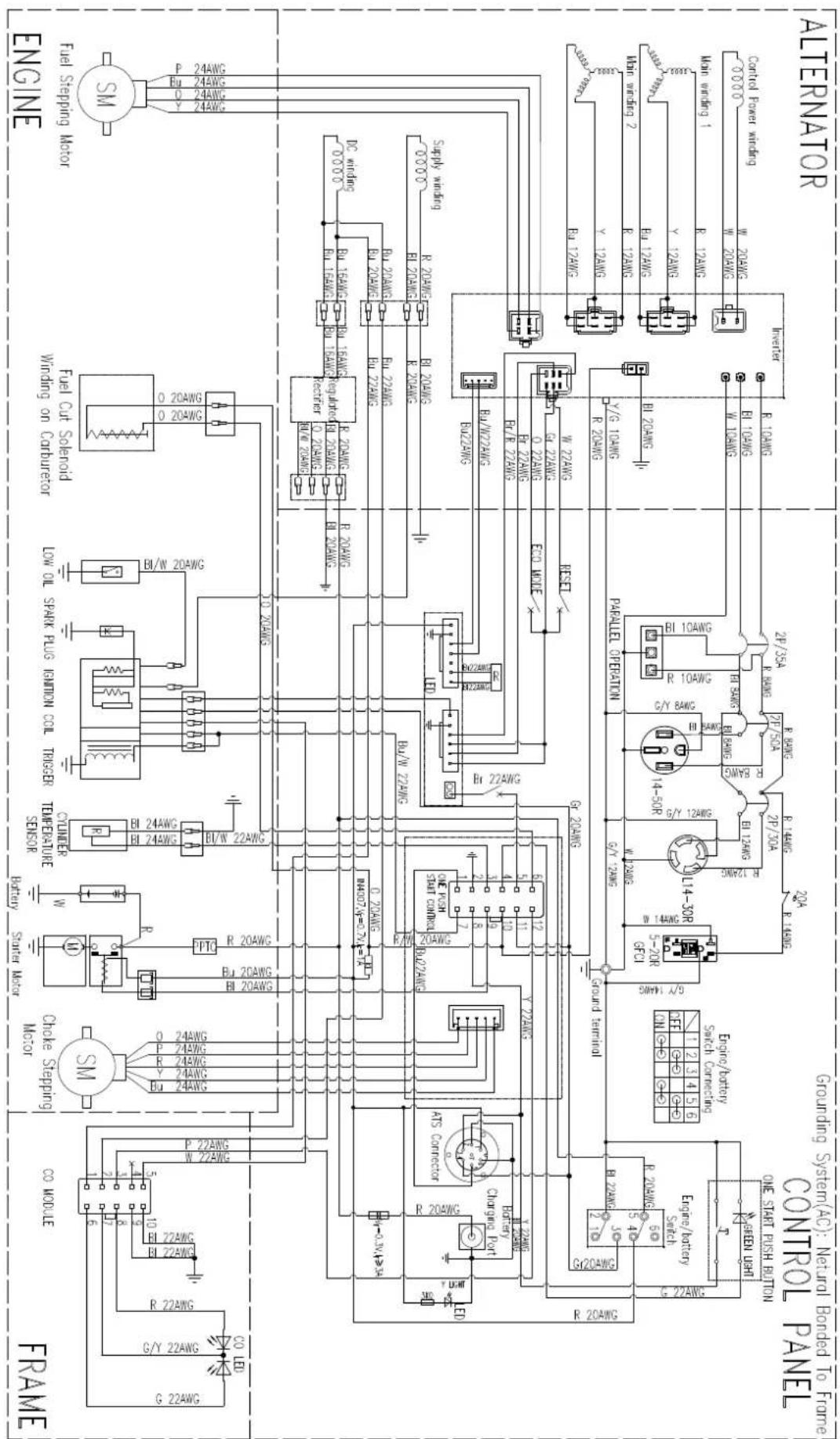
text_image
FRA ME ALTERNA TO GROUND System (AC): Netrad Bonded to Frame Control Power winding w 20kW w 10kW w 10kW w 10kW w 10kW w 10kW w 10kW w 10kW w 10kW w 10kW w 10kW w 10kW w 10kW w 10kW w 10kW w 10K W w 10kW w 10kW w 10kW w 10kW w 10kW w 10kW w 10kW w 10kW w 10kW w 10kW w 10kW w 10kW w 10kW w 10kW S M S N O C H O L E S P R T A N D E T A N G E T I N G U N T E R A N O C T I N G U N T E S P R T A N D E T A N G E T I N G U N T E S P R T A N D E T A N G U N T E S P R T A N D E T A N G U N T E S P R T A N D E T A N G U N T E S P R T A N D E T A N G U N T E S P R T A N D E T A N G U N T E S P R T A N D E T A N G U N T E S P R T A N D E T A N G U U N T E S P R T A N D E T A N G U U N T E S P R T A N D E T A N G U U N T E S P R T A N D E T A N G U U N T E S P R T A N D E T A N G U U N T E S P R T A N D E T A N G U U N T E S P R T A N D E T A F M M M M M M M M M M M M M M M M M M M M M M M M M M M M M M M M M M M M M M M M M M M M M M M M M M M M M M M M M M M M M M M M M M M M M M M M M M M M M M M M M M M M M M M M M M M M M M M M M M M M m m m m m m m m m m m m m m m m m m m m m m m m m m m m m m m m m m m m m m m m m m m m m m m m m m m m m m m m m m m m m m m m m m m m m m m m m m m m m m m m m m m m m m m m m m m m m m m m m m m m n a d e d i n c t h r o n d i n d i n d i n d i n d i n d i n d i n d i n d i n d i n d i n d i n d i n d i n d i n d i n d i n d i n d i n d i n d i n d i n d i n d i n d i n d i n d i n d i n d i n d i n d i n d i n d i n d i o n S W C h o l e s p r i n g G 72A W R 72A W B 72A W R 72A W P 72A W R 72A W C o o u b l e E C o o u b l e S W C h o l e s p r i n g G 72A W R 72A W B 72A W R 72A W P 72A W R 72A W C o o u b l e S W C h o l e s p r i n g G 72A W R 72A W B 72A W P 72A W R 72A W C o o u b l e S W C h o l e s p r i n g G 72A W R 72A W B 72A W P 72A W R 72A W C o o u b l e S W C h o l e s p r i ng G 72A W R 72A W B 72A W P 72A W R 72A W C o o u b l e S W C h o l e s p r i ng G 72A W R 72A W B 72A W P 72A W R 72A W C o o u b b l e S W C h o l e s p r i ng G 72A W R 72A W B 72A W P 72A W R 72A W C o o u b b l e S W C h o l e s p r i ng G 72A W R 72A W B 72A W F B Z O X A W S C o o u b b l e S W C h o l e s p r i ng G 72A W R 72A W B 72A W P 72A W R 72A W C o o u b b l e S W C h o l e s p r i ng G 72A W R 72A W B B Z O X A W S C o o u b b l e S W C h o l e s p r i ng G 72A W R 72A W B B Z O X A W S C o o u b b l e S W C h o l e s p r i ng G 72A W R 72A W B B Z O X A W S C o o u c b l e S W C h o l e s p r i ng G 72A W R 72A W B B Z O X A W S C o o u c b l e S W C h o l e s p r i ng G 72A W R 72A W B B Z O X A W S C o o u c b l e S w y z a x a x a x a x a x a x a x a x a x a x a x a x a x a x a x a x a x a x a x a x a x a x a x a x a x a x a x a x a x a x a x a x a x a x a x a x a x a x a x a x a x a x a x a x a x a x a x a x a x a x a y z a z a x a x a x a x a x a x a x a x a x a x a x a x a x a x a x a x a x a x a x a x a x a x a x a x a x a x a x a x a x a x a x a x a x a x a x a x a x a y z z z z z z z z z z z z z z z z z z z z z z z z z z z z z z z z z z z z z z z z z z z z z z z z z z z z z z z z z z z z z z z z z z z z z z z z z z z z z z z z z z z z z z z z z z z z z z z z z z z z Z Z Z Z Z Z Z Z Z Z Z Z Z Z Z Z Z Z Z Z Z Z Z Z Z Z Z Z Z Z Z Z Z Z Z Z Z Z Z Z Z Z Z Z Z Z Z Z Z Z Z Z Z Z Z Z Z Z Z Z Z Z Z Z Z Z Z Z Z Z Z Z Z Z Z Z Z Z Z Z Z Z Z Z Z ZZ BZ BZ BZ BZ BZ BZ BZ BZ BZ BZ BZ BZ BZ BZ BZ BZ BZ BZ BZ BZ BZ BZ BZ BZ BZ BZ BZ BZ BZ BZ BZ BZ BZ BZ BZ BZ BZ BZ BZ BZ BZ BZ BZ BZ BZ BZ BZ BZ BZ BZiGen11000DFc
GENERADOR INVERSOR DIGITAL
CON GASOLINA: 9 000 VATIOS DE FUNCIONAMIENTO | PICO DE 11 000 WATTS
text_image
QR code image containing encoded data, no visible human-readable textWestinghouse Outdoor Power
Warranty registration
777 Manor Park Drive
Columbus, OH 43228
flowchart
graph LR
    A["Device with battery icon"] --> B["House with electrical meter symbol"]
    B --> C["House with circuit symbol"]
natural_image
Illustration of a hand using a tool to adjust or install a mechanical component, no text or symbols presenttext_image
Westinghouse Model, Modelo, Modèle iGen11000DFc Part No. Numéro de parte Numéro d'artile 11023 AC Voltage, Voltage, Tension 120/240V Power (Running), Potencia (potencia), Puissance (pouer) Gas: 9000w, Propane: 8100w Power (Peak), Potencia (poc), Puissance (pic) Gas: 11000w, Propane: 10000w Current Corriente, Actuel Gas: 37.5/37.5A, Propane: 33.8/33.8A Frequency, Frecuencia, La fréquence 60Hz Phase, Fase, Phase électrique Single Soltero RPM, TFL Régime moteur 3600 Power Factor, Factor de potencia, Facteur de puissance 1.0 Insul Class, Clase de aislamiento, Classe d'isolation F Max Amb Temp, Temperación melano, Temperación antónimo reacuole 40°C (104°F) Fuel, Combustible, Carburant Gasoline Fuel Tank Size, Tamaño del tanque de combustible, Réservoir d'assence 7.92G /30 L Oil: SAE10W-30 Oil Capacity, Capacitad de acuole, Capacité d'oule 1.1L/1.16 QT Westinghouse Outdoor Power Equipment Columbus Ohio 43228 USA Designed in Columbus, Ohio USA Diseñado en Columbus, Ohio, EE. UU. Compu à Columbus, Ohio USA Revision Level Build Date Spark Plug, Bujia, Boupa d'aturation Use OEM spark plug only. Please refer to Owner's Manual. Owner's production has the following: conductors are the product of the conductors that have the product of the product of the product of the product of the product of the product of the product of the product of the product of the product of the product of the product of the product of the product of the product of the product of the product of the product of the product of the product of the product of the product of the product of the product of the product of the product of the product of the product of the product of the product of the product of the product of the product of the product of WARNING: Cancer and reproductive harm- www.PEIRentings.ca.govproduct AVERTISSEMENT: Cancer or problems de reproduction - www.PEIRentings.ca.govproduct EVERTIENCIA: Cancer y donos el sistema duitor - www.PEIRentings.ca.govproduct FOR ELECTRICAL EQUIPMENT ONLY SOLO PARA EQUIPO ELECTRICIO POUR MATERIELE ELECTRIQUE SEULEMENT Automatic SHUTOFF - YOU MUST STUDENT DE CONTINUENTATO STREETTER AVERTISEMENT • NOW GENERATOR TO BE OPEN OUTDOOR AREA, • POINT EXHAUST AWAY • NOW FOR EVOLUTIONS IN ACCUMED AVANCE & COAL ASSETS OF MATERIALS, • POWER OF AVERAGE FOR THE POWER OF AVERAGE OF AVERAGE OF AVERAGE OF AVERAGE OF AVERAGE OF AVERAGE OF AVERAGE OF AVERAGE OF AVERAGE OF AVERAGE OF AVERAGE OF AVERAGE OF AVERAGE OF AVERAGE OF AVERAGE OF AVERAGE OF AVERAGE OF AVERAGE OF AVERAGE OF AVERAGE OF AVERAGE OF AVERAGE OF AVERAGE OF AVERAGE OF AVERAGE OF AVERAGE OF AVERAGE OF AVERAGE OF AVERAGE OF AVERAGE OF AVERAGE OF AVERAGE OF AVERAGE OF AVERAGE WARNING: ANVENTACIONAL AVERTISSEMENT TEMPORATE WITH CABBON MUNICOLE EQUINOIL COULD RESULT IN RADIATION SCIENTIFIC MINIMUM PLANTER AND REPRODUIT MINIMUM PLANTER AND REPRODUIT MINIMUM PLANTER AND REPRODUIT MINIMUM PLANTER AND REPRODUIT MINIMUM PLANTER AND REPRODUIT MINIMUM PLANTER AND REPRODUIT MINIMUM PLANTER AND REPRODUIT MINIMUM PLANTER AND REPRODUIT MINIMUM PLANTER AND REPRODUIT MINIMUM PLANTER AND REPRODUIT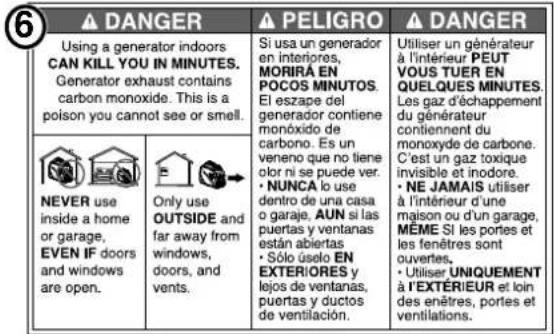
text_image
6 ⚠️ DANGER Using a generator indoors CAN KILL YOU IN MINUTES. Generator exhaust contains carbon monoxide. This is a poison you cannot see or smell. ⚠️ NEVER use inside a home or garage, EVEN IF doors and windows are open. ⚠️ Only use OUTSIDE and far away from windows, doors, and vents. ⚠️ Sí usa un generador en interiores, MORÍRA EN POCOS MINUTOS. El escape del generador contiene monóxido de carbono. Es un veneno que no tiene olor ni se puede ver. • NUNCA lo use dentro de una casa o garaje, AUN si las puertas y ventanas están abiertas • Sólo úselo EN EXTERIORES y lejos de ventanas, puertas y ductos de ventilación. ⚠️ PELIGRO ⚠️ DANGER Utiliser un générateur à l'intérieur PEUT VOUS TUER EN QUELQUES MINUTES. Les gaz d'échappement du générateur contiennent du monoxide de carbone. C'est un gaz toxique invisible et inodore. • NE JAMAIS utiliser à l'intérieur d'une maison ou d'un garage, MÈME SI les portes et les fenêtres sont ouvertes. • Utiliser UNIQUEMENT à l'EXTÉRIEUR et loin des enêtres, portes et ventilations.
text_image
⑦ ▲ CAUTION HOT SURFACES ▲ PRECAUCIÓN SUPERFICIES CALIENTES ▲ ATTENTION AUX SURFACES CHAUDES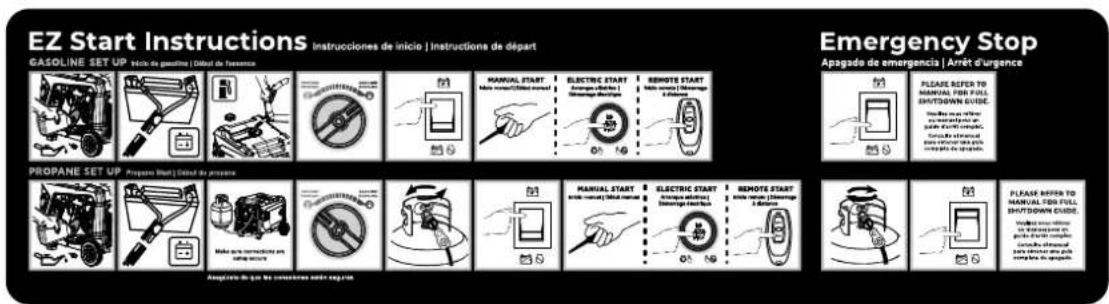
text_image
EZ Start Instructions Instrucciones de inicio | Instructions de départ GASOLINE SET UP Inicio de gasfaite | Désult de tensure MANUAL START Make manual (désult manual) ELECTRIC START Make manual (désult manual) REMOTE START Make manual (désult manual) Emergency Stop Apagade de emergencia | Arrêt d'urgence PLEASE REFER TO MANUAL FOR FULL SHUTDOWN GUIDE. Please refer to manual for full shutdown guide. Please refer to manual for full shutdown guide. PROpane SET UP Propane Start | Désult de propane MANUAL START Make manual (désult manual) ELECTRIC START Make manual (désult manual) REMOTE START Make manual (désult manual) PLEASE REFER TO MANUAL FOR FULL SHUTDOWN GUIDE. Please refer to manual for full shutdown guide. Please refer to manual for full shutdown guide. Please refer to manual for full shutdown guide.text_image
FIG. 6 D C A B G F E Westinghouse F G Htext_image
A AC 120V 20A 5-20R GFCI B AC 12:1240V 30A L14-30R C AC 12:0/240V 50A 14-50R G O P S R Carbon Monoxide Auto-Shutoff SERVICES GENERATORS RELATION ON SWITCH DC GENERATOR AUTOMATO SHUTOFF RELATION ON SWITCH COZZLE AUTOMATO ECO CONTRACTS LAUT SWITCH DC ACUITION K L M Digital Data Center Control to Digital High Power 0023 F E U+ 80 Push Button Electric Start Eco Mo Continuous Cable Fleet dter Smart Switch Ready and unaided by Air Connection to Dual Fuel T D E J Q Hnatural_image
Diagram of a battery connected to a terminal block, showing internal components and wiring (no text or symbols)natural_image
Line drawing of a portable gas generator with a circular annotation highlighting the absence of a water tank (no text or symbols present)FIG. 16
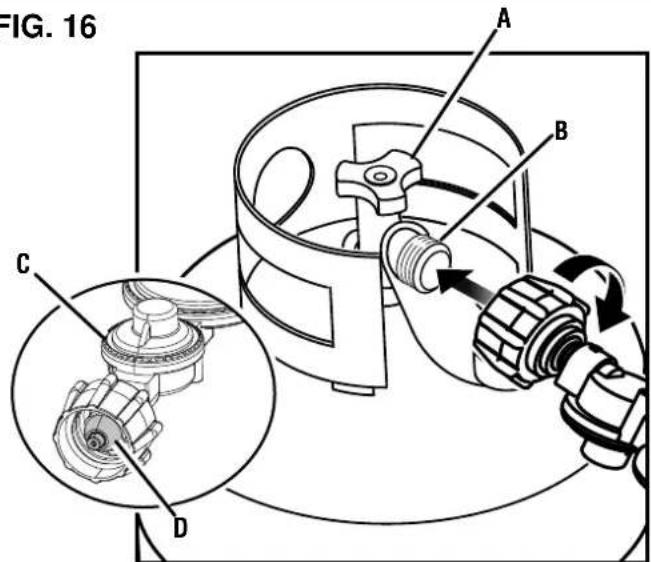
text_image
FIG. 16 A B C DA - Volante
B - Válvula del cilindro
C - Manguera de GLP/propano
D - Niple
CENTRO DE DATOS
Vea la figura 17.
text_image
FIG. 21 OHV D C B AA - Cubierta del filtro de aire
B - Filtro de aire
C - Lengüeta
D - Caja del filtro de aire
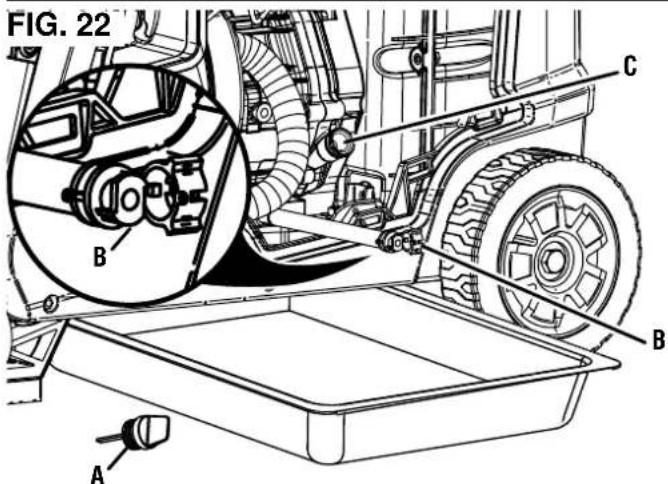
text_image
FIG. 22 A B C Btext_image
FIG. 24 Westinghouse A B C DA - Parachispas
B - Pantalla
C - Tornillos
D - Soporte
A - Gasolina APAGADA (Gasoline Off)
FIG. 26
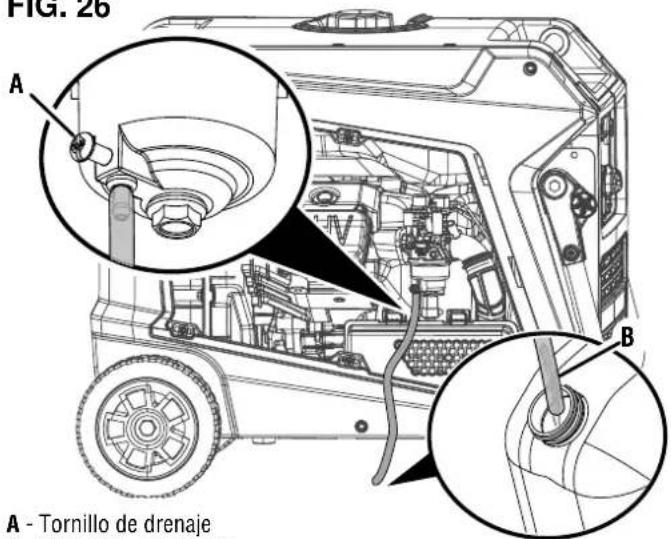
text_image
FIG. 26 A - Tornillo de drenajenatural_image
Technical line drawing of a mechanical device with no visible text or symbolsNE PAS RETOURNER CE PRODUIT AU MAGASIN
text_image
QR code image containing encoded data, no visible human-readable textWestinghouse Outdoor Power
Warranty registration
777 Manor Park Drive
Columbus, OH 43228
AVOIR DES QUESTIONS?
flowchart
graph LR
    A["Powertrain"] -->|A| B["House"]
    B -->|B| C["House with circled symbol"]
natural_image
Line drawing of a hand using a tool to adjust or install a mechanical component, no text or symbols presenttext_image
EZ Start Instructions Instrucciones de inicio | Instructions de départ GASOLINE SET UP Inicio de gasoline | Détal de tenance MANUAL START Make manual (dette manual) ELECTRIC START Make manual (dette manual) REMOTE START Make manual (dette manual) Emergency Stop Apagade de emergencia | Arrêt d'urgence PLEASE REFER TO MANUAL FOR FULL SHUTDOWN GUIDE. Please note that the manual will be made from a device to the device. Please refer to the device to the device. PROpane SET UP Propane Start | Détal de propane MANUAL START Make manual (dette manual) ELECTRIC START Make manual (dette manual) REMOTE START Make manual (dette manual) PLEASE REFER TO MANUAL FOR FULL SHUTDOWN GUIDE. Please note that the manual will be made from a device to the device. Please refer to the device.CAPACITÉ DU GÉNÉRATEUR
AVIS
text_image
FIG. 6 D C A B G F E Westinghouse F G HPRISES 120 VOLTS C.A., 20 AMPÈRES
CENTRE DE DONNÉES LED
text_image
A AC 120V 20A 5-20R GFCI B AC 12:1240V 30A L14-30R C AC 120/240V 50A 14-50R G O P S R Carbon M noxide Auto-Shutoff M K L Digital Data Center Control to Digital Signal Digital Data Center Control to Digital Signal 100% 75- 50- 25- E F U+, 80° Push Button Electric Start N F I AC 30A AC 50A Parallel Operation Switch or Push to Operation Parallel Eco Mo Continuous Die 13 Fleet Other Smart Switch Ready Automatically Air Connectable a Power Dual FuelL - Voyant de surcharge
S - Bouton MARCHE/ARRÊT
text_image
FIG. 8 A - Pied A BA - Pied
B - Boulon
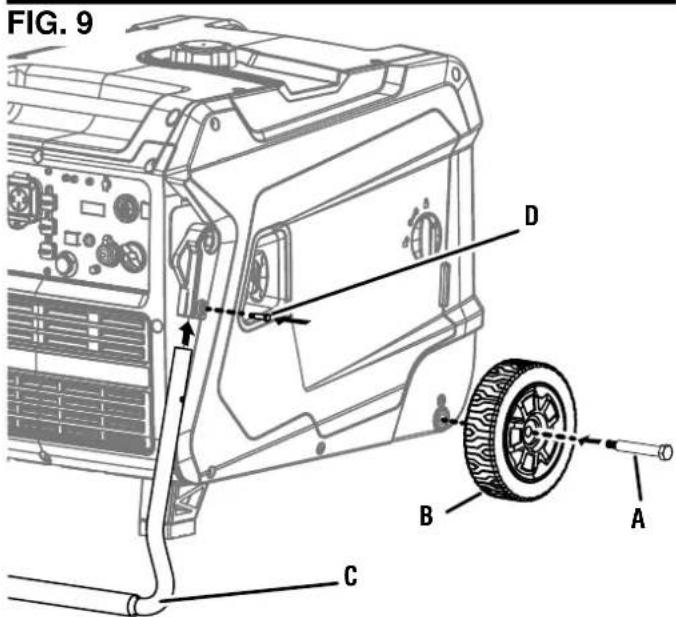
text_image
FIG. 9 D B A Cnatural_image
Diagram of a battery connected to a terminal block, showing internal components and wiring (no text or symbols)natural_image
Line drawing of a portable gas generator with a circular annotation highlighting the absence of a water tank (no text or symbols present)FIG. 16
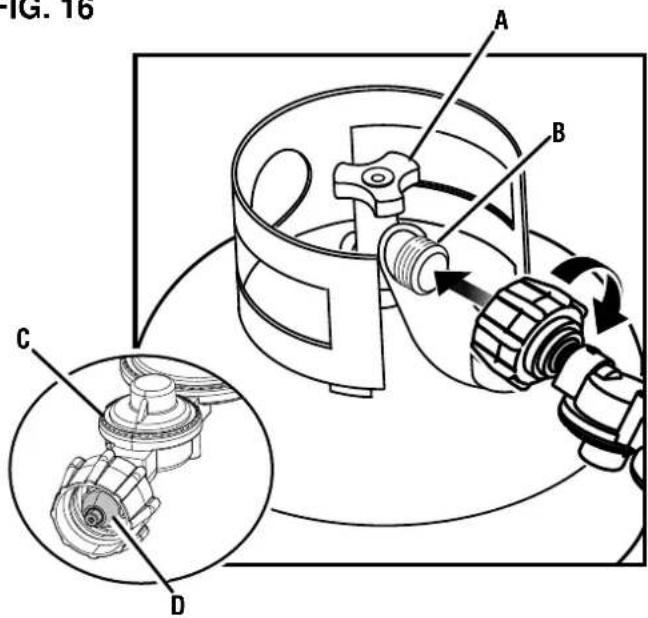
text_image
FIG. 16 A B C DA - Volant
B - Soupape de cylindre
C - Tuyau GPL/propane
D - Teton
text_image
FIG. 21 OHV D C B Atext_image
FIG. 24 Westinghouse A B C DA - Pare-étincelles
B - Écran
C - Vis
D - Support
natural_image
Technical line drawing of a mechanical device with no visible text or symbolstext_image
Technical diagram of a portable gas generator with labeled components A and B, showing internal wiring and housing layout.text_image
Technical diagram of a mechanical assembly with labeled parts A through Fnatural_image
Blue square icon with a white crown and circular border (no text or symbols)www.WestinghouseOutdoorPower.com
Service Hotline (855) 944-3571
777 Manor Park Drive, Columbus, OH 43228

and Westinghouse are trademarks of Westinghouse Electric Corporation.
Used under license by Westinghouse Outdoor Power Equipment.
© 2023 MWE Investments, LLC All Rights Reserved.