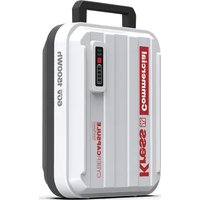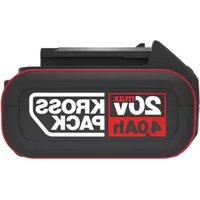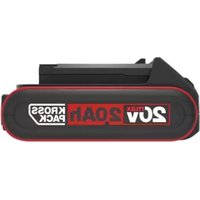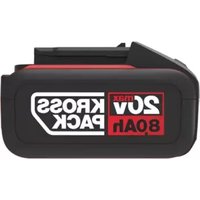
KAB21 - Battery KRESS - Free user manual and instructions
Find the device manual for free KAB21 KRESS in PDF.



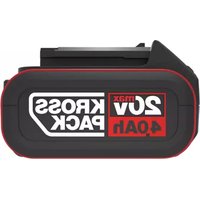
| Product type | Lithium-ion battery (Li-Ion) |
| Model | KAB21 |
| Brand | KRESS |
| Rated voltage | 21 V |
| Technology | Lithium-ion |
| Storage temperature | 0 °C to 45 °C |
| Optimal charging temperature | 15 °C to 25 °C |
| Compatible charger | Only KRESS-specified charger |
| Intended use | Powering KRESS cordless tools |
| Safety | Protection against deep discharge, short circuit, and overheating |
| Maintenance | Clean ventilation slots with a soft, dry brush |
| Storage | Do not expose to heat or fire, avoid direct sunlight |
| Transport | Comply with dangerous goods transport regulations |
| Disposal | Do not dispose of with household waste, recycle through collection points |
| Spare parts and repairability | Contact a KRESS authorized after-sales service center |
| Battery life | Varies depending on usage and tool |
| Protection against complete discharge | Automatic tool shutdown |
| Compatibility | KRESS cordless tools only |
Frequently Asked Questions - KAB21 KRESS
User questions about KAB21 KRESS
0 question about this device. Answer the ones you know or ask your own.
Ask a new question about this device
Download the instructions for your Battery in PDF format for free! Find your manual KAB21 - KRESS and take your electronic device back in hand. On this page are published all the documents necessary for the use of your device. KAB21 by KRESS.
USER MANUAL KAB21 KRESS
WARNING: Read all safety warnings and all instructions. Failure to follow the warnings and instructions may result in electric shock, fire and/or serious injury.
Save all warnings and instructions for future reference.
Use battery pack for KRESS cordless products only. Refer to the marking label and instruction manual provided with product.
a) Do not dismantle, open or shred cells or battery pack.
b) Do not short-circuit a battery pack. Do not store battery packs haphazardly in a box or drawer where they may short-circuit each other or be short-circuited by conductive materials. When battery pack is not in use, keep it away from other metal objects, like paper clips, coins, keys, nails, screws or other small metal objects, that can make a connection from one terminal to another. Shorting the battery terminals together may cause burns or a fire.
c) Do not expose battery pack to heat or fire. Avoid storage in direct sunlight.
d) Do not subject battery pack to mechanical shock.
e) In the event of battery leaking, do not allow the liquid to come into contact with the skin or eyes. If contact has been made, wash the affected area with copious amounts of water and seek medical advice.
f) Seek medical advice immediately if a cell or battery pack has been swallowed.
g) Keep battery pack clean and dry.
h) Wipe the battery pack terminals with a clean dry cloth if they become dirty.
i) Battery pack needs to be charged before use. Always refer to this instruction and use the correct charging procedure.
j) Do not maintain battery pack on charge when not in use.
k) After extended periods of storage, it may be necessary to charge and discharge the battery pack several times to obtain maximum performance.
I) Battery pack gives its best performance when it is operated at normal room temperature (20°C ± 5°C).
m) When disposing of battery packs, keep battery packs of different electrochemical systems separate from each other.
n) Recharge only with the charger specified by KRESS. Do not use any charger other than that specifically provided for use with the equipment. A charger that is suitable for one type of battery pack may create a risk of fire when used with another battery pack.
o) Do not use any battery pack which is not designed for use with the equipment.
p) Keep battery pack out of the reach of children.
q) Retain the original product literature for future reference.
r) Remove the battery from the equipment when not in use.
s) Dispose of properly.
t) Do not mix cells of different manufacture, capacity, size or type within a device.
u) Do not remove battery pack from its original packaging until required for use.
v) Observe the plus (+) and minus (−) marks on the battery and ensure correct use.
SYMBOL
 | Batteries may enter water cycle if disposed improperly, which can be hazardous for ecosystem. Do not dispose of waste batteries as unsorted municipal waste. |
 | Do not burn |
 | Li-lon battery. This product has been marked with a symbol relating to ‘separate collection’ for all battery packs and battery pack. It will then be recycled or dismantled in order to reduce the impact on the environment. Battery packs can be hazardous for the environment and for human health since they contain hazardous substances. |
 |
OPERATION INSTRUCTIONS
Recommendations for optimal handling of the battery NOTE:
- Your battery pack is UNCHARGED. To ensure full capacity of the battery, completely charge the battery in the battery charger before using your power tool for the first time.
- A battery pack will slowly lose its charge when kept out of the charger or left in an unplugged charger for a long time. It may need to be recharged before use.
The Li-Ion battery is protected against deep discharging. When the battery is empty, the machine is switched off by means of a protective circuit: The tool no longer rotates. In a warm environment or after heavy use, the battery pack may become too hot to permit charging. Allow time for the battery to cool down before recharging. The Li-Ion battery can be charged at any time without reducing its service life. Interrupting the charging procedure does not damage the battery.
How to charge the battery
Refer to the instruction manual provided with product or charger.

WARNING: Do not continue to press the On/Off Switch after the machine has been automatically switched off. The battery could be over-discharged.
Store the battery only within a temperature range between 0 °C and 45 °C. As
an example, do not leave the battery in the car in summer time.
A significantly reduced working period after charging indicates that the battery is used and must be replaced.
TRANSPORT
The contained Li-Ion batteries are subject to the dangerous goods legislation requirements.
Dispatch batteries only when the battery housing is undamaged. Pack up the batteries in such a manner that cannot move around in the packaging.
EN
6
MAINTENANCE AND SERVICE
Occasionally clean the venting slots of the battery using a soft, clean and dry brush.
When the battery is no longer operative, please refer to an authorized after-sales service agent for KRESS power tools.
MANUTENCAO E SERVICO
Copyright © 2022, Positec. All Rights Reserved. AR01523801