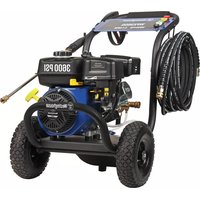
WPX3600 - Pressure washer WESTINGHOUSE - Free user manual and instructions
Find the device manual for free WPX3600 WESTINGHOUSE in PDF.

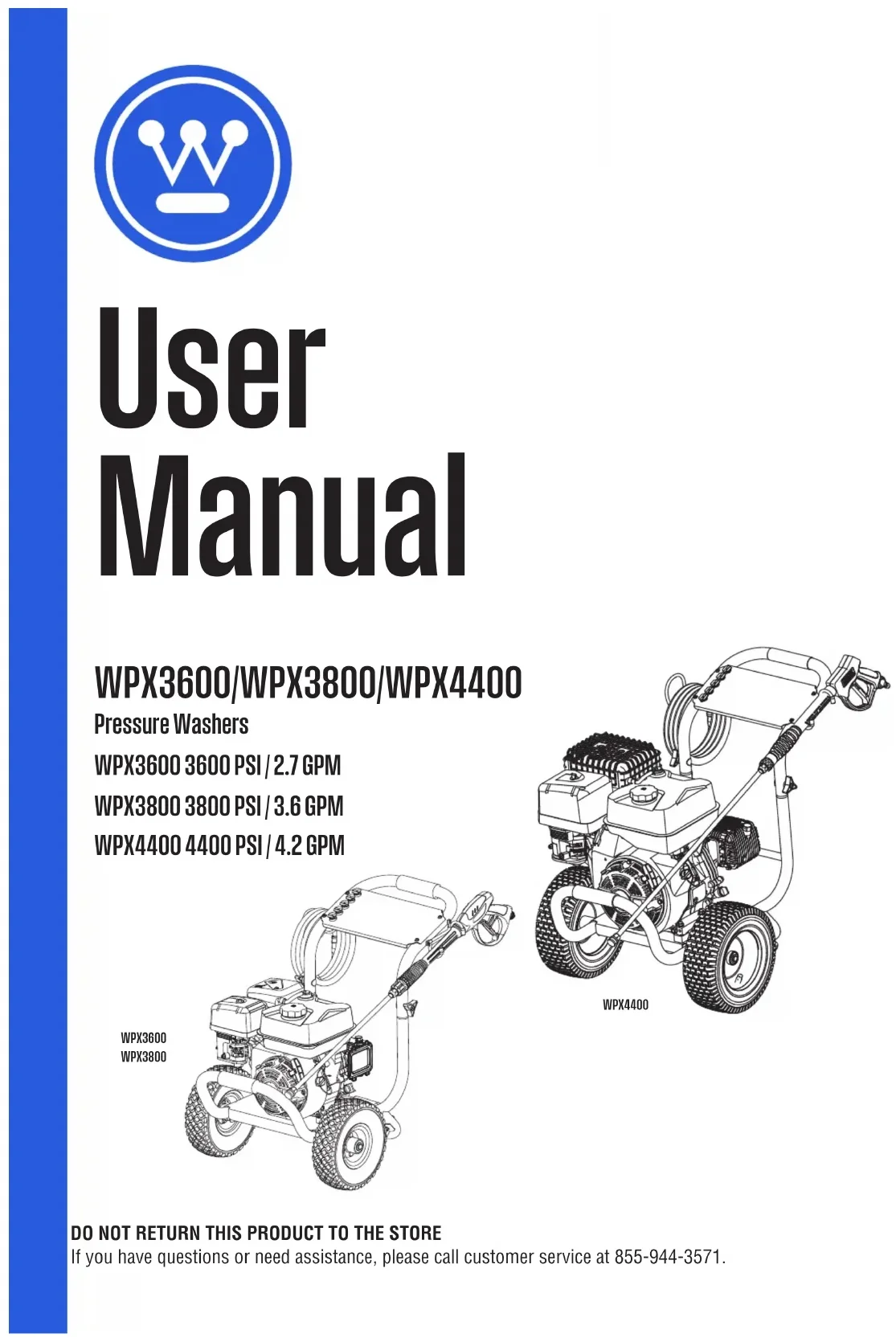


| Product Type | Gas Pressure Washer |
| Brand | Westinghouse |
| Model | WPX3600 |
| Maximum Pressure | 3600 psi (248 bar) |
| Flow Rate | 2.7 GPM (10.22 L/min) |
| Max Water Temperature | 40 °C (104 °F) |
| High Pressure Hose Length | 10.6 m (35 ft) |
| Detergent Tank Capacity | 3 L (0.8 gal) |
| Engine | 212 cc, 4-Stroke |
| Start Type | Recoil (Pull Start) |
| Fuel Tank Capacity | 3.6 L (0.95 gal) |
| Recommended Fuel | Unleaded gasoline 87-93 octane (max 10% ethanol) |
| Engine Oil Capacity | 500 ml (SAE 10W-30) |
| Spark Plug | F7TC (gap 0.60-0.80 mm) |
| Nozzles Included | 0°, 15°, 25°, 40°, soap (black) |
| Certifications | EPA |
| Main Functions | High pressure washing, detergent injection, rinsing |
| Safety | Engine stop, trigger lock, thermal relief valve |
| Maintenance | Engine and pump oil change, air filter cleaning, spark plug maintenance, fuel drain |
| Spare Parts | Nozzles, HP hose, gun, wand, air filter, spark plug, seals |
| Power Source | Gasoline (Internal Combustion Engine) |
| Support | Phone: 1-855-944-3571, email: service@wpowereq.com |
Frequently Asked Questions - WPX3600 WESTINGHOUSE
User questions about WPX3600 WESTINGHOUSE
0 question about this device. Answer the ones you know or ask your own.
Ask a new question about this device
Download the instructions for your Pressure washer in PDF format for free! Find your manual WPX3600 - WESTINGHOUSE and take your electronic device back in hand. On this page are published all the documents necessary for the use of your device. WPX3600 by WESTINGHOUSE.
USER MANUAL WPX3600 WESTINGHOUSE
WPX3600/WPX3800/WPX4400
Pressure Washers
WPX3600 3600 PSI/2.7 GPM
WPX3800 3800 PSI/3.6 GPM
WPX4400 4400 PSI/4.2 GPM
WPX3600
WPX3800
Introduction 2-3
Safety. 4-6
Components. 7-8
Assembly 9-10
Operation 11-19
Maintenance. 20-27
Troubleshooting 28
Service Hotline/Company Address Back Page
INTRODUCTION

WARNING
Operating, servicing, and maintaining this equipment can expose you to chemicals including engine exhaust, phthalates, and lead, which are known to the State of California to cause cancer and birth defects or harm. To minimize exposure, avoid breathing exhaust, and wear gloves or wash your hands frequently when in contact. For more information go to www.P65 warnings.ca.gov.
DISCLAIMERS
All information, illustrations, and specifications in this manual were in effect at the time of publishing. The illustrations used in this manual are intended as representative reference views only. We reserve the right to make any specification or design change without notice.
ALL RIGHTS RESERVED
All rights reserved. No reproduction allowed in any form without written permission from Westinghouse Outdoor Power Equipment. Read this manual before using or performing maintenance on this product. Failure to follow the instructions and safety precautions in this manual can result in serious injury or death.
UPDATES
The latest User Manual for Westinghouse products can be found under the support tab: westinghouse.com/pages/ manuals
Or scan the following QR code with a smartphone camera to be directed to the link.

PRODUCT REGISTRATION
For trouble-free warranty coverage, it is important to register the Westinghouse product.
Register by:
- Completing and mailing the product registration card included in the carton.
- Going online at: westinghouse.com/register
- Scanning the following QR code with a smartphone camera to be directed to the mobile registration link.
For Your Records
Date of Purchase:
Model Number:
Serial Number:
Place of Purchase:
- Sending the following product information to:
Westinghouse Outdoor Power
Warranty Registration
777 Manor Park Drive
Columbus, OH 43228
IMPORTANT: Keep the purchase receipt for trouble-free warranty coverage.

| Specifications WPX3600 WPX3800 WPX4400 | |||
| Pressure (psi/bar): 3600/248 3800/262 4400/303 | |||
| Flow Rate (GPM/LPM): 2.7/10.22 3.6 /13.63 4.2 /15.9 | |||
| Water Temperature (°F/°C): 104 | °/40° Max 104 | °/40° Max 104 | °/40° Max |
| Hose Length (ft/m): 35/10.6 35/10.6 50/15.24 | |||
| Soap Tank Capacity (Gal/L/Oz): 0.8/3/101 0.8/3/101 N/A | |||
| Engine Displacement (cc): 212 274 420 | |||
| Starting Type: | Recoil | Recoil | Recoil |
| Fuel Capacity (Gal/L): | 0.95 gal/3.6 L | 1.32 gal/5 L | 1.72 gal/6.5 L |
| Fuel Type: | 87-93 octane* | 87-93 octane* | 87-93 octane* |
| Oil Capacity (ml): | 500 ml | 700 ml 1000 ml | |
| Oil Type: | SAE 10W-30 | SAE 10W-30 | SAE 10W-30 |
| Spark Plug: | F7TC | F7TC | F7TC |
| Spark Plug Gap: | 0.024-0.032 in. (0.60-0.80 mm) | 0.024-0.032 in. (0.60-0.80 mm) | 0.024-0.032 in. (0.60-0.80 mm) |
| Nozzles: | 0°,15°, 25°, 40°, Soap | 0°,15°, 25°, 40°, Soap | 0°,15°, 25°, 40°, Soap |
| Certifications: | EPA | EPA | EPA |
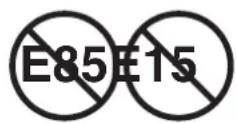
*Ethanol content of 10% or less. DO NOT use E15 or E85.
NOTICE
This product is designed and rated for continuous operation at ambient temperatures up to 104^ (40^) . If
needed, this product can be operated at temperatures ranging from 5^ (-15^) to 122^ (50^) for short periods. If the product is exposed to temperatures outside of this range during storage, it should be brought back within this range before operation. This product must always be operated outdoors in a well-ventilated area and far away from doors, windows, and other vents.
Maximum power decreases about 3.5% for each 1,000 feet above sea level, and will also decrease about 1% for each 10^ (6^) above 60^ (16^) ambient temperature.
NOTICE
Thank you for choosing Westinghouse! PLEASE READ BEFORE RETURNING THIS PRODUCT FOR ANY REA
SON.
If you have a question or experience a problem with your Westinghouse purchase, call us at 1-855-944-3571 to speak with an agent.
SAVE THIS MANUAL FOR FUTURE REFERENCE.
HAVQEQUESTIONS?
Email us at service@wpowereq.com or call 1-855-944-3571
SAFETY DEFINITIONS
The words DANGER, WARNING, CAUTION, and NOTICE are used throughout this manual to highlight important information. Be sure that the meanings of this safety information are known to all who operate, perform maintenance on, or are near the unit.

This safety alert symbol appears with most safety statements. It means attention, become alert, safety is involved! Please read and abide by the message that follows the safety alerts symbol.
DANGER Indicates a hazardous situation which, if not avoided, will result in death or serious injury.
WARNING Indicates a hazardous situation which, if not avoided, could result in death or serious injury.
CAUTION Indicates a hazardous situation which, if not avoided, could result in minor or moderate injury.
NOTICE Indicates a situation which can cause damage to the unit, personal property, and/or the environment, or cause the equipment to operate improperly.
NOTE: Indicates a procedure, practice or condition that should be followed for the unit to function in the manner intended.
SAFETY SYMBOLS
Follow all safety information contained in this user manual as well as the information on the product labeling.
| SYMBOL | DESCRIPTION |
| ! | Safety Alert Symbol |
| Electrocution Hazard | |
| Asphyxiation Hazard | |
| Burn Hazard. Do not touch hot surfaces. | |
| Electrical Shock Hazard | |
| Fire Hazard | |
| Maintain Safe Distance | |
| Injection Risk. Do not direct water stream at people or pets. | |
| Kickback. Hold spray gun securely | |
| Lifting Hazard | |
| Read Manufacturer's Instructions | |
| Wear eye and ear protection |
DANGER CARBON MONOXIDE - using this product indoors CAN KILL YOU IN MINUTES. Operate this product outdoors only in a well ventilated area.
DO NOT operate the product inside any building, including garages, basements, crawlspaces and sheds, enclosure, or compartment. DO NOT allow exhaust fumes to enter a confined area through windows, doors, vents, or other openings.
FUEL SAFETY
DANGER Fire and explosion hazard. Gasoline is highly explosive and flammable and can cause severe burns or death.
- In case of a gas fire, do not attempt to extinguish the flame if the fuel tank valve is in the ON position. Introducing an extinguisher to a pressure washer with an open fuel valve could create an explosion hazard.
Gas has a distinctive odor, this will help detect potential leaks quickly.
Gas vapors can cause a fire if ignited.
Gasoline is a skin irritant and needs to be cleaned up immediately if it comes in contact with the skin.
Gasoline and gasoline vapors are extremely flammable and explosive under certain conditions.
- ALWAYS refuel the pressure washer outdoors, in a well-ventilated area.
- NEVER remove the fuel cap with the engine running.
- NEVER refuel the pressure washer while the engine is running. Always turn the engine off and allow the pressure washer to cool for at least two minutes before refueling.
- Only fill fuel tank with gasoline.
- Keep sparks, open flames or other form of ignition (such as match, cigarette, static electric source) away when refueling.
- NEVER overfill the fuel tank. Leave room for fuel to expand. Overfilling the fuel tank can result in a sudden overflow of gasoline and result in spilled gasoline coming in contact with HOT surfaces.
- Spilled fuel can ignite. If fuel is spilled on the pressure washer, wipe up any spills immediately. Dispose of rag properly. Allow area of spilled fuel to dry before operating the pressure washer.
- Wear eye protection while refueling.
- NEVER use gasoline as a cleaning agent.
- Store any containers containing gasoline in a well-ventilated area, away from any combustibles or source of ignition.
- Inspect for fuel leaks after refueling.
- Never operate the engine if a fuel leak is discovered.
- Store fuel in a container approved for gasoline.
- Do not smoke when filling the pressure washer with gasoline.
- Do not allow the gas tank to overflow when filling.
- Shut down the engine and allow it to cool for two minutes before adding gasoline or oil to the pressure washer.
- Wipe spilled fuel from the unit.
- Never attempt to burn off spilled fuel.
- Store any containers containing gasoline in a well-ventilated area, away from any combustibles or source of ignition.
GENERAL SAFETY PRECAUTIONS
-
Do not operate when tired or under the influence of drugs, alcohol, or medication.
-
Always wear safety goggles or safety glasses with side shields, and as necessary a full face shield as well as full ear protection when operating this product.
- If you begin to feel sick, dizzy, or weak while using the pressure washer, move to fresh air IMMEDIATELY. See a doctor, as you can have carbon monoxide poisoning.
- Only use OUTSIDE and far away from windows, doors, and vents as recommended by the US Department of Health and Human Services Centers for Disease Control and Prevention. Specific homes and/or wind conditions may require additional distance.
- While operating and storing, keep at least five feet of clearance on all sides of pressure washer, including overhead. Allow the pressure washer to cool a minimum of 30 minutes before storage. Heat created by the muffler and exhaust gases could be hot enough to cause serious burns and/or ignite combustible objects.
- Do not touch the muffler or engine. They are very HOT and will cause severe burns. Do not put body parts or any flammable or combustible materials in the direct path of the exhaust.
- Always remove any tools or other service equipment used during maintenance away from the unit before operating.
- Avoid skin contact with engine oil or gasoline. Wear protective clothing and equipment. Wash all exposed skin with soap and water.
DANGER Risk of injection or injury. High pressure jets can be dangerous if subject to misuse. DO NOT direct discharge stream at persons, animals, electrical devices, or the machine itself. ALWAYS point spray gun in safe direction. Every time the engine is stopped, depress the spray gun trigger to relieve pressure.
DANGER NEVER spray flammable liquids or use pressure washer in areas containing combustible dust, liquids, or vapor. NEVER operate this machine in a closed building or in or near an explosive environment.
- The wheels are only intended for hand transport. The wheels are not suitable for towing the pressure washer either on or off-road.
WARNING Contact with electrical power source can cause electric shock or burn. NEVER spray in the direction of or near a power source/electrical outlet.
- NEVER disconnect the high pressure discharge hose from the machine while the system is pressurized.
- DO NOT let water in the pump freeze. See Storage section in the manual for instructions regarding winter storage.
- If water has frozen in the pressure washer, thaw the pressure washer in a warm room before starting.
-
Use the pressure washer only for intended uses.
-
Operate only on level surfaces.
- DO NOT expose pressure washer to excessive moisture, dust, or dirt.
- DO NOT allow any material to block the cooling slots.
DO NOT use the pressure washer if the unit sparks, smokes, emits flames, or vibrates excessively. - When starting the pressure washer:
- NEVER run the unit dry. Be sure the water supply is completely turned on before operating the unit.
DO NOT pour hot water on or into the pump; internal parts will be damaged and the warranty will be voided. ONLY use cold water. - Use only on a level surface.
- Be sure there is proper drainage to dissipate water.
- Be sure that the fuel cap, air filter, spark plug, fuel lines, and exhaust system are properly in place.
- If any gasoline is spilled on the tank, allow it to fully evaporate before operating.
- When transporting or servicing the pressure washer:
- Disconnect the spark boot to prevent accidental starting.
- When storing the pressure washer:
- Store away from sparks, open flames, pilot lights, heat, and other sources of ignition.
- Do not store gasoline near furnaces, water heaters, or any other appliances that produce heat or have automatic ignitions.
NOTICE
Water under high pressure can damage
fragile surfaces. ALWAYS practice on an inconspicuous test area to understand when damage may occur.

WARNING
Use of pressure washers can create
wet walking surfaces. While using a pressure washer, forces from the gun can cause loose footing and falls.

WARNING
High pressure spray can splash back
at operator or propel objects.
- NEVER allow children to operate any pressure washer or play nearby.
- NEVER leave spray gun unattended while machine is running or until after engine has been turned off and pressure has been relieved from the spray gun.
- NEVER repair high pressure hose, replace it.
- NEVER repair leaking connections with sealant, replace damaged o-rings.
- NEVER use spray gun with a damaged or altered trigger lock.
- NEVER: secure the trigger in the open / spray position.
- ALWAYS keep high pressure hose connected to spray gun and pump while in use.
-
ALWAYS be sure that the spray gun nozzle is properly attached to the lance.
-
ALWAYS wear safety goggles when operating this equipment. Safety goggles cover the sides, top and bottom of the eyes. Don't confuse safety glasses for goggles.
- DO NOT use on elevated surface where kickback could result in a serious fall.
- ALWAYS grasp the gun with two hands to prevent potential injury due to the high pressure from the gun.
UNDERSTANDING THE PRESSURE WASHER
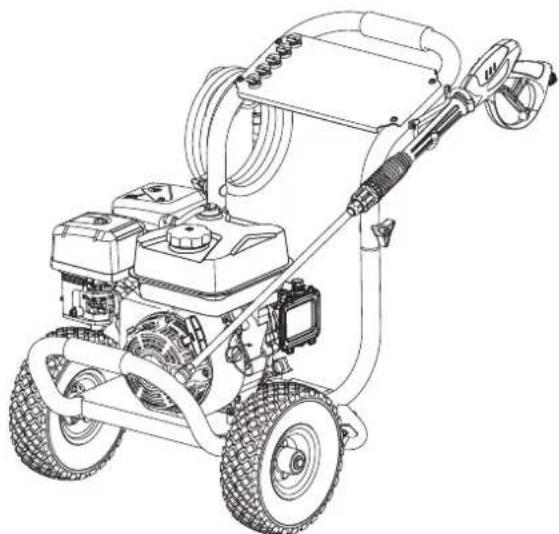
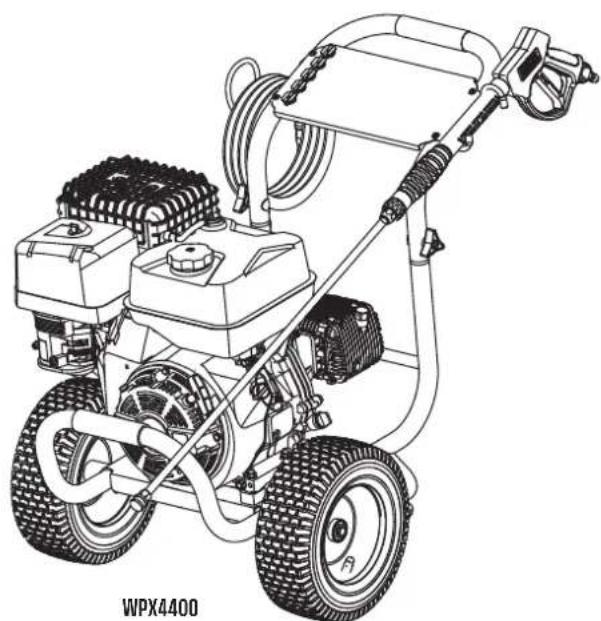
See Figure 1.
To reduce the risk of injury and product failure, read and understand the information in this user manual as well as the information on the product labeling.
SPRAY GUN
Use the spray gun and lance to control and direct the stream of water.
THERMAL RELIEF VALVE
When water reaches 125^ , warm water will discharge from the pump onto the ground to help prevent internal pump damage.
RECOIL STARTER
Pull to start the engine.
OIL DIPSTICK
Unscrew the oil dipstick to inspect oil levels and add oil when needed.
PUMP
Generates high pressure.
HANDLE
Use the handle when transporting the unit.
HIGH PRESSURE HOSE
The high pressure hose included with this unit is light weight, flexible, and durable. When not in use, the hose can be stored on the hose retainer.
HIGH PRESSURE OUTLET
Connection for the high pressure hose.
WATER INLET
Connection for the garden hose.
FUEL TANK
Fill with regular unleaded fuel. Do not overfill.
FUEL ON/OFF SWITCH
Turns the fuel supply to the engine on and off.
CHoke
Prepares a cold engine for starting.
NOZZLES
Nozzles of varying sizes are included with this unit and can be used for different cleaning applications.
DETERGENT TANK
(WPX3600 and WPX3800 only)
Siphons detergent into the low pressure stream and automatically turns on when using the black soap nozzle. Only use with pressure washer safe detergent.
OIL DRAIN PLUG
Used to drain engine oil.
ENGINE ON/OFF SWITCH
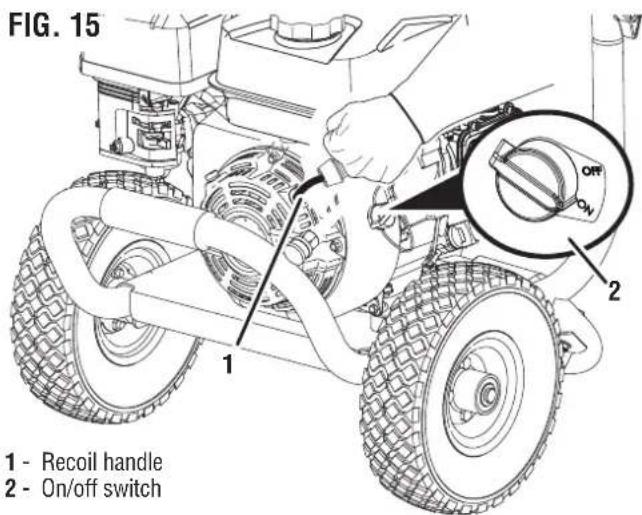
Turn the switch to the ON position before using the recoil starter. Turn to the OFF position to stop the engine.
DETERGENT HOSE CONNECTION BARB
Connects the detergent tank to the pump.
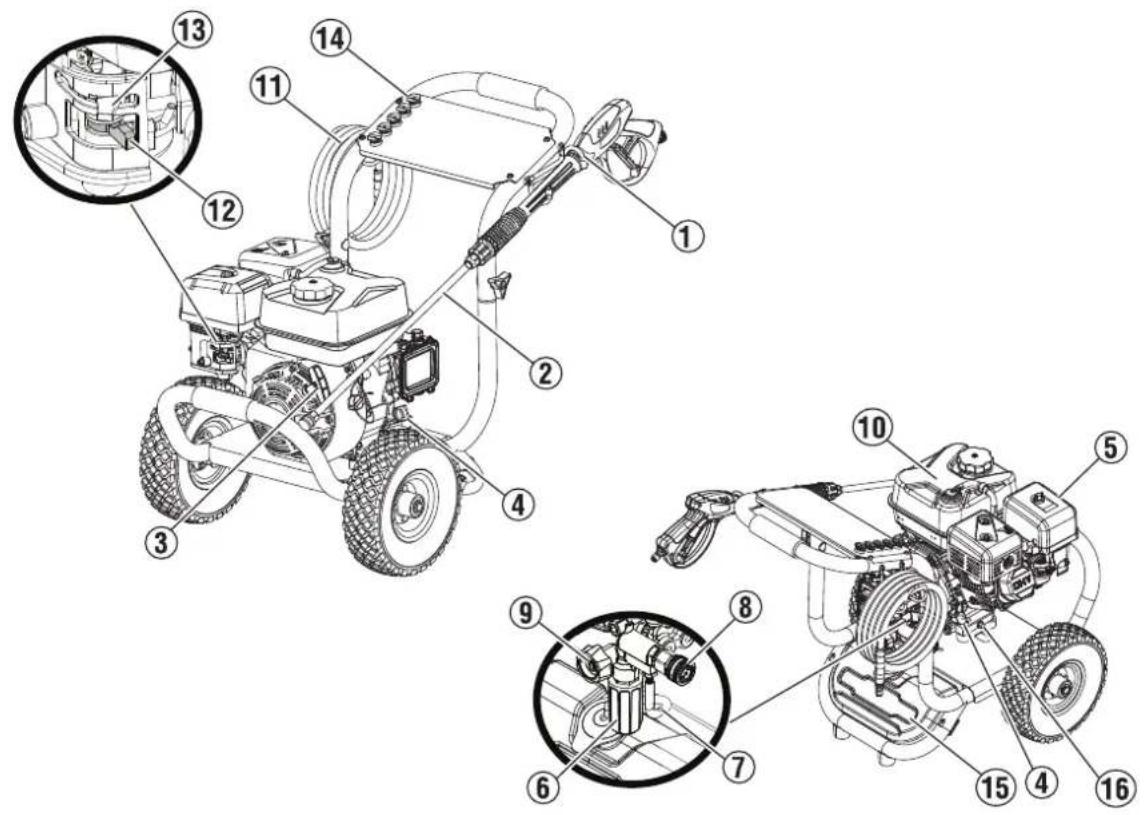
FIG.1 WPX3600 and WPX3800
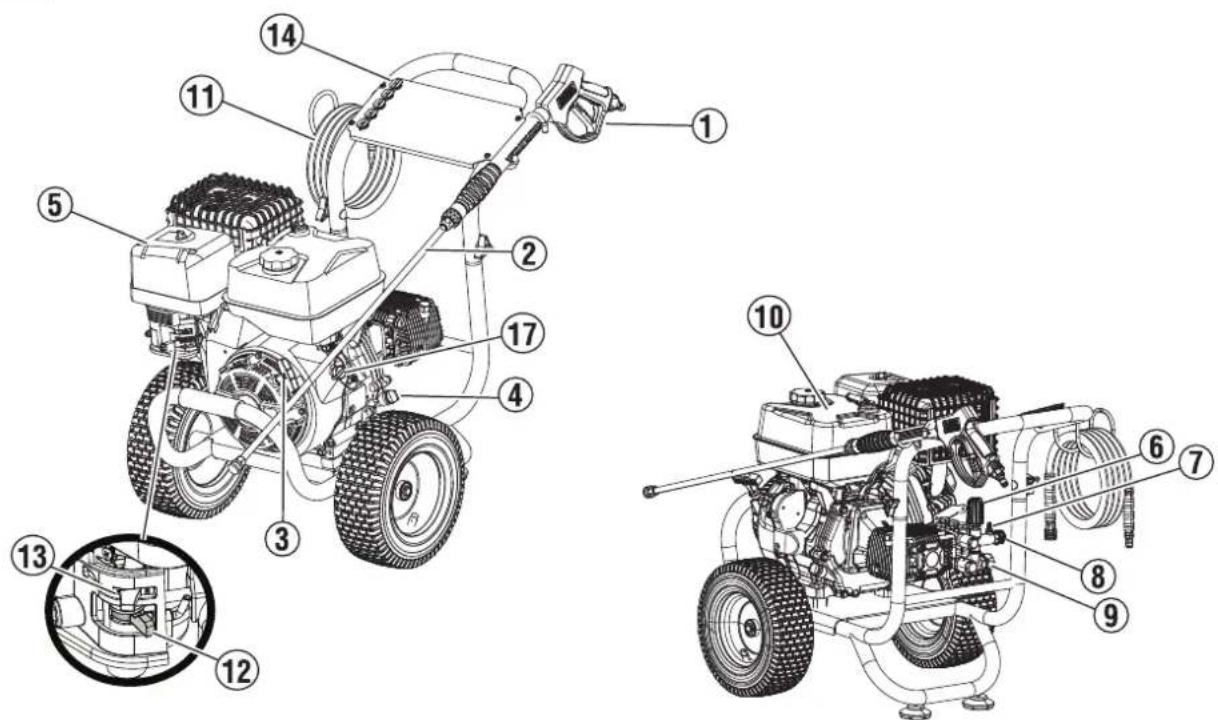
WPX4400
1 - Spray Gun
2 - Gun Lance
3 -Recoil Starter
4 - Oil Dipstick/Filler Neck
5 - Air Filter
6-Pump
7 - Detergent Hose Connection Barb
8-High Pressure Outlet
9-Water Inlet
10 - Fuel Tank
11 - High Pressure Hose
12 - Fuel On/Off Switch
13 - Choke
14 - Nozzles
15 - Detergent Tank (WPX3600/WPX3800)
16 - Oil Drain Plug
17 - Engine On/Off Switch
CARTON CONTENTS

CAUTION
Weight hazard. Always have assistance when lifting the pressure washer.
- Carefully open the carton.
- Remove and save the carton contents.
- Remove and discard the packing tray.
Recycle or dispose of the packaging materials properly.
| INCLUDED LIST | |
| ITEM QUANTITY | |
| Bottle 10W-30 oil 1 | |
| Funnel 1 | |
| Spray gun 1 | |
| Spray gun lance 1 | |
| Handle 1 | |
| High pressure hose 1 | |
| Mounting stabilizer 1 | |
| Nozzle cleaning tool 1 | |
| Spray nozzle 5 | |
| Nut, M8 1 | |
| Spray gun upper holder 1 | |
| Push rivet | 1 |
| Spray gun lower holder | 1 |
| Bolt, M6 | 1 |
| Nut, M6 1 | |
| Washer | 2 |
| Pump oil dipstick | 1 |
| Allen key | 1 |
| Assembly wrench | 1 |
If any parts are missing, contact our service team at service@wpowereq.com or call 1-855-944-3571.
INSTALL HANDLE
See Figure 2.
- The handle is shipped in the storage position. Before using, move the handle to the operating position.
- Turn the handle so it is facing away from the pressure washer. Install on the lower frame.
- Insert the bolt through the frame and secure with the handle knob.
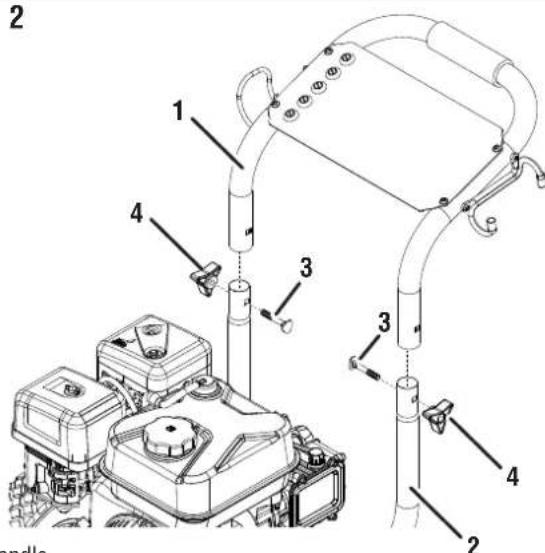
FIG. 2
1- Handle
2 - Lower Frame
3 - Bolt
4- Handle Knob
CONNECT HANDLE BRACKETS
See Figure 3.
Connect the spray gun holder and the high pressure hoseholder on the handle using the assembly wrench and the bolts.
INSTALL THE UPPER GUN HOLDER
See Figure 4.
From the front of the unit, use the allen key and assembly wrench (included) to remove top-right bolt, washers, and nut. Reinstall with the upper spray gun holder. From the rear of the unit, install the push rivet as shown.
INSERT NOZZLES
See Figure 4.
Insert the colored nozzles into the corresponding holders on the top of the pressure washer (WPX3600 shown). Put the trigger handle and hose in their designated storage brackets.
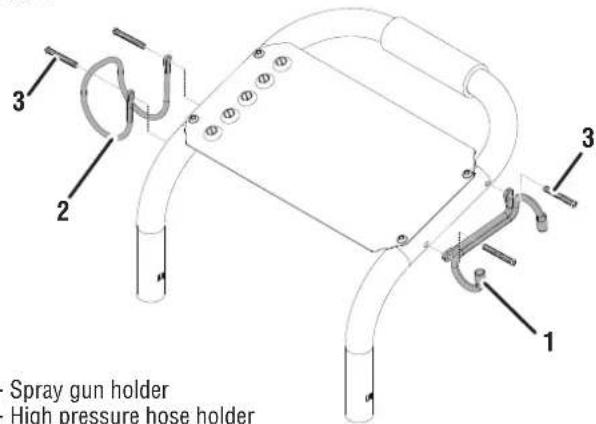
FIG. 3
1 - Spray gun holder
2 - High pressure hose holder
3 - Bolts
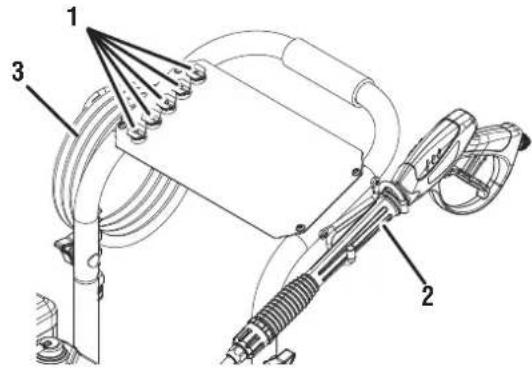
FIG. 4
1- Nozzle holders
2-Trigger handle
3-Hose
INSTALL THE PUMP DIPSTICK
See Figure 5.
This pressure washer ships with a temporary oil cap on the pump and should be removed and replaced with the pump dipstick. The oil level should be sufficient from the factory and appear at the level of the red dot on the sight glass.
- Be sure the pressure washer is on a stable, level surface.
- Locate the pump dipstick in the loose parts.
- Locate the temporary cap on the pump.
- Loosen and remove the temporary cap and discard.
- Insert the pump dipstick into the pump. Be careful not to crossthread. Do not overtighten.
1 - Temporary oil cap
2 - Pump dipstick
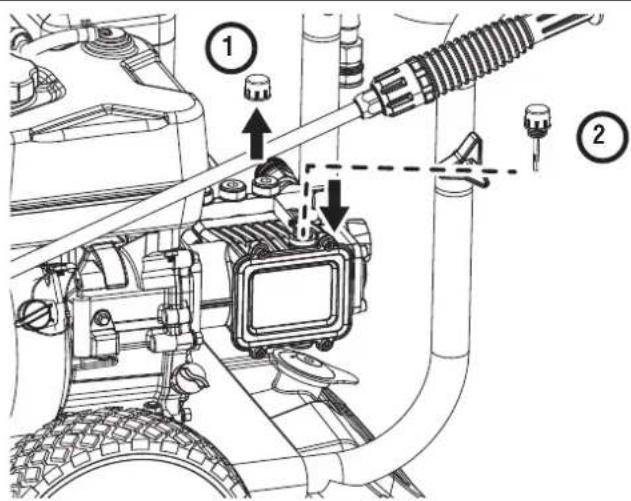
FIG.5
CONNECTING THE LANCE TO THE SPRAY GUN
See Figure 6.
- Push the lance into the spray gun and turn clockwise to tighten. Do not overtighten.
- Gently pull on the lance to be certain it is secured.
CONNECTING THE HIGH PRESSURE HOSE TO THE SPRAY GUN
See Figure 7.
- Pull the collar on the high pressure hose back and push the hose fitting firmly onto the spray gun.
- Screw the collar onto the spray gun and tighten securely.
NOTE: Be careful not to damage the threads on the spray gun, doing so could cause the gun to leak during use.
- Gently pull on the hose to be certain it is secured.
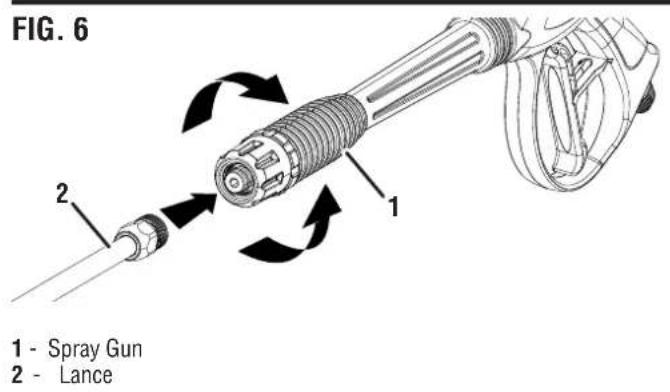
FIG. 6
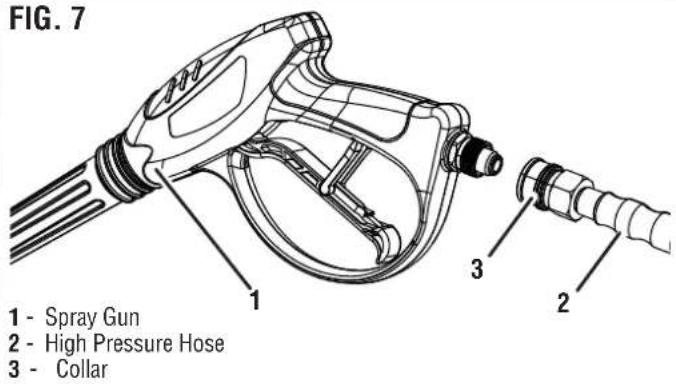
FIG. 7
CONNECTING THE HIGH PRESSURE HOSE TO THE PRESSURE WASHER
See Figure 8.
- Uncoil and straighten the high pressure hose to remove any bends or kinks.
Pull the collar on the high pressure hose back and push the hose fitting firmly into the threaded outlet on the pressure washer. - Screw the collar onto the outlet and tighten securely.
NOTE: Be careful not to damage the threads on the outlet doing so could cause the unit to leak during use.
- Gently pull on the hose to be certain it is secured.
1 - High pressure hose
2 - High pressure outlet
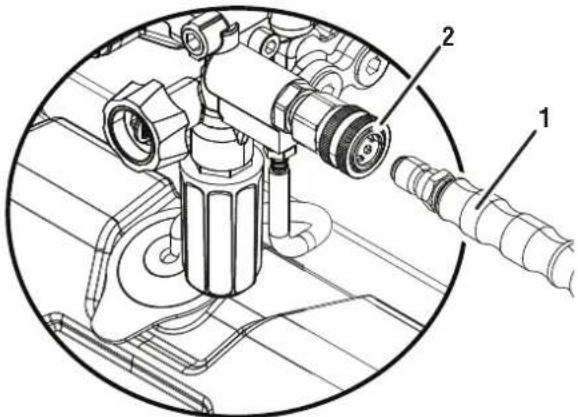
FIG. 8
CONNECTING A GARDEN HOSE TO THE PRESSURE WASHER
See Figure 9.
NOTICE Follow local regulations and ordinances when connecting the pressure washer to a water supply. Some jurisdictions may prohibit connecting directly to public drinking water in order to prevent the possibility of chemicals feeding back into the system. Connections made through a backflow preventer or receiver tank are generally permitted.
NOTICE The water used in this device must come from a water main. DO NOT use this device with water from a lake, pool, pond, etc. NEVER use hot water with this product.
- Turn the water faucet completely off.
- Uncoil and straighten the garden hose to remove any bends or kinks.
- Flush water through the hose for several seconds to remove debris and then turn the faucet off again.
- Inspect the screen inside the water inlet for damage or clogs. Clean or replace as needed. NEVER connect a garden hose without the screen in place.
- Insert the garden hose into the water inlet.
- Thread the collar on the inlet onto the garden hose. Tighten securely.
NOTICE ALWAYS turn the water supply "ON" before turning the pressure washer power to "ON". Running the pump dry of water will cause damage to the internal components and render the pressure washer inoperable.
1 - Garden hose
2 - Water inlet
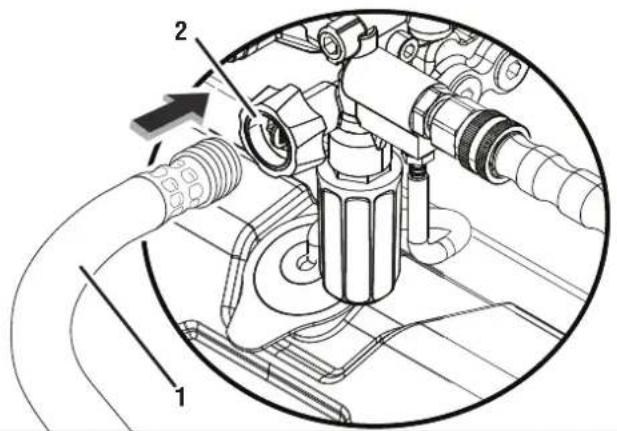
FIG.9
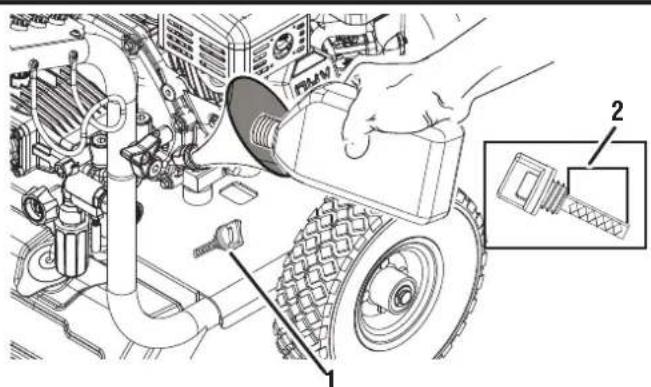
ADDING OIL / INSPECTING OIL
See Figure 10.
NOTICE Do not attempt to crank or start engine before it has been properly serviced with recommended oil. Failure to add engine oil before starting will result in serious engine damage.
NOTICE Use of 2-stroke/cycle oil or other unapproved oil types can cause severe engine damage that is not covered under warranty.
FIG. 10
1-Oil cap/dipstick
2 - Hatched area
12 | English
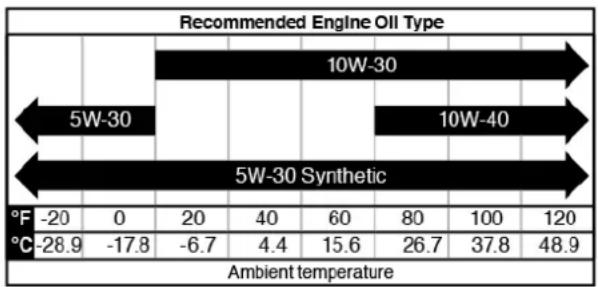
The included, recommended oil type for typical use is 10W-30 engine oil. If running the pressure washer in extreme temperatures, refer to the following chart.
- On a level surface, remove the oil dipstick.
NOTE: There is an oil dipstick/filler neck on both sides of the unit. Either can be used to inspect or add oil.
- Using the supplied oil and funnel tip, add oil into oil filler neck.
NOTE: As residual oil from the factory may remain in the engine, add the oil incrementally to prevent overfilling the engine. See Engine Oil Level Check in the Maintenance section. - Replace the oil dipstick and hand-tighten.
GASOLINE REQUIREMENTS
NOTICE
Do not use E15 or E85 fuel in this product. Engine or equipment damage caused by stale fuel or the use of (such as E15 or E85 ethanol blends) is not covered by warranty. Only use unleaded gasoline containing up to
- ALWAYS use CLEAN, FRESH, unleaded gasoline (87-93 octane) in this unit. NEVER use OLD, STALE, or CONTAMINATED gasoline.
- Up to 10% ethanol (gasohol) is acceptable (where available; non-ethanol fuel is recommended).
DO NOT use E85 or E15.
DO NOT use a gas oil mix.
- DO NOT modify the engine to run on alternate fuels.
- DO NOT fuel indoors.
DO NOT create a spark or flame while fueling.
ADDING GASOLINE
See Figures 11-12.
DANGER Fire and explosion hazard. Do not overfill fuel tank. Fill only to the bottom of the filler neck. Overfilling may cause fuel to spill onto engine causing a fire or explosion hazard.
DANGER Fire and explosion hazard. Never refuel the pressure washer while the engine is running. Always turn the engine off and allow the pressure washer to cool for two minutes before refueling.
WARNING Fire and explosion hazard. Never use a gasoline container, gasoline tank, or any other fuel item that is broken, cut, torn or damaged.
NOTICE Only fill the tank from an approved gasoline container. Be sure the gasoline container is internally clean and in good condition to prevent fuel system contamination.
- Turn the pressure washer OFF and allow to cool for a minimum of two minutes before fueling.
- Place the pressure washer on level ground in a well ventilated area.
- Clean area around fuel cap and remove the cap slowly.
- Slowly add the recommended fuel. Do not overfill. Fill only to the top of the fuel screen filter visible in the filler neck.
- Install the fuel cap and tighten until a click is heard.
NOTICE Fuel can damage paint and plastic. Use caution when filling the fuel tank. Damage caused by spilled fuel is not covered under warranty.
NOTICE Clean the fuel screen filter of debris before and after each fueling. Remove the fuel screen filter by slightly compressing it while removing it from the fuel tank.
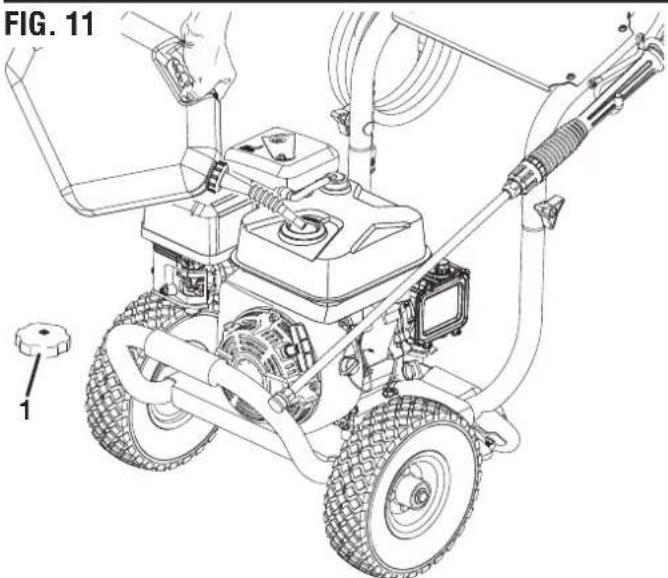
1-Fuel cap
FIG. 12
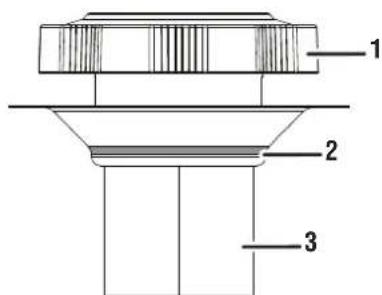
1-Fuel cap
2 - Screen filter
3 - Maximum fuel level
USING FUEL STABILIZER
Adding a fuel stabilizer (not included) extends the usable life of fuel and helps prevent deposits from forming that can clog the fuel system. Follow the manufacturer's instructions for use.
Always mix the correct amount of fuel stabilizer to gasoline in an approved gasoline container before fueling the pressure washer. Run the pressure washer for two minutes to allow the stabilizer to treat the entire fuel system.
PRESSURE WASHER LOCATION
Asphyxiation hazard. Never operate the pressure washer in an enclosed area. Engine exhaust contains carbon monoxide that can kill in minutes. Only operate the pressure washer outside and away from windows, doors and vents. Place the pressure washer in a well-ventilated area. DO NOT place the pressure washer near vents or intakes where exhaust fumes could be drawn into occupied or confined spaces. Carefully consider wind and air currents when positioning the pressure washer.
This pressure washer must have at least 5 ft. (1.5 m) of clearance from combustible material. Leave at least 3 ft. (0.91 m) of clearance on all sides of the pressure washer to allow for adequate cooling, maintenance, and servicing.
BEFORE STARTING THE ENGINE
Confirm that:
- The pressure washer is placed in an appropriate location.
The unit is on a dry, flat, and level surface.
The engine is filled with oil.
STARTING THE ENGINE
See Figures 13 - 15.
WARNING Always wear safety goggles or safety glasses with side shields, and as necessary a full face shield as well as full ear protection when operating this product.
NOTICE Running the unit for more than one minute without spraying water causes heat to build up in the pump. In the event that the pump gets too hot, a thermal relief valve will open to release the hot water. Running the unit without spraying water can damage pump components and will void the warranty.
- Turn the water supply ON.
- Pull the trigger on the spray gun to purge all air from the pump and hose. This may take several minutes.
- Do not start the engine until a steady stream of water is flowing from the nozzle.
- Turn the engine switch to the ON position.
- Turn the fuel valve to the ON position.
- If the engine is cold, move the choke lever to the CHOKE position.
- Pull the starter cord slowly until resistance is felt and then pull rapidly.
NOTE: If the engine starts briefly and then shuts off, squeeze the trigger on the spray gun to relieve the pressure before trying to start the engine again.
- Once the engine starts, move the choke lever to the RUN position. Allow the engine to warm up slightly before use.
FIG. 13
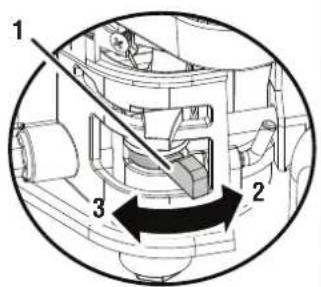
1-Fuel lever
2 - On
3-Off
FIG. 14
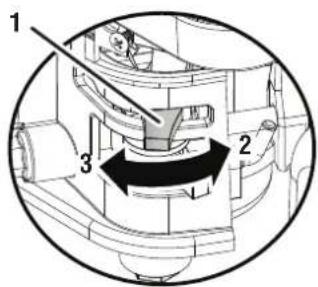
1 - Choke
2 - Run
3 - Start
STOPPING THE PRESSURE WASHER
During normal operation, use the following steps to stop the pressure washer:
- Engage the spray gun trigger lock in the safe position.
- Move the engine OFF/ON switch to the OFF position.
- Close the fuel valve.
- Turn the water supply OFF.
- Disengage the trigger lock and depress the trigger for 15 seconds to depressurize the system.
- Disconnect the garden hose from the water inlet.
- Complete all steps in the AFTER EACH USE section of this manual.
DURING AN EMERGENCY
If there is an emergency and the pressure washer must be stopped quickly, push the engine control switch to OFF position immediately.
USING THE SPRAY GUN
See Figure 16.
WARNING Hold the spray gun and lance with two hands (one hand to pull the trigger and the other to stabilize the gun). Do not lose control of the spray gun, doing so could result in injury to yourself and others.
- Start the pressure washer.
- Release the safety lock by pushing it down into the slot in the trigger.
- Squeeze and hold the trigger to start the flow of water.
- Release the trigger to stop the flow of water.
- Lock the trigger by pushing it up to its original position.
NOTE: Squeeze the trigger to be sure it is locked and will not move. ALWAYS keep the spray gun locked when it's not in use.
1 - Trigger 2 - Safety Lock
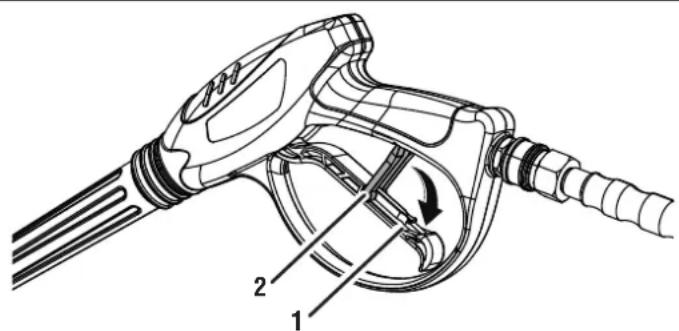
FIG. 16
SELECTING NOZZLES
The quick-connect coupler on the spray lance allows changing between nozzles while the pressure washer is running.
WARNING Always engage the trigger lock before changing a nozzle.
NOTICE Only use the nozzles that were supplied with the pressure washers. Using any other nozzles can affect performance and may void the warranty. For replacement nozzles, call (855) 944-3571.
CHANGING THE NOZZLE
See Figure 17.
Pull back the quick-connect collar at the end of the spray lance. Insert the nozzle then release the collar. Pull on the nozzle to be sure it is secured.
1 - Quick-connect collar
2 - Nozzle
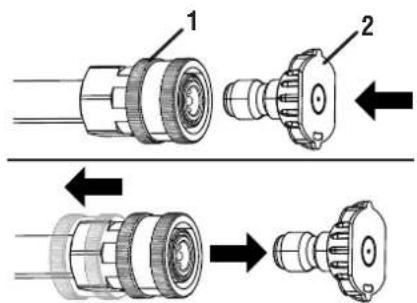
FIG. 17
| NOZZLE SELECTION | |||||
| Soap 40° 25° 15° 0° Gentle Abrasive | HIGH PRESSURE WASH LOW PRESSURE WASH | ||||
| RED YE | LOW GREEN | WHITE | SOAP | ||
| 0° | 15° | 25° | 40° | ||
| Concrete, Brick, Masonry | ! | ! | ✓ | ✓ | ✓ |
| Siding, Gutters, Home | X | ! | ! | ✓ | ✓ |
| Fencing, Deck, Patio | X | ! | ! | ✓ | ✓ |
| Lawn and Garden Equipment, Boats, RVs X | ! | ! | ✓ | ✓ | |
| Recommended nozzle Use with caution X Do not use | |||||
SPRAYING TIPS
For most cleaning, keep nozzle 8-24 in. (20-61 cm) away from cleaning surface.
- Damage may occur to the cleaning surface if spraying too close, especially with high-pressure nozzles.
- When beginning to spray, start farther away and move closer to avoid damage to the surface.
- To prevent damage to tires, allow at least 6 in. (15 cm) between a tire and the nozzle.
DETERGENT USE
See Figure 18.
The use of detergents can dramatically reduce cleaning time and assist in the removal of difficult stains. Many detergents are customized for pressure washer use for specific cleaning tasks. The detergent is diluted at approximately 1:12 by the pump injection system on the unit
NOTICE
Only use detergents designed for pressure washers. Pressure washer detergents are as thick as water. Using
thicker detergents, like dish soap, will clog the chemical injection system. Do not use household detergents, acids, alkalines, bleaches, solvents, flammable material, or industrial grade solutions, which can damage the pump or cause property damage.
Prepare cleaning solution as instructed on the solution bottle. Always test in an inconspicuous area before beginning. You can effectively clean surfaces by combining the chemical action of detergents with high pressure rinses. On vertical surfaces, apply the detergent starting at the bottom and work your way upward. This method prevents the detergent from sliding down and causing streaks. Begin high pressure rinsing at the bottom and work your way upward. On particularly tough stains, use a brush in combination with detergents and high pressure rinsing.
- For WPX3600 and WPX3800, fill the detergent tank with cleaning solution.
- For WPX4400, attach the siphon hose to the connector on the pressure washer. Insert the siphon hose into the bottle of cleaning solution.
- Install the detergent nozzle (black) in the spray lance. Detergent will only be drawn through the pump when the black detergent nozzle is attached to the end of the spray lance.
- Be sure the water supply is ON. Start the engine. Pull the trigger to spray the detergent solution.
NOTICE
NEVER use bleach in detergent tank. It will damage the pump and void the warranty.
- Use long, even overlapping strokes to apply soap. Allow 3 to 5 minutes for the soap to soak in before rinsing. Do not allow the soap to dry on the surface before rinsing. Reapply soap if necessary to maintain a wet surface for the soap to soak in.
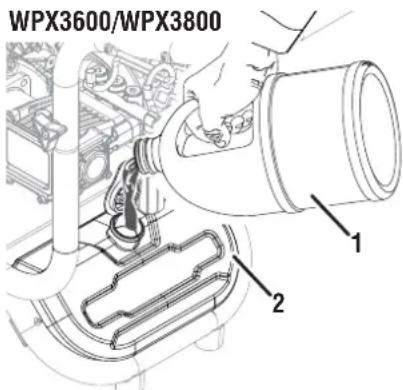
FIG. 18
1 - Cleaning solution
2 - Detergent tank
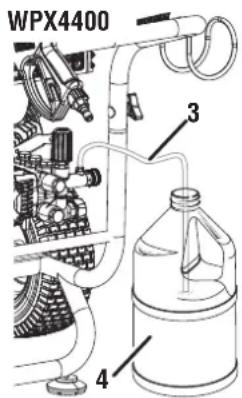
3 - Siphon hose
4 - Detergent bottle
DETERGENT SYSTEM FLUSH
The detergent suction system can be flushed by removing the suction tube from the detergent tank or bottle and placing the tube in a fresh bucket of water. On the WPX3600 and WPX3800, only perform a system flush when the detergent tank is empty.
- For WPX3600 and WPX3800, with the water supply ON, the black nozzle connected to the spray gun lance, and the engine running, disconnect the suction tube from the bottom of the detergent tank.
- For WPX4400, with the water supply ON, the black nozzle connected to the spray gun lance, and the engine running, remove the siphon hose from the bottle of detergent.
- Place the suction tube in a clean bucket of water, disengage the trigger lock, then depress the spray gun trigger to flush the system.
- For WPX3600 and WPX3800, engage the trigger lock then reinstall the suction tube on the detergent tank.
AFTER EACH USE
- Lock the spray gun trigger.
- Turn the engine OFF, then turn the water supply OFF.
- Disengage the trigger lock and depress the trigger for 15 seconds to depressurize the system.
- Let the pressure washer cool down.
- Disconnect the high-pressure hose and water inlet hose.
- Drain the hoses, spray gun, and nozzle extension.
- Engage the trigger lock on the spray gun.
- Wipe off all remaining water with a clean, dry rag.
- While the pressure washer is turned off, pull the recoil handle 5 to 6 times. This should remove most of the remaining liquid inside the pump.
- Store the pressure washer in a clean, dry place.
TRANSPORTING

CAUTION
Weight hazard. Always have assistance when lifting the pressure washer.
- Allow the pressure washer to cool a minimum of 30 minutes before transporting.
- Only use the fixed frame to lift the unit or attach any load restraints such as ropes or tie-down straps. Do not attempt to lift or secure the pressure washer by holding onto any of its other components.
- Keep the unit level during transport to minimize the possibility of fuel leakage or, if possible, drain the fuel or run the engine until the fuel tank is empty before transport.
- The pressure washer wheels are only intended for hand transport. The wheels are not suitable for towing the pressure washer either on or off-road.

CAUTION
Fire hazard. Do not up-end the pressure washer or place it on its side. Fuel or oil can leak and damage to
the pressure washer may occur.
MAINTENANCE SCHEDULE
WARNING Disconnect the spark plug boot from the spark plug when performing maintenance on the pressure washer.
Regular maintenance will improve performance and extend the service life of the pressure washer. Follow the hourly or calendar intervals, whichever occurs first. More frequent service is required when operating in adverse conditions as noted below.
| Before Each Use | |
| Inspect engine and pump oil | |
| Inspect water inlet screen and gasket | |
| Clean around air intake and muffler | |
| After First 5 Hours | |
| Change engine oil | |
| After First 20 Hours | |
| Change pump oil | |
| Every 50 Hours or Every Season | |
| Clean air filter | |
| Change engine oil if operating under heavy load or in hot environments | |
| Clean spark arrester | |
| Every 100 Hours or Every Season | |
| Inspect/clean spark arrester | |
| Inspect/clean spark plug | |
| Inspect/adjust valve clearance* | |
| Every 300 Hours | |
| Replace spark plug | |
| Replace air filter | |
- To avoid potential personal injury or damage to the unit, it is recommended that the maintenance task be performed at a Westinghouse approved service center (not covered by warranty).
CLEANING THE PRESSURE WASHER
CAUTION DO NOT spray the pressure washer with water. Water can contaminate the fuel system and can enter the engine through the cooling slots and damage the engine.
- Use a damp cloth to clean exterior surfaces of the pressure washer.
- Use a soft bristle brush to remove dirt and oil.
- Use an air compressor (25 PSI) to clear dirt and debris from the pressure washer.
- Inspect all air vents and cooling slots to ensure that they are clean and unobstructed.
CLEANING SPRAY NOZZLES
See Figure 19.
Detach the nozzle from the spray lance. Use the included nozzle cleaning tool to loosen any particles in the nozzle. Flush with water.
CLEANING THE AIR FILTER
See Figure 20.

Fire hazard. Never use gasoline or other flammable solvents to clean the air filter.
The air filter must be cleaned after every 50 hours of use or six months (frequency should be increased if the pressure washer is operated in a dusty environment).
- Place the pressure washer on a level surface and allow the engine to cool for several minutes.
- Unscrew the thumb screw on top of the air filter assembly. Remove the wing nut, then remove the air filter.
- Use compressed air to clean the air filter from the inside out.
NOTE: The outer foam air filter element is not intended to be removed. If torn, replace the air filter.
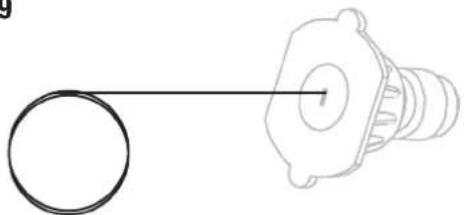
FIG. 19
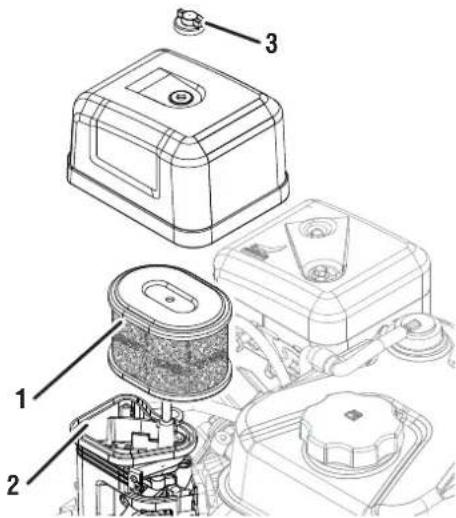
FIG. 20
1 - Air filter
2 - Air filter assembly
3 - Wingnut
ENGINE OIL LEVEL CHECK
See Figure 21.

Avoid skin contact with engine oil. Wear protective clothing and equipment. Wash all exposed skin with
soap and water.
NOTICE
Always use the specified engine oil. Failure to use the specified engine oil can cause accelerated wear and/or
shorten the life of the engine.
When using the pressure washer under extreme, dirty, dusty conditions or in extremely hot weather, change the oil more frequently. Ambient air temperature will affect engine oil performance. Change the type of engine oil used based on weather conditions.
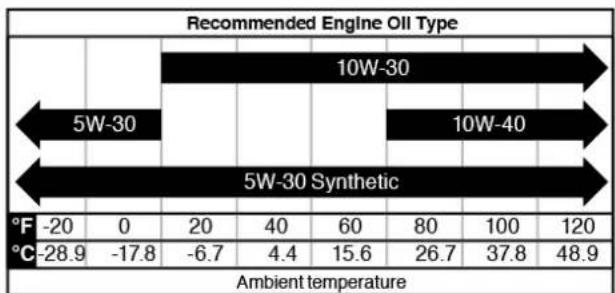
Inspect the engine oil level before each use.
- Place the pressure washer on a level surface and allow the engine to cool for several minutes.
- With a damp rag, clean around the oil dipstick.
NOTE: There is an oil dipstick/filler neck on both sides of the unit. Either can be used to inspect or add oil.
- Remove the oil dipstick and wipe the dipstick clean.
- Screw the dipstick fully into the oil filler neck. Remove the dipstick and confirm that the oil level is within safe operating range.
- If low, add recommended engine oil incrementally and reinspect until the level is between the L and H marks on the dipstick. DO NOT overfill. If over the full mark (H) on the dipstick, drain the oil to reduce the oil level to the full mark.
- Replace the oil dipstick and hand-tighten.
ENGINE OIL CHANGE
See Figure 21.
When using the pressure washer under extreme, dirty, dusty conditions or in extremely hot weather, change the oil more frequently. Change the oil while the engine is still warm from operation.
- Place the pressure washer on a level surface and allow the engine to cool for several minutes.
- With a damp rag, clean around the oil dipstick. Remove the dipstick and wipe clean.
- Place an oil pan (or suitable container) under the oil drain bolt.
- Using a 10mm wrench, remove the oil drain bolt and allow the oil to drain.
- Install the oil drain bolt and tighten securely.
Slowly pour oil into the oil filler neck until the level is between the L and H marks on the dipstick. Stop frequently to inspect the oil level. DO NOT overfill.
Maximum oil capacity: 20 oz. (0.6 liter)
Install the oil dipstick and hand-tighten.
NOTICE Do not pollute. Follow the guidelines of the EPA or other governmental agencies for proper disposal of hazardous materials. Consult local authorities or reclamation facility.
1-Oil cap/dipstick
2 - Drain hole
3 - Oil drain bolt
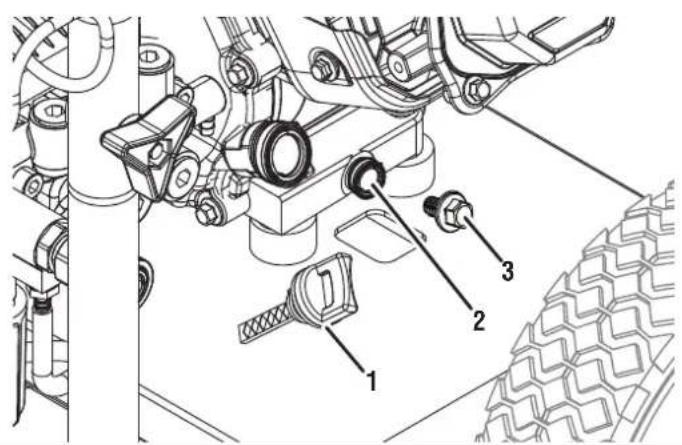
FIG. 21
PUMP OIL CHANGE
See Figure 22.
After 20 hours of use, change the oil in the water pump. The oil should be changed once a year thereafter. When replacing the pump oil, use only SAE85W-90.
NOTE: The oil capacity of these units is approximately 230-250 ml.
- Place a container under the pump to catch the used oil.
- Loosen and remove the hex socket drain bolt (8 mm in the WPX3600/3800; and 17 mm in the WPX4400. Socket is not included.)
- Allow the oil to drain completely into the container.
- Replace the socket drain bolt and tighten firmly. Do not cross thread.
- Fill the oil to the red mark located in the oil detection window.
SPARK PLUG MAINTENANCE
See Figure 23.
Inspect and clean the spark plug after every 100 hours of use or six months. Replace the spark plug after 300 hours of use or every year.
- Place the pressure washer on a level surface and allow the engine to cool.
- Remove the spark plug boot by firmly pulling the spark boot directly away from the engine.
- Clean the area around the spark plug.
- Remove the spark plug with the included spark plug socket wrench.
NOTICE
Never apply any side load or move the spark plug laterally when removing the spark plug.
- Inspect the spark plug. Replace if electrodes are pitted, burned, or the insulator is cracked. Only use a recommended replacement plug.
Recommended Spark Plug Replacement
| Westinghouse Model Number | Torch NGK | |
| WPX3600/3800/4400 F7TC BP7ES | ||
- Measure the spark plug electrode gap with a wire-type feeler gauge. If necessary, correct the gap by carefully bending the side electrode. Spark plug gap: 0.024–0.032 in. (0.60–0.80 mm)
- Carefully install the spark plug finger tight, then tighten as additional 3/8 to 1/2 turn with the spark plug wrench.
- Attach the spark plug boot.
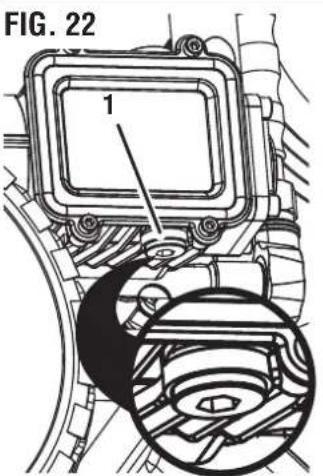
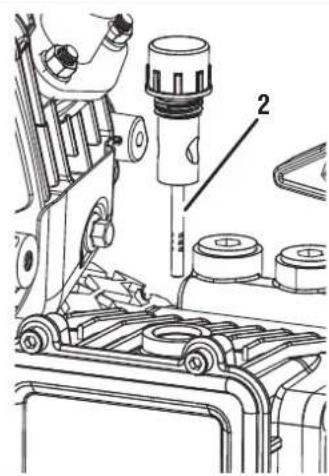
1 - Oil pump drain bolt
2 - Oil pump dipstick
FIG. 23
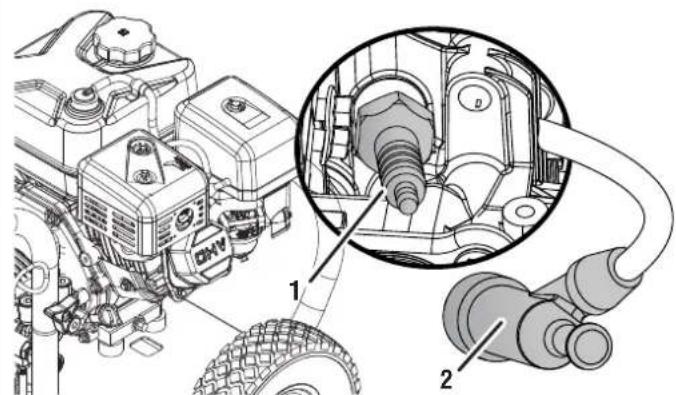
1 - Spark plug
2 - Spark plug cap
SPARK ARRESTOR SERVICE
See Figures 24 - 25.
Allow the muffler to cool completely before servicing the spark arrester. Inspect and clean the spark arrester after every 100 hours of use or every season. Failure to clean the spark arrester will result in degraded engine performance.
- Place the pressure washer on a level surface.
- Carefully remove the carbon deposits from the spark arrestor screen with a wire brush. The spark arrestor must be free of breaks and tears. Replace the spark arrestor if damaged.
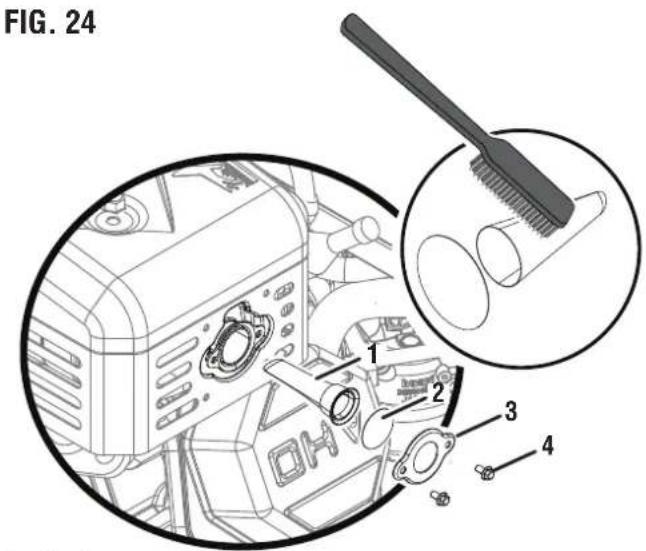
1 - Spark arrester
2 - Screen
3 - Bracket
4 - Screws
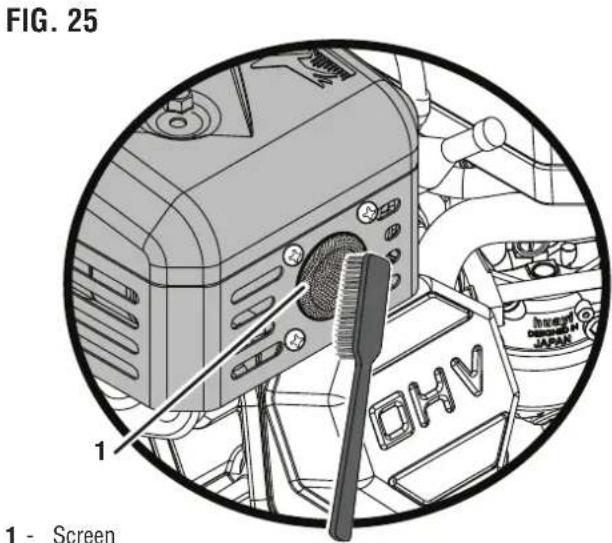
1 - Screen
DRAINING THE FLOAT BOWL
See Figure 26.
- Turn the fuel tank valve to the OFF position.
- Locate the drain screw on the bottom of the carburetor float bowl.
- Place an appropriate gasoline container under the drain screw to catch the drained fuel.
- Loosen the float bowl drain screw and allow the fuel to drain. Tighten the float bowl drain screw.
1-Carburetor
2 - Drain screw
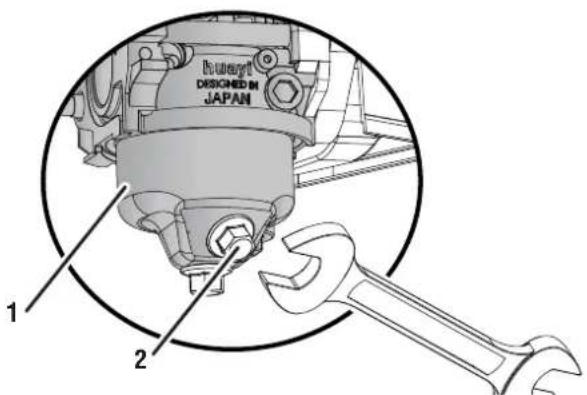
FIG. 26
DRAINING THE FUEL TANK
See Figure 27.
If storing the pressure washer for longer than six months, drain the fuel tank to prevent fuel separation, deterioration, and deposits in the fuel system.
- Drain the float bowl.
- Unscrew the fuel tank cap. Remove the fuel screen filter by slightly compressing it while removing it from the tank.
- Using a commercially available gasoline hand pump (not included), siphon the gasoline from the fuel tank into an approved gasoline container. DO NOT use an electric pump.
- Reinstall the fuel screen filter and the fuel tank cap.
- Remove the spark plug.
- Put a teaspoon of engine oil into the cylinder and pull the recoil handle until resistance is felt. At this position the piston is coming up on its compression stroke and both valves are closed. Storing the engine in this position will help prevent internal corrosion. Return the recoil handle gently.
- Reinstall the spark plug. Leave the spark plug boot disconnected to prevent accidental starting.
1-Fuel cap
2 - Siphon
3 - Spark plug
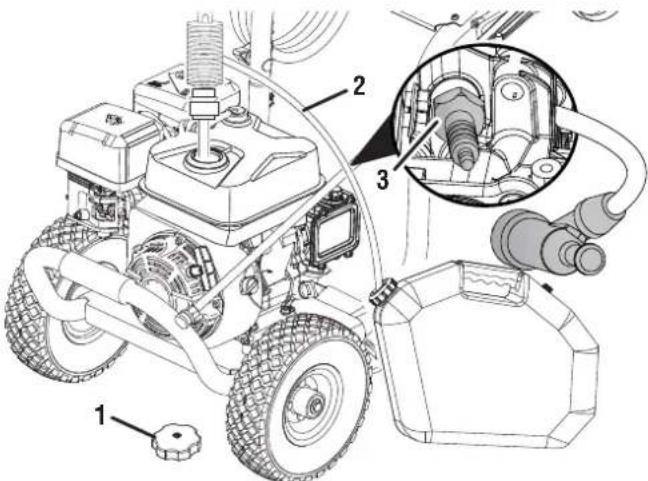
FIG.27
VALVE CLEARANCE
See Figures 28 - 29.
NOTICE
Inspecting and adjusting valve clearance must be done when the engine is cold.
- Remove the rocker arm cover and carefully remove the gasket. If the gasket is torn or damaged, it must be replaced.
- Remove the spark plug so the engine can be rotated more easily.
- Rotate the engine to top dead center (TDC) by pulling the recoil handle slowly. Looking through the spark plug hole, the piston should be at the top (both valves are closed).
- Both the rocker arms should be loose at TDC on the compression stroke. If they are not, rotate the engine 360^ .
- Insert a feeler gauge between the rocker arm and the valve stem to measure valve clearance.
Intake Valve Exhaust Valve
| Valve Clearance | 0.0031-0.0047 in (0.08-0.12 mm) | 0.0051-0.0067 in (0.13-0.17 mm) |
| Torque 8-12 Nm | 8-12 Nm |
- If an adjustment is necessary, hold the rocker arm pivot and loosen the pivot adjusting nut.
- Turn the rocker arm pivot to obtain the specified clearance. Hold the rocker arm pivot and re-tighten the pivot adjusting nut to the specified torque.
Torque: 106 inch-pound (12 Nm)
- Perform this procedure for the other valve.
- Install the gasket, rocker arm cover, and spark plug.
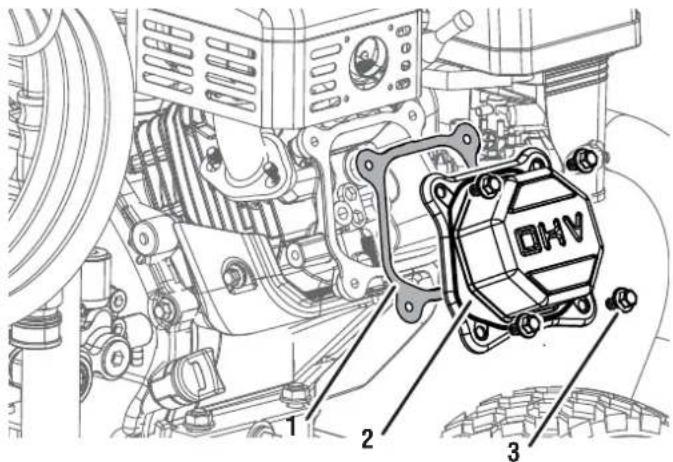
FIG. 28
1 - Gasket
2 - Rocker arm cover
3 - Bolts
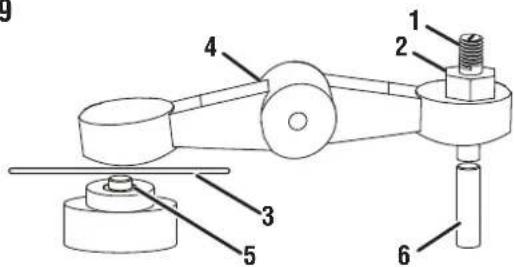
FIG. 29
1 - Adjustment screw
2 - Jam nut
3 - Feeler gauge
4 - Rocker arm
5 - Valve stem
6 - Push rod
INSTALL HANDLE FOR STORAGE
See Figure 30.
- Remove the knob and bolt.
- Reverse the handle so it is facing toward the pressure washer. Reinstall on the lower frame.
- Insert the bolt through the frame and secure with the handle knob.
1- Handle
2 - Lower Frame
3 - Bolt
4- Handle Knob
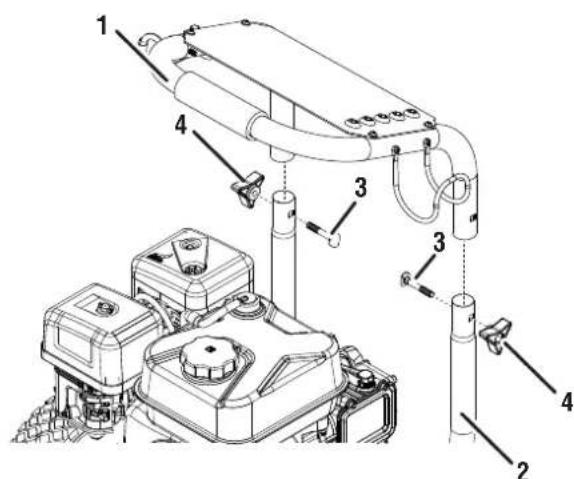
FIG. 30
STORAGE
Proper storage preparation is required for trouble-free operation and pressure washer longevity.
NOTICE
Gasoline stored for as little as 30 days can deteriorate, causing gum, varnish, and corrosive buildup in fuel, and the engine. This corrosive buildup restricts the flow of fuel, which can prevent the engine from starting storage period. The use of fuel stabilizer significantly increases the storage life of gasoline. Full-time use of fuel mended. Follow the manufacturer's instructions for use.
WARNING Never store a pressure washer with fuel in the tank indoors or in a poorly ventilated area where the fumes can come in contact with an ignition source such as a pilot light of a stove, water heater, clothes dryer, or any other gas appliance, or a spark from an electric appliance.
| STORAGE TIME RECOMMENDED PROCEDURE | |
| Less than 1 month No service required. | |
| 2 to 6 months | Fill with fresh gasoline and add gasoline stabilizer. Drain the carburetor float bowl. |
| 6 months or longer | Drain the fuel tank and carburetor float bowl. |
STORED FOR LESS THAN 30 DAYS
- Allow the pressure washer to cool a minimum of 30 minutes before storage.
- Wipe the pressure washer with a moist cloth. Clean any debris from the muffler cooling vents.
- Store the pressure washer in a well-ventilated, clean, dry location away from sparks, open flames, pilot lights, heat, and other sources of ignition such as areas with a spark-producing electric motor or where power tools are operated. Store in an area out of direct sunlight.
- Do not store the pressure washer or gasoline near furnaces, water heaters, or any other appliances that produce heat or have automatic ignitions.
Even properly stabilized fuel can leave residue and cause corrosion if left long term. If storing the pressure washer for two to six months, drain the float bowl to prevent gum and varnish buildup in the carburetor.
WINTER STORAGE
Be sure the pressure washer hose is free of all water before storing for winter. In order to prevent corrosion and keep the water pump from freezing, add RV (non-toxic) antifreeze or similar pump-protection specifically made for pressure washers. Follow the manufacturer's instructions for use.
| PROBLEM POSSIBLE CAUSE CORRECTION | ||
| Engine will not start. | Fuel valve in OFF position. Turn fuel valve to ON position. | |
| No fuel. Add fuel. | ||
| Choke in wrong position. Adjust choke. | ||
| Spark plug wire loose. Attach spark plug boot. | ||
| Faulty spark plug. Replace spark plug. | ||
| Stale fuel or water in fuel. Drain fuel and replace with fresh fuel. | ||
| Dirty air filter. Clean or replace air filter. | ||
| Engine suddenly stops. | Out of fuel. Add fuel. | |
| Low oil. Inspect oil and add if low. | ||
| Engine runs erratically. | Choke in wrong position. Adjust choke. | |
| Low oil. Inspect oil and add if low. | ||
| Stale fuel or water in fuel. Drain fuel and replace with fresh fuel. | ||
| Faulty spark plug. Replace spark plug. | ||
| Unit does not reach high pressure. | Water supply restricted. Inspect hoses for leaks, blockages, and kinks. | |
| Garden hose too small. Use 5/8 in. (15.9 mm) hose or larger. | ||
| Not enough inlet water. | Turn garden hose water supply fully ON. Inspect hoses for leaks, blockages, and kinks. | |
| Spray pressure varies. | Poor inlet water supply. | |
| Garden hose inlet filter is clogged. Remove garden hose, clean filter. | ||
| Spray nozzle is restricted. | Remove particles with nozzle cleaning tool. | |
| Air ingress to pump. | Inspect all hoses and fittings for secure connections. With water supply ON, turn engine OFF and purge pump of air by depressing trigger until a steady stream of water flows. | |
| Cannot pull recoil starter handle. | Pump pressure. | Depress spray gun trigger to relieve pressure. |
| Low pressure detergent wash not working. | Wrong nozzle installed on spray lance. | Detergent only works with black (low pressure) nozzle installed. Install black nozzle. If missing, replace. |
| Detergent is too thick. | Use detergent made specifically for pressure washer use. | |
| Detergent hose is not connected to the pump. | Inspect hose connections. | |
| Spray nozzle is obstructed. | Clean nozzle of debris. | |
| Detergent hose is clogged. | Remove detergent hose and clean. Replace. | |
| Blockage inside pump detergent valve. | Quickly depress and release spray gun trigger 4-5 times to clear the detergent valve. | |
| Garden hose connection leaks. | Loose fittings. | Tighten fittings. |
| Missing/worn rubber washer. | Inspect hose and pump water inlet washers. Replace if missing/worn. | |
| Spray gun lance leaks. | Loose fittings. | Inspect for worn o-rings or loose connections. |
| Missing/worn rubber washers. | Remove spray lance and/or high pressure hose. Inspect and replace washers if necessary. | |
Introduccion. 2-3
Seguridad 4-6
Componentes 7-8
Asamblea 9-10
11-19
Mantenimiento 20-27
SolutiOn de problemas 28
Tos h t Power Equipment.
777 Manor Park Drive
Columbus, Ohio 43228
Westinghouse Outdoor Power
777 Manor Park Drive
Columbus, OH 43228
AVEZ-VOUS DES QUESTIONS?
www.westinghouse.com
Service Hotline (855) 944-3571
777 Manor Park Drive, Columbus, OH 43228
and Westinghouse are trademarks of Westinghouse Electric Corporation.
Used under license by Westinghouse Outdoor Power Equipment.
© 2025 Westinghouse Outdoor Power Equipment, All Rights Reserved.
- WPX3600/WPX3800/WPX4400
- INTRODUCTION
- WARNING
- DISCLAIMERS
- ALL RIGHTS RESERVED
- UPDATES
- PRODUCT REGISTRATION
- Register by:
- For Your Records
- Westinghouse Outdoor Power
- NOTICE
- SON.
- HAVQEQUESTIONS?
- SAFETY DEFINITIONS
- SAFETY SYMBOLS
- FUEL SAFETY
- GENERAL SAFETY PRECAUTIONS
- UNDERSTANDING THE PRESSURE WASHER
- SPRAY GUN
- THERMAL RELIEF VALVE
- RECOIL STARTER
- OIL DIPSTICK
- PUMP
- HANDLE
- HIGH PRESSURE HOSE
- HIGH PRESSURE OUTLET
- WATER INLET
- FUEL TANK
- FUEL ON/OFF SWITCH
- CHoke
- NOZZLES
- DETERGENT TANK
- OIL DRAIN PLUG
- ENGINE ON/OFF SWITCH
- DETERGENT HOSE CONNECTION BARB
- CARTON CONTENTS
- CAUTION
- INSTALL HANDLE
- CONNECT HANDLE BRACKETS
- INSTALL THE UPPER GUN HOLDER
- INSERT NOZZLES
- INSTALL THE PUMP DIPSTICK
- CONNECTING THE LANCE TO THE SPRAY GUN
- CONNECTING THE HIGH PRESSURE HOSE TO THE SPRAY GUN
- CONNECTING THE HIGH PRESSURE HOSE TO THE PRESSURE WASHER
- CONNECTING A GARDEN HOSE TO THE PRESSURE WASHER
- ADDING OIL / INSPECTING OIL
- GASOLINE REQUIREMENTS
- ADDING GASOLINE
- USING FUEL STABILIZER
- PRESSURE WASHER LOCATION
- BEFORE STARTING THE ENGINE
- STARTING THE ENGINE
- STOPPING THE PRESSURE WASHER
- DURING AN EMERGENCY
- USING THE SPRAY GUN
- SELECTING NOZZLES
- CHANGING THE NOZZLE
- SPRAYING TIPS
- DETERGENT USE
- DETERGENT SYSTEM FLUSH
- AFTER EACH USE
- TRANSPORTING
- MAINTENANCE SCHEDULE
- CLEANING THE PRESSURE WASHER
- CLEANING SPRAY NOZZLES
- CLEANING THE AIR FILTER
- ENGINE OIL LEVEL CHECK
- ENGINE OIL CHANGE
- PUMP OIL CHANGE
- SPARK PLUG MAINTENANCE
- Recommended Spark Plug Replacement
- SPARK ARRESTOR SERVICE
- DRAINING THE FLOAT BOWL
- DRAINING THE FUEL TANK
- VALVE CLEARANCE
- Torque: 106 inch-pound (12 Nm)
- INSTALL HANDLE FOR STORAGE
- STORAGE
- STORED FOR LESS THAN 30 DAYS
- WINTER STORAGE
- AVEZ-VOUS DES QUESTIONS?
Brand : WESTINGHOUSE
Model : WPX3600
Category : Pressure washer