
WX130L - Drill WORX - Free user manual and instructions
Find the device manual for free WX130L WORX in PDF.


| Product type | Compact cordless drill/driver |
| Brand | WORX |
| Model | WX130L |
| Rated voltage | 18 V (max 20 V) |
| No-load speed | 0-500 / 0-2100 rpm |
| Maximum torque | 500 in-lbs (56 Nm) |
| Chuck capacity | 13 mm (1/2 in) |
| Max drilling diameter - steel | 13 mm |
| Max drilling diameter - wood | 40 mm |
| Weight (tool only) | 0.95 kg |
| Battery type | Li-ion 20 V max |
| Recommended battery capacities | 2.0 Ah / 4.0 Ah |
| Recommended charger | WA3881 2.0 A |
| Number of torque positions | 18+1 |
| Rotation direction selector | Yes (forward, reverse, lock) |
| Two speeds | Yes |
| LED indicator | Yes (indicates overcurrent, overheating, low voltage protection) |
| Belt hook | Yes |
| Soft grip handle | Yes |
| Operating temperature | 0 °C to 45 °C |
| Maintenance | Clean with a dry cloth; no lubrication required |
| Intended use | Drilling in wood, metal, plastic and screwdriving |
Frequently Asked Questions - WX130L WORX
User questions about WX130L WORX
0 question about this device. Answer the ones you know or ask your own.
Ask a new question about this device
Download the instructions for your Drill in PDF format for free! Find your manual WX130L - WORX and take your electronic device back in hand. On this page are published all the documents necessary for the use of your device. WX130L by WORX.
USER MANUAL WX130L WORX
natural_image
Completely black image with no visible content, text, or symbols.TABLE OF CONTENTS
- PRODUCT SAFETY
- COMPONENT LIST
- TECHNICAL DATA
- INTENDED USE
- OPERATION INSTRUCTIONS
- PROBLEM SOLUTION
- MAINTENANCE
1.PRODUCT SAFETY

WARNING: Some dust created by power sanding, sawing, grinding, drilling and other construction activities contains chemicals known to the State of California to cause cancer, birth defects or other reproductive harm. Some examples of these chemicals are:
- Lead from lead-based paints;
- Crystalline silica from bricks and cement and other masonry products;
- Arsenic and chromium from chemically-treated lumber.
Your risk from these exposures varies, depending on how often you do this type of work. To reduce your exposure to these chemicals: work in a well ventilated area, and work with approved safety equipment, such as those dust masks that are specially designed to filter out microscopic particles.

WARNING: This product can expose you to chemicals including lead and Di(2-ethylhexyl) phthalate (DEHP) which are known to the State of California to cause cancer and birth defects or other reproductive harm. For more information go to www.P65Warnings.ca.gov.
GENERAL POWER TOOL SAFETY WARNINGS

WARNING: Read all safety warnings, instructions, illustrations and specifications provided with this power tool. Failure to follow all instructions listed below may result in electric shock, fire and/or serious injury.
Save all warnings and instructions for future reference.
The term "power tool" in the warnings refers to your mains-operated (corded) power tool or battery-operated (cordless) power tool.
1) Work area safety
a) Keep work area clean and well lit. Cluttered or dark areas invite accidents.
b) Do not operate power tools in explosive atmospheres, such as in the presence of flammable liquids, gases or dust. Power tools create sparks which may ignite the dust or fumes.
c) Keep children and bystanders away while operating a power tool. Distractions can cause you to lose control.
2) Electrical safety
a) Power tool plugs must match the outlet. Never modify the plug in any way. Do not use any adapter plugs with earthed (grounded) power tools. Unmodified plugs and matching outlets will reduce risk of electric shock.
b) Avoid body contact with earthed or grounded surfaces, such as pipes, radiators, ranges and refrigerators. There is an increased risk of electric shock if your body is earthed or grounded.
c) Do not expose power tools to rain or wet conditions. Water entering a power tool will increase the risk of electric shock.
d) Do not abuse the cord. Never use the cord for carrying, pulling or unplugging the power tool. Keep cord away from heat, oil, sharp edges or moving parts. Damaged or entangled cords increase the risk of electric shock.
e) When operating a power tool outdoors, use an extension cord suitable for outdoor use. Use of a cord suitable for outdoor use reduces the risk of electric shock.
f) If operating a power tool in a damp location is unavoidable, use a residual current device (RCD) protected supply. Use of an RCD reduces the risk of electric shock.
3) Personal safety
a) Stay alert, watch what you are doing and use common sense when operating a power tool. Do not use a power tool while you are tired or under the influence of drugs, alcohol or medication. A moment of inattention while operating power tools may result in serious personal injury.
b) Use personal protective equipment. Always wear eye protection. Protective equipment such as dust mask, non-skid safety shoes, hard hat, or hearing protection used for appropriate conditions will reduce personal injuries.
c) Prevent unintentional starting. Ensure the switch is in the off-position before connecting to power source and/or battery pack, picking up or carrying the tool. Carrying power tools with your finger on the switch or energising power tools that have the switch on invites accidents.
d) Remove any adjusting key or wrench before turning the power tool on. A wrench or a key left attached to a rotating part of the power tool may
result in personal injury.
e) Do not overreach. Keep proper footing and balance at all times. This enables better control of the power tool in unexpected situations.
f) Dress properly. Do not wear loose clothing or jewelry. Keep your hair and clothing away from moving parts. Loose clothes, jewelry or long hair can be caught in moving parts.
g) If devices are provided for the connection of dust extraction and collection facilities, ensure these are connected and properly used. Use of dust collection can reduce dust-related hazards.
h) Do not let familiarity gained from frequent use of tools allow you to become complacent and ignore tool safety principles. A careless action can cause severe injury within a fraction of a second.
4) Power tool use and care
a) Do not force the power tool. Use the correct power tool for your application. The correct power tool will do the job better and safer at the rate for which it was designed.
b) Do not use the power tool if the switch does not turn it on and off. Any power tool that cannot be controlled with the switch is dangerous and must be repaired.
c) Disconnect the plug from the power source and/or remove the battery pack, if detachable, from the power tool before making any adjustments, changing accessories, or storing power tools. Such preventive safety measures reduce the risk of starting the power tool accidentally.
d) Store idle power tools out of the reach of children and do not allow persons unfamiliar with the power tool or these instructions to operate the power tool. Power tools are dangerous in the hands of untrained users.
e) Maintain power tools and accessories. Check for misalignment or binding of moving parts, breakage of parts and any other condition that may affect the power tool's operation. If damaged, have the power tool repaired before use. Many accidents are caused by poorly maintained power tools.
f) Keep cutting tools sharp and clean. Properly maintained cutting tools with sharp cutting edges are less likely to bind and are easier to control.
g) Use the power tool, accessories and tool bits etc. in accordance with these instructions, taking into account the working conditions and the work to be performed. Use of the power tool for operations different from those intended could result in a hazardous situation.
h) Keep handles and grasping surfaces dry, clean and free from oil and grease. Slippery handles and grasping surfaces do not allow for safe handling and control of the tool in unexpected
situations.
5) Battery tool use and care
a) Recharge only with the charger specified by the manufacturer. A charger that is suitable for one type of battery pack may create a risk of fire when used with another battery pack.
b) Use power tools only with specifically designated battery packs. Use of any other battery packs may create a risk of injury and fire.
c) When battery pack is not in use, keep it away from other metal objects, like paper clips, coins, keys, nails, screws or other small metal objects, that can make a connection from one terminal to another. Shorting the battery terminals together may cause burns or a fire.
d) Under abusive conditions, liquid may be ejected from the battery; avoid contact. If contact accidentally occurs, flush with water. If liquid contacts eyes, additionally seek medical help. Liquid ejected from the battery may cause irritation or burns.
e) Do not use a battery pack or tool that is damaged or modified. Damaged or modified batteries may exhibit unpredictable behaviour resulting in fire, explosion or risk of injury.
f) Do not expose a battery pack or tool to fire or excessive temperature. Exposure to fire or temperature above 265^ F may cause explosion.
g) Follow all charging instructions and do not charge the battery pack or tool outside the temperature range specified in the instructions. Charging improperly or at temperatures outside the specified range may damage the battery and increase the risk of fire.
6) Service
a) Have your power tool serviced by a qualified repair person using only identical replacement parts. This will ensure that the safety of the power tool is maintained.
b) Never service damaged battery packs. Service of battery packs should only be performed by the manufacturer or authorized service providers.
DRILL SAFETY WARNINGS
1) Safety instructions for all operations
a) Hold the power tool by insulated gripping surfaces, when performing an operation where the cutting accessory or fasteners may contact hidden wiring. Cutting accessory or fasteners contacting a "live" wire may make exposed metal parts of the power tool "live" and could give the operator an electric shock.
2) Safety instructions when using long drill bits
a) Never operate at higher speed than the
maximum speed rating of the drill bit. At higher speeds, the bit is likely to bend if allowed to rotate freely without contacting the workpiece, resulting in personal injury.
b) Always start drilling at low speed and with the bit tip in contact with the workpiece. At higher speeds, the bit is likely to bend if allowed to rotate freely without contacting the workpiece, resulting in personal injury.
c) Apply pressure only in direct line with the bit and do not apply excessive pressure. Bits can bend causing breakage or loss of control, resulting in personal injury.
SAFETY WARNINGS FOR BATTERY PACK
a) Do not dismantle, open or shred battery pack.
b) Do not expose battery pack to heat or fire. Avoid storage in direct sunlight.
c) Do not short-circuit a battery pack. Do not store battery packs haphazardly in a box or drawer where they may short-circuit each other or be short-circuited by other metal objects. When battery pack is not in use, keep it away from other metal objects, like paper clips, coins, keys, nails, screws or other small metal objects, that can make a connection from one terminal to another. Shorting the battery terminals together may cause burns or fire.
d) Do not subject battery pack to mechanical shock.
e) In the event of battery leaking, do not allow the liquid to come in contact with the skin or eyes. If contact has been made, wash the affected area with copious amounts of water and seek medical advice.
f) Do not use any battery pack which is not designed for use with the equipment.
g) Keep battery pack out of the reach of children.
h) Always purchase the battery pack recommended by the device manufacturer for the equipment.
i) Keep battery pack clean and dry.
j) Wipe the battery pack terminals with a clean dry cloth if they become dirty.
k) Battery pack need to be charged before use. Always use the correct charger and refer to the manufacturer's instructions or equipment manual for proper charging instructions.
I) Do not leave battery pack on prolonged charge when not in use.
m) After extended periods of storage, it may be necessary to charge and discharge the battery pack several times to obtain maximum performance.
n) Recharge only with the charger specified by WorxNITRO. Do not use any charger other
than that specifically provided for use with the equipment.
o) Retain the original product literature for future reference.
p) Use only the battery pack in the application for which it was intended.
q) Remove the battery pack from the equipment when not in use.
r) Dispose of properly.
s) Do not mix cells of different manufacture, capacity, size or type within a device.
t) Keep the battery away from microwaves and high pressure.
SYMBOLS
| To reduce the risk of injury, user must read instruction manual | |
| Warning | |
| Wear ear protection | |
| Wear eye protection | |
| Wear dust mask | |
| Li-lon battery, battery must be recycled | |
| Batteries may enter water cycle if disposed improperly, which can be hazardous for ecosystem. Do not dispose of waste batteries as unsorted municipal waste. | |
| Do not burn | |
 | Wear protective gloves |
 | Lock |
 | Screwdriving |
 | Drilling |
 | Wood |
 | Metal |
 | High speed |
 | Low speed |

call②recycle®
POSITEC Inc. has established a partnership with the RBRC Corporation to recycle any Positec batteries with the RBRC-call2recycle seal. For environmental protection, please do not discard batteries in the trash. After the batteries' life cycle is ended, please call 1-800-822-8837 for a free service that will properly dispose of the battery.
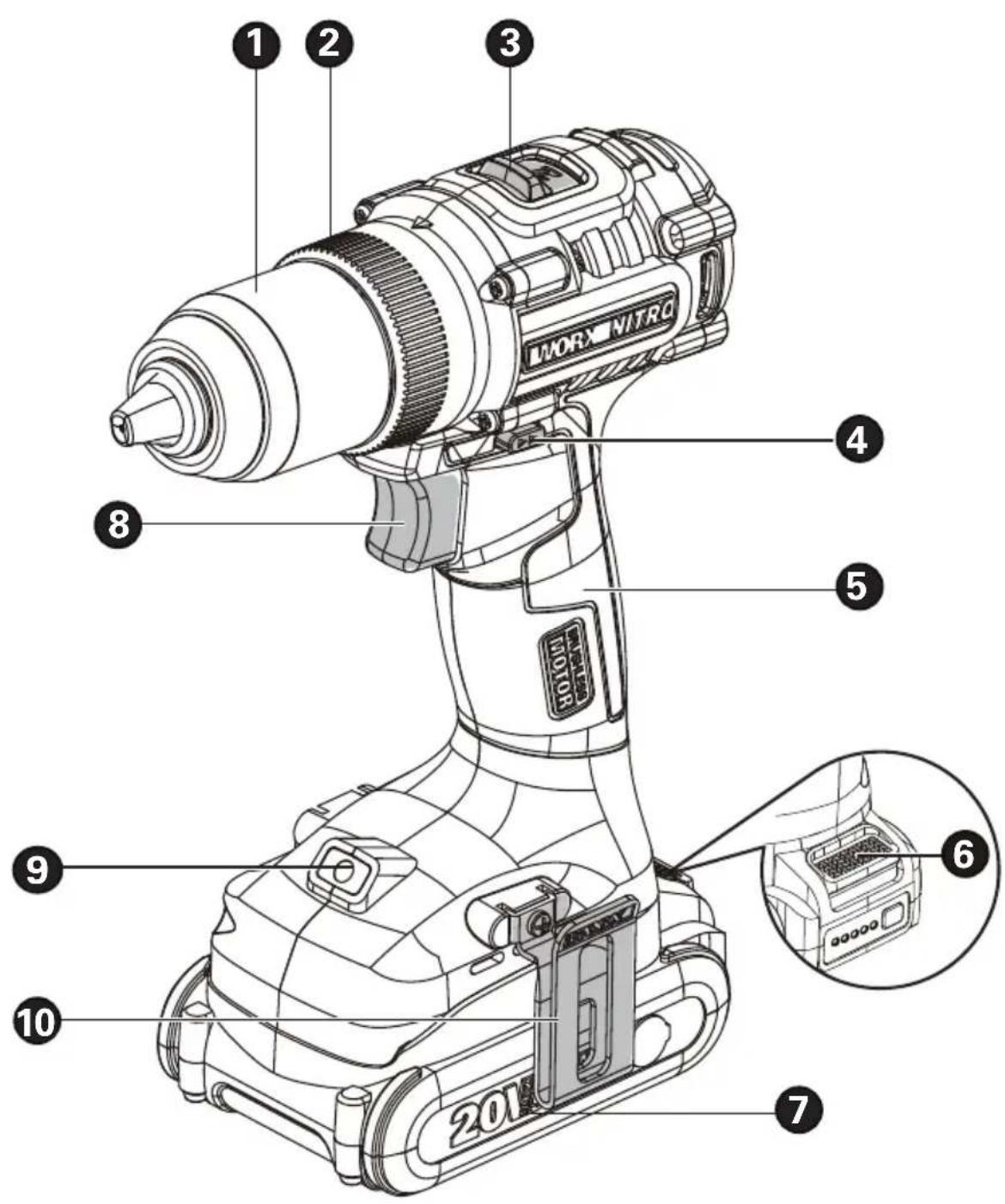
text_image
WOR NITRA 1 2 3 4 5 6 7 8 9 10 202.COMPONENT LIST
-
KEYLESS CHUCK
-
TORQUE ADJUSTMENT RING
-
TWO-SPEED GEAR CONTROL
-
FORWARD/REVERSE ROTATION CONTROL
-
SOFT GRIP HANDLE
-
BATTERY PACK RELEASE BUTTON *
-
BATTERY PACK *
-
ON/OFF SWITCH (VARIABLE SPEED CONTROL)
-
LED LIGHT
-
BELT HOOK
* Not all the accessories illustrated or described are included in standard delivery.
3.TECHNICAL DATA
Type designation WX130L WX130L.X (1 - designation of machinery, representative of hand held drill)
| WX130L WX130L.X** | ||
| Voltage | 20V =Max* ** | |
| No load speed 0-500/0-2100 /min | ||
| Number of clutch positions | 18+1 | |
| Max torque 500 in-bs (56 Nm) | ||
| Chuck capacity 1/2" (13 mm) | ||
| Max. drilling capacity | Steel 1/2" (13 mm) | |
| Wood 1-1/2" (40mm) | ||
| Machine weight (Bare tool) | 2.10 lbs (0.95 kg) | |
** X may be followed by one or two characters. All models are the same except model number and trademark. The suffix in models may be number from "1" to "999" or English letter "A" to "Z" or "M1" to "M9" which means different package or the various of accessories packed in the package.
***Voltage measured without workload. Initial battery voltage reaches maximum of 20 volts. Nominal voltage is 18 volts.
SUGGESTED BATTERIES AND CHARGERS
| Category | Type Capacity | |
| 20V Battery | WA3012 4.0 | Ah |
| WA3575 2.0 | Ah | |
| WA3669 2.0 | Ah | |
| 20V Charger WA3881 2.0 A | ||
We recommend that you purchase your accessories from the same store that sold you the tool. Refer to the accessory packaging for further details. Store personnel can assist you and offer advice.
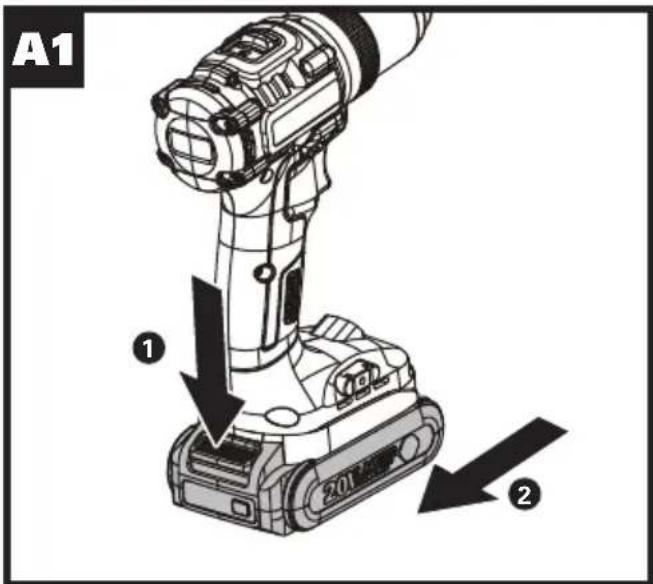
text_image
A1 ① ②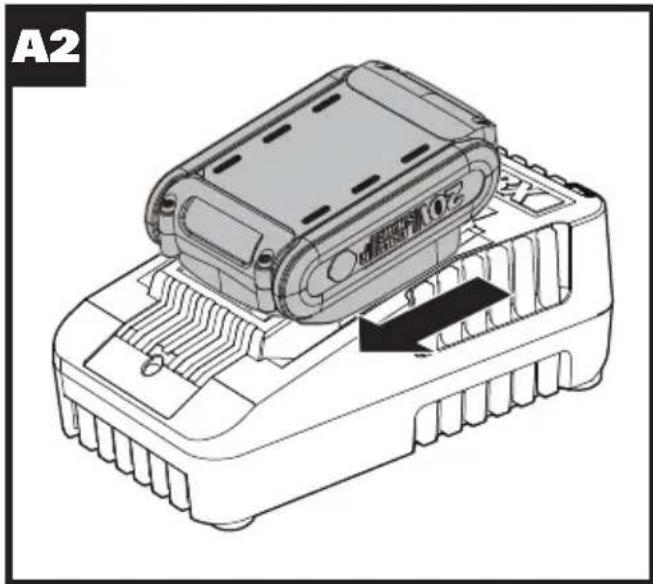
natural_image
Technical illustration of a battery pack with internal circuit and mounting holes (no text or symbols)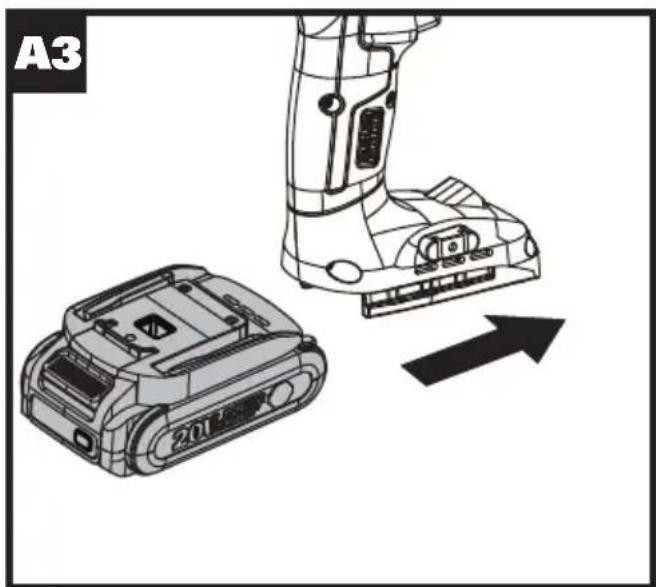
natural_image
Technical illustration of a robotic device with two views: front view and side view, showing mechanical components and an upward arrow (no text or symbols)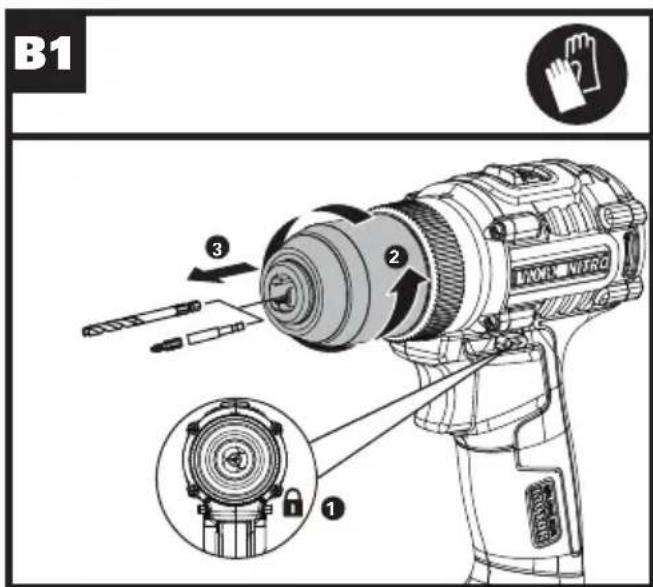
text_image
B1 LiOR Nitro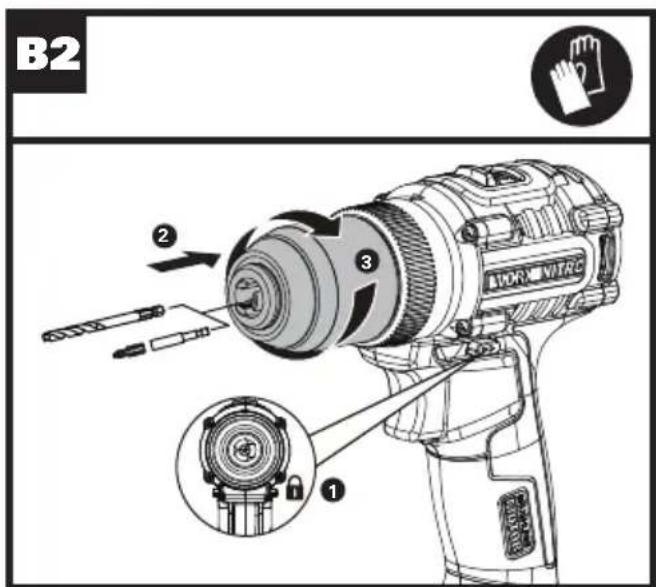
text_image
B2 ① ② ③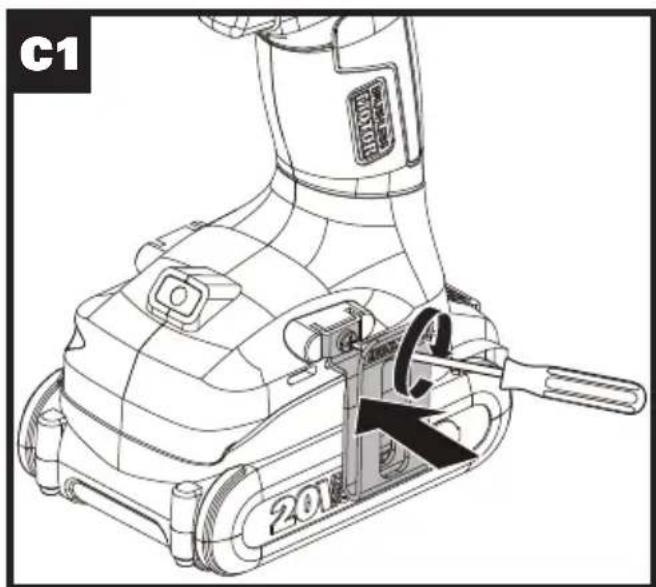
natural_image
Technical line drawing of a mechanical device with a tool and component, labeled C1 (no readable text or symbols)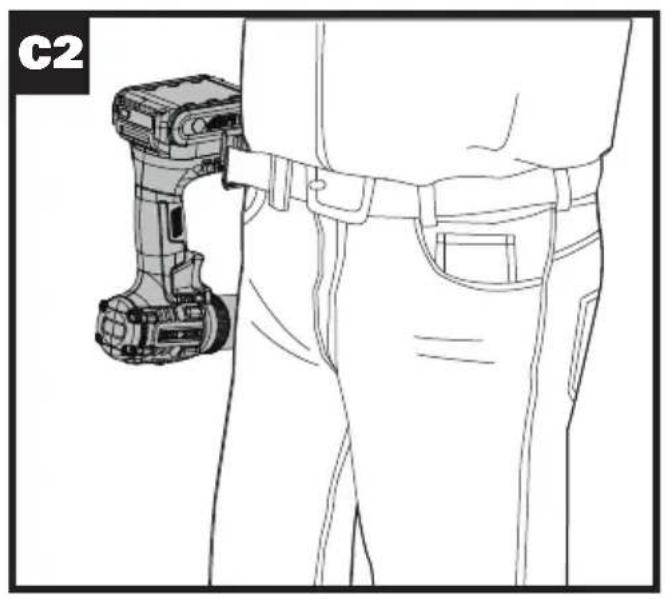
natural_image
Line drawing of a person holding a handheld device, no text or symbols present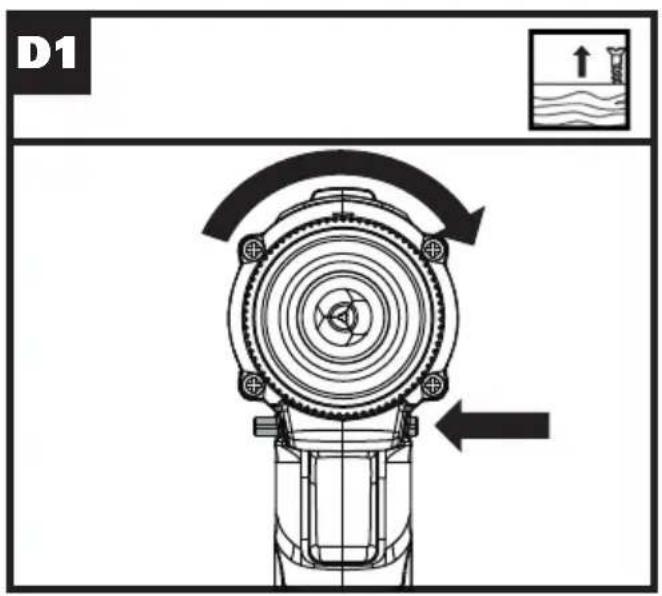
text_image
D1 ↑ ←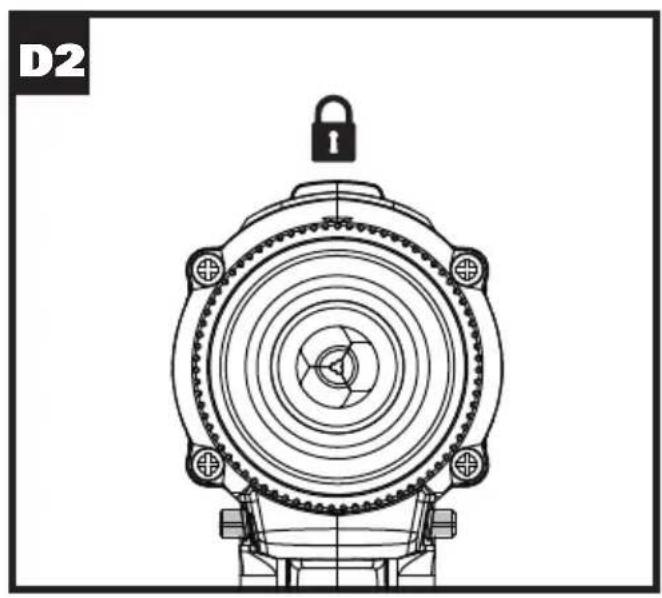
natural_image
Technical line drawing of a mechanical component with concentric circles and mounting feet (no text or symbols)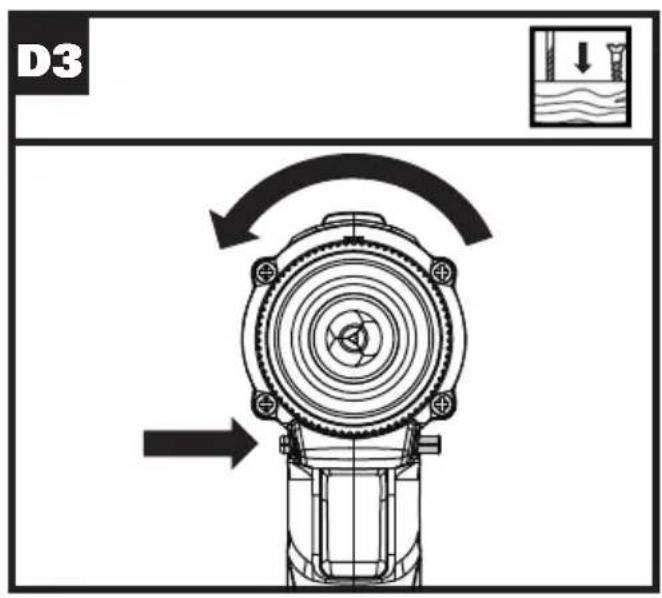
text_image
D3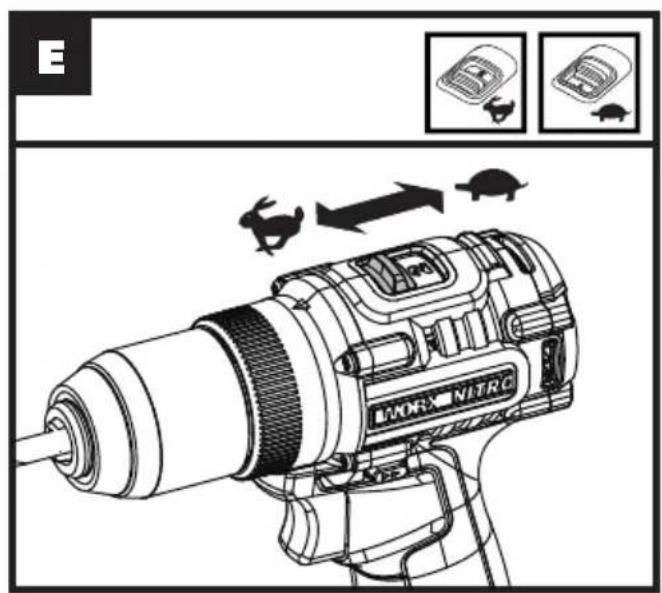
text_image
NITRC NITRC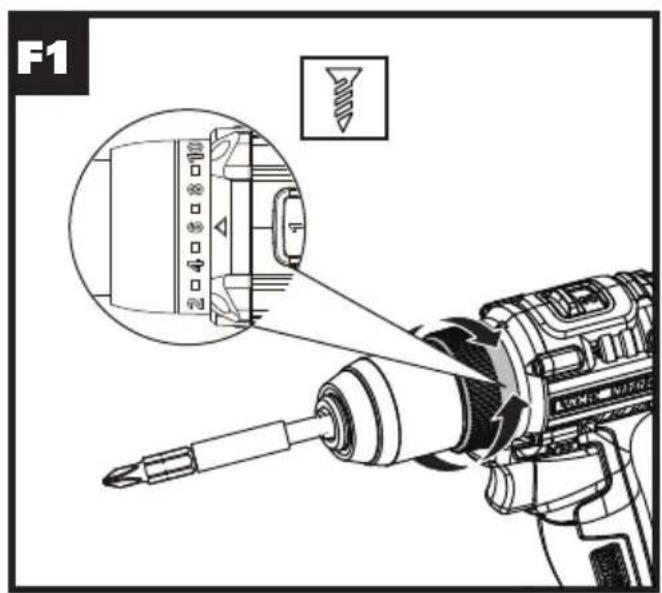
text_image
F1 2 4 8 8 100 SAMS V702C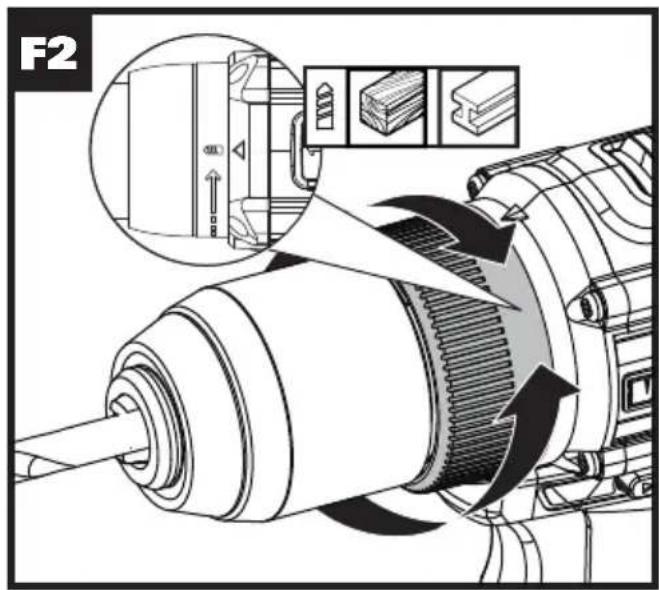
text_image
F2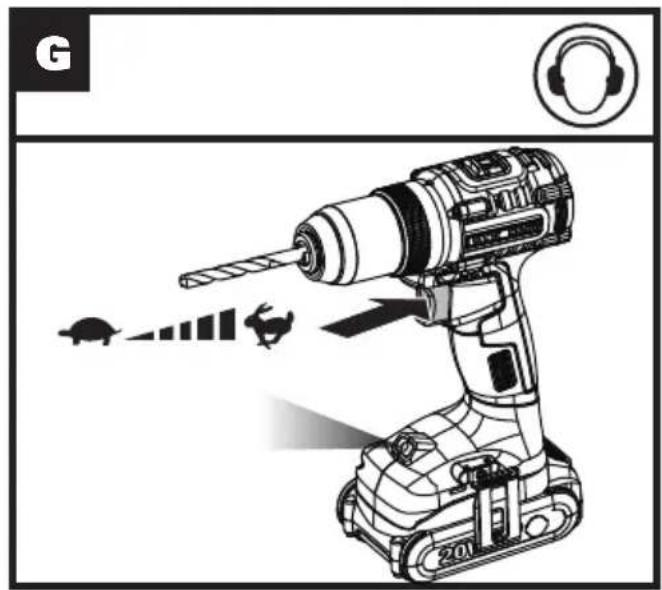
natural_image
Illustration of a handheld electric drill with gear and sensor components (no text or symbols)4. INTENDED USE
The machine is intended for driving in and loosening fasteners as well as for drilling in wood, metal and plastic.
5. OPERATING INSTRUCTIONS

NOTE: Before using the tool, read the instruction book carefully.
Assembly and Operation
| ACTION FIGURE | |
| BEFORE OPERATION | |
| Removing the battery pack See Fig. A1 | |
| Charging the battery pack See Fig. A2 | |
| Installing the battery pack See Fig. A3 | |
| ASSEMBLY |
CHUCK ADJUSTMENT
WARNING: Always lock off the On/Off Switch and disconnect tool from power source when changing accessories. Always ensure the bit is secure before starting the tool. Damage to the Chuck or a loose bit may cause personal injury.
| - Removing the bits See Fig. B1 | |
| - Inserting the bits See Fig. B2 | |
| - Installing the belt hook | See Fig. C1, C2 |
| OPERATION | |
| Forward/Reverse Rotation ControlWARNING: Never change the direction of rotation when the chuck is rotating, wait until it has stopped! | See Fig. D1, D2, D3 |
| TWO-SPEED GEAR CONTROLSelect low speed (1) for applications requiring higher power and torque, such as driving screws and drilling in metal.Select high speed (2) for fast drilling or screwdriving applications or for drilling in wood or masonry.WARNING: To prevent gear damage, always allow the chuck to come to a complete stop before changing the direction of rotation. | See Fig. E |
| TORQUE ADJUSTMENTDrilling, Screw drivingNOTE:Rotate the adjustment ring to the proper torque setting for the type of material and size of screw you are using.• 1 - 3 For driving small screws• 4 - 7 For driving screws into soft material• 8 - 11 For driving screws into soft and hard materials• 12- 15 For driving screws into hard wood• 16- 18 For driving large screws• Drill icon - For heavy drilling | See Fig.F1, F2 |
| Operating the On/Off SwitchWARNING: Do not operate for long periods at low speed because excess heat will be produced internally. | See Fig. G |
LED Light Indicator
Before operation, the LED light will be activated when the On/Off switch is slightly depressed.
WARNING: To turn on the light, press the On/Off switch and make sure the Forward/Reverse Rotation Control is on right/left position.
The tool and battery are equipped with a protection system. When the LED Light is quickly flashing and turn off, the system will automatically cut off power to the tool to extend battery life. The tool will automatically stop during operation if the tool and/or battery are placed under one of the following conditions:
• Overloaded (The LED light quickly flashes for 4-6 times and turn off): The tool is operated in a manner that causes it to draw an abnormally high current. In this situation, release the On/Off Switch on the tool and stop the application that caused the tool to become overloaded. Then pull the On/Off Switch again to restart.
• Overheated (The LED light quickly flashes for 9 times and turn off): Under the condition above, if the tool does not start, the Tool and Battery are overheated. In this situation, let the Tool and Battery cool before pulling the On/Off Switch again.
- Low battery voltage (The LED light quickly flashes for 2 times and turn off): The remaining Battery capacity is too low and the tool will not operate. In this situation, remove and recharge the Battery.
See Fig. G
6.PROBLEM SOLUTION
1. WHY DOES THE DRILL NOT TURN ON WHEN YOU PRESS THE SWITCH?
The Forward/Reverse Rotation Control, which is on top of the On/Off Switch, is positioned in the lock function. Unlock the Forward/Reverse Rotation Control by putting it into the required rotation position. Push the On/Off Switch and the drill will start to rotate. Check that the battery is charged and properly connected to the tool.
2. THE DRILL STOPS BEFORE THE SCREW IS COMPLETELY TIGHTENED. WHY?
Verify the position of the torque adjusting ring. Find the torque adjusting ring between the chuck and the drill body. Position 1 is the lowest torque (screw driving force) and position 18 is the highest torque (screw driving force). Position ⚡ is for drill operation. Regulate the torque adjusting ring to a higher position to reach the best result.
3. REASONS FOR DIFFERENT BATTERY PACK WORKING TIMES
Charging time problems, as above, and having not used a battery pack for a prolonged time will reduce the battery pack working time. This can be corrected after several charge and discharge operations by charging & working with your drill. Heavy working conditions such as large screws into hard wood will use up the battery pack energy faster than lighter working conditions. Do not re-charge your battery pack below 32^ F ( 0^ C) and above 104^ F ( 40^ C) as this will affect performance.
7.MAINTENANCE
Remove the Battery Pack from the tool before carrying out any adjustment, servicing or maintenance.
Your tool requires no additional lubrication or maintenance.
There are no user serviceable parts in your power tool. Never use water or chemical cleaners to clean your power tool. Wipe clean with a dry cloth. Always store your power tool in a dry place. Keep the motor ventilation slots clean. Keep all working controls free of dust. Occasionally you may see sparks through the ventilation slots. This is normal and will not damage your power tool.
FOR BATTERY TOOLS
The ambient temperature range for the use and storage of tool and battery is 0^ C- 45^ C ( 32^ F- 113^ F). The recommended ambient temperature range for the charging system during charging is 0^ C- 40^ C ( 32^ F- 104^ F).
TABLE DES MATIÈRES
- SÉCURITÉ DU PRODUIT
- LISTE DES ÉLÉMENTS
- DONNÉES TECHNIQUES
- UTILISATION PRÉVUE
- INSTRUCTIONS D'UTILISATION
- PROBLÈMES ET SOLUTIONS
- ENTRETIEN
1. SÉCURITÉ DU PRODUIT
Copyright © 2022, Positec. All Rights Reserved.