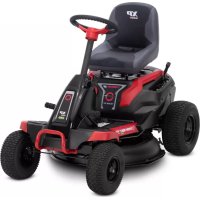
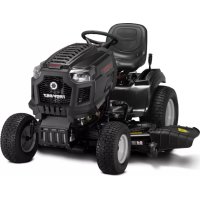
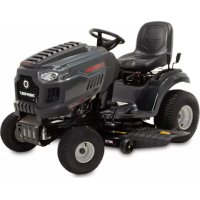
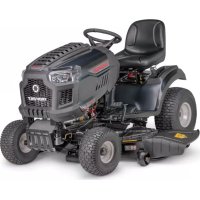
TB30E XP - Tractor TROY-BILT - Free user manual and instructions
Find the device manual for free TB30E XP TROY-BILT in PDF.



| Brand | Troy-Bilt |
| Model | TB30E XP |
| Product Type | Electric Self-Propelled Lawn Tractor |
| Power Source | Rechargeable Lithium-Ion Battery |
| Charger | Original charger included, full charge time about 4 hours |
| Cutting Width | 30 inches (76 cm) |
| Cutting Height | 5 positions, from 1 to 4 inches (approx. 2.5 to 10 cm) |
| Blade Quantity | 2 rotating blades |
| Travel Speed | Variable, with speed control |
| Parking Brake | Yes, lever-operated |
| Headlights | Yes (depending on model) |
| USB Ports | 2 charging ports (2.1 A) on some models |
| Recommended Tire Pressure | See indication on tire sidewall |
| Approximate Weight | 120 kg |
| Dimensions (L x W x H) approx. | 180 x 90 x 100 cm |
| Maximum Slope | 12° (21%) |
| Noise Level | Not specified (estimated 75 dB) |
| Maintenance | Cleaning after each use, lubrication of axles and pivot points every 25 hours, blade inspection |
| Spare Parts | Available at authorized dealers (use original parts) |
| Warranty | Not specified (refer to registration card) |
| Estimated Lifespan | 7 years under normal conditions according to CPSC and EPA |
Frequently Asked Questions - TB30E XP TROY-BILT
User questions about TB30E XP TROY-BILT
0 question about this device. Answer the ones you know or ask your own.
Ask a new question about this device
Download the instructions for your Tractor in PDF format for free! Find your manual TB30E XP - TROY-BILT and take your electronic device back in hand. On this page are published all the documents necessary for the use of your device. TB30E XP by TROY-BILT.
USER MANUAL TB30E XP TROY-BILT
Battery-Powered Lithium-Ion Tractor
English Page 1
Spanish (Español)......Page 26
French (Français) Page 53
Record Product Information
Before setting up and operating your new equipment, please locate the model plate on the equipment and record the information in the provided area to the right. You can locate the model plate by lifting up the seat and looking under the seat pan. This information will be necessary, should you seek technical support via our web site or with your local authorized service dealer.
Model Number
3327 J D
Serial Number
WARNING
Read and follow all safety rules and instructions in this manual before attempting to operate this machine.
Failure to comply with these instructions may result in personal injury - SAVE THESE INSTRUCTIONS.
WARNING
CALIFORNIA PROPOSITION 65
Cancer and Reproductive Harm – www.P65Warnings.ca.gov
NOTE: This Operator's Manual covers several models. Features may vary by model. Not all features in this manual are applicable to all models and the model depicted may differ from yours.
WARNING

This symbol points out important safety instructions which, if not followed, could endanger the personal safety and/or property of yourself and others. Read and follow all instructions in this manual before attempting to operate this machine. Failure to comply with these instructions may result in personal injury. When you see this symbol, HEED ITS WARNING!
! DANGER
This machine was built to be operated according to the safe operation practices in this manual. As with any type of power equipment, carelessness or error on the part of the operator can result in serious injury. This machine is capable of amputating hands and feet and throwing objects. Failure to observe the following safety instructions could result in serious injury or death.
Lithium-Ion Battery System
Servicing requires extreme care and knowledge of the system and must be performed only by a qualified service technician. For repair or service take the riding mower to your nearest authorized service dealer. Always use original equipment manufacturer's (OEM) replacement parts when servicing.
GENERAL OPERATION
- Read, understand, and follow all instructions on the riding mower and in the manual(s) before attempting to assemble and operate. Keep this manual in a safe place for future and regular reference and for ordering replacement parts.
- Be familiar with all controls and their proper operation. Know how to stop the riding mower and disengage them quickly.
- Never allow children under 14 years of age to operate this riding mower. Children 14 and over should read and understand the instructions and safe operation practices in this manual and on the riding mower and should be trained and supervised by an adult.
- Never allow adults to operate this riding mower without proper instruction.
- If situations occur which are not covered in this manual, use care and good judgment. Contact your customer service representative for assistance.
- According to the U.S. Consumer Products Safety Commission (CPSC) and the U.S. Environmental Protection Agency (EPA), this product has an estimated useful life of seven (7) years, under ordinary use conditions. At the end of its useful life, have the product inspected annually to ensure all mechanical, electrical, and safety systems are operating properly, safely, and are not worn excessively. Failure to do so may result in accident, injury, or death.
-
Thoroughly inspect the area where the riding mower is to be used. Remove all stones, sticks, wire, bones, toys, and other foreign objects which could be picked up and thrown by the blade(s). Thrown objects can cause serious personal injury.
-
To help avoid blade contact or a thrown object injury, keep bystanders, helpers, children, and pets at least 75 feet (23 meters) from the riding mower while it is in operation. Keep bystanders, children, and pets inside during operation. Stop riding mower if anyone enters the area.
- Be aware of the riding mower discharge direction and do not point it at anyone.
- Always wear safety glasses or safety goggles during operation and while performing an adjustment or repair to protect your eyes. Thrown objects which ricochet can cause serious injury to the eyes.
- Wear sturdy, rough-soled work shoes and close-fitting slacks and shirts. Loose fitting clothes, jewelry, and long hair can be caught in movable parts. Never operate this riding mower in bare feet or sandals.
- Do not charge or operate the riding mower in the rain or wet conditions.
- Use only accessories and attachments approved for this riding mower by the riding mower manufacturer. Read, understand, and follow all instructions provided with the approved accessory or attachment.
OPERATING
-
Data indicates that operators, age 65 years and above, are involved in a large percentage of riding mower-related injuries. These operators should evaluate their ability to operate the riding mower safely enough to protect themselves and others from serious injury.
-
Set the parking brake before attempting to start the riding mower.
-
Plan your mowing pattern to avoid discharge of material toward roads, sidewalks, bystanders, and the like. Also, avoid discharging material against a wall or obstruction which may cause discharged material to ricochet back toward the operator.
SAFE OPERATION PRACTICES
- In case of a system fault or a complete loss of battery power, the riding mower can freewheel on a hill. Depress the brake pedal to maintain control and stop the riding mower. Restart the riding mower. If the system fault problem persists, contact your authorized service dealer.
- Do not put hands or feet near rotating parts or under the cutting deck. Contact with the blade(s) can amputate hands and feet.
- Watch for holes, ruts, bumps, rocks, or other hidden objects. Uneven terrain could overturn the riding mower. Tall grass can hide obstacles.
- Check overhead clearances carefully before driving under low hanging tree branches, wires, door openings, etc., where the operator may be struck or pulled from the riding mower, which could result in serious injury.
- Never leave a running riding mower unattended. Always turn off blade(s), set the parking brake, press Start/Stop button, and remove key before dismounting.
- Turn off blade(s), set parking brake, press Start/Stop button and wait until the blade(s) come to a complete stop before removing grass catcher, emptying grass, unclogging chute, removing any grass or debris, or making any adjustments.
- Your riding mower is designed to cut normal residential grass of a height no more than 10 inches (25.4 cm). Do not attempt to mow through unusually tall, dry grass (e.g., pasture) or piles of dry leaves. Dry grass or leaves may contact hot surfaces and/or build up on the riding mower deck presenting a potential fire hazard.
- Turn off blade(s) before traveling in reverse. Back up slowly. Always look down and behind before and while backing to avoid a back-over accident.
- Never carry passengers.
- Stay at least 10 feet (3 meters) from drop-offs, ditches, embankments, or the edge of water. The riding mower could suddenly turn over if a wheel is over the edge of a cliff, ditch, or if an edge caves in.
- A missing or damaged chute deflector, mulch plug, or entire grass catcher can cause blade contact or thrown object injuries.
- Do not operate the riding mower without the chute deflector, mulch plug, or entire grass catcher in its proper place.
- Use extra care with grass catchers or other attachments. These can change the stability of the riding mower. Always follow the attachment manufacturer's instructions.
- Stop the blade(s) when crossing gravel drives, walks, or roads and while not cutting grass.
- Watch for traffic when operating near or crossing roadways. This riding mower is not intended for use on any public roadway.
-
Mow only in daylight or good artificial light.
-
Do not operate the riding mower while under the influence of alcohol or drugs.
- Slow down before turning. Operate the riding mower smoothly. Avoid erratic operation and excessive speed.
- Motors may become hot and can cause serious burn injuries. Do not touch. Allow the riding mower to cool for five minutes before attempting any service.
- Do not turn off riding mower and freewheel downhill. Overspeeding may cause the operator to lose control of the riding mower resulting in serious injury or death.
CHILDREN
- Tragic accidents can occur if the operator is not alert to the presence of children. Children are often attracted to the riding mower and the mowing activity. They do not understand the dangers. Never assume that children will remain where you last saw them.
- Keep bystanders, children, and pets inside during operation under the watchful care of a responsible adult other than the operator. Stop the riding mower if anyone enters the area.
- Never carry children, even with the blade(s) shut off. They may fall off or interfere with safe tractor operation, causing serious injury or death.
- Children who have been given rides in the past could suddenly appear in the mowing area for another ride and be run over or backed over by the tractor, causing serious injury or death.
- Be alert and turn riding mower off if a child or bystander enters the area.
- To avoid back-over accidents, always look behind and down for small children.
- Use extreme care when approaching blind corners, doorways, shrubs, trees, or other objects that may block your vision of a child who may run into the path of the riding mower.
- Never allow children under 14 years of age to operate this riding mower. Children 14 and over should read and understand the instructions and safe operation practices in this manual and on the riding mower and should be trained and supervised by an adult.
- Do not allow any child to joy ride on the riding mower. The riding mower is not a toy or a go-cart. Warn your children that the riding mower can be dangerous and they must stay away from it at all times.
- Keep children away from a hot or running riding mower. They can suffer burns from hot motors.
- Remove key when riding mower is unattended to prevent unauthorized operation. Make certain the key is inaccessible to small children.
SAFE OPERATION PRACTICES
SLOPE OPERATION
- Slopes are a major factor related to loss of control and tip-over accidents which can result in severe injury or death. All slopes require extra caution. If you cannot back up the slope, or if you feel uneasy on it, do not mow or drive on it.
- For your safety, measure any slope before using the riding mower on the sloped area. Use a slope measuring device in addition to the slope gauge included as part of this manual to measure slopes before operating this riding mower on a sloped or hilly area. Smart phone applications can also be utilized to measure slopes. If the slope is greater than 12° (21%) as shown on the slope gauge or a slope measuring device, do not operate this riding mower on that area or serious injury could result.
- Do not mow on slopes greater than 12^ (21%).
- Do not mow across slopes, only mow up or down slopes that are less than 12^ (21%). Use low speeds and avoid sudden turns.
- Do not mow on wet grass. Reduced traction could cause sliding or a loss of control.
- Do not operate riding mower under any conditions where traction, steering, or stability is in question. Tires could slide even if the wheels are stopped.
- Avoid starting and stopping on slopes. Avoid making sudden changes in speed or direction. Make turns slowly and gradually.
- Use extra care while operating riding mower with grass catcher or other attachment(s). They can affect the stability of the riding mower. Do not use grass catcher on slopes greater than 10^ (17%).
- Do not try to stabilize the riding mower by putting your foot on the ground.
- Keep all movement on slopes slow and gradual. Do not make sudden changes in speed or direction. Rapid acceleration could cause the front of the riding mower to lift and rapidly tip over backwards, which could cause serious injury or death.
- Do not turn off riding mower and freewheel downhill. Overspeeding may cause the operator to lose control of the riding mower resulting in serious injury or death.
SLOPE GAUGE (BACK COVER)
WARNING
Slopes are a major factor related to slip and fall accidents which can result in severe injury or death. All slopes require extra caution. If you feel uneasy on the slope, do not mow it. Do not mow on slopes greater than 12^ (21%). Only mow up and down slopes, never across slopes.
USE THE SLOPE GAUGE ON THE BACK COVER AS SHOWN TO DETERMINE IF A SLOPE IS TOO STEEP FOR SAFE OPERATION!
To check the slope, proceed as follows:
- Open manual to the back cover and fold along the dashed line.
- Locate a vertical object on or behind the slope (e.g., a pole, building, fence, tree, etc.).
- Align either side of the slope gauge with the object.
- Adjust gauge up or down until the left corner touches the slope.
- If there is a gap below the gauge, the slope is too steep for safe operation.
HAULING
- Use properly secured full width ramps for loading and unloading a riding mower for transport.
- Use extra care when loading or unloading the riding mower into a trailer or truck. This riding mower should not be driven up or down ramp(s) because the riding mower could tip over, causing serious personal injury. The riding mower must be pushed manually on ramp(s) to load or unload properly.
- Raise the deck to the highest position for loading clearance.
- Do not tow this riding mower, damage to the drive motors can occur.
TOWING
- Do not tow a load that exceeds 250 lbs (113 kg) rolling weight and never exceed 50 lbs (22 kg) tongue weight.
- Do not attach towed equipment except at the hitch point of the riding mower.
- Never allow children or others in or on towed equipment.
- Do not tow on slopes greater than 5^ (9%). On slopes, the weight of towed equipment may cause loss of traction and loss of control and/or the ability to stop.
- Always use extra caution when towing with a riding mower capable of making tight turns (e.g. tight-turn riding mower). Make wide turns to avoid jack-knifing.
- Travel slowly and allow extra distance to stop.
SERVICE
- Keep riding mower in good working order. Do not use the riding mower until worn or damaged parts are replaced.
- Riding mower blade(s) are sharp. Wrap the blade or wear gloves, and use extra caution when servicing them.
- Remove key and store the riding mower indoors when not in use. Allow the riding mower to cool at least five minutes before charging or storing.
- Before cleaning, repairing, or inspecting, make certain the blade(s) and all moving parts have stopped. Turn off riding mower and remove the key.
SAFE OPERATION PRACTICES
- Check to make sure the blades come to a complete stop in not more than five seconds after disengaging the blade disengagement control per the interval in the Maintenance Schedule. Measure the stopping time with a stop watch. If the blades do not stop completely in less than five seconds, your riding mower should be serviced professionally by an authorized dealer.
- Check the safety interlock system per the interval in the Maintenance Schedule for proper function, as described later in this manual. If the safety interlock system does not function properly, have your riding mower serviced immediately by an authorized dealer.
- Never tamper with the safety interlock system or other safety devices. Check their proper operation regularly.
- Check the blade(s) mounting bolt torque in accordance to the Maintenance Schedule in this manual. Also, visually inspect blade(s) for damage (e.g., excessive wear, bent, cracked). Replace the blade(s) with the original equipment manufacturer's (O.E.M.) blade(s) only.
- Use of service parts which do not meet the original equipment specifications may lead to improper performance and compromise safety.
- Keep all nuts, bolts, and screws tight to be sure the equipment is in safe working condition. Review the Maintenance Schedule chart in this manual for service interval information.
- After striking a foreign object, stop the riding mower, push the Start/Stop button, and remove the key. Thoroughly inspect the riding mower for any damage. Repair the damage before operating.
- To reduce fire hazard, keep the motor(s) free of grass, leaves, and debris build-up. Follow the post operation riding mower care instructions in the Product Care section.
- Check brake operation frequently as it is subjected to wear during normal operation. Adjust and service as required.
- Never attempt to make adjustments or repairs to the riding mower without removing the key.
- Maintain or replace safety and instruction labels, as necessary.
GENERAL ELECTRIC SAFETY
- Do not expose the riding mower to rain or wet conditions.
- Do not service the riding mower or handle electrical components with wet hands.
- Do not operate the riding mower in the rain, in wet conditions, or on wet surfaces.
- To reduce the risk of electric shock, avoid body contact with grounded conductors, such as metal pipes or wire fences.
-
Do not operate the riding mower in explosive atmospheres, such as in the presence of flammable liquids, gases, or dust.
-
For protection against risk of injury or electric shock, do not replace blown fuses. Your riding mower should be serviced professionally by an authorized dealer.
- Never douse or hose the riding mower with water. Avoid getting any liquid in the motors and electrical connections. Clean the riding mower after each use. Refer to cleaning and storage. Do not use solvents or strong detergents.
BATTERY CHARGER SAFETY
WARNING
Only use an OEM battery charger to charge the batteries in this riding mower. Do not attempt to charge any other batteries with the battery charger specific to this riding mower. Other types of batteries may burst causing fire, personal injury, or property damage.
- Recharge only with the charger specified by the manufacturer. A charger that is suitable for one type of battery may create a risk of fire when used with another battery.
- Do not use the charger in the rain, wet locations, or in the presence of flammable liquids or gases.
- A nameplate on the charger indicates the voltage used. Never connect the charger to an AC voltage that differs from this voltage.
- An extension cord should not be used unless absolutely necessary. Use of an improper extension cord could result in a risk of fire, electric shock, or electrocution.
- Do not use multiple extension cords.
- Make sure the extension cord is heavy enough to carry the current drawn by the charger. An undersized extension cord will cause a drop in line voltage, resulting in a loss of power and overheating. If in doubt, use the next heavier gauge cord.
| MINIMUM WIRE SIZE FOR EXTENSION CORDS FOR 120 VOLT APPLIANCES USING 0-6 AMPS | ||||
| Cord Length (ft.) | 25 | 50 | 100 | 150 |
| Wire Size (AWG) 18 16 16 14 | ||||
| mm ^2 | 0.82 1.31 1.31 2.08 | |||
- Make sure the cords are in good condition. Inspect the battery charger power cord and extension cord periodically. Look closely for deterioration, cuts, or cracks in the insulation. If either cord is damaged in any manner while plugged in, disconnect the cord from both the outlet and the charger. Do not use a damaged cord. Damaged cords should be repaired or replaced.
- Do not abuse cords. Never pull or carry the charger by a cord. Keep cords away from heat, oil, water, sharp edges, and moving objects. Always grasp the plug when disconnecting a cord.
SAFE OPERATION PRACTICES
- Never modify a plug, cord, or outlet in any way.
- Ground Fault Circuit Interrupter (GFCI) protection should be provided on the circuit(s) or outlet(s) to be used with this charger. For an extra measure of safety, use receptacles (outlets) with built-in GFCI protection.
- Do not place the battery charger where cords might be stepped on, tripped over, or subjected to damage.
- Keep the battery charger and cords in a cool and dry area.
- Keep the battery charger and cords away from all liquids.
- Do not allow small metal items or material such as steel wool, aluminum foil, or other foreign particles into the charger port.
- Do not probe the charger with conductive material. There is a risk of electric shock.
- Do not cover the battery charger. The battery charger may overheat.
- Do not allow the battery or battery charger to overheat. If they are warm, allow them to cool down. Only charge batteries in temperatures between 40^ and 104^ F ( 4.5^ and 40^ C).
BATTERY SAFETY
- Do not expose the battery to fire or to temperatures over 140^ F ( 60^ C). Doing so could cause an explosion.
- Handle battery with care. Do not short the battery with conductive materials, such as rings, bracelets, keys, etc. Shorting the battery may cause personal injury, damage to the battery, or a fire.
- Do not attempt to charge a cracked or damaged battery.
- Do not use or charge a wet battery or a battery that shows any evidence of corrosion.
-
Do not use a damaged or modified battery. Doing so could result in a fire, explosion, or personal injury.
-
Do not dispose of the battery in a fire. The cell may explode. Contact your local authorized service dealer for proper battery recycling.
- Exercise care in handling batteries in order not to short the battery with conductive materials such as rings, bracelets, and keys. The battery or conductor may be hot and cause burns.
WARNING
- The battery may present a risk of fire or chemical burn if misused. Do not disassemble, overheat, or incinerate the battery.
- Leakage from the battery may occur under extreme usage, charging, or temperature conditions or if the battery is damaged, crushed, or punctured. This leakage indicates a failure of the battery and the battery should be properly disposed of by an authorized service dealer.
If the battery leakage gets on your skin or eyes, follow these steps:
- Immediately wash the skin, flush the eyes with cool water for at least 20 minutes, and seek immediate medical attention.
- Contents of open battery cells may cause respiratory irritation. Provide fresh air. If symptoms persist, seek medical attention.
- Ventilate the room and vacate the area if smoke and gases are present. Gas and smoke in a confined area will present a potential health risk.
- If the leakage gets on your clothing or shoes, remove, isolate, and wash the contaminated clothing thoroughly.
SAFE OPERATION PRACTICES
SAFETY SYMBOLS
This table depicts and describes safety symbols that MAY APPEAR on this product. Read, understand, and follow all instructions on the riding mower before attempting to assemble and operate.
| Symbol Description | |
 OPESymbol.com OPESymbol.com | WARNING - READ OPERATOR'S MANUAL - Read, understand, and follow all the safety rules and instructions in the manual(s) and on the riding mower before attempting to operate this riding mower. Failure to comply with this information may result in personal injury or death. Keep this manual in a safe location for future and regular reference. Using a Smart Phone, scan the QR code symbol to learn more information concerning the warnings contained on this riding mower. You can also go to www.OPESymbol.com for more information. |
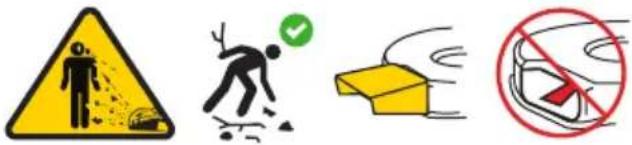 | WARNING - AVOID THROWN OBJECTS INJURY - Keep helpers at least 75 feet (23 meters) from machine during operation. Remove all stones, sticks, wire, bones, toys, and other foreign objects which could be picked up and thrown by the blade(s). Do not operate the riding mower without the discharge cover or entire grass catcher in its proper place. |
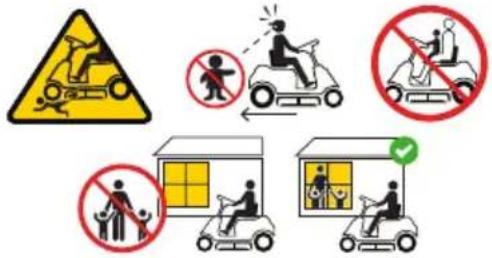 | WARNING - AVOID CHILD BACKOVER/RUNOVER/ BLADE INJURY - To avoid back-over accidents, always look behind and down for small children. Never carry children, even with the blade(s) shut off. Keep bystanders, children, and pets inside during operation under the watchful care of a responsible adult other than the operator. Stop riding mower if anyone enters the area. |
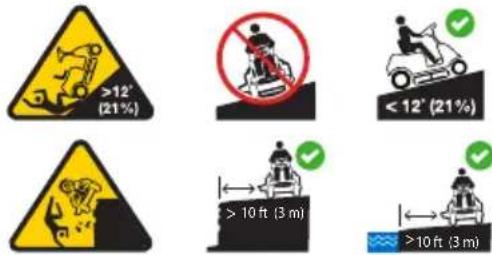 | WARNING - AVOID TIP-OVER/ROLL-OVER INJURY - Do not operate machine on a slope greater than 12° (21%). Do not mow across slopes, only mow up and down slopes that are less than 12° (21%). Use low speeds and avoid sudden turns on slopes. Stay at least 10 feet (3 meters) from drop-offs, ditches, embankments, or the edge of water. |
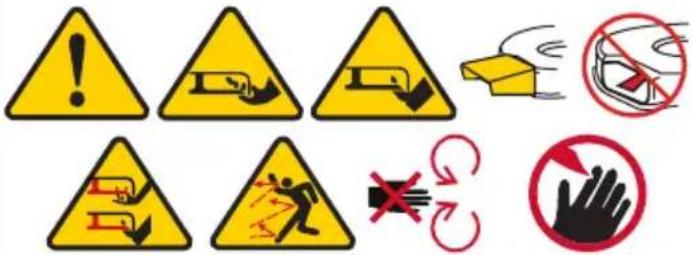 | WARNING - AVOID AMPUTATION INJURY - Do not put hands or feet near rotating parts or under the cutting deck. Contact with the blade(s) can amputate hands and feet. Ensure that all safety devices (guards, shields, switches, etc.) are in place and working. |
SAFE OPERATION PRACTICES
| Symbol Description | ||
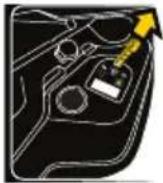 | 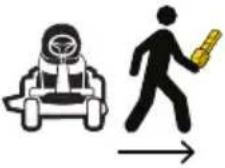 | WARNING - REMOVE KEY - Before beginning any work on this machine, remove the key and observe all information contained in these instructions. If you are leaving the riding mower unattended, always remove the key to prevent unauthorized use by children or others. |
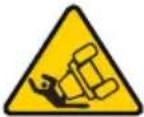 |  | DANGER - SLOPE OPERATION - Do not operate this riding mower where it could tip or slip. Avoid sudden turns. Use low speed. |
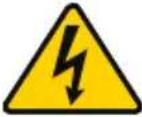  |   | WARNING - ELECTRIC SHOCK - Do not charge riding mower in rain or wet locations. Do not operate riding mower in rain. |
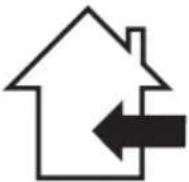 | 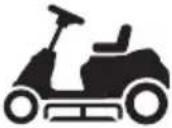 | WARNING - STORE RIDING MOWER INDOORS - Store riding mower indoors at all times when not in use. |
WARNING
Your Responsibility—Restrict the use of this power machine to persons who read, understand, and follow the warnings and instructions in this manual and on the machine - SAVE THESE INSTRUCTIONS!
NOTE: All references in this manual to the left or right side and front or back of the riding mower are from the operating position only. Exceptions, if any, will be specified.
NOTE: Some components may come already assembled. If they are already assembled, skip ahead to the next step.
PREPARATION
Before beginning installation, remove all the contents from the crate and all the hardware from the pack to make sure everything is present. Hardware is listed below.
Contents of Crate
- Riding Mower
• Steering Pedestal Cap - Discharge Chute Assembly
- Hardware Bag
• Product Registration Card - Operator's Manual
- Mulch Plug
- Battery Charger
• Steering Wheel/ Shaft Assembly
- Seat Assembly
- Front Bumper
- Battery Charger Manual
- Hardware Pack: Seat Mounting Bracket (with two shoulder bolts and lock nuts installed)
Recommended Tools for Assembly
• 1/4 inch or 3/8 inch drive ratchet
• 3/8 inch wrench and/or socket
• 7/16 inch wrench and/or socket
• 1/2 inch wrench and/or socket
• 9/16 inch wrench and/or socket
• Phillips screw driver
Manually Moving the Riding Mower

CAUTION
Never tow your riding mower. Towing the riding mower with the rear wheels on the ground may cause severe damage to the drive motors.
The riding mower can be moved as long as the parking brake is not set. The riding mower can be pushed slowly.
Installing the Steering Wheel Assembly
- Slide the pedestal cap (a) onto the steering shaft (b) so that when the steering shaft (b) is installed on the riding mower, the pedestal cap (a) will be upright (Figure 1).
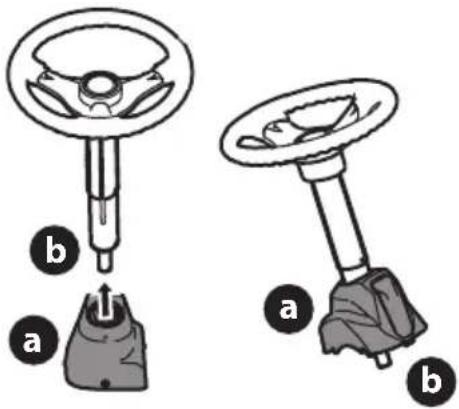
Figure 1
- Remove the shoulder bolt (c) and lock nut (d) from the steering shaft and retain for later steps (Figure 2).
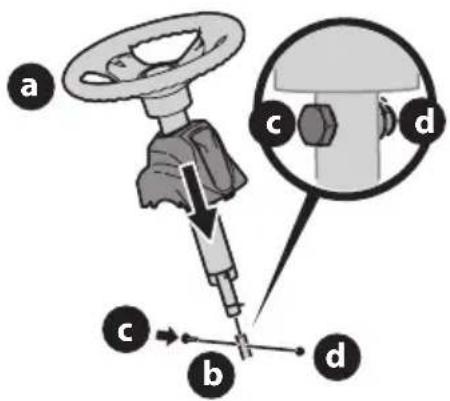
Figure 2
- Position the steering wheel assembly over the lower steering shaft on the riding mower. Align the steering wheel so that its largest opening faces forward when the riding mower wheels are straight.
- Lower the steering wheel assembly (a) onto the lower steering shaft (b) and secure with the shoulder bolt (c) and lock nut (d) previously removed (Figure 2).
- Tighten the shoulder bolt and lock nut using a 9/16 inch wrench or socket and 7/16 inch wrench or socket.
- Remove the pedestal cap mount screw (factory installed) (c) located on the riding mower's steering console. Retain the screw for later instructions (Figure 3).
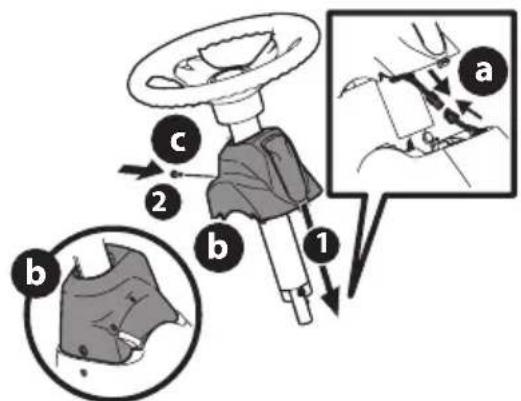
Figure 3
SET-UP
- Connect the headlight wire terminals (a) (if present). Slide the pedestal cap (b) down onto the riding mower and slightly rotate to the right to clip into place. Secure the pedestal cap (b) with the screw (c) previously removed (Figure 3 on page 9).
Installing Operator's Seat
- Remove the shoulder bolts (a) and lock nuts (b) from the seat mounting bracket (c) included in your hardware pack (Figure 4).
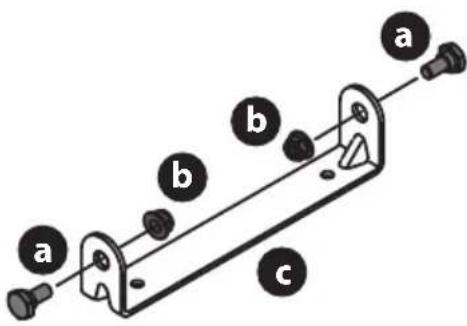
Figure 4
- Remove the two self-tapping bolts (a) factory installed on the riding mower (Figure 5).
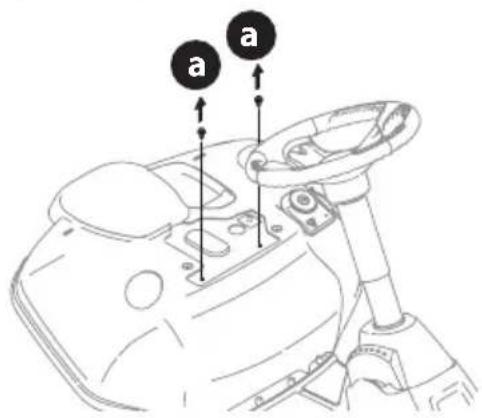
Figure 5
- Align the seat bracket (a) in place over the holes from where the self-tapping bolts (b) were removed (Figure 6).
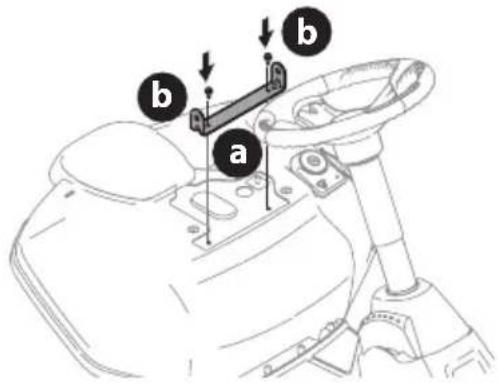
Figure 6
- Using a 1/4 inch drive ratchet with a 3/8 inch socket, secure the seat bracket (a) with the self-tapping bolts (b) removed in Step 2 (Figure 6).
CAUTION
Do not use any type of power tool (e.g. impact gun or electric drill with nut driver attached) when tightening the self-tapping bolts to attach the seat bracket.
- Position the seat assembly over the seat mounting bracket, aligning the holes provided (Figure 7).
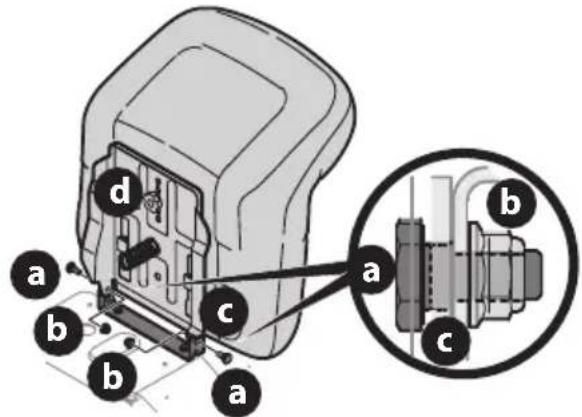
Figure 7
- Install the two shoulder bolts (a) and lock nuts (b) removed from the seat mounting bracket (c) in Step 1 (Figure 7).
NOTE: Make sure the bolt's shoulder is completely recessed into the seat bracket when securing the lock nut.
- To adjust the position of the seat, loosen the adjustment knob (d) on the bottom of the seat. Slide the seat forward or backward as desired. Securely re-tighten the adjustment knob (Figure 7).
WARNING
Never operate this riding mower without either the mulch plug or deck chute installed.
Installing the Deck Chute
- Remove the wing knobs (a) installed on the mowing deck and retain for later installation (Figure 8).
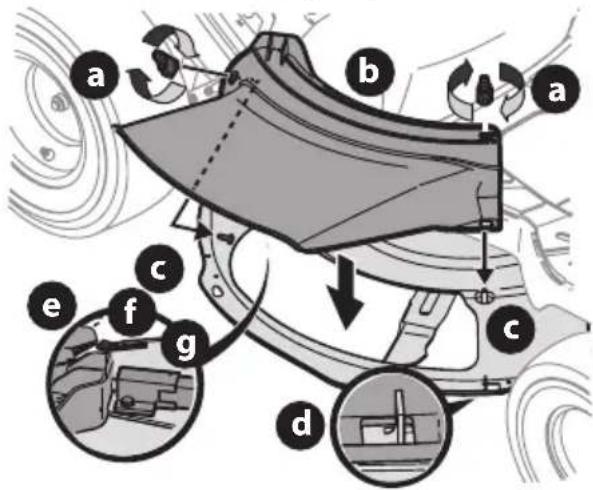
Figure 8
- Install the deck chute (b) into the discharge opening on the deck. The rear of the chute should be under the tab (f) on the rear deck bracket (g). The studs (c) on the deck surface will fit through the holes on the upper portion of the deck chute. The small tab (d) on the deck lip area will fit through the square cutout on the lower portion of the deck chute (Figure 8 on page 10).
IMPORTANT! Make certain the upper-rear portion of deck chute (b) is depressing the safety switch (e) located on the deck surface and under the tab (f) on the rear deck bracket (g). The blade(s) will not start without the deck chute (b) properly in place (Figure 8 on page 10).
- Secure the deck chute (b) by tightening the wing knobs (a) removed in Step 1 (Figure 8 on page 10).
Installing the Mulch Plug (if equipped)
- Remove the wing knobs (a) installed on the mowing deck and retain for later installation (Figure 9).
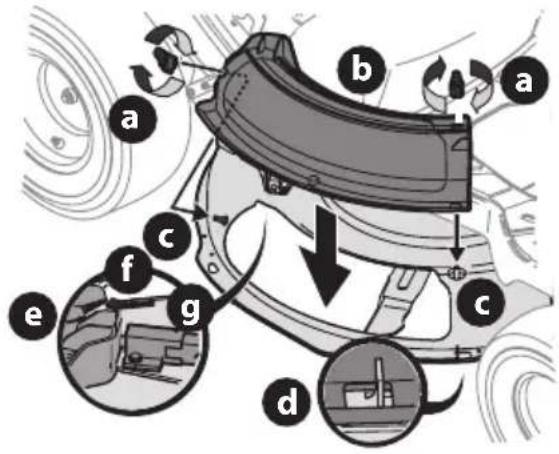
Figure 9
- Install the mulch plug (b) into the discharge opening on the deck. The rear of the mulch plug (b) should be under the tab (f) on the rear deck bracket (g). The studs (c) on the deck surface will fit through the holes on the upper portion of the mulch plug (b). The small tab (d) on the deck lip area will fit through the square cutout on the lower portion of the mulch plug (b) (Figure 9).
IMPORTANT! Make certain that the upper-rear portion of the mulch plug (b) is depressing the safety switch (e) located on the deck surface and under the tab (f) on the rear deck bracket (g). The blade(s) will not start without the mulch plug (b) properly in place (Figure 9).
- Secure the mulch plug (b) by tightening the wing knobs (a) removed in Step 1 (Figure 9).
Installing the Bumper (if equipped)
- Remove the two screws (a) from the front and center of the front axle (Figure 10).
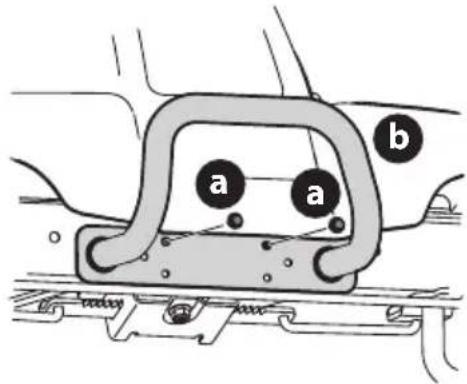
Figure 10
- Position the bumper (b) over the mounting holes and secure using the screws (a) removed in Step 1 (Figure 10).
Checking Tire Pressure
See the tire sidewall for the proper inflation pressure. Proper inflation pressure should be maintained at all times.
NOTE: The tires on your riding mower may be over-inflated for shipping purposes. If necessary, reduce the tire pressure before operating the riding mower.
Charging the Battery
WARNING
- California Proposition 65: Cancer and reproductive harm – www.P65Warnings.ca.gov.
- The battery contains corrosive fluid and toxic material — HANDLE WITH CARE. Keep away from children. Do not puncture, disassemble, mutilate, or incinerate. Explosive gases could be vented during charging or discharging. Charge in a well ventilated area, away from sources of ignition.
- Recharge only with the charger provided with this riding mower. A charger that is not suitable for this machine may damage the batteries or create the risk of fire.
- Do not charge or operate the riding mower in the rain or in wet conditions.
Refer to the manual packed with your battery charger for further information and instructions on charging the battery. The charging port is located on the rear body panel of the riding mower.
To charge the battery:
- Lift the charge port cover (a) (Figure 11).(T56XXX Series Chargers).
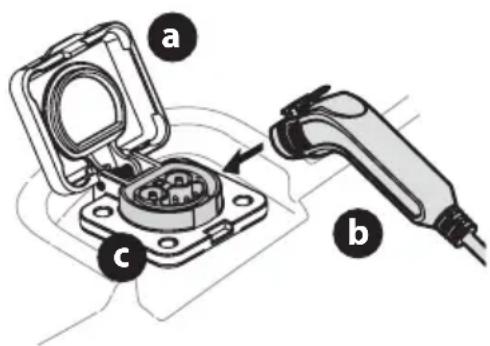
Figure 11
- Insert the charging cord (b) into the charging port (c) (Figure 11).
- Plug charger power cord into wall receptacle (outlet).
NOTE: It will take approximately 4 hours to fully charge the battery.
NOTE: The battery icon on the Vehicle Control Module (VCM) will blink continuously when charging and the LCD display will display percentage of charge. The battery is completely charged when the battery icon is solid and the LCD displays 100%.
NOTE: When the charging cord is plugged into the riding mower and not yet plugged into the wall, the battery icon will illuminate continuously until the cord is plugged into the wall.
If at any time your charger displays a fault while charging your battery, follow these procedures:
- Power off the riding mower.
- Unplug the charging cord from the riding mower.
-
Unplug the charger power cord from the power source.
-
Plug the charger power cord back into the power source.
- Plug the charging cord back into the riding mower.
- If the fault persists contact qualified service personnel.
NOTE: Rechargeable batteries degrade with time and use. The battery may eventually need to be replaced. To have the battery replaced, contact your authorized service dealer.
NOTE: Using an old or faulty battery could cause a system fault that results in loss of power.
Battery Charging Tips
- The battery should be fully charged before the initial use.
- The battery should be fully charged after each use. Storing the battery in a discharged state could reduce performance.
- The battery will turn off automatically after a complete charge.
- It will take approximately 4 hours to fully charge the battery. Leaving the battery connected to the charger for more than 4 hours will not damage the battery.
- The battery does not develop a memory and does not need to be fully discharged before recharging.
- Always disconnect battery charger (or extension cord, if used) from the electrical receptacle (outlet) first, then disconnect the charging cord from the charging port.
- Never charge a frozen battery.
- It is recommended that the riding mower be charged once every month during off-season storage.
OPERATION
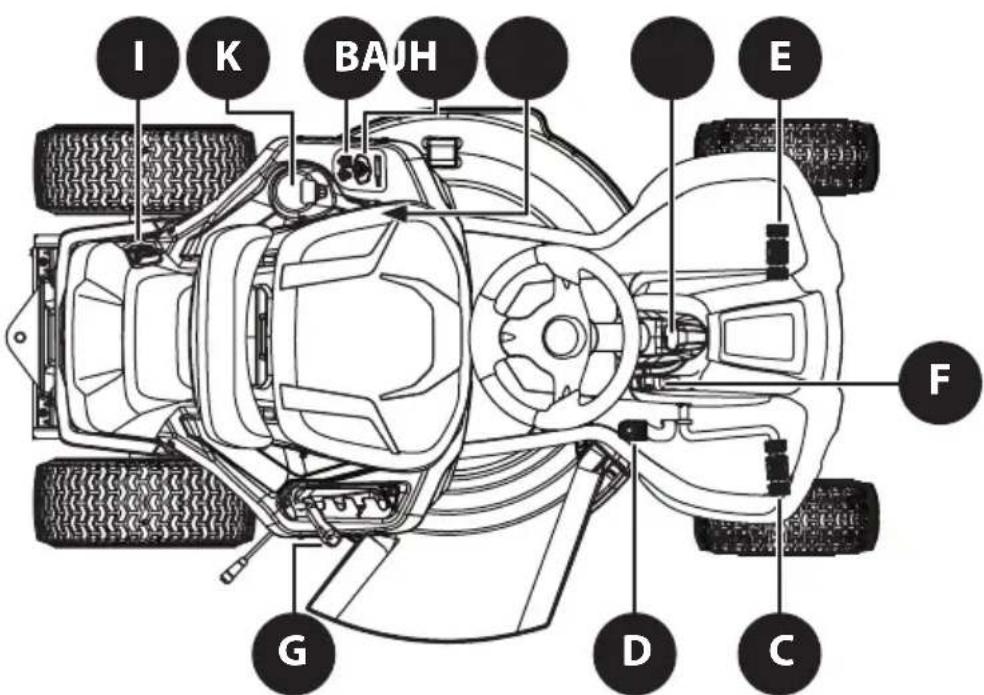
Figure 12
NOTE: All references in this manual to the left or right side and front or back of the riding mower are from the operating position only. Exceptions, if any, will be specified.
A. VEHICLE CONTROL MODULE (VCM)

WARNING
Never leave a running machine unattended. Always disengage PTO, set parking brake, stop riding mower, and remove the key to prevent unintended starting.
The vehicle control module (VCM) is located on the left fender of the riding mower.
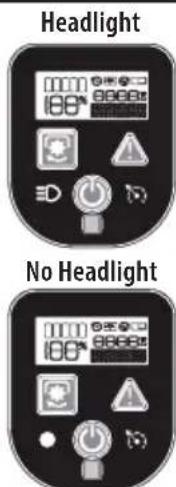
The VCM is the location of several control buttons for your riding mower. The VCM includes the START/STOP button, PTO (blades ON/OFF) button, Reverse Caution Mode (RCM) button, Headlight button (if equipped), Cruise Control button, LCD Screen and the Battery Level Indicator.

CAUTION
Prior to operating the riding mower, refer to both Safety Interlock System and Starting the Riding Mower in the Operation section of this manual for detailed instructions regarding the VCM and operating the riding mower in REVERSE CAUTION MODE.
Start/Stop Button
Located on the VCM, the START/STOP button is used to start and stop the riding mower. While active, the START/STOP button indicator ring is illuminated blue.
PTO (Blades ON/OFF) Button

Located on the VCM, the PTO button is used to operate the blades. To engage the cutting deck (blades ON), press and hold the PTO button for one second. The
yellow indicator light around the PTO button is ON. Pressing the PTO button again will disengage the cutting deck (blades OFF). The yellow indicator light around the PTO button is OFF.
Reverse Caution Mode (RCM) Button
Located on the VCM, the RCM button allows the riding mower to be operated in reverse with the blade(s) engaged (ON). To activate the RCM, press
and hold the RCM button down for three seconds. When activated, the red indicator ring around the button will be illuminated. To de-activate the RCM, press the RCM button again. When the RCM is not activated, the red indicator ring will not be illuminated. Refer to the Reverse Caution Mode (RCM) section of this manual for more information on operating the riding mower in the REVERSE CAUTION MODE.
NOTE: Mowing in reverse is not recommended.

WARNING
Use extreme caution while operating the riding mower in the REVERSE CAUTION MODE. Always look down and behind before and while backing. Do not operate the riding mower when children or others are around. Stop the riding mower immediately if someone enters the area.
Headlight Button (if equipped)

Located on the VCM, the headlight button is used to turn the headlights on or off.
Cruise Control Button

Located on the VCM, pressing the cruise control button while the riding mower is in motion allows the riding mower to remain at a constant ground speed without applying pressure to the forward drive pedal. The LCD Screen displays "CRUISE ON" when the cruise control is activated. The cruise control can be disengaged by pressing either the cruise control button, the brake pedal or the forward drive pedal.
NOTE: Cruise control will not engage at the riding mower's fastest ground speed. If the operator should attempt to do so, the riding mower will automatically decelerate to the fastest optimal mowing ground speed.
NOTE: Cruise control will not engage in reverse.
LCD Screen and Battery Level Indicator
Located on the VCM, the LCD screen and battery level indicator are used to provide instructions, warnings and information about your riding mower systems and the battery level of your riding mower.
B. KEY SWITCH
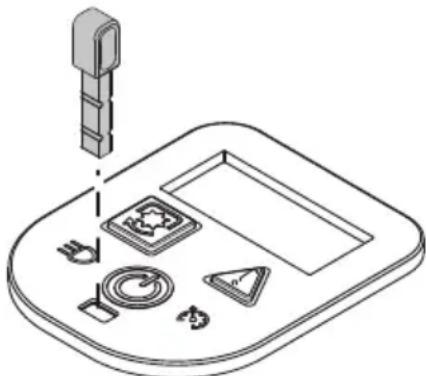
The key switch is located at the bottom of the VCM and powers the VCM when the key is fully inserted. The riding mower cannot be started unless the key is fully inserted and the START/STOP button is depressed. Removing the key turns the riding mower off (Figure 13).
natural_image
Isometric diagram of a device with labeled components (no text or symbols)Figure 13
C. FORWARD DRIVE PEDAL
The forward drive pedal is located on the right side of the steering column, along the running board. Press the forward drive pedal forward to allow the riding mower to travel forward. Ground speed is also controlled with the forward drive pedal. The further forward the pedal is depressed, the faster the riding mower will travel. The pedal will return to its original/neutral position when it is not pressed.
D. REVERSE DRIVE PEDAL
The reverse drive pedal is located on the right side of the riding mower along the running board. Ground speed is also controlled with the reverse drive pedal. The further rearward the pedal is pressed, the faster the riding mower will travel. The pedal will return to its original/neutral position when it is released.
E. BRAKE PEDAL
The brake pedal is located on the left side of the riding mower, along the running board. The brake pedal can be used for stopping the riding mower or setting the parking brake.
NOTE: The brake pedal must be fully depressed to start the riding mower. Refer to Safety Interlock System for more information.
F. PARK BRAKE LEVER
The Park Brake Lever is located on the right side of the steering column and is used to engage the parking brake. Refer to Engaging the Parking Brake section of this manual for detailed instructions regarding setting the parking brake. Refer to Releasing the Parking Brake section of this manual for instructions regarding releasing the parking brake.
G. DECK LIFT LEVER
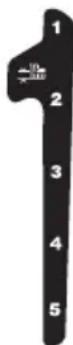
Located on your riding mower's right fender, the deck lift lever is used to change the height of the cutting deck (5 positions). To use the deck lift lever, move the lever to the left, then place in the notch best suited for your application. The lowest position is "1" and the highest position is "5".
Position "1" is approximately a 1 inch cutting height, Position "5" is approximately a 4 inch cutting height and the change in height is approximately 3/4 inch between each position.
H. HEADLIGHT (IF EQUIPPED)
The headlights will turn ON whenever the key is ON and the headlight button is pressed. To turn the headlights OFF, press the headlight button again.
I. CHARGING PORT
The charging port is located on the rear of the riding mower. To access the charging port, lift up on the charging port cover.
J. USB CHARGING PORTS (IF EQUIPPED)

If equipped, a pair of USB power sources are located on the left console. The two USB ports are both rated 2.1 A. The ports can be used to charge your phone or power up other USB devices.

WARNING
Do not have any devices plugged into your USB charging ports when starting the riding mower. Doing so may cause damage to your device.
K. CUP HOLDER
The cup holder is located to the left of the operator's seat.
OPERATION
Safety Interlock System

WARNING
Do not operate the riding mower if the safety interlock system is malfunctioning. This system was designed for your safety and protection.
This riding mower is equipped with a safety interlock system for the protection of the operator. If the interlock system should ever malfunction, do not operate the riding mower. Contact an authorized service dealer.
- The safety interlock system prevents the operator from turning the riding mower ON unless the operator is in the seat with the parking brake engaged or brake pedal fully depressed and the drive pedal in the NEUTRAL position.
- The riding mower will not operate with the charger cord plugged into the charging port and/or the charging port cover open or removed.
- The riding mower will automatically shut off the blade(s) and drive motors if the operator leaves the seat.
NOTE: To restart the riding mower, follow the proper starting procedures as instructed in the Starting the Riding Mower section.
Engaging the Parking Brake
- Fully depress the brake pedal and hold it down with your foot.
- Move the park brake lever back into the parking brake position.
- Release the brake pedal to allow the parking brake to engage.
Releasing the Parking Brake
- Depress the brake pedal.
- Move the park brake lever forward out of the parking brake position.
- Release the brake pedal.
Setting the Cutting Height
Select the height position of the cutting deck by placing the deck lift lever in any of the five different cutting height notches on the right side of the fender.

WARNING
Keep hands and feet away from the discharge opening of the cutting deck.
Refer to the Product Care section of this manual for more detailed instructions regarding deck adjustment.
Starting the Riding Mower
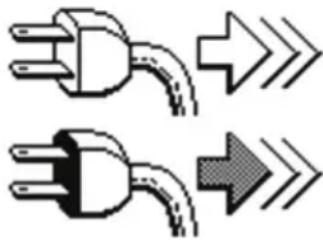
- Unplug the charging cord (if necessary). If the cord is still plugged in, a reminder will display on the VCM when the
natural_image
Two electrical plug icons with arrow symbols indicating direction (no text or labels)key switch is fully inserted.
- Sit in the operator's seat. Fully insert the key into the key switch.
- Fully depress the brake pedal or set the parking brake.
- Press the START/STOP button down until you hear two beeps.
NOTE: The VCM and drive motors are now activated and the riding mower is ready to be operated.
Stopping the Riding Mower

WARNING
If you strike a foreign object, stop the riding mower and remove the key. Thoroughly inspect the machine for any damage. Repair the damage before restarting and operating.
- If the blade is engaged (blades ON), press the PTO button to disengage the blades (blades OFF) and engage the parking brake.
- Press the START/STOP button (you will hear one beep).
- Remove the key to prevent unauthorized use by children or others.
Driving the Riding Mower

WARNING
- Avoid sudden starts, excessive speed, and sudden stops.
- Do not leave the seat of the riding mower without first pressing the PTO button to turn off the blade(s), and engaging the parking brake. If leaving the riding mower unattended, remove the key.
-
Always look down and behind before and while backing up to avoid a back-over accident.
-
Disengage the parking brake.
- To travel FORWARD, slowly depress the forward drive pedal until the desired speed is reached.
- To travel in REVERSE, slowly depress the reverse drive pedal until the desired speed is reached.
OPERATION
- The riding mower is brought to a stop by releasing the forward or reverse drive pedal and depressing the brake pedal.

WARNING
Before leaving the operator's position for any reason, disengage the blade(s), engage the parking brake, and remove the key.
Reverse Caution Mode (RCM)
The REVERSE CAUTION MODE button allows the riding mower to be operated in reverse with the blade(s) (PTO) engaged.
NOTE: Mowing in reverse is not recommended.

WARNING
Use extreme caution while operating the riding mower in the REVERSE CAUTION MODE. Always look down and behind before and while backing. Do not operate the riding mower when children or others are around. Stop the riding mower immediately if someone enters the area.
To use the REVERSE CAUTION MODE:
NOTE: The operator MUST be seated in the seat.
- Start the riding mower as previously instructed.
- Press and hold the RCM button down for three seconds until the red indicator ring illuminates. The red indicator will remain on as long as the REVERSE CAUTION MODE is on.
- Once activated (indicator light ON), the riding mower can be driven in reverse with the cutting blade(s) (PTO) engaged.
- Always look down and behind before and while backing to make sure no children or others are around. After resuming forward motion, press the RCM button to return to normal mowing operation.
The REVERSE CAUTION MODE will remain activated until:
a. The RCM button is pressed again to turn off the mode (red indicator light turns off);
b. The operator leaves the seat; or
c. The START/STOP button is pressed.
Operating the PTO
To operate the PTO (blades ON/OFF) proceed as follows:
Press the PTO button for one second. When activated the yellow indicator light around the PTO button is ON (blades ON). Press the PTO button again for one second, yellow indicator light is OFF (blades OFF).
Mulching (if equipped)
Mulching is a process of recirculating grass clippings repeatedly beneath the cutting deck. The ultra-fine clippings are then forced back into the lawn where they act as a natural fertilizer. Refer to the Set-up section of this manual for instructions on how to install the mulch kit (if equipped).
Mowing

WARNING
- To help avoid blade contact or a thrown object injury, keep bystanders, helpers, children, and pets at least 75 feet (23 meters) from the machine while it is in operation. Stop machine if anyone enters the area.
- Plan your mowing pattern to avoid discharge of materials toward roads, sidewalks, bystanders, and the like. Also, avoid discharging material against a wall or obstruction which may cause discharged material to ricochet back toward the operator.
The following information will be helpful when using the cutting deck with your riding mower:
- Do not mow or drive at high ground speed, especially if a mulch kit or grass collector is installed.
- For best results it is recommended that the first two laps be cut clockwise with the discharge facing towards the center of your lawn. After the first two laps, reverse the direction to discharge to the outside for the balance of cutting. This will give a better appearance to the lawn.
- Do not cut the grass too short. Short grass invites weed growth and yellows quickly in dry weather.
- Under heavier conditions it may be necessary to go back over the cut area a second time to get a clean cut.
- Do not attempt to mow heavy brush and weeds and grass taller than 10 inches (25.4 cm). Your riding mower is designed to mow lawns, not clear brush.
PRODUCT CARE
MAINTENANCE SCHEDULE

WARNING
Before inspecting, cleaning, or servicing the riding mower, power off the riding mower and remove the key.
Follow the maintenance schedule given below. This chart describes service guidelines only. Contact an authorized service dealer to schedule a service.
| Prior to Use | After First 5 Hours (S01) | Every 5 Hours (S02) | Every 10 Hours (S03) | Every 25 Hours (S04) | Every 50 Hours (S05) | Every 100 Hours (S06) | Prior to Storing | |
| Clean Top and Underside of Deck | √ | √ | ||||||
| Check/Clean Around Fuses, Wiring and Wiring Harnesses | √ | √ | ||||||
| Check/Clean Around Transmission and Axle | √ | √ | ||||||
| Clean Riding Mower | √ | |||||||
| Lube Front Axles and Rims | √ | √ | ||||||
| Lube Pedal Pivot Points, Parking Brake and Lift Linkage | √ | √ | ||||||
| Check Tire Pressure/Inflate to Sidewall Specification | √ | √ | ||||||
| Check Deck Level/Pitch/Adjust as Needed | √ | √ | ||||||
| Check Blade(s)/Sharpen or Replace as Needed | √ | √ | √ | |||||
| Charge Battery | √ | √ | ||||||
| Check Safety Interlock System | √ | |||||||
| Check Mower Blade Stop Time | √ | |||||||
| Check Blade Mount Bolt Torque (Tighten to 450-600 in-lbs (51.9-67.8 N-m) | √ | √ | √ | |||||
| Sharpen Blades | √ | |||||||
| Check That All Hardware is in Place and Secure | √ | √ |
PRODUCT CARE
IMPORTANT! Bring the battery charger when arriving at your authorized service dealer for any scheduled service.
! DANGER
- The electrical components on this riding mower are not serviceable. Please contact an authorized service dealer for any service needs.
- Have your riding mower serviced by qualified service personnel using only identical replacement parts. This will ensure that the safety of the riding mower is maintained.
NOTE: At relevant time intervals on start-up, service minders will be

S02
displayed on the VCM. To clear service minders press the cruise control button. (S02) shown for example.
After each operation of the riding mower, the following procedures should be implemented to extend the life of your riding mower and ensure safe operating conditions.
DANGER
Failure to follow these recommendations may result in serious injury to yourself or others and may cause damage to the riding mower.
Cleaning the Underside of the Deck
WARNING
To prevent serious injury, do not use water to clean the riding mower, battery, or battery charger. Do not use strong detergents. Household cleaners that contain aromatic oils such as pine and lemon, and solvents such as kerosene, can damage plastic.
The underside of the riding mower deck should be cleaned after each use as grass clippings, leaves, dirt and other debris will accumulate. This accumulation of grass clippings, etc., is undesirable as it will promote rust and corrosion.
- Remove any buildup of grass and leaves on or around the deck motor and underside of the riding mower (DO NOT USE WATER). Wipe the riding mower clean with a dry cloth.
IMPORTANT! Do not use a pressure washer or garden hose to clean your riding mower. These may cause damage to electric components or the electric motor. The use of water will result in shortened life and reduce serviceability.
Cleaning the Riding Mower
WARNING
If the riding mower has been recently run, metal surfaces will be hot and can cause burns to the skin. Let the riding mower cool for at least five minutes. Exercise caution to avoid burns.
Your riding mower should be cleaned after each use and under certain conditions, i.e. dry conditions and/or mulching situations, additional cleaning may be necessary.
One of the best ways to keep your riding mower running efficiently and to reduce fire risk is to regularly remove debris buildup from the riding mower. Follow the recommendations below and contact your authorized dealer with any questions.
- Allow the riding mower to cool in an open area before cleaning.
- Do not use water on any part of the riding mower. Doing so can cause damage to the riding mower's electrical components and motor. The use of compressed air and/or leaf blower or a brush, damp sponge or rag will help keep the riding mower clean.
- Clean around fuses and wiring harnesses.
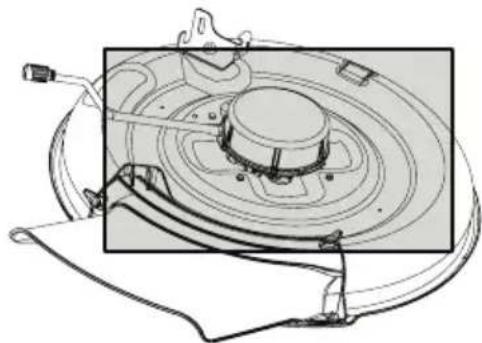
- Clean the top of the riding mower deck (Figure 14).
natural_image
Technical line drawing of a mechanical component with no visible text or symbolsFigure 14
- Clean around and near the transmission and axle (Figure 15).
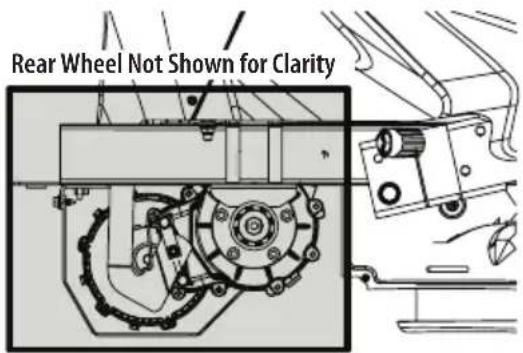
Figure 15
- Debris can accumulate anywhere on the riding mower, especially on horizontal surfaces. Additional cleaning may be necessary when mowing in dry conditions or when mulching.
PRODUCT CARE
- Excess lubrication can become collection sites for debris. Immediate repair and cleaning up excess lubrication can help reduce fire hazards.
- In addition to cleaning the riding mower before operating and storing, do not attempt to mow unusually tall grass (10 inches or higher), dry grass (e.g., pasture) or piles of dry leaves. Dry grass or leaves may build up on the riding mower deck presenting a potential fire hazard.
Lubrication
DANGER
Bearing failures and overheating can result in fire. Always follow the instructions in this manual regarding lubrication locations and intervals. Contact your authorized dealer with any questions about the lubrication locations and intervals or any unusual noises coming from any areas a bearing may be located.
WARNING
Before inspecting, cleaning, or servicing the riding mower, power off the riding mower and remove the key.
FRONT AXLES:
Each end of the riding mower's front pivot bar may be equipped with a grease fitting. Lubricate with a grease gun after every 25 hours of operation.
REAR WHEELS:
The rear wheels should be removed from the axles once a season. Lubricate the axles and the rims well with an all-purpose grease before re-installing them.
PIVOT POINTS & LINKAGE:
Lubricate all the pivot points on the drive system, parking brake and lift linkage at least once a season with light oil.
NOTE: It is not necessary to grease the steering pinion/sector gear interface. Doing so will allow dirt to accumulate and can affect steering performance.
ADJUSTMENTS
WARNING
Before making adjustments, power off the riding mower, and remove the key. Protect your hands by using heavy gloves when handling the blades.
NOTE: Check the riding mower's tire pressure before performing any deck leveling adjustments. Refer to Checking Tire Pressure in the Set-up section for information regarding tire pressure.
Adjusting the Deck
LEVELING THE DECK (FRONT-TO-REAR)
It is possible to adjust the pitch of the cutting deck. The front of the deck should be between 0 inches (level) and 1/4 inch (6.4 mm) lower than the rear of the deck. Adjust if necessary as follows:
- With the riding mower parked on a firm, level surface, place the deck lift lever in the middle position and rotate the blade so that it is aligned with the front and rear of the riding mower.
-
Measure the distance from the front of the blade tip to the ground and the rear of the blade tip to the ground. The end of the blade facing the front of the deck should be between 0 inches (level) and 1/4 inch (6.4 mm) less than the end of the blade facing the back of the deck. Determine the approximate distance necessary for proper adjustment and proceed, if necessary, to the next step.
-
Locate the flange lock nut (a) on the front end of the PTO lift rod (b) (Figure 16).
a. Tighten the flange lock nut (a) to raise the front of the deck.
b. Loosen the flange lock nut (a) to lower the front of the deck.
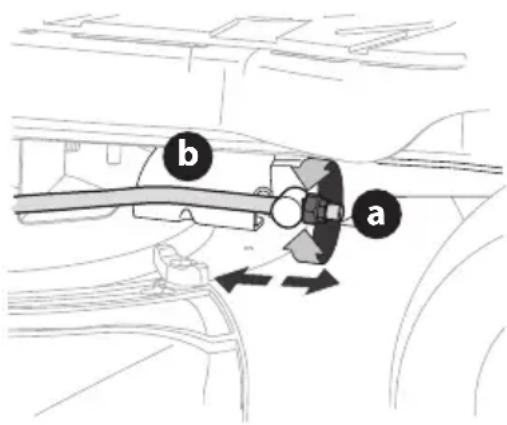
Figure 16
Parking Brake Adjustment
If the riding mower does not come to a complete stop when the brake pedal is completely depressed, or if the riding mower's rear wheels can roll with the parking brake applied, the brake is in need of adjustment. See your authorized service dealer to have the brake adjusted.
Neutral Adjustment
If the riding mower creeps forward or rearward when neither the forward nor reverse pedal is depressed, contact your local authorized dealer to have the neutral setting properly adjusted.
Seat Adjustment
Refer to the Set-up section of this manual for seat adjustment instructions.
PRODUCT CARE
SERVICE
Deck Removal
To remove the cutting deck, proceed as follows:
- Power off the riding mower, remove the key from the key switch, and engage the parking brake.
- Lower the deck by moving the deck lift lever into the lowest (#1) position on the right fender.
- Remove the bow-tie cotter pin (a) and flat washer (b) from the deck lift assembly and retain for reinstallation later (Figure 17).
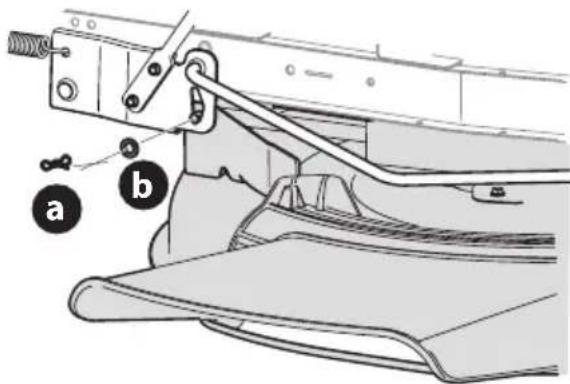
Figure 17
- Disconnect the deck motor(s) from the adapters on the underside of the riding mower. Rotate the collar on the larger connector (a) counter-clockwise and carefully pull apart. Repeat the procedure with the smaller connector (b) (Figure 18).
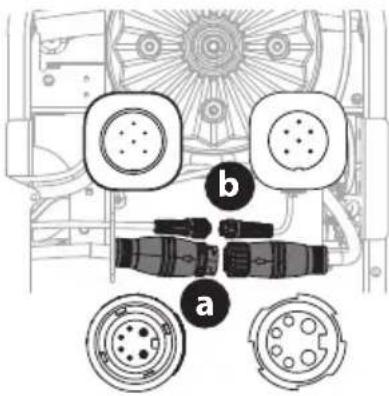
Figure 18
NOTE: Always disconnect the larger connector first.
- Remove the remaining bow-tie cotter pins (a) securing the deck to the riding mower (Figure 19).
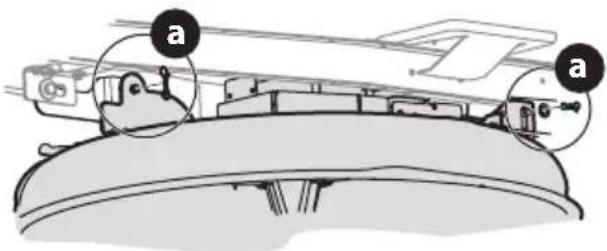
Figure 19
- Unplug the wire connector (a) from the safety switch (b) at the rear of the chute opening (Figure 20).
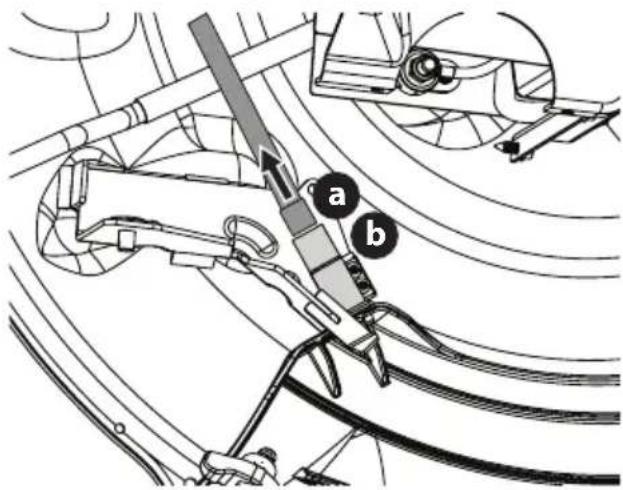
Figure 20
- Move the deck lift lever into the highest (#5) position on the right fender to raise the deck lift arms up and out of the way.
- Gently slide the cutting deck (from the left side) out from underneath the riding mower.
Cutting Deck Installation
- Raise the deck lift lever into the highest (#5) position on the right fender to move the deck lift arms out of the way.
- Gently slide the cutting deck (from the left side) back under the riding mower.
- Plug the wire connector (a) into the safety switch (b) at the rear of the chute opening (Figure 20).
NOTE: Be sure to securely reconnect the wire connector to the safety switch (Figure 20), your riding mower will not start or operate without the safety switch properly connected.
- Lower the deck lift lever to the lowest (#1) position.
- Secure the deck to the deck lift arms using two bow-tie cotter pins (a) (Figure 19).
NOTE: The bow-tie cotter pins (a) should be installed from the top down (Figure 19).
- Reconnect the deck motors on the underside of the riding mower. Always connect the larger connector (a) first and then the smaller connector (b) (Figure 18).
NOTE: When reconnecting the deck motors, you must be sure that the connections are secure.
PRODUCT CARE
Blade
WARNING
- Power off the riding mower and remove the key before removing the cutting blade(s) for sharpening or replacement. Protect your hands by using heavy gloves when grasping the blade.
- Periodically inspect the blade and/or deck motor casting for cracks or damage, especially after striking a foreign object. Do not operate the riding mower until damaged components are replaced.
CAUTION
If the cutting edge of the blade has previously been sharpened, or if any metal separation is present, replace the blade with a new one.
Sharpening or Replacing the Blade
NOTE: It may be easier to change the blade by first removing the deck from beneath the riding mower, (refer to Deck Removal earlier in this section) then gently flip the deck over to expose its underside. It is possible to change the blade, however, with the deck still attached to the riding mower. If attempting to change the blade with the deck still installed on the riding mower, first move the deck lift lever to its highest (#5) position.
- Remove the mulch plug, deck chute or bagging chute, if equipped, exposing the deck chute opening.
- Using a block of wood or 2 x 4, insert it into the deck opening and rotate the blade around until it wedges the wood between the deck opening and the cutting blade (Figure 21).
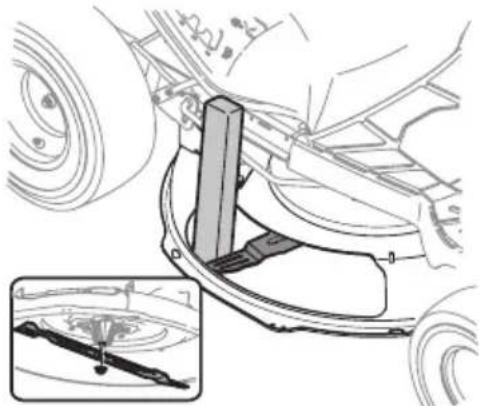
natural_image
Technical diagram of a mechanical assembly with a central lever and inset view (no text or symbols)Figure 21
- Remove the hex screw (a) and the blade bell support (b) which holds the blade (c) and the blade adapter (d) to the deck motor (Figure 22).
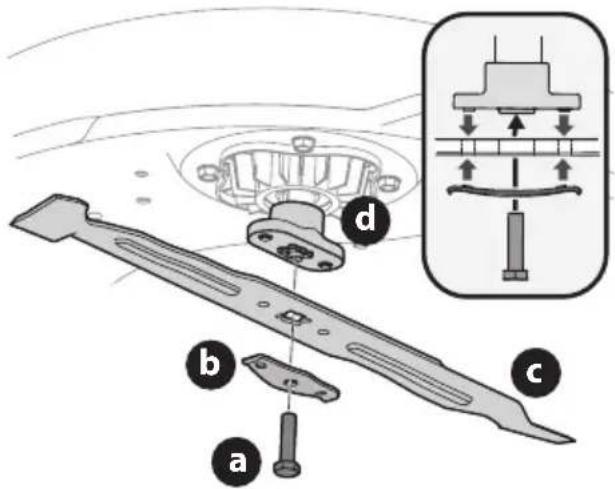
Figure 22
- Remove blade (c) and adapter (d) from the deck motor spindle (Figure 22).
- To properly sharpen the cutting blade, remove equal amounts of metal from both ends of the blade along the cutting edges, parallel to the trailing edge, at a 25^ to 30^ angle. Always grind each cutting blade edge equally to maintain proper blade balance (Figure 23).
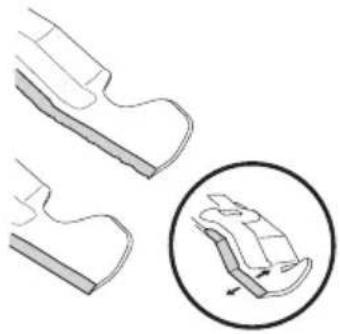
natural_image
Technical illustration of a shoe sole and its side view showing the base and foot (no text or symbols)Figure 23
- Test the blade's balance using a blade balancer. Grind metal from the heavy side until it balances evenly.
WARNING
A poorly balanced blade will cause excessive vibration, may damage the riding mower and/or result in personal injury.
NOTE: When replacing the blade, be sure to install the blade with the side of the blade marked "Grass-side" or "Bottom" (or with a part number stamped in it) facing the ground when the riding mower is in the operating position.
- Reinstall blade when properly sharpened. Torque to 450-600 in-lbs (51-68 N-m).
OFF-SEASON STORAGE
Storing the Riding Mower
- Allow the machine to cool in an open area before storing.
- Do not park the riding mower near any flammable materials (wood, cloth or chemicals) or any open flames or other potential source of ignition (furnace, water heater or any other type of heater).
- Remove all combustible materials from the riding mower before storing. Empty cargo boxes, grass catchers or containers.
Removing the Riding Mower from Storage
- Fully charge the battery and inflate the tires to the recommended pressures.
- Drive the riding mower without a load to make certain all the riding mower systems are functioning properly.
Battery Storage
- The battery should be stored with a full charge.
NOTE: It will take approximately 4 hours to fully charge the battery. Leaving the battery connected to the charger for more than 4 hours will not damage the battery.
- The best storage place is one that is cool and dry, away from direct sunlight and excess heat or cold.
- For long storage, it is recommended to store a fully charged machine in a cool dry place with the charger disconnected and the key removed for optimal results.
- Battery should not be kept in a discharged state. Permanent damage to the battery can occur.
- Fully recharge the battery before returning to service.
BATTERY SERVICING AND DISPOSAL
WARNING
- The battery may present a risk of fire or chemical burn if misused. Do not disassemble, overheat, or incinerate the battery.
- Leakage from the battery may occur under extreme usage, charging, or temperature conditions or if the battery is damaged, crushed, or punctured. This leakage indicates a failure of the battery and the battery should be properly disposed of by an authorized service dealer.
WARNING
- The following toxic and corrosive material is used in this battery: LITHIUM-ION, a toxic material.
- Do not use broken or cracked batteries, even if there is no leakage. Replace damaged or worn-out batteries with new batteries. DO NOT ATTEMPT TO REPAIR BATTERIES! Repair attempts may result in severe personal injury, due to explosion or electrical shock.
To avoid personal injury and damage to the environment:
- Contact your local authorized service dealer for proper battery servicing and recycling.
- Do not attempt to remove or destroy any of the battery components. Do not open or mutilate the battery. If a leak develops, released electrolytes are corrosive and toxic. Do not get the solution in your eyes or on your skin, and do not swallow it.
- Do not dispose of the battery in regular household trash.
- Do not dispose of the battery in a fire. The cell may explode.
- Do not dispose of the battery where it will become part of any waste landfill or municipal solid waste stream.
PRODUCT CARE
TROUBLESHOOTING
WARNING
Before inspecting, cleaning, or servicing the riding mower, power off the riding mower and remove the key.
This section addresses minor service issues. To locate the nearest authorized service center consult the separate supplement sheet for contact information.
| Problem Cause Remedy | ||
| Excessive vibration 1. Blade | loose or unbalanced. | 1. Tighten cutting blade and deck spindle. |
| 2. Cutting blade damaged, unbalanced or bent. | 2. Replace the blade. | |
| Uneven cut 1. Deck not properly leveled. | 2. Cutting blade dull or damaged. | 1. Perform front-to-rear deck adjustment. |
| 3. Uneven tire pressure. | 2. Sharpen or replace cutting blade. | |
| 3. Check and correct tire pressure in all four tires. | ||
| Riding mower will not mulch grass | 1. Wet grass. | 1. Do not mulch when grass is wet. |
| 2. Excessively high grass. | 2. Mow once at a high cutting height, then mow again at desired height or make a narrower cutting swath. | |
| 3. Dull blade. | 3. Sharpen or replace blade. | |
| Riding mower stopped or will not start | 1. Electrical system fault. | 1. Shut off and restart riding mower. If problem persists, contact an authorized service dealer. |
| Blades do not rotate/ blades stopped | 1. Overload. | 1. Allow deck motor(s) to cool/raise deck height. |
| 2. Low battery. | 2. Return home, plug into charger. | |
| Blade(s) stopped when traveling in reverse | 1. Blade(s) stopped. | 1. Restart blade(s) (PTO). Make sure REVERSE CAUTION MODE is activated. |
| Reduced speed | 1. Low battery. | 1. Charge battery as instructed in the Battery Charger Manual. |
| 2. Overload. | 2. Raise deck. | |
PRODUCT CARE
General LCD Screen Messages
| Message Description | |
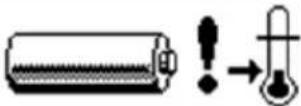 | Battery Temperature Low: Move the riding mower to a warm location and allow the battery to warm. If problem persists contact qualified service personnel. |
High Battery Temp 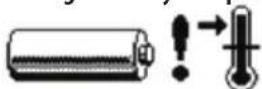 High Deck/Drive Motor Temp High Deck/Drive Motor Temp 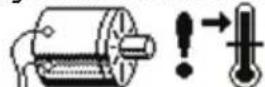 | High Temperature: Power off, let the riding mower cool and restart riding mower. If problem persists contact qualified service personnel. |
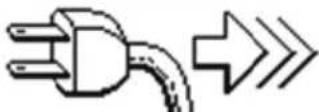 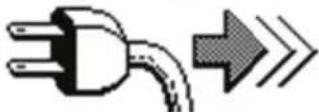 | Unplug Cord/Close Charge Port Door: Prior to powering on and operating the riding mower cord must be unplugged and charge port door closed securely. |
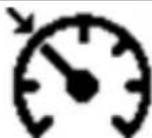 | Cruise Control ON: Cruise control is set when icon is displayed. |
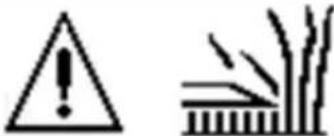 | Cut Deck Overload: The deck and drive shut off. Power off the riding mower, clean under the deck as instructed in the Post-Operation Riding Mower Care section and restart the riding mower. Raise the deck and/or cut at a slower pace. If problem persists contact qualified service personnel. |
PRODUCT CARE
Faults
Faults are displayed as four digit codes with the first number (after "E") relating to the affected subsystem. These faults may shut off the deck and drive or the entire riding mower. If these occur, power off the riding mower and allow it to cool, then restart the riding mower. If faults persist, contact qualified service personnel. A troubleshooting guide for the fault codes is available on the website.
| Code Description | |
 | All VCM related faults |
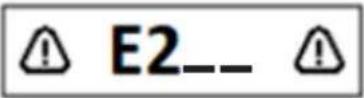 | Left Deck Motor Faults/Single Deck Motor Faults |
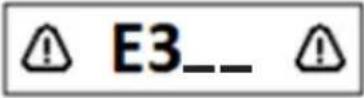 | Right Deck Motor Faults (if equipped) |
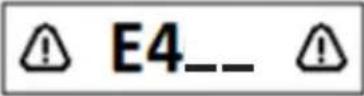 | Center Deck Motor Faults (if equipped) |
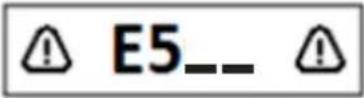 | Left Drive Motor Faults/Single Drive Motor Faults |
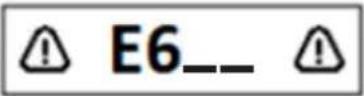 | Right Drive Motor Faults (if equipped) |
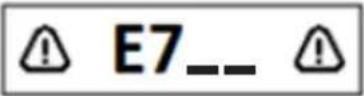 | Battery Faults |
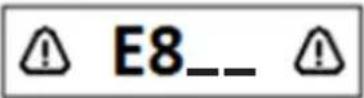 | Battery Faults |
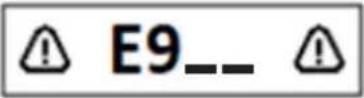 | Battery Faults |
MANUAL DEL OPERADOR
Figura 3
Figura 7
Figura 9
Figura 11
Figura 12
natural_image
Isometric line drawing of a device panel with labeled components (no text or symbols)Figura 13
C. PEDAL DE MARCHA ADELANTE
natural_image
Two electrical plug diagrams showing power connections and directional arrows (no text or symbols)natural_image
Technical line drawing of a mechanical component with no visible text or symbolsFigura 14
Figura 18
Figura 19
Figura 20
natural_image
Technical diagram of a mechanical assembly with a central lever and inset view (no text or symbols)Figura 21
Figura 22
natural_image
Technical line drawing of a shoe component with a magnified inset showing detail (no text or symbols)Figura 23
Anglais (English)......Page 1
Espagnol (Spanish) Page 26
Français Page 53
Figure 9
Figure 11
Figure 12
natural_image
Isometric diagram of a device with labeled components including a sensor, switch, and warning symbol (no text or labels)Figure 13
C. PÉDALE DE MARCHE AVANT
natural_image
Two electrical plug symbols with arrow indicators, no text or labels presentnatural_image
Technical line drawing of a mechanical component with no visible text or symbolsFigure 14
Figure 17
Figure 18
Figure 19
Figure 21
Figure 22
natural_image
Technical illustration of a shoe sole and its side view showing the boot base and foot (no text or symbols)Figure 23

- Battery-Powered Lithium-Ion Tractor
- Record Product Information
- Model Number
- Serial Number
- WARNING
- CALIFORNIA PROPOSITION 65
- ! DANGER
- Lithium-Ion Battery System
- GENERAL OPERATION
- OPERATING
- SAFE OPERATION PRACTICES
- CHILDREN
- SLOPE OPERATION
- SLOPE GAUGE (BACK COVER)
- HAULING
- TOWING
- SERVICE
- GENERAL ELECTRIC SAFETY
- BATTERY CHARGER SAFETY
- BATTERY SAFETY
- SAFETY SYMBOLS
- PREPARATION
- Contents of Crate
- Recommended Tools for Assembly
- Manually Moving the Riding Mower
- CAUTION
- Installing the Steering Wheel Assembly
- SET-UP
- Installing Operator's Seat
- Installing the Deck Chute
- Installing the Mulch Plug (if equipped)
- Installing the Bumper (if equipped)
- Checking Tire Pressure
- Charging the Battery
- To charge the battery:
- Battery Charging Tips
- OPERATION
- VEHICLE CONTROL MODULE (VCM)
- Start/Stop Button
- PTO (Blades ON/OFF) Button
- Reverse Caution Mode (RCM) Button
- Headlight Button (if equipped)
- Cruise Control Button
- LCD Screen and Battery Level Indicator
- KEY SWITCH
- FORWARD DRIVE PEDAL
- REVERSE DRIVE PEDAL
- BRAKE PEDAL
- PARK BRAKE LEVER
- DECK LIFT LEVER
- HEADLIGHT (IF EQUIPPED)
- CHARGING PORT
- USB CHARGING PORTS (IF EQUIPPED)
- CUP HOLDER
- Safety Interlock System
- Engaging the Parking Brake
- Releasing the Parking Brake
- Setting the Cutting Height
- Starting the Riding Mower
- Stopping the Riding Mower
- Driving the Riding Mower
- Reverse Caution Mode (RCM)
- Operating the PTO
- Mulching (if equipped)
- Mowing
- PRODUCT CARE
- MAINTENANCE SCHEDULE
- DANGER
- Cleaning the Underside of the Deck
- Cleaning the Riding Mower
- Lubrication
- FRONT AXLES:
- REAR WHEELS:
- PIVOT POINTS & LINKAGE:
- ADJUSTMENTS
- Adjusting the Deck
- LEVELING THE DECK (FRONT-TO-REAR)
- Parking Brake Adjustment
- Neutral Adjustment
- Seat Adjustment
- Deck Removal
- Cutting Deck Installation
- Blade
- Sharpening or Replacing the Blade
- OFF-SEASON STORAGE
- Storing the Riding Mower
- Removing the Riding Mower from Storage
- Battery Storage
- BATTERY SERVICING AND DISPOSAL
- TROUBLESHOOTING
- Faults
- MANUAL DEL OPERADOR
- PEDAL DE MARCHA ADELANTE
- PÉDALE DE MARCHE AVANT
Brand : TROY-BILT
Model : TB30E XP
Category : Tractor