MLE27N4AWWC - Tumble drier MIDEA - Free user manual and instructions
Find the device manual for free MLE27N4AWWC MIDEA in PDF.


| Product Type | Heat Pump Dryer |
| Brand | Midea |
| Model | MLE27N4AWWC |
| Capacity | 0.124594 m³ (4.4 cubic feet) |
| Power Supply | 120/240 V~, 60 Hz, 30 A |
| Dimensions (H x W) | 850 mm x 595 mm |
| Drying Cycles | Normal, Jeans, Perm Press, Quick Dry, My Cycle, Mixed Load, Heavy Duty, Bulky, Towels, Active Wear, Delicates, Sanitize, Wool, Air Fluff, Time Dry, Refresh |
| Drying Options | Wrinkle Care, Delay (≤24h), Dryness (More/Normal/Less/Damp), Damp Alert, Signal, Child Lock |
| Dryness Levels | More, Normal, Less, Damp |
| Control Panel | Power button, Start/Pause, cycle selector, function buttons, LED display |
| Drainage System | Removable water tank (empty after each cycle); continuous drain option via hose |
| Lint Filter | Main filter and base filter; clean after each cycle |
| Heat Exchanger | Clean every 2 months with brush vacuum |
| Child Lock | Yes, activate via buttons "" and "Wrinkle Care" |
| Leveling | Adjustable feet (2 at front) |
| Installation | Standalone or stacked with stacking kit (sold separately) |
| Drum Material | Stainless steel or anodized |
| Warranty | 1 year limited (parts and labor) |
| Manufacturing | China |
| Customer Service | 1-866-646-4332 (US/Canada) |
Frequently Asked Questions - MLE27N4AWWC MIDEA
User questions about MLE27N4AWWC MIDEA
0 question about this device. Answer the ones you know or ask your own.
Ask a new question about this device
Download the instructions for your Tumble drier in PDF format for free! Find your manual MLE27N4AWWC - MIDEA and take your electronic device back in hand. On this page are published all the documents necessary for the use of your device. MLE27N4AWWC by MIDEA.
USER MANUAL MLE27N4AWWC MIDEA
Before using this product, please read this manual carefully and keep it for future reference. The design and specifications are subject to change without prior notice for product improvement. Consult with your dealer or manufacturer for details.
version A - 6 - 2022
USER MANUAL & INSTALLATION INSTRUCTIONS
natural_image
Line drawing of a washing machine with circular design and control panel (no text or symbols)Free 3 months extension of the original limited warranty period!* Simply text a picture of your proof of purchase to:
1-844-224-1614
"The warranty extension is for the three months immediately following
the completion of the product's original warranty eriod. Individuals do not need to register the
product in order to get all the rights and remedies of registered owners under the original limited
warranty
MODEL NUMBER
MLE27N4AWWC
www.midea.com
Dear user
THANK YOU and CONGRATULATIONS on your purchase of this high-quality Midea product. Your Midea dryer is designed for reliable, trouble-free performance. Please take a moment to register your new dryer.
Register your new dryer at www.midea.com/ca/support/Product-registration
For future reference, record your product model and serial numbers located on the inside frame of the dryer.
Model Number
Serial Number
READ AND KEEP THESE INSTRUCTIONS FOR FUTURE REFERENCE
This manual contains important information on the installation, use, and care of your appliance. Please read this manual carefully before installation and operation of this machine to prevent injury and property damage.
Warnings and Important Safety Instructions in this manual DO NOT cover all possible conditions and situations that may occur. It is your responsibility to use common sense, caution and care when installing, maintaining and operating your appliance.
DRYER SAFETY......4
OPERATION REQUIREMENTS....7
Important to Installer....8
Location Requirements....8
Drain Requirements....11
INSTALLATION INSTRUCTIONS 12
Removing From the Package 12
Tools Required....14
Connect the Electrical Wiring....14
Level the Dryer 18
DRYER USE....19
Control Panel....19
Drying a Load of Laundry 21
Cycle definition.... 22
Filters and water tank use....24
DRYER CARE....27
Cleaning and Maintenance....27
TROUBLESHOOTING 28
Check These Solutions if Your Dryer 28
Error Codes....30
APPENDIX.... 31
A - Fabric Care Chart....31
B - Stacking Kit Instructions.... 32
WARRANTY....37
DRYER SAFETY
YOUR SAFETY AND THE SAFETY OF OTHERS ARE VERY IMPORTANT
To prevent injury to the user or other people and property damage, the instructions shown here must be followed. Incorrect operation due to ignoring of instructions may cause harm or damage, including death.
The level of risk is shown by the following indications.

This symbol indicates the possibility of death or serious injury.

This symbol indicates the possibility of injury or damage to property.
This symbol indicates the possibility of dangerous voltage constituting a risk of electrical shock is present that could result in death or serious injury.
WARNING
For your safety the information in this manual must be followed to minimize the risk of fire or explosion, or to prevent property damage, personal injury or death.
- Do not store or use gasoline or other flammable vapors and liquids in the vicinity of this or any other appliance.
- Installation and service must be performed by a qualified installer, service agency, or the gas supplier.
WARNING
Fire Hazard
- Failure to follow safety warnings exactly could result in serious injury, death or property damage.
- Do not install a booster fan in the exhaust duct.
- Install all clothes dryers in accordance with the installation instructions of the manufacturer of the dryer.
IMPORTANT SAFETY INSTRUCTIONS

WARNING
To reduce the risk of fire, electric shock, or injury to persons when using your appliance, follow basic precautions, including the following:
- Read all instructions before using the appliance.
- Use this appliance only for its intended purpose as described in this Owner's Manual.
- Before use, the dryer must be properly installed as described in this manual.
- ALWAYS follow the fabric care instructions supplied by the garment manufacturer.
- Do not dry articles that have been previously cleaned in, washed in, soaked in, or spotted with gasoline, dry-cleaning solvents, other flammable or explosive substances as they give off vapors that could ignite or explode.
- Do not use the dryer to dry clothes which have traces of any flammable substance, such as vegetable oil, cooking oil, machine oil, flammable chemicals, thinner, etc., or anything containing wax or chemicals, such as mops and cleaning clothes. Flammable substances may cause the fabric to catch fire by itself.
- Do not store or use gasoline or other flammable vapors and liquids near this or any other appliance.
- Do not allow children to play on or in the appliance. Close supervision of children is necessary when the appliance is used near children.
- Before the appliance is removed from service or discarded, remove the door of the drying compartment.
- Do not reach into the appliance if the drum is moving.
- Do not install or store this appliance where it will be exposed to the weather or freezing temperatures below 33^ F.
- Do not tamper with the controls and latch.
- Do not repair or replace any part of the appliance or attempt any servicing unless it is specifically recommended in the user-maintenance instructions or in published user-repair instructions that you understand and have the skills to carry out.
- Keep the area underneath and around your appliances free of combustible materials (lint, paper, rags, etc.), gasoline, chemicals and other flammable vapors and liquids.
-
Do not place items exposed to cooking oils in your dryer. Items contaminated with cooking oils may contribute to a chemical reaction that could cause a load to catch fire. To reduce the risk of fire due to contaminated loads, the final part of a tumble dryer cycle occurs without heat (cool down period). Avoid stopping a tumble dryer before the end of the drying cycle unless all items are quickly removed and spread out so that the heat is dissipated.
-
Packaging material can be dangerous for children. There is a risk of suffocation! Keep all packaging from children.
- Always check the inside of the dryer for foreign objects before loading laundry. Keep the door closed when not in use.
- Do not use fabric softeners or products to eliminate static unless recommended by the manufacturer of the fabric softener or product manufacture.
- Clean the lint screen before or after each load.
- Keep the area around the exhaust opening and surrounding areas free from lint, dust, and dirt.
- The interior of the dryer and exhaust should be cleaned periodically by qualified service personnel.
- Do not place items exposed to cooking oils in your dryer. Items contaminated with cooking oils may contribute to a chemical reaction that could cause a load to catch fire.
- This appliance must be grounded. See “Electric Requirements” and “Grounding” in the “Operation Requirements” section.
- This appliance must be properly grounded. Never plug the power cord into a receptacle that is not grounded adequately and in accordance with local and national codes. Refer to installation instructions for grounding this appliance.
- Ensure pockets are free from small irregularly shaped hard objects and foreign material, i.e. coins, knives, pins, etc. These objects could damage your dryer.
- Do not use heat to dry articles containing foam rubber or similarly textured rubber like - materials.

WARNING
To reduce the risk of fire or explosion
- Do not dry items that have been previously cleaned, washed, soaked, or spotted with gasoline, dry cleaning solvents, or other flammable or explosive substances. They emit vapors that could ignite or explode. Any material that has been in contact with a cleaning solvent or flammable liquids or solids should not be placed in the dryer until all traces of these flammable liquids or solids and their fumes have been removed.
- There are many highly flammable items used in homes, such as acetone, denatured alcohol, gasoline, kerosene, some liquid household cleaners, some spot removers, turpentine, waxes, and wax removers.
- Do not dry items containing foam rubber (may be labeled latex foam) or similarly textured rubber-like materials on a heat setting. Heated foam rubber materials can, under certain circumstances, produce fire by spontaneous combustion.

CAUTION
- Do not sit on top of the dryer.
- Because of continuing product improvements, Midea America reserves the right of change specifications without notice. For complete details, see the Installation Instructions packed with your product before selecting cabinetry, making cutouts, or beginning installation.
- Do not dry clothing with large buckles, buttons, or other heavy metal or solid things.
- Install and use in accordance with the manufacturer's instructions.
- Do not place items in your dryer that have been spotted or soaked with vegetable oil or cooking oil. Even after being washed, these items may contain significant amounts of these oils.
- Residual oil on clothing can ignite spontaneously. The potential for spontaneous combustion increases when items containing vegetable oil or cooking oil are exposed to heat. Heat source such as your dryer can warm these items, allowing an oxidation reaction in the oil to occur.
- Oxidation creates heat. If this heat cannot escape, the items can become hot enough to catch fire. Piling, stacking, or storing these kinds of items may prevent heat from escaping and can create a fire hazard.
- Take care that children's fingers are not caught in door when closing it. This may result in injury.
State of California Proposition 65 Warnings:

WARNING: Cancer and Reproductive Harm
-www.P65Warnings.ca.gov.
SAVE THESE INSTRUCTIONS
THIS APPLIANCE IS FOR HOUSEHOLD USE ONLY
- Clothes dryer installation must be performed by a qualified installer.
- Install the clothes dryer according to the manufacturer's instructions and local codes.
- To reduce the risk of severe injury or death, follow all installation instructions
- Save these instructions.
IMPORTANT TO INSTALLER
Please read the following instructions carefully before installing the dryer.
These instructions should be kept for future reference.

CAUTION
- Remove the door from all discarded appliances to avoid the danger of a child being trapped and suffocating, after unplugging cut off Power Cord.
BASIC REQUIREMENTS
Make sure you have everything necessary for the proper installation.
- A GROUNDED ELECTRICAL OUTLET is required. Refer to the "Electrical requirements" section.
- A POWER CORD electric dryer (except for Canada).
LOCATION REQUIREMENTS
- The dryer should be located where there is enough space at the front for loading the dryer and for the exhaust system.
- Make sure the room in which the dryer is located has enough fresh air. The dryer must be located where there are no air-flow obstructions. Ambient temperature shall not be lower than 33^ F.
- The dryer must not be installed or stored in an area where it will be exposed to water and/or weather. The dryer area must be kept clear of combustible materials, gasoline, and other flammable vapors and liquids. A dryer produces combustible lint. The area around the dryer should be kept lint-free.
LOCATION REQUIREMENTS
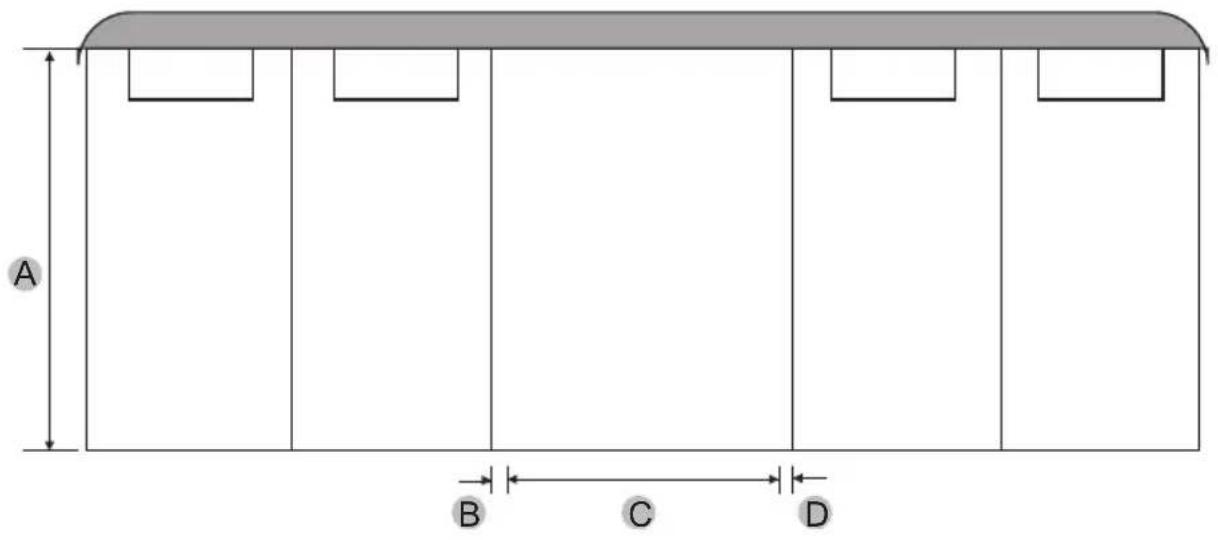
Undercounter installation
text_image
A B C D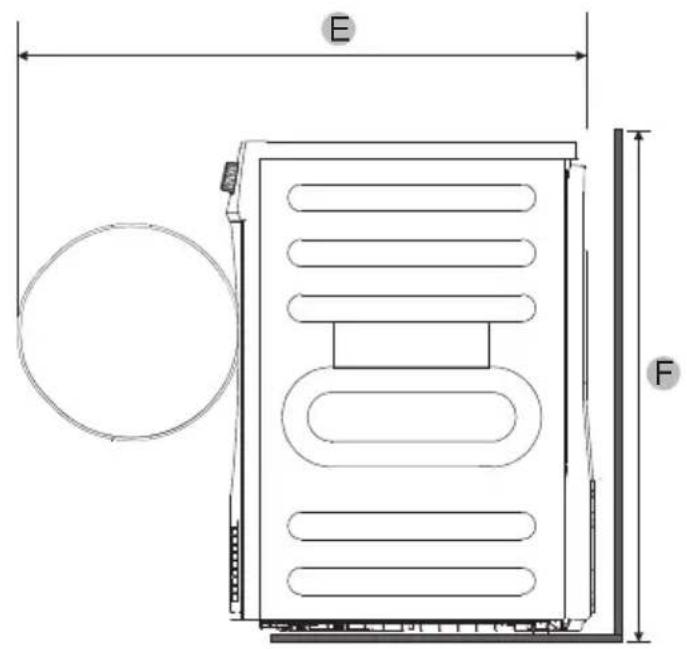
text_image
E F| A | ≥35.5in.( ≥901mm) | C | 23.4 in. (595mm) | E 42.2in.(1072mm) | |
| B | 1 in. (25mm) | D | 1 in. (25mm) | F | 33.5in.(850mm) |
LOCATION REQUIREMENTS
Installation with stacked washing machine and dryer
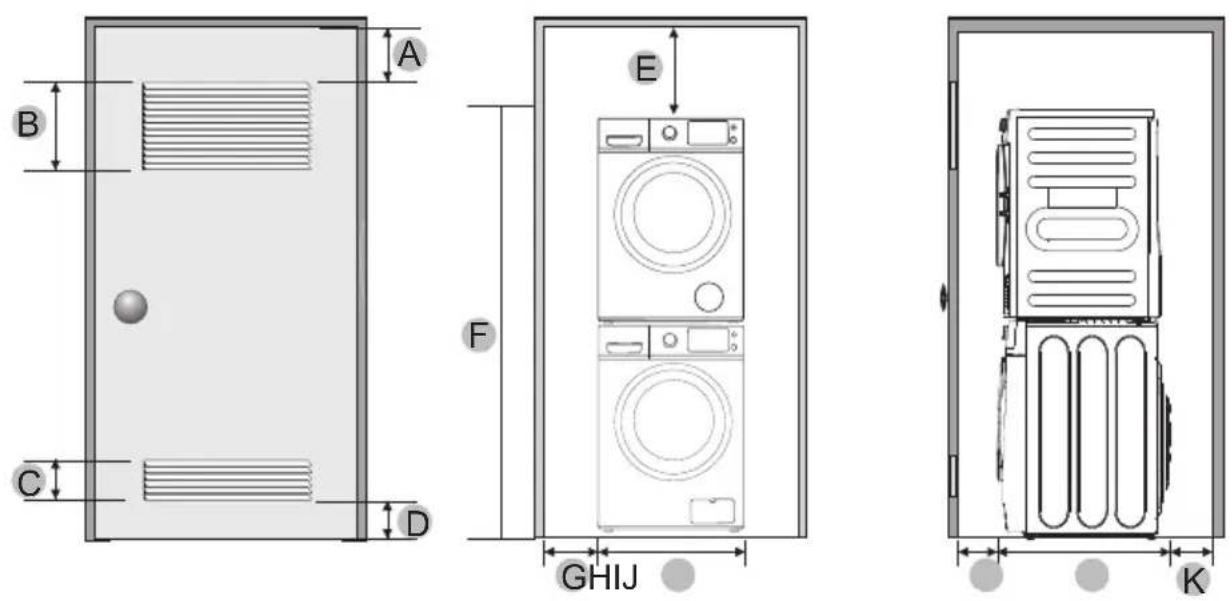
| A | 3in.(76mm) | E | 2in.(50.8mm) I 3in.(76mm) | ||
| B | 48in. ^2 (3100mm ^2 ) | F | / | J | 25.7 in.(653mm) |
| C | 24in. ^2 (1550mm ^2 ) | G | 1in.(25.4mm) K 2 | in.(50.8mm) | |
| D | 3in.(76mm) | H | 23.4 in. (595mm) | ||
NOTE 1
The front of the closet must have two unobstructed air openings for a combined minimum total area of 72 sq.in. (465 sq.cm) with a minimum clearance of 3 in. (76mm) at the top and bottom. A slatted door with equivalent space clearance is acceptable. See Appendix B For Stacking Kit Instructions
DRAIN SYSTEM
The following parts are optional for specific models.
If your dryer has following parts, please wear gloves and install them as per the instruction below.
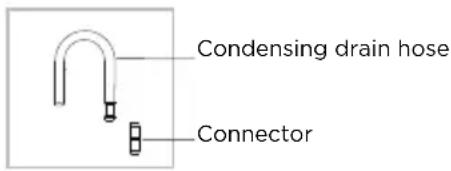
text_image
Condensing drain hose ConnectorInstallation
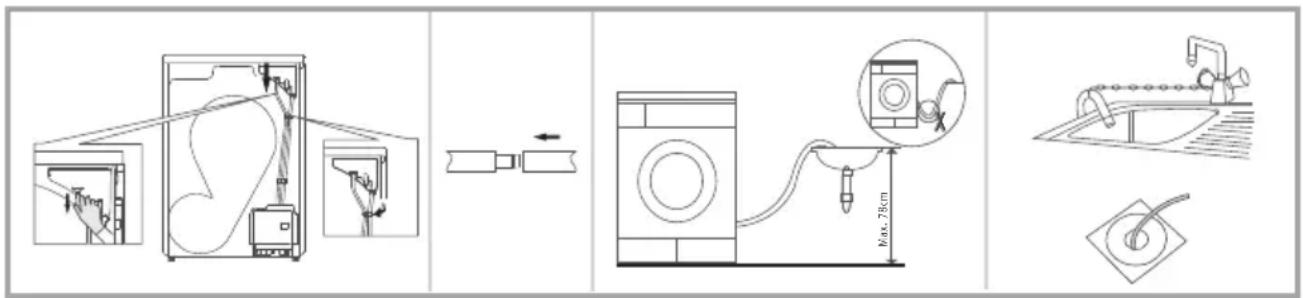
text_image
Diagram illustrating household appliance installation and cleaning process, showing front view, side view, and close-up of washing machine with 75cm height标注- Take the hose out of the holder.
- Disconnect the hose from the water container inflow. (To assure water tightness, there is tension between the hose and the inflow and therefore an increased force is required for disassembly.)
- Insert the drain hose and the external drainage hose into the connector.
- Put the hose on the washing basin or floor drain. To assure the smooth drainage, ensure the pipe is not folded.
INSTALLATION INSTRUCTION
■ REMOVING FROM THE PACKAGE
- Unpack your dryer and inspect it for shipping damage. Make sure you have received all the items shown below.
- To prevent personal injury or strain, wear protective gloves whenever lifting or carrying the unit.
WARNING
Packaging materials can be dangerous to children;
Keep all packaging material (plastic bags, polystyrene, etc.) well out of children's reach.
■ PARTS IDENTIFICATION
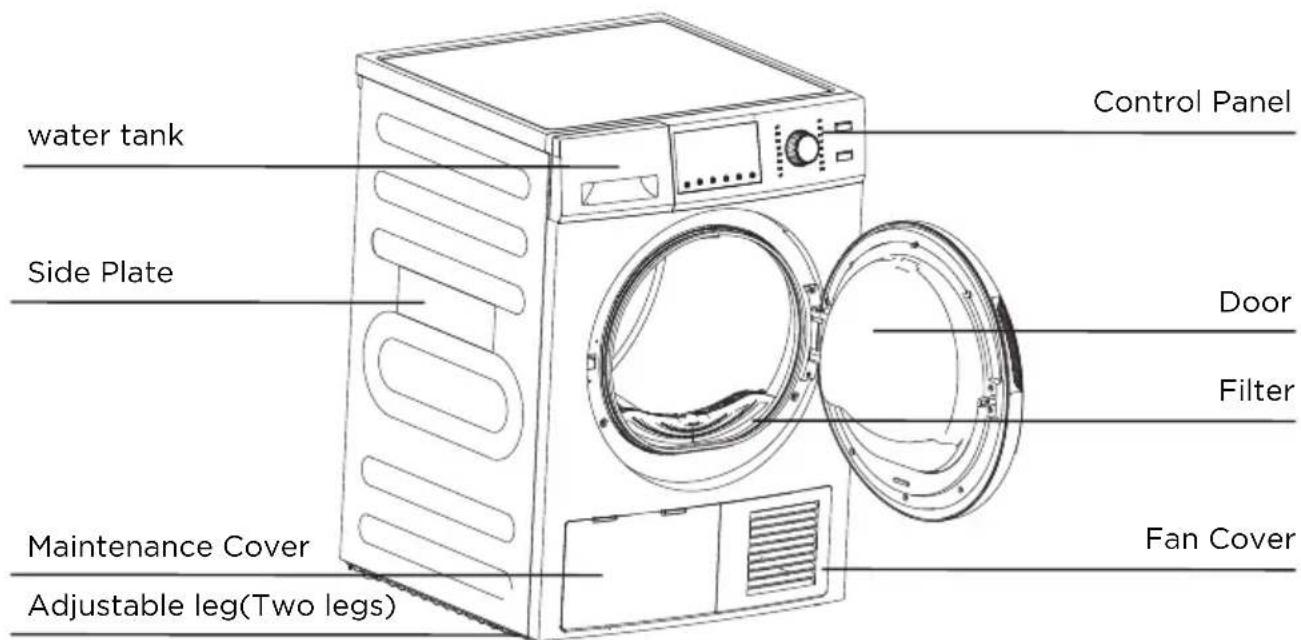
text_image
water tank Side Plate Maintenance Cover Adjustable leg(Two legs) Control Panel Door Filter Fan Cover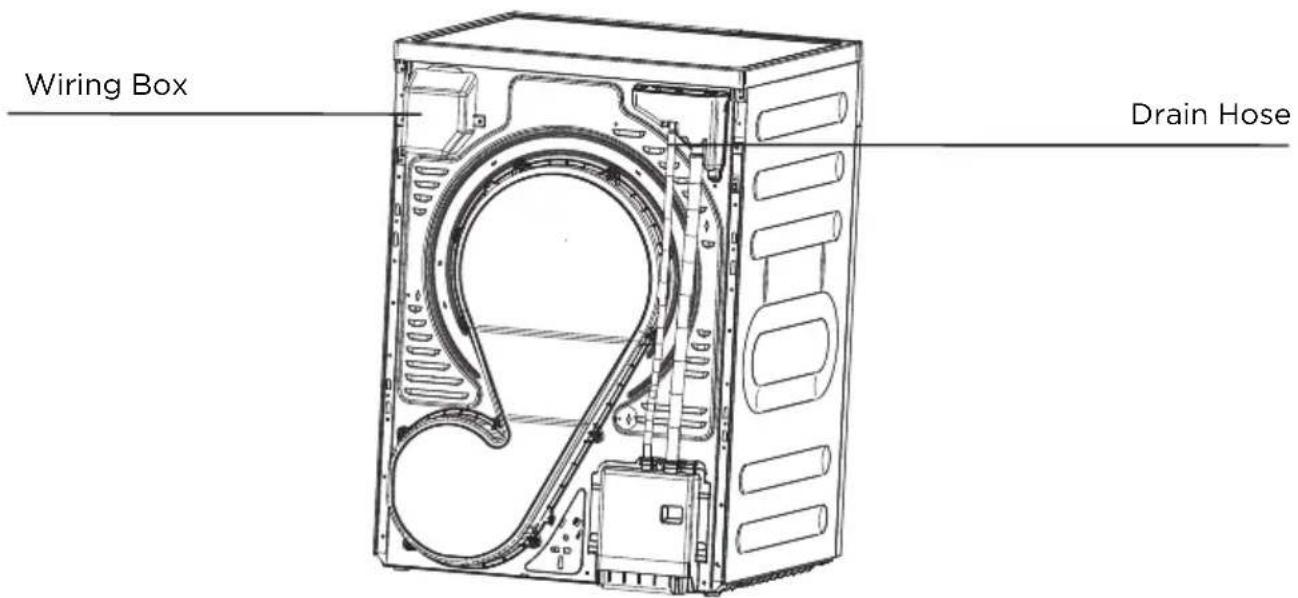
text_image
Wiring Box Drain HoseElectrical connections
An individual branch (or separate) circuit serving only your dryer is recommended.
DO NOT USE AN EXTENSION CORD.
Electric models - U.S. only
The dryers require a 120/240 volt, 60Hz AC approved electrical service. The electric service requirements can be found on the data label located on the back.
A 30-amperefuse or circuit breaker on both sides of the line is required.
- If a power cord is used, the cord should be plugged into a 30-ampere receptacle.
- The power cord is NOT provided with U.S. electric model dryers.

WARNING
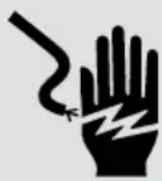
Electrical Shock Hazard
When local codes allow, the electrical supply of the dryer may be connected by means of a new power supply cord kit, marked for use with a dryer, that is UL listed and rated at a minimum of 120/240 volts, 30-ampere with three No. 10 copper wire conductors terminated with closed loop terminals, open-end spade lugs with turned up ends, or with tinned leads.
- Do not reuse a power supply cord from an old dryer. The power cord electric supply wiring must be retained at the dryer cabinet with a suitable UL-listed strain relief.
- Grounding through the neutral conductor is prohibited for (1) new branch-circuit installations, (2) mobile homes, (3) recreational vehicles, and (4) areas where local codes prohibit grounding through the neutral conductor. (Use a 4-prong plug for 4 wire receptacles, NEMA type 14-30R.)
Electric models - Canada only
- A 120/240 volt, 60Hz AC approved electrical service fused through a 30-ampere fuse or circuit breaker on both sides of the line is required.
- All Canadian models are shipped with the power cord attached. The power cord should be plugged into a 30-ampere receptacle.
Note: A power cord is NOT provided with U.S. electric model dryers
INSTALLATION INSTRUCTION
■ TOOLS NEEDED IN INSTALLATION
Tools needed:
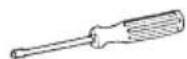
Phillips screwdriver

Flat screwdriver

Level
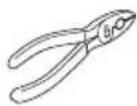
Pliers
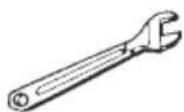
Adjustable wrench that opens to 1" (25 mm)
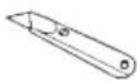
Cutting knife
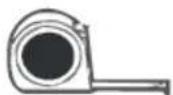
Tape measure
CONNECT THE ELECTRICAL WIRING
Review the "Electric Requirements" section on page 17.
BEFORE OPERATING OR TESTING, follow the grounding instructions in the "Grounding" section on page 19.
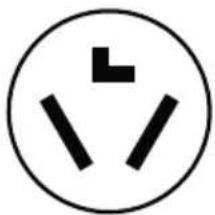
THREE WIRE OUTLET
natural_image
Simple electrical circuit symbol for a three-pin socket (no text or labels)3-Wire receptacle (10-30R)
Then choose a 3-wire power supply cord with ring or spade terminals and UL listed strain relief. The 3-wire power supply cord, at least 4 ft. (1.22 m) long, must have 3 10-gauge solid copper wires and match a 3-wire receptacle of NEMA Type 10-30R.
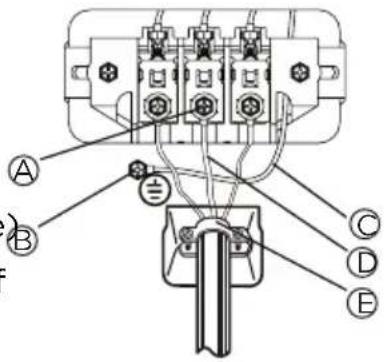
3-Wire system connections
- Remove the center terminal block screw.
- Connect the neutral wire (white or center wire) of the power cord to the center terminal screw of the terminal block. Be sure to cross the screw through the ring of the power cord terminal and tighten the screw.
- Connect the other wires to the outer terminal block screws. Be sure to cross the screw through the terminal ring and tighten the screw.
- Tighten the strain relief screws.
- Insert the tab of the terminal block cover into your dryer's rear panel slot. Secure the cover with a screw.
3-wire system instructions:
Ⓐ Center terminal block screw
⑧ External ground connector
© Neutral grounding wire (White)
(D) Neutral wire (white or center wire)
⑤ 3/4" (1.9cm) UL-listed strain relief
text_image
Electrical wiring diagram showing connections between three-phase electrical terminal blocks labeled A, B, C, D, and E.WARNING
If converting from a 4-wire electrical system to a 3-wire, the ground strap must be reconnected to the terminal block support to ground the dryer frame to the neutral conductor. Ring-type terminals are recommended. If using strap terminals, make sure they are tightened.
FOUR WIRE OUTLET

natural_image
Simple electrical circuit symbol with three vertical lines and a diode, enclosed in a circle (no text or labels)4-Wire receptacle (14-30R)
Then choose a 4-wire power supply cord with ring or spade terminals and UL listed strain relief. The 4-wire power supply cord, at least 4 ft. (1.22 m) long, must have 4 10-gauge solid copper wires and match a 4-wire receptacle of NEMA Type 14-30 R. The ground wire (ground conductor) may be either green or bare. The neutral conductor must be identified by a white color.
4-Wire system connections
- Remove the center terminal block screw.
- Connect the ground wire (green or unwrapped) of the power cord to the external ground conductor screw.
- Connect the neutral wire (white or center wire) of the power cord and the appliance ground wire (white) under the center screw of the terminal block. Be sure to cross the screw through the ring of the power cord terminal and tighten the screw.
- Connect the other wires to the outer terminal block screws. Be sure to cross the screw through the terminal ring and tighten the screw.
- Tighten the strain relief screws.
- Insert the tab of the terminal block cover into your dryer's rear panel slot. Secure the cover with a screw.
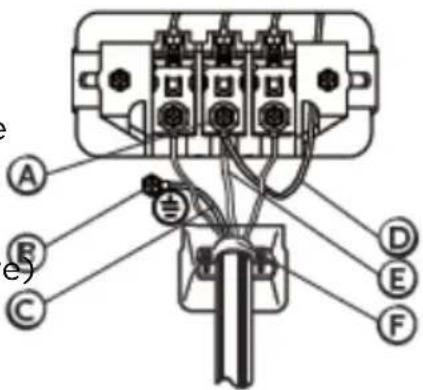
4-wire system instructions:
IMPORTANT: Ring-type terminals are recommended. If using strap terminals, make sure they are tightened.
Ⓐ Center terminal block screw
⑧ External ground connector
© Green or bare copper wire of the power cord
(D) Neutral grounding wire (White)
⑤ Neutral wire (white or center wire)
⑤ 3/4" (1.9cm) UL-listed strain relief
text_image
e A B C D E F e)
WARNING
Electrical Shock Hazard
All U.S. models are produced for a 3-WIRE SYSTEM CONNECTION.
The dryer frame is grounded to the neutral conductor at the terminal block. A 4-WIRE SYSTEM CONNECTION is required for new or remodeled construction, mobile homes, or if local codes do not permit grounding through neutral conductor. If the 4-wire system is used, the dryer frame cannot be grounded to the neutral conductor at the terminal block.
Refer to the "Electric Requirements" section for 3-WIRE or 4-WIRE SYSTEM CONNECTIONS.
Remove the terminal block cover plate.
Insert the power cord with a UL-listed strain relief through the hose provided in the cabinet near the terminal block.
• A strain relief must be used.
Do not loosen the nuts already installed on the terminal block.
Be sure they are tight. Use a 3/8" (1 cm) deep-wellsocket.

WARNING
Electric models
Dryer must be grounded with 3 or 4 wire cord power cord with ground grounding conductor and a grounding plug, which is sold separately.
- The plug must be plugged into an appropriate outlet that is properly installed and grounded in accordance with all local codes and ordinances.
- Do not modify the plug provided with your dryer - if it doesn't fit the outlet, have a proper outlet installed by a qualified electrician.
- If a power cord is not used and the electric dryer is to be permanently wired, the dryer must be connected to a permanently grounded metal wiring system, or an equipment grounding conductor must be run with the circuit conductors and connected to the equipment grounding terminal or lead on the dryer.
Electrical Shock Hazard
When local codes allow, the electrical supply of the dryer may be connected by means of a new power supply cord kit, marked for use with a dryer, that is UL listed and rated at a minimum of 120/240 volts, 30-ampere with three No. 10 copper wire conductors terminated with closed loop terminals, open-end spade lugs with turned up ends, or with tinned leads.
- Do not reuse a power supply cord from an old dryer. The power cord electric supply wiring must be retained at the dryer cabinet with a suitable UL-listed strain relief.
- Grounding through the neutral conductor is prohibited for (1) new branch-circuit installations, (2) mobile homes, (3) recreational vehicles, and (4) areas where local codes prohibit grounding through the neutral conductor. (Use a 4-prong plug for 4 wire receptacles, NEMA type 14-30R.)
Electric models - Canada only
- A 240 volt, 60Hz AC approved electrical service fused through a 30-ampere fuse or circuit breaker on both sides of the line is required.
- All Canadian models are shipped with the power cord attached. The power cord should be plugged into a 30-ampere receptacle.
• In Canada, you may not convert a dryer to 208 volts.
GROUNDING
This dryer must be grounded. In the event of a malfunction or breakdown, the grounding the product will reduce the risk of electrical shock by providing a path of least resistance for the electrical current.

WARNING
Electric models
- Certain internal parts are intentionally not grounded and may present a risk of electric shock only during servicing. Service Personnel - Do not contact the following parts while the appliance is energized: inlet valve, control board and temperature-regulating thermistor (located on blower housing).
REPLACEMENT PARTS AND ACCESSORIES
If your dryer requires replacement parts or accessories, contact the dealer where you purchased your dryer or MIDEA customer care center at 1-866-646-4332.
LEVEL THE DRYER
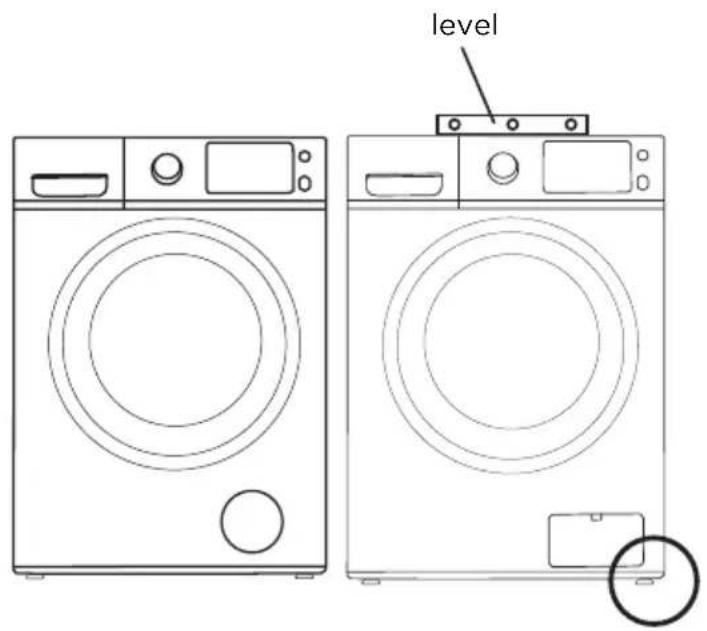
To ensure that the dryer provides the optimal drying performance, it must be leveled. To minimize vibration, noise, and unwanted movement, the floor must be a perfectly level, solid surface.
- Adjust the leveling feet only as much as necessary to level the dryer. Extending the leveling feet more than necessary can cause the dryer to vibrate.
text_image
level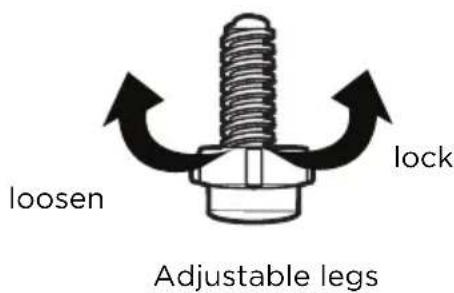
text_image
loosen lock Adjustable legsDRYER USE
CONTROLPANEL

WARNING
To reduce the risk of fire, electric shock, or injury to persons, read the IMPORTANT SAFETY INSTRUCTIONS before operating the appliance.
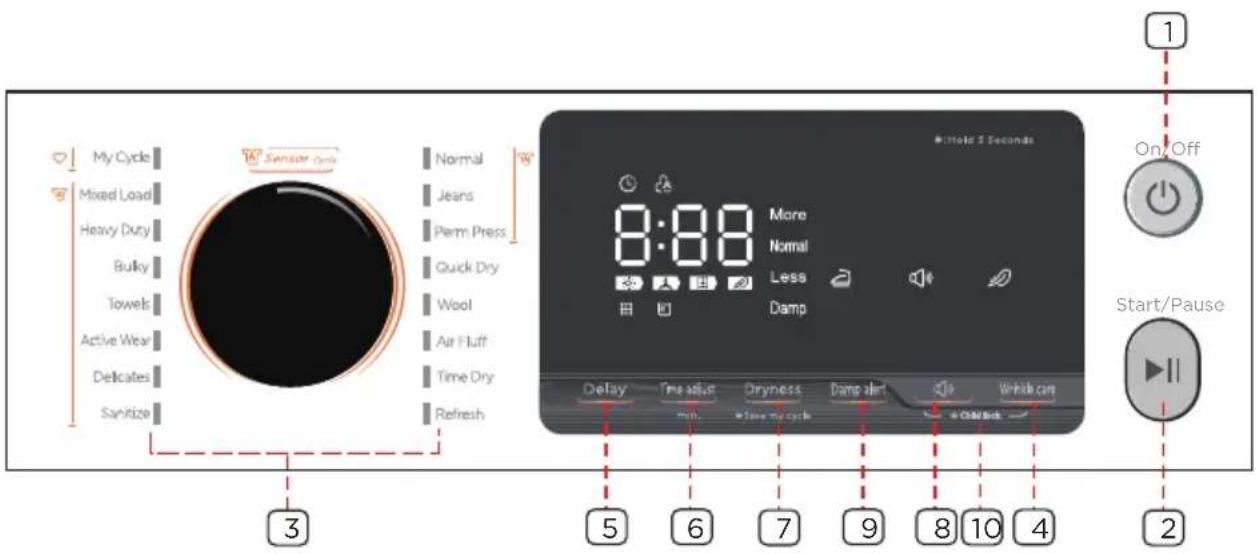
text_image
My Cycle Mixed Load Heavy Duty Bulky Towels Active Wear Delicates Sanitize Sensor key Normal Jeans Perm Press Quick Dry Wool Air Flush Time Dry Refresh 8:00 More Normal Less Damp Delay Time delay Dryness Damp alert White can Stop my cycle Start/Pause 1 2 3 5 6 7 9 8 10 4 5 6 7 81-Power button
Press to turn your dryer on or into stand-by situation. If your dryer is on for more than 10 minutes without any buttons being pressed, it automatically turns into stand-by situation.
2-Start/Pause button
Press to start or pause the program. You can't change any setting except add a garment.
3-Cycle selector
Select your desired cycle for the type of load.
The cycle you select determines the heat control for the cycle.
The Normal, Jeans, Perm Press, Quick Dry, My Cycle, Mixed Load, Heavy Duty, Bulky, Towels, Active Wear, Delicates, Sanitize are Sensor cycles.
Wool, Air Fluff, Time Dry, Refresh are Manual cycles.
4-Wrinkle care
Press once to add the wrinkle care step into the operating program. Press again to cancel selection.
If wrinkle prevent was active, it provides approximately 90 minutes of intermittent tumbling in unheated air at the end of the cycle to reduce wrinkling.
The load is already dry, and can be removed at any time during the wrinkle care cycle.
5-Delay
This function is used for delaying clothes drying time within 24 hours. The delay time means the program will start after x hours. When the delay program starts, the time starts to countdown on the display and the delay icon blinks.
6-Time adjust
These buttons are effective only for Manual cycles. Press these buttons to change the drying time you prefer. Push repeatedly to get your desired drying time, including 120 minutes, 90 minutes, 60 minutes, 30 minutes.
7-Dryness
Press the button to select the dry level, including More, Normal, Less, Damp. Different dry level will result in different drying time. For clothes to be ironed manually, a lower dry level should be selected.
Press and hold for 3 seconds to remember your favorite drying cycle, this cycle will be "My Cycle".
8-Signal
Press once to stop the buzzer sound. Press again to activate the sound. Your selection will be kept until next pressing.
9-Damp alert
This function is useful when you want to take some garments out for ironing. The unit will beep 10s when the moisture in the clothes is good for ironing. At this time, you can take those garments out and continue drying the other by pressing the “START/ PAUSE” button once.
Note: The unit will not stop operating if you don't take those garments out for ironing.
10-Child lock
Press the “” and “Wrinkle care” together to activate the control lock function. Press again for another 3 seconds to deactivate the function. All buttons except the “Power” will be out of function when control lock activated.
Symbols Cycle phase status
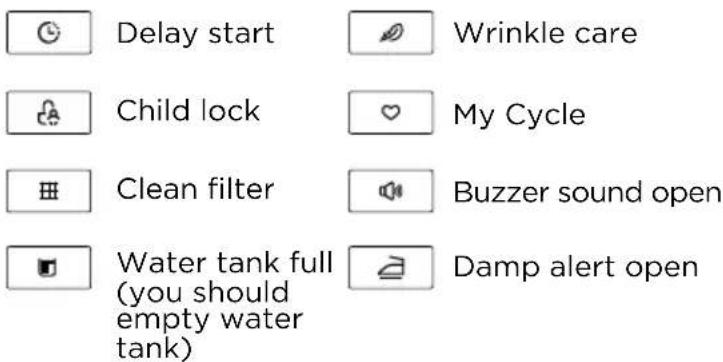
text_image
Delay start Wrinkle care Child lock My Cycle Clean filter Buzzer sound open Water tank full (you should empty water tank) Damp alert open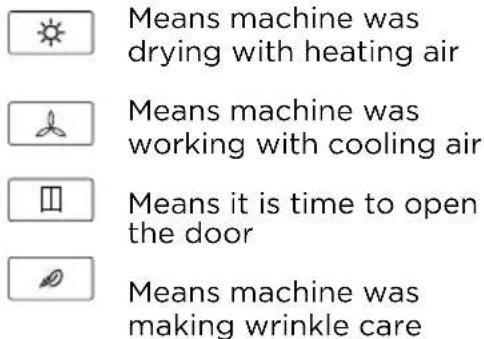
text_image
Means machine was drying with heating air Means machine was working with cooling air Means it is time to open the door Means machine was making wrinkle careDRYING A LOAD OF LAUNDRY
1. Power on your dryer.
- Press this Power button to power your dryer on.
2. Load your dryer.
- Place only one wash load in your dryer at a time.
- Mixed loads of heavy and light weight fabrics will dry differently, which may result in lightweight fabrics being dry while heavy fabrics remain damp at the end of a drying cycle.
- Add one or more similar items to your dryer when only one or two articles of clothing need drying. This improves the tumbling action and drying efficiency.
- Overloading restricts tumbling action, resulting in uneven drying as well as excessive wrinkling of some fabrics.
3. Select the appropriate cycle and options for the load.
- Select the appropriate cycle by Cycle Selector according to the cycle chart on page 35.
- Select the appropriate optional function by buttons according to the chart on page 35.
- Your favorite drying Cycle
text_image
MY CYCLE Hold for 3 sec to saveOnce you have set the cycle selector and option function, you can push and hold the "My Cycle" button for 3 seconds to memory this setting as your favorite cycle before start the unit. The light beside the knob will flash to confirm the memory with beeps.
- You can finish this Step by just push the "My Cycle" button once to use your favorite cycle or make some additional change.
4. Start your dryer.
Pressing Start/Pause button will start the selected cycle. To PAUSE cycle press Start/Pause button then open the door. To resume operation after closing the door always press Start/Pause. Opening the door during the operation will instantly stop operation and will require to press Start/Pause button to resume operation.
| Cycle M | Maximum Amount | Dryness D | Delay Time | adjust | Damp alert | Wrinkle care |
| Normal |  | Damp Less Normal More | Y N Y | Y | ||
| Jeans |  | Damp Less Normal More | Y N Y | Y | ||
| Perm Press |  | Damp Less Normal More | Y N Y | Y | ||
| Quick Dry |  | Damp Less Normal More | Y N Y | Y | ||
| Wool / | YN  | |||||
| Air Fluff / | Y  Y Y | |||||
| Time Dry | / / Y Y N Y | |||||
| Refresh |  | / Y Y N Y | ||||
| Sanitize |  | More | Y N N Y | |||
| Delicates |  | Damp Less Normal More | Y N Y | Y | ||
| Active Wear |  | Damp Less Normal More | Y N Y | Y | ||
| Towel |  | Damp Less Normal More | Y N Y | Y | ||
| Bulky |  | Damp Less Normal More | Y | N | Y | Y |
| Heavy Duty |  | Damp Less Normal More | Y N Y | Y | ||
| Mixed Load |  | Damp Less Normal More | Y N Y | Y | ||
| My Cycle | / / / / / / |
* Table in bold is an initial setting. "Y" are all optional functions you can select.
* For even better drying effect, please select higher dry level.
Load Size Recommendations:
For best results, follow the wet load size recommendations noted for each cycle.

Small load: Fill the dryer drum with 3-4 items, not more than 1/4 full.

Medium load: Fill the dryer drum up to about 1/2 full.

Large load: Fill the dryer drum up to about 3/4 full. Do not overload. Items need to tumble freely.
For best results, follow the wet load size recommendations noted for each cycle.
For the best performance, the load for each cycle should be recommended as follows:
| Cycle Items | Weight Recommend load | |
| Normal 8 lb | Cotton | |
| Jeans 8 lb | Jeans | |
| Perm Press 7.5 lb | Poly/Cotton Blend (easy care) | |
| Quick Dry 2 lb | Small accounts of clothing | |
| Wool 3 lb | Wool | |
| Air Fluff | 2 lb | / |
| Time Dry | 8 lb | / |
| Refresh | 3 lb | / |
| Sanitize | 5 lb Cotton | |
| Delicates | 3 lb | Delicates |
| Active Wear | 5 lb | sports clothes, Polyester, Spandex |
| Towel | 8 lb | Towels |
| Bulky | 4 lb | bedsheet |
| Heavy Duty | 8 lb | Jeans, sports clothes, skirts |
| Mixed Load | 8 lb | Polyester and Cotton Mix |
STEP 5: Unloading your laundry
- The "Clean filter" will flash 10 sec. when your laundry load is powered on.
- The dryer will beep 3 times after the cycles done.
- You should clean the filter after every load once the laundry is unloaded.
Note:
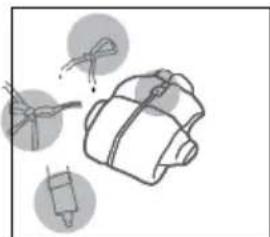
- Clothes that are easy to be tangled or worn and small pieces, please put them in the laundry bag to dry.
- Clothes with long belts or ropes, please make a knot to dry.
- Clothes with slender buttons, please button up to dry.
- Clothes with zippers, please zip up and flip to the inside to dry.
natural_image
Illustration of a backpack with ribbon and accessories, no text or symbols presentThis function is useful to prevent children from playing with the unit. P-ress and hold the “and “Wrinkle care” buttons simultaneously for 3 seconds to activate this function. The blue “Child lock” light will turn ON. P-ress and hold the “and “Wrinkle care” buttons simultaneously again for 3 seconds to deactivate this function. The “Child lock” light will turn OFF.
- When this function is activated, all functions will be out of function except the POWER button and DEACTIVATE function above.
- You can Power ON your unit and set this function then Power OFF. When you do so, even if the unit is powered on, you still cannot start it before the Control Lock function is deactivated.
- This function will be cancelled automatically if your unit is out of power, such as unplug the unit, power supply out of service, etc.
■ Empty the water tank
- Pull out and hold the water tank with two hands.
- Transfer the water tank flatly in case of water overflow.
- Tilt the water tank, pour out the condensate water into the basin.
- Install the water tank.
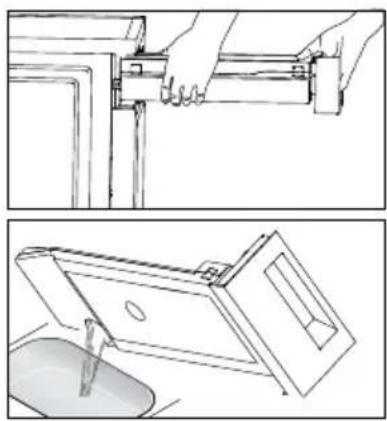
- Empty the water tank after each use. Otherwise, the programme will be paused and the "A" icon will light. After the tank is emptied, the dryer can be restarted by pressing 【Start/Pause】 button.
- Do not drink the condensate water. Do not use the dryer without the water tank.
- Filter clean
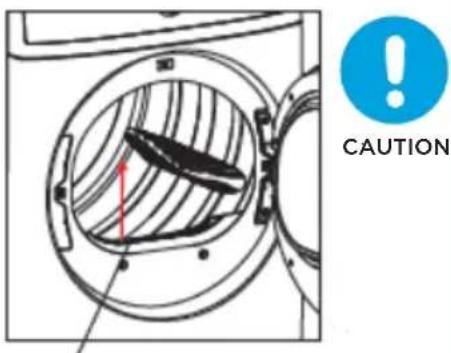
Lint filter
To prevent a risk of fire, make sure to clean the lint filter before or after every load;
- To shorten drying time.
- To operate more energy efficiently.
- Do not operate your dryer without the lint filter in place. Doing so will damage your dryer.
- Do not use a damage or broken lint filter. This may reduce performance and/or cause fire.
■ Clean the base filter
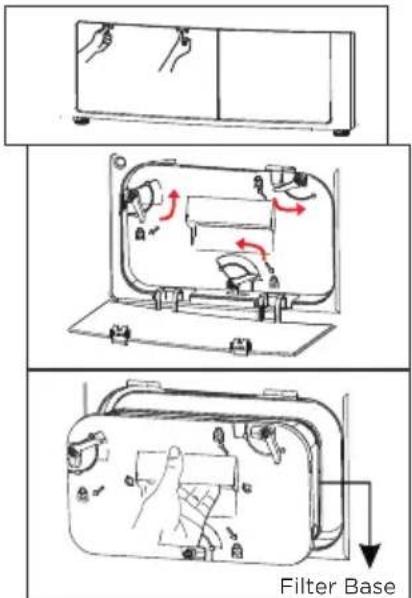
- Open the cover.
- Unlock three locking levers and grasp the filter handle.
- Remove the base filter and clean it. If there is too much lint on the filter, clean it in water. Dry the filter thoroughly before installing it back.
- Clean the rubber sealing, both at the filter and handle.
- Re-insert the filter.
- Lock three locking levers and make sure that the levers are in correct lock position.
- Close the cover until there is a click sound.
text_image
Filter Base
- The lint accumulated on the filter will block the air circulation. Not cleaning the filter regularly will increase drying time and energy consumption.
- Disconnect the power cord before cleaning
- Do not operate the dryer without the filter
- Clean the base filter after each cycle to prevent lint accumulation inside the dryer.
■ Clean the heat exchanger
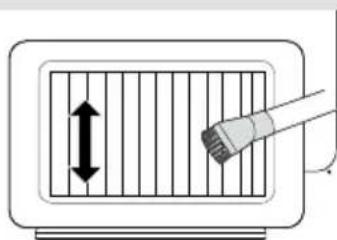
Do not touch the heat exchanger with your hand, which may cause an injury.
- As necessary, approx. once every 2 months, remove the lint from the heat exchanger using a vacuum cleaner with a dusting brush attachment.
- Clean the heat exchanger without applying any pressure. Otherwise the heat exchanger could be damaged. The dryer will not dry if the cooling fins are damaged or bent.
natural_image
Diagram of a device with a connector and vertical bar pattern, no text or symbols present| Items Drying guide | |
| Bedspreads & Comforters | Follow the care label instructions or dry in Bulky cycle.Make sure the item is thoroughly dry before using or storing.May require repositioning to ensure even drying. |
| Blankets Use the | Normal cycle and dry only one blanket at a time for best tumbling action.Make sure the item is thoroughly dry before using or storing.May require repositioning to ensure even drying. |
| Curtains & Draperies | Use the Casual cycle, medium temperature and less dry to help minimize wrinkling.Dry these in small loads for best results and remove as soon as possible. |
| Cloth Diapers Use the Normal cycle on High temperature for soft fluffy diapers. | |
| Down Filled Items (jackets, sleeping bags, comforters, etc.) | Use the Normal cycle on medium temperature.Add a couple of dry towels to shorten drying time and absorb moisture. |
| Foam Rubber (rug backs, stuffed toys, shoulder pads, etc.) | DO NOT dry on a heat setting. Use the Air Fluff cycle (no heat).WARNING: Drying a rubber item with heat may damage it or create a fire hazard. |
| Pillows Use the Normal cycle.Add a couple of dry towels and a pair of clean sneakers to help the tumbling action and to fluffthe item.DO NOT dry kapok or foam pillows in the dryer.You can dry these items in the dryer as long as you use the air fluff cycle. | |
| Plastics (shower curtains, outdoor furniture covers, etc.) | Use the Air fluff cycle or the Time Dry cycle on the Low or Ultra Low temperature settingdepending on the care label instructions. |

CAUTION
Items NOT to dry:
- Fiberglass items (curtains, draperies, etc.)
- Woolens, unless recommended on the label.
- Items spotted or soaked with vegetable or cooking oils.
DRYER CARE

WARNING
- Certain internal parts are intentionally not grounded and may present a risk of electric shock only during servicing. Service Personnel – Do not contact the following parts while the appliance is energized: inlet valve, control board and temperature-regulating thermistor (located on blower housing).
CLEANING AND MAINTENANCE
CONTROL PANEL
- Clean with a soft, damp cloth. Do not use abrasive substances.
- Do not spray cleaners directly on the panel.
- The control panel finish may be damaged by some laundry pretreatment soil and stain remover products. Apply such products away from your dryer and wipe up any spills or overspray immediately.
STAINLESS STEEL OR ANODIZED DRUM
- To clean the stainless steel or anodized drum, use a damp cloth with a mild, non-abrasive cleaner suitable for stainless steel and anodized surfaces.
- Remove the cleaner residue and dry with a clean cloth.
DRYER EXTERIOR
- Clean with a soft, damp cloth. Do not use abrasive substances.
- Protect the surface from sharp objects.
- Do not place any heavy or sharp objects or a detergent box on the dryer. Keep them on the purchased pedestal or in a separate storage box. This may scratch or damage the top cover of the dryer.
- Since the entire dryer has a high-gloss finish, the surface can be scratched or damaged.
- Avoid scratching or damaging the surface when using the dryer.
SPECIAL LAUNDRY TIPS
Please follow the care label or manufacturer's instructions for drying special items. If care label instructions are not available, use the fabric care chart in the appendix as a guide.
TROUBLESHOOTING
CHECK THESE SOLUTIONS IF YOUR DRYER...
If your dryer has any problems as followings, you can check as the solutions listed below before making a service call. This will help you save time and money.
| Problem Solution | |
| The unit doesn’t start. | Make sure the door is latched shut.Be sure the power cord is plugged into a live electrical outlet.Check the home’s circuit breaker and fuses.Press the Start/Pause button again if the door is opened during the cycle. |
| The unit doesn’t heat. | Check the home’s circuit breaker and fuses.Select a heat setting other than Air fluff and the Temp selection is not on “No heat”On a gas dryer, check that the gas supply is on.Clean the lint filter and exhaust duct.Dryer may have moved into the cool-down process of the cycle. |
| Doesn’t dry. | Check all of the above, plus...Do not overload. 1 wash load = 1 dry load.Sort heavy items from lightweight items.Large, bulky items like blankets or comforters may require repositioning to ensure even drying.Load may be too small to tumble properly. Add a few towels. |
| The unit is noisy. | Check the load for objects such as coins, loose buttons, nails, broken zips, etc. Remove promptly.It is normal to hear the dryer gas valve or heating element cycle on and off during the drying cycle.Be sure the dryer is leveled properly as outlined in the installation instruction.It is normal for the dryer to hum due to the high velocity of air moving through the dryer drum andexhaust system. |
| Clothes are unevenly dried. | Seams, pockets, and other similarly heavy areas may not be completely dry when the rest of the load hasreached the selected dryness level. This is normal. Select the Extra Dry setting if desired.If one heavy item is dried with a lightweight load, such as one towel with sheets, it is possible that theheavy item will not be completely dry when the restof the load has reached the selected dryness level. Sort heavy items from lightweight items for bestdrying results. |
| Shuts off before load is dry. | Dryer load is too small. Add more items or a few towels and restart the cycle.Dryer load is too large. Remove some items and estart the dryer. |
| The unit has a special odor. | Household odors from painting, varnishing, strong cleaners, etc. may enter the dryer with surroundingroom air. This is normal as the dryer draws the airfrom surrounding air space of the dryer locations.When these odors linger in the air, ventilate the room completely before using the dryer. |
| Odors remain in clothing after refresh | Fabrics containing strong odors should be washed utilizing desired wash cycle. |
| Garments still wrinkled after Wrinkle-prevent | Small loads of 1 to 4 items work best.Load fewer garments. Load similar-type garments. |
| Lint on clothes | Clean lint filter before every cycle.Some fabrics are lint producers (for example, a fuzzy white cotton towel) and they should be driedseparately from clothes that are lint trappers (forexample, a pair of lack linen pants).Divide larger loads into smaller loads for drying.Check pockets thoroughly before washing and drying clothes. |
■ ERROR CODES
| Error Code Possible Cause | Solutions | |
| E32 | Humidity | Please contact your local service center if the problem occurs. |
| E33 | Temperature sensor error | |
| E64 | Motor communication error | |
| E82 | PCB communication error | |
APPENDIX A
FABRIC CARE CHART
The following symbols provide garment care direction. The Clothing care labels include symbols for washing, bleaching, drying and ironing, or dry cleaning when necessary. The use of symbols ensures consistency among garment manufacturers of domestic and imported items. Follow care label directions to maximize garment life and reduce laundering problems.
| Wash Cycle Special Instructions | Warning Symbols for Laundering | ||||
 | Normal |  | Line Dry/Hang to Dry |  | Do Not Wash |
 | Permanent Press / Wrinkle Resistant / Wrinkle Control |  | Drip Dry Do Not W |  | |
 | Gentle/Delicates Dry | [FZ3HX] | Do Not Bleach |  | |
 | Hand Wash Heat Setti |  | Do Not Tumble Dry |  | |
\  |  | High |  | No Steam (added to iron) | |
 | Hot Medium Do Not | [IWXZ2] |  | ||
 | Warm Low Dryclean | [ZBHD] | |||
 | Cold Any Heat Dry Cl |  |  | ||
E  ch ch |  | No Heat/Air |  | Do Not Dry Clean | |
 | Any Bleach (when needed) |  | -Dry or Steam temperatures |  | Line Dry/ Hang to Dry |
 | Only Non-Chlorine (color-safe) Bleach (when needed) |  | High | [27GS] | Drip Dry |
 | Tumble Dry Cycle |  | Medium Dry Flat | [CZBD] | |
 mal mal |  | Low | |||
 | Permanent Press / Wrinkle Resistant / Wrinkle Control |  | For machine-washable wool. Loads should be under 8 pounds. | ||
 | Gentle/ Delicates | ||||
** The number of dots represent appropriate wash water temperatures for various items. The temperature range for Hot is 105°-125°F/41°-52°C, for Warm 85°-105°F/29°-41°C and for Cold 60°-85°F/16°-29°C.
APPENDIX B
INSTALLATION REQUIREMENTS
Stack Kit Installation Instruction
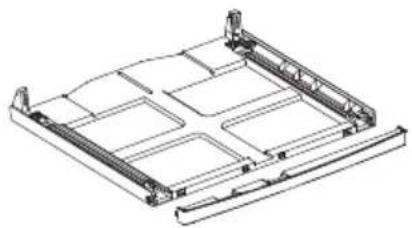
- The stacking kit includes the following parts:
A.
natural_image
Technical line drawing of a mechanical frame assembly (no text or symbols)B.
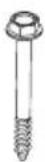
C.
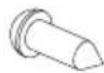
D.E.F.
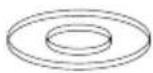
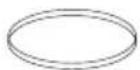
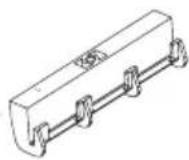
A. Stacking Kit with handle
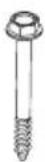
B. 1 × M6 Screw
C. 6 × M4 Screw
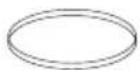
D. 1 × Gasket
E. 2 × Hole Sticker
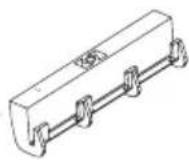
F. 1 × Top panel fixing block
2. Installation method
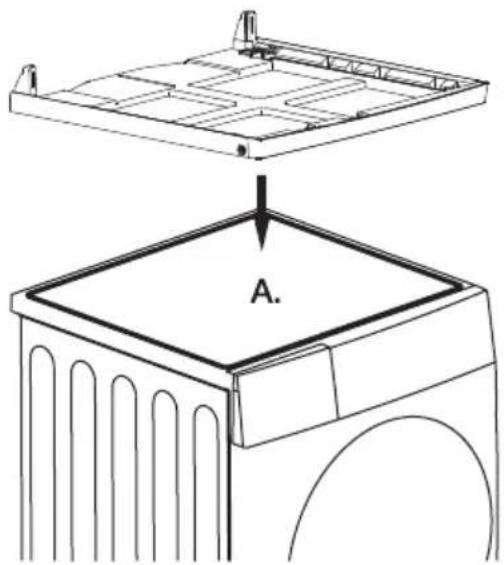
Step 1:
Place the Stacking Kit on the top panel of the front load washing machine with the handle of the stacking kit at the same side as the control panel of the drum washer.
text_image
A.
Do not install the stacking kit if the appliances are connected to power.

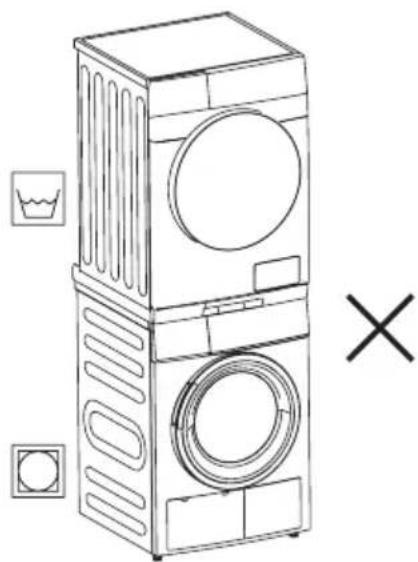
The front load washing machine must be installed on the ground and not on top of a clothes dryer.
INSTALLATION REQUIREMENTS
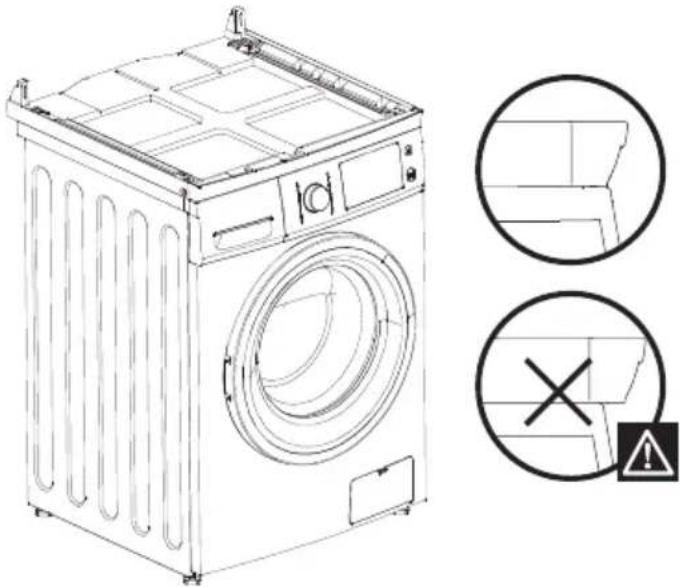
Step 2:
As shown below, align the stacking kit to the left and right sides of the front load washing machine.
natural_image
Line drawing of a washing machine with two warning symbols (no text or labels)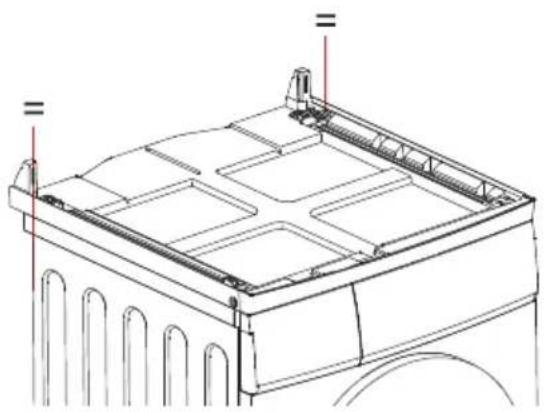
natural_image
Technical line drawing of a mechanical housing or enclosure with mounting brackets and structural elements (no text or symbols)Step 3:
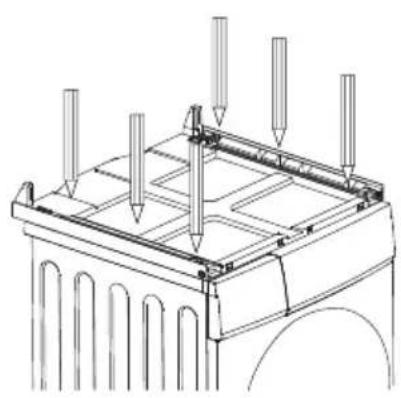
Identify and drill 6 positioning holes of stacking kit on the top panel of washing machine.
Step 4:
Drill ∅ 3mm holes and fit the 6 × M4 Screws (C) to fix the stacking kit into the top panel of washing machine. Please ensure that the torque is less than 10nm when tightening.
natural_image
Technical line drawing of a mechanical assembly with multiple cylindrical pins inserted into a housing (no text or symbols)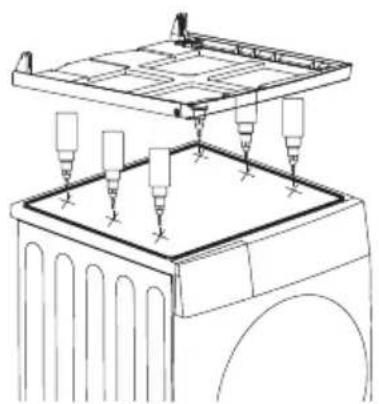
natural_image
Technical line drawing of a mechanical assembly with multiple cylindrical components mounted on a base (no text or symbols)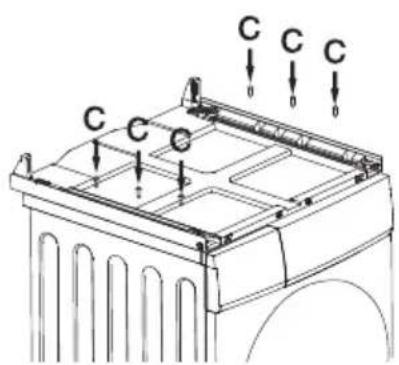
text_image
C C C 0 0 0INSTALLATION REQUIREMENTS
Step 5:
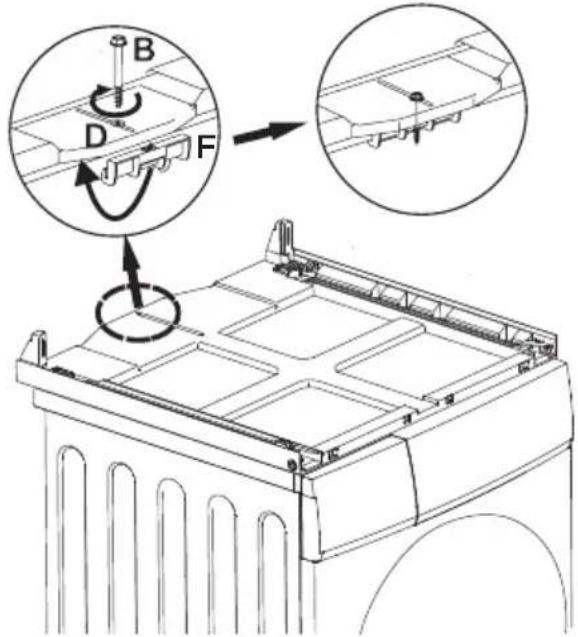
Install top panel fixing block (F). Fix the jack catch of the block on the top panel of Washing Machine. Align the mounting hole of the block with the mounting hole of the stacking kit, and fix the block with the M6 Screw (B) and Gasket (D).
text_image
Technical diagram showing mechanical assembly with labeled components (B, D, F) and circular motion indicatorsStep 6:
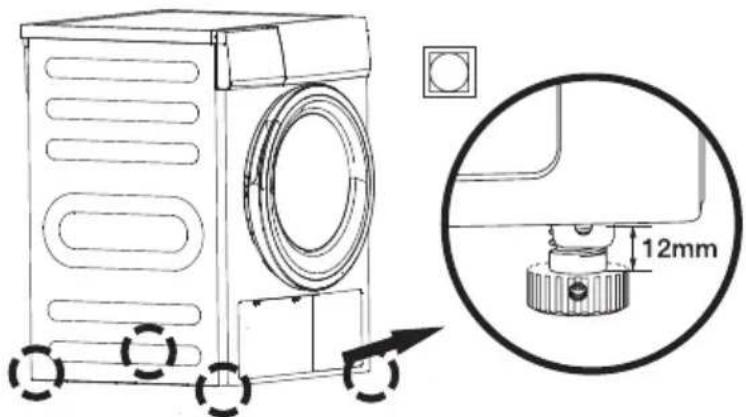
Adjust all four leveling feet of the clothes dryer to allow a 12mm gap.
natural_image
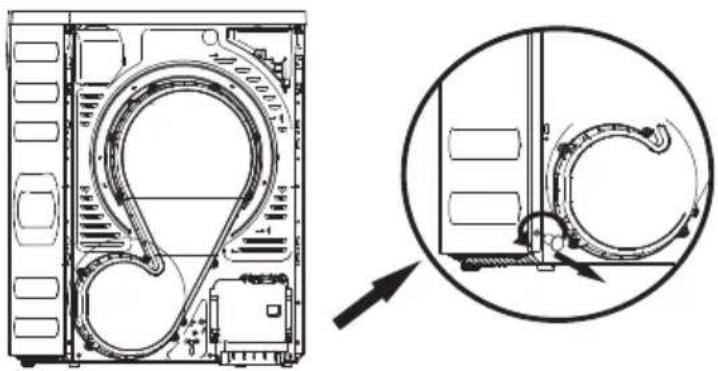
Technical line drawing of a washing machine with an inset showing its 12mm measurement (no text or symbols present)At the rear of the dryer, remove the 2 screws located towards the base of the dryer.
natural_image
Technical line drawing of a computer tower rear panel and its internal mechanical assembly (no text or symbols)INSTALLATION REQUIREMENTS
Step 7:
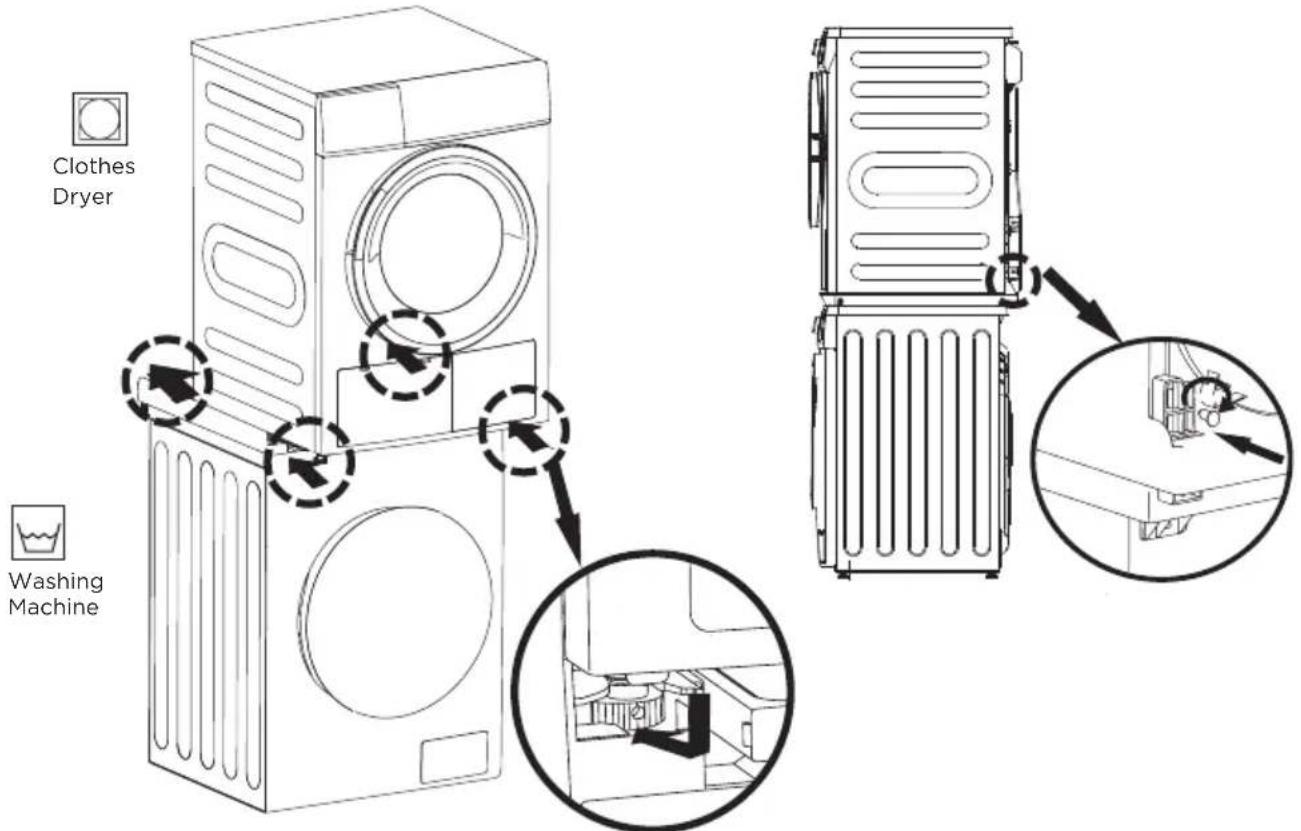
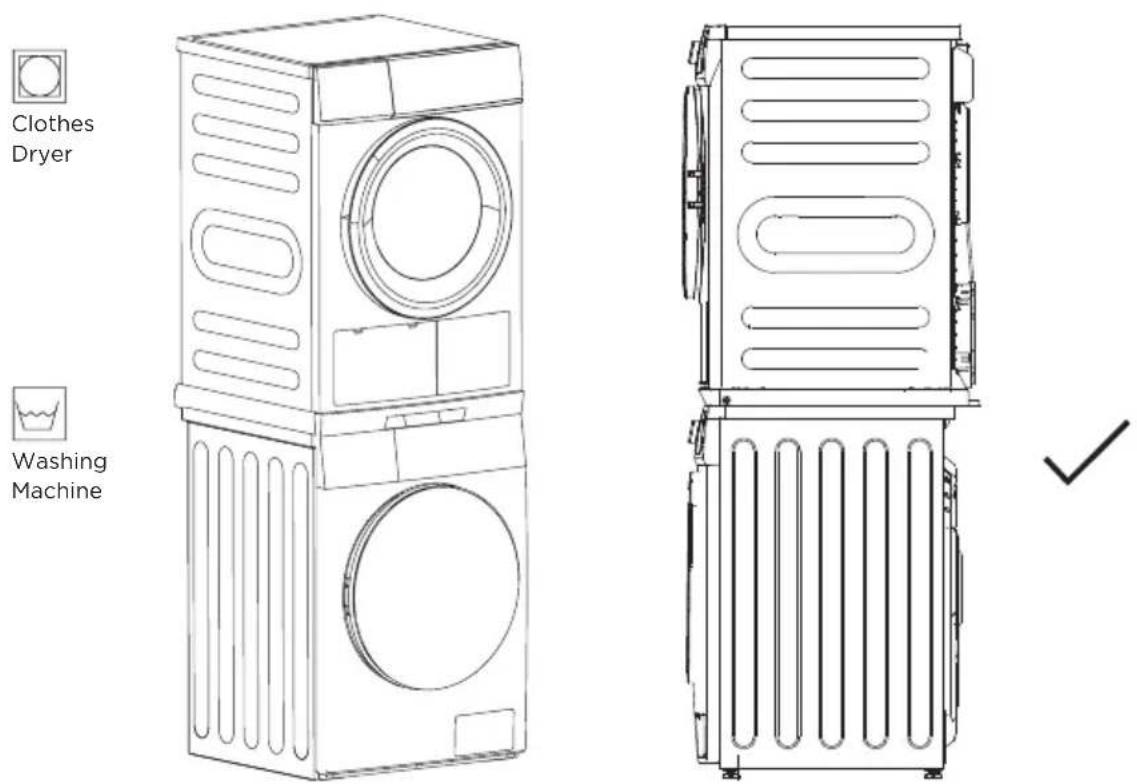
Pull out the handle and place the clothes dryer (with the adjusted leveling feet) into the frame of the stacking kit. Place the front feet into the outside of the card slot first, then push the dryer backwards, so that the foot of the dryer slips fully into the slot. At the rear of the dryer, fix the 2 screws located towards the base of the dryer.
text_image
Clothes Dryer Washing MachineStep 8:
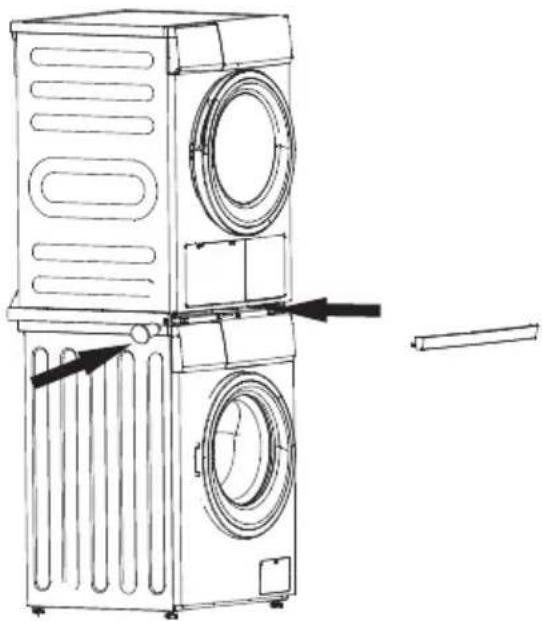
Install the handle from the front, fix it with 2 screws on the side, and then attach the hole sticker.
natural_image
Line drawing of a two-story refrigerator with front air conditioner and side air conditioner, showing internal components and airflow direction (no text or labels)INSTALLATION REQUIREMENTS
Step 9:
Finally, check if there are any loose parts or screws. If everything is okay, your installation is now complete.
The front load washing machine must be installed on the ground and not on top of a clothes dryer.
natural_image
Line drawing of a multi-tiered washing machine with front panel and side panels, no text or symbols presentMIDEA LAUNDRY DRYER LIMITED WARRANTY
ATTACH YOUR RECEIPT HERE. PROOF OF PURCHASE IS REQUIRED TO OBTAIN WARRANTY SERVICE.
Please have the following information available when you call the Customer Service Centre:
■ Name, address and telephone number
■ Model number and serial number
■ A clear, detailed description of the problem
■ Proof of purchase including dealer or retailer name and address, and date of purchase
IF YOU NEED SERVICE:
- Before contacting us to arrange service, please determine whether your product requires repair. Some questions can be addressed without service. Please take a few minutes to review the Troubleshooting section of the User Manual, or email customerserviceusa@midea.com.
- All warranty service is provided exclusively by our authorized Midea Service Providers, in the U.S. and Canada.
Midea Customer Service
In the U.S.A. or Canada, call 1-866-646-4332 or email customerserviceusa@midea.com.
If outside the 50 States of the United States or Canada, contact your authorized Midea dealer to determine whether another warranty applies.
LIMITED WARRANTY
WHAT IS COVERED
FIRST YEAR LIMITED WARRANTY (PARTS AND LABOUR)
For one year from the date of purchase, if this major appliance is installed, operated and maintained according to instructions attached to or furnished with the product, Midea America (Canada) Corp. (hereafter "Midea") will pay for factory specified replacement parts and repair labour to correct defects in materials or workmanship that existed when this major appliance was purchased, or at its sole discretion replace the product. In the event of product replacement, your appliance will be warranted for the remaining term of the original unit's warranty period.
YOUR SOLE AND EXCLUSIVE REMEDY UNDER THIS LIMITED WARRANTY SHALL BE PRODUCT REPAIR OR REPLACEMENT AS PROVIDED HEREIN. Service must be provided by a Midea designated service company. This limited warranty is valid only in the 50 States of the United States or Canada and applies only when the major appliance is used in the country in which it was purchased. This limited warranty is effective from the date of original consumer purchase. Proof of original purchase date is required to obtain service under this limited warranty.
LIMITED WARRANTY
WHAT IS NOT COVERED
- Commercial, non-residential or multiple-family use, or use inconsistent with published user, operator or installation instructions.
- In-home Instruction on how to use your product.
- Service to correct improper product maintenance or installation, installation not in accordance with electrical codes or correction of household electrical system (i.e. house wiring, fuses, etc.).
- Consumable parts (i.e. light bulbs, batteries, air or water filters, etc.).
- Defects or damage caused by the use of non-genuine Midea parts or accessories.
- Damage from accident, misuse, abuse, fire, floods, electrical issues, acts of God or use with products not approved by Midea.
- Repairs to parts or systems to correct product damage or defects caused by unauthorized service, alteration or modification of the appliance.
- Cosmetic damage including scratches, dents, chips, and other damage to appliance finishes unless such damage results from defects in materials and workmanship and is reported to Midea within 30 days.
- Routine maintenance of the product.
- Products that were purchased "as is" or as refurbished products.
- Products that have been transferred from its original owner.
- Discoloration, rust or oxidation of surfaces resulting from caustic or corrosive environments including but not limited to high salt concentrations, high moisture or humidity or exposure to chemicals.
- Pick-up or delivery. This product is intended for in-home repair.
- Travel or transportation expenses for service in remote locations where an authorized Midea servicer is not available.
- Removal or reinstallation of inaccessible appliances or built-in fixtures (i.e. trim, decorative panels, flooring, cabinetry, islands, countertops, drywall, etc.) that interfere with servicing, removal or replacement of the product.
- Service or parts for appliances with original model/serial numbers removed, altered or not easily identified.
The cost of repair or replacement under these excluded circumstances shall be borne by the customer.
DISCLAIMER OF IMPLIED WARRANTIES
IMPLIED WARRANTIES, INCLUDING ANY IMPLIED WARRANTY OF MERCHANTABILITY OR IMPLIED WARRANTY OF FITNESS FOR A PARTICULAR PURPOSE, ARE LIMITED TO ONE YEAR OR THE SHORTEST PERIOD ALLOWED BY LAW. Some states and provinces do not allow limitations on the duration of implied warranties of merchantability or fitness, so this limitation may not apply to you. This warranty gives you specific legal rights, and you also may have other rights that vary from state to state or province to province.
DISCLAIMER OF REPRESENTATIONS OUTSIDE OF WARRANTY
Midea makes no representations about the quality, durability, or need for service or repair of this major appliance other than the representations contained in this warranty. If you want a longer or more comprehensive warranty than the limited warranty that comes with this major appliance, you should ask Midea or your retailer about buying an extended warranty.
LIMITATION OF REMEDIES; EXCLUSION OF INCIDENTAL AND CONSEQUENTIAL DAMAGES
YOUR SOLE AND EXCLUSIVE REMEDY UNDER THIS LIMITED WARRANTY SHALL BE PRODUCT REPAIR AS PROVIDED HEREIN. MIDEA SHALL NOT BE LIABLE FOR INCIDENTAL OR CONSEQUENTIAL DAMAGES. Some states and provinces do not allow the exclusion or limitation of incidental or consequential damages, so these limitations and exclusions may not apply to you. This warranty gives you specific legal rights, and you also may have other rights that vary from state to state or province to province.
PROTECT YOUR PRODUCT:
We will keep the model number and date of purchase of your new Midea product on file to help you refer to this information in the event of an insurance claim such as fire or theft.
Register online at www.midea.com/ca/support/Product-registration
OR
Please fill out and return it to the following address:
Midea America Corp. 759 Bloomfield Ave #386, West Caldwell, NJ 07006-6701
(detach here)
| Name: | Model#: Serial #: Card: |
| Address: | Date Purchased: Store / Dealer Name: |
| City: State: Zip: | E-mail Address: |
| Area Code: Phone Number: | |
| Did you purchase an additional warranty: | As your Primary Residence? (Y/N) |
| How did you learn about this product:☐ Advertising☐ In Store Demo☐ Personal Demo |
Information collected or submitted to us is only available to company internal employees for purposes of contacting you or sending you emails, based on your request for information and to company service providers for purposes of providing services relating to our communications with you. All data will not be shared with other organizations for commercial purposes.
natural_image
Line drawing of a washing machine with circular design and front panel (no text or symbols)
www.midea.com/ca/support/Product-registration
text_image
Diagram illustrating home appliance installation and cleaning process, showing front view, side view, and close-up of washing machine with 75cm height标注natural_image
Simple electrical circuit symbol for a three-pin socket (no text or labels)text_image
Electrical wiring diagram showing connections between components A, B, C, D, and E with labeled pins and grounding symbolsAVERTISSEMENT
natural_image
Simple electrical symbol for a three-pin socket (no text or labels)text_image
Electrical wiring diagram showing connections between terminal blocks A, B, C, D, E, and F with labeled terminals.
AVERTISSEMENT
text_image
My Cycle Mixed Load Heavy Duty Bulky Towels Active Wear Delicates Sanitize Sensor cycle Normal Jeans Perm Press Quick Dry Wool Air Flush Time Dry Refresh 8:00 More Normal Less Damp Delay Time adjust Dryness Damp alert White can On/Off Start/Pause 1 2 3 5 6 7 9 8 10 4 5text_image
MY CYCLE Hold for 3 sec to savenatural_image
Illustration of a backpack with three circular diagrams showing different types of objects (no text or symbols)INSTRUCTION D'UTILISATION
natural_image
Line drawing of hands installing or adjusting a mechanical component (no text or symbols)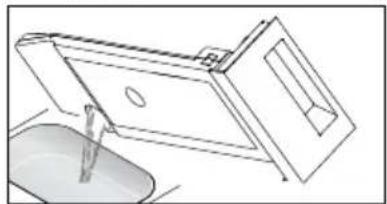
natural_image
Line drawing of a mechanical device with a water tank and handle (no text or symbols)
natural_image
Technical diagram of a washing machine interior showing blade and handle components (no text or labels)
MISE EN GARDE
Filtre à charpie
natural_image
Diagram of a device with a probe inserted into a grid, showing directional arrows (no text or symbols)natural_image
Technical line drawing of a mechanical frame or bracket assembly (no text or symbols)B.
C.
D.E.F.
natural_image
Line drawing of a washing machine with two warning symbols (no text or labels)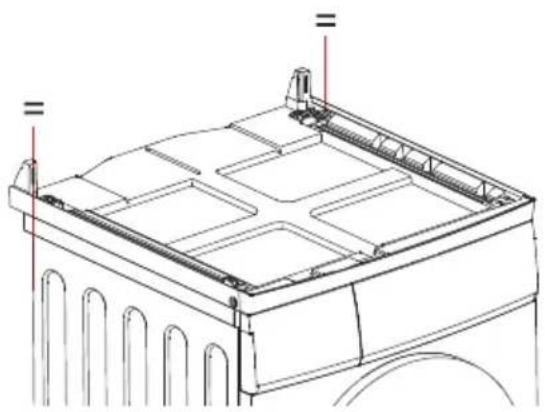
natural_image
Technical line drawing of a mechanical housing or enclosure with mounting brackets and structural elements (no text or symbols)Étape 3:
natural_image
Technical line drawing of a mechanical assembly with multiple cylindrical pins and mounting brackets (no text or symbols)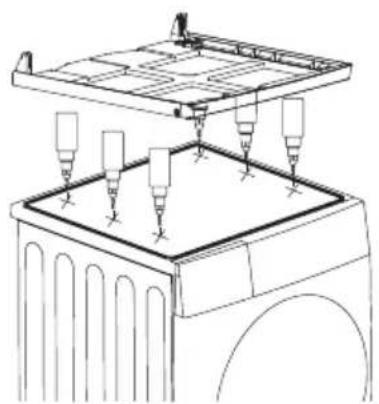
natural_image
Technical line drawing of a mechanical assembly with multiple cylindrical components mounted on a base (no text or symbols)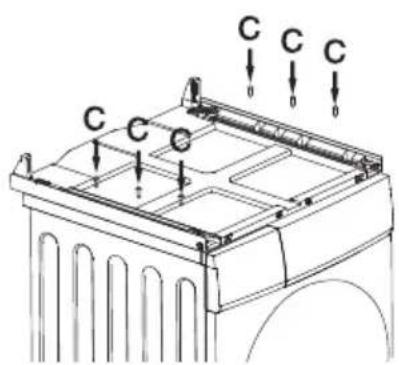
text_image
C C C 0 0 0EXIGENCES D'INSTALLATION
Étape 5:
text_image
Technical diagram showing mechanical assembly with labeled components (B, D, F) and circular motion indicatorsÉtape 6:
text_image
Technical diagram of a washing machine with an inset close-up showing a 12mm measurement detail.natural_image
Technical line drawing of a computer tower rear panel with internal wiring and a magnified inset showing internal components (no text or symbols)EXIGENCES D'INSTALLATION
Étape 7:
natural_image
Line drawing of a two-story refrigerator with front air gap and side door, showing internal components and airflow direction (no text or symbols)EXIGENCES D'INSTALLATION
Étape 9:
natural_image
Line drawing of a washing machine with front panel and side panel, no text or symbols presentMIDEA BUANDERIE SÉCHEUSE GARANTIE LIMITÉE
JOIGNEZ VOTRE REÇU ICI. UNE PREUVE D'ACHAT EST REQUISE POUR OBTENIR LE SERVICE DE GARANTIE.
Unit 2 - 215 Shields Court
Markham, ON, Canada L3R 8V2