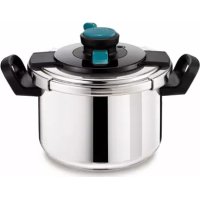
Clipso One P42414 - Saucepan TEFAL - Free user manual and instructions
Find the device manual for free Clipso One P42414 TEFAL in PDF.

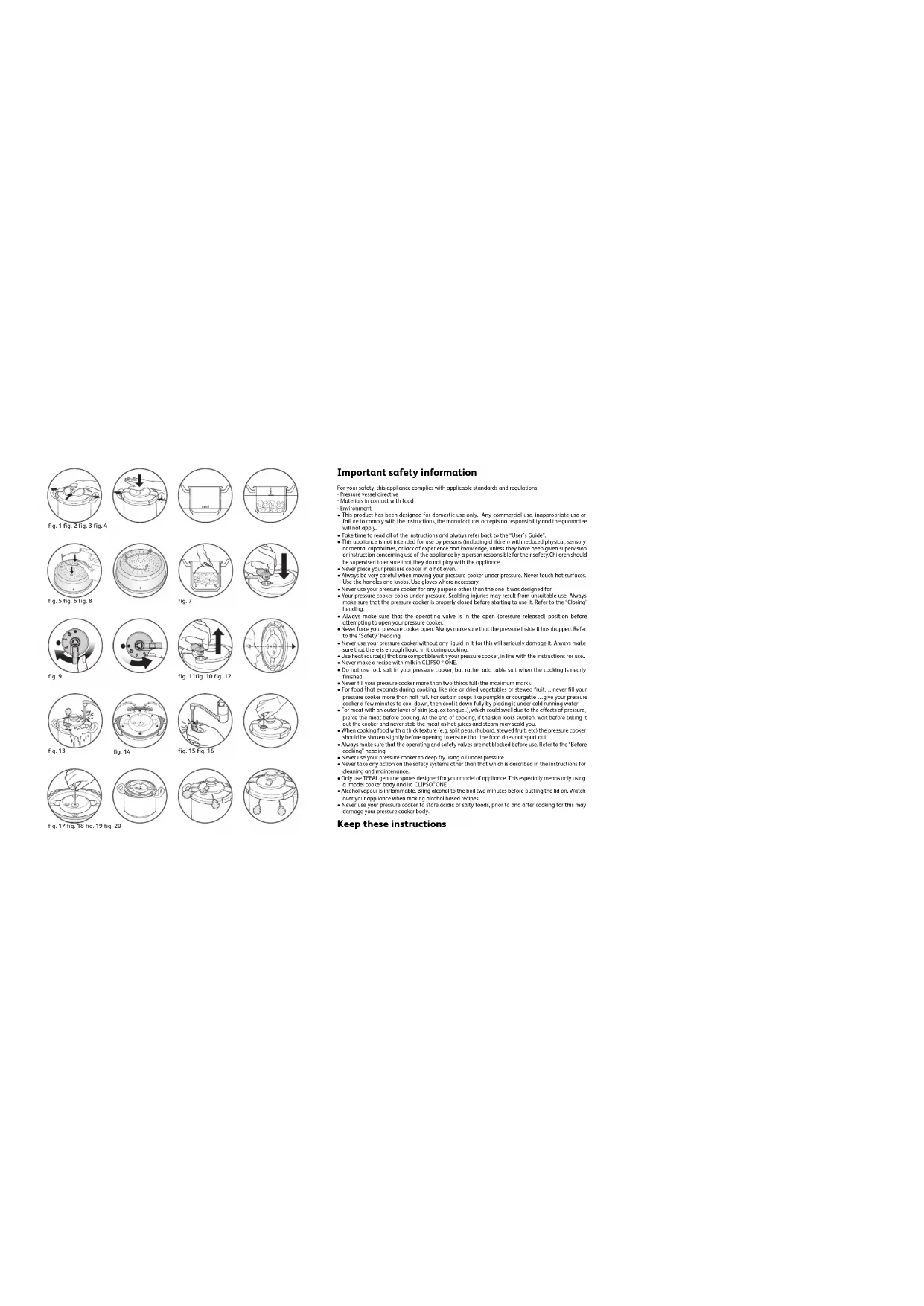


| Product type | Pressure cooker (stovetop pressure cooker) |
| Brand | Tefal |
| Model | Clipso One P42414 |
| Capacity | 8 liters |
| Bowl diameter | 25 cm |
| Bottom diameter | 20 cm |
| Material (bowl and lid) | Stainless steel |
| Operating pressure | 80 kPa |
| Maximum safety pressure | 120 kPa |
| Compatible heat sources | Gas, electric plate, ceramic glass, induction, spiral electric |
| Main functions | Pressure cooking, steam cooking |
| Operating valve positions | 1 (vegetables and delicate foods), 2 (meat, fish and frozen foods) |
| Included accessories | Steam basket, trivet |
| Cleaning | Bowl and steam basket dishwasher safe; lid (without valve and gasket) also compatible |
| Gasket maintenance | Clean after each use; replace annually |
| Safety | Safety lock on closing, pressure indicator, opening safety, double overpressure safety (safety valve and gasket) |
| Original spare parts | Gasket (ref. X1010003 for 8/10L), steam basket (X1030006), trivet (X1030007) |
| Bowl warranty | 10 years against structural defects and premature metal degradation |
| Other parts warranty | 1 year parts and labor (normal wear excluded) |
Frequently Asked Questions - Clipso One P42414 TEFAL
User questions about Clipso One P42414 TEFAL
0 question about this device. Answer the ones you know or ask your own.
Ask a new question about this device
Download the instructions for your Saucepan in PDF format for free! Find your manual Clipso One P42414 - TEFAL and take your electronic device back in hand. On this page are published all the documents necessary for the use of your device. Clipso One P42414 by TEFAL.
USER MANUAL Clipso One P42414 TEFAL
User's Guide - Guide de l'utilisateur Οδηγίες χρήσης - Kullanım Kilavuzu
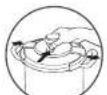
fig. 1 fig. 2 fig. 3 fig. 4
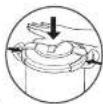
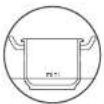
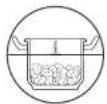
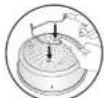
fig. 5 fig. 6 fig. 8
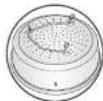

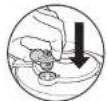
Fig. 7

fig. 9
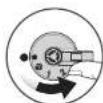
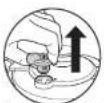
fig. 11 fig. 10 fig. 12
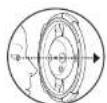

fig.13
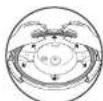
fig. 14
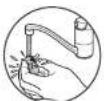
fig. 15 fig. 16
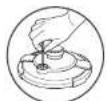
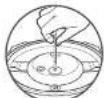
fig. 17 fig. 18 fig. 19 fig. 20
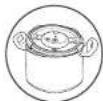
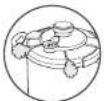
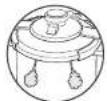
Important safety information
For your safety: this appliance composes with applicable standards and regulations.
-Pressure vessel directive
- Materials in contact with food
- Environment
- This product has been designed for domestic use only. Any commercial use, inappropriate use or failure to comply with the instructions, the manufacturer accepts no responsibility and the guarantee will not apply.
- Take time to read all of the instructions and always refer back to the 'User's Guide'.
- This appliance is not intended for use by persons (including children) with reduced physical, sensory or mental capabilities or lack of experience and knowledge, unless they have been given supervision or instruction concerning use of the appliance by a person responsible for their safety. Children should be supervised to ensure that they do not allow with the appliance.
- Never place your pressure cooker in a hot oven.
- Always be very careful when moving your pressure cooker under pressure. Never touch hot surfaces.
Use the handles and knobs. Use gloves where necessary
- Never use your pressure cooker for any purpose other than the one it was designed for.
- Your pressure cooker cooks under pressure. Scalding injuries may result from unsuitable use. Always make sure that the pressure cooker is properly closed before starting to use it. Refer to the "Closing" heading.
• Always make sure that the operating valve is in the open (pressure released) position before
attempting to open your pressure cooker.
- Never force your pressure cooker open. Always make sure that the pressure inside it has dropped. Refer
to the "Safety" heading
- Never use your pressure cooker without any liquid in it for this will seriously damage it. Always make
sure that lags is wanrah liquid oil during cooking.
- Use heat source(s) that are compatible with your pressure cooker, in line with the instructions for use.
- Never make a recipe with milk in CLIFSG < ONE.
- Do not use rock salt in your pressure cooker, but rather add table salt when the cooking is nearly
finished
- Never fill your pressure cracker more than two birds full (the maximum week).
• For food that expands during cooking, like rice or dried vegetables or stewed fruit... never fill your
pressure covers more than half All. For certain counts like up/ack's or counselling, also your pressure
pressure cooker more than half tank or certain swaps like Pennsylvania for outstanding high- your pressure cooker a few minutes to cool down, than cool it down fully by piocing it under cold quinoa water.
• For most with no much length of skin in a non-remnant, it should could smell due to the effects of vomiting.
where the most before meeting. At the end of course, if the city looks well, will before taking
place are first before booking. At the end of taking, if the start makes them, and the seconds and never stop the most as发生变化 and steam may occur yet.
- When cooking food with a black texture is a small bowl, toothed, stayed in it, and the pressure cooler.
- Which testing the material in the case of the 'log, spin, pass, finanlal, and metal rod, only it is put more than
Should be a matter slightly before opening to the next line then based on spin line.
- Always make sure that the operating unit safety waves are not affected before use. Nevertheless there
Cooking reach
- Never use your pressure cooker to deep fry using oil under pressure.
- Never take any action on the safety systems other than that which is described in the instructions for
cleaning and maintenance.
- Only use TEFAL genuine spaces designed for your model of appliance. This especially means only using
a model cooker body and lid CLIP50"ONE.
• Alcohol vapour is inflammable. Bring alcohol to the boil two minutes before putting the lid on. Watch
over your convenience when making alcohol based recipes.
- Never use your pressure cooker to store acidic or salty foods, prior to and after cooking for this may
damage your pressure
Keep these instructions
Description diagram
EN
A. Operating valve
B. Closing button
C. Steam release conduit
D. Valve positioning mark
E. Opening/Closing knob
F. Safety valve
G. Pressure presence indicator
H. Seal
I. Steaming basket
J. Tripod
K. Pressure cooker body
L. Pressure cooker body handle
M. Maximum filling mark
Characteristics
Pressure cooker base diameter – references
| Total Capacity† | Capacity | Cooker diameter | Base diameter | CLIPSO ® ONE | Material body and lid |
| 5 L 4,5 L | 22 cm 18 cm | P42406 | Stainless steel | ||
| 6.5 L 6 L | 22 cm | 18 cm | P42407 | ||
| 8.8 L 8 L | 25 cm | 20 cm | P42414 | ||
| 10.8 L | 10 L | 25 cm | 20 cm | P42415 |
* : Product capacity with the lid in position.
Standards information
Upper operating pressure limit: 80 kPa
Maximum safety pressure limit: 120 kPa
Compatible heat sources
GAS SOLID

HOTPLATE

CERAMIC
or HALOGEN

INDUCTION

ELECTRIC
HOTPLATE

- The CLIPSO® ONE pressure cooker can be used on all heat sources, except on Aga cookers.
- When using an electric hob or induction, make sure that the size of the hot plate does not exceed the size of the pressure cooker base.
- On a ceramic or halogen hob, always make sure that the pressure cooker base is clean and dry.
- On a gas hob, the flame should not lick past the diameter of the pressure cooker base.
On all burners, make sure that the pressure cooker is properly centred.
Never heat your pressure cooker when it is empty or you may damage it.
- The following CLIPSO® ONE accessories are available from shops:
| Accessories Reference | ||
| Seal | 4,5/6L | X1010004 |
| 8/10L | X1010003 | |
| Steaming basket X1030006 | ||
| Tripod X1030007 | ||
- To replace other parts or have repairs performed, please call on your local TEFAL Approved Service Centre.
- Only use TEFAL genuine parts designed for your product model.
Use
Opening
- Press the open button (E) on the lid - fig 1
Closing
The jaws must be in contact with the edge of the lid.
- Press the close button (B) on the lid - fig 2
Minimum and maximum filling
- At least 250 ml (2 glasses) - fig 3
• Maximum two-thirds of the pressure cooker height (M) - fig 4
For some food
- For food that expands during cooking, like rice or dried vegetables or compotes...never fill your pressure cooker more than half full. In the case of soups we recommend you do a fast decompression.
Using the steaming basket
Food placed in the steaming basket must not touch the pressure cooker lid.
- Poor 750 ml of water into the pressure cooker.
- Clip the tripod (J) under the steaming basket (I) - fig 5 et 6
- Please the steaming basket and its tripod into the bottom of the pressure cooker - fig 7
Using the operating valve
EN
- Place the valve (A) on the steam release conduit (C) by aligning the valve ● pictogram with the valve position tab (D) - fig 8
- Press all the way down - fig 8 - and turn the valve to the cooking position- fig 9
To cook delicate foods and vegetables
- Position the valve 1 pictogram opposite the positioning mark (D).
To cook meat, fish and frozen food
- Position the valve 2 pictogram opposite the positioning mark (D).
To remove the operating valve
- Press the operating valve (A) and align its ● pictogram with the positioning mark (D) - fig 10
- Remove the valve - fig 11
First use
- Clip the tripod (J) under the steaming basket (I) - figs 5 and 6
- Place the steaming basket (I) in the bottom of the pressure cooker - fig 7
- Fill the pressure cooker with water, up to the 2/3rds mark (M).
- Close the pressure cooker.
- Fit the operating valve (A) and set it to position 2.
- Place your pressure cooker on a heat source set to maximum power.
- When steam starts to escape from the valve, reduce the heat and time off 20 minutes.
- Once the 20 minutes are up, turn off the heat.
- Turn the operating valve to the position.
- Once the pressure indicator (G) drops down, your pressure cooker is no longer under pressure.
- Open the pressure cooker - fig 1
Before cooking
- Before using your pressure cooker, always visually make sure that the steam release conduit (C) is clear - fig 12
- Also make sure that the safety valve moves freely: refer to the “Cleaning and Maintenance” heading.
- Close your pressure cooker - fig 2
• Fit the valve (A) - fig 8 - Press it all the way down and turn it to the desired position - fig 9
- Always make sure that the pressure cooker is properly closed before using it.
- Place your pressure cooker on a heat source set to maximum power.
During cooking
- Once the operating valve starts to continuously release steam and a regular hissing sound can be heard, reduce the heat level.
- Set a timer for the cooking time stated in your recipe.
- During cooking, make sure that regular hissing noises are heard from the valve. If there is not enough steam released, slightly increase the heat level, or on the contrary, reduce it a little.
Finishing cooking
To release the steam
- Once the heat is turned off, you have two options:
- Slow pressure release: turn the operating valve (A) to the position. Once the pressure indicator (G) drops down, your pressure cooker is no longer under pressure.
- Fast pressure release: place your pressure cooker under a cold water tap - fig 13. Once the pressure indicator (G) drops down, your pressure cooker is no longer under pressure. Turn the operating valve (A) to the position.
- Now you can open your pressure cooker - fig 1
If the pressure indicator (G) does not drop back, place your pressure cooker under a cold water tap - fig 13 Never tamper with the pressure indicator.
If when steam is released, you observe any unusual spray: refit the operating valve (A) in the cooking position: 1 or 2, and then release fast.
Cleaning and maintenance
EN
Cleaning the pressure cooker
- For best appliance operation, be sure to follow these cleaning and maintenance recommendations every time the pressure cooker is used.
- Always wash the pressure cooker after use with warm water with a little washing up liquid added. Do the same for the basket.
- Never use bleach or chlorine products.
- Never overheat the pressure cooker body when it is empty.
To clean the inside of the pressure cooker
- Clean it with a scouring pad and washing up liquid.
- If the inside of the stainless steel cooker shows iridescent streaks, clean it with vinegar.
To clean the outside of the pressure cooker
- Clean it with a sponge and washing up liquid.
To clean the lid
- Wash the lid under a little stream of warm water using a sponge and washing up liquid.
To clean the lid seal
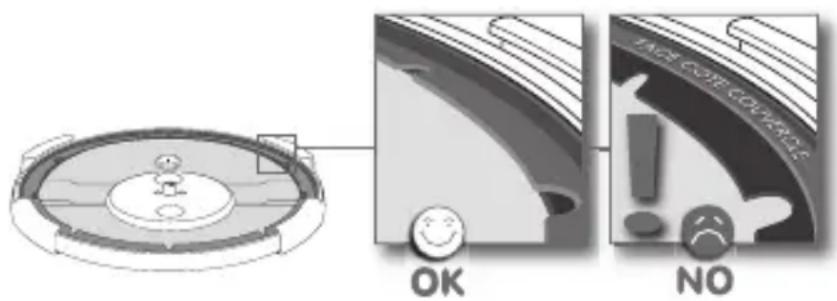
- After using the pressure cooker, always clean the seal (H) and its groove.
- To refit the seal, refer to - fig 14 and ensure that the words "face côté couvercle" (Cover side) are placed against the lid.
To clean the operating valve (A)
- Remove the operating valve (A) - fig 11
- Clean the operating valve (A) under running tap water - fig 15
- Check that it moves: see drawing opposite
To clean the operating valve conduit located in the lid
- Remove the valve (A) - fig 11
- Visually make sure that the steam release conduit is round and clear - fig 12. If necessary, clean it with a Q-tip - fig 16 and rinse it.
To clean the safety valve (F)
- Clean the part of the safety valve located inside the lid by placing it under running water.
- Check that it works properly by lightly pressing on the plunger that should move without difficulty - fig 17
To replace your pressure cooker seal
- Replace your pressure cooker seal every year.
- Replace your pressure cooker seal if it shows any signs of splitting or damage.
- Always use a TEFAL genuine seal that matches your model of pressure cooker.
To store your pressure cooker
- Turn the lid over and place it on the pressure cooker body.
Browning and scratching that may appear following long periods of use are normal and will not affect the performance of the pressure cooker.
You can wash the pressure cooker body and the basket in a dishwasher.
After removing the operating valve (A) and the seal (H), you can wash the lid in a dishwasher.
Never remove the nut and bolt located inside the lid.
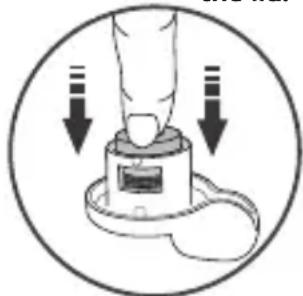
Never use a cutting or pointed object to do this, you can use a cotton bud.
For a longer pressure cooker life: do not overheat your pressure cooker pan when it is empty.
Always have your pressure cooker checked by a TEFAL Approved Service Centre after ten years of use.
Safety
Your pressure cooker is provided with a number of safety mechanisms:
- Closure safety:
- The jaws should be in contact with the lid edge. If this is not the case, then steam will escape from the pressure indicator and the pressure cooker will never come up to pressure.
- Opening safety:
- While the pressure cooker is under pressure, the opening knob cannot be actuated.
- Never force the pressure cooker open.
- Never tamper with the pressure indicator.
- Always make sure that the pressure inside the pressure cooker has been released.
- Two excess pressure safety features:
- First feature: the safety valve (F) releases pressure - fig 19
- Second feature: the seal lets steam escape between the base and the lid - fig 20
If one of the two excess pressure safety systems is triggered:
- Turn off the heat.
- Allow the pressure cooker to cool down completely.
- Open it up.
- Check and clean the operating valve (A), the steam release conduit (C), the safety valve (F) and the seal (H).
- If after these checks and after cleaning, your appliance leaks or no longer operates, return it to a TEFAL Approved Service Centre.
Recommendations for use
1 - The steam is very hot when it leaves the operating valve.
2 - As soon as the pressure indicator rises, you can no longer open your pressure cooker.
3 - Just as for any other cooking appliance, always pay close attention to it, especially during use in the presence of children.
4 - Beware of the steam jet.
5 - To move the pressure cooker, always use both of the handles.
6 - Never leave food in your pressure cooker.
7 - Never use bleach or chlorine products for they could affect the quality of the stainless steel.
8 - Never leave the lid to soak in water.
9 - Replace the seal every year.
10 - A pressure cooker may only be cleaned when cold and when empty.
11 - Always have your pressure cooker checked by a TEFAL Approved Service Centre after ten years of use.
Guarantee
- Your new TEFAL pressure cooker comes with a ten-year guarantee for use under the conditions set out in these instructions. This guarantee covers:
- Any defects relating to the metal structure of the pressure cookebody,
- Any premature deterioration of the metal base.
- For other parts, a one year parts and labour guarantee is provided (except where applicable law in your own country states otherwise). This guarantee covers any defects or manufacturing faults.
- The contractual guarantee cover is provided only on presentation of a valid proof of purchase which shows the date of purchase.
• The guarantee cover excludes:
- The normal life of the seal, pressure control valve or locking indicator seal is limited. These parts are excluded from the guarantee and will require periodic renewal.
- Any damage consecutive to a failure to follow the major recommendations made or due to negligent use, especially:
- Dropping, falls, bangs or knocks, placing in an oven...
- Washing the lid in the dishwasher.
- Only TEFAL Approved Service Centres are authorised to provide service under guarantee.
- Please call the Helpline number below for the address of your nearest TEFAL Approved Service Centre.
Regulation markings
| Marking Location | |
| Manufacturer's identification or trademark Closing knob | |
| Year of and batch of manufactureModel referenceMax. operating pressureMax. safety pressure | On the top of the lid, when it is in the "Open" position |
| Capacity On the outside of the pressure cooker body |
TEFAL answers your questions
| Problems | Recommendations |
| If you cannot close the lid: | Check that the Open knob (E) is pressed down.Check the way the seal is fitted, see the "Cleaning and Maintenance" heading. |
| If the pressure cooker has heated up under pressure with no liquid inside: | Have your pressure cooker inspected by a TEFAL Approved Service Centre. |
| If the pressure indicator did not rise and nothing escapes from the valve during cooking: | This is normal for the first few minutes.If the problem persists, check that:- The heat source is high enough, if not, increase it.- The amount of liquid in the pressure cooker is sufficient.- The operating valve is in position 1 or 2.- Your pressure cooker is properly closed.- The seal and the pressure cooker edge have not been damaged.- The seal is properly fitted, see the "Cleaning and Maintenance" heading. |
| If the pressure indicator has risen but still nothing escapes from the valve during cooking: | This is normal for the first few minutes.If the phenomena persists, place your appliance under a stream of cold water until the pressure presence indicator drops down.Clean the operating valve - fig 15 and the steam release conduit - fig 16 and check that the safety valve flap moves without difficulty - fig 17. |
| If steam escapes from around the lid, check: | That the lid is properly closed.The position of the lid seal.That the seal is in good condition, and if necessary, replace it.That the lid, the seal, its housing in the lid are clean.That the edge of the pressure cooker body is in good condition. |
| If you see steam escaping from around the lid accompanied by an ear-piercing noise : | Check that the seal is not caught between the pot and the lid. |
| If you cannot open the lid: Check th | at the pressure indicator is down.If not: release pressure, if necessary by cooling the pressure cooker under cold running water.Never tamper with this pressure indicator. |
| If food is not cooked or has burnt, check: | The cooking time.The heat level.That the cooking program selector was in the right position.The amount of liquid. |
| If food has burnt in the pressure cooker: | Leave the pressure cooker to soak for a while before washing.Never use bleach or chlorine products. |
| If one of the safety systems is triggered: | Turn off the heat.Leave the pressure cooker to cool down without moving it.Wait for the pressure indicator to drop down and open the pressure cooker.Check and clean the operating valve, the steam release conduit, the safety valve and the seal.If the fault persists, have your appliance inspected by a TEFAL Approved Service Centre. |
Australian – NZ warranty
COOKWARE, BAKEWARE AND PRESSURE COOKERS
Limited Replacement Guarantee
Our goods come with guarantees that cannot be excluded under the Australian Consumer Law. You are entitled to a replacement or refund for a major failure and compensation for any other reasonably foreseeable loss or damage. You are also entitled to have the goods repaired or replaced if the goods fail to be of acceptable quality and the failure does not amount to a major failure. In addition to these statutory rights and any other rights and remedies you may have under the law, Groupe SEB Australia Pty Ltd (we or us) guarantees this Jamie Oliver by Tefal/Tefal/All-Clad/Moulinex product will be free of defects in material and craftsmanship including handles, body, knobs, lids and fixings for 12 months from the date of purchase. We also guarantee the non-stick coating of this Jamie Oliver by Tefal/Tefal/All-Clad/Moulinex product will be free of blistering or peeling for the life of the Jamie Oliver by Tefal/Tefal/All-Clad/Moulinex product. Should your Jamie Oliver by Tefal/Tefal/All-Clad/Moulinex product develop a defect during the guarantee period or the non-stick coating peel during the life of your Jamie Oliver by Tefal/Tefal/All-Clad/Moulinex product, you should return it, at your cost, to the retailer from which you purchased it from, together with your receipt as proof of purchase. The retailer will then forward your claim directly to us for processing. Alternatively, if the retailer is unable to help you, you may contact us directly at:
Groupe SEB Australia Pty Ltd, Customer Service Department, Unit 1, No 10 Hill Rd, Homebush NSW 2127 T: +61 2 9748 7944
If on receipt your Jamie Oliver by Tefal/Tefal/All-Clad/Moulinex product is found to be defective or the non-stick coating has peeled, we will, at our cost, replace or repair the product in our discretion. Only the defective part or accessory will be repaired or replaced. Packaging, instructions etc. will not be replaced unless faulty. This guarantee excludes defects caused by the Jamie Oliver by Tefal/Tefal/All-Clad/Moulinex product not being used in accordance with instructions, accidental damage (including overheating), misuse or being tampered with by unauthorised persons. It also does not apply if the Jamie Oliver by Tefal/Tefal/All-Clad/Moulinex product is used commercially and excludes consumable items (including accessories such as pressure regulators and safety devices), dishwasher effects and damages, stains, dents, discolouration, scratches or scuffs due to normal wear and tear, and your costs of claiming under the warranty.
Ten tasty recipes to prepare with your pressure cooker
All the recipes are intended for 4 people. For pressure cookers with a capacity of less than 6 litres, reduce the proportions by a third.
Starter
Vegetable soup
4 potatoes 1 leek, 4 carrots, 1 turnip, 1 litre of water, salt, pepper, 3 table spoons of crème fraîche (optional).
Serves 4
Preparation time: 15 min.
Valve position: 1
Cooking time: 10 min.
Peel and wash the vegetables.
Cut the potatoes and the turnip into large dice. Thinly slice the carrots and the leek.
Pour 1 litre of water into the pressure cooker, and then add the vegetables, the salt and the pepper.
Seal the pressure cooker. As soon as the valve begins to whistle, reduce the heat and cook for the recommended amount of time. Decompress under water.
If liked, the crème fraîche can be added before serving.
Fish
Ling fish "Papillote" with citrus fruit
4 ling fish fillets, 150 grams each, 1 grapefruit, 1 orange, the juice of one lime, 2 tomatoes, 1 onion, 2 sliced shallots, 60 grams of butter, 1 glass of dry white wine, a few estragon leaves, salt, pepper.
Serves 4
Preparation time: 25 min.
Valve position: 2
Cooking time: 8 min.
Cut the tomatoes into slices. Peel the onion and slice it very finely.
Skin the grapefruit and oranges and take out the quarters taking care to retain their juice.
Place three tomato slices in the centre of four sheets of aluminium foil, slightly overlapping them. Cover with some sliced onions and shallots, add a few estragon leaves, then place the fish fillets on top. Fold up the sides of each foil "papillote" so that it will hold one tablespoon of white wine and two tablespoons of grapefruit-orange juice without leaking. Add a few drops of lime, salt and pepper to taste.
On top of each fish fillet, place one quarter of grapefruit, two quarters of orange and 15 grams of fresh butter. Close up the foil "papillotes" before delicately placing them in the steaming basket.
Pour 70 cl of water into the pressure cooker. Place the steaming basket on its tripod, in the pressure cooker, taking care to make sure that it is not in contact with the water.
Close the pressure cooker. As soon as the valve starts to hiss, lower the heat and leave to cook for the specified duration. When cooked, open the pressure cooker.
Remove the steaming basket from the pressure cooker and delicately place one ling fish foil "papillote" on each plate. Open up the "papillotes" at the table using scissors. An avocado salad may be served with this dish.
Spring Navarin stew
600 grams of mutton collar and 600 grams of breast cut into chunks, a bunch of new carrots, a bunch of spring onions, a bunch of spring leaks, 4 small new potatoes, 100 grams of green beans, 2 peeled tomatoes, 2 cloves of garlic, 1 bouquet garni, a tablespoon of chopped estragon, 30 grams of butter, 15 cl of white wine, 1 tablespoon of green aniseed, 1 tablespoon of olive oil, a tablespoon of flour, salt, pepper.
Serves 4
Preparation time: 20 min.
Valve position: 2
Cooking time: 10 min.
+ 7min.
Peel and wash all of the vegetables. Using the pressure cooker, sear the pieces of meat and the unpeeled garlic in the oil and butter. Salt and pepper. Sprinkle the flour over the ingredients and mix well. Pour in the white wine, add the aniseed, the bouquet garni of herbs and the crushed tomatoes. Complete with water to cover the meat. Bring to the boil.
Close the pressure cooker. As soon as the valve starts to hiss, lower the heat and leave to cook for the first cooking duration specified. After this time, open the pressure cooker. Add the vegetables, salt and pepper them. Close up the pressure cooker. As soon as the valve starts to hiss, lower the heat and leave to cook for the second cooking duration specified. After this time, open the pressure cooker.
Remove the meat and the vegetables, letting the juice run off, remove the bouquet garni and the garlic.
Let the cooking juices reduce over high heat until a thick gravy is obtained. Place the meat and the vegetables in a serving dish and wet with gravy. Add the estragon and serve.
Veal
Three-mustard roast
1 kg rack of veal, tied as a roast, 6 carrots, 3 garlic cloves, 1 onion, 1 bouquet garni, 2 tablespoons of thick crème fraîche, 40 grams of butter, 30 cl of dry white wine, 2 tablespoons of Meaux mustard, 1 tablespoon of strong French mustard and 2 tablespoons of mild estragon-flavoured mustard, 1 tablespoon of oil, granulated sugar, salt, pepper.
Serves 4
Preparation time: 25 min.
Valve position: 2
Cooking time: 11 min.
Stud the roast with slivers of garlic. Using the pressure cooker, brown the roast in the butter and oil. Salt and pepper to taste. Remove the roast. Now brown the sliced carrots in place of the meat and add 2 tablespoons of sugar, some salt and pepper. Place the roast back into the pressure cooker, add the bouquet garni, the onion and the white wine. Close the pressure cooker. As soon as the valve starts to hiss, lower the heat and leave to cook for the stated duration. Once cooked, open the pressure cooker.
Remove the roast and the carrots. Bring the cooking juices to the boil and reduce by one third. Add the crème fraîche and leave to cook for 5 minutes at low heat, then add the mustard without allowing it to boil. Sieve the gravy and add a little water if necessary.
Cut the roast. Serve with gravy and carrots.
Beef
1.2 kg of beef (topside or blade roast, ox tail, a little beef rib end), 2 marrow bones, 800 grams of large potatoes, half a lemon, one onion studded with cloves, 3 carrots, 3 leeks tied up, 3 turnips, 1 celery branch, 1/2 celeriac, 1 garlic clove, 1 bouquet garni, 4 tablespoons of Port wine, 4 slices of toasted wholewheat bread rubbed with garlic, pickles, whole salt, salt, pepper.
Serves 4
Preparation time: 20 min.
Valve position: 2
Cooking time: 20 min.
+ 20 min.
Clean and peel the vegetables, cut them into pieces. Pour 2 litres of water into the pressure cooker, and add the onion, carrots, leeks, turnips, celeriac, the garlic clove, the celery branch and the bouquet garni of herbs. Salt and pepper. Bring to the boil, then drop in the pieces of meat. Cook for 10 minutes over low heat while regularly skimming off the foam that forms on the surface.
Close the pressure cooker. As soon as the valve starts to hiss, lower the heat and leave to cook for the stated duration. Once cooked, open the pressure cooker. Remove the carrots, leeks, turnips and the celeriac and set them aside. Close the pressure cooker once again. As soon as the valve starts to hiss, lower the heat and leave to cook for the second stated duration. Once cooked, open the pressure cooker.
Wash and peel the potatoes and cook them in a pan of salted water. While the meat and potatoes are cooking, cut up the lemon slices and place them on each end of the marrow bones using kitchen string. Place the marrow bones in a pan full of slightly salted and lemon flavoured water and leave to cook for 10 minutes over low heat.
Strain the meat. Serve it with a surrounding of vegetables and with whole salt and pickles. Strain the bones and remove the marrow. Serve the marrow with the slices of toasted bread lightly rubbed with garlic. Serve the bouillon separately after first adding 3 or 4 tablespoons of Port wine.
Poultry
Basque chicken
A 1.5 kg chicken cut up by the poultry butcher, one 400 gram tin of whole peeled tomatoes, one 400 gram tin of red pepper, one 400 gram tin of green pepper, 3 chopped garlic cloves, 3 sliced onions, 1 bouquet garni, 2 glasses of white wine, 4 tablespoons of olive oil, salt and pepper
Serves 4
Preparation time: 20 min.
Valve position: 2
Cooking time: 11 min.
Carefully strain the peppers before slicing them. Using the pressure cooker, heat up the olive oil with half of the garlic over high heat, then fry the chicken pieces. Salt and pepper. Pour in one glass of white wine to deglaze the cooking juices stuck to the bottom of the pressure cooker, then take out the pieces.
Still using the same pressure cooker, brown the onions. Add the sliced peppers and cook for 5 minutes over high heat while stirring. Add the tomatoes, the bouquet garni of herbs, the garlic and the remainder of the wine. Salt and pepper.
Leave to simmer for 3 minutes and put the chicken pieces back in.
Close the pressure cooker. As soon as the valve starts to hiss, lower the heat and leave to cook for the stated duration.
Remove the bouquet garni, then put a few pieces of chicken in each plate along with the Basque-style trimmings. Serve with pilaf rice.
Ratatouille
Five courgettes cut into slices, 4 aubergines cubed, 4 large tomatoes quartered, 2 red peppers diced, 1 green pepper in strips, 2 large chopped onions, 3 peeled garlic cloves puréed, 1 branch of thyme, 1 laurel leaf, 1 branch of rosemary, 1 small bowl of basil, 1/2 bunch of coriander, 6 tablespoons of olive oil, salt and pepper.
Serves 6
Preparation time: 15 min.
Valve position: 1
Cooking time: 14 min.
Using the pressure cooker, brown the onions, diced red pepper and green pepper strips in 3 tablespoons of olive oil. Once they are brown, add the aubergine cubes, the courgette slices, the tomatoes and the rest of the oil. Finish up with the thyme, laurel, rosemary and garlic. Season with salt and pepper. Stir well.
Close the pressure cooker. Close the pressure cooker. As soon as the valve starts to hiss, lower the heat and leave to cook for the stated duration. Once cooked, open the pressure cooker and replace on low heat to let the ratatouille cook down for 10 minutes or so, without a lid. Season to taste, if necessary.
Serve the ratatouille hot, garnished with a mixture of chopped basil and coriander.
Pilaf rice
200 grams of rice, 40 grams of butter, 75 cl of chicken bouillon, 4 tablespoons of peanuts, salt, pepper.
Serves 4
Preparation time: 20 min.
Valve position: 1
Cooking time: 8 min.
Rinse the rice in fresh water several times and dry it well. Using the pressure cooker, fry it over low heat in the oil and in 20 grams of butter.
Salt and pepper. Stir and add the chicken bouillon. Close the pressure cooker. As soon as the valve starts to hiss, lower the heat and leave to cook for the stated duration. Once cooked, open the pressure cooker.
Remove the rice and strain it. Pour it into a large bowl and add the remaining butter, and stir.
This pilaf rice complements exotic dishes, fish, poultry and veal.
Desserts
Three flavour caramel compote
4 Reinette apples, 4 Granny Smith apples, 4 Canada apples, 100 grams of pine nuts, 60 grams of butter, 100 grams of brown sugar, 2 pinches of powdered cinnamon, 1 teaspoon of liquid vanilla, a pinch of ground ginger.
Serves 4 to 6
Preparation time: 15 min.
Valve position: 1
Cooking time: 6 min.
Peel the apples, pit them and cut them into quarters 2 cm thick.
Using the pressure cooker, gently heat them in the butter. Add the cinnamon, vanilla, ginger, brown sugar and pine nuts. Stir with a wooden spoon.
Close the pressure cooker. As soon as the valve starts to hiss, lower the heat and leave to cook for the stated duration. Once cooked, open the pressure cooker.
Serve the compote cold or warm with a scoop of vanilla ice cream or a tablespoon of crème fraîche.
Small crème caramels
25 cl of milk, 1/2 vanilla pod cut in two, 3 egg yolks, 100 grams of granulated sugar, a few drops of vinegar.
Serves 4
Preparation time: 15 min.
Valve position: 1
Cooking time: 7 min.
Boil the milk with the vanilla. Pour 50 grams of sugar and the egg yolks into a dish. Beat the eggs well until a white mixture is obtained. Slowly pour in the boiling milk (after removing the vanilla pod) over the egg while continuing to beat them.
Using a thick-based pan, pour in the rest of the sugar with two tablespoons of water and a few drops of vinegar. Heat over low heat until a pale caramel is obtained. Coat four individual cooking dishes with caramel. Filter the egg preparation using a strainer and pour it into the individual cooking dishes. Cover them with a small piece of aluminium foil.
Place the dishes in the steaming basket.
Pour 75 cl of water into the pressure cooker and place the steaming basket in it, on its tripod. Close the pressure cooker. As soon as the valve starts to hiss, lower the heat and leave to cook for the stated duration. Once cooked, open the pressure cooker.
Leave the crème dishes to cool before placing them in the fridge.
Turn out onto a plate and serve cold.
Table of cooking times
Vegetables
| Cooking | FRESH PRODUCE Valve position 1 | FROZEN PRODUCE Valve position 2 | ||
| Artichoke | - steam* | 18 min. | ||
| - immersion** | 15 min. | |||
| Asparagus - immersion | 5 min. | |||
| Beetroot, red - steam | 20 - 30 min. | |||
| Broccoli - steam | 3 min. | 3 min. | ||
| Brussels sprouts | - steam | 7 min. | 5 min. - immersion | |
| Cabbage, green | sliced | - steam | 6 min. | |
| leaves | - steam | 7 min. | ||
| Carrots | sliced | - steam | 7 min. | 5 min. |
| Cauliflower | - immersion | 3 min. | 4 min. | |
| Celery | - steam | 6 min. | ||
| - immersion | 10 min. | |||
| Courgettes | - steam | 6:30 min. | 9 min | |
| - immersion | 2 min. | |||
| Endives | - steam | 12 min. | ||
| Green beans | - steam | 8 min. | 9 min. | |
| Green lentils (dried pulses) | - immersion | 10 min. | ||
| Leek | sliced | - steam | 2:30 min. | |
| Mushrooms | sliced | - steam | 1 min. | 5 min. |
| whole | - immersion | 1:30 min. | ||
| Peas | - steam | 1:30 min. | 4 min. | |
| Potatoes | quartered | - steam | 12 min. | |
| - immersion | 6 min. | |||
| Pumpkin (mashed) | - immersion | 8 min. | ||
| Rice (dried pulses) | - immersion | 7 min. | ||
| Spinach | - steam | 5 min. | 8 min. | |
| - immersion | 3 min. | |||
| Split peas (dried pulses) | - immersion | 14 min. | ||
| Turnips | - steam | 7 min. | ||
| - immersion | 6 min. | |||
| Wheat (dried pulses) | - immersion | 15 min. | ||
| White beans semi-dry | - steam | 20 min. |
* In the steam basket
** In water
Meat - Fish
| FRESH PRODUCEValve position 2 | FROZEN PRODUCEValve position 2 | |
| Beef (roast 1 Kg) 10 min. 28 min. | ||
| Chicken (whole 1.2 Kg) 20 min. 45 min. | ||
| Lamb (leg 1.3 Kg) 25 min. 35 min. | ||
| Monk fish (fillets 0.6 Kg) 4 min 6 min | ||
| Pork (roast 1 Kg) 25 min. 45 min. | ||
| Salmon (4 steaks 0.6 Kg) 6 min 8 min | ||
| Tuna (4 steaks 0.6 Kg) 7 min 9 min |
Précautions importantes



- IMPORTANT SAFETY INFORMATION
- KEEP THESE INSTRUCTIONS
- DESCRIPTION DIAGRAM
- CHARACTERISTICS
- STANDARDS INFORMATION
- COMPATIBLE HEAT SOURCES
- USE
- OPENING
- CLOSING
- MINIMUM AND MAXIMUM FILLING
- FOR SOME FOOD
- USING THE STEAMING BASKET
- USING THE OPERATING VALVE
- TO COOK DELICATE FOODS AND VEGETABLES
- TO COOK MEAT, FISH AND FROZEN FOOD
- TO REMOVE THE OPERATING VALVE
- FIRST USE
- BEFORE COOKING
- DURING COOKING
- FINISHING COOKING
- TO RELEASE THE STEAM
- CLEANING AND MAINTENANCE
- CLEANING THE PRESSURE COOKER
- TO CLEAN THE INSIDE OF THE PRESSURE COOKER
- TO CLEAN THE OUTSIDE OF THE PRESSURE COOKER
- TO CLEAN THE LID
- TO CLEAN THE LID SEAL
- TO CLEAN THE OPERATING VALVE (A)
- TO CLEAN THE OPERATING VALVE CONDUIT LOCATED IN THE LID
- TO CLEAN THE SAFETY VALVE (F)
- TO REPLACE YOUR PRESSURE COOKER SEAL
- TO STORE YOUR PRESSURE COOKER
- SAFETY
- CLOSURE SAFETY
- OPENING SAFETY
- TWO EXCESS PRESSURE SAFETY FEATURES
- RECOMMENDATIONS FOR USE
- GUARANTEE
- AUSTRALIAN – NZ WARRANTY
- COOKWARE, BAKEWARE AND PRESSURE COOKERS
- LIMITED REPLACEMENT GUARANTEE
- TEN TASTY RECIPES TO PREPARE WITH YOUR PRESSURE COOKER
- STARTER
- VEGETABLE SOUP
- SERVES 4
- FISH
- LING FISH "PAPILLOTE" WITH CITRUS FRUIT
- SPRING NAVARIN STEW
- VEAL
- THREE-MUSTARD ROAST
- BEEF
- POULTRY
- BASQUE CHICKEN
- RATATOUILLE
- SERVES 6
- PILAF RICE
- DESSERTS
- THREE FLAVOUR CARAMEL COMPOTE
- SMALL CRÈME CARAMELS
- TABLE OF COOKING TIMES
- VEGETABLES
- PRÉCAUTIONS IMPORTANTES
Brand : TEFAL
Model : Clipso One P42414
Category : Saucepan