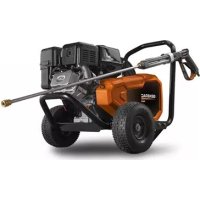
PRO 6712 - Pressure washer Generac - Free user manual and instructions
Find the device manual for free PRO 6712 Generac in PDF.



| Product Type | Pressure Washer |
| Brand | Generac |
| Model | PRO 6712 |
| Power Source | Gasoline (thermal engine) |
| Working Pressure | High pressure (not specified) |
| Required Water Supply Flow | ≥ 3.8 GPM (17.3 L/min) at 30 psi (206.8 kPa) |
| Max Water Temperature | 38 °C (100 °F) |
| Engine Oil Type | 5W-30 or 10W-30 depending on temperature |
| Pump Oil Type | SAE 15W40 non-detergent |
| Nozzles Included | 5 nozzles: red (max), yellow (medium), green (general), white (delicate), black (detergent) |
| Features | Automatic cooling system, detergent injection, trigger safety lock |
| Routine Maintenance | Check oil levels, clean filters, change oil every 50 h |
| Start Type | Recoil starter |
| Fuel | Unleaded gasoline 87 octane min., up to 10% ethanol |
| Safety | Engine stop, trigger lock, thermal relief valve, injection protection |
| Included Accessories | Gun, lance, HP hose, detergent siphon tube, nozzles, manual |
| Warranty | Manufacturer warranty (details on Generac website) |
Frequently Asked Questions - PRO 6712 Generac
User questions about PRO 6712 Generac
0 question about this device. Answer the ones you know or ask your own.
Ask a new question about this device
Download the instructions for your Pressure washer in PDF format for free! Find your manual PRO 6712 - Generac and take your electronic device back in hand. On this page are published all the documents necessary for the use of your device. PRO 6712 by Generac.
USER MANUAL PRO 6712 Generac
natural_image
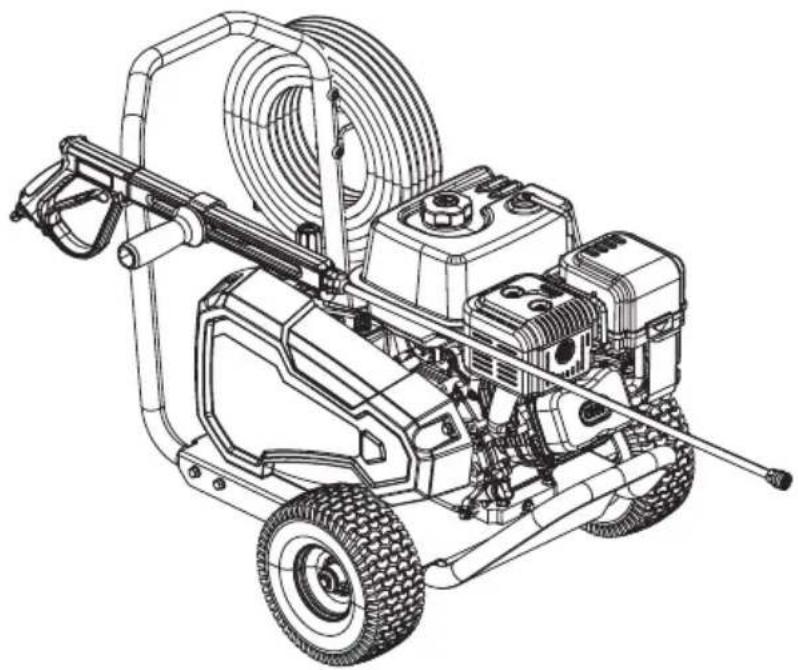
Technical line drawing of a pressure pump tool with hoses and components (no text or symbols)MODEL:
SERIAL:
DATE PURCHASED:
Register your Generac product at:
register.generac.com
1-888-922-8482
Section 1 Introduction and Safety 1
Introduction 1
Safety Rules 1
Safety Symbols and Meanings ..... 2
Section 2 General Information and Setup
Know Your Power Washer 3
Emissions Information 3
Remove Contents from Carton ..... 4
Assembly 4
Add Engine Oil 4
Check Pump Oil 5
Fuel 5
Water Supply 5
Connect Water Supply 6
Connect Lance and High-Pressure
Hose to Spray Gun 6
Spray Gun 6
How to Use Nozzles 6
Section 3 Operation ....8
Operation and Use Questions ....8
Before Starting Engine 8
Prepare Power Washer for Use .....8
Apply Detergent 10
Rinsing 10
Clean Detergent Siphoning Tube ..10
Automatic Cool Down System
(Thermal Relief) 11
Section 4 Maintenance and
Troubleshooting 12
Maintenance 12
Maintenance Schedule 12
Preventive Maintenance ....12
Engine Maintenance ....14
Service Spark Plug 15
Storage 16
Troubleshooting ....18
Notes 19
Section 1 Introduction and Safety
Introduction

WARNING
Consult Manual. Read and understand manual completely before using product. Failure to completely understand manual and product could result in death or serious injury (000100a)
Thank you for purchasing a Generac Power Systems Inc. product. This unit has been designed to provide high performance, efficient operation, and years of use when maintained properly.
If any section of the manual is not understood, contact your nearest Independent Authorized Service Dealer (IASD), or contact Generac Customer Service at 1-888-GENERAC (1-888-436-3722), or http://www.generac.com/ with any questions or concerns.
The owner is responsible for proper maintenance and safe use of the equipment. Before operating, servicing or storing this power washer:
- Study all warnings in this manual the product carefully.
- Become familiar with this manual and the unit before use.
• Refer to the Assembly section of the manual for instructions on final assembly procedures. Follow the instructions completely.
Save these instructions for future reference. ALWAYS supply this manual to any individual that will use this machine. The information in this manual is accurate based on products produced at the time of publication. The manufacturer reserves the right to make technical updates, corrections, and product revisions at any time without notice.
Safety Rules
The manufacturer cannot anticipate every possible circumstance that might involve a hazard. The warnings in this manual, and on tags and decals affixed to the unit are, therefore, not all inclusive. If using a procedure, work method or operating technique that the manufacturer does not specifically recommend, verify that it is safe for others. Also make sure the procedure, work method or operating technique utilized does not render the equipment unsafe.
Throughout this publication, and on tags and decals affixed to the generator, DANGER, WARNING, CAUTION and NOTE blocks are used to alert personnel to special instructions about a particular operation that may be hazardous if performed incorrectly or carelessly. Observe them carefully. Their definitions are as follows:
DANGER
and on
Indicates a hazardous situation which, if not avoided, will result in death or serious injury.
(000001)
WARNING
Indicates a hazardous situation which, if not avoided, could result in death or serious injury.
(000002)
CAUTION
Indicates a hazardous situation which, if not avoided, could result in minor or moderate injury.
(000003)
NOTE: Notes contain additional information important to a procedure and will be found within the regular text of this manual.
These safety warnings cannot eliminate the hazards that they indicate. Common sense and strict compliance with the special instructions while performing the action or service are essential to preventing accidents.
Safety Symbols and Meanings

DANGER
Asphyxiation. Running engines produce carbon monoxide, a colorless, odorless, poisonous gas. Carbon monoxide, if not avoided, will result in death or serious injury. (000103)

DANGER
Electrocution. Water contact with a power source, if not avoided, will result in death or serious injury. (000104)

!DANGER
Explosion and Fire. Fuel and vapors are extremely flammable and explosive. Add fuel in a well ventilated area. Keep fire and spark away. Failure to do so will result in death or serious injury. (000105)

WARNING
Fluid Injection. This machine produces high-pressure fluid streams that can pierce skin. Fluid injection could result in death or serious injury. (000106b)

WARNING
Risk of Fire. Hot surfaces could ignite combustibles, resulting in fire. Fire could result in death or serious injury. (000110)

WARNING
Vision Loss. Eye goggles are required to be worn when using this machine. Failure to wear eye goggles could result in permanent vision loss. (000101)

WARNING
Hearing Loss. Hearing protection is recommended when using this machine. Failure to wear hearing protection could result in permanent hearing loss. (000107)

WARNING
Hot Surfaces. When operating machine, do not touch hot surfaces. Keep machine away from combustibles during use. Hot surfaces could result in severe burns or fire. (000108)

WARNING
Risk of Fire. Verify machine has properly cooled before installing cover and storing machine. Hot surfaces could result in fire. (000109)
WARNING
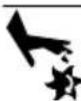
Moving Parts. Keep clothing, hair, and appendages away from moving parts. Failure to do so could result in death or serious injury. (000111)

WARNING
Risk of Falling. Use of machine creates wet areas and trip hazards. Be aware of work area conditions. A fall could result in death or serious injury. (000112)

WARNING
Risk of Falling. Do not use this machine or any components on elevated surfaces. Doing so can result in a fall, serious injury, or death. (000114)

WARNING
Recoil Hazard. Recoil could retract unexpectedly if water pressure is not properly relieved from pump, creating kickback. Kickback could result in death or serious injury. (000113)

WARNING
Consult Manual. Read and understand manual completely before using product. Failure to completely understand manual and product could result in death or serious injury.(000100a)
WARNING
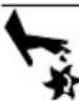
Moving Parts. Do not wear jewelry when starting or operating this product. Wearing jewelry while starting or operating this product could result in death or serious injury. (000115)

!WARNING
Personal injury. Risk of fluid injection. Do not aim spray gun at people, animals, electrical devices, or fragile items. Keep out of reach of children. Failure to do so could cause death or serious injury. (000117c)
WARNING
Environmental Hazard. Always recycle batteries at an official recycling center in accordance with all local laws and regulations. Failure to do so could result in environmental damage, death or serious injury. (000228)
WARNING
Personal Injury / Equipment Damage. Place wand in holster and verify that handle is locked into place before moving. Failure to do so could result in death, serious injury, or equipment damage. (000244)
Section 2 General Information and Setup
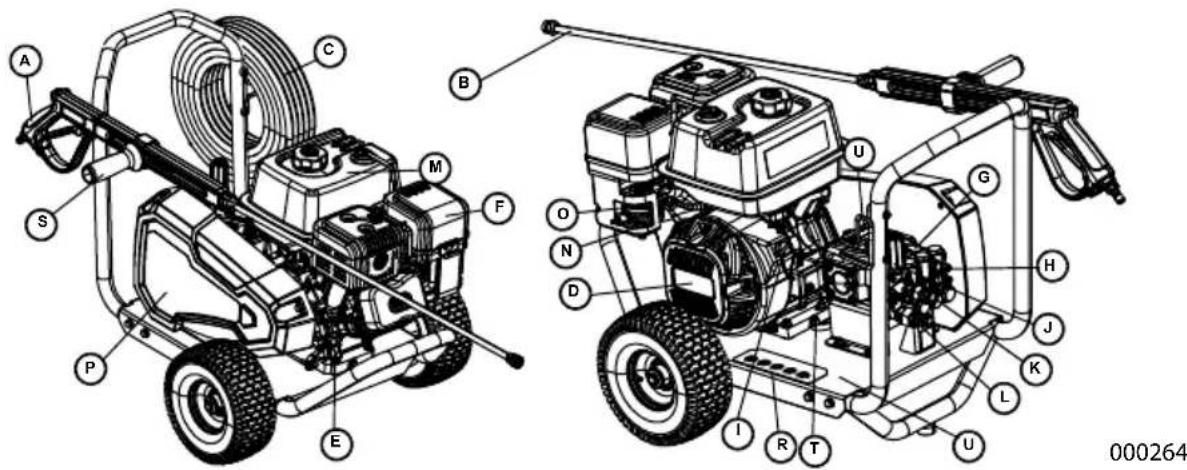
Figure 2-1. Features and Controls
Table 2-1. Power Washer Components
| A Spray Gun | |
| B Lance with Quick Connect | |
| C High-Pressure Hose | |
| D Recoil Starter | |
| E Oil Fill | |
| F Air Filter | |
| G High-Pressure Pump | |
| H Thermal Relief Valve | |
| I Engine On/Off Switch | |
| J Unloader Valve | |
| K High-pressure Outlet | |
| L Water Inlet | |
| M Fuel Tank | |
| N Fuel On/Off Valve | |
| O Choke | |
| P Belt Guard | |
| R Nozzles | |
| S Adjustable Side Handle |
T Oil Drain Plug
U Serial Number Location.
* Identification Label (not shown) – located on engine blower housing
* Detergent Siphoning Tube/Filter (not shown)
Know Your Power Washer
Read this manual thoroughly before assembling and operating this unit. Save this manual for future and immediate reference. Replacement owner's manuals are available at www.generac.com.
Emissions Information
The U.S. Environmental Protection Agency (and California Air Resource Board for equipment certified to CA standards) requires that this engine comply with exhaust and evaporative emission standards. Locate the emissions compliance decal on the engine to determine what standards the engine meets, and to determine which emissions warranty applies. The engine is certified to meet the applicable emission standards on gasoline. It is important to follow the maintenance specifications in the Maintenance section to verify that the engine complies with the applicable emission standards for the duration of the product's life. This engine utilizes lean carburetion settings and other systems to reduce emissions. Tampering with or altering the emission control system may increase emissions and may be a violation of Federal or California Law. Acts that constitute tampering include but are not limited to:
- Removal or alteration of any part of the intake, fuel, or exhaust systems.
- Altering or defeating the governor linkage or speed-adjusting mechanism to cause the engine to operate outside its design parameters.
Have the engine inspected and repaired by a servicing dealer if these symptoms develop:
• Hard starting or stalling after starting
- Rough idle
- Misfiring or backfiring under load
• Afterburning (backfiring)
- Black exhaust smoke or high fuel consumption
NOTE: Maintenance, replacement, or repair of emissions control devices and systems may be performed by a small engine repair establishment or individual. To be covered by warranty, all emissions control service work must be performed by a factory authorized dealer. See emissions warranty for further details.
Remove Contents from Carton
- Open carton completely by cutting each corner from top to bottom.
-
Remove and verify carton contents prior to assembly. Carton contents should contain one each of the following:
-
Main Unit
• High-pressure Hose
• Siphon Hose & Filter - Spray Gun
• Lance with Quick Connect Fitting - Oil Bottle
-
Parts Bag (includes):
-
Owner's Manual
– Owner's Registration Card -
Bag of Colored Nozzles
-
Call Generac Customer Service 1-888-436-3722 with the unit model and serial number for any missing carton contents.
- Record model, serial number, and date of purchase on front cover of this manual.
Assembly

WARNING
Consult Manual. Read and understand manual completely before using product. Failure to completely understand manual and product could result in death or serious injury. (000100a)
Call Generac Customer Service at 1-888-436-3722 for any assembly issues or concerns. Please have model and serial number available.
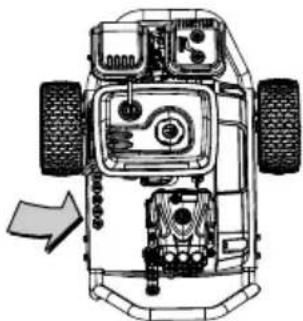
- Insert color-coded nozzles in spaces provided (Figure 2-2).
natural_image
Top-down schematic of a vehicle showing internal components and a directional arrow (no text or labels)000265
Figure 2-2. Insert Nozzles (number may vary)
- Place spray gun and nozzle extension into spray gun holder.
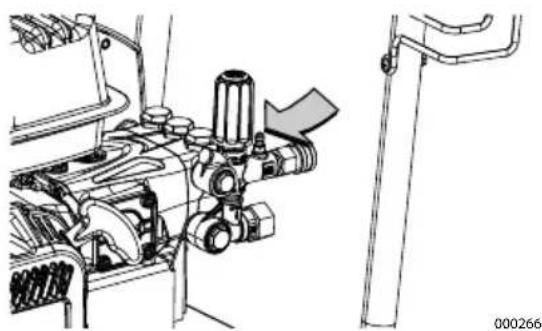
- See Figure 2-3 Attach siphon tube.
natural_image
Mechanical assembly diagram showing internal components and a vertical pipe connection (no text or labels)Figure 2-3. Siphon Tube Location
Add Engine Oil
- Place power washer on a flat, level surface.
- Clean area around oil fill and remove orange oil fill cap/dipstick (Figure 2-4).
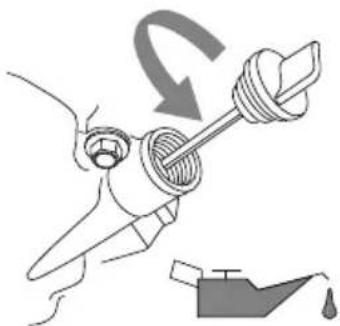
natural_image
Illustration of a mechanical device with a rotating arrow and a boat silhouette (no text or symbols)000115
Figure 2-4. Fill Engine Oil
- Using oil funnel (optional), slowly pour oil into oil fill opening. See Engine Oil Recommendations.
NOTE: On some units there is more than one oil fill location. In these instances it is only necessary to use one of the oil fill points.
- Check periodically until the oil level is between "L" and "H" on the dipstick (Figure 2-5). DO NOT OVERFILL.
NOTE: Any attempt to crank or start the engine before it has been properly serviced with the recommend oil may result in engine failure.
- Replace oil fill cap/dipstick and fully tighten.
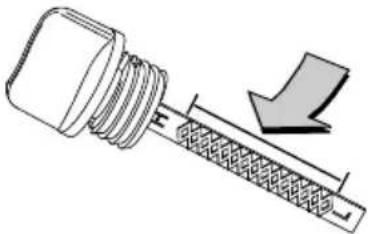
natural_image
Diagram of a mechanical component with threaded end and threaded shaft, showing a downward arrow (no text or symbols)000116
Figure 2-5. Safe Operating Range
Check Pump Oil
- Place power washer on a flat, level surface.
- Clean area around oil fill and remove vented cap/dipstick (Figure 2-1).
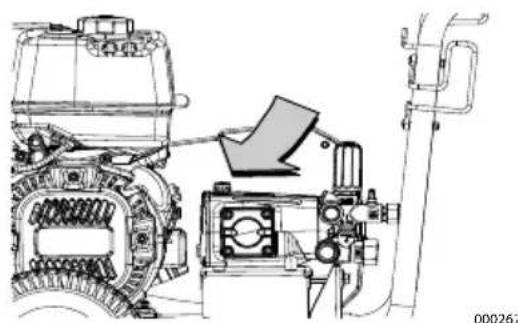
natural_image
Technical line drawing of a mechanical assembly with no visible text or symbolsFigure 2-6. Check Pump Oil
- Check to confirm oil level is within the markings on the dipstick (Figure 2-5). If oil is required, see Maintenance section. DO NOT OVERFILL.
- See Preventive Maintenance for additional information.
- Install oil dipstick until finger tight.
- Clean up any spilled oil.
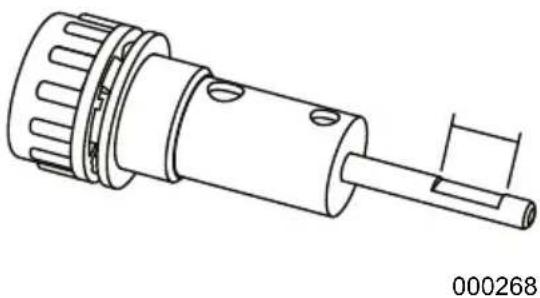
natural_image
Technical line drawing of a mechanical component with flanged ends and a shaft (no text or symbols)Figure 2-7. Pump Oil Dipstick
Fuel

DANGER
Explosion and Fire. Fuel and vapors are extremely flammable and explosive. Add fuel in a well ventilated area. Keep fire and spark away. Failure to do so will result in death or serious injury. (000105)
Fuel requirements are as follows:
- Clean, fresh, unleaded gasoline.
• Minimum rating of 87 octane/87 AKI (91 RON). - Up to 10% ethanol (gasohol) is acceptable.
• DO NOT use E85.
• DO NOT use a gas oil mix. -
DO NOT modify engine to run on alternate fuels. Stabilize fuel prior to storage.
-
Verify unit is OFF and cooled for a minimum of two minutes prior to fueling.
- Place unit on level ground in a well ventilated area.
- Clean area around fuel cap and remove cap slowly.
- Slowly add recommended fuel. Do not overfill.
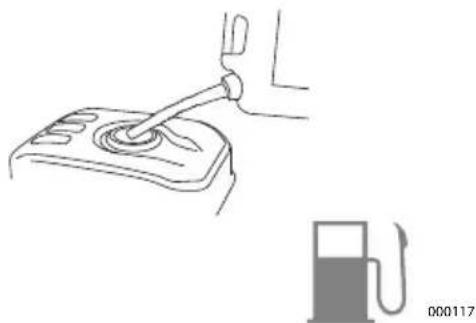
natural_image
Line drawing of a hand using a lever to lift a car's gear, with a fuel pump icon nearby (no text or symbols)Figure 2-8.Add Recommended Fuel
- Install fuel cap.
NOTE: Allow spilled fuel to evaporate before starting unit.
Water Supply
NOTE: DO NOT run unit without sufficient water supply. Failure to follow water supply requirements will void unit warranty. Water supply must meet the following requirements:
• DO NOT siphon standing water for the water supply.
• Water temperature must be less than 100 °F (38 °C).
• Water supply hose length must not exceed 50 ft (15.2 m).
• Water must be greater than 3.8 gallons per minute (17.3 liters per minute) and no less than 30 psi (206.8 kPa).
- DO NOT use a one-way valve, vacuum breaker, or check valve in any part of the water supply.
Connect Water Supply
- Remove and discard shipping cap from the pump water inlet.
- Run water supply for 30 seconds prior to connection to eliminate debris.
- See Figure 2-9. Inspect inlet screen (A) for debris. Clean screen or replace as necessary. DO NOT run power washer if inlet screen is damaged or missing.
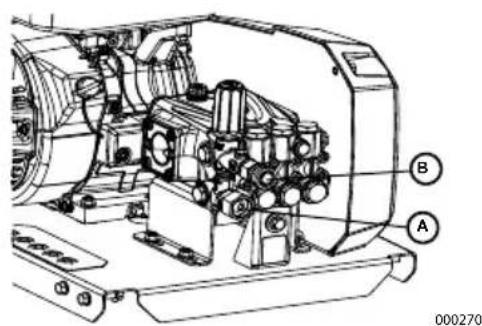
Figure 2-9. Connect Water Supply
- Connect water supply hose to pump water inlet (A) and hand-tighten.
- Connect high-pressure hose to pump (B).
Connect Lance and High-Pressure Hose to Spray Gun
- See Figure 2-10. Connect lance to spray gun and hand-tighten.
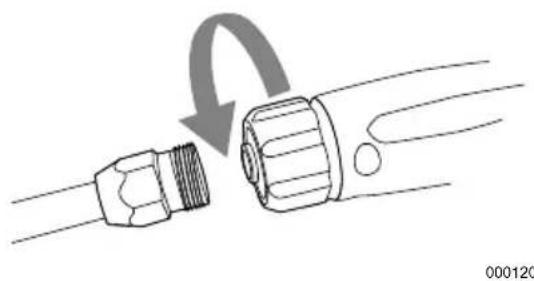
natural_image
Diagram of a pipe fitting with a valve and handle, showing rotational motion (no text or symbols)Figure 2-10. Connect Lance
- See Figure 2-11. Connect high-pressure hose to base of spray gun.
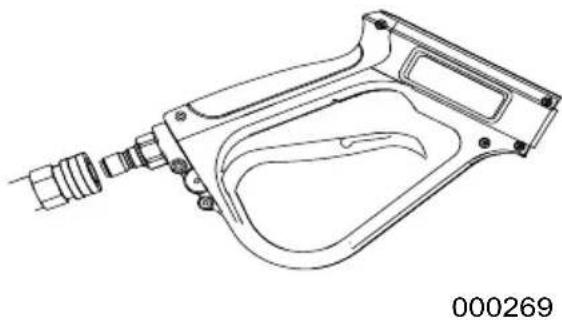
natural_image
Technical line drawing of a mechanical device with no visible text or symbolsFigure 2-11. Connect High-Pressure Hose to Spray Gun
Spray Gun
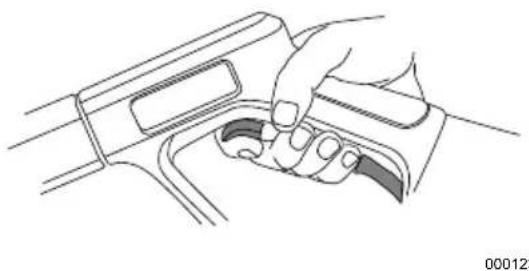
Become familiar with spray gun trigger and locking system prior to use.
See Figure 2-12. With unit OFF, hold spray gun and squeeze trigger to learn how trigger mechanism and locking system can be activated and deactivated.
natural_image
Line drawing of a hand holding a device with a curved handle (no text or symbols)Figure 2-12. Spray Gun (Typical)
- Turn ON the water, squeeze the trigger to purge the pump system of air.
- Verify spray gun is OFF with lock engaged before starting power washer.
How to Use Nozzles
- See nozzle selection guide and select correct nozzle for task.
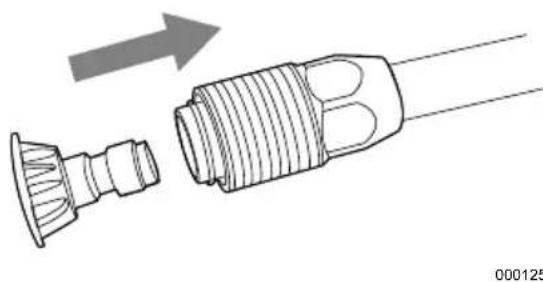
- See Figure 2-13. Pull back quick-connect collar and install nozzle.
natural_image
Technical line drawing of a connector with a flange and threaded body, showing an arrow indicating direction (no text or symbols)Figure 2-13. Insert Nozzle
- Release quick-connect collar to secure nozzle.
- Verify nozzle is locked in place.
| Nozzle Selection Guide | ||
| Blast Pressure Nozzle (Red) | 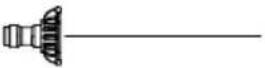 | MAXIMUM - Higher pressure and lower flow for stubborn or hard to reach surface such as second story surfaces, paint removal, oil stains, rust removal or other stubborn substances (tar, gum, grease, wax, etc.). |
| Strip Pressure Nozzle (Yellow) | 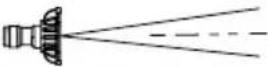 | MEDIUM - Higher pressure and medium flow for removing stains on hard porous surfaces such as concrete driveways, garage floors and brick patios. |
| Clean Pressure Nozzle (Green) | 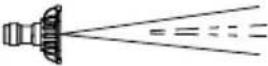 | GENERAL - Medium pressure and medium flow for most all purpose cleaning such as home siding, brick patios, wood decks, driveways and sidewalks, garage floors, etc. |
| Wash Pressure Nozzle (White) | 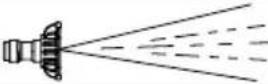 | DELICATE - Lower pressure and higher flow for gentle cleaning of cars/trucks, boats, RV's, patio furniture, lawn equipment, etc. |
| Detergent Nozzle (Black) | 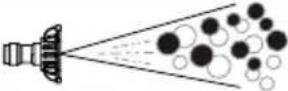 | DETERGENT ONLY (BLACK), Only use power washer safe detergents/soaps to help break down stubborn dirt and grime on a variety of surfaces. |
000245
Section 3 Operation
Operation and Use Questions
Call Generac customer service at 1-888-436-3722 with questions or concerns about unit operation and maintenance.
Before Starting Engine
- Verify engine oil level is correct.
- Verify fresh fuel level is correct.
- Verify all fittings and couplers are properly secured.
- Verify sufficient water supply is properly connected.
- Verify unit is secure on level ground, with proper clearance and is in a well ventilated area.
Prepare Power Washer for Use
- Place unit on level ground, within the specified clearance required.
- Connect appropriate water supply.
Power Washer Placement for Use

DANGER
Asphyxiation. Running engines produce carbon monoxide, a colorless, odorless, poisonous gas. Carbon monoxide, if not avoided, will result in death or serious injury. (000103)

!WARNING
Risk of Fire. Hot surfaces could ignite combustibles, resulting in fire. Fire could result in death or serious injury. (000110)

WARNING
Hot Surfaces. When operating machine, do not touch hot surfaces. Keep machine away from combustibles during use. Hot surfaces could result in severe burns or fire. (000108)
It is a violation of California Public Resource Code, Section 4442, to use or operate the engine on any forest-covered, brush-covered, or grass-covered land unless the exhaust system is equipped with a spark arrester, as defined in Section 4442, maintained in effective working order. Other states or federal jurisdictions may have similar laws.
Only operate power washer outdoors in a well ventilated area. Never operate power washer indoors, or in a confined space. Be aware of building openings and ventilation systems where exhaust may enter during use.
- Verify power washer is placed on level ground to avoid tipping during operation.
- Only use the unit outdoors. Verify exhaust gas does not enter a confined area through windows, doors, ventilation intakes.
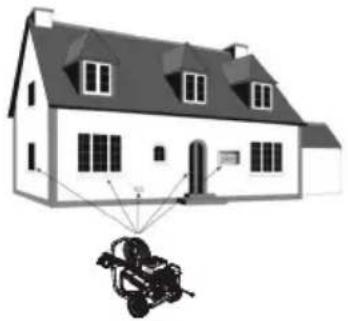
- See Figure 3-1 Keep at least 5 ft (1.5 m) of clearance on all sides of power washer including overhead from dwellings and combustibles, when in use.
natural_image
Illustration of a two-story house with a ground-mounted device emitting signals from a sensor or antenna (no text or symbols present)000271
Figure 3-1. Five Feet of Minimum Clearance
Power Washer Start-Up
NOTE: DO NOT run power washer without a sufficient water supply turned ON. Damage to equipment resulting from failure to follow this instruction will void warranty.
- Connect a sufficient water supply.
- See Figure 3-2. Move fuel valve (B) to ON.
- Move choke lever (A) to CLOSE.
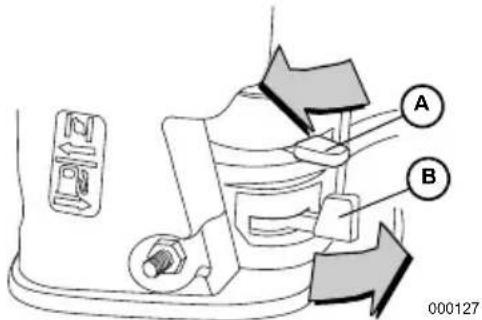
Figure 3-2.Fuel Valve and Choke
NOTE: For warm engine, verify choke lever is in OPEN position.
- See Figure 3-3. Turn engine switch ON.
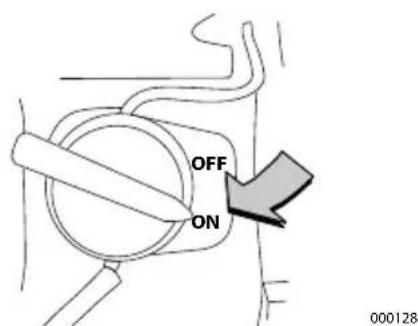
Figure 3-3. Engine Switch

WARNING
Vision Loss. Eye goggles are required to be worn when using this machine. Failure to wear eye goggles could result in permanent vision loss. (000101)
- Relieve spray gun pressure.
- Secure unit from movement when pulling recoil.
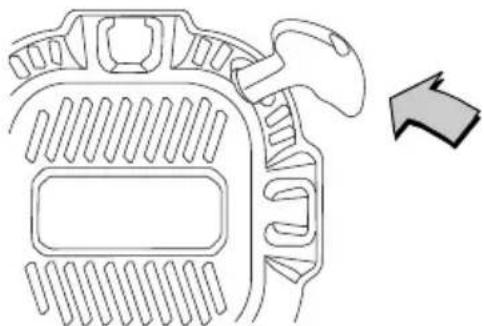
- See Figure 3-4. Firmly grasp the handle. Pull slowly until resistance is felt. Then pull rapidly to start engine.

WARNING
Recoil Hazard. Recoil could retract unexpectedly if water pressure is not properly relieved from pump, creating kickback. Kickback could result in death or serious injury. (000113)

WARNING
Personal injury. Risk of fluid injection. Do not aim spray gun at people, animals, electrical devices, or fragile items. Keep out of reach of children. Failure to do so could cause death or serious injury. (000117c)
After engine-start attempt, if engine fails to run, always point spray gun in safe direction, and squeeze spray gun trigger to release high-pressure.
natural_image
Diagram of a vehicle intake manifold with a directional arrow indicating flow or movement (no text or symbols)Figure 3-4. Engine Recoil
- Return recoil handle slowly. DO NOT let recoil snap back against recoil housing.
- See Figure 3-5. When engine starts, slowly move choke lever to OPEN position (A) as engine warms. If engine falters, move choke lever to CLOSE position, then to OPEN position.
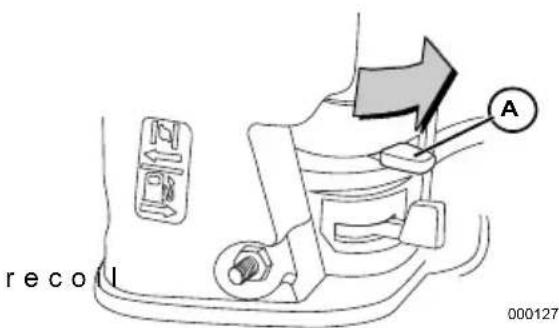
Figure 3-5. Fuel Valve and Choke
- If engine fails to start after six pulls, move choke lever to OPEN position, and repeat steps 6 through 9.

WARNING
Fluid Injection. This machine produces high-pressure fluid streams that can pierce skin. Fluid injection could result in death or serious injury. (000106b)

WARNING
Risk of Fire. Hot surfaces could ignite combustibles, resulting in fire. Fire could result in death or serious injury. (000110)

WARNING
Hot Surfaces. When operating machine, do not touch hot surfaces. Keep machine away from combustibles during use. Hot surfaces could result in severe burns or fire. (000108)
Power Washer Shut Down

WARNING
Fluid Injection. This machine produces high-pressure fluid streams that can pierce skin. Fluid injection could result in death or serious injury. (000106b)
IMPORTANT: Spray gun traps high-pressure water, even when engine is stopped and water is disconnected. Always point spray gun in safe direction, and squeeze spray gun trigger to release high-pressure. Engage trigger lock when not in use.
- Release spray gun trigger.
- Turn engine switch OFF.
- Squeeze spray gun trigger and release high-pressure water.
- Engage trigger lock.
- Turn water supply OFF.
NOTE: Keep high-pressure hose connected to pump and spray gun while system is pressurized.
Apply Detergent

WARNING
Fluid Injection. This machine produces high-pressure fluid streams that can pierce skin. Fluid injection could result in death or serious injury. (000106b)

WARNING
Personal injury. Risk of fluid injection. Do not aim spray gun at people, animals, electrical devices, or fragile items. Keep out of reach of children. Failure to do so could cause death or serious injury. (000117c)
NOTE: DO NOT use caustic liquid with power washer. Use ONLY power washer safe detergents. Follow manufacturer instructions on detergent label.
Apply detergent as follows:
- Prepare detergent solution as required by job.
- Make sure siphoning tube remains fully submerged into the detergent.
- When inserting the siphon into a detergent solution bottle, route the tube so as to keep it from inadvertently contacting the hot muffler.
- Verify black detergent nozzle is installed.
NOTE: Detergent cannot be applied with high-pressure nozzle (Yellow, White, Green or Red). Only use black nozzle with detergent.
- Start engine.
- Firmly grasp spray gun with both hands when using high-pressure spray to avoid injury when spray gun kicks back.
- Apply a high-pressure spray to a small area and then inspect surface for damage. If no damage is found, continue to apply detergent.
- Apply detergent to a dry surface, start at lower portion of area to be washed and work upward using long, even, overlapping strokes.
IMPORTANT: Flush the detergent siphoning system after each use. Contact an authorized dealer or qualified service center with questions.
Rinsing

WARNING
Risk of Falling. Use of machine creates wet areas and trip hazards. Be aware of work area conditions. A fall could result in death or serious injury. (000112)

WARNING
Risk of Falling. Do not use this machine or any components on elevated surfaces. Doing so can result in a fall, serious injury, or death. (000114)
- Remove black detergent nozzle from lance.
- Select and install desired high-pressure nozzle.
- Point spray gun in safe direction and squeeze trigger to flush remaining detergent from system.
- Keep spray gun a safe distance from area you plan to spray.
- Firmly grasp spray gun with both hands when using high-pressure spray to avoid injury when spray gun kicks back.
- Apply a high-pressure spray to a small area and then inspect surface for damage. If no damage is found, continue rinsing.
- Start at top of area to be rinsed, working down with same overlapping strokes as used for cleaning.
Clean Detergent Siphoning Tube
Flush detergent siphoning tube after each use, before stopping the engine.
- Place detergent siphoning tube/filter in bucket of clean water.
- Remove high-pressure nozzle from nozzle extension.
- Select and install black detergent nozzle.
- Flush for 1-2 minutes.
- Shut engine OFF.
- Point spray gun in a safe direction, squeeze spray gun trigger to release retained high water pressure. Engage trigger lock.
After Each Use
DO NOT allow water to remain in unit for long periods of time. Sediments or minerals can deposit on pump parts and freeze pump. Follow these procedures after every use:
- Shut engine OFF.
- Turn water supply OFF.
-
Point spray gun in a safe direction, and squeeze trigger to relieve trapped pressure.
-
Let engine cool.
-
Disconnect hoses from spray gun and high-pressure outlet on pump. Drain water from hoses, spray gun, and lance. Use a rag to wipe off components.
-
Verify engine start switch and fuel valve is OFF.
-
Pull recoil handle approximately six times to remove remaining liquid from pump.
-
Store unit in a clean, dry area.
NOTE: If storing for more than 30 days, see Storage section.
Automatic Cool Down System (Thermal Relief)
When power washer runs for 3-5 minutes without spray gun activation, circulating water in pump can reach temperatures above 133^ F (56.1 °C). Thermal relief system engages to cool pump by discharging warm water onto ground.
Section 4 Maintenance and Troubleshooting
Maintenance
Regular maintenance will improve performance and extend engine/equipment life. Generac Power Systems, Inc. recommends that all maintenance work be performed by an Independent Authorized Service Dealer (IASD). Regular maintenance, replacement, or repair of the emissions control devices and systems may be performed by any repair shop or person of the owner's choosing. To obtain emissions control warranty service free of charge, the work must be performed by an IASD. See the emissions warranty.
Power washer warranty does not cover items subjected to operator abuse or negligence. To receive full warranty value, operator must maintain power washer as instructed in this manual, including proper storage as detailed in Storage.
NOTE: Call 1-888-GENERAC (1-888-436-3722) with questions about component replacement.
NOTE: All required service and adjustments should be each season, as detailed in Maintenance Schedule.
Maintenance Schedule
Follow maintenance schedule intervals, whichever occurs first according to use.
NOTE: Adverse conditions will require more frequent service.
| First 5 Hours |
| Change engine oil |
| Every 8 Hours or Daily |
| Inspect/clean water inlet screen* |
| Inspect high-pressure hose |
| Inspect detergent siphoning hose/filter |
| Inspect spray gun and assembly for leaks |
| Clean debris |
| Inspect engine oil level |
| Inspect pump oil level |
| Every 50 Hours or Every Season |
| Check/clean water inlet screen** |
| Check/clean air filter** |
| Change pump oil** |
| Change engine oil** |
| Inspect muffler and spark arrester* |
| Every 100 Hours or Every Season |
| Service spark plug |
* Clean if clogged. Replace if perforated or torn.
** Service more often under dirty or dusty conditions.
Preventive Maintenance
Dirt or debris can cause improper operation and equipment damage. Clean power washer daily or before each use. Keep area around and behind muffler free from combustible debris. Inspect all cooling air openings on power washer.
- Use a damp cloth to wipe exterior surfaces clean.
- DO NOT insert any objects through cooling air openings.
- Use a soft bristle brush to loosen caked on dirt, oil, etc.
- Use a vacuum to pick up loose dirt and debris.
Inspect and Clean Inlet Screen
Inspect inlet screen on pump water inlet. Clean clogged screen and replace screen if damaged.
Inspect High-Pressure Hoses
High-pressure hoses can develop leaks from wear, kinking, or abuse. Inspect hoses before each use. Inspect for cuts, leaks, abrasions, bulging, and damage or movement of couplings. If these conditions exist, replace hose immediately.
NOTE: DO NOT repair high-pressure hose. Replace with hose that meets or exceeds maximum pressure rating of unit.
Inspect Detergent Siphoning Tube
Inspect filter on detergent tube and clean if clogged. Tube should fit tightly on barbed fitting. Examine tube for leaks or tears. Replace filter or tube if either is damaged.
Inspect Spray Gun
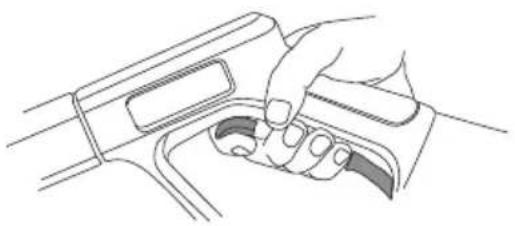
See Figure 4-1.
NOTE: Replace spray gun immediately if it fails any test steps.
- Verify spray gun hose connection is secure.
- Squeeze and release trigger.
NOTE: Trigger should spring back into place and lock when released.
natural_image
Line drawing of a hand inserting a device into a car compartment (no text or symbols)000123
Figure 4-1. Test Spray Gun (typical)
Nozzle Maintenance
A pulsing sensation felt when squeezing spray gun trigger may be caused by excessive pump pressure. Typical causes of excessive pump pressure are nozzle clog or restriction. Immediately clean nozzle as follows:

!WARNING
Fluid Injection. This machine produces high-pressure fluid streams that can pierce skin. Fluid injection could result in death or serious injury. (000106b)
- Turn engine and water supply OFF.
NOTE: Keep high-pressure hose connected to pump and spray gun while system is pressurized. - Relieve spray gun water pressure.
- Remove nozzle from lance.
- See Figure 4-2. Use a paper clip to remove debris.
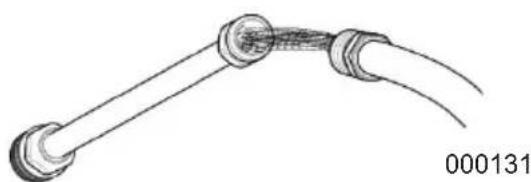
- See Figure 4-3. Remove lance from spray gun and back flush thoroughly.
- Install nozzle on lance.
- Install lance on spray gun.

natural_image
Line drawing of two hands holding a small object with a vertical line above, no text or symbols presentFigure 4-2. Remove Debris
natural_image
Diagram of a cable or wire connector with two ends and a central connector (no text or symbols)Figure 4-3. Back Flush Lance
- Verify hose is connected to pump water inlet, and high-pressure hose is connected to spray gun and pump.
- Turn water ON.
- Start engine.
- Test power washer by operating with each quick connect nozzle.
Change Pump Oil
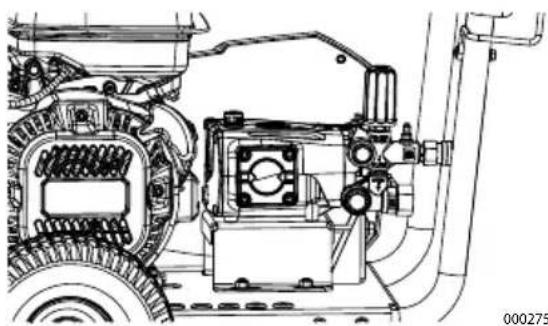
- Clean area around oil drain plug (Figure 2-1).
- Place a small pan under oil drain plug to catch oil.
- Remove oil drain plug. Drain oil completely.
- Install oil drain plug. Do not over tighten.
- Clean area around pump oil dipstick.
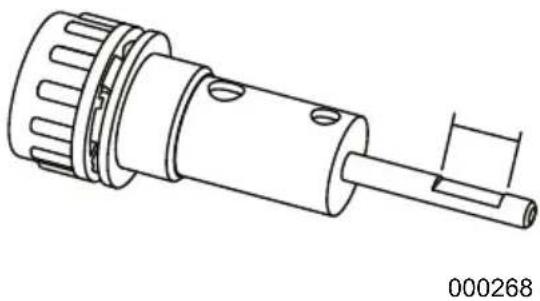
- Fill pump with SAE 15W40 non-detergent oil. Oil level must be within markings on dipstick (Figure 2-5). Do not overfill.
- Install oil dipstick until finger tight.
- Clean up any spilled oil.
natural_image
Technical line drawing of a mechanical assembly with gears and housing (no text or symbols)Figure 4-4.Drain Pump Oil
natural_image
Technical line drawing of a mechanical component with flanged ends and a shaft (no text or symbols)Figure 4-5. Pump Oil Dipstick
Belt Replacement
It may be necessary to replace belt if it breaks or if there is a sudden loss of pressure:
- Remove belt guard
- See Figure 4-6. Loosen nuts (A) and tensioning bolt (B).
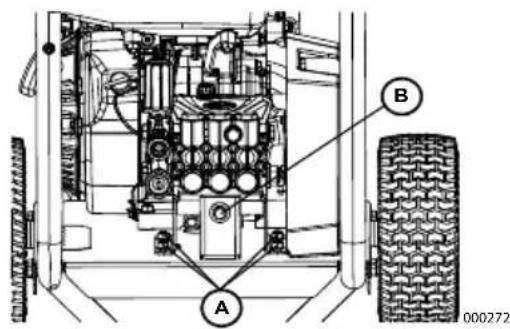
Figure 4-6. Loosen Nuts
- Push pump toward engine (Figure 4-7).
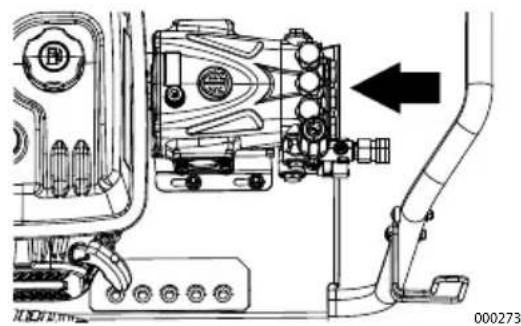
natural_image
Technical diagram of a mechanical assembly with no visible text or symbolsFigure 4-7.Push Pump Toward Engine
-
Remove old belt and install new belt.
-
See Figure 4-8 Pull pump away engine so bolt is approximately 2/3 of the way through the pump bracket slot (A). Tighten bolt.
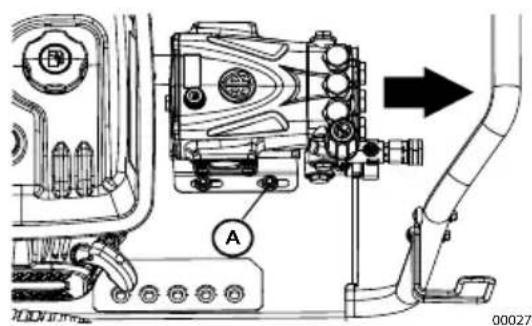
Figure 4-8.Pull Pump Away From Engine
-
Tighten tensioning bolt (B) (page 14). The pulleys should be aligned within 1° of each other and the new belt should be tensioned to \~90.5 lbs. (1/8" deflection under 8.3 lbs. with a tension gauge).
-
Tighten all four nuts (A) (page 14).
-
Replace belt guard before running unit.
Engine Maintenance
Engine Oil Recommendations
To maintain the product warranty, the engine oil should be serviced in accordance with the recommendations of this manual. For your convenience, maintenance kits designed and intended for use on this product are available from the manufacturer that include engine oil, oil filter, air filter, spark plug(s), a shop towel and funnel. These kits can be obtained from an Independent Authorized Service Dealer (IASD).
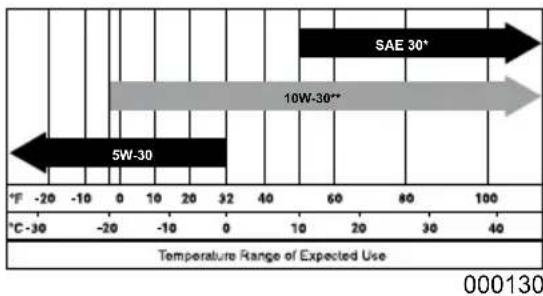
Climate determines proper engine oil viscosity. See chart to select correct viscosity.
bar
| Temperature Range of Expected Use | Value | |---|---| | 5W-30 | -20 | | 10W-30** | -10 | | 5W-30 | 0 | | 10W-30** | 20 | | 5W-30 | 32 | | 10W-30** | 40 | | 5W-30 | 60 | | 10W-30** | 80 | | 5W-30 | 100 | | 10W-30** | 120 | | 5W-30 | 140 | | 10W-30** | 160 | | 5W-30 | 180 | | 10W-30** | 200 | | 5W-30 | 220 | | 10W-30** | 240 | | 5W-30 | 260 | | 10W-30** | 280 | | 5W-30 | 300 | | 10W-30** | 320 | | 5W-30 | 340 | | 10W-30** | 360 | | 5W-30 | 380 | | 10W-30** | 400 | | 5W-30 | 420 | | 10W-30** | 440 | | 5W-30 | 460 | | 10W-30** | 480 | | 5W-30 | 500 | | 10W-30** | 520 | | 5W-30 | 540 | | 10W-30** | 560 | | 5W-30 | 580 | | 10W-30** | 600 | | 5W-30 | 620 | | 10W-30** | 640 | | 5W-30 | 660 | | 10W-30** | 680 | | 5W-30 | 700 | | 10W-30** | 720 | | 5W-30 | 740 | | 10W-30** | 760 | | 5W-30 | 780 | | 10W-30** | 800 | | 5W-30 | 820 | | 10W-30** | 840 | | 5W-30 | 860 | | 10W-30** | 880 | | 5W-30 | 900 | | 10W-30** | 920 | | 5W-30 | 940 | | 10W-30** | 960 | | 5W-30 | 980 | | 10W-30** | 1000 | *F -20 -10 °C -30 *F -20 -1 - - - - - - - - - - - - - - - - - - - - - - - - - - - - - - - - - - - - - - - - - - - - - - - - - - - - - - - - - - - - - - - - - - - - - - - - - - - - - - - - - - - - - - - - - - - - - - - - - - - - < img src="colorbar_chart.png"> Temperature Range of Expected Use Color: #f, #g, #h, #i, #j, #k, #l, #m, #n, #o, #p, #q, #r, #s, #t, #u, #v, #w, #x, #y, #z, #c, #d, #e, #f, #g, #h, #i, #j, #k, #l, #m, #n, #o, #p, #q, #r, #s, #t, #u, #v, #w, #x, #y, #z, #c, #d, #e, #f, #g, #h, #i, #j, #k, #l, #m, #o, #p, #r, s, s', color: color barFigure 4-9. Oil Viscosity
* Below 50°F (10°C) use of SAE 30 will result in hard start.
** Above 80°F (27°C) use of 10W30 may cause increased oil consumption. Inspect f oilevel more frequently.
Inspect Engine Oil Level
Inspect engine oil level prior to each use, or every 8 hours of operation.
- Place power washer on a level surface.
- Clean area around oil fill.
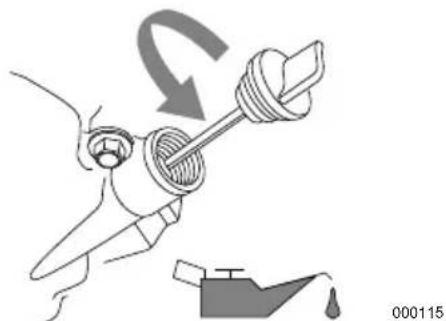
- See Figure 4-10. Remove oil fill cap and wipe dipstick clean.
natural_image
Illustration of a hand holding a tool with a circular arrow indicating rotation (no text or symbols)Figure 4-10. Engine Oil Fill
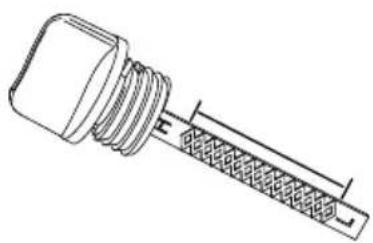
- See Figure 4-11. Screw dipstick into filler neck. Verify proper oil level on dipstick.
natural_image
Technical line drawing of a mechanical component with threaded end and threaded shaft (no text or symbols)000116
Figure 4-11. Safe Operating Range
- Add recommended engine oil as necessary.
- Replace oil fill cap and hand-tighten.
NOTE: Some units have more than one oil fill location. It is only necessary to use one oil fill point.
Change Engine Oil
When using power washer under extreme, dirty, dusty conditions, or in extremely hot weather, change oil more frequently.
NOTE: Don't pollute. Conserve resources. Return used oil to collection centers.
Change oil while engine is still warm from running, as follows:
- Place power washer on a level surface.
- Disconnect the spark plug wire from the spark plug and place the wire where it cannot contact spark plug.
- Clean area around oil fill, and oil drain plug.
- Remove oil fill cap.
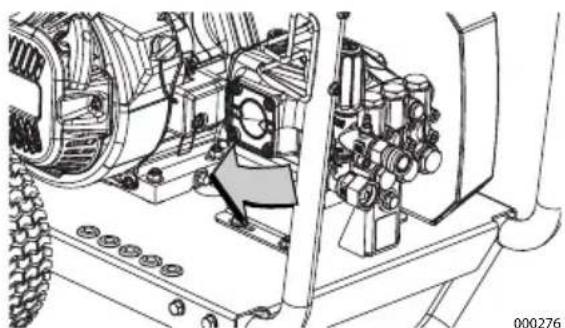
- See Figure 4-12. Remove oil drain plug (A) and drain oil completely into a suitable container.
- Install oil drain plug and tighten securely.
- See Figure 4-11. Slowly pour oil into oil fill opening until oil level is between L and H marks on dipstick. DO NOT overfill.
- Install oil fill cap, and finger tighten.
- Wipe up any spilled oil.
- Properly dispose of oil in accordance with all applicable regulations.
natural_image
Technical line drawing of a mechanical assembly with gears and components (no visible text or symbols)Figure 4-12. Oil Drain Plug
Air Filter
Engine will not run properly and may be damaged if run with a dirty air cleaner. Service air cleaner more frequently in dirty or dusty conditions.
To service air cleaner:
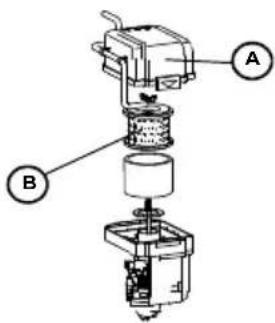
- See Figure 4-13. Remove air cleaner cover (A).
- Remove filter element(s) (B).
- Inspect filter element(s) and replace if damaged. To order replacements, contact Generac Customer Service at 1-888-GENERAC (888-436-3722) for the name of your nearest IASD.
- Clean foam filter element in warm soapy water. Rinse, and allow to dry thoroughly. Dip in clean engine oil and squeeze out excess oil.
- Tap paper filter element several times on hard surface to remove dirt. Compressed air (not exceeding 30 psi (207 kPa) can also be used to blow through filter element from the inside.
- Use a clean, damp cloth to wipe dirt from inside air cleaner cover.
- Put cleaned or new filter element(s) in place. Verify gasket is in place (if equipped).
- Install air cleaner cover. Tighten air cleaner screws or fasteners securely.
000277
Figure 4-13. Air Filter Assembly
Service Spark Plug
To service spark plug:
- Clean area around spark plug.
- Remove and inspect spark plug.
- See Figure 4-14. Inspect electrode gap with wire feeler gauge and replace spark plug if gap (A) is not within specification listed on Product Specifications Sheet.
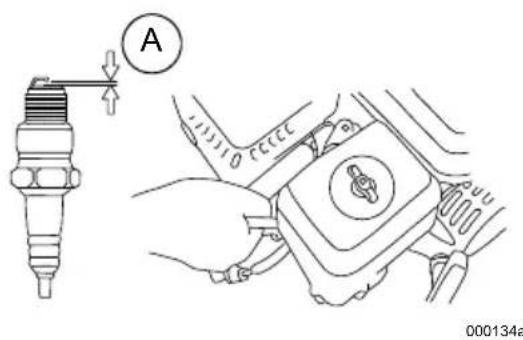
Figure 4-14. Spark Plug
NOTE: Replace spark plug if electrodes are pitted, burned or porcelain is cracked. Use ONLY recommended replacement plug. See Product Specifications Sheet.
- Install spark plug finger tight, and tighten an additional 3/8 to 1/2 turn using spark plug wrench.
Inspect Engine Spark
WARNING
Accidental Start-up. Disconnect spark plug wire when working on unit. Failure to do so could result in death or serious injury.
(000102)
- Disconnect spark plug wire from spark plug.
- Secure spark plug wire where it contact spark plug.
- Test spark plug with approved spark plug tester.
NOTE: DO NOT inspect for spark with spark plug removed.
Inspect Muffler And Spark Arrestor
NOTE: It is a violation of California Public Resource Code, Section 4442, to use or operate the engine on any forest-covered, brush-covered, or grass-covered land unless the exhaust system is equipped with a spark arrestor, as defined in Section 4442, maintained in effective working order. Other states or federal jurisdictions may have similar laws.
NOTE: Call 1-888-GENERAC (1-888-436-3722) with questions about component replacement.
NOTE: Use ONLY original equipment replacement parts.
Inspect muffler for cracks, corrosion, or other damage. Remove spark arrestor, if equipped, inspect for damage or carbon blockage. If replacement parts are required.
Inspect Spark Arrestor Screen (if equipped)
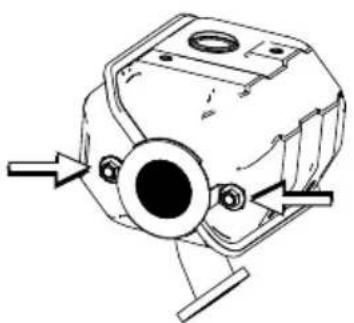
- Loosen fasteners and remove heat shield from muffler. See Figure 4-15.
- Loosen fasteners and remove spark arrester from muffler. See Figure 4-16.
- Inspect spark arrester. Replace if torn, perforated or otherwise damaged (part number 0K1851).
- If screen is not damaged, clean it with a commercial solvent and replace.
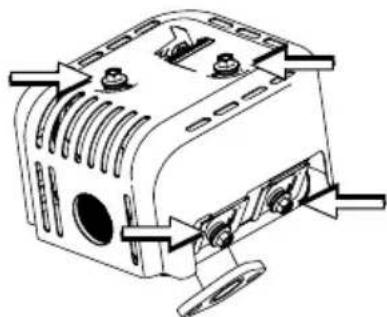
natural_image
Technical line drawing of a mechanical housing or enclosure with mounting brackets and internal components (no text or symbols)000135
Figure 4-15. Heat Shield Fasteners
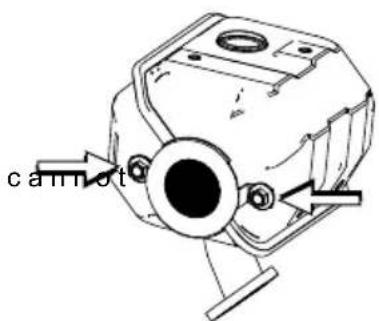
000136
Figure 4-16. Spark Arrestor Fasteners
Storage
General

!DANGER
Explosion and Fire. Fuel and vapors are extremely flammable and explosive. Add fuel in a well ventilated area. Keep fire and spark away. Failure to do so will result in death or serious injury. (000105)

WARNING
Risk of Fire. Verify machine has properly cooled before installing cover and storing machine. Hot surfaces could result in fire.
(000109)
-
DO NOT place a storage cover on a hot power washer. Allow unit to cool to room temperature before storage.
• DO NOT store fuel from one season to another unless properly treated. -
Replace fuel container if rust is present. Rust in fuel will cause fuel system problems.
- Cover unit with a suitable protective, moisture resistant cover.
- Store unit in a clean and dry area.
• Always store power washers and fuel away from heat and ignition sources.
Winter Storage
NOTE: If pump saver is not available, connect a 3-foot section of garden hose to water inlet adapter. Pour RV-antifreeze (antifreeze without alcohol) into hose. Pull recoil handle twice. Disconnect 3-foot hose.
- Store unit in a clean and dry area.
NOTE: If not using power washer for more than 30 days, prepare engine and pump for storage.
Prepare Fuel System for Storage
Fuel stored over 30 days can go bad and damage fuel system components. Keep fuel fresh, use fuel stabilizer.
If fuel stabilizer is added prepare and run engine according to Power Washer Start-Up. Run engine for 2 minutes to circulate stabilizer throughout fuel system. Adequately prepared fuel can be stored up to 24 months.
NOTE: If fuel has not been treated with fuel stabilizer, it must be drained into an approved container. Run engine until it stops from lack of fuel. Use of fuel stabilizer in fuel storage container is recommended to keep fuel fresh.
Prepare Engine for Storage
- Change engine oil.
- Remove spark plug.
- Pour a tablespoon (5-10cc) of clean engine oil or spray a suitable fogging agent into cylinder.
- Pull starter recoil several times to distribute oil in cylinder.
- Install spark plug.
- Pull recoil slowly until resistance is felt. This will close valves so moisture cannot enter engine cylinder. Gently release recoil.
Change Oil
Change engine oil before storage. See Change Engine Oil.
Prepare Pump for Storage
NOTE: If not using power washer for more than 30 days, prepare engine and pump for storage.
Protect unit from freezing temperatures. Failure to do so will permanently damage pump and render unit inoperable. Freeze damage is not covered under warranty.
Protect unit from freezing temperatures as follows:
- Shut engine OFF.
- Turn fuel valve to OFF.
-
Turn water supply OFF.
-
Point spray gun in a safe direction, and squeeze trigger to relieve trapped pressure.
-
Let engine cool.
-
Disconnect hoses from spray gun and high-pressure outlet on pump. Drain water from hoses, spray gun, and lance. Use a rag to wipe off components.
-
Empty pump of all remaining liquids.
-
Pull recoil handle approximately six times to remove remaining liquid from pump.
-
Winterize pump with Generac Pump Shield™ (P/N 0L2414). This minimizes freeze damage and lubricates pistons and seals.
NOTE: If Generac Pump Shield™ is not available, connect a 3 ft (1 m) section of garden hose to water inlet adapter. Pour RV-antifreeze (alcohol free antifreeze) into hose. Pull recoil handle twice. Disconnect hose.
- Store unit in a clear and dry area.
Troubleshooting
| PROBLEM CAUSE | CORRECTION | |
| Pump fails to produce pressure, has erratic pressure, chattering, loss of pressure, low water volume. | 1. Low pressure nozzle installed.2. Water inlet is obstructed.3. Inadequate water supply.4. Inlet hose kinked or leaking.5. Clogged hose inlet screen.6. Water supply is over 100 °F (37.8 °C).7. High-pressure hose is obstructed, or leaks.8. Spray gun leaks.9. Nozzle is obstructed.10. Pump is faulty.11. Belt is worn | 1. Replace with high-pressure nozzle.2. Clean inlet.3. Provide adequate water flow.4. Straighten inlet hose, patch leak.5. Inspect and clean inlet hose screen.6. Provide cooler water supply.7. Clear obstructions or replace hose.8. Replace spray gun.9. Clean nozzle.10. Contact authorized servicing dealer.11. Contact local service facility to replace belt |
| Detergent fails to mix with spray. | 1. Detergent siphoning tube is not submerged.2. Detergent siphoning tube/ filter is obstructed or cracked.3. High-pressure nozzle installed. | 1. 1. Insert detergent siphoning tube into detergent.2. Clean or replace filter/ detergent siphoning tube.3. Install low-pressure nozzle. |
| Engine runs well at no-load, but bogs when load is applied. | 1. Engine speed too low. 1. Contact authorized servicing dealer. | |
| Engine will not start, or starts and runs rough. | 1. Low oil level, “Oil Alert System”.2. Dirty air filter.3. Out of fuel4. Stale fuel.5. Spark plug wire not connected to plug.6. Bad spark plug.7. Water in fuel.8. Excessively rich fuel mixture.9. Engine switch OFF. | 1. Fill crankcase to proper level.2. Clean or replace air filter.3. Fill fuel tank.4. Replace with fresh fuel.5. Connect wire to spark plug.6. Replace spark plug.7. Drain fuel tank, replace with fresh fuel.8. Contact authorized servicing dealer.9. Turn engine switch ON. |
| Engine shuts down during operation/ | 1. Out of fuel. 1. Fill fuel tank. | |
| Engine lacks power. 1. Dirty air filter. 1. Replace air filter. | ||
Notes
Part No. 0L1528 Rev. C 09/20/2018
©2018 Generac Power Systems, Inc.
All rights reserved
Specifications are subject to change without notice.
No reproduction allowed in any form without prior written consent from Generac Power Systems, Inc.

PRO
Generac Power Systems, Inc.
S45 W29290 Hwy. 59
Waukesha, WI 53189
1-888-GENERAC (1-888-436-3722)
www.generac.com/pro
Lavadora a presión
Manual del operador
natural_image
Technical line drawing of a pressure water heater with hoses and control panel (no text or symbols)MODELO:
SERIE:
FECHA DE COMPRA: ____
natural_image
Top-down schematic of a vehicle showing internal components and a directional arrow (no text or labels)000265
natural_image
Mechanical assembly diagram showing internal components and a pipe connection (no text or labels)natural_image
Diagram of a mechanical device with a lever and pump, showing rotational motion (no text or symbols)Figura 2-4. Añadir aceite de motor
natural_image
Diagram of a mechanical component with threaded end and downward arrow indicating force or direction (no text or symbols)000116
natural_image
Technical line drawing of a mechanical assembly with no visible text or symbolsnatural_image
Technical line drawing of a mechanical component with flanged ends and a shaft (no text or symbols)natural_image
Line drawing of a hand using a tool to lift a valve on a control panel, with a gas pump nearby (no text or symbols)natural_image
Diagram showing a pipe fitting with a valve and a connector, illustrating the process of rotation (no text or symbols present)000120
natural_image
Technical line drawing of a mechanical device with no visible text or symbols000269
natural_image
Line drawing of a hand inserting a component into a device (no text or symbols)00012
natural_image
Technical line drawing of a connector with a threaded body and arrow indicating direction (no text or symbols)000125
Figura 2-13. Insertar boquilla
natural_image
Illustration of a two-story house with a person emitting a signal beam below (no text or symbols)000271
natural_image
Diagram of a vehicle intake manifold with a directional arrow indicating flow or movement (no text or symbols)000129
natural_image
Line drawing of a hand holding a device with a handle, no text or symbols presentnatural_image
Line drawing of two hands holding a small object with a vertical line above, no text or symbols presentnatural_image
Simple line drawing of a three-pronged cable or connector with no text or symbolsnatural_image
Technical line drawing of a mechanical assembly with gears and housing (no text or symbols)natural_image
Technical line drawing of a mechanical component with flanged ends and a shaft (no text or symbols)000268
Figura 4-6. Aflojar tuercas
natural_image
Technical line drawing of a mechanical assembly with no visible text or symbolsnatural_image
Illustration of a hand turning a valve with a circular arrow indicating rotation (no text or symbols)natural_image
Technical line drawing of a mechanical component with threaded end and textured shaft (no text or symbols)000116
natural_image
Technical line drawing of a mechanical assembly with gears and shafts (no text or symbols)000277
000134a
Figura 4-14. Bujía
natural_image
Technical line drawing of a mechanical component with no visible text or symbolsnatural_image
Technical line drawing of a mechanical component with arrows indicating direction (no text or symbols)000136
Pieza N° 0L1528 Rev. C 09/20/2018
©2018 Generac Power Systems, Inc.
natural_image
Technical line drawing of a pressure cooker with hoses and control panel (no text or symbols)MODÈLE : ____
N° DE SÉRIE : ____
DATE D'ACHAT : ____
natural_image
Top-down schematic of a vehicle showing internal components and a directional arrow (no text or symbols)natural_image
Mechanical assembly diagram showing internal components and a pipe connection (no text or labels)natural_image
Illustration of a mechanical device with a rotating arrow and component, no text or symbols presentnatural_image
Diagram of a mechanical component with threaded end and threaded shaft, showing a downward arrow (no text or symbols)natural_image
Technical line drawing of a mechanical assembly with no visible text or symbolsnatural_image
Technical line drawing of a mechanical component with flanged ends and a shaft (no text or symbols)natural_image
Line drawing of a hand using a lever to lift a valve, with a fuel pump nearby (no text or symbols)natural_image
Diagram of a mechanical connector with a rotating arrow indicating rotation (no text or symbols)Figure 2-10. Raccordement de la lance
natural_image
Technical line drawing of a mechanical device with no visible text or symbolsnatural_image
Line drawing of a hand inserting a device into a car compartment (no text or symbols)natural_image
Technical line drawing of a connector with threaded body and connector, showing assembly process (no text or symbols)Figure 2-13. Insertion de la buse
natural_image
Illustration of a two-story house with a person using a device to reach out the roof (no text or symbols)000271
natural_image
Diagram of a vehicle intake manifold with a directional arrow indicating flow or movement (no text or symbols)000129
000127
natural_image
Line drawing of a hand inserting a cable into a car seatbelt (no text or symbols)natural_image
Line drawing of two hands holding a small object with a vertical line above, no text or symbols presentnatural_image
Diagram of two connected cables with a cable connector, no text or symbols presentnatural_image
Technical line drawing of a mechanical assembly with gears and housing (no text or symbols)natural_image
Technical line drawing of a mechanical component with flanged ends and a shaft (no text or symbols)000268
natural_image
Technical line drawing of a mechanical assembly with no visible text or symbolsnatural_image
Illustration of a hand holding a tool with a circular arrow indicating rotation, next to a water tap (no text or symbols)natural_image
Technical line drawing of a mechanical component with threaded end and textured base (no text or symbols)000116
natural_image
Technical line drawing of a mechanical assembly with gears and shafts (no text or symbols)000277
natural_image
Technical line drawing of a mechanical housing or enclosure with mounting holes and internal components (no text or symbols)Figure 4-15. Attaches de la protection thermique
natural_image
Technical line drawing of a mechanical component with arrows indicating force or movement (no text or symbols)©2018 Generac Power Systems, Inc.

- Section 1 Introduction and Safety 1
- Section 2 General Information and Setup
- Section 3 Operation ....8
- Section 4 Maintenance and
- Troubleshooting 12
- Section 1 Introduction and Safety
- Introduction
- WARNING
- Safety Rules
- DANGER
- CAUTION
- Safety Symbols and Meanings
- !DANGER
- !WARNING
- Know Your Power Washer
- Emissions Information
- Remove Contents from Carton
- Assembly
- Add Engine Oil
- Check Pump Oil
- Fuel
- Water Supply
- Connect Water Supply
- Connect Lance and High-Pressure Hose to Spray Gun
- Spray Gun
- How to Use Nozzles
- Section 3 Operation
- Operation and Use Questions
- Before Starting Engine
- Prepare Power Washer for Use
- Power Washer Placement for Use
- Power Washer Start-Up
- Power Washer Shut Down
- Apply Detergent
- Rinsing
- Clean Detergent Siphoning Tube
- After Each Use
- Automatic Cool Down System (Thermal Relief)
- Section 4 Maintenance and Troubleshooting
- Maintenance
- Maintenance Schedule
- Preventive Maintenance
- Inspect and Clean Inlet Screen
- Inspect High-Pressure Hoses
- Inspect Detergent Siphoning Tube
- Inspect Spray Gun
- Nozzle Maintenance
- Change Pump Oil
- Belt Replacement
- Engine Maintenance
- Engine Oil Recommendations
- Inspect Engine Oil Level
- Figure 4-11. Safe Operating Range
- Change Engine Oil
- Air Filter
- Service Spark Plug
- Inspect Engine Spark
- Inspect Muffler And Spark Arrestor
- Inspect Spark Arrestor Screen (if equipped)
- Storage
- General
- Winter Storage
- Prepare Fuel System for Storage
- Prepare Engine for Storage
- Change Oil
- Prepare Pump for Storage
- Notes
- Lavadora a presión
- Manual del operador
Brand : Generac
Model : PRO 6712
Category : Pressure washer