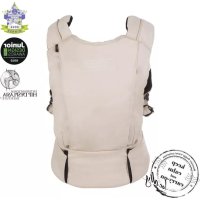
Juno - Lawn mower Mountain Buggy - Free user manual and instructions
Find the device manual for free Juno Mountain Buggy in PDF.


| Product type | Ergonomic baby carrier |
| Brand | Mountain Buggy |
| Model | Juno |
| Recommended age | 0 to 48 months (with newborn insert) |
| Carrying modes | Front facing you, front facing away, hip |
| Child weight | Up to approximately 20 kg |
| Main material | Breathable and durable fabric |
| Safety features | Magnetic chest strap buckle, safety belt with elastic keeper, adjustable shoulder strap buckles |
| Comfort features | Padded seat, headrest, protective cover with pocket, kangaroo pocket, retractable storage pockets |
| Adjustments | Chest strap adjustment, shoulder straps, seat width, insert length |
| Included accessories | Juno newborn insert, protective cover |
| Care | Hand wash or machine wash cold, air dry |
| Repairability | Spare parts available on request (buckles, straps) |
| Warranty | 2 years |
Frequently Asked Questions - Juno Mountain Buggy
User questions about Juno Mountain Buggy
0 question about this device. Answer the ones you know or ask your own.
Ask a new question about this device
Download the instructions for your Lawn mower in PDF format for free! Find your manual Juno - Mountain Buggy and take your electronic device back in hand. On this page are published all the documents necessary for the use of your device. Juno by Mountain Buggy.
USER MANUAL Juno Mountain Buggy
life without limit™
IMPORTANT:
This document contains instructions and must be kept for future reference.
Please read thoroughly before use.
please register your product purchase
through our online warranty registration
mountainbuggy.com/register

share your juno experience
by finding us on facebook
facebook.com/lifewithoutlimit
care information
for safety reasons, please check your juno and infant insert for any signs of damage before use. if the fabric is torn, the seams ripped or the fastenings flawed, please consult our web support (mountainbuggy.com/support). from here you can contact a local customer team member.
caring for juno™ and infant insert
- fabrics are best sponge cleaned or hand washed with warm water using a mild, natural soap.
- juno ^™ and the infant insert can also be machine washed on a cold, gentle cycle. however, please keep in mind that when machine washed, some colours may fade.
- dry your juno ^™ and infant insert thoroughly before storing. store in a well ventilated space away from direct sunlight, which could damage or fade the fabrics.
- always line dry your juno and infant insert. do not wring. do not tumble dry. do not use any solvent or bleach based products, as these may harm the fabrics.
important information
- juno ^TM can be worn as a front face in, front face out, back or hip carrier.
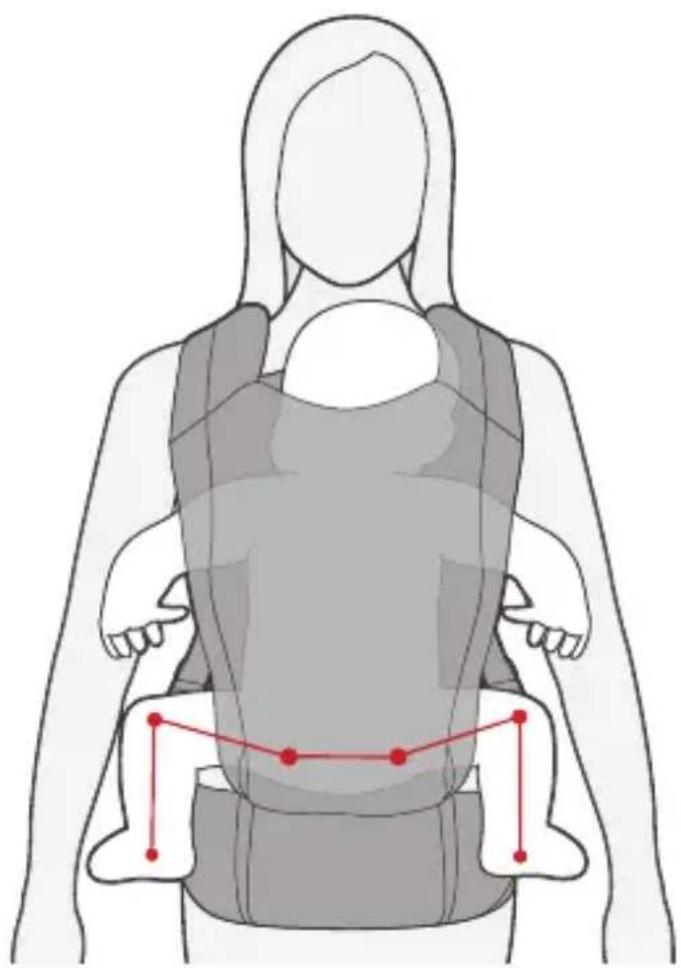
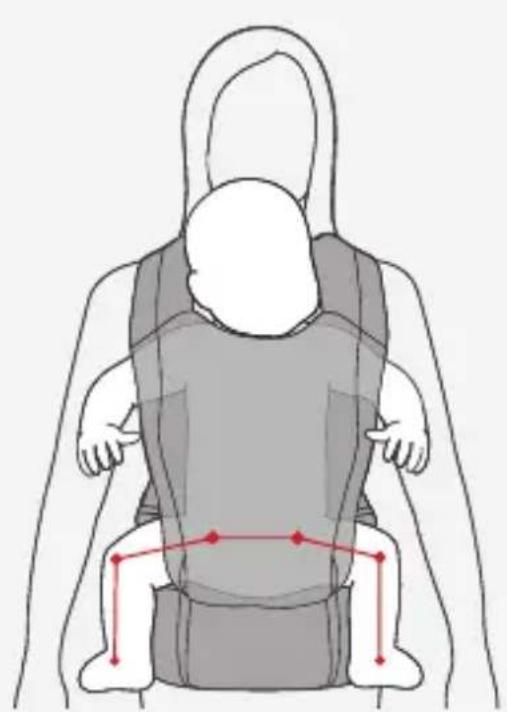
- it's important to fit your child correctly when using juno™. make sure that your child has: clear airways, is carried firmly against you, has the recommended leg positioning and is close enough to kiss.
- it is recommended that the infant insert and the front face in carry mode are used for newborns from 3.5–6.5kg / 7.7–14.3lbs.

for more information on caring for your product, visit mountainbuggy.com/support

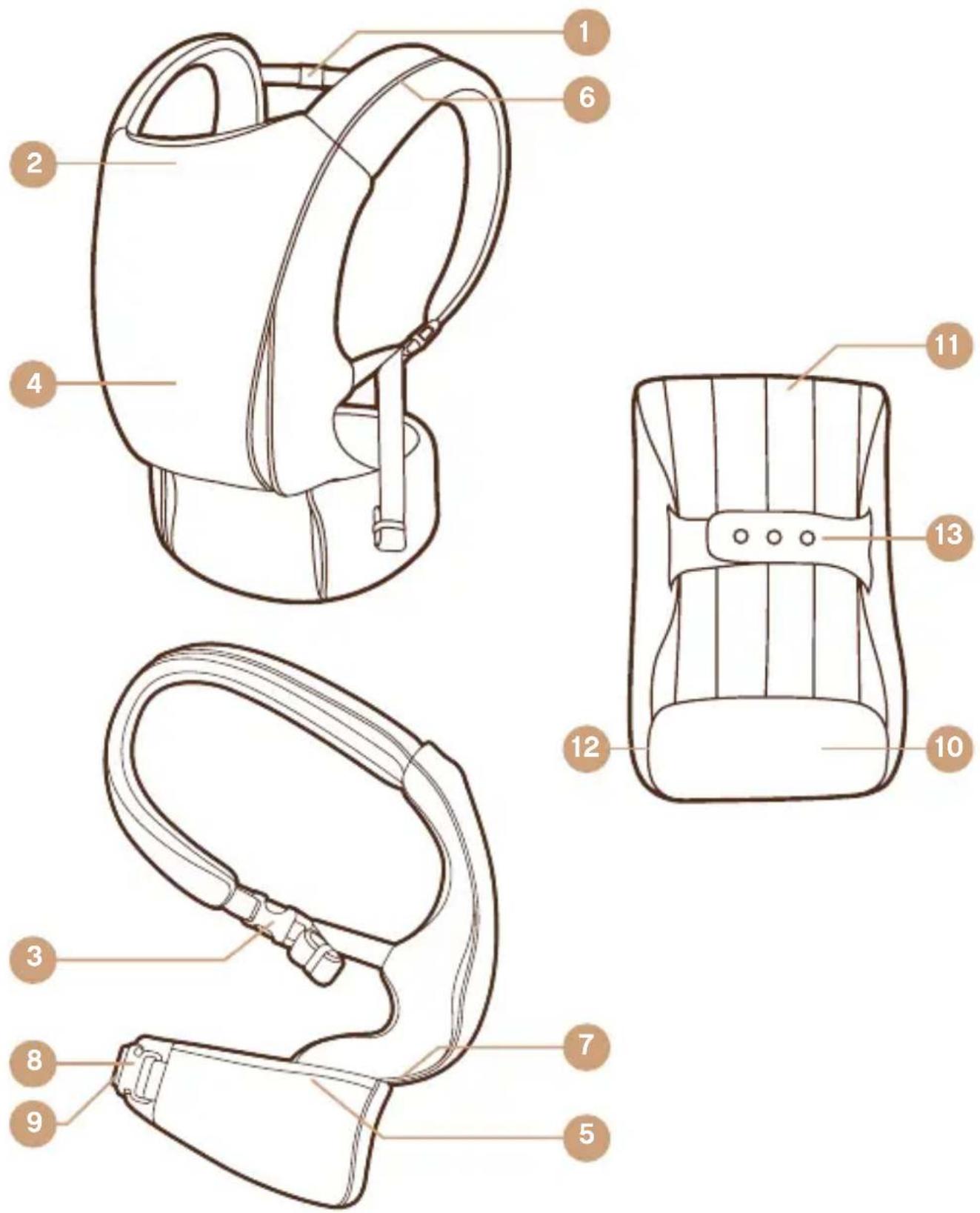
juno ™ carrier
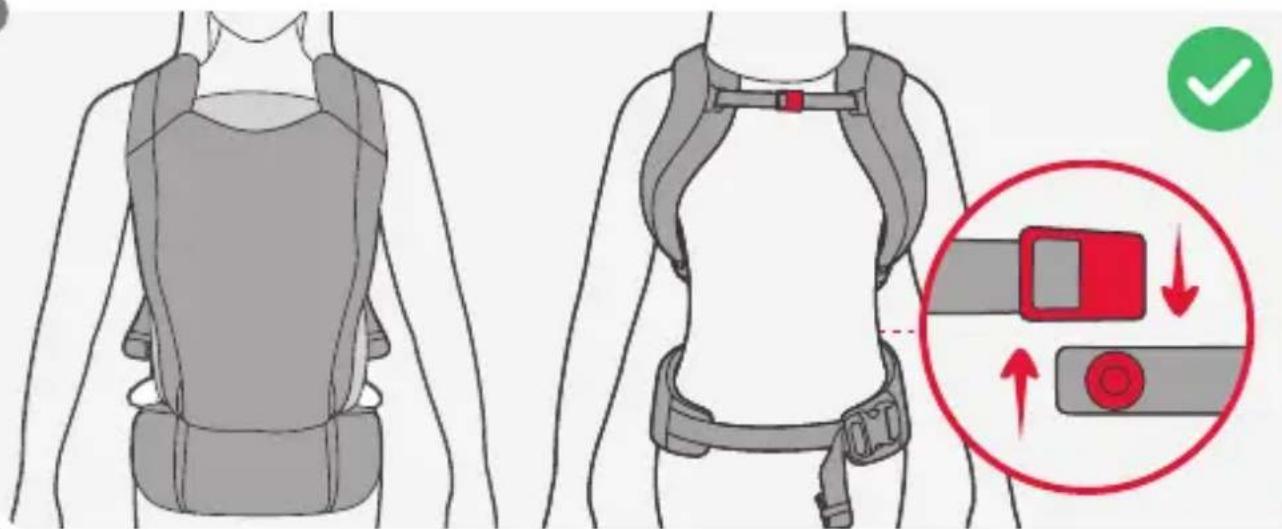
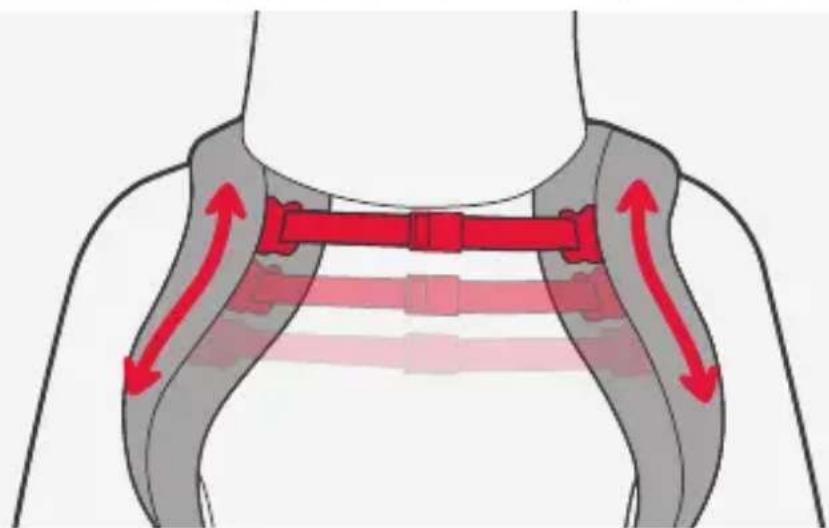
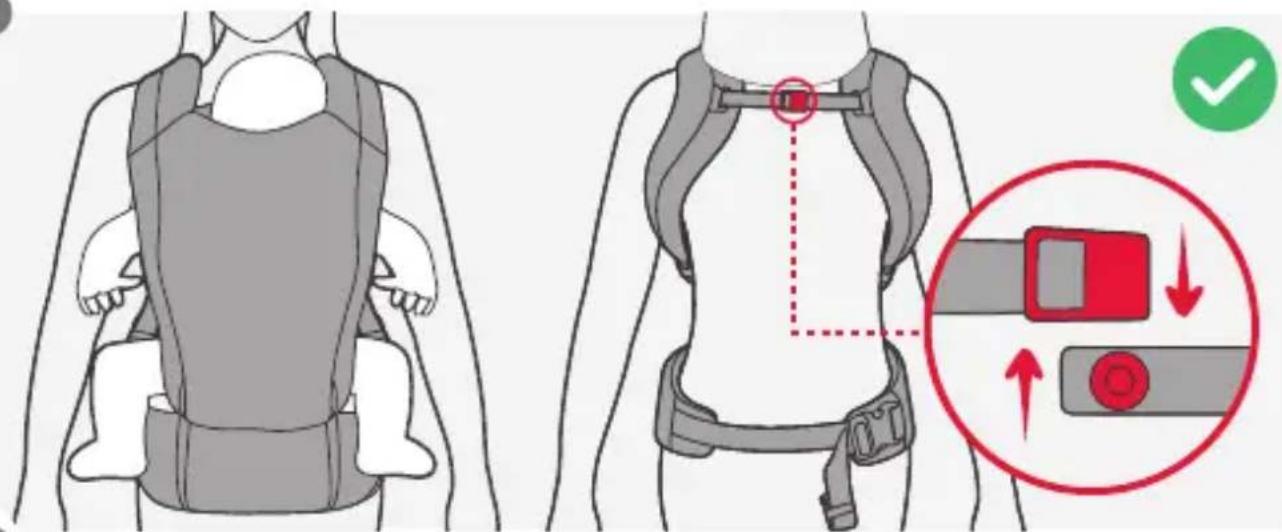
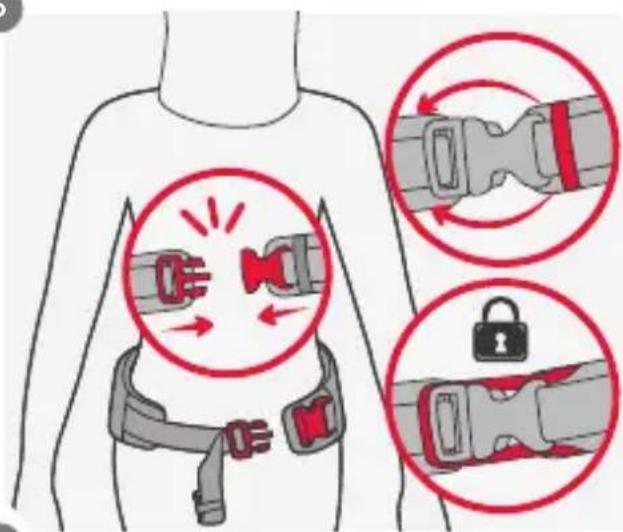
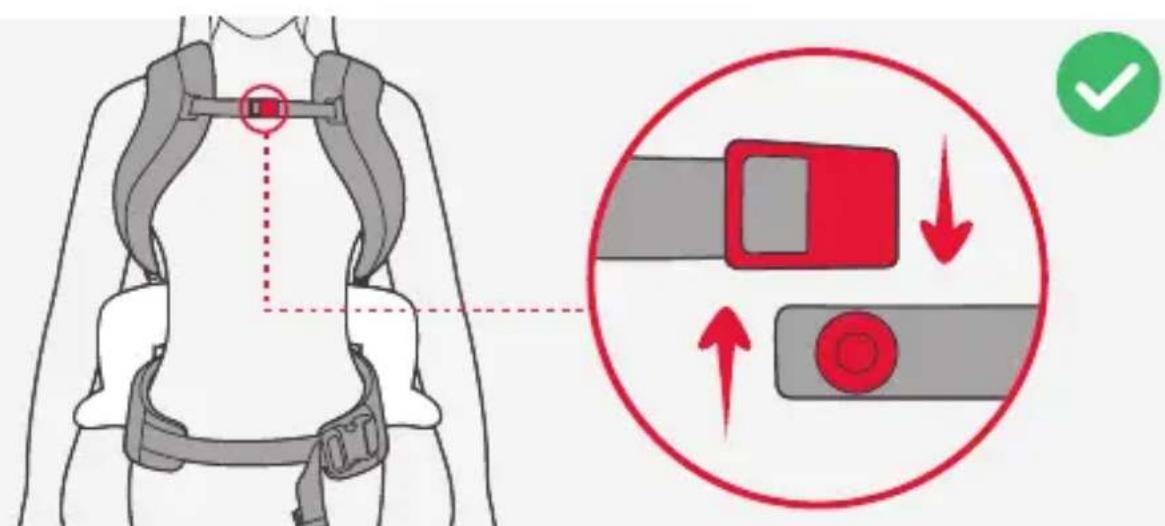
1 magnetic sternum strap fastening and adjustment
2 protective hood with stow away pocket
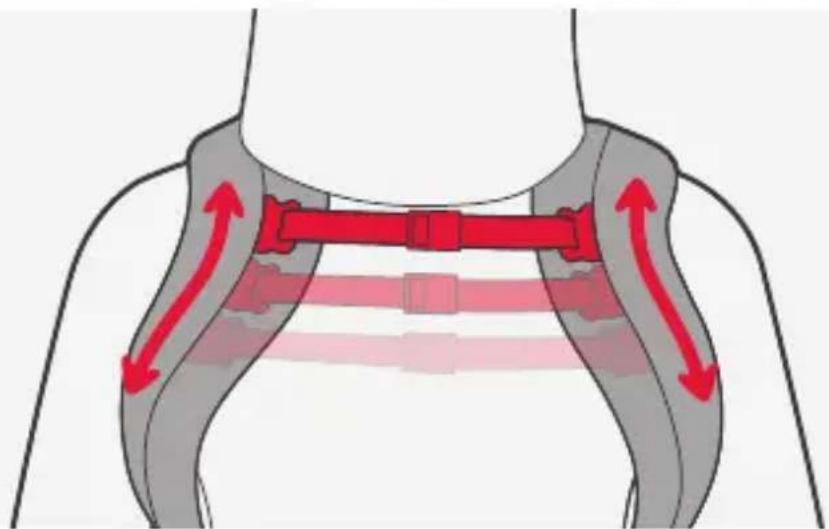
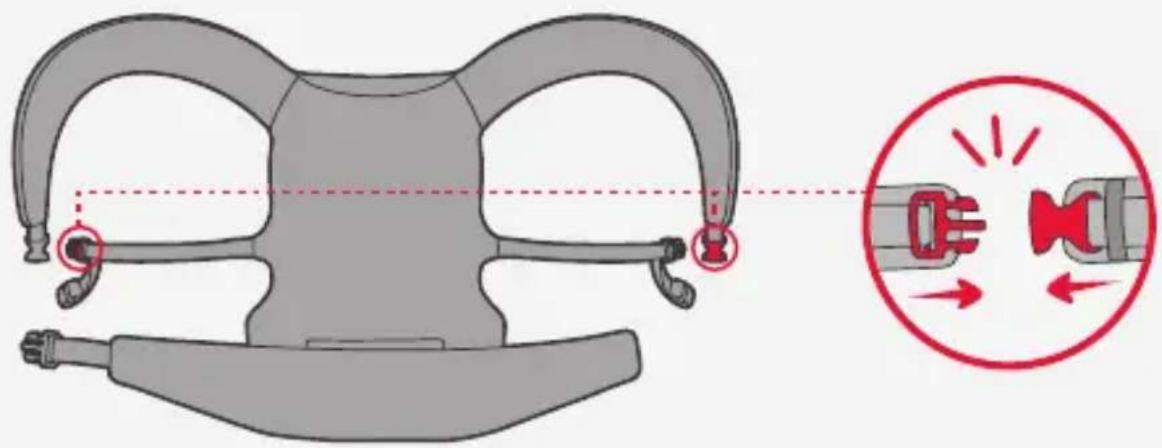
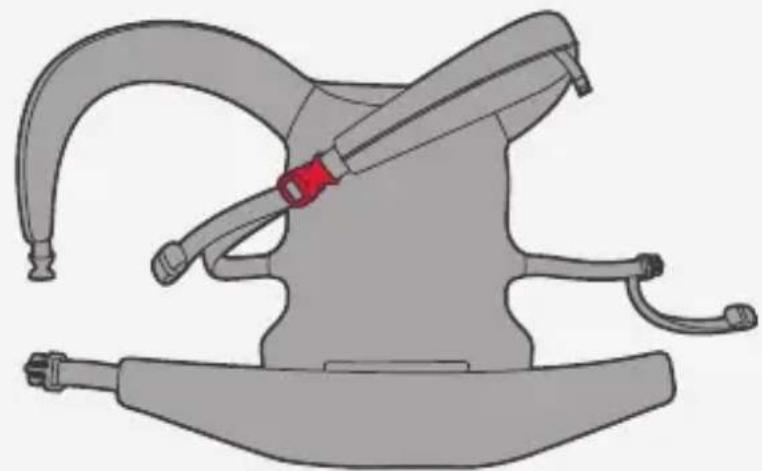
3 shoulder strap buckles and adjustment
4 hands through connection pouch
5 2 x tailored retractable storage pockets
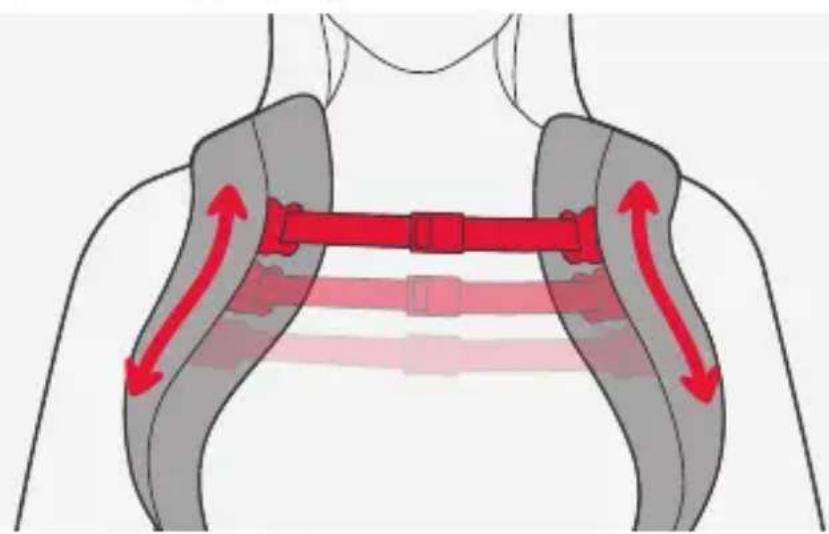
6 shoulder strap runners and adjustment
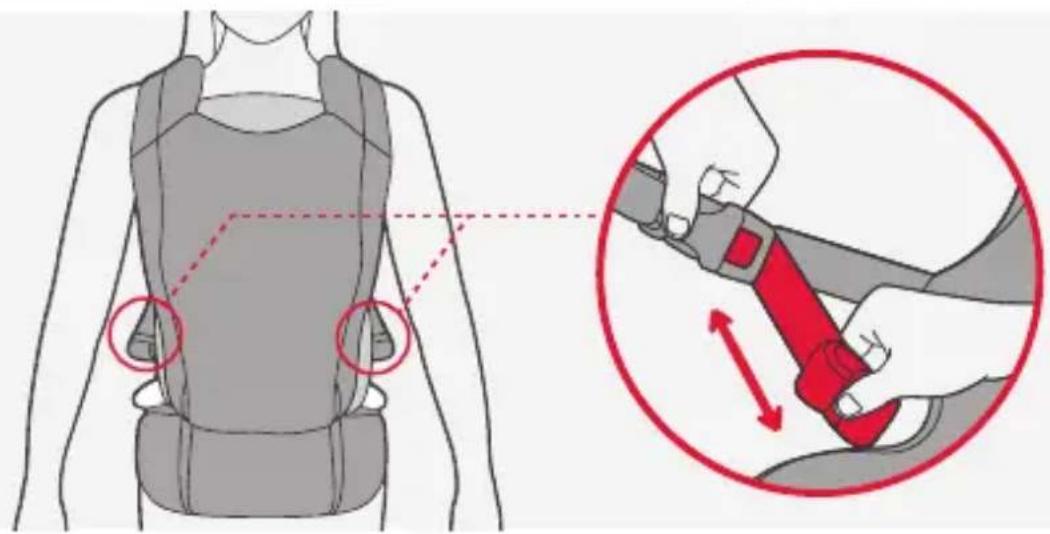
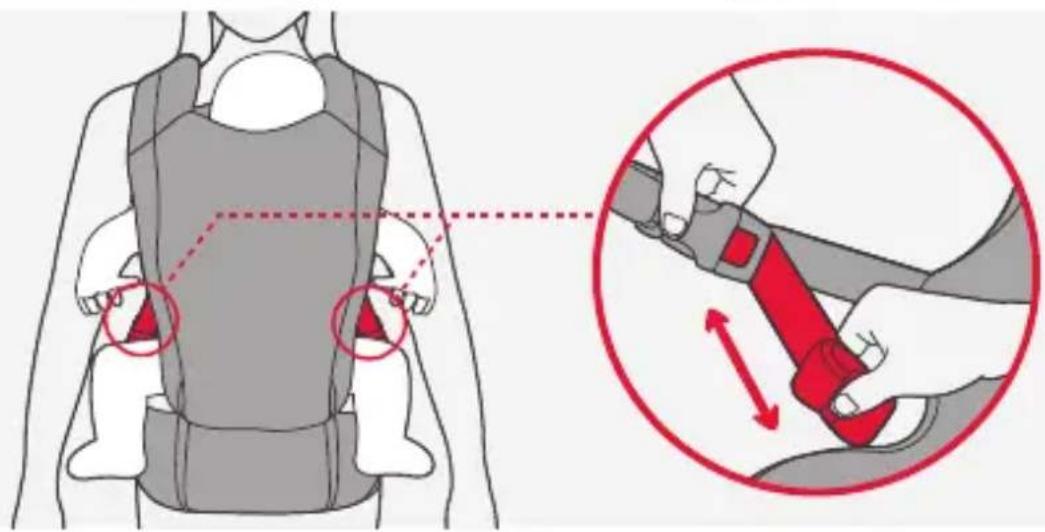
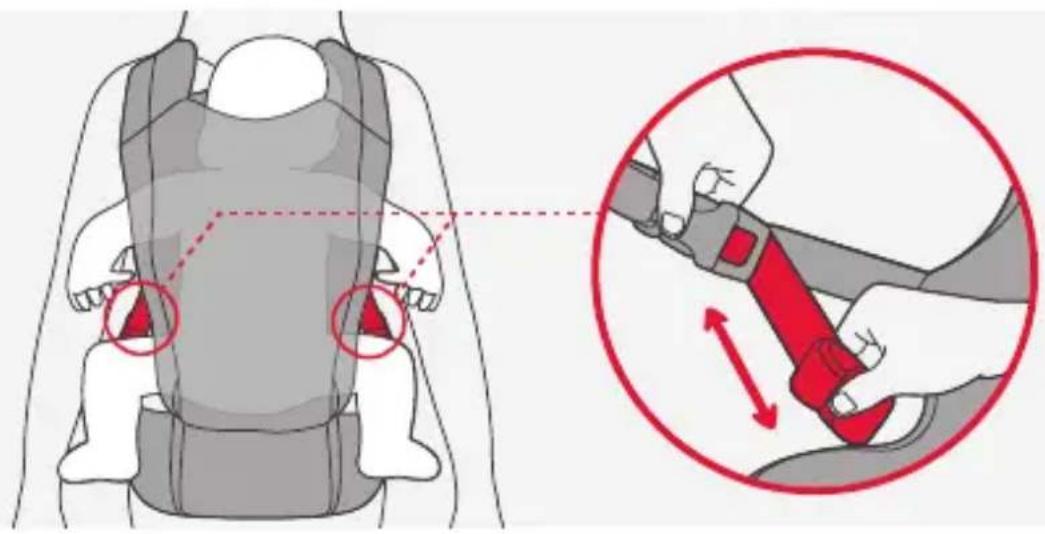
7 seat width adjustment fastenings,
for front face out carry
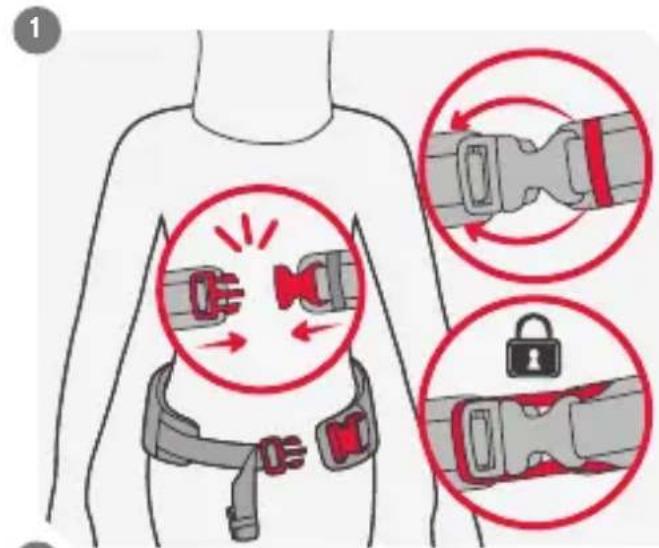
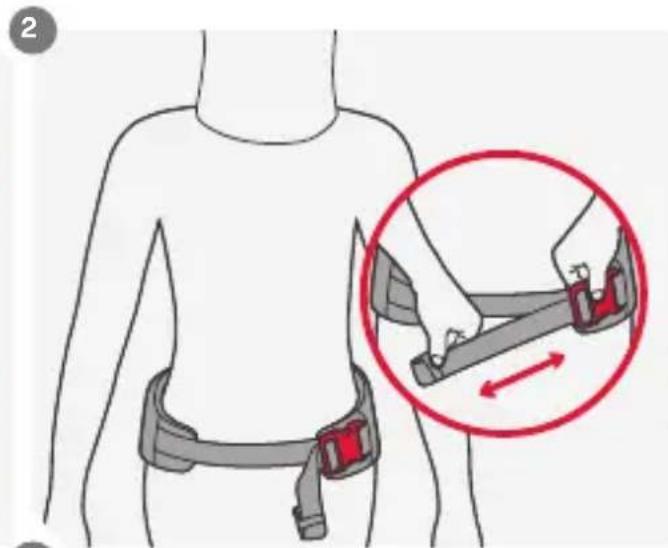
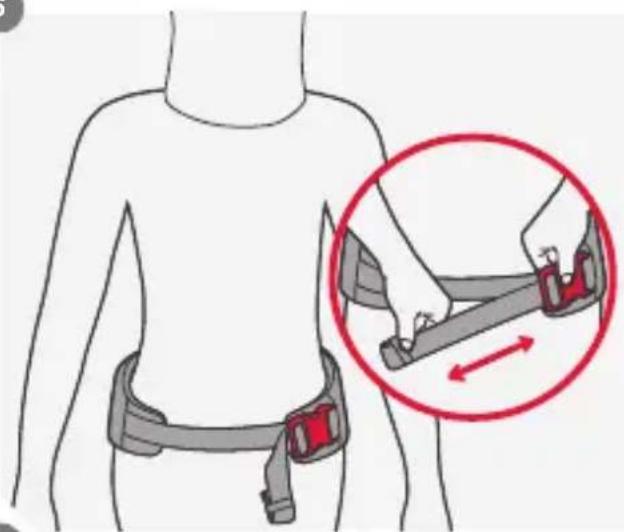
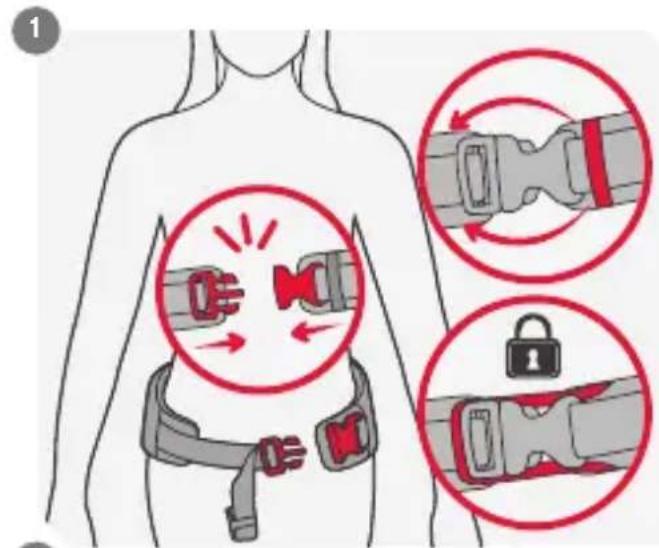
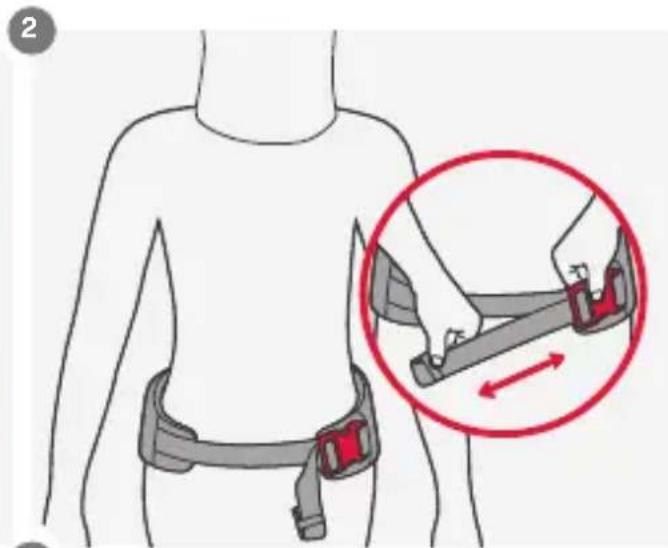
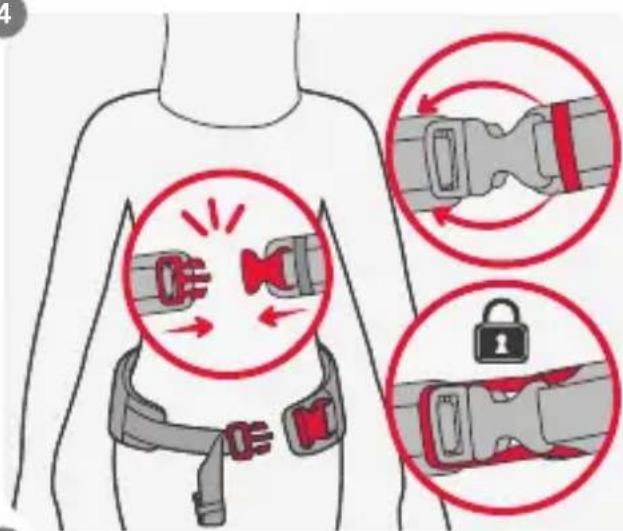
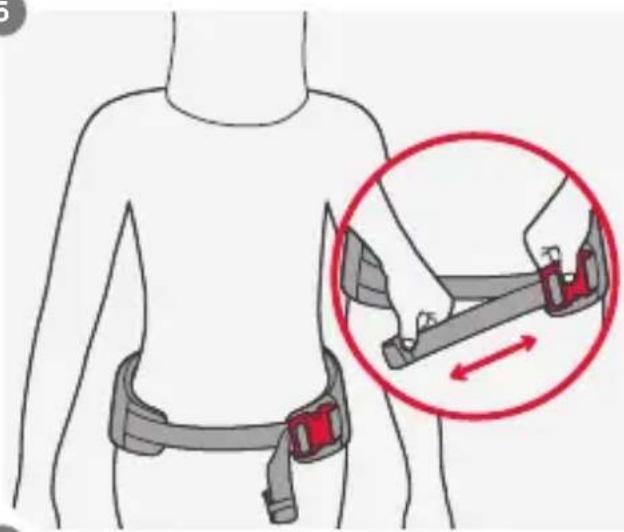
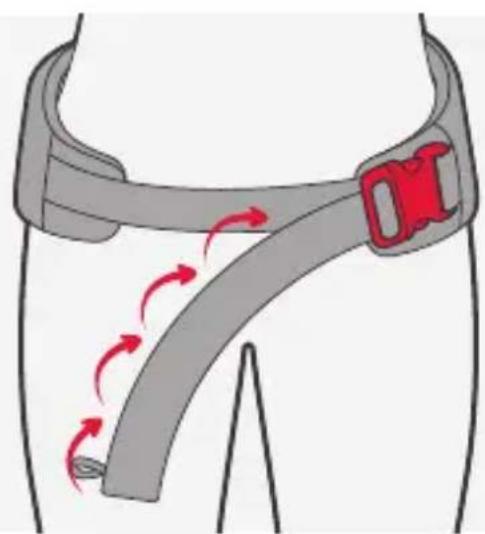
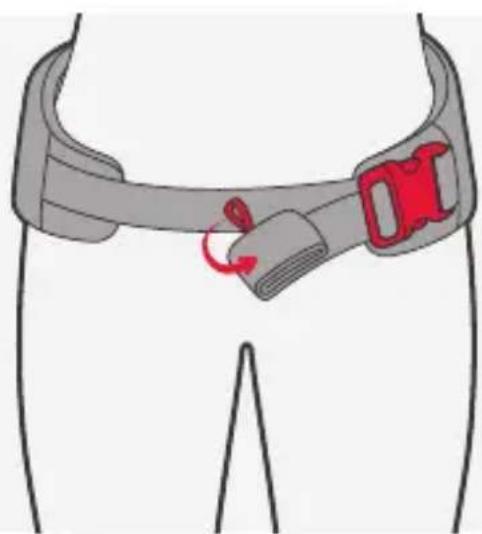
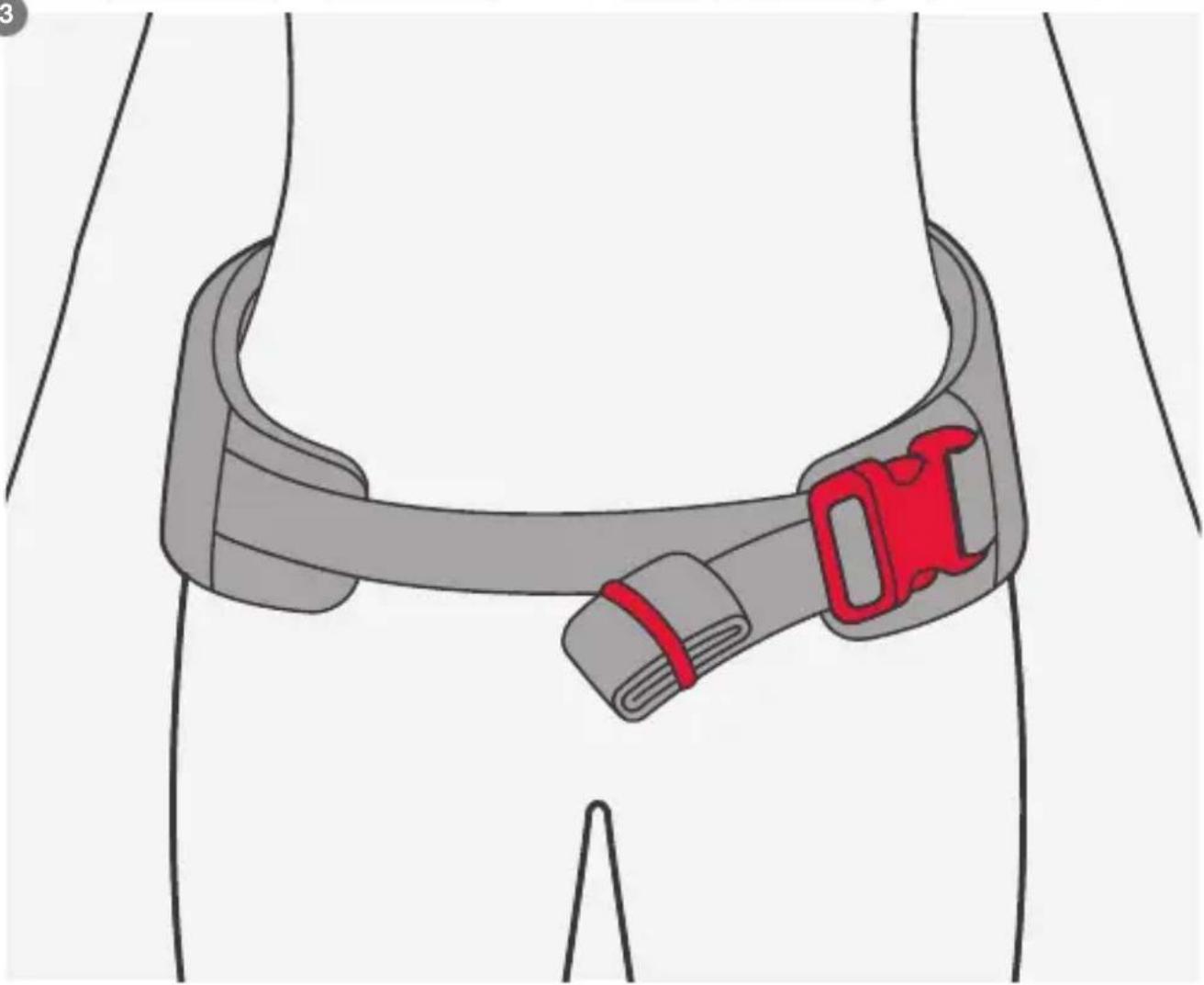
8 waistband buckle and adjustment
9 waistband safety elastic
juno ™ infant insert
10 padded seat
11 padded head and neck support
12 length adjustment fastenings, for insert extension
13 width adjustment fastenings
porte-bébé juno ™
A
*front face in:
0–6 months (recommended)
3.5–6.5kg / 7.7–14.3lbs
*front face in for
newborns, using the
juno infant insert
natural_image
Human body diagram showing seated posture with measurement points (no text or labels)B
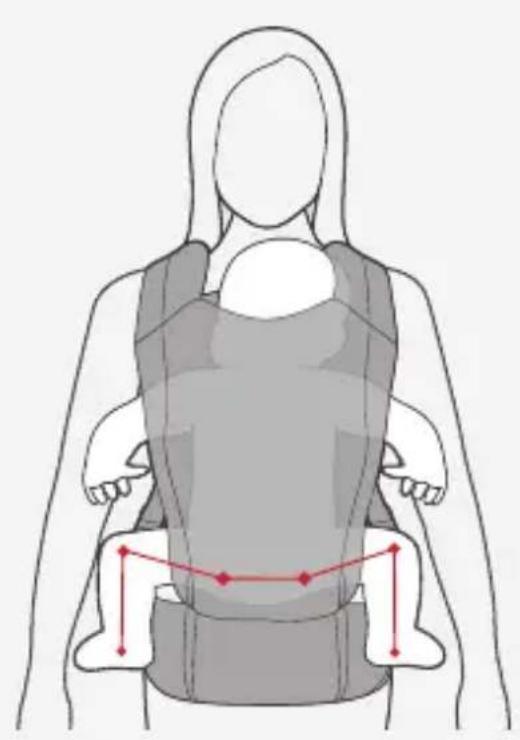
front face in:
6–24 months (recommended)
6.5–12.2kg / 14.3–26.9lbs
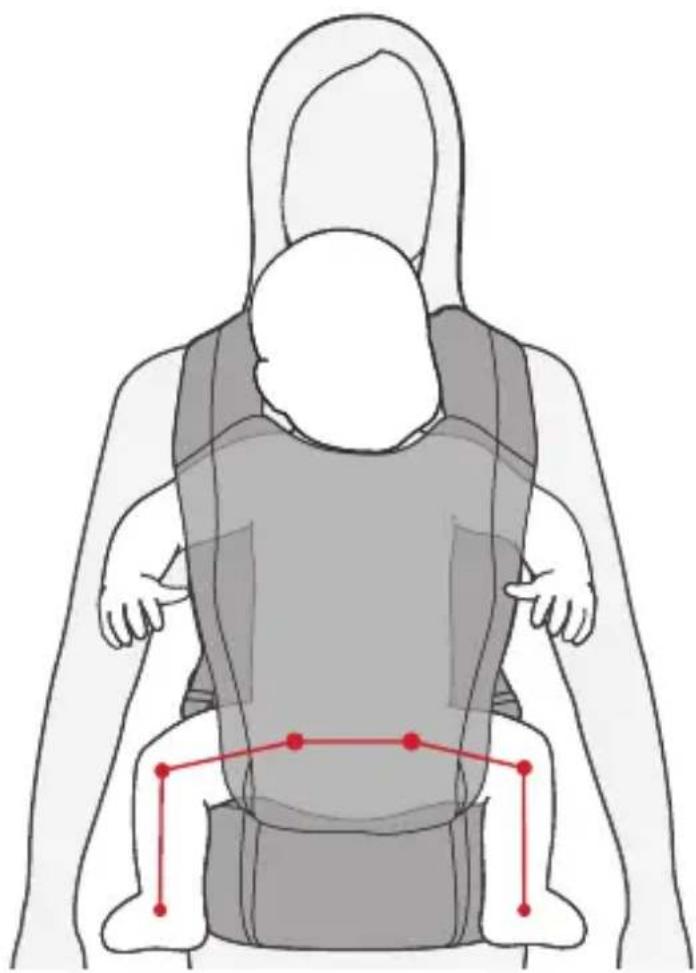
natural_image
Illustration of a person seated in a gait with a red line marking the waist and torso (no text or symbols)C
front face out:
6–18 months (recommended)
6.5–10kg / 14.3–24lbs
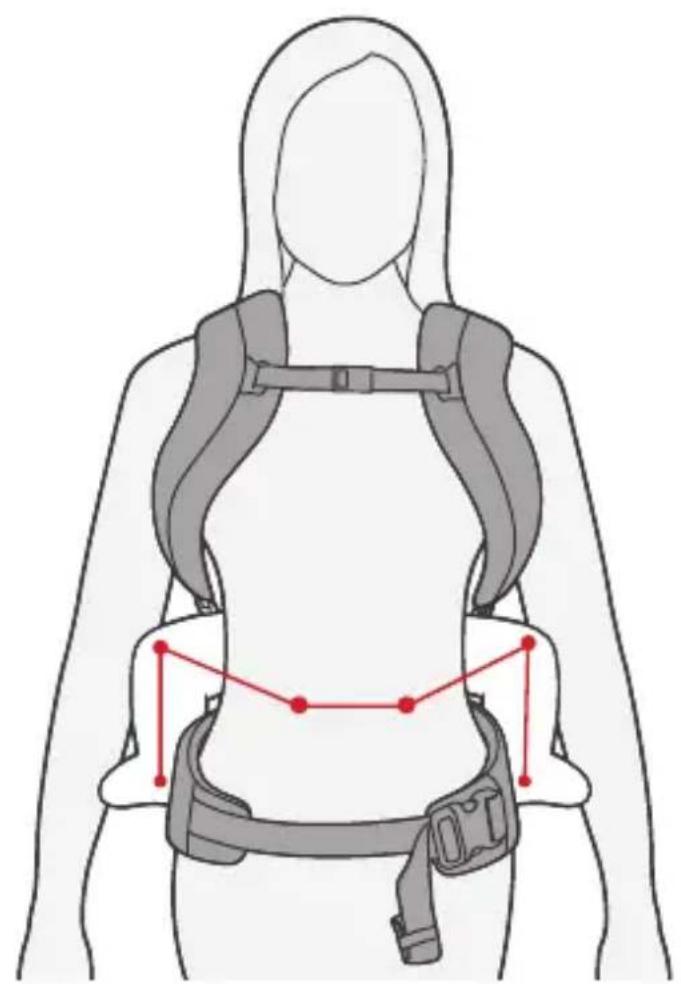
D
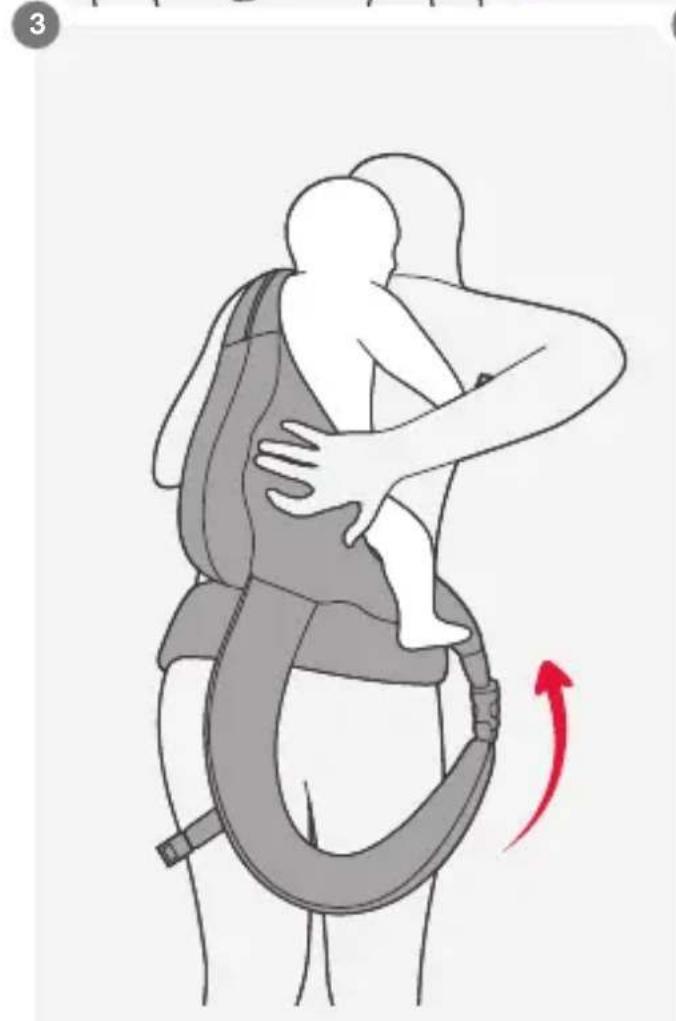
back carry mode:
6–48 months (recommended)
6.5–20kg / 14.3–44lbs
natural_image
Illustration of a person carrying a baby's back with a red line indicating walking path (no text or symbols)E
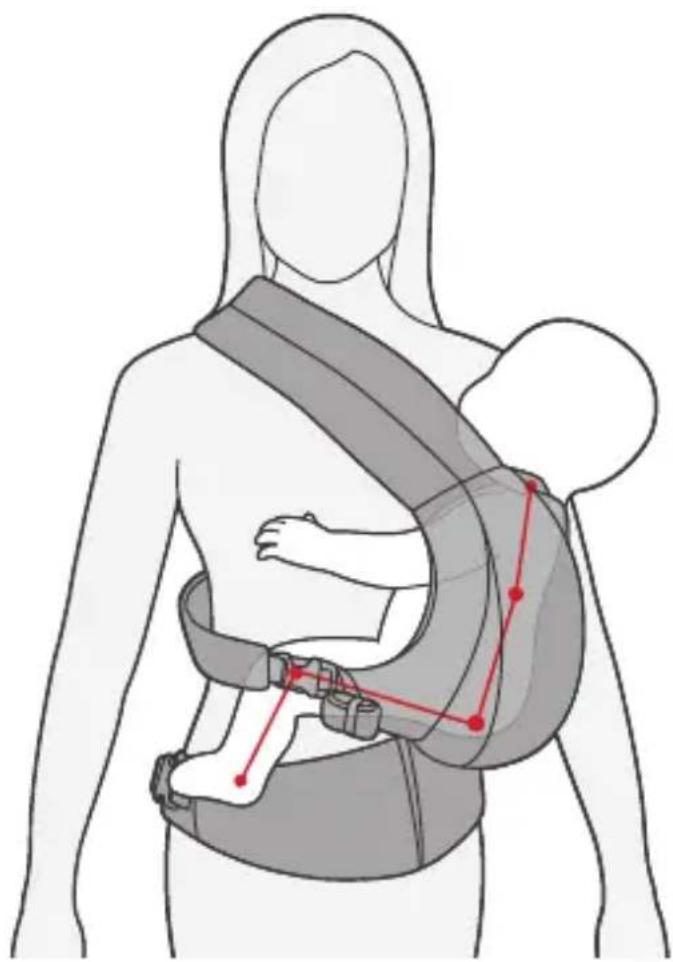
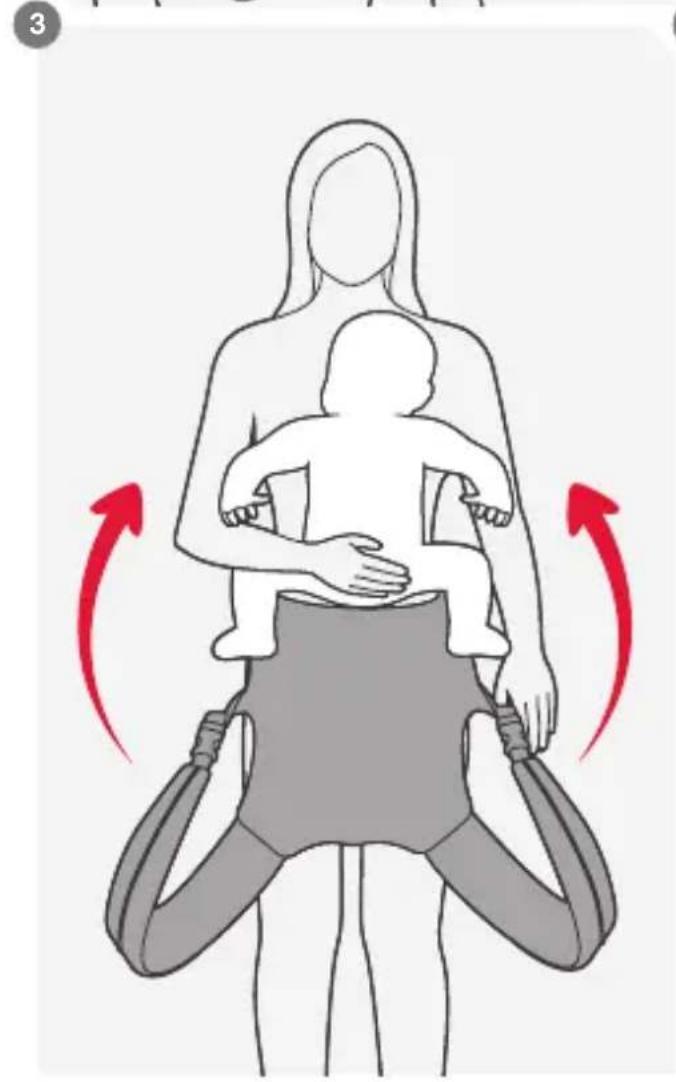
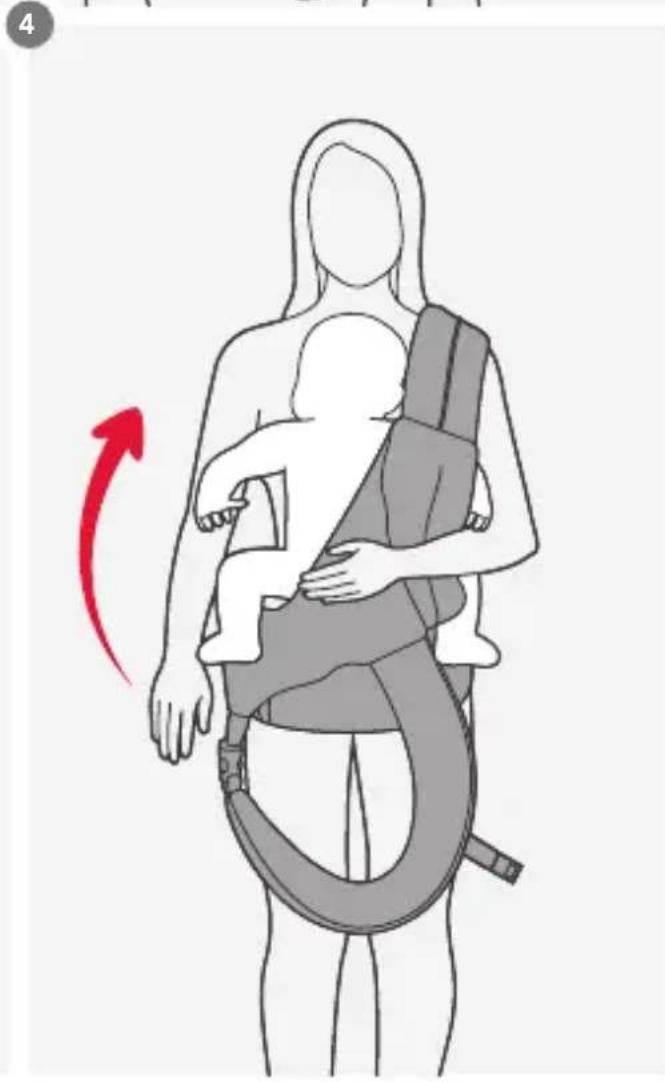
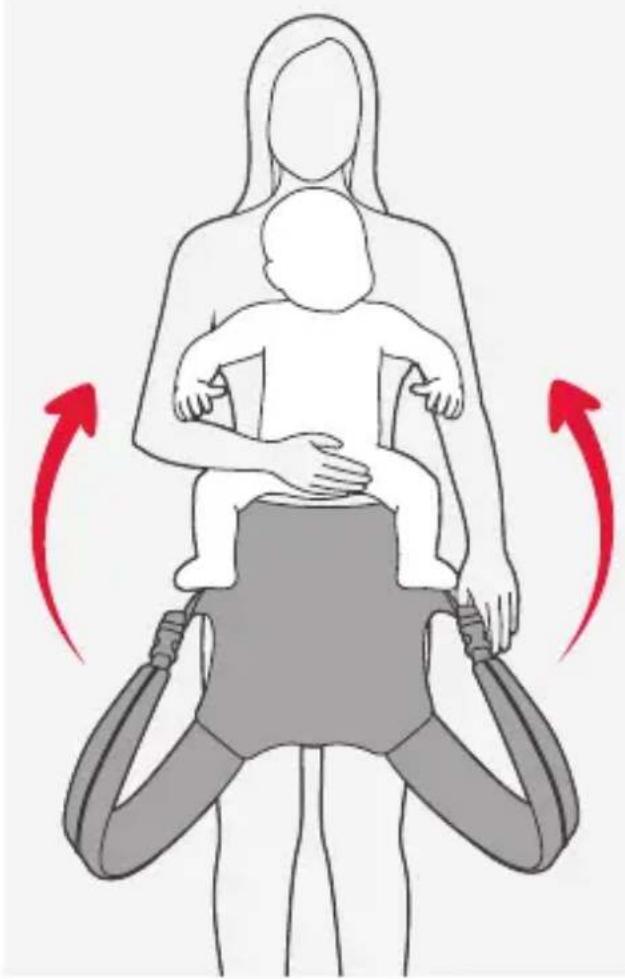
hip carry mode:
6–24 months (recommended)
6.5–12.2kg / 14.3–26.9lbs
A
natural_image
Simple line drawing of a garment sleeve with a belt (no text or symbols)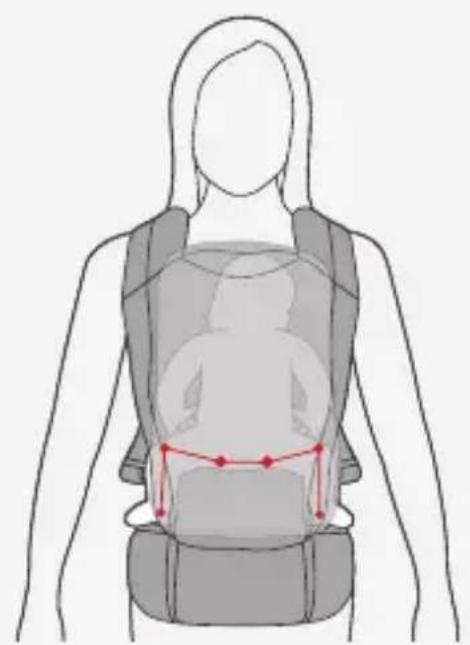
natural_image
Human back view diagram showing internal organs and measurement lines (no text or symbols)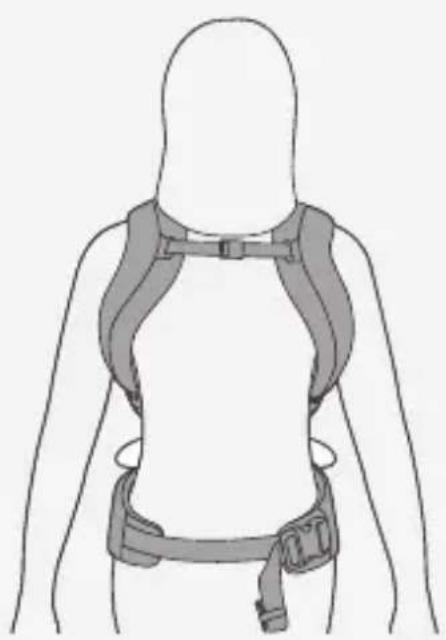
natural_image
Line drawing of a human torso with a full-body harness and belt (no text or symbols)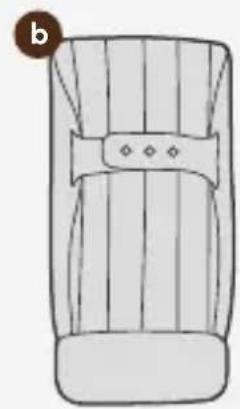
natural_image
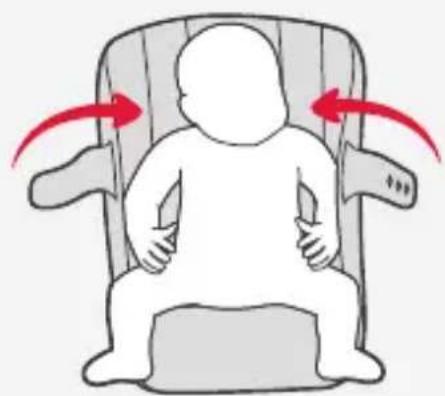
Simple line drawing of a rectangular object with vertical stripes and a horizontal bar, no text or symbols present.A
*front face in:
0–6 months (recommended)
3.5–6.5kg / 7.7–14.3lbs
*front face in for
newborns, using the
juno infant insert
a1
natural_image
Illustration of a seated person in a chair with red arrows indicating motion or pressure direction (no text or symbols)a2
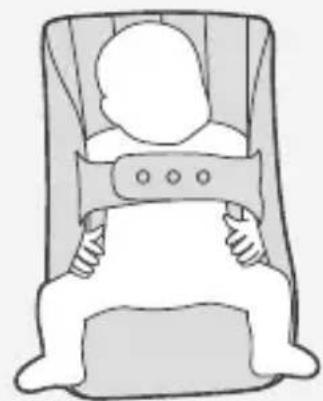
natural_image
Simple line drawing of a baby wearing a seatbelt, no text or symbols present
a,b
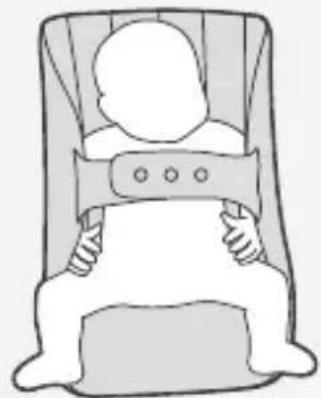
natural_image
Simple line drawing of a person sitting in a chair with hands placed on the back (no text or symbols)
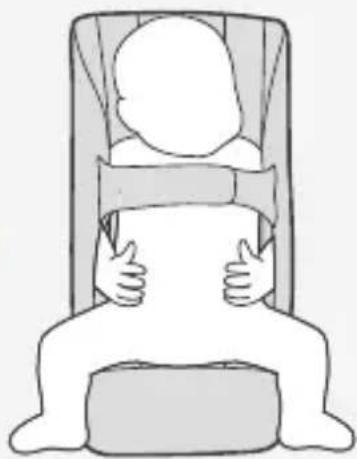
natural_image
Simple line drawing of a person sitting in a chair with hands placed on their back (no text or symbols)b1
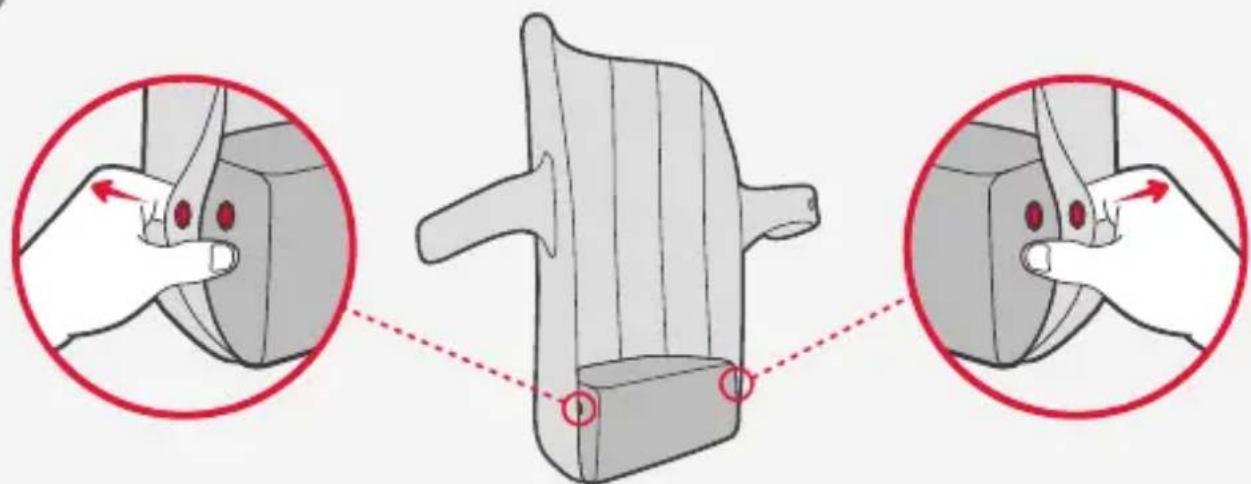
b2
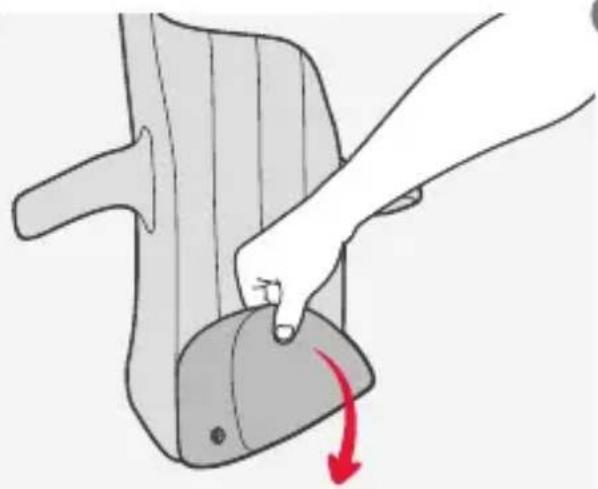
natural_image
Illustration of a hand pressing down on a mechanical component with a red arrow indicating motion (no text or symbols)b3
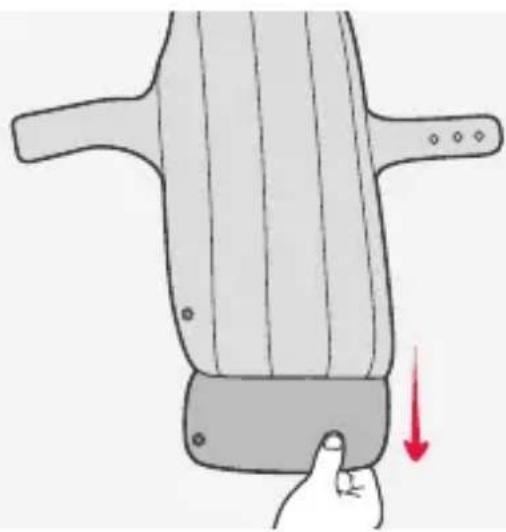
natural_image
Illustration of a hand pressing down on a mechanical component with a red arrow indicating downward motion (no text or symbols)b4
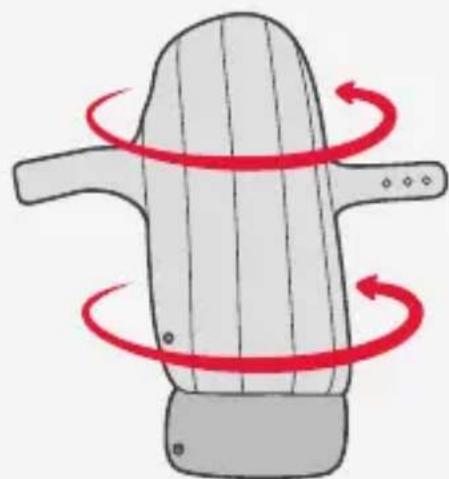
natural_image
Illustration of a cylindrical object with red motion arrows indicating rotational motion (no text or symbols)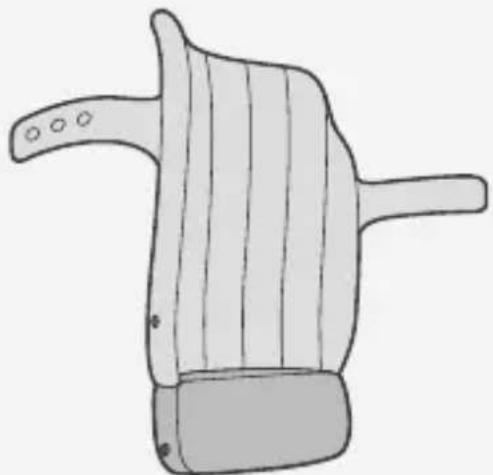
natural_image
Simple line drawing of a mechanical component with no text or symbolsb5
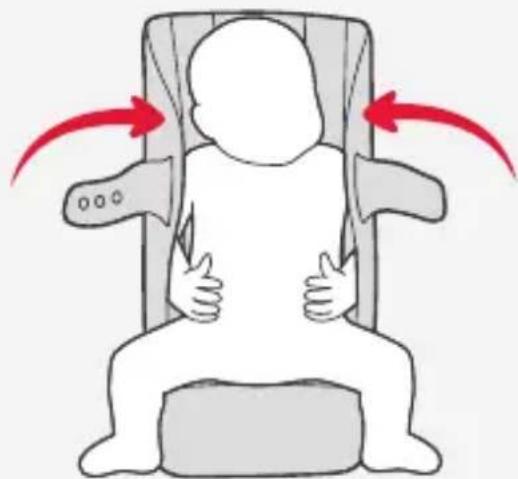
natural_image
Illustration of a person seated in a chair with red arrows indicating motion or pressure direction (no text or symbols)b6
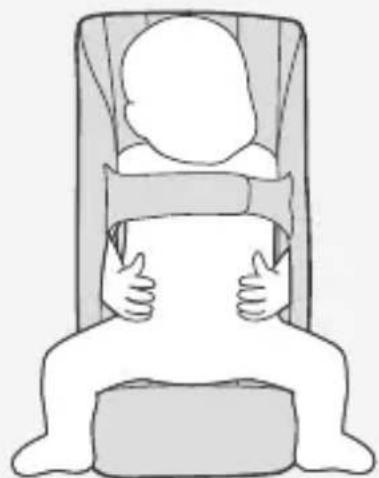
natural_image
Simple line drawing of a baby sitting in a chair, viewed from behind (no text or symbols)
natural_image
Illustration of a person in a back view with two red arrows indicating clockwise motion (no text or symbols)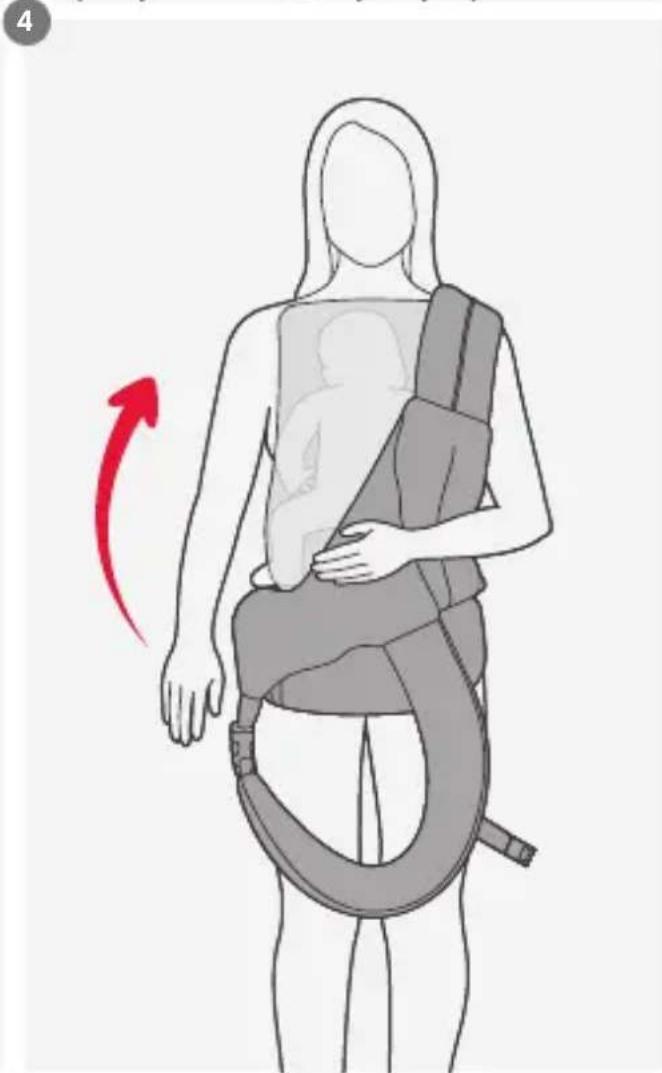
natural_image
Illustration of a person wearing a baby sash seat with a red arrow indicating motion (no text or symbols)
5
6
natural_image
Diagram of a human torso with red arrows indicating movement or force direction (no text or symbols)7
natural_image
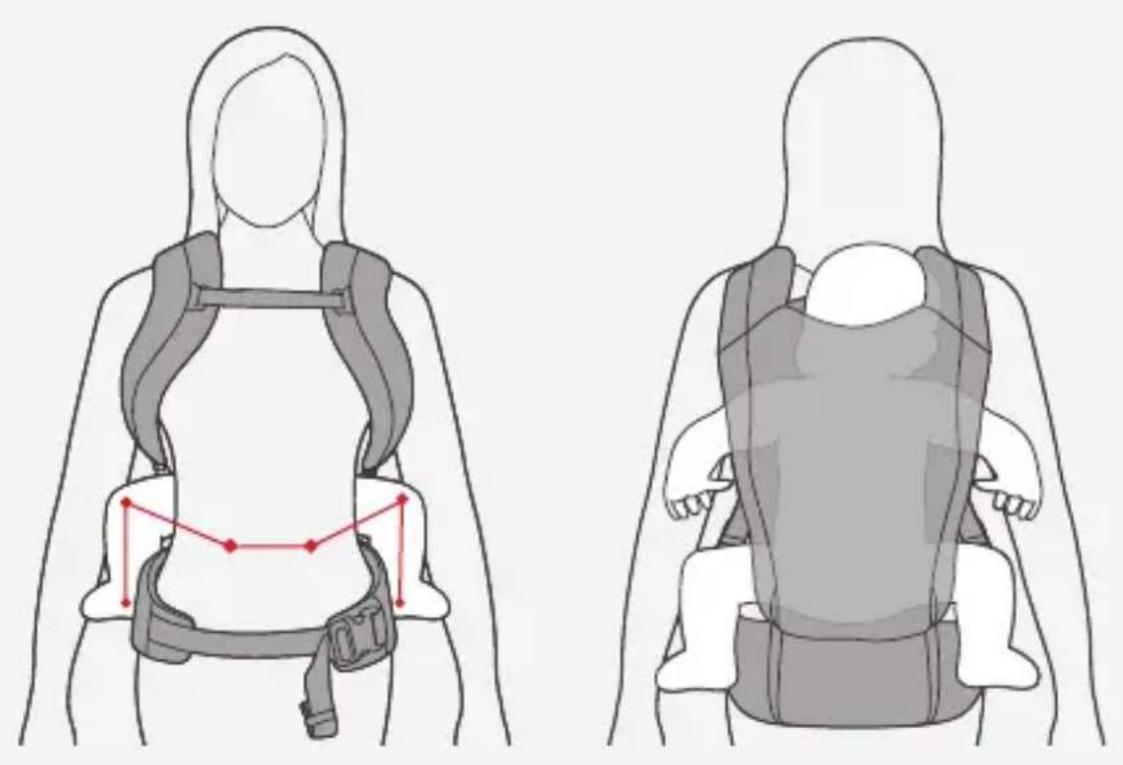
Human silhouette diagram of a person wearing a gray gaiton, with red measurement lines indicating points of interest (no text or symbols present)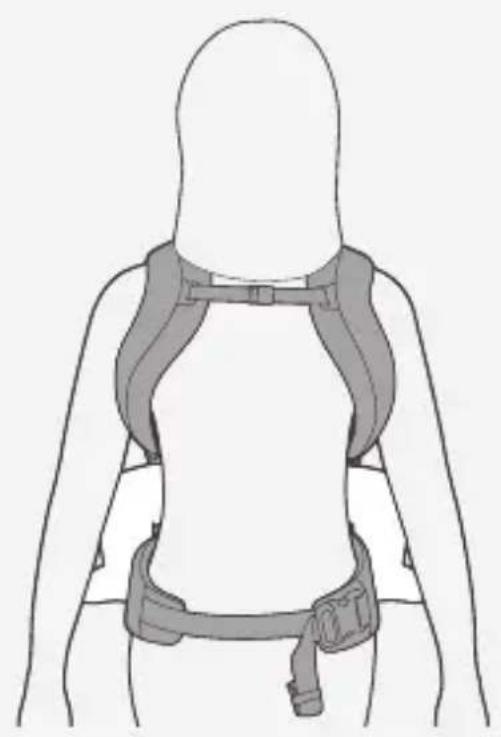
natural_image
Line drawing of a human torso with a full-body harness (no text or symbols)B
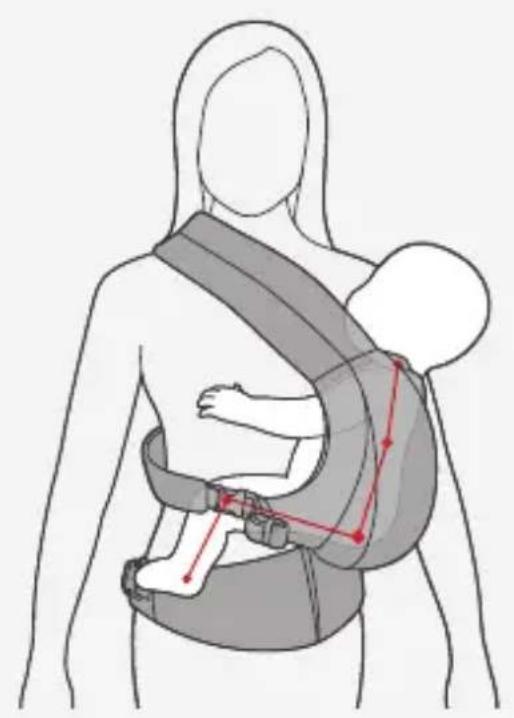
front face in:
6–24 months (recommended)
6.5–12.2kg / 14.3–26.9lbs
5
6
natural_image
Diagram of a human torso with red arrows indicating movement or force direction (no text or symbols)7
natural_image
Illustration of a person wearing a gait with a red measurement line indicating point of motion (no text or symbols)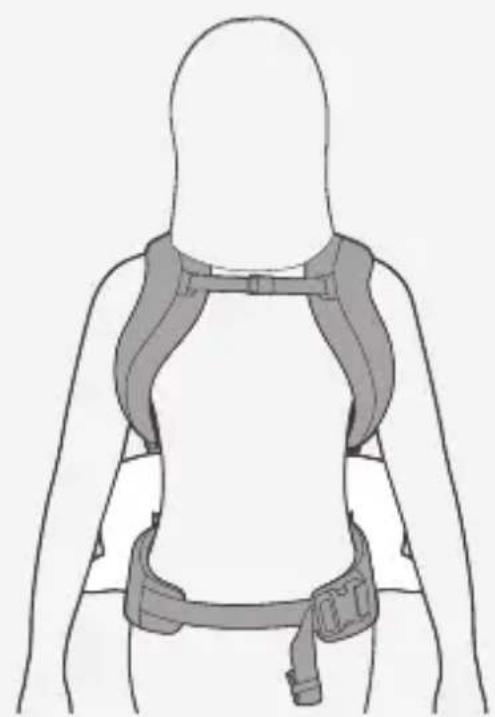
natural_image
Line drawing of a human torso with a full-body harness (no text or symbols)C
front face out:
6–18 months (recommended)
6.5–10kg / 14.3–24lbs
1
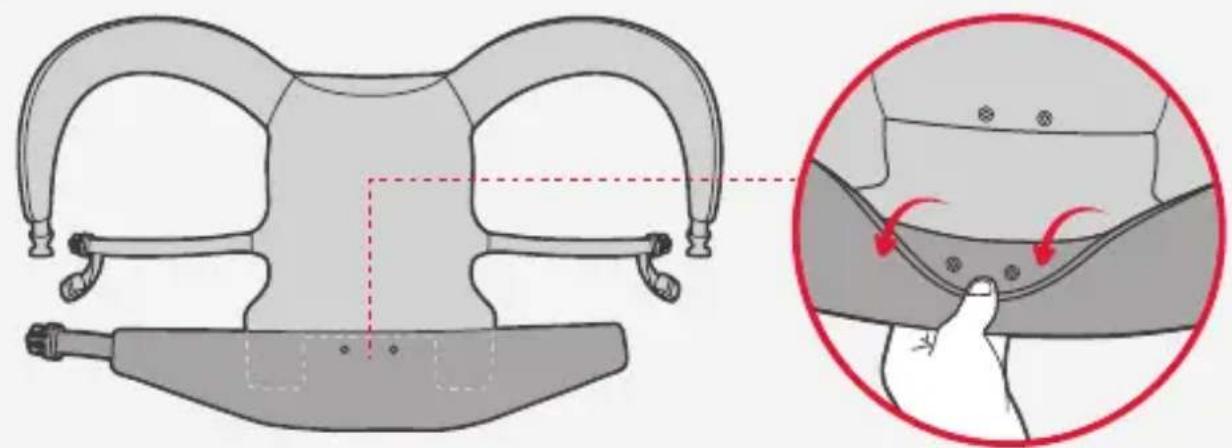
natural_image
Diagram showing a mechanical component with a magnified inset highlighting a detail of the part's edge (no text or symbols present)2
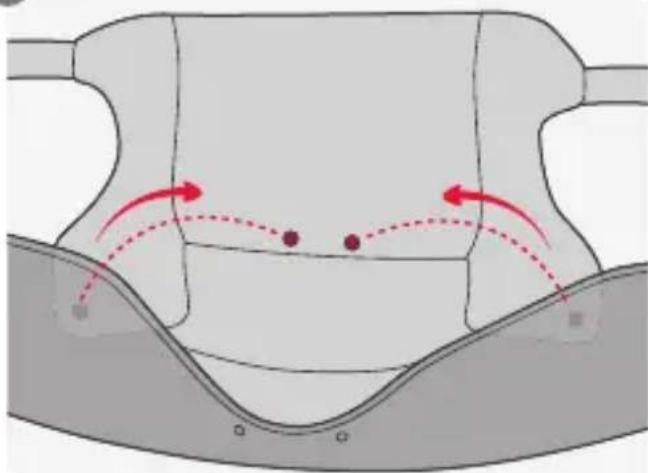
natural_image
Diagram of a mechanical or fluidic component with red arrows indicating motion or flow, no text or symbols present3
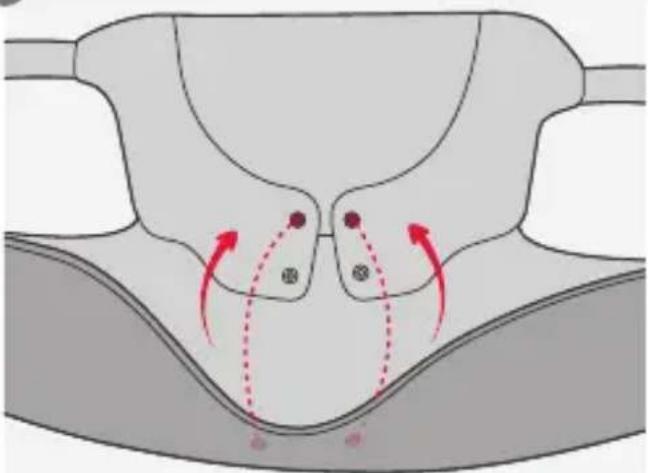
natural_image
Diagram of a pelvic region with arrows indicating movement or force, no text or symbols present4
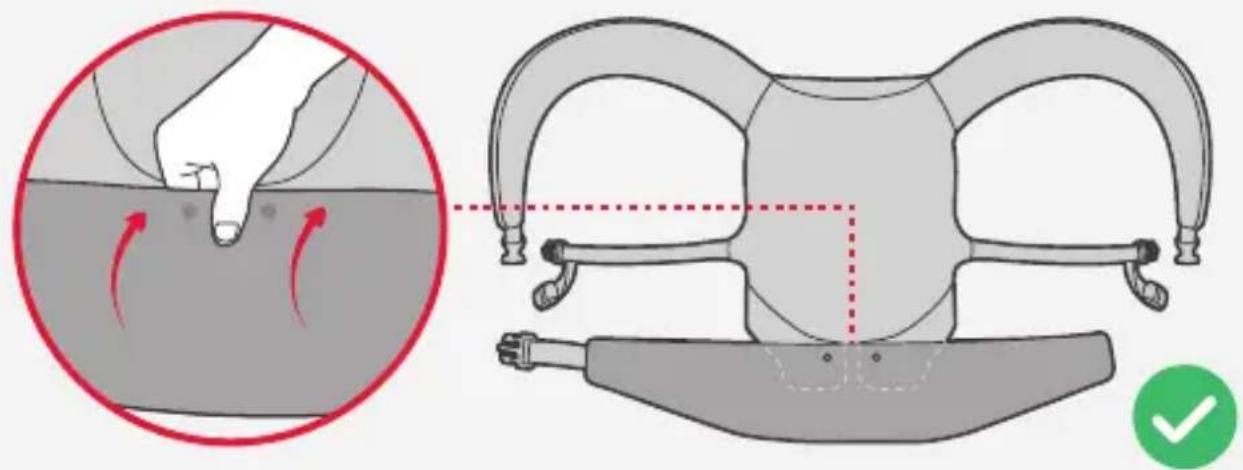
5
6
7
natural_image
Illustration of a person carrying a baby on their back, with red arrows indicating clockwise motion (no text or symbols)8
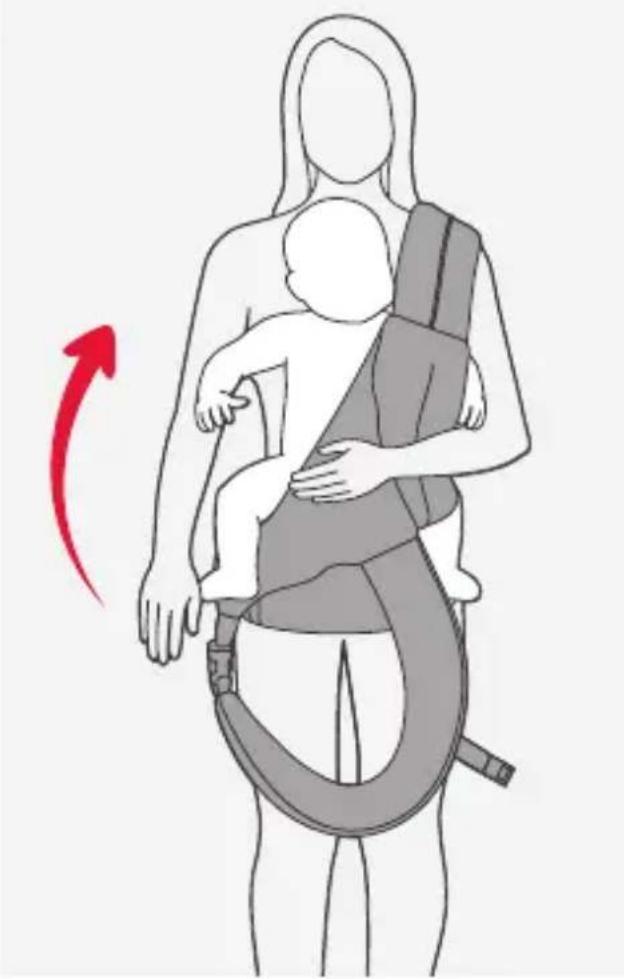
natural_image
Illustration of a woman holding a baby in a child's seatbelt, with a red arrow indicating direction (no text or symbols)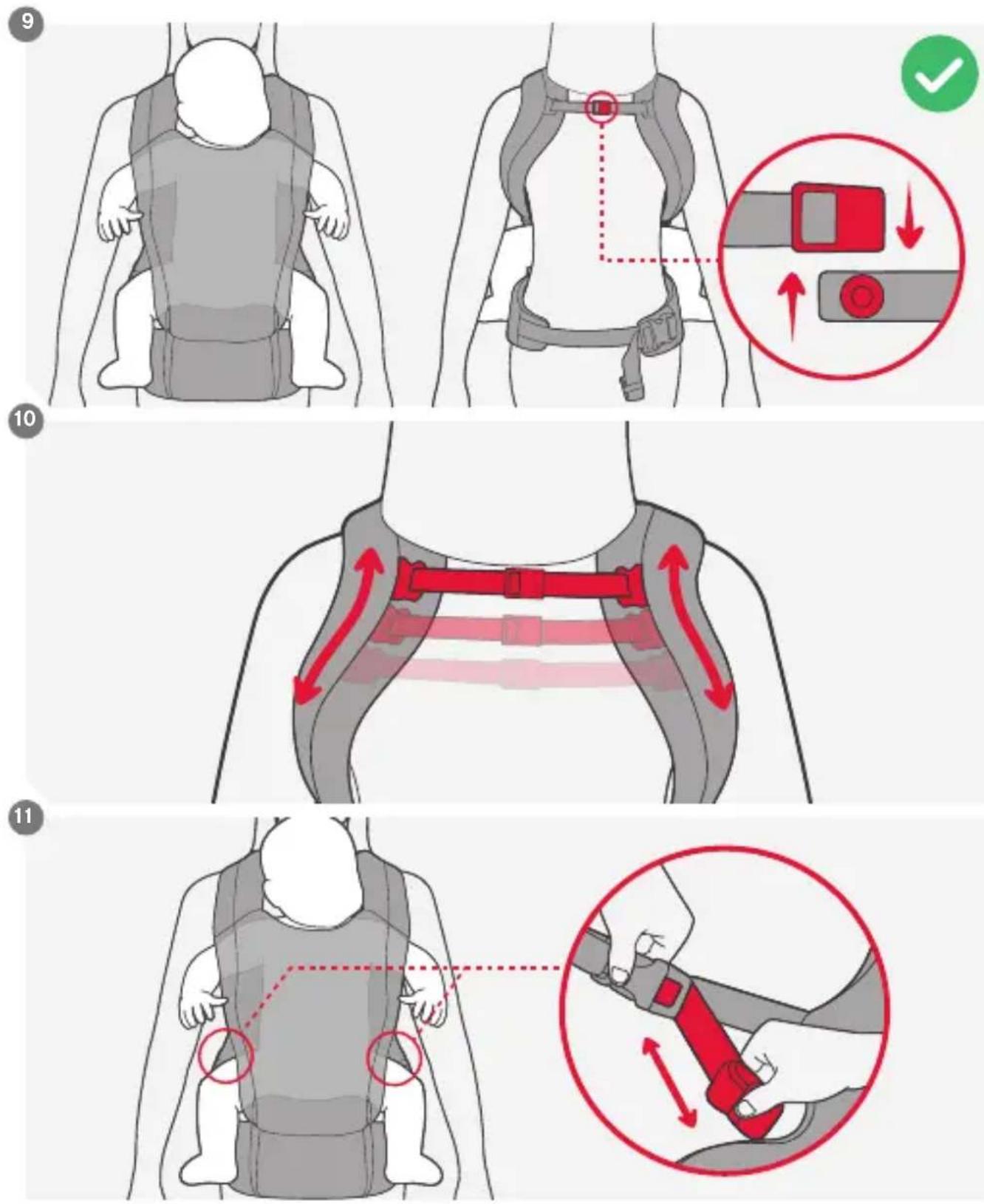
D
back carry mode:
6–48 months (recommended)
6.5–20kg / 14.3–44lbs
natural_image
Illustration of a person carrying a baby on a high backbelt, with a red arrow indicating motion direction (no text or symbols)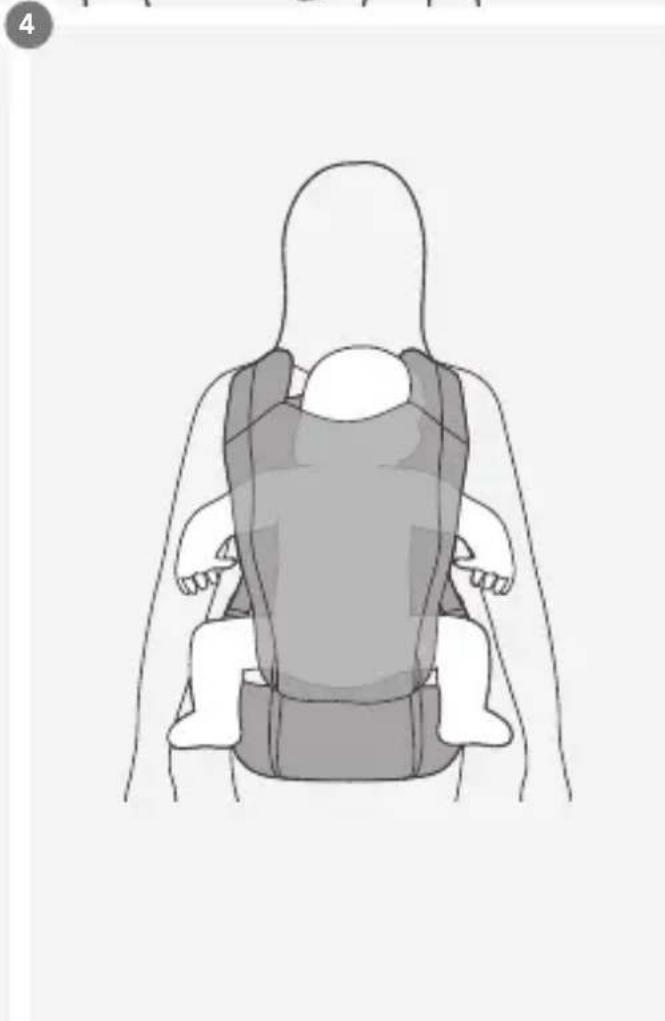
natural_image
Illustration of a person wearing a full-body gait with hands placed on the back (no text or symbols)
5
6
natural_image
Diagram of a human torso with red arrows indicating movement or force direction (no text or symbols)7
natural_image
Illustration of a person wearing a baby's gait with red trajectory lines indicating movement (no text or symbols)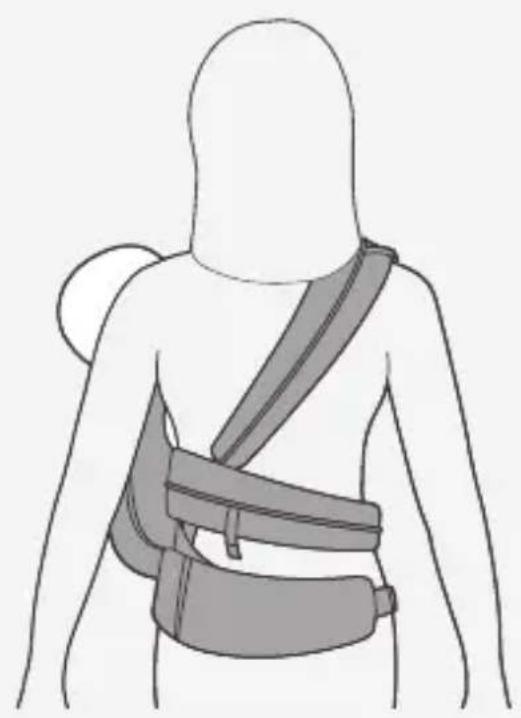
natural_image
Illustration of a person wearing a full-body sash bridge (no text or symbols)E
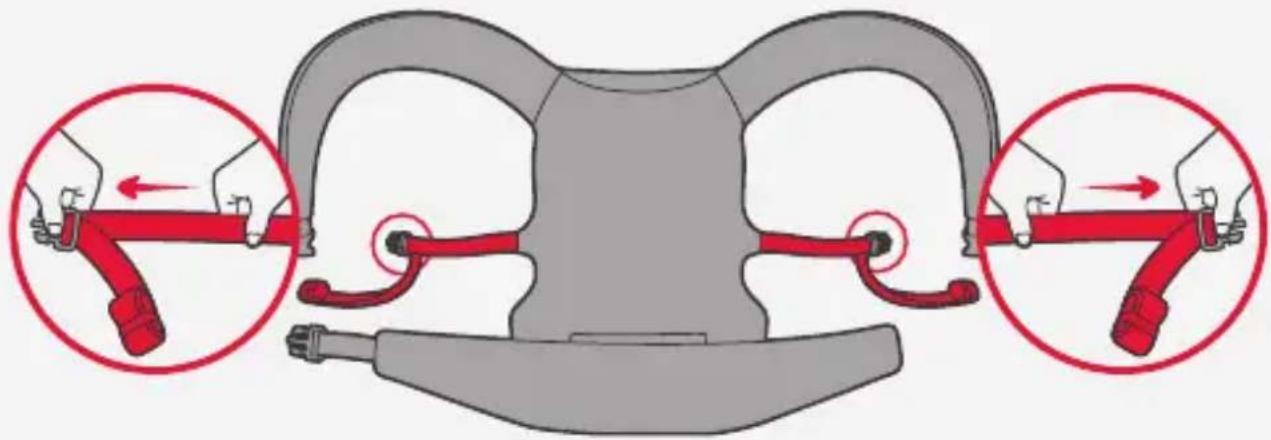
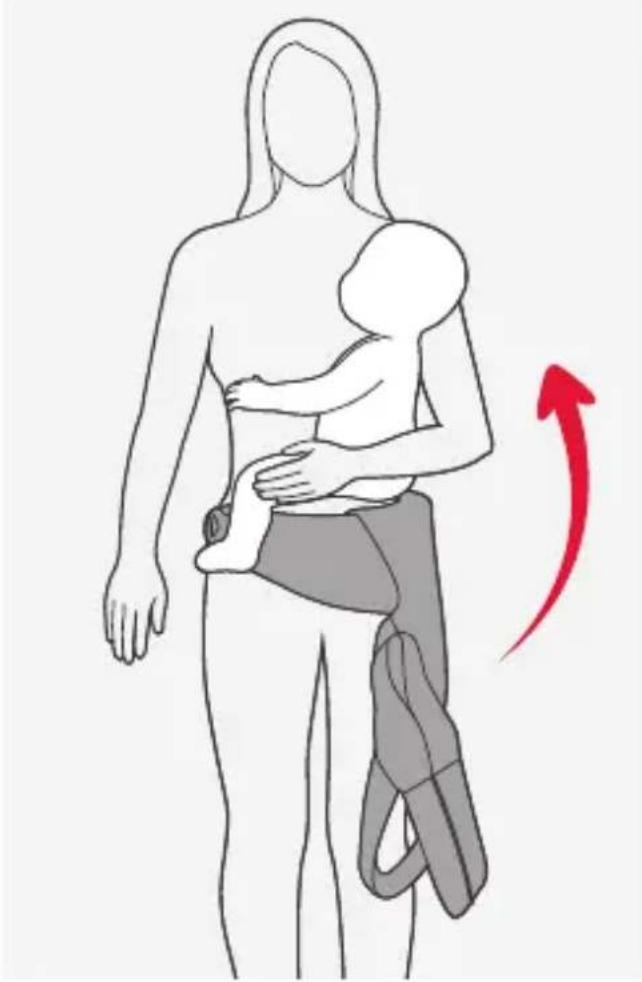
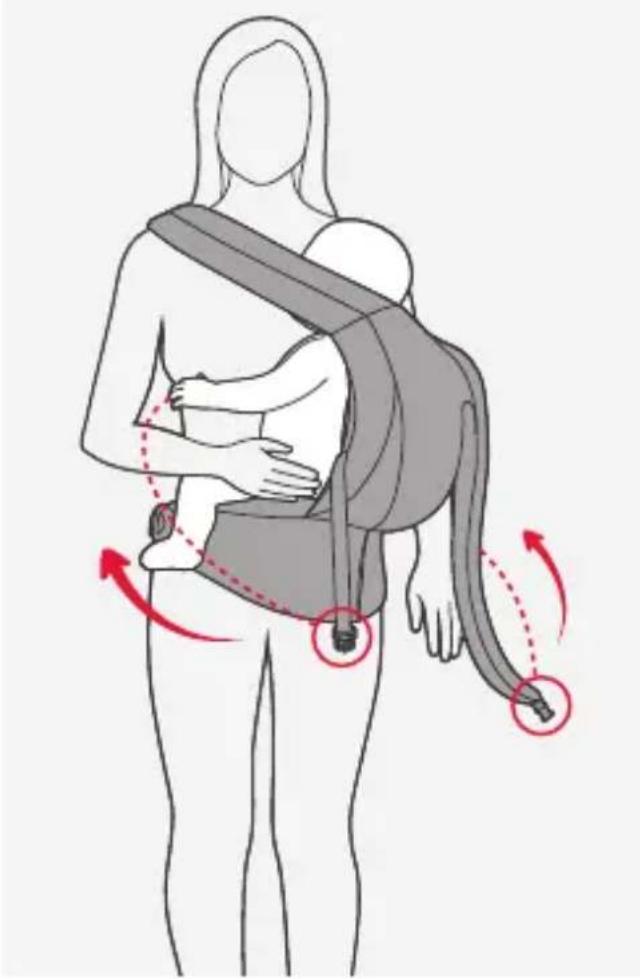
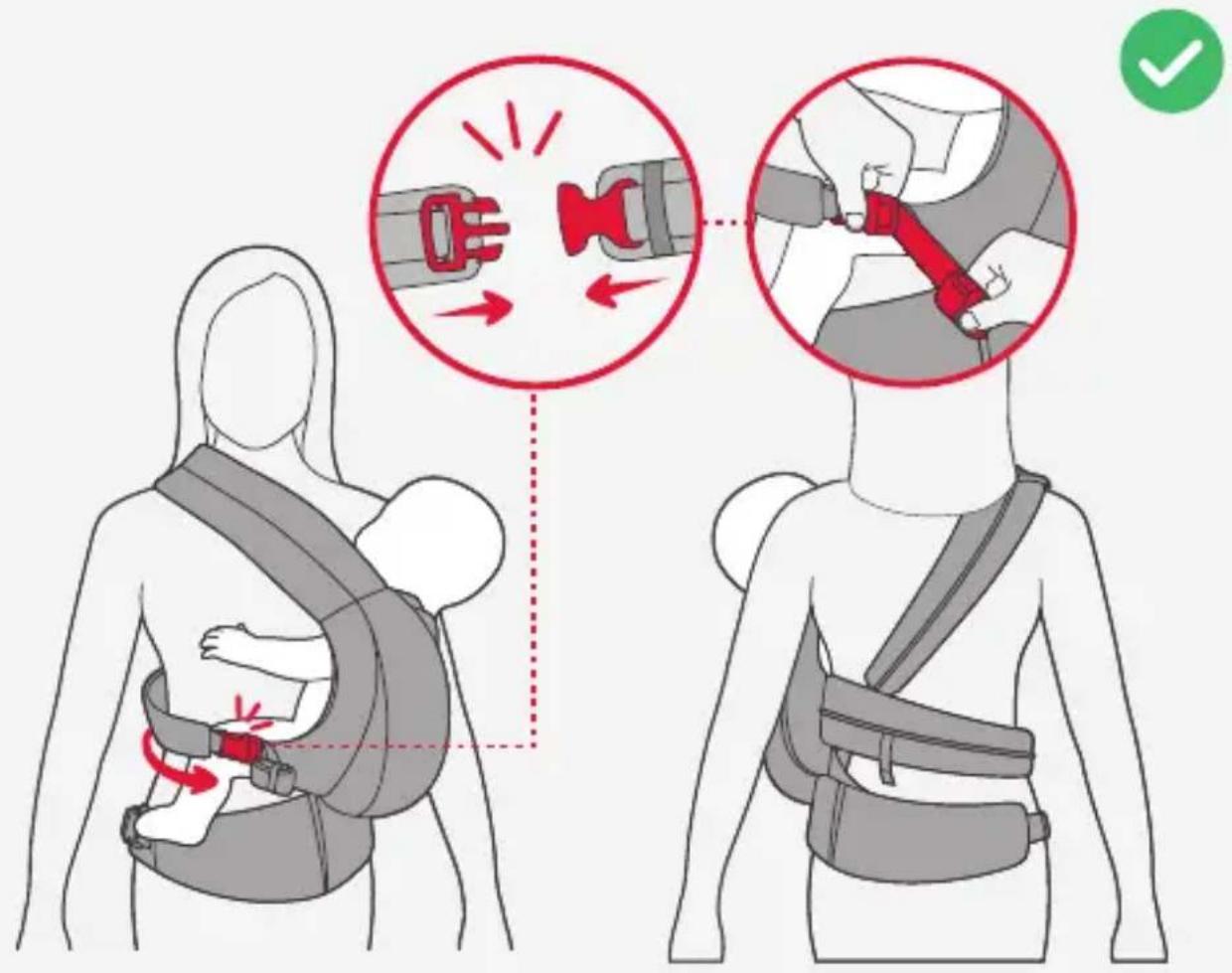
hip carry mode:
6–24 months (recommended)
6.5–12.2kg / 14.3–26.9lbs
1
2
3
natural_image
Illustration of a medical device with tubing and a red connector (no text or symbols)
4
5
6
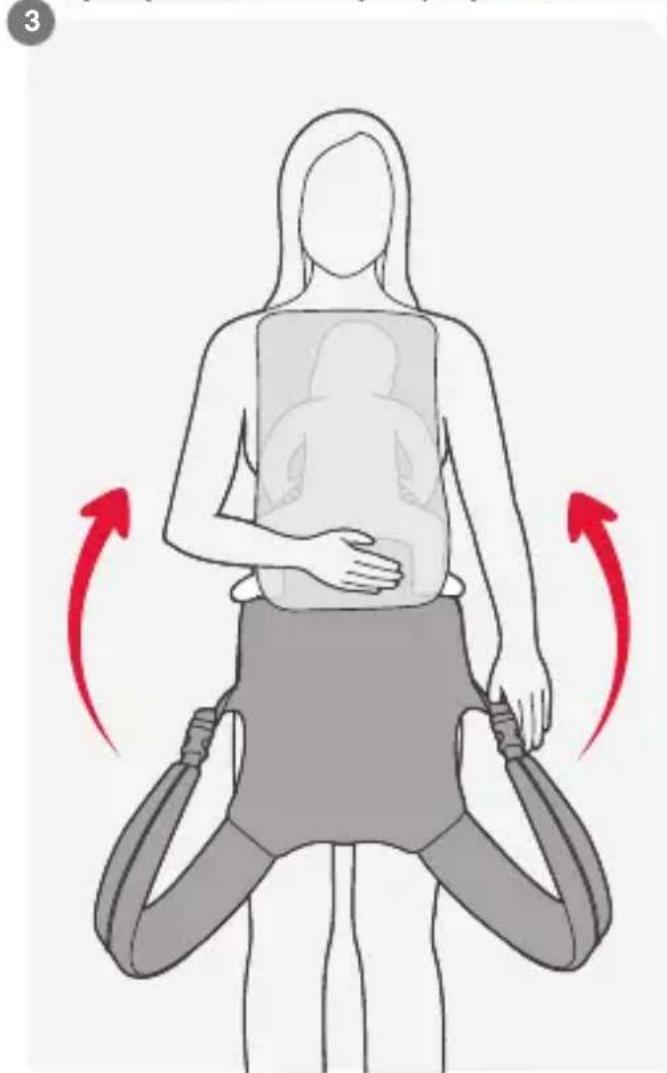
natural_image
Illustration of a person carrying a baby, with a red arrow indicating upward motion (no text or symbols)7
8
1
natural_image
Line drawing of a mechanical device with handle and clasp (no text or symbols)2
natural_image
Illustration of a person's shoulder and shoulders with a red arrow indicating motion or force (no text or symbols)3
natural_image
Diagram of a car seatbelt with red motion arrows indicating movement (no text or symbols)
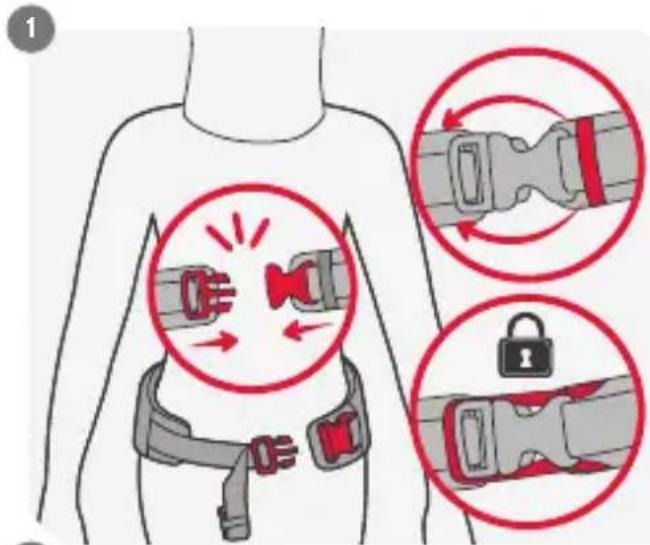
1
natural_image
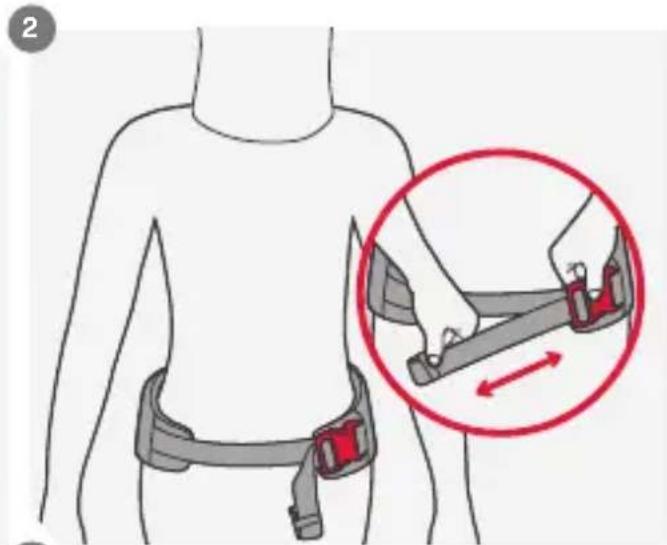
Diagram of a belt buckle with red motion arrows indicating movement (no text or symbols)2
natural_image
Diagram of a person's torso showing a belt buckle with a red belt buckle, no text or symbols present3
natural_image
Illustration of a gray safety belt buckle with red clasp, no text or symbols presentAUS/NZL
Mountain Buggy Australasia 102-112 Daniell Street Newtown, Wellington 6021 New Zealand + 64 4 3800 833
EUR
Mountain Buggy Spain Calle Casas de Campos N'15, 3' Planta Malaga 29001, Spain +34-91-290 14 82
USA/CAN
Mountain Buggy USA 221 Jefferson Street Fort Collins, CO 80524 USA 1 800 916 8442
FRA
Mountain Buggy France 15 rue Gertrude Bell 56000 Vannes FRANCE + 33 (0) 2 97 44 88 26
GBR
Mountain Buggy UK 71-73 Victoria St Windsor, Berkshire SL4 1EH, United Kingdom +44 (0) 20-30519264
CHN
Mountain Buggy China No.10 East Chuangyeyuan Road, Yangzhou China 0086-514-87634533


Brand : Mountain Buggy
Model : Juno
Category : Lawn mower