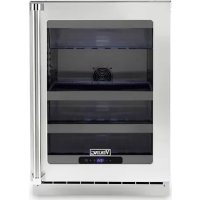
VURE524GSS - Fridge VIKING - Free user manual and instructions
Find the device manual for free VURE524GSS VIKING in PDF.


| Product type | Under-counter refrigerator |
| Brand | Viking |
| Model | VURE524GSS |
| Capacity | Approximately 5.3 cu ft |
| Dimensions (W x H x D) | 610 x 876 x 610 mm (24 x 34.5 x 24 in) |
| Weight | Approximately 68 kg (150 lb) |
| Power supply | 115 V, 60 Hz, 15 A |
| Temperature range | 1°C to 21°C (33°F to 70°F) |
| Refrigerant | R600a (isobutane) |
| Display | Digital display with touch controls |
| Interior lighting | Variable intensity LED |
| Sabbath mode | Yes, Star-K certified |
| Open door alarm | After 5 minutes, audible alarm |
| Exterior material | Stainless steel |
| Reversible door | Yes |
| Front grille | Removable for condenser cleaning |
| Condenser cleaning | Every 6 months |
| Warranty | 2 years total, 6 years sealed system, 12 years limited |
| Installation | Built-in or freestanding |
| Required ambient temperature | 10°C to 38°C (50°F to 100°F) |
| Anti-tip support | Included, to be installed |
| Manufacturer | Viking Range, LLC, USA |
Frequently Asked Questions - VURE524GSS VIKING
User questions about VURE524GSS VIKING
0 question about this device. Answer the ones you know or ask your own.
Ask a new question about this device
Download the instructions for your Fridge in PDF format for free! Find your manual VURE524GSS - VIKING and take your electronic device back in hand. On this page are published all the documents necessary for the use of your device. VURE524GSS by VIKING.
USER MANUAL VURE524GSS VIKING
Install / Use & Care MANUAL
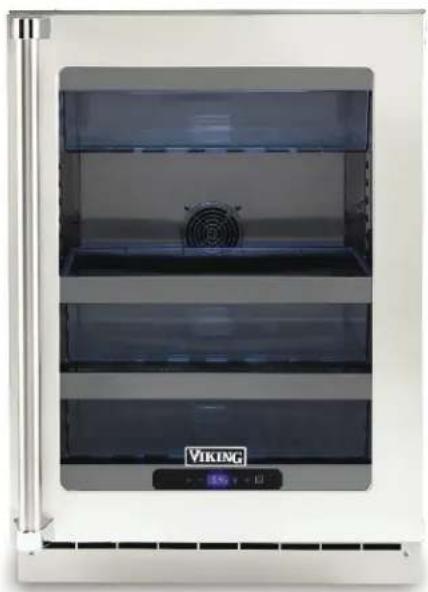
5 SERIES
Undercounter Refrigerator
VURE515G
VURE524G
Congratulations
We hope you will enjoy and appreciate the care and attention we have put into every detail of your new, state-of-the-art Viking refrigerator
Your appliance is designed to offer years of reliable service. This Use and Care Guide will provide you with the information you need to become familiar with your refrigerator's care and operation. For additional information, visit our website at vikingrange.com..
Your complete satisfaction is our ultimate goal. If you have any questions or comments about this product, contact our Consumer Support Center at 1-888-845-4641.
We appreciate your choice of our undercounter refrigerator and hope that you will again select our products for your other major appliance needs. For more information about the complete and growing selection of our products, visit us online at vikingrange. com
Table of Contents
Safety and Warning 3 Disposal and Recycling 3 Environmental Requirements
Installation 4 Cutout and Product Dimensions 4 Side by Side Installation 5 Anti-Tip Bracket Leveling Grille Installation Door Swing Door Adjust
Operating Instructions 10
First Use
Control Operation
Airflow and Product Loading 11
Interior Adjustments
Wine Guide 13
Food Preservation Guide 15
Maintenance 16
Cleaning 16
Cleaning Condenser
Extended Non-Use 17
Troubleshooting
Service Information 19
Warranty 20
Safety and Warning
NOTICE
Please read all instructions before installing, operating, or servicing the appliance.
Use this appliance for its intended purpose only and follow these general precautions with those listed throughout this guide:
SAFETY ALERT DEFINITIONS
Throughout this guide are safety items labeled with a Danger, Warning, or Caution based on the risk type:
DANGER
Danger means that failure to follow this safety statement will result in severe personal injury or death.
WARNING
Warning means that failure to follow this safety statement could result in serious personal injury or death.
CAUTION
Caution means that failure to follow this safety statement may result in minor or moderate personal injury, property, or equipment damage.
DANGER
This unit contains R600a (Isobutane) which is a flammable hydrocarbon. It is safe for regular use. Do not use sharp objects to expedite defrosting. Do not service without consulting the "R600a specifi cations" section included in the User Guide. Do not damage the refrigerant circuit.
WARNING
Service must be done by factory authorized service personnel. Any parts shall be replaced with like components. Failure to comply could increase the risk of possible ignition due to incorrect parts or improper service.
CALIFORNIA PROPOSITION 65
This product contains chemicals known to the state of California to cause cancer and birth defects or other reproductive harm. www.P65 warnings.CA.gov
CAUTION
This equipment is to be installed with adequate backflow protection to comply with applicable federal, state and local codes.
Disposal and Recycling
DANGER
RISK OF CHILD ENTRAPMENT. Before you throw away your old refrigerator or freezer, take off the doors and leave shelves in place so children may not easily climb inside.
If the unit is being removed from service for disposal, check and obey all federal, state, and local regulations regarding the disposal and recycling of refrigeration appliances, and follow these steps completely:
- Remove all consumable contents from the unit.
- Unplug the electrical cord from its socket.
- Remove the door(s)/ drawer(s)
Environmental Requirements
This model is intended for indoor/interior applications only and is not to be used in installations that are open/exposed to natural elements.
This unit is designed to operate between 50^ (10^) and 100^ (38^) . Higher ambient temperatures may reduce the unit's ability to reach low temperatures and/or reduce ice production on applicable models.
For best performance, keep the unit out of direct sunlight and away from heat generating equipment.
In climates where high humidity and dew points are present, condensation may appear on outside surfaces. This is considered normal. The condensation will evaporate when the humidity drops.
CAUTION
Damages caused by ambient temperatures of 40^ (4^) or below are not covered by the warranty.
Installation
Cutout & Product Dimensions
PREPARE SITE
Your product has been designed for either free-standing or built-in installation. When built-in, your unit does not require additional air space for top, sides, or rear. However, the front grille must NOT be obstructed, and clearance is required for an electrical connection in the rear.

CAUTION
Unit can NOT be installed behind a closed cabinet door.
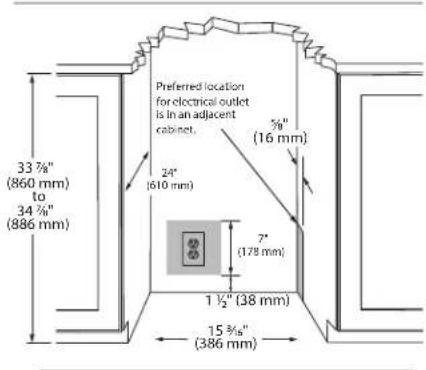
CUTOUT DIMENSIONS
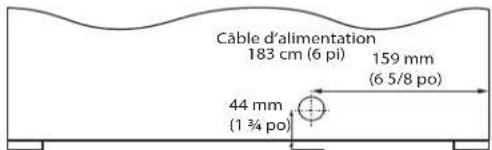
VURE515
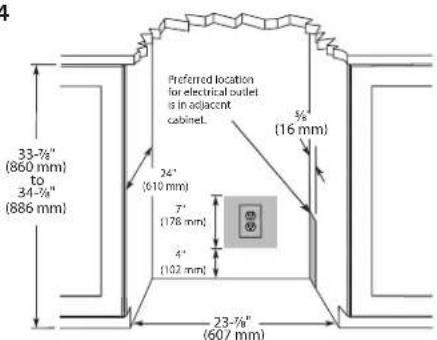
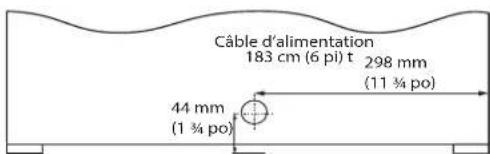
VURE524
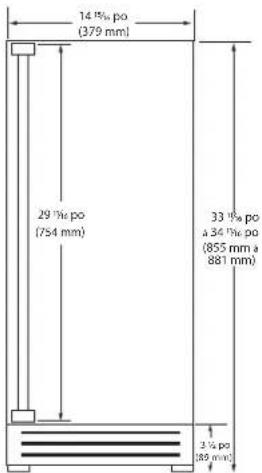
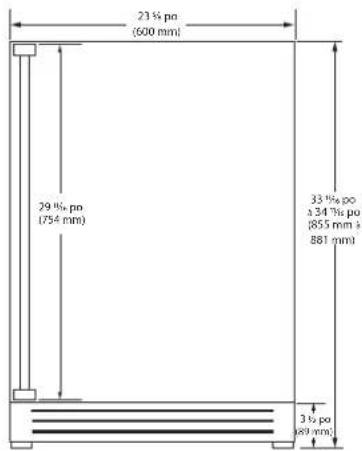
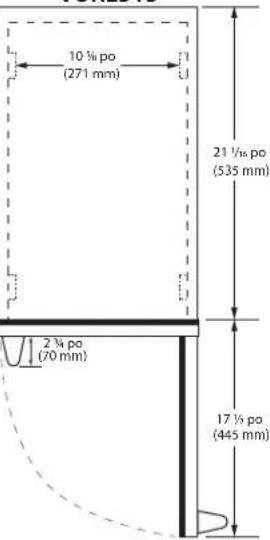
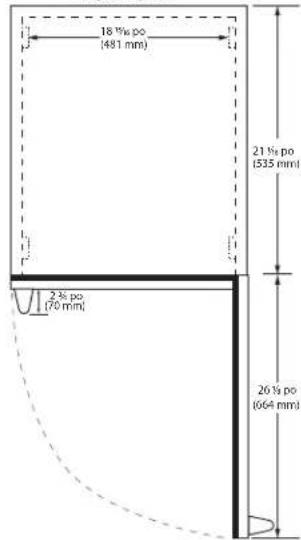
PRODUCT DIMENSIONS
REAR
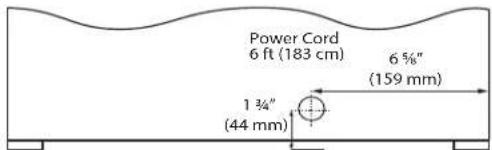
VURE515
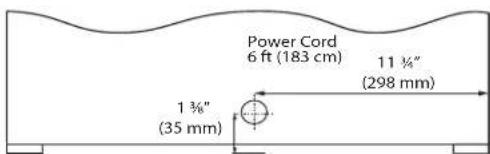
VURE524
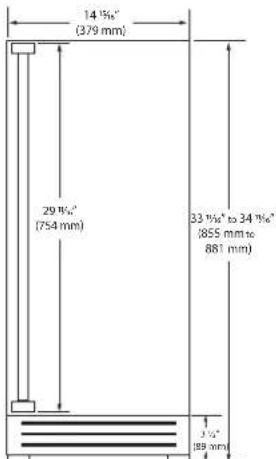
FRONT
VURE515 VURE524
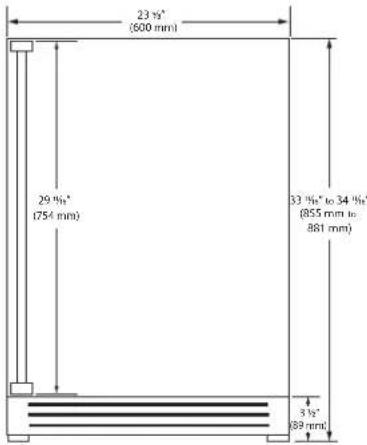
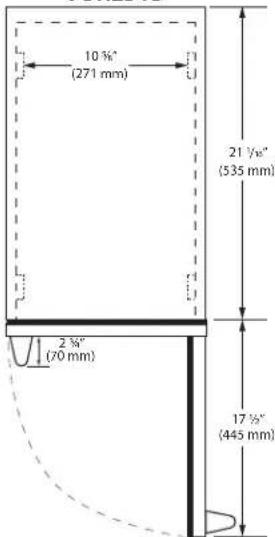
TOP
VURES15
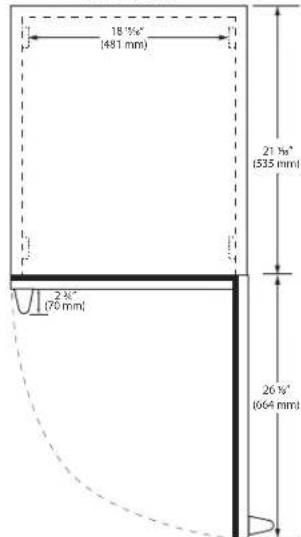
VURE524
SIDE
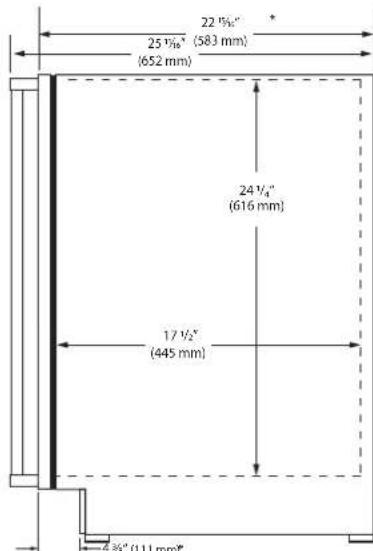
*Add 12'' for integrated models with 34'' panel installed.
Installation
Side-by-Side Installation
OTHER SITE REQUIREMENTS
Side-by-Side Installation
Units must operate from separate, properly grounded electrical receptacles placed according to each unit's electrical specifications requirements.
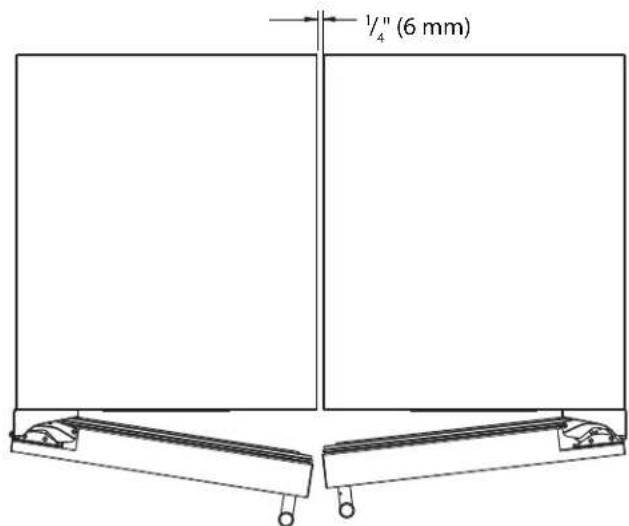
Cutout width for a side-by-side installation is the total of the widths listed under Cutout Dimensions in each unit's Installation Guide. Each door can be opened individually (one at a time) without interference.
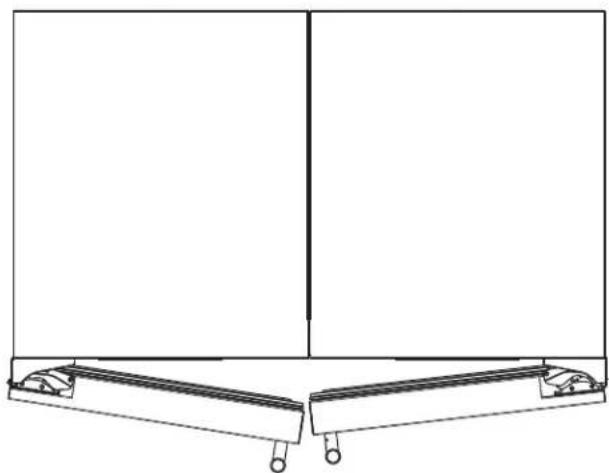
However, to ensure unobstructed door swing (opening both doors at the same time), 1/4'' (6.4 mm) of space needs to be maintained between the units.
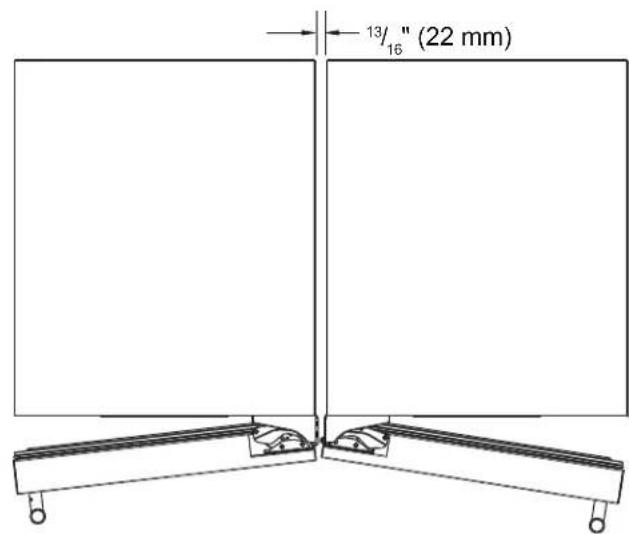
Hinge-by-Hinge Installation (Mullion)
When installing two units hinge-by-hinge, 13/16'' (22 mm) is required for integrated models. Additional space may be needed for any knobs, pulls or handles installed.
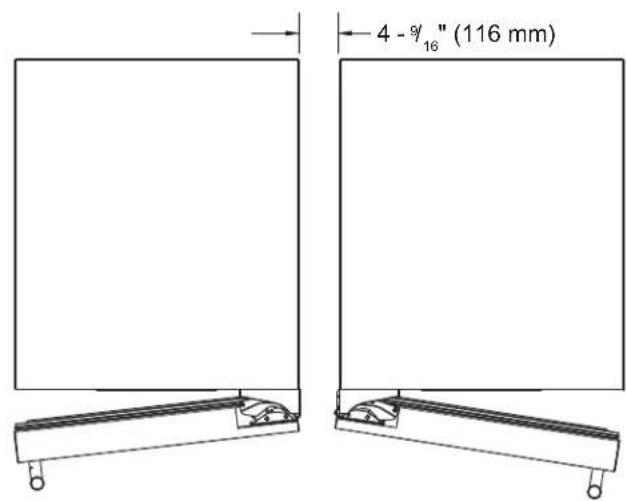
Stainless steel models which include the standard stainless handle will require 4 - 9 / 16'' (116 mm) to allow both doors to open to 90^ at the same time.
Installation
Anti-Tip Bracket
Use one of the methods below to secure the unit
CABINET/COUNTER ANTI-TIP INSTALLATION
(For built-in applications)
- Slide unit out so screws on front of unit are easily accessible.
- Remove the two screws from the front of the unit.
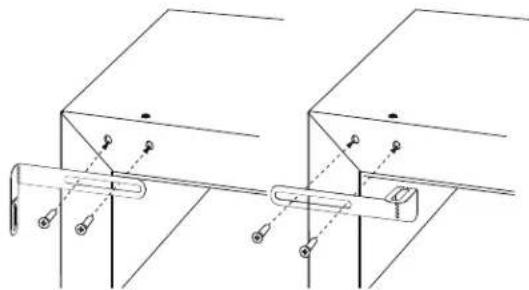
- Bend bracket along one of the perforations to allow attachment to the desired adjoining surface.
- Gently push unit into position. Be careful not to entangle the electrical cord or water line, if applicable.
- Check to be sure the unit is level from front to back and side to side. Make any necessary adjustments. The unit's top surface should be approximately 18'' (3 mm) below the countertop.
- Secure bracket to adjoining surface.
FLOOR MOUNTED ANTI-TIP INSTALLATION
(For free-standing applications)
- Locate two anti-tip brackets included with the kit.
- Place the unit into the area where it will be installed. Check the door, sides, and top for a proper fit. Also test to make sure the door opens and closes freely.
- Remove grille and place a mark on the floor at the front of the unit. Also place a mark on the floor in the center of the unit.
- Remove the unit. Using a square, extend center line "B" (see chart below). This line serves as the back edge for the anti-tip brackets. From the center line, measure "A" to the left and right. This line is the outer edge of each bracket.
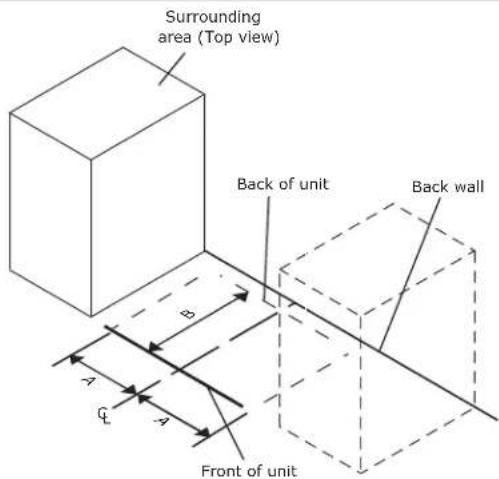
| 515 524 | ||
| A | 7 5/8" (194 mm) | 1 15/16" (303 mm) |
| B | 22" (558 mm) | 2" (558 mm) |
- Place the anti-tip brackets on the floor against the line drawn for the outer edge. Mark spots for the screw holes.
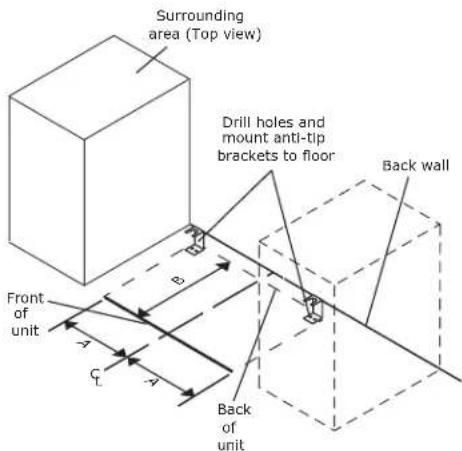
- Use a 1/8'' drill to make two starter holes and fasten the anti-tip brackets to the floor using the screws provided.
- Place the unit back into position, making sure the feet engage the anti-tip brackets properly. Check the alignment of the lines made on the floor in step 3 with the position of the front feet to ensure proper positioning.
Installation
LEVELING INFORMATION
- Use a level to confirm the unit is level. Level should be placed along top edge and side edge as shown.
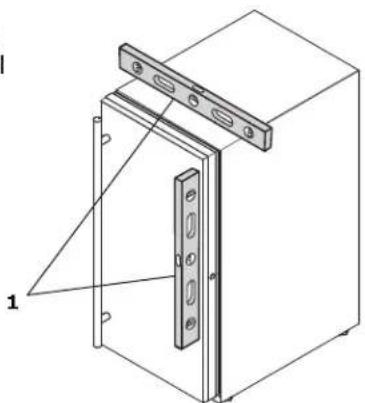
- If the unit is not level, adjust the legs on the corners of the unit as necessary.
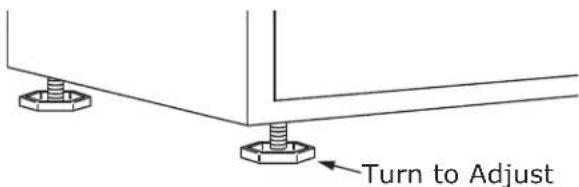
- Confirm the unit is level after each adjustment and repeat the previous steps as needed.
INSTALLATION TIP
If the room floor is higher than the floor in the cutout opening, adjust the rear legs to achieve a total unit rear height of 12 (3 mm) less than opening's rear height. Shorten the unit height in the front by adjusting the front legs. This allows the unit to be gently tipped into the opening. Readjust the front legs to level the unit after it is correctly positioned in the opening.
- Plug in the power/electrical cord.
- Gently push the unit into position. Be careful not to entangle the cord or water and drain lines, if applicable.
- Re-check the leveling, from front to back and side to side. Make any necessary adjustments. The unit's top surface should be approximately 18'' (3 mm) below the countertop.
- Install the anti-tip bracket.
- Remove interior packing material and wipe out the inside of the unit with a clean, water-dampened cloth.
Installation
Grille Installation
REMOVING AND INSTALLING GRILLE

WARNING
Disconnect electric power to the unit before removing the grille.
When using the unit, the grille must be installed.

WARNING
DO NOT touch the condenser fins. The condenser fins are SHARP and can be easily damaged.
Removing the grille
- Disconnect power to the unit.
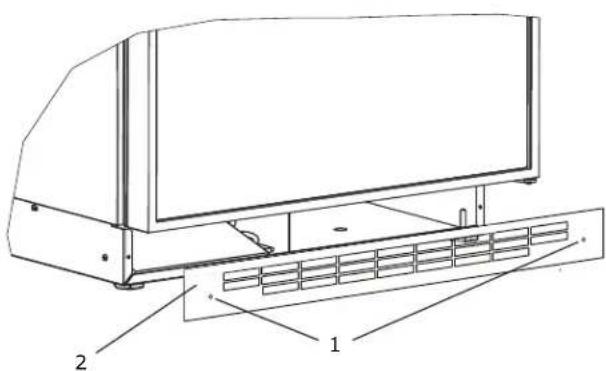
- Loosen the two screws (1).
- Remove grille (2) from unit.
Installing the grille
- Align cabinet and grille holes and secure, but do not over tighten grille screws (1).
- Reconnect power to the unit.
Door Swing
Stainless Steel, Black and White
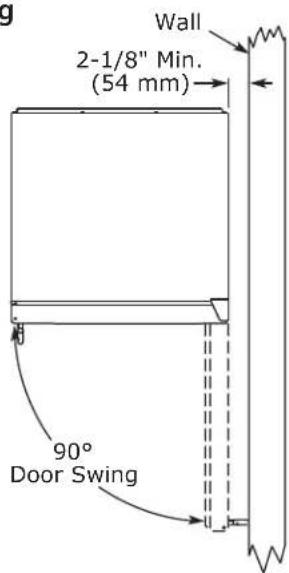
Units have a zero clearance for the door to open 90^ , when installed adjacent to cabinets.
Stainless steel models require 2 - 1 / 8'' (54 mm) door clearance to accommodate the handle if installed next to a wall.
Installation
Door Adjustments
DOOR ALIGNMENT AND ADJUSTMENT
Align and adjust the door if it is not level or not sealing properly. If the door is not sealed, the unit may not cool properly, or excessive frost or condensation may form in the interior.
NOTICE
Properly aligned, the door's gasket should be firmly in contact with the cabinet all the way around the door (no gaps). Carefully examine the door's gasket to ensure that it is firmly in contact with the cabinet. Also make sure the door gasket is not pinched on the hinge side of the door.

CAUTION
Do not attempt to use the door to raise or pivot your unit. This would put excessive stress on the hinge system.
Alignment and Adjustment Procedure
- Open door and remove gasket near the hinges.
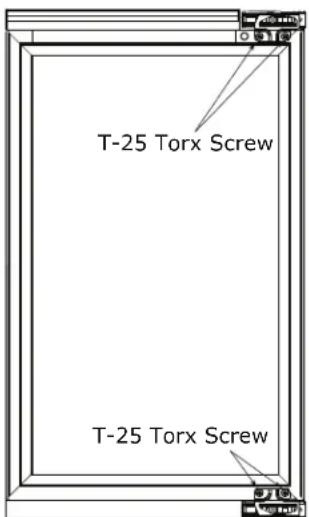
- Using a T-25 Torx bit, loosen each pair of Torx head screws both the upper and lower hinge plates.
- Square and align door as necessary.
- Tighten Torx head screws on hinge.
- Reinstall gasket into the channel starting at the corner.
REVERSING THE DOOR
- Open door.
- Using T-25 Torx bit loosen screw #1 and remove screw #2 on top and bottom hinge. Slide and remove the door from the unit.
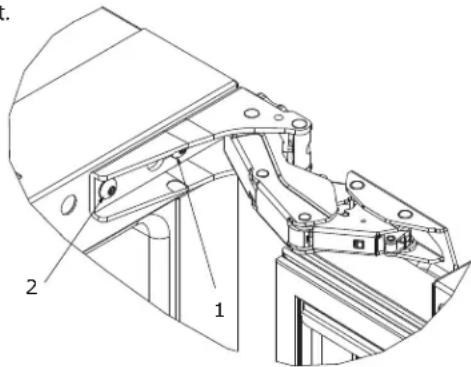
Note: One hinge includes a metal spacer. Spacer must be used with that hinge when reversing the door.
- Remove caps from screw heads on opposite side (2 on top and 2 on bottom). Using #2 Phillips bit, remove the 4 underlying screws. Reinstall the screws and caps on the opposite side.
- Partially install screw #1 in the outer most holes on top and bottom. Rotate door 180o, align hinge over screw #1 and slide/seat into position. Reinstall screw #2 on top and bottom. Tighten both screws and install hinge cover.
Align and adjust the door:
Align and adjust the door (see DOOR ALIGNMENT AND ADJUSTMENT).
Operating Instructions
First Use
Initial startup requires no adjustments. When plugged in, the unit will begin operating under the factory default settings. If the unit was turned off during installation, simply press and the unit will immediately switch on. To turn the unit off, press .
NOTICE: Temperature displayed reflects actual temperature inside unit.
If the temperature displayed is different than selected, the unit is progressing towards the selected temperature. Time to reach set point varies based upon ambient temperature, temperature of product loaded, door openings, etc. Viking recommends allowing the unit to reach set points before loading.
Control Operation

CONTROL FUNCTION GUIDE
| FUNCTION COMMAND NOTES | ||
| ON/OFF Press and release Unit will immediately turn On or OFF | ||
| Adjust Temperature Press or and release | When the display is flashing, press or to adjust the set point temperature. Note: temperature displayed is the actual temperature inside unit | |
| Toggle between °F / °C Hold | and for 5 seconds The display will change units | |
| Leave interior light on | Press and release to leave interior light on for 12 hours; press again to deactivate | After 12 hours, factory default is restored; light will turn on when door is open |
| Hide Display Hold hidden button and press | Display will turn off when door is closed. Unit will continue to operate. Repeat command to turn on display | |
| Adjust light color | While holding = press and release to scroll through lighting options | Option Open Door Closed Door 0 0 White White 0 1 Blue Blue 0 2 White Blue Light will be set at full intensity when door is open, and 50% intensity when door is closed. |
| Enable Sabbath Mode | Press and hold for 5 seconds and release | The °F / °C symbol will flash briefly after 5 seconds. Interior light and display will go dark and remain so until user resets mode - unit continues to operate |
| Disable Sabbath Mode | Press and release | Display and interior light return to normal operation |
| Showroom Mode | Hold and for 5 seconds | The °F / °C symbol will flash. Display will be lit and interior light will function. Unit will not cool. Repeat command to return to normal operation |
DOOR ALERT NOTIFICATION
When the door is left open for more than 5 minutes:
This unit is Star-K certified. See www.star-k.org for more details.
A tone will sound for several seconds every minute
dr will appear in display
Closed door to silence alert and reset
Operating Instructions
Airflow and Product Loading
AIRFLOW
External
- Do not block the front grille - no additional clearance around sides, top or rear of unit is needed for ventilation
- Do not install behind a closed door
Internal
- When loading, leave space between internal fans, vents, and side walls to allow air to circulate freely
PRODUCT LOADING
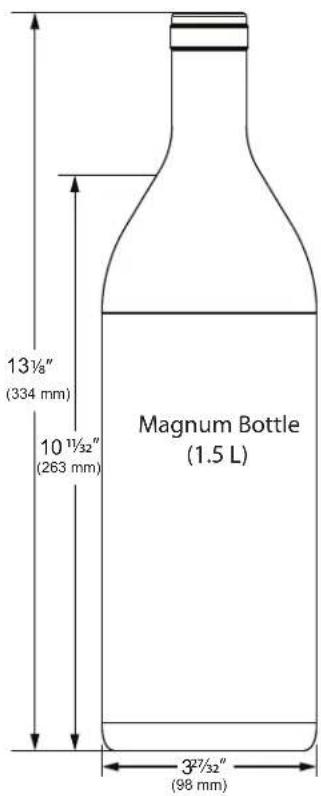
Bottles and cans come in all shapes and sizes. When determining capacities, refer to the following sizes. Combinations of red and white bottles are used in Wine Cellars and Beverage Centers.
NOTICE
Restricting airflow may result in poor product performance, product failure, and uneven internal temperatures and may freeze contents.
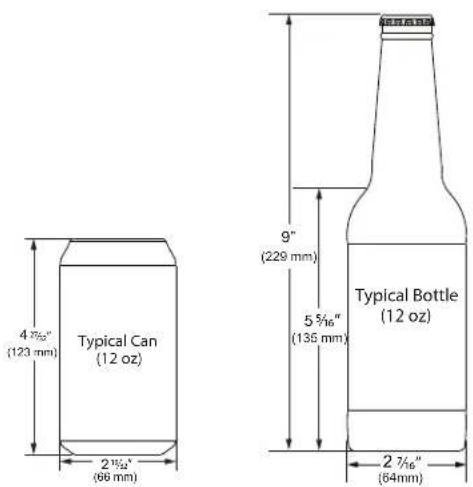
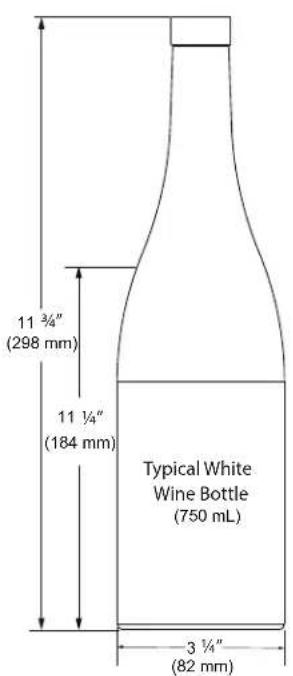
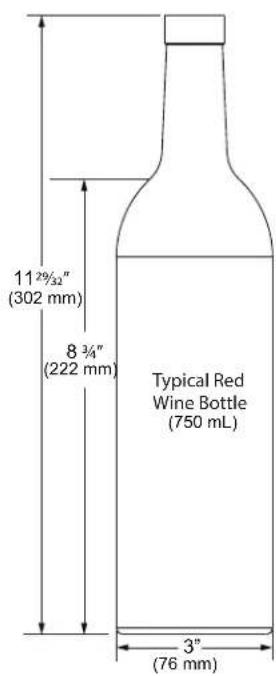
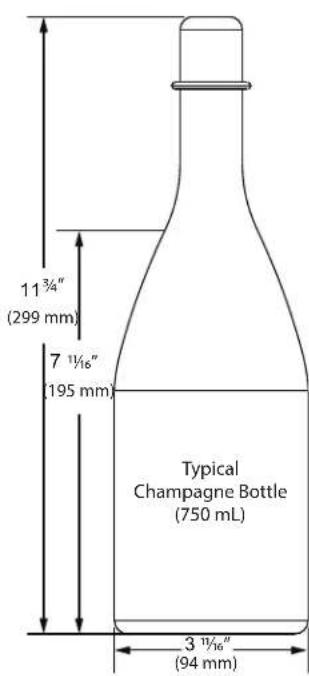
Operating Instructions
Interior Adjustments
All 5 Series models feature side mounted rack supports with 19 adjustment positions. All refrigerators ship with 3 storage bins - Remove and reposition as desired.
STORAGE BIN ADJUSTMENT
Storage Bin Removal
- Empty and remove bin.
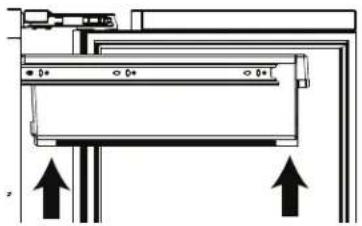
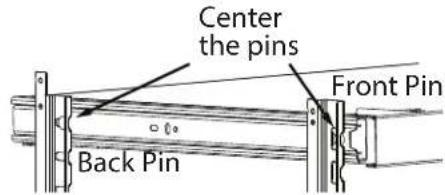
- Firmly grasp both sides of storage bin frame and lift front end slightly (about 14 ) to center the pin in the slot.
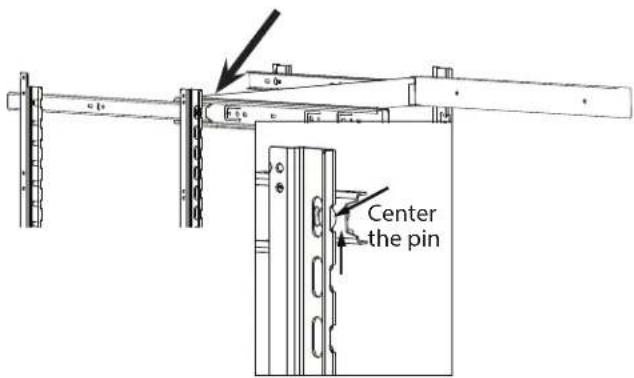
- Pull frame towards you until all pins are clear of the slots. If only repositioning the frame, do not remove completely - go to "Storage Bin Installation" Step 2.
- Slightly tilt one side. Gently pull frame towards you to remove from unit.
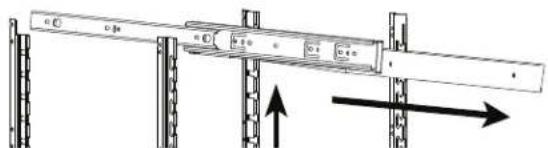
Note: Take care when removing frame to avoid scratching interior of unit.
- Once removed, retract the slides.
Note: The slides on the frame have a thin coating which is used to block moisture and provide lubrication. Use care when handling.
Storage Bin Installation
- Insert empty storage bin frame into unit with one side tilted slightly downward until back pin is between front and rear rail supports.
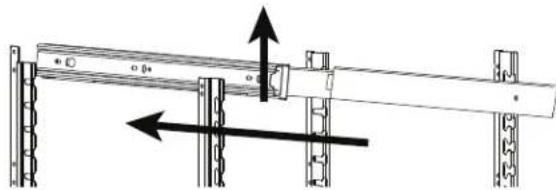
- Tilt frame back to horizontal and line up 2 back pins with rear rail support. Line up left side of frame with rear and front rail support. Continue inserting frame until both pins engage. The front will set down slightly and lock into place. Repeat on right side.
- Fully extend frame, position bin over frame and lower (rear first) into position.
Storage Bin Inserts
Glass inserts are designed so bottles and cans sit fl at. The inserts may be removed when storing produce or other items. The ridges in the bottom facilitate air flow.
Clean the storage bins with soap and water.
Operating Instructions
Wine Guide
To most, wine is a delicious mystery. We purchase it, uncork it, and savor its taste and beauty. But there is so much more to true wine appreciation. Many secrets are simply too good to keep bottled up.
WINE SELECTIONS SUGGESTIONS
Selecting the right wine for the right occasion can sometimes be a seemingly awkward or difficult task for the beginning wine enthusiast. We would therefore like to present you with a few suggestions which may provide a little more confidence and enjoyment when choosing and serving your wines.
When selecting wines, keep an open mind and do not be afraid to be adventurous. Do not view the subject of wine so seriously it discourages you from learning and discovering for fear of embarrassment if something is incorrect. Wine is best viewed as a hobby and enjoyed.
When assembling your collection, try not to become obsessed with "Vintages." Although a chart can be a useful tool, generalizations about a specific year have led more than one collector to disappointment. Often an "Off Year" will provide a better value and more drinking enjoyment.
The primary guideline to the subject of wine is your own palate. Do not be afraid to make mistakes. Experiment, discover, but most of all, enjoy yourself and your new product.
Matching Food and Wine
Although there are no hard fast rules for matching wine to food, observe some guidelines. Delicate dishes should be accompanied by lighter more delicate wines. Full-flavored foods should be matched with fuller-bodied wines.
As a general rule, one should aim to ascend in flavor and quality of wines served.
| Serve a: | Before a: |
| DRY wine | SWEET wine |
| WHITE wine | RED wine |
| YOUNG wine | OLD wine |
| LIGHT-BODIED wine | FULL-BODIED wine |
Any step back in quality will be noticed. If a fine wine is tasted prior to a lesser wine, many of the fine wine's subtle qualities may be missed.
Guide To Common Styles Of Wine
| Red Wines | ||
| Full-Bodied Dry California | French Italian | Zinfandel, Cabernet Rhone, Chateauneuf-du-Pape Barbaresco, Barolo |
| Medium-Bodied Dry California | French | Pinot Noir Bordeaux, Burgundy |
| Light-Bodied Dry French | Italian | Beaujolais Chianti, Bardolino |
| White Wines | ||
| Full-Bodied Dry California | French | Chardonnay Montrachet, Meursault Puligny-Montrachet |
| Medium-Bodied Dry California | French | Sauvignon-Blanc Pouilly-Fuisse, Sancerre, Vouvray, Graves |
| Light-Bodied, Dry French | Chablis, Muscadet, Pouilly-Fume | |
| Full-Bodied, Very Sweet Germany | French Hungary | Beerenauslese Sauternes Tokay |
| Medium-Bodied, Semi-Sweet | California Germany | Gewurtztraminer Liebfrauumilch |
| Light-Bodied Off Dry Germany | Rhine, Mosel Riesling | |
Common Tasting Terms
| Terminology | Description |
| Acidity | A critical element of wine that is responsible for preserving the wine's freshness. Excess acidity results in an overly tart and sour wine. |
| Balance | A desired trait where tannin, fruit and acidity are in total harmony. Wines with good balance tend to age gracefully. |
| Body The weight | and presence of wine in the mouth provided by the alcohol and tannin level. Full-bodied wines tend to have this strong concentration. |
| Bouquet | The blending of a wine's aroma within the bottle over a period of time, caused by volatile acidity. |
| Complex | A subjective term often used in tasting. A wine is said to be complex if it offers a variety of flavors and scents that continue to evolve as it develops. |
| Flabby | A wine that lacks structure, or is heavy to the taste, lacks acidity. |
| Full-Bodied | Wine high in alcohol and extract, generally speaking, fi IIs the mouth, powerful. |
| Lean | Generally describes wines that are slim, lacking of generosity or thin. |
| Oaky A desirable | flavor imparted to wine if done in moderation. Most wines are aged in oak barrels one to three years, thereby receiving this toasty oak characteristic. However, if a weak wine is left in contact too long with an oak barrel, it will tend to be overpowered with an oaky taste. |
| Tannin | Tannins are extracted from the grape skins and stems and are necessary for a well-balanced red wine. Tannins are easily identified in wine tasting as the drying sensation over the gums. Tannins generally fade as a wine ages. |
Operating Instructions
A Toast to Wine Truths
Like the grapes themselves, many wine myths have been cultivated over the centuries.
Myth 1: Most wines taste better when aged.
Truth: In fact, less than 5% of wines produced today are meant to be aged. Most wines are crafted to be consumed within the first one to two years.
Myth 2: Wines should be uncorked and decanted allowing them to "breathe."
Truth: To breathe or not breathe? While it is better to allow a young tannic Red to breathe in a glass or decanter to soften the tannins, an old Red reaches a stage in its life where it should be enjoyed soon after opening. Allow an old Red to breathe for a short time to dissipate any off odors. Most white wines can be served, ideally, 10-15 minutes after opening.
Myth 3: When age worthy wines peak, they must be consumed almost immediately.
Truth: Most great wines reach a plateau period rather than a peak. Great Bordeaux's may have as much as a 10-year plateau before fading.
Myth 4: Wine color does not change with aging.
Truth: As red wines age they get lighter in color while whites get darker.
The Cork: A Mystery on Its Own
Cork Presentation. The ritual of the presentation of the cork has a rich and fascinating history dating back to the late 1800's. A phylloxera (root louse) devastation to the vineyards severely limited the supply of great wines. Restaurateurs would remove labels on inferior wines and replace them with labels from superior wines. This made it necessary for patrons to protect themselves by checking the branding on the cork to ensure that what they ordered was, in fact, what they were served.
When presented with a cork today, feel it to check for its integrity, read and match the branding on the cork to the bottle and set it aside. There is little to be learned from the cork. The proof is in the wine.
"Corked" wines. If you've ever had a wine that smelled or tasted of mold, you've experienced a wine that may have been "corked." Today, between fi ve and eight percent of wines are tainted with Trichloroanisole (TCA). This substance, found naturally in plants and trees, is imparted to the wine through the cork. Corked wines are a major concern for winemakers as it destroys millions of cases per year and puts reputations at stake. Amazing as it may seem, twist-off caps may offer a better alternative; many great wineries in California, Australia and New Zealand are pioneering the trend.
Common Food and Wine Matches
| Foods Wines | |
| Fish, Shell Fish, Crab, Oysters Dry | White Wines, Light Sparkling or Extra Dry Champagne |
| Beef, Venison Full-Bodied | Red Wines |
| Pork, Veal, Lamb and Poultry Light -Bodied Red Wines | |
| Fruit Sweet White and Sparkling Wines | |
| Temperature Wines | |
| Approximately 60°F (15°C) | Red |
| 50°F - 55°F (10°C - 12°C) | White |
| Approximately 45°F (7°C) | Sparkling |
IDEAL WINE STORAGE CONSIDERATIONS
Temperature: The most important element about storage temperature is stability. If wine is kept in a stable environment between 40^ (7^) and 65^ (21^) , it will remain sound. A small 1-2 degree temperature fluctuation within a stable environment is acceptable. Larger temperature fluctuations can affect the cork's ability to seal, allowing the wine to "leak" from the bottle.
Humidity: The traditional view on humidity maintains that wines should be stored on their sides in 50% - 80% relative humidity to ensure cork moisture and proper fit in the bottle. Contemporary wisdom suggests that the cork surface is too small to be impacted by humidity. Further, the cork is sealed with a metal or wax capsule making humidity penetration impossible. The concept of a humid storage environment was derived from the necessity of wineries to maintain moisture in their cellars to keep wooden barrel staves swollen, preventing wine evaporation and product loss. In fact, vineyards estimate as much as a 10% product loss per year due to evaporation while wine is aging in the wooden barrels. Humidity, however, was not intended for the modern cellar where wine is stored in glass bottles with sealed corks.
Light: UV rays are not only harmful to people, they are damaging to wines - especially those in clear bottles. Since oxygen molecules in wine absorb UV rays, wine should never be stored in direct light for long periods of time.
Vibration: Provided that sediment is left undistributed and particles are not suspended, vibration in a storage environment is not an issue. Wines can become fl at or tired when voids and vacuums are created inside the wine bottle. In order to create voids and vacuums within a liquid, aggressive motion or shaking of the wine bottle would have to occur.
Operating Instructions
Food Preservation Guide
Viking undercounter refrigerators are designed to accurately maintain a consistent temperature and stable humidity levels.
Temperature Settings
| Models Factory | Default Temperature \( {}^{ \circ }\mathrm{F}\left( \mathrm{C}\right) \) | Temperature Range ℉ (C) |
| Refrigerators 38 (3) 33 - | 70 (1 - 21) | |
| Beverage Centers 38 (3) | 33 – 70 (1 – 21) |
Many foods have an optimum storage temperature. Storing foods at their preferred temperature is the best way to maintain freshness and flavor, and increase the shelf life of foods, which results in fewer trips to the store and less food discarded - saving you money.
| Food Groups | Food Examples | Recommended Range °F (C) |
| Deli | Meat, Fish, Poultry, Butter, Dairy Products, Garlic, Oils, Nuts, Condiments | 36 (2) |
| Market | Fruits, Vegetables, Berries, Leafy Greens | 38 (3) |
| Root Cellar | Root Vegetables, Potatoes, Onions, Lemons, Limes, Melons, Peppers, Beans | 50 (10) |
| Pantry | Dry Goods, Baking Ingredients, Spices, Seasonings | 42 (11) |
| Beverages All | types of Beverages 38 (3) |
Maintenance
Cleaning
Stainless Models
Stainless door panels, handles and frames can discolor when exposed to chlorine gas, pool chemicals, saltwater or cleaners with bleach.
Keep your stainless unit looking new by cleaning with a good quality all-in-one stainless steel cleaner and polish monthly. For best results use Claire Stainless Steel Polish and Cleaner. Comparable products are acceptable. Frequent cleaning will remove surface contamination that could lead to rust. Some installations may require cleaning weekly.
Do not clean with steel wool pads.
Do not use stainless steel cleaners or polishes on any glass surfaces.
Clean any glass surfaces with a non-chlorine glass cleaner.
Do not use cleaners not specifically intended for stainless steel on stainless steel surfaces (this includes glass, tile, and counter cleaners).
If any surface discoloring or rusting appears, clean it quickly with Bon-Ami or Barkeepers Friend Cleanser and a nonabrasive cloth. Always clean with the grain. Always fi nish with Claire Stainless Steel Polish and Cleaner or comparable product to prevent further problems.
Using abrasive pads such as ScotchBrite™ will cause the graining in the stainless steel to become blurred.
Rust not cleaned up promptly can penetrate the surface of the stainless steel and complete removal of the rust may not be possible.
Integrated Models
To clean integrated panels, use household cleaner per the cabinet manufacturer's recommendations.
INTERIOR CLEANING
Disconnect power to the unit.
Clean the interior and all removed components using a mild nonabrasive detergent and warm solution applied with a soft sponge or non-abrasive cloth.
Rinse the interior using a soft sponge and clean water.
Do not use any solvent-based or abrasive cleaners. These types of cleaners may transfer taste and/or odor to the interior products and damage or discolor the interior.
DEFROSTING
Under normal conditions this unit does not require manual defrosting. Minor frost on the rear wall or visible through the evaporator plate vents is normal and will melt during each cycle.
If there is excessive build-up of 1 / 4'' (6 mm) or more, manually defrost the unit.
Ensure the door is closing and sealing properly.
High ambient temperature and excessive humidity can also produce frost.
CAUTION
DO NOT use an ice pick or other sharp instrument to help speed up defrosting. These instruments can puncture the inner lining or damage the cooling unit. DO NOT use any type of heater to defrost. Using a heater to speed up defrosting can cause personal injury and damage to the inner lining.
NOTICE
The drain pan was not designed to capture the water created when manually defrosting. To prevent water from overfl owing the drain pan and possibly damaging water sensitive flooring, the unit must be removed from cabinetry.
To defrost:
- Disconnect power to the unit.
- Remove all products from the interior
- Prop the door in an open position (2 in. [50 mm] minimum).
- Allow the frost to melt naturally.
- After the frost melts completely, clean the interior and all removed components. (See INTERIOR CLEANING).
- When the interior is dry, reconnect power and turn unit on.
Maintenance
Cleaning Condenser
INTERVAL-EVERY SIX MONTHS
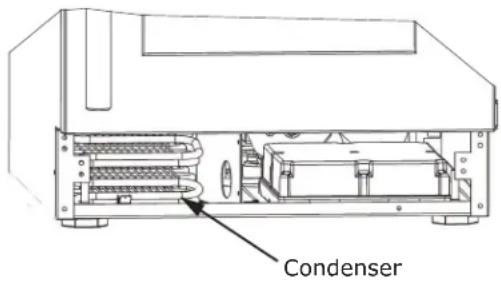
To maintain operational efficiency, keep the front grille free of dust and lint, and clean the condenser when necessary. Depending on environmental conditions, more or less frequent cleaning may be necessary.

WARNING
Disconnect electric power to the unit before cleaning the condenser.
NOTICE
DO NOT use any type of cleaner on the condenser unit. Condenser may be cleaned using a vacuum, soft brush, or compressed air.
- Remove the grille. See GRILLE INSTALLATION).
- Clean the condenser coil using a soft brush or vacuum cleaner.
- Install the grille.
Extended Non-Use
VACATION/HOLIDAY, PROLONGED SHUTDOWN
The following steps are recommended for periods of extended non-use:
- Remove all consumable content from the unit.
- Disconnect the power cord from its outlet/socket and leave it disconnected until the unit is returned to service.
- If any ice is visible inside the unit, allow ice to thaw naturally.
- Clean and dry the interior of the unit. Ensure all water has been removed from the unit.
- The door must remain open to prevent formation of mold and mildew. Open door a minimum of 2^ (50 mm) to provide the necessary ventilation.
WINTERIZATION
If the unit will be exposed to temperatures of 40^OF (5^OC) or less, the steps above must be followed.
For questions regarding winterization, please call Viking Preferred Service at (888) 845-4641.

CAUTION
Damage caused by freezing temperatures is not covered by the warranty.
Troubleshooting
BEFORE CALLING FOR SERVICE
If you think your product is malfunctioning, read the CONTROL OPERATION section to clearly understand the function of the control.
If the problem persists, read the NORMAL OPERATING SOUNDS and TROUBLESHOOTING GUIDE sections below to help you quickly identify common problems and possible causes and remedies. Most often, this will resolve the problem without the need to call for service.
IF SERVICE IS REQUIRED
If you do not understand a troubleshooting remedy, or your product needs service, contact Viking Preferred Service directly at (888) 845-4641.
When you call, you will need your product Model and Serial Numbers. This information appears on the Model and Serial number plate located on the upper right or rear wall of the interior of your product.
All models incorporate rigid foam insulated cabinets to provide high thermal efficiency and maximum sound reduction for its internal working components. Despite this technology, your model may make sounds that are unfamiliar.
Normal operating sounds may be more noticeable because of the unit's environment. Hard surfaces such as cabinets, wood, vinyl or tiled floors and paneled walls have a tendency to reflect normal appliance operating noises.
Maintenance
Listed below are common refrigeration components with a brief description of the normal operating sounds they make. NOTE: Your product may not contain all the components listed.
- Compressor: The compressor makes a hum or pulsing sound that may be heard when it operates.
- Evaporator: Refrigerant flowing through an evaporator may sound like boiling liquid.
- Condenser Fan: Air moving through a condenser may be heard.
Automatic Defrost Drain Pan: Water may be heard dripping or running into the drain pan when the unit is in the defrost cycle.
TROUBLESHOOTING GUIDE

DANGER
ELECTROCUTION HAZARD. Never attempt to repair or perform maintenance on the unit before disconnecting the main electrical power.
Troubleshooting - What to check when problems occur:
| Problem Possible | Cause and Remedy |
| Interior Light Does Not Illuminate | If the unit is cooling, it may be in Sabbath mode. |
| Light Remains on When Door Is Closed. | Turn off light switch if equipped. Adjust light actuator bracket on bottom of door. |
| Unit Develops Frost on Internal Surfaces. | Ensure the door is closing and sealing properly. |
| Unit Develops Condensation on External Surfaces. | The unit is exposed to excessive humidity. Moisture will dissipate as humidity levels decrease. |
| Product is Not Cold Enough | Air temperature does not indicate product temperature. See CHECKING PRODUCT TEMPERATURE below. Adjust the temperature to a cooler set point. Ensure unit is not located in excessive ambient temperatures or in direct sunlight. Ensure the door is closing and sealing properly. Ensure the interior light has not remained on too long. Ensure nothing is blocking the front grille, found at the bottom of the unit. Ensure the condenser coil is clean and free of any dirt or lint build-up. |
CHECKING PRODUCT TEMPERATURE
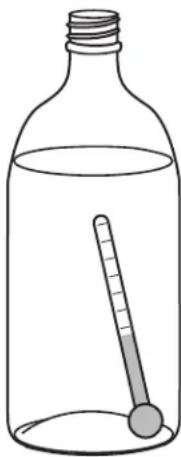
To check the actual product temperature in the unit:
- Partially fi II a plastic (nonbreakable) bottle with water.
- Insert an accurate thermometer.
- Tighten the bottle cap securely.
- Place the bottle in the desired area for 24 hours.
- Avoid opening the unit during the testing period.
- After 24 hours, check the temperature of the water. If required, adjust the temperature control in a small increment (see CONTROL OPERATION).
Causes which affect the internal temperatures of the cabinet include:
- Temperature setting.
- Ambient temperature where installed.
- Installation in direct sunlight or near a heat source.
- The number of door openings and the time the door is open.
- The time the internal light is illuminated. (This mainly affects product on the top rack or shelf.)
- Obstruction of front grille or condenser.
Service Information
If service is required, call your authorized service agency.
Have the following information readily available:
- Model number
- Serial number
- Date purchased
- Name of dealer from whom purchased
Clearly describe the problem that you are having. If you are unable to obtain the name of an authorized service agency, or if you continue to have service problems, contact Viking Range, LLC at (888) 845-4641 or write to:
VIKING RANGE, LLC PREFERRED SERVICE 111 Front Street Greenwood, Mississippi 38930 USA
Record the information indicated below. You will need it if service is ever required. The serial number and model numbers for your beverage center are located on the upper wall, behind the lighting:
Model No.
Serial No.
Date of Purchase
Date Installed
Dealer's Name
Address
If service requires installation of parts, use only authorized parts to insure protection under the warranty.
Keep this manual for future reference.
TWO YEAR FULL WARRANTY
Undercounter Refrigerators and all of their component parts, except as detailed below*†, are warranted to be free from defective materials or workmanship in normal residential use for a period of two (2) years from the date of original retail purchase. Viking Range, LLC, warrantor, agrees to repair or replace, at its option, any part which fails or is found to be defective during the warranty period.
*FULL NINETY (90) DAY COSMETIC WARRANTY: Product is warranted to be free from cosmetic defects in materials or workmanship (such as scratches on stainless steel, paint/porcelain blemishes, etc.) for a period of ninety (90) days from the date of original retail purchase or closing date for new construction, whichever period is longer. Any defects must be reported to the selling dealer within ninety (90) days from date of original retail purchase. Viking Range, LLC uses high quality processes and materials available to produce all color finishes. However, slight color variation may be noticed because of the inherent differences in painted parts and porcelain parts as well as differences in kitchen lighting, product locations, and other factors. Therefore, this warranty does not apply to color variation attributable to such factors.
FULL NINETY (90) DAY WARRANTY IN "RESIDENTIAL PLUS" APPLICATIONS: This full warranty applies to applications where use of the product extends beyond normal residential use, but the warranty period for products used in such applications is ninety (90) days. Examples of applications covered by this warranty are bed and breakfasts, fire stations, private clubs, churches, etc. Under this "Residential Plus" warranty, the product, its components and accessories are warranted to be free from defective material or workmanship for a period of ninety (90) days from the date of original retail purchase. This warranty excludes use of the product in all commercial locations such as restaurants, food service locations and institutional food service locations.
SIX YEAR FULL WARRANTY ON SEATED REFRIGERATION PARTS AS LISTED
Any sealed refrigeration system component, as listed below, is warranted to be free from defective materials or workmanship in normal household use during the third through the sixth year from the date of original retail purchase. Viking Range, LLC, warrantor, agrees to repair or replace, at its option, any part which fails or is found to be defective during the warranty period.
Sealed Refrigeration System Components: Compressor, Evaporator, Condenser, Connecting Tubing, Dryer/Strainer
TWELVE YEAR LIMITED WARRANTY ON SEATED REFRIGERATION PARTS AS LISTED
Any sealed refrigeration system component, as listed above, which fails due to defective materials or workmanship in normal household use during the seventh through the twelfth year from the date of original retail purchase will be repaired or replaced, free of charge for the part itself, with the owner paying all other costs, including labor.
TERMS AND CONDITIONS
This warranty extends to the original purchaser of the product warranted hereunder and to each transferee owner of the product during the term of the warranty and applies to products purchased and located in the United States, Canada, Mexico and the Caribbean (excluding Cuba, Dominican Republic, and Haiti). Products must be purchased in the country where service is requested. If the product or one of its component parts contains a defect or malfunction during the full warranty period after a reasonable number of attempts by the warrantor to remedy the defect or malfunction, the owner is entitled to either a refund or replacement of the product or its component part or parts. Replacement of a component part includes its free installation, except as specified under the limited warranty. Under the terms of this warranty, service must be performed by a factory authorized Viking Range, LLC service agent or representative. Service will be provided during normal business hours, and labor performed at overtime or premium rates shall not be covered by this warranty.
Owner shall be responsible for proper installation, providing reasonable and necessary maintenance, providing proof of purchase upon request, and making the appliance reasonably accessible for service. The return of the Owner Registration Card is not a condition of warranty coverage. You should, however, return the Owner Registration Card so that Viking Range, LLC can contact you should any question of safety arise which could affect you.
This warranty gives you specific legal rights, and you may also have other rights which may vary from jurisdiction to jurisdiction.
WHAT IS NOT COVERED BY THIS WARRANTY: This warranty shall not apply to damage resulting from abuse, failure to provide reasonable and necessary maintenance, accident, delivery, negligence, natural disaster, loss of electrical power to the product for any reason, alteration, outdoor use, improper installation, improper operation, or repair or service of the product by anyone other than an authorized Viking Range, LLC service agency or representative. This warranty does not apply to commercial usage.
LIMITATION OF REMEDIES AND DURATION OF IMPLIED WARRANTY
OWNER'S SOLE AND EXCLUSIVE REMEDY FOR A CLAIM OF ANY KIND WITH RESPECT TO THIS PRODUCT SHALL BE THE REMEDIES SET FORTH ABOVE. VKING RANGE, LLC IS NOT RESPONSIBLE FOR CONSEQUENTIAL OR INCIDENTAL DAMAGE, INCLUDING BUT NOT LIMITED TO FOOD OR MEDICINE LOSS, DUE TO PRODUCT FAILURE, WHETHER ARISING OUT OF BREACH OF WARRANTY, BREACH OF CONTRACT OR OTHERWISE. Some jurisdictions do not allow the exclusion or limitation of incidental or consequential damages, so the above limitation or exclusions may not apply to you. ANY IMPLIED WARRANTY OF MERCHANTABILITY OR FITNESS FOR A PARTICULAR PURPOSE APPLICABLE TO THIS PRODUCT ARE LIMITED IN DURATION TO THE PERIOD OF COVERAGE OF THE APPLICABLE EXPRESS WRITTEN LIMITED WARRANTYES SET FORTH ABOVE. Some states do not allow limitations on how long an implied warranty lasts, so the above limitation may not apply to you.
WARRANTY SERVICE
To obtain warranty service, contact an authorized Viking Range, LLC service agent, or Viking Range, LLC, 111 Front Street, Greenwood, Mississippi 38930, (888) 845-4641. Provide model and serial number and date of original purchase or closing date for a new construction. For the name of your nearest authorized Viking Range, LLC service agency, call Viking Range, LLC.
IMPORTANT: Retain proof of original purchase to establish warranty period.
Specifications subject to change without notice.
Viking Range, LLC
111 Front Street
Greenwood, Mississippi 38930 USA
(662) 455-1200
073215-000A EN For product information, call 1-888-(845-4641) or visit our web site at vikingrange.com (081521)
MANUEL
DIMENSIONS DU PRODUIT
ARRIÈRE
VURE515
VURE524
HAUT
VURE524