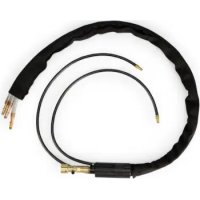
TIG Torch - Welding machine LINCOLN ELECTRIC - Free user manual and instructions
Find the device manual for free TIG Torch LINCOLN ELECTRIC in PDF.



| Product Type | Water-Cooled TIG Torch |
| Brand | Lincoln Electric |
| Models | K4168-1 (20-250-25R) and K4168-2 (20H-320-25R) |
| Cable Length | 25 ft (7.6 m) |
| Cooling | Water |
| Gas Supply | Shielding Gas (argon, etc.) |
| Electrode | Tungsten (diameters from 0.020" to 5/32") |
| Main Functions | Manual TIG Welding |
| Current Capacity | Up to 320 A (depending on model) |
| Spare Parts | Collets, collet bodies, alumina nozzles, gas lenses, caps |
| Maintenance | Regularly inspect cables, hoses, and connections; replace worn parts |
| Safety | Follow warnings: wear protective equipment, avoid electric shock, ensure good ventilation |
| Compatibility | Requires a suitable power source and water cooler |
| Recommended Adapter Kit | K1622-4 or K2505-2 depending on machine |
| Weight | Approximately 2 kg (torch with cables) |
| Dimensions | Torch: ~250 mm long; cables: 25 ft (7.6 m) |
| Repairability | Spare parts available via parts diagrams |
| General Information | User manual included; online registration possible |
Frequently Asked Questions - TIG Torch LINCOLN ELECTRIC
User questions about TIG Torch LINCOLN ELECTRIC
0 question about this device. Answer the ones you know or ask your own.
Ask a new question about this device
Download the instructions for your Welding machine in PDF format for free! Find your manual TIG Torch - LINCOLN ELECTRIC and take your electronic device back in hand. On this page are published all the documents necessary for the use of your device. TIG Torch by LINCOLN ELECTRIC.
USER MANUAL TIG Torch LINCOLN ELECTRIC
K4168-2 Water Cooled 20H-320-25R

Register your machine:
www.lincolnelectric.com/register
Authorized Service and Distributor Locator:
www.lincolnelectric.com/locator
Save for future reference
Date Purchased
Code: (ex: 10859)
Serial: (ex: U1060512345)
THANK YOU FOR SELECTING A QUALITY PRODUCT BY LINCOLNELECTRIC.
PLEASE EXAMINE CARTON AND EQUIPMENT FOR DAMAGE IMMEDIATELY
When this equipment is shipped, title passes to the purchaser upon receipt by the carrier. Consequently, claims for material damaged in shipment must be made by the purchaser against the transportation company at the time the shipment is received.
SAFETY DEPENDS ON YOU
Lincoln arc welding and cutting equipment is designed and built with safety in mind. However, your overall safety can be increased by proper installation ... and thoughtful operation on your part. DO NOT INSTALL, OPERATE OR REPAIR THIS EQUIPMENT WITHOUT READING THIS MANUAL AND THE SAFETY PRECAUTIONS CONTAINED THROUGHOUT. And, most importantly, think before you act and be careful.

WARNING
This statement appears where the information must be followed exactly to avoid serious personal injury or loss of life.

CAUTION
This statement appears where the information must be followed to avoid minor personal injury or damage to this equipment.
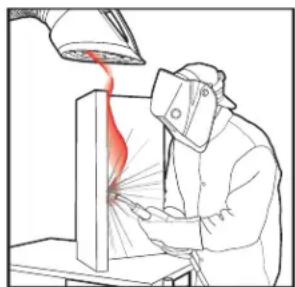
KEEP YOUR HEAD OUT OF THE FUMES.
DON'T get too close to the arc. Use corrective lenses if necessary to stay a reasonable distance away from the arc.
READ and obey the Safety Data Sheet (SDS) and the warning label that appears on all containers of welding materials.
USE ENOUGH VENTILATION or exhaust at the arc, or both, to keep the fumes and gases from your breathing zone and the general area.
natural_image
Illustration of a person in protective gear using a welding torch to burn or operate (no text or symbols present)IN A LARGE ROOM OR OUTDOORS, natural ventilation may be adequate if you keep your head out of the fumes (See below).
USE NATURAL DRAFTS or fans to keep the fumes away from your face.
If you de velop unusual symptoms, see your supervisor. Perhaps the welding atmosphere and ventilation system should be checked.

natural_image
Silhouette of a person wearing a welding helmet and holding a tool, no text or symbols presentWEAR CORRECT EYE, EAR & BODY PROTECTION
PROTECT your eyes and face with welding helmet properly fitted and with proper grade of filter plate (See ANSI Z49.1).
PROTECT your body from welding spatter and arc flash with protective clothing including woolen clothing, flame-proof apron and gloves, leather leggings, and high boots.
PROTECT others from splatter, flash, and glare with protective screens or barriers.
IN SOME AREAS, protection from noise may be appropriate.
BE SURE protective equipment is in good condition.
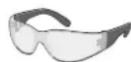
Also, wear safety glasses in work area AT ALL TIMES.
SPECIAL SITUATIONS
DO NOT WELD OR CUT containers or materials which previously had been in contact with hazardous substances unless they are properly cleaned. This is extremely dangerous.
DO NOT WELD OR CUT painted or plated parts unless special precautions with ventilation have been taken. They can release highly toxic fumes or gases.
Additional precautionary measures
PROTECT compressed gas cylinders from excessive heat, mechanical shocks, and arcs; fasten cylinders so they cannot fall.
BE SURE cylinders are never grounded or part of an electrical circuit.
REMOVE all potential fire hazards from welding area.
ALWAYS HAVE FIRE FIGHTING EQUIPMENT READY FOR IMMEDIATE USE AND KNOW HOW TO USE IT.

SECTION A: WARNINGS

CALIFORNIA PROPOSITION 65 WARNINGS

WARNING: Breathing diesel engine exhaust exposes you to chemicals known to the State of California to cause cancer and birth defects, or other reproductive harm.
- Always start and operate the engine in a well-ventilated area.
- If in an exposed area, vent the exhaust to the outside.
- Do not modify or tamper with the exhaust system.
- Do not idle the engine except as necessary.
For more information go to www.P65 warnings.ca.gov/diesel
WARNING: This product, when used for welding or cutting, produces fumes or gases which contain chemicals known to the State of California to cause birth defects and, in some cases, cancer. (California Health & Safety Code § 25249.5 et seq.)

WARNING: Cancer and Reproductive Harm www.P65warnings.ca.gov
ARC WELDING CAN BE HAZARDOUS. PROTECT YOURSELF AND OTHERS FROM POSSIBLE SERIOUS INJURY OR DEATH. KEEP CHILDREN AWAY. PACEMAKER WEARERS SHOULD CONSULT WITH THEIR DOCTOR BEFORE OPERATING.
Read and understand the following safety highlights. For additional safety information, it is strongly recommended that you purchase a copy of "Safety in Welding & Cutting - ANSI Standard Z49.1" from the American Welding Society, P.O. Box 351040, Miami, Florida 33135 or CSA Standard W117.2-1974. A Free copy of "Arc Welding Safety" booklet E205 is available from the Lincoln Electric Company, 22801 St. Clair Avenue, Cleveland, Ohio 44117-1199.
BE SURE THAT ALL INSTALLATION, OPERATION, MAINTENANCE AND REPAIR PROCEDURES ARE PERFORMED ONLY BY QUALIFIED INDIVIDUALS.

FOR ENGINE POWERED EQUIPMENT.
1.a. Turn the engine off before troubleshooting and maintenance work unless the maintenance work requires it to be running.
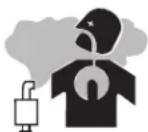
1.b. Operate engines in open, well-ventilated areas or vent the engine exhaust fumes outdoors.
1.c. Do not add the fuel near an open flame welding arc or when the engine is running. Stop the engine and allow it to cool before refueling to prevent spilled fuel from vaporizing on contact
with hot engine parts and igniting. Do not spill fuel when filling tank. If fuel is spilled, wipe it up and do not start engine until fumes have been eliminated.
1.d. Keep all equipment safety guards, covers and devices in position and in good repair. Keep hands, hair, clothing and tools away from V-belts, gears, fans and all other moving parts when starting, operating or repairing equipment.

1.e. In some cases it may be necessary to remove safety guards to perform required maintenance. Remove guards only when necessary and replace them when the maintenance requiring their removal is complete. Always use the greatest care when working near moving parts.
1.f. Do not put your hands near the engine fan. Do not attempt to override the governor or idler by pushing on the throttle control rods while the engine is running.
1.g. To prevent accidentally starting gasoline engines while turning the engine or welding generator during maintenance work, disconnect the spark plug wires, distributor cap or magneto wire as appropriate.
1.h. To avoid scalding, do not remove the radiator pressure cap when the engine is hot.

ELECTRIC AND MAGNETIC FIELDS MAY BE DANGEROUS
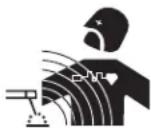
2.a. Electric current flowing through any conductor causes localized Electric and Magnetic Fields (EMF). Welding current creates EMF fields around welding cables and welding machines
2.b. EMF fields may interfere with some pacemakers, and welders having a pacemaker should consult their physician before welding.
2.c. Exposure to EMF fields in welding may have other health effects which are now not known.
2.d. All welders should use the following procedures in order to minimize exposure to EMF fields from the welding circuit:
2.d.1. Route the electrode and work cables together - Secure them with tape when possible.
2.d.2. Never coil the electrode lead around your body.
2.d.3. Do not place your body between the electrode and work cables. If the electrode cable is on your right side, the work cable should also be on your right side.
2.d.4. Connect the work cable to the workpiece as close as possible to the area being welded.
2.d.5. Do not work next to welding power source.

ELECTRIC SHOCK CAN KILL.
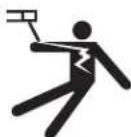
3.a. The electrode and work (or ground) circuits are electrically "hot" when the welder is on. Do
not touch these "hot" parts with your bare skin or wet clothing. Wear dry, hole-free gloves to insulate hands.
3.b. Insulate yourself from work and ground using dry insulation. Make certain the insulation is large enough to cover your full area of physical contact with work and ground.
In addition to the normal safety precautions, if welding must be performed under electrically hazardous conditions (in damp locations or while wearing wet clothing; on metal structures such as floors, gratings or scaffolds; when in cramped positions such as sitting, kneeling or lying, if there is a high risk of unavoidable or accidental contact with the workpiece or ground) use the following equipment:
- Semiautomatic DC Constant Voltage (Wire) Welder.
• DC Manual (Stick) Welder.
• AC Welder with Reduced Voltage Control.
3.c. In semiautomatic or automatic wire welding, the electrode, electrode reel, welding head, nozzle or semiautomatic welding gun are also electrically "hot".
3.d. Always be sure the work cable makes a good electrical connection with the metal being welded. The connection should be as close as possible to the area being welded.
3.e. Ground the work or metal to be welded to a good electrical (earth) ground.
3.f. Maintain the electrode holder, work clamp, welding cable and welding machine in good, safe operating condition. Replace damaged insulation.
3.g. Never dip the electrode in water for cooling.
3.h. Never simultaneously touch electrically "hot" parts of electrode holders connected to two welders because voltage between the two can be the total of the open circuit voltage of both welders.
3.i. When working above floor level, use a safety belt to protect yourself from a fall should you get a shock.
3.j. Also see It ems 6.c. and 8.

ARC RAYS CAN BURN.
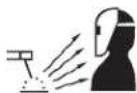
4.a. Use a shield with the proper filter and cover plates to protect your eyes from sparks and the rays of the arc when welding or observing open arc welding. Headshield and filter lens should conform to ANSI Z87. I standards.
4.b. Use suitable clothing made from durable flame-resistant material to protect your skin and that of your helpers from the arc rays.
4.c. Protect other nearby personnel with suitable, non-flammable screening and/or warn them not to watch the arc nor expose themselves to the arc rays or to hot spatter or metal.

5.a. Welding may produce fumes and gases hazardous to health. Avoid breathing these fumes and gases. When welding, keep your head out of the fume. Use enough ventilation and/or exhaust at the arc to keep fumes and gases away from the breathing zone. When welding hardfacing (see instructions on container or SDS) or on lead or cadmium plated steel and other metals or coatings which produce highly toxic fumes, keep exposure as low as possible and within applicable OSHA PEL and ACGIH TLV limits using local exhaust or mechanical ventilation unless exposure assessments indicate otherwise. In confined spaces or in some circumstances, outdoors, a respirator may also be required. Additional precautions are also required when welding on galvanized steel.
- b. The operation of welding fume control equipment is affected by various factors including proper use and positioning of the equipment, maintenance of the equipment and the specific welding procedure and application involved. Worker exposure level should be checked upon installation and periodically thereafter to be certain it is within applicable OSHA PEL and ACGIH TLV limits.
5.c. Do not weld in locations near chlorinated hydrocarbon vapors coming from degreasing, cleaning or spraying operations. The heat and rays of the arc can react with solvent vapors to form phosgene, a highly toxic gas, and other irritating products.
5.d. Shielding gases used for arc welding can displace air and cause injury or death. Always use enough ventilation, especially in confined areas, to insure breathing air is safe.
5.e. Read and understand the manufacturer's instructions for this equipment and the consumables to be used, including the Safety Data Sheet (SDS) and follow your employer's safety practices. SDS forms are available from your welding distributor or from the manufacturer.
5.f. Also see item 1.b.

WELDING AND CUTTING SPARKS CAN CAUSE FIRE OR EXPLOSION.
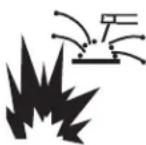
6.a. Remove fire hazards from the welding area. If this is not possible, cover them to prevent the welding sparks from starting a fire. Remember that welding sparks and hot materials from welding can easily go through small cracks and openings to adjacent areas. Avoid welding near hydraulic lines. Have a fire extinguisher readily available.
6.b. Where compressed gases are to be used at the job site, special precautions should be used to prevent hazardous situations. Refer to "Safety in Welding and Cutting" (ANSI Standard Z49.1) and the operating information for the equipment being used.
6.c. When not welding, make certain no part of the electrode circuit is touching the work or ground. Accidental contact can cause overheating and create a fire hazard.
6.d. Do not heat, cut or weld tanks, drums or containers until the proper steps have been taken to insure that such procedures will not cause flammable or toxic vapors from substances inside. They can cause an explosion even though they have been "cleaned". For information, purchase "Recommended Safe Practices for the Preparation for Welding and Cutting of Containers and Piping That Have Held Hazardous Substances", AWS F4.1 from the American Welding Society (see address above).
6.e. Vent hollow castings or containers before heating, cutting or welding. They may explode.
6.f. Sparks and spatter are thrown from the welding arc. Wear oil free protective garments such as leather gloves, heavy shirt, cuffless trousers, high shoes and a cap over your hair. Wear ear plugs when welding out of position or in confined places. Always wear safety glasses with side shields when in a welding area.
6.g. Connect the work cable to the work as close to the welding area as practical. Work cables connected to the building framework or other locations away from the welding area increase the possibility of the welding current passing through lifting chains, crane cables or other alternate circuits. This can create fire hazards or overheat lifting chains or cables until they fail.
6.h. Also see item 1.c.
6.I. Read and follow NFPA 51B "Standard for Fire Prevention During Welding, Cutting and Other Hot Work", available from NFPA, 1 Batterymarch Park, PO box 9101, Quincy, MA 022690-9101.
6.j. Do not use a welding power source for pipe thawing.

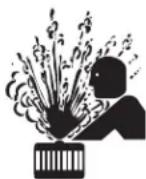
CYLINDER MAY EXPLODE IF DAMAGED.
7.a. Use only compressed gas cylinders containing the correct shielding gas for the process used and properly operating regulators designed for the gas and pressure used. All hoses, fittings, etc. should be suitable for the application and maintained in good condition.
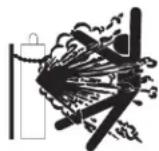
7.b. Always keep cylinders in an upright position securely chained to an undercarriage or fixed support.
7.c. Cylinders should be located:
- Away from areas where they may be struck or subjected to physical damage.
- A safe distance from arc welding or cutting operations and any other source of heat, sparks, or flame.
7.d. Never allow the electrode, electrode holder or any other electrically "hot" parts to touch a cylinder.
7.e. Keep your head and face away from the cylinder valve outlet when opening the cylinder valve.
7.f. Valve protection caps should always be in place and hand tight except when the cylinder is in use or connected for use.
7.g. Read and follow the instructions on compressed gas cylinders, associated equipment, and CGA publication P-I, "Precautions for Safe Handling of Compressed Gases in Cylinders," available from the Compressed Gas Association, 14501 George Carter Way Chantilly, VA 20151.

FOR ELECTRICALLY POWERED EQUIPMENT.
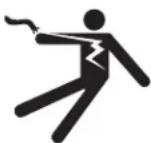
8.a. Turn off input power using the disconnect switch at the fuse box before working on the equipment.
8.b. Install equipment in accordance with the U.S. National Electrical Code, all local codes and the manufacturer's recommendations.
8.c. Ground the equipment in accordance with the U.S. National Electrical Code and the manufacturer's recommendations.
Refer to
http://www.lincolnelectric.com/safety for additional safety information.
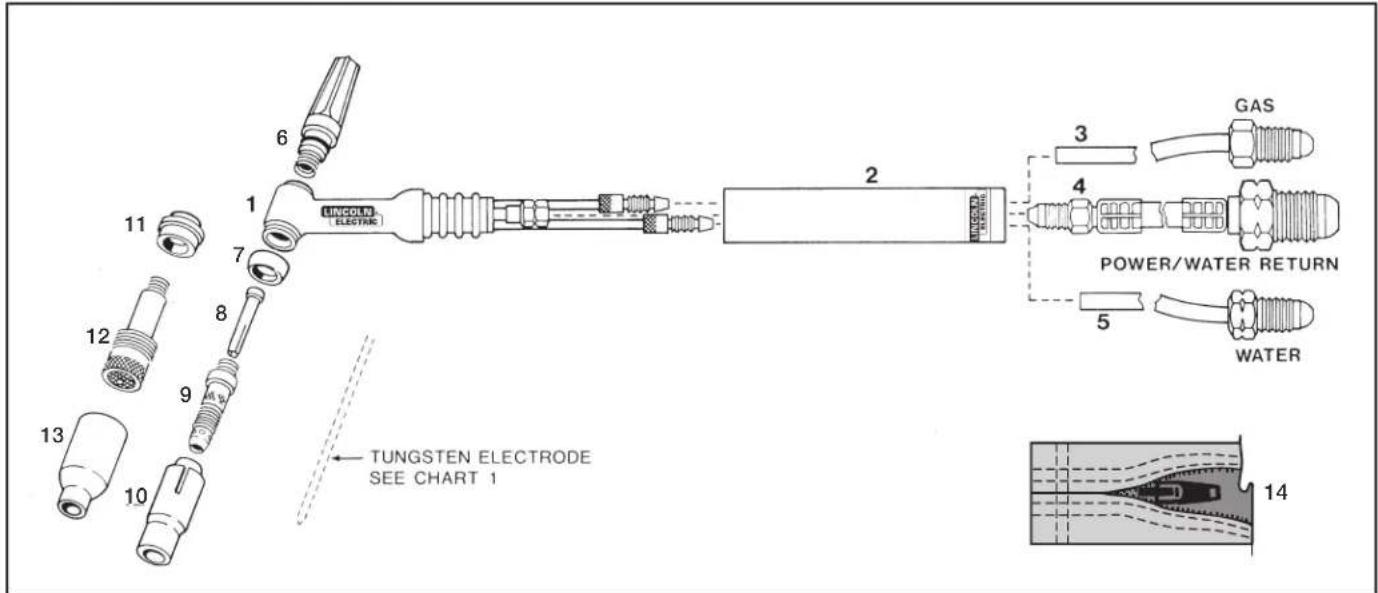
TORCH/REPLACEMENT PARTS
text_image
LINCOLM ELECTRIC 1 6 7 8 9 10 11 12 13 2 3 4 5 GAS POWER/WATER RETURN WATER TUNGSTEN ELECTRODE SEE CHART 1 14| Item | Part No. | Industry Reference | Description |
| 1 | S31183-9 | — | Torch body, red silicone |
| 2 | S31183-10 | — | Torch handle, fluted |
| 3 | S31183-2 | 45V10R | Gas hose, 25' (7.6m) |
| 4 | S31183-7 | 45V04RM | Power cable, 25' (7.6m) |
| 5 | S31183-8 | 45V08R | Water hose, 25' (7.6m) |
| 6 | KP2035-2B1 | 41V35 | Medium Cap |
| 7 | 18CG | Cup gasket (Part of item 1) | |
| 8 | See Chart 2 | Collet | |
| 9 | See Chart 2 | Collet body | |
| 10 | See Chart 3 | Alumina nozzle | |
| 11 | KP2037-3B1 | 54N01 | Gas lens insulator |
| 12 | See Chart 2 | Collet body gas lens | |
| 13 | See Chart 3 | Alumina nozzle gas lens | |
| 14 | K918-4 | Pigskin/Black nylon zipper cover |
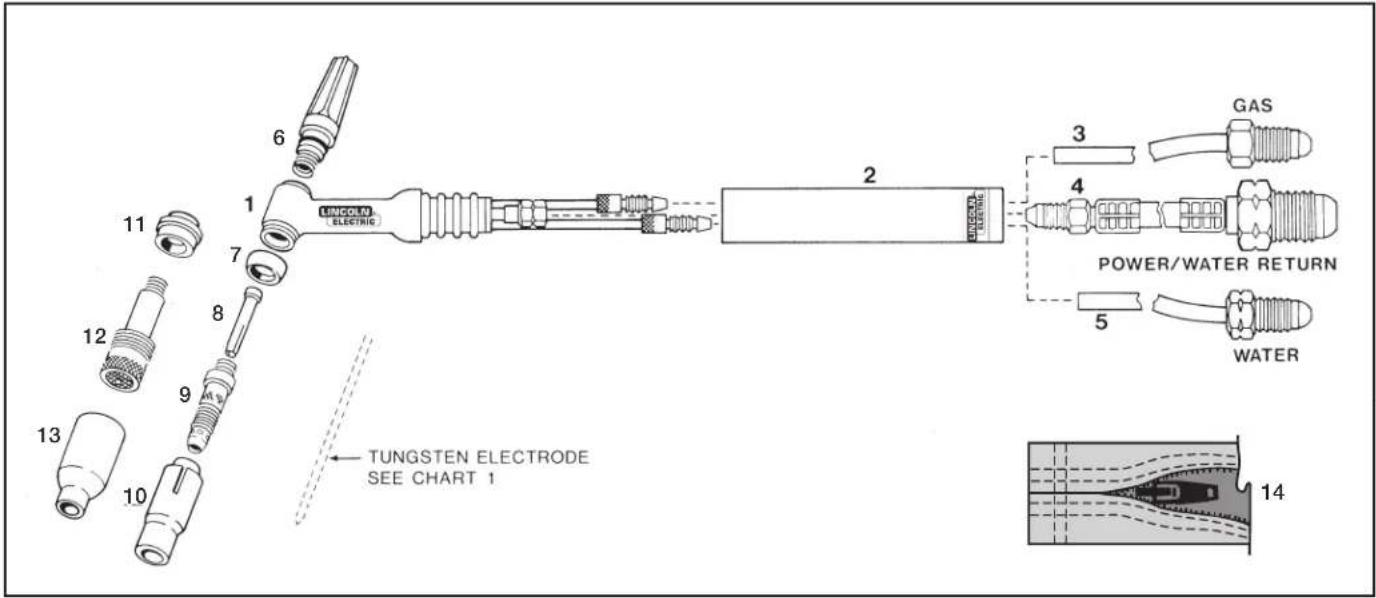
TORCH/REPLACEMENT PARTS
text_image
LINCOLN ELECTRIC 1 6 7 8 9 10 11 12 13 2 3 4 5 GAS POWER/WATER RETURN WATER TUNGSTEN ELECTRODE SEE CHART 1 14| Item | Part No. | Industry Reference | Description |
| 1 | S31183-4 | — | Torch body, red silicone |
| 2 | S31183-5 | — | Torch handle, fluted |
| 3 | S31183-2 | 45V10R | Gas hose, 25' (7.6m) |
| 4 | S31183-1 | 45V04HR | Power cable, 25' (7.6m) |
| 5 | S31183-3 | 45V08HR | Water hose, 25' (7.6m) |
| 6 | KP2035-2B1 | 41V35 | Medium Cap |
| 7 | 18CG | Cup gasket (Part of item 1) | |
| 8 | See Chart 2 | Collet | |
| 9 | See Chart 2 | Collet body | |
| 10 | See Chart 3 | Alumina nozzle | |
| 11 | KP2037-3B1 | 54N01 | Gas lens insulator |
| 12 | See Chart 2 | Collet body gas lens | |
| 13 | See Chart 3 | Alumina nozzle gas lens | |
| 14 | K918-4 | Pigskin/Black nylon zipper cover |
CHART 1 - Select tungsten diameter and alumina nozzle based on current and application.
| Color | Tungsten Types | AC Polarity | DC Polarity | ApplicationsGood choice for welding titanium, nickel, copper, mild steel and stainless steel. |
| Gold | 1.5% Lanthanated | X | ||
| Blue | 2% Lanthanted | X | X | Good all around choice for both AC and DC, in welding low alloyed & non-corroding steels, aluminum, magnesium, titanium, nickel, and copper. |
| Grey | 2% Ceriated | X | X | |
| Chartreuse or Purple | 1.5% Lanthanum, 0.08% Zirconium, 0.08% Yttrium | X | X | |
| White | 0.08% Zirconiated | X | A very good choice for aluminum or magnesium alloys. |
| Tungsten Diameter | Cup Size | DC Polarity Amp Range | AC Polarity Amp Range |
| 0.020" 3, 4 or 5 2-20 | 2-20 | ||
| 0.040" 4 or 5 15-80 | 20-80 | ||
| 1/16" 4, 5 or 6 30-140 | 40-150 | ||
| 3/32" 6, 7 or 8 60-220 | 70-230 | ||
| 1/8" 7, 8 or 10 220-32 | 5 240-350 | ||
| 5/32" 8 or 10 300-375 | 350-375 |
CHART 2 - Select Collet/Collet body or Gas Lens Collet body (requires insulator) based on tungsten diameter and application.
| Tungsten Electrode Diameter in. (mm) | Collet Part No. (Industry Ref.) | Collet Body Part No. (Industry Ref.) | Gas Lens Collet Body Part No. (Industry Ref.) |
| .020 (0.5) | KP2029-1B1 (13N20) | KP2031-1B1 (13N25) | KP2033-1B1 (45V41) |
| .040 (1.0) | KP2029-2B1 (13N21) | KP2031-2B1 (13N26) | KP2033-2B1 (45V42) |
| 1/16 (1.6) | KP2029-3B1 (13N22) | KP2031-3B1 (13N27) | KP2033-3B1 (45V43) |
| 3/32 (2.4) | KP2029-4B1 (13N23) | KP2031-4B1 (13N28) | KP2033-4B1 (45V44) |
| 1/8 (3.2) | KP2029-5B1 (13N24) | KP2031-5B1 (13N29) | KP2033-5B1 (45V45) |
CHART 3 (Alumina Gas Nozzle) - Select alumina gas nozzle orifice size based on application. Standard gas nozzle, 1-27/32" (46.8mm) long, or gas lens, 1-5/8" (41.2mm) long.
| Nozzle Orifice Dia. In. (mm) | Size (16th of an inch) | Standard Nozzle Part No. (Industry Ref.) | Gas Lens Part No. (Industry Ref.) |
| 1/4 (6) | 4 | KP2017-1B1 (13N08) | KP2019-1B1 (53N58) |
| 5/16 (8) | 5 | KP2017-2B1 (13N09) | KP2019-2B1 (53N59) |
| 3/8 (10) | 6 | KP2017-3B1 (13N10) | KP2019-3B1 (53N60) |
| 7/16 (11) | 7 | KP2017-4B1 (13N11) | KP2019-4B1 (53N61) |
| 1/2 (12.5) | 8 | KP2017-5B1 (13N12) | ---- |
| 5/8 (16) | 10 | KP2017-6B1 (13N13) | ---- |
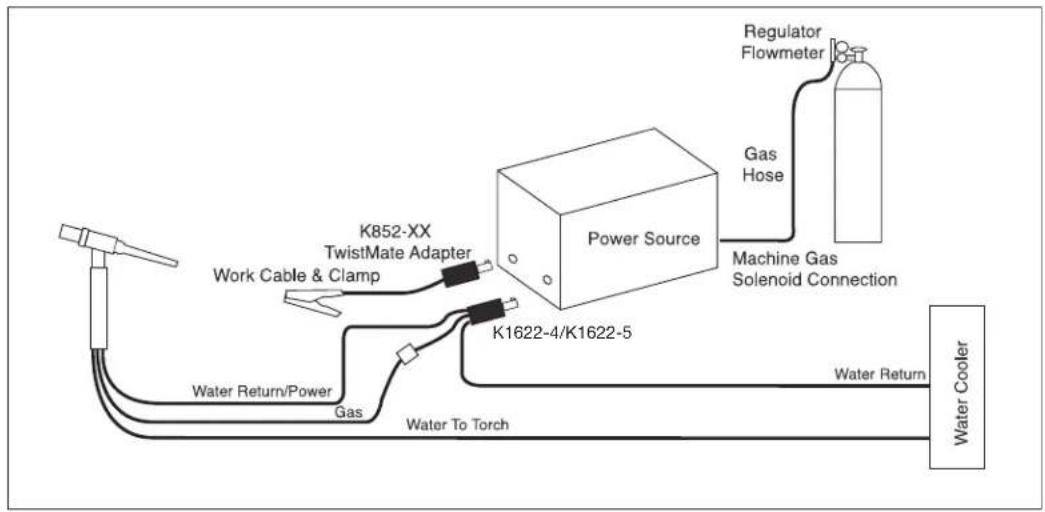
CONNECTION DIAGRAM
Water Cooled Torch Connection to Power Source with Combined Gas/Power Twist-Mate Connections
flowchart
graph TD
    A["Work Cable & Clamp"] --> B["K852-XX TwistMate Adapter"]
    B --> C["Power Source"]
    C --> D["Regulator Flowmeter"]
    D --> E["Gas Hose"]
    E --> F["Machine Gas Solenoid Connection"]
    F --> G["Water Return"]
    G --> H["Water Cooler"]
    I["Water Return/Power"] --> J["K1622-4/K1622-5"]
    K["Gas"] --> J
    L["Water To Torch"] --> J
    M["Water Return/Power"] --> J
For Machines with 1/2" Output Terminals
| K1622-4 | TIG Adapter Kit |
| K2505-2 | V-TIG Torch Twist MateTM to Stud Adapter Cable Set |
The adapter kits contain the necessary accessories to connect between your gas regulator, power source and water supply. The adapter kits are required for proper connection and are ordered separately.
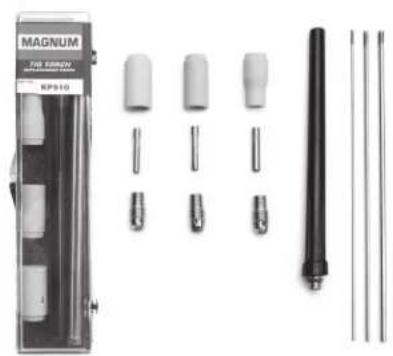
Recommended Consumable Kit
KP510
natural_image
Product display of a MAGNUM device with multiple cylindrical components and two vertical rods (no visible text or symbols)| Qty. Part No. Ref. No. Description in. (mm) | Size | ||||||
| 1 | K P | 2 | 0 | 3 | 5 | - | 4 B |
| 1 | KP2029-3B1 | 13N22 | Collet | 1/16 (1.6) | |||
| 1 | KP2029-4B1 | 13N23 | Collet | 3/32 (2.4) | |||
| 1 | KP2029-5B1 | 13N24 | Collet | 1/8 (3.2) | |||
| 1 | K P | 2 | 0 | 3 | 1 | - | 3 B |
| 1 | K P | 2 | 0 | 3 | 1 | - | 4 B |
| 1 | K P | 2 | 0 | 3 | 1 | - | 5 B |
| 1 | KP2017-2B1 | 13N09 | Alumina Nozzle | 5/16 (8.0) | |||
| 1 | KP2017-3B1 | 13N10 | Alumina Nozzle | 3/8 (10.0) | |||
| 1 | KP2017-4B1 | 13N11 | Alumina Nozzle | 7/16 (11.0) | |||
| 1 | Tungsten Electrode, 2% Ceriated 1/16"x7.0" (1.6 x 178mm) | ||||||
| 1 | Tungsten Electrode, 2% Ceriated 3/32"x7.0" (2.4 x 178mm) | ||||||
| 1 | Tungsten Electrode, 2% Ceriated 1/8"x7.0" (3.2 x 178mm) | ||||||
1
1
1
 | 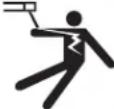 | 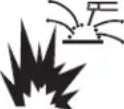 | 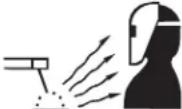 | |
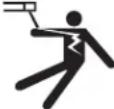
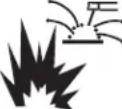
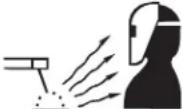
| WARNING | Do not touch electrically live parts or electrode with skin or wet clothing.Insulate yourself from work and ground. | Keep flammable materials away. | Wear eye, ear and body protection. | |
| SpanishAVISO DE PRECAUCION | No toque las partes o los electrodos bajo carga con la piel o ropa mojada.Aislese del trabajo y de la tierra. | Mantenga el material combustible fuera del área de trabajo. | Protéjase los ojos, los oídos y el cuerpo. | |
| FrenchATTENTION | Ne laissez ni la peau ni des vêtements mouillés entrer en contact avec des pièces sous tension.Isolez-vous du travail et de la terre. | Gardez à l'écart de tout matériel inflammable. | Protégez vos yeux, vos oreilles et votre corps. | |
| GermanWARNUNG | Berühren Sie keine stromführenden Teile oder Elektroden mit Ihrem Körper oder feuchter Kleidung!Isolieren Sie sich von den Elektroden und dem Erdboden! | Entfernen Sie brennbarres Material! | Tragen Sie Augen-, Ohren- und Körperschutz! | |
| PortugueseATENÇÃO | Não toque partes elétricas e electrodos com a pele ou roupa molhada.Isole-se da peça e terra. | Mantenha inflamáveis bem guardados. | Use proteção para a vista, ouvido e corpo. | |
| Japanese注意事項 | 通電中の電気部品、又は溶材にヒフやぬれた布で触れないこと。施工物やアースから身体が絶縁されている様にして下さい。 | 燃えやすいものの側での溶接作業は絶対にしてはなりません。 | 目、耳及び身体に保護具をして下さい。 | |
| Chinese警告 | 皮肤或濕衣物切勿接觸帶電部件及鋅條。使你自己與地面和工件絶縁。 | 把一切易燃物品移離工作場所。 | 佩戴眼、耳及身體勞動保護用具。 | |
| Korean위험 | 전도체나 용접봉을 젖은 형 cup 또는 피부로 절대 접촉치 마십시오.모재와 접지를 접촉치 마십시오. | 인화성 물질을 접근 시키지 마시요. | 눈, 귀와 몇에 보호장구를 착용하십시오. | |
| Arabicتحذير | لا تلمس الاجزاء التي يسری فيها التيارال.ceرباني أو الالکترود بجلد الجسم أو بالملابس المبلقة بالمهاء.ضع عازلا على جسمك خلال العمل. | ضع #: √ √ √ √ √ √ √ √ √ √ √ √ √ √ √ √ √ √ √ √ √ √ √ √ √ √ √ √ √ √ √ √ √ √ √ √ √ √ √ √ √ √ √ √ √ √ √ √ √ √ ∞ √ √ √ √ √ √ √ √ √ √ √ √ √ √ √ √ √ √ √ √ √ √ √ √ √ √ √ √ √ √ √ √ √ √ √ √ √ √ √ √ √ √ √ √ √ √ √ √ √ ∪ √ √ √ √ √ √ √ √ √ √ √ √ √ √ √ √ √ √ √ √ √ √ √ √ √ √ √ √ √ √ √ √ √ √ √ √ √ √ √ √ √ √ √ √ √ √ √ √ √ ∦ √ √ √ √ √ √ √ √ √ √ √ √ √ √ √ √ √ √ √ √ √ √ √ √ √ √ √ √ √ √ √ √ √ √ √ √ √ √ √ √ √ √ √ √ √ √ √ √ √ ∨ √ √ √ √ √ √ √ √ √ √ √ √ √ √ √ √ √ √ √ √ √ √ √ √ √ √ √ √ √ √ √ √ √ √ √ √ √ √ √ √ √ √ √ √ √ √ √ √ √ ∭ √ √ √ √ √ √ √ √ √ √ √ √ √ √ √ √ √ √ √ √ √ √ √ √ √ √ √ √ √ √ √ √ √ √ √ √ √ √ √ √ √ √ √ √ √ √ √ √ √ ∮ √ √ √ √ √ √ √ √ √ √ √ √ √ √ √ √ √ √ √ √ √ √ √ √ √ √ √ √ √ √ √ √ √ √ √ √ √ √ √ √ √ √ √ √ √ √ √ √ √ ∥ √ √ √ √ √ √ √ √ √ √ √ √ √ √ √ √ √ √ √ √ √ √ √ √ √ √ √ √ √ √ √ √ √ √ √ √ √ √ √ √ √ √ √ √ √ √ √ √ √ ∫ √ √ √ √ √ √ √ √ √ √ √ √ √ √ √ √ √ √ √ √ √ √ √ √ √ √ √ √ √ √ √ √ √ √ √ √ √ √ √ √ √ √ √ √ √ √ √ √ √ ∯ √ √ √ √ √ √ √ √ √ √ √ √ √ √ √ √ √ √ √ √ √ √ √ √ √ √ √ √ √ √ √ √ √ √ √ √ √ √ √ √ √ √ √ √ √ √ √ √ √ ∤ √ √ √ √ √ √ √ √ √ √ √ √ √ √ √ √ √ √ √ √ √ √ √ √ √ √ √ √ √ √ √ √ √ √ √ √ √ √ √ √ √ √ √ √ √ √ √ √ √ ∟ √ √ √ √ √ √ √ √ √ √ √ √ √ √ √ √ √ √ √ √ √ √ √ √ √ √ √ √ √ √ √ √ √ √ √ √ √ √ √ √ √ √ √ √ √ √ √ √ √ ∧ √ √ √ √ √ √ √ √ √ √ √ √ √ √ √ √ √ √ √ √ √ √ √ √ √ √ √ √ √ √ √ √ √ √ √ √ √ √ √ √ √ √ √ √ √ √ √ √ √ ∸ √ √ √ √ √ √ √ √ √ √ √ √ √ √ √ √ √ √ √ √ √ √ √ √ √ √ √ √ √ √ √ √ √ √ √ √ √ √ √ √ √ √ √ √ √ √ √ √ √ ∶ √ √ √ √ √ √ √ √ √ √ √ √ √ √ √ √ √ √ √ √ √ √ √ √ √ √ √ √ √ √ √ √ √ √ √ √ √ √ √ √ √ √ √ √ √ √ √ √ √ ∎ √ √ √ √ √ √ √ √ √ √ √ √ √ √ √ √ √ √ √ √ √ √ √ √ √ √ √ √ √ √ √ √ √ √ √ √ √ √ √ √ √ √ √ √ √ √ √ √ √ ∜ √ √ √ √ √ √ √ √ √ √ √ √ √ √ √ √ √ √ √ √ √ √ √ √ √ √ √ √ √ √ √ √ √ √ √ √ √ √ √ √ √ √ √ √ √ √ √ √ √ ∠ √ √ √ √ √ √ √ √ √ √ √ √ √ √ √ √ √ √ √ √ √ √ √ √ √ √ √ √ √ √ √ √ √ √ √ √ √ √ √ √ √ √ √ √ √ √ √ √ √ ∑ √ √ √ √ √ √ √ √ √ √ √ √ √ √ √ √ √ √ √ √ √ √ √ √ √ √ √ √ √ √ √ √ √ √ √ √ √ √ √ √ √ √ √ √ √ √ √ √ √ ∢ √ √ √ √ √ √ √ √ √ √ √ √ √ √ √ √ √ √ √ √ √ √ √ √ √ √ √ √ √ √ √ √ √ √ √ √ √ √ √ √ √ √ √ √ √ √ √ √ √ ∡ √ √ √ √ √ √ √ √ √ √ √ √ √ √ √ √ √ √ √ √ √ √ √ √ √ √ √ √ √ √ √ √ √ √ √ √ √ √ √ √ √ √ √ √ √ √ √ √ √ ∩ √ √ √ √ √ √ √ √ √ √ √ √ √ √ √ √ √ √ √ √ √ √ √ √ √ √ √ √ √ √ √ √ √ √ √ √ ∞ √ √ √ √ √ √ √ √ √ √ √ √ ∞ √ √ √ √ √ √ √ √ √ ∞ √ √ √ √ √ √ √ ∞ √ √ √ √ √ √ ∞ √ √ √ √ √ ∞ √ √ √ √ ∞ ∞ √ √ √ √ ∞ ∞ √ √ √ √ ∞ ∞ ∞ ∞ ∞ ∞ ∞ ∞ ∞ ∞ ∞ ∞ ∞ ∞ ∞ ∞ ∞ ∞ ∞ ∞ ∞ ∞ ∞ ∞ ∞ ∞ ∞ ∞ ∞ ∞ ∞ ∞ ∞ ∞ ∞ ∞ ∞ ∞ ∞ ∞ ∞ ∞ ∞ ∞ ∞ ∞ ∞ ∞ ∞ ∞ ∩ √ √ √ √ √ √ √ √ √ √ √ √ √ √ √ √ √ √ √ √ √ √ √ √ ∞ √ √ √ √ √ √ ∞ √ √ √ √ ∞ ∞ ∞ ∞ ∞ ∞ ∞ ∞ ∞ ∞ ∞ ∞ ∞ ∞ ∞ ∞ ∞ ∞ ∞ ∞ ∞ ∞ ∞ ∞ ∞ ∞ ∞ ∞ ∞ ∞ ∞ ∞ ∞ ∞ ∞ ∞ ∞ ∞ ∞ ∞ ∞ ∞ ∞ ∞ ∩ √ √ √ √ ∞√√√√√√√√√√√√√√√√√√√√√√√√√√√√√√√√√√√√√√√√√√√√√√√√√√√√√√√√√√√√√√√√√√√√√√√√√√√√√√√√√√√√√√√√√√√√√√√√√√√√ |
READ AND UNDERSTAND THE MANUFACTURER'S INSTRUCTION FOR THIS EQUIPMENT AND THE CONSUMABLES TO BE USED AND FOLLOW YOUR EMPLOYER'S SAFETY PRACTICES.
CUSTOMER ASSISTANCE POLICY
The business of The Lincoln Electric Company is manufacturing and selling high quality welding equipment, consumables, and cutting equipment. Our challenge is to meet the needs of our customers and to exceed their expectations. On occasion, purchasers may ask Lincoln Electric for advice or information about their use of our products. We respond to our customers based on the best information in our possession at that time. Lincoln Electric is not in a position to warrant or guarantee such advice, and assumes no liability, with respect to such information or advice. We expressly disclaim any warranty of any kind, including any warranty of fitness for any customer's particular purpose, with respect to such information or advice. As a matter of practical consideration, we also cannot assume any responsibility for updating or correcting any such information or advice once it has been given, nor does the provision of information or advice create, expand or alter any warranty with respect to the sale of our products.
Lincoln Electric is a responsive manufacturer, but the selection and use of specific products sold by Lincoln Electric is solely within the control of, and remains the sole responsibility of the customer. Many variables beyond the control of Lincoln Electric affect the results obtained in applying these types of fabrication methods and service requirements.
Subject to Change – This information is accurate to the best of our knowledge at the time of printing. Please refer to www.lincolnelectric.com for any updated information.
ANTORCHAS TIG
Números de Modelos:
natural_image
Illustration of a person in protective gear using a tool to drive a red flame from a lamp (no text or symbols)TRABAJE EN ZONAS VENTILADAS o
natural_image
Product display of a MAGNUM brand battery pack with various cylindrical and linear components (no visible text or labels)| Cantidad | Núm. de Parte(Ref. de la Industria) | Núm. de Ref.de la Industria | Descripción | Tamaño en mm(pulg.) |
| 1 | KP2035-4B1 | 41V24 | Tapón Posterior | Largo |
| 1 | KP2029-3B1 | 13N22 | Collarín | 1/16 (1.6) |
| 1 | KP2029-4B1 | 13N23 | Collarín | 3/32 (2.4) |
| 1 | KP2029-5B1 | 13N24 | Collarín | 1/8 (3.2) |
| 1 | KP2031-3B1 | 13N27 | Cuerpo de Collarín | 1/16 (1.6) |
| 1 | KP2031-4B1 | 13N28 | Cuerpo de Collarín | 3/32 (2.4) |
| 1 | KP2031-5B1 | 13N29 | Cuerpo de Collarín | 1/8 (3.2) |
| 1 | KP2017-2B1 | 13N09 | Tobera de Alúmina | 5/16 (8.0) |
| 1 | KP2017-3B1 | 13N10 | Tobera de Alúmina | 3/8 (10.0) |
| 1 | KP2017-4B1 | 13N11 | Tobera de Alúmina | 7/16 (11.0) |
| 1 | Electrodo de Tungsteno, 2% Ceriado, 1.6 x 178mm (1/16"x 7.0") | |||
| 1 | Electrodo de Tungsteno, 2% Ceriado, 2.4 x 178mm (3/32"x 7.0") | |||
| 1 | Electrodo de Tungsteno, 2% Ceriado, 3.2 x 178mm (1/8"x 7.0") | |||
 | 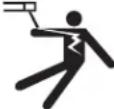 | 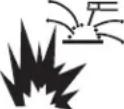 | 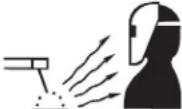 |
| WARNING | Do not touch electrically live parts or electrode with skin or wet clothing.Insulate yourself from work and ground. | Keep flammable materials away. | Wear eye, ear and body protection. |
| SpanishAVISO DE PRECAUCION | No toque las partes o los electrodos bajo carga con la piel o ropa mojada.Aislese del trabajo y de la tierra. | Mantenga el material combustible fuera del área de trabajo. | Protéjase los ojos, los oídos y el cuerpo. |
| FrenchATTENTION | Ne laissez ni la peau ni des vêtements mouillés entrer en contact avec des pièces sous tension.Isolez-vous du travail et de la terre. | Gardez à l'écart de tout matériel inflammable. | Protégez vos yeux, vos oreilles et votre corps. |
| GermanWARNUNG | Berühren Sie keine stromführenden Teile oder Elektroden mit Ihrem Körper oder feuchter Kleidung!Isolieren Sie sich von den Elektroden und dem Erdboden! | Entfernen Sie brennbarres Material! | Tragen Sie Augen-, Ohren- und Körperschutz! |
| PortugueseATENÇÃO | Não toque partes elétricas e electrodos com a pele ou roupa molhada.Isole-se da peça e terra. | Mantenha inflamáveis bem guardados. | Use proteção para a vista, ouvido e corpo. |
| Japanese注意事項 | 通電中の電気部品、又は溶材にヒフやぬれた布で触れないこと。施工物やアースから身体が絶縁されている様にして下さい。 | 燃えやすいものの側での溶接作業は絶対にしてはなりません。 | 目、耳及び身体に保護具をして下さい。 |
| Chinese警告 | 皮肤或濕衣物切勿接觸帶電部件及鋅條。使你自己與地面和工件絶縁。 | 把一切易燃物品移離工作場所。 | 佩戴眼、耳及身體勞動保護用具。 |
| Korean위험 | 전도체나 용접봉을 젖은 형 cup 또는 피부로 절대 접촉치 마십시오.모재와 접지를 접촉치 마십시오. | 인화성 물질을 접근 시키지 마시요. | 눈, 귀와 몇에 보호장구를 착용하십시오. |
| Arabicتحذير | لا تلمس الاجزاء التي يسری فيها التيارال.ceرباني أو الالکترود بجلد الجسم أو بالملابس المبلقة بالمهاء.ضع عازلا على جسمك خلال العمل. | ضع #: √ √ √ √ √ √ √ √ √ √ √ √ √ √ √ √ √ √ √ √ √ √ √ √ √ √ √ √ √ √ √ √ √ √ √ √ √ √ √ √ √ √ √ √ √ √ √ √ √ √ ∞ √ √ √ √ √ √ √ √ √ √ √ √ √ √ √ √ √ √ √ √ √ √ √ √ √ √ √ √ √ √ √ √ √ √ √ √ √ √ √ √ √ √ √ √ √ √ √ √ √ ∪ √ √ √ √ √ √ √ √ √ √ √ √ √ √ √ √ √ √ √ √ √ √ √ √ √ √ √ √ √ √ √ √ √ √ √ √ √ √ √ √ √ √ √ √ √ √ √ √ √ ∨ √ √ √ √ √ √ √ √ √ √ √ √ √ √ √ √ √ √ √ √ √ √ √ √ √ √ √ √ √ √ √ √ √ √ √ √ √ √ √ √ √ √ √ √ √ √ √ √ √ ∦ √ √ √ √ √ √ √ √ √ √ √ √ √ √ √ √ √ √ √ √ √ √ √ √ √ √ √ √ √ √ √ √ √ √ √ √ √ √ √ √ √ √ √ √ √ √ √ √ √ ∭ √ √ √ √ √ √ √ √ √ √ √ √ √ √ √ √ √ √ √ √ √ √ √ √ √ √ √ √ √ √ √ √ √ √ √ √ √ √ √ √ √ √ √ √ √ √ √ √ √ ∮ √ √ √ √ √ √ √ √ √ √ √ √ √ √ √ √ √ √ √ √ √ √ √ √ √ √ √ √ √ √ √ √ √ √ √ √ √ √ √ √ √ √ √ √ √ √ √ √ √ ∥ √ √ √ √ √ √ √ √ √ √ √ √ √ √ √ √ √ √ √ √ √ √ √ √ √ √ √ √ √ √ √ √ √ √ √ √ √ √ √ √ √ √ √ √ √ √ √ √ √ ∫ √ √ √ √ √ √ √ √ √ √ √ √ √ √ √ √ √ √ √ √ √ √ √ √ √ √ √ √ √ √ √ √ √ √ √ √ √ √ √ √ √ √ √ √ √ √ √ √ √ ∶ √ √ √ √ √ √ √ √ √ √ √ √ √ √ √ √ √ √ √ √ √ √ √ √ √ √ √ √ √ √ √ √ √ √ √ √ √ √ √ √ √ √ √ √ √ √ √ √ √ ∤ √ √ √ √ √ √ √ √ √ √ √ √ √ √ √ √ √ √ √ √ √ √ √ √ √ √ √ √ √ √ √ √ √ √ √ √ √ √ √ √ √ √ √ √ √ √ √ √ √ ∯ √ √ √ √ √ √ √ √ √ √ √ √ √ √ √ √ √ √ √ √ √ √ √ √ √ √ √ √ √ √ √ √ √ √ √ √ √ √ √ √ √ √ √ √ √ √ √ √ √ ∟ √ √ √ √ √ √ √ √ √ √ √ √ √ √ √ √ √ √ √ √ √ √ √ √ √ √ √ √ √ √ √ √ √ √ √ √ √ √ √ √ √ √ √ √ √ √ √ √ √ ∧ √ √ √ √ √ √ √ √ √ √ √ √ √ √ √ √ √ √ √ √ √ √ √ √ √ √ √ √ √ √ √ √ √ √ √ √ √ √ √ √ √ √ √ √ √ √ √ √ √ ∸ √ √ √ √ √ √ √ √ √ √ √ √ √ √ √ √ √ √ √ √ √ √ √ √ √ √ √ √ √ √ √ √ √ √ √ √ √ √ √ √ √ √ √ √ √ √ √ √ √ ∎ √ √ √ √ √ √ √ √ √ √ √ √ √ √ √ √ √ √ √ √ √ √ √ √ √ √ √ √ √ √ √ √ √ √ √ √ √ √ √ √ √ √ √ √ √ √ √ √ √ ∜ √ √ √ √ √ √ √ √ √ √ √ √ √ √ √ √ √ √ √ √ √ √ √ √ √ √ √ √ √ √ √ √ √ √ √ √ √ √ √ √ √ √ √ √ √ √ √ √ √ ∠ √ √ √ √ √ √ √ √ √ √ √ √ √ √ √ √ √ √ √ √ √ √ √ √ √ √ √ √ √ √ √ √ √ √ √ √ √ √ √ √ √ √ √ √ √ √ √ √ √ ∑ √ √ √ √ √ √ √ √ √ √ √ √ √ √ √ √ √ √ √ √ √ √ √ √ √ √ √ √ √ √ √ √ √ √ √ √ √ √ √ √ √ √ √ √ √ √ √ √ √ ∢ √ √ √ √ √ √ √ √ √ √ √ √ √ √ √ √ √ √ √ √ √ √ √ √ √ √ √ √ √ √ √ √ √ √ √ √ √ √ √ √ √ √ √ √ √ √ √ √ √ ∡ √ √ √ √ √ √ √ √ √ √ √ √ √ √ √ √ √ √ √ √ √ √ √ √ √ √ √ √ √ √ √ √ √ √ √ √ √ √ √ √ √ √ √ √ √ √ √ √ √ ∩ √ √ √ √ √ √ √ √ √ √ √ √ √ √ √ √ √ √ √ √ √ √ √ √ √ √ √ √ √ √ √ √ √ √ √ √ ∞ √ √ √ √ √ √ √ √ √ √ √ √ ∞ √ √ √ √ √ √ √ √ ∞ √ √ √ √ √ √ ∞ √ √ √ √ √ √ ∞ ∞ √ √ √ √ √ ∞ ∞ ∞ ∞ ∞ ∞ ∞ ∞ ∞ ∞ ∞ ∞ ∞ ∞ ∞ ∞ ∞ ∞ ∞ ∞ ∞ ∞ ∞ ∞ ∞ ∞ ∞ ∞ ∞ ∞ ∞ ∞ ∞ ∞ ∞ ∞ ∞ ∞ ∞ ∞ ∞ ∞ ∞ ∞ ∞ ∞ ∞ ∞ ∞ ∞ ∩ √ √ √ √ √ √ √ √ √ √ √ √ √ √ √ √ √ √ √ √ √ √ √ √ √ √ √ √ √ √ √ ∞ √ √ √ √ √ √ √ ∞ ∞ ∞ ∞ ∞ ∞ ∞ ∞ ∞ ∞ ∞ ∞ ∞ ∞ ∞ ∞ ∞ ∞ ∞ ∞ ∞ ∞ ∞ ∞ ∞ ∞ ∞ ∞ ∞ ∞ ∞ ∞ ∞ ∞ ∞ ∞ ∞ ∞ ∞ ∞ ∞ ∞ ∞ ∞ ∩ √ √ √ √ ∞ |
READ AND UNDERSTAND THE MANUFACTURER'S INSTRUCTION FOR THIS EQUIPMENT AND THE CONSUMABLES TO BE USED AND FOLLOW YOUR EMPLOYER'S SAFETY PRACTICES.
natural_image
Illustration of a person in protective gear using a welding torch to drive red light (no text or symbols)DANS UNE GRANDE PIÈCE OU À L'EXTÉRIEUR, la
natural_image
Silhouette of a person wearing a helmet and holding a tool, no text or symbols presentPORTER UNE PROTECTION CORRECTE DES YEUX, DES OREILLES ET DU CORPS
natural_image
Product display of a MAGNUM brand electronic device with multiple cylindrical components and a black cylindrical component (no visible text or symbols)| Qté. | Pièce No. | Réf. Industrie No. | Description | Taille in.(mm) |
| 1 | KP2035-4B1 | 41V24 | Chapeau de siège | Long |
| 1 | KP2029-3B1 | 13N22 | Pince de Serrage | 1/16 (1.6) |
| 1 | KP2029-4B1 | 13N23 | Pince de Serrage | 3/32 (2.4) |
| 1 | KP2029-5B1 | 13N24 | Pince de Serrage | 1/8 (3.2) |
| 1 | KP2031-3B1 | 13N27 | Corps de Pince de Serrage | 1/16 (1.6) |
| 1 | KP2031-4B1 | 13N28 | Corps de Pince de Serrage | 3/32 (2.4) |
| 1 | KP2031-5B1 | 13N29 | Corps de Pince de Serrage | 1/8 (3.2) |
| 1 | KP2017-2B1 | 13N09 | Buse en Alumine | 5/16 (8.0) |
| 1 | KP2017-3B1 | 13N10 | Buse en Alumine | 3/8 (10.0) |
| 1 | KP2017-4B1 | 13N11 | Buse en Alumine | 7/16 (11.0) |
| 1 | Électrode en Tungstène, 2% de Cérium | |||
| 1 | Électrode en Tungstène, 2% de Cérium | |||
| 1 | Électrode en Tungstène, 2% de Cérium | |||
 |  |  |  | |
| WARNING | Do not touch electrically live parts or electrode with skin or wet clothing.Insulate yourself from work and ground. | Keep flammable materials away. | Wear eye, ear and body protection. | |
| SpanishAVISO DE PRECAUCION | No toque las partes o los electrodos bajo carga con la piel o ropa mojada.Aislese del trabajo y de la tierra. | Mantenga el material combustible fuera del área de trabajo. | Protéjase los ojos, los oídos y el cuerpo. | |
| FrenchATTENTION | Ne laissez ni la peau ni des vêtements mouillés entrer en contact avec des pièces sous tension.Isolez-vous du travail et de la terre. | Gardez à l'écart de tout matériel inflammable. | Protégez vos yeux, vos oreilles et votre corps. | |
| GermanWARNUNG | Berühren Sie keine stromführenden Teile oder Elektroden mit Ihrem Körper oder feuchter Kleidung!Isolieren Sie sich von den Elektroden und dem Erdboden! | Entfernen Sie brennbarres Material! | Tragen Sie Augen-, Ohren- und Körperschutz! | |
| PortugueseATENÇÃO | Não toque partes elétricas e electrodos com a pele ou roupa molhada.Isole-se da peça e terra. | Mantenha inflamáveis bem guardados. | Use proteção para a vista, ouvido e corpo. | |
| Japanese注意事項 | 通電中の電気部品、又は溶材にヒフやぬれた布で触れないこと。施工物やアースから身体が絶縁されている様にして下さい。 | 燃えやすいものの側での溶接作業は絶対にしてはなりません。 | 目、耳及び身体に保護具をして下さい。 | |
| Chinese警告 | 皮肤或濕衣物切勿接觸帶電部件及鋅條。使你自己與地面和工件絶縁。 | 把一切易燃物品移離工作場所。 | 佩戴眼、耳及身體勞動保護用具。 | |
| Korean위험 | 전도체나 용접봉을 젖은 형 cup 또는 피부로 절대 접촉치 마십시오.모재와 접지를 접촉치 마십시오. | 인화성 물질을 접근 시키지 마시요. | 눈, 귀와 몇에 보호장구를 착용하십시오. | |
| Arabicتحذير | لا تلمس الاجزاء التي يسری فيها التيارال.ceرباني أو الالکترود بجلد الجسم أو بالملابس المبلقة بالعاء.ضع عازلا على جسمك خلال العمل. | ضع #: √ √ √ √ √ √ √ √ √ √ √ √ √ √ √ √ √ √ √ √ √ √ √ √ √ √ √ √ √ √ √ √ √ √ √ √ √ √ √ √ √ √ √ √ √ √ √ √ √ √ ∞ √ √ √ √ √ √ √ √ √ √ √ √ √ √ √ √ √ √ √ √ √ √ √ √ √ √ √ √ √ √ √ √ √ √ √ √ √ √ √ √ √ √ √ √ √ √ √ √ √ ∪ √ √ √ √ √ √ √ √ √ √ √ √ √ √ √ √ √ √ √ √ √ √ √ √ √ √ √ √ √ √ √ √ √ √ √ √ √ √ √ √ √ √ √ √ √ √ √ √ √ ∨ √ √ √ √ √ √ √ √ √ √ √ √ √ √ √ √ √ √ √ √ √ √ √ √ √ √ √ √ √ √ √ √ √ √ √ √ √ √ √ √ √ √ √ √ √ √ √ √ √ ∦ √ √ √ √ √ √ √ √ √ √ √ √ √ √ √ √ √ √ √ √ √ √ √ √ √ √ √ √ √ √ √ √ √ √ √ √ √ √ √ √ √ √ √ √ √ √ √ √ √ ∭ √ √ √ √ √ √ √ √ √ √ √ √ √ √ √ √ √ √ √ √ √ √ √ √ √ √ √ √ √ √ √ √ √ √ √ √ √ √ √ √ √ √ √ √ √ √ √ √ √ ∮ √ √ √ √ √ √ √ √ √ √ √ √ √ √ √ √ √ √ √ √ √ √ √ √ √ √ √ √ √ √ √ √ √ √ √ √ √ √ √ √ √ √ √ √ √ √ √ √ √ ∥ √ √ √ √ √ √ √ √ √ √ √ √ √ √ √ √ √ √ √ √ √ √ √ √ √ √ √ √ √ √ √ √ √ √ √ √ √ √ √ √ √ √ √ √ √ √ √ √ √ ∫ √ √ √ √ √ √ √ √ √ √ √ √ √ √ √ √ √ √ √ √ √ √ √ √ √ √ √ √ √ √ √ √ √ √ √ √ √ √ √ √ √ √ √ √ √ √ √ √ √ ∯ √ √ √ √ √ √ √ √ √ √ √ √ √ √ √ √ √ √ √ √ √ √ √ √ √ √ √ √ √ √ √ √ √ √ √ √ √ √ √ √ √ √ √ √ √ √ √ √ √ ∤ √ √ √ √ √ √ √ √ √ √ √ √ √ √ √ √ √ √ √ √ √ √ √ √ √ √ √ √ √ √ √ √ √ √ √ √ √ √ √ √ √ √ √ √ √ √ √ √ √ ∟ √ √ √ √ √ √ √ √ √ √ √ √ √ √ √ √ √ √ √ √ √ √ √ √ √ √ √ √ √ √ √ √ √ √ √ √ √ √ √ √ √ √ √ √ √ √ √ √ √ ∸ √ √ √ √ √ √ √ √ √ √ √ √ √ √ √ √ √ √ √ √ √ √ √ √ √ √ √ √ √ √ √ √ √ √ √ √ √ √ √ √ √ √ √ √ √ √ √ √ √ ∧ √ √ √ √ √ √ √ √ √ √ √ √ √ √ √ √ √ √ √ √ √ √ √ √ √ √ √ √ √ √ √ √ √ √ √ √ √ √ √ √ √ √ √ √ √ √ √ √ √ ∜ √ √ √ √ √ √ √ √ √ √ √ √ √ √ √ √ √ √ √ √ √ √ √ √ √ √ √ √ √ √ √ √ √ √ √ √ √ √ √ √ √ √ √ √ √ √ √ √ √ ∎ √ √ √ √ √ √ √ √ √ √ √ √ √ √ √ √ √ √ √ √ √ √ √ √ √ √ √ √ √ √ √ √ √ √ √ √ √ √ √ √ √ √ √ √ √ √ √ √ √ ∶ √ √ √ √ √ √ √ √ √ √ √ √ √ √ √ √ √ √ √ √ √ √ √ √ √ √ √ √ √ √ √ √ √ √ √ √ √ √ √ √ √ √ √ √ √ √ √ √ √ ∢ √ √ √ √ √ √ √ √ √ √ √ √ √ √ √ √ √ √ √ √ √ √ √ √ √ √ √ √ √ √ √ √ √ √ √ √ √ √ √ √ √ √ √ √ √ √ √ √ √ ∩ √ √ √ √ √ √ √ √ √ √ √ √ √ √ √ √ √ √ √ √ √ √ √ √ √ √ √ √ √ √ √ √ √ √ √ √ √ √ √ √ √ √ √ √ √ √ √ √ √ ∑ √ √ √ √ √ √ √ √ √ √ √ √ √ √ √ √ √ √ √ √ √ √ √ √ √ √ √ √ √ √ √ √ √ √ √ √ √ √ √ √ √ √ √ √ √ √ √ √ √ ∠ √ √ √ √ √ √ √ √ √ √ √ √ √ √ √ √ √ √ √ √ √ √ √ √ √ √ √ √ √ √ √ √ √ √ √ √ √ √ √ √ ∞ √ √ √ √ √ √ √ √ ∞ √ √ √ √ √ √ ∞ √ √ √ √ √ √ ∞ √ √ √ √ √ ∞ √ √ √ √ ∞ √ √ √ √ ∞ √ √ √ √ ∞ √ √ √ ∞ ∞ √ √ √ √ ∞ ∞ √ √ √ √ ∞ ∞ √ √ √ √ ∞ ∞ √ √ √ √ ∞ ∞ √ √ √ √ ∞ ∞ √ √ √ √ ∞ ∞ ∞ √ √ √ √ ∞ ∞ ∞ √ √ √ √ ∞ ∞ ∞ √ √ √ √ ∞ ∞ ∞ √ √ √ √ ∞ ∞ ∞ √ √ √ √ ∞ ∞ ∞ √ √ √ √ ∞ ∞ ∞ √ √ √ √ ∞ ∝ √ √ √ √ √ √ √ ∞ ∞ ∞ ∞ ∞ ∞ ∞ ∞ ∞ ∞ ∞ ∞ ∞ ∞ ∞ ∞ ∞ ∞ ∞ ∞ ∞ ∞ ∞ ∞ ∞ ∞ ∞ ∞ ∞ ∞ ∞ ∞ ∞ ∞ ∞ ∞ ∞ ∞ ∞ ∞ ∞ ∞ ∞ ∞ ∞ ∞ ∞ ∞ ∞ ∞ ∤ √ √ √ √ √ √ √ √ √ √ √ √ √ √ √ √ √ √ √ √ √ √ √ √ √ √ ∞ √ √ √ √ √ ∞ ∞ ∞ ∞ ∞ ∞ ∞ ∞ ∞ ∞ ∞ ∞ ∞ ∞ ∞ ∞ ∞ ∞ ∞ ∞ ∞ ∞ ∞ ∞ ∞ ∞ ∞ ∞ ∞ ∞ ∞ ∞ ∞ ∞ ∞ ∞ ∞ ∞ ∞ ∞ ∞ ∞ ∞ ∞ ∤ √ √ √ √ ∞ |
READ AND UNDERSTAND THE MANUFACTURER'S INSTRUCTION FOR THIS EQUIPMENT AND THE CONSUMABLES TO BE USED AND FOLLOW YOUR EMPLOYER'S SAFETY PRACTICES.