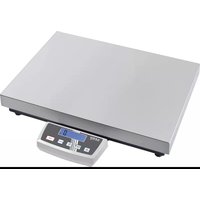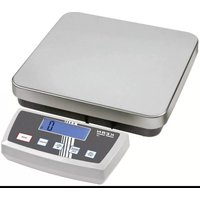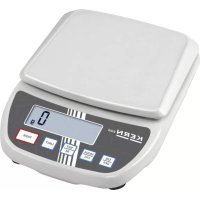
EMS 6K0.1 - Letter scale Kern - Free user manual and instructions
Find the device manual for free EMS 6K0.1 Kern in PDF.



User questions about EMS 6K0.1 Kern
0 question about this device. Answer the ones you know or ask your own.
Ask a new question about this device
Download the instructions for your Letter scale in PDF format for free! Find your manual EMS 6K0.1 - Kern and take your electronic device back in hand. On this page are published all the documents necessary for the use of your device. EMS 6K0.1 by Kern.
USER MANUAL EMS 6K0.1 Kern
Further language versions you will find online under www.kern-sohn.com/manuals
Trovate autre versioni di lingue online inwww.kern-sohn.com/manuals

1 Technical data 4
2 Basic Information (General) 6
2.1 Proper use 6
2.2 Improper Use 6
2.3 Warranty 6
2.4 Monitoring of Test Resources 6
3 Basic Safety Precautions 7
3.1 Pay attention to the instructions in the Operation Manual 7
3.2 Personnel training 7
4 Transportation & Storage 7
4.1 Testing upon acceptance 7
4.2 Packaging / return transport 7
5 Unpacking, Setup and Commissioning 8
5.1 Installation Site, Location of Use 8
5.2 Unpacking/installation 8
5.3 Mains connection 9
5.4 Operation using a (rechargeable) battery (optional) 9
5.5 Initial Commissioning 10
5.6 Linearization 11
5.7 Adjustment 14
5.8 Adjustment 14
6 Operating elements 15
6.1 Overview of display 15
6.2 Keyboard overview 15
7 Operation 16
Start-up 16
Switching Off 16
Weighing. 16
Taring. 16
PRE-TARE function 17
Weighing units switch-over 18
Plus/minus weighings 18
Parts counting 19
Net-total weighings 20
Percent determination 21
8 Menu 22
8.1 Navigation in the menu 22
8.2 Menu overview 25
8.3 Description of individual menu items 25
Auto Off function 25
Auto-Zero function 26
Filter function 27
Reset to factory setting 28
9 Service, maintenance, disposal 29
9.1 Cleaning 29
9.2 Service, maintenance 29
9.3 Disposal 29
10 Instant help 30
11 Declaration of -Conformity 31
1 Technical data
| KERN EMS 300-3 EMS 3000-2 | ||
| Readability (d) | 0,001 g | 0,01 g |
| Weighing range (max) | 300 g | 3000 g |
| Taring range (subtractive) | 300 g | 3000 g |
| Reproducibility | 0,002 g | 0,02 g |
| Linearity | ±0,005 g | ±0,05 g |
| Minimum unit weight at piece counting | 0,005 g 0,05 g | |
| Warm-up time | 120 min | 120 min |
| Reference quantities at piece counting | 5, 10, 20, 25, 50 | |
| Weighing Units | dwt, g, oz, ozt | |
| Recommended adjustment weight, not added (class) | 300 g(F1) | 3000 g(F2) |
| Stabilization time (typical) | 3 sec. | |
| Operating temperature | + 5°C .... + 35°C | |
| Humidity of air | max. 80% (not condensing) | |
| Housing (B x D x H) mm | 200 x 280 x 63 | |
| Weighing plate mm | Ø 105 | 160 x 160 |
| Windshield rectangular mm | inside: 145 x 145 x 65 | - |
| outside: 165 x 165 x 80 | - | |
| Weight kg (net) | 1,4 | |
| Input Voltage | 110V-230V AC | |
| Power pack secondary voltage | 9 V, 300mA | |
| Battery operation | 9 V compound battery (optional)Operating period: 40 h | |
| Auto Off | 3 min. | |
| KERN | EMS 6K0.1 | EMS 6K1 | EMS 12K0.1 | EMS 12K1 |
| Readability (d) | 0.1 g | 1 g | 0.1 g | 1 g |
| Weighing range (max) | 6 kg | 6 kg | 12 kg | 12 kg |
| Taring range (subtractive) | 6 kg | 6 kg | 12 kg | 12 kg |
| Reproducibility | 0.1 g | 1 g | 0.1 g | 1 g |
| Linearity | ± 0.3 g | ± 3 g | ± 0.3 g | ± 3 g |
| Minimum unit weight at piece counting | 0.2 g | 2 g | 0.2 g | 2 g |
| Warm-up time | 120 min | 30 min | 120 min | 30 min |
| Reference quantities at piece counting | 5, 10, 20, 25, 50 | |||
| Weighing Units | dwt, g, oz, ozt | |||
| Recommended adjustment weight, not added (class) | 6 kg (F2) | 6 kg (M1) | 12 kg (F2) | 12 kg (M1) |
| Stabilization time (typical) | 3 sec. | |||
| Operating temperature | + 5°C .... + 35°C | |||
| Humidity of air | max. 80% (not condensing) | |||
| Housing (B x D x H) mm | 200 x 280 x 63 | |||
| Weighing plate mm | 160 x 160 | |||
| Weight kg (net) | 1,4 | |||
| Input Voltage | 110V-230V AC | |||
| Power pack secondary voltage | 9 V, 300mA | |||
| Battery operation | 9 V compound battery (optional) Operating period: 40 h | |||
| Auto Off | 3 min. | |||
2 Basic Information (General)
2.1 Proper use
The balance you purchased is intended to determine the weighing value of material to be weighed. It is intended to be used as a "non-automatic" balance, i.e. the material to be weighed is manually and carefully placed in the centre of the weighing plate. As soon as a stable weighing value is reached the weighing value can be read.
2.2 Improper Use
Do not use balance for dynamic weighing. In the event that small quantities are removed or added to the material to be weighed, incorrect weighing results can be displayed due to the "stability compensation" in the balance. (Example: Slowly draining fluids from a container on the balance) Do not leave permanent load on the weighing plate. This may damage the measuring system. Impacts and overloading exceeding the stated maximum load (max) of the balance, minus a possibly existing tare load, must be strictly avoided. Balance may be damage by this.
Never operate balance in explosive environment. The serial version is not explosion protected.
The structure of the balance may not be modified. This may lead to incorrect weighing results, safety-related faults and destruction of the balance.
The balance may only be used according to the described conditions. Other areas of use must be released by KERN in writing.
2.3 Warranty
Warranty claims shall be voided in case
Our conditions in the operation manual are ignored
- The appliance is used outside the described uses
The appliance is modified or opened
- Mechanical damage and damage caused by media, liquids
Natural wear and tear
- The appliance is improperly set up or incorrectly electrically connected
- The measuring system is overloaded
2.4 Monitoring of Test Resources
In the framework of quality assurance the measuring-related properties of the balance and, if applicable, the testing weight, must be checked regularly. The responsible user must define a suitable interval as well as type and scope of this test. Information is available on KERN's home page (www.kern-sohn.com) with regard to the monitoring of balance test substances and the test weights required for this. In KERN's accredited DKD calibration laboratory test weights and balances may be calibrated (return to the national standard) fast and at moderate cost.
3 Basic Safety Precautions
3.1 Pay attention to the instructions in the Operation Manual

Carefully read this operation manual before setup and commissioning, even if you are already familiar with KERN balances.
3.2 Personnel training
The appliance may only be operated and maintained by trained personnel.
4 Transportation & Storage
4.1 Testing upon acceptance
When receiving the appliance, please check packaging immediately, and the appliance itself when unpacking for possible visible damage.
4.2 Packaging / return transport

Keep all parts of the original packaging for a possibly required return.
Only use original packaging for returning.
Prior to dispatch disconnect all cables and remove loose/mobile parts.
Reattach possibly supplied transport securing devices.
Secure all parts such as the glass wind screen, the weighing platform, power unit etc. against shifting and damage.
5 Unpacking, Setup and Commissioning
5.1 Installation Site, Location of Use
The balances are designed in a way that reliable weighing results are achieved in common conditions of use.
You will work accurately and fast, if you select the right location for your balance.
Therefore, observe the following for the installation site:
- Place scales on a stable, even surface;
- Avoid extreme heat as well as temperature fluctuation caused by installing next to a radiator or in the direct sunlight;
- Protect the balance against direct draughts due to open windows and doors;
- Avoid jarring during weighing;
- Protect the balance against high humidity, vapours and dust;
- Do not expose the device to extreme dampness for longer periods of time. Non-permitted condensation (condensation of air humidity on the appliance) may occur if a cold appliance is taken to a considerably warmer environment. In this case, acclimatize the disconnected appliance for ca. 2 hours at room temperature.
- Avoid static charge of goods to be weighed and weighing container.
Major display deviations (incorrect weighing results) may be experienced should electromagnetic fields (e.g. due to mobile phones or radio equipment), static electricity accumulations or instable power supply occur. Change location or remove source of interference.
5.2 Unpacking/installation
Carefully remove the balance from the packaging, remove plastic cover and setup balance at the intended workstation.
The balance must be installed in a way that the weighing plate is exactly in horizontal position.
Scope of delivery / serial accessories
Balance
- Weighing plate
- Mains power supply
Windshield, only EMS 300-3
- Instruction Manual
5.3 Mains connection
Power is supplied via the external mains adapter. The stated voltage value must be the same as the local voltage. Only use original KERN mains adapters. Using other makes requires consent by KERN.
5.4 Operation using a (rechargeable) battery (optional)
Lift-off the battery cover on the lower side of the balance. Connect 9 V compound battery.
Replace the battery compartment cover.
For battery operation the balance has an automatic switch-off function which can be activated or deactivated in the menu (see chapter 9.3).
In weighing mode keep the UNIT key pressed until AF^ appears.
Use the SET key to confirm.
Use the MODE key to choose between the two following settings:
,AF on": In order to save the battery, the balance switches automatically off after 3 minutes without weighing.
,AF off": Switch-off function deactivated.
Use the SET key to confirm selection. The balance returns to weighing mode.
If the batteries are run down, "LO" appears in the display. Press ON/OFF-key and replace the batteries immediately.
If the balance is not used for a longer time, take out the batteries and store them separately. Leaking battery liquid could damage the balance.
If there exists an optional rechargeable battery, it has to be connected in the battery compartment via a separate plug-in socket. Now the mains adapter delivered with the rechargeable battery must be applied.
5.5 Initial Commissioning
In order to obtain exact results with the electronic balances, your balance must have reached the operating temperature (see warming up time chap. 1). During this warming up time the balance must be connected to the power supply (mains, accumulator or battery).
The accuracy of the balance depends on the local acceleration of gravity.
Strictly observe hints in chapter Adjustment.
5.6 Linearization
(only models EMS 300-3, EMS 3000-2)
Linearity shows the greatest deviation of a weight display on the scale to the value of the respective test weight according to plus and minus over the entire weighing range.
If linearity deviation is discovered during a monitoring of test resources, you can improve this by means of linearization.

- Carrying out linearization is restricted to specialist staff possessing well acquainted with the workings of weighing scales.
- The test weights to be used must be adapted to the weighing scale's specifications; see chapter 3.4 "Testing instruments control".
- Observe stable environmental conditions. Stabilisation requires a certain warm-up time.
After successful linearization you will have to carry out calibration; see chapter 3.4 "Testing instruments control"
Tab. 1: Adjustment points
| Adjustment weight | EMS 300-3 | EMS 3000-2 |
| 1. | 50 g | 500 g |
| 2. | 100 g | 1000 g |
| 3. | 150 g | 1500 g |
| 4. | 200 g | 2000 g |
| 5. | 300 g | 3000 g |
| Operation | Display |
| How to carry out linearization: → Switch on balance | 0.000g |
| → Press UNIT repeatedly until AF is displayed | AF |
| Press repeatedly until LinEAr is displayed | LinEAr |
| Ensure that there are no objects on the weighing pan. | |
| Start linearisation with SET/M. The value of the first adjustment weight will be displayed. | 50.000g (example) |
| Place adjustment weight and acknowledge by SET/M. The scales will change to zero display. | 0g |
| Take away adjustment weight. After a short time the value of the second adjustment weight appears in the display. | 100.000g (example) |
| Place second adjustment weight and acknowledge by SET/M. The scales will change to zero display. | 0g |
| Take away adjustment weight. After a short time the value of the third adjustment weight appears in the display. | 150.000g (example) |
| Place third adjustment weight and acknowledge by SET/M. The scales will change to zero display. | 0g |
| Take away adjustment weight. After a short time the value of the forth adjustment weight appears in the display. | 200.000g (example) |
| Place forth adjustment weight and acknowledge by SET/M. The scales will change to zero display. | 0g |
| Take away adjustment weight. After a short time the value of the fifth adjustment weight appears in the display. | 250.000g (example) |
| → Place fifth adjustment weight and acknowledge by the scales will change to zero display. | 0g |
| → Take away adjustment weight. After a short time F is displayed. | F |
| Finally the balance will switch off automatically. Now the linearization is concluded successfully. | |
In case of an adjustment error or incorrect adjusting weight the display will show an error message; repeat linearization process.
5.7 Adjustment
As the acceleration value due to gravity is not the same at every location on earth, each balance must be coordinated - in compliance with the underlying physical weighing principle - to the existing acceleration due to gravity at its place of location (only if the balance has not already been adjusted to the location in the factory). This adjustment process must be carried out for the first commissioning, after each change of location as well as in case of fluctuating environment temperature. To receive accurate measuring values it is also recommended to adjust the balance periodically in weighing operation.
5.8 Adjustment
The adjustment should be made with the recommended adjustment weight (see chap. 1 "Technical data"). Adjustment is also possible with the weights of other nominal values (see table 1), but not the optimum for measuring technique.
Procedure when adjusting:
Observe stable environmental conditions. A warming up time (see chapter 1) is required for stabilization.
Turn on balance by pressing the ON/OFF key.
Press the MODE key and keep it pressed, in the display appears shortly "CAL". After that the exact size appears flashing in the display of the adjustment weight.
Now set the adjusting weight in the centre of the weighing plate.
Press the SET key. Short time later there appears „CAL F“, then the automatic return to the weighing mode. In the display there appears the value of the adjustment weight.
An error during adjustment or the use of an incorrect adjusting weight will result in an error message „CAL E“. Repeat adjustment.
Keep the adjustment close to the balance. Daily control of the weighing exactness is recommended for quality-relevant applications.
6 Operating elements
6.1 Overview of display
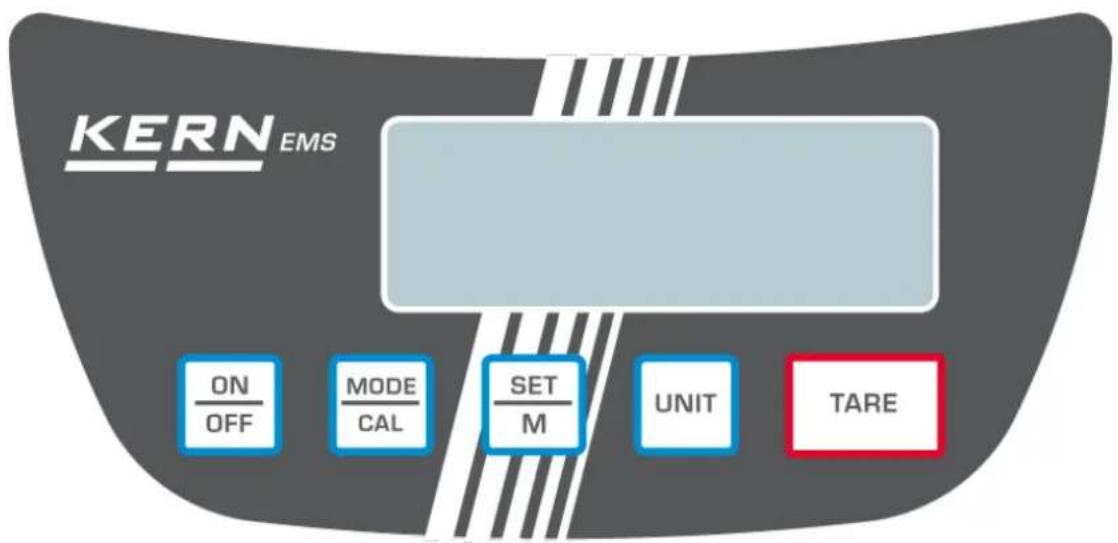
6.2 Keyboard overview
| Key | Description | Function |
| UNIT | UNIT-key | • How to change weighing units • Call up menu (keep key pressed until AF appears) |
| SET/M | SET key | • Confirm settings in the menu • Save and exit menu |
| MODE/CAL | MODE key | • How to select menu items • Change settings in the menu • Adjustment |
| TARE | TARE button | • Taring |
| ON/OFF | ON/OFF-switch | • Turn on/off |
7 Operation
Start-up
Press the ON-OFF key.
The balance will carry out a self-test The balance is ready for weighing when the weight display appears.

Switching Off
Press ON-OFF button, the display disappears

Weighing
Position item to be weighed
Read the weighing result in the display
If the material to be weighed is heavier than the weighing range, the display will show "Error" (=Overload).
Taring
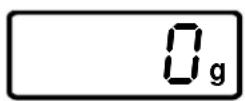
Place an empty weighing container, the weight of the weighing container will be displayed.
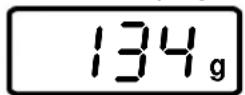
(Example)

Press the TARE button, the zero display disappears. The tare weight is saved until it is deleted.
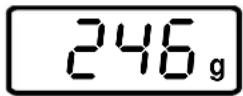
Weigh the material, the net weight will be indicated.
The taring process can be repeated any number of times, e.g. when adding several components for a mixture (adding). The limit is reached when the whole weighing range is exhausted.
The weight of the weighing container will be displayed as a minus number after removing the weighing container.
The tare weight is saved until it is deleted.
Delete tare

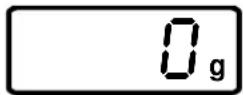
Unload the balance and press the TARE button, the zero display appears.
PRE-TARE function
Using this function the weight of a tire vessel is stored. Even after turning off/on the weighing balance will continue working with the saved tire value.
In weighing mode put tare vessel on the weighing plate
Press repeatedly the MODE key until „PtArE“ flashing appears.
Use SET key to store the current weight on the weighing plate as a PRE-TARE value.
Remove all loads from the balance, press TARE and press repeatedly the MODE key until „PtArE“ flashing appears.
Use the SET key to confirm. The PRE-TARE value is deleted, the zero display appears.
Delete PRE-TARE value
Weighing units switch-over
Press the UNIT key in the weighing mode to switch-over between the available weighing units
Plus/minus weighings

For example unit weight control, fabrication control etc.
Put the nominal weight on the weighing plate and tare using the TARE button.
Remove the nominal weight
Put the test objects subsequently on the weighing plate, the respective deviation from the nominal weight is displayed with the respective sign to ^ + ^ and _-^n - 1
According to the same procedure also packages with the same weight can be produced, referring to a nominal weight.
Back to weighing mode by pressing the TARE button.
Parts counting
During piece counting parts can either be counted into a container or out of a container. To count a greater number of parts the average weight per part has to be determined with a small quantity (reference quantity).
The larger the reference quantity, the higher the counting exactness. High reference must be selected for small parts or parts with considerably different sizes.
The larger the reference quantity, the more accurate the parts counting.
The process has four steps:
Tare the weighing container
Determine the reference unit
Original weighing of reference weight
Count the items
In weighing mode press MODE key shortly. Reference piece number 5^PCS_e appears flashing.
By pressing the MODE button several times other reference quantities 5, 10, 20, 25 and 50 can be called up. Place as many pieces to count on the weighing plate as the set reference quantity requires.
Use the SET key to confirm. The balance is now in parts counting mode counting all units on the weighing plate.
i
- Back to weighing mode by pressing the MODE button.
- Error message „Er 1“
- Piece below minimum weight of piece (See chpt. 1 "Technical specifications"): Press MODE key and restart reference determination.
- Taring
- The tare vessels can also be used for piece counting. Before starting piece counting use the TARE button to tare out the container.
Net-total weighings
It is useful if a mixture of several components is weighed into a tare vessel and finally the sum weight of all weighed components is necessary for control purposes (nettotal, i.e. the weight of the tare vessel).
Example:
- Place tare container on the weighing plate. Press the TARE button, the zero display disappears.
- Weigh-in component 0 . Press the SET button, the zero display disappears. [▲] is displayed on the right border of the display.
- Weigh-in component ±b and press SET key. Net-total (sum weight of the components 1 and 2) is displayed.
- Press the SET button, the zero display disappears.
- Weigh-in component 3 and press SET key. Net-total (sum weight of the components 1 and 2 and 3.) is displayed.
If necessary, also fill the formula up to the desired final value. For every component more repeat the steps 4-5.
Back to weighing mode by pressing the TARE button.
Percent determination
Percentage calculation facilitates weight display in percent related to a reference weight equivalent to 100% .
In weighing mode press MODE key repeatedly, until [100 %] is displayed flashing.
Put a reference weight which corresponds to 100% .
Store by pressing the SET key. Remove reference weight.
Place goods to be weighed on balance. The weight of the sample is displayed in percentage in terms of the reference weight.
Back to weighing mode by pressing the MODE button.
8 Menu
8.1 Navigation in the menu
| Access to menu UNIT ○g AF | In weighing mode keep the UNIT key pressed until [AF] appears. |
| How to select menu items MODE CAL AF rSt | Using the MODE key the individual menu items can be selected one after the other. |
| Change settings SET M AF OFF (Example) | Acknowledge selected menu item using SET key, the current setting is displayed. Change the settings using the MODE key. At any pressing of the MODE key, the next setting is displayed, see chapter 8.2 „Menu Overview". |
| MODE CAL AF on | |
| 1. Save change of a menu item and exit the menu SET M ○g | ⇒ Press the SET key; balance will return to weighing mode. |
2. Change settings of several menu items
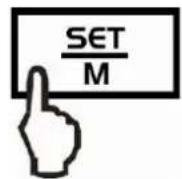
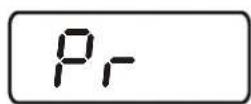
(Example)
Acknowledge selected menu item using SET key, the current setting is displayed.
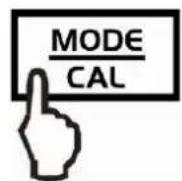
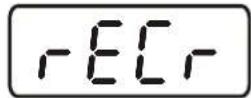
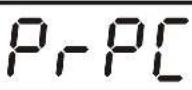
Use the MODE key to change settings.

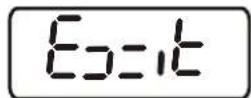
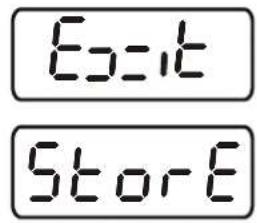
Press the TARE key, "Exit" is displayed.
either
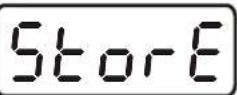
Acknowledge with SET key (yes), "StorE" is displayed. Save (SET key) or reject (MODE/CAL key) and exit the menu,
or
Press UNIT key (no) and make the changes on the other menu items as described above
Save/reject and exit the menu
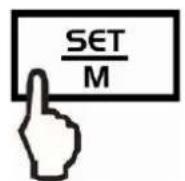
Save
Reject
either
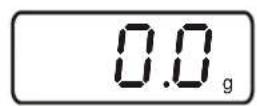
Any changes carried out are stored by pressing the SET key (yes). The balance returns automatically into weighing mode.
or
To cancel changes, press the MODE/CAL key (no). The balance returns automatically into weighing mode.
8.2 Menu overview
| Auto Zero (see chapter 8.3) | AF | on* | Automatic switch-off function after 3 min without changing load ON |
| off | Automatic switch-off function after 3 min without changing load OFF | ||
| Auto Zero (see chapter 8.3) | tr | on* | on |
| off | off | ||
| Filter function (see chapter 8.3). | StAbiL | 1 | Fast display |
| 2 | Normal display | ||
| 3 | Slow display | ||
| Linearisation (see chapter 5.6) | LinEAr | * dependent on model | |
| Reset to factory setting (see chap. 8.3) | rSt | no* | no |
| yes | yes | ||
* = default setting
8.3 Description of individual menu items
Auto Off function Use this function to enable or to disable the automatic switch-off
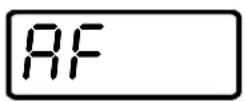
In weighing mode keep the UNIT key pressed until [AF] appears.
Acknowledge using SET key, the current setting is displayed.
Select the desired settings by pressing the MODE key
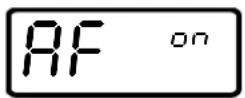
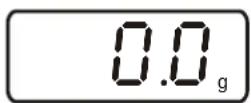
Use the SET key to confirm selection. The balance returns to weighing mode.
Auto-Zero function
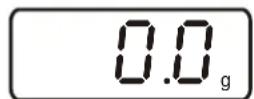
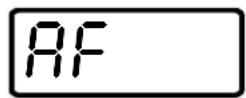
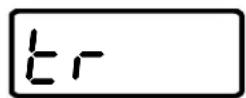
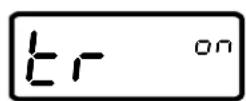
Use this function to enable or to disable the automatic zero position
In weighing mode keep the UNIT key pressed until [AF] appears.
Press the MODE key: "tr" is displayed.
Acknowledge using SET key, the current setting is displayed.
Select the desired settings by pressing the MODE key
Use the SET key to confirm selection. The balance returns to weighing mode.
Filter function
only models:
EMS 300-3
EMS 3000-2
EMS 6K0.1
EMS 12K0.1
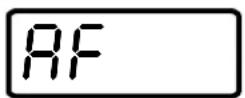
example)
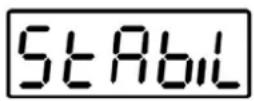
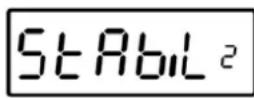
This menu item allows the balance to be set according to specific ambient conditions and measuring purposes.
In weighing mode keep the UNIT key pressed until [AF] appears.
Press the MODE/CAL button several times until „StAbiL“ is displayed.
Acknowledge using SET-M key, the current setting is displayed.
Select the desired settings by pressing the MODE/CAL button.
| 1 | Filter 1: The balance reacts quickly and in a sensitive manner, quiet set-up location. |
| 2 | Filter 2: The balance reacts normally, normal installation site |
| 3 | Filter 3: The balance reacts slowly and in a robust manner, busy set-up location |
Use the SET-M key to confirm selection.
Reset to factory setting
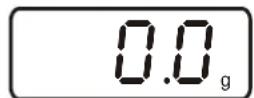
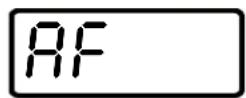
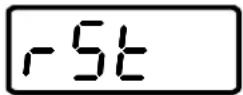
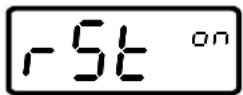
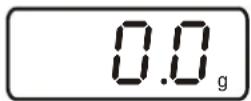
This function resets all menu items to factory setting
In weighing mode keep the UNIT key pressed until [AF] appears.
Press the MODE key twice: „rSt" is displayed.
Acknowledge using SET key, the current setting is displayed.
Select the desired settings by pressing the MODE key
Use the SET key to confirm selection. The balance returns to weighing mode.
9 Service, maintenance, disposal
9.1 Cleaning
Before cleaning, disconnect the appliance from the operating voltage.
Please do not use aggressive cleaning agents (solvents or similar agents), but a cloth dampened with mild soap suds. Take care that the device is not penetrated by fluids and polish it with a dry soft cloth.
Loose residue sample/powder can be removed carefully with a brush or manual vacuum cleaner.
Spilled weighing goods must be removed immediately.
9.2 Service, maintenance
The appliance may only be opened by trained service technicians who are authorized by KERN.
Before opening, disconnect from power supply.
9.3 Disposal
Disposal of packaging and appliance must be carried out by operator according to valid national or regional law of the location where the appliance is used.
10 Instant help
In case of an error in the program process, briefly turn off the balance and disconnect from power supply. The weighing process must then be restarted from the beginning.
Help:
Fault Possible cause
The displayed weight does not glow.
- The balance is not switched on.
- The mains supply connection has been interrupted (mains cable not plugged in/faulty).
- Power supply interrupted.
- Batteries are inserted incorrectly or empty
- No batteries inserted.
The displayed weight is permanently changing
- Draught/air movement
Table/floor vibrations - The weighing plate is in contact with foreign matter.
- Electromagnetic fields / static charging (choose different location/switch off interfering device if possible)
The weighing value is obviously wrong
The display of the balance is not at zero
- Adjustment is no longer correct.
- Great fluctuations in temperature.
- Electromagnetic fields / static charging (choose different location/switch off interfering device if possible)
Should other error messages occur, switch balance off and then on again. If the error message remains inform manufacturer.
11 Declaration of -Conformity
To view the current EC/EU Declaration of Conformity go to:
www.kern-sohn.com/ce
KERN EMS
Version 1.6 2017-10