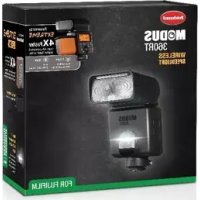
MODUS 360RT (Fujifilm) - Lamp Hähnel - Free user manual and instructions
Find the device manual for free MODUS 360RT (Fujifilm) Hähnel in PDF.



| Product Type | Wireless flash for Fujifilm cameras |
| Brand | Hähnel |
| Model | MODUS 360RT |
| Compatibility | Fujifilm cameras |
| Guide Number | 36 (m ISO 100) at 105 mm |
| Flash Coverage | 24 to 105 mm (auto zoom); 16 to 69 mm (AP ON option); up to 12 mm with wide-angle diffuser |
| Flash Duration | 1/350 to 1/20000 s |
| Exposure Modes | Automatic TTL and manual |
| Exposure Compensation (FEC) | ±3 stops in 1/3-stop increments |
| Sync Modes | 1st curtain, 2nd curtain, high speed (up to 1/8000 s) |
| Stroboscopic Flash | Up to 90 flashes, 99 Hz |
| Wireless Function | 2.4 GHz, master/slave/off, groups M, A, B, C, range approx. 50 m |
| LED Light | Intensity 440 lx at 0.5 m, 110 lx at 1.0 m, duration approx. 11 h, color temperature 5600 K |
| Power Supply | Rechargeable lithium-ion battery 7.2 V / 2000 mAh |
| Recycling Time | 0.1 to 1.7 s |
| Number of Full Power Flashes | More than 400 |
| Power Saving | Auto off after 90 s (master) or 60 min (slave) |
| Dimensions (L x H x D) | 150 x 64 x 50 mm |
| Weight | 220 g (without battery), 300 g (with battery) |
| Wireless Frequency Range | 2413.0 to 2464.5 MHz |
| Max Transmission Power | 5 dBm |
| Maintenance | Clean regularly, avoid shocks, have it serviced by an authorized center |
| Safety | Overheating protection, auto shut-off |
| Spare Parts | Battery HLX-MD2, charger MD2, diffuser, case |
| Repairability | Hähnel authorized service center |
Frequently Asked Questions - MODUS 360RT (Fujifilm) Hähnel
User questions about MODUS 360RT (Fujifilm) Hähnel
0 question about this device. Answer the ones you know or ask your own.
Ask a new question about this device
Download the instructions for your Lamp in PDF format for free! Find your manual MODUS 360RT (Fujifilm) - Hähnel and take your electronic device back in hand. On this page are published all the documents necessary for the use of your device. MODUS 360RT (Fujifilm) by Hähnel.
USER MANUAL MODUS 360RT (Fujifilm) Hähnel
Wireless Speedlight forFujifilm
Foreword
Thank you for purchasing the Modus 360RT. The Modus 360RT is a Speedlight for FUJIFILM series cameras and and is compatible with FUJIFILM TTL flash metering.

- Before starting to shoot, be sure to read this manual
- When reading this manual also refer to the camera's Instruction Manual
Conventions & assumptions
- The manual is based on the assumption that all devices including the camera are turned on
• Reference page numbers are indicated by (page **) - The caution symbol indicates a warning to prevent shooting problems
• The Note symbol gives supplemental information
Contents
1 Introduction
- Safety precaution - Warnings & Cautions 4
-
Nomenclature
-
Body 6
- Control Panel 7
- LCD Panel 7
• Nomenclature - Viper Mini
• Control Panel 8
- LCD Screen 9
2 Getting started
- What's in the box – Modus 360RT 10
- What's in the box – Wireless Kit Modus 360RT 10
- Battery and charger 10
- Attaching to camera 12
• Power Management 12
3 Flash Mode - TTL / M / Multi
- Flash Mode - TTL Autoflash 13
• FEC (Flash Exposure Compensation) 14
• HSS (High Speed Sync) 14 - 2nd Curtain Sync 14
-
Flash Mode - Manual Flash 15
-
Flash output power range 15
• Optical 01 Secondary unit setting 15
• Optical 02 Secondary unit setting 15
- Flash Mode - MULTI Flash 16
4 Wireless Flash Photography: (2.4GHz) Control
- Wireless settings 17
• Master unit Setting 18
- Slave unit Setting 18
- On Camera (No wireless) Setting 18
- Master "Group-Mode" setting 18
- DCM (Digital channel matching) 19
• Master - Viper Mini or Modus 600RT 19
- Slave - Modus 360RT 20
- Modus 360RT Reset 21
- TTL - Fully automatic wireless flash shooting 21
• M: Wireless Flash Shooting with Manual Flash 22 - MULTI: Wireless Flash Shooting with repeating flash stroboscopic 23
5 Wireless Flash Photography: (2.4GHz) using Viper Mini Transmitter
- DCM (Digital Channel Matching) 24
• Viper Mini group Mode Setting 24 Group Power Control setting for Manual and TTL FEC 24 - Multi Mode 5
- Sync Modes 25
2
GB
6 Other Applications
- LED light
- Auto Focus Asist Beam 26
- Bounce Flash 26
- Catchlight Panel 26
- Zoom – Setting the Flash Coverage and using Wide Panel 27
• C.Fn – Setting Custom Functions 28 - Protection Functions 28
- Technical Data 30
- Troubleshooting 31
- Firmware Upgrade 32
- Maintenance 33

Introduction
⚠️ Warnings:
Failure to observe the instructions below may result in loss of life or serious bodily injury. To prevent fire, excessive heat, chemical leakage, explosions, and electrical shock, follow the safeguards below:
- Do not insert any foreign metallic objects into the electrical contacts of the product, accessories, connecting cables, etc.
- Do not use any batteries, power sources, or accessories not specified in the instruction Manual. Do not use any deformed or modified batteries, or the product, if it is damaged.
- Do not short-circuit, disassemble, or modify the product or batteries. Do not apply heat or solder to the batteries. Do not store batteries with metal objects. Do not expose the batteries to fire or water. Do not subject the batteries to strong impact or continuous
mechanical shock.
- Do not place batteries in a microwave, cooker or high pressure container.
- Do not use the product in locations where there is flammable gas.
- Do not fire the flash at anyone driving a car or other vehicle.
- Do not disassemble or modify the equipment. High voltage internal parts may cause electrical shock. If you drop the equipment and the casing breaks open to expose the internal parts, do not touch the exposed parts. There is a possibility of an electrical shock.
- Do not store the product in dusty or humid places or in locations with lots of oil smoke. Do not store battery in charger.
- Keep the batteries and other accessories out of the reach of children and infants.
- Do not drop product or battery in fire or water.
- Do not expose product or battery to excessive temperature (below 0° C or above 40° C) or strong direct sunlight.
- Battery temperature while on charge or in use should never increase above 60° C/140°F. If higher temperature occurs, stop using and stop charging immediately.
- Do not use paint thinner, benzene, or other organic solvents to clean the product.

Caution:
- Failure to observe the instructions below may result in serious bodily injury or damage to property.
- When the product is not in use for a prolonged period, make sure to remove the batteries before storing.
- When disposing of a battery, insulate the electrical contacts with tape. Contact with other metallic objects or batteries may cause a fire or an explosion. Dispose of battery in accordance with the appropriate local regulations.
- Do not store or leave product or battery in trunk or on dashboard of a vehicle or in direct sunlight or with a high interior temperature as overheating can result in burns if touched, leaking, fire or explosion.
- Do not fire the flash with the flash head (light-emitting unit) in contact with a human body or any object; doing so may result in the risk of burns and fire.
- Do not fire the flash near the eyes. Keep the flash unit at least 1m (3.3 feet) away from face. It may hurt or damage the eyes. Using bounce flash to reduce light intensity is also recommended.
Nomenclature - Body
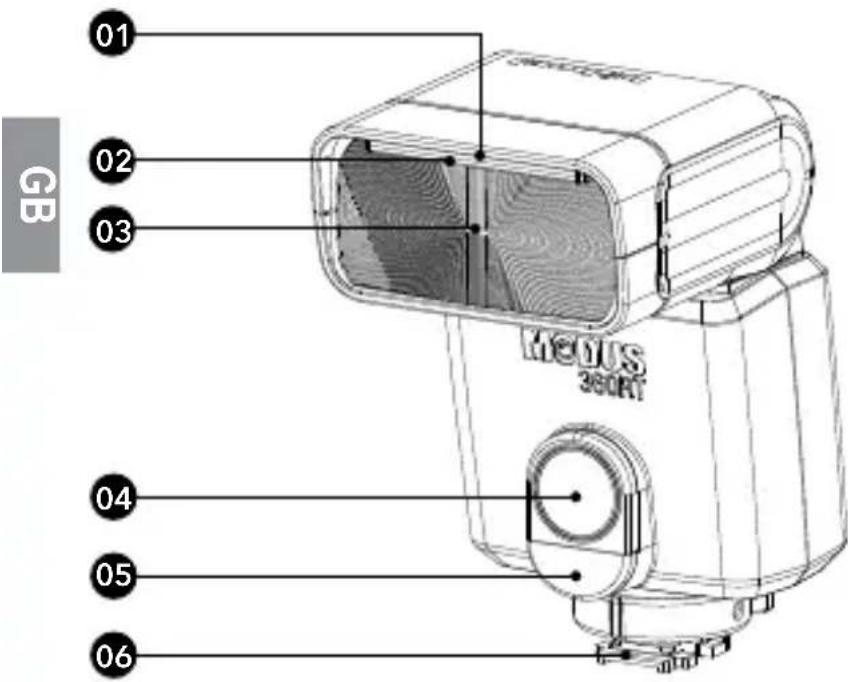
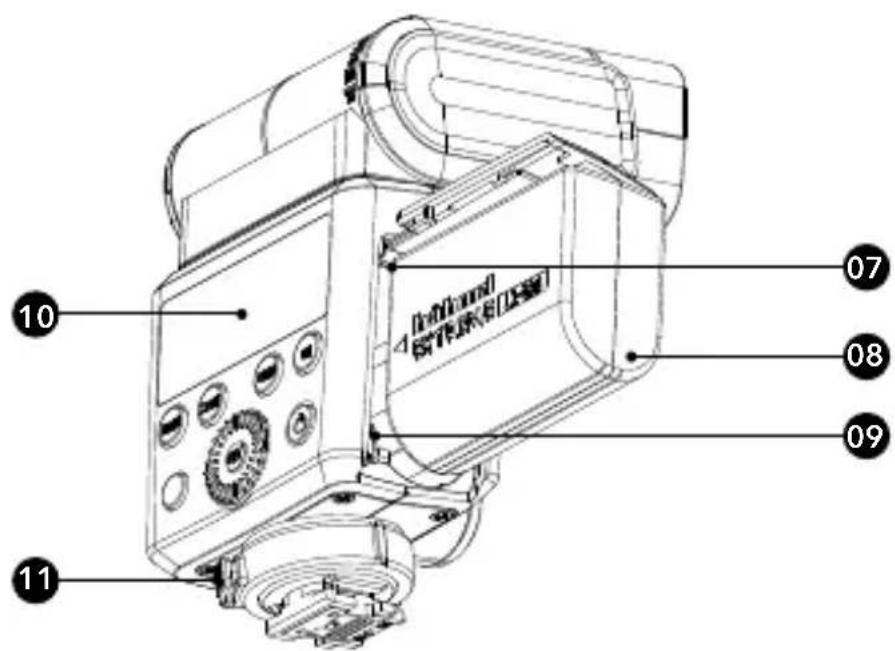
- Catchlight Panel
- Built-in Wide Panel
- Flash Head
- LED Light
- Optical Control Sensor
-
Hot shoe
-
Battery Compartment
- Li-ion battery Pack HLX-MD2
- USB Port
- LCD Panel
- Quick Lock ring
Nomenclature - Control Panel
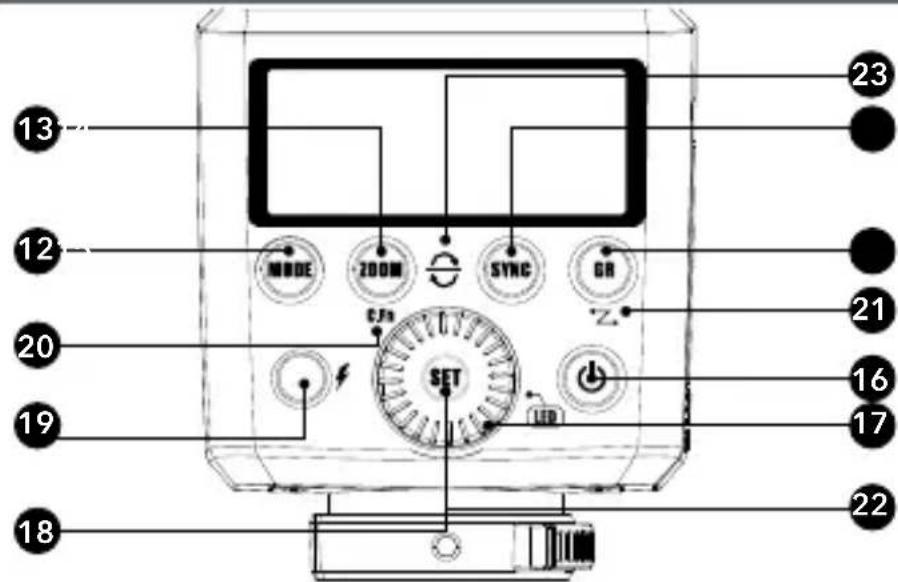
GB
- Mode selection button
- Zoom - Zoom button
- Sync - Sync selection button
-
- Group selection button
- 01/02 Selection Button in Manual Mode
- ⏻ - ON/OFF button
- Select Dial
-
SET - Set button
-
Best button & Flash ready indicator
-
- Custom function button (long press)
-
- Wireless mode button (long press)
- LED - LED mode (long press
23 Reset & open channel buttons (dual long press 13 & 14)
Nomenclature - LCD Panel
On Camera Shooting
- TTL Mode
TTL: TTL autoflash
Flash exposure compensation
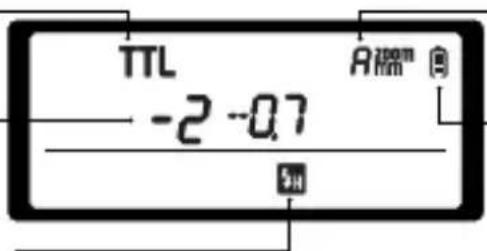
A: Auto Zoom
Battery Status
: High-speed sync
- Manual Mode
m: Manual flash
Manual flash output
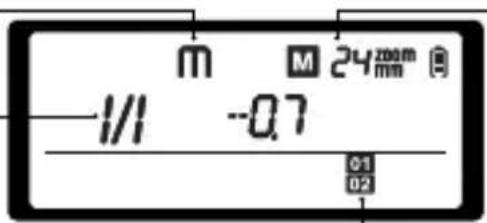
Manual zoom focal length
01: Standard optical trigger
02: Preflash optical trigger
- Multi mode
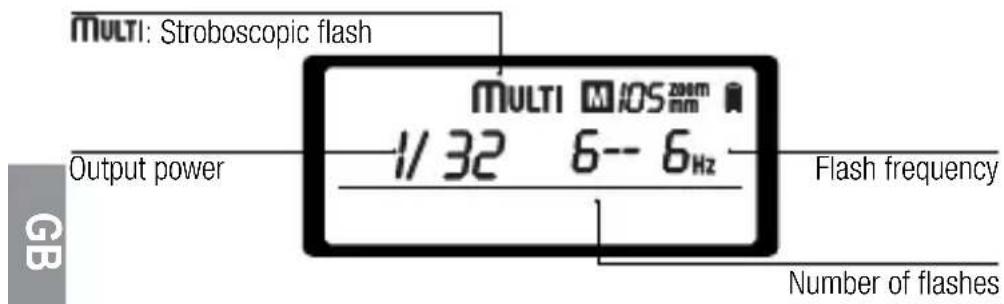
Radio control shooting
- Master unit
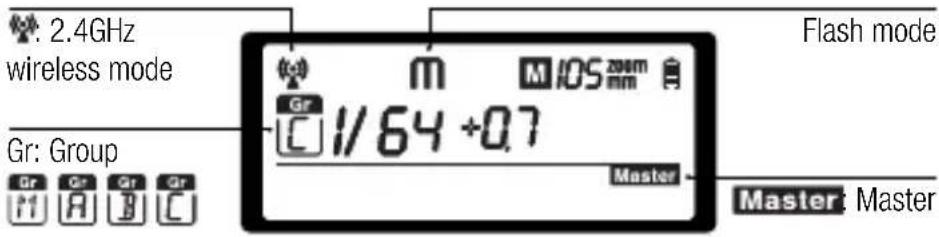
- Slave unit
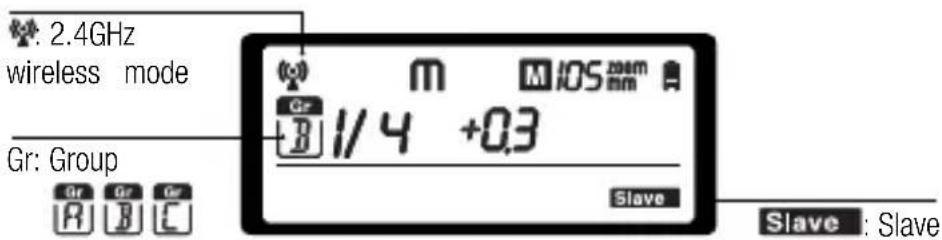
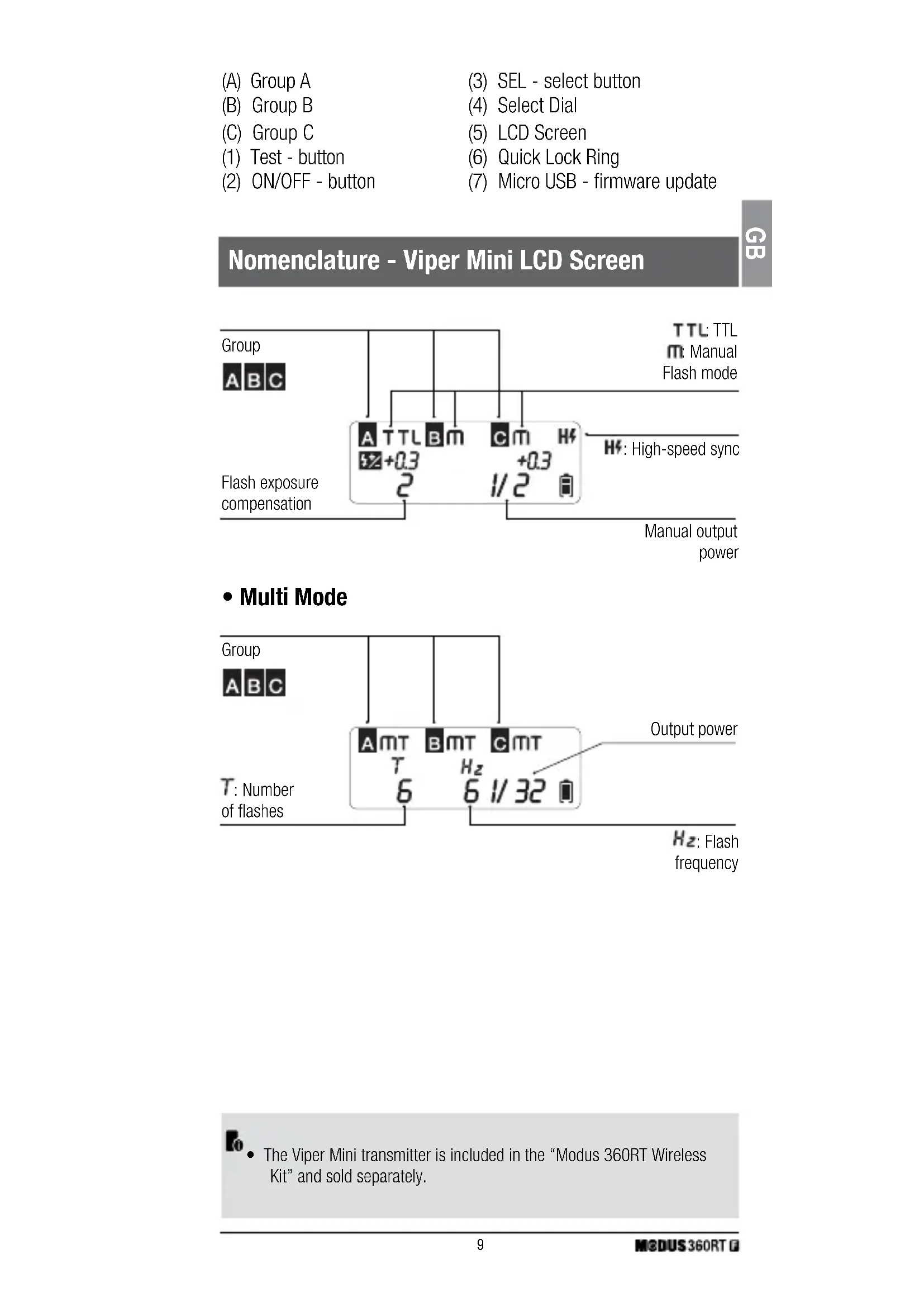
Nomenclature - Viper Mini
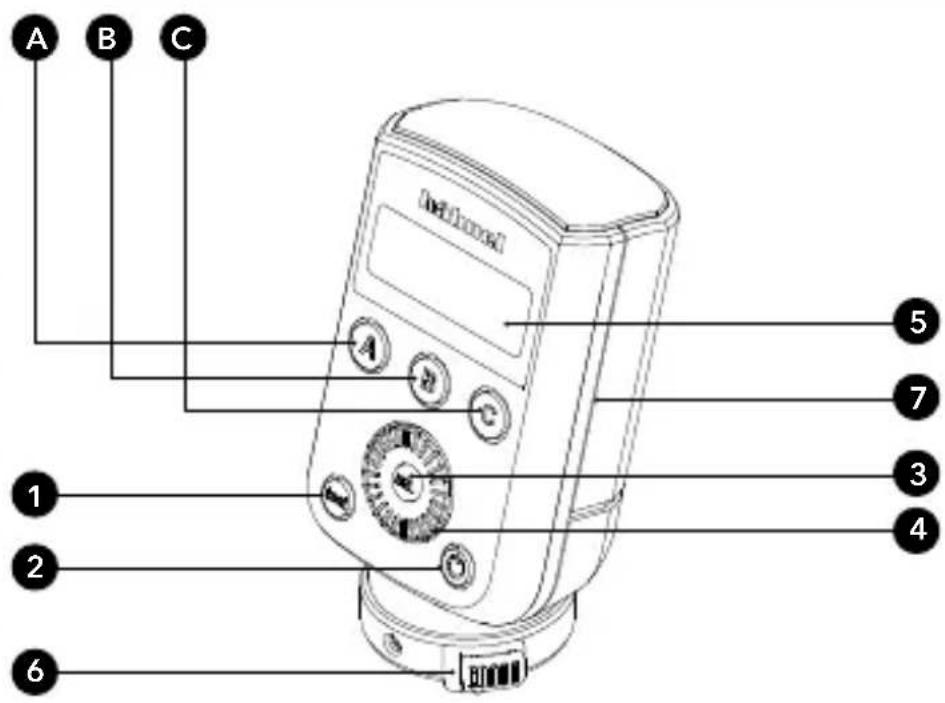
(A) Group A
(B) Group B
(C) Group C
(1) Test - button
(2) ON/OFF - button
(3) SEL - select button
(4) Select Dial
(5) LCD Screen
(6) Quick Lock Ring
(7) Micro USB - firmware update
Nomenclature - Viper Mini LCD Screen
B
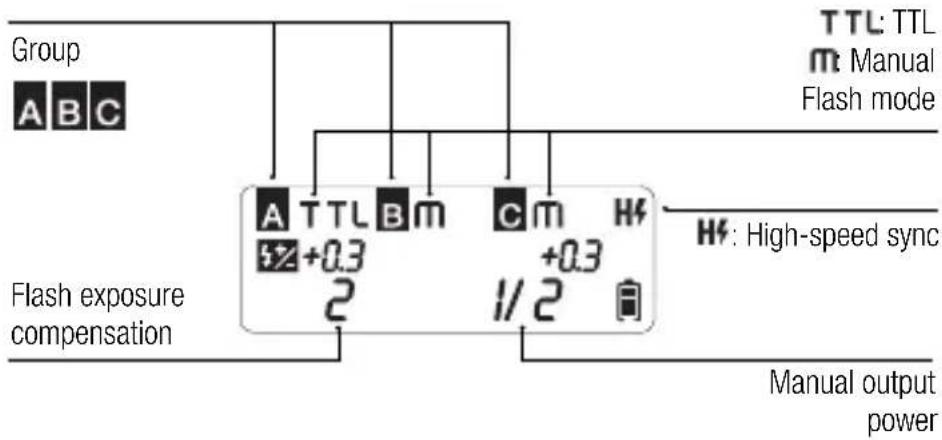
- Multi Mode
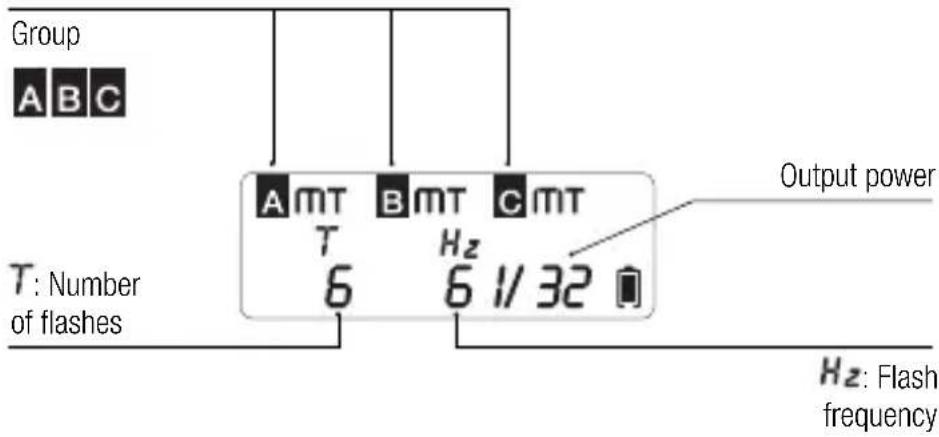

- The Viper Mini transmitter is included in the "Modus 360RT Wireless Kit" and sold separately.
B

Getting Started
What's in the Modus 360RT?
-
Modus 360RT Speedlight
-
Micro USB Cable
-
Mini Stand
-
Protection Case
-
Li-ion Battery Pack
-
Instruction Manual
-
Battery Charger
What's in the Modus 360RT Wireless Kit
-
Modus 360RT Speedlight
-
Protection Case
-
Mini Stand
-
Instruction Manual
-
Li-ion Battery Pack
8 Viper Mini Transmitter
-
Battery Charger
-
2 × AA Batteries
-
Micro USB Cable
Battery and Charger
The Modus 360RT uses a lithium ion battery HLX-MD2 and it must be charged before use
- Use only the MD2 charger to charge the battery
- Remove battery from charger when charging is finished and disconnect charger from mains. A fully charged battery will offer more than 400 flashes at full power and even more when power level is reduced. The composition and construction of the MD2 battery pack offers very reliable and fast refresh time for the Speedlight.
• How to store the battery
When not in use remove battery from the charger or the Speedlight and store battery in a cool and dry place. Exposing the battery to higher temperature can shorten the lifetime of the battery. Store the battery almost empty (one bar in the battery level indicator) when not used for a long period of time. For optimum battery life use battery regularly and if not used for more than 6 months charge the battery fully and use it with the Modus 360RT until the battery level is down to 1 bar again before storage.
- Battery Lifetime
The lifetime of a rechargeable battery is limited. The capacity will drop progressively with use and age of battery pack. Replace the battery pack when the flash cycle time becomes longer or the number of
flashes reduces noticeably. The battery lifetime can vary substantially depending on storage, operation conditions and exposure to unsuitable environmental conditions.

Caution
- Do not short circuit the battery
- Do not drop battery into water or fire
- Do not drop or dismantle or subject the batteries to strong impact or continuous mechanical shock
- Stop using the battery if the battery has any signs of damage or bulging to housing and dispose of battery in accordance with the appropriate local regulations
• How to charge the battery
The HLX-MD2 battery must be charged before use. Use only the supplied MD2 charger to charge the battery. Connect the MD2 charger to a USB adapter (min 5V 2 Amp) with the supplied Micro USB Cable. To start the charge insert the HLX-MD2 battery into the MD2 charger and the red LED bar will start to illuminate, indicating that the battery is charging. Green LED bar indicates full charge. Remove the battery from charger when fully charged.
• Fitting and Removing the Battery
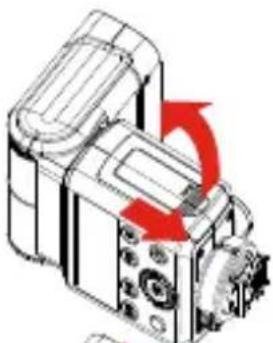
- To fit the battery, push the battery compartment cover downward and open it.
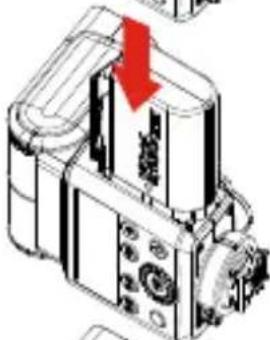
- According to the triangle sign on the battery pack, insert it into the compartment.
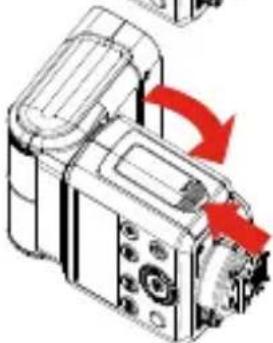
- Now close the compartment Battery
- Battery Level Indication
Check the battery level indication on the LCD panel to see the remaining battery level.

| Battery Level indication | Status |
| 2 bars | Full |
| 1 bar | Some remaining power |
| no bar | Low |
| no bar “Flashing” | The battery level is going to run out immediately. Please recharge the battery as soon as possible. |
Attaching to Camera
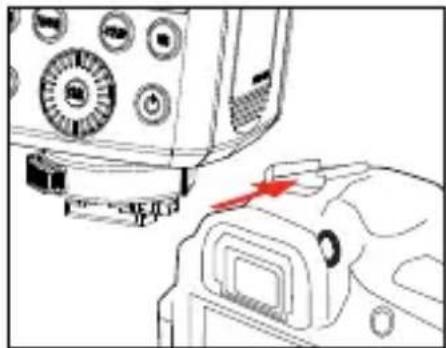
- Attach the Speedlight to the camera. Slip the flash's mounting foot into the camera's hotshoe all the way.
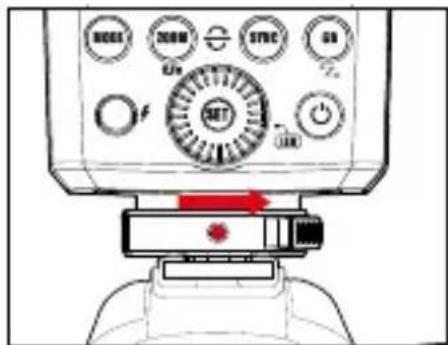
- Secure the Speedlight. Rotate the lock ring to the right until it clicks into position.
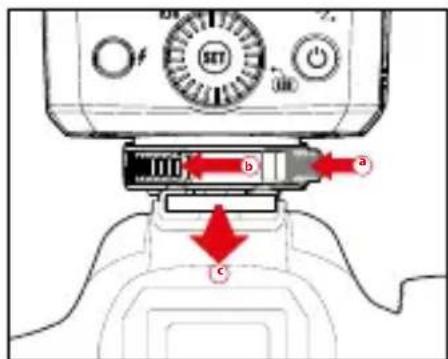
3. Detach the Speedlight:
a) Push the release button.
b) Rotate the lock ring to the left until it is loosened.
c) Slide the speedlight off the camera hotshoe
Power Management
Long press the Power button to power the flash unit on or off.
- Used on camera or as a master flash, it will turn the power off automatically after a certain period (approx. 90 seconds) of idle use, when the camera is in sleep mode.
Pressing the camera shutter halfway or pressing any flash button will wake up the flash unit.
- Used as a slave flash, it will enter sleep mode after approx. 60 minutes. Pressing any flash button will wake up the speedlight.

- Disabling Auto Power Off function is recommended when the flash is used off camera. (See C.Fn-St page 28)
B

Flash Mode
TTL / M / Multi
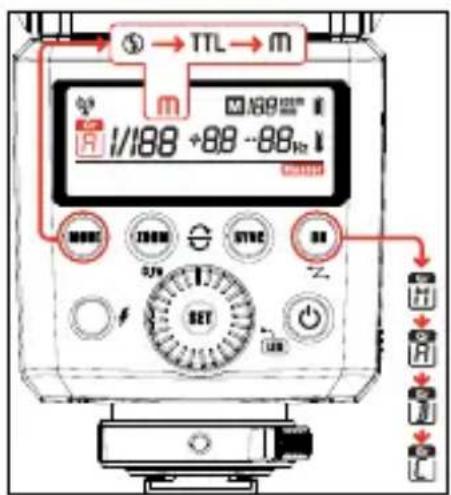
This flash has three flash modes: TTL, Manual (M), and MULTI (Stroboscopic). If camera shooting mode is set to fully automatic, some modes may not be available.
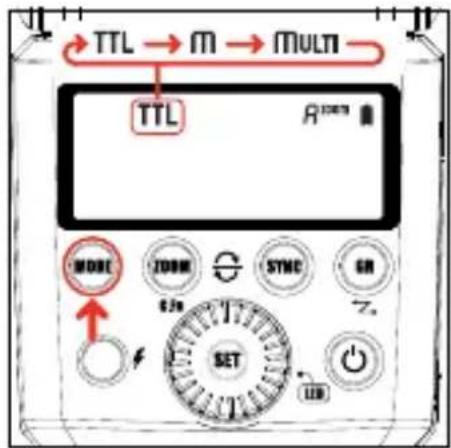
- Press < MODE > Mode Selection Button and the flash mode will display on the LCD panel one by one with each button pressing
Flash Mode – TTL Autoflash
In TTL mode, the camera and the flash will work together to calculate the correct exposure for the subject and the background. In this mode, multiple TTL functions are available: FEC, HSS, second curtain sync, etc. These can be controlled with the Modus 360RT or from the camera directly.
Press
- Press the camera release button halfway to focus.
- When the shutter button is fully pressed, the flash will fire a preflash that the camera will use to calculate exposure and flash output, the instant before the photo is taken.
- < FEC: Flash Exposure Compensation
With FEC function, this flash can adjust from -3 to +3 in 1/3rd stops. It is useful in situations where minor adjusting of the TTL system is needed based on the environment.
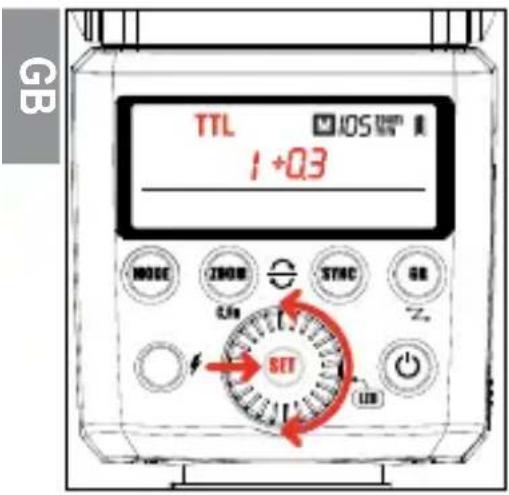
Setting FEC:
1 Press the
2 Turn the Select Dial to set the amount. "0.3" means 1/3 step, "0.7" means 2/3 step. To cancel the flash exposure compensation, set the amount to "0".
3 Press < SET > button again to confirm the setting.
< > High-Speed Sync
On the camera Flash Function Setting Menu set
< ➞ Second-Curtain Sync (Rear-Curtain Sync)
On the camera Flash Function Setting Menu set
The Second Curtain sync icon < >> is activated ON on the Modus 360RT display.
To Revert to normal first curtain sync, select first curtain in the
0
- With high-speed sync, the faster the shutter speed, the shorter the effective range.
- Try to avoid using high-speed sync flash, to extend the flash tube's lifetime.
- Over-temperature protection may be activated after 15 consecutive high-speed flashes.
- MULTI Flash mode cannot be set in high-speed sync mode.
- LCD will display "Hi" (blinking for 3 sec.) when flash output is up to maximum value. If the photo is underexposed, adjust camera parameters accordingly.
- LCD will display "Lo" (blinking for 3 sec.) when flash output is at minimum value. If the photo is overexposed, adjust camera parameters accordingly.
Flash Mode – Manual Flash
The flash output is adjustable from 1/1 full power to 1/128th power in 1/3rd stop increments. To obtain a correct flash exposure, use a handheld flash meter to determine the required flash output.
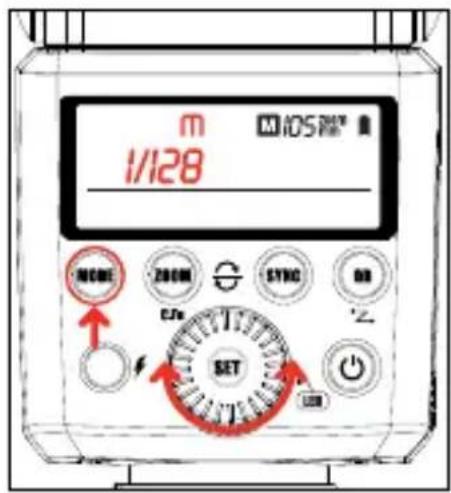
-
Press
button so that is displayed -
Turn the Select Dial to choose a desired flash output amount
- In high-speed sync mode, the adjustable flash range is 1/16\~1/1
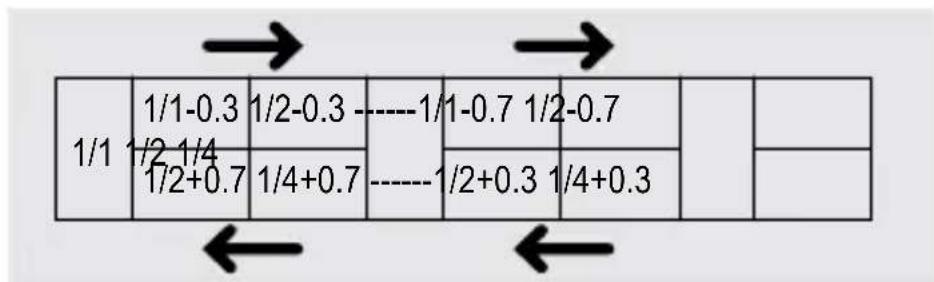
- Flash Output Power Range
The following table makes it easier to see how the stop changes in terms of f/stop when you increase or decrease the flash output. For example, when you decrease the flash output: 1/2, 1/2-0.3, or 1/2-0.7, or increase the flash output: 1/2, 1/2+0.3, 1/2+0.7, 1/1.
• Optical 01- Standard optical wireless triggering
Remove the Modus360RT from the camera hot shoe. Set it to manual mode and press the
• Optical 02 - Preflash optical wireless triggering
Remove the Modus360RT from the camera hot shoe. Set it to manual mode and press the

- 01 and 02 optic triggering is only available in M manual flash mode.
- Press button

Flash Mode: MULTI Flash (stroboscopic)
With stroboscopic flash, a rapid series of flashes is fired. It can be used to capture multiple images of a moving subject in a single photograph. You can set the firing frequency (number of flashes per sec. expressed as Hz), the number of flashes, and the flash output power.

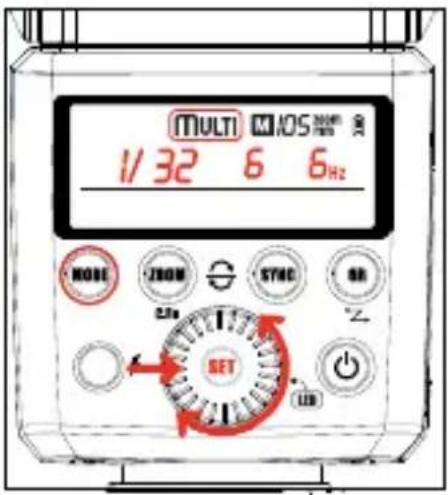
1 Press
2 Turn the Select Dial to choose a desired flash output.
3 Set the flash frequency and flash times.
- Press the
- Press the
- Press
• Calculating the Shutter Speed
During stroboscopic flash, the shutter remains open until the firing stops. Use the formula below to calculate the shutter speed and set it on the camera.
- Number of Flashes / Flash Frequency = Shutter Speed
For example, if the number of flashes is 10 and the firing frequency is 5 Hz, the shutter speed should be at least 2 seconds.
△
- To avoid overheating and deteriorating the flash head, do not use stroboscopic flash more than 10 times in succession
- After 10 times, allow the Speedlight to rest for at least 15 minutes. If you try to use the stroboscopic flash more than 10 times in succession, the firing might stop automatically to protect the flash head. If this happens, allow at least 15 minutes' rest for the Speedlight.
F0
- Stroboscopic flash is most effective with a highly reflective subject against a dark background
• Using a tripod and a remote control is recommended. - A flash output of 1/1 and 1/2 cannot be set for stroboscopic flash
- Stroboscopic flash can be used with "bulb"
• Maximum Stroboscopic Flashes:
| Flash output Hz | 1 | 2 | 3 | 4 | 5 | 6-7 | 8-9 | ||||||
| 1/4 | 6 | 3 | 2 | 2 | 2 | 2 | 2 | ||||||
| 1/8 | 14 | 14 | 6 | 4 | 3 | 3 | 3 | ||||||
| 1/16 | 30 | 30 | 30 | 20 | 10 | 8 | 5 | ||||||
| 1/32 | 60 | 60 | 60 | 50 | 50 | 40 | 12 | ||||||
| 1/64 | 90 | 90 | 90 | 80 | 80 | 70 | 60 | ||||||
| 1/128 | 90 | 90 | 90 | 90 | 90 | 90 | 80 | ||||||
GB

Wireless Flash Photography:
(2.4GHz) Control
You can easily create various lighting effects using the wireless 2.4GHz control function. The system is designed so that the settings of the "Master" attached to the camera are automatically applied to the wireless slave Speedlights. Up to three slave groups can work in TTL / M / Multi or OFF mode

- If the camera's is set to fully automatic, some modes may not be available.

- In this user manual, "Master unit" refers to the flash on a camera and "Slave unit" refers to an off camera flash controlled wirelessly from the master unit.
- The “Modus 360RT” as a “Master unit” can control “Slave units” wirelessly. “Slave units” can be “Modus 360RT” or “Modus 600RT” speedlights, or flashguns fitted to “Viper TTL” or “Captur receivers”.
- The “Modus 360RT” as a “Slave” unit can be controlled wirelessly from a “master unit”. A “Master unit” can be a “Modus 360RT” or a “Modus 600RT” speedlight; a “Viper TTL” or a “Viper Mini” transmitter; or a “Captur transmitter”, “Module Pro” or “Module Timer”.
- The “Master” can control multiple slave units in the same group or in separate groups.
Wireless Settings
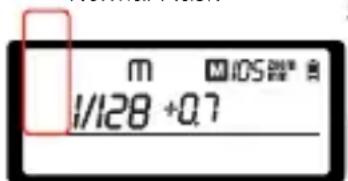
You can switch between normal flash and wireless flash. For normal flash shooting, be sure to set the wireless setting to OFF
Wireless
Flash
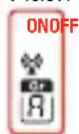
Normal Flash
- Master Unit Setting

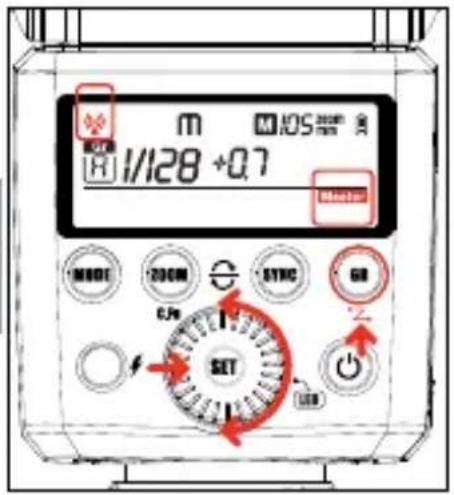
- Press the <7 button for 2 seconds so that
is blinking. - Turn the
- Press < SET > button
- Slave Unit Setting
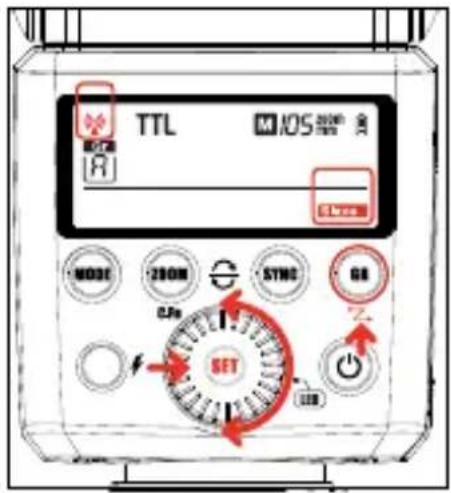
- Press the
button for 2 seconds so that is blinking. - Turn the
- Press < SET > button
- On Camera Setting
- Press the
button for 2 seconds so that is blinking. - Turn the
- Press < SET > button
- "Master" Group - Mode setting
1) On the "Master" unit, press the
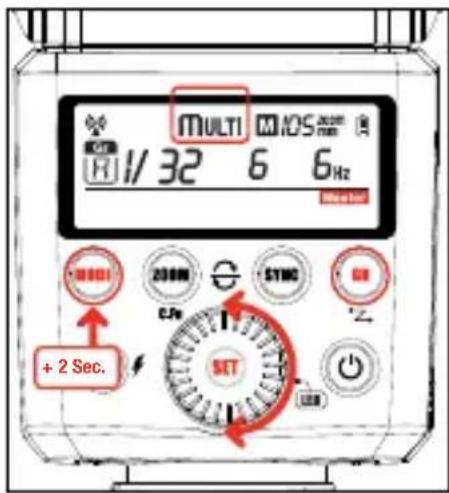
2) Press the
3) All groups switch to Multi mode.
4) Press the
See page 16 for details and how to set the multi values.
In Multi mode, to switch groups on/off, press the


• The "Master" Unit is part of group "M"
- The settings selected on the "Master" unit will automatically be set wirelessly on the corresponding "slave" units.
- You can assign several "Slave" units to the same group- they will all have the same settings.
- All Four groups, M/A/B/C, can have their modes set independently.
Setting the DCM (Digital Channel Matching)
When they are shipped, the Modus360RT and Viper Mini are set to a 2.4GHz "open channel" and can be used immediately. To avoid interference with other flash systems, we recommend to DCM (Digital Channel Match) your units on to a "closed" channel. DCM also allows you to integrate other, different, units like the Modus600RT and Captur range into your set up.
- DCM Master – Viper Mini or Modus 360RT
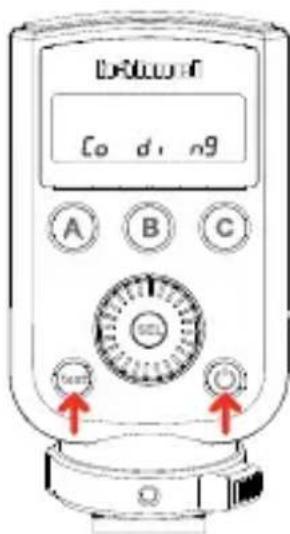
- Press and hold the
button while you switch on the unit, <💡> then release the button. The display will show Co di ng

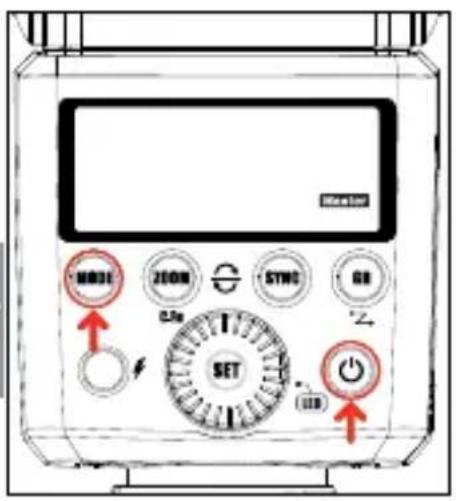
-
If you are not using a Viper Mini as a master unit, then use a Modus 360RT as the Master unit
-
Press and hold the
while you switch on the unit < 🔊 icon button >. - A red LCD will light up and will show
• To DCM a Modus360RT as a slave
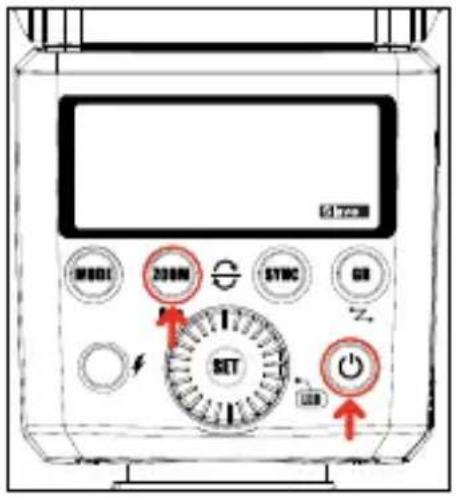
-
To DCM a Modus360RT as a slave
-
Press and hold the
button while you switch on the unit pressing button. - A red LCD will light up and will show < Slave >
- If the < Slave > Icon flashes then it means that it cannot detect a master unit to match to.
- Additional Modus360RT can be matched as slave units to this master in the same way. Do not switch off the master unit until all slave units have been matched.

- The "Master" unit must be on all the time and show

Once all slave units are DCM matched, reboot the master and all slaves by turning OFF/ON
- Once all devices are DCM matched they will memorise their unique ID even if power is removed. Therefore you only need to DCM your set once
- You can DCM match all hahnel wireless devices which share the same DCM matching system (i.e. Modus 600RT, Modus 360RT, Viper TTL Transmitter and Receiver, Viper Mini Transmitter, Captur Transmitter and Receiver, Captur Module Pro, Captur Module Timer.
- If you add more Speedlights or hahnel wireless devices to your set, then you need to carry out DCM matching again for all of your units.
- Modus 360 RT – Reset
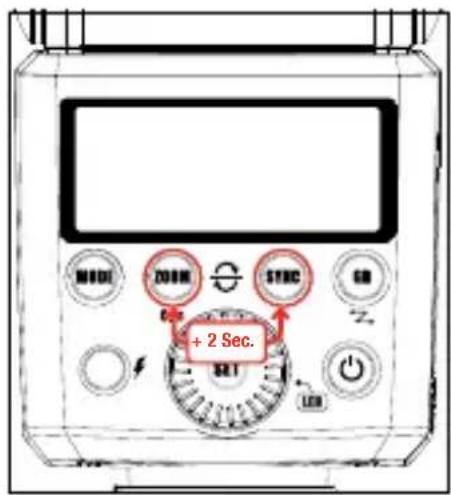
- To reset < ☑> the Modus 360RT to factory default settings, press
& buttons at the same time and hold for more than 2 seconds. - When the Modus 360RT is reset the DCM is also reset back to "open channel" and the previous DCM is lost

TTL: Fully Automatic Wireless Flash Shooting
- TTL Autoflash Shooting with One Slave Unit
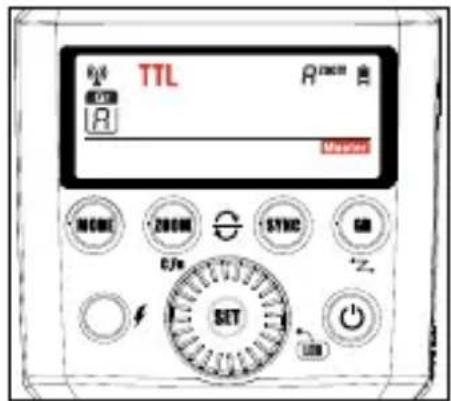
1 Master Unit Setting
- Attach 1st Modus 360RT (or Viper Mini) to camera and set it as the master unit. (Page 18)
- Check that
M/A/B/C can be set to TTL mode independently
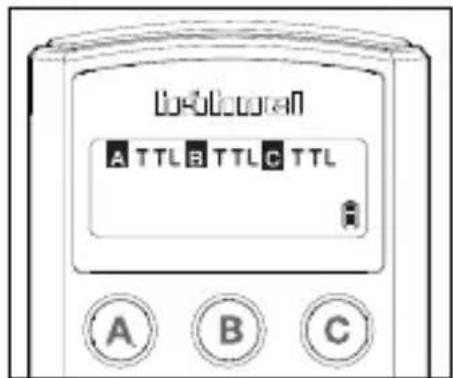
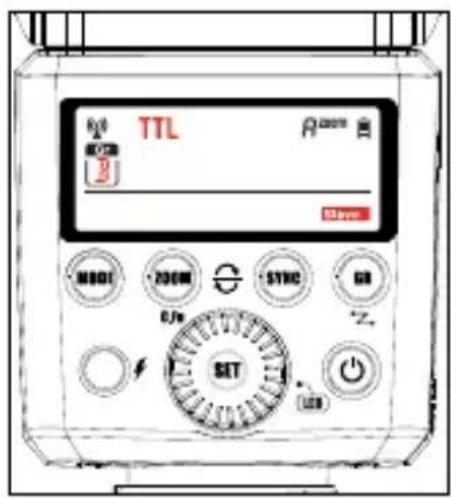
2 Slave Unit Setting
- Set 2nd Modus 360RT as the wireless "Slave" unit. (Page 18)
- Set the slave unit to
A.
3 Position of camera and speedlight
- Position the camera with the master unit attached and the Modus slave within radio range
4 Check the flash operation
- Press the master unit's
Test Button. - The "Master" and "Slave" unit will then fire.
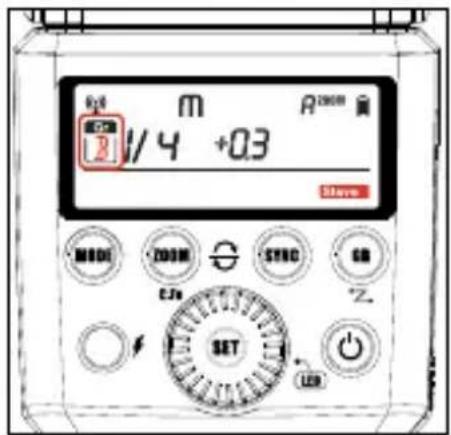
M: Wireless Flash Shooting with Manual Flash
This describes wireless using manual flash. You can shoot with a different flash output setting for each slave unit (firing group). Set all parameters on the master unit.

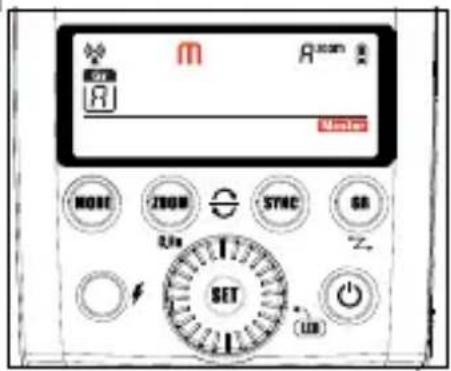
1 Master Unit Setting
- Attach 1st Modus 360RT (or Viper Mini) to camera and set it as the master unit. (Page 18)
- Check that
M/A/B/C can be set to Manual mode independently
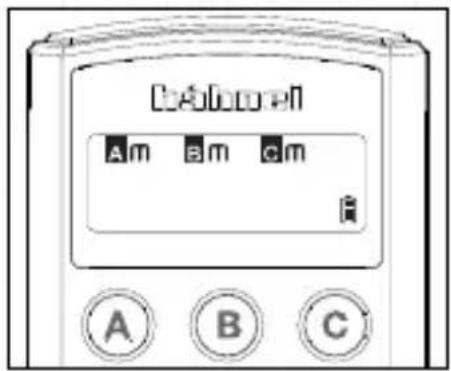
2 Setting flash output
- Press
button to select the group - Now turn the Select Dial to set the flash output of this particular group.
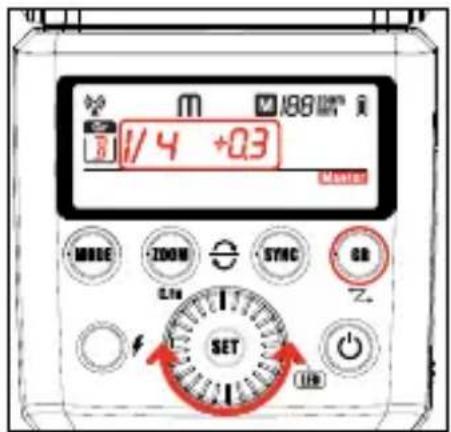
3 Slave Unit Setting
- Set 2nd Modus 360RT as the wireless "Slave" unit. (Page 18)
- Set the slave unit to
B.
4 Position of camera and Speedlight
- Position the camera with the master unit attached and the Modus slave within radio range
5 Check the flash operation
- Press the master unit's
Test Button. - The "Master" and "Slave" unit will then fire. Each group fires at the set flash output power
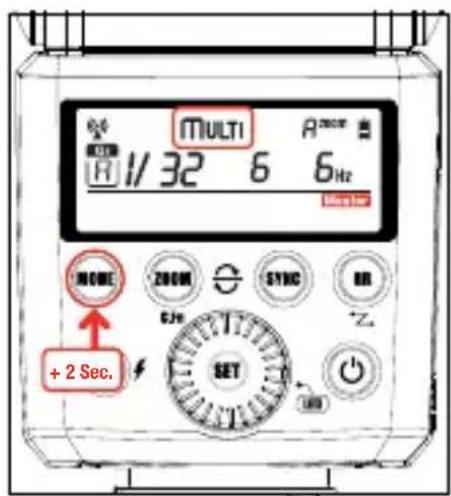
MULTI: Wireless shooting with Multi repeating flash stroboscopic
This describes wireless using stroboscopic flash. Set all parameters on the master unit.

1 Master Unit Setting
- Attach 1st Modus 360RT (or Viper Mini) to camera and set it as the master unit. (Page 18)
- Long press the
button for 2 seconds so that is displayed. Long press the button again for 2 seconds to exit.
2 Setting flash output/flash frequency/flash times
- Set the flash output/flash frequency/flash times in Group
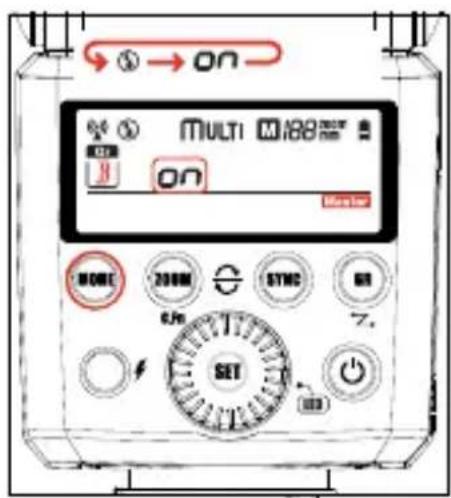
3 Turning ON/OFF each group
- Use the
button to select groups. - Press
button to turn ON/OFF group M, A, B or C individually

Wireless Flash
Photography: (2.4GHz)
using Viper Mini Transmitter
The Viper Mini transmitter is included in the Modus360RT Wireless Kit and is available as an accessory also. The Viper Mini is a light weight 2.4GHz transmitter which allows wireless control of off camera Modus360RT speedlights when it is fitted to the camera hot shoe.
DCM (Digital Channel Matching)
- DCM (Digital Channel Matching). Carry out the DCM matching (see page 19).
- Set the Modus 360RT to wireless as a Slave Unit - Group A (see page 18).
- Press Viper Mini
01 button to confirm that Modus Speedlight is triggered wirelessly.
Viper Mini group Mode Setting
Press buttons A or B or C to change the
Take a test photograph now and the Viper Mini transmitter will send a wireless signal to each Modus 360RT. The Speedlight will then be set automatically to the same Viper Mini selected group mode setting.

- The Viper Mini LCD 05 will show the setting of each group
- A group is turned OFF if the LCD is not showing the group
- A group is in Manual mode when
is displayed next to the group - A group is in TTL mode when
is displayed next to the group - Each group A, B or C is set independently and it is possible to use simultaneously different settings for each group (e.g. Group A may be in
, Group B in and Group C turned OFF)
Power Control setting for Manual and TTL FEC
From the Viper Mini transmitter you can adjust the power level and the FEC of each group.
-
Press
03 select button and all three icons , and will flash. -
Press one button A or B or C to select which group you want to adjust the power. Now only the selected group icon will flash
-
Use the adjust dial to set the power output in
mode and FEC in mode. -
Press the
button to save your selection.
Multi Mode
- Press and hold the < Group A > button to select the Multi mode < mT > . Use the < SEL > button, Group Buttons and adjust dial to set the number of flashes, flash frequency and power output. Press the < SEL > button again to save selection.

For more detail on operation of the viper Mini visit www.hahnel.ie

High-Speed Sync
On the camera Flash Function Setting Menu set

Second-Curtain Sync (Rear-Curtain Sync)
On the camera Flash Function Setting Menu set
The Second Curtain sync icon < ▶▶▶ is activated ON on the Viper display.
To Revert to normal first curtain sync, select first curtain in the

Other Applications
Illuminating for video shooting – LED light
You can use the LED light of the Modus 360RT as a light source for video shooting. It helps create natural lights and shadows in an environment with poor lighting and add more 3D effects in video.
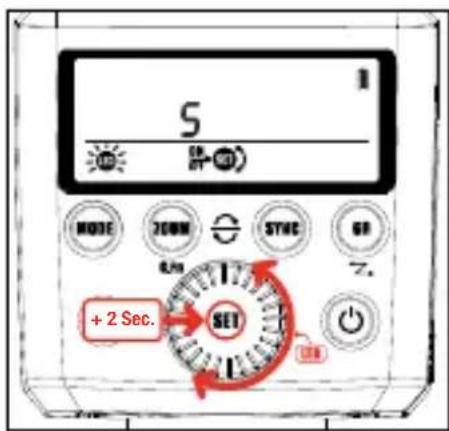
1 Long press < SET / LED > button for more than 2 sec. to enter the "LED-Menu".
2 Now short press
3 Use the Select Dial to change the LED light power from 1 to 5.
4 Long press < SET / LED > button again the exit the "LED - Menu".
Auto Focus Assist Beam
In poorly-lit or low-contrast shooting environments, the built-in auto focus assist LED light will automatically switch on to make it easier to autofocus. The light beam will light up only when autofocus is difficult and will switch off as soon as the autofocus is set. If you want to turn off the auto focus assist beam, set "AF" to "OF" on the C.Fn settings.
B
F
- Also check the camera menu settings for "AF Illuminator" and for "LED" in the flash function setting menu.
- If you find the auto focus assist beam does not light up, this is because the camera has got a correct autofocus.
- The auto focus assist beam does not operate while Continuous AF is used as the camera focusing mode
- When not attached to the camera, the auto focus assist beam will not light up.
Bounce Flash
By pointing the flash head toward a wall or ceiling, the flash will bounce off the surface before illuminating the subject. This can soften shadows behind the subject for a more natural-looking shot. This is called bounce flash.
To set the bounce direction, hold the flash head and turn it to the required angle.
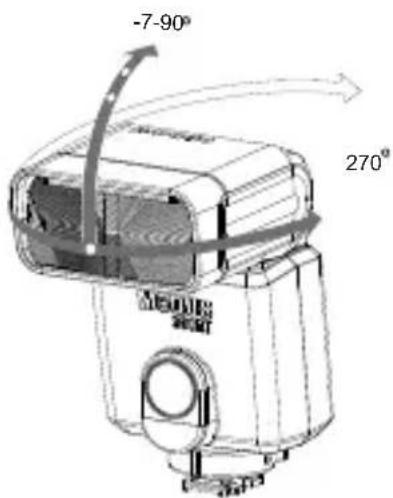
i
- If the wall or ceiling is too far away, the bounced flash might be too weak and result in underexposure.
- The wall or ceiling should be a plain, white color for high reflectance. If the bounce surface is not white, a colour cast may appear in the picture.
Catchlight Panel
With the catchlight panel, you can create a catchlight in the subject's eyes to add life to the facial expression.
-
Point the flash head upward by 90°
-
Pull out the wide panel. The catchlight panel will come out at the same time
-
Push the wide panel back in
-
Push in only the wide panel
- Follow the same procedures as for bounce flash
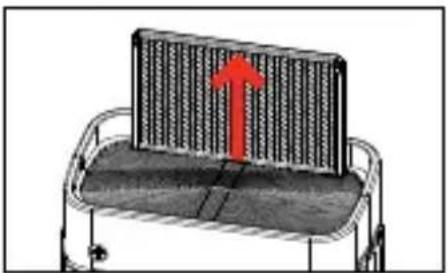
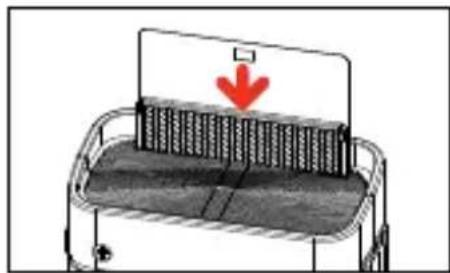
B
ZOOM: Setting the Flash Coverage and Using the Wide Panel
The flash coverage can be set automatically or manually. Use the AP setting in the C. Fn menu to select the flash head zoom range you want.
Wide Panel - AP ON - 12mm
Wide Panel - AP OF - 14mm
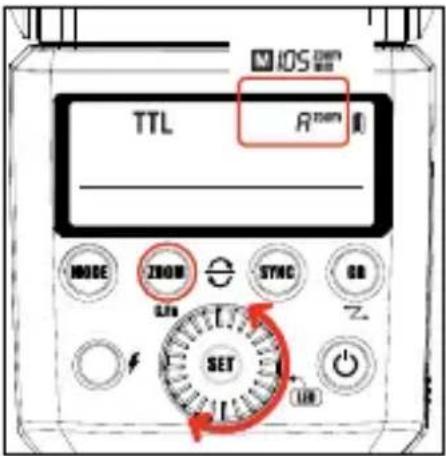
For Manual Zoom mode, press the
- Turn the Select Dial to change the flash coverage
- If < A> is displayed, the flash coverage will be set automatically

- If you set the flash coverage manually, make sure it covers the lens focal length so that the picture will not have a dark periphery.
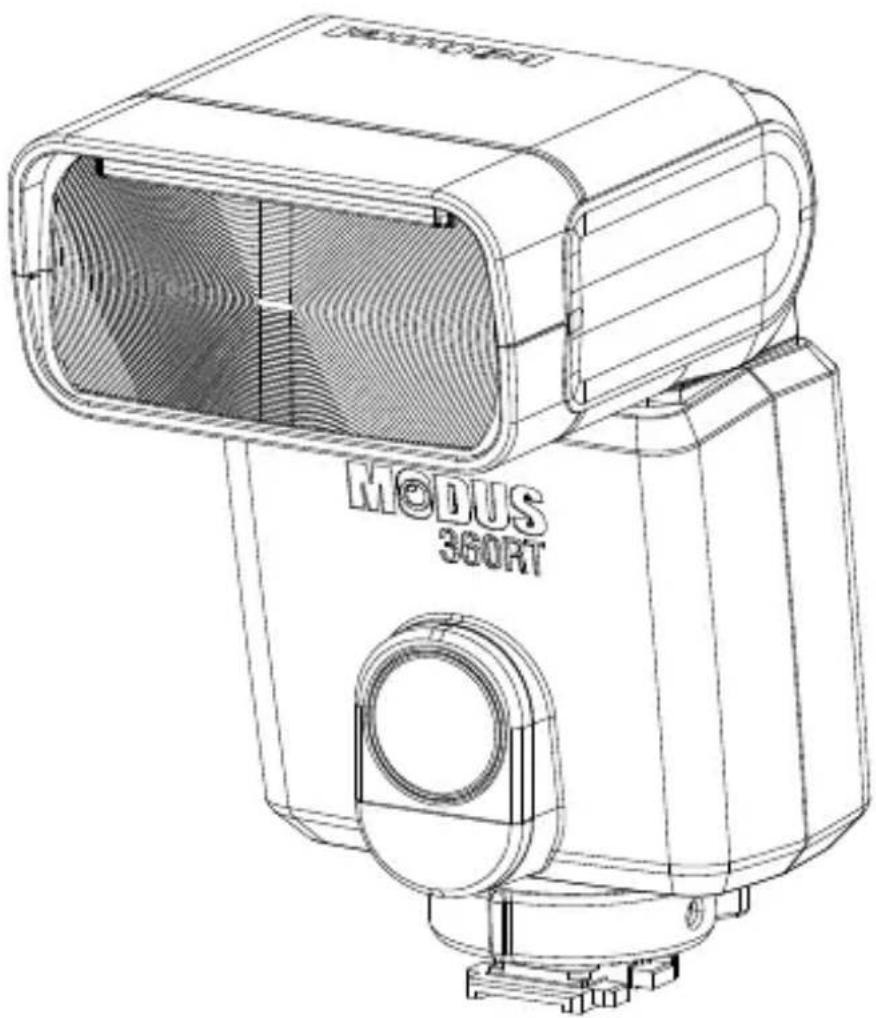
Using the Wide Panel
Pull out the wide panel and place it over the flash head as shown. The flash coverage will then be extended to 12mm or 14mm.
- The catchlight panel will come out at the same time. Push the catchlight panel back in.
C.Fn: Setting Custom Functions
The following table lists the available custom functions of this flash.

C.Fn Custom Functions
| Custom Function Signs | Function | Setting No. | Setting & Description |
| St | AutoPower off | ON | Auto Power off enable |
| OF | Auto Power off disable | ||
| AF | AF - assistbeam | 1 - 5 | AF Assist beam level |
| OF | AF Assist beam disable | ||
| bL | Backlightingcontrol | 10 | Off in 10 sec. |
| OF | Always Off | ||
| ON | Always lighting | ||
| AP | FocusRange | ON | Auto & 16 - 69mm |
| OF | Auto & 24 - 105 mm |
- Press the
Button for 2 seconds until C.Fn menu is displayed. - Turn the Select Dial to select a Custom Function.
- Press the
Button and the Setting blinks. - Turn the Select Dial to set the desired setting. Pressing the
Button will confirm the settings. - Press the
Button to exit.
Protection Functions
1. Over-Temperature Protection
- To avoid overheating and deteriorating the flash head, do not fire more than 30 continuous flashes in fast succession at 1/1 full power. After 30 continuous flashes, allow a rest time of at least 10 minutes
- If you fire more than 30 continuous flashes and then fire more flashes in short intervals, the inner over-temperature protection function may be activated and make the recycling time over 10 seconds. If this occurs, allow a rest time of about 10 minutes, and the flash unit will then return to normal
- When the over-temperature protection is active, < > is shown on the LCD display
Number of flashes that will activate over temperature protection:
| Power Output Level Number of Flashes | |
| 1/1 | 30 |
| 1/2 + 0.7 | 40 |
| 1/2 + 0.3 | 50 |
| 1/2 | 60 |
| 1/4 (+0.3, +07) | 100 |
| 1/8 (+0.3, +07) | 200 |
| 1/16 (+0.3, +07) | 300 |
| 1/32 (+0.3, +07) | 500 |
| 1/64 (+0.3, +07) | 1000 |
| 1/128 (+0.3, +07) |
Number of flashes that will activate over-temperature protection in high-speed sync triggering mode:
| Power Output | Times |
| 1/1 | 15 |
| 1/2 (+0.3, +07) | 20 |
| 1/4 (+0.3, +07) | 30 |
| 1/8 (+0.3, +07) | |
| 1/16 (+0.3, +07) | 40 |
| 1/32 (+0.3, +07) | |
| 1/64 (+0.3, +07) | 50 |
| 1/128 (+0.3, +07) |
2. Other Protections
- The system provides real-time protection to secure the device and your safety. The following lists prompts for your reference:
| Prompts LCD Panel | Meaning |
| E1 | A failure occurs on the recycling system so that the flash cannot firePlease restart the flash unit. If the problem still exists, please send this product to a maintenance centre. |
| E2 | The system gets excessive heat. Please allow a rest time of 10 min. |
| E3 | The voltage on two outlets of the flash tube is too high. Please send this product to a maintenance centre. |
| E9 | Some error occurred during the upgrading process. Please use the correct firmware upgrade method. |
Technical Data

| Model MODUS 360RT | |
| • Type | |
| Compatible Cameras | Fujifilm Cameras |
| Guide No.(1/1 output @ 105mm) | 36 (m ISO 100) |
| Flash Coverage | 24 to 105mm & 16 to 69mm |
| • Auto zoom (flash coverage set automatically to match the lens focal length and image size) | |
| • Manual Zoom | |
| • Swinging/ tilting flash head (bounce flash): 0 to 270° horizontally and -7° to 90° vertically | |
| Flash duration | 1/350 to 1/20000 seconds |
| • Exposure Control | |
| Exposure Control System | TTL autoflash and manual flash |
| Flash ExposureCompensation (FEC) | TTL FEC: +/- 3 stops in 1/3 stop increments |
| Sync mode | High-speed sync (up to 1/8000 seconds),first-curtain sync, and second curtain sync |
| Multi Flash | Provided (up to 90 times, 99Hz) |
| • Wireless Flash (2.4 GHz radio transmission) | |
| Wireless flash function | Master, Slave, Off |
| Controllable Groups | M, A, B and C |
| Transmission Range(approx.) | Typical 50m |
| Channels | Digital Channel Matching |
| • Auto Focus Assist Beam | |
| Effective range (approx.) | Center: 0.6-4mPeriphery: 0.6-2.5m |
| • LED Light | |
| Centre luminanceIntensity | Approx. 440 lx @ 0.5m110 lx @ 1.0m |
| Continuous lighting time | Approx. 11 Hours |
| Colour temperature | Approx. 5600 K |
| • Power Supply | |
| Lithium-Ion battery | 7.2V/ 2000 mAh |
| Recycle time | 0.1s-1.7s |
| Full power flashes | More than 400 |
| Power saving | Power off automatically after approx. 90 seconds of idle operation. (60 minutes if set as slave) |
| • Sync Triggering Mode | Hotshoe, optical triggering |
| • Dimensions | |
| H x W x D | 150 x 64 x 50mm |
| Weight without battery | 220g |
| Weight with battery | 300g |
| 2.4GHz Wireless frequency range | 2413.0 MHz - 2464.5MHz |
| Max. Transmitting Power of 2.4GHz Wireless | 5dbm |
GB
Troubleshooting
If there is a problem, refer to this Troubleshooting Guide.
The Camera Flash does not fire.
- The camera flash is not attached securely to the camera.
→ Attach the flash mounting foot securely to the camera. - The electrical contacts of the Camera Flash and camera are dirty.
→ Clean the contacts. - The flash ready indicator does not light up after a long wait,
→ check whether the battery power is enough. If the battery power is low,will appear and blink on the LCD panel. Please charge the battery immediately.
The power turns off by itself.
- After 90 seconds of idle operation, auto power off took effect if the flash is set as master.
→ Press the shutter button halfway or press any flash button to wake up. - After 60 minutes of idle operation, the flash unit will enter sleep mode if it is set as slave.
→ Press any flash button to wake up.
Auto zoom does not work.
-
The camera flash is not attached securely to the camera.
→ Attach the flash mounting foot to the camera. -
The Wide Panel is in use or partially pulled out
→ Using the Wide panel disables Auto zoom and locks the zoom at 14 - 12mm. Check that Wide Pannel is pushed into housing all the way. - The Zoom may be set to Manual Zoom
→ Change Speedlight zoom setting to Auto zoom.
GB
The flash exposure is underexposed or overexposed.
- You used high-speed sync.
→ With high-speed sync, the effective flash range will be shorter. Make sure the subject is within the effective flash range. - You used Manual Flash mode.
→ Set the flash mode to TTL or modify the flash output.
Photos have dark corners or only parts of the target subject are illuminated.
- The focal length of lens exceeds the flash coverage.
→ Check the flash coverage you set. This flash unit has coverage between 24 and 105mm and between 16mm and 69mm. Pull the wide panel out to extend the flash coverage.
Firmware Upgrade
This flash supports firmware upgrade through the USB port. Update information will be released on our official website www.hahnel.ie
Checking the version:
Hold down the

- Use the included USB cable to do the firmware update.

- For up to date compatibility of all camera models check www.hahnel.ie
Maintenance
- Shut down the device immediately should abnormal operation be detected
- Avoid sudden impacts and the product should be cleaned regularly
- It is normal for the flash tube to be warm when in use. Avoid continuous flashes if unnecessary
- Maintenance of the flash must be performed by our authorised maintenance department which can provide original accessories
- This product, except consumables e.g. flash tube, is supported with a one-year warranty
- Unauthorised service will void the warranty
- If the product has malfunctioned or has been damaged by water do not use until it is repaired by a professional
- Changes made to the specifications or designs may not be reflected in this manual

- This Product complies with the EU Radio Equipment Directive 2014/53/EU.
- For compliance data visit www.hahnel.ie
MODUS360RT F
Wireless Speedlight for Fujifilm
All brands, trademarks and registered trademarks are the property of their respective holders. Copyright © hähnel industries Ltd, Ireland.
www.hahnel.ie
A product of hähnel industries Ltd., Ireland. Made in China Rev: 01/19
MODUS 360RT
DE
MODUS360RT F
- FOREWORD
- CONVENTIONS & ASSUMPTIONS
- CONTENTS
- 1 INTRODUCTION
- 2 GETTING STARTED
- 3 FLASH MODE - TTL / M / MULTI
- 4 WIRELESS FLASH PHOTOGRAPHY: (2.4GHZ) CONTROL
- 5 WIRELESS FLASH PHOTOGRAPHY: (2.4GHZ) USING VIPER MINI TRANSMITTER
- 6 OTHER APPLICATIONS
- INTRODUCTION
- ⚠️ WARNINGS
- CAUTION
- NOMENCLATURE - BODY
- NOMENCLATURE - LCD PANEL
- ON CAMERA SHOOTING
- TTL MODE
- MANUAL MODE
- MULTI MODE
- RADIO CONTROL SHOOTING
- MASTER UNIT
- SLAVE UNIT
- NOMENCLATURE - VIPER MINI
- NOMENCLATURE - VIPER MINI LCD SCREEN
- B
- GETTING STARTED
- WHAT'S IN THE MODUS 360RT
- WHAT'S IN THE MODUS 360RT WIRELESS KIT
- BATTERY AND CHARGER
- HOW TO STORE THE BATTERY
- BATTERY LIFETIME
- HOW TO CHARGE THE BATTERY
- FITTING AND REMOVING THE BATTERY
- BATTERY LEVEL INDICATION
- ATTACHING TO CAMERA
- DETACH THE SPEEDLIGHT
- POWER MANAGEMENT
- FLASH MODE
- TTL / M / MULTI
- FLASH MODE – TTL AUTOFLASH
- FEC: FLASH EXPOSURE COMPENSATION
- SETTING FEC
- HIGH-SPEED SYNC
- ➞ SECOND-CURTAIN SYNC (REAR-CURTAIN SYNC)
- 0
- FLASH MODE – MANUAL FLASH
- FLASH OUTPUT POWER RANGE
- OPTICAL 01- STANDARD OPTICAL WIRELESS TRIGGERING
- OPTICAL 02 - PREFLASH OPTICAL WIRELESS TRIGGERING
- FLASH MODE: MULTI FLASH (STROBOSCOPIC)
- CALCULATING THE SHUTTER SPEED
- NUMBER OF FLASHES / FLASH FREQUENCY = SHUTTER SPEED
- △
- F0
- WIRELESS FLASH PHOTOGRAPHY
- WIRELESS SETTINGS
- MASTER UNIT SETTING
- SLAVE UNIT SETTING
- ON CAMERA SETTING
- MASTER" GROUP - MODE SETTING
- SETTING THE DCM (DIGITAL CHANNEL MATCHING)
- DCM MASTER – VIPER MINI OR MODUS 360RT
- TO DCM A MODUS360RT AS A SLAVE
- MODUS 360 RT – RESET
- TTL: FULLY AUTOMATIC WIRELESS FLASH SHOOTING
- TTL AUTOFLASH SHOOTING WITH ONE SLAVE UNIT
- 1 MASTER UNIT SETTING
- 2 SLAVE UNIT SETTING
- 3 POSITION OF CAMERA AND SPEEDLIGHT
- 4 CHECK THE FLASH OPERATION
- M: WIRELESS FLASH SHOOTING WITH MANUAL FLASH
- 2 SETTING FLASH OUTPUT
- 3 SLAVE UNIT SETTING
- 4 POSITION OF CAMERA AND SPEEDLIGHT
- 5 CHECK THE FLASH OPERATION
- MULTI: WIRELESS SHOOTING WITH MULTI REPEATING FLASH STROBOSCOPIC
- 2 SETTING FLASH OUTPUT/FLASH FREQUENCY/FLASH TIMES
- 3 TURNING ON/OFF EACH GROUP
- WIRELESS FLASH
- PHOTOGRAPHY: (2.4GHZ)
- USING VIPER MINI TRANSMITTER
- DCM (DIGITAL CHANNEL MATCHING)
- VIPER MINI GROUP MODE SETTING
- POWER CONTROL SETTING FOR MANUAL AND TTL FEC
- SECOND-CURTAIN SYNC (REAR-CURTAIN SYNC)
- OTHER APPLICATIONS
- ILLUMINATING FOR VIDEO SHOOTING – LED LIGHT
- AUTO FOCUS ASSIST BEAM
- F
- BOUNCE FLASH
- I
- CATCHLIGHT PANEL
- ZOOM: SETTING THE FLASH COVERAGE AND USING THE WIDE PANEL
- USING THE WIDE PANEL
- C.FN: SETTING CUSTOM FUNCTIONS
- PROTECTION FUNCTIONS
- OVER-TEMPERATURE PROTECTION
- OTHER PROTECTIONS
- TROUBLESHOOTING
- THE CAMERA FLASH DOES NOT FIRE
- THE POWER TURNS OFF BY ITSELF
- AUTO ZOOM DOES NOT WORK
- GB
- THE FLASH EXPOSURE IS UNDEREXPOSED OR OVEREXPOSED
- PHOTOS HAVE DARK CORNERS OR ONLY PARTS OF THE TARGET SUBJECT ARE ILLUMINATED
- FIRMWARE UPGRADE
- CHECKING THE VERSION
- MAINTENANCE
- MODUS360RT F
- WIRELESS SPEEDLIGHT FOR FUJIFILM
- MODUS 360RT
Brand : Hähnel
Model : MODUS 360RT (Fujifilm)
Category : Lamp