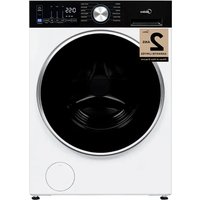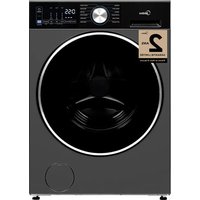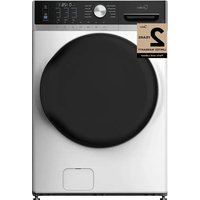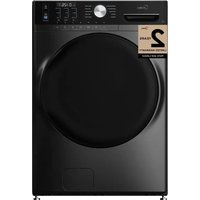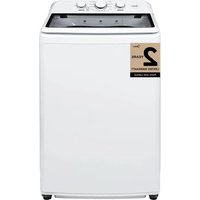
MLTW09M1BWW - Washing machine MIDEA - Free user manual and instructions
Find the device manual for free MLTW09M1BWW MIDEA in PDF.

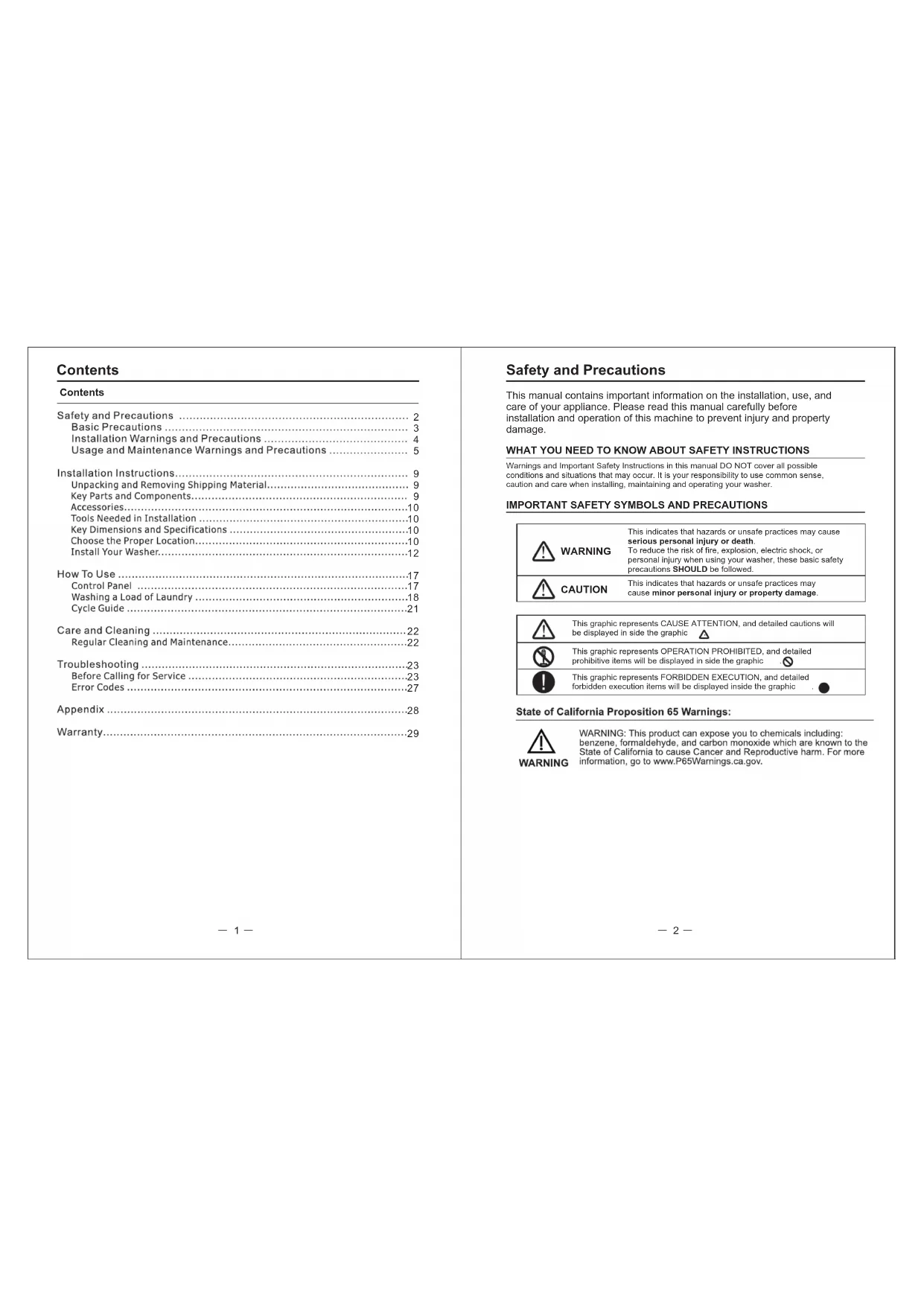

| Product Type | Top-load washing machine |
| Brand | Midea |
| Model | MLTW09M1BWW |
| Power Supply | 120 V, 60 Hz, 15 A (dedicated circuit recommended) |
| Grounding | Required, 3-prong plug |
| Water Pressure | 14 to 70 psi |
| Wash Programs | Normal, Heavy, Quick, Baby Care, Spin Only, Drum Clean |
| Water Levels | Low, Medium, High |
| Extra Rinse | Yes, up to 4 rinses |
| Child Lock | Yes |
| Detergent Type | High Efficiency (HE) powder |
| Maximum Load Capacity | 3/4 of the drum (do not overload) |
| Lint Filter | Built-in, clean every 10 cycles |
| Pump Filter | Built-in, clean once a month |
| Drum Maintenance | Drum Clean cycle with bleach |
| Safety | Automatic stop if door opened, leak protection, anti-unbalance system |
| Error Codes | E1 (filling), E2 (door open), E3 (unbalance), E4 (draining), E5 (level sensor) |
| Spare Parts | Available through Midea service |
| Repairability | Call a qualified technician (do not disassemble yourself) |
Frequently Asked Questions - MLTW09M1BWW MIDEA
User questions about MLTW09M1BWW MIDEA
0 question about this device. Answer the ones you know or ask your own.
Ask a new question about this device
Download the instructions for your Washing machine in PDF format for free! Find your manual MLTW09M1BWW - MIDEA and take your electronic device back in hand. On this page are published all the documents necessary for the use of your device. MLTW09M1BWW by MIDEA.
USER MANUAL MLTW09M1BWW MIDEA
made yourself at home
Midea America Corp
300 Kimball Drive, Parsippany, NJ, USA 07054
Customer Service 1-866-646-4332 www.midea.com

Top-Load Washer
Power supply: 120 V-Frequency: 60Hz Capacity: 0.9 cu.ft.
Warning:
Before using this product,
please read this manual carefully and keep it for future reference.
The design and specifications are subject to change without prior notice for product.
improvement. Consult with
your dealer or manufacturer for details.
version A
USER MANUAL & INSTALLATION INSTRUCTIONS
MODEL NUMBERS
MlW09MbWw MlWidc
Contents
Contents
Safety and Precautions 2
Basic Precautions 3
InstallationWarnings and Precautions 4
Usage and MaintenanceWarnings and Precautions 5
Installation Instructions 9
Unpacking and Removing Shipping Material 9
Key Parts and Components 9
Accessories 10
Tools Needed in Installation 10
Key Dimensions and Specifications 10
Choose the Proper Location. 10
Install Your Washer. 12
How To Use 17
Control Panel 17
Washing a Load of Laundry 18
Cycle Guide 21
Care and Cleaning 22
Regular Cleaning and Maintenance 22
Troubleshooting 23
Before Calling for Service 23
Error Codes 27
Appendix 28
Warranty. 29
Safety and Precautions
This manual contains important information on the installation, use, and care of your appliance. Please read this manual carefully before installation and operation of this machine to prevent injury and property damage.
WHAT YOU NEED TO KNOW ABOUT SAFETY INSTRUCTIONS
Warnings and Important Safety Instructions in this manual DO NOT cover all possible conditions and situations that may occur. It is your responsibility to use common sense, caution and care when installing, maintaining and operating your washer.
IMPORTANT SAFETY SYMBOLS AND PRECAUTIONS
| WARNING | This indicates that hazards or unsafe practices may cause serious personal injury or death. To reduce the risk of fire, explosion, electric shock, or personal injury when using your washer, these basic safety precautions SHOULD be followed. |
| CAUTION | This indicates that hazards or unsafe practices may cause minor personal injury or property damage. |
| This graphic represents CAUSE ATTENTION, and detailed cautions will be displayed in side the graphic ▲ |
| This graphic represents OPERATION PROHIBITED, and detailed prohibitive items will be displayed in side the graphic □ |
| This graphic represents FORBIDDEN EXECUTION, and detailed forbidden execution items will be displayed inside the graphic ▪ |
State of California Proposition 65Warnings:
WARNING: This product can expose you to chemicals including: benzene, formaldehyde, and carbon monoxide which are known to the State of California to cause Cancer and Reproductive harm. For more information, go to www.P65Warnings.ca.gov.
Basic Precautions

- Read all instructions before using the appliance.
- Use this appliance only for its intended purpose as described in this owner's Manual.
- Before use, the washer must be properly installed as described in this manual.
- ALWAYS follow the fabric care instructions supplied by the garment manufacturer.
- Do not wash or dry articles that have been previously cleaned in, washed in, soaked in, or spotted with gasoline, dry-cleaning solvents, other flammable or explosive substances as they give off vapors that could ignite or explode.
- Do not allow children to play on or in the appliance. Close supervision of children is necessary when the appliance is used near children.
- Before the appliance is removed from service or discarded, remove the lid of the washing or drying compartment.
- Do not reach into the appliance if the basket is moving
- Do not install or store this appliance where it will be exposed to the weather or freezing temperatures.
-
Do not tamper with the controls.
-
Do not repair or replace any part of the appliance or attempt any servicing unless it is specifically recommended in the user-maintenance instructions or in published user-repair instructions that you understand and have the skills to carry out.
- Do not add gasoline, dry-cleaning solvents, or other flammable or explosive substances to the wash water. These substances give off vapors that could ignite or explode.
- Under certain conditions, hydrogen gas may be produced in a hot water system that has not been used for 2 weeks or more.
- HYDROGEN GAS IS EXPLOSIVE. If the hot water system has not been used for 2 weeks or more, before using a washer or combination washer-dryer, turn on all hot water faucets and let the water flow from each for several minutes. This will release any accumulated hydrogen gas. As the gas is flammable, do not smoke or use an open flame during this time.
- Keep the area underneath and around your appliances free of combustible materials (lint, paper, rags, etc.), gasoline, chemicals and other flammable vapors and liquids.
- Do not place items exposed to cooking oil in your washer. Items contaminated with cooking oils may contribute to a chemical reaction that could cause a load to catch fire.
- This washer is not designed for maritime use or for mobile installations such as in RVs, aircraft, etc.
- Turn off the water faucets and unplig the washer if the machine is to be left for an extended period of time, such as during vacations.
- Packaging material can be dangerous for children. There is a risk of suffocation! Keep all package away from children.
- Always check the inside of the washer for foreign objects before loading laundry. Keep the lid closed when not in use.
Safety and PrecautionsSafety and Precautions
InstallationWarnings and Precautions
-
Plug the power cord into an AC 120V/60Hz wall socket rated at 15amps or higher. Use the socket for this washer only.
-
Do not use an extension cord.
-
Sharing a wall socket with other appliance, using a power strip, or extending the power cord may result in electric shock or fire.
-
Do not use an electric transformer. It may result in electric shock or fire.
-
Ensure that the power voltage, frequency, and current match the
product's specifications. Failing to do so may result in electric shock or fire. -
Have this appliance installed by a qualified technician or service company.
Failing to do so may result in electric shock, fire, explosion, problems with the product, or injury. - Remove all foreign substances such as dust or water from the power plug terminals and contact points using a dry cloth on a regular basis.
- Unplug the power plug and clean it with a dry cloth.
- Failing to do so may result in electric shock or fire.
- Plug the power plug into the wall socket in the right direction so that the cord runs towards the floor.
- If you plug the power plug into the socket in the opposite direction, the electric wires within the cable may be damaged and this may result in electric shock or fire.
- Plug the power plug into the wall socket firmly. Do not use a damaged power plug, or loosen wall socket.
- This may result in electric shock or fire.
- Do not pull or excessively bend the power cord.
- Do not hook the power cord over a metal object, place a heavy object on the power cord, insert the power cord between objects, or push the power cord into the space behind the appliance.
- This may result in electric shock or fire.
- Do not pull the power cord when unplugging the power plug.
- Unplug the power plug by holding the plug.
- Failing to do so may result in electric shock or fire.
- If the power plug or power cord are damaged, contact your nearest service center.

- This appliance must be properly grounded.
-
Do not ground the appliance to a gas pipe, plastic water pipe, or telephone line.
-
Improper grounding may result in electric shock, fire, explosion, or problems with the product.
- Never plug the power cord into a socket that is not grounded correctly.
Make sure the socket you use is grounded in accordance with local and national codes.

- Do not install this appliance near a heater or inflammable material.
- Do not install this appliance in a humid, oily, or dusty location, or in a
location exposed to direct sunlight or water (rain drops). - Do not install this appliance in a location where gas may leak. - This may result in electric shock or fire.
-
If the washer is moved to a new location, have it checked and re-installed by a qualified service technician.
-
Failing to follow this warning may result in electric shock or fire.
Installation Warnings and Precautions

-
Do not install on carpet. Install washer on a level and solid floor that can support its weight.
-
Failing to do so may result in abnormal vibrations, noise, or problems with the product.
-
The washer is heavy. Two or more people may be needed to install and move the appliance.
-
Failing to do so may result in bodily or other injuries.
-
Store and install the washer where it will not be exposed to temperatures below freezing or exposed to outdoor weather conditions.
-
Failing to do so may result in serious leak damage.
-
Position the appliance so that the power plug is easily accessible.
-
Failing to do so may result in electric shock or fire due to electric leakage.
-
To reduce the risk of injury to persons, adhere to all industry recommended safety glasses.
-
Failing to follow all of the safety warnings in this manual may result in property damage, or injury to persons.
Usage and MaintenanceWarnings and Precautions

-
If the appliance is flooded, cut the power immediately and contact your nearest service center.
-
If the appliance emits a strange noise, a burning smell, or smoke, unplug the power plug immediately and contact your nearest service center. - Failing to do so may result in electric shock or fire.
-
In the event of a gas leak (such as propane gas, LP gas, etc.), ventilate the area immediately. Do not turn any appliance or light on or off.
-
Do not use a ventilating fan.
-
A spark may result in an explosion or fire.
-
Do not wash items contaminated with gasoline, kerosene, benzene, paint thinner, alcohol, dry cleaning detergent or other flammable or explosive substances.
-
This may result in electric shock, fire, or an explosion.
-
Do not force the washer lid open while the washer is operating (high-temperature washing / drying / spinning).
-
Water flowing out of the washer may cause burns or cause the floor to be slippery. This may result in injury.
-
Forcing the lid open can damage the product or cause injury.
-
Make sure to remove the packaging (sponge, styrofoam) attached to the bottom of the washer before using it.
-
Do not insert your hand or a metal object under the washer. - This may result in injury.
-
Do not attempt to operate this appliance if it is damaged, malfunctioning, partially disassembled, or has missing or broken parts, including a damaged cord or plug.
-
This may result in electric shock, fire or death.
-
Do not touch the power plug with wet hands. - This may result in electric shock.
-
Do not turn the appliance off by unplugging the power plug while the washer is in operation.
-
Plugging the power plug into the wall socket again may cause a spark and result in electric shock or fire.
-
Keep all packaging material well out of the reach of children, as packaging materials can be dangerous to children.
- If a child places a bag over its head, it may suffocate.
Safety and PrecautionsSafety and Precautions
Usage and MaintenanceWarnings and Precautions

WARNING
-
Do not let children or infirm persons use this washer unsupervised. - Failing to do so may result in electric shock, burns or injury.
-
Do not attempt to repair, disassemble, or modify the appliance yourself. - Do not use any fuse (such as cooper, steel wire, etc.) other than the standard fuse.
-
If you need to repair or reinstall the appliance, contact your nearest service center.
-
Failing to do so may result in electric shock, fire, problems with the product, or injury.
-
If any foreign substance such as water enters the appliance in any area other than the tub, unplug the power plug and contact your nearest service center.
-
Failing to do so may result in electric shock or fire.
-
If the water supply hose comes loose from the faucet and floods the appliance, unplug the power plug.
-
Failing to do so may result in electric shock or fire.
-
Do not mix chlorine bleach with ammonia or acids such as vinegar. - Incorrect usage can produce poisonous gas, result in serious injury.
-
Do not reach into the washer while parts are moving. Before loading, unloading, or adding items, press the START/PAUSE button and allow the basket to come to complete stop before reaching inside. - Failing to do so may result in electric shock, injury or fire.
-
Do not allow children to play on or in the washer. Close supervision of children is necessary when the washer is used near children. As children grow, teach them the proper, safe use of all appliances.
-
Failing to do so may result in serious injury to persons.
-
Keep laundry products out of children's reach. Observe all warnings on product labels and follow to do.
-
Failing to do so may result in serious injury to persons.
-
Disconnect this appliance from the power supply before attempting any user maintenance. Turning the controls to the OFF position does not disconnect this appliance from the power supply.
-
Failing to do so may result in electric shock, injury or fire.
21.Do not clean the appliance by spraying water directly onto it.
- Do not use benzene, thinner, or alcohol to clean the appliance. - This may result in discoloration, deformation, damage, electr or fire.
Usage and MaintenanceWarnings and Precautions

CAUTION
-
Unplug the power plug when the appliance is not being used for long periods of time or during a thunderlightning storm.
-
Failing to do so may result in electric shock or fire.
-
Keep hands and foreign objects clear of the lid and latch area when closing the lid.
-
Failing to do so may result in personal injury.
-
If the washer is contaminated by a foreign substance such as detergent, dirt, food waste, etc., unplug the power plug and clean the washer with a damp, soft cloth.
- Failing to do so may result in discoloration, deformation, damage or trust.
- The clear portion of the lid can be broken by a strong impact. Take care when using the washer. If the clear portion is cracked or broken, it may result in injury.
- After a water supply failure or when reconnecting the water supply hose, open the faucet slowly.
Usage and MaintenanceWarnings and Precautions

-
Open the faucet slowly after a long period of non-use. The air pressure in the water supply hose or the water pipe may result in damage to a part or in water leakage.
-
If a drain error occurs during an operation, check if there is a draining problem.
-
If the washer is used when it is flooded because of a draining problem, it may result in electric shock or fire due to electric leakage.
-
Do not insert your hand or a metal object under the washer. - This may result in injury.
-
Insert the laundry into the washer completely so that laundry does not get caught in the lid. If laundry gets caught in the lid, it may result in damage to the washer or the washer, or result in water leakage.
-
Ensure that the faucet is turned off when the washer is not being used.
- Ensure that the water supply hose connectors are properly tightened.
-
Failing to do so may result in property damage or injury.
-
Open the faucet and check if the water supply hose connector is firmly tightened and that there is no water leaking before using the product. - If the water supply hose connectors are loose, it may result in water leakage.
-
Do not stand on top of the appliance or place objects (such as laundry, lighted candles, lighted cigarettes, dishes, chemicals, metal objects, etc.) on the appliance.
-
This may result in electric shock, fire, problems with the product, or injury.
-
Do not operate the appliance with wet hands. - This may result in electric shock.
-
Do not spray volatile material such as insecticide onto the surface of the appliance.
-
As well as being harmful to humans, it may also result in electric shock fire, or problems with the product.
-
Do not place an object that generates an electromagnetic field near the washer.
-
This may result in injury due to a malfunction.
-
Since the water drained during a high temperature wash or drying cycle is hot, do not touch the water.
-
This may result in burns or injury.
-
Do not wash, spin, or dry water-proof seats, mats, or clothing.
-
Do not wash thick, hard mats even if the washer mark is on the care label.
This may result in injury or damage to the washer, walls, floor, or clothing due to abnormal vibrations.
-
Do not operate the washer when detergent dispenser is removed. This may result in electric shock or injury due to water leakage.
-
Do not insert your hand into the detergent dispenser after opening it. This may result in injury as your hand may be caught.
-
Do not place any non-laundry objects, such as shoes, food waste, or animals into the washer.
-
This can cause abnormal vibrations that can damage the washer, and, in the case of pets, cause severe injury or death.
-
Do not press the buttons using sharp objects such as pins, knives, fingernails, etc.
-
This may result in electric shock or injury.
Safety and PrecautionsSafety and Precautions
Usage and MaintenanceWarnings and Precautions
- Do not wash laundry contaminated by oils, creams, or lotions usually found in skincare shops or massage clinics. - This may result in the rubber seal becoming deformed and water leakage.
CAUTION 23. Ensure that the water inlet pipe is connected and the tap is opened before washing clothes.
-
Do not leave metal objects (safety pins, hair pins, etc.) or bleach in the tub for long periods of time.
-
This may cause the lub to rust.
-
If rust appears on the surface of the tub, apply a neutral cleansing agent to the surface and use a sponge to clean it. Never use a metal brush.
-
Do not use hot water from water cooling/heating devices.
-
This may result in problems with the washer.
-
Do not use natural hand-washing soap in the washer
-
If it hardens and accumulates inside the washer, it may cause problems with the product, discoloration, rust, or bad odors.
-
Do not wash large laundry items such as bedding in the washing net.
-
Failing to do so may result in injury due to abnormal vibration
-
Place smaller items, such as lace socks and lingerie in the washing net.
-
Do not use hardened detergent.
-
If it accumulates inside the washer, it may result in water leakage.
-
Do not wash throw rugs or doormats.
-
If you wash throw rugs or doormats, the sand will accumulate inside the washer. It may result in error such as no draining.
Installation Instructions
Unpacking and Removing Shipping Material
Remove the packing box and lift the washer up and away from the foam base cushion. Open the lid of washer to take out all accessories including protection foam.
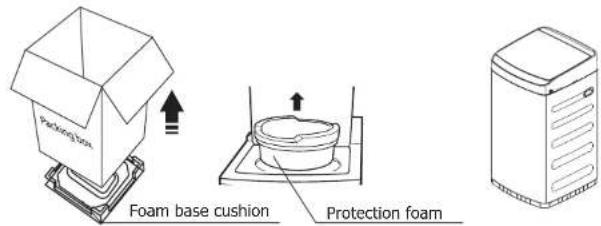

Packaging materials can be dangerous to children; Keep all packaging material (plastic bags, polystyrene, etc.) well out of children's reach. Do not operate this appliance on the foam base cushion. Failing to do so will result in serious vibration.
Key Parts and Components
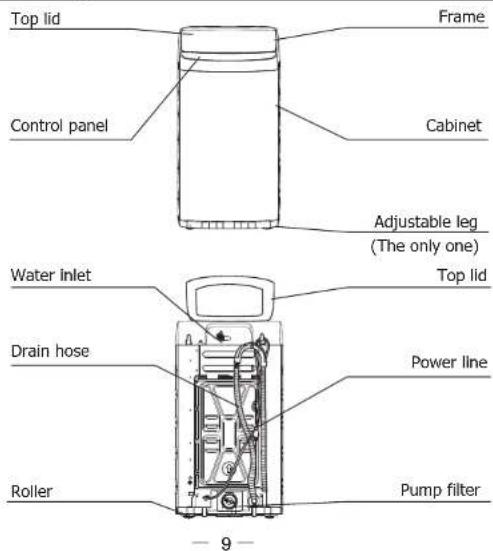
Installation Instructions
Accessories

Owner's mannaual Water supply hoses

Quick connection adaptor Bottom cover
Tools Needed in Installation

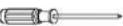

Phillip screwdriver
levelPliers
Key Dimensions and Specifications
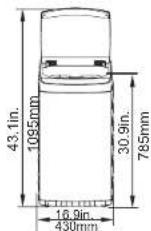
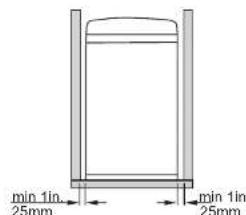
Choose the Proper Location
- Flooring
For best performance, you must Install your washer on a solidly constructed floor. Wood floors may need to be reinforced to minimize vibration and/or unbalanced load situations.
- Carpenting and soft tile surfaces are contributing factors to vibration which can cause your washer to move slightly during the spin cycle.

Do not install your washer in areas where water may freeze, since your washer will always retain some water in its water valve, pump, and hose areas. Frozen water can damage the belts, the pump, hoses, and other components. Never install on a platform or weakly supported structure.
Installation Instructions
Choose the Proper Location
Electric
Use 120Volt 60Hz 15 Amps fuse or circuit breaker.
Individual branch circuit serving only for your washer is recommended.

Never use an extension cord.
Grounding
Electrical grounding is required for this washer.
This appliance must be grounded. In the event of malfunction or breakdown, grounding will reduce the risk of electric shock by providing a path of least resistance for electric current.
This appliance is equipped with a power cord having a three-prong grounding plug for use in a properly installed and grounded outlet.
The plug must be plugged into an appropriate outlet that is properly installed and grounded in accordance with all local codes and ordinances.
An improperly connected equipment-grounding conductor can increase the risk of electrical shock. Check with a qualified electrician or serviceman if you are not sure whether the appliance is properly grounded. Do not modify the plug provided with the appliance. If it does not fit the outlet, have a proper outlet installed by a qualified electrician. To prevent unnecessary risk of fire, electrical shock or personal injury, all wiring and grounding must be done in accordance with the National Electrical Code ANSI/FNPA, No.70 Latest Revision and local codes and ordinances. It is the personal responsibility of the appliance owner to provide adequate electrical service for this appliance.

Never connect the ground wire to plastic plumbing lines, gas lines, or hot water pipes.
Water
To correctly fill your washer in the proper amount of time, water pressure of 14 to 70psi (100 to 500kPa is required.
Water pressure less than 14psi may cause water valve failure, or may not allow the water valve to shot off completely, or may extend the fill time beyond what your washer controls allow, causing your washer to turn off and alarm error. A time limit is built into the controls to prevent flooding in your home if a hose becomes loose.
The water faucet must be within 4 feet / 122cm of the back of your washer to match the inlet hoses provided with your washer.
To avoid the possibility of water damage:
- Have water faucets easily accessible
- Turn off faucets when the washer is not in use.
Periodically check that there is no leakage from the water inlet hose fittings.
Installation Instructions
Choose the Proper Location
- Drain facility
The recommended height of the standpipe is 35in. or 90cm.
The drain hose must be routed through the drain hose clip to the standpipe.
The standpipe must be large enough to accept the outside diameter of the drain hose.
Install Your Washer

Before installing, make sure there are rubber gaskets inside the fittings at both ends of the water supply hoses.
If there are no water inlet hoses packed with the washer or if the hoses are damaged, Call Midea Service
Center at 1-866-646-4332.Installing the water supply
hoses without rubber gaskets can cause water leakage
When you initially install the washer, be sure to use
new hoses. Failing to do so may result in a water leakage or overflow and may damage your property.
If a hose is too short, replace the hose with a longer,
high pressure hose.
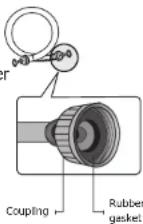
- Step 1: Move your washer to selected position
Tilt the unit back onto its rear rollers and push it forward as shown in the figure below. Move the unit to a location as described in the previous Choose the Proper Location section.
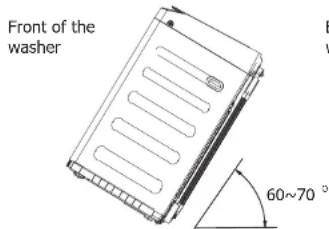

Make sure the location has a hard, level surface without carpeting. There should be no direct sunlight.
Do not expose the unit to freezing temperatures (under 32^ F or 0^ C).
Installation Instructions
Install Your Washer
- Step 2: Install the Bottom Cover
Slide the bottom cover into the slots on bottom surface of the unit as in the following figure, and fix it with screw attached with the unit.
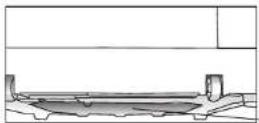
Bottom Cover
- Step 3: Connect the water hose
- The Quick Connection Adaptor is primarily for quick connection to a single faucet, such as a typical kitchen sink, in cases where the washer is stored in a different place than where it is used. Skip this step if you are connecting the washer to a sink with separate hot and cold faucets.
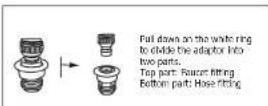
The adaptor consists of two parts that quickly connect or disconnect. One part, the faucet fitting, is for connection to the faucet and the other part, the hose fitting, connects to the cold water hose of the washer.
- Pull back on the white ring to free the faucet fitting from the adaptor installation into the faucet.
for
- Screw the end of the cold water hose onto the base of the hose fitting.
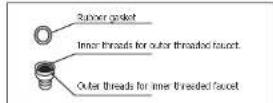
- If the faucet has internal screw threads, unscrew the aerator if present from the tip of the faucet. Then screw the faucet fitting into the faucet. Make sure that the black rubber gasket is on the top of the adaptor before screwing it in.
- If the faucet has external screw threads, remove the gasket from the top of the faucet fitting, and screw the fitting over the external threads.
- Pull back on the white ring to connect the two parts of the adaptor back together.
NOTE:
When connected to a single faucet, be sure to only run cold water washers.
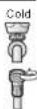
- Connect the ends of the water supply hoses to the faucets. For convenience, use the Quick Connection for connection to the cold water faucet. See instructions (Quickconnection Adaptor use in Step 1 above.
COLD Adaptor
for
Installation Instructions
Install Your Washer
3.Tighten the fittings by hand until they are snug, and then tighten them an additional two-thirds of a turn with a wrench.
When you fasten the fittings, do not fasten them too tightly or apply tape or sealant to the faucets or water supply intakes. This can damage the fittings. After you have connected the water supply hoses to the faucets, ensure that they are connected securely by pulling the water supply hoses downwards.
4. Place the unconnected ends of the hoses into a bucket and open the faucets connected to the two water supply hoses for 10 or 15 seconds to remove any foreign substances from the hoses. Close the faucets before continuing.
5. Connect the ends of the water supply h os est to the water supply intake connections at the top of the washer.
The water hose connected to the COLD faucet must be connected to the cold water supply intake.
6.Tighten the fittings by hand until they are snug, and then tighten them and additional two-thirds of a turn with a wrench.
Confirm that the water supply hoses are not twisted or bent. If the hoses are twisted or bent, the hoses can leak and cause electric shock due to the water leakage. To ensure the correct water usage, connect the COLD water faucets.
7. Turn on the COLD water supplies and check all the water supply intake and the faucets for water leaks,connections
Installation Instructions Installation Instructions
Install Your Washer
- Step 4: Connect the drain hose
Position the other end of the drain hose. It can be positioned in three ways.
A. Over the edge of a wash basin. Secure the guid e to the side of the basin wall with a hook or to the tap with a piece of string to prevent the drain hosing from moving.
B. In a standpipe The standpipe must be no shorter than 32 in. (81cm) and no longer than 39 in. (100cm).
C. In a laundry tub. The laundry tub must be no shorter than 32 in. (81cm) and no higher than 39 in. (100cm).
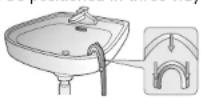
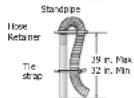
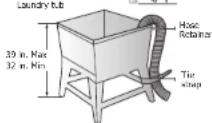

Make sure that the connection between the drain hose and the wash basin, standpipe or laundry tub is not airtight.
- Step 5: Leveling your washer
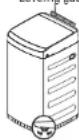
See if the washer is level by checking the position of the tub or using a leveling gauge.
- Slide the washer into position.
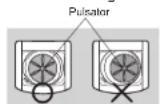
- Open the lid of the washer, and pour the water into the tub to just below the pulsator level.
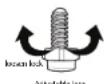
- If the washer is level, the pulsator is positioned at the center of the washer as shown in the figure above right. If not, level your washer by turning the front levelling feet clockwise or counterclockwise as necessary.

There is ONLY ONE adjustable leg as right figure on this washer.
Leveling gauge
Install Your Washer
- Step 6: Powering your washer
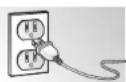
Plug the power cord into a 3-prong, well grounded 120Volt 60Hz approved electrical outlet protected by a 15-amp fuse or comparable circuit breaker. Your washer is grounded through the third prong of the power cord when plugged into a 3-prong grounded electrical outlet.
- Step 7: Running a test cycle
Run a test cycle as follows to check if your washer is properly installed.
- Load about 3.5 pounds of laundry into the tub.
- Press the Power button to turn on your washer.
- Select the Rinse+Spin cycle as instruction on page 19.
- Press the Start/Pause button to start the test cycle.
- The washer should not rock or vibrate excessively when water is supplied or when washing or spinning, and should drain well during the spin cycle.

If water leaks while water is being supplied or drained, check the water connections.
If the washer rocks and vibrates excessively, level your washer again.
- Step 8: Storing your washer
If you want to store your washer at another location, unplug it, drain any remaining water from the drain pipe and hook the pipe onto the back of the washer. Disconnect the water inlet hoses from the faucets and move washer to new location.
How To Use
Control Panel
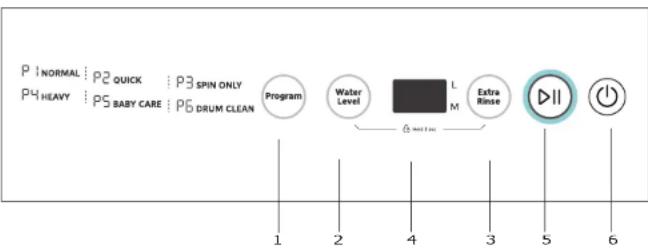
1 - Program
Press this button to select your desired washing program.
Normal (light)
Heavy (light)
Quick (light)
Baby Care (light)
Spin Only
Drum Clean (light)
2 - Water Level
Press this button to set your washing water level. Select water level according to clothing categories, degree of soiling and washing habits of customers.
3 - Extra Rinse
The laundry will undergo extra rinse once after you select it.
4 - Child Lock
Press Water Level and Extra Rinse together 3 seconds to select child lock function. To avoid that the washing procedure cannot operate normally due to the mis operation by kids during the washing procedure.
① Caution!
- Press the two button also to be released the function.
- The "Child Lock" will lock all buttons except [On/Of
5-START/PAUSE
Press the START/PAUSE button once to the start the wash cycle. Press the button during operation to pause the cycle. Press again to continue the cycle.
How To Use
6-ON/OFF
Press the ON/OFF button once to turn ON the power of the washer. Press again to turn OFF the unit.
Washing a load of laundry
\* Step 1: Power on your washer

Press the ON/OFF button to power your wash on.
ON/OFF
- Step 2: Load your washer

Before loading your laundry, be sure to take out coins, keys and other hard objects, and close all zippers to prevent the clothes from damage.
Sort laundry by fabric type, soil level, color and load size as needed. Refer to the Fabric Care Chart in the APPENDIX. You can fill the tub with dry, unfolded clothes, but DO NOT OVERLOAD the tub. Load the tub no more than 3/4 full.


To ensure good cleaning results do not overload the tub, especially when washing heavily soiled loads. Never load the tub more than 3/4 full.

Overloading may reduce washing efficiency, cause excess wear, and possibly cause creasing or wrinkling of items in the load.
Note: To add a forgotten item:
- Press the START/PAUSE the washer.
- Wait for the tub to stop turning, then open the door.
- Add the item, close the door, and then press the START/PAUSE button. The cycle will resume.
How To Use How To Use
Washing a load of laundry Washing a load of laundry
- Step 3: Add detergent
This washer is designed for high efficiency (HE) powder detergent only. Add the recommended amount of detergent directly into the basket before starting your washer. The normal amount of detergent to use is 1/4 to 1/2 of the maximum amount recommended by the detergent manufacturer. Always reduce the amount of detergent if the load is small or lightly soiled, or if your water is very soft. Never use more than the maximum amount recommended by the detergent manufacturer.
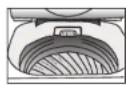
Never pour any liquid bleach directly onto the load. It can cause fabric damage, such as weakening of cloth fibers or color loss.
- Step 4: Select your desired program
First, select your desired washing program.
PINORMALI
PYHEAVY:or
CR !PSPINONLY
Y CARE PDRUM CLEAN

Second Jcsct the water level based on a High, Medium or Low size. Press the Water Level button to change the water level setting.

L--level
M-minute
Third, pressing the Extra rinse button to select rinse times.
(-4 times, or no rinse process)1

- Step 5: Start the cycle

Start/Pause
Press the START/PAUSE button to start the washing cycle. When the washing cycle begins, the Estimated Time in minutes for the cycle to complete will show and count down in the digital display.

When the washer is running, you should pause the program and wait for the basket stopped completely before you open the door.
View of the programme
Normal
Standard fabric washing program, suitable to wash ramie cotton fabric.
Wash for once, rinsing for twice, the spin time is a little long
- Quick
Suitable to wash light stained clothes and clothes in summer.
- Spin Only
when the user selects the program, the machine Only Spin.
-Heavy
Suitable to wash heavy stained/wearable clothes.
Baby care
Increase the rinsing times, to reduce the detergent residue on the clothes.
Utable to wash children's clothes.
- Drum Clean
This program is specially set in this machine to clean the drum and tube. It applies high
temperature sterilization to make the clothes washing more green. When this procedure is
performed, the clothes or other washing cannot be added. When proper amount of
chlorine bleaching agent is put in, the barrel cleaning effect will be better. The customer can use
this procedure regularly according to the need.
How To Use
Cycle Guide
Energy efficiency test program :
"Normal" program is the most suitable program to wash normally soiled cotton or linen clothes and is the most efficient program in terms of combined energy and water consumption for washing that type of laundry.
Care And Cleaning
Regular Cleaning and Maintenance
- Cleaning the exterior
Turn off the water faucets after finishing the day's washing. This will shut off the water supply to your washer and prevent the unlikely possibility of damage from escaping water. Leave the lid open to allow the inside of your washer to dry out. Use a soft cloth to wipe up all detergent, bleach or other pills as they occur. Clean the following as recommended: Control Panel - Clean with a soft, damp cloth. Do not use abrasive powders or pads. Do not spray cleaners directly onto the panel.cleaning
- Cleaning the interior
Clean the interior of your washer periodically to remove any dirt, soil, odor, mold, mildew, or bacterial residue that may remain in your washer as a result of washing clothes. Failure to follow these instructions may result in unpleasant conditions, including odors and/or permanent stains on your washer or laundry. Hard water deposits may be removed, if needed. Use cleaners labeled "Washer safe".
- Tub clean
Run an Rapid cycle with some bleach every month to clean the tub. This will also help to remove mold which may occur inside the washer.
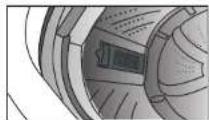
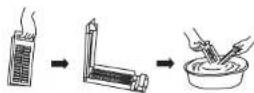
- Lint filter clean
There is a built-in lint filter in your washer. It can help to collect lint during washing cycle.
It is suggested to clean the lint filter every 10 cycles.
Take it out and clean the filter with water. Then place it back into the wash
- Pump filter clean
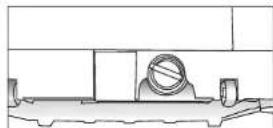
There is a built-in Pump filter in your washer. It can help to protect the pump during washing cycle.
It is suggested to clean the lint filter every once every month.
It is suggested to clean the pump filter once every month.
Take the filter out and clean it with water. Then place it back into the washer.

Troubleshooting
Before calling for service
Your washing machine is equipped with an automatic error-monitoring system to detect and diagnose problems at an early stage. If your washer does not function properly or does not function at all, check the following before you call for service:
| SolutionsProblem Possible Cause | ||
| Thumping sound | Heavy wash loads may produce a thumping sound.Washer load may be out of balance. | This is normal. If sound continues,washer is probably out of balance.Stop and redistribute wash load.Pause the cycle and redistribute the load. |
| Vibrating noise | Packaging materials were not removed.Wash load may be unevenly distributed in the tub.Not all leveling feet are resting firmly and evenly on the floor.Floor not rigid enough. | See the UNPACKING AND REMOVINGSHIPPING MATERIAL section in the installation instructions.Pause the cycle and redistribute the load.See Leveling the Washer in the Installation Instructions.Make sure that the floor is solid and does not flex.See Flooring in the Installation Requirements. |
| Excessive sudsing | Too much detergent or incorrect detergent. | HE detergents are formulated specifically for High-Efficiency washers and contain sudcs reducing agents. Only use detergent with the High-Efficiency (HE) logo. |
| Water leakingcupet | Inlet hose connection is broken.House drain pipes are clogged.Drain hose has come out of drain or is not inserted far enough.A large item such as a pillow or blanket is above the top of the tub. | Check hoses for leaks, cracks and splits Check and tighten hose connections.The washer pumps out water very rapidly. Check for water backing up very of the drain pipe during drain. If water is seen coming out of the drain, check for proper drain hose Installation and check for restrictions in the drain. Contact a plumber to repair drain pipe.Tie drain hose to inlet hose or standpipe to prevent it fromcoming out during drain.For smaller drain pipes, insert the drain hose into the pipe as far as the drain hose flange. For larger drain pipes, insert the drain hose into the pipe 1–2 in. past the flange .Stop the washer and check the load.Make sure the load does not crest above the top edge of the tub. |
Troubleshooting
Before calling for service
| Problem | Possible Cause | Solutions |
| Rattling and clanking noise | Foreign objects, such as keys, coins, or safety pins, may be in tub or pump. | Stop washer, check tub and drain filter for foreign objects.If noise continues after washer is restarted, call for service. |
| Wrinkling | Washer not unloaded promptly.Washer overloaded.Hot and cold water inlet hoses are reversed. | Always remove items from the washer as soon as the cycle is complete.The washer can be fully loaded, but the tub should not be tightly packed with items. The lid of the washer should close easily.Hot water rinse can set wrinkles in garments. Check the inlet hose connections. |
| Staining | Washer was not unloaded promptly.Clothes were not properly sorted. | Always remove items from the washer as soon as possible after the cycle is complete. Always wash d ark colors separately from light colors and whites to prevent discoloration. Never wash heavily soiled items washed with lightly soiled items. |
| Wash cycle time is longer than usual | The washer automatically adjusts the wash time for the amount of laundry, water pressure and other operating conditions. | This is normal. The washer adjusts cycle time automatically to provide optimal results for the selected cycle. The time remaining shown In the display is only an estimate. Actual time may vary. |
| Musty or mildewy odor in washer | Incorrect or too much detergent has been used . Inside of tub was not cleaned properly. | Use only High-Efficiency (HE) detergent in accordance with the manufacturer's instructions. Run an Express cycle with bleach once a month to clean tub and remove any mold from inside washer. |
Troubleshooting
Before calling for service
| Washer will not turn ONNOTE:If the washer stopped during a cycle due to a loss of power, the washer will resume the cycle where it stopped when the power is restored. | Po w e r c o r d i s n o t properly plugged in.House fuse is blown,circuit breaker has tripped, or power outage has occurred.House fuse is blown,circuit breaker has tripped, due to multiple appliances on one outlet. | Make sure that the plug is plugged securely into a grounded,3-prong,120-VAC, 60-Hz outlet Reset circuit breaker or replace fuse.Do not increase fuse capacity. If the problem is a circuit overload, have it corrected by a qualified electrician Reset circuit breaker or replace fuse.If more than one appliance is connected to the outlet, call an electrician to have an additional circuit installed. |
| Water leaks | Over sudsing of detergent. | Over sudsing may create leaks, and may be caused by the type and amount of detergent used.High-Efficiency detergent is the only detergent recommended. Make sure that detergent and any additives are put into the correct dispenser compartments.The normal amount of detergent to use is 1/4 to 1/2 of the maximum amount recommended by the detergent manufacturer. Always reduce the amount of detergent if the load is small or lightly soiled, or if your water bIs very soft.Never use more than the maximum amount recommended by the detergent manufacturer. |
| Poor stain removal | Previously set stains. Articles that have previously been washed may have stains that have been set . These stains may be difficult to remove and may require hand washing or pre-treating to aid in stain removal. | |
Troubleshooting
Before calling for service
| SolutionsProblem Possible Cause Solu | ||
| Washer will not drain water | Kinked drain hose.Drain located higher than 48 in. above the floor. | Ensure that the drain hose is not kinked.Make sure that the drain hose is no higher than 4 ft. above the bottom of the washer and is no more than 5 ft. away from the washer. |
| Washer will not operate | Water supply is turned off. Control panel has power off due to Inactivity.Washer is unplugged.Controls are not set properly.Lid is open.Circuit breaker/fuse is tripped/blown.Control needs to be reset START/PAUSE was not pressed after a cycle was set.Exremely low water pressure.Washer is too cold.Washer is running under Delay start program. | This is normal. Press the POWER buttonto turn the washer on.Make sure cord is plugged securely into a working outlet.Turn both hot and cold faucets fully on.Make sure the cycle was set correctly, close the lid and press the START/PAUSE button.The washer will not operate if the lid is open. Close the lid and make sure that nothing is caught under the lid preventing it from closing completelyCHECK house circuit breakers/fuses replacing fuses or reset b reaker. The washer should be on a dedicated branch circuit. The washer will resume the cycle where it stopped once power is restored.Press the POWER button, then re-select the desired cycle and press the START/PAUSE button.Press the POWER button then re-select the desired cycle and press the START/PAUSE button. The washer will shut off if the START/PAUSE button is not pressed within ten minutes Check another faucet in the house to make sure that household water pressure is adequate.If the washer has been exposed to o temperatures below freezing for an extended period of time, allow it to warm up before pressing the POWER button. Otherwise, the display will not come on.It's normal if the unit doesn't operate under Delay start function. It will start automatically after the delay time is out. |
Troubleshooting
Before calling for service
| Problem | Possible Cause | SolutionsProblem |
| Washer not filling properly | Filter clogged. Inlet hoses may be kinked Insufficient water supply. The washer lid is open. Hot and cold inlet hoses are reversed. Water level is too low. Water inlet valve damaged. | Disassemble the water inlet hose and clean the inlet point. Check that inlet hoses are not kinked or clogged. Make sure that both hot and cold water faucets are turned on all the way. The washer will not operate if the lid is open. Close the lid and make sure that nothing is caught under the lid preventing it from closing completely. Check inlet hose connections. Make sure the hot water supply is connected to the hot inlet valve, and the cold water supply is connected to the cold inlet valve. This is a high efficiency was her. The water will not normally cover the clothes. The fill level is optimized for the wash motion to achieve the best wash performance. Call to the service center for service. |
| Water leaks every load | Hoses not installed correctly. | Check all fi ll and drain hose connections to ensure that they are tight and secure. |
Error Codes
Fabric Care Chart
| Error Code | Possible Cause | Solutions |
| E1 | It takes over 16 minutes to fill water but cannot achieve its preset water level. | Check for Washer not filling properly and Water leakage. |
| E2 | The top lid is open. Close the lid. | |
| E3 | The washer runs out of balance for three times. | Redistribute the load. |
| E4 | It takes over 10 minutes to drain water but can not drain the washer empty. | Check for Washer will not drain water. |
| E5 | The water fills too much to exceed its preset level. | Call to service center for help. |
APPENDIX
The following symbols provide garment care direction. The Clothing care labels include symbols for washing, bleaching, drying and ironing, or dry cleaning when necessary. The use of symbols ensures consistency among garment manufacturers of domestic and imported items. Follow care label directions to maximize garment life and reduce laundering problems.
launde
| Wash Cycle Special Instructions | Warning Symbols for | ||||
| Normal | Line Dry/Hang to Dry | Do Not Wash | |||
| Permanent Press Wrinkle Resistant / Wrinkle Control | Drip Dry | Do Not Wring | |||
| Gentle/Delicates | Dry Flat | Do Not Bleach | |||
| Hand Wash | Heat Setting | Do Not Tumble Dry | |||
| Water Temperature** | High | No Steam (added to Iron) | |||
| *** | Hot | Medium | Do Not Iron | ||
| ** | Warm Low | Dryclean | |||
| • | Cold | ○ | Any Heat | ○ | Dry Clean |
| Bleach | ● | No Heat/Air | ● | Do Not Dry Clean | |
| Any Bleach (when needed) | Iron-Dry or Steam Temperatures | □ | Line Dry/ Hang to Dry | ||
| Only Non-Chlorine/color-safe Bleach (when needed) | ● | High | ■ | Drip Dry | |
| Tumble Dry Cycle | ● | Medium | □ | Dry Flat | |
| Normal | ● | Low | ● | For machine-washable wool. Loads should be under 8 pounds. | |
| Permanent Press Wrinkle Resistant / Wrinkle Control | |||||
| Gentle/ Delicates | |||||
** The number of dots represent appropriate wash water temperatures for various items. The temperature range for Hot is 105^ - 125^41^ - 52^ , for Warm 85^ - 105^29^ - 41^ and for Cold 60^ - 85^ / 16^ - 29^ . (Wash water temperature must be a minimum of 60^ / 16^ for detergent activation and effective cleaning.) The clothes washer can not ensure these temperatures because the actual temperature of the water entering your washer depends on water heater settings and regional water supply temperatures. For example, cold water entering the home in the northern states during winter may be 40^ / 4^ which is too cold for effective cleaning. In this situation, you will need to adjust the water temperature by selecting a warm setting, adding some hot water to the MAX FILL line, or using your Washer's heating option, if available.
Midea
2 YEAR LIMITED WARRANTY
This warranty is provided to the original purchaser at retail (the "Purchaser" or "you") by Midea America Corp. ("Midea" or "we"), which warrants all parts of this Product, as described below. Midea warrants this Product to the Purchaser for personal, family or household use. This warranty covers performance and quality issues in materials and workmanship that appear under normal use and maintenance appearing within two years from the date of delivery. This warranty gives you specific rights, and you may also have other rights that vary from state to state.
WARRANTY LIMITATIONS
This warranty is given only to the original purchaser at retail in either the United States or Canada and may not be transferred to any subsequent buyer. This warranty does not apply to purchasers of our products for use or resale in a business; a separate commercial warranty may protect those purchasers.
This warranty does not cover any Product failure caused by:
(a) Abuse, damage or use of the Product in violation of the Product Instructions.
(b) Modification to any Product or part.
(c) Failure to maintain the Product or part as described in accordance with the Product instructions.
(d) Faulty installation or application.
(e) Use of parts or accessories not compatible with this Product.
(f) Floods, fires, winds, lightning, accidents, corrosive atmosphere, or other conditions beyond Midea's control.
(g) Interruption in electrical service or inadequate electrical service.
(h) Replacement of fuses and replacement or resetting of circuit breakers.
(i) Frozen or broken water pipes, water damage, moisture intrusion, mold or other biological growth.
(i) The use, combination or linking of the Product to other products, processes or materials not provided by Midea.
WARRANTY REMEDY
If any quality or performance issue covered by this warranty is discovered during the warranty period, we will, at our option, repair or replace any such Product. This warranty is limited to Product repair or replacement by an authorized Midea servicer or dealer and does not cover any shipping cost, labor cost, customs duties, inland logistics cost, or cost of service, including any diagnostics, removal, transportation, or reinstallation costs. If we ask, you must return the Product to us.
WARRANTY DISCLAIMER; EXCLUSION OF DAMAGES
This is the only express warranty to consumers that we offer on our Products. ANY IMPLIED WARRANTY BY MIIDEA, INCLUDING BUT NOT LIMITED TO WARRANTY OF MERCHANTABILITY AND FITNESS FOR PARTICULAR PURPOSE, ARE LIMITED TO THE DURATION OF THIS EXPRESS WARRANTY. Some states and provinces do not allow the exclusion of express warranties and/or limitations on how long an implied warranty lasts, so the above exclusion and/or limitation may not apply to you.
THE REMEDY DESCRIBED ABOVE IS THE ONLY ONE THAT WE WILL PROVIDE, EITHER UNDER THIS WARRANTY OR UNDER ANY WARRANTY ARISING BY OPERATION OF LAW. WE WILL NOT BE RESPONSIBLE FOR ANY CONSEQUENTIAL OR INCIDENTAL DAMAGES ASING FROM THE BREACH OF THIS WARRANTY OR ANY OTHER WARRANTY, WHETHER EXPRESS OR IMPLIED, NEGLIGENCE OR OTHER TORT, OR ON ANY STRICT LIABILITY THEORY, INCLUDING BUT NOT
LIMITED TO LOST PROFITS. Some states do not allow the exclusion or limitation of incidental or consequential damages, so the above exclusion may not apply to you.
WARRANTY CLAIMS PROCESS
For more information or to make a warranty claim, please visit:
https://www.midea.com/us/support
Or contact us at:
Telephone: 1-866-646-4332
Email: customerserviceusa@midea.com
You must have Your bill of sale, delivery slip, or appropriate proof of purchase to submit a warranty claim. The date of delivery establishes the warranty period, should service be required.
DISPUTERESOLUTION
ARBITRATION CLAUSE. IMPORTANT. PLEASE REVIEW THIS ARBITRATION CLAUSE. IT AFFECTS YOUR LEGAL RIGHTS.
(a) Parties: This arbitration clause (this "Arbitration Clause") affects your rights against Midea and any of its affiliates or employees or agents, successors, or assigns, all of whom together are referred to below as "we" or "us" for ease of reference.
(b) ARBITRATION REQUIREMENT: EXCEPT AS STATED BELOW, ANY DISPUTE BETWEEN YOU AND ANY OF US SHALL BE DECIDED BY NEUTRAL, BINDING ARBITRATION RATHER THAN IN COURT OR BY JURY TRIAL. "Dispute" will be given the broadest possible meaning allowable by law. It includes any dispute, claim, or controversy arising from or relating to your purchase of this Product, any warranty upon the Product, or the Product's condition. It also includes determination of the scope or applicability of this Arbitration Clause. The arbitration requirement applies to claims in contract and tort, pursuant to statute, or otherwise.
(c) CLASS-ARBITRATION WAIVER: ARBITRATION IS HANDLED ON AN INDIVIDUAL BASIS. IF A DISRUPE IS ARBITRATED, YOU AND WE EXPRESSLY WAIVE ANY RIGHT TO PARTICIPATE AS A CLASS REPRESENTATIVE OR CLASS MEMBER ON ANY CLASS CLAIM YOU MAY HAVE AGAINST US OR WE AGAINST YOU, OR AS A PRIVATE ATTORNEY GENERAL OR IN ANY OTHER REPRESENTATIVE CAPACITY, TO THE MAXIMUM EXTENT PERMITTED BY LAW. YOU AND WE ALSO WAVE ANY RIGHT TO CLASS ARBITRATION OR ANY CONSOLIDATION OF INDIVIDUAL ARBITRATIONS.
(d) Discovery and Other Rights: Discovery and rights to appeal in arbitration are generally more limited than in a lawsuit. This applies to both you and us. Other rights that you or we would have in court may not be available in arbitration. Please read this Arbitration Clause and consult the rules of the arbitration organizations listed below for more information.
(e) SMALL CLAIMS COURT OPTION: YOU MAY CHOOSE TO LITIGATE ANY DISPUTE BETWEEN YOU AND ANY OF US IN SMALL CLAIMS COURT, RATHER THAN IN ARBITRATION, IF THE DISPUTE MEETS ALL REQUIREMENTS TO BE HEARD IN SMALL CLAIMS COURT.
(f) Governing Law: For residents of the United States, the procedures and effect of the arbitration will be governed by the Federal Arbitration Act (9 U.S.C. § 1 et seq.) rather than by state law concerning arbitration. For residents of Canada, the procedures and effect of the arbitration will be governed by the applicable arbitration law of the province in which you purchased your Product. The law governing your substantive warranty rights and other claims will be the law of the state or province in which you purchased your Product. Any court having jurisdiction may enter judgment on the arbitration award.
idea
(g) Rules of the Arbitration: If the amount in controversy is less than 250,000, the arbitration will be decided by a single arbitrator. If the amount in controversy is greater than or equal to 250,000, the arbitration will be decided by a panel of three arbitrators. The arbitrator(s) will be chosen pursuant to the rules of the administering arbitration organization. United States residents may choose JAMS (1920 Main Street, Ste. 300, Irvine, CA 92614, www.jamsadr.com), or, subject to our approval, any other arbitration organization. In addition, Canadian residents may choose the ADR Institute of Canada (234 Eglinton Ave. East, Suite 405, Toronto, Ontario, M4P 1K5, www.amc.org). These organizations' rules can be obtained by contacting the organization or visiting its website. If the chosen arbitration organization's rules conflict with this Arbitration Clause, the provisions of this Arbitration Clause control. The award of the arbitrator(s) shall be final and binding on all parties.
(h) Location of the Arbitration Hearing: Unless applicable law provides otherwise, the arbitration hearing for United States residents will be conducted in the federal judicial district in which you reside (in your hometown area) or, for Canadian residents, in the province in which you reside, and, if you choose, will be in-person.
(i) Costs of the Arbitration: Each party is responsible for its own attorney, expert, and other costs and fees unless applicable law requires otherwise. Notwithstanding the preceding sentence, and unless applicable law requires otherwise, if you are a consumer under the JAMS rules or the rules of another agreed upon arbitration administrator, Midea will pay or reimburse you for all reasonable fees or costs to the extent required by law or the applicable arbitration administrator's rules. Whether or not required by law or such rules, if you prevail at arbitration on any claim against Midea, Midea will reimburse you for any reasonable fees paid to the arbitration administrator in connection with the arbitration proceedings. Under no circumstances will Midea seek from you payment or reimbursement of any reasonable fees that Midea incurs in connection with the arbitration. If you are required to advance any fees or costs to JAMS or other agreed upon arbitration administrator, but you ask Midea to do so in your stead, Midea will consider and respond to your request.
Survival and Enforceability of this Arbitration Clause: This Arbitration Clause shall survive the expiration or termination, or any transfer, of the warranty on your Product. If any part of this Arbitration Clause, except waivers of class-action rights, is found to be unenforceable for any reason, the remainder of this clause and the warranty shall remain enforceable. If, in a case in which class-action allegations have been made, the waiver of class-action rights under this warranty is found to be unenforceable with respect to any part of the dispute, the parts of the dispute as to which the waiver of class-action rights have been found unenforceable will be severed and will proceed in court without reference or application of this Arbitration Clause. Any remaining parts will proceed in arbitration.
QUEBEC RESIDENTS
The arbitration provisions of this warranty shall not apply to residents of Quebec.
Sommaire
Sommaire
https://www.midea.com/us/support