ManualGo.com
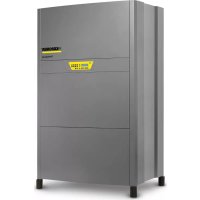
HD 7164 St - Pressure washer Kärcher - Free user manual and instructions
Find the device manual for free HD 7164 St Kärcher in PDF.



Download the instructions for your Pressure washer in PDF format for free! Find your manual HD 7164 St - Kärcher and take your electronic device back in hand. On this page are published all the documents necessary for the use of your device. HD 7164 St by Kärcher.
USER MANUAL HD 7164 St Kärcher
- Maximum total 2000 µS/cm ** Test volume 1 l, settling time 30 min *** no abrasive substances 19EN- 3 1 Solenoid valve water supply (upgrade kit, optional) 2 Water inlet 3 Swimmer valve 4 Container of softener liquid with solenoid valve (4.1), only with mod- el ST-H (option with model ST) 5 Prepressure pump, only with model ST-H 6 High pressure pump 7 Overflow valve 8 Back up valve 9 Pressure switch 10 Detergent injector 11 Pressure relief valve (upgrade kit, op- tion) 12 Vibration dampener 13 High-pressure outlet 14 Pipe system (option) 15 High pressure hose 16 Trigger gun with shutoff valve (16.1) and pressure/ volume regulation (16.2) 17 High pressure nozzle (triple nozzle) 18 Backflow valve, detergent suction un- der low pressure 19 Dosage valve for detergent 20 Level sensor detergent (upgrade kit, optional) consisting of 1 detergent solenoid valve (20.1) and 1 detergent level sensor (20.2). 21 Cleaning agent container 22 Detergent dosing 2nd detergent, (up- grade kit, option), consisting of 1 deter- gent dispensing valve (22.1), 1 deter- gent solenoid valve (22.2), 1 detergent level sensor (22.3) 23 Detergent dosing 2nd detergent under high pressure (upgrade kit, option), consisting of 1 detergent pump (23.1), and 1 detergent level sensor (23.2) 24 Detergent dosing, double under high pressure (upgrade kit, option), consist- ing of 1 detergent dispensing valve (24.1), 2 detergent pumps (24.2), and 2 detergent level sensor (24.3) 25 Water filter (option) With the decrease in total water flow the water runs through the water inlet, the swimmer tank, advance pressure pump hot water and through the high-pressure pump to the high-pressure outlet. If only a part of the water capacity fed from the pump is needed, the rest of the flow runs through the flow regulator back to the suction site of the high-pressure pump. Detergent is suctioned via the detergent in- jector and metered using the detergent dis- pensing valve. In order activate the suction, the multi-noz- zle must be set to "CHEM" (low pressure flat jet). With the upgrade kit "Detergent dosing in high pressure mode (option)", detergent can be added via a detergent pump. If the system pressure sinks during the standby period due to the opening of one of the consumers, the pressure switch will switch on the high pressure pump. Adding liquid softener will prevent the build- up of lime when operating with hot water. Starting with a hardness range of "medium" (8.4 - 14 °dH) and a supply temperature of more than 6C, the upgrade kit for water sof- tening (DGT) must be installed, or an exter- nal water softening system must be pre- sent. ST-H appliances are suitable for hot water operation of up to 85°C; ST applianc- es are suitable for supply water tempera- tures of up to 70°C. Function Flow pattern Full pump capacity Parts removal Detergent Automatic pump start Softener system 20 EN- 4 Appliance cover removed. 1 Oil tank 2 Oil drain screw 3 Power switch 4 Electronics system 5 Dosage valve for detergent 6 Container of softener liquid (option) 7 Float tank 8 Hourmeter (option) 9 Prepressure pump (model ST-H only) 10 Connectors for upgrade kits 11 Water input (HD 7/16, HD 8/19) 12 Fastening screw for device hood 13 Pressure switch 14 Vibration dampener 15 Mains cable with mains plug (not with all appliance versions) 16 High-pressure connection EASY!Lock 17 Water inlet (HD 13/12) 18 High-pressure pump 1 Indicator lamp Glows green: Appliance ready to oper- ate. Blinks green: Readiness period elapsed or maximum time for continu- ous operation exceeded (hose break fuse). Glows yellow: Fill in softener liquid (option). Blinks yellow: Lack of water (option) Glows red: Leaks in the high pressure system. 2 Power switch 3 Indicator lamp for detergent Glows if detergent container is empty (option). 4 Dosage valve I for detergent 5 Dosage valve II for detergent (optional) 1 Safety catch 2 Trigger 3 Trigger gun EASY!Force 4 Safety lever 5 Pressure/quantity regulation (option) 6 Spray lance EASY!Lock 7 Marking of the triple nozzle 8 Triple nozzle EASY!Lock 9 High pressure hose EASY!Lock The operator must use the appliance cor- rectly. When working with the appliance, he must consider the local conditions and pay due care and attention to other persons, in particular children, who are nearby. Never leave the appliance unattended when it is in operation. DANGER – Only operate the equipment with the front cover closed. – Risk of injury! Device, tubes, high pres- sure hose and connections must be in faultless condition. If they are not in a perfect state then the appliance must not be used. DANGER – The jet must not be directed at other persons or directed by the user at him/ herself to clean clothing or footwear. – Risk of injury from parts flying off! Fly- ing-off fragments or objects can injure people or animals. Never direct the wa- ter jet on fragile or loose objects. DANGER Long hours of using the appliance can cause circulation problems in the hands on account of vibrations. It is not possible to specify a generally valid operation time, since this depends on sev- eral factors: – Proneness to blood circulation deficien- cies (cold, numb fingers). – Low ambient temperature. Wear warm gloves to protect hands. – A firm grip impedes blood circulation. – Continuous operation is worse than an operation interrupted by pauses. In case of regular, long-term operation of the device and in case of repeated occur- rence of the symptoms (e.g. cold, numb fin- gers) please consult a physician.
DANGER Risk of injury on account of the emanating water jet that could be hot! Check high pressure hose, pipe con- nections, fittings and water jet for dam- age every time before use. Replace leaky components immediate- ly and seal all leaky connection points immediately. Check hose coupling to ensure that it sits firmly and is leak-proof. ATTENTION Risk of damage on account of dry running. Check filling level of the detergent tank and refill if required. Check softener fluid level and refill if necessary. To open the trigger gun: Actuate the safety lever and trigger. To close the hand spray gun: Release the safety lever and trigger. Device elements Operating elements Operation Safety instructions Making the plant ready for operations Opening/closing the trigger gun 21EN- 5 Note: The appliance is equipped with a pressure switch. The motor starts up only when the lever of the pistol is pulled Open the water supply. Plug in the mains plug. (Only with appliance versions with pow- er cable and mains plug). Set the appliance switch to "I". The indicator lamp glows green. Release the trigger gun. To do so, push the safety catch towards the back. Open the hand spray gun. DANGER When adjusting the pressure/quantity regu- lation, make sure that the screw connection of the spray lance does not become loose. Set working pressure and water quanti- ty by turning (rungless) at the pressure and quantity regulation (option) (+/-). Close the hand spray gun. Turn the casing of the nozzle till the de- sired symbol matches the marking. 몇 CAUTION Unsuitable detergents can cause damage to the appliance and to the object to be cleaned. Use only those detergents that have been approved by Kärcher. Observe the dosage and other instructions provided with these detergents. For considerate treatment of the environment use detergent economically. Follow the safety instructions for using de- tergents. Kärcher detergents ensure smooth func- tioning. Please consult us or ask for our cat- alogue or our detergent information sheets. Place the detergent can under the de- vice. Hang in the detergent hose into the de- tergent can. Set nozzle to "CHEM". Set dosing value for detergent to the desired concentration. Spray the detergent sparingly on the dry surface and allow it to react, but not to dry. Spray off loosened dirt with the high- pressure ray. After operations, dip the filter in clear water. Turn the dosing valve to the highest detergent concentration. Start the appliance and rinse for one minute. Close the hand spray gun. The appliance switches off. Secure the trigger gun. To do so, push the safety catch towards the front. After the interruption: Release the trigger gun. To do so, push the safety catch towards the back. Open the hand spray gun. The appliance will switch on again. The operational readiness period starts when the trigger gun is closed. The device can no longer be started by opening the trigger gun if this operational readiness pe- riod (5 to 120 minutes) expires. The indicator lamp blinks green. To restart, turn the device switch briefly to "0" and then again to "I". Note: Customer service can set the operational readiness period. Set the appliance switch to "0". Wait for a while. Set the appliance switch to "I".
Use the respective button on the re- mote control (option). Shut off water supply. Open the hand spray gun. Switch on the pump with the power switch and allow to run for about 5-10 seconds. Close the hand spray gun. Set the appliance switch to "0/OFF“. Pull main plug out of socket with dry hands only. (Only with appliance versions with pow- er cable and mains plug). Remove water connection. Activate hand spray gun until device is pressure less. Secure the trigger gun. To do so, push the safety catch towards the front. ATTENTION Frost will destroy the not completely water drained device. The machine should be stored in frost-free rooms. In case there is frosting risk, for e.g. if the machine is installed in open areas, then the machine must first be emptied and flushed using an anti-freezing agent. Remove the water inlet hose on the ap- pliance. Unscrew the high pressure hose from the appliance. Let the appliance run till the pump and pipes are empty (max. 1 minute). In case of longer operational breaks: Fill in normal anti-frost agents in the swimmer tank right until the top. Place the collection trough under the high pressure exit. Turn on the equipment and let it run un- til the equipment is completely rinsed. Turn the emergency-stop switch to "0". Shut off water supply. Activate trigger gun until device is pres- sure-less. Unscrew the fastening screw of the ap- pliance cover. Slightly lift up the appliance cover and remove it toward the front. 몇 CAUTION Risk of injury and damage! Observe the weight of the appliance when you transport it. ATTENTION Protect the trigger from damage during transport. When transporting in vehicles, secure the appliance according to the guide- lines from slipping and tipping over. 몇 CAUTION Risk of injury and damage! Note the weight of the appliance in case of storage. DANGER Risk of injury! Switch off the power switch with all maintenance and repair work. Pull the mains plug and secure it against being plugged in again DANGER Risk of injury on account of the emanating water jet that could be hot! During all tasks: – Close locking tap of fresh water. – Let the hot parts of the plant cool down. – Depressurise the plant by opening all hand-spray guns. The bases of a safe operating of the equip- ment is thr regularly maintenance accord- ing to the following maintenance plan. Use exclusively original parts of the manu- facturer or those parts recommended by him like – replacement and wear parts – Accessory parts –Fuel – Detergent High pressure operation Select spray type High pressure circular spray (0°) for specially stubborn dirt Flat low pressure spray (CHEM) for operating using de- tergents or cleaning at low pressure. High pressure flat spray (25°) for large dirt areas Operation with detergent Recommended cleaning method Interrupting operation Operational readiness period Restart the operation readiness time Turn off the appliance Frost protection Emptying the appliance Switch-off in case of emergency Remove the appliance cover Transport Storing the device Care and maintenance 22 EN- 6 You can sign with your dealer a contract for regular safety inspection or even sign a maintenance contract. Please take advice on this matter. Safety inspection/ maintenance contract Maintenance schedule Time Activity Assembly affected Performance of whom daily Check hand- spray gun Hand spray gun Check whether the hand-spray gun closes tightly without any leaks. Check the protection mechanism against accidental switching. Replace defective hand-spray guns. Operator opinion Power cord (Only with appliance versions with power cable and mains plug). Check the mains cable regularly for damage such as aging or formation of cracks. If you find a damage, then the cable must be replaced before using it any further. Operator/ Customer Service Test fill level Detergent tank, Installation wa- ter softener (optional) Check filling level, refill if necessary. Operator Check high pres- sure hoses Outlets, hoses towards working machine Check hoses to see if there are damages. Replace defect hoses immediately. Danger of accident! Operator weekly or after 40 operating hours Check the unit for leaks Entire plant Check pumps and pipes for leaks. Inform Customer Service if there is oil loss or if there is a leakage of more than 10 drops of water per minute. Operator/ Customer Service Check oil level Oil tank at the pump If the oil is milky, it needs to be replaced. It is recom- mended likewise in this case that the pump's oil seal be changed (Customer Service). Operator/ Customer Service Check oil level Oil tank at the pump Check oil level of the pump. Refill oil if required (Or- der no. 6.288-016) Operator Clean filter Filter at the detergent suck hose Clean filter at the detergent suck hose. Operator Test vibration dampener Vibration dampener If the vibration of the pump increases it indicates that the pressure tank is defective. Replace the vibration dampener. Customer Service monthly or after 200 operating hours Cleaning the sieve Sieve in water inlet Check, dismantle sieve and clean it. Operator Test swimmer valve Float tank When the swimmer valve is closed no water can es- cape the overflow. Operator Test automatic start Pressure switch Pump is at a standstill, because no water removal has taken place. Turn on the hand spray gun. If the pressure in the high pressure network falls below 3 MPa, the pump must be turned on. Operator Tighten hose clips All hose clips Tighten the hose clips using a torque wrench. Tight- ening torque up to a diameter of 28 mm = 2Nm, from 29 mm = 6 Nm. Operator annually or after 1000 operating hours Oil change High-pressure pump Drain off oil. Refill oil. Check oil level in the oil tank. Operator Check unit for calcium deposits. entire water system Improper functioning of valves or pumps can be an indication of calcium deposits. If necessary decalcify. Operator trained in de- calcification annual Safety check Entire plant Safety check according to the guidelines for fluid spraying equipment. Technical ex- pert 23EN- 7 In order to guarantee a reliable operation of the equipment, we success, you signed a maintenance agreement. Please refer to your local Kärcher service department. Who may perform maintenance? Operator Work designated with the sign “Opera- tor” may only be carried out by persons who have been instructed in the safe operation and maintenance on the high pressure plant. Electricians Only persons with a professional train- ing in the electro-technical area. Customer Service Work designated with the sign “Cus- tomer Service” may only be done by the fitters of Kärcher Customer Service. WARNING Risk of burns due to hot oil or hot parts of the plant. Allow the pump to cool down for minutes before oil change. Note: Used oil must only be disposed of by the designated collection points. Please turn in used oil there. Polluting the environment with used oil is prosecutable. For oil type refer to technical specifica- tions. 1 Oil tank 2 Oil drain screw Place the collection trough under the oil drain screw. Remove the lid of the oil container. Unscrew the oil drain screw and collect oil. Fix in the oil drain screw and tighten it. Slowly fill in new oil until the "MAX" marking on the oil container. Attach the lid of the oil container. Dispose of old oil ecologically or turn it in at a collection point. Calcium deposits can lead to: – higher pipe resistances – even to failure of the components with heavy calcium deposits DANGER – Risk of explosion due to combustible gases! Smoking strictly prohibited dur- ing decalcification. Ensure proper ven- tilation. – Risk of chemical burns on account of acid! Wear protective glasses and pro- tective gloves. Note: – Follow the specifications of the accident prevention regulation BGV A1. – Follow instructions for use on the lable of the decalcifying agent. According to statutory requirements, only tested and approved boiler decrusting agents may be used. – RM 100 (Order No. 6.287-008) dis- solves chalk and simple compounds of chalk and detergents residues. – RM 101 (Order No. 6.287-013) dis- solves the deposits that cannot be dis- solved using RM 100. Note: As an anti-corrosion measure and for neu- tralising the acid residue, we recommend that you finally pump an alkaline solution through the machine (for e.g. RM 81) via the detergent tank. First decalcify the swimmer tank. Shut off water supply. Remove the lid of the swimming tank. Remove the hose from the suction site of the pump for the swimming tank on the pump site. Seal the free end of the hose. Fill in 7 percent decalcification solution. Remove resin completely from the tank after decalcification. Decalcify the high pressure installation: Remove the high pressure hose from the network supply and hang it in the swimmer tank. Run the calcium dissolving acid mixture prepared in the tank through the instal- lation's cycle, allow it to take effect, rinse. Maintenance contract Maintenance Works Oil change Descaling 24 EN- 8 DANGER Risk of electric shock. Risk of injury! Switch off the power switch with all maintenance and repair work. Pull the mains plug and secure it against being plugged in again DANGER Risk of injury on account of the emanating water jet that could be hot! DANGER Risk of accident while working on the unit! During all tasks: – Close locking tap of fresh water. – Let the hot parts of the plant cool down. – Depressurise the plant by opening all hand-spray guns. Who may remedy faults? Operator Work designated with the sign “Opera- tor” may only be carried out by persons who have been instructed in the safe operation and maintenance on the high pressure plant. Electricians Only persons with a professional train- ing in the electro-technical area. Customer Service Work designated with the sign “Cus- tomer Service” may only be done by the fitters of Kärcher Customer Service. Troubleshooting Fault Possible cause Remedy of whom Water stream is uneven. Nozzle is blocked. Clean the nozzle. Operator Amount of water supply is too low. Check water supply. Operator Inadequate or no flow of de- tergent Dosage adjusted too low. Increase dose. Operator Nozzle is set to "High pressure". Set nozzle to "CHEM". Operator Suction filter in the detergent tank is dirty. Clean the suction filter. Operator Detergent suck hose leaking. Replace suck hose. Customer Service Manual detergent dispensing valve oc- cluded, defective. Check; clean, replace, if required. Customer Service Pressure does not build up in the pump Nozzle is set to "CHEM" Set nozzle to "High pressure". Operator Air in the high pressure pump Ventilate the appliance (see "System start- up") Operator Suction site pipe leaking. Check screw fittings and hoses. Operator Not enough water Ensure adequate water supply. Operator Sieve in the water inlet is dirty Clean sieve. Operator High pressure hose leaking. Replace high pressure hose. Customer Service Piping leaking. Repair piping system. Customer Service Flow regulator defective. Test flow regulator, repair. Customer Service The valve in the pump is defective. Replace valve. Customer Service High pressure pump is knocking; manometer (op- tion) is swaying wildly Vibration dampener is defective. Replace vibration dampener. Operator Water pump does not suck in adequate air. Check suction system and remove leaks. Operator Detergent container is empty Refill detergent tank. Operator Water flow temperature too hot. Lower water temperature. Operator Water flow blocked. Clean sieve in the water inlet, check the water flow. Operator Valve plate or valve spring is defective. Replace parts Customer Service Advance pump calcified or defective. Check advance pump. Operator The installation does not start when switched on or when pressing the remote control (optional). Appliance switch is switched off Turn it on. Operator On-board electricity supply interrupted. Turn it on. Operator Pressure switch is defective Replace pressure switch. Customer Service Motor protection switch was trigged by overflow or loss of a phase of the elec- tricity supply. Check the voltage of the three phases. Electrician/ Custom- er Service Motor protection switch is set incorrect- ly. Adjust according to circuit diagram. Electrician/ Custom- er Service Motor protection switch for controls and advance pressure pump triggered. Check motor protection switch. Electrician/ Custom- er Service Control safety transformer defective. Examine the cause, replace the control safety device. Electrician/ Custom- er Service Circuit board defective. Check circuit board, replace if required. Customer Service Pump starts during the stand-by period and not when the hand spray gun is opened. Pressure switch or pressure switch ca- ble defective. Replace the pressure switch or cable. Customer Service Installation does not switch off. Pump is drawing in air over the empty detergent tank. Refill the detergent tank, ventilate suction line. Operator Pressure switch is defective. Replace pressure switch. Electrician/ Custom- er Service 25EN- 9 Technical specifications HD 7/16-4 ST HD 7/16-4 ST-H HD 9/18-4 ST HD 9/18-4 ST-H HD 13/12-4 ST HD 13/12-4 ST-H Electrical connection Voltage V 400 230 440 220 400 230 440 220 400 230 440 220 Current type--3~3~3~ Frequency Hz 506050605060 Connected load kW 5,0 6,8 7,3 Electrical protection (slow) A 162516251625162516251625 Type of protection IPX5 Power supply mm
dB(A) 3 3 3 Guaranteed sound power level dB(A) 87 88 91 Fuel Amount of oil l 0,5 0,75 1,25 Oil grade -- SAE 90 Hypoid Dimensions and weights Width mm 533 Height mm 790 Depth mm 420 Weight, basic appliance, ST kg 58 65 78 Weight, basic appliance, ST-H kg 62 69 82 26 EN- 10 A Water inlet 3/4" B High-pressure connection EASY!Lock C Electrical connection from the bottom D Wall mount EOn rack Specifications sheet 27EN- 11 Detergents simplify the cleaning tasks. The table gives a selection of detergents. Please read the instructions on the packag- ing carefully before working with any deter- gents. The following types of detergent are not suitable because they damage the equipment. – cleaning agent containing nitrit acid – cleaning agent containing active chlo- rinate
- = only for short use, two-step method, rinse with clean water ** = ASF = easy-to-dispose *** = Foam-Star 2000 is best suited for ini- tial spraying Accessories Detergent Area of application Target group Detergent Kärcher descrip- tion Dosage Foaming Food industry/disassembly facilities Disinfection cleaning RM 732 1-3% Disinfectant RM 735 0,75-7% Foam disinfecting detergent, alkali-based RM 734 2-5% Beverage facilities/wine cel- lars Foam detergent, alkali-base RM 58 ASF 1-2% Foam cleaner, acidic RM 59 ASF 1-2% Foam disinfecting detergent, alkali-based RM 734 2-5% Community Exterior foam cleaner, neutral RM 57 1-2% Disinfecting cleaner, inside RM 732 1-3% Agriculture Disinfection cleaning RM 732 1-3% Disinfectant RM 735 0,75-7% High-pressure clean- ing Beverage facilities/wine cel- lars Universal cleaner RM 55 0,5-8% Foam disinfecting detergent, alkali-based RM 734 2-5% Community Active cleanser, alkali-based RM 81 1-5% Agriculture Active cleanser, alkali-based RM 31 1-5% Active cleanser, alkali-based RM 81 1-5% Ship equipment Active cleanser, alkali-based RM 81 1-5% Automotive/lorry workshop Active cleaner, alkali-based (engine/ parts) RM 31 1-5% Active cleaner, alkali-based (vehicle, top and bottom wash) RM 81 1-5% Floor cleaning Food industry/disassembly facilities Intensive basic cleaner RM 750 1-5% Floor basic cleaner RM 69 0,5-1% Beverage facilities/wine cel- lars, community Intensive basic cleaner RM 750 1-5% Floor basic cleaner RM 69 0,5-1% Automotive/lorry workshop Intensive basic cleaner RM 750 1-5% Floor basic cleaner RM 69 0,5-1% Ship equipment Intensive basic cleaner RM 750 1-5% Floor basic cleaner RM 69 0,5-1% Washing brush Community Exterior active cleanser, alkali-based RM 81 1-5% Universal cleaner RM 55 0,5-8% Automotive/lorry workshop Active cleaner, alkali-based (vehicle, top and bottom wash) RM 81 1-5% Ship equipment Exterior active cleanser, alkali-based RM 81 1-5% 28 EN- 12 Attachment sets Remote controls 1 Upgrade kit, remote re- lease* 2.637-491.0 1 operating point. Restoring the operation readiness after the readiness period has elapsed. Several operating stations can be used parallelly. 2 Upgrade kit for remote con- trol, HD simple* 2.744-014.0 1 operating point. Actuation of the high pressure pump and up to two detergent. Use of 2 operating stations or one operating station and one coin remote control (item 3) in connection with the priority switch (item 4). 3 Upgrade kit coin remote control* 2.642-422.0 Coin remote control. Actuation of the high pressure pump and up to two detergents after coin insertion. 4 Upgrade kit priority switch* 2.638-200.0 Switching between 2 remote controls (item 2) or one remote control (item 2) and one coin remote control (item 3). 5 Upgrade kit control electron- ics, multi remote control* 2.744-036.0 Actuation of the high pressure pump and two detergents from up to 6 operating sta- tions (item 6). Additional connectivity for a coin remote control (item 3). 6 Upgrade kit operating sta- tion, multi remote control 2.744-015.0 Operating station for multi remote control (item 5). 7 Upgrade kit emergency stop* 2.744-002.0 Interrupts the mains supply to the system. 8 Upgrade kit junction box 2.744-798.0 Is needed to connect the upgrade kits (item 1) through (item 7) to the appliance. Com- pletely wired, connection via connectors on the appliance. 9 Upgrade kit, connection box for remote release 2.209-807.0 Required to connect the upgrade kits remote release (item 1) and emergency stop (item 7). Attachment kits 1 Upgrade kit pressure relief 2.209-773.0 Relieves the high pressure system of pressure after the readiness period has elapsed. 2 Upgrade kit, single deter- gent for low-pressure opera- tion* 2.209-779.0 Necessary when selecting one detergent via the remote control. Consists of 1 sole- noid valve and 1 level sensor**. 3 Upgrade kit, double deter- gent for low-pressure opera- tion* 2.209-780.0 Necessary when selecting a second detergent via the remote control (optional for item 5). Consists of 1 solenoid valve, 1 level sensor and 1 dispensing valve. 4 Upgrade kit, single deter- gent in high pressure mode* 2.209-799.0 Allows the dispensing of detergent in high pressure mode. Is necessary to actuate a detergent via a remote control. The appliance has standard detergent dispensing in low pressure mode, which is activated by switching the triple nozzle. When installing this upgrade kit, you will not need to switch over with the triple nozzle. 5 Upgrade kit, double deter- gent in high pressure mode* 2.209-800.0 Allows the dispensing of detergent in high pressure mode. Is necessary to actuate a second detergent via a remote control. The appliance has standard detergent dis- pensing in low pressure mode, which is activated by switching the triple nozzle. When installing this upgrade kit, you will not need to switch over with the triple nozzle. 6 Upgrade kit for water soften- ing (DGT) 2.209-777.0 Prevents lime buildup in hot water mode by dispensing softener liquid. 7 Upgrade kit hour meter 2.209-778.0 Captures the operating times of the appliance to be able to keep the maintenance in- tervals. 8 HWE 860 3.070-036.0 Heats the supplied water using an electrically heated boiler. 9 Upgrade kit floor rack St 2.210-058.0 To install the appliance when a wall mount is not possible. Steel model, painted. 10 Upgrade kit floor rack VA 2.210-059.0 To install the appliance when a wall mount is not possible. Stainless steel model, rustproof. 11 Upgrade kit solenoid valve for water inlet 2.209-788.0 Interrupts the water supply during appliance standstill.
- upgrade kit junction box required **The appliance has standard detergent dispensing in low pressure mode, which is activated by switching the triple nozzle. 29EN- 13 – Check the contents of the pack before unpacking. – In case of transport damage inform ven-dor immediately.– Store the drilling template on the carton to assemble the device.Note:The water connection, the high pressure network as well as the electrical connection can only be carried out by authorised ex-perts in accordance with local regulations.– The installion should be set-up in a dry, non-explosive environment. – The installion should be installed on firm and even ground.– The installion should be easily accessi-ble for maintenance work.The following are required for installation:– Wall mount– Installation with the mounting kit floor rack (optional)몇 CAUTIONRisk of personal injury or damage! Note the weight of the appliance during installation.ATTENTIONRisk of damage! Freezing water in the ap-pliance can destroy parts of the appliance. The machine should be stored in frost-free rooms. In case there is frosting risk, for e.g. if the machine is installed in open areas, then the machine must first be emptied and flushed using an anti-freezing agent. Check the wall's support capacity. Mark the wall using the drill template on the packaging. Drill the bores into the wall. Attach the installation materials to the wall. Remove the appliance cover. Hang up the appliance and secure it against falling down. Replace the appliance hood and fasten it with screws.– For connection values, see technical data and type plate.– The power supply designed for operat-ing the plant must be suitable for contin-uous operations.– The electrical connections must be done by an electrician according to IEC 60364-1. – Current-carrying parts, cables and ap-pliances in the working area must be in-stalled in a defectless state and must be protected against water sprays.– Design the water supply for continuous operations.– The water feed line is provided with a stop valve and can be moved over a pressure hose and attached to the high pressure system.– If the cross section of the line is too small or if the advance pressure is too low, there will be a lack of water.– When the advance pressure or the rinse pressure is too high, it is absolute-ly necesary to install a pressure reduc- er. – A water drain must be present at instal-lation site.For installation, please follow the specifica-tions of the VDMA sheet 24416 "High pres-sure cleaners; fixed high pressure cleaning systems; concepts, requirements, installa-tion, testing" (the German version can be procured from Beuth Verlag, Cologne, www.beuth.de).– The fixed pipe network and the install-ion should be connected with a high pressure line. – The fixed pipe network should be placed as straight as possible. High pressure piping systems should be in-stalled correctly with removable and fixed clips, taking into consideration the variation in length caused by the effects of heat and pressure. – In order to keep pressure losses in the high pressure piping as small as possi-ble, we recommend the following:Pipelines: Nominal width DN 15 (1/2“).Hose lines: Nominal width DN 8.In regards to the above mentioned stand-ard values, the length of the pipes and the number of direction changes and fittings must be taken into account. Note: The EASY!Lock system joins com-ponents with a quick-fasten thread solidly and securely with just one turn.Illustration, see "Operating components". Mount the nozzle on the spray lance (marking on the adjustment ring at the top) and hand-tighten it (EASY!Lock). Join the spray lance with the trigger gun and tighten until hand-tight (EASY!Lock). Join the high-pressure hose with trigger gun and tighten until hand-tight (EASY!Lock). Connect the high-pressure hose to the high-pressure outlet of the device or the high-pressure pipeline network (EASY!Lock).The detergent tank is set up in such a way, that the bottom of the tank is located not more than 1.5 m unter the unit. Check that water inlet has the required flow and the permissible temperature. Check oil level of the pump. Cut off tip of oil container. Installing the plant Only for authorised techni-cians!UnpackingInstallationFasten the device to the wall
Electrical connectionWater supplyHigh pressure installationInstall hand spray gun, spray lance and nozzleInstall the detergent tankInitial startup