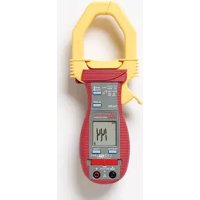
ACDC100TRMS - Measuring equipment Amprobe - Free user manual and instructions
Find the device manual for free ACDC100TRMS Amprobe in PDF.



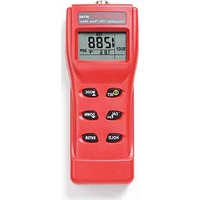
| Product Type | True RMS Digital Multimeter Clamp |
| Brand | Amprobe |
| Model | ACDC100TRMS |
| Main Measurements | DC current up to 1000 A, AC current up to 800 A, DC/AC voltage up to 600 V, Resistance, Continuity, Diode, Capacitance |
| Display | LCD 3-3/4 digits, 4000 counts |
| Jaw Opening | 50 mm maximum |
| Power Supply | 2 AAA 1.5 V batteries (NEDA 24G or IEC R03) |
| Dimensions | 227 x 78 x 40 mm |
| Weight | 290 g (0.6 lb) |
| Safety Category | CAT III 600 V, double insulation, pollution degree 2 |
| Special Functions | HOLD, MAX, Relative Zero (Δ), Backlight, Auto/Manual Range Selection, Auto Power Off (30 min) |
| Maintenance and Cleaning | Soft cloth with water/mild detergent solution; do not use chlorinated or aromatic solvents |
| Battery Replacement | Disconnect test leads, remove cover screw, replace with AAA batteries, respect polarity |
| Repairability | Repair by authorized center or qualified personnel; no user intervention except batteries |
| Warranty | 1 year against defects in materials and workmanship |
| Included Accessories | Set of test leads, 2 AAA batteries (installed), carrying case, instruction manual |
| Operating Temperature | 0 °C to 40 °C, relative humidity < 80% |
| Storage Temperature | -20 °C to 60 °C, relative humidity < 80% |
| Power Consumption | 11 mA for current measurements, 2.9 mA for other functions; auto power off: 90 μA typical |
| Protection Rating | Indoor use only, altitude < 2000 m |
Frequently Asked Questions - ACDC100TRMS Amprobe
User questions about ACDC100TRMS Amprobe
0 question about this device. Answer the ones you know or ask your own.
Ask a new question about this device
Download the instructions for your Measuring equipment in PDF format for free! Find your manual ACDC100TRMS - Amprobe and take your electronic device back in hand. On this page are published all the documents necessary for the use of your device. ACDC100TRMS by Amprobe.
USER MANUAL ACDC100TRMS Amprobe
natural_image
Abstract geometric logo composed of three white triangles on black background (no text or symbols)AMPROBE®
ACDC-100 TRMS
ACDC-100
Versatile AC/DC Clamp-on
Multimeter Series
Users Manual
Mode d'emploi•
Bedienungshandbuch•
Manuale d'Uso•
Manual de uso•
Användarhandbok•

AMPROBE®
ACDC-100 TRMS ACDC-100
Versatile AC/DC Clamp-on Multimeter Series
Users Manual
Limited Warranty and Limitation of Liability
Your Amprobe product will be free from defects in material and workmanship for 1 year from the date of purchase. This warranty does not cover fuses, disposable batteries or damage from accident, neglect, misuse, alteration, contamination, or abnormal conditions of operation or handling. Resellers are not authorized to extend any other warranty on Amprobe's behalf. To obtain service during the warranty period, return the product with proof of purchase to an authorized Amprobe Test Tools Service Center or to an Amprobe dealer or distributor. See Repair Section for details. THIS WARRANTY IS YOUR ONLY REMEDY. ALL OTHER WARRANTIES - WHETHER EXPRESS, IMPLIED OR STAUTORY - INCLUDING IMPLIED WARRANTIES OF FITNESS FOR A PARTICULAR PURPOSE OR MERCHANTABILITY, ARE HEREBY DISCLAIMED. MANUFACTURER SHALL NOT BE LIABLE FOR ANY SPECIAL, INDIRECT, INCIDENTAL OR CONSEQUENTIAL DAMAGES OR LOSSES, ARISING FROM ANY CAUSE OR THEORY. Since some states or countries do not allow the exclusion or limitation of an implied warranty or of incidental or consequential damages, this limitation of liability may not apply to you.
Repair
All test tools returned for warranty or non-warranty repair or for calibration should be accompanied by the following: your name, company's name, address, telephone number, and proof of purchase. Additionally, please include a brief description of the problem or the service requested and include the test leads with the meter. Non-warranty repair or replacement charges should be remitted in the form of a check, a money order, credit card with expiration date, or a purchase order made payable to Amprobe ^® Test Tools.
In-Warranty Repairs and Replacement – All Countries
Please read the warranty statement and check your battery before requesting repair. During the warranty period any defective test tool can be returned to your Amprobe® Test Tools distributor for an exchange for the same or like product. Please check the "Where to Buy" section on www.amprobe.com for a list of distributors near you. Additionally, in the United States and Canada In-Warranty repair and replacement units can also be sent to a Amprobe® Test Tools Service Center (see address below).
Non-Warranty Repairs and Replacement – US and Canada
Non-warranty repairs in the United States and Canada should be sent to a Amprobe ^® Test Tools Service Center. Call Amprobe ^® Test Tools or inquire at your point of purchase for current repair and replacement rates.
In USA In Canada
Amprobe Test Tools Amprobe Test Tools
Everett, WA 98203 Mississauga, ON L4Z 1X9
Tel: 877-AMPROBE (267-7623) Tel: 905-890-7600
Non-Warranty Repairs and Replacement – Europe
European non-warranty units can be replaced by your Amprobe ^® Test Tools distributor for a nominal charge. Please check the "Where to Buy" section on www.amprobe.com for a list of distributors near you.
European Correspondence Address\*
Amprobe ^® Test Tools Europe
In den Engematten 14
79286 Glottertal, Germany
Tel.: +49 (0) 7684 8009 - 0
*(Correspondence only – no repair or replacement available from this address. European customers please contact your distributor.)
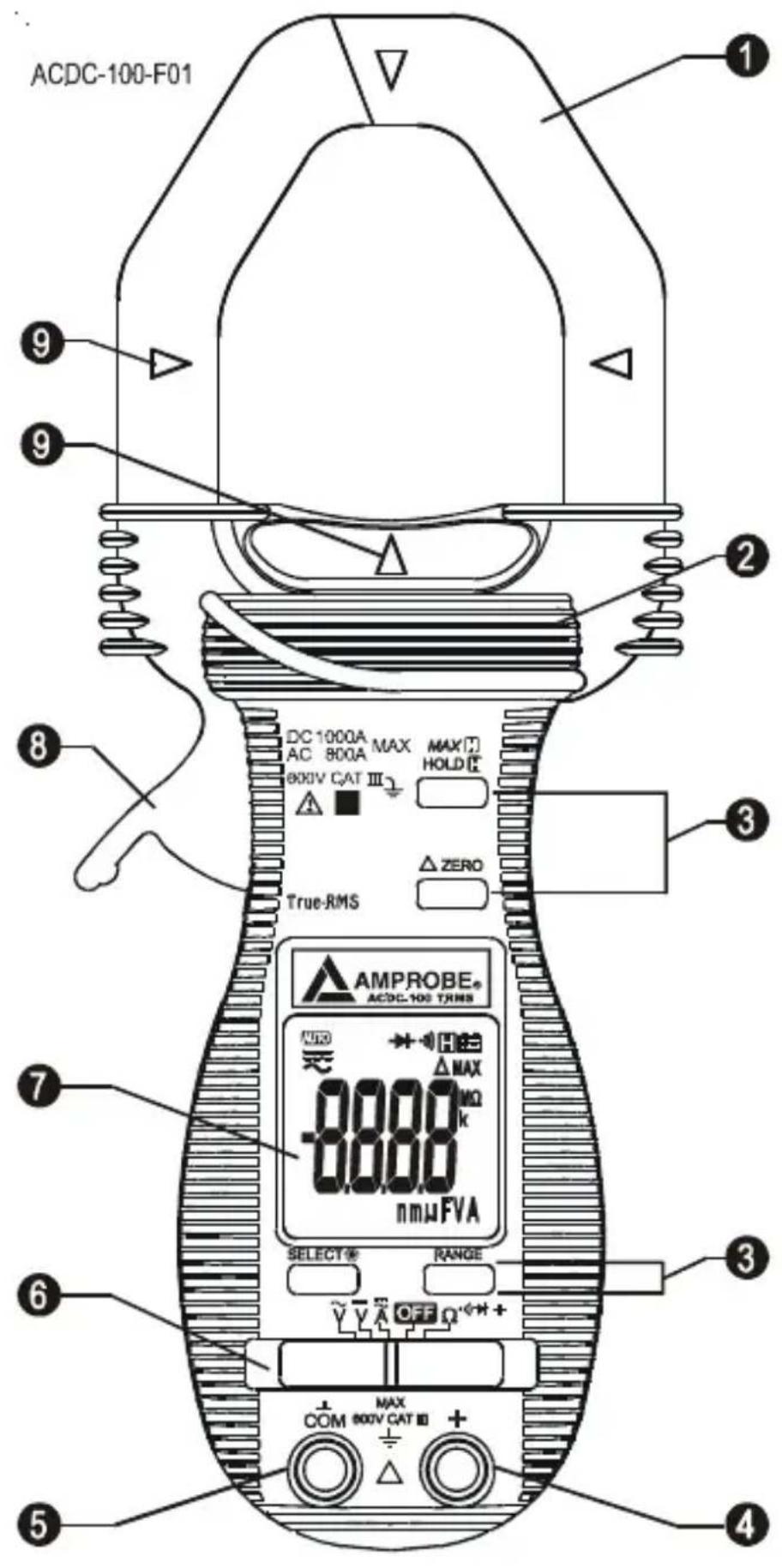
① Hall-effect Clamp Jaw for AC & DC current electric field pick up
② Hand/Finger Barrier to indicate the limits of safe access of the meter during measurement
③ Push-buttons for special functions & features
4 Input Jack for all functions EXCEPT non-invasive ACA & DCA current functions
⑤ Common (Ground reference) Input Jack for all functions EXCEPT non-invasive ACA & DCA current functions
⑥ Slide-switch Selector to turn the power ON/OFF and Select a function
⑦ 3-3/4 digits 4000 counts LCD display
⑧ Jaw trigger for opening the clamp jaw
9 Jaw center Indicators, at where best ACA & DCA accuracy is specified
CONTENTS
Symbols....5
Safety Information....5
Unpacking and Contents 6
Introduction......6
Features 6
Alignment marks 6
MAX H / HOLD H 6
HOLD 7
MAX 7
△ Relative Zero mode ....7
SELECT / Backlight (☀️) 7
Manual or Auto-ranging ....7
Auto Power Off function 7
Operation 7
DC Voltage 7
AC Voltage 7
AC Current 8
DC Current 8
Resistance 8
Continuity 8
Diodes 8
Capacitance 9
Maintenance and Repair 9
Battery Replacement 9
Specifications....10
General Specifications ....10
Electrical 11
 | Battery |  | Refer to the manual |
 | Double insulated |  | Dangerous Voltage |
 | Direct Current |  | Earth Ground |
 | Alternating Current |  | Audible tone |
 | Conforms to relevant Australian standards. |  | Complies with EU directives |
 | Do not dispose of this product as unsorted municipal waste. |  | Underwriters Laboratories.[Note: Canadian and US.] |
 | Application around and removal from hazardous live conductors is permitted |
SAFETY INFORMATION
The ACDC-100 Series Digital Clampmeters conform to EN61010-1:2001; EN61010-2-032:2002; CAT III 600 V, class 2 and pollution deg.2
This instrument is EN61010-1 certified for Installation Category III (600V). It is • recommended for use in distribution level and fixed installations, as well as lesser installations, and not for primary supply lines, overhead lines and cable systems.
Do not exceed the maximum overload limits per function (see specifications) nor the limits marked on the instrument itself. Never apply more than 600 Vdc/600 V ac rms between the test lead and earth ground.

Warnings and Precautions
Before and after hazardous voltage measurements, test the voltage function on a known • source such as line voltage to determine proper meter functioning.
Disconnect the test leads from the test points before changing meter functions.
Inspect the Clampmeter, test leads and accessories before every use. Do not use any • damaged part.
Never ground yourself when taking measurements. Do not touch exposed circuit elements • or test probe tips.
Do not operate the instrument in an explosive atmosphere.
To reduce the risk of fire or electric shock, do not expose this product to rain or moisture.
The meter is intended only for indoor use. To avoid electrical shock hazard, observe the proper safety precautions when working with voltages above 60 VDC or 30 VAC rms.
These voltage levels pose a potential shock hazard to the user.
Before and after hazardous voltage measurements, test the voltage function on a known • source such as line voltage to determine proper meter functioning.
Keep your hands/fingers behind the hand/finger barriers (of the meter and the test leads) • that indicate the limits of safe access of the hand-held part during measurement.
Inspect test leads, connectors, and probes for damaged insulation or exposed metal before using the instrument. If any defects are found, replace them immediately.
This Clamp-on meter is designed to apply around or remove from uninsulated hazardous live conductors. Individual protective equipment must be used if hazardous live parts of the installation could be accessible.
Exercise extreme caution when: measuring voltage >20 V // current >10 mA // AC power • line with inductive loads // AC power line during electrical storms // current, when the fuse blows in a circuit with open circuit voltage >1000 V // servicing CRT equipment.
Remove test leads before opening the case to change the battery.
Disconnect circuit power and discharge all high-voltage capacitors before testing • resistance, continuity, diodes, or capacitance.
To avoid false readings, which could lead to possible electric shock or personal injury, replace the batteries as soon as the low battery indicator ( + ) appears.
UNPACKING AND CONTENTS
Your shipping carton should include
1 ACDC-100 or ACDC-100 TRMS
1 Test lead set
2 1.5V AAA Battery (Installed)
1 Users Manual
1 Carrying Case
If any of the items are damaged or missing, immediately return the complete package to the place of purchase for an exchange.
INTRODUCTION
The ACDC-100 and ACDC-100 TRMS Clamp-On meters are 1000 Amp / 600 V clamp meters with 50 mm jaw opening for industrial applications. The features include large conductor size and in-rush current measurement along with AC / DC voltage, AC / DC current, Resistance, Continuity and Diode Tests.
FEATURES
Alignment marks (see Fig. 1)
Place conductor within the jaws at the intersection of the indicated marks as close as possible to maximize the accuracy of the reading.
MAX H / HOLD H
The HOLD feature freezes the display when the Ⓗ button is pressed. The MAX feature compares and displays the measured maximum value as fast as 30ms with auto-ranging capability.
HOLD
Press the HOLD button momentarily toggles to hold mode for all of the functions. To release the HOLD feature momentarily press the HOLD button.
MAX
Press the HOLD button for 1 second or more activates the MAX HOLD feature for the VDC, VAC and ACA functions. To release the MAX HOLD feature press the HOLD button for 1 second or more.
△ Relative Zero mode
Relative Zero mode allows the user to offset the subsequent meter measurements with the displayed reading as the reference value. The display will now show readings relative to the stored reference value. That is, display = reading - stored value. Pressing the button momentarily toggles to relative mode.
SELECT / Backlight (☀️)
Press Backlight button more than 1 second, enable/disable Backlight.
Press the SELECT / Backlight button to step through the manually selected A≡ and Ω functions.
$$ A = \rightarrow A \sim \text { and } \Omega \rightarrow \text { 丨丨丨 } \rightarrow \blacktriangleright \rightarrow \blacktriangleright $$
Manual or Auto-ranging
Press the RANGE button momentarily to select manual-ranging mode. The LCD symbol AJTO turns off. Press the button momentarily again to step through the Ranges. Press and hold the RANGE button for more than 1 second to resume auto-ranging.
Auto Power Off function
The clamp meter powers down automatically after approximately 30 minutes of inactivity.
To turn it back on, move the function selector switch to OFF and back to a measuring function.
To disable Auto Power Off, press and hold the HOLD button while moving the slide switch to the desired function from OFF.
OPERATION
DC Voltage (see Fig. 1)
Set the Function Switch to 1. V=.
Connect the test leads: Red to 2. +, Black to COM.
Connect the test probes to the circuit test points. 3.
Read the display, and if necessary, correct any overload (4. 0L) conditions.
AC Voltage (see Fig. 1)
Set the Function Switch to 1. V\~.
Connect the test leads: Red to 2. +, Black to COM.
Connect the test probes to the circuit test points. 3.
Read the display, and if necessary, correct any overload (4. 0L) conditions.
AC Current (see Fig. 2)
Set the Function Switch to A1. ≅ position.
Select AC current using the SELECT button. 2.
Open spring-loaded clamp by pressing the lever on left side of meter. 3.
Position clamp around one wire or conductor and release the clamp lever. Make sure that 4. the clamp is entirely closed. The clamp must be positioned around only one conductor. If it is placed around two or more current carrying conductors, the reading is FALSE.
Read the displayed value, and if necessary, correct any overload (5. 0L) conditions.
DC Current (see Fig. 2)
Set the Function Switch to A1. ≅ position.
Select DC current using the SELECT button. 2.
Open spring-loaded clamp by pressing the lever on left side of meter. 3.
Position clamp around one wire or conductor and release the clamp lever. Make sure that 4. the clamp is entirely closed. The clamp must be positioned around only one conductor. If it is placed around two or more current carrying conductors, the reading is FALSE.
Read the displayed value, and if necessary, correct any overload (5. 0L) conditions.
CAUTION
Using the Resistance, Continuity, Diode or Capacitance functions on a live circuit will produce false results and may damage the instrument. In many cases the suspected component must be disconnected from the circuit to obtain an accurate measurement reading.
Resistance (see Fig. 3)
Set the Function Switch to 1. Ω.
Connect the test leads: Red to 2. +, Black to COM.
Turn off power to the circuit being measured. 3.
Discharge any capacitors that may influence the reading. 4.
Connect the test probes across the resistance. 5.
- Read the display. If OL appears on the highest range, the resistance is too large to be measured or the circuit is an open circuit.
Continuity (see Fig. 3)
- Set the Function Switch to and press the SELECT button until is displayed.
Connect the test leads: Red to 2. +, Black to COM.
Turn off power to the circuit being measured. 3.
Discharge any capacitors that may influence the reading. 4.
-
Connect the test probes across the resistance or the two points of test.
-
Listen for the tone that indicates continuity (>10 Ω and < 120 Ω).
Diodes (see Fig. 3)
- Set the Function Switch to Ω and press the SELECT button until ➤ is displayed.
Connect the test leads: Red to 2. +, Black to COM.
Turn off power to the circuit being measured. 3.
Free at least one end of the diode from the circuit. 4.
Connect the test probes across the diode noting polarity. 5.
Read the display. A good diode has a forward voltage drop of about 0.6 V. An open or 6. reverse biased diode will read .0L.
Capacitance (see Fig. 3)
- Set the Function Switch to and press the SELECT button until is displayed.
Connect the test leads: Red to +, Black to 2. COM.
Turn off power to the circuit being measured. 3.
Discharge the capacitor using a 100 k4. Ω resistor.
Free at least one end of the capacitor from the circuit. 5.
Connect the test probes across the capacitor. 6.
Read the display. 7.
Relative zero mode can be used to zero out the parasitic capacitance of the leads and the 8. internal protection circuitry of the meter when measuring low capacitance in the order of Pico Farad (pF).
MAINTENANCE AND REPAIR
If there appears to be a malfunction during the operation of the meter, the following steps should be performed in order to isolate the cause of the problem:
Check the battery. 1.
- Review the operating instructions for possible mistakes in operating procedure.
- Inspect and test the test leads for a broken or intermittent connection.
Except for the replacement of the battery or test probes, repair of the multimeter should be performed only by a Factory Authorized Service Center or by other qualified instrument service personnel. The front panel and case can be cleaned with a mild solution of detergent and water. Apply sparingly with a soft cloth and allow to dry completely before using. Do not use aromatic hydrocarbons or chlorinated solvents for cleaning.
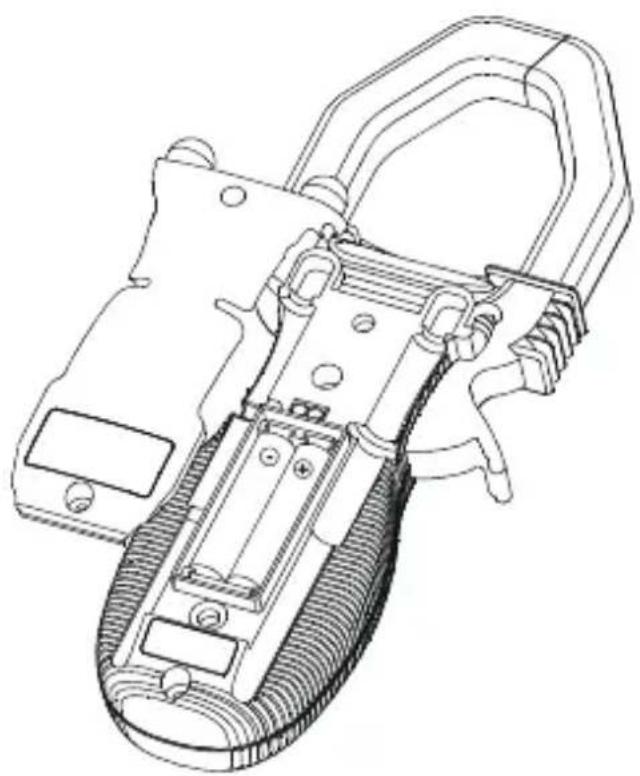
Battery Replacement (see Fig. 4)
⚠ Warning
To prevent electrical shock or meter damage, disconnect the meter's test leads from any circuit and the meter, then turn the meter off before removing the battery cover. Battery replacement should be performed in a clean environment and with appropriate care taken to avoid contaminating the meter's interior components.
- Remove the screw and lift the battery cover.
- Replace the batteries with the same type (1.5V AAA). Note polarity guide below the battery.
- Replace the battery cover and screw.
SPECIFICATIONS
General Specifications
Display: 3-3/4 digits 4000 counts LCD display
Update Rate: 3 per second nominal
Polarity: Automatic
Power Supply: standard 1.5V AAA Size (NEDA 24G or IEC R03) battery x
Power Consumption: typical 11 mA for ACA/DCA and 2.9 mA for other functions
APO Timing: idle for 30 minutes
APO Consumption: typical 10μA for ACDC-100 and 90μA for ACDC-100 TRMS
Low battery: below approx. 2.4V
Environment: Indoor operation, below 2000 m
Temperature / Humidity:
Operating: 0°C to 40°C (14°F to 122°F)
Relative humidity : < 80% RH @ 31°C decreasing linearly to 50% RH at 40°C
Storage: -20°C to 60°C (-4°F to 122 °F) / < 80% RH
Temperature Coefficient: 0.5 x (specified accuracy)/°C @ (0°C to 18°C or 28°C to 40°C)
Sensing : Average sensing for ACDC- 100; True RMS for ACDC- 100 TRMS
Clamp-on jaw: DC 1000A or AC 800A rms continuous
+ & COM terminals (all functions) : 600VDC/VAC rms
Jaw opening: 50mm max
Dimension : 227 x 78 x 40mm (8.9 x 3.1 x 1.6 in.)
Weight : 290 gm (0.6 lb)
Safety LVD: Meets EN60101-1:2001; EN61010-2-032(2002), Category III- 600 Volts ac & dc; pollution degree : 2; class 2
CEEMC: This product complies with requirements of the following European Community Directives: 89/336/EEC (Electromagnetic Compatibility) and 73/23/EEC (Low Voltage) as amended by 93/68/EEC (CE Marking). However, electrical noise or intense electromagnetic fields in the vicinity of the equipment may disturb the measurement circuit. Measuring instruments will also respond to unwanted signals that may be present within the measurement circuit. Users should exercise care and take appropriate precautions to avoid misleading results when making measurements in the presence of electronic interference.
DC Voltage
| RANGE Accuracy | |
| 400.0 mV ± (0.3% + 3dgts) | |
| 4.000V, 40.00V, 400.0V ± (0.5% + 3dgts) | |
| 600V ± (1.0% + 4dgts) |
Resolution : 0.1 mV on 400 mV range
NMRR : >50dB @ 50/60Hz
CMRR : >20dB @ DC, 50/60Hz, Rs=1kΩ
Input Impedance : 10MΩ, 30pF nominal (1000MΩ for 400.0mV range)
Max input : 600VDC/VAC rms
AC Voltage
| RANGE Frequency Accuracy | ||
| 400.0mV 1) | 50Hz to 500Hz ± (4.0% + 4dgts) | |
| 4.000V, 40.00V, 400.0V 50Hz to 60Hz ± (1.0% + 4dgts) | ||
| 4.000V, 40.00V, 400.0V 60Hz to 500Hz ± (1.5% + 4dgts) | ||
| 600V 50Hz to 500Hz ± (2.0% + 4dgts) | ||
Resolution: 0.1 mV on 400 mV range
CMRR : >60db @ DC to 60Hz, Rs= 1kΩ
Input impedance: 10MΩ, 30pf nominal
Crest factor (ACDC-100 TRMS): < 1.6: at full scale; < 3.2: at half scale
Max input: 600VDC/VAC rms
1) Selection by Range button manually, and is specified from AC 40mV (AC 60mV for ACDC-100 TRMS) and up
Resistance
| RANGE Accuracy | |
| 400.0Ω ± (0.8% + 6dgts) | |
| 4.000kΩ, 40.00kΩ, 400.0kΩ ± (0.6% + 4dgts) | |
| 4.000MΩ ± (1.0% + 4dgts) | |
| 40.00MΩ ± (2.0% + 4dgts) |
Resolution: 0.1 Ω on 400 Ω range
Open Circuit Voltage : 0.4VDC typical
Continuity Tester
| Open Circuit Voltage: | 0.4Vdc typical |
| Range: | 400.0Ω |
| Accuracy: | ± (1.5% + 6dgts) |
| Audible threshold: | between 10Ω and 120Ω. |
Diode Tester
| Open Circuit Voltage | < 1.6 Vdc |
| Test Current (Typical) | 0.4mA |
Capacitance
| RANGE 1) | Accuracy 2) 3) |
| 500.0 nf, 5.000 μf, 50.00 μf, 500.0 μf, 3000 μf ± (3.5% + 6dgts) | |
Resolution: 0.1 nf on 500.0 nf range
1) Additional 50.00nf range accuracy is not specified
2) Accuracies with film capacitor or better
3) Specified with battery voltage above 2.8V (approximately half full battery). Accuracy decreases gradually to 12% at low battery warning voltage of approximately 2.4V
DC Current (Clamp-On)
| RANGE Accuracy | 1) 2) |
| 0.0A to 400.0A ± (1.5% + 4dgts) | |
| 400A to 800A ± (1.5% + 4dgts) | |
| 800A to 900A ± (2.0% + 4dgts) | |
| 900A to 1000A ± (5.0% + 30dgts) |
Max current: 1000A continuous
Resolution: 0.1 A on 400 A range
^1) Induced error from adjacent current-carrying conductor: < 0.01A/A
^2) Zero mode must be applied to zero the unit before measurement to ensure accuracy.
ACA Current (Clamp-on)
| RANGE Frequency Accuracy | 1) 2) | |
| 400.0A 5Hz to 40Hz ± (2.0% + 5dgts) | 3) | |
| 400.0A 40Hz to 200Hz ± (1.5% + 5dgts) | ||
| < 50A4) | 200Hz to 400Hz ± (1.5% + 5dgts) | |
| < 50A4) | 400Hz to 1kHz ± (2.0% + 5dgts) | |
| 400A to 600A 5Hz to 40Hz ± (2.0% + 5dgts) | 3) | |
| 400A to 600A 40Hz to 100Hz ± (1.5% + 4dgts) | ||
| 600A to 800A 5Hz to 60Hz ± (5.0% + 30dgts) |
Max current: 800A rms continuous
Resolution: 0.1 A on 400 A range
1) Induced error from adjacent current-carrying conductor: < 0.01A/A
2) Crest Factor (ACDC-100 TRMS): < 1.6 : at full scale; < 3.2 : at half scale
3) ± (4.0% + 5dgts) for ACDC-100 TRMS
^4) Accuracy is specified at <50A in this frequency bandwidth due to limited calibrator output capability for testing
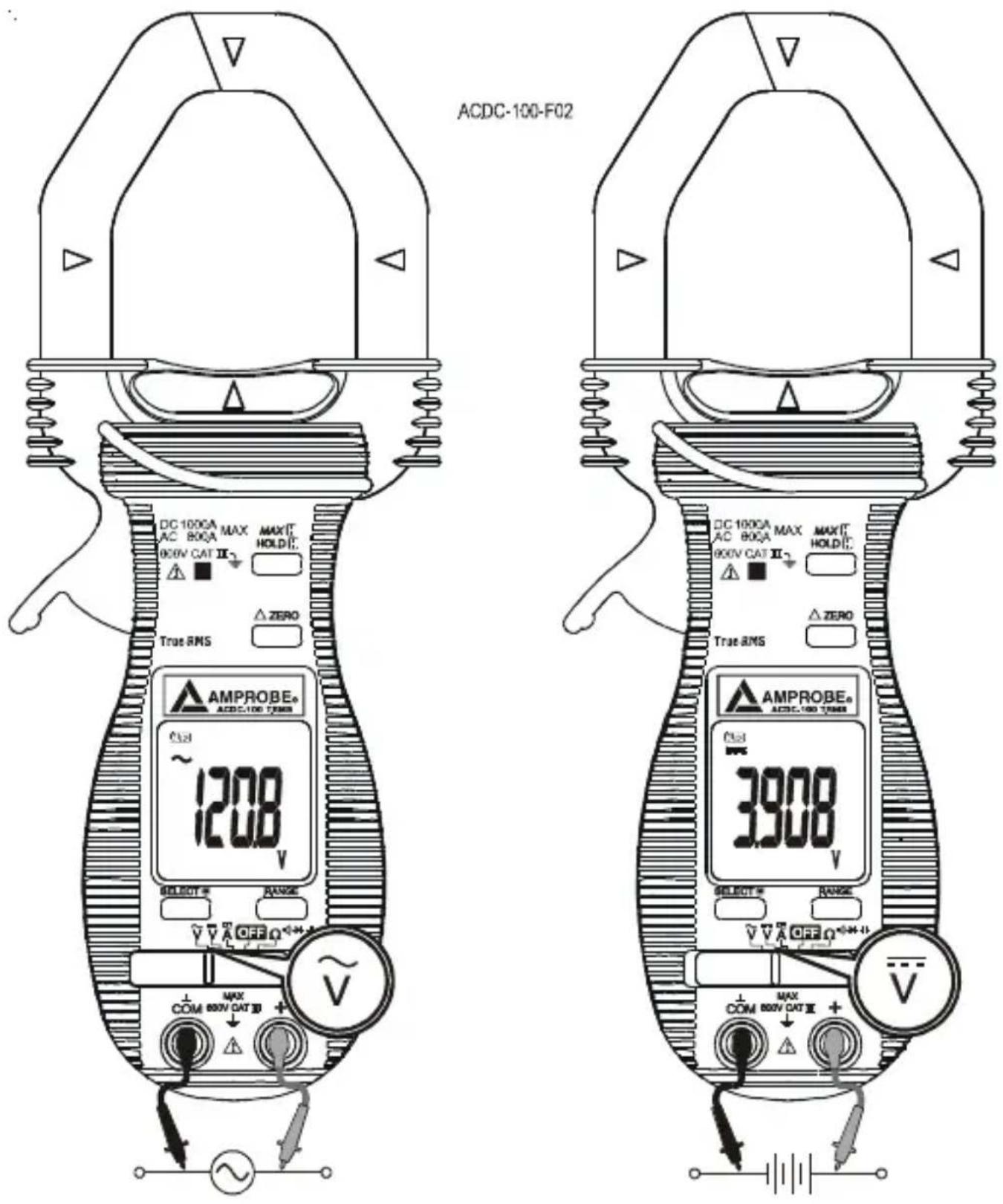
Figure 1. — DC Voltage and AC Voltage functions
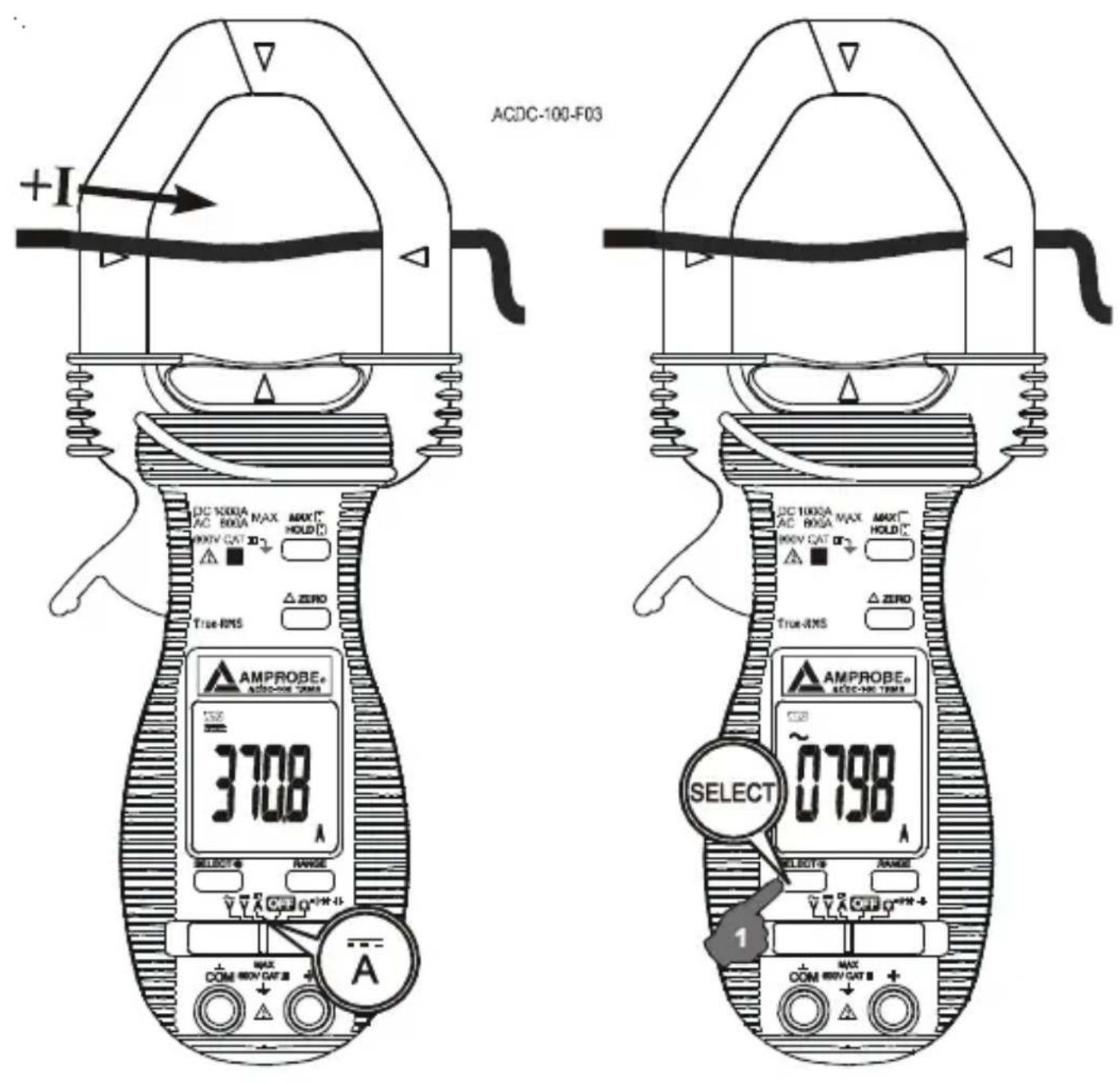
Figure 2. — ACA & DCA Current clamp-on function
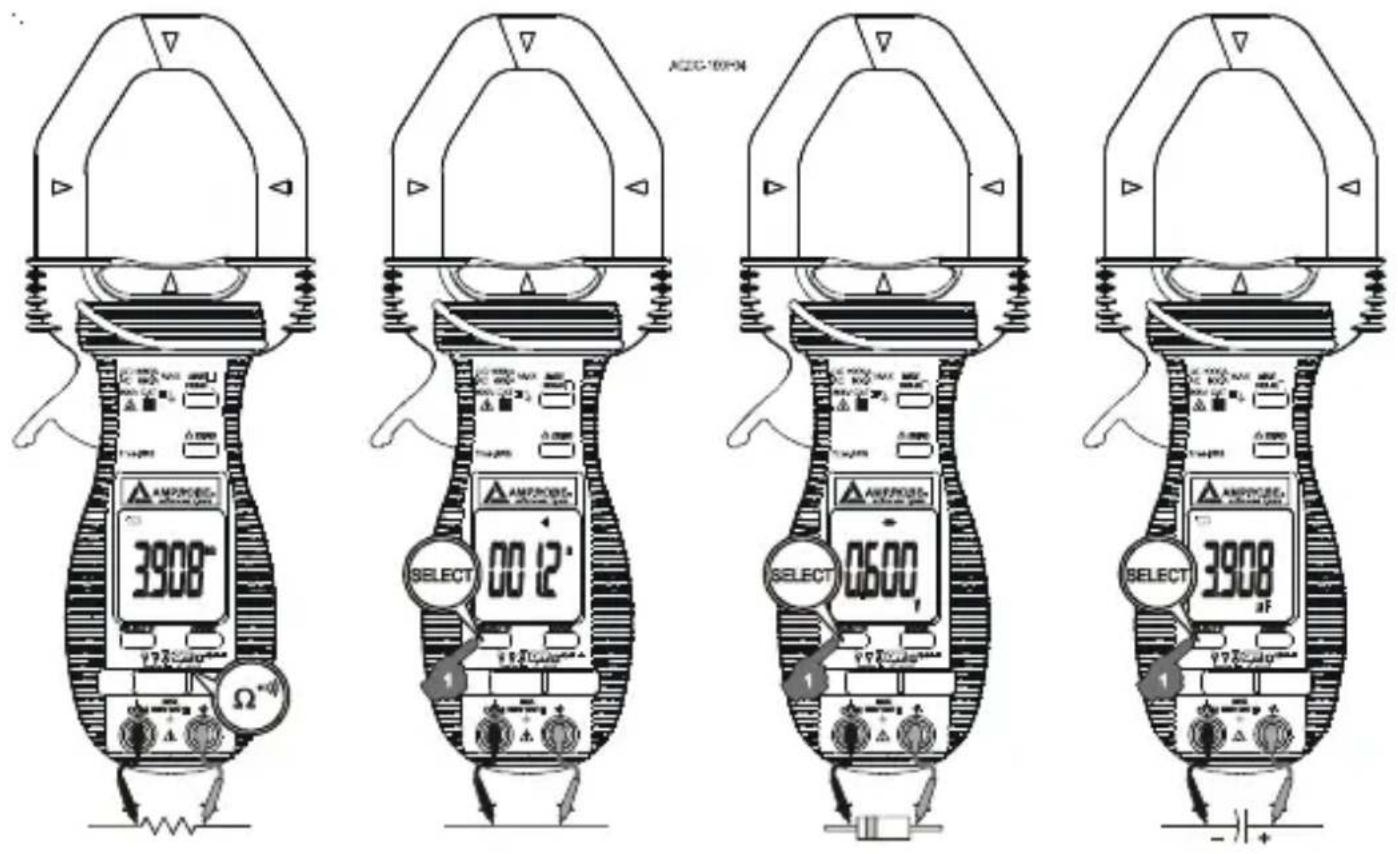
Figure 3. — Resistance, Continuity, Capacitance and Diode functions
natural_image
Technical line drawing of a mechanical clamp or tool assembly (no text or symbols)Figure 4. — Battery replacement

AMPROBE®
ACDC-100 TRMS ACDC-100
© 2010 Amprobe Test Tools.
MAX H / HOLD H....22
HOLD 23
MAX 23
Tension continue ....23
Tension alternative 23
Courant alternatif ....24
Courant continu 24
Résistance 24
Continuité 24
Diodes 24
Capacité ....25
Specifications....26
natural_image
Technical line drawing of a mechanical clamp or tool assembly (no text or symbols)figure 4. Changement des piles

AMPROBE®
ACDC-100 TRMS
ACDC-100
Amprobe Test Tools Amprobe Test Tools
Everett, WA 98203 USA Mississauga, ON L4Z 1X9 Kanada
Tel.: 877-AMPROBE (267-7623) Tel.: 905-890-7600
MAX H / HOLD H....38
HOLD 39
MAX 39
Relativ-Null-Modus 39
natural_image
Technical line drawing of a mechanical clamp or connector assembly (no text or symbols)Tensione in c.a....55
Corrente alternata....56
NMRR: > 50 dB a 50/60 Hz
CMRR: > 20 dB per c.c., 50/60 Hz, Rs = 1 kΩ
natural_image
Technical line drawing of a mechanical clamp or connector assembly (no text or symbols)Amprobe Test Tools Amprobe Test Tools
Everett, WA 98203 Mississauga, Ontario L4Z 1X9
Tel.: 877-AMPROBE (267-7623) Tel.: 905-890-7600
NMRR: > 50 dB a 50/60 Hz
CMRR: > 20 dB a DC, 50/60 Hz, Rs=1 kΩ
natural_image
Technical line drawing of a mechanical clamp or tool assembly (no text or symbols)© 2010 Amprobe Test Tools.
Med ensamrätt.
Amprobe Test Tools Amprobe Test Tools
Everett, WA 98203 Mississauga, ON L4Z 1X9
Tel: 877-AMPROBE (267-7623) Tel: 905-890-7600
APO-timing: Vila i 30 minuter
natural_image
Technical line drawing of a mechanical clamp or connector assembly (no text or symbols)Visit www.Amprobe.com for
Catalog•
Application notes•
Product specifications•
User manuals•


- AMPROBE®
- ACDC-100 TRMS
- ACDC-100
- Versatile AC/DC Clamp-on
- Multimeter Series
- Users Manual
- ACDC-100 TRMS ACDC-100
- Versatile AC/DC Clamp-on Multimeter Series
- Limited Warranty and Limitation of Liability
- Repair
- In-Warranty Repairs and Replacement – All Countries
- Non-Warranty Repairs and Replacement – US and Canada
- In USA In Canada
- Non-Warranty Repairs and Replacement – Europe
- European Correspondence Address\*
- CONTENTS
- SAFETY INFORMATION
- Warnings and Precautions
- UNPACKING AND CONTENTS
- INTRODUCTION
- FEATURES
- Alignment marks (see Fig. 1)
- MAX H / HOLD H
- HOLD
- MAX
- △ Relative Zero mode
- SELECT / Backlight (☀️)
- Manual or Auto-ranging
- Auto Power Off function
- OPERATION
- DC Voltage (see Fig. 1)
- AC Voltage (see Fig. 1)
- AC Current (see Fig. 2)
- DC Current (see Fig. 2)
- CAUTION
- Resistance (see Fig. 3)
- Continuity (see Fig. 3)
- Diodes (see Fig. 3)
- Capacitance (see Fig. 3)
- MAINTENANCE AND REPAIR
- Battery Replacement (see Fig. 4)
- ⚠ Warning
- SPECIFICATIONS
- General Specifications
Brand : Amprobe
Model : ACDC100TRMS
Category : Measuring equipment