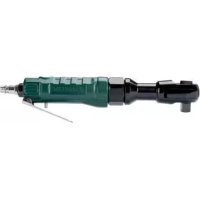
PDRS 6.3 B2 - Pneumatic ratchet screwdriver PARKSIDE - Free user manual and instructions
Find the device manual for free PDRS 6.3 B2 PARKSIDE in PDF.


| Product Type | Pneumatic ratchet screwdriver |
| Brand | Parkside |
| Model | PDRS 6.3 B2 |
| Rated air pressure | max. 6.3 bar |
| Air consumption | 200 l/min |
| Max. speed | 160 min⁻¹ |
| Max. torque | 61 Nm |
| Drive | 1/2" |
| Rotation direction | Left and right rotation (adjustable) |
| Sound pressure level | LpA = 89.8 dB(A), uncertainty K = 3 dB |
| Sound power level | LWA = 100.8 dB(A), uncertainty K = 3 dB |
| Vibration emission value | ah = 2.58 m/s², uncertainty K = 0.76 m/s² |
| Power supply | Compressed air (max. 6.3 bar) |
| Main functions | Screwing and unscrewing of threaded connections (automotive, agricultural) |
| Maintenance and cleaning | Regular lubrication with compressed air oil; cleaning with soft, dry cloth |
| Safety | Mandatory wearing of eye and ear protection; wear respiratory protection if dust |
| Spare parts and repairability | Use only original spare parts; contact after-sales service |
| Warranty | 3 years (Warranty by Kompernass Handels GmbH) |
| What’s included | Ratchet wrench, 7 sockets, 3 screwdriver bits, extension, universal joint, bit holder, oil bottle, male connector, carrying case, instruction manual |
| Weight | Not specified (estimated: approx. 1.5 kg) |
Frequently Asked Questions - PDRS 6.3 B2 PARKSIDE
User questions about PDRS 6.3 B2 PARKSIDE
0 question about this device. Answer the ones you know or ask your own.
Ask a new question about this device
Download the instructions for your Pneumatic ratchet screwdriver in PDF format for free! Find your manual PDRS 6.3 B2 - PARKSIDE and take your electronic device back in hand. On this page are published all the documents necessary for the use of your device. PDRS 6.3 B2 by PARKSIDE.
USER MANUAL PDRS 6.3 B2 PARKSIDE
DRUCKLUFT-RATSCHENSCHRAUBER, AIR RATCHET SET, TOURNEVIS À CLIQUET PNEUMATIQUE PDRS 6.3 B2
DE AT CH
DRUCKLUFT-RATSCHEN- SCHRAUBER
Translation of the original instructions
NL BE
PERSLUCHT-RATELSCHROEVEN-DRAAIER
DE AT CH
Before reading, unfold the page containing the illustrations and familiarise yourself with all functions of the device.
FR BE
GB/IE Translation of the original instructions Page 35
natural_image
Line drawing of a bottle with a cap and side panel, labeled with number 7 (no text or symbols on the bottle itself)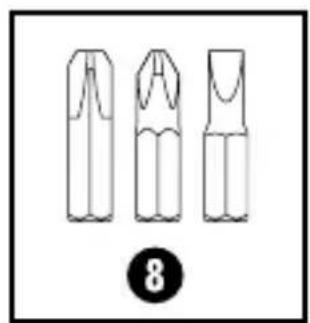
natural_image
Three technical line drawings of mechanical components with a numbered circle (8) below, no text or symbols present.
9
Inhaltsverzeichnis
Einleitung....3
KOMPERNASS HANDELS GMBH
BURGSTRASSE 21
DE-44867 BOCHUM
DEUTSCHLAND
www.kompernass.com
General safety instructions for compressed air tools 41
Hazards caused by flying parts....47
Hazards caused by entanglement 48
Hazards during operation 48
Hazards caused by repetitive movements ..... 49
Hazards caused by accessories....50
Hazards in the workplace 50
Hazards caused by dust and vapours 51
Hazards caused by noise. 51
Hazards caused by vibrations 52
Additional safety instructions for pneumatic machines....53
Additional safety notices 54
Before use....55
Fitting the connector nipple 55
Lubrication 56
Refilling oil 56
Connecting to a compressed air source....57
Operation 58
Compressed air ratchet 58
Switching on and off 58
Maintenance and cleaning....59
Troubleshooting....60
Disposal....60
Kompernass Handels GmbH warranty .....62
Service 64
Importer 64
Translation of the original Conformity Declaration . . 65
AIR RATCHET SET PDRS 6.3 B2
Introduction
Congratulations on the purchase of your new appliance. You have chosen a high-quality product. The operating instructions are part of this product. They contain important information about safety, usage and disposal. Before using the product, please familiarise yourself with all operating and safety instructions. Use the product only as described and for the range of applications specified. Please also pass these operating instructions on to any future owner.
Intended use
The ratchet attachment is suitable for fastening and loosening screw connections in the automotive (tyre fitting, etc.) and agricultural fields. Note the necessary torques when tightening screws and nuts.
The tool may only be operated with a compressed air supply. The maximum permissible operating pressure specified on the tool must not be exceeded.
This tool must not be operated with gases that are explosive, flammable or hazardous to health.
Do not use as a lever, crusher or striking tool.
Any other usage or modification of the tool is deemed to be improper and carries a significant risk of accidents. The manufacturer accepts no responsibility for damage(s) resulting from improper usage. This tool is intended for domestic use only.
Symbols on the compressed air tool:
 | Read the operating instructions before use. |
 | Always wear eye protection when using or maintaining the compressed air tool. |
 | Always wear a dust mask in situations in which dust is being generated. |
 | Always wear hearing protection. |
 | Oil daily |
Features
① Compressed air ratchet
② Air inlet
3 Connector nipple (preassembled)
4 Trigger
5 Square retainer
6Turnbolt
⑦ Oil bottle
8 Screwdriver bits
9 Sockets
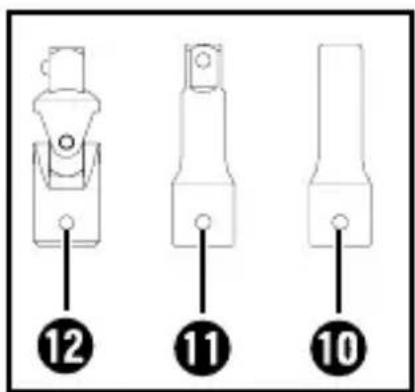
10 Bit holder
11 Extension piece
12 Universal joint
Package contents
1 Compressed air ratchet
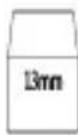
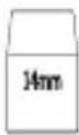
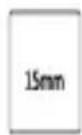
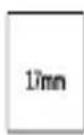
7 sockets (10 mm/11/13/14/15/17/19)
3 screwdriver bits (PH2/ PH3/ SL 5,5)
1 extension piece 75 mm
1 bit holder
1 universal joint
1 oil bottle
1 connector nipple 6.35 mm (1/4") (preassembled)
1 carrying case
1 set of operating instructions
Technical data
Rated air pressure: max. 6.3 bar
Air consumption: 200 l/min
Max. rotation speed: max. 160 rpm
Max. torque: 61 Nm
Change of rotation: clockwise and anticlockwise
Toolfitting: 1/2"
Noise emission values:
Noise measurement determined in accordance with ISO 15744:
Sound pressure level: L _pA = 89.8 dB (A)
Uncertainty: K_pA = 3 dB
Sound power level: L _WA = 100.8 dB (A)
Uncertainty: K_WA = 3 dB
Wear hearing protection!
Vibration emission value:
Total vibration value calculated according to ISO 28927-2:
Compressed air ratchet:
$$ a _ {h} = 2. 5 8 \mathrm{m} / \mathrm{s} ^ {2} $$
$$ \text { Uncertainty } K = 0. 7 6 \mathrm{m} / \mathrm{s} ^ {2} $$

WARNING!
The noise emission levels specified in these instructions have been measured in accordance with the standardised measuring procedure specified in ISO 15744 and can be used to make equipment comparisons. The noise emission values vary in accordance with the use of the compressed air tool and may be higher than the values specified in these instructions in some cases. It is easy to underestimate the noise emission load if the compressed air tool is used regularly in a certain manner.
NOTE
For an accurate estimate of the noise emission load during a certain working period, the times during which the appliance is switched off or is running but not actually being used must also be taken into consideration. This can significantly reduce the noise emission load over the total working period.

General safety instructions for compressed air tools

WARNING!
Read all safety warnings and all instructions. Failure to follow the warnings and instructions may result in electric shock, fire and/or serious injury.
NOTE
The terms "compressed air tool" or "tool" used in the following text refer to the compressed air tools specified in these operating instructions.
Save all warnings and instructions for future reference.
■ The user must evaluate the specific risks that may arise due to different kinds of use.
Please ensure that you have read and understood the safety instructions before fitting, operating, repairing, servicing or replacing any accessories and before working near the compressed air tool. Failure to do this can result in serious bodily injury.
■ The compressed air tool should only be set up, adjusted or used by adequately qualified and trained operators.
■ The compressed air tool may not be modified. Modifications can reduce the effectiveness of the safety measures and increase the risks for the operator.
■ Never use damaged compressed air tools. Maintain compressed air tools with care. Check regularly whether moving parts function correctly and do not jam; check whether any parts are broken or damaged to an extent that the compressed air tool will no longer operate correctly. Check signs and labels for completeness and readability. If damaged, have parts repaired or replaced before using the compressed air tool. Many accidents are caused by poorly maintained compressed air tools.
This tool is not intended for use by persons (including children) with limited physical, physiological or intellectual abilities or lack of experience and/or knowledge, unless they are supervised by a person who is responsible for their safety, or receive instructions from this person on how to use the device.
■ Do not allow children to play with the tool.
WARNING - RISK OF INJURY!
▶ Disconnect the compressed air supply before carrying out maintenance work.
RISK OF EXPLOSION! Never use gasoline or other flammable liquids to clean the compressed air tool! Sparks can ignite vapours remaining in the compressed air tool and lead to an explosion of the compressed air tool. Do not operate the compressed air tool in explosive atmospheres or environments with flammable liquids, gases or dust. Do not work with any materials that are or could become inflammable or explosive.
■ Use the tool only in the fields of application for which it was designed!
■ Do not force the tool.
■ Never use hydrogen, oxygen, carbon dioxide or other gas in bottles as sources of energy for this tool, as this can lead to an explosion and consequently serious injuries.
- Maintain and clean the tool on a regular basis as specified (see Section "Maintenance and cleaning").
- Check the tool for any possible defects before use. Ensure that the tool is in good working condition before every use.
■ Remain alert at all times! Unexpected movements of the tool can cause dangers.
- Do not overreach. Keep proper footing and balance at all times. This provides for better control over the compressed air tool in unexpected situations.
■ Do not use the tool if its switch is defective. Any tool that cannot be switched on or off is dangerous and must be repaired.
- Keep compressed air tools that are not being used out of the reach of children. Do not allow persons unfamiliar with the power tool or these instructions to operate the power tool. Compressed air tools are dangerous in the hands of inexperienced users.
■ Treat the tool with care. Check whether moving parts function correctly and do not jam; check whether any parts are broken or damaged to an extent that the power tool will no longer operate correctly. If damaged, have the tool repaired before use. Many accidents are caused by poorly maintained tools.
■ Switch off the appliance when not in use.
■ Use personal protective equipment. Always wear eye protection. Wearing protective equipment such as a dust mask, non-slip safety shoes, a helmet or hearing protection depending on the type and use of the compressed air tool reduces the risk of personal injuries.
- Check all connections and supply lines. All maintenance units, couplings and hoses must correspond to the appliance parameters in terms of pressure and air flow. If the pressure is too low, the function of the tool will be compromised and if the pressure is too high, this can cause property damage and personal injury.
■ Protect the hoses against kinking, constriction, solvents and sharp edges. Keep hoses away from heat, oil and rotating parts.
■ Ensure that the hose clamps are always tightened firmly. Loose or damaged hose clamps can allow air to escape in an uncontrolled manner.
■ Replace a damaged hose immediately. A defective supply line can cause a compressed air hose to thrash about and cause personal injury.
If the power cable of this tool is damaged, it must be replaced by the manufacturer or its customer service or by a similarly qualified person in order to avoid hazards.
■ Do not use the tool if you are tired or under the influence of drugs, alcohol or medication.
A moment of inattention when operating the tool can result in serious personal injury.
- Do not breathe in the exhaust air directly. Avoid getting exhaust air in your eyes. The exhaust air from the compressed air tool can contain water, oil, metal particles or dirt from the compressor. This can cause damage to health.
WARNING!
▶ BE CAREFUL WHEN PUTTING DOWN THE TOOL! Always put the tool down in such a way that it does not lie on the trigger. Under certain circumstances, this might cause an accidental activation of the tool, which in turn might lead to hazards.
■ Only suitable accessories may be used. You can purchase these from the manufacturer. Accessories other than original equipment can cause hazards.
■ Use only filtered and regulated compressed air. Dust, caustic fumes and/or moisture can damage the motor of a compressed air tool.
■ The hose must be designed for min. 6.3 bar or 125 psi, at least for 150% of the maximum pressure generated in the system.
■ The tool and the supply hose must be fitted with a hose coupling that allows the pressure of the coupling hose to be dispersed completely during disconnection.
■ DANGER! Avoid contact with an energised line! This tool is not insulated against electric shock.
WARNING - RISK OF INJURY!
▶ Under certain circumstances, high working pressures can cause kickback to occur. This can cause hazards due to the continuous loading.
If you are inexperienced with the appliance, seek training in how to use it safely.
WARNING - RISK OF INJURY!
▶ RISK OF PUNCTURE WOUNDS! Do not treat an injection wound as a simple cut.
A high-pressure jet can inject toxins into the body and cause serious injuries. In the event of an injection into the skin, seek medical assistance immediately.
The compressed air tool must not be modified in any way without the manufacturer's approval.
■ Use the compressed air tool only with the specified pressure (6.3 bar).
■ The compressed air tool must always be disconnected from the air supply after use and for as long as it is not in use.
■ The compressed air tool must not be used if it is not airtight or if it requires repair.
■ Never connect the compressed air tool with a compressed air hose that exceeds a pressure of 6.3 bar.
- Keep work area clean and well lit. Cluttered or dark areas invite accidents. This enables better control of the tool in unexpected situations.

WARNING!
▶ Have your power tool serviced by qualified trained personnel using only original spare parts. This ensures that the safety of the tool is maintained.
- Keep children and other persons away from the tool during operation. Distractions can cause you to lose control.
■ Dress properly. Do not wear loose clothing or jewellery. Keep your hair, clothing and gloves away from moving parts. Loose clothes, jewellery or long hair can be caught in moving parts.
- Put the trigger and the tool away in the case of an unexpected stoppage of the compressor.
■ Wherever possible, use a condensate separator or drain the condensate (water) from the hoses and tubing regularly before and during the use of the compressed air tools.
■ NOTICE! An undersized compressed air system will reduce the efficiency of your tool.
Please ensure that you have read and understood the safety instructions regarding multiple hazards before installation, operation, repair, service and replacement of any accessories and before work near the automatic screwdriver. Otherwise, there is a risk of serious physical injuries.
■ The automatic screwdriver should only be fitted, adjusted or used by qualified and trained operators.
■ The automatic screwdriver may not be modified. Modifications can reduce the effectiveness of the safety measures and increase the risks for the operator.
- Do not lose the safety instructions – hand them to the operator.
■ Never use a damaged machine on screwed joints.
The machines must be serviced regularly to check whether the rated values and markings required in the present part of ISO 11148 are appended legibly on the machine. The employee/operator must contact the manufacturer to obtain replacement stickers for labelling if this is necessary.
Hazards caused by flying parts
If a workpiece or one of the accessory parts or even the machine tool itself breaks, parts can be thrown off at high speeds.
■ Always wear impact-resistant safety goggles during operation, when replacing accessory parts or during repair or maintenance work.
The level of the required protection must be evaluated separately for each individual task.
■ You must ensure that the workpiece has been securely fixed in place.
- Check regularly that the rotation speed of the compressed air tool is not higher than the specified rotation speed appended on the compressed air tool. These rotation speed tests must be conducted without any accessory tools attached.
■ Ensure that sparks and fragments created during work do not present any hazards.
Separate the compressed air tool from the compressed air supply before replacing the attachment or accessories or before you adjust the settings, service or clean the tool.
■ Ensure that no dangers are created for other persons either.
Hazards caused by entanglement
■ Hazards caused by entanglement can result in suffocation, scalping and/or cut wounds if loose clothing, personal jewellery, necklaces, hair or gloves are not kept away from the machine and its accessories.
Gloves can get caught in the rotating drive, which can lead to injuries or fractures of the fingers.
■ Rubber or metal-reinforced gloves can become entangled easily in rotating drive fittings and extensions.
■ Never wear loose-fitting gloves or gloves with cut-off or worn-out glove fingers.
■ Never hold onto the drive, the fitting or the drive extension.
- Keep your hands away from the rotating drive.
■ Dress properly. Do not wear loose clothing or jewellery. Keep hair, clothing and gloves away from the compressed air tool and moving parts. Loose clothes, jewellery or long hair can be caught in moving parts. There is a risk of personal injury.
Hazards during operation
- When using the machine, the operator's hands may be exposed to risks such as crushing, striking, cutting, abrasion and heat. Wear suitable gloves to protect your hands.
■ The operator and maintenance personnel must be physically capable of handling the size, weight and power of the machine.
- Hold the machine correctly: be ready to counteract any normal or sudden movements – keep both hands ready.
■ Ensure that your body is balanced and that you have stable footing.
- Keep proper footing and balance at all times.
■ Prevent unintentional starting. If the air supply is interrupted, switch off the compressed air tool using the On/Off switch.
When aids are needed to absorb the reaction torque, we recommend using a suspension unit wherever possible. If this is not possible, side handles for machines with a straight grip and machines with pistol grip are recommended. We recommend always using aids to absorb the torque if it is higher than 4 Nm on machines with straight grips, and higher than 10 Nm on machines with a pistol grip, and higher than 60 Nm on offset screwdrivers.
■ Release the start/stop control in case of a disruption to the electricity supply.
■ Use only the lubricants recommended by the manufacturer.
■ Fingers might be crushed in nut wrenches with an open pan head.
- Keep your hands away from the rotating collet chuck and the rotating drill.
Do not use the tool in confined spaces and ensure that your hands are not crushed between the machine and the work piece, especially when removing screws.
Hazards caused by repetitive movements
■ Users of an automatic screwdriver may experience unpleasant sensations in their hands, arms, shoulders, neck area or other body parts while working with the tools.
Assume a comfortable position when working with this machine, pay attention to safe footing and avoid unfavourable positions or such that make it difficult to keep your balance. During work over longer periods, the operator should change posture to avoid discomfort and fatigue.
If the operator notices symptoms such as persistent discomfort, throbbing, pain, tingling, burning or stiffness, these warning indications should not be ignored. The operator should consult a qualified medical doctor.
Hazards caused by accessories
■ Disconnect the machine from the energy supply before changing the machine tool or accessory.
- Do not touch fittings or accessories during the striking process because this can increase the risk of cuts, burns or injuries caused by vibrations.
■ Use only accessories and supplies of the sizes and types recommended by the manufacturer of machines for screw connections; do not use any other types or sizes of accessories or consumable materials.
■ Use only impact fittings that are in good working order because any defects in the handles and accessories can cause these to break and be ejected when used with impact wrenches.
Hazards in the workplace
■ Slipping, tripping up and falling are the main causes of injuries in the workplace. Pay attention to surfaces that may have become slippery from the use of the machine and also be aware of tripping hazards caused by air or hydraulic hoses.
■ Proceed with caution in unknown surroundings. Hidden hazards caused by power or other supply lines may be present.
This compressed air tool is not suitable for use in explosive atmospheres and is not insulated against contact with power sources.
■ Ensure that there are no electric cables, gas pipes, etc. that might result in a hazard if damaged by using the machine.
Hazards caused by dust and vapours
The dusts and vapours produced by using automatic screwdrivers can be hazardous to health (e.g. cause cancer, birth defects, asthma and/or dermatitis); it is essential to carry out a risk assessment in respect of these risks and to implement corresponding regulatory mechanisms.
■ The risk assessment should include the dust caused by using the machine and any existing dust that may be raised at the same time.
■ The exhaust air should be extracted so that the minimum amount of dust is raised in an already dusty environment.
If dusts or vapours are created, the main priority must be to control these at the site of their release.
All machine components or accessories intended for collecting, extracting or suppressing airborne dust or vapours or should be used and serviced properly in accordance with the manufacturer's instructions.
■ Use a dust mask as per the instructions provided by your employer or as required by health and safety regulations.
Hazards caused by noise
Excessive noise levels in conjunction with insufficient hearing protection may lead to permanent hearing damage, loss of hearing and other problems, such as tinnitus (ringing, buzzing, whistling or humming in your ears). It is essential to carry out a risk assessment with regard to these hazards and implement suitable control mechanisms.
■ Suitable control mechanisms include measures such as the use of insulating materials to avoid ringing noises from occurring on the workpieces.
■ Use hearing protection according to the instructions provided by your employer and as required by work and health safety regulations.
The automatic screwdriver is to be operated and maintained in accordance with the recommendations contained in this manual in order to reduce any unnecessary increase of the noise levels.
If the automatic screwdriver is equipped with a sound absorber, it must always be available and in good working order when using the automatic screwdriver.
■ Consumables and the machine tool should be selected, maintained and replaced in accordance with the recommendations in these instructions in order to avoid any unnecessary increase of the noise levels.
The compressed air tool is to be operated and maintained in accordance with the recommendations contained in these instructions in order to reduce any unnecessary increase of the noise levels.
■ The integrated sound absorber may not be removed and must be in good working order.
Hazards caused by vibrations
■ Vibrations can damage the nerves and cause malfunctions to the blood circulation in the hands and arms.
- Keep your hands away from the fittings of the nut wrenches.
■ Wear warm clothing when working in a cold environment and keep your hands warm and dry.
If you notice that the skin of your fingers or hands is becoming numb, tingles, hurts or shows white discolouration, stop working with the machine and consult a doctor.
■ The automatic screwdriver must to be operated and maintained in accordance with the recommendations contained in this manual to reduce any unnecessary increase of the vibrations.
- Do not use any worn-out or poorly matching fittings and extensions, as there is a high probability that this will lead to a significant increase in the vibrations.
■ Consumables and the machine tool should be selected, maintained and replaced in accordance with the recommendations in this guide in order to avoid unnecessary increase of oscillations.
■ If possible, sleeve fittings should be used.
■ To support the weight of the machine, use a stand, clamp or a balancing unit wherever possible.
- Hold the machine securely but not too firmly while maintaining the necessary hand-reaction force, as the vibration risk generally increases the harder the machine is held.
■ An inadequately mounted or damaged accessory tool can lead to excessive vibrations.
Additional safety instructions for pneumatic machines
■ Compressed air can cause serious injuries:
- When the machine is not in use, the air supply must always be shut off and the air hose depressurised. The machine must be disconnected from the compressed air supply before replacing accessories or when conducting repair work.
—Never aim the airflow at yourself or anyone else.
■ Thrashing hoses can cause serious injury. Therefore, always check whether the hoses and their fixings are undamaged and have not come loose.
■ Cold air must be directed away from the hands.
- Do not use any quick-lock couplings on the tool inlet for impact and impulse drills. For hose connections with a thread, always only use those made of tempered steel (or a material with comparable impact resistance).
If universal rotary joints (claw couplings) are used, locking pins must be inserted and Whipcheck hose restraints must be used to provide protection in the case of a failure of the connection between the hose and the machine.
■ Ensure that the maximum permissible pressure on the machine is not exceeded.
For torque-controlled machines with continuous rotation, the air pressure has effects on performance that are relevant in terms of safety.
Requirements for the length and diameter of the hose must therefore be defined.
■ Never carry pneumatic machines by the hose.
Additional safety notices
If applicable, observe special work safety or accident prevention regulations for the handling of compressors and compressed air tools.
■ Ensure that the maximum permissible working pressure specified in the Technical Data is not exceeded.
- Do not overload this tool – use this tool only within the capacity range specified in the Technical Data.
■ Use safe lubricants. Ensure sufficient ventilation at the place of work. In case of increased discharge:
check the compressed air tool and have it repaired if necessary.
Do not use this tool if you are distracted. Be alert, watch what you are doing and use common sense when operating a compressed air tool. Do not use tools when you feel tired or are under influence of drugs, alcohol, or medication. A moment of inattention when operating the tool can result in serious personal injuries.
- Keep work area clean and well lit. Cluttered or dark areas invite accidents.
- Keep compressed air tools out of reach of children.
■ Do not store outdoors or in damp environments without protection.
■ Protect the compressed air tool, in particular the compressed air connection and operating elements against dust and dirt.
Before use
NOTE
The compressed air tool may only be operated using cleaned, oil-atomised compressed air and the maximum operating pressure of 6.3 bar must not be exceeded on the appliance. The compressor must be fitted with a pressure reducer to regulate the working pressure.
Fitting the connector nipple
♦ Screw the connector nipple into the air inlet (pre-assembled in delivery state).
Lubrication

WARNING!
- Avoid eye and skin contact with lubricants.
NOTE
▶ Regular lubrication is particularly important to avoid friction and corrosion damage. We recommend using a suitable special oil for compressed air tools (e.g. Liqui Moly compressor oil).
—Lubrication with mist oiler
A mist oiler (not supplied) continuously and optimally lubricates the appliance as a preparation stage after the pressure reducer. A mist oiler gives off fine drops of oil into the air flow and thus guarantees regular lubrication.
- Manual lubrication
If you do not have a mist oiler, lubricate the tool before every use or longer work sessions. Add 3–5 drops of pneumatic oil into the connector nipple ③.
Refilling oil
To ensure that the tool remains operational for a long time, the tool must have a sufficient fill of pneumatic oil.
You have the following options:
- Attach a maintenance unit with an oiler to the compressor.
◆ Install an add-on oiler in the compressed air line or the compressed air tool. - Add 3–5 drops of pneumatic oil into the connector nipple every 15 minutes of operation.
Connecting to a compressed air source
NOTE
▶ Before connecting the compressed air source,
-the correct working pressure (6.3 bar) must be fully reached, and
—make sure that the trigger is in the upper position.
▶ Use only connection hoses with an internal diameter of at least 9 mm.
▶ Use only filtered, lubricated and regulated compressed air.
- Attach the tool to a compressor by connecting the connector nipple ③ with the supply hose of the compressed air source.

CAUTION!
▶ Ensure that the compressed air hose is firmly attached. A loose hose can thrash about uncontrollably causing grave danger. Likewise, ensure the firm seat of the two screw connections between the coupling piece and the appliance.
The compressed air source must be equipped with a pressure reducer so that you can regulate the air pressure.
Operation
Compressed air ratchet
◆ Fit the required plug-in attachmen 9, 12+10 or the extension piece 1 into the square retainer . 5
- Set the correct rotational direction on the turn bol 6:
R = anticlockwise
F = clockwise
◆ Fit the plug-in attachment onto the screw head.
NOTE
The connection with the compressed air source is made using a flexible compressed air hose with a quick coupler.
You will reach the best performance of your ratchet wrench with a compressed air hose (LW) with inside diameter 10 mm.
Switching on and off
Switching on:
◆ Press the trigger ^4 to turn the appliance on.
Switching off:
◆ Release the trigger ^4 .
When you have finished working, disconnect the tool from the compressed air source.
Maintenance and cleaning

WARNING! RISK OF INJURY! Disconnect the tool from the compressed air supply.

CAUTION!
Before maintenance, clean off any hazardous substances that may have accumulated on the tool (due to working processes). Avoid all skin contact with these substances. If the skin comes into contact with hazardous dusts, this can lead to severe dermatitis. If dust is produced or swirled up during maintenance, it can be inhaled.
NOTE
To ensure correct functioning and a long service life for the tool, pay attention to the following points:
■ Sufficient and continuous oil lubrication is highly important for optimum functioning.
■ Check the speed and vibration levels after each use.
- Check the idle speed regularly and after any maintenance is performed:
use a rev counter and perform the measurement without any clamped tools. At a residual pressure of 6.3 bar, the idle speed may not be exceeded under any circumstances.
If the tool is exhibiting excessive vibration levels, the cause of the vibrations must be identified and repaired.
■ Use only the genuine replacement parts recommended by the manufacturer, otherwise you could put users at risk. In doubt, contact the Service Centre.
■ Clean the tool with a soft, dry cloth only.
■ Never use sharp or abrasive cleaning agents under any circumstances.
Troubleshooting
| Fault Possible cause | Remedy | |
| Speed too slow, air escapes from the outlet. | Motor parts jamming due to dirt. | Check the pressure supply filter for contamination. |
| Pressure supply too low. | Check the pressure supply filter for contamination. | |
| Lubricate the tool as described in the instructions. | ||
| If necessary, repeat the steps outlined above. | ||
| Tool does not move; compressed air escapes completely through the outlet. | Motor is jammed due to material build-up. | Lubricate the tool as described in the instructions. |
Disposal

packaging consists of environmentally friendly material. It can be disposed of at any local recycling container.
Do not dispose of the appliance in the normal domestic waste!
Your local community or municipal authorities can provide information on how to dispose of the worn-out appliance.

Dispose of the packaging in an environmentally friendly manner.
Note the labelling on the packaging and separate the packaging material components for disposal if necessary. The packaging material is labelled with abbreviations (a) and numbers (b) with the following meanings:
1-7: Plastics,
20- 22: Paper and cardboard,
80-98: Composites

Your local community or municipal authorities can provide information on how to dispose of the worn-out product.
Dispose of lubricants and cleaning agents in an environmentally friendly manner. Observe the legal regulations.
■ Dispose of lubricant residues at a disposal point. Do not allow lubricants to enter drains or watercourses. Do not allow to reach the subsoil/soil. Make sure there is a suitable surface. Disposal in accordance with official regulations.
■ Dispose of dirty maintenance material and operating materials at a designated collection point.
This appliance has a 3-year warranty valid from the date of purchase. If this product has any faults, you, the buyer, have certain statutory rights. Your statutory rights are not restricted in any way by the warranty described below.
Warranty conditions
The validity period of the warranty starts from the date of purchase. Please keep your original receipt in a safe place. This document will be required as proof of purchase.
If any material or production fault occurs within three years of the date of purchase of the product, we will either repair or replace the product for you at our discretion. This warranty service is dependent on you presenting the defective appliance and the proof of purchase (receipt) and a short written description of the fault and its time of occurrence.
If the defect is covered by the warranty, your product will either be repaired or replaced by us. The repair or replacement of a product does not signify the beginning of a new warranty period.
Warranty period and statutory claims for defects
The warranty period is not prolonged by repairs effected under the warranty. This also applies to replaced and repaired components. Any damage and defects present at the time of purchase must be reported immediately after unpacking. Repairs carried out after expiry of the warranty period shall be subject to a fee.
Scope of the warranty
This appliance has been manufactured in accordance with strict quality guidelines and inspected meticulously prior to delivery.
The warranty covers material faults or production faults. The warranty does not extend to product parts subject to normal wear and tear or fragile parts such as switches, batteries, baking moulds or parts made of glass.
The warranty does not apply if the product has been damaged, improperly used or improperly maintained. The directions in the operating instructions for the product regarding proper use of the product are to be strictly followed. Uses and actions that are discouraged in the operating instructions or which are warned against must be avoided.
This product is intended solely for private use and not for commercial purposes. The warranty shall be deemed void in cases of misuse or improper handling, use of force and modifications / repairs which have not been carried out by one of our authorised Service centres.
Warranty claim procedure
To ensure quick processing of your case, please observe the following instructions:
■ Please have the till receipt and the item number (e.g. IAN 12345) available as proof of purchase.
■ You will find the item number on the type plate, an engraving on the front page of the instructions (bottom left), or as a sticker on the rear or bottom of the appliance.
If functional or other defects occur, please contact the service department listed either by telephone or by e-mail.
- You can return a defective product to us free of charge to the service address that will be provided to you. Ensure that you enclose the proof of purchase (till receipt) and information about what the defect is and when it occurred.

You can download these instructions along with many other manuals, product videos and software on www.lidl-service.com.
Service
GB Service Great Britain
Tel.: 0800 404 7657
E-Mail: kompernass@lidl.co.uk
IE Service Ireland
Tel.: 1890 930 034
(0,08 EUR/Min., (peak))
(0,06 EUR/Min., (off peak))
E-Mail: kompernass@lidl.ie
IAN 315475
Importer
Please note that the following address is not the service address. Please use the service address provided in the operating instructions.
KOMPERNASS HANDELS GMBH
BURGSTRASSE 21
DE-44867 BOCHUM
GERMANY
www.kompernass.com
Translation of the original Conformity Declaration
We, KOMPERNASS HANDELS GMBH, document officer: Mr Semi Uguzlu, BURGSTR. 21, DE - 44867 BOCHUM, GERMANY, hereby declare that this product complies with the following standards, normative documents and EC directives:
Machinery Directive (2006/42/EC)
Applied harmonised standards:
EN ISO 11148-6:2012
Type designation of machine: Air ratchet set PDRS 6.3 B2
Year of manufacture: 02 - 2019
Serial number: IAN 315475
Bochum, 11/02/2019

Semi Uguzlu
- Quality Manager -
We reserve the right to make technical changes in the context of further product development.
Table des matières
Introduction....69
KOMPERNASS HANDELS GMBH
BURGSTRASSE 21
DE-44867 BOCHUM
ALLEMAGNE
www.kompernass.com
Directive relative aux machines (2006/42/CE)
Semi Uguzlu
⚠ WAARSCHUWING! GEVAAR VOOR LETSEL!
⚠ WAARSCHUWING! GEVAAR VOOR LETSEL!
WAARSCHUWING! GEVAAR VOOR LETSEL!
KOMPERNASS HANDELS GMBH
BURGSTRASSE 21
DE-44867 BOCHUM
DUITSLAND
www.kompernass.com
KOMPERNASS HANDELS GMBH
BURGSTRASSE 21
DE-44867 BOCHUM
NIEMCY
www.kompernass.com
Semi Uguzlu
KOMPERNASS HANDELS GMBH
BURGSTRASSE 21
DE-44867 BOCHUM
NĚMECKO
www.kompernass.com
CE
Semi Uguzlu
- manažer kvality -
KOMPERNASS HANDELS GMBH
BURGSTRASSE 21
DE-44867 BOCHUM
NEMECKO
www.kompernass.com
KOMPERNASS HANDELS GMBH
BURGSTRASSE 21
DE-44867 BOCHUM
GERMANY
www.kompernass.com
Stand der Informationen · Last Information Update · Version des informations
Stand van de informatie · Stan informacji · Stav informací · Stav informácií:
02 / 2019 · Ident.-No.: PDRS6.3B2-022019-1
- DRUCKLUFT-RATSCHENSCHRAUBER, AIR RATCHET SET, TOURNEVIS À CLIQUET PNEUMATIQUE PDRS 6.3 B2
- DRUCKLUFT-RATSCHEN- SCHRAUBER
- PERSLUCHT-RATELSCHROEVEN-DRAAIER
- DE AT CH
- FR BE
- Inhaltsverzeichnis
- Einleitung....3
- General safety instructions for compressed air tools 41
- Before use....55
- Operation 58
- AIR RATCHET SET PDRS 6.3 B2
- Introduction
- Intended use
- Features
- Package contents
- Technical data
- Noise emission values:
- Wear hearing protection!
- Vibration emission value:
- Compressed air ratchet:
- WARNING!
- NOTE
- General safety instructions for compressed air tools
- Save all warnings and instructions for future reference.
- WARNING - RISK OF INJURY!
- Hazards caused by flying parts
- Hazards caused by entanglement
- Hazards during operation
- Hazards caused by repetitive movements
- Hazards caused by accessories
- Hazards in the workplace
- Hazards caused by dust and vapours
- Hazards caused by noise
- Hazards caused by vibrations
- Additional safety instructions for pneumatic machines
- Additional safety notices
- Before use
- Fitting the connector nipple
- Lubrication
- Refilling oil
- You have the following options:
- Connecting to a compressed air source
- CAUTION!
- Operation
- Compressed air ratchet
- Switching on and off
- Switching on:
- Switching off:
- Maintenance and cleaning
- Troubleshooting
- Disposal
- Do not dispose of the appliance in the normal domestic waste!
- Warranty conditions
- Warranty period and statutory claims for defects
- Scope of the warranty
- Warranty claim procedure
- Service
- GB Service Great Britain
- IE Service Ireland
- Importer
- Translation of the original Conformity Declaration
- Table des matières
- Introduction....69
- ⚠ WAARSCHUWING! GEVAAR VOOR LETSEL!
- WAARSCHUWING! GEVAAR VOOR LETSEL!
- CE
- KOMPERNASS HANDELS GMBH
Brand : PARKSIDE
Model : PDRS 6.3 B2
Category : Pneumatic ratchet screwdriver