ManualGo.com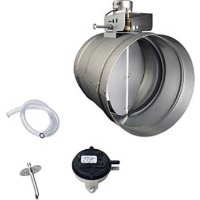
MUA010A - Basket Zephyr - Free user manual and instructions
Find the device manual for free MUA010A Zephyr in PDF.


Download the instructions for your Basket in PDF format for free! Find your manual MUA010A - Zephyr and take your electronic device back in hand. On this page are published all the documents necessary for the use of your device. MUA010A by Zephyr.
USER MANUAL MUA010A Zephyr
1. Installation work and electrical wiring must be done by a qualified
person(s) in accordance with all applicable codes and standards, including fire-rated construction codes and standards.
2. This unit is not designed to provide combustion air for fuel-
3. Do not connect the unit directly to a combustion appliance of
4. Sufficient air is needed for proper combustion and exhausting
of gases through the flue (chimney) of fuel burning equipment to prevent backdrafting. Follow the heating equipment manufacturer’s guideline and safety standards such as those published by the National Fire Protection Association (NFPA), and the American Society for Heating, Refrigeration and Air Conditioning Engineers (ASHRAE), and the local code authorities.
5. Before servicing or cleaning unit, switch power off at service
panel and lock the service disconnecting means to prevent power from being switched on accidentally. When the service disconnecting means cannot be locked, securely fasten a prominent warning device, such as a tag, to the service panel.
6. When performing installation, servicing or cleaning the unit, it is
recommended to wear safety glasses and gloves.
7. During extreme weather events including snow storms, ensure
that the intake area for the outside air duct is not blocked and able to provide a clear pathway for outside air to enter the system.
8. When cutting or drilling into wall or ceiling, do not damage
electrical wiring or other hidden utilities.
9. When notching or drilling into framing including floor supports,
rim joists, and wall studs, comply with code and manufacturer limitations on allowable modifications to these structural members.
10. This unit is intended to be installed within the home in a location
protected from moisture.
11. This unit must be in an accessible location which allows for
inspection of the unit.
12. Use this unit only in the manner intended by the manufacturer.
If you have questions, contact the manufacturer at the address or telephone number listed in this document.
13. When federal, provincial or state legislation comprises more
restrictive installation and/or certification requirements, the aforementioned requirements prevail on those of this document and the installer agrees to conform to these at his own expense.
READ AND SAVE THESE INSTRUCTIONS
1. Do not locate outside air inlet near hazardous materials or explosives.
2. Unit shall not be installed to introduce air from crawlspaces, garages,
attics, adjacent dwelling units, or other locations within the building shell. Unit shall be installed to introduce air directly from outdoors.
3. Do not run the outside air duct directly above or closer than 2 ft to
any furnace or its supply plenum, boiler, or other heat producing appliance.
4. Any ductwork used in conjunction with the Damper must be installed
in compliance with all local and national codes that are applicable.
5. Do not operate the Damper for fresh air introduction until all system
filters, including the central duct system filter, have been installed per the system design.
6. Please read the unit specification label on the product for further
information and requirements.
7. The Damper’s outdoor air intake, ducting, and any filters should be
inspected and maintained on a regular basis.
8. Insulate the duct and damper to prevent build-up of condensation in
cold weather climates. Vapor barriers on both sides of insulation are recommended. WARRANTY
ZEPHYR ONE YEAR LIMITED WARRANTY
ZEPHYR warrants to the original consumer purchaser of its products that such products will be free from defects in materials or workmanship for a period of one year from the date of original purchase. THERE ARE NO OTHER WARRANTIES, EXPRESS OR IMPLIED, INCLUDING, BUT NOT LIMITED TO, IMPLIED WARRANTIES OF MERCHANTABILITY OR FITNESS FOR A PARTICULAR PURPOSE. During this one-year period, ZEPHYR will, at its option, repair or replace, without charge, any product or part which is found to be defective under normal use and service. THIS WARRANTY DOES NOT EXTEND TO FLUORESCENT LAMP STARTERS, TUBES, HALOGEN AND INCANDESCENT BULBS, FUSES, FILTERS, DUCTS, ROOF CAPS, WALL CAPS AND OTHER ACCESSORIES FOR DUCTING. This warranty does not cover (a) normal maintenance and service or (b) any products or parts which have been subject to misuse, negligence, accident, improper maintenance or repair (other than by ZEPHYR), faulty instal- lation or installation contrary to recommended installation instructions. The duration of any implied warranty is limited to the one-year period as specified for the express warranty. Some states do not allow limitation on how long an implied warranty lasts, so the above limitation may not apply to you. ZEPHYR’S OBLIGATION TO REPAIR OR REPLACE, AT ZEPHYR’S OPTION, SHALL BE THE PURCHASER’S SOLE AND EXCLUSIVE REMEDY UNDER THIS WARRANTY. ZEPHYR SHALL NOT BE LIABLE FOR INCIDENTAL, CONSEQUENTIAL OR SPECIAL DAMAGES ARISING OUT OF OR IN CONNECTION WITH PRODUCT USE OR PERFORMANCE. Some states do not allow the exclusion or limitation of incidental or consequential damages, so the above limitation or exclusion may not apply to you. This warranty gives you specific legal rights, and you may also have other rights, which vary from state to state. This warranty supersedes all prior warranties. To qualify for warranty service, you must (a) notify ZEPHYR at the address or telephone number below, (b) give the model number and part identification and (c) describe the nature of any defect in the product or part. At the time of requesting warranty service, you must present evidence of the original purchase date. Zephyr Ventilation, 2277 Harbor Bay Parkway, Alameda, CA 94502 www.zephyronline.com 888-880-8368MODELS MUA006A • MUA008A • MUA010A Page 3
OUTSIDE AIR INTAKE LOCATION
Proper design and location of the outside air intake location is critical in ensuring that the Damper can safely and reliably provide an opening for fresh air to enter the home. The following requirements for the location of the outside air intake must be met:
- Outsideairintakeislocatedaminimumof10’fromcombustionap- pliance vents, chimneys, plumbing stacks, and bathroom or kitchen exhaust vents. If local codes have more stringent separation re- quirements, they shall apply.
- Outsideairintake is placed high enoughabove gradetoprevent blockage from snow or other debris such as leaves, and at a mini- mum of 1’ above grade.
- Make-up air damper should not draw air from crawlspaces, ga- rages, attics, adjacent dwelling units, or any enclosed part of the building. The Damper should be installed to draw air directly from outdoors.
OUTSIDE AIR INTAKE OPENING PROTECTION
Because the Damper, together with the end cap and outside air duct which are installed with it, will allow outdoor air into the indoor environ- ment, it is important to meet the following requirements:
- ModelAK00030(6”),AK00032(8”)andAK00052(10”)freshairinlet wall caps include protective bird screens to keep out animals and outside debris. Clean screens often and do not remove.
- Ifaprotectivebirdscreenotherthanthescreenprovidedisused,it must cover the entire opening of the outside air duct. This screen mustalsohaveopeningsofatleast¼”butnolargerthan½ ”.
- Theoutdoorairintakeopeningshouldmeetlocalcodeprovisions for the protection of openings in exterior walls, including steps to prevent moisture intrusion around the opening. Note that the screen over the outside air opening is not a filter. It is intended to prevent the intake of leaves, animals, or debris into the out- side air duct. A downstream filter is necessary to remove pollen, dust, and other airborne particles. Potential filter locations are shown below in the Typical Installations section.
MINIMUM RETURN AIR TEMPERATURE REQUIREMENTS
HVAC equipment manufacturers may have minimum requirements for the air temperature in the return air plenum. Introducing outdoor air to the return side of the central duct system may impact this temperature. The installer should adjust both the size of the outside air duct and the location of its connection to the return side of the central duct system in a manner so that minimum air temperature requirements are satisfied under design conditions.
PLAN THE INSTALLATION
Planning the installation first requires selecting the most appropriate installation approach. The chart below offers suggestions for the most effective installation approach by considering a few important factors. Further details on the two main types of installations are provided below.
- House has central duct work? Yes
- Return-air side of duct work is accessible -either the return-air trunk or return-air plenum? Damper connected to return side of central duct system
Damper ducted directly to a ceiling, floor, or wall register
WHAT IS INCLUDED IN THE
PACKAGE -MotorizedDamper - Transformer -PressureSwitchKitwhichincludes: - Pressure Switch - Probe -12”PVCtubing1/4”I.D. - Gasket -(6)SheetMetalScrews TOOLS REQUIRED -1/4”SocketDrive - Flathead or Phillips Screw Driver -3/8”DrillBit - Duct Tape - Low Voltage Wire (2 Conductor) -(2)1/4”FemaleSpadeTerminals - Wire NutsMODELS MUA006A • MUA008A • MUA010A Page 4 Damper and outside air duct connected directly to a ceiling, floor, or wall register. INTERIOR WALL WALL REGISTERREGISTER BOX ADAPTEDWITH SLIDE-IN FILTER (optional)MOTORIZED DAMPERWALL CAP WITHBIRD SCREENINSULATED OUTSIDEAIR DUCT (slope toward wall cap)EXTERIOR WALLVENTILATION AIR INTAKE(locate away from pollutant sources) TYPICAL INSTALLATIONS Installations will vary according to the location in the home where the unit is installed and which model Damper is used. Use the following illustrations and notes as guidance for your own installation. Always comply with local code requirements and in any instance where a detail shown below conflicts with local code, the local code provision shall apply. Damper connected to return side of central duct system.
SET SCREW Installthedamperasshown.Makesuredamperflapisinaverti- cal position when closed and power is off. The set screw can be used to adjust the damper opening - thereby balancing the inside and outside air pressure when the range hood exhausts at high speed. PRESSURE SWITCH OPERATION The pressure switch is designed to operate when the static pressureincreasesto0.05”Psormore.Itmaynotoperateatlow speeds since the pressure is below this limit. MULTIPLE DAMPERS Morethanonedampermayberequiredtobalancethesystem. If morethanoneisrequireduse(1)MUA006A, MUA008A, or MUA010A and then use the 54060012 (6”), 54060013 (8”), or 54060014(10”)dampersasadditionaldampers. INSTALLATION OF
PROBE For the probe & pressure switch to work effectively the roof or wall cap must have a spring loaded damper.MODELS MUA006A • MUA008A • MUA010A Page 6
INTERNAL BLOWER AND ROOF VENT
INTERNAL BLOWER AND WALL VENT
RANGE HOOD PROBE EXHAUST DUCT PRESSURE SWITCH HOOD FLUE EXTERIOR BLOWER The probe must be mounted between the range hood damper and the wall cap, roof cap, in-line blower or external blower. Mount the probe as close to the hood outlet as possible but make sure the hood damper operation is not affected. The pressure switch should be mounted so it is accessible for anyfutureservice.The switch canmountedno morethen 72” away from the probe. If longer tubing is required then what is supplied,purchase1/4”I.D.PVCtubingfromalocalsource.See the illustrations below for possible installation scenarios.MODELS MUA006A • MUA008A • MUA010A Page 7
MOUNTING POSITIONS OF PROBE & PRESSURE SWITCH
DUCTWORK VERTICAL PRESSURE SWITCH TUBING PROBE (air flow arrow pointing in direction of air flow) AIR FLOW DUCTWORK DUCTWORK HORIZONTAL PRESSURE SWITCH TUBING PROBE (air flow arrow pointing in direction of air flow) AIR FLOW DUCTWORK
MOUNT THE PROBE & PRESSURE SWITCH
PRESSURE SWITCH TUBING PROBE (air flow arrow pointing in direction of air flow) AIR FLOW DUCTWORK GASKET SHEET METAL SCREWS Connect tubing onto outside of black fitting. Drill 3/8” HOLE in ducting 1/4” SPADE TERMINALS Probe opening pointing down AIR FLOW LOW VOLTAGE WIRES TUBE CONNECTED
EXTERNAL & IN-LINE BLOWERS 1/4” SPADE TERMINALS Probe opening pointing down AIR FLOW LOW VOLTAGE WIRES TUBE CONNECTED
Oncethedamper,pressureswitch,andprobeisinstalled.Tu r n ontherangehoodtohighspeedandconfirmthatthedamperopens. Turn off the hood and check to see if the damper closes. A qualified HVAC contractor should also ensure the proper operation and venting of all combustion equipment in the home. Wire the system as shown. FALSE TRIPPING Under certain extreme conditions there could be false tripping of the damper (opening when the range hood blower is off). If false tripping is encountered, place an in-line backdraft damper (available from your local hardware store or from Zephyr) between the probe and the roof or wall cap. SERVICE PARTS 50500133 PressureSwitchKit 12110018 24V Transformer 54060012 6”MotorizedDamper 54060013 8”MotorizedDamper 54060014 10”MotorizedDamper 24V 20V 24V CONTACTS TRANSFORMER WIRINGMODELS MUA006A • MUA008A • MUA010A Page 9 FREQUENTLY ASKED QUESTIONS (FAQS)
1. What does an automatic make-up air
damper do? Anautomaticmake-upairdamper(the“Damper”)providesapathwayfor fresh air to enter a home from outdoors when a compatible range hood is operating. When the hood blower is operating The Damper opens thereby creating a known, controlled point for fresh air to enter the home while air is being exhausted from the building by the range hood. By operating in this manner, the Damper provides two key benefits for the home:
- Itfacilitatesairexchangebetweenindoorsandoutdoors,byhelpingto allow fresh air into the home to replace air which is exhausted out of the home.
- Byallowingfreshairintothebuildingwhenacompatibleexhaustdevice is on, the Damper helps to avoid negative pressure conditions within the home which may interfere with the proper operation of combustion equipment within the home. Overall,theDamperletsyourrangehooddoitsjobmoreeffectivelyand without interfering with the proper operation of other home systems.
2. Which automatic make-up air damper do I need?
The required amount of make-up air will vary for each home and the amount of exhaust ventilation provided within the home. As a general rule of thumb, Zephyr recommends sizing the make-up air damper as follows: -One6”damperforventilationratedupto600CFM -One8”damperforventilationratedupto1000CFM -One10”damperforventilationratedupto1200CFM However, Zephyr highly recommends that a qualified professional HVAC contractor be consulted after installation to ensure there is no negative pressure in the home when the range hood is operating. If negative pressure exists, then additional make-up air should be added.
3. Does the “Damper” provide combustion air for combustion
appliances like a water heater or a furnace? No. The Damper helps to replace air which is exhausted by a compatible rangehood.ButitdoesNOThelptoreplaceairwhichisdrawnfromthe indoors by a combustion appliance like a natural gas water heater, and it shouldnotbereliedupontoperformthisfunction.Onemainreasonfor this restriction is that the Damper is only open when the range hood that it’s connected to is operating. So there is no assurance that the Damper would be open when other appliances, like a water heater, are operating. Other means must be provided to ensure adequate combustion air for these appliances.
4. How do I know if I need make-up air for my
range hood? In some cases the local building code may tell you that make-up air is necessary. For example, some codes specify that range hoods with exhaust flows of 300 cubic feet per minute (CFM) or higher need a mechanical system to introduce make-up air. In other cases, make-up air for a range hood is desirable regardless of whether code requires it. This is especially true for:
- largerrangehoods(thoseover300cfm)
- homeswhicharewellair-sealed
- homes with atmospherically vented combustion appliances (i.e. a water heater or natural draft fireplace), which are more susceptible to improper venting if depressurization occurs. In homes with any one of these factors make-up air is advised. And in homes with more than one of these conditions make-up air for the range hood is strongly advised.
5. What are the benefits of providing make-up air to replace air
which is exhausted out of the home by a range hood? Range hoods are designed to pull out pollutants like cooking odors or moisture at the source, so they don’t linger in the home. Because these fanspullairoutofthehouse,thisairneedstobereplacedwith“new”air from outdoors. Normally this make-up air enters the home through cracks andholesin the “shell”ofthebuilding.Butmodernhomesareair-sealed much more thoroughly so there are not as many cracks and openings. Plus some exhaust fans like range hoods exhaust a lot more air than can be replaced through normal cracks in the building shell. By providing an intentionally designed opening for fresh air to replace air which is exhausted out by the range hood, several important benefits result:
- Themake-upairenteringthehomecomesinataknownpoint,where it is also filtered
- Negativepressureconditions,whichcouldariseifairisexhaustedfrom a home without being replaced by new fresh air, are prevented
- Pollutantsaremoreeffectivelyexhaustedfromthehome whilefresh replacement air is drawn into the home, improving ventilation
6. Does ASHRAE 62.2-2007 – “Ventilation and Acceptable Indoor
Air Quality in Low-Rise Residential Buildings” – require the use of a make-up air damper? ASHRAE 62.2-2007 does not specifically require make-up air dampers. In a few limited circumstances, this standard does require that net exhaust flows from a house be limited. For example, Section 6.4 of the standard limits the net exhaust flow from a home’s two largest exhaust appliances if the home has atmospherically vented or solid-fuel burning appliances located within the pressure boundary of the house. This standard is available at www.ashrae.org.
7. Can I use the Zephyr Automatic Make-Up Air Damper with other
equipment in my home? No.TheZephyrAutomaticMake-UpAirDampermayonlybeusedwith compatibleZephyrrangehoodsover400CFM.
8. What are the different ways that the Damper can be installed in
my home? The most common way to install the Damper is to connect it to a home’s central duct system. In this application, outside fresh air enters the home through the Damper and is then routed and distributed through the home’s ducts.
9. What happens after a power outage?
The Damper system and the associated exhaust devices will not lose their settings following a power outage. So the system will resume its normal operation following a power outage, based on the settings it used prior to the outage. Regular maintenance is necessary to ensure the proper operation of the Damper system. Failure to conduct such routine maintenance can jeopardize the ability of the Damper to introduce fresh air into the home. Regular maintenance should include the following activities:
- Cleantheoutsidebirdscreentoensureitisfreefromdebrisand open to allow fresh air to enter.
- Cleanorreplacetheinteriorfilter(s)whichservetofilterfreshair before it enters the home.
- Maintainaclearopeningattheoutdoorendcap,whichmeanspre- venting the buildup of snow, leaves, or vegetation at the end cap.