295020 - Battery charger MILWAUKEE - Free user manual and instructions
Find the device manual for free 295020 MILWAUKEE in PDF.



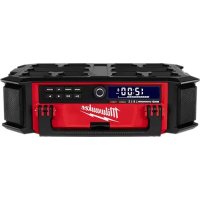
| Product Type | Battery charger for M18 lithium-ion batteries |
| Brand | Milwaukee |
| Model | 2950-20 (295020) |
| Input Voltage | 120 V AC |
| Input Current | 1.8 A AC |
| Output Voltage | 18 V DC |
| Output Current | 3.1 A DC |
| Compatible Battery Type | M18 Li-Ion Milwaukee |
| Recommended Operating Temperature | 5°C to 40°C |
| Charge Indicators | Solid red: charging; Solid green: charged; Flashing red: battery too hot/cold; Flashing red/green: battery defective |
| Protection | Double insulation; short-circuit protection; thermal protection |
| Main Functions | Smart charging for Li-ion batteries; auto shut-off at end of charge; temperature detection |
| Maintenance and Cleaning | Unplug before cleaning; use a dry cloth and compressed air; do not immerse in water |
| Safety Instructions | Do not expose to rain or moisture; use in a well-ventilated area; do not use a damaged extension cord |
| Spare Parts and Repairability | Contact a Milwaukee authorized service center for any repairs; do not disassemble |
| Warranty | 1 year (subject to the conditions in the manual) |
| Included Accessories | Power cord; user manual |
| Weight | Not specified |
| Dimensions | Not specified |
Frequently Asked Questions - 295020 MILWAUKEE
User questions about 295020 MILWAUKEE
0 question about this device. Answer the ones you know or ask your own.
Ask a new question about this device
Download the instructions for your Battery charger in PDF format for free! Find your manual 295020 - MILWAUKEE and take your electronic device back in hand. On this page are published all the documents necessary for the use of your device. 295020 by MILWAUKEE.
USER MANUAL 295020 MILWAUKEE
Cat. No. / No de cat.
2950-20
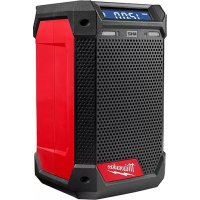
M18™ PACKOUT™ RADIO + CHARGER
M18™ PACKOUT™ RADIO + CHARGEUR
M18™ PACKOUT™ RADIO + CARGADOR
WARNING To reduce the risk of injury, user must read and understand operator's manual.
IMPORTANT SAFETY INSTRUCTIONS
RADIO SAFETY
WARNING
1) Read these instructions.
2) Keep these instructions.
3) Heed all warnings.
4) Follow all instructions.
5) Do not use this apparatus near water.
6) Clean only with dry cloth.
7) Do not block any ventilation openings. Install in accordance with the manufacturer's instructions.
8) Do not install near any heat sources such as radiators, heat registers, stoves, or other apparatus (including amplifiers that produce heat.)
9) Do not defeat the safety purpose of the polarized or grounding-type plug. A polarized plug has two blades with one wider than the other. A grounding type plug has two blades and a third grounding prong. The wide blade or the third prong are provided for your safety. If the provided plug does not fit into your outlet, consult an electrician for replacement of the obsolete outlet.
10) Protect the power cord from being walked on or pinched particularly at plugs, convenience receptacles, and the point where they exit from the apparatus.
11) Only use attachments/accessories specified by the manufacturer.
12) Use only with the cart, stand, tripod, bracket, or table specified by the manufacturer, or sold with the apparatus. When a cart is used, use caution when moving the cart/apparatus combination to avoid injury from tip-over.
13) Unplug this apparatus during lightning storms or when unused for long periods of time.
14) Refer all servicing to qualified service personnel. Servicing is required when the apparatus has been damaged in any way, such as power-supply cord or plug is damaged, liquid has been spilled or objects have fallen into the apparatus, the apparatus has been exposed to rain or moisture, does not operate normally, has been dropped, or is missing battery doors.
15) AWARNING To reduce the risk of fire or electric shock, do not expose this apparatus to rain or moisture. Do not place open flames or candles near or on the radio.
16) Only plug power supply into readily accessible outlet to allow the appliance to be unplugged quickly.
17) Only operate this apparatus in a well-ventilated area.
18) A battery operated radio with integral batteries or a separate battery pack must be recharged only with the specified charger for the battery. A charger that may be suitable for one type of battery may create a risk of fire when used with another battery.
19) Use battery operated radio only with specifically designated battery packs. Use of any other batteries may create a risk of fire.
20) When battery pack is not in use, keep it away from other metal objects like: paper clips, coins, keys, nails, screws, or other small metal objects that can make a connection from one terminal to another. Shorting the battery terminals together may cause sparks, burns, or a fire.
21) Avoid body contact with grounded surfaces such as pipes, radiators, ranges and refrigerators. There is an increased risk of electric shock if your body is grounded.
22) Do not use any adaptor plugs.
23) When operating a radio outside, use an outdoor extension cord marked "W-A" or "W". These cords are rated for outdoor use and reduce the risk of electric shock.
24) Never disassemble the radio or try to do any rewiring on the radio's electrical system.
25) Do not expose this apparatus to dripping and splashing, or place objects filled with liquids on this unit.
26) Maintain labels and nameplates. These carry important information. If unreadable or missing, contact a MILWAUKEE service facility for a free replacement.
27) This radio + charger is designed to be powered by a standard 120 volt AC line or AC generator. The radio can also be powered using a MILWAUKEE M18™ Li-Ion battery pack. Radio + Charger must be plugged into an appropriate receptacle. Do not attempt to use with any other voltage or power supply.
CHARGER SAFETY
28) SAVE THESE INSTRUCTIONS - This operator's manual contains important safety and operating instructions for MILWAUKEE Li-Ion M18™ Radio + Charger.
29) Before using, read this operator's manual, your battery pack operator's manual, and all labels on the battery pack and Radio + Charger.
30) ACAUTION To reduce the risk of injury, charge MILWAUKEE Li-Ion packs only in their MILWAUKEE Li-Ion charger. Other types of chargers may cause personal injury or damage. Battery pack and charger are not compatible with V^TM -technology or NiCd systems. Do not wire a battery pack to a power supply plug or car cigarette lighter. Battery packs will be permanently disabled or damaged.
31) Avoid dangerous environments. Do not charge battery pack in rain, snow, damp or wet locations. Do not use battery pack or charger in the presence of explosive atmospheres (gaseous fumes, dust or flammable materials) because sparks may be generated when inserting or removing battery pack, possibly causing fire.
32) Charge in a well ventilated area. Do not block charger vents. Keep them clear to allow proper ventilation. Do not allow smoking or open flames near a charging battery pack. Vented gases may explode.
33) Maintain charger cord. When unplugging charger, pull plug rather than cord to reduce the risk of damage to the electrical plug and cord. Never carry charger by its cord. Keep cord from heat, oil and sharp edges. Make sure cord will not be stepped on, tripped over or subjected to damage or stress. Do not use charger with damaged cord or plug. Have a damaged charger replaced immediately.
34) Do not short circuit. A short circuited battery pack may cause fire, personal injury, and product damage. A battery pack will short circuit if a metal object makes a connection between the positive and
negative contacts on the battery pack. Do not place a battery pack near anything that may cause a short circuit, such as coins, keys or nails in your pocket.
35) Do not allow fluids to flow into battery pack.
Corrosive or conductive fluids, such as seawater, certain industrial chemicals, and bleach or bleach containing products, etc., can cause a short circuit.
36) Do not use an extension cord unless it is absolutely necessary. Using the wrong, damaged or improperly wired extension cord could result in the risk of fire and electrical shock. If an extension cord must be used, plug the charger into a properly wired 16 gauge or larger extension cord with pins that are the same number, size and shape as the pins on the charger. Make sure that the extension cord is in good electrical condition.
37) Use only recommended attachments. Use of an attachment not recommended or sold by the battery charger or battery pack manufacturer may result in a risk of fire, electric shock or personal injury.
38) Unplug charger when not in use. Remove battery packs from unplugged chargers.
39) To reduce the risk of electric shock, always unplug charger before cleaning or maintenance. Use a Ground Fault Circuit Interrupter (GFCI) to reduce shock hazards.
40) Store your battery pack and charger in a cool, dry place. Do not store battery pack where temperatures may exceed 120^ F ( 50^ C) such as in direct sunlight, a vehicle or metal building during the summer.
Federal Communications Commission

WARNING
Changes or modifications to this unit not expressly ap- party responsible for compli-er's authority to operate the
This equipment has been tested and found to comply with the limits for a Class B digital device, pursuant to Part 15 of the FCC Rules. These limits are designed to provide reasonable protection against harmful interference in a residential installation. This equipment generates, uses and can radiate radio frequency energy and, if not installed and used in accordance with the instructions, may cause harmful interference to radio communications. However, there is no guarantee that interference will not occur in a particular installation. If this equipment does cause harmful interference to radio or television reception, which can be determined by turning the equipment off and on, the user is encouraged to try to correct the interference by one or more of the following measures:
- Reorient or relocate the receiving antenna.
- Increase the separation between the equipment and receiver.
- Connect the equipment into an outlet on a circuit different from that to which the receiver is connected.
- Consult the dealer or an experienced radio/TV technician for help.
EXTENSION CORDS
Double insulated tools can use either a two or three wire extension cord. As the distance from the supply outlet increases, you must use a heavier gauge extension cord. Using extension cords with inadequately sized wire causes a serious drop in voltage, resulting in loss of power and possible tool damage. Refer to the table shown to determine the required minimum wire size.
The smaller the gauge number of the wire, the greater the capacity of the cord. For example, a 14 gauge cord can carry a higher current than a 16 gauge cord. When using more than one extension cord to make up the total length, be sure each cord contains at least the minimum wire size required. If you are using one extension cord for more than one tool, add the nameplate amperes and use the sum to determine the required minimum wire size.
Guidelines for Using Extension Cords
- If you are using an extension cord outdoors, be sure it is marked with the suffix "W-A" ("W" in Canada) to indicate that it is acceptable for outdoor use.
- Be sure your extension cord is properly wired and in good electrical condition. Always replace a damaged extension cord or have it repaired by a qualified person before using it.
- Protect your extension cords from sharp objects, excessive heat and damp or wet areas.
- Unplug all cords during lightning storms or when unused for long periods of time.
| Recommended Minimum Wire Gauge For Extension Cords* | |||||
| Nameplate Amps | Extension Cord Length | ||||
| 25' 50' | 75' 100' | 150' | |||
| 0 - 2.0 | 18 | 18 | 18 | 18 | 16 |
| 2.1 - 3.4 | 18 | 18 | 18 | 16 | 14 |
| 3.5 - 5.0 | 18 | 18 | 16 | 14 | 12 |
| 5.1 - 7.0 | 18 | 16 | 14 | 12 | 12 |
| 7.1 - 12.0 | 16 | 14 | 12 | 10 | -- |
| 12.1 - 16.0 | 14 | 12 | 10 | -- | -- |
| 16.1 - 20.0 | 12 | 10 | -- | -- | -- |
* Based on limiting the line voltage drop to five volts at 150% of the rated amperes.
CAUTION
RISK OF ELECTRIC SHOCK DO NOT OPEN
CAUTION: TO REDUCE THE RISK OF ELECTRIC SHOCK, DO NOT REMOVE COVER (OR BACK). NO USER-SERVICABLE PARTS INSIDE. REFER SERVICING TO QUALIFIED SERVICE PERSONNEL.
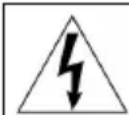
The lightning flash with arrowhead symbol, within an equi-

lateral triangle, is intended to alert the user to the presence of uninsulated "dangerous voltage" within the product's enclosure that may be of sufficient magnitude to constitute a risk of electric shock to persons.

clamation point within an equilateral triangle is intended to alert the user to the presence of important operating and maintenance (servicing) instructions in the literature accompanying the appliance.
GROUNDING
Double Insulated Radios: radios with Two Prong Plugs
Radios marked "Double Insulated" do not require grounding. They have a special double insulation system which satisfies OSHA requirements and
complies with the applicable standards of Underwriters Laboratories, Inc., the Canadian Standard Association and the National Electrical Code. Double Insulated radios may be used in either of the 120 volt outlets shown in Figures A and B.
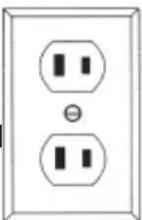
Fig. A
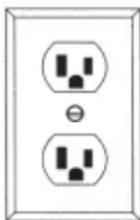
Fig. B
FUNCTIONAL DESCRIPTION
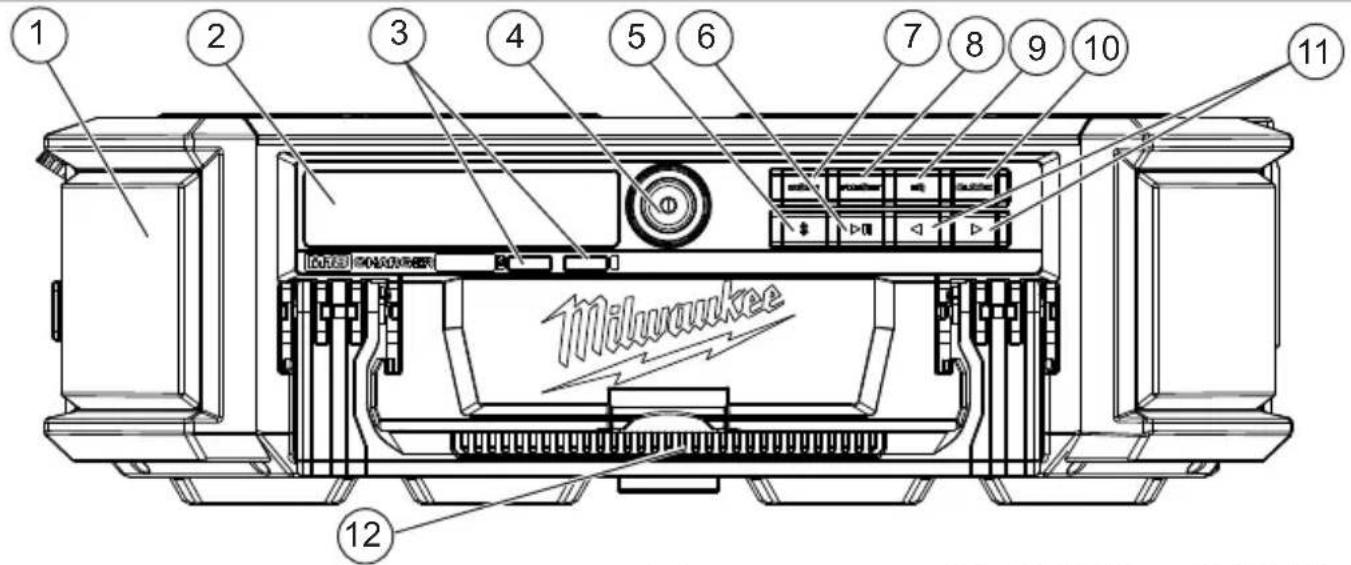
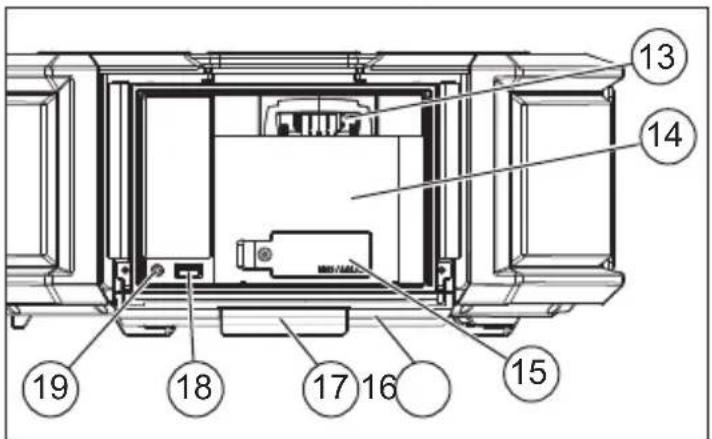
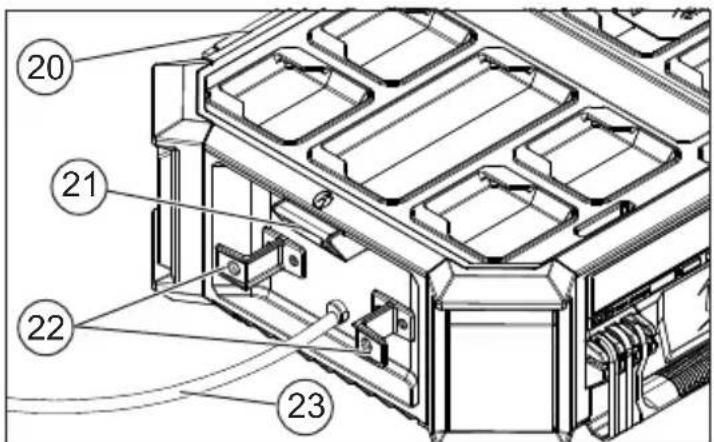
- Speakers (4 corners & back)
- Display
- Charger indicators*
- On/Off/Volume control
- Bluetooth button
- Play/Pause button
- MODE button
- PRESET button
- EQ button
- CLOCK button
- Seek/adjust buttons
- Handle
- Charging contacts
- Battery bay
- Backup-battery compartment
-
Battery bay/auxiliary compartment cover
-
Battery bay/auxiliary compartment latch
- USB power outlet
-
Stereo AUX jack
-
Antenna
- Bottle opener
- Cord wrap
- Cord
\* Charger Indicators
When a battery pack is inserted into the charger, the LEDs will indicate the following:

ontinuous red: Charging

ontinuous green light: Charging is complete

ashing red: Battery is too hot/cold
Charging will begin when battery reaches correct charging temperature

ashing red/green: Damaged or faulty battery pack
SYMBOLGY
Volts
Direct Current

Alternating Current



Double Insulated. Tool does not require grounding.

Presence of important operating instructions.

CAUTION
Risk of electric shock.

Federal Communications Commission

US UL Listing for Canada and U.S.
SPECIFICATIONS
Cat. No....2950-20
Input Volts....120 AC
Input Amps....1.8 AC
Output Volts 18 DC
Output Amps 3.1 DC
FCC ID 2AB9S-2950-20
Battery Type ......M18 ^TM
Charger Type......M18™
Recommended Operating Temperature *
Battery and Charger .40°F to 104°F (5°C to 40°C)
Battery and Tool ..... 14F to 104°F (-10°C to 40°C)
*Radio can be used in tropical or temperate climates
RADIO ASSEMBLY
WARNING Recharge only with the charger specified for the battery. For spe-
cific charging instructions, read the operator's manual supplied with your charger and battery.
Power
The MILWAUKEE M18 ^TM Radio + Charger can be powered by MILWAUKEE M18 ^TM Li-Ion battery packs or a standard wall outlet. When plugged into a wall outlet, the battery bay will charge MILWAUKEE M18 ^TM Li-Ion battery packs (see Charger Operation).
Inserting/Removing Battery Pack
- Open the battery bay cover.
- To insert the battery pack, slide it into the battery bay.
- To remove the battery pack, pull the battery pack off of the bay.
- Always close the battery bay cover when the bay is not in use.
Low Battery Indicator
When the radio is powered by a battery pack and its charge falls below 10%, the low battery indicator is displayed.
Battery Pack Protection
To protect the life of the battery pack, the radio will shut off when the battery's charge becomes too low. If this happens, plug radio + charger into a 120V outlet and charge the battery pack according to Charger Operation.
Installing an Auxiliary Device
Open the auxiliary compartment to connect an MP3 player, CD player, or other audio device using the stereo auxiliary jack. Small devices can be stored in the compartment during use.
USB Power Outlet
This outlet can be used to charge a cell phone, power an MP3 player or any other device that uses less than
2.1A of DC electrical current.
NOTE: Any device that uses more than 2.1 A of DC electrical current will trip a self-resetting overload and disable the output.
RADIO OPERATION
AWARNING Always remove battery pack before changing or removing accessories. Only use accessories specifically recommended for this radio. Others may be hazardous. To reduce the risk of fire or electric shock, do not expose this radio to rain or moisture.
① Turning On/Off and Controlling Volume Plug the cord into an appropriate AC outlet or install a battery pack.
Press and hold the On/Off/Volume control button until the radio turns on or off. The radio station (frequency) is displayed. To display the time, press the CLOCK button. Volume is restored to the last setting.
NOTE: When the Radio + Charger is running on battery power, the display will dim after 5 minutes to reduce power use.
Rotate the On/Off/Volume control button① to increase or decrease the volume.
Setting the Clock
- Press and hold the ⒸLOCK button until the hour begins to flash.
- Use the ◀ and ▶ buttons to change the hour.
- Press the CLOCK button again. The minutes will begin to flash. Use the ◀ and ▶ buttons to change the minutes.
- Press the CLOCK button again to save.
EQ Adjustment
To manually adjust the Bass/Treble sound, press the EQ button. Set the bass sound by rotating the On/Off/Volume control button ⏻Press the EQ button again to set the treble sound by rotating the On/Off/Volume control button ⏱
Selecting Band
Push the MODE button to select Bluetooth, FM, AM, or AUX.
Tuning and Seeking
Press the ◀ and ▶ buttons to move up and down the band. Press, hold, and release the ◀ and ▶ buttons to SEEK through the band. When a station is found, the SEEK will stop.
PRESET Stations
To set the PRESET stations:
- Tune to desired station.
- Press and hold the PRESET button until the PRESET indicator on the display begins to flash.
- Use the ◀ and ▶ buttons to select the PRESET location for the station. Nine locations (1-9) are available for both AM and FM.
- Press the PRESET button to save the location.
To tune to a PRESET station:
Press and release the PRESET button to step through the PRESET stations.
Using the Stereo AUX Jack
- Open the Auxiliary Compartment
- Plug the auxiliary device into the Stereo AUX jack.
- Use the MODE button to select AUX.
- Start the auxiliary device.
\* Using Bluetooth
To enter the Bluetooth mode, press the ✕ button, or press the MODE button to cycle through to Bluetooth.
Pairing
- If no Bluetooth device is connected, Bluetooth pairing will begin automatically and the icon will flash on the display.
- The radio will continue to search for a signal for 3 minutes.
- To manually pair a device, press and hold bluetooth button until the *begins to fast flash.
- While the ✝ is flashing, select "M18 PACKOUT RADIO" on the Bluetooth capable device.
- Once the device has successfully paired with the radio, the *will be shown on the radio's display.
Connecting
To enter the Bluetooth mode, press the ✗ button, or press the MODE button to cycle through to Bluetooth. When the radio locates a paired Bluetooth device, the ✗ will stop flashing. If connection is lost between the radio and the Bluetooth device, the radio will try to reconnect automatically for up to 3 minutes.
Controlling
When streaming music through to the radio via a Bluetooth device, use the ▶ button to start and pause the music. Use the ◀ and ▶ to move through the tracks.
CHARGER OPERATION
WARNING Charge only MILWAUKEE M18™ Lithium-Ion battery packs in the MILWAUKEE Li-Ion Battery Charger. Other types of batteries may cause personal injury and damage. Battery pack and charger are not compatible with V™-technology or NiCd systems.
When to Charge MILWAUKEE Li-Ion Battery Packs
Remove the battery pack from the tool for charging when convenient for you and your job. MILWAUKEE batteries do not develop a "memory" when charged after only a partial discharge. It is not necessary to run down the battery pack before placing it on the charger. - Use the Fuel Gauge to determine when to charge your MILWAUKEE Li-Ion battery pack. - You can "Top-Off" your battery pack's charge before starting a big job or long day of use.
How to Charge the Battery Pack
Plug the Radio + Charger into a 120V outlet. The battery packs will not charge if the Radio + Charger is not plugged in. Place the battery pack onto the bay by sliding the pack on from the top of the bay. The red light will turn on, either flashing (pack is too hot or cold) or continuous (pack is charging).
- A fully discharged battery pack with an internal temperature in the normal range will charge in about 30 to 185 minutes, depending on the battery pack.
- Heavily cycled batteries may take longer to charge completely.
- The Fuel Gauge lights on the battery pack are displayed as the pack is being charged, indicating how fully charged the pack is.
• After charging is complete, the continuous green light will turn on and the fuel gauge will turn off.
- The charger will keep the battery pack fully charged if it is left on the charger.
- If the light indicator flashes red and green, check that the battery pack is fully seated into the bay. Remove the pack and reinsert. If the problem persists, contact a MILWAUKEE service facility.
- If the light indicator does not come on, check that the battery pack is fully seated into the bay. Remove the pack and reinsert. If the light indicator still does not come on, contact a MILWAUKEE service facility.
Charging a Hot or Cold Battery Pack
The Red Flashing Indicator light on the charger indicates that the battery pack temperature is outside the charging range. Once the battery pack is within the acceptable range, normal charging will take place and the red light will be continuous. Hot or cold batteries may take longer to charge.
| Battery Pack Temperature | Red Charger Indicator Light | Charging Status |
| Too Hot Fast Flashing Not charging | ||
| Normal Range | Continuous | Normal charging |
| Too Cold | Fast Flashing Not charging | |
MAINTENANCE
AWARNING To reduce the risk of injury, always unplug the charger and remove the battery pack from the charger or tool before performing any maintenance. Never disassemble the battery pack, charger, or tool, except as provided in these instructions. Contact a MILWAUKEE service facility for all other repairs.
Maintenance and Storage
Store your charger in a cool, dry place.
As a general practice, it is best to unplug battery chargers and remove battery packs when not in use. No battery pack damage will occur, however, if the charger and battery pack are left plugged in.
Changing Back-up Batteries
⚠ WARNING Batteries may leak chemicals or may explode if used incorrectly. The following care should be taken to prevent such an incident:
- Make sure the positive (+) and negative (-) battery terminals are positioned correctly. - Do not mix new and old batteries together, or mix different types of batteries.
- Do not try to recharge non-rechargeable batteries. If chemicals from the batteries come in contact with your skin, wash them off immediately with water. If chemicals leak onto the radio, clean the radio completely.
Choking hazard. Keep batteries away from children.
-To hold station presets and clock time when the battery pack is removed and the radio is unplugged, (2) AAA batteries are required.
- Remove battery pack and unplug radio.
- Remove the screw and battery cover.
- Insert two (2) AAA batteries according to matching positive (+) and negative (-) marks.
- Replace the battery cover and screw.
- Always dispose of used batteries properly.
⚠ WARNING To reduce the risk of fire, personal injury, and product damage due to a short circuit, never immerse your tool, battery pack or charger in fluid or allow a fluid to flow inside them. Corrosive or conductive fluids, such as seawater, certain industrial chemicals, and bleach or bleach containing products, etc., can cause a short circuit.
Cleaning
Clean out dust and debris from charger vents and electrical contacts by blowing with compressed air. Use only mild soap and a damp cloth to clean the battery pack and charger, keeping away from all electrical contacts. Certain cleaning agents and solvents are harmful to plastics and other insulated parts. Some of these include gasoline, turpentine, lacquer thinner, paint thinner, chlorinated cleaning solvents, ammonia and household detergents containing ammonia. Never use flammable or combustible solvents around battery packs, charger, or tools.
Repairs
For repairs, return the tool, battery pack and charger to the nearest service center.
ACCESSORIES
⚠ WARNING Use only recommended accessories. Others may be hazardous.
For a complete listing of accessories, go online to www.milwaukeeetool.com or contact a distributor.
SERVICE - UNITED STATES
1-800-SAWDUST (1.800.729.3878)
Monday-Friday, 7:00 AM - 6:30 PM CST or visit www.milwaukeeetool.com
Contact Corporate After Sales Service Technical Support with technical, service/repair, or warranty questions.
Email: metproductsupport@milwaukeeetool.com
Become a Heavy Duty Club Member at www.milwaukeetool.com to receive important notifications regarding your tool purchases.
SERVICE - CANADA
Milwaukee Tool (Canada) Ltd 1.877.948.2360
Monday-Friday, 7:00 AM - 4:30 PM CST or visit www.milwaukeeetool.ca
LIMITED WARRANTY USA & CANADA
This MILWAUKEE power tool* is warranted to the original purchaser from an authorized MILWAUKEE distributor only to be free from defects in material and workmanship. Subject to certain exceptions, MILWAUKEE will repair or replace any part on this power tool which, after examination, is determined by MILWAUKEE to be defective in material or workmanship for a period of one (1) year after the date of purchase unless otherwise noted. Return of the power tool to a MILWAUKEE factory Service Center location or MILWAUKEE Authorized Service Station, freight prepaid and insured, is required. A copy of the proof of purchase should be included with the return product. This warranty does not apply to damage that MILWAUKEE determines to be from repairs made or attempted by anyone other than MILWAUKEE authorized personnel, misuse, alterations, abuse, normal wear and tear, lack of maintenance, or accidents.
Normal Wear: Many power tools need periodic parts replacement and service to achieve best performance. This warranty does not cover .repair when normal use has exhausted the life of a part including, but not limited to, chucks, brushes, cords, saw shoes, blade clamps, o-rings, seals, bumpers, driver blades, pistons, strikers, lifters, and bumper cover washers.
*This warranty does not cover battery packs or all power tools. Refer to the separate and distinct warranties available for those products. The warranty period for the LED in the LED Work Light (49-24-0171) and the LED Upgrade Bulb (49-81-0090) is the lifetime of the product subject to the limitations above. If during normal use the LED or LED Upgrade Bulb fails, the part will be replaced free of charge.
Warranty Registration is not necessary to obtain the applicable warranty on a MILWAUKEE power tool product. The manufacturing date of the product will be used to determine the warranty period if no proof of purchase is provided at the time warranty service is requested. ACCEPTANCE OF THE EXCLUSIVE REPAIR AND REPLACEMENT REMEDIES DESCRIBED HEREIN IS A CONDITION OF THE CONTRACT FOR THE PURCHASE OF EVERY MILWAUKEE PRODUCT. IF YOU DO NOT AGREE TO THIS CONDITION, YOU SHOULD NOT PURCHASE THE PRODUCT. IN NO EVENT SHALL MILWAUKEE BE LIABLE FOR ANY INCIDENTAL, SPECIAL, CONSEQUENTIAL, OR PUNITIVE DAMAGES, OR FOR ANY COSTS, ATTORNEY FEES, EXPENSES, LOSSES OR DELAYS ALLEGED TO BE AS A CONSEQUENCE OF ANY DAMAGE TO, FAILURE OF, OR DEFECT IN ANY PRODUCT INCLUDING, BUT NOT LIMITED TO, ANY CLAIMS FOR LOSS OF PROFITS. SOME STATES DO NOT ALLOW THE EXCLUSION OR LIMITATION OF INCIDENTAL OR CONSEQUENTIAL DAMAGES, SO THE ABOVE LIMITATION OR EXCLUSION MAY NOT APPLY TO YOU. THIS WARRANTY IS EXCLUSIVE AND IN LIEU OF ALL OTHER EXPRESS WARRANTIES, WRITTEN OR ORAL. TO THE EXTENT PERMITTED BY LAW, MILWAUKEE DISCLAIMS ANY IMPLIED WARRANTIES, INCLUDING WITHOUT LIMITATION ANY IMPLIED WARRANTY OF MERCHANTABILITY OR FITNESS FOR A PARTICULAR USE OR PURPOSE; TO THE EXTENT SUCH DISCLAIMER IS NOT PERMITTED BY LAW, SUCH IMPLIED WARRANTIES ARE LIMITED TO THE DURATION OF THE APPLICABLE EXPRESS WARRANTY AS DESCRIBED ABOVE. SOME STATES DO NOT ALLOW LIMITATIONS ON HOW LONG AN IMPLIED WARRANTY LASTS, SO THE ABOVE LIMITATION MAY NOT APPLY TO YOU, THIS WARRANTY GIVES YOU SPECIFIC LEGAL RIGHTS, AND YOU MAY ALSO HAVE OTHER RIGHTS WHICH VARY FROM STATE TO STATE.
This warranty applies to product sold in the U.S.A. and Canada only. Please consult the 'Service Center Search' in the Parts & Service section of MILWAUKEE's website www.milwaukeetool.com or call 1.800.SAWDUST (1.800.729.3878) to locate your nearest service facility for warranty and non-warranty service on a MILWAUKEE power tool.
INSTRUCTIONS IMPORTANTES CONCERNANT LA SECURITE
SÉCURITÉ DE LA RADIO
AVERTISSEMENT
Federal Communications Commission
Federal Communications Commission

ATTENTION: POUR RÉDUIRE LE RISQUE D'ÉLECTROCUTION, NE PAS RETIRER LE COUVERCLE (OU LE DOS). NE CONTIENT AUCUNE PIÈCE RÉPARABLE PAR L'UTILISATEUR. CONFIER L'ENTRETIEN À UN PERSONNEL QUALIFIÉ.
Milwaukee Tool (Canada) Ltd
1.877.948.2360
Monday-Friday, 7:00 AM - 4:30 PM CST
www.milwaukeetool.ca
GARANTIE LIMITÉE - AUX ÉTATS-UNIS ET AU CANADA
natural_image
Two identical electrical socket diagrams with two internal socket symbols and a terminal indicator (no text or labels)Fig. A Fig. B
EXTENSIONES ELECTRICAS
Federal Communications Commission

ADVERTENCIA
Federal Communications Commission

Lunes a Viernes (9am a 6pm)
- IMPORTANT SAFETY INSTRUCTIONS
- RADIO SAFETY
- WARNING
- CHARGER SAFETY
- Federal Communications Commission
- EXTENSION CORDS
- Guidelines for Using Extension Cords
- CAUTION
- RISK OF ELECTRIC SHOCK DO NOT OPEN
- GROUNDING
- Double Insulated Radios: radios with Two Prong Plugs
- \* Charger Indicators
- SYMBOLGY
- SPECIFICATIONS
- RADIO ASSEMBLY
- WARNING Recharge only with the charger specified for the battery. For spe-
- Power
- Inserting/Removing Battery Pack
- Low Battery Indicator
- Battery Pack Protection
- Installing an Auxiliary Device
- USB Power Outlet
- RADIO OPERATION
- Setting the Clock
- EQ Adjustment
- Selecting Band
- Tuning and Seeking
- PRESET Stations
- Using the Stereo AUX Jack
- \* Using Bluetooth
- Pairing
- Connecting
- Controlling
- CHARGER OPERATION
- When to Charge MILWAUKEE Li-Ion Battery Packs
- How to Charge the Battery Pack
- Charging a Hot or Cold Battery Pack
- MAINTENANCE
- Maintenance and Storage
- Changing Back-up Batteries
- Cleaning
- Repairs
- ACCESSORIES
- ⚠ WARNING Use only recommended accessories. Others may be hazardous.
- SERVICE - UNITED STATES
- 1-800-SAWDUST (1.800.729.3878)
- SERVICE - CANADA
- Milwaukee Tool (Canada) Ltd 1.877.948.2360
- LIMITED WARRANTY USA & CANADA
- INSTRUCTIONS IMPORTANTES CONCERNANT LA SECURITE
- SÉCURITÉ DE LA RADIO
- AVERTISSEMENT
- EXTENSIONES ELECTRICAS
- ADVERTENCIA
Brand : MILWAUKEE
Model : 295020
Category : Battery charger