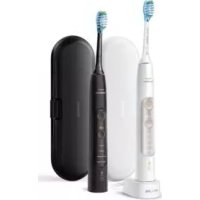
Sonicare ExpertClean HX9692 - Electric toothbrush PHILIPS - Free user manual and instructions
Find the device manual for free Sonicare ExpertClean HX9692 PHILIPS in PDF.


| Product Type | Sonic Electric Toothbrush |
| Brand | Philips |
| Model | Sonicare ExpertClean HX9692 |
| Technology | Sonic with BrushSync technology (smart brush heads) |
| Brushing Modes | Clean, Deep Clean+, White+, Gum Health (4 modes) |
| Intensity Settings | 3 levels: low, medium, high |
| Pressure Sensor | Yes (vibration changes when excessive pressure) |
| Timer | BrushPacer (signal to change quadrant) and auto shut-off |
| EasyStart Function | Gradual power increase over the first 14 brushings |
| Brush Head Replacement Reminder | Yes (orange indicator when head is worn) |
| Connectivity | Bluetooth, compatible with Philips Sonicare app |
| Battery | Rechargeable (Lithium-ion), charges via base or travel case (USB) |
| Charging Time | 24 hours for a full charge after first use |
| Compatible Brush Heads | Premium Plaque Control (C3), Premium White (W3), Premium Gum Care (G3) |
| Included Accessories | UV sanitizer, travel case (depending on model) |
| Cleaning and Maintenance | Waterproof handle; clean with warm water, do not put in dishwasher |
| Safety | Compliant with EMC standards; UV bulb contains mercury (special recycling) |
| Warranty | International warranty (excluding brush heads and UV bulb) |
Frequently Asked Questions - Sonicare ExpertClean HX9692 PHILIPS
User questions about Sonicare ExpertClean HX9692 PHILIPS
0 question about this device. Answer the ones you know or ask your own.
Ask a new question about this device
Download the instructions for your Electric toothbrush in PDF format for free! Find your manual Sonicare ExpertClean HX9692 - PHILIPS and take your electronic device back in hand. On this page are published all the documents necessary for the use of your device. Sonicare ExpertClean HX9692 by PHILIPS.
USER MANUAL Sonicare ExpertClean HX9692 PHILIPS

PHILIPS sonicare
1
-1
1_
-1
1
English 6
Deutsch 34
Español 65
Français 95
Italiano 126
Nederlands 155
Português 186
Ελληνικά 215
Introduction
Congratulations on your new Philips Sonicare power toothbrush! Superior plaque removal, whiter teeth and healthier gums are at your fingertips. Using Sonicare's combination of gentle sonic technology and clinically developed and proven features, you can be confident that you're getting the very best clean, every time. Further support and product registration are available to you at:
http://www.philips.com/welcome.
Welcome to the Philips Sonicare family!
Intended Use
ExpertClean series power toothbrushes are intended to remove adherent plaque and food debris from the teeth to reduce tooth decay and improve and maintain oral health. ExpertClean series power toothbrushes are intended for consumer home use. Use by children should be with adult supervision.
Important safety information
Read this important information carefully before you use the appliance and save it for future reference.
Note: The accessories and features of different models vary. For example, some models come with a sanitizer or are equipped with Bluetooth.
Danger
- Keep the charger and/or sanitizer away from water. Do not place or store the appliance where it can fall or be pulled into a tub or sink.
- Do not immerse the charger and/or sanitizer in water or any other liquid.
- After cleaning, make sure the charger and/or sanitizer is completely dry before you connect it to the wall socket.
Warning
- This appliance can be used by children and persons with reduced physical, sensory or mental capabilities or lack of experience and knowledge if they have been given supervision or instruction concerning use of the appliance in a safe way and understand the hazards involved. Cleaning and user maintenance shall not be made by children without supervision.
- Children shall not play with the appliance.
- Keep the sanitizer out of the reach of children at all times.
- Stop using the sanitizer if the UV light bulb remains on when the door is open. UV light can be harmful to the human eye and skin.
- If the appliance is damaged in any way (brush head, toothbrush handle, charger and/or sanitizer), stop using it.
- The mains cord cannot be replaced. If the mains cord is damaged, discard the charger and/or sanitizer.
English
- Always replace the charger and/or sanitizer with one of the original type in order to avoid a hazard.
- This appliance contains no user-serviceable parts. If the appliance is damaged, contact the Consumer Care Center in your country (see 'Warranty and support').
- Keep the cord away from heated surfaces.
- Do not use the charger and/or sanitizer outdoors or near heated surfaces.
Caution
- Do not clean the brush head, handle, charger, charger cover or sanitizer in the dishwasher.
- If you have had oral or gum surgery in the previous 2 months, consult your dentist before you use this appliance.
- Consult your dentist if excessive bleeding occurs after using this appliance or if bleeding continues to occur after 1 week of use. Also consult your dentist if you experience discomfort or pain when you use this appliance.
- This Philips appliance complies with the safety standards for electromagnetic devices. If you have a pacemaker or other implanted device, contact your doctor or the appliance manufacturer of the implanted appliance prior to use.
- If you have medical concerns, consult your doctor before you use this appliance.
- This appliance has only been designed for cleaning teeth, gums and tongue. Do not use it for any other purpose. Stop using the appliance and contact your doctor if you experience any discomfort or pain.
- This appliance is a personal care device and is not intended for use on multiple patients in a dental practice or institution.
- Do not use other brush heads than the ones recommended by Philips Sonicare.
- Stop using a brush head with crushed or bent bristles. Replace the brush head every 3 months or sooner if signs of wear appear.
- If your toothpaste contains peroxide, baking soda or bicarbonate (common in whitening toothpastes), thoroughly clean the brush head with soap and water after each use. This prevents possible cracking of the plastic.
- Avoid direct contact with products that contain essential oils or coconut oil. Contact may result in bristle tufts dislodging.
- The UV light bulb of the sanitizer is hot during and immediately after the sanitizing cycle. Do not touch the UV light bulb when it is hot.
- Do not operate the sanitizer without the protective screen in place to avoid contact with a hot UV light bulb.
- If you have used the sanitizer for 3 UV clean cycles in a row, switch it off for at least 30 minutes before you start another UV clean cycle.
Electromagnetic fields (EMF)
This Philips appliance complies with all applicable standards and regulations regarding exposure to electromagnetic fields.
Radio Equipment Directive
Hereby, Philips declares that electric toothbrushes with radio frequency interface (Bluetooth) are in compliance with Directive 2014/53/EU.
The full text of the EU declaration of conformity is available at the following internet address: www.philips.com/support
The radio frequency interface in this product operates at 13.56 MHz. The maximum RF power transmitted by the appliance is 30.16 dBm.
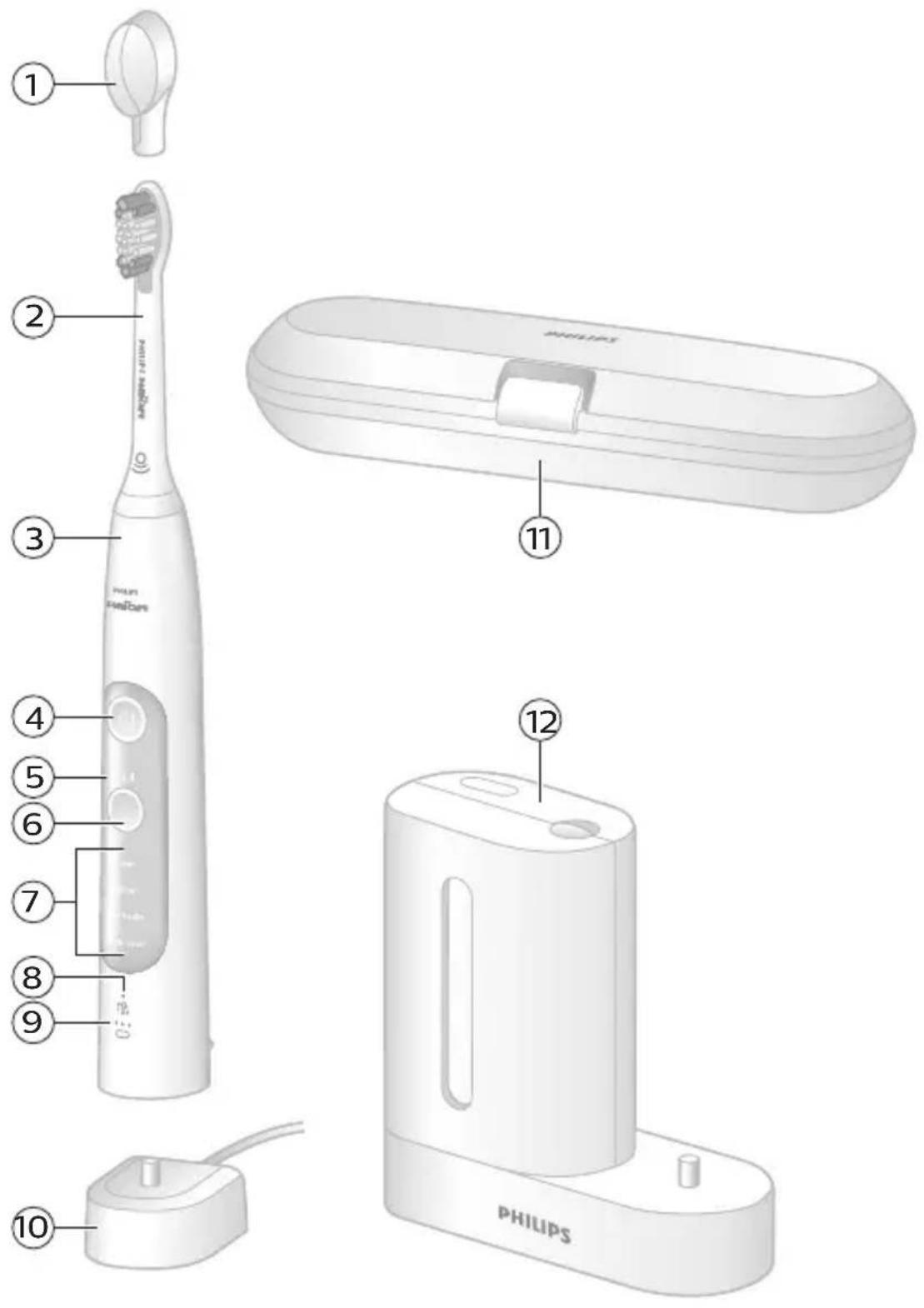
Your Philips Sonicare (Fig. 1)
1 Hygienic travel cap
2 Smart brush head(s)*
3 Handle
4 Power on/off button
5 Intensity light
6 Mode/intensity button
7 Modes
8 Brush head replacement reminder light
9 Battery indication
10 Charger
11 Travel case
12 UV Sanitizer*
*Note: The content of the box may vary based on the model purchased.
Using your Philips Sonicare
Brushing instructions
1 Push the brush head firmly onto the handle. Wet bristles and apply toothpaste.
12 English
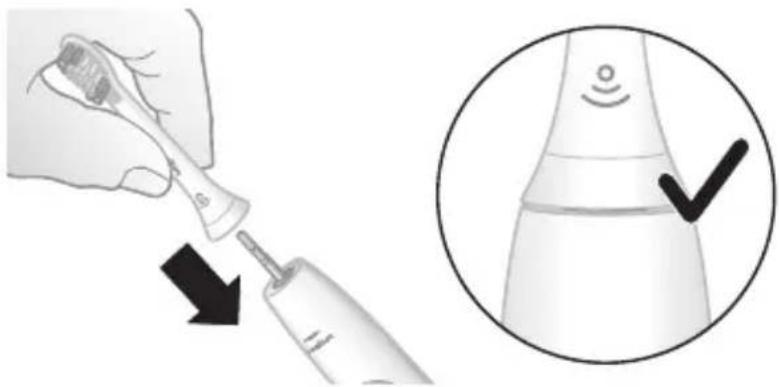
Note: It is normal to see a slight gap between the brush head and the handle. This allows the brush head to vibrate properly.
2 Place the toothbrush bristles against the teeth at a slight angle (45 degrees), pressing firmly to make the bristles reach the gumline or slightly beneath the gumline.
Note: Keep the center of the brush in contact with the teeth at all times.
3 Press the power on/off button to turn on the Philips Sonicare.
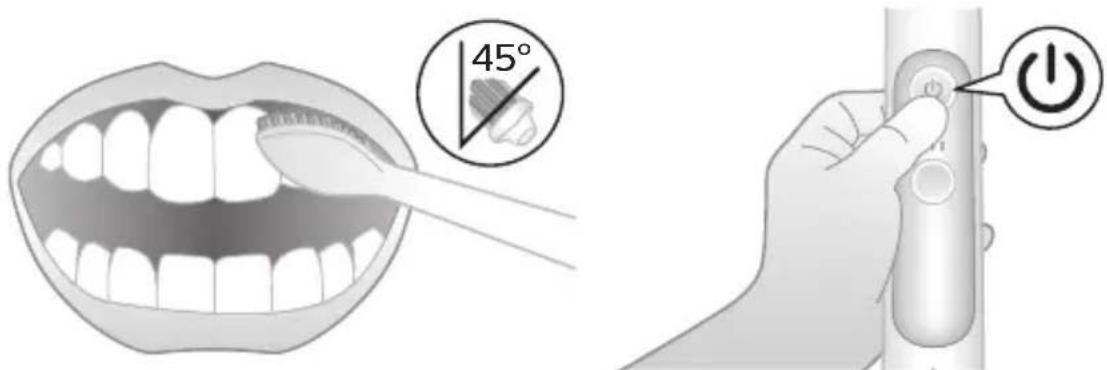
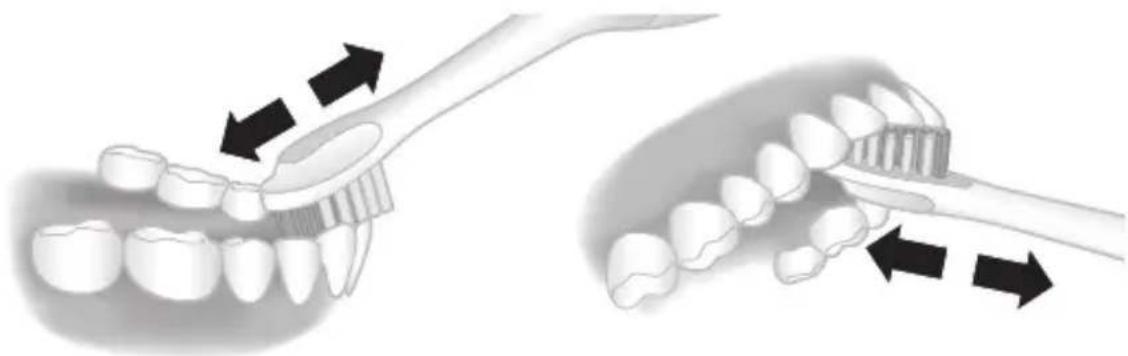
4 Apply light pressure to maximize Philips Sonicare's effectiveness and let the Philips Sonicare toothbrush do the brushing for you. Gently move the brush head slowly across the teeth in a small back and forth motion so the longer bristles reach between your teeth. Continue this motion throughout the brushing cycle.

Note: To learn how to brush with specific modes, see 'Modes'.
5 To clean the inside surfaces of the front teeth, tilt the brush handle semi-upright and make several vertical overlapping brushing strokes on each tooth.
Note:
- A change in vibration from the handle alerts you when you apply too much pressure (see Pressure sensor)
- Your Philips Sonicare toothbrush is safe to use on braces, dental moderations and dental restorations (fillings, crowns, veneers)
- Do not use your power toothbrush in the shower.
Brush heads
To see what type of brush head you have, check the label at the bottom of the brush head. The symbol at the bottom of the brush head indicates that it is a smart brush head, equipped with the BrushSync technology.
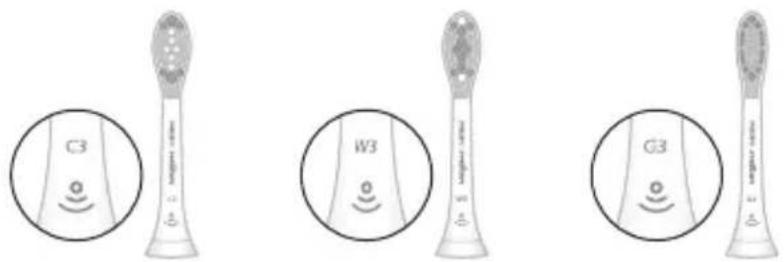
| Brush head name | Premium Plaque Control | Premium White Premium Gum Care |
| Brush head label | C3 W3 G3 | |
| Benefit | Plaque removal Plaque and stain removal | Healthier Gums |
To explore our full range of brush heads, go to
www.philips.com/toothbrush-heads for more information.
Note: The type of brush heads vary based on the model purchased.
BrushSync Technology
BrushSync technology enables your brush heads to communicate with your handle using a microchip. The symbol at the bottom of the brush head indicates that it is equipped with the BrushSync technology. This enables the following features:
- Brush Head Mode Pairing
- Brush Head Replacement Reminder
Brushing modes
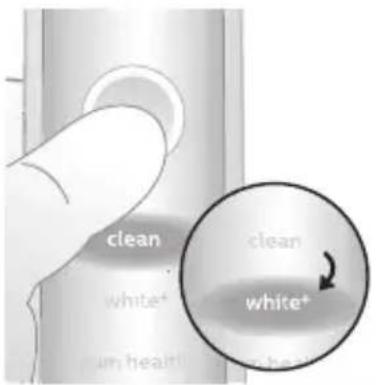
Your power toothbrush is equipped with 4 different modes*: Clean, Deep Clean+, White+* and Gum health*.
Based on the smart brush head you use, the mode will be selected automatically.
To manually change the mode, press the mode/intensity button while the toothbrush is off.
* Note:
- The modes vary based on the model purchased.
- All brush heads work with each mode.
- When the Philips Sonicare toothbrush is used in clinical studies, it must be used at high intensity, with the EasyStart feature turned off.
Brush head mode pairing
Brush heads with BrushSync technology are equipped with a microchip chip which communicates to the handle and automatically pairs it with the recommended mode and intensity.
Note: If you change modes/intensity, the handle will remember the last used setting. If you wish to brush with the recommended setting, you can find the recommended mode/intensity in 'Brushing Modes'.
*Note: The modes and type brush head vary based on the model purchased.
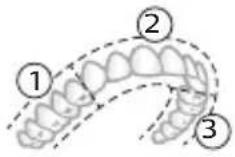
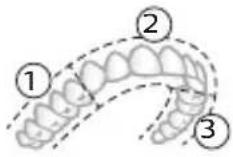
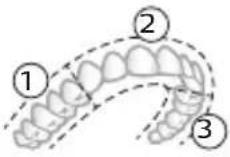
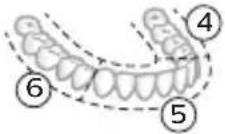
| Clean and Deep Clean + | White+ Gum Health | ||
| Benefit | Plaque removal | Plaque and surface stains removal | Plaque removal and gum massage |
| Recommended brush head | Premium Plaque Control* (C3) | Premium White* (W3) | Optimal Gum Care* (G3) |
| Recommended intensity level | 3 3 3 | ||
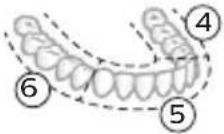
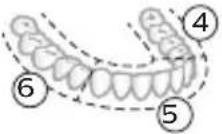
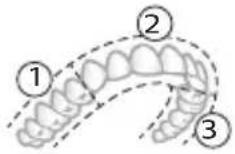
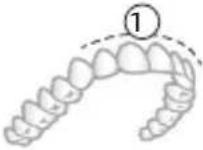
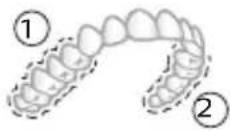
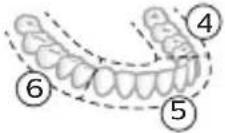
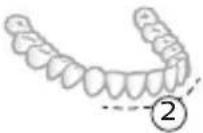
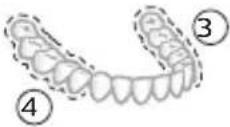
| Total brushing time | Clean: 2 minutesDeep Clean: 3 minutes | 2 minutes and 40 seconds | 3 minutes and 20 seconds |
| How to brush | Clean: Brush each segment for 20 seconds | Brush each segment for 20 seconds, | Brush each segment for 30 seconds, |
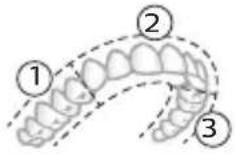 | 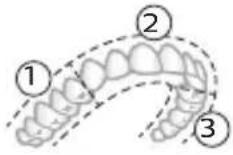 |  | |
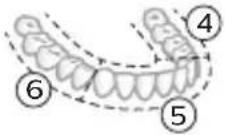 | 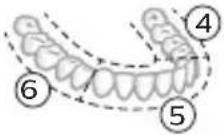 | 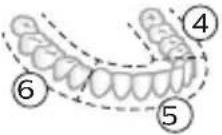 | |
| Deep Clean: Brush each segment for 30 seconds | then brush segments 1 and 2 for 20 seconds each. | then brush segments 1, 2, 3 and 4 for 20 seconds each. | |
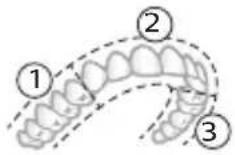 | 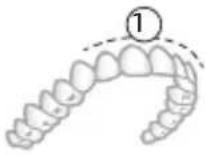 | 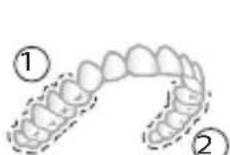 | |
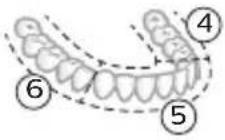 | 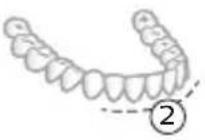 | 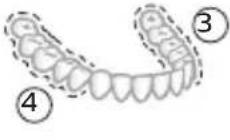 | |
Intensity settings
Your power toothbrush comes with 3 different intensity settings: low, medium and high. When attached to the handle, the smart brush
head will automatically select the recommended intensity. To manually change the intensity, turn on the handle and press the mode/intensity button.
While toothbrush is ON, press this button to change intensity setting
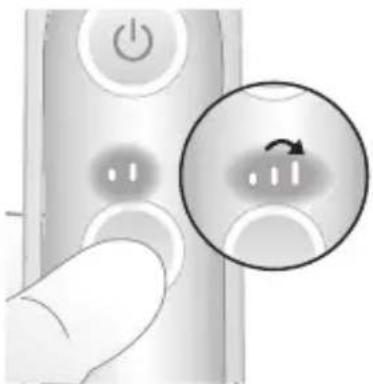
Features
- EasyStart
- Connected Brush experience
- Brush head replacement reminder
- Pressure sensor
- BrushPacer
Easy-Start
The EasyStart feature gently increases the power of the handle over the first 14 brushings to help you get used to the brushing power of the Philips Sonicare.
The EasyStart feature works with all modes.
Note: The EasyStart feature comes deactivated with your product. To activate EasyStart, see 'Activating or deactivating features'.
Sonicare App - Connected brushing experience

The Sonicare app pairs with your toothbrush to provide you with interactive brushing features. By brushing with your Sonicare app account, you will be able to:
18 English
- Receive brushing suggestions and personalized feedback
- Track your brushing progress over time
To start using the connected brushing features:
1 Download the Sonicare app to your phone
2 Follow the steps in the app setup
3 Pair your toothbrush with the app
4 Create your account
5 Personalize your app by answering questions about your brushing habits and interests
6 Start your connected brushing experience
Note: Make sure your phone's Bluetooth is turned on when using the connected brushing features.
Note: If you have any questions while setting up your account, be sure to review the Sonicare Privacy Statement, available throughout the app setup process.
How to Brush with the App
1 Go to the Brushing Screen in the app and select Start Brushing.
2 First brushing starts on the upper right molar. You can customize your starting location in Settings.
3 Follow the brushing guidance.
Tip: To ensure the best performance of the brushing sensors, keep your head looking forward.
4 Gently begin brushing. The app will highlight the correct segment. The timer will help you keep track.
5 Move your brush head when the highlighted segment changes.
6 Repeat, until you finish brushing all segments.
7 When done brushing, review and touch up any missed areas. Follow the in-app instructions on how to use the touch-up feature.
Brush Head Replacement Reminder
The handle will track the wear of your smart brush head. Over time, the handle will track the wear of your smart brush head by measuring:
- The overall pressure you apply while brushing
- The total time you've brushed with your brush head
Once your brush head is no longer effective, the Brush Head Replacement Reminder will blink amber. This indicates that it is recommended to change your brush head.
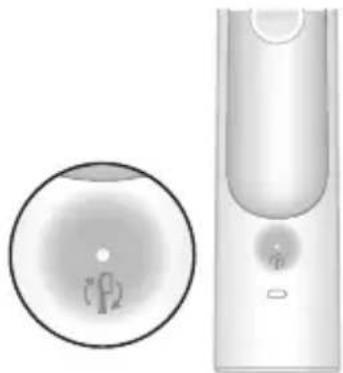
Note: The Brush Head Replacement Reminder comes activated with your product. To deactivate this feature, see 'Activating or deactivating features'.
Pressure sensor
Your Philips Sonicare measures the pressure you apply while brushing to protect your gums and teeth from damage.
If you apply too much pressure, the handle will change its vibration until you reduce the pressure.
Note: The Pressure Sensor comes activated with your product. To deactivate this feature, see 'Activating or deactivating features'.
Brush Pacer
The BrushPacer features indicates when you are supposed to move onto the next section of your teeth via a brief change in vibration. The toothbrush will automatically turn off at the end of the brushing session.
Charging and battery status
Charging
1 Plug the charger into an electrical outlet.
2 Place the handle on the charger.
3 The charging indicator will flash green until your toothbrush is fully charged.
Note: Your handle comes pre-charged for first use. After first use, charge for at least 24 hours.
Charging on stand or Sanitizer
1 Plug the charger or sanitizer into an electrical outlet.
2 Place the handle on the charger or sanitizer.
3 The charger will charge your toothbrush until it is fully charged.
Charging with the travel case
Note: Only the following ExpertClean handles can be charged in the charging travel case: HX972G, HX972K, HX972V, HX972P.
The HX number can be found on the bottom of your handle.
Note: The charging travel case requires a USB adapter to charge the handle. The USB adapter is not included.
1 Connect the charging travel case to 5V DC input power either from:
- a UL-listed or certified to ANSI/UL 60950-1 personal computer's standard USB connector or,
- a UL-listed or certified to ANSI/UL 60950-1 LPS power supply with USB output port or,
- a UL-listed or certified 1310 Class 2 power supply.
2 The travel case will charge your toothbrush until your toothbrush is fully charged.
Note: Charging the handle with the charging travel case may take longer than on the charger.
Battery Status (handle on plugged in charger)
When the handle is placed on the charger, sanitizer or travel case, the battery light will flash green based on the current battery level.
Number of Flashing LEDs Battery charging status
| 1 Low |
| 2 Medium |
| 3 High |
Battery Status (when handle is not placed on Charger)
When removing the handle from the charger, sanitizer or travel case, the battery light at the bottom of the handle will indicate the status of the battery.
LED Color Number of LEDs Battery status
Solid Green 3 High
Solid Green 2 Medium
Solid Green 1 Low
Flashing Amber 1 (with 5 beeps) Empty
Important: The wall adapter must be a safe extra low voltage source, compatible with the electrical ratings marked on the bottom of the device.
Sanitizing
- With the UV sanitizer you can clean your brush head after every use.
Unplug the sanitizer, discontinue use and call Consumer Care if:
- The UV light bulb remains on when the door is open.
- The window is broken or missing from the sanitizer.
- The sanitizer gives off smoke or a burning smell while it is operating.
Note: UV light can be harmful to the human eye and skin. This device should be kept out of reach of children at all times.
1 After brushing, rinse the brush head and shake off excess water.
22 English
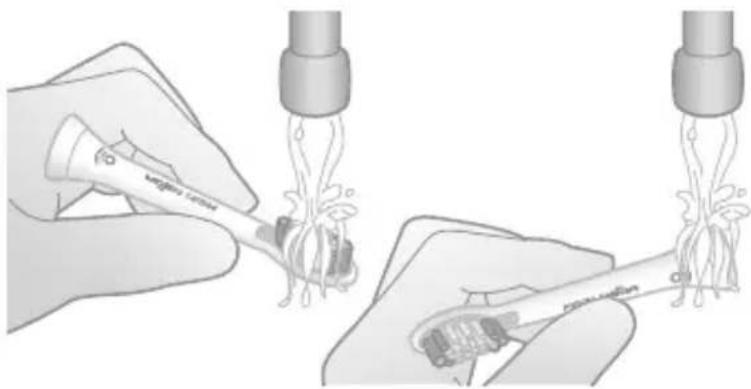
Warning: Do not place the travel cap on the brush head during sanitization.
2 Place your finger in the door recess on top of the sanitizer and pull open the door.
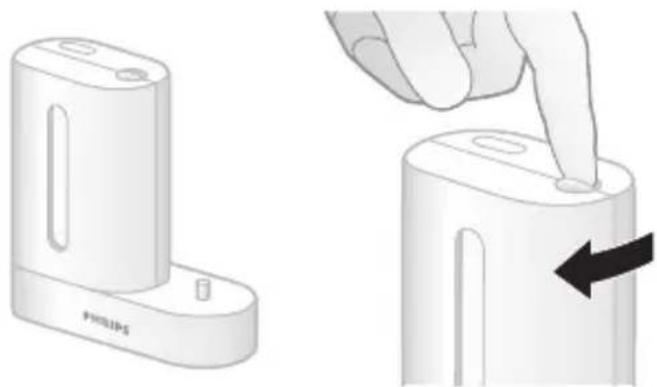
3 Place the brush head on one of the 2 pegs in the sanitizer with the bristles facing the light bulb.
Note: Only clean Philips Sonicare snap-on brush heads in the sanitizer.
Note: Do not clean Philips Sonicare for Kids brush heads in the sanitiser.
4 Make sure the sanitizer is plugged into a live outlet of appropriate voltage.
5 Close the door and press the green power on/off button once to select the UV clean cycle.
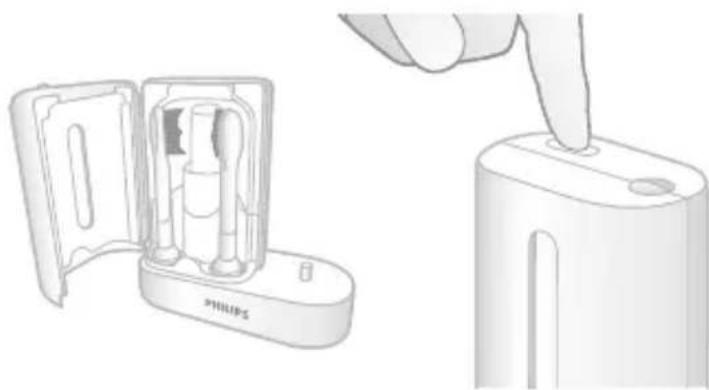
Note: You can only turn on the sanitizer if the door is properly closed.
Note: The sanitizer stops if you open the door during the sanitizing cycle.
Note: The sanitizer cycle runs for 10 minutes and then automatically shuts off.
The sanitizer is in operation when the light glows through the window.
Activating or deactivating features
You can activate or deactivate the following features of your toothbrush:
- EasyStart
- Pressure Sensor
- Brush Head Replacement Reminder
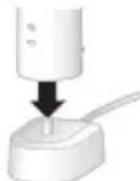
Step 1: Place the handle on the charger
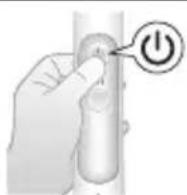
Step 2: Press and hold power button for:
24 English
| Easy start Pressure Sensor | Brush Head Replacement Reminder | |
| 3 seconds Up to 5 seconds | Up to 7 seconds | |
| ↓ ↓ ↓ | ||
| Step 3: Let go power button when you hear | ||
| 1 beep 1 beep and then 2 beeps | 1 beep, 2 beeps and then 3 beeps | |
| ↓ ↓ ↓ | ||
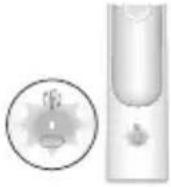 | If you see battery indicator lights flashing green 2 times and hear Low to High triple tones, then the feature has been activated. | |
| OR | ||
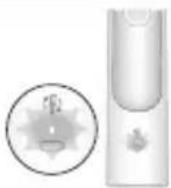 | If you see battery indicator lights flashing amber once and hear High to Low triple tones, then the feature has been deactivated. | |
Cleaning
- All parts can be cleaned by damp cloth or rinsed with warm water.

- Remove the brush head from the handle and rinse it thoroughly.
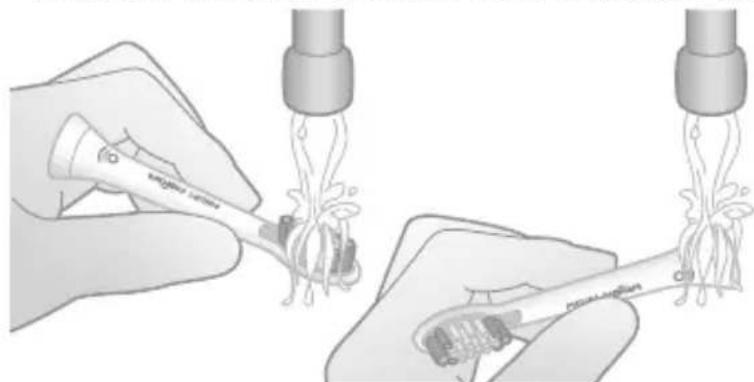
- Rinse the entire handle, especially the brush head connection, at least once a week.
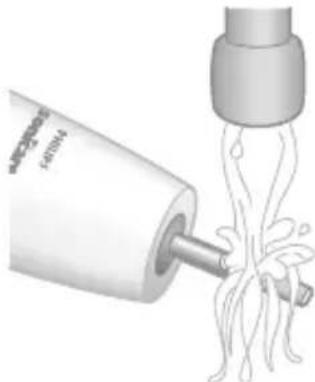
Caution: Do not push on the rubber seal at the top of the handle. Gently clean around the rubber seal.
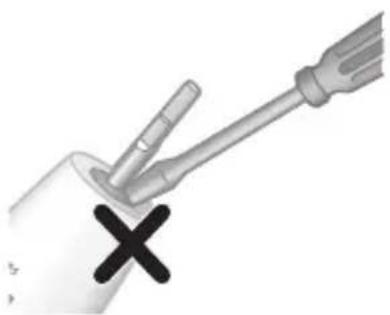
Cautions:
- Do not clean the brush head, travel cap, handle, charger, UV sanitizer or travel case in the dishwasher.
- Do not use isopropyl rubbing alcohol, vinegar or bleach to clean the handle as this may cause discoloration.
- Unplug the charger before you clean it.
- Do not use essential oils to clean the brush heads as this can cause damage.
Cleaning the Sanitizer
Warning: Do not immerse the sanitizer in water or rinse it under the faucet.
Warning: Do not clean the sanitizer when the UV light bulb is hot.
For optimal effectiveness, it is recommended to clean your sanitizer weekly.
1 Unplug the sanitizer.
2 Pull the drip tray straight out. Clean the interior of the sanitizer with a damp cloth.
- Rinse the drip tray and wipe it clean with a damp cloth.
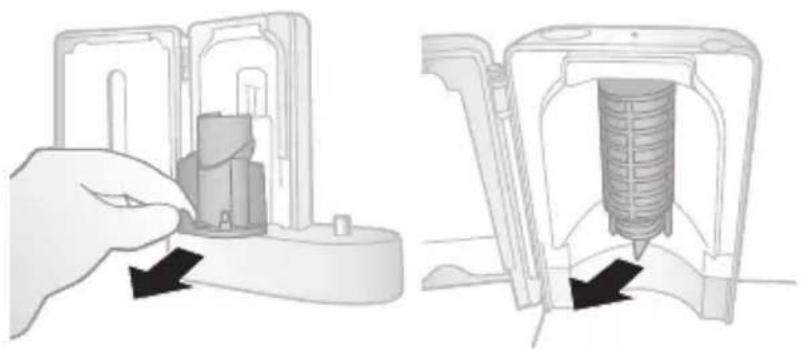
3 Remove the protective screen in front of the UV light bulb.
To remove the screen, grasp the edges next to the snaps, gently squeeze and pull out the protective screen.
4 Remove the UV light bulb.
To remove the light bulb, grasp it and pull it out of the metal clasp.
5 Clean the protective screen and the UV light bulb with a damp cloth.
6 Reinsert the UV light bulb.
To reinsert the light bulb, align the bottom of the light bulb with the metal clasp and push the bulb into the clasp.
7 Reinsert the protective screen.
To reinsert the screen, align the pegs on the screen with the slots on the reflective surface near the UV light bulb. Push the screen straight into the slots on the sanitizer.
Storage
If you are not going to use the product for an extended period of time, unplug it from the electrical outlet, clean it and store it in a cool and dry place away from direct sunlight.
Frequently asked questions
Question Answer
English
| Can I leave my Sonicare on the charger between brushings? | Yes, you can always keep your Philips Sonicare toothbrush on a plugged-in charger. This will not affect the battery lifetime. |
| Will other brush heads fit my Philips Sonicare toothbrush? | All Philips Sonicare electric toothbrush brush heads that snap on will fit your DiamondClean Smart toothbrush. However, not all can be used for Smart mode pairing. You can identify the Smart brush heads by the Smart icon at the base of the brush head. |
| How often do I need to replace my brush head? | We recommend you to replace your Philips Sonicare brush head after 3 months of use (based on brushing twice a day for 2 minutes each session). |
| Is my Philips Sonicare toothbrush waterproof? | Yes, your Philips Sonicare toothbrush is waterproof. However, never put your handle in a dishwasher to clean it. |
| What phones are compatible with the Philips Sonicare App? | The Philips Sonicare app supports Android OS 5.0 and newer, and iPhone 9.0 and newer. Mobile devices must also have Bluetooth 4.0 and newer. |
| What Philips Sonicare toothbrushes can I use with the App? | You can only use Philips Sonicare Flexcare Platinum Connected and DiamondClean Smart toothbrushes with the Sonicare app. Look for the Bluetooth symbol on the front panel of the package. |
| Can I use the Philips Sonicare App without Wi-Fi? | Wi-Fi is not needed to use the Philips Sonicare app. |
Storage
If you are not going to use the product for an extended period of time, unplug it from the electrical outlet, clean it and store it in a cool and dry place away from direct sunlight.
Recycling
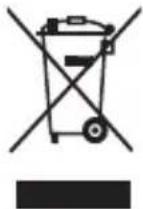
- This symbol means that this product shall not be disposed of with normal household waste (2012/19/EU).
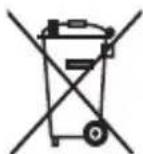
- This symbol means that this product contains a built-in rechargeable battery which shall not be disposed of with normal household waste (2006/66/EC). Please take your product to an official collection point or a Philips service center to have a professional remove the rechargeable battery.
- The UV light bulb of the sanitizer contains mercury. Do not throw the UV light bulb away with the normal household waste at the end of its life. Hand it in at an official collection point for recycling.
- Follow your country's rules for the separate collection of electrical and electronic products and rechargeable batteries. Correct disposal helps prevent negative consequences for the environment and human health.
Removing the rechargeable battery
Warning: Only remove the rechargeable battery when you discard the appliance. Make sure the battery is completely empty when you remove it.
To remove the rechargeable battery, you need a towel or cloth, a hammer and a flat-head (standard) screwdriver. Observe basic safety precautions when you follow the procedure outlined below. Be sure to protect your eyes, hands, fingers, and the surface on which you work.
1 To deplete the rechargeable battery of any charge, remove the handle from the charger, turn on the Philips Sonicare and let it run until it stops. Repeat this step until you can no longer turn on the Philips Sonicare.
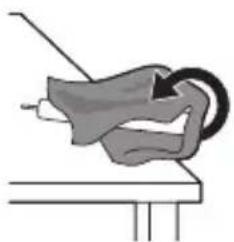
2 Remove and discard the brush head. Cover the entire handle with a towel or cloth.
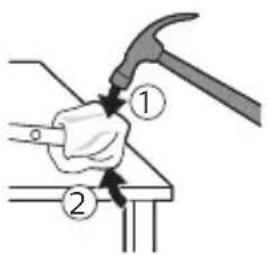
3 Hold the top of the handle with one hand and strike the handle housing 0.5 inch above the bottom end. Strike firmly with a hammer on all 4 sides to eject the end cap.
Note: You may have to hit on the end several times to break the internal snap connections.
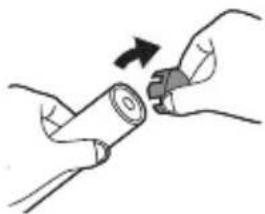
4 Remove the end cap from the toothbrush handle. If the end cap does not release easily from the housing, repeat step 3 until the end cap is released.
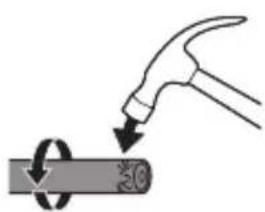
5 Holding the handle upside down, press the shaft down on a hard surface. If the internal components do not easily release from the housing, repeat step 3 until the internal components are released.
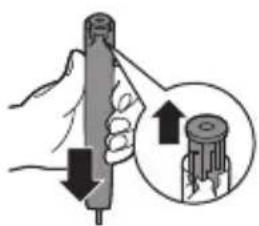
6 Remove the rubber battery cover.
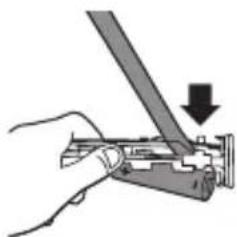
7 Wedge the screwdriver between the battery and the black frame at the bottom of the internal components. Then pry the screwdriver away from the battery to break the bottom of the black frame.
32 English
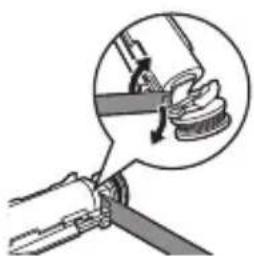
8 Insert the screwdriver between the bottom of the battery and the black frame to break the metal tab connecting the battery to the green printed circuit board. This will release the bottom end of the battery from the frame.
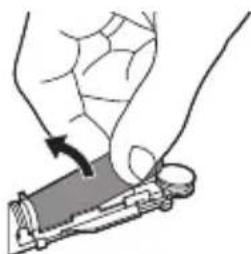
9 Grab the battery and pull it away from the internal components to break the second metal battery tab.
Caution: Be aware of the sharp edges of the battery tabs so as to avoid injury to your fingers.
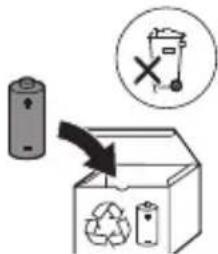
10 Cover the battery contacts with tape to prevent any electrical short from residual battery charge. The rechargeable battery can now be recycled and the rest of the product discarded appropriately.
Note: Do not throw away the appliance with the normal household waste at the end of its life, but hand it in at an official collection point for recycling. By doing this, you help to preserve the environment.
Warranty and support
If you need information or support, please visit
www.philips.com/support or read the international warranty leaflet.
Warranty restrictions
The terms of the international warranty do not cover the following:
- Brush heads.
- Damage caused by use of unauthorized replacement parts.
- Damage caused by misuse, abuse, neglect, alterations or unauthorized repair.
- Normal wear and tear, including chips, scratches, abrasions, discoloration or fading.
- UV light bulb.
Einführung
Hinweis:
Produktmerkmale
Deutsch
Achtung.
72 Español
Nota:
Premium Plaque Control
Premium White Premium Gum Care
*Nota:
Funciones
Español
Precauciones:
92 Español
Remarque :
Clean et Deep White+ Gum Health Clean +
Caractéristiques

Précautions :
124 Français
Nota:
Caratteristiche
Avvertenze:
De Philips Sonicare (afb. 1)
Opmerking:
| Naam van opzetborstel | Premium Plaque Control | Premium White Premium Gum Care |
| Aanduiding op opzetborstel | C3 W3 G3 |
Voordeel
* Opmerking:
Clean en Deep White+ Gum Health Clean+
| Poetsinstruc ties | Clean: poets elk segment 20 seconden lang | poets elk segment 20 seconden lang, | Poets elk segment 30 seconden lang, |
 |  |  | |
 |  |  | |
| Deep Clean: poets elk segment 30 seconden lang | poets vervolgens segment 1 en 2 elk 20 seconden lang. | poets vervolgens segment 1, 2, 3 en 4 elk 20 seconden lang. | |
 |  |  | |
 |  |  |
Eigenschappen
- EasyStart
- Connected poetservaring
- Vervangingsherinnering opzetborstel
- Druksensor
- BrushPacer
Easy-start
Sonicare-app - connected poetservaring

Let op:
www.philips.com/support
Nota:
* Nota:
- Os modos variam com base no modelo adquirido.
Caraterísticas
Avisos:
4 Retire a lâmpada UV.
Σημείωση:
Χαρακτηριστικά
Ελληνικά
Προφυλάξεις:
242 Ελληνικά
www.philips.com/Sonicare
©2018 Koninklijke Philips N.V. (KPNV). All rights reserved. Philips and the Philips shield are trademarks of KPNV. Sonicare and the Sonicare logo are trademarks of Philips Oral Healthcare, LLC and/or KPNV.
4235.021.7923.1 (9/1/2019)


75 % recycled paper
75 % papier recyclé



- INTRODUCTION
- INTENDED USE
- IMPORTANT SAFETY INFORMATION
- DANGER
- WARNING
- ENGLISH
- CAUTION
- ELECTROMAGNETIC FIELDS (EMF)
- RADIO EQUIPMENT DIRECTIVE
- YOUR PHILIPS SONICARE (FIG. 1)
- USING YOUR PHILIPS SONICARE
- BRUSHING INSTRUCTIONS
- 12 ENGLISH
- NOTE
- BRUSH HEADS
- BRUSHSYNC TECHNOLOGY
- BRUSHING MODES
- BRUSH HEAD MODE PAIRING
- INTENSITY SETTINGS
- FEATURES
- EASY-START
- SONICARE APP - CONNECTED BRUSHING EXPERIENCE
- 18 ENGLISH
- HOW TO BRUSH WITH THE APP
- BRUSH HEAD REPLACEMENT REMINDER
- PRESSURE SENSOR
- BRUSH PACER
- CHARGING AND BATTERY STATUS
- CHARGING
- CHARGING ON STAND OR SANITIZER
- CHARGING WITH THE TRAVEL CASE
- BATTERY STATUS (HANDLE ON PLUGGED IN CHARGER)
- BATTERY STATUS (WHEN HANDLE IS NOT PLACED ON CHARGER)
- LED COLOR NUMBER OF LEDS BATTERY STATUS
- IMPORTANT: THE WALL ADAPTER MUST BE A SAFE EXTRA LOW VOLTAGE SOURCE, COMPATIBLE WITH THE ELECTRICAL RATINGS MARKED ON THE BOTTOM OF THE DEVICE
- SANITIZING
- 22 ENGLISH
- ACTIVATING OR DEACTIVATING FEATURES
- 24 ENGLISH
- CLEANING
- CAUTIONS
- CLEANING THE SANITIZER
- STORAGE
- FREQUENTLY ASKED QUESTIONS
- RECYCLING
- REMOVING THE RECHARGEABLE BATTERY
- 32 ENGLISH
- WARRANTY AND SUPPORT
- WARRANTY RESTRICTIONS
- EINFÜHRUNG
- HINWEIS
- PRODUKTMERKMALE
- DEUTSCH
- ACHTUNG
- 72 ESPAÑOL
- NOTA
- FUNCIONES
- ESPAÑOL
- PRECAUCIONES
- 92 ESPAÑOL
- REMARQUE
- CARACTÉRISTIQUES
- PRÉCAUTIONS
- 124 FRANÇAIS
- CARATTERISTICHE
- AVVERTENZE
- DE PHILIPS SONICARE (AFB. 1)
- OPMERKING
- VOORDEEL
- EIGENSCHAPPEN
- SONICARE-APP - CONNECTED POETSERVARING
- LET OP
- CARATERÍSTICAS
- AVISOS
- ΣΗΜΕΊΩΣΗ
- ΧΑΡΑΚΤΗΡΙΣΤΙΚΆ
- ΕΛΛΗΝΙΚΆ
- ΠΡΟΦΥΛΆΞΕΙΣ
- 242 ΕΛΛΗΝΙΚΆ
Brand : PHILIPS
Model : Sonicare ExpertClean HX9692
Category : Electric toothbrush