70825 - Food Processor HAMILTON BEACH - Free user manual and instructions
Find the device manual for free 70825 HAMILTON BEACH in PDF.


User questions about 70825 HAMILTON BEACH
0 question about this device. Answer the ones you know or ask your own.
Ask a new question about this device
Download the instructions for your Food Processor in PDF format for free! Find your manual 70825 - HAMILTON BEACH and take your electronic device back in hand. On this page are published all the documents necessary for the use of your device. 70825 by HAMILTON BEACH.
USER MANUAL 70825 HAMILTON BEACH
Visit www.hamiltonbeach.com for our complete line of products and Use and Care Guides – as well as delicious recipes, tips, and to register your product online
Questions Please call us – our friendly associates are ready to help. USA: 1.800.851.8900
natural_image
Hamilton Beaver blender with fresh vegetables and kitchen utensils (no visible text or symbols)Dicing Food Processor Robot culinaire/ coupe en dés Procesador de Alimentos para Cortar en Cubos
English 2
Français.... 33
Español 64
IMPORTANT SAFEGUARDS
When using electrical appliances, basic safety precautions should always be followed to reduce the risk of fire, electric shock, and/or injury to persons, including the following:
- Read all instructions.
- This appliance is not intended for use by persons with reduced physical, sensory, or mental capabilities, or lack of experience and knowledge, unless they are closely supervised and instructed concerning use of the appliance by a person responsible for their safety.
- This appliance shall not be used by children. Keep the appliance and its cord out of reach of children.
- Close supervision is necessary when any appliance is used near children. Children should be supervised to ensure that they do not play with the appliance.
- To protect against risk of electrical shock, do not immerse base, motor, cord, or plug in water or other liquid.
-
Turn the appliance OFF(φ) then unplug from outlet when not in use, before putting on or taking off parts, and before cleaning. To unplug, grasp the plug and pull from the outlet. Never pull from the power cord.
-
Avoid contacting moving parts.
-
Do not operate any appliance with a damaged supply cord or plug, or after the appliance malfunctions or has been dropped or damaged in any manner. Supply cord replacement and repairs must be conducted by the manufacturer, its service agent, or similarly qualified persons in order to avoid a hazard. Call the provided customer service number for information on examination, repair, or adjustment.
-
The use of attachments not recommended or sold by the appliance manufacturer may cause fire, electric shock, or injury.
-
Do not use your food processor if any part is broken.
-
Do not use appliance outdoors.
-
Do not let cord hang over edge of table or counter, or touch hot surfaces.
- Keep hands and utensils away from moving blade and disc while processing food to reduce the risk of severe personal injury and/or damage to the food processor. A rubber scraper may be used but ONLY when the food processor is not running.
- The blades and discs are sharp. Handle carefully. Store out of reach of children.
- To reduce the risk of injury, never place cutting blade or disc on base without first putting bowl properly in place.
- Be certain lid is securely locked in place before operating appliance.
- Never feed food into food chute by hand. Always use the food pushers.
- Do not attempt to defeat the lid interlock mechanism.
- Make sure the blade or disc has come to a full stop before removing lid.
- To reduce the risk of injury, be sure to insert or remove blade and disc using hubs provided for this purpose. Use caution when removing blade and disc from the bowl, when emptying the bowl, and when cleaning.
- Check that the appliance is OFF (☐) before plugging cord into wall outlet. To disconnect, turn the control to OFF (☐) then remove plug from wall outlet. To unplug, grasp the plug and pull from the outlet. Never pull from the power cord."
-
Be sure to turn switch to OFF (♦) position after each use. Always use the pushers to clear the food chute. When this method is not possible, unplug cord from outlet and disassemble unit to remove the remaining food.
-
The appliance is not intended for commercial, professional, or industrial use. It is designed and built exclusively for household use only.
- Never use appliance for a longer period or with a larger amount of ingredients other than that recommended by appliance manufacturer.
- The maximum rating of this unit is based on using the chopping/mixing blade. Using the slicing/shredding disc may draw significantly less power.
-
Do not place on or near a hot gas or electric burner or in a heated oven.
-
Do not use appliance for other than intended use.
- Do not fill the bowl above the marked maximum fill line (or rated capacity) to avoid risk of injury due to damage to the cover or bowl.
- CAUTION! In order to avoid a hazard due to inadvertent resetting of the thermal cut-out, this appliance must not be supplied through an external switching device, such as a timer, or connected to a circuit that is regularly switched on and off by the utility.
- Be careful if hot liquid is poured into the food processor bowl as it can be ejected out of the appliance due to a sudden steaming.
SAVE THESE INSTRUCTIONS
Other Consumer Safety Information
This appliance is intended for household use only.
⚠ WARNING Electrical Shock Hazard: This appliance is provided with a grounded (3-prong) plug to reduce the risk of electric shock. The plug fits only one way into a grounded outlet. Do not defeat the safety purpose of the plug by modifying the plug in any way or by using an adapter. If the plug does not fit into the outlet, have an electrician replace the outlet.
The length of the cord used on this appliance was selected to reduce the hazards of becoming tangled in or tripping over a longer cord. If a longer cord is necessary, an approved extension cord may be used. The electrical rating of the extension cord must be equal to or greater than the rating of the appliance. The extension cord must be a grounding-type, 3-wire cord. Care must be taken to arrange the extension cord so that it will not drape over the countertop or tabletop where it can be pulled on by children or accidentally tripped over.
To avoid an electrical circuit overload, do not use another high-wattage appliance on the same circuit with this appliance.
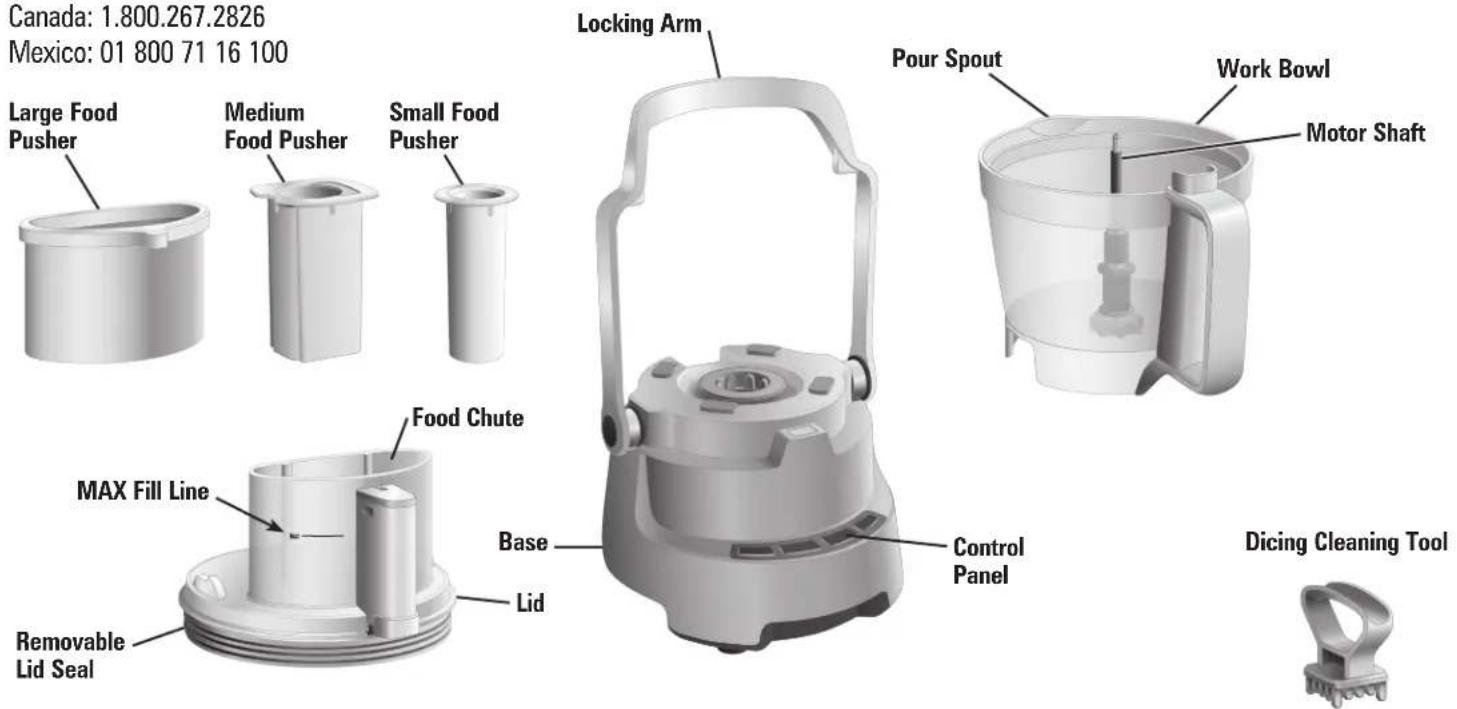
Parts and Features
To order parts:
US: 1.800.851.8900
www.hamiltonbeach.com
Canada: 1.800.267.2826
Mexico: 01 800 71 16 100
BEFORE FIRST USE: Unpack processor and remove protective covers from the blades and discs to prevent damage and scratches to work bowl. Note that the removable dicing grid will fall out of the dicing disc when turned upside down. Handle blades and discs carefully; they are very sharp. Wash all parts except base in hot, soapy water. Rinse; then dry.
Storage Case, Parts, and Control Panel
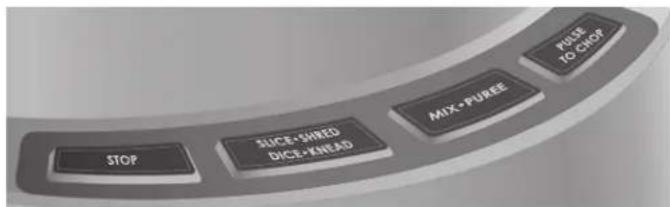
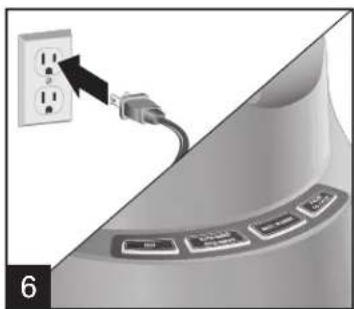
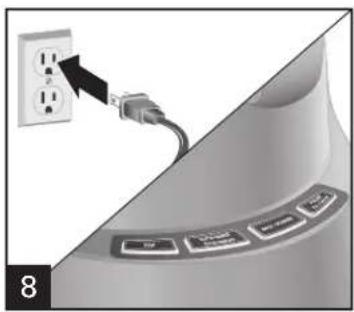
If the lights on the control panel are flashing, then the food processor is not yet assembled correctly. Either the locking arm is not in place or the large food pusher is missing. When all parts are properly installed, the control panel lights will be lit continuously. The unit is ready to operate.
Control Panel
text_image
STOP SUCCE-SHRED DICE-FREAD MIX-PUREE PULSE TO CHOP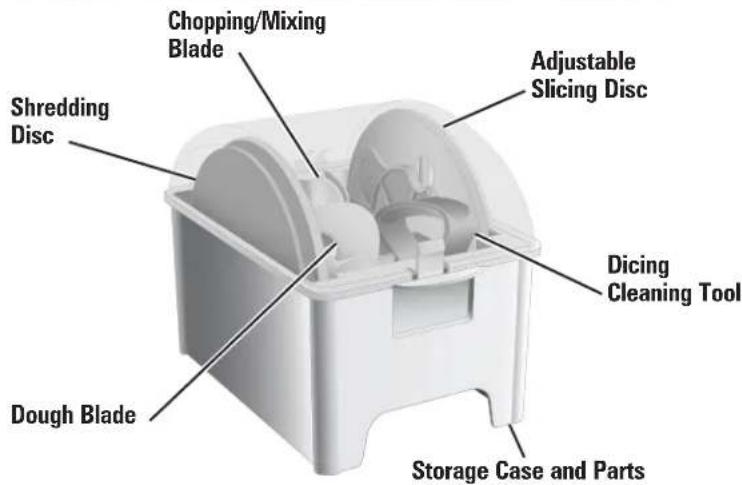
text_image
Chopping/Mixing Blade Shredding Disc Adjustable Slicing Disc Dicing Cleaning Tool Dough Blade Storage Case and Parts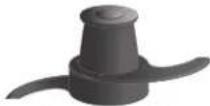
Dough Blade
Use to mix bread, pizza, and cookie doughs.
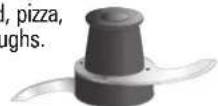
Chopping/Mixing Blade
Use to coarsely chop, grate, mince, mix, or puree food.
text_image
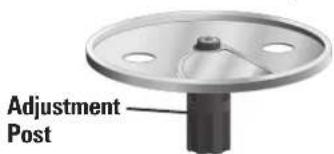
Adjustment PostAdjustable Slicing Disc
Use to slice carrots, cucumbers, potatoes, pepperoni, onions, peppers, tomatoes, and chilled cheeses.
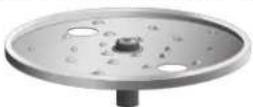
Shredding Disc
Use to shred a variety of foods such as chilled cheese, carrots, cabbage, and potatoes.
Dicing Assembly
NOTE: The cutting disc and dicing disc must always be used together as one assembly.
Cutting Disc
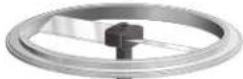
Dicing Disc With Removable Grid
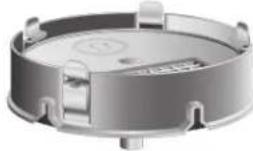
Use to make 1/2-inch (12-mm) cubes of potatoes, tomatoes, beets, onions, peppers, carrots and apples.
Store dicing assembly in work bowl.
How to Use Dicing Assembly
natural_image
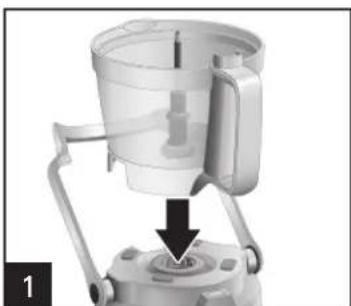
Mechanical device with a downward arrow indicating a component or assembly (no visible text or symbols)Place work bowl on base with handle facing forward.
natural_image
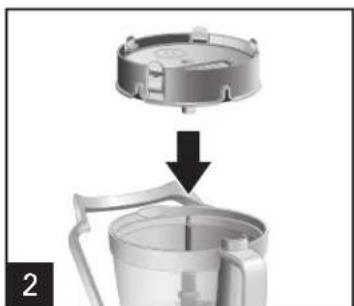
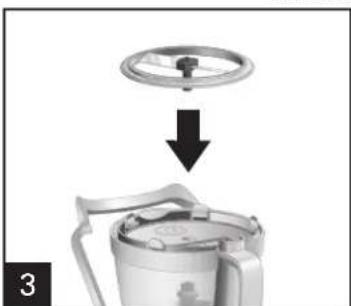
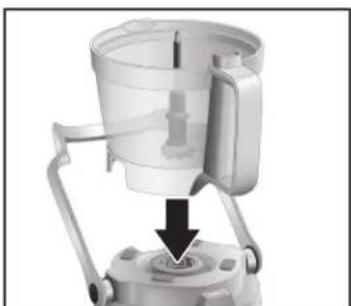
Mechanical assembly diagram showing a lid and base component with a downward arrow indicating motion (no text or symbols)To insert the dicing assembly, lower the dicing disc onto the motor shaft, making sure the removable grid is next to the handle. Then lower the cutting disc onto the motor shaft until it sits flush to the dicing disc. TIP: When using the feed chute to dice, slice, or shred, make sure no other blades are in the bottom of the work bowl.
natural_image
Mechanical device with a circular component and downward arrow, no visible text or symbolsthe dicing disc onto the motor d is next to the handle. Then lower until it sits flush to the dicing disc. ce, slice, or shred, make sure no work bowl.
natural_image
Close-up of a mechanical device with black arrows indicating motion or force, no visible text or symbolsSecure four latches of the dicing disc into place.
natural_image
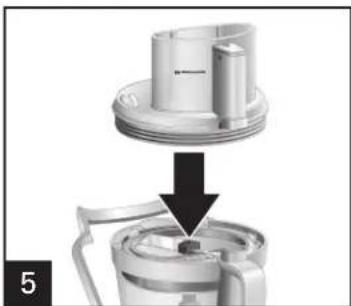
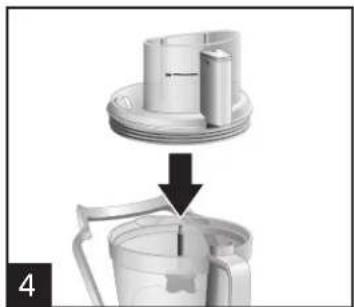
Mechanical assembly diagram showing a component being lowered into a motor (no text or symbols visible)Place lid on bowl so the chute lines up with the handle.
natural_image
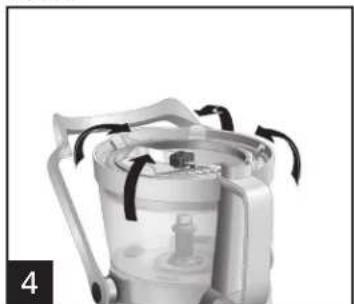
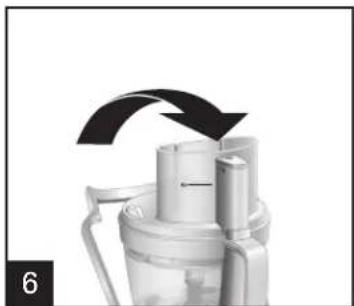
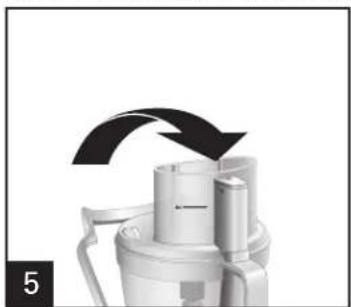
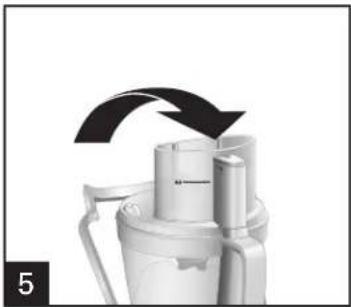
Close-up of a white kitchen blender with a black arrow indicating rotation (no text or symbols)Raise locking arm up and over bowl and snap into place.
text_image
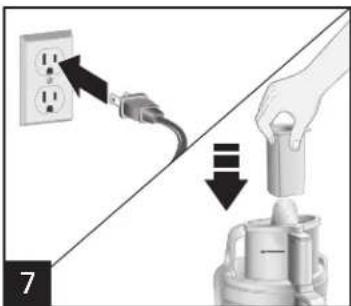
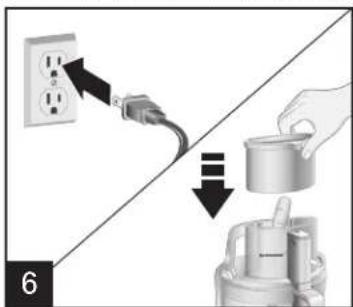
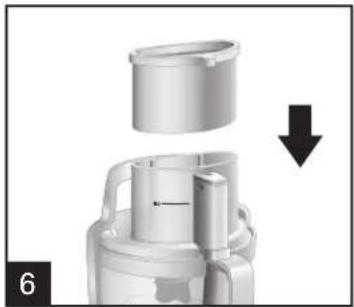
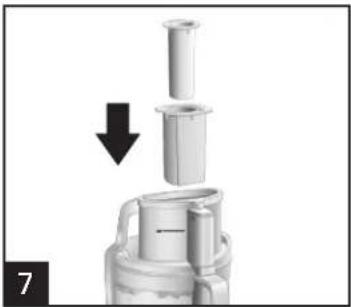
Diagram showing installation of a power outlet connected to a container with a hand holding a plug, indicating installation or repair process.Place large food pusher in food chute. Add food and use medium or small food pushers for dicing.
NOTE: Unit will not work unless locking arm is snapped into place on bowl and large food pusher is inserted.
How to Use Dicing Assembly (cont.)
NOTE: Dicing parts are color-coded green to remind you to use the medium pusher when dicing and the green cleaning tool to clean out the grid.
text_image
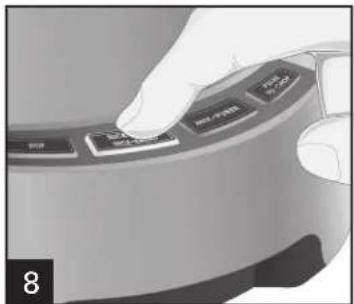
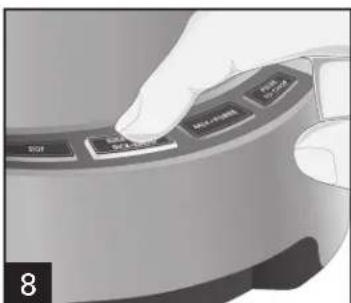
8Press DICE button. For best results use medium or small pusher.
natural_image
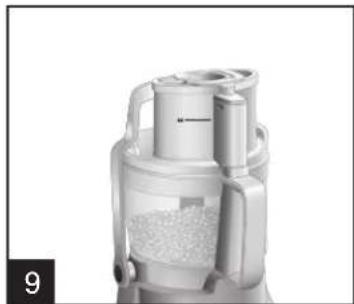
3D rendering of a mechanical device with internal components and textured surfaces (no visible text or symbols)WARNING Laceration Hazard: Always use food pusher to feed food into the chute. Never push food through chute with hands or other objects.
natural_image
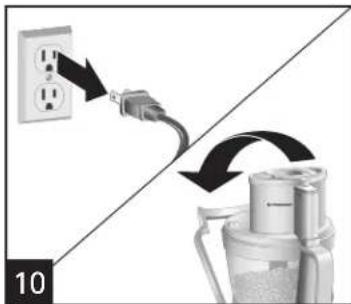
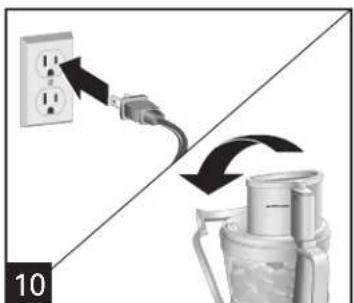
Diagram showing a power outlet connected to a switch and a blender, with no visible text or symbols.When finished, press STOP and unplug. Push locking arm back to unsnap and lower onto counter.
natural_image
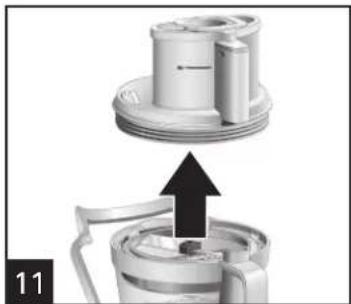
Mechanical assembly diagram showing a component being inserted into a housing (no text or symbols visible)Remove lid from bowl.
natural_image
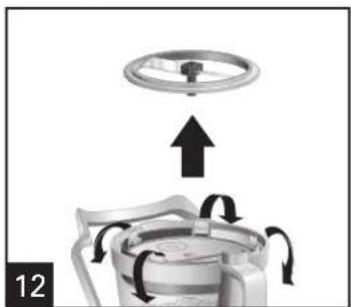
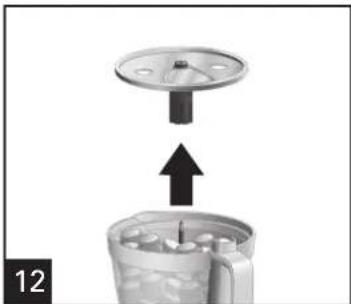
Diagram of a cooking pot with a lid and upward arrow indicating motion (no text or symbols)Unlatch four metal clips. Carefully remove cutting disc.
natural_image
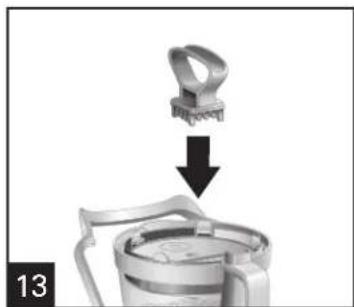
Mechanical assembly showing a clamp or bracket being lifted by a container (no text or symbols visible)Use cleaning tool to press food from dicing grid into bowl.
natural_image
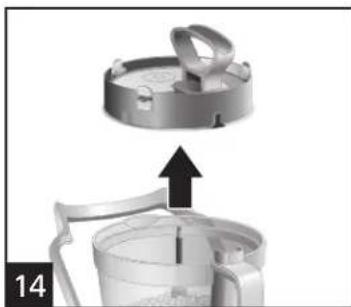
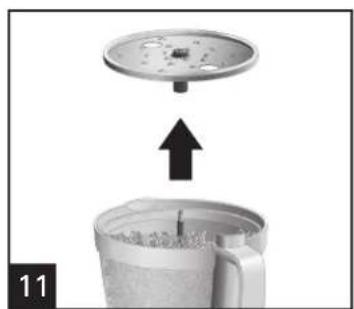
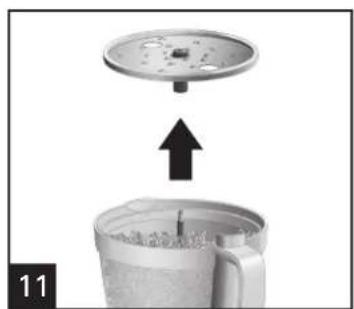
Close-up of a kitchen appliance with a lid and handle, showing a mechanical component (no text or symbols visible)Remove dicing disc from motor shaft by grabbing metal clips.
natural_image
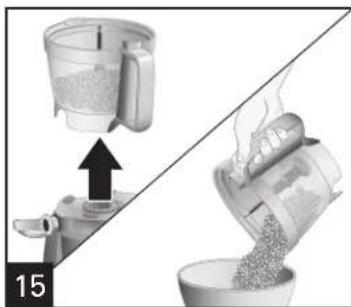
Two-step illustration showing a food being processed from a container to a bowl, with no visible text or symbols.How to Use Adjustable Slicing Disc
WARNING Laceration Hazard:
Handle disc carefully; it is very sharp. Press STOP and unplug before inserting or removing blades.
natural_image
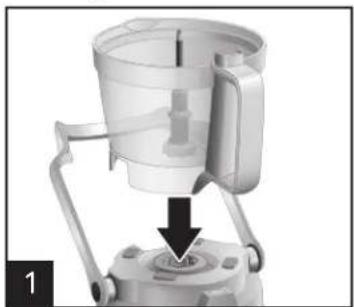
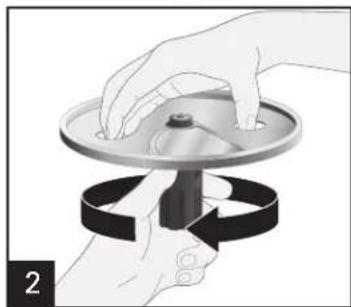
Mechanical device with a downward arrow indicating a component or assembly (no visible text or symbols)Place work bowl on base with handle facing forward. Adjust disc to desired thickness by turning the adjustment post. There are 14 adjustment positions, ranging from 1/32" to 1/4" (0.8 to 6 mm) thickness.
natural_image
Illustration of a hand holding a circular mechanical component with a rotating ring, no text or symbols present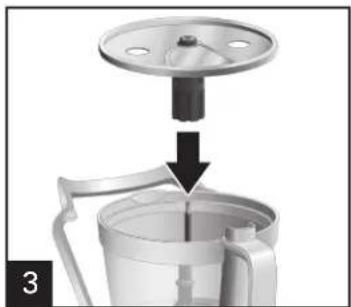
natural_image
Mechanical assembly diagram showing a lid being inserted into a container with a handle (no text or symbols visible)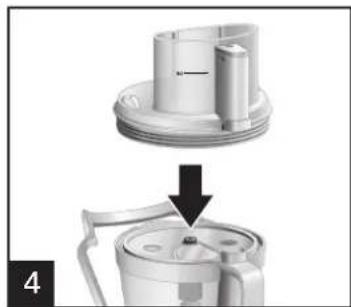
natural_image
Mechanical assembly diagram showing a component being folded into a housing (no text or symbols visible)Carefully place disc onto motor shaft. Place lid on work bowl. TIP: Check to make sure no other blades are in the bottom of the work bowl.
natural_image
Close-up of a white mechanical device with a black arrow indicating rotation or compression (no text or symbols)Raise locking arm up and over bowl and snap into place.
text_image
Diagram showing installation of a power outlet connected to a cup, with a hand holding the cup and a magnified view of the cup.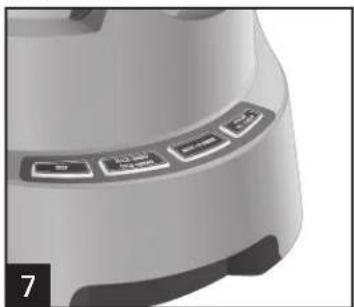
natural_image
Close-up of a kitchen blender with control buttons (no visible text or symbols)For smaller, thinner foods: Put large food pusher into place. Place food into smaller open tube and use small food pusher to push in food. For larger foods: Keep large, medium, and small pushers together. NOTE: Unit will not operate until large food pusher engages the protective interlock. Do not add food above the MAX fill line.
NOTE: Unit will not work unless the large food pusher is inserted and the locking arm is snapped into place on the bowl.
How to Use Adjustable Slicing Disc (cont.)
text_image
STOP MAX-F-OPEN 8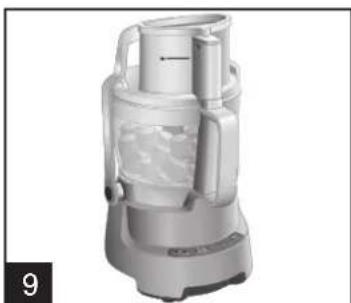
natural_image
White kitchen blender with handle and control panel (no visible text or symbols)Press SLICE button. NOTE: If the large pusher is removed, the last setting will be remembered. This setting will blink. To start slicing again, simply insert the large pusher.
WARNING Laceration Hazard: Always use food pusher to feed food into the chute. Never push food through chute with hands or other objects.
natural_image
Diagram showing a power outlet connected to a plug and a water dispenser, with no visible text or symbols.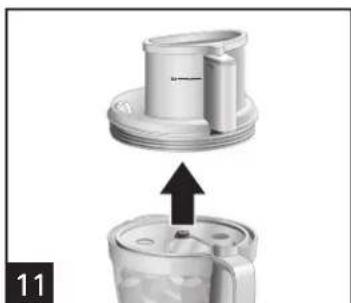
natural_image
Two views of a mechanical component: top shows a cylindrical housing with a side panel, bottom shows a cup with a handle and lid (no text or symbols visible)When finished, press STOP and unplug. Push locking arm back to unsnap and lower onto counter.
Remove lid.
natural_image
Diagram showing a device with a lid and an arrow indicating upward movement, no text or symbols present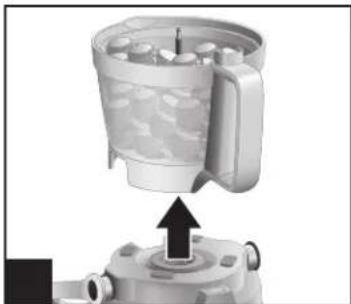
natural_image
Mechanical component diagram showing a container with internal components and an upward arrow indicating motion (no text or symbols)
natural_image
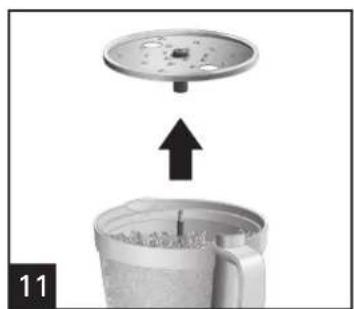
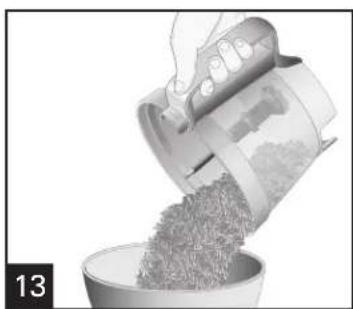
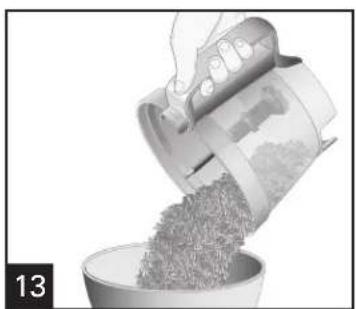
Illustration of a container pouring liquid into a bowl (no text or symbols)Carefully remove disc from motor shaft using the finger holes.
How to Use Shredding Disc
WARNING Laceration Hazard:
Handle disc carefully; it is very sharp. Press STOP and unplug before inserting or removing blades.
natural_image
Mechanical device with a downward arrow indicating a component or assembly (no visible text or symbols)Place work bowl on base with handle facing forward.
natural_image
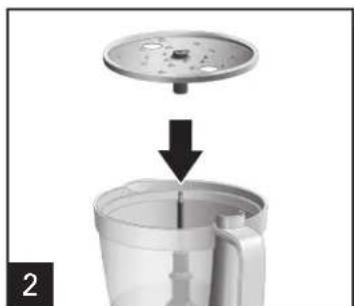
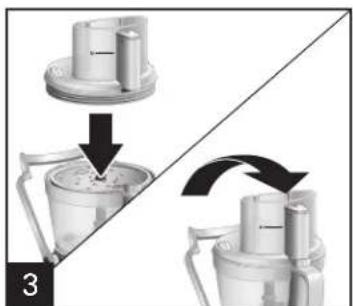
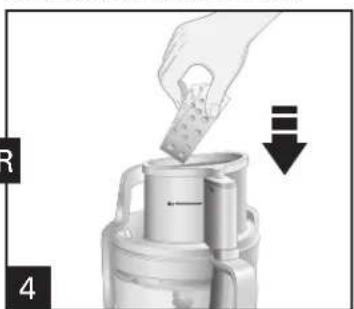
Diagram showing a kitchen appliance with a lid and a drop in liquid, no text or symbols presentCarefully place disc onto motor shaft. Place lid on work bowl so the chute lines up with the handle. Raise locking arm up and over bowl and snap into place. TIP: Check to make sure no other blades are in the bottom of the work bowl.
natural_image
Two-step diagram showing a mechanical device being lifted or converted into a container, with no visible text or symbols.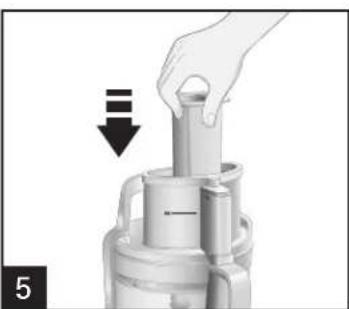
natural_image
Illustration of a hand pressing down on a mechanical component with arrows indicating motion (no text or symbols)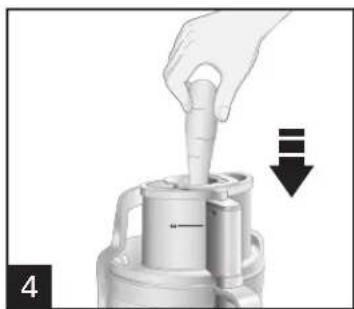
natural_image
Hand operating a mechanical device with a downward arrow indicating motion (no text or symbols)For larger foods: Keep large, medium, and small pushers together. NOTE: Unit will not operate until large food pusher engages the protective interlock. Do not add food above the MAX fill line.
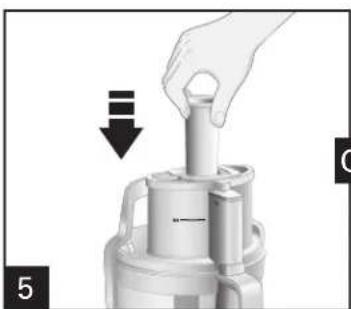
natural_image
Illustration of a hand pressing down on a mechanical component with a downward arrow indicating motion (no text or symbols)For smaller, thinner foods: Put large food pusher into place. Place food into smaller open tube and use small food pusher to push in food. NOTE: Soft cheese like mozzarella should be placed in the freezer for 30 minutes prior to processing to ensure it is firm enough for shredding.
natural_image
Hand pouring liquid into a container with a downward arrow indicating process (no text or symbols)food pusher into place. Place food into smaller open tube and use NOTE: Soft cheese like mozzarella should be placed in the freezer for sure it is firm enough for shredding.
How to Use Shredding Disc (cont.)
natural_image
Close-up of a wall-mounted electrical socket connected to a cable, showing terminal buttons (no text or symbols visible)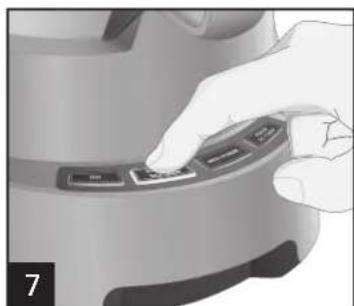
natural_image
Close-up of a hand pressing a button on a curved surface, no visible text or symbolsPress SHRED button.
natural_image
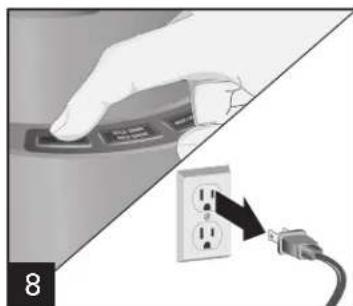
Illustration showing a hand holding a power strip connected to an electrical outlet plug (no text or symbols present)When finished, press STOP and unplug.

natural_image
Close-up of a white plastic spray can with a black arrow indicating rotation (no text or symbols)Push locking arm back to unsnap and lower onto counter.
natural_image
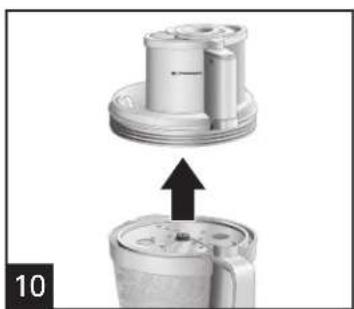
Two views of a mechanical component with an arrow indicating upward motion, no visible text or symbolsRemove lid.
natural_image
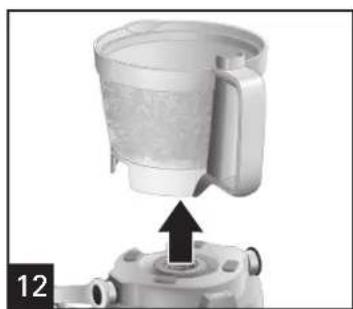
Two views of a food item: top view shows a lid with a handle, bottom view shows a cup filled with granular material (no text or symbols visible)Carefully remove blade from motor shaft using finger holes.
natural_image
Close-up of a kitchen mixer with an upward arrow indicating the component (no text or symbols visible)(1) AD = BD = 1
natural_image
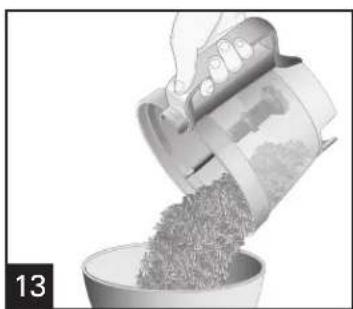
Illustration of a hand pouring granular material into a bowl (no text or symbols)How to Use Chopping/Mixing Blade
natural_image
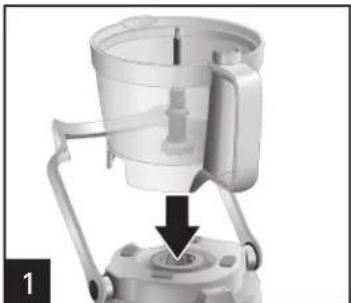
Mechanical device with a downward arrow indicating a component or assembly (no visible text or symbols)Place work bowl on base with handle facing forward.
natural_image
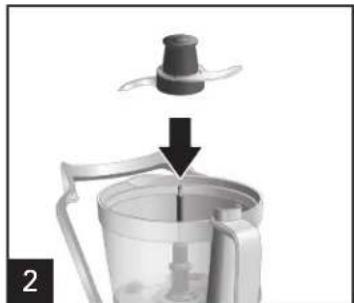
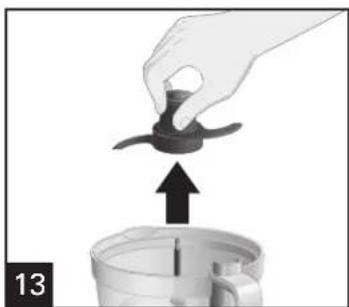
Close-up of a kitchen blender with a handle and lid, showing liquid level (no text or symbols visible)Carefully slide blade straight down onto the motor shaft. NOTE: Operate using only one blade or disc at a time.
natural_image
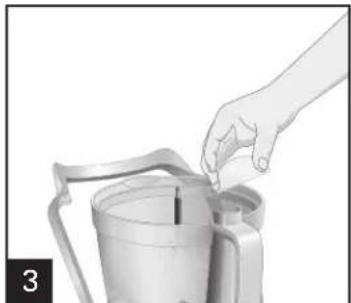
Illustration of a hand pouring liquid into a container with a handle (no text or symbols)Place food to be chopped/mixed in bowl.
WARNING Laceration Hazard: Handle blade carefully; it is very sharp. Press STOP and unplug before inserting or removing blades.
natural_image
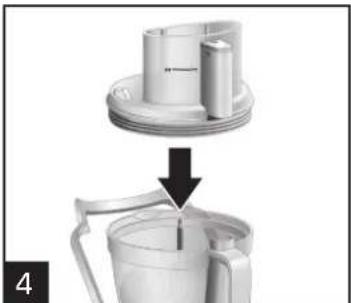
Mechanical assembly diagram showing a lid being inserted into a cup (no text or symbols visible)Place lid on work bowl so the chute lines up with the handle.
natural_image
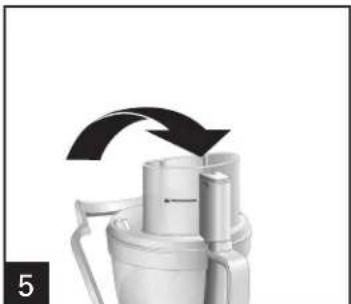
3D rendering of a white mechanical device with a black arrow indicating rotation or compression (no text or symbols)Raise locking arm up and over bowl and snap into place. NOTE: Unit will not work unless locking arm is snapped into place on bowl and large food pusher is inserted.
natural_image
Exploded view of a mechanical device showing internal components and a downward arrow (no text or symbols)and snap into place. NOTE: Unit napped into place on bowl and
natural_image
Mechanical component with a downward arrow indicating compression or disassembly (no text or symbols visible)The Ground Truth image displays a single, solid horizontal line. According to Rule 2 (UNDERSCORE & LINE RULES), this is a stylistic or background line, not a placeholder underscore. Therefore, the OCR result must ignore it and output nothing or only meaningful text. The provided OCR content is "____", which consists of four underscores. This is an incorrect interpretation of the line as a placeholder, violating the rule that stylistic lines must be ignored. The OCR has hallucinated placeholder underscores where none exist in the GT. Hence, the OCR result is inconsistent with the Ground Truth.
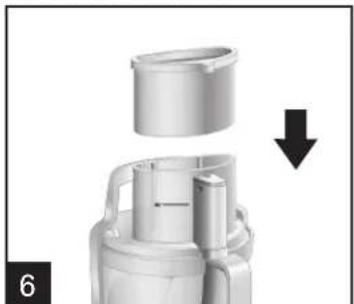
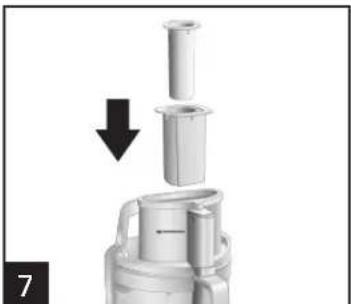
Place food pushers in food chute. Unit will not operate until large food pusher engages the protective interlock. Do not add food above the MAX fill line.
WARNING Laceration Hazard: Always use food pusher to feed food into the chute. Never push food through chute with hands or other objects.
How to Use Chopping/Mixing Blade (cont.)
natural_image
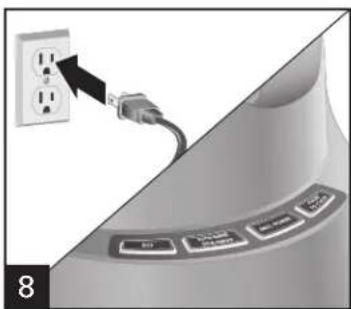
Close-up of a wall-mounted electrical socket connected to a cable, with control buttons visible (no text or symbols)If the lights on the control panel are flashing, then the food processor is not assembled correctly. Either the locking arm is not in place or the large food pusher is missing. When all parts are properly installed, the control panel lights will be lit continuously. The unit is ready to operate.
natural_image
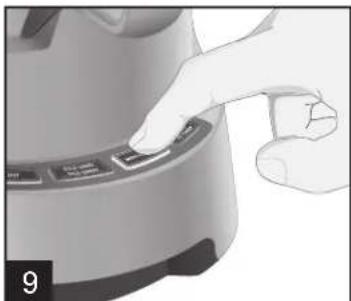
Close-up of a hand pressing a button on a kitchen appliance (no visible text or symbols)Press MIX/PUREE, or for more control use the PULSE TO CHOP button.
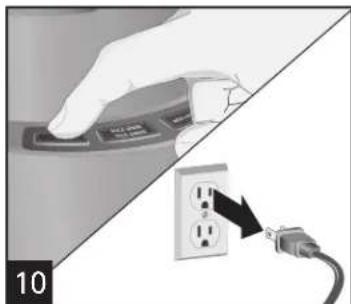
natural_image
Illustration of a hand holding a power plug connected to an electrical outlet with a cable (no text or symbols)When finished, press STOP and unplug.
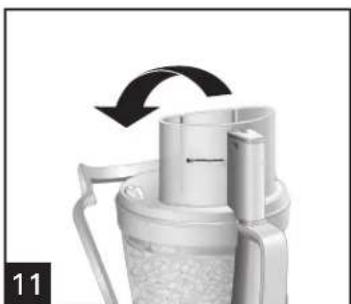
natural_image
Close-up of a white plastic brush holder with a black arrow indicating rotation (no text or symbols)Push locking arm back to unsnap and lower onto counter.
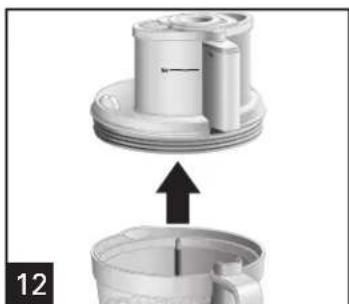
natural_image
Mechanical assembly diagram showing a cylindrical component being lifted into a container (no text or symbols)Remove lid.
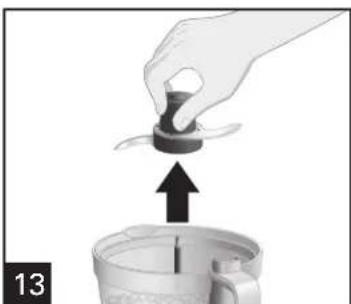
natural_image
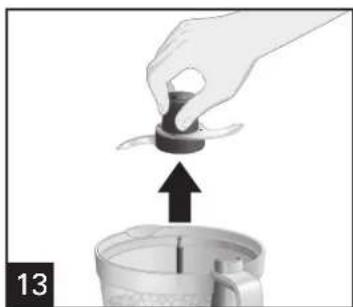
Hand placing a small object into a cup with an arrow indicating upward motion (no text or symbols)Carefully remove blade from motor shaft.
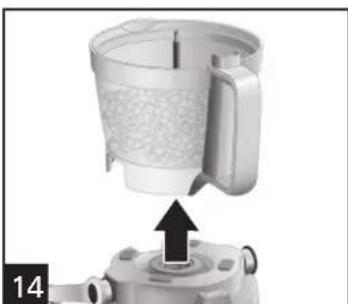
natural_image
3D rendering of a blender with a handle and spout, showing internal structure and a black arrow indicating motion (no text or symbols)How to Use Dough Blade
natural_image
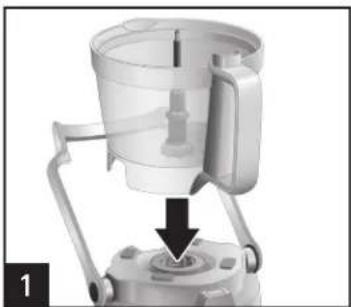
Mechanical device with a downward arrow indicating a component or assembly (no visible text or symbols)Place work bowl on base with handle facing forward.
natural_image
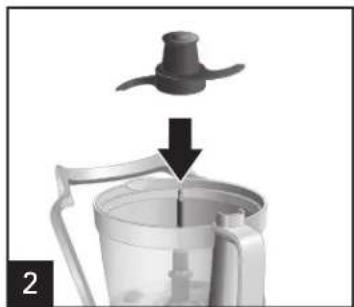
Close-up of a kitchen blender with a handle and spool, showing liquid level (no text or symbols visible)Carefully slide blade straight down onto the motor shaft. NOTE: Operate using only one blade or disc at a time.
natural_image
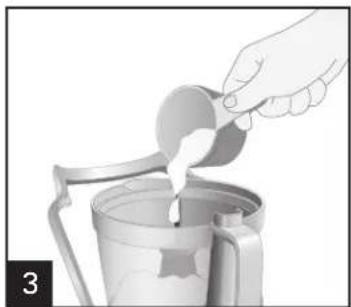
Illustration of a hand pouring liquid into a cup (no text or symbols)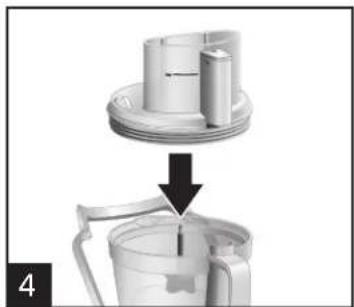
natural_image
Mechanical assembly diagram showing a lid being inserted into a container (no text or symbols visible)Place lid on work bowl so the chute lines up with the handle.
natural_image
Close-up of a white plastic blender with a black arrow indicating rotation or compression (no text or symbols)Raise locking arm up and over bowl and snap into place.
natural_image
3D rendering of a mechanical device with a downward arrow indicating a component (no text or symbols visible)Place food pushers in food chute.
natural_image
Mechanical assembly diagram showing a cylindrical component being lifted by a downward arrow (no text or symbols)NOTE: Unit will not operate until large food pusher engages the protective interlock. Do not add food above the MAX fill line.
WARNING Laceration
Hazard: Always use food pusher to feed food into the chute. Never push food through chute with hands or other objects.
How to Use Dough Blade (cont.)
natural_image
Close-up of a wall-mounted power socket connected to a cable, showing control buttons (no text or symbols visible)If the lights on the control panel are flashing, then the food processor is not assembled correctly. Either the locking arm is not in place or the large food pusher is missing. When all parts are properly installed, the control panel lights will be lit continuously. The unit is ready to operate.
natural_image
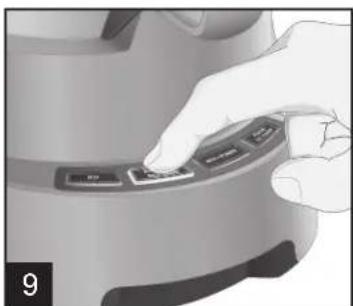
Close-up of a hand pressing a button on a curved surface, no visible text or symbolsPress KNEAD button and process following your recipe.
natural_image
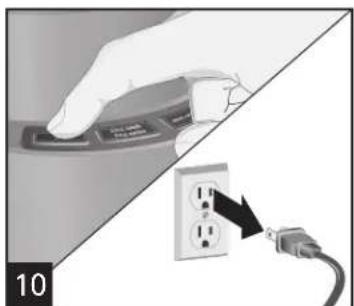
Illustration showing a hand inserting a power plug into an electrical socket connected to a cable (no text or symbols visible)When finished, press STOP and unplug.
natural_image
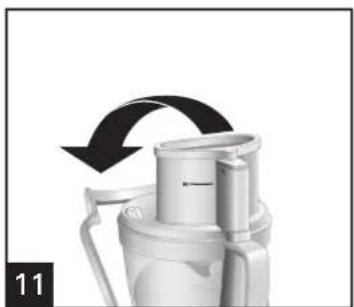
Close-up of a white plastic container with a black arrow indicating rotation or movement (no text or symbols)Push locking arm back to unsnap and lower onto counter.
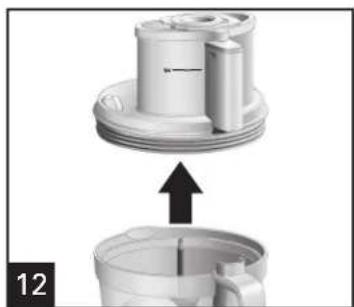
natural_image
3D rendering of a mechanical component with an arrow indicating assembly or transformation (no text or symbols)Remove lid.
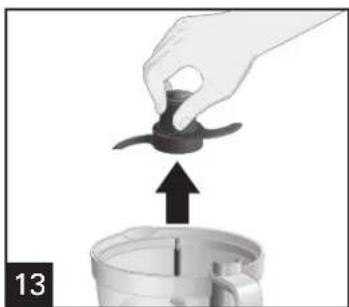
natural_image
Hand holding a propeller above a cup with an arrow indicating upward motion (no text or symbols)Carefully remove blade from motor shaft.
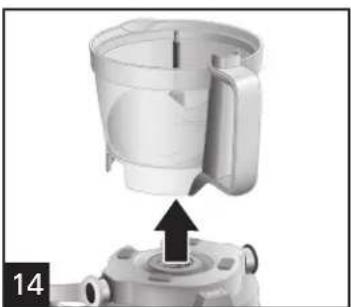
natural_image
3D rendering of a kitchen mixer with an arrow indicating the component (no text or symbols visible)Tips and Techniques
For a more uniform consistency, start with pieces of food that are similar in size. Cut food into 1-inch (2.5-cm) pieces before processing with chopping/mixing blade and leave room in work bowl for the food to be tossed around.
This food processor is excellent to chop, dice, mix, slice, or shred most foods. However, to maintain peak performance, do not use your food processor for the following: grinding coffee beans or spices, slicing frozen meats, or crushing ice.
When chopping foods, pulsing on and off will produce the best results.
Operating time will depend on quantity of food being processed. Most foods can be sliced, diced, chopped, or shredded in seconds. If unit is operated continuously for an extended period of time, let the processor rest about 4 minutes before continuing.
Do not puree or mash starchy vegetables like potatoes as they are easily overprocessed and will become gummy.
To slice or shred cheese, use only firm cheese like Cheddar or Swiss that has been chilled for at least 30 minutes. Cheese should be processed immediately after being removed from the refrigerator. Soft cheese like mozzarella should be placed in the freezer for 30 minutes prior to processing to ensure it is firm enough for shredding.
The adjustable slicing disc can slice foods as thin as 1/32 inch (0.8 mm) and as thick as 1/4 inch (6 mm).
Processing Charts
When using attachments, do not process past the MAX LEVEL on the work bowl.
ATTACHMENT FOODS
Chopping/Mixing Blade Chop: nuts, meat, garlic, onions, peppers, celery, herbs, bread (for crumbs), crackers Mince/Puree: vegetables, fruit Mix: salad dressings Puree: soups, sauces Grate: cheese, such as Parmesan (chilled)
Slicing Disc Cucumbers, apples, mushrooms, carrots, potatoes, cabbage, tomatoes, pepperoni, peppers, radishes, firm cheeses (chilled)
Shredding Disc Cabbage, potatoes, carrots, cheese (chilled)
Dicing Disc Potatoes, tomatoes, onions, peppers, beets, carrots, cucumbers, and apples
Care and Cleaning
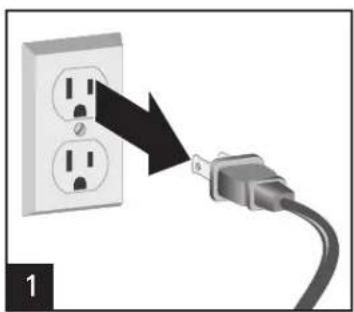
natural_image
Electrical outlet connected to a plug, showing power lines and socket (no text or symbols)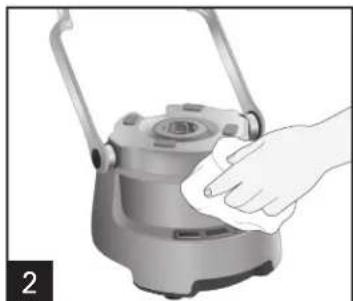
natural_image
Illustration of a hand cleaning a small appliance with a handle (no text or symbols)Wipe base, control panel, and cord with a damp cloth or sponge. If necessary, use a mild nonabrasive cleanser.
WARNING Electrical Shock Hazard:
Disconnect power before cleaning. Do not immerse cord, plug, or base in water or any other liquid.
WARNING Laceration Hazard:
Handle blades and discs carefully; they are very sharp.
natural_image
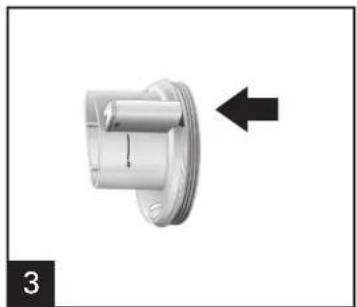
Mechanical component with a black arrow pointing to a cylindrical feature (no text or symbols)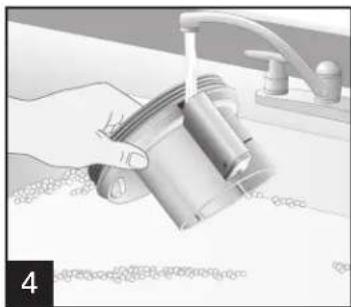
natural_image
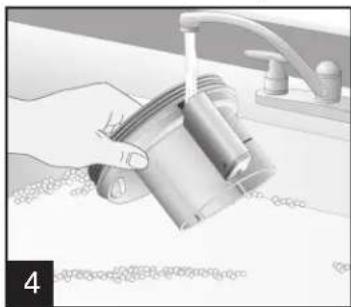
Illustration of a hand washing a cup on a bathroom sink (no text or symbols)NOTE: If food particles get trapped in the back of the food chute, place openings on sides of enclosure under running water to rinse out pieces before putting in the dishwasher.
natural_image
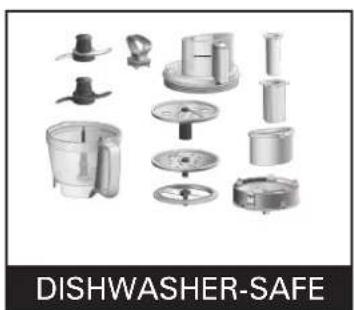
Product catalog image showing various kitchen utensils and a dishwasher-safe (no text or symbols on the items themselves)DO NOT use the "SANI" setting when washing in the dishwasher. "SANI" cycle temperatures could damage your product. All removable parts may also be cleaned in the sink with hot, soapy water. Use caution when washing blades and discs.
Visit www.hamiltonbeach.com for our complete line of products and Use and Care Guides – as well as delicious recipes, tips, and to register your product online!
Processing Times
| BLADE TYPE RECOMMENDED FOOD | RECOMMENDED PROCESSING TIME RECOMMENDED AMOUNT | ||
| Dough Blade | Bread dough | 1 1/2–2 minutes | 3 cups (375 g) bread flour, 2 tablespoons (30 ml) oil, 1 cup (237 ml) water, 1 pkg (21 g) yeast |
| Pizza dough | 1 1/2–2 minutes | 3 cups (360 g) all-purpose flour, 1 tsp (5 ml) sugar, 2 tablespoons (30 ml) oil, 1 cup (237 ml) water, 1 pkg (21 g) yeast, 1 tsp (5 ml) salt | |
| Chopping/Mixing Blade | Chickpeas/hummus | 1 1/2–2 minutes | One 15-ounce (425-g) can |
| Grains for flour 2–3 minutes 1 cup (200 g) | |||
| Nut butter 5–7 minutes 250 g | |||
| Nuts (chopped) 20–25 seconds 250 g | |||
| Onions | 5 pulses (10–15 seconds) | One 3- to 4-inch diameter onion, approx. 200 g | |
| Parmesan cheese | 60–75 seconds 140 g | ||
| Parsley or cilantro | 10 pulses (20–30 seconds) | 20 g | |
| Pesto | 2–3 minutes | 4 cups (210 g) basil, 1 cup (140 g) pine nuts, 4 garlic cloves, 1 cup (237 ml) olive oil, 1 cup (110 g) grated parmesan cheese, 1 tsp (5 ml) salt | |
| Pie crust or biscuit dough | 45–60 seconds | 3 cups (375 g) all-purpose flour, 1 tsp (5 ml) salt, 1 cup (237 ml) butter, 1/4 cup (59 ml) water | |
| Pureed soup | 1–2 minutes 4 cups (946 ml) | ||
NOTE: For all blade types, do not exceed 3 minutes per processing cycle. Allow appliance to cool for 1 minute between each cycle.
Processing Times (cont.)
| DISC TYPE RECOMMENDED FOOD | RECOMMENDED PROCESSING TIME RECOMMENDED AMOUNT | ||
| Shredding Disc Cabbage 5–10 seconds per wedge 1 wedge, approx. 100 g | |||
| Carrots 5–10 seconds per carrot 2 large, approx. 140 g | |||
| Hard cheese 5–10 seconds per block 1 block, approx. 140 g | |||
| Potatoes 5–10 seconds per potato half 1 half, 75–80 g | |||
| Adjustable Slicing Disc | Cucumbers | 5–10 seconds per cucumber | 1 cucumber, 250–3 |
| Eggs 5–10 seconds per egg | 1 boiled egg (60–70 g) | ||
| Pepperoni | 5–10 seconds per stick | 1 stick, 227 g | |
| Potatoes 5–10 seconds per potato half 1 half, 75–80 g | |||
| Tomatoes | 5–10 seconds per tomato half | 1 half, 90–100 g | |
| Dicing Assembly | Carrots | 5–10 seconds per carrot | 2 large, approx. 14 |
| Eggs 5–10 seconds per egg | 1 boiled egg (60–70 g) | ||
| Onions | 5–10 seconds per onion half | 1 half, approx. 100 | |
| Potatoes 5–10 seconds per potato half 1 half, 75–80 g | |||
| Tomatoes | 5–10 seconds per tomato half | 1 half, 90–100 g | |
NOTE: For all disc types, do not fill the bowl past DICING MAX indicated on the work bowl.
Food Processing
FOOD BLADE OR DISC PROCESS
| Apples Adjustable Slicing Disc SLICE | |
| Dicing Assembly DICE | |
| Baby Foods Chopping/Mixing Blade PUREE | |
| Bread Dough Dough Blade KNEAD | |
| Cabbages Shredding Disc SHRED | |
| Cake Batters Dough Blade MIX | |
| Carrots Adjustable Slicing Disc SLICE | |
| Dicing Assembly DICE | |
| Shredding Disc SHRED | |
| Cookie Crumbs Chopping/Mixing Blade CHOP | |
| Cookie Doughs Dough Blade MIX | |
| Cracker Crumbs | Chopping/Mixing Blade CHOP |
| Cucumbers | Adjustable Slicing Disc SLICE |
| Dicing Assembly DICE | |
| Dips/Sauces | Chopping/Mixing Blade PULSE |
| Eggs, Hard-Boiled | Adjustable Slicing Disc SLICE |
| Chopping/Mixing Blade CHOP | |
| Dicing Assembly DICE | |
| Frozen Desserts | Chopping/Mixing Blade MIX |
| Grinding Grains | Chopping/Mixing Blade CHOP |
| Hard Cheeses, Parmesan Cheeses | Adjustable Slicing Disc SLICE |
| Chopping/Mixing Blade CHOP | |
| Shredding Disc SHRED | |
| Herbs | Chopping/Mixing Blade PULSE |
| Hummus/Chickpeas | Chopping/Mixing Blade PUREE |
| Mayonnaises Chopping/Mixing Blade MIX | |
FOOD BLADE OR DISC PROCESS
| Nut Butters | Chopping/Mixing Blade CHOP or PUREE |
| Nuts | Chopping/Mixing Blade PULSE |
| Onions | Adjustable Slicing Disc SLICE |
| Chopping/Mixing Blade PULSE | |
| Dicing Assembly DICE | |
| Pepperoni | Adjustable Slicing Disc SLICE |
| Pesto | Chopping/Mixing Blade CHOP or PUREE |
| Pie Crusts/Pastry Dough | Chopping/Mixing Blade MIX or PULSE |
| Pizza Dough | Dough Blade KNEAD |
| Potatoes | Adjustable Slicing Disc SLICE |
| Dicing Assembly DICE | |
| Shredding Disc SHRED | |
| Salad Dressings/ Marinades | Chopping/Mixing Blade MIX |
| Salsas Dicing Assembly DICE | |
| Smoothies | Chopping/Mixing Blade PUREE |
| Soft Cheeses Chopping/Mixing Blade CHOP or PUREE | |
| Soups Chopping/Mixing Blade CHOP or PUREE | |
| Tomatoes | Adjustable Slicing Disc SLICE |
| Dicing Assembly DICE | |
| Vegetables | Adjustable Slicing Disc SLICE |
| Chopping/Mixing Blade CHOP | |
| Dicing Assembly DICE | |
| Shredding Disc SHRED | |
| Whipped Cream | Chopping/Mixing Blade MIX |
Troubleshooting
PROBLEM PROBABLE CAUSE/SOLUTION
| Unit does not operate on any speed or Pulse. | Is the unit plugged in? Does the outlet work? Is the lid latched in place? See “How to Use” sections. Place lid on work bowl, making sure to align the pour spout on the lid with the pour spout on the work bowl. Is the large food pusher in the chute? The large food pusher must be in place to operate. Is the food chute overfilled? Do not add food above the MAX fill line. The large food pusher must be in the food chute to operate. |
| Food is not sliced or shredded uniformly. | Packing too much food in the food chute or pushing too hard on the food pusher may cause the processed food to be irregularly sliced or shredded. Refer to the Food Processing Charts for recommended sizes and quantities. When processing tall, thin vegetables, use the small or medium chute to keep food in the upright position. |
| Unit stops and will not come back on. | Is the lid latched in place? See “How to Use” sections. Place lid on work bowl, making sure to align the pour spout on the lid with the pour spout on the work bowl. Unit has a thermal reset device, as indicated on the power cord. Is the outlet still working? Check it by plugging in a working lamp or other appliance. You may have overloaded the circuit and blown a fuse or tripped the circuit breaker. Press STOP, unplug, allow to stand for 15 minutes, and then turn back on. If none of these suggestions correct the problem, DO NOT attempt to repair the unit. Call the Customer Service number. |
| Unit has a burning smell. | There may be a residue left on the motor from the manufacturing process, causing a slight odor during initial use. This will go away. If a strong odor or any visible smoke appears, unplug unit IMMEDIATELY and call the Customer Service number. |
| Motor seems weak. | Are you using the recommended food size and quantity to be processed? Refer to the Food Processing Charts for recommended food sizes and speeds. |
| Cheese is not shredding well. | Cheese should be processed immediately after being removed from the refrigerator. Soft cheese like mozzarella should be placed in the freezer for 30 minutes prior to processing to ensure it is firm enough for shredding. |
| Vegetables are not shredding or slicing. | Store vegetables with high water content in the refrigerator prior to processing. Room-temperature vegetables are less firm and do not perform as well. |
| Food particles stuck in the back of the food chute. | Place back of the food chute under running water to rinse out the food before placing in the dishwasher. |
Troubleshooting (cont.)
PROBLEM PROBABLE CAUSE/SOLUTION
Lid will not sit flush with the work bowl.
Control panel lights are flashing.
Dicing assembly may not be properly installed. See "How to Use" section on page 6.
Clips are not latched on dicing assembly. Remove lid. Latch the four metal clips on dicing assembly. Place lid on work bowl and move locking arm up and snapped into place.
Either the locking arm or large pusher are not properly in place.
Press STOP, unplug, allow to stand for 15 minutes, and then turn back on.
Dicing Assembly Recipes
Apple Fritters
Ingredients:
2 large apples, peeled, cored
2 cups (473 ml) all-purpose flour
1/4 cup (59 ml) white sugar
1 tablespoon (15 ml) baking powder
1/2 teaspoon (2.5 ml) ground nutmeg
1/4 teaspoon (1.3 ml) ground cinnamon
1 teaspoon (5 ml) salt
2 large eggs
1 cup (237 ml) milk
1/2 cup (118 ml) confectioners' sugar for dusting
Directions:
- Heat oil to 375^ F ( 191^ C) in deep fryer.
- Assemble food processor with the dicing assembly. Dice apples. Set aside.
- In medium mixing bowl, combine flour, sugar, baking powder, nutmeg, cinnamon and salt.
- In another small mixing bowl, beat together eggs and milk. Stir milk mixture into flour mixture until smooth. Fold in apples.
- Using a small scoop (about 2 tablespoons [30 ml]), carefully drop about 6 fritters at a time into the preheated oil.
- Cook 3 to 4 minutes. Turn for even browning on both sides.
- Drain on paper towels and dust with confectioners' sugar. Serve warm.
Serves: 24
Classic Egg Salad
Ingredients:
12 large hard-cooked eggs, cooled and peeled
1/2 cup (118 ml) mayonnaise
1/4 cup (59 ml) sweet pickle relish
2 tablespoons (30 ml) spicy mustard
2 teaspoons (10 ml) salt
1/4 teaspoon (2.5 ml) black pepper
Directions:
- Assemble food processor with the dicing assembly. Dice eggs.
- In a medium mixing bowl, combine mayonnaise, relish, mustard, salt and pepper. Gently stir in eggs.
- Refrigerate until ready to serve.
Serves: 4 to 6
Test Kitchen Tip: To serve as an open-faced sandwich, start with a slice of hearty bread, top with arugula, egg salad, and sprinkle with chopped cooked bacon.
Dicing Assembly Recipes (cont.)
Fresh & Spicy Salsa
Ingredients:
1 clove garlic
1 hot pepper (jalapeno or finger hot), stem removed
1/4 cup (59 ml) cilantro, packed
4 large tomatoes
1 onion, peeled
1/2 teaspoon (2.5 ml) cumin
1 tablespoon (15 ml) lime juice
Salt and pepper to taste
Hot sauce, optional
Directions:
- Assemble food processor with chopping/mixing blade in work bowl. With processor running, drop garlic and hot pepper through food chute and chop until finely minced. Scrape work bowl as needed. Stop processor. Add cilantro and pulse until coarsely chopped.
- Remove chopping/mixing blade and insert the dicing assembly. Dice tomatoes and onion.
- In a large mixing bowl, combine cumin, lime juice, salt and pepper. Transfer mixture from work bowl to mixing bowl. Stir until blended. Add hot sauce if desired.
Serves: 6 to 8
Gazpacho
Ingredients:
1 hot pepper (jalapeno or finger hot), stem removed
1 garlic clove
1 package (.6 oz. [17 g]) fresh basil, leaves only
2 pounds (908 g) medium tomatoes
1 medium cucumber, peeled
1 medium yellow pepper, seeded
1/4 medium red onion
1 cup (237 ml) tomato juice
1/4 cup (59 ml) white vinegar
1 tablespoon (15 ml) olive oil
1 tablespoon (15 ml)
Worcestershire sauce
1 teaspoon (5 ml) salt
1/4 teaspoon (1.3 ml) crackled black pepper
Directions:
- Assemble food processor with chopping/mixing blade in work bowl. With processor running, drop hot pepper and garlic through food chute and chop until finely minced. Scrape work bowl as needed. Stop processor. Add basil and pulse until coarsely chopped.
- Remove chopping/mixing blade and insert the dicing assembly. Dice tomatoes, cucumber, yellow pepper and onion.
- Pour into large mixing bowl. Stir in tomato juice, vinegar, olive oil, Worcestershire sauce, salt and pepper until well blended.
- Cover and refrigerate several hours or overnight.
Serves: 6
Slicing Disc Recipes
Quick Spicy Bread and Butter Pickles
Ingredients:
6 medium cucumbers
2 1/4 cups (532 ml) apple cider vinegar
1 cup (237 ml) sugar
1 cup (237 ml) packed light brown sugar
1 tablespoon (15 ml) coriander seeds
1 tablespoon (15 ml) mustard seeds
1 teaspoon (5 ml) dried red pepper flakes
1 1/2 teaspoons (7.5 ml) salt
1/2 teaspoon (2.5 ml) cracked black pepper
Directions:
- Assemble food processor with adjustable slicing disc. Set to thin slice. Slice cucumbers.
- Divide sliced cucumbers between 8 (8-oz. [227-g]) jelly jars.
- In a 2-quart saucepan over medium-heat, bring vinegar, sugar, brown sugar, coriander seeds, mustard seeds, dried red pepper flakes, salt and pepper to a rolling boil.
- Stir and pour vinegar mixture evenly between jars. Let stand 1 hour or longer to cool to room temperature. Cover with lid.
- Refrigerate up to 3 months.
Serves: 32 (1/4 cup (59 ml) each)
Sweet Potato Chips
Ingredients:
1 small sweet potato, peeled
1 teaspoon (5 ml) olive oil
Salt, optional
Directions:
- Preheat oven to 425°F (218°C). Line two cookie sheets with parchment paper.
- Assemble food processor with adjustable slicing disc. Set to medium slice. Slice sweet potato.
- Toss sweet potato slices with olive oil. Arrange sweet potato slices in a single layer on cookie sheets; sprinkle with salt if desired.
- Bake 10 minutes. Turn each sweet potato slice over; bake an additional 8 to 12 minutes or until sweet potatoes are lightly browned and crisp.
Serves: 6
Test Kitchen Tip: For a different flavor treat, sprinkle chips with ground cinnamon; gently toss until well blended.
Shredding Disc Recipes
Blue Cheese Coleslaw
Ingredients:
1 small head green or red cabbage
3/4 cup (177 ml) mayonnaise
2 tablespoons (30 ml) cider vinegar
1 tablespoon (15 ml) sugar
1 teaspoon (5 ml) salt
1/2 teaspoon (2.5 ml) celery seeds
1/4 teaspoon (1.3 ml) pepper
1 container (8 oz.) crumbled blue cheese
Directions:
- Assemble food processor with shredding disc. Shred cabbage. Set aside.
- In a large mixing bowl, stir mayonnaise, vinegar, sugar, salt, celery seeds and pepper until well blended.
- Add cabbage and blue cheese, stirring until cabbage is coated.
- Cover and refrigerate several hours or overnight.
Serves: 10 to 12
Potato Latkes
Ingredients:
1 1/2 pounds (681 g) potatoes, peeled
1 small onion
3 large eggs, beaten
1/4 cup (59 ml) matzo meal or all-purpose flour
1/2 teaspoon (2.5 ml) black pepper
1/2 cup (118 ml) vegetable oil
Salt to taste
Sour cream
Applesauce
Directions:
- Assemble food processor with shredding disc. Shred potatoes. Use paper towels to squeeze shredded potatoes until very dry.
- Remove shredding disc and assemble with chopping/mixing blade. Add onion and pulse until chopped.
- In a large mixing bowl, stir shredded potatoes, onion, egg, matzo meal and pepper until well blended.
- In a large skillet over medium-high heat, heat oil.
- Using a 1/3-cup (79-ml) measure, carefully add potato mixture to preheated oil. Cook about 3 minutes on each side until crispy and golden brown.
- Drain on paper towels. Sprinkle with salt to taste.
- Serve with sour cream or applesauce, if desired.
Serves: 4 to 6
Chopping/Mixing Blade Recipes
Roasted Red Pepper Hummus
Ingredients:
2 cloves garlic
2 green onions, white portion and half of green tops
2 cans (15 oz. [425 g] each) garbanzo beans (chickpeas), drained
1 jar (14 oz. [397 g]) roasted red peppers, drained
1/4 cup (59 ml) tahini (sesame paste) stirred
2 tablespoons (30 ml) lemon juice
2 teaspoons (10 ml) olive oil
1/4 teaspoon (1.3 ml) ground cumin
Dash cayenne pepper
Salt and pepper to taste
Dash paprika
Pita chips or cut vegetables
Directions:
- Assemble food processor with chopping/mixing blade. With processor running, drop garlic cloves and onion into food chute.
- Add garbanzo beans, roasted red peppers, tahini, lemon juice, olive oil, cumin, cayenne, salt and pepper. Continue to process until smooth.
- Place in serving work bowl and garnish with paprika. Serve with pita chips and/or vegetables. Refrigerate to store.
Serves: 4 to 6
Flaky Pastry Dough
Ingredients:
3 cups (710 ml) all-purpose flour
1 teaspoon (5 ml) salt
1 cup (237 ml) unsalted butter, well chilled or frozen, cut into 1-inch (2-5 cm) pieces
1/4 cup + 2 tablespoons (89 ml) ice water
Directions:
- Assemble food processor with chopping/mixing blade. Combine flour, salt and chilled butter pieces in work bowl.
- Pulse the mixture several times JUST until the butter is processed into pea-sized pieces. Do not overprocess.
- Through small food chute, add 1/4 cup (59 ml) of ice water and process just until dough begins to come together. Add additional ice water if necessary. Small butter pieces should still be visible in dough.
- Remove dough from work bowl and divide in half. Form dough into two discs about 1-inch (2.5-cm) thick. Wrap in plastic wrap and refrigerate for at least 30 minutes before rolling.
- Preheat oven to 425°F (218°C).
- To bake the pastry blind for a single-crust pie or tart, roll out pastry 1/8-inch (3 mm) thick to fit pan; crimp edges. Prick bottom all over with a fork. Line the pastry crust with nonstick aluminum foil or buttered foil. Place the foil buttered or nonstick side down. Fill with pie weights or dry beans to about 3/4-inch (1.9-cm) deep.
- Bake 15 minutes. Remove foil and beans. Reduce oven temperature to 375°F (191°C). Continue baking pastry until light golden brown, 12 to 15 minutes. Cool.
Makes: Pastry for one double crust or two single crust pies.
Test Kitchen Tip: The dough can be refrigerated or frozen for later use.
Chopping/Mixing Blade Recipes (cont.)
S'mores Pie
Ingredients:
8 large graham crackers 1/4 cup (59 ml) butter, melted 1/4 cup (59 ml) sugar, divided 1 cup (237 ml) heavy cream
1 package (12 oz. [340 g]) mini chocolate chips, divided 1 package (8 oz. [227 g]) marshmallows cut in half lengthwise
Directions:
- Heat oven to 350^ F ( 177^ C).
- Assemble food processor with chopping/mixing blade. With processor running, drop graham cracker pieces through the food chute and process until fine crumbs are formed.
-
Add melted butter and 2 tablespoons (30 ml) sugar through the food chute until mixed. Press mixture evenly into a 9-inch (22.9 cm) pie plate.
-
Bake 8 to 10 minutes or until lightly browned. Place on cooling rack and cool completely.
-
In medium saucepan over low heat, add heavy cream, 1 1/2 cups (355 ml) mini chocolate chips and remaining 2 tablespoons (30 ml) sugar. Stir until chocolate is melted and mixture is smooth. Pour mixture into a large mixing bowl and refrigerate about 30 minutes or until slightly thickened.
-
Beat chocolate mixture on medium speed until mixture is thickened. Spoon into prepared crust.
- Cover and refrigerate until completely cooled.
- Heat broiler on LOW.
- Arrange marshmallows over top of pie. Broil until marshmallows are puffed and golden brown.
- Melt remaining 1/2 cup (118 ml) mini chocolate chips in microwave or double boiler. Drizzle over pie before serving.
Serves: 16
Dough Blade Recipes
Basic White Bread
Ingredients:
1 1/4-oz. package (2 1/4 teaspoons [12.5 ml]) active dry yeast
1 cup (237 ml) warm water (100 to 115°F)
2 tablespoons (30 ml) butter
1 1/2 tablespoons (22.5 ml) sugar
1 teaspoon (5 ml) salt
2 1/2 to 3 cups (591–710 ml) all-purpose flour
Directions:
- Assemble food processor with dough blade in work bowl.
- In mixing bowl, combine yeast and 1/4 cup (59 ml) of warm water. Stir until dissolved. Add remaining warm water, butter, sugar and salt.
- Add 2 1/2 cups (591 ml) of flour to food processor work bowl. Start food processor and gradually add liquid mixture through food chute. Pulse food processor to knead dough until it forms a smooth ball that is slightly sticky to the touch, adding remaining flour as necessary.
- Place kneaded dough in a large, greased work bowl. Cover and let rise until double in size, about 1 hour.
- Punch dough down and shape into loaf. Place loaf into 9- x 5-inch (22.9- x 12.7-cm) greased loaf pan and let rise until double in size, about 1 hour.
- Preheat oven to 350^ F ( 177^ C) oven.
- Bake for 40 minutes or until top is browned and loaf sounds hollow when tapped (190°F [88°C] internal temperature).
Makes: 1 loaf
Easy Pepperoni Pizza
Ingredients:
2 1/2 cups (591 ml) all-purpose flour
1 envelope pizza crust yeast
1 1/2 teaspoons (7.5 ml) sugar
1 teaspoon (5 ml) salt
1 cup (237 ml) very warm water (120° to 130°F [49°–54°C])
1/4 cup (59 ml) vegetable oil
2/3 cup (158 ml) pizza sauce
8 ounces (227 g) chilled mozzarella cheese
1 small (2-ounce [57-g]) stick pepperoni
1 small green pepper, sliced into rings, divided
2 large mushrooms, sliced, divided
Directions:
- Assemble food processor with dough blade. Place 2 cups (473 ml) flour, undissolved yeast, sugar and salt in work bowl. Pulse a few times to blend ingredients.
- Add water and oil. Process 1 minute. Add additional flour until mixture forms a soft dough.
- Preheat oven to 425°F (218°C).
- Place dough on floured counter and let the dough rest for 10 minutes.
- Assemble food processor with shredding disc. Shred mozzarella; set aside.
- Assemble food processor with adjustable slicing disc. Set to thin slice. Slice pepperoni; set aside.
- Spray pizza pan with nonstick cooking spray. Shape dough into a 15- to 16-inch (38.1- to 40.6-cm) round pizza pan. Add toppings.
- Bake 20 to 25 minutes or until crust is browned and cheese is melted.
Serves: 14 to 16
Dough Blade Recipes (cont.)
Salted Peanut Cookies
Ingredients:
1 1/2 cups (355 ml) salted peanuts
1/2 cup (118 ml) butter, softened
1/2 cup (118 ml) peanut butter
1 1/4 cups (296 ml) light brown sugar
1 large egg
1 teaspoon (5 ml) vanilla
1/2 teaspoon (2.5 ml) salt
1 1/2 cups (355 ml) all-purpose flour
1 teaspoon (5 ml) baking soda Sea salt
Directions:
- Preheat oven to 375^ F ( 191^ C).
- Assemble food processor with chopping/mixing blade. Add peanuts and pulse until coarsely chopped; set aside.
- Remove chopping/mixing blade and assemble with dough blade. Place butter, peanut butter, brown sugar, egg and vanilla in work bowl. Process until blended.
- Gradually add dry ingredients through food chute until blended.
- Add in chopped peanuts and pulse to mix.
- Roll 1 tablespoon-size portions of the dough into balls. Place on ungreased cookie sheet. Using a fork, make crisscross designs in dough to flatten.
- Bake 8 to 10 minutes. Do not overbake.
- Immediately sprinkle each cookie with sea salt. Slide cookies onto rack to cool.
Serves: 32
Notes
Hamilton Beach 5-Year Limited Warranty
This warranty applies to products purchased and used in the U.S. and Canada. This is the only express warranty for this product and is in lieu of any other warranty or condition.
This product is warranted to be free from defects in material and workmanship for a period of five (5) years from the date of original purchase. During this period, your exclusive remedy is repair or replacement of this product or any component found to be defective, at our option; however, you are responsible for all costs associated with returning the product to us and our returning a product or component under this warranty to you. If the product or component is no longer available, we will replace with a similar one of equal or greater value.
This warranty does not cover glass, filters, wear from normal use, use not in conformity with the printed directions, or damage to the product resulting from accident, alteration, abuse, or misuse. This warranty extends only to the original consumer purchaser or gift recipient. Keep the original sales receipt, as proof of purchase is required to make a warranty claim. This warranty is void if the product is used for other than single-family household use or subjected to any voltage and waveform other than as specified on the rating label (e.g., 120V \~ 60 Hz).
We exclude all claims for special, incidental, and consequential damages caused by breach of express or implied warranty. All liability is limited to the amount of the purchase price. Every implied warranty, including any statutory warranty or condition of merchantability or fitness for a particular purpose, is disclaimed except to the extent prohibited by law, in which case such warranty or condition is limited to the duration of this written warranty. This warranty gives you specific legal rights. You may have other legal rights that vary depending on where you live. Some states or provinces do not allow limitations on implied warranties or special, incidental, or consequential damages, so the foregoing limitations may not apply to you.
To make a warranty claim, do not return this appliance to the store. Please call 1.800.851.8900 in the U.S. or 1.800.267.2826 in Canada or visit hamiltonbeach.com in the U.S. or hamiltonbeach.ca in Canada. For faster service, locate the model, type, and series numbers on your appliance.
Hamilton Beach Brands, Inc.
4421 Waterfront Drive
Glen Allen
Virginia 23060
USA
PRÉCAUTIONS IMPORTANTES
natural_image
3D rendering of a circular mechanical component with mounting holes and internal features (no text or symbols visible)natural_image
Mechanical device with a downward arrow indicating a component or assembly (no visible text or symbols)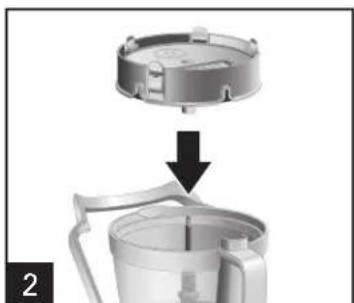
natural_image
Mechanical assembly diagram showing a lid and bucket being inserted into a container (no text or symbols)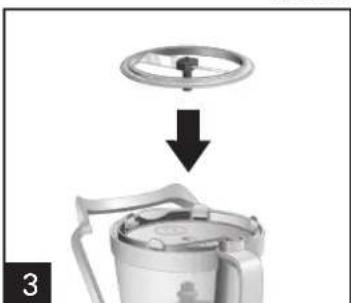
natural_image
Mechanical device with a circular component and downward arrow, no visible text or symbols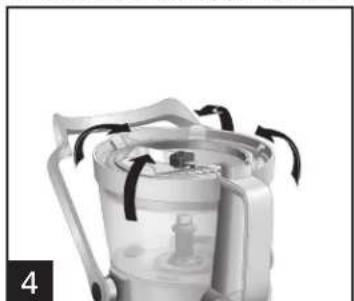
natural_image
Mechanical device with rotating arms and internal components (no visible text or symbols)natural_image
Mechanical assembly diagram showing a device being lowered into a container (no text or symbols visible)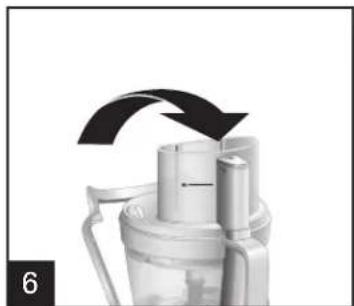
natural_image
Close-up of a mechanical device with a black arrow indicating rotation or compression (no text or symbols visible)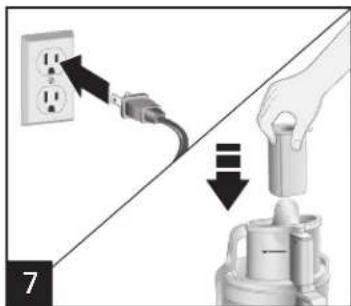
text_image
Diagram showing installation of a power outlet connected to a container with a handle, indicating installation or repair process.natural_image
Close-up of a white industrial vacuum cleaner with internal components and a directional arrow (no visible text or symbols)natural_image
Mechanical assembly diagram showing a lid and fan with directional arrows indicating motion (no text or symbols)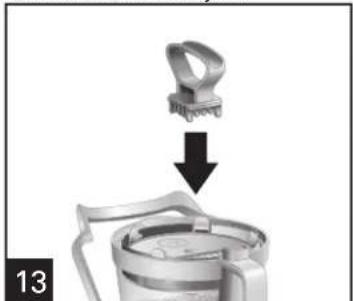
natural_image
Mechanical assembly diagram showing a clamping tool interacting with a container (no text or symbols visible)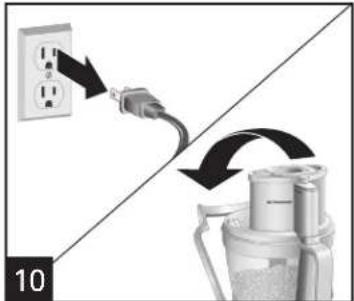
natural_image
Diagram showing a power outlet connected to a plug and a blender with a black arrow indicating rotation (no text or symbols)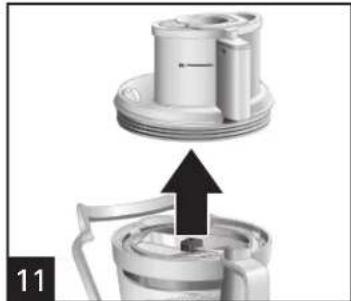
natural_image
Mechanical assembly diagram showing a piston-like component being inserted into a housing (no text or symbols visible)natural_image
Mechanical assembly diagram showing a circular component being lifted by an upward arrow, with no visible text or symbols.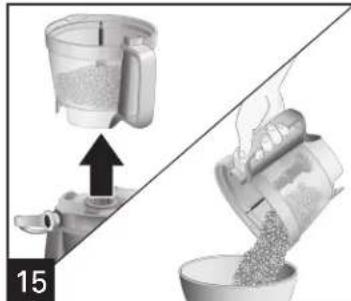
natural_image
Two-step illustration showing a container being poured into a bowl, with an arrow indicating the process (no text or symbols)natural_image
3D rendering of a mechanical device with a black arrow pointing to a circular component (no text or symbols visible)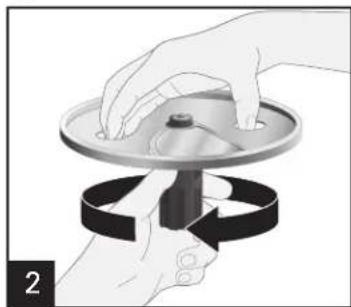
natural_image
Illustration of a hand holding a circular mechanical component with a rotating arrow, no text or symbols presentnatural_image
Close-up of a white industrial machine with a black arrow indicating rotation or compression (no text or symbols visible)text_image
Diagram showing installation of a power outlet connected to a container with a hand holding the lid, labeled with number 6.natural_image
Mechanical assembly diagram showing a lid being inserted into a container with a handle (no text or symbols visible)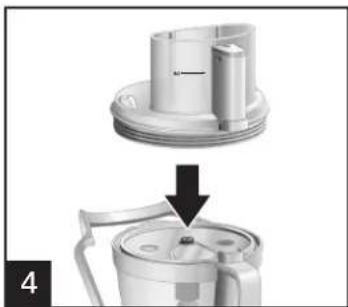
natural_image
Mechanical assembly diagram showing a component being lowered into a container (no text or symbols visible)natural_image
Close-up of a kitchen blender with control buttons (no visible text or symbols)natural_image
Close-up of a hand pressing a button on a device (no visible text or symbols)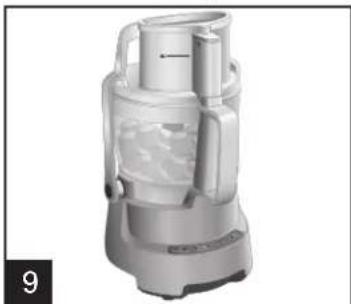
natural_image
Exterior view of a modern kitchen blender with handle and control panel (no text or symbols visible)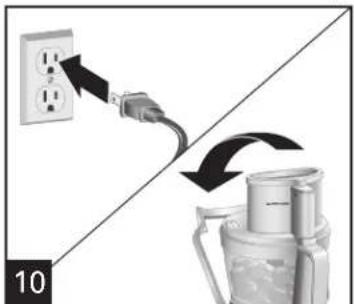
natural_image
Diagram showing a power outlet connected to a plug and a container with arrows indicating flow (no text or symbols)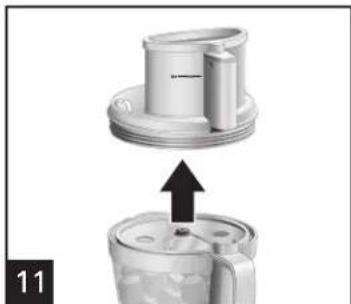
natural_image
Mechanical assembly diagram showing a component being inserted into a container (no text or symbols visible)natural_image
Diagram showing a device with a lid and an upward arrow, partially submerged in liquid (no text or symbols)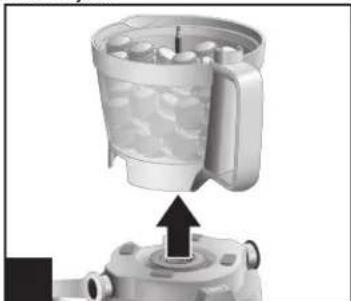
natural_image
3D rendering of a mechanical component with an arrow indicating upward motion (no text or symbols visible)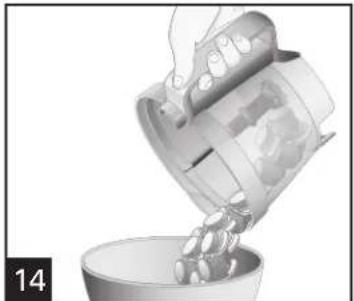
natural_image
Illustration of a container pouring liquid into a bowl (no text or symbols)natural_image
Mechanical device with a downward arrow indicating a component or assembly (no visible text or symbols)natural_image
Close-up of a kitchen blender with a lid and handle, showing liquid level being inserted (no text or symbols visible)natural_image
Two-step diagram showing a mechanical device being lifted or converted into a container, with no visible text or symbols.natural_image
Hand operating a mechanical device with a downward arrow indicating motion (no text or symbols)natural_image
Illustration of a hand pressing down on a mechanical component with arrows indicating motion (no text or symbols)natural_image
Hand pouring liquid into a mug with a downward arrow indicating motion (no text or symbols)natural_image
Illustration of a hand pressing down on a mechanical device with a downward arrow indicating motion (no text or symbols)natural_image
Close-up of a wall-mounted electrical outlet connected to a cable, showing terminal buttons and a power plug (no text or symbols visible)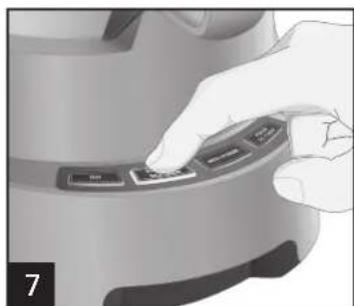
natural_image
Close-up of a hand pressing a button on a curved surface, no visible text or symbolsnatural_image
Illustration showing a hand holding a power strip connected to an electrical outlet plug (no text or symbols present)natural_image
Close-up of a mechanical device with a black arrow indicating rotation or change, no visible text or symbols.natural_image
Two views of a mechanical component with an arrow indicating upward motion, no visible text or symbolsRetirer le couvercle.
natural_image
Two-step diagram showing a lid being inserted into a cup, with an arrow indicating the process (no text or symbols present)natural_image
Close-up of a kitchen mixer with a black arrow indicating the handle (no text or symbols visible)The Ground Truth image displays a single, solid horizontal line. According to Rule 2 (UNDERSCORE & LINE RULES), this is a stylistic or background line, not a placeholder underscore. Therefore, the OCR result must ignore it and output nothing or only meaningful text. The provided OCR content is "____", which consists of four underscores. This is an incorrect interpretation of the line as a placeholder, violating the rule that stylistic lines must be ignored. The OCR has hallucinated placeholder underscores where none exist in the GT. Hence, the OCR result is inconsistent with the Ground Truth.
natural_image
Illustration of a hand pouring granular material into a bowl (no text or symbols)(No text)
natural_image
Mechanical device with a downward arrow indicating a component or assembly (no visible text or symbols)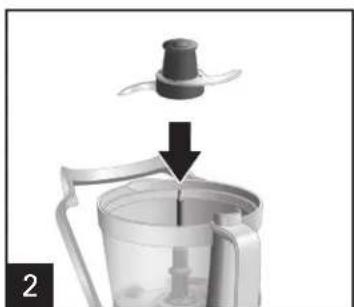
natural_image
Close-up of a kitchen blender with a handle and lid, showing liquid level being poured into it (no text or symbols visible)natural_image
Illustration of a hand pouring liquid into a container with a handle (no text or symbols)natural_image
Mechanical assembly diagram showing a lid being inserted into a cup (no text or symbols visible)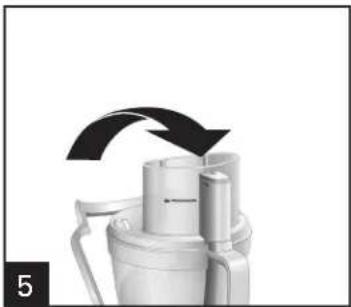
natural_image
Diagram of a white mechanical device with a black arrow indicating rotation or force direction (no text or symbols)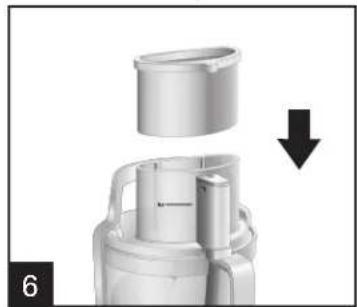
natural_image
3D rendering of a mechanical device with a downward arrow indicating a process or transformation (no text or symbols present)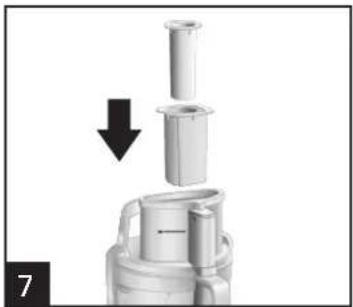
natural_image
3D rendering of a mechanical device with a downward arrow indicating compression or disassembly (no text or symbols)natural_image
Close-up of a wall-mounted power outlet connected to a cable, showing terminal buttons (no text or symbols visible)natural_image
Close-up of a hand pressing a button on a kitchen appliance (no visible text or symbols)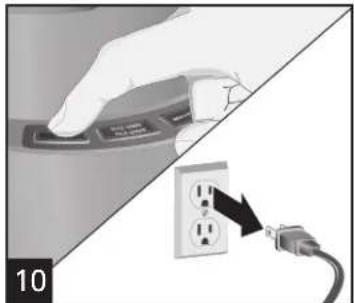
natural_image
Illustration showing a hand holding a power plug connected to an electrical outlet with a cable (no text or symbols)natural_image
Close-up of a white blender with a black arrow indicating rotation (no text or symbols visible)natural_image
Mechanical assembly diagram showing a component being lifted into a container (no text or symbols)Retirer le couvercle.
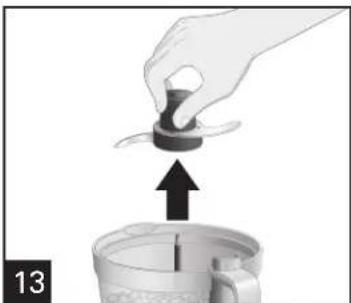
natural_image
Hand placing a small object into a cup with an arrow indicating upward motion (no text or symbols)natural_image
3D rendering of a blender with a handle and spout, showing internal components and a black arrow indicating motion (no text or symbols)natural_image
Mechanical device with a downward arrow indicating a process or operation, no visible text or symbolsnatural_image
Close-up of a kitchen blender with a handle and spool, showing a black arrow pointing to the blade (no text or symbols visible)natural_image
Illustration of a hand pouring liquid into a container with a handle (no text or symbols)natural_image
Diagram showing a mechanical assembly with a lid and bucket, no text or symbols presentnatural_image
Close-up of a white plastic container with a black arrow indicating rotation or compression (no text or symbols)natural_image
3D mechanical component diagram showing a cylindrical housing with a downward arrow indicating assembly or transformation (no text or symbols)natural_image
Mechanical component with a downward arrow indicating compression or disassembly (no text or symbols visible)natural_image
Close-up of a wall-mounted power socket connected to a cable, showing control buttons (no text or symbols visible)natural_image
Close-up of a hand pressing a button on a kitchen keyboard (no visible text or symbols)natural_image
Illustration showing a hand holding a power plug connected to an electrical outlet with a cable (no text or symbols)natural_image
Close-up of a white plastic container with a black arrow indicating rotation or movement (no text or symbols)natural_image
Two-step diagram showing a mechanical component being lifted, with no visible text or symbols.Retirer le couvercle.
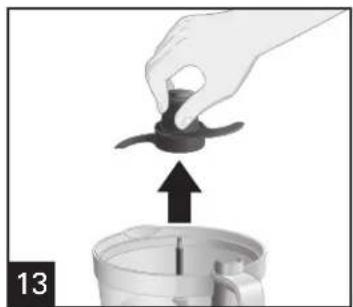
natural_image
Hand placing a small mechanical component into a container with a brush (no text or symbols visible)natural_image
3D rendering of a mechanical component with an arrow indicating assembly or force (no text or symbols visible)natural_image
Electrical outlet connected to a plug, showing power outlet with socket and cable (no text or symbols)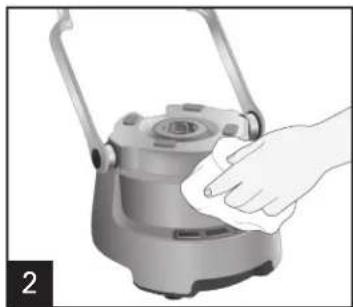
natural_image
Illustration of a hand holding a small vacuum cleaner device (no text or symbols visible)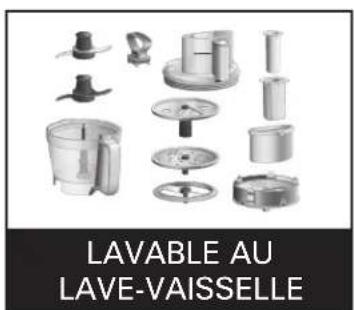
text_image
LAVABLE AU LAVE-VAISSELLEnatural_image
Mechanical component with a black arrow pointing to a cylindrical feature (no text or symbols)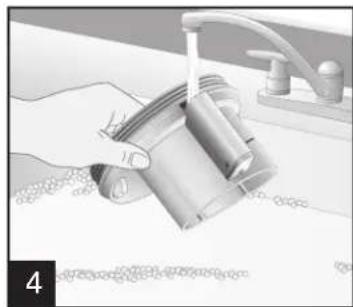
natural_image
Illustration of a kitchen sink with faucet and water surface (no text or symbols)PROBLÈME CAUSE POSSIBLE/SOLUTION
PROBLÈME CAUSE POSSIBLE/SOLUTION
Hamilton Beach Brands, Inc.
4421 Waterfront Drive
Glen Allen
Virginia 23060
USA
natural_image
White cylindrical container with a small rod inserted, no visible text or symbolsnatural_image
Mechanical device with a downward arrow indicating a component or assembly (no visible text or symbols)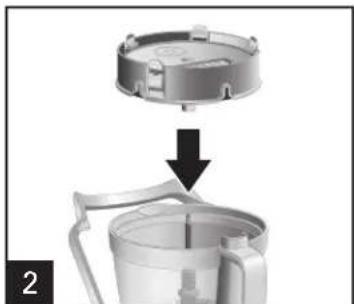
natural_image
Mechanical assembly diagram showing a lid and base component with a downward arrow indicating motion (no text or symbols)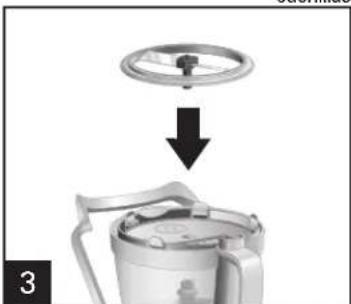
natural_image
Diagram showing a kitchen appliance with a lid and a downward arrow indicating a process (no text or symbols present)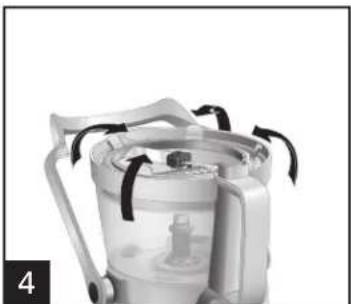
natural_image
Mechanical device with black arrows indicating motion or force, no visible text or symbolsnatural_image
Mechanical assembly diagram showing a component being lowered into a container (no text or symbols visible)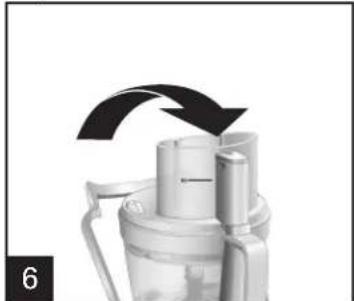
natural_image
Close-up of a mechanical device with a black arrow indicating rotation or compression (no text or symbols visible)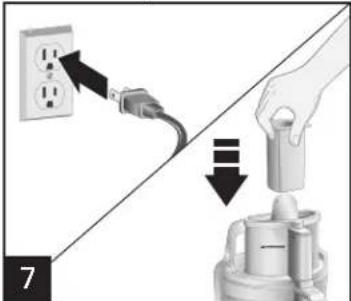
text_image
Diagram showing installation of a power outlet connected to a plug, with arrows indicating the process and a numbered label '7' at the bottom.natural_image
Close-up of a hand pressing a button on a device (no visible text or symbols)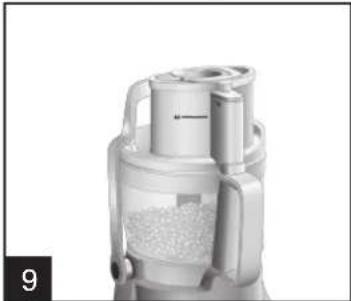
natural_image
3D rendering of a mechanical device with internal components and granular material (no text or symbols visible)natural_image
Diagram showing a power outlet connected to a plug, with an arrow indicating the process (no text or symbols present)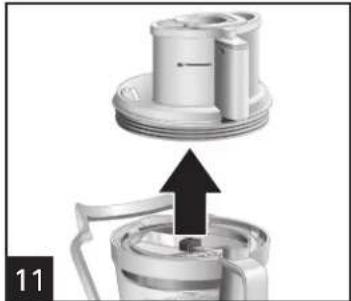
natural_image
Mechanical assembly diagram showing a component being inserted into a housing (no text or symbols visible)natural_image
Mechanical assembly diagram showing a lid and fan with directional arrows indicating motion (no text or symbols)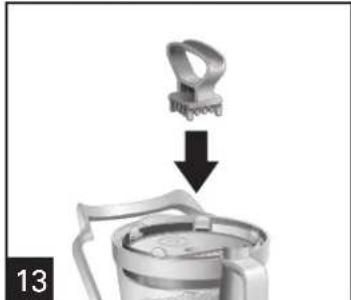
natural_image
Close-up of a mechanical component with a hook and arrow indicating downward motion (no text or symbols)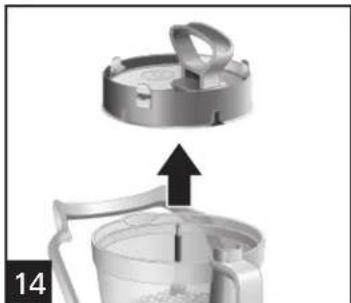
natural_image
Close-up of a kitchen appliance with a lid and side view showing a cooking step (no text or symbols visible)
natural_image
Two-step food preparation diagram showing a mixing machine and a bowl of milk being poured into it (no text or symbols)natural_image
Mechanical device with a downward arrow indicating a process or operation (no visible text or symbols)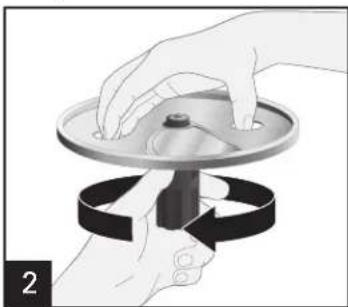
natural_image
Illustration of a hand holding a circular mechanical component with a rotating arrow, no text or symbols presentnatural_image
Close-up of a white mechanical device with a black arrow indicating rotation or compression (no text or symbols)text_image
Diagram showing installation of a power outlet connected to a container with a handle, indicating installation or repair process.natural_image
Mechanical assembly diagram showing a lid being inserted into a container with a handle (no text or symbols visible)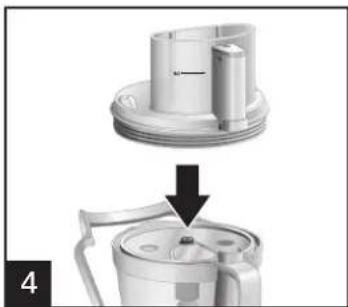
natural_image
Mechanical assembly diagram showing a component being folded into a container (no text or symbols visible)natural_image
Close-up of a kitchen blender with control buttons (no visible text or symbols)natural_image
3D rendering of a white kitchen blender with handle and control panel (no visible text or symbols)natural_image
Diagram showing a mechanical assembly with an upper component and a lower component, no text or symbols present.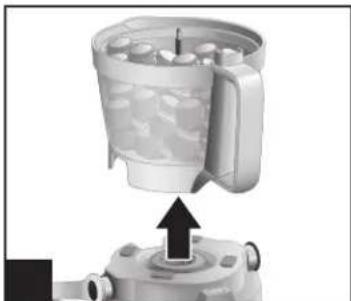
natural_image
3D rendering of a mechanical device with a black arrow pointing to a component (no text or symbols visible)natural_image
Diagram showing a power outlet connected to a plug and a container with arrows indicating flow (no text or symbols)natural_image
Illustration of a container pouring liquid into a bowl (no text or symbols)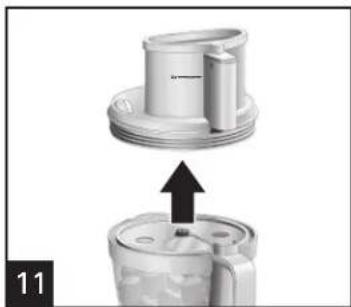
natural_image
Two views of a mechanical component with an arrow indicating upward motion, no visible text or symbols.Quite la tapa.
natural_image
Mechanical device with a downward arrow indicating a component or assembly (no visible text or symbols)natural_image
Diagram showing a kitchen appliance with a lid and arrow indicating process (no text or symbols)natural_image
Diagram showing a mechanical device being processed into a container, with no visible text or symbols.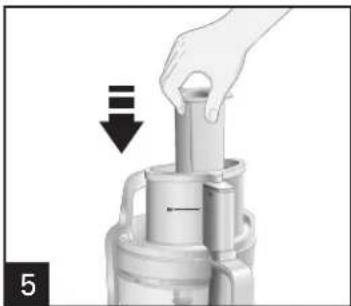
natural_image
Hand operating a mechanical device with a downward arrow indicating compression or disassembly (no text or symbols present)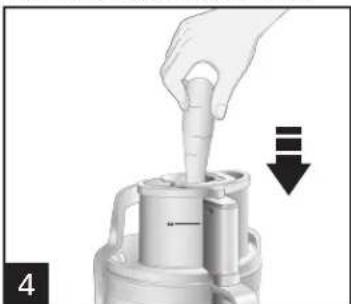
natural_image
Hand operating a mechanical device with a downward arrow indicating motion (no text or symbols present)natural_image
Hand operating a mechanical device with a downward arrow indicating motion (no text or symbols)natural_image
Illustration of a hand pouring liquid into a steamer with a downward arrow indicating motion (no text or symbols)natural_image
Close-up of a wall-mounted electrical socket connected to a cable, showing terminal buttons (no text or symbols visible)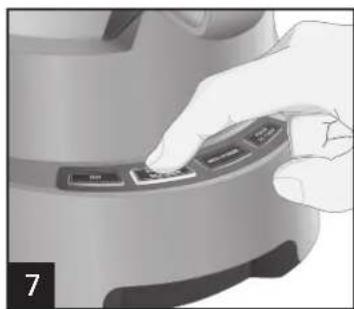
natural_image
Close-up of a hand pressing a button on a kitchen keyboard (no visible text or symbols)natural_image
Illustration showing a hand holding a power plug and connecting to an electrical outlet with a cable (no text or symbols)natural_image
Close-up of a white plastic blender with a black arrow indicating rotation (no text or symbols)natural_image
Two views of a mechanical component with an arrow indicating upward motion (no text or symbols)Quite la tapa.
natural_image
Two views of a food item: top view shows a lid with a handle, bottom view shows a cup filled with granular material (no text or symbols visible)natural_image
Close-up of a kitchen mixer with an arrow indicating the component (no text or symbols visible)The Ground Truth image displays a single, solid horizontal line. According to Rule 2 (UNDERSCORE & LINE RULES), this is a stylistic or background line, not a placeholder underscore. Therefore, the OCR result must ignore it and output nothing or only meaningful text. The provided OCR content is "____", which consists of four underscores. This is an incorrect interpretation of the line as a placeholder, violating the rule that stylistic lines must be ignored. The OCR has hallucinated placeholder underscores where none exist in the GT. Hence, the OCR result is inconsistent with the Ground Truth.
natural_image
Illustration of a hand pouring granular material into a bowl (no text or symbols)natural_image
Mechanical device with a downward arrow indicating a component or assembly (no visible text or symbols)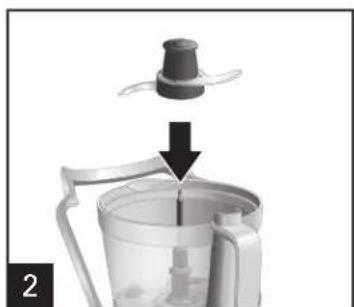
natural_image
Close-up of a kitchen blender with a handle and lid, showing a black arrow indicating the process (no text or symbols visible)natural_image
Close-up of a white mechanical device with a black arrow indicating rotation or compression (no text or symbols)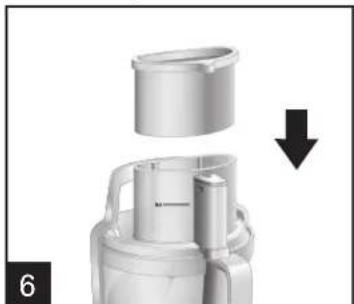
natural_image
Exploded view of a mechanical device with a downward arrow indicating compression or disassembly (no text or symbols visible)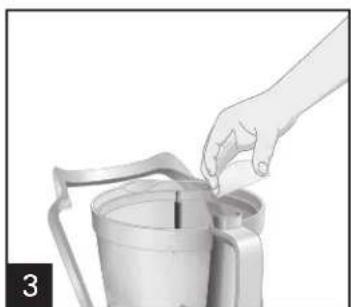
natural_image
Illustration of a hand pouring liquid into a container (no text or symbols visible)natural_image
Mechanical component with a downward arrow indicating compression or disassembly (no text or symbols visible)natural_image
Two-step diagram showing a mechanical assembly process: top panel with cylindrical components and bottom panel with handle, both without any text or symbols.natural_image
Close-up of a wall-mounted electrical socket connected to a cable, showing control buttons (no text or symbols visible)natural_image
Close-up of a hand pressing a button on a kitchen appliance (no visible text or symbols)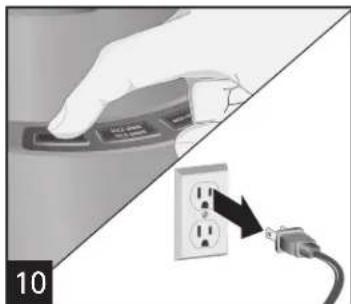
natural_image
Illustration of a hand holding a power plug and connecting to an electrical outlet with a cable (no text or symbols)natural_image
Close-up of a white mechanical device with a black arrow indicating rotation or change, no visible text or symbols.natural_image
Mechanical assembly diagram showing a component being lifted into a container (no text or symbols visible)Quite la tapa.
natural_image
Hand placing a small object into a cup with an arrow indicating upward motion (no text or symbols)natural_image
Close-up of a kitchen blender with a handle and spout, showing internal components and a black arrow indicating the handle (no text or symbols)natural_image
Mechanical device with a downward arrow indicating a component or assembly (no visible text or symbols)natural_image
Close-up of a kitchen blender with a handle and spool, showing liquid level (no text or symbols visible)natural_image
Illustration of a hand pouring liquid into a bucket with a stand (no text or symbols)The Ground Truth image displays a single, solid horizontal line. According to Rule 2 (UNDERSCORE & LINE RULES), this is a stylistic or background line, not a placeholder underscore. Therefore, the OCR result must ignore it and output nothing or only meaningful text. The provided OCR content is "____", which consists of four underscores. This is an incorrect interpretation of the line as a placeholder, violating the rule that stylistic lines must be ignored. The OCR has hallucinated text (underscores) where none should exist, violating the rule to ignore such lines. Hence, the OCR result is inconsistent with the Ground Truth.
natural_image
Mechanical assembly diagram showing a component being lifted into a container (no text or symbols visible)natural_image
Close-up of a white plastic blender with a black arrow indicating rotation (no text or symbols)natural_image
Mechanical component diagram showing a cylindrical assembly with a downward arrow indicating motion (no text or symbols)natural_image
Mechanical component with a downward arrow indicating compression or disassembly (no text or symbols visible)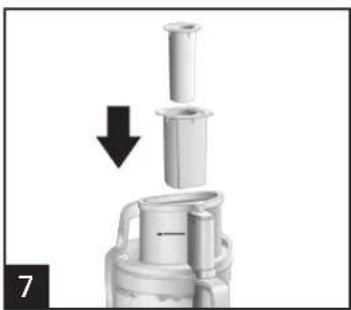
natural_image
Mechanical component with a downward arrow indicating compression or disassembly (no text or symbols visible)natural_image
Close-up of a wall-mounted power socket connected to a cable, showing control buttons (no text or symbols visible)natural_image
Close-up of a hand pressing a button on a curved device (no visible text or symbols)natural_image
Illustration showing a hand holding a power plug next to an electrical socket with a black arrow pointing to it (no text or symbols present)natural_image
Close-up of a white plastic container with a black arrow indicating rotation or movement (no text or symbols)natural_image
Two-step diagram showing a mechanical component being lifted, with no visible text or symbols.Quite la tapa.
natural_image
Hand holding a kitchen knife above a cup with an arrow indicating upward motion (no text or symbols)natural_image
3D rendering of a kitchen mixer with an arrow indicating the component (no text or symbols visible)Consejos y Técnicas
natural_image
Electrical plug with two socket outlets connected to a cable, showing an arrow indicating power flow (no text or symbols present)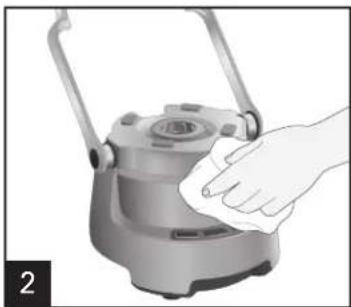
natural_image
Hand cleaning a small vacuum cleaner with a handle (no text or symbols visible)natural_image
Mechanical component with a black arrow pointing to it, no visible text or symbols