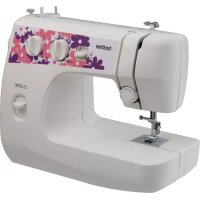
LS2000 - Sewing machine BROTHER - Free user manual and instructions
Find the device manual for free LS2000 BROTHER in PDF.


User questions about LS2000 BROTHER
0 question about this device. Answer the ones you know or ask your own.
Ask a new question about this device
Download the instructions for your Sewing machine in PDF format for free! Find your manual LS2000 - BROTHER and take your electronic device back in hand. On this page are published all the documents necessary for the use of your device. LS2000 by BROTHER.
USER MANUAL LS2000 BROTHER
1 KNOWING YOUR SEWING MACHINE
2 SEwING BASICS
3 UTILITY STITCHES
4 APPENDIX
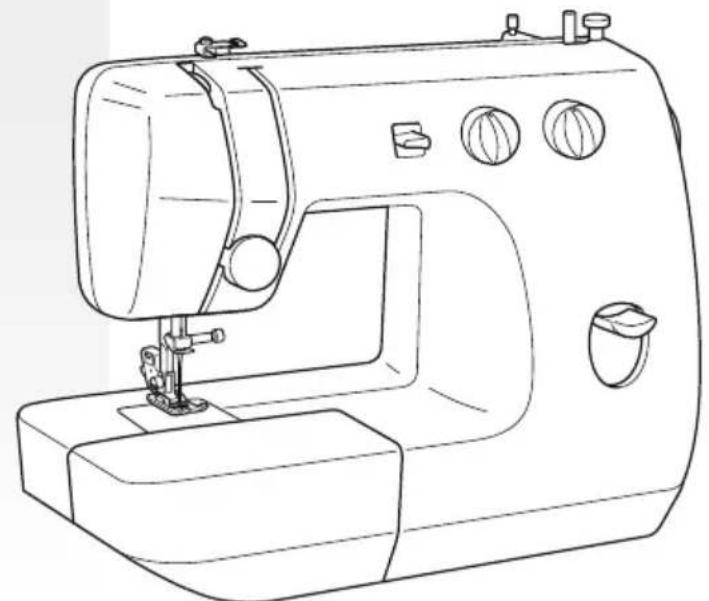
HSITON
Operation Manual
Please visit us at http://solutions.brother.com where you can get product support and answers to frequently asked questions (FAQs).
IMPORTANT SAFETY INSTRUCTIONS
When using the sewing machine, basic safety precautions should always be followed, including the following:
"Read all instructions before using."
DANGER - To reduce the risk of electric shock:
- The sewing machine should never be left unattended when plugged in. Always unplug this sewing machine from the electrical outlet immediately after using and before cleaning.
- Always unplug before changing the light bulb. Replace bulb with same type rated 15 watts.
WARNING - To reduce the risk of burns, fire, electric shock, or injury to persons:
- Do not allow this machine to be used as a toy. Close attention is necessary when the sewing machine is used by or near children.
- Use this sewing machine only for its intended use as described in this manual. Use only accessories recommended by the manufacturer as contained in this manual.
- Never operate this sewing machine if it has a damaged cord or plug, if it is not working properly, if it has been dropped or damaged, or dropped into water. Return the sewing machine to the nearest authorized dealer or service center for examination, repair, electrical or mechanical adjustment.
- Never operate the sewing machine with any of the air openings blocked. Keep the ventilation openings of the sewing machine and foot controller free from the accumulation of lint, dust and loose cloth.
- Never drop or insert any object into any openings.
- Do not use this machine outdoors.
- Do not operate this machine where aerosol (spray) products are being used or where oxygen is being administered.
- To disconnect, turn the main switch to the symbol "O" position which represents off, then remove plug from outlet.
- Do not unplug by pulling on the cord. To unplug, grasp the plug and pull, not the cord.
- Keep fingers away from all moving parts. Special care is required around the sewing machine needle.
- Always use the proper needle plate. The wrong plate can cause the needle to break.
- Do not use a bent needle.
- Do not pull or push the fabric while stitching. It may deflect the needle causing it to break.
- Switch the sewing machine to the off, symbol "O" position when making any adjustments in the needle area, such as threading the needle, changing the needle, threading the bobbin, or changing the presser foot.
- Always unplug the sewing machine from the electrical outlet when removing covers, lubricating, or when making any other user service adjustments mentioned in this instruction manual.
- This sewing machine is not intended for use by young children or impaired persons without supervision.
- Young children should be supervised to ensure that they do not play with this sewing machine.
SAVE THESE INSTRUCTIONS This sewing machine is intended for household use.
CONGRATULATIONS ON CHOOSING OUR MACHINE
To fully enjoy all the features, we suggest that you study the manual before using the machine.
PLEASE READ BEFORE USING THIS MACHINE
For safe operation
-
Be sure to keep your eye on the needle while sewing. Do not touch the handwheel, thread take-up lever, needle, or other moving parts.
-
Remember to turn off the power switch and unplug the cord when:
Operation is completed
- Replacing or removing the needle or any other parts
- A power failure occurs during use
- Maintaining the machine
- Leaving the machine unattended
- Do not store anything on the foot controller.
- Plug the machine directly into the wall. Do not use extension cords.
For a longer service life
- When storing this machine, avoid direct sunlight and high humidity locations. Do not use or store the machine near a space heater, iron, halogen lamp, or other hot objects.
- Use only neutral soaps or detergents to clean the case. Benzene, thinner, and scouring powders can damage the case and machine, and should never be used.
- Do not drop or hit the machine.
- Always consult the operation manual when replacing or installing any assemblies, the presser feet, needle, or other parts to assure correct installation.
For repair or adjustment
In the event a malfunction occurs or adjustment is required, first follow the troubleshooting table in the back of the operation manual to inspect and adjust the machine yourself. If the problem persists, please consult your local authorized Brother dealer.
For additional product information and updates, visit our web site at www.brother.com
The contents of this manual and specifications of this product are subject to change without notice.
FOR USERS IN THE UK, EIRE, MALTA AND CYPRUS ONLY
IMPORTANT
- In the event of replacing the plug fuse, use a fuse approved by ASTA to BS 1362, i.e. carrying the mark, rating as marked on plug.
- Always replace the fuse cover. Never use plugs with the fuse cover omitted.
- If the available electrical outlet is not suitable for the plug supplied with this equipment, you should contact your authorized dealer to obtain the correct lead.
FOR USERS IN AC INPUT 220-240V COUNTRIES AND MEXICO
This appliance is not intended for use by persons (including children) with reduced physical, sensory or mental capabilities, or lack of experience and knowledge, unless they have been given supervision or instruction concerning use of the appliance by a person responsible for their safety. Children should be supervised to ensure that they do not play with the appliance.
CONTENTS
CONTENTS 3
1. KNOWING YOUR SEWING MACHINE 5
NAMES OF MACHINE PARTS AND THEIR FUNCTIONS 5
The main parts 5
Needle and presser foot section 6
Flat bed attachment 6
ACCESSIONS 7
OPTIONAL ACCESSORIES 7
USING YOUR SEWING MACHINE 8
Power supply precautions 8
Power supply 8
Foot controller 9
Steadying the machine 9
THREADING THE MACHINE 10
Winding the bobbin 10
Lower threading 11
Upper threading 13
Drawing up the lower thread 14
REPLACING THE NEEDLE 15
Needle precautions 15
Selecting the needle depending on the thread and fabric types 15
Checking the needle 16
Replacing the needle 16
Sewing with a twin needle (Option) 18
REPLACING THE PRESSER FOOT 19
Replacing the presser foot 19
Removing the presser foot holder 20
2. SEwING BASICS 21
SEwING 21
General sewing procedure 21
Stitch width knob 22
Stitch length knob 22
Needle position selector 22
Starting to sew 23
Sewing in reverse 23
Thread tension 24
USEFUL SEWING TIPS 25
Trial sewing 25
Changing the sewing direction 25
Sewing curves 25
Sewing thick fabrics 25
Sewing thin fabrics 26
Sewing stretch fabrics 26
Using a free-arm style 26
3. UTILITY STITCHES 27
USEFUL STITCHES 27
Zigzag stitches 27
Basicstitching 27
Blind hem stitching 28
Darning 29
Over edge stitch 29
BUTTONHOLE SEWING/ BUTTON SEWING 30
Buttonhole sewing 30
Button sewing 31
ZIPPER INSERTION 33
APLQUÉ, MONOGRAMMING AND EMBROIDERING 34
Appliqués 34
Monogramming and embroidering 34
DECORATIVE STITCHING 36
Gathering 36
Satin stitches 36
Attaching the lace 37
Cording 37
4. APPENDIX 38
MAINTENANCE 38
Oiling 38
Changing the bulb 38
Cleaning the machine surface 39
Cleaning the shuttle race 39
Cleaning the feed dogs 40
Bobbin case tension adjustment 41
TROUBLESHOOTING 42
When the thread is entangled 45
INDEX 46
1KNOWING YOUR SEWING MACHINE
NAMES OF MACHINE PARTS AND THEIR FUNCTIONS
The main parts
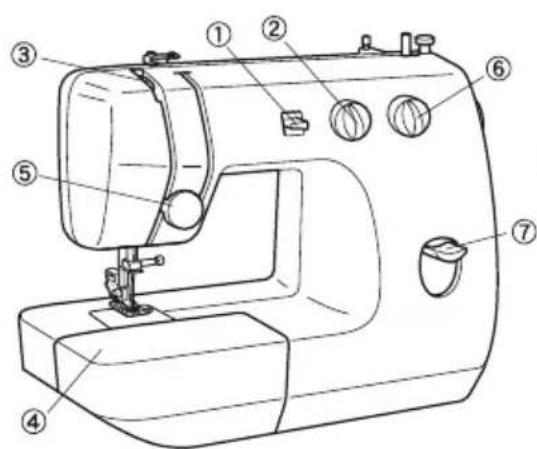
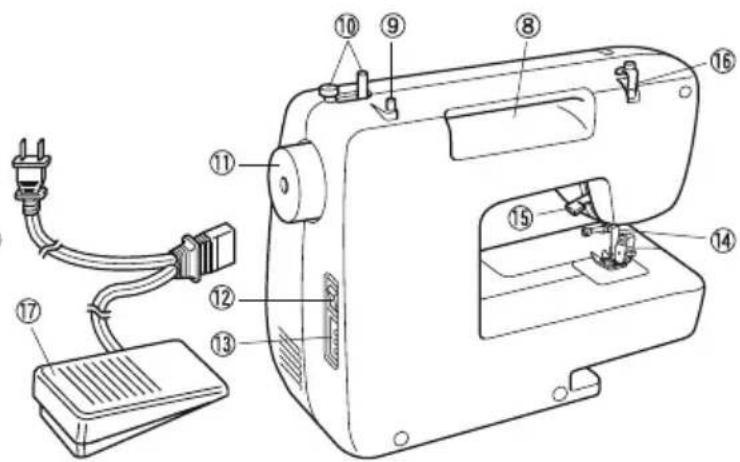
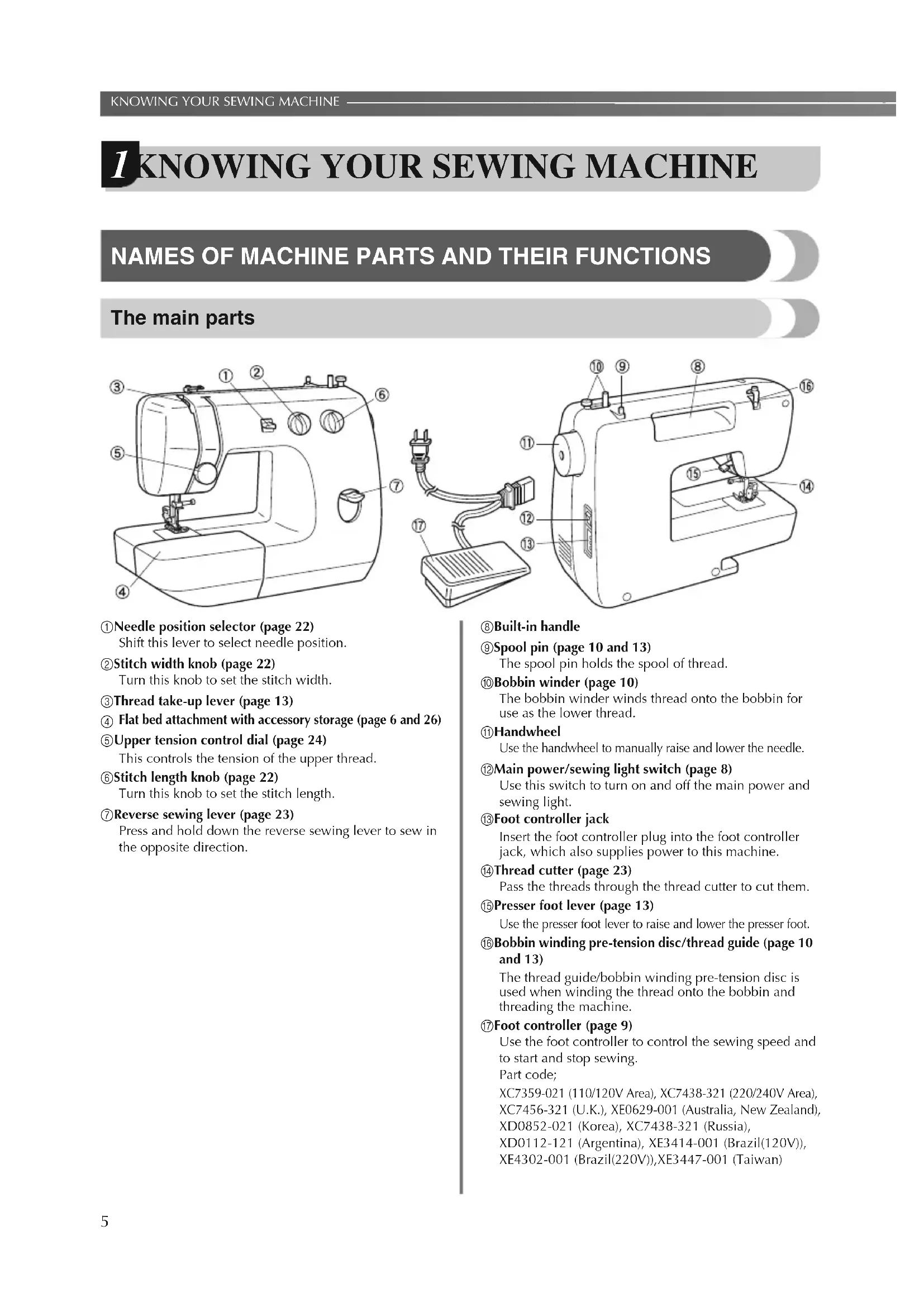
① Needle position selector (page 22)
Shift this lever to select needle position.
② Stitch width knob (page 22)
Turn this knob to set the stitch width.
③ Thread take-up lever (page 13)
④ Flat bed attachment with accessory storage (page 6 and 26)
⑤ Upper tension control dial (page 24)
This controls the tension of the upper thread.
⑥ Stitch length knob (page 22)
Turn this knob to set the stitch length.
⑦ Reverse sewing lever (page 23)
Press and hold down the reverse sewing lever to sew in the opposite direction.
⑧ Built-in handle
⑨Spool pin (page 10 and 13)
The spool pin holds the spool of thread.
⑥ Bobbinwinder (page 10)
The bobbin winder winds thread onto the bobbin for use as the lower thread.
⑩Handwheel
Use the handwheel to manually raise and lower the needle.
② Main power/sewing light switch (page 8)
Use this switch to turn on and off the main power and sewing light.
Foot controller jack
Insert the foot controller plug into the foot controller jack, which also supplies power to this machine.
④ Thread cutter (page 23)
Pass the threads through the thread cutter to cut them.
⑤ Presser foot lever (page 13)
Use the presser foot lever to raise and lower the presser foot.
⑥ Bobbin winding pre-tension disc/thread guide (page 10 and 13)
The thread guide/bobbin winding pre-tension disc is used when winding the thread onto the bobbin and threading the machine.
Foot controller (page 9)
Use the foot controller to control the sewing speed and to start and stop sewing.
Part code:
XC7359-021 (110/120V Area), XC7438-321 (220/240V Area), XC7456-321 (U.K.), XE0629-001 (Australia, New Zealand), XD0852-021 (Korea), XC7438-321 (Russia),
XD0112-121 (Argentina), XE3414-001 (Brazil(120V)), XE4302-001 (Brazil(220V)), XE3447-001 (Taiwan)
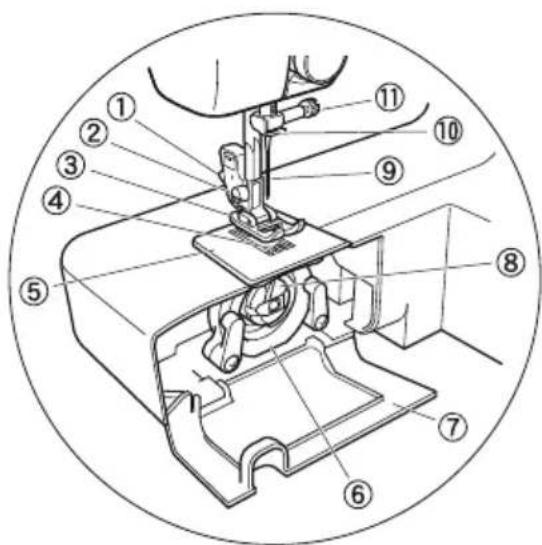
Needle and presser foot section
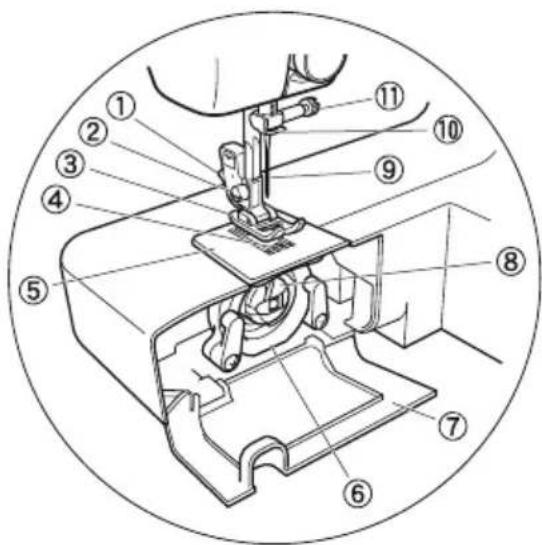
① Presser foot holder assembly
The presser foot is installed onto the presser foot holder assembly.
② Presser foot screw
Use the presser foot screw to hold the presser foot holder assembly in place.
③ Presser foot (Zigzag)
The presser foot applies pressure consistently on the fabric as the sewing takes place. Attach the appropriate presser foot for the selected stitching.
④Feed dogs
The feed dogs feed the fabric in the sewing direction.
⑤Needle plate
The needle plate is marked with guides for sewing straight seams.
⑥Shuttle hook
⑦Shuttle cover
Open the shuttle cover to set the bobbin.
⑧ Bobbin case
⑨Needle
Needle bar thread guide
① Needle clamp screw
Use the needle clamp screw to hold the needle in place.
Flat bed attachment
The accessories are stored in a compartment inside the flat bed attachment.
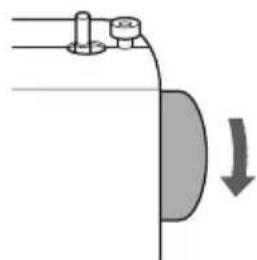
Lift the bottom of the flat bed attachment toward you, and then pull the flat bed attachment out to remove it.
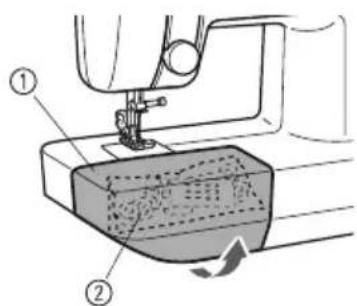
① Flat bed attachment
Storage compartment

Note
Put the accessories in the bag, and then store the bag inside the compartment. If the accessories are not in a bag, they may fall out, and be lost or damaged.
ACCESSIONS
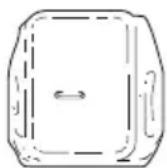
The following accessories are stored in the flat bed attachment. We have designed these accessories to help you be able to carry out most sewing tasks.

Note
(For U.S.A. only)
Foot controller: Model KD-1902, N
This foot controller can be used on the following machine models:
LS-2000/LS-2020/LS2250PRW/LS-30.
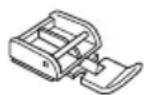
The screw of the presser foot holder is available through your authorized dealer. (Part code: 132730-122)
- A replacement for the factory-installed presser foot is available through your authorized dealer. (Part number: 138135-122)
1.2.3.4.

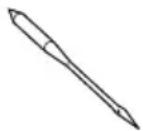
90/14 needle
| No. | Part Name | Part Code | No. | Part Name | Part Code | ||
| U.S.A. / Canada | Others | U.S.A. / Canada | Others | ||||
| 1 | Zipper foot "I" X59370-021 3 Bobbin | SA156 (U.S.A. / Canada)SABOBBIN (U.S.A. only) | XA5539-151 | ||||
| 2 | Darning plate XA3442-121 4 Needle set XE7064-001 | ||||||
OPTIONAL ACCESSORIES
1.2.
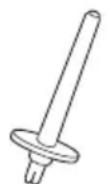
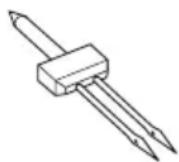
| No. | Part Name | Part Code | |
| U.S.A. / Canada | Others | ||
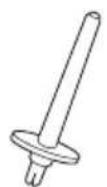
| 1 | Extra spool pin 130920-02 | 21 | |
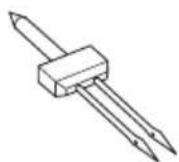
| 2 | Twin needle | 131096-121 | |
USING YOUR SEWING MACHINE
Power supply precautions
Be sure to observe the following precautions concerning the power supply.

WARNING
- Use only regular household electricity for the power source. Using other power sources may result in fire, electric shock, or damage to the machine.
-
Turn off the main power and remove the plug in the following circumstances:
-
When you are away from the machine
After using the machine - When the power fails during use
- When the machine does not operate correctly due to a bad connection or a disconnection
- During electrical storms

CAUTION
- Do not use extension cords or multi-plug adapters with many other appliances plugged in to them. Fire or electric shock may result.
- Do not touch the plug with wet hands. Electric shock may result.
- When unplugging the machine, always turn off the main power first. Always grasp the plug to remove it from the outlet. Pulling on the cord may damage the cord, or lead to fire or electric shock.
- Do not allow the power cord to be cut, damaged, modified, forcefully bent, pulled, twisted, or bundled. Do not place heavy objects on the cord. Do not subject the cord to heat. These things may damage the cord and cause fire or electric shock. If the cord or plug is damaged, take the machine to your authorized dealer for repairs before continuing use.
- Unplug the power cord if the machine is not to be used for a long period of time. Otherwise a fire may result.
Power supply

Insert the foot controller plug, located between the foot controller and the power supply plug on the cord, into the jack on the machine. Then, insert the power supply plug into a wall outlet.
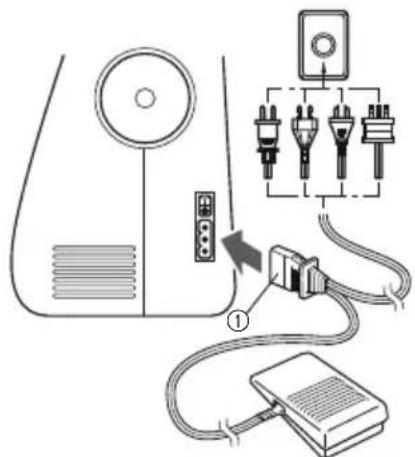
① Foot controller plug

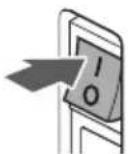
Set the main power switch to "1".
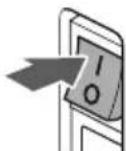
The sewing lamp comes on when the machine is turned on.

To turn off the machine, set the main power switch to "O".
The sewing lamp goes off when the machine is turned off.

Note
If a power outage occurs while the sewing machine is being operated, turn off the sewing machine and unplug the power supply cord. When restarting the sewing machine, follow the necessary procedure to correctly operate the machine.
(For U.S.A. only)
This appliance has a polarized plug (one blade wider than the other). To reduce the risk of electric shock, this plug is intended to fit in a polarized outlet only one way. If the plug does not fit fully in the outlet, reverse the plug. If it still does not fit, contact a qualified electrician to install the proper outlet. Do not modify the plug in any way.
Foot controller

CAUTION
- When connecting the foot controller, be sure to turn off the sewing machine in order to prevent the machine from accidentally being started.
When you press the foot controller down lightly, the machine will run at a low speed. When you press harder, the machine's speed will increase. When you take your foot off the foot controller, the machine will stop.
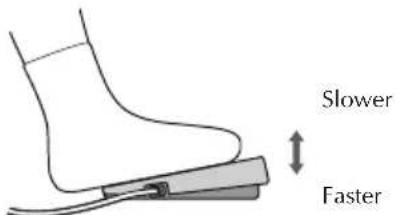
You should make sure that nothing is placed on the foot controller when the machine is not in use.

CAUTION
Do not allow pieces of cloth and dust to build up on the foot controller. Doing so could cause a fire or an electric shock.
A new sewing machine or one that has not been in use for a long period of time should be oiled as described on page 38. After oiling, be sure to wipe off any excess oil.
Steadying the machine
If the sewing machine has been placed on an uneven surface, turn the rubber cushion in the right-front corner of the base plate to adjust its height until the sewing machine is stable.
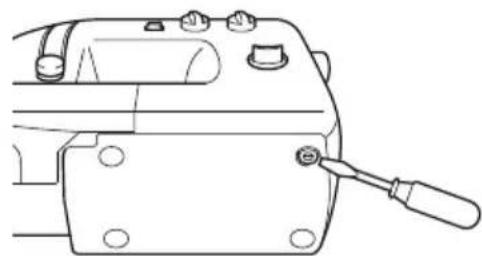
THREADING THE MACHINE
Winding the bobbin
This section describes how to wind the thread onto the bobbin.
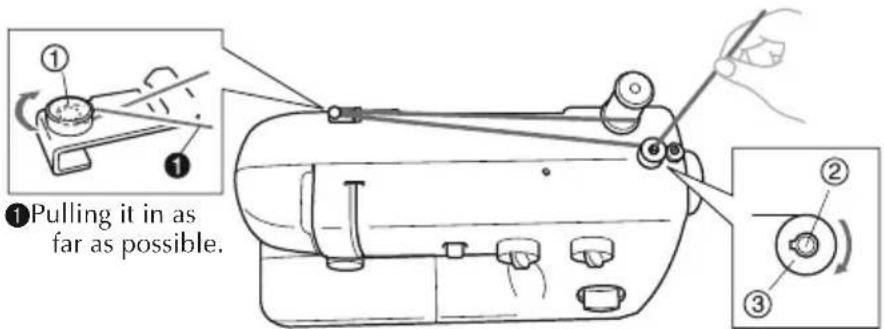
(1)Pre-tension disk
②Bobbinwindershaft
③ Bobbin

CAUTION
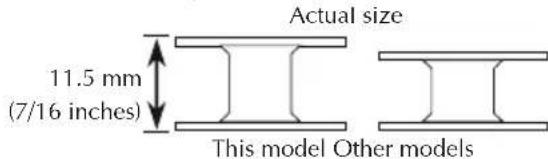
- Only use bobbins (part code: SA156, SABOBBIN, SFB: XA5539-151) that have been designed for this sewing machine. Using other bobbins may cause damage to the machine.
- We designed the bobbin that comes with this machine. If you use bobbins from other models, the machine will not work properly. Only use the bobbin that comes with this machine or bobbins of the same type (part code: SA156, SABOBBIN, SFB: XA5539-151).
Pull up the spool pin as far as possible, and then put a spool of thread on this pin.
Pass the thread around the pre-tension disk.

CAUTION
- If the spool of thread is not in the right place, the thread may tangle on the spool pin.
Pass the end of the thread through the hole on the bobbin from the inside of the bobbin.
Put the bobbin onto the bobbin winder shaft and slide the bobbin winder shaft to the right. Turn the bobbin clockwise, by hand, until the spring on the shaft slides into the groove of the bobbin.
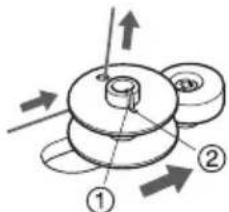
①Spring on the shaft
②Groove of the bobbin
Turn on the sewing machine.
While holding the end of the thread, gently press the foot controller to wind the thread around the bobbin a few times. Then stop the machine.
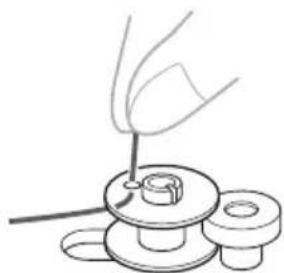
7 Trim the excess thread above the bobbin.
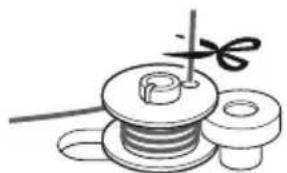
CAUTION
Make sure you follow the instructions carefully. If you do not cut the thread completely, and the bobbin is wound, when the thread runs low it may tangle around the bobbin and cause the needle to break.
Press the foot controller to start.
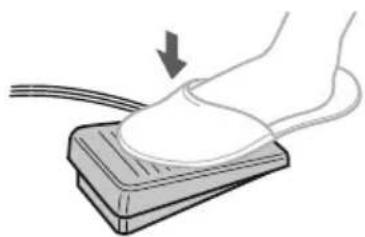
When the bobbin seems full and begins spinning slowly, take your foot off the foot controller.
Cut the thread, slide the bobbin winder shaft to the left and remove the bobbin.

Memo
- When the sewing machine is started or the handwheel is turned after winding the thread around the bobbin, the machine will make a clicking sound; this is not a malfunction.
The needle bar does not move when you slide the bobbin winding shaft to the right.
CAUTION
Winding the bobbin improperly may cause the thread tension to loosen, breaking the needle and resulting in injury.
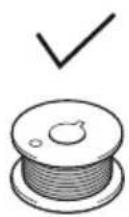
①
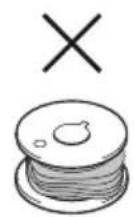
(2)
① Wound evenly ② Wound poorly
Lower threading
Install the bobbin wound with thread.
CAUTION
Winding the bobbin improperly may cause the thread tension to loosen, breaking the needle and resulting in injury.
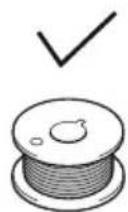
①
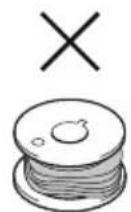
②
① Wound evenly ② Wound poorly
The bobbin was designed specifically for this sewing machine. If bobbins from other models are used, the machine will not operate correctly. Use only the enclosed bobbin or bobbins of the same type (part code: SA156, SABOBBIN, SFB:XA5539-151).
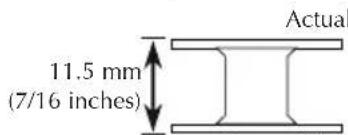
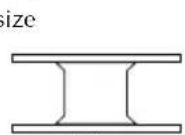
This model Other models
Make sure you turn the power off while threading the machine. If you accidentally step on the foot controller and the machine starts to sew, you could be injured.
- "Moving parts - To reduce the risk of injury. Disconnect from supply circuit before servicing. Remove cover."
1 Raise the needle to its highest position by turning the handwheel toward you (counterclockwise) and raise the presser foot lever.

Open the shuttle cover behind the flat bed attachment at the front of the machine.
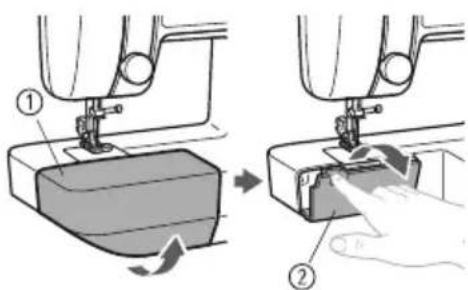
① Flat bed attachment
②Shuttle cover

Remove the bobbin case by pulling its latch toward you and pulling it out from the shuttle race.
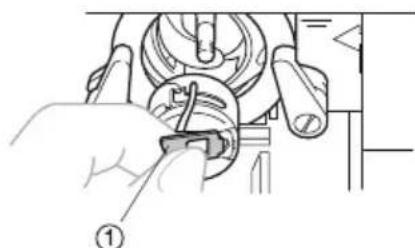
① Bobbin case latch

Unwind about 10 cm (4 inches) of thread from a full bobbin, and then insert the bobbin into the bobbin case.
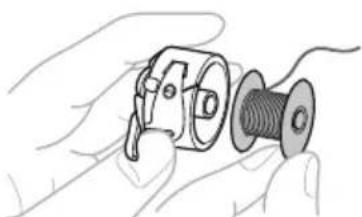
- Only use bobbins that were designed to be used with this machine.

CAUTION
Make sure you set the bobbin so the thread unrolls in the right direction. If the thread unrolls in the wrong direction, it may cause the thread tension to be incorrect or break the needle.

Pull the trailing thread through the slot, down and to the left, as shown below, until it enters the delivery eye under the tension spring.
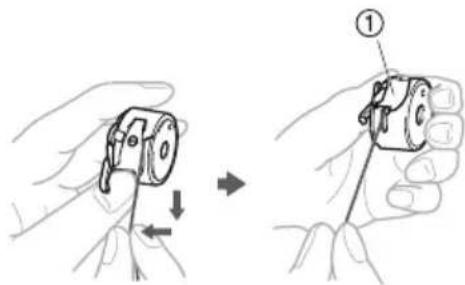
① Tension spring

Hold the bobbin case by the latch, fully insert the bobbin case into the shuttle race, and then release the latch.
- Make sure the bobbin case finger fits into the notch at the top of the shuttle race.
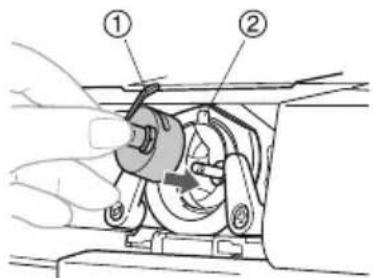
① Bobbin case finger
②Notch

Close the shuttle cover.

CAUTION
Make sure that the bobbin case is properly placed back into the machine. If it is incorrectly installed, it will fall out from the shuttle when the machine starts to sew.
Upper threading
Set the upper thread and thread the needle.
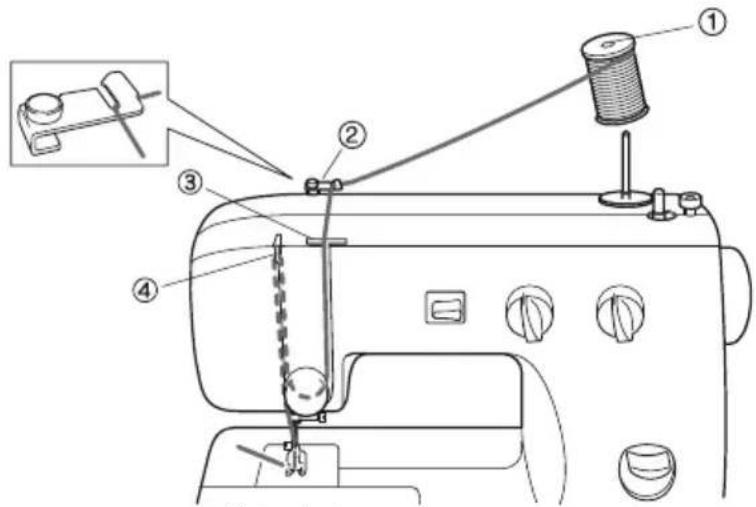
① Spool pin
②Thread guide (rear)
③Thread guide(front)
④Thread take-up lever

CAUTION
- Make sure you thread the machine properly. Otherwise, the thread could tangle and break the needle.

Raise the presser foot using the presser foot lever.
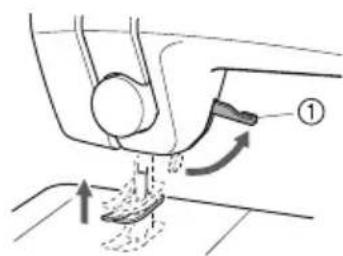
① Presser foot lever

Raise the needle by turning the handwheel toward you (counterclockwise) to raise the thread take-up lever to its highest position.
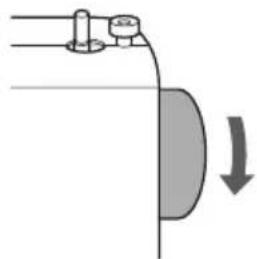
- If the needle is not correctly raised, the sewing machine can not be threaded. Be sure to turn the handwheel before threading the sewing machine.

Pull up the spool pin as far as possible, and then put a spool of thread on this pin.

CAUTION
If the spool of thread is in the wrong place, or is set incorrectly, the thread may tangle on the spool pin and cause the needle to break.

Feed the upper thread through both thread guides: the rear one first, then the front one.

Pull the thread down and around the upper tension control dial from the right to the left so the thread picks up the thread check spring.
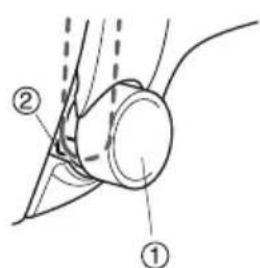
①Upper tension control dial
② Thread check spring

While holding the thread as shown below, pull it between the tension discs.
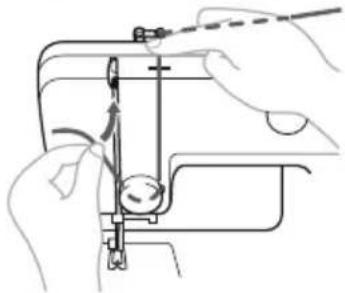

Guide the thread through the thread take-up lever from right to left.
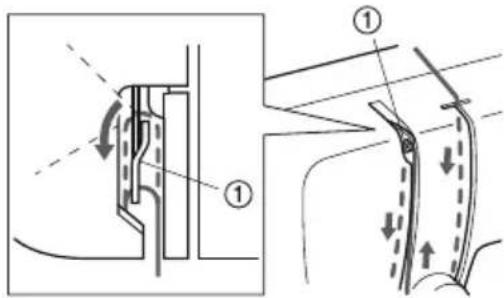
① Thread take-up lever

Put the thread behind the needle bar thread guide above the needle.
The thread can easily be passed behind the needle bar thread guide by holding the thread in your left hand, then feeding the thread with your right hand.
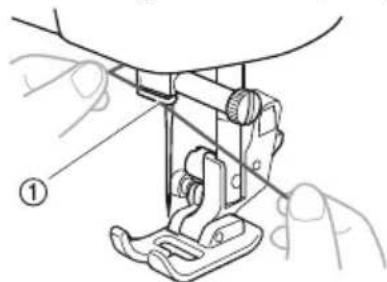
①Needle bar thread guide

Thread the needle from front to back and pull out about 5cm (2 inches) of thread.
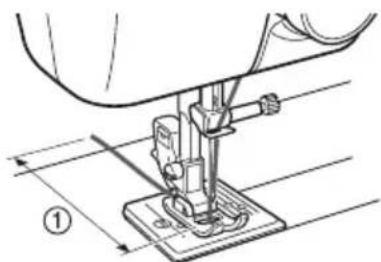
① 5 c m (2 inches)

Note
If the thread take-up lever is lowered, the upper thread cannot be wrapped around the thread take-up lever. Make sure you raise the presser foot lever and the thread take-up lever before you feed the upper thread.
If you incorrectly feed the thread you may cause sewing problems.
Drawing up the lower thread

Lightly hold the end of the upper thread.
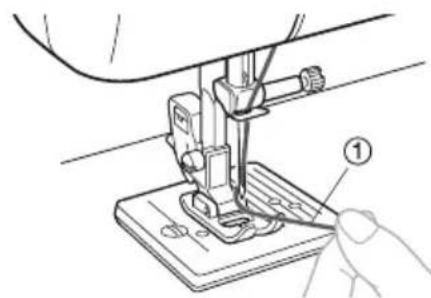
①Upper thread

While holding the end of the upper thread, raise the needle to its highest position by turning the handwheel toward you (counterclockwise).
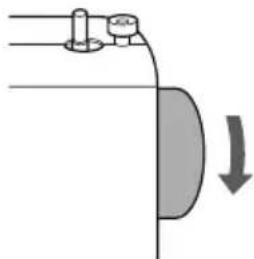

Pull on the upper thread to draw up the lower thread.
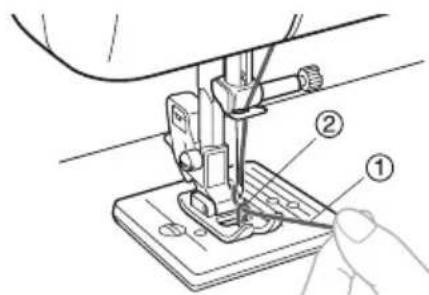
①Upper thread
②Lower thread

Pull out about 15cm (6 inches) of both threads and pull them toward the back of the machine under the presser foot.
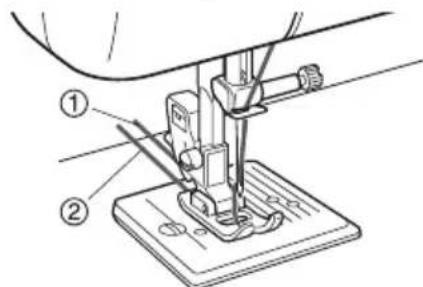
①Upper thread
②Lower thread
REPLACING THE NEEDLE
This section provides information on sewing machine needles.
Needle precautions
Be sure to observe the following precautions concerning the handling of the needle. Failure to observe these precautions is extremely dangerous. Be sure to read and carefully follow the instructions below.

CAUTION
- Only use home sewing machine needles. Use of any other needle may bend the needle or damage the machine.
- Never use bent needles. Bent needles can easily break, possibly resulting in injury.
Selecting the needle depending on the thread and fabric types
The sewing machine needle that should be used depends on the fabric and thread thickness. Refer to the following table when choosing the thread and needle appropriate for the fabric that you wish to sew. Use the same size thread for the upper (spool) and lower (bobbin) threads.
| Sewing fabrics Needle sizes Thread sizes | |||
| Very thin | Fine tricot, Fine lace, Thin linen, Silk, Organza, Chiffon | 65/9 | Cotton: 80 Synthetic/ Polyester Long Fiber Fine Mercerized Cotton |
| Lightweight | Voile, Taffeta, Synthetics, Silk, Batiste | 75/11 | Cotton: 60-80 Silk: “A” Synthetic/ Polyester Long Fiber Mercerized 50 |
| Medium weight | Cotton, Gingham, Poplin, Percale, Pique, Satin, Velvet, Lightweight wool, Fine corduroy, Saitings, Linen, Muslin | 90/14 (Supplied with your machine.) | Cotton: 50-60 Silk: “A” Synthetic/ Polyester Long Fiber Mercerized 50-60 |
| Heavyweight | Denim, Gabardine, Tweed, Corduroy, Canvas, Duck | 100/16 | Cotton: 40-50 Mercerized Heavy Duty Polyester Long Fiber |
| Knits | Single knit, Double knit, Jersey, Tricot | 90/14 (Ball point) | Cotton Wrapped Polyester Polyester Long Fiber |

Memo
- The smaller the thread number, the thicker the thread; and the larger the needle number, the thicker the needle.
- Use the ball point needle when sewing on stretch fabrics or fabrics where skipped stitches easily occur.
- Use a 90/14 to 100/16 needle with transparent nylon threads, regardless of the fabric being sewn.
A 75/11 needle is already installed when the sewing machine is purchased.

CAUTION
The appropriate fabric, thread and needle combinations are shown in the table on the previous page. If the combination of the fabric, thread and needle is not correct, particularly when sewing thick fabrics (such as denim) with thin needles (such as 65/9 to 75/11), the needle may bend or break. In addition, the stitching may be uneven or puckered or there may be skipped stitches.
Checking the needle
Sewing with a bent needle is extremely dangerous since the needle may break while the machine is being operated.
Before using the needle, place the flat side of the needle on a flat surface and check that the distance between the needle and the flat surface is even.
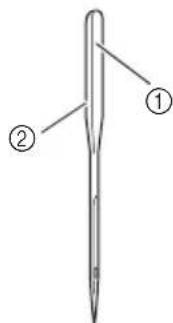
① Flat side
②Needle type marking
Correct needle
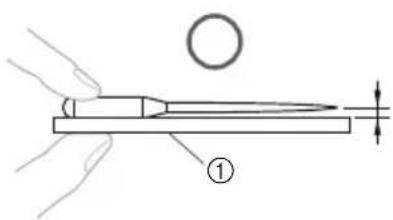
① Flat surface
Incorrect needle
If the distance between the needle and the flat surface is not even, the needle is bent. Do not use a bent needle.
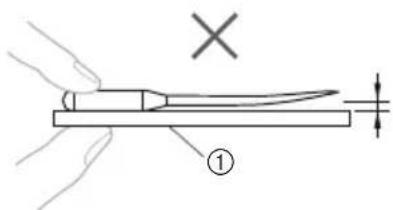
① Flat surface
Replacing the needle
Replace the needle as described below. Use a coin and a needle that has been determined to be straight according to the instructions in "Checking the needle".

Turn off the sewing machine.
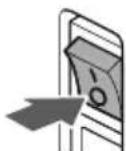

CAUTION
Before replacing the needle, be sure to turn off the sewing machine, otherwise injuries may occur if the foot controller is accidentally pressed and the machine starts sewing.

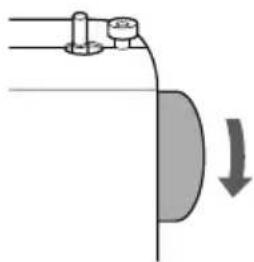
Raise the needle to its highest position by turning the handwheel toward you (counterclockwise).

Lower the presser foot lever.
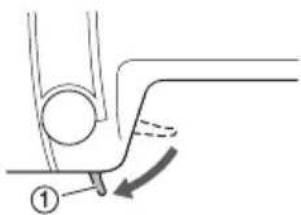
① Presser foot lever
Hold the needle with your left hand, and then use a coin to turn the needle clamp screw counterclockwise to remove the needle.

Note
The needle can be removed by simply loosening the needle clamp screw about one turn. (If the needle clamp screw is loosened too much, the needle clamp (which holds the needle) may fall off. Therefore, do not loosen the needle clamp screw too much.)
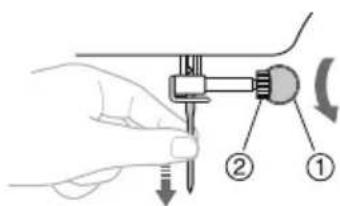
①Coin
②Needle clamp screw
- Do not apply strong force when loosening or tightening the needle clamp screw, otherwise certain parts of the sewing machine may be damaged.
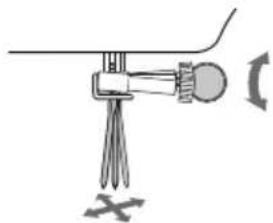
With the flat side of the needle toward the rear of the machine, insert the needle until it touches the needle stopper.
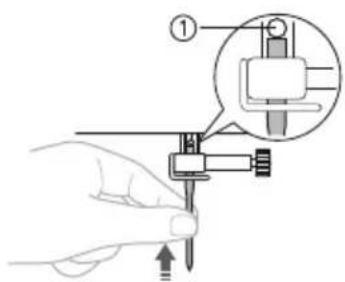
① Needle stopper
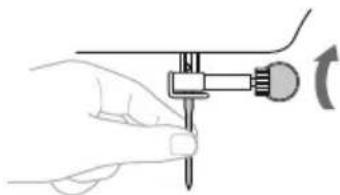
While holding the needle with your left hand, use the coin to tighten the needle clamp screw by turning it clockwise.
Install the twin needle in the same way.
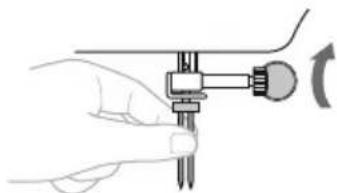

CAUTION
- Be sure to insert the needle until it touches the needle stopper and securely tighten the needle clamp screw with a coin, otherwise the needle may break or damage may result.
Sewing with a twin needle (Option)
We have designed your machine so you can sew with the optional twin needle and two top threads. You can use the same color or two different colors of thread for making decorative stitches.

CAUTION
- Use only twin needles that have been made for this machine (part code: 131096-121). Other needles could break, and damage the machine.
Do not sew with bent needles. The needle could break and injure you.
Use the zigzag presser foot. - Use a setting of less than 3 on the stitch width knob.
Set the needle position selector to M. - Slowly turn the handwheel toward you (counterclockwise) and check that the needle does not touch the presser foot. If the needle hits the presser foot, the needle may bend or break.
- When changing the sewing direction, be sure to raise the needle before turning the fabric. If the fabric is turned while the needle is lowered, the needle may bend or break.
Twin needle threading

Attach the twin needle.
Attach the twin needle in the same way as a single needle (page 16).

Attach the optional extra spool pin.
Put the extra spool pin in the hole on the top of the machine. Put the second spool of thread onto the extra spool pin.
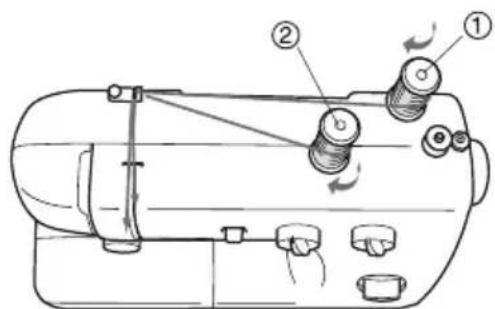
①First spool
② Second spool

Use the thread from the first spool to thread the machine to the needle bar thread guide.
The path for threading the machine to the needle bar thread guide is the same as for normally threading the machine (for a single needle). See page 13 for more details.

Thread the left needle from front to back.

Use the thread from the second spool to thread the machine to the thread take-up lever.
The path for threading the machine to the thread take-up lever is the same as for normally threading the machine (for a single needle). See page 13 for more details.

Thread the right needle from front to back.
Do not pass the thread behind the needle bar thread guide.
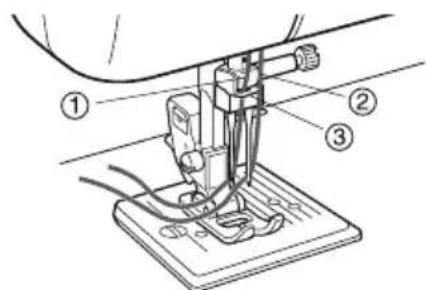
① Left needle thread passes through the needle bar thread guide.
② Right needle thread passes in front of the needle bar thread guide.
③ Needle bar thread guide
REPLACING THE PRESSER FOOT

CAUTION
- Always turn off the power before you change the presser foot. If you leave the power on and step on the controller, the machine will start and you may be injured.
Always use the correct presser foot for the stitch pattern you have chosen. If you use the wrong presser foot, the needle may strike the presser foot and bend or break, and may cause injury. - Only use presser feet that have been designed to be used with this machine. Using other any presser feet may cause an accident or injury.
Replacing the presser foot
Replace the presser foot as described below.

If the sewing machine has been turned on, turn it off.
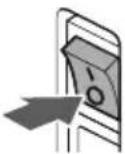

CAUTION
Before replacing the presser foot, be sure to turn off the sewing machine, otherwise injuries may occur if the foot controller is accidentally pressed and the machine starts sewing.

Raise the needle to its highest position by turning the handwheel toward you (counterclockwise).


Raise the presser foot lever.
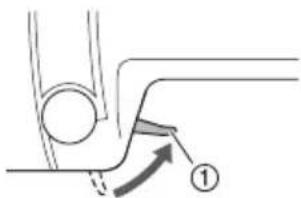
① Presser foot lever

Press the black button at the back of the presser foot holder to release the presser foot.
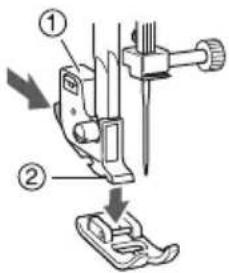
① Black button
② Presser foot holder

Place a different presser foot below the holder so that the presser foot pin is aligned with the shank in the holder.
Position the presser foot so the letter indicating the presser foot type (A, I, etc.) is positioned to be read.
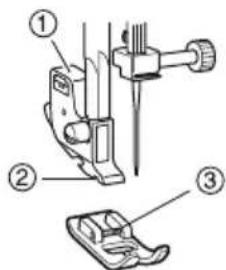
① Presser foot holder
②Shank
(3)Pin

Slowly lower the presser foot lever so that the presser foot pin snaps into the shank in the presser foot holder.
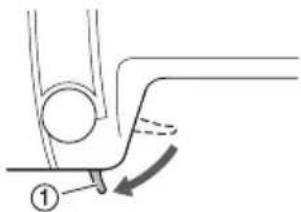
① Presser foot lever
The presser foot is attached.
7 Raise the presser foot lever to check that the presser foot is securely attached.
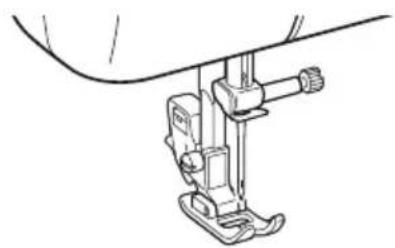
Removing the presser foot holder
Remove the presser foot holder when cleaning the sewing machine or when installing a presser foot that does not use the presser foot holder. Use a coin to remove the presser foot holder.
Removing the presser foot holder
1 Remove the presser foot.
- For details, refer to "Replacing the presser foot" (page 19).
Use a coin to loosen the presser foot holder screw.
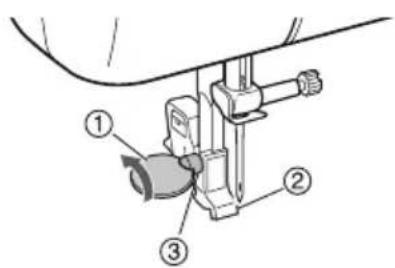
①Coin
② Presser foot holder
3Presser foot holder screw
■Attaching the presser foot holder
Align the presser foot holder with the lower-left side of the presser bar.
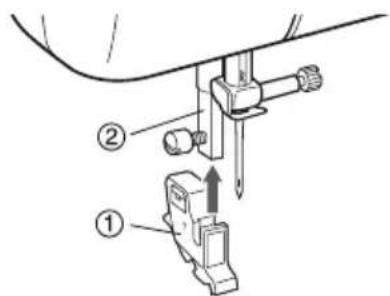
①Presser foot holder
②Presser bar
Hold the presser foot holder in place with your right hand, and then tighten the screw using a coin in your left hand.
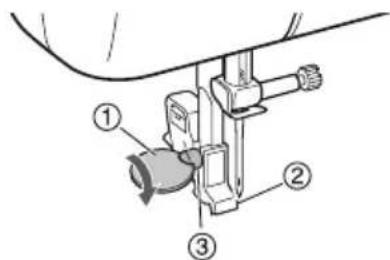
①Coin
② Presser foot holder
③Presser foot holder screw
Note
If the presser foot holder is not correctly installed, the thread tension will be incorrect.
2SEWING BASICS
SEWING
Basic sewing operations are described below.
Before operating the sewing machine, read the following precautions.

CAUTION
- While the machine is in operation, pay special attention to the needle location. In addition, keep your hands away from all moving parts such as the needle and handwheel, otherwise injuries may occur.
- Do not pull or push the fabric too hard while sewing, otherwise injuries may occur or the needle may break.
- Never use bent needles. Bent needles can easily break, possibly resulting in injuries.
- Make sure that the needle does not strike basting pins, otherwise the needle may break or bend.
General sewing procedure
Follow the basic procedures below to sew.
1 Turn on the machine.
Turn on the sewing machine. For details on turning on the machine, refer to "Power supply" (page 8).

2 Select the stitch.
Select the stitch appropriate for the area to be sewn. For details on selecting a stitch, refer to "Stitch width knob" (page 22).

3 Attach the presser foot.
Attach the presser foot appropriate for the stitch. For details on replacing the presser foot, refer to "Replacing the presser foot" (page 19).

4 Start sewing.
Position the fabric, and then start sewing. When sewing is finished, cut the threads. For details on starting to sew, refer to "Starting to sew" (page 23).
Stitch width knob
The width of the zigzag stitch is regulated by operating the stitch width knob. The numbers above the knob represent the stitch width in millimeters (mm). The larger numbers set a wider stitch width. When the knob is set at 0, a straight stitch is sewn.
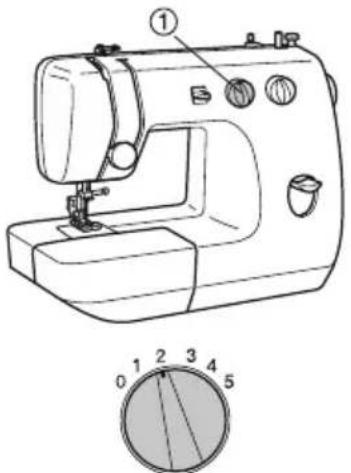
①Stitch width knob

Note
Do not move the knob while the needle is in the fabric.
- When using the twin needle, the knob should always be set below 3.
Stitch length knob
The stitch length is regulated by turning this knob. The numbers above the knob represent the stitch length in millimeters (mm).
The larger numbers set a longer stitch length. When the knob is set to 0, the fabric is not fed. This setting is used for sewing on a button.
The F area is used for making a Satin Stitch (a close zigzag stitch), which can be used in making buttonholes and decorative stitches. The position needed for making the Satin Stitch may need to be adjusted according to the fabric and thread being used. To determine the correct knob position, first test the length settings on a fabric scrap.
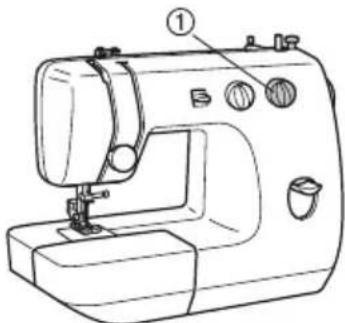
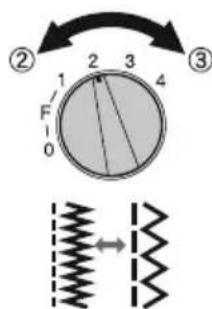
①Stitch length knob
②Shorter
③Longer
Needle position selector
By shifting this lever to L (left), M (middle) or R (right), you can sew straight and zigzag stitches on the baseline.
When you sew close to the edge of the fabric, select L or R so the fabric is fed more easily.
This selector should be set at M (middle) for almost all stitches, but set it to other positions for the following applications.
- Buttonhole sewing (see "Buttonhole sewing" on page 30.)
- Button sewing (see "Button sewing" on page 31.)
- Satin stitches (see "Satin stitches" on page 36.)
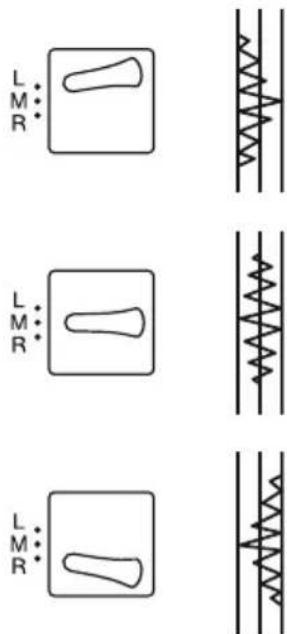

Note
Do not move the selector while the needle is in the fabric.
Always set the selector to M when using the twin needle.
Starting to sew

Turn on the sewing machine.

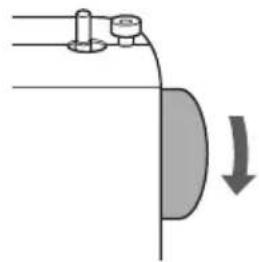
Raise the needle to its highest position by turning the handwheel toward you (counterclockwise).

Raise the presser foot lever.
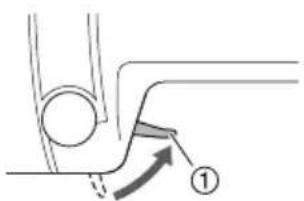
① Presser foot lever

Place the fabric under the presser foot, pass the thread under the presser foot, and then pull out about 5cm (2 inches) of thread toward the rear of the machine.
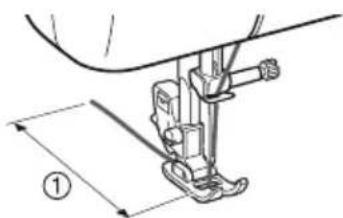
① 5 c m (2 inches)

While holding the end of the thread and the fabric with your left hand, turn the handwheel toward you (counterclockwise) with your right hand to lower the needle to the starting point of the stitching.
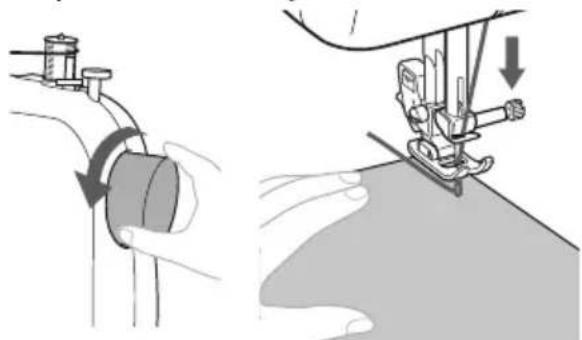

Lower the presser foot lever.
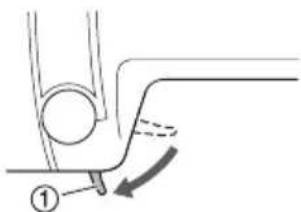
① Presser foot lever

Slowly press down on the foot controller.
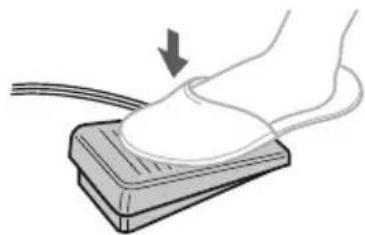
The machine starts sewing.

Take your foot off the foot controller.

The machine stops sewing.

Raise the needle to its highest position by turning the handwheel toward you (counterclockwise).

Raise the presser foot lever.

Pull the fabric to the left side of the machine, and then pass the threads through the thread cutter on the back of the presser foot bar to cut them.
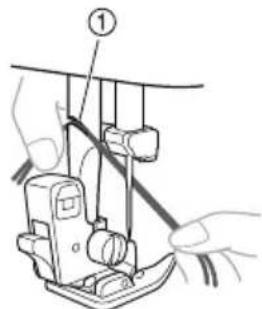
①Thread cutter
Sewing in reverse
Reverse sewing is used to lock the threads at the end of the seam or wherever reinforcement is needed.

Press and hold down the reverse sewing lever while sewing.
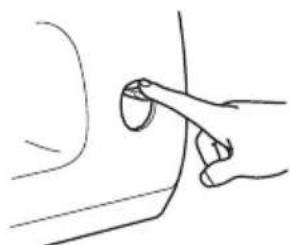

To sew forward, release the reverse sewing lever.
Thread tension
The thread tension will affect the quality of your stitches. You may need to adjust it when you change fabric or thread.

Memo
Before beginning to change tension adjustments make sure the upper thread and bobbin are inserted correctly.
We recommend you do a test sample on a scrap of fabric before you start to sew.
Correct tension
Correct tension is important as too much or too little tension will weaken your seams or cause puckers on your fabric.
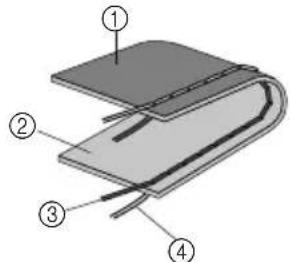
①Wrong side
②Surface
③Upper thread
④Lower thread
Upper tension is too tight
Loops appear on the surface of the fabric.

Note
If the bobbin thread was incorrectly inserted, the upper thread may be too tight. In this case, refer to "Lower threading" (page 11) and reinsert the bobbin.
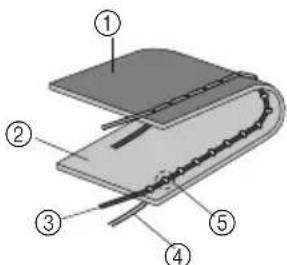
①Wrong side
②Surface
③Upper thread
④Lower thread
⑤ Loops appear on surface of fabric
Solution
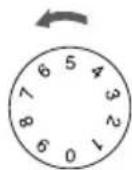
Reduce the tension by turning the upper tension-control dial to a lower number.
Upper tension is too loose
Loops appear on the wrong side of the fabric.

Note
If the upper thread was incorrectly threaded, the upper thread may be too loose. In this case, refer to "Upper threading" (page 13) and rethread.

①Wrong side
②Surface
③Upper thread
④Lower thread
⑤ Loops appear on wrong side of fabric
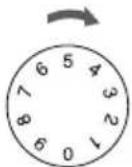
Solution
Increase the tension by turning the upper tension-control dial to a higher number.
Bobbin tension is too loose
Loops may appear on the surface of the fabric when sewing thin fabric with thin thread.
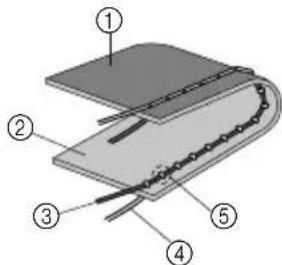
①Wrong side
②Surface
③Upper thread
④Lower thread
⑤Loops appear on surface of fabric
Solution
Reduce the tension by turning the upper tension-control dial to a lower number.
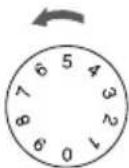
If the problem persists, increase the tension in the bobbin by turning the screw clockwise with a screwdriver.
Be sure not to turn the screw more than one full turn. In addition, be sure to return the screw to its original position before the next time that the machine is used.

Note
The bobbin thread tension has been adjusted at the factory for general use. For most sewing applications, no adjustment is needed.
USEFUL SEWING TIPS
Various ways to achieve better results for your sewing projects are described below. Refer to these tips when sewing your project.
Trial sewing
A trial piece of fabric should be sewn since, depending on the type of fabric and stitching being sewn, the desired results may not be achieved.
For the trial sewing, use a piece of fabric and thread that are the same as those used for your project, and check the thread tension and stitch length and width. Since the results differ depending on the type of stitching and the number of layers of fabric sewn, perform the trial sewing under the same conditions that will be used with your project.
Changing the sewing direction
When the stitching reaches a corner, stop the sewing machine.
Leave the needle lowered (in the fabric). If the needle was raised, lower the needle by turning the handwheel toward you (counterclockwise).

CAUTION
- When using the twin needle, be sure to raise the needle before changing the sewing direction. If the fabric is turned while the needle is lowered, the needle may bend or break.

Raise the presser foot lever, and then turn the fabric.
Turn the fabric using the needle as a pivot.
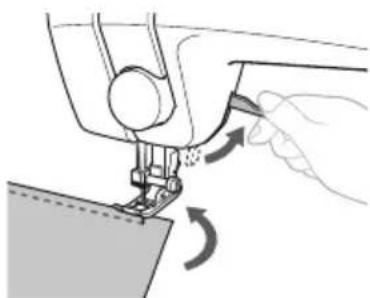

Lower the presser foot lever and continue sewing.
Sewing curves
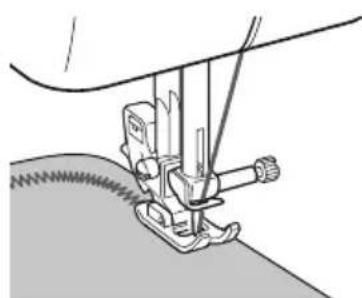
Stop sewing, and then slightly change the sewing direction to sew around the curve.
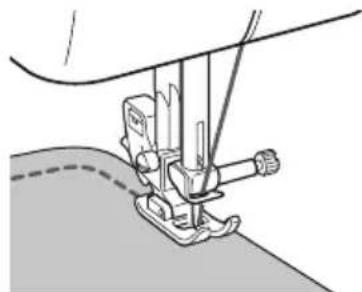
When sewing along a curve while using a zigzag stitch, select a shorter stitch length in order to obtain a finer stitch.
Sewing thick fabrics
If the fabric does not fit under the presser foot If the fabric does not fit easily under the presser foot, raise the presser foot lever even higher to bring the presser foot to its highest position.
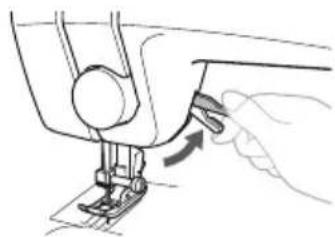

CAUTION
If fabric more than 6mm (15/64 inches) thick is sewn or if the fabric is pushed with too much force, the needle may bend or break.
Sewing thin fabrics
When sewing thin fabrics, the stitching may become misaligned or the fabric may not feed correctly. If this occurs, place thin paper or stabilizer material under the fabric and sew it together with the fabric. When you have finished sewing, tear off any excess paper.

①Stabilizer material or paper
Sewing stretch fabrics
First, baste the pieces of fabric together, and then sew without stretching the fabric.
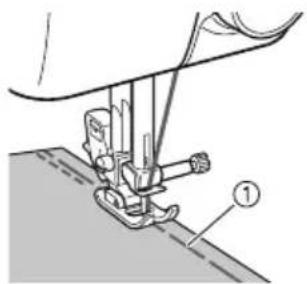
① Basting
Using a free-arm style
Free-arm sewing is convenient for sewing tubular and hard-to-reach areas.
To change your machine to the free-arm style, lift the bottom of the flat bed attachment toward you, and then pull the flat bed attachment out to remove it.
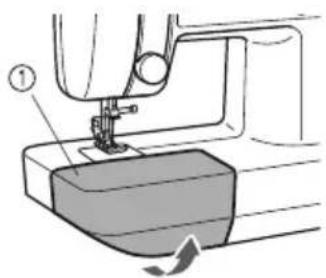
① Flat bed attachment
3 UTILITY STITCHES
USEFUL STITCHES
Zigzag stitches
You can use the zigzag stitches to join together seams and finish them in one operation. They are also useful for sewing stretch materials.
| Stitch width | 1-5 (For twin needle sewing, always use a setting of less than 3.) |
| Stitch length 1-4 | (For the Satin Stitch, set at F.) |
| Needle position | M, L, R (For twin needle sewing, always set at M.) |
| Presser foot Zigzag | |
| Needle Single or Twin | |
Simple zigzag stitch
Set the stitch length between 1 and 4 for a simple zigzag stitch.
Lower the needle into the fabric at the beginning of the stitching.
Start sawing.
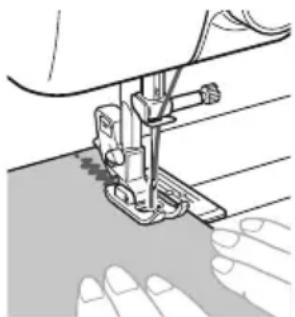
For details, refer to "Starting to sew" (page 23).

Memo
- When sewing with a zigzag stitch, use straight stitches at the beginning and end of the zigzag stitch for reinforcement.
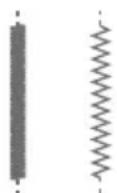

When sewing is finished, cut the thread.
- For details, refer to "Starting to sew" (page 23).

CAUTION
- Slowly turn the handwheel toward you (counterclockwise) and check that the needle does not touch the presser foot. If the needle hits the presser foot, the needle may bend or break.
■Satin stitch
When the stitch length is set in the F range and the stitch width is set above 1, it produces a Satin Stitch (a close zigzag stitch). The Satin Stitch can be used for making buttonholes and decorative stitches or edging.

Note
It is recommended that a test sample be made on a fabric scrap before sewing on your project.
Basic stitching
Straight stitches are used for sewing plain seams.
| Stitch width | 0 |
| Stitch length F-4 | |
| Needle position | M, L, R (For twin needle sewing, always set at M.) |
| Presser foot Zigzag | |
| Needle Single or Twin | |

Baste or pin together the fabric pieces.

Lower the needle into the fabric at the beginning of the stitching.

Start sewing.
For details, refer to "Starting to sew" (page 23).

When sewing is finished, cut the thread.
- For details, refer to "Starting to sew" (page 23).
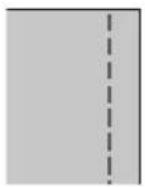
Blind hem stitching
You can use the Blind Hem Stitch to finish the edge of a project, like the hem of a pair of trousers, without the stitch showing.
| Stitch width | 3-5 |
| Stitch length 2-3 | |
| Needle position R | |
| Presser foot Zigzag | |
| Needle Single |

Both the upper and lower threads should be the same color as the fabric.

Fold back the fabric to the desired location of the hem (1). Then, fold the edge of the fabric (2). Leave a 6mm (1 / 4^ ) overlap at the edge.
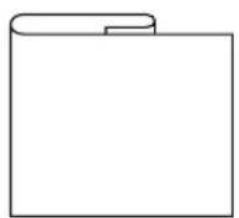
①
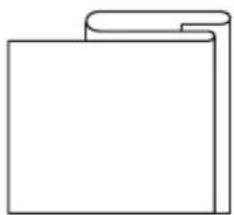
②

Sew 5-6 stitches on the fold using the R needle position, a straight stitch (0 width) and stitch length of 3-4. Quickly set the width to 2-3, sew 1 stitch and set the width back to 0. Repeat.

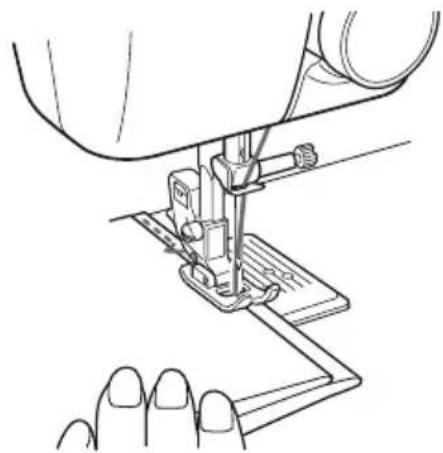

When the fabric is unfolded, you will have a Blind Stitch hem.
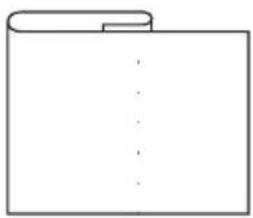
Darning
Reinforce points that will be subject to strain.
| Stitch width | 0 |
| Stitch length F-2 | |
| Needle position M | |
| Presser foot None | |
| Needle Single | |
| Other Darning plate |
Place the darning plate on the needle plate as shown below, and then remove both the presser foot and presser foot holder assembly.
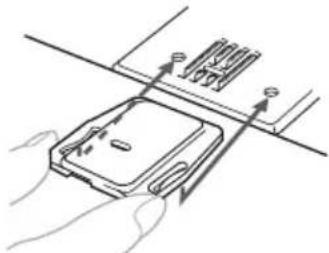
Place the fabric to be darned under the presser foot together with a fabric underlay for reinforcement.
Start sewing while gently moving the fabric with your hands, alternately drawing the fabric away and pulling it toward you.
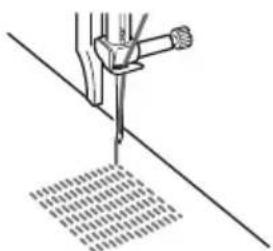
Stop sewing when the portion to be darned is filled with parallel stitching.
Over edge stitch
The Overlock Stitch is used to prevent the edge of the fabric from fraying.
| Stitch width | 3-5 |
| Stitch length | 3-4 |
| Needle position L | |
| Presser foot Zigzag | |
| Needle Single | |
Place the edge of the fabric under the presser foot so the needle enters the fabric when the left side of the zigzag stitch is sewn and misses the edge of the fabric with the right side of the stitch. Sew with this needle position along the edge of the fabric.
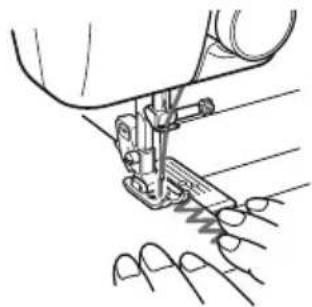
BUTTONHOLE SEWING/ BUTTON SEWING
Buttonholes can be sewn and buttons can be sewn on.
Buttonhole sewing
| Stitch width | See the instructions below. |
| Stitch length | Set between 0 and 1 (F) for the Satin Stitch. |
| Needle position R (right position) | |
| Presser foot Zigzag | |
| Needle Single | |
Making a buttonhole

Memo
It is recommended to practice making a buttonhole on a scrap piece of fabric before attempting it on your project.
Using tailor's chalk to mark the position and length of the buttonhole on the fabric is also recommended.
Step A: Bar Tack
1 Set the stitch length between 0 and 1 (F), stitch width to 5 and the needle position to R.
Lower the presser foot over the top right corner of the buttonhole mark and sew 3-6 stitches.
Stop the machine when the needle is in the fabric on the right side of the stitch (position A). (Turn the handwheel counterclockwise if necessary.)
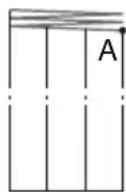
Step B: Right Row
Set the stitch width to 2.
Sew the predetermined length of the buttonhole to the other end.
Stop the machine when the needle is in the fabric on the right side of the stitch (position B). (Turn the handwheel counterclockwise if necessary.)
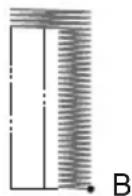
Step C: Final Bar Tack
Set the stitch width to 5.
Sew 3-6 stitches.
Stop the machine when the needle is in the fabric on the left side of the stitch (position C). (Turn the handwheel counterclockwise if necessary.)
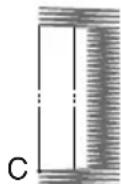
Step D: Left Row
Lift the presser foot.
Turn the fabric 180 degrees using the needle as an axis and set the stitch width to 0. This will move the fabric slightly. Lower the presser foot.
Turn the handwheel toward you (counterclockwise) to sew one stitch. This moves the needle from the left to the right.
Set the stitch width to 2.
Sew until the needle reaches the other bar tack. Stop the machine with the needle in the fabric on the right of the stitches (position D).
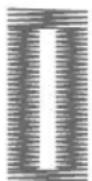
D
Securing the stitching and cutting the buttonhole
To secure the stitching, turn the fabric 90 degrees counterclockwise, set the stitch width to 0, the stitch length to 1 and sew 5-6 Straight Stitches.
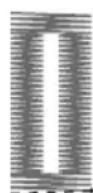
Raise the presser foot lever, remove the fabric, and cut the thread.

Insert a pin at the end of the buttonhole stitching to prevent the stitching from being cut, and then use a seam ripper to cut towards the pin and open the buttonhole.
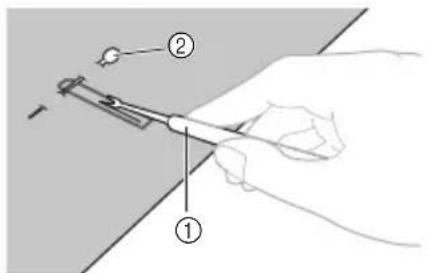
①Seam ripper
②Pin

CAUTION
- When opening the buttonhole with the seam ripper, do not place your hands in the cutting path, otherwise injuries may result if the seam ripper slips. Do not use the seam ripper in any other way than how it is intended.
■Optional procedure for buttonholes
Step A: Bar Tack

Set the needle position at L, stitch width at 5 and stitch length at 0.

Lower the presser foot and sew 3 to 4 stitches.

Stop the machine when the needle is in the fabric and at the left side of the stitches. (position A)
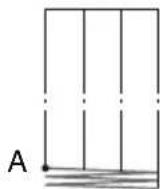
Step B: Left Row

Set the stitch width at 2 and stitch length at F.

Sew the desired length in reverse.

Stop the machine when the needle is in the fabric at the left side of the stitches. (position B)
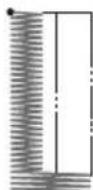
B
Step C: Final Bar Tack

Set the stitch width at 5 and stitch length at 0.

Sew 3 to 4 stitches.

Stop the machine when the needle is in the fabric and at the right side of the stitches. (position C)
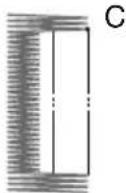
Step D: Right Row

Set the needle position at R, stitch width at 2 and stitch length at F.

Sew until the needle reaches the other bar tack.

Stop the machine when the needle is in the fabric and at the right side of the stitches. (position D)
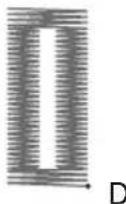
Step E: Securing Buttonhole Stitch

To secure stitching, set the stitch width to 0. Turn the fabric 90 degrees counterclockwise and sew 5 - 6 straight stitches.
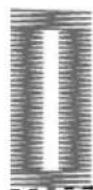

Remove the fabric from the machine.
Button sewing
Buttons can be sewn on with the sewing machine. Buttons with 2 or with 4 holes can be attached.
| Stitch width | Set according to the distance between the holes. |
| Stitch length 0 | |
| Needle position L or R | |
| Presser foot Zigzag | |
| Needle Single | |
| Other Darning plate |
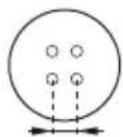
Measure the distance between the holes in the button to be attached.
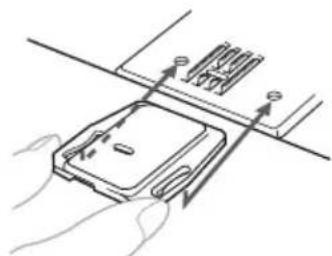
Place the darning plate on the needle plate as shown below.
Place a button between the presser foot and the fabric.
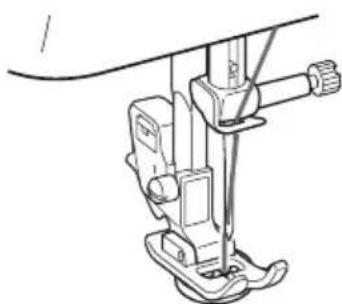
You will need to adjust the stitch width to match the distance between the holes in the button. Turning the width knob will narrow or widen the "swing" of the stitch to accommodate most buttons.
Turn the handwheel toward you (counterclockwise) to check that the needle correctly goes into the two holes of the button.
CAUTION
- When sewing, be sure that the needle does not touch the button, otherwise the needle may bend or break.
6 Start sewing.
After sewing for about 10 seconds at a low speed, press and hold down the reverse sewing lever to sew a few reinforcement stitches.
Pull the fabric to the left side of the machine, and then cut the upper and lower threads, leaving a length of 15cm (6 inches).
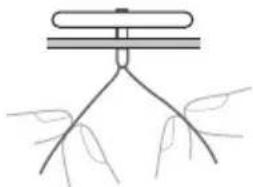
Pull the upper thread at the end of the
stitching to the wrong side of the fabric, and then tie it with the bobbin thread. Use scissors to cut the upper thread and the bobbin thread at the beginning of the stitching.
■Button fitting with thread shank
The thread shank of a button is often needed when sewing on heavier fabric.
Place a button between the presser foot and the fabric, adjust the stitch width according to the distance between the holes in the button and sew on the button as previously explained.
After sewing about 10 stitches, remove the fabric from the machine leaving a longer upper thread (about 15cm(6^ ) ) in order to form a thread shank.
Pull the upper thread through one of the holes on the button until it is between the button and the fabric and tightly wrap the thread around the stitches.
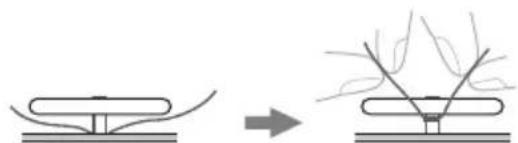
With a normal sewing needle, pull the threads to the back of the fabric and tie the ends together to secure the button.
ZIPPER INSERTION
You can use the zipper foot "I" to sew different types of zippers, and can easily position it to the right or left side of the needle.
When sewing the right side of the zipper, attach the shank to the left pin of the zipper foot. When sewing the left side of the zipper, attach the shank to the right pin of the zipper foot.
| Stitch width | 0 |
| Stitch length | 2-3 |
| Needle position M | |
| Presser foot Zipper foot | |
| Needle Single | |
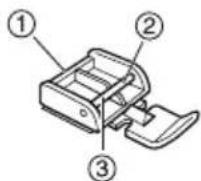
①Zipper foot "I"
② Right pin for sewing the left side of the zipper
③ Left pin for sewing the right side of the zipper
Lower the presser foot lever and fix either the left or right pin of the zipper foot onto the shank.
Fold the edge of the fabric 2cm (3/4 inches) and place the zipper under the folded section. Lower the needle into the notch located either on the left or right side of the zipper foot.
CAUTION
- Turn the handwheel by hand to make sure the needle does not hit the presser foot before you start sewing. If you choose a different stitch, the needle will hit the presser foot and break the needle. You may also be injured.
Sew from the bottom of the zipper toward the top on both sides. The needle should be positioned on the zipper side of the foot for best results.
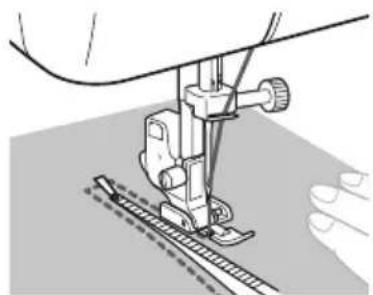
To sew the opposite side of the zipper, release the foot by pressing the button located at the back of the presser foot, fit the zipper foot on the other side of the zipper and continue sewing using the other side notch.
CAUTION
Make sure the needle does not hit the zipper during sewing. If the needle hits the zipper, the needle may break and you may be injured.
APPLIQUE, MONOGRAMMING AND EMBROIDERING
Zigzag stitches can be used for sewing appliqués, monogramming and embroidery.
Appliqués
You can create an appliqué by cutting a different piece of fabric into a shape and using it as a decoration.
| Stitch width | 1-3 |
| Stitch length | F-2 |
| Needle position M | |
| Presser foot Zigzag | |
| Needle Single | |

Baste the cut design to the fabric.

Carefully sew around the edge of the design.
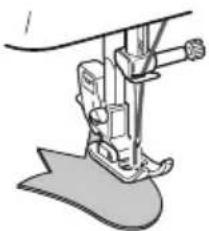

Memo
Make reinforcing straight stitches at the beginning and the end of stitching.

CAUTION
- Be careful that the needle does not hit a pin during sewing, as the needle can break. You may also be injured.

Cut away any fabric that is left outside the stitching.


Remove the basting, if necessary.
Monogramming and. embroidering
| Stitch width | 0-5 |
| Stitch length | Set at any position. |
| Needle position M | |
| Presser foot None | |
| Needle Single | |
| Other Darning plate | |

Place the darning plate on the needle plate as shown below, and then remove both the presser foot and presser foot holder assembly.
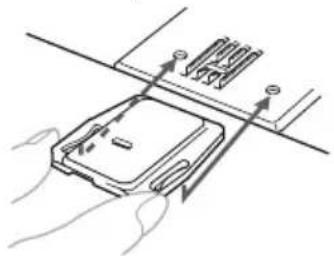

Draw the lettering (for monogramming) or design (for embroidering) on the surface of the fabric.

Put the fabric in the embroidery hoop with the surface of the fabric facing up inside the well.

Place the project under the needle and lower the presser bar.

Draw up the lower thread through the project at the starting position by turning the handwheel toward you (counterclockwise), and then sew a few stitches to reinforce the stitching.
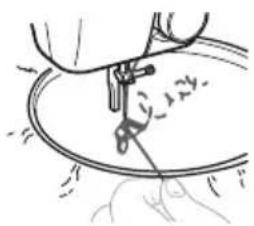

Grip the hoop with the thumbs and forefingers of both hands while pressing the fabric with the middle and third fingers, and support the outside of the hoop with your little fingers.
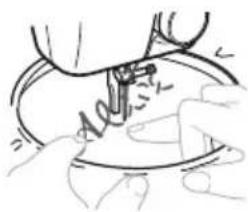

Start sewing.

CAUTION
- Be sure to keep your fingers away from moving parts, especially needles.
■Monogramming
Sew the lettering at a constant speed by moving the hoop slowly.
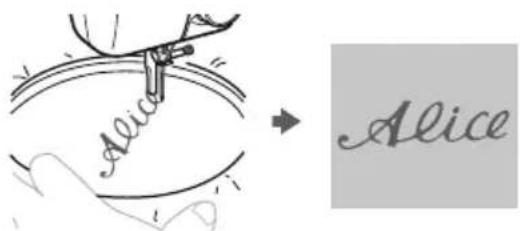
■Embroidering
Sew along the outline of the design by moving the hoop slowly. Then, sew to completely fill in the design with stitches by alternately sewing from the outline of the design to the inside and from the inside to the outline.
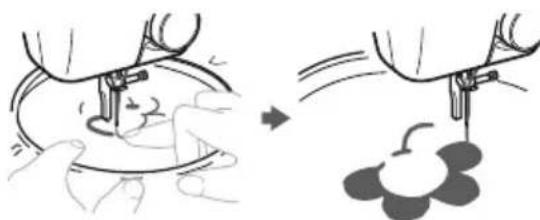

Memo
- Be sure to keep the stitches close together.

Secure with a few straight stitches at the end of the design.

Memo
When the hoop is moved quickly, the stitches are longer. When the hoop is moved slowly, the stitches are shorter.
DECORATIVE STITCHING
Various decorative stitches can be sewn with this sewing machine.
Gathering
| Stitch width | 0 |
| Stitch length | 4 |
| Needle position M | |
| Presser foot Zigzag | |
| Needle Single | |

Loosen the tension of the upper thread (to about 2).
- For details, refer to "Thread tension" (page 24).

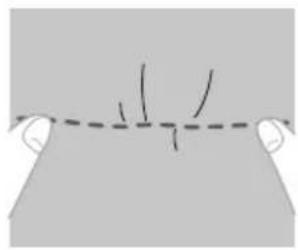
Sew a single or multiple parallel rows of stitches.
- Do not sew reverse stitches or cut the thread.

Pull the bobbin threads to create gathers. Smooth the gathers by ironing them.
Satin stitches
Various decorative stitches can be obtained by sewing with the Satin Stitch according to the instructions on the following page.
| Stitch width | See the table on this page. |
| Stitch length | Set between 0 and 1 (F) for the Satin Stitch. |
| Needle position | M, L, R (For twin needle sewing, always set at M.) |
| Presser foot Zigzag | |
| Needle Single or Twin | |

Note
- When using a twin needle, be sure to use a stitch width of less than 3 and set the needle position selector to M.
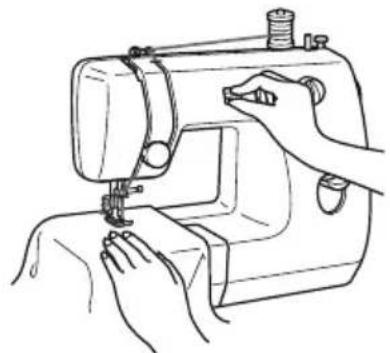
| Needle | Needle position | Pattern sewn Adju | stment of the stitch width |
| Single needle | L | ||||||||||||||||||||||| | Repeatedly move the stitch width knob at an even speed from 0 to 5, then from 5 to 0 while depressing the foot control at an even speed. |
| M | ||||||||||||||||||||||||| | ||
| R | ||||||||||||||||||||||||| | ||
| Twin needle | M | ||||||||||||||||||||||||| | NOTE: For twin needle sewing, repeatedly move the stitch width knob from 0 to 3, then from 3 to 0. |
| Single needle | L | ||||||||||||||||||||||||| | Repeatedly move the stitch width knob from 0 to 5, then from 5 to 0 more slowly than for the shape above to make round patterns while depressing the foot control at an even speed. |
| M | ||||||||||||||||||||||||| | ||
| R | ||||||||||||||||||||| | ||
| Twin needle | M | ||||||||||||||||||||| | NOTE: For twin needle sewing, repeatedly move the stitch width knob from 0 to 3, then from 3 to 0. |
| Single needle | L | ||||||||||||||||||||| | Repeatedly move the stitch width knob slowly from 0 to 5, then quickly back to 0 while depressing the foot control at an even speed. |
| M | ||||||||||||||||||||| | ||
| R | ||||||||||||||||||||| | ||
| Twin needle | M | ||||||||||||||||| | NOTE: For twin needle sewing, repeatedly move the stitch width knob from 0 to 3, then quickly back to 0. |
Attaching the lace
| Stitch width | 0 |
| Stitch length | 2-4 |
| Needle position M | |
| Presser foot Zigzag | |
| Needle Single | |
1 Place the lace under the fabric leaving a 5mm (1 / 4^ ) overlap at the edge.
Place the overlapping edges under the presser foot and sew.
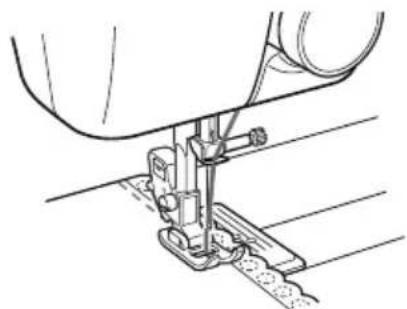

Note
A decorative touch can be added by using the Satin Stitch or a Decorative Stitch to attach the lace.
Cording
| Stitch width | Set according to the thickness of the cord being used. |
| Stitch length | F-2 |
| Needle position M | |
| Presser foot Zigzag | |
| Needle Single | |
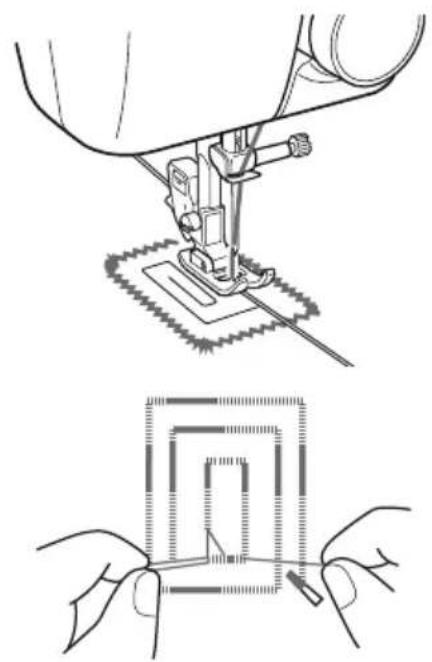
Set the stitch width knob so the needle will just clear both sides of the cording.
Place the cord on the fabric in the position where it will be sewn.
Lower the presser foot making sure the cord is centered and sew using the zigzag stitch. Guide the cord by hand along the path which you wish to attach it.
4APPENDIX
MAINTENANCE
Simple sewing machine maintenance operations are described below.
Oiling
Turn off the machine and unplug it.
Put 2 to 3 drops of oil at each of the points indicated below.
Be sure to wipe any excess oil off the machine.
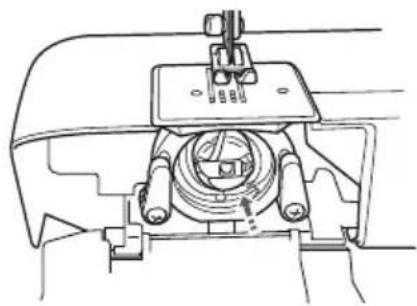
After oiling, run the machine for a short time at a fast speed without thread.

Memo
Make sure to oil the machine once a week if you use it more than an hour a day. If you use it more often, oil every day.
Sewing machine oil is available at your local sewing machine dealer or service center.
Do not apply too much oil as it may soil the thread and fabric.
Changing the bulb

CAUTION
- Turn off the main power switch and unplug the machine before you change the light bulb. If the main power switch is on when you change the light bulb, you may get an electric shock. If the machine is on and you step on the foot controller, you may be injured.
- To avoid burns, let the light bulb cool down before you change it.
Turn off the machine and unplug it.
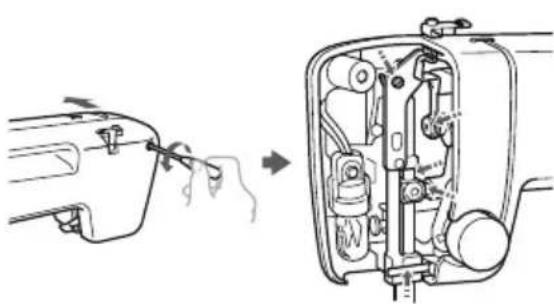
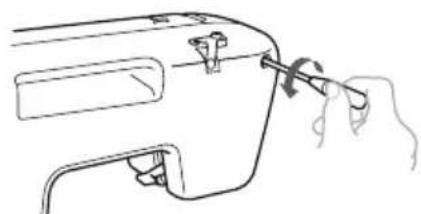
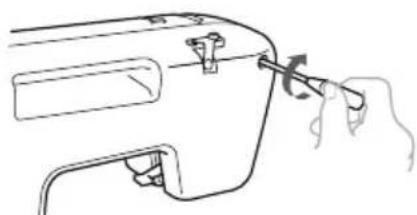
Loosen the face plate screw.
Remove the face plate from the machine.
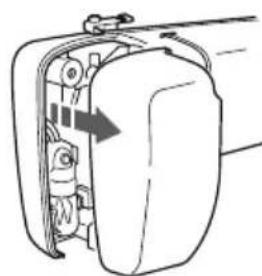

Note
Hold the face plate securely while removing or attaching it.


Replace the sewing light bulb.
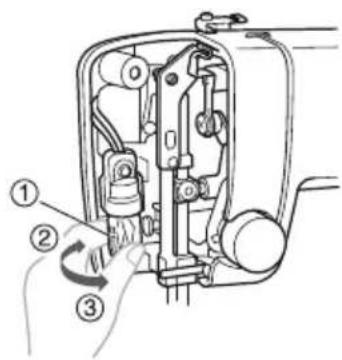
①bulb
②Loosen
③ Tighten

Attach the face plate and fasten the screw again.
Cleaning the machine surface
If the surface of the machine is dirty, lightly soak a cloth in neutral detergent, squeeze it out firmly, and then wipe the surface of the machine. After cleaning it once with a wet cloth, wipe it again with a dry cloth.

CAUTION
- Unplug the power supply cord before cleaning the machine, otherwise injuries or an electric shock may occur.
Cleaning the shuttle race

CAUTION
- Be sure to unplug the machine before cleaning it, otherwise injuries or an electric shock may occur.

Turn off the machine and unplug it.

Raise the needle and the presser foot, and then remove the presser foot and the needle.

Remove the flat bed attachment and open the shuttle cover at the front of the free arm.

Remove the bobbin case by pulling its latch toward you and pulling it out from the shuttle race.
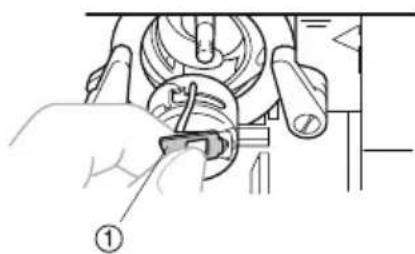
① Bobbin case latch

Slide the latch levers out from the retaining ring to remove it.
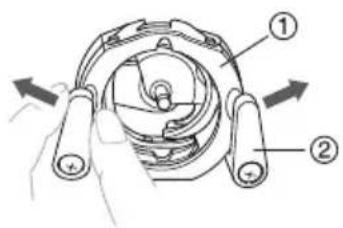
①Retaining ring
②Latch lever

Remove the hook by grasping its center post and pulling it out.
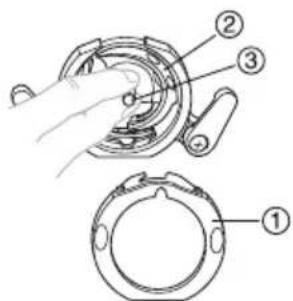
①Retaining ring
②Hook
③Hook center post

Use a brush to remove any accumulated lint and thread from the retaining ring, hook, driver and race body.
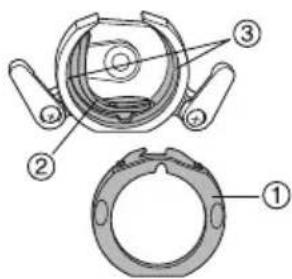
①Retaining ring
②Driver
③ Race body

Use a cloth dampened with machine oil to wipe the shuttle race in order to remove any lint.

Clean the lint from the shuttle hook in the same manner as described in step ⑧

Reassemble the hook and the retaining ring, and push the latch levers back into position.
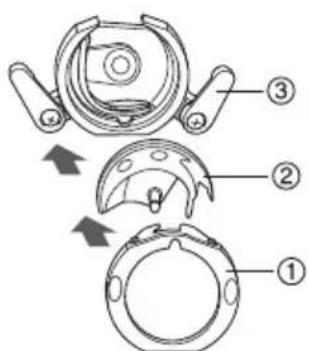
①Retaining ring
②Hook
③Latch lever

Attach the bobbin case, the presser foot and the needle before using the machine.
Cleaning the feed dogs

CAUTION
Make sure you unplug the machine before you clean it. Otherwise, you may get an electric shock or be injured.

Turn off the machine and unplug it.

Raise the needle and the presser foot, and then remove the presser foot and the needle.

Remove the flat bed attachment and open the shuttle cover at the front of the free arm.

Remove the needle plate by using a coin or screwdriver to remove the screws.
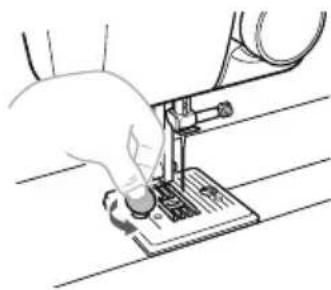

Use a brush to clean the lint from the upper part of the feed dogs and shuttle race body.
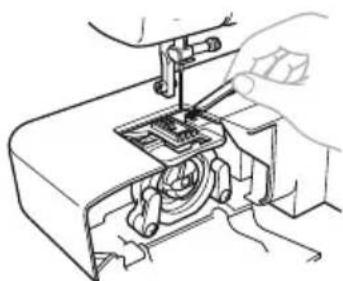

Attach the needle plate by using a coin or screwdriver.
Bobbin case tension adjustment
The bobbin thread tension has already been adjusted at the factory for general use. For most sewing applications, no adjustment is needed.
When sewing with thin thread on thin fabrics, the thread tension may not be adjusted adequately with the upper tension control dial. Therefore, the thread tension must be adjusted according to the procedure described below.

Note
Remember to return the screw to its original setting before starting your next project.
■Bobbin tension is too loose
Loops appear on the surface of the fabric.
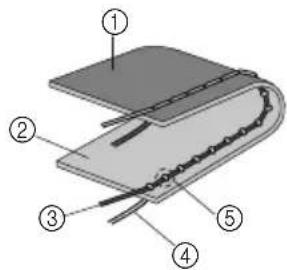
①Wrong side
②Surface
③Upper thread
④Lower thread
⑤ Loops appear on surface of fabric
Solution
Reduce the tension by turning the upper tension-control dial to a lower number.


Note
If the loops still appear on the surface of the fabric after you adjust the upper tension, the bobbin thread may be too loose. In this case, turn the screw clockwise, being careful not to over-tighten the screw, approximately 30-45 degrees to increase bobbin tension. After you adjust the bobbin thread, adjust the upper thread to match the bobbin thread.
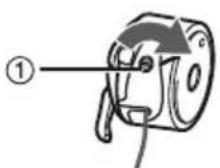
①Screw
Bobbin tension is too tight
Loops appear on the wrong side of the fabric.
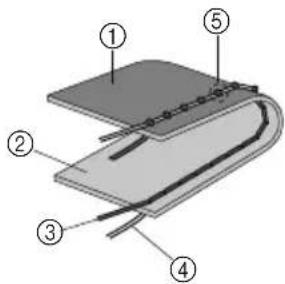
①Wrong side
②Surface
③Upper thread
④Lower thread
⑤ Loops appear on wrong side of fabric
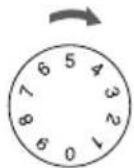
Solution
Increase the tension by turning the upper tension-control dial to a higher number.

Note
If the loops still appear on the wrong side of the fabric after you adjust the upper tension, the bobbin thread may be too tight. In this case, turn the screw counterclockwise being careful not to over-loosen the screw, approximately 30-45 degrees to decrease bobbin tension. After you adjust the bobbin thread, adjust the upper thread to match the bobbin thread.
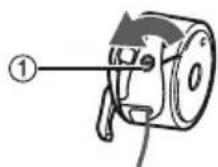
①Screw
TROUBLESHOOTING
If the machine stops operating correctly, check the following possible problems before requesting service. You can solve most problems by yourself. If you need additional help, the Brother Solutions Center offers the latest FAQs and troubleshooting tips. Visit us at [http://solutions.brother.com].
If the problem persists, contact your dealer or the nearest authorized service center.
| Symptom Possible cause How to put it right Reference | ||
| The sewing machine does not work. | The machine is not plugged in. Plug the machine in. page 8 | |
| The main power switch is turned off. Turn on the main power switch. page 8 | ||
| The bobbin winder shaft is pushed to the right. Move the bobbin winder shaft to the left. | page 11 | |
| You have not used the foot controller properly. Use the foot controller properly. page 9 | ||
| The needle breaks. | You have not inserted the needle properly. Insert the needle properly. page 16 | |
| The needle clamp screw is loose. Use a coin or screwdriver to firmly tighten the screw. | page 17 | |
| The needle is bent or blunt. Replace the needle. page 16 | ||
| You have not used the right combination of fabric, thread and needle. Choose a thread and needle that are appropriate for the type of fabric. | page 15 | |
| The presser foot you are using is not appropriate for the type of stitch that you want to sew. Attach the presser foot that is correct for the type of stitch that you want to sew. | page 29, 30, 31, 33, 34 | |
| The upper thread tension is too tight. Loosen the upper thread tension. page 24 | ||
| You are pulling the fabric too much. Lightly guide the fabric. | - | |
| The area around the hole in the needle plate is scratched. Replace the needle plate. Contact your retailer or the nearest authorized service center. | - | |
| The area around the hole in the presser foot is scratched. Replace the presser foot. Contact your retailer or the nearest authorized service center. | - | |
| The bobbin case is scratched. Replace the bobbin case. Contact your retailer or the nearest authorized service center. | - | |
| You have not used a bobbin that has been designed for this machine. Incorrect bobbins will not work properly. Only use a bobbin that has been designed for this machine. | page 10 | |
| The upper thread breaks. | You have not threaded the upper thread properly. (for example, you have not fitted the spool properly, or the thread has come out of the guide above the needle.) Correct the upper threading. | page 13 |
| There are knots or tangles in the thread. Remove any knots or tangles. | - | |
| The needle is not appropriate for the thread you are using. Choose a needle that is appropriate for the type of stitch. | page 15 | |
| The upper thread tension is too tight. Loosen the upper thread tension. page 24 | ||
| The thread is tangled, for example, in the shuttle race. Remove the tangle thread. If the thread is tangled in the shuttle race, clean the shuttle race. | page 39 | |

| Symptom | Possible cause | How to put it right | Reference |
| The upper thread breaks. | The needle is bent or blunt. Replace the needle. page 16 | ||
| You have not inserted the needle properly. | Insert the needle properly. page 16 | ||
| The area around the hole in the needle plate is scratched. | Replace the needle plate.Contact your retailer or the nearest authorised service center. | - | |
| The area around the hole in the presser foot is scratched. | Replace the presser foot.Contact your retailer or the nearest authorised service center. | - | |
| The bobbin case is scratched, or has a burr on it. | Replace the bobbin case.Contact your retailer or the nearest authorised service center. | - | |
| You have not used a bobbin that has been designed for this machine. | Incorrect bobbins will not work properly. Only use a bobbin that has been designed for this machine. | page 10 | |
| The lower thread is tangled or breaks. | You have not wound the bobbin thread properly. | Wind the bobbin thread properly. page 10 | |
| The bobbin is scratched or does not turn smoothly. | Replace the bobbin. - | ||
| The thread is tangled. | Remove the tangled thread and clean the shuttle race. | page 39 | |
| You have not used a bobbin that has been designed for this machine. | Incorrect bobbins will not work properly. Only use a bobbin that has been designed for this machine. | page 10 | |
| Bobbin is set incorrectly. Reset the bobbin thread correctly. page 11 | |||
| The thread is tangled on the wrong side of the fabric. | The upper thread was not threaded correctly. | Correct the upper threading. page 13 | |
| The thread tension is incorrect. | You have not threaded the upper thread properly. | Correct the upper threading. page 13 | |
| You have not wound the bobbin thread properly. | Wind the bobbin thread properly. page 10 | ||
| You have not used the right combination of fabric, thread and needle. | Choose a thread and needle that are appropriate for the type of fabric. | page 15 | |
| You have not attached the presser-foot holder properly. | Attach the presser-foot holder properly. | page 20 | |
| The thread tension is incorrect. | Adjust the tension of the upper thread. | page 24 | |
| You have not used a bobbin that has been designed for this machine. | Incorrect bobbins will not work properly. Only use a bobbin that has been designed for this machine. | page 10 | |
| Bobbin is set incorrectly. Reset the bobbin thread correctly. page 11 | |||
| The upper thread is too tight. | The bobbin thread is incorrectly installed. | Correctly install the bobbin thread. page 11 | |
| The fabric is wrinkled. | You have not threaded the upper thread properly or fitted the bobbin properly. | Thread the upper thread and wind the bobbin thread properly. | page 11, 13 |
| You have not fitted the spool properly. | Fit the spool properly. - | ||
| You have not used the right combination of fabric, thread and needle. | Choose a thread and needle that are appropriate for the type of fabric. | page 15 | |
| The needle is bent or blunt. Replace the needle. | the needle. page 16 | ||
| If you are sewing thin fabric, the stitch is too thick. | Sew with stabiliser material under the fabric. | page 26 | |
| The thread tension is incorrect. | Adjust the tension of the upper thread. | page 24 | |
| Stitches are skipped. | You have not threaded the upper thread properly. | Correct the upper threading. page 13 | |
| You have not used the right combination of fabric, thread and needle. | Choose a thread and needle that are appropriate for the type of fabric. | page 15 | |
| The needle is bent or blunt. Replace the needle. | page 16 | ||
| You have not inserted the needle properly. | Insert the needle properly. | ||
| Dust has accumulated under the needle plate or in the shuttle race. | Remove the needle plate cover and clean the plate and the shuttle race. | page 39, 40 | |
| There is a high-pitched noise while sewing. | Dust has built up in the feed dogs or in the shuttle race. | Clean the shuttle race. page 39 | |
| You have not threaded the upper thread properly. | Correct the upper threading. page 13 | ||
| The bobbin case is scratched. | Replace the bobbin case. Contact your retailer or the nearest authorized service center. | - | |
| You have not used bobbin that has been designed for this machine. | Incorrect bobbins will not work properly. Only use a bobbin that has been designed for this machine. | page 10 | |
| Insufficient oiling. | Make sure to oil the machine once a week if you use it more than an hour a day. If you use it more often, oil every day. | page 38 | |
| The stitch is not sewn correctly. | The presser foot that you are using is not correct for the type of stitch. | Attach the presser foot that is correct for the type of stitch that you want to sew. | page 28, 30, 31, 33, 34 |
| The thread tension is incorrect. | Adjust the tension of the upper thread. | page 24 | |
| The thread is tangled, for example, in the shuttle race. | Remove the tangle thread. If the thread is tangled in the shuttle race, clean the shuttle race. | page 39 | |
| The fabric does not feed. | You have not used the right combination of fabric, thread and needle. | Choose a thread and needle that are appropriate for the type of fabric. | page 15 |
| The thread is tangled, for example, in the shuttle race. | Remove the tangle thread. If the thread is tangled in the shuttle race, clean the shuttle race. | page 39 | |
| The sewing light bulb does not come on. | The sewing lamp is damaged. Change the sewing light bulb. page 38 |

When the thread is entangled

CAUTION
Do not pull or push fabric while stitching. It may bend the needle causing it to break.
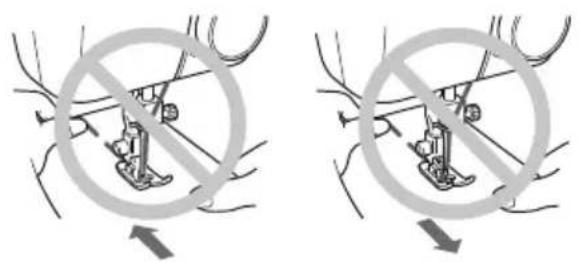
- Do not turn the handwheel and pull the fabric by force when the thread is entangled or the motor is locked. If the thread is entangled, remove the thread and fabric according to the procedure below.

Turn off the machine and unplug it.

CAUTION
Unplug the power supply cord, otherwise injuries or an electric shock may occur.

Remove the flat bed attachment and open the shuttle cover at the front of the free arm. And then look for entangled thread.
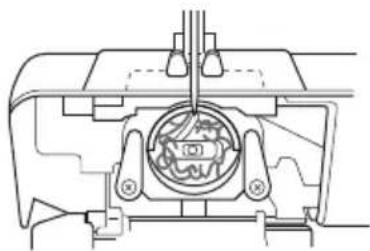

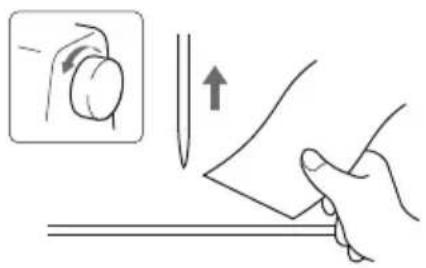
Cut the entangled thread with small scissors above the needle plate and then gently remove the thread and fabric.
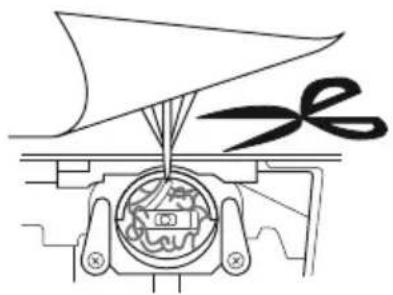

Turn the handwheel to raise the needle, then remove the fabric.

Perform steps of "Cleaning the shuttle race" on page 39.

Note
If machine runs but needle does not move, look to be sure bobbin winding shaft is moved to the left into the sewing position.
INDEX
A
accessories .7
appliques .34
B basicstitching 27
blind hem stitching 28
bobbin 11
bobbin case 12
bobbinwinder 10
button sewing 31
buttonhole sewing 30
C cleaning 39
D darning 29
E
embroidering 34
extra spool pin 18
F
feed dogs .6,40
flat bed attachment .6,26
foot controller .23
free-arm style .26
G gathering 36
H handwheel 5
M
main parts 5
main power switch 8
monogramming 34
N
needle 15
needle bar thread guide .6
needle clamp screw .6,17
needle plate .6,40
needle position selector 22
O oiling 38
P
presser foot .6,19
presser foot holder .6,20
presser foot lever .5,13
pre-tension disk .10
R relative chart of sewing fabrics, needles and threads 15 reverse sewing lever 23
S
sewing machine needles 15
shuttle hook removal .40
shuttle race cleaning .40
spool pin .10,13
stitch length knob 5, 22
stitch width knob 5, 22
straight stitch 27
stretch fabrics .26
T thick fabrics 25
thin fabrics 26
thread cutter 23
thread guide 13
thread tension 24
trial sewing 25
troubleshooting 42
twin needle 17, 18
U
upper tension-control dial 24, 41
upper threading 13
W winding the bobbin 10
Z
zigzag stitches 25,27,34
zipper foot 33
zipper insertion 33
brother
1 APPRENEZ A CONNAITRE VOTRE MACHINE A COUDRE
2 NOTIONS ÉLÉMENTAIRES DE COUTURE
3 POINTSCOURANTS
4 ANNEXE
FRANÇAIS
ACCESSIONS EN OPTION 7
COMMENT UTILISER VOTRE MACHINE A COUDRE 8
XD0112-121 (Argentine), XE3414-001(Bresil (120 V)), XE4302-001(Bresil (220 V)), XE3447-001 (Taiwan)
Section aiguille et pied-de-biche
①Support du pied-de-biche
ACCESSIONS EN OPTION
1.2.
points zigzag 25, 27, 34
porte-bobine 10, 13